A layered hairstyle for fine hair uses shorter, more closely placed layers, usually concentrated near the crown, to create the appearance of density that fine strands can’t provide on their own. This guide covers 17 layered hairstyle ideas for women over 50 with fine hair, built specifically to add lift, avoid the flat, stringy look fine hair tends toward, and create movement without exposing more scalp than intended.
Worn well, layers on fine hair feel light instead of thin. They lift at the root instead of collapsing by midday, catch volume where fine hair usually goes flat, and create the illusion of thickness without a single extension or added inch. There’s a real difference between fine hair that’s cut generically and fine hair cut with its specific limitations in mind. Here are 17 ideas worth saving — and showing your stylist.
Why Layered Hairstyles Work So Well for Fine Hair
Fine hair refers to the diameter of each individual strand, not the total amount of hair on the head, which means even someone with a lot of fine hair can look thin if the cut doesn’t account for it. A layered hairstyle for fine hair differs from layering on thick hair in one key way: layers are placed closer together and higher on the head, since fine strands have less natural body to hold a longer, lower layer open.
The technique leans on placement more than any single cutting tool. A stylist typically avoids razoring on fine hair, since a razor thins strands that are already thin, and instead uses blunt scissor cuts or gentle point-cutting to keep as much density as possible at the ends. Layers usually start no lower than the cheekbone, with the shortest pieces near the crown to create lift right where fine hair goes flat first.
This approach is trending now as more women over 50 look for ways to keep length without the “thin” look that inspired decades of short pixie cuts as the default recommendation for fine hair. Search interest in “volumizing layers for fine hair over 50” has grown alongside hairstylist content on TikTok specifically addressing thinning and fine texture as separate concerns.
Layering works well for most fine hair types with the right adjustments, but there are real limits. Very fine, straight hair benefits most from shorter layers and blunt ends, since texture-heavy cutting like razoring or heavy point-cutting removes density it can’t afford to lose. Fine wavy or curly hair can carry slightly more layering since the wave itself adds perceived body. Fine hair that’s also thinning at the crown benefits from the shortest layers placed directly over that area rather than around the face.
| Element | Layers for Very Fine, Straight Hair | Layers for Fine, Wavy Hair |
| Philosophy | Preserve density, maximize root lift | Preserve density, enhance existing texture |
| Technique | Blunt scissor cuts, layers near the crown | Point-cut ends, layers cut dry |
| Best for | Straight or slightly wavy fine hair | Fine hair with natural wave or curl |
1. Short, Lifted Layers Placed Near the Crown
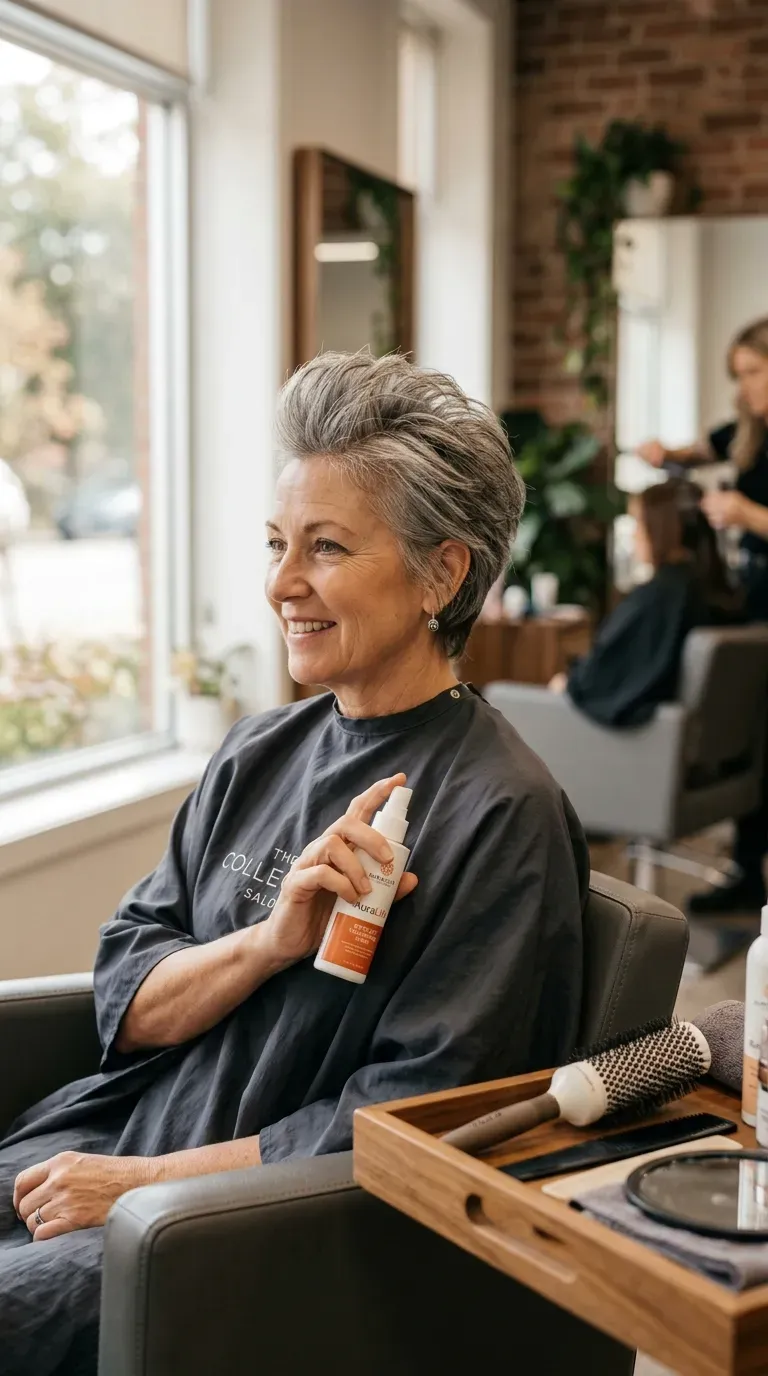
Vibe: Lifted.
Why it works: Placing the shortest layers directly at the crown, rather than around the face, targets the exact spot where fine hair flattens fastest. Because the layers are short and close together, each one adds a visible edge that reads as more density than the strand count actually supports.
How to get it: Ask your stylist for layers “no more than an inch apart, concentrated within the top three inches of the crown,” rather than a general request for volume.
💡 Quick Win: Blow-drying the crown section upside down for the first two minutes locks in extra lift before any styling product is applied.
Shop the Look:
- Root-lifting spray
- Vented styling brush
- Volumizing dry shampoo
- Professional ionic blow dryer
- Fine-tooth teasing comb
2. Shoulder-Length Layers Built for Fine Hair Density
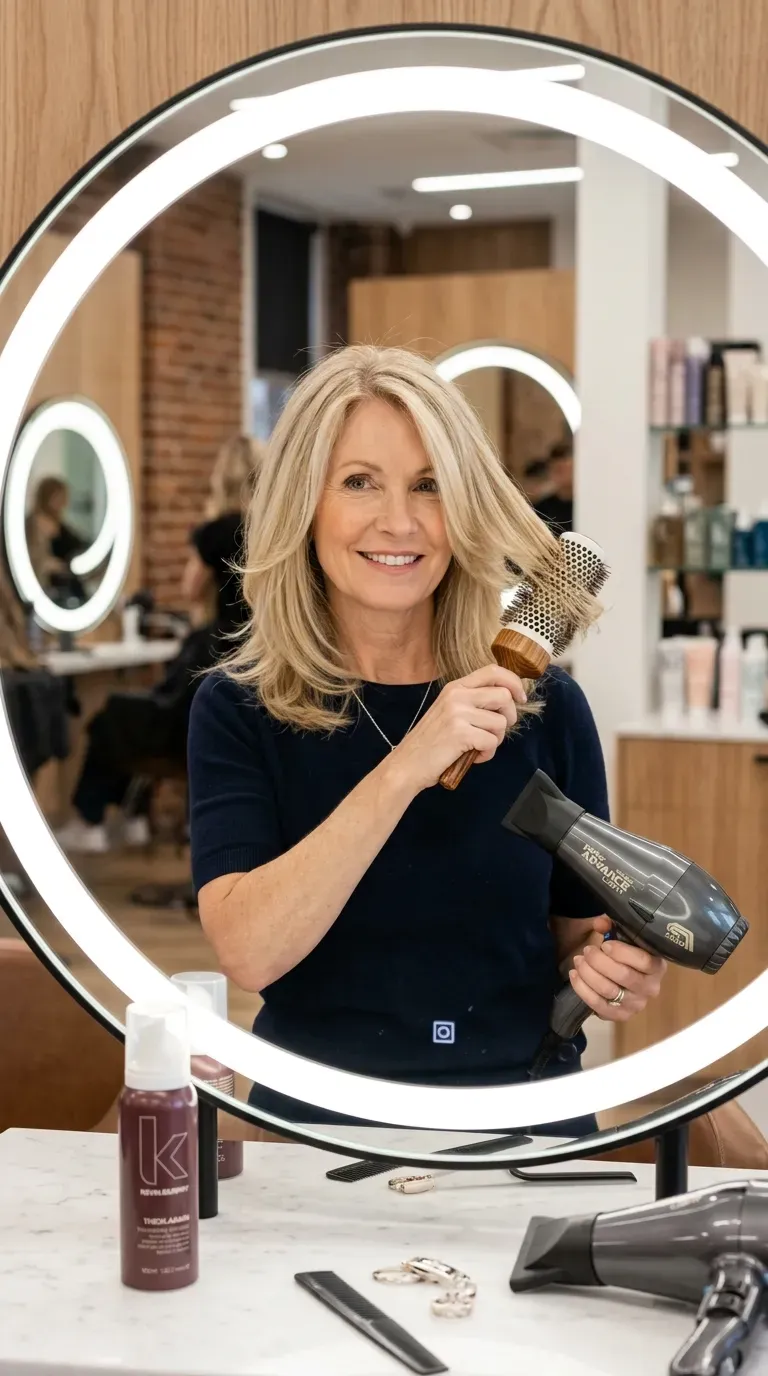
Vibe: Substantial.
Why it works: Shoulder length is often the sweet spot for fine hair, since it’s long enough to hold a blowout shape but short enough that the ends don’t thin out under their own weight the way longer fine hair does. Layers here stay minimal and blunt-cut rather than heavily thinned.
How to get it: Ask for the length to land “right at the shoulder, with only one internal layer, blunt perimeter,” which preserves as much visible thickness as possible.
Shop the Look:
- Blunt-cut styling comb
- Round ceramic brush for blowouts
- Thickening mousse for fine hair
- Ionic hair dryer with concentrator nozzle
- Flexible-hold finishing hairspray
3. Blown-Out Layers with Root-Lift Volume
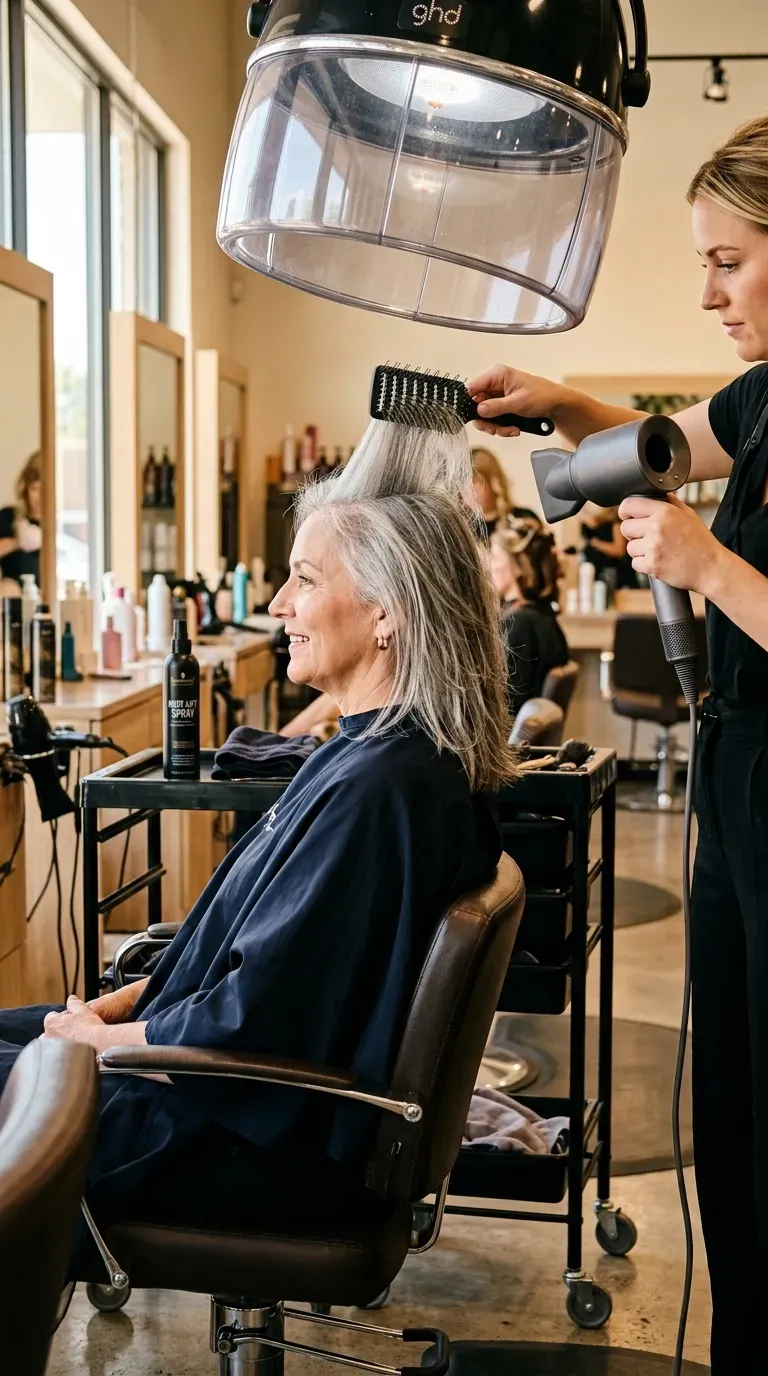
Vibe: Commanding.
Why it works: Root-lift volume is created by drying the roots against their natural growth direction with a vented brush, then setting them with cool air before styling the rest. On fine hair, this technique matters more than on any other texture, since fine strands have almost no natural body to fall back on once the blowout wears off.
How to get it: Section the crown, blow-dry it upward and back with a vented round brush, and hold the cool-shot button for ten seconds on each section to lock the lift.
💡 Quick Win: A pea-sized amount of root-lifting spray applied only at the part line prevents fine hair from looking oily by midday, which heavier volumizers often cause.
Shop the Look:
- Root-lifting spray for fine hair
- Vented styling brush
- Volumizing dry shampoo
- Lightweight thickening spray
- Cool-shot ionic hair dryer
4. Curtain Bangs Designed for Fine Hair
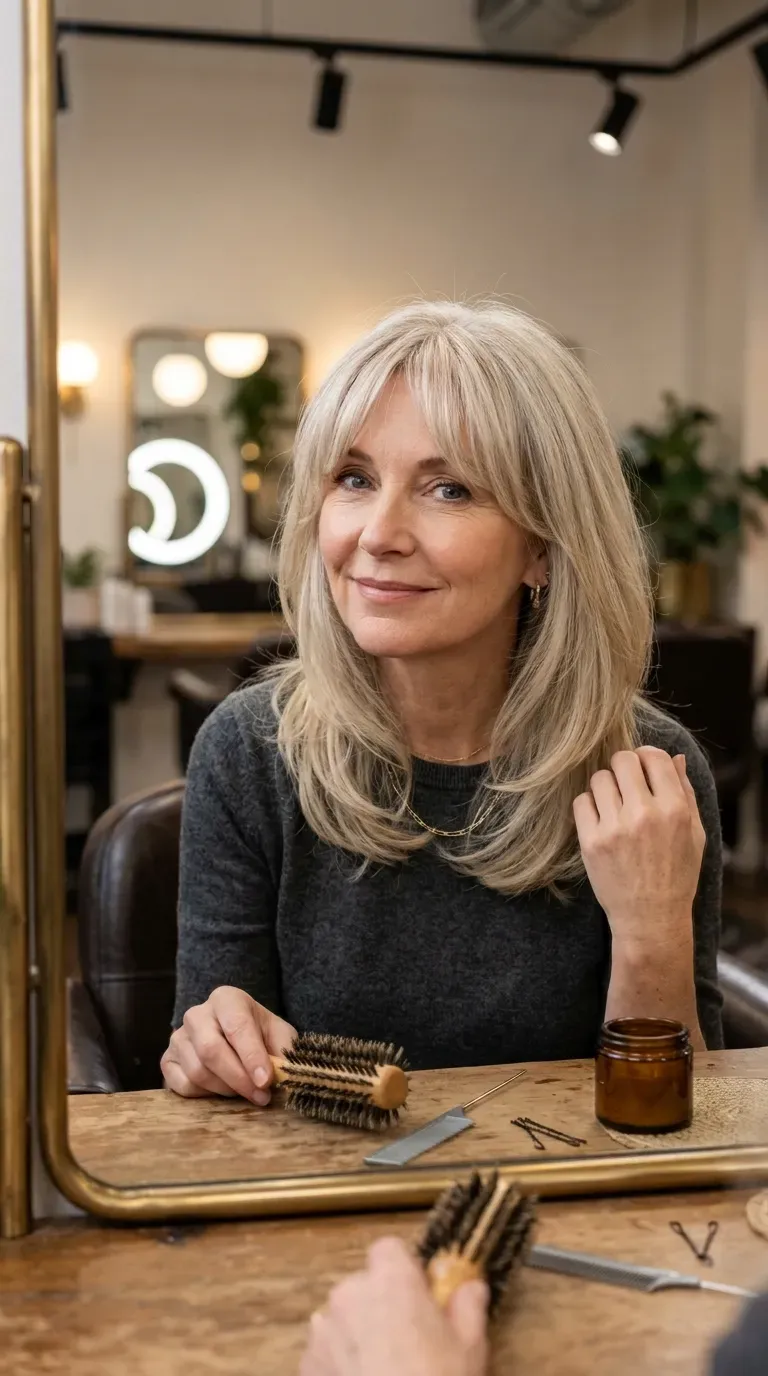
Vibe: Softening.
Why it works: Curtain bangs on fine hair need a slightly heavier front section than they would on thicker hair, since too few strands in the bang itself will look sparse rather than soft. Blending them into the first layer, rather than cutting them separately, spreads that visual weight more evenly.
How to get it: Ask your stylist to take a slightly wider section for the bang than usual, cut on a diagonal, and blend it directly into the layer below.
Shop the Look:
- Small 1-inch round brush for bang styling
- Heat protectant styling primer
- Fine bobby pins for bang training
- Lightweight hair wax for separation
- Ionic dryer nozzle attachment
5. Volumizing Mousse Layers for All-Day Body
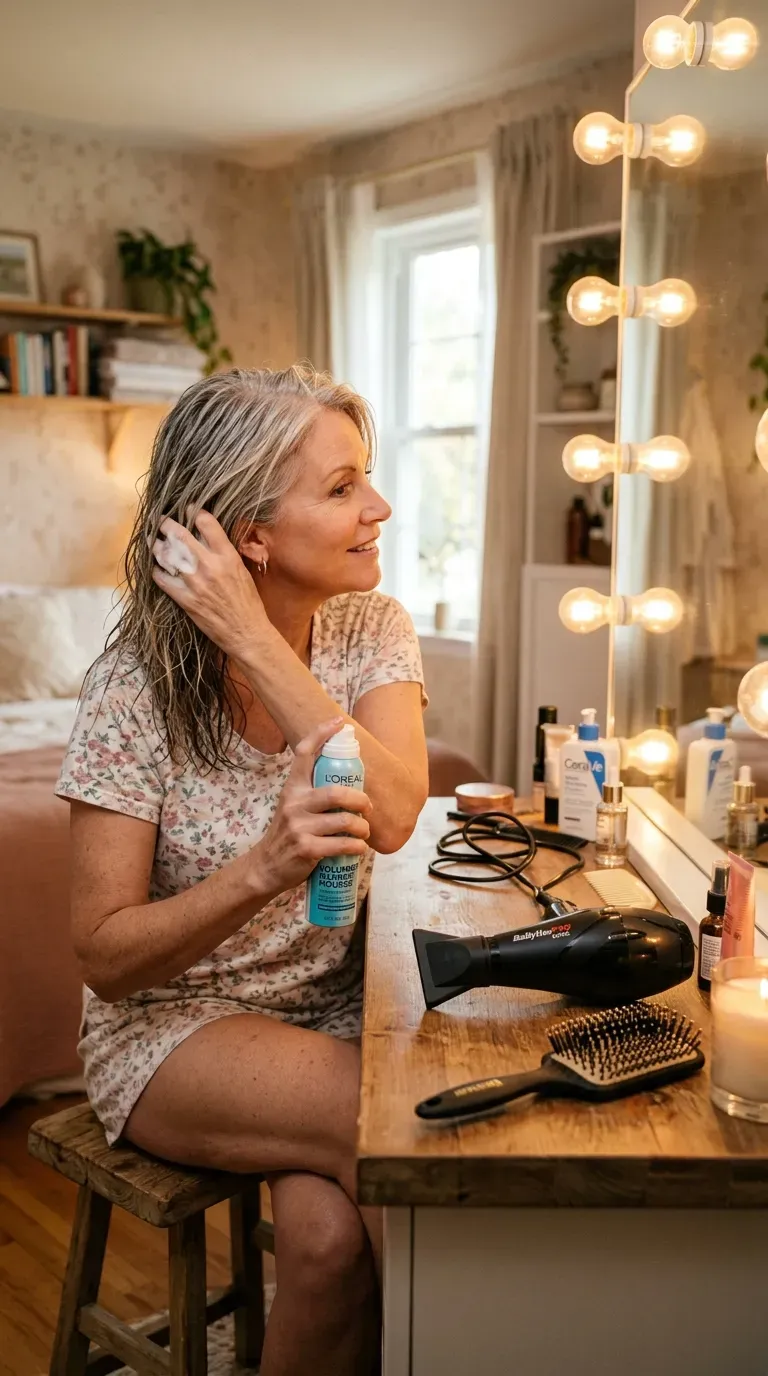
Vibe: Buoyant.
Why it works: Mousse coats each thin strand with a lightweight, flexible film that holds shape once heat is added, which is exactly the kind of hold fine hair needs since it has almost no natural texture to grip onto otherwise. Too much mousse, however, can weigh fine hair down just as easily as an oil-based product.
How to get it: Use no more than a golf-ball-sized amount on damp roots to mid-length, focusing on the roots specifically rather than distributing it evenly through the ends.
💡 Quick Win: Flipping your head upside down while blow-drying the mousse in adds extra root lift before you even start styling the layers.
Shop the Look:
- Extra-hold volumizing mousse
- Vented styling brush
- Ionic hair dryer with concentrator nozzle
- Root-lift spray
- Flexible-hold finishing hairspray
6. Round Face Layers That Add Height and Slim
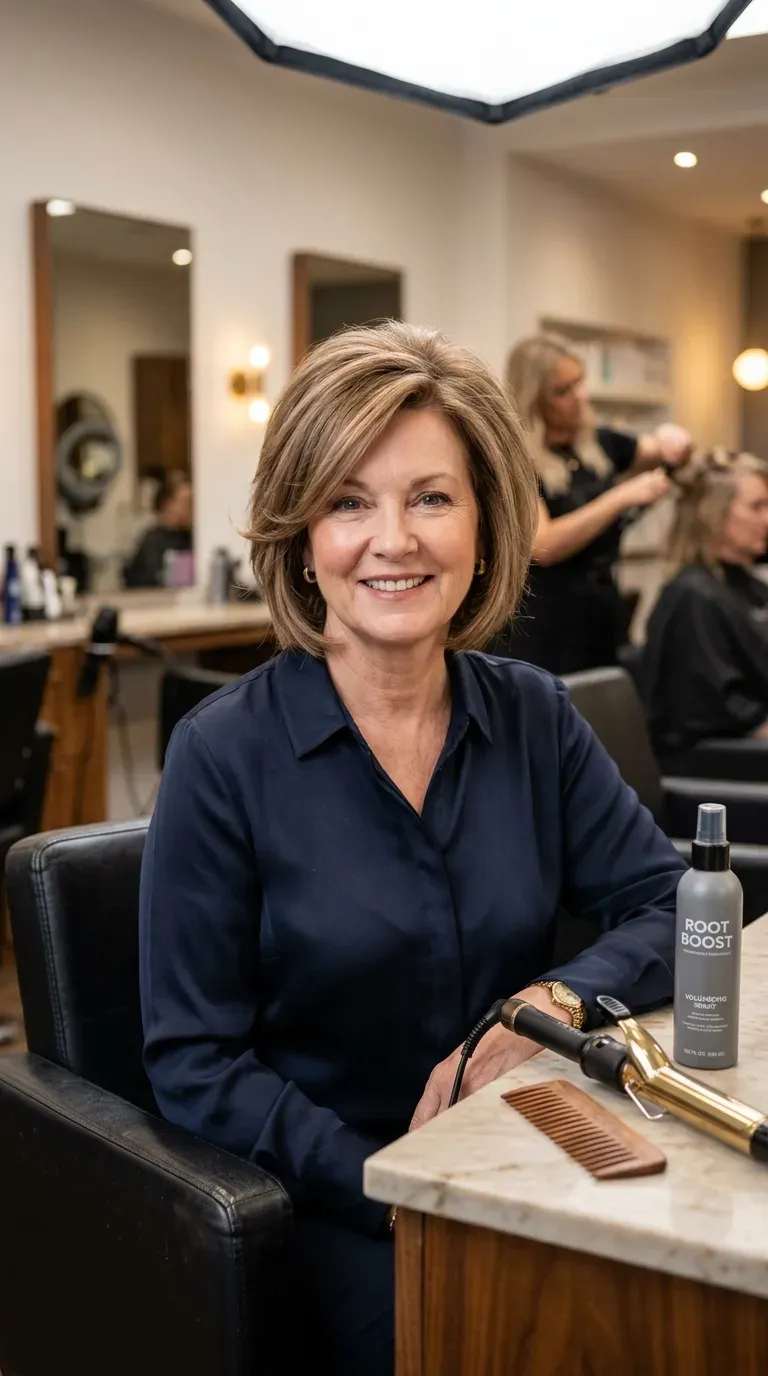
Vibe: Elongating.
Why it works: On a round face, added height at the crown combined with layers ending below the chin creates a vertical line that lengthens the face rather than adding width at the cheeks. Fine hair specifically benefits from this combination since it also compensates for the flatness fine strands tend toward at the root.
How to get it: Ask for layers that “start no higher than the chin,” paired with a deep side part rather than a center part, and prioritize root lift at the crown during styling.
Shop the Look:
- Volumizing root spray for crown height
- Deep side-part comb
- Elongating curling wand
- Matte finishing spray
- Ceramic flat iron for a smooth line
7. Point-Cut Layers for Soft, Feather-Light Ends
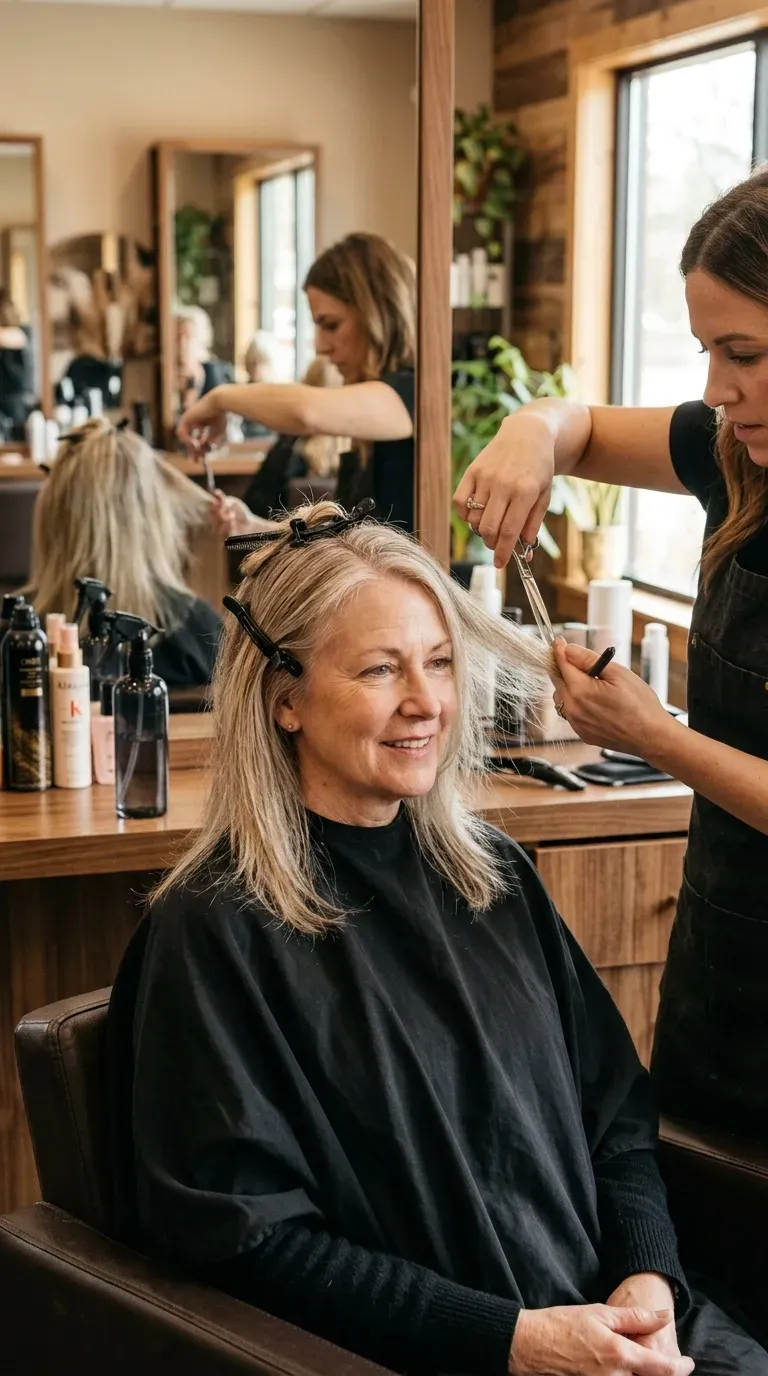
Vibe: Delicate.
Why it works: Point-cutting angles the scissors vertically into the ends rather than removing full sections at once, which softens the edge without thinning out density the way a razor would. This is the recommended texturizing technique for fine hair specifically because it removes almost no actual volume.
How to get it: Ask your stylist to “point-cut the ends only, no razoring,” which keeps the softening effect without sacrificing the density fine hair depends on.
💡 Quick Win: A dime-sized amount of lightweight styling cream on point-cut ends emphasizes softness without adding weight.
Shop the Look:
- Lightweight styling cream
- Fine-tooth comb
- Heat protectant spray
- Shine-enhancing hair oil
- Small ceramic round brush
8. Long Layers That Avoid the Stringy Look
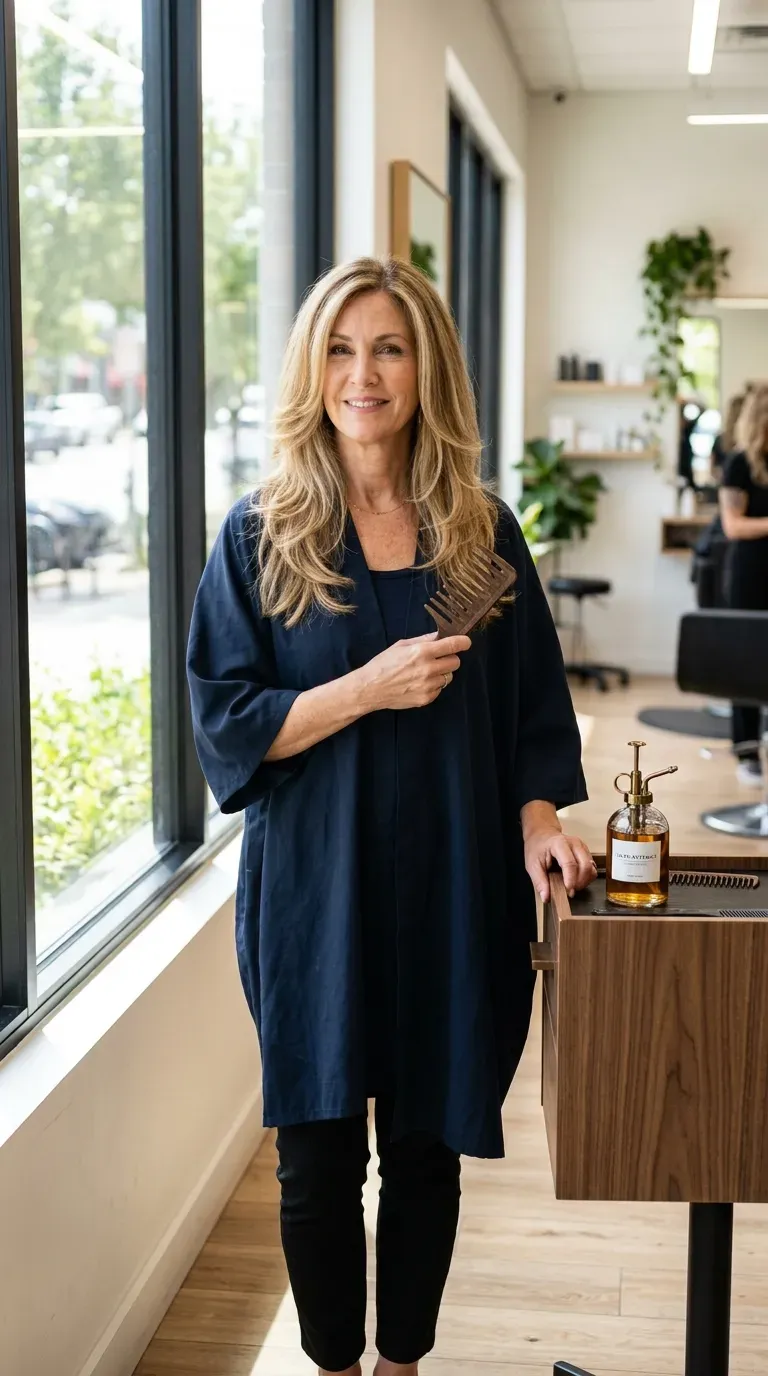
Vibe: Substantial.
Why it works: Long layers on fine hair only avoid looking stringy when the layers are placed higher and closer together than they would be on thick hair, since fine ends left too long and too thin naturally separate into strings. Keeping most of the layering concentrated in the top half of the length, rather than the bottom, prevents this.
How to get it: Ask for “layers concentrated above the shoulder, blunt below,” which keeps the visible ends looking fuller even at a longer overall length.
Shop the Look:
- Thickening shampoo and conditioner set
- Boar-bristle paddle brush
- Heat protectant mist
- Blunt-cut styling comb
- Lightweight finishing serum
9. Sleek Straight Layers with a Weightless Finish
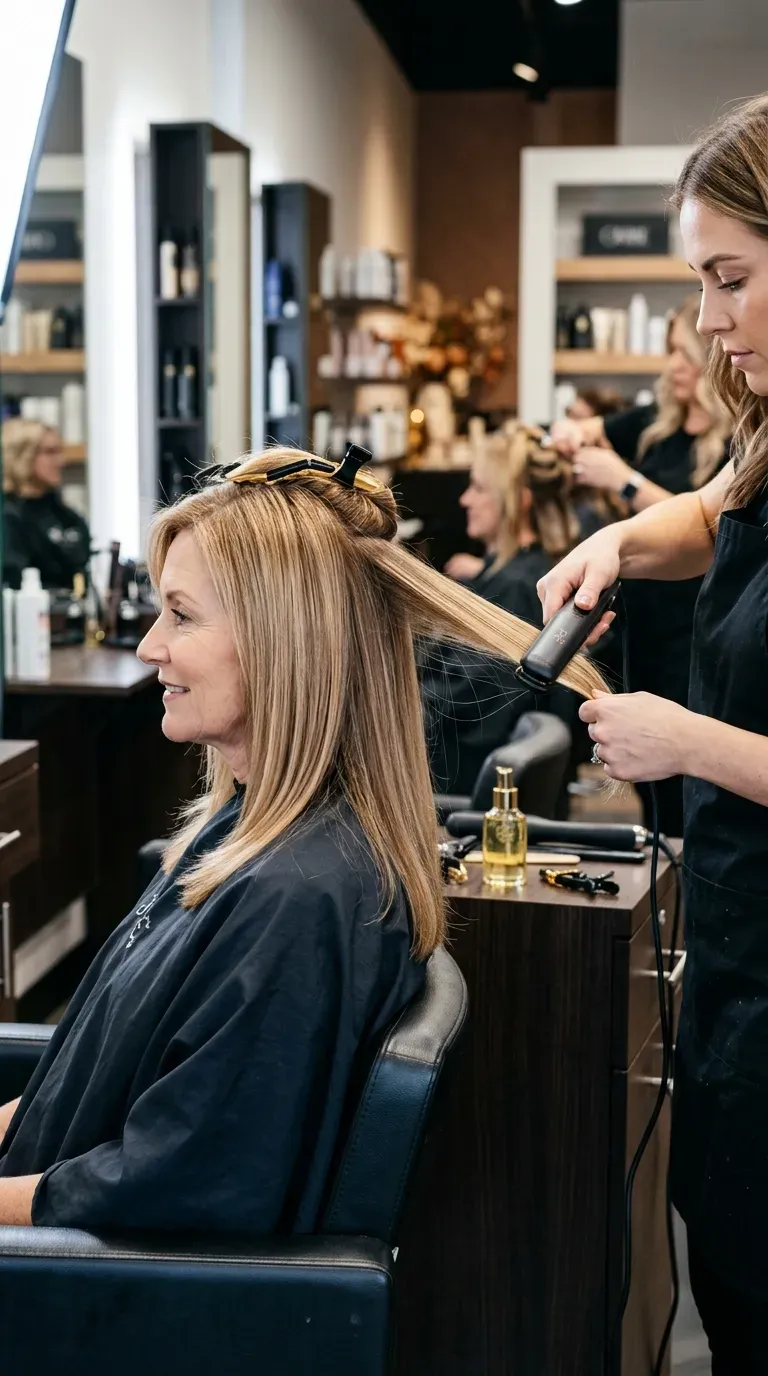
Vibe: Sleek.
Why it works: A flat iron smooths fine hair’s cuticle evenly, giving it a polished, glossy look, but heavy smoothing serums used on thicker hair will weigh fine hair flat almost instantly. A lightweight, silicone-light formula is essential for the same sleek effect without sacrificing volume.
How to get it: Flat-iron in thin sections no wider than half an inch, applying serum only at the very ends after straightening, not before.
Shop the Look:
- Ceramic flat iron with adjustable heat settings
- Lightweight anti-frizz serum
- Heat protectant spray
- Fine-tooth styling comb
- Glossing hair mist
10. Balayage Highlights That Fake Extra Fullness
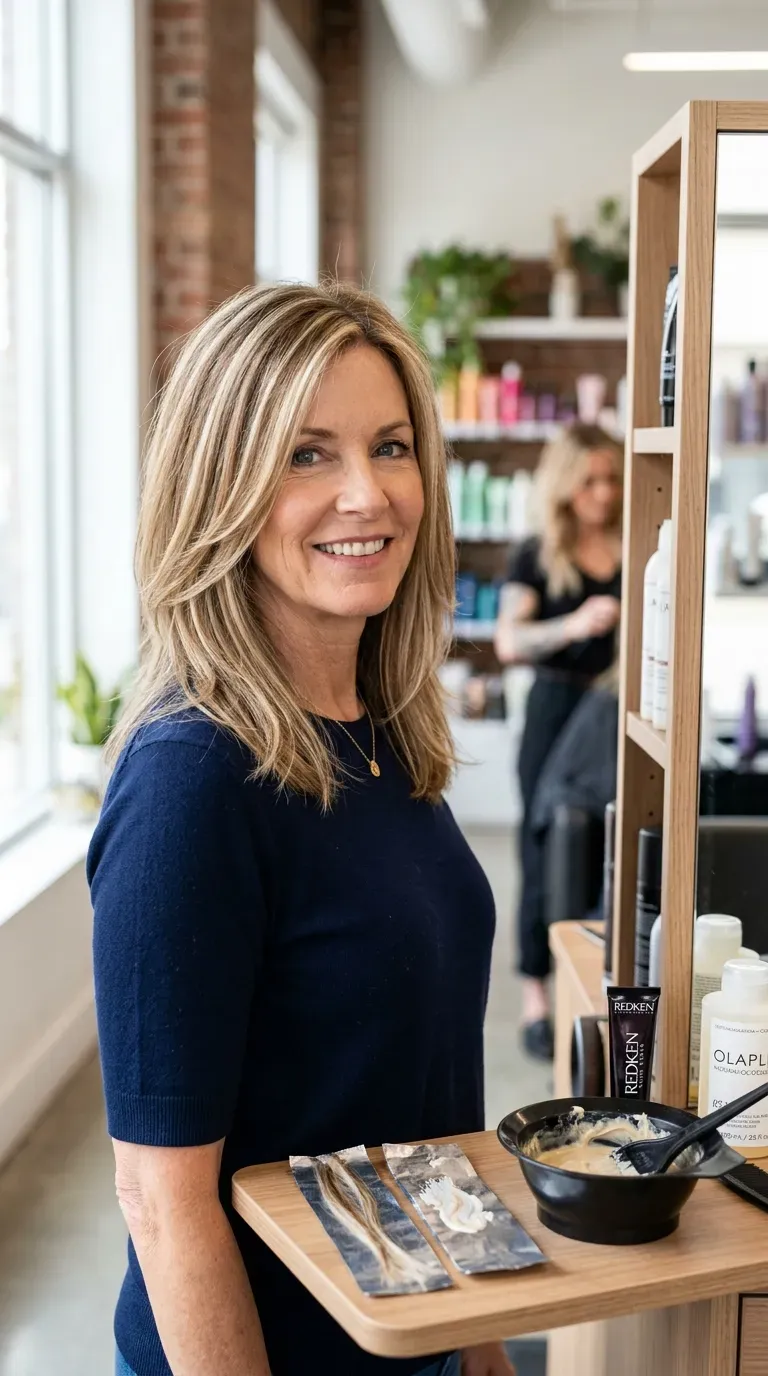
Vibe: Dimensional.
Why it works: Multiple close-together tones create visual depth that a single flat color can’t, and on fine hair this depth reads as more density since the eye perceives each shade shift as a separate strand grouping. The technique adds the illusion of thickness without any change to the actual cut.
How to get it: Ask your colorist for “low-lights and highlights placed close together throughout,” rather than one broad section of lighter color, which flattens the effect on fine hair.
💡 Quick Win: A color-safe purple shampoo used once a week keeps warm brassy tones from creeping into gray or blonde balayage between salon visits.
Shop the Look:
- Color-safe purple shampoo
- Color-protecting conditioner for fine hair
- UV protection hairspray
- Glossing shine drops
- Satin hair scrunchie set
11. Dry Shampoo Layers for Second-Day Lift
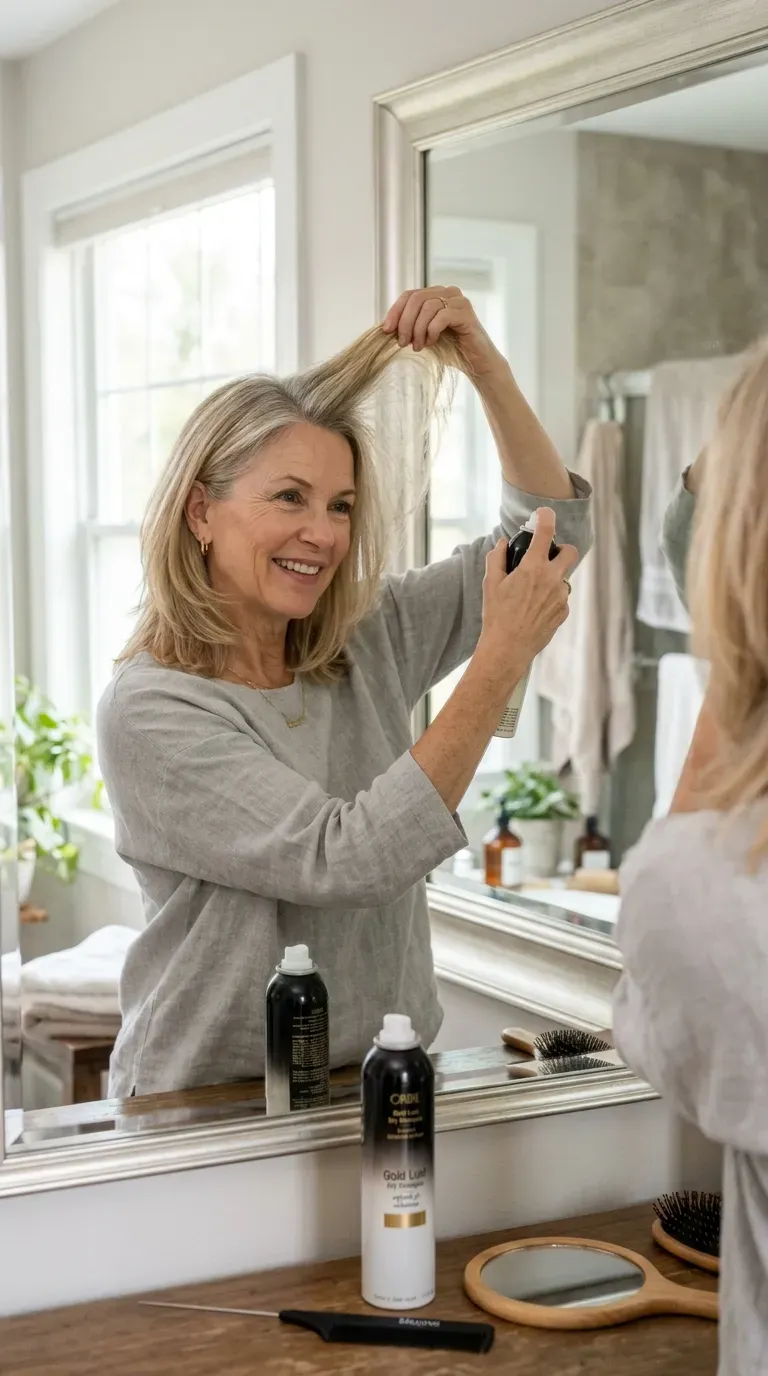
Vibe: Refreshed.
Why it works: Fine hair tends to go flat and oily faster than other textures, and dry shampoo absorbs that oil at the root while also adding a slightly gritty texture that helps layers hold their lift on the second day. Applied correctly, it can extend a good blowout by an extra full day.
How to get it: Spray dry shampoo directly onto the roots at night, before bed, rather than in the morning, giving it time to fully absorb oil before you style.
💡 Quick Win: Massaging the dry shampoo in with fingertips, rather than leaving it to sit on top, prevents the white cast that’s common on darker fine hair.
Shop the Look:
- Volumizing dry shampoo
- Fine-tooth teasing comb
- Root-lift spray
- Small handheld mirror for touch-ups
- Texturizing dry wax
12. Low-Maintenance Layers That Still Look Full
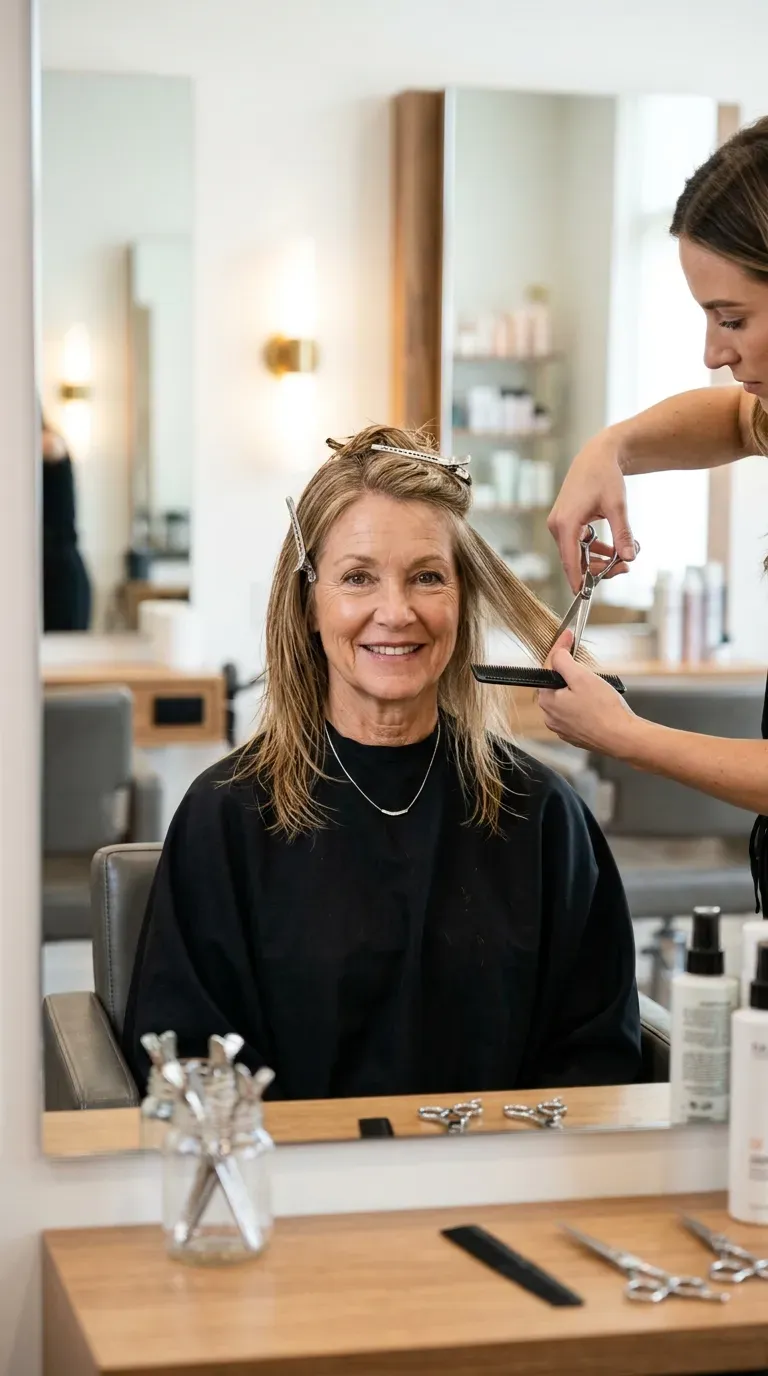
Vibe: Effortless.
Why it works: A layered cut with fewer, broader layer placements holds its fullness longer between wash days than a heavily layered style, since there are fewer distinct sections that can separate and reveal scalp. This makes it the more forgiving option for fine hair on busy mornings.
How to get it: Ask for “two to three broad layer placements maximum,” rather than many thin ones, which is easier to maintain without a full blowout every day.
Shop the Look:
- Volumizing dry shampoo
- Wide-tooth detangling comb
- Silk pillowcase
- Lightweight leave-in conditioner spray
- Root-lift touch-up spray
13. Razor-Free Layers to Preserve Density
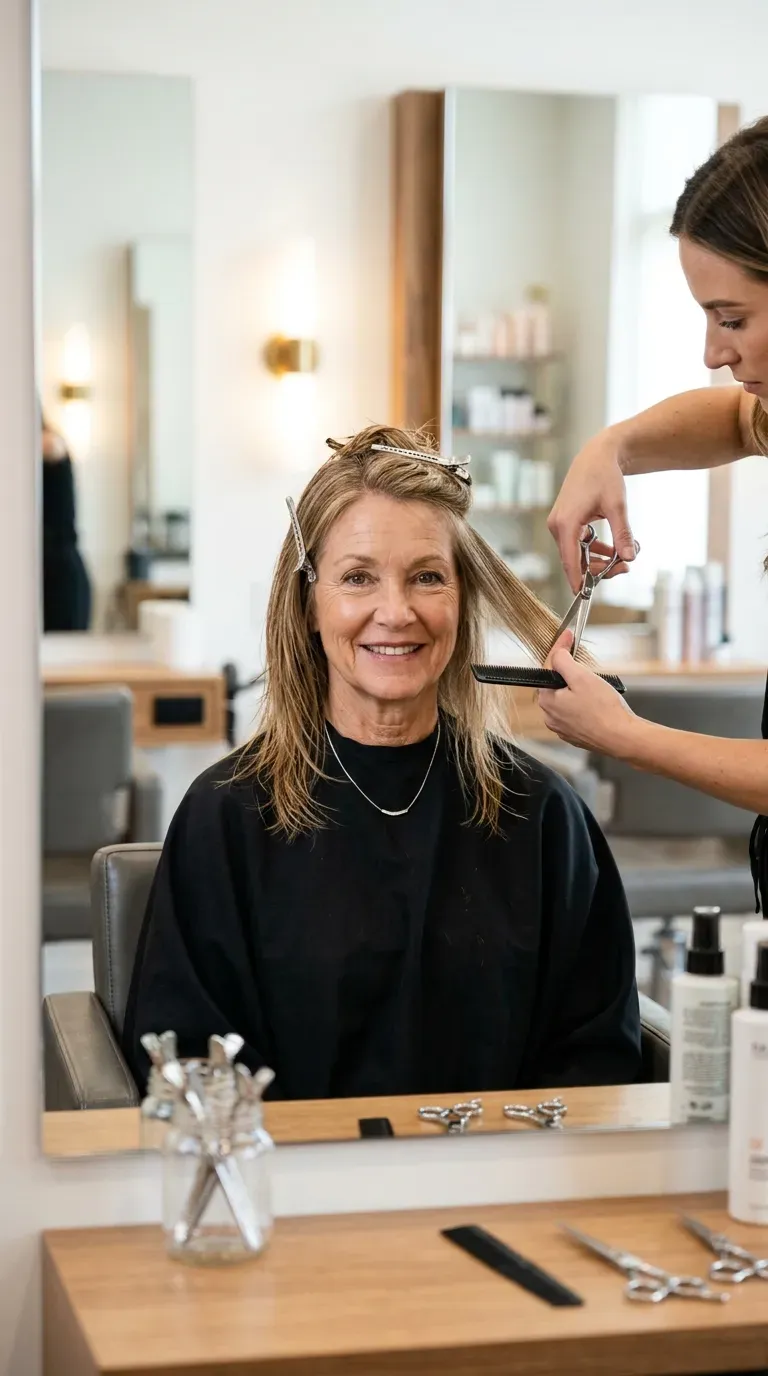
Vibe: Dense.
Why it works: A razor removes hair at an angle across many strands at once, which thins already-fine hair further and can leave it looking sparser than before the cut. Scissors, used with a blunt or lightly point-cut technique, remove far less actual mass while still shaping the layers.
How to get it: Specifically request “no razor, scissors only,” which many stylists default away from unless asked, since razoring is a faster technique on thicker hair.
Shop the Look:
- Thickening shampoo and conditioner
- Boar-bristle paddle brush
- Heat protectant primer
- Blunt-cut styling comb
- Lightweight finishing serum
14. Wavy Layers That Add Texture Without Weight
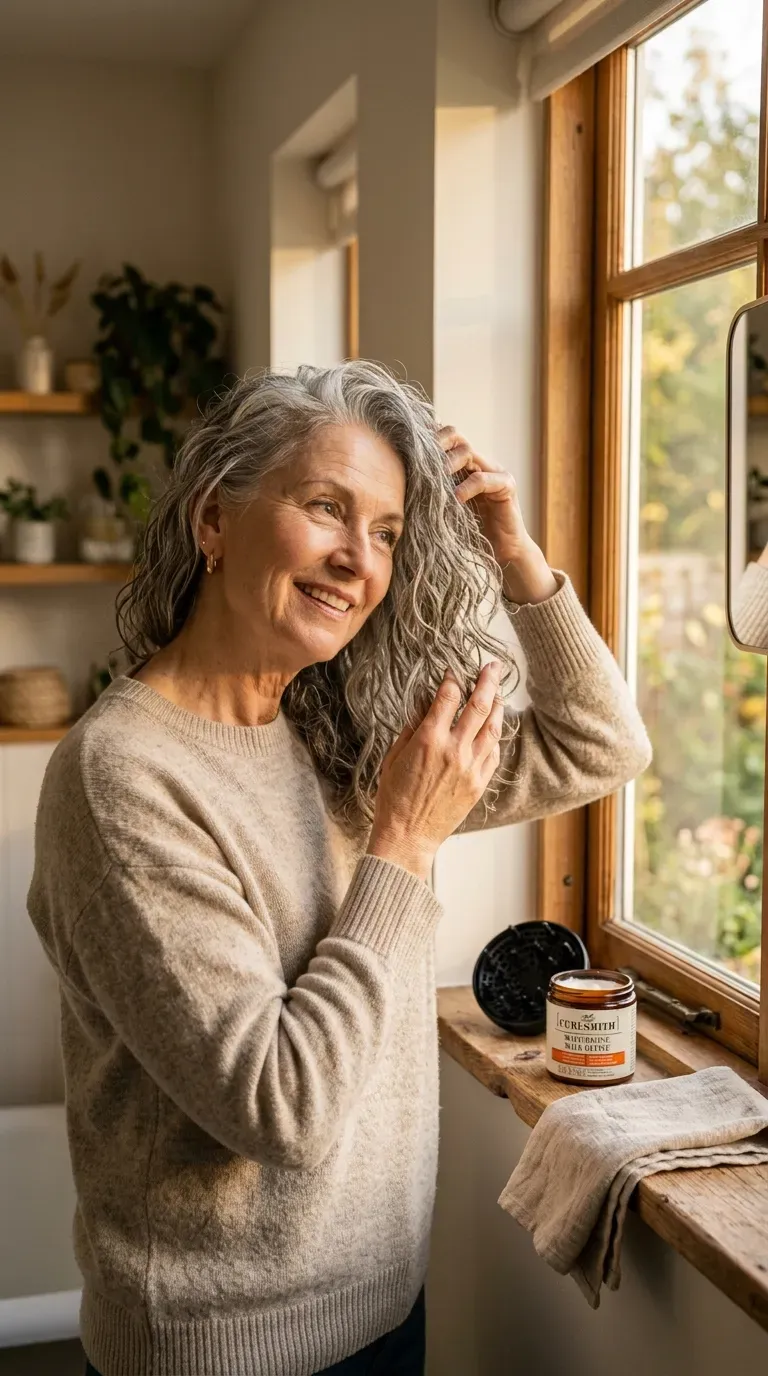
Vibe: Airy.
Why it works: A natural wave adds perceived body that fine straight hair can’t achieve on its own, so layers cut to work with that wave, rather than against it, get more visual fullness for free. Heavy creams weigh fine waves flat, so lightweight, water-based formulas are essential here.
How to get it: Ask your stylist to cut the layers while your hair is dry and in its natural wave state, and use only lightweight, water-based texturizers when styling at home.
💡 Quick Win: Applying wave-defining cream to soaking-wet hair, rather than damp hair, gives fine waves more definition before any frizz has a chance to set.
Shop the Look:
- Lightweight wave-defining cream
- Diffuser attachment for a blow dryer
- Sea-salt spray for waves
- Texturizing mousse for fine hair
- Anti-humidity finishing spray
15. Beachy Waves Layered for Soft Fullness
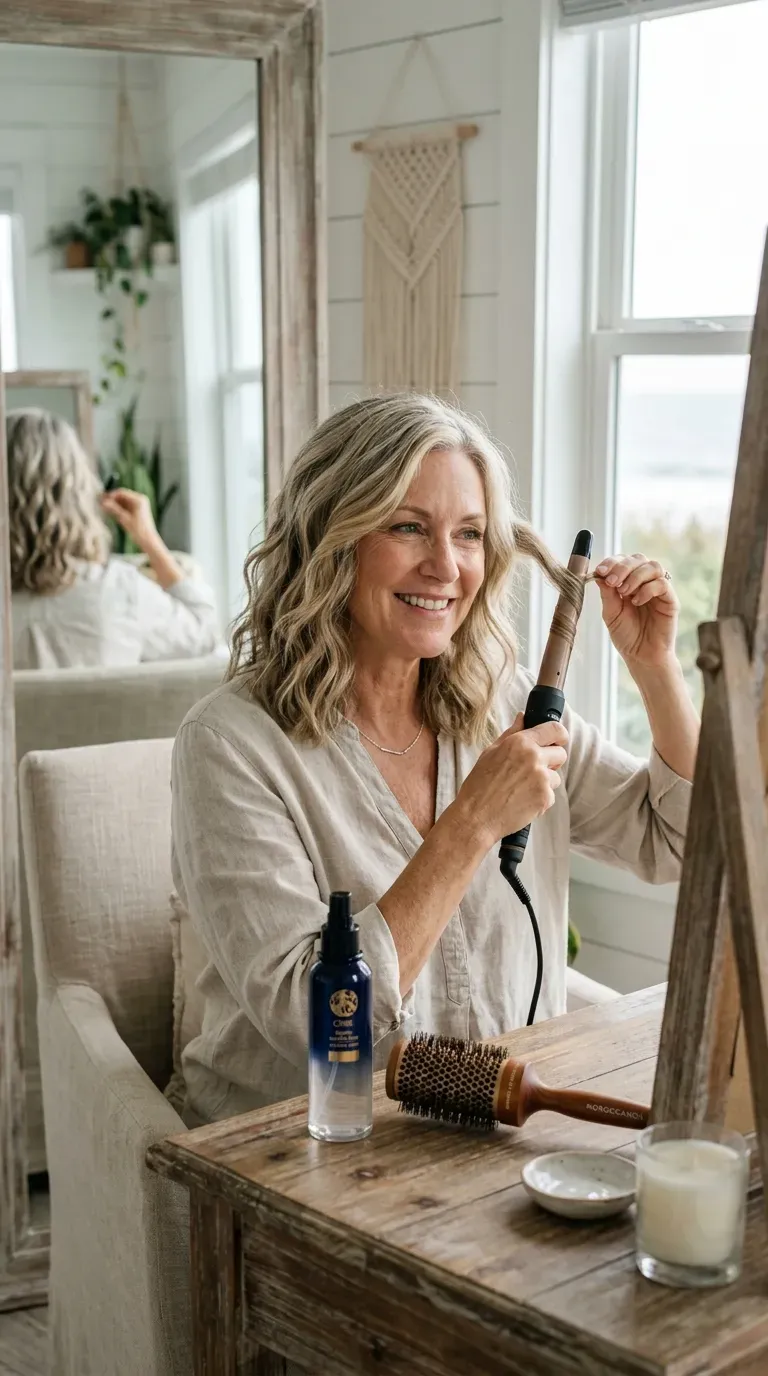
Vibe: Breezy.
Why it works: A curling wand creates temporary body that fine hair otherwise lacks, and curling only alternating sections, rather than every piece, keeps the wave irregular rather than uniform, which reads as fuller and more natural. Skipping the very ends when curling avoids the thin, wispy look that can happen when fine tips get overheated.
How to get it: Wrap sections around a 1-inch wand, alternating direction, and leave the last half-inch of each piece out of the clamp.
💡 Quick Win: Shaking the curls out with fingers instead of brushing them once they cool preserves more fullness than a brush, which tends to separate fine curls into fewer, flatter waves.
Shop the Look:
- 1-inch curling wand
- Texturizing salt spray
- Flexible-hold finishing hairspray
- Wide-barrel round brush
- Shine-enhancing hair mist
16. Side-Swept Bangs Blended for Fine Hair
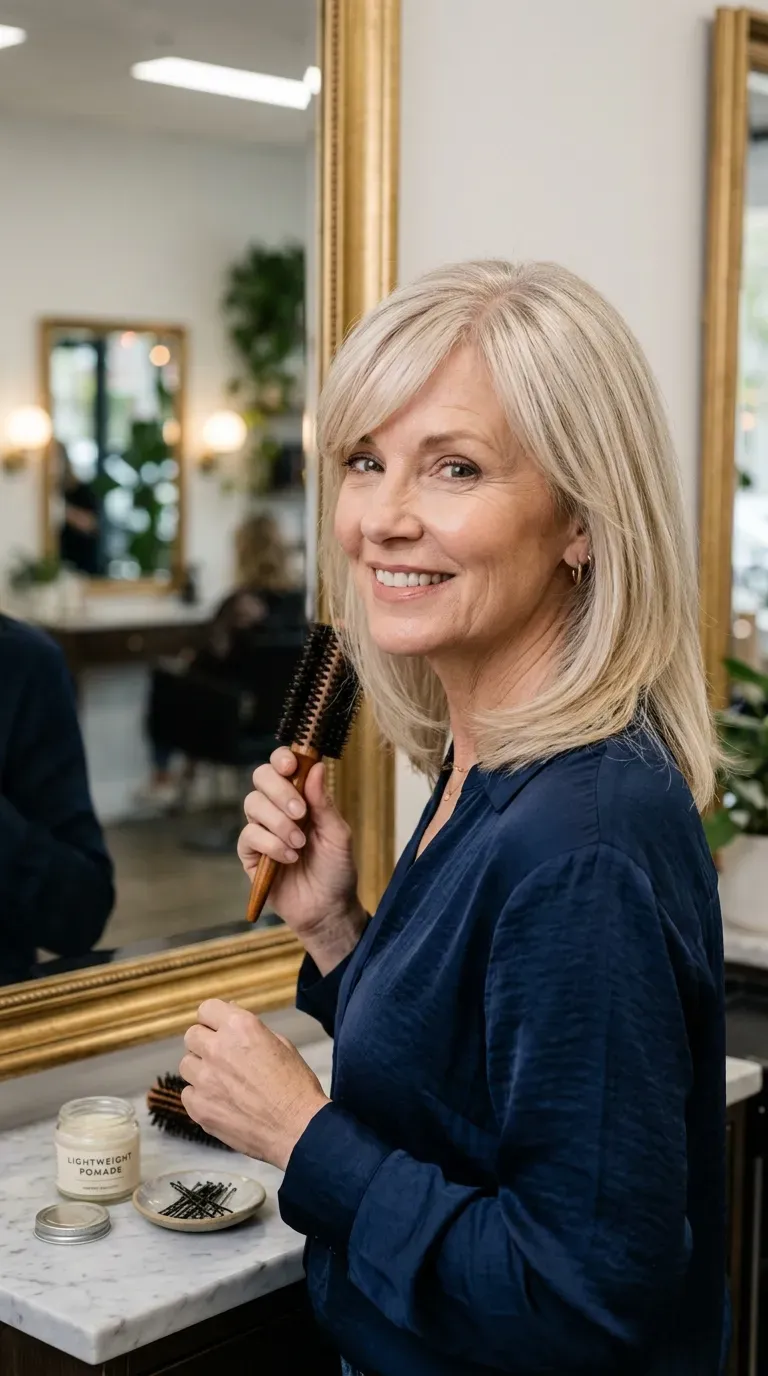
Vibe: Refined.
Why it works: Side-swept bangs cut on a diagonal blend into the surrounding layer instead of standing apart as a thin, separate section, which matters more on fine hair since an isolated fringe with too few strands can look sparse. The diagonal cut also distributes the bang’s weight across a wider section of the head.
How to get it: Part hair on the side you want the bangs to fall, and ask the stylist to take a slightly wider section than usual so the bang doesn’t look thin on its own.
Shop the Look:
- Small ceramic round brush
- Heat protectant styling spray
- Fine bobby pins
- Lightweight pomade for bang control
- Ionic dryer nozzle attachment
17. Hot Roller Layers for Maximum Lift
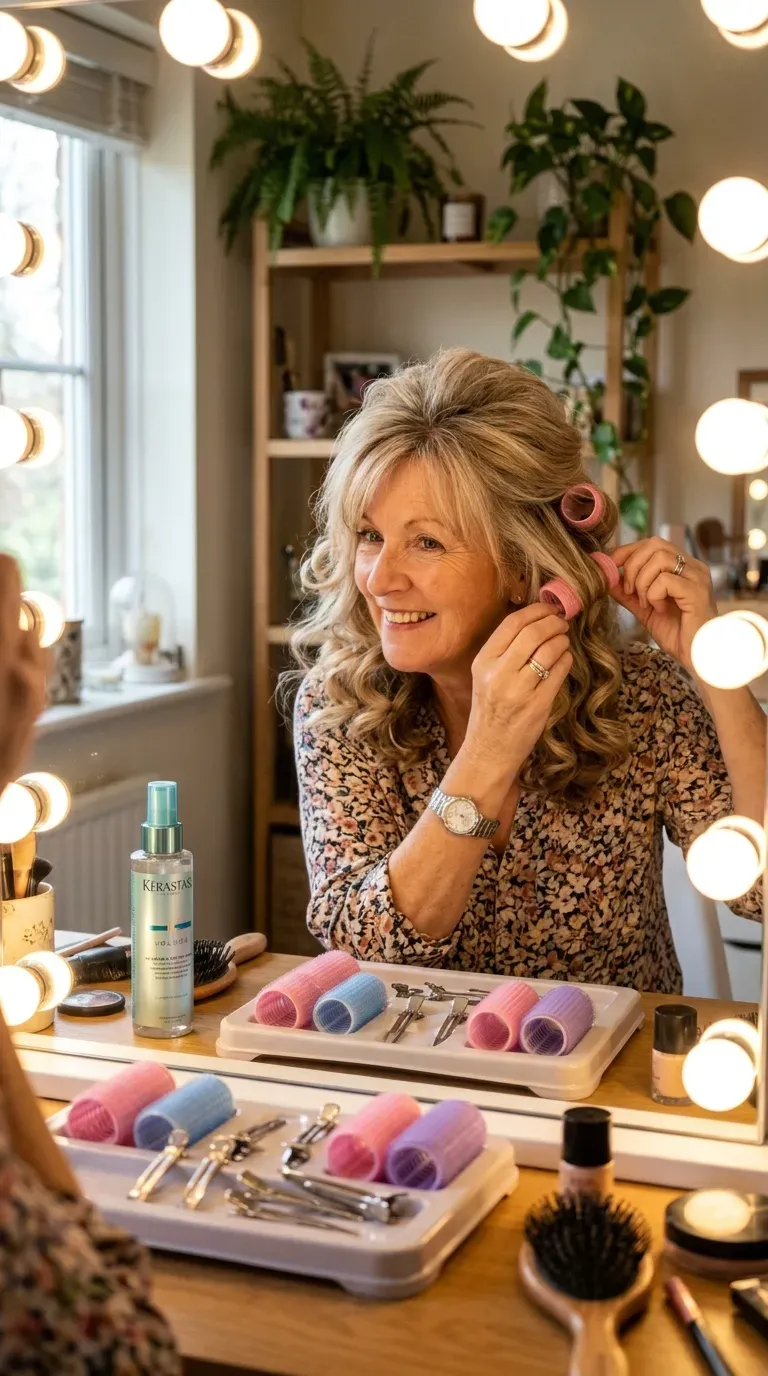
Vibe: Bouncy.
Why it works: Small-diameter hot rollers set a tighter curl than large ones, which creates more visible lift per section on fine hair, where each strand contributes less body individually. Setting rollers vertically at the root, rather than flat against the head, maximizes that lift even further.
How to get it: Set small rollers vertically at the roots specifically, leaving them in until fully cool, roughly fifteen minutes, before carefully unwinding to avoid flattening the set.
Shop the Look:
- Small velcro hot rollers
- Light-hold setting spray
- Root-lift clips
- Cooling hair clips
- Finishing hairspray for fine hair
How to Ask Your Stylist for Layers on Fine Hair
The single clearest first move is to tell your stylist your hair is fine before a single cut is made, and to specify that you want layers placed higher, closer to the crown, rather than long and low. That one detail changes the entire approach, since a stylist working without that information may default to techniques built for thicker hair.
The most common mistake is asking for “lots of layers” without qualifying hair type, which often results in a razor or heavily thinned cut that removes density fine hair can’t spare. The fix is to specifically request scissor-only cutting with minimal thinning, and to say the word “fine” out loud rather than assuming the stylist will identify it visually.
Three budget entry points under $20 create noticeable impact immediately: a travel-size root-lift spray, a small ceramic round brush for maximizing curl and lift, and a 4-ounce bottle of lightweight volumizing mousse.
Realistically, fine-hair layers need a trim every eight to ten weeks to keep the shortest crown layers from losing their shape. Salon visits run roughly $45 to $95 depending on region, while daily volume can be managed at home with dry shampoo and a round-brush blowout rather than requiring a professional restyle each time.
Frequently Asked Questions About Layers for Fine Hair
What’s the difference between layering fine hair and thick hair?
Layering fine hair uses fewer, closer-together layers placed higher on the head, with scissor-only cutting to preserve density, while thick hair can carry more layers, placed lower, and often benefits from razoring to remove excess weight. The goal on fine hair is adding the illusion of thickness; on thick hair, it’s usually removing bulk.
Do layers work on very fine, thinning hair?
Yes, but the shortest layers should be placed directly over any thinning areas, most often the crown, rather than around the face, since that’s where the density boost is needed most. Root-lift products and an upside-down blow-dry make a noticeable difference on top of the cut itself.
How much does a layered haircut cost for fine hair?
A layered cut for fine hair typically costs the same as any other layered style, running $45 to $95 at a mid-range salon, though some stylists charge slightly more for the additional blending time fine hair requires. At-home volumizing products generally add another $10 to $20 a month.
How often do layers on fine hair need to be trimmed?
Fine hair layers should be trimmed every eight to ten weeks, slightly more often than thicker hair, since fine ends split and thin visibly faster once they’ve grown past their shape. Skipping trims longer than that tends to make the layers look stringy rather than lifted.
What’s the best product for volume on fine, layered hair?
A lightweight, extra-hold volumizing mousse applied only at the roots on damp hair, followed by an upside-down blow-dry, gives the most reliable lift without weighing fine layers down. Heavy oils and creams should be avoided near the crown, since they flatten volume almost immediately on fine strands.
Ready to Try Layers for Fine Hair?
From crown-focused lift and razor-free density to balayage that fakes fullness and wavy layers that add texture for free, these 17 ideas cover a real range of techniques built specifically around what fine hair needs, not a generic layering approach borrowed from thicker textures. Finding the right layer placement for your own fine hair is rarely a one-visit decision, and asking your stylist to adjust the height or number of layers at your next trim is a completely normal part of getting it right. Start today by saving one reference photo and telling your stylist plainly that your hair is fine before the first cut is made. Once the layers are placed correctly, fine hair over 50 can look genuinely full and lifted rather than thin, without a single extension or added inch. Pin your favorites now, so your next appointment starts with exactly the right plan for your hair.