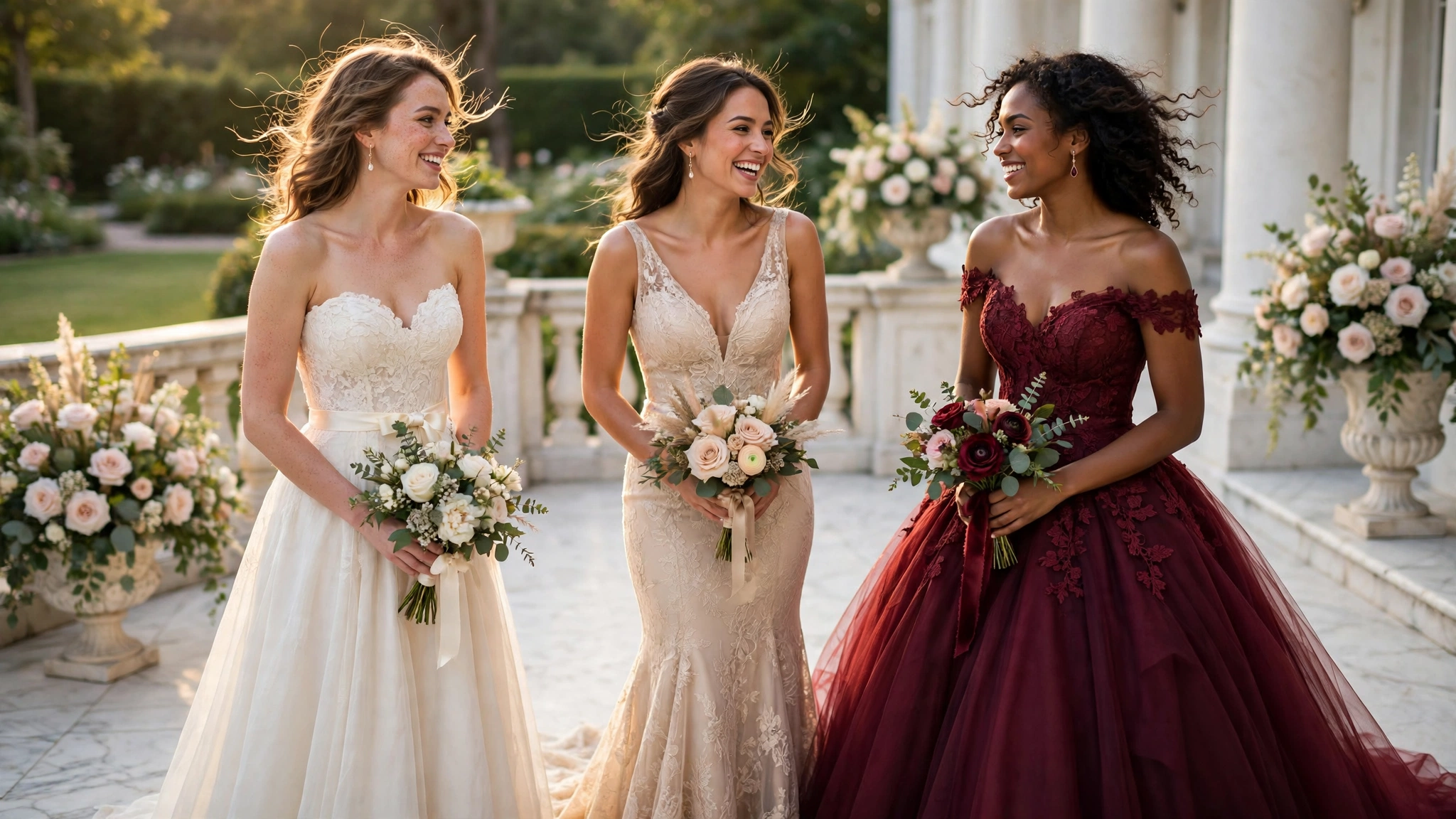
You have saved the photos, you know exactly the gown you want, and then the designer price tag ends the conversation. Made-to-measure quotes for a cord lace gown can run into the thousands, and most of that cost is not the lace itself, it is the label, the boutique fittings and the mystery markup around anything with the word bridal attached.
The reassuring part is that cord lace is one of the most tailor-friendly fabrics there is: it is sold by the yard in every shade, the corded motifs can be cut and appliquéd exactly where you want them, and most classic gown silhouettes are built from standard pattern blocks any experienced tailor already owns. Below are 23 cord lace gown styles chosen because a competent local tailor can genuinely recreate them, with notes on the construction, fabrics and trims that keep each one realistic.
1. Classic A-Line Cord Lace Gown with Sweetheart Neckline
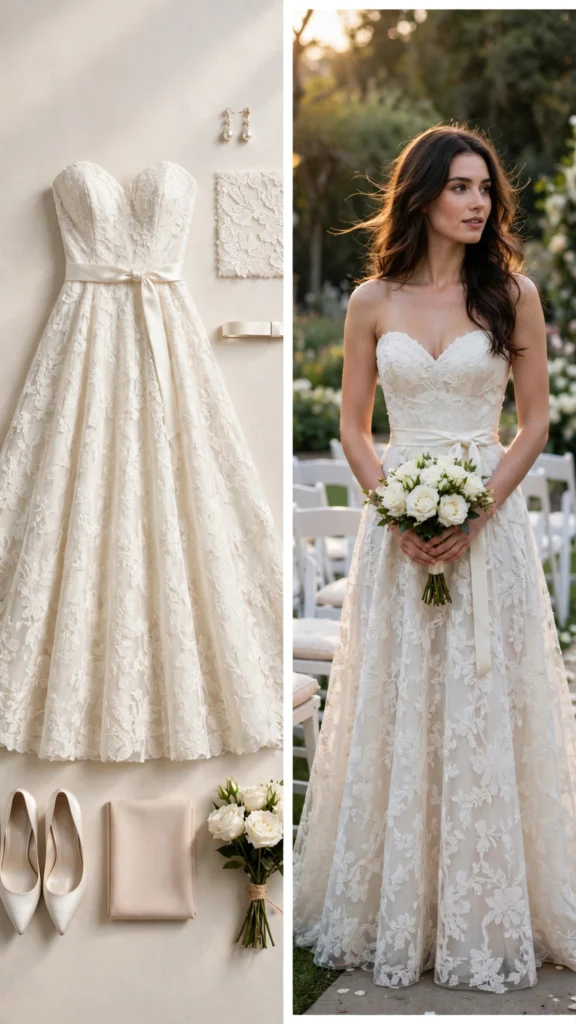
Why it works: The A-line is the most forgiving silhouette a tailor can cut, because the bodice does the shaping and the skirt simply falls from the waist with no complicated hip engineering. Cord lace over a plain satin lining lets the corded motifs carry all the detail, so the gown looks rich without a single bead being sewn on.
Get the look: Ask your tailor to build the sweetheart bodice on a standard corset block with light boning, then hand-appliqué cut lace motifs along the neckline edge so the pattern finishes cleanly. Four to five yards of cord lace is plenty for this shape, which keeps the fabric bill sensible.
Products to help you get this look:
- Ivory cord lace fabric by the yard — Search on Amazon
- Bridal satin lining fabric — Search on Amazon
- Sweetheart neckline gown sewing pattern — Search on Amazon
- Invisible zipper 22 inch ivory — Search on Amazon
- Ivory satin sash belt — Search on Amazon
2. Fitted Mermaid Cord Lace Gown with V-Neckline

Why it works: A mermaid shape sounds advanced, but it is really just a fitted sheath pattern with a flared godet or circle insert added below the knee, which is a standard alteration-room technique. The V-neckline is a simple two-seam construction that cord lace frames beautifully when the motifs are mirrored on each side.
Get the look: Have the tailor fit the bodice and hips over a nude lining first, then lay the cord lace over the top so the pattern can be positioned before anything is cut. Ask for the flare to start just below the knee and a short sweep train, which keeps the gown walkable for a full evening.
Products to help you get this look:
- Champagne cord lace fabric by the yard — Search on Amazon
- Mermaid gown sewing pattern — Search on Amazon
- Nude illusion mesh lining fabric — Search on Amazon
- Strappy gold heeled sandals — Search on Amazon
- Crystal drop earrings — Search on Amazon
3. Off-Shoulder Cord Lace Ball Gown with Full Skirt

Why it works: The drama of a ball gown comes from volume, not difficulty: the skirt is wide rectangles and gathered tulle over a shop-bought crinoline, while the real tailoring sits in a small fitted off-shoulder bodice. Cord lace on the bodice with a plain satin or tulle skirt also halves the lace yardage you need to buy.
Get the look: Ask for the lace only on the bodice and off-shoulder band, with the skirt in matching satin over a ready-made petticoat your tailor can order in. A wide satin ribbon sash hides the waist seam where the two fabrics meet, which is exactly how boutique gowns finish the join.
Products to help you get this look:
- Burgundy cord lace fabric by the yard — Search on Amazon
- Crinoline petticoat ball gown — Search on Amazon
- Burgundy satin fabric by the yard — Search on Amazon
- Wide satin ribbon sash — Search on Amazon
- Garnet drop earrings — Search on Amazon
4. High-Neck Cord Lace Gown with Illusion Back
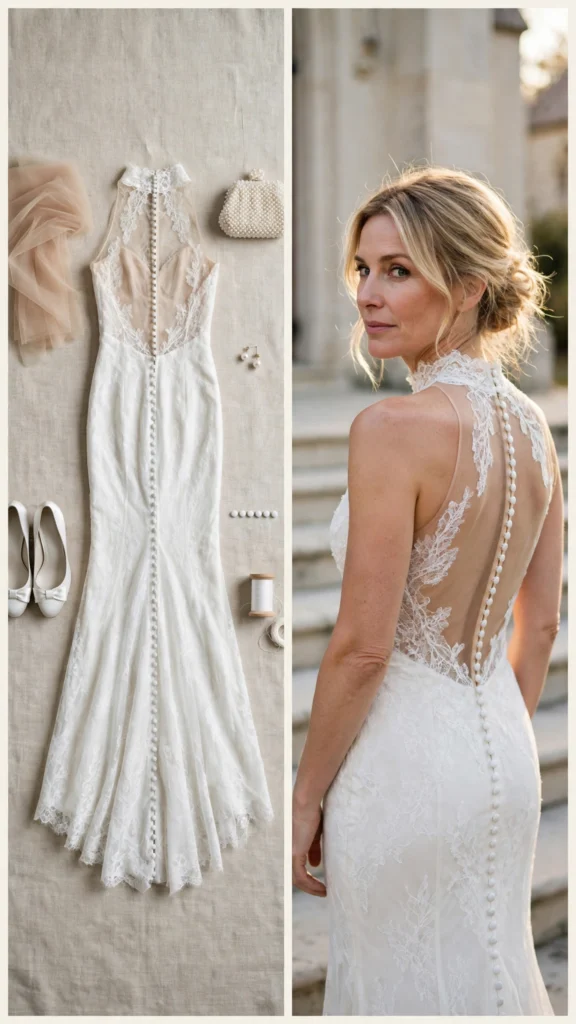
Why it works: The illusion back is a tailor's shortcut that looks like couture: cord lace motifs are hand-stitched onto nude illusion tulle, so the lace appears to float on skin with no straps or structure to engineer. The high neckline is a modest jewel collar, one of the simplest necklines to draft and fit.
Get the look: Ask your tailor to buy illusion tulle matched to your skin tone and to appliqué the motifs densely at the shoulders and waist, scattering them thinner across the back. A row of small covered buttons down the illusion panel is decorative only, so the gown can still close with a hidden zip or hooks.
Products to help you get this look:
- White cord lace fabric by the yard — Search on Amazon
- Nude illusion tulle fabric — Search on Amazon
- Covered buttons bridal loop — Search on Amazon
- White satin court shoes — Search on Amazon
- Pearl stud earrings — Search on Amazon
5. Long-Sleeve Cord Lace Gown with Satin Sash
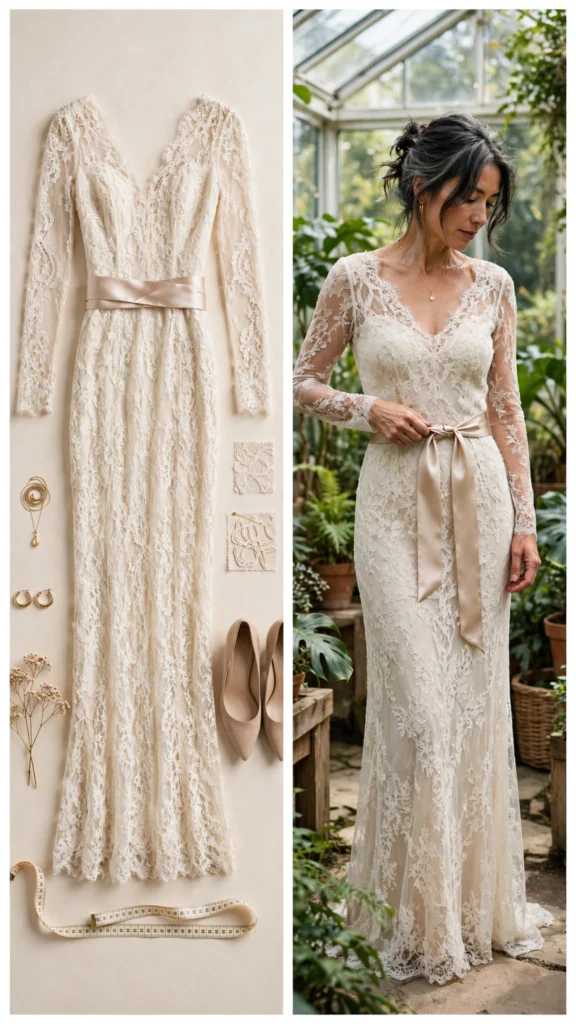
Why it works: Long sleeves in cord lace ask very little of the tailor, because the sleeves are unlined, cut on a basic fitted sleeve block and set into a simple round armhole. The satin sash does the waist shaping from the outside, so the gown underneath can stay a clean, easy column.
Get the look: Have the tailor leave the sleeves unlined so the corded pattern shows against your skin, and line only the bodice and skirt. Choose a wide sash in matte satin rather than shiny, because it photographs richer and hides the waist seam completely.
Products to help you get this look:
- Ivory cord lace fabric long sleeve gown — Search on Amazon
- Champagne satin sash wide — Search on Amazon
- Nude pointed toe heels — Search on Amazon
- Gold pendant necklace delicate — Search on Amazon
- Dressmaker measuring tape — Search on Amazon
6. Strapless Cord Lace Gown with Corset Bodice

Why it works: A corset bodice is the one structured piece in this list, but corsetry is core tailor craft: spiral steel boning in a lined bodice is a standard skill, and it is what lets a strapless gown stay up all night without tugging. Once the corset fits, the skirt is a simple gathered or A-line panel of lace over lining.
Get the look: Book one extra fitting just for the corset before the lace goes on, because the boned base has to be perfect first. Ask for a waist stay inside the bodice, a grosgrain band that hooks at the waist and quietly carries the skirt's weight.
Products to help you get this look:
- Blush cord lace fabric by the yard — Search on Amazon
- Spiral steel boning corset — Search on Amazon
- Corset bodice sewing pattern — Search on Amazon
- Blush satin heels — Search on Amazon
- Pink pearl drop earrings — Search on Amazon
7. Cord Lace Gown with Detachable Overskirt

Why it works: Two looks in one is pure construction logic: a fitted lace sheath underneath, and a tulle overskirt that fastens at the waist with hooks or snaps hidden under a belt. Separates are actually easier for a tailor than one complicated gown, because each piece is fitted and finished on its own.
Get the look: Ask for the overskirt waistband in matching satin with the fastenings completely covered by a slim belt or sash. Wear the full skirt for the ceremony, then remove it for the reception and dancing, which is exactly the trick designer gowns charge extra for.
Products to help you get this look:
- Ivory tulle fabric by the yard — Search on Amazon
- Detachable tulle overskirt wedding — Search on Amazon
- Clear snap fasteners sewing — Search on Amazon
- Slim crystal bridal belt — Search on Amazon
- Diamond stud earrings — Search on Amazon
8. Two-Piece Cord Lace Crop Top and Skirt Set

Why it works: A two-piece is the easiest formal gown on this list to commission, because the tailor fits a simple cropped bodice and a separate skirt instead of engineering one long dress. Each piece is a basic pattern, the waistlines meet neatly, and you can wear the skirt again with a satin camisole after the event.
Get the look: Ask for the crop top to overlap the skirt waistband by an inch when you stand straight, so no gap opens when you sit or dance. Keep the skirt high-waisted and fully lined, and let the lace's own scalloped edge finish the top's hem with no extra trim needed.
Products to help you get this look:
- Sage green cord lace fabric — Search on Amazon
- Crop top sewing pattern women — Search on Amazon
- Maxi skirt sewing pattern — Search on Amazon
- Tan leather flat sandals — Search on Amazon
- Woven straw clutch bag — Search on Amazon
9. Halter-Neck Cord Lace Gown with Open Back
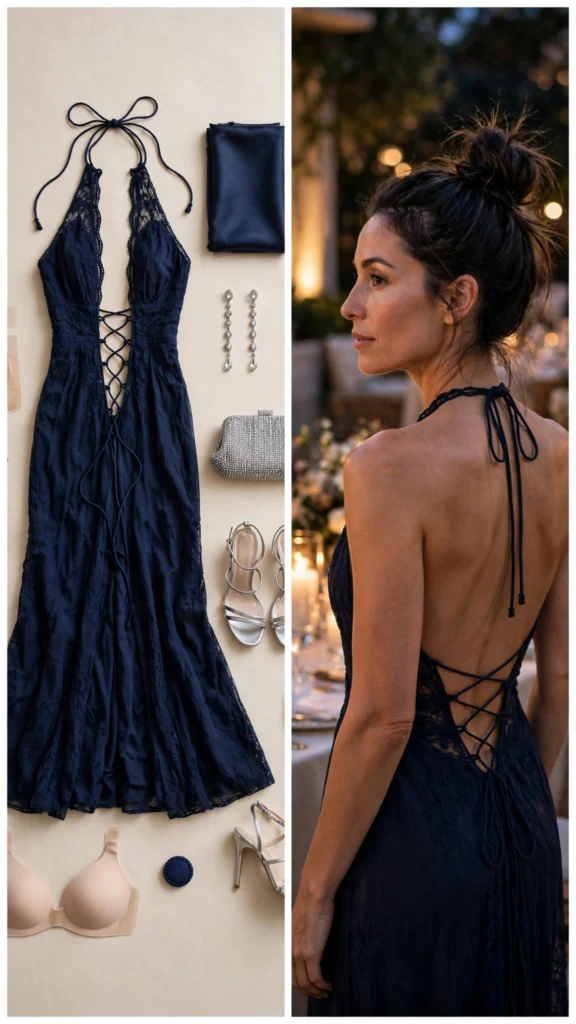
Why it works: A halter neckline holds itself up with one strap around the neck, so the open back needs no zips, straps or illusion panels to construct. The bodice is essentially two shaped panels joined at the neck and waist, which is why tailors can draft it quickly and fit it in a single session.
Get the look: Choose cord lace with a strong motif the tailor can place symmetrically up the front, and ask for the back edges to be finished with the lace's own scallop border. An adhesive bra or sewn-in cups keeps the back completely clean, with no straps crossing the open space.
Products to help you get this look:
- Navy cord lace fabric by the yard — Search on Amazon
- Adhesive backless bra — Search on Amazon
- Sew in bra cups — Search on Amazon
- Silver strappy heels — Search on Amazon
- Silver beaded clutch bag — Search on Amazon
10. Cap-Sleeve Cord Lace Sheath Gown
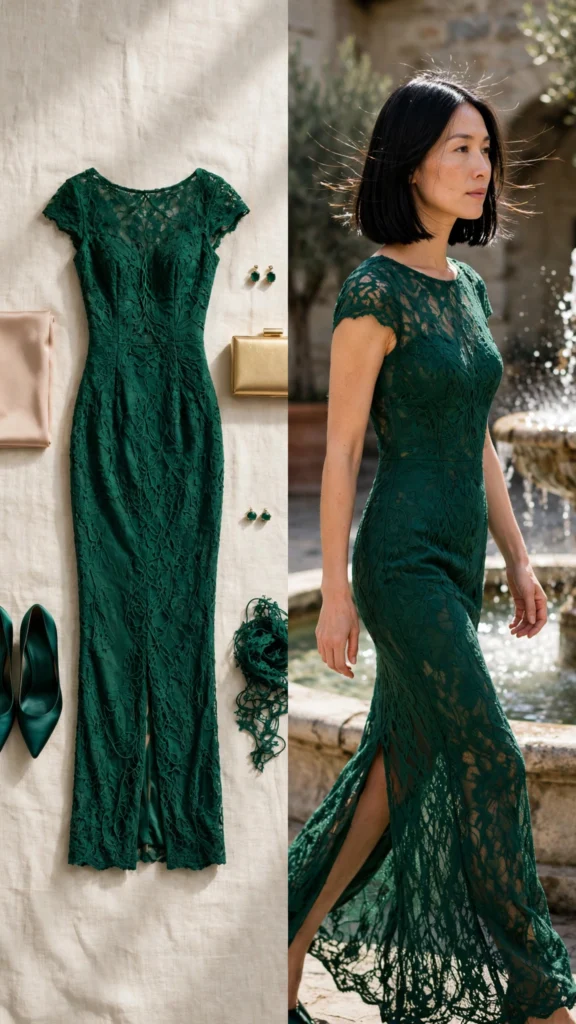
Why it works: The sheath is the simplest gown pattern in existence: front, back, darts and a zip, and the little cap sleeves are just shaped extensions of the shoulder line rather than separate set-in sleeves. Cord lace gives the plain column all its interest, so the tailor's work stays in the fitting, where it belongs.
Get the look: Ask for a walking slit at the back and the lining cut a fraction shorter than the lace so the scalloped hem shows cleanly. Emerald, navy and burgundy cord lace are stocked year-round by fabric sellers, so this style never waits on a special order.
Products to help you get this look:
- Emerald cord lace fabric by the yard — Search on Amazon
- Sheath dress sewing pattern — Search on Amazon
- Emerald satin pumps — Search on Amazon
- Gold box clutch bag — Search on Amazon
- Emerald stud earrings — Search on Amazon
11. Cord Lace Gown with Scalloped Train
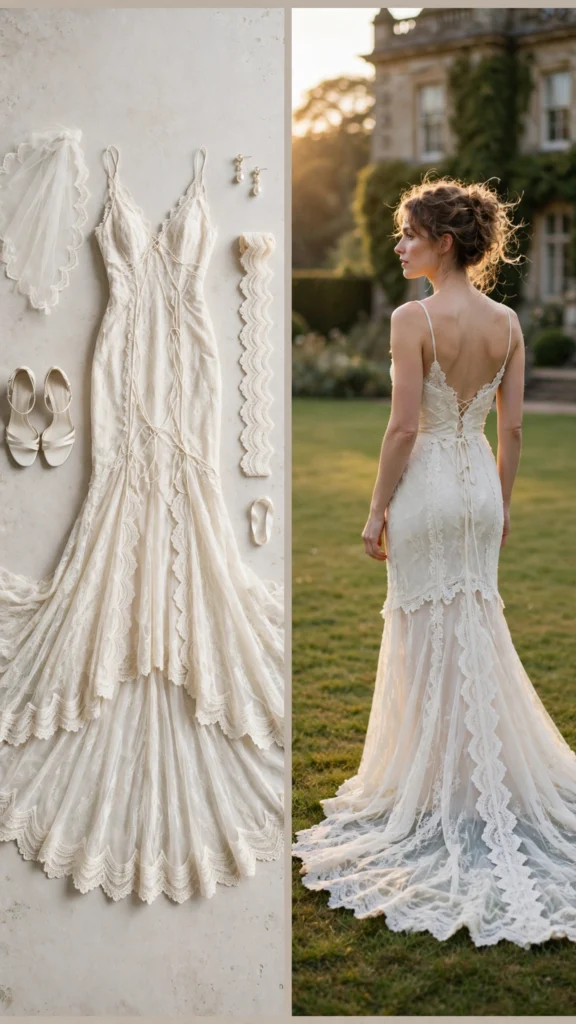
Why it works: This train is not extra engineering, it is the fabric's own border: cord lace is woven with a finished scalloped edge, and the tailor simply cuts the skirt so that edge becomes the hem and train. No hemming, no added trim, and the most photographed part of the gown is the part the fabric made by itself.
Get the look: Buy cord lace with a deep, pronounced scallop on both selvedges, and ask the tailor to plan the skirt panels around those borders before cutting anything else. A simple wrist loop or a single bustle button underneath lifts the train for the evening without any visible hardware.
Products to help you get this look:
- Scalloped edge cord lace fabric — Search on Amazon
- Lace trim scallop border — Search on Amazon
- Fingertip veil lace edge — Search on Amazon
- Ivory heeled sandals — Search on Amazon
- Pearl drop earrings — Search on Amazon
12. One-Shoulder Cord Lace Gown with Side Slit
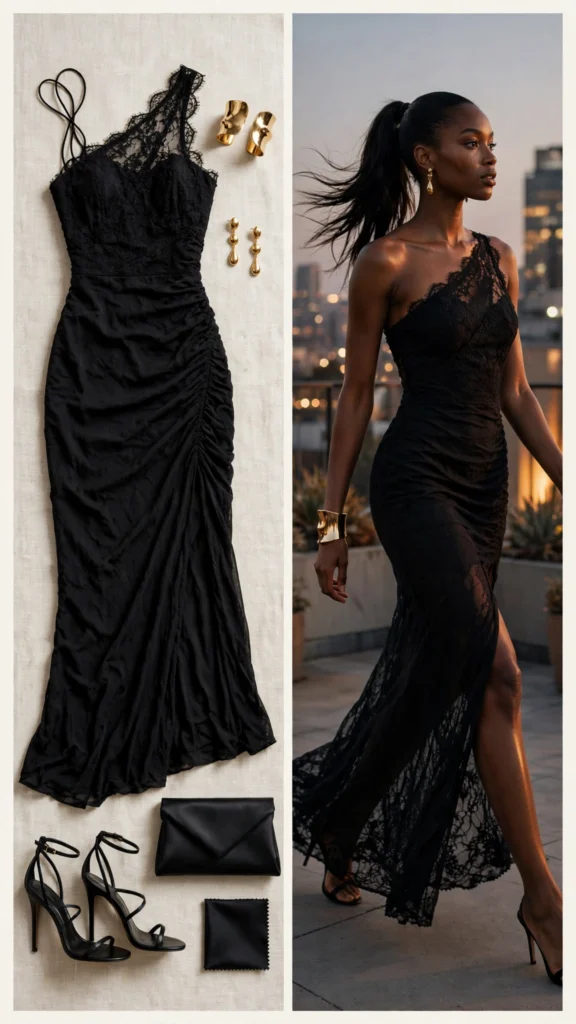
Why it works: One-shoulder looks dramatic but drafts easily: it is a standard fitted bodice with one diagonal neckline edge, and the single strap carries the support so there is no strapless engineering to solve. The side slit is equally simple, just a seam left open from the knee with both edges finished in the lace.
Get the look: Ask your tailor to place a large cord motif right on the shoulder point, because that is where every eye lands and it anchors the asymmetric line. Keep the slit starting below mid-thigh and the lining slit a little shorter, so the lace moves but coverage stays secure.
Products to help you get this look:
- Black cord lace fabric by the yard — Search on Amazon
- One shoulder gown sewing pattern — Search on Amazon
- Black strappy stiletto sandals — Search on Amazon
- Gold cuff bracelet statement — Search on Amazon
- Black satin clutch bag — Search on Amazon
13. Empire-Waist Cord Lace Gown with Chiffon Skirt
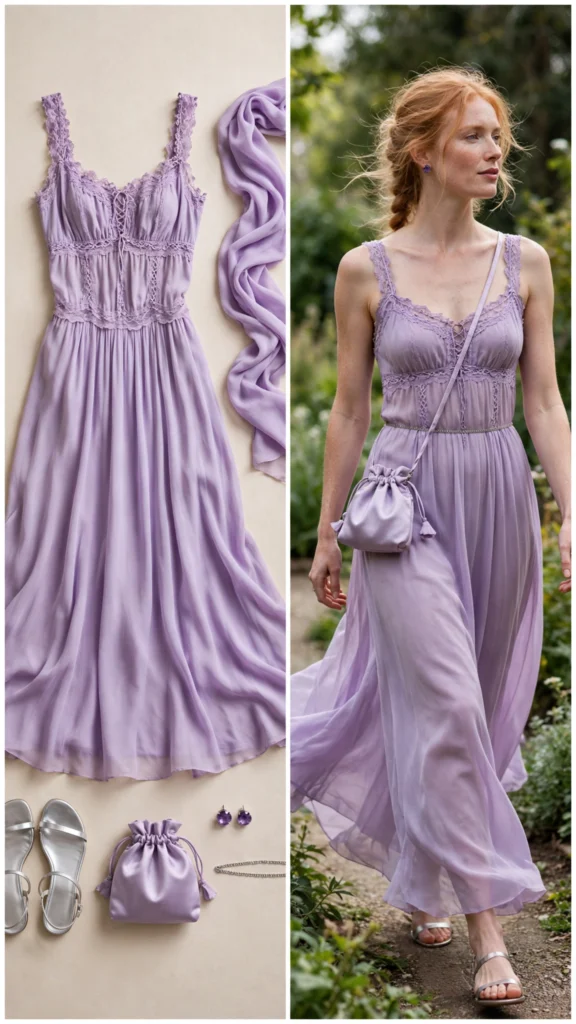
Why it works: The empire line puts the only fitted seam directly under the bust, which is the fastest bodice a tailor can fit and the most forgiving to wear and alter later. Below that seam the chiffon skirt is gathered rectangles, so nearly all the lace expense concentrates in one small bodice that takes barely a yard of fabric.
Get the look: Ask for the cord lace only on the bodice and cap sleeves, with two soft layers of chiffon over a light lining for the skirt. This shape is also the easiest to adjust between order and event day, because the loose skirt hides small weight changes completely.
Products to help you get this look:
- Lilac cord lace fabric — Search on Amazon
- Lilac chiffon fabric by the yard — Search on Amazon
- Empire waist gown pattern — Search on Amazon
- Silver flat sandals — Search on Amazon
- Amethyst stud earrings — Search on Amazon
14. Boat-Neck Cord Lace Gown with Three-Quarter Sleeves

Why it works: A boat neck is a gentle straight-across curve, the easiest neckline of all to draft, and three-quarter sleeves stop exactly where fitting gets fiddly, at the elbow's narrow side rather than over it. Tailors like this combination because the bodice block needs almost no modification from a standard dress pattern.
Get the look: Ask for the sleeves unlined and the neckline edge finished with the lace's own border so there is no facing to flip or pucker. Dusty blue and sage cord lace photograph beautifully in daylight and are stocked in most fabric shops, keeping the whole order simple.
Products to help you get this look:
- Dusty blue cord lace fabric — Search on Amazon
- Boat neck dress sewing pattern — Search on Amazon
- Dusty blue satin heels — Search on Amazon
- Silver grey clutch bag — Search on Amazon
- Sapphire stud earrings — Search on Amazon
15. Cord Lace Gown with Appliqué Bodice and Tulle Skirt

Why it works: Instead of buying yards of all-over lace, your tailor buys one yard, cuts out the individual corded motifs and hand-appliqués them onto a nude bodice base in whatever density you like. It is the most economical route to a heavily decorated bodice, and the placement can be adjusted on your body at the fitting before a single stitch is final.
Get the look: Agree the motif layout while you are wearing the plain bodice, with the tailor pinning motifs and stepping back to judge the balance. Finish with a gathered tulle skirt in layers over satin, because tulle is inexpensive and its volume makes the decorated bodice look even more detailed by contrast.
Products to help you get this look:
- Cord lace applique motifs — Search on Amazon
- Invisible thread for applique — Search on Amazon
- Ivory tulle skirt fabric layers — Search on Amazon
- Applique scissors small — Search on Amazon
- Ivory ballet flats — Search on Amazon
16. Square-Neck Cord Lace Gown with Puff Sleeves

Why it works: A square neckline is ruled with straight lines and right angles, so it is quicker to draft and easier to keep symmetrical than any curve. The puff sleeves are small gathered rectangles set into the armhole and caught into a band, a beginner-level sleeve that still reads romantic and deliberate.
Get the look: Ask your tailor to finish the square neckline with a narrow lace border so the angles stay crisp, and to keep the puffs modest rather than oversized for an elegant rather than costume feel. Because the bodice is so geometric, this style suits a toile fitting in cheap cotton first to perfect the neckline width.
Products to help you get this look:
- White cord lace fabric by the yard — Search on Amazon
- Square neck dress pattern — Search on Amazon
- White heeled mules — Search on Amazon
- Small white beaded bag — Search on Amazon
- Muslin fabric for toile fitting — Search on Amazon
17. Plunging V-Neck Cord Lace Gown with Nude Lining

Why it works: The plunge looks daring, but construction-wise it is two bodice fronts cut to a deep V and stabilized with a small bridge of illusion mesh at the base, a standard evening-gown technique. The nude lining does all the modesty work, so the lace pattern can stay open and dramatic without the gown ever feeling risky to wear.
Get the look: Have your tailor match the lining closely to your skin tone and place the largest cord motifs along the V edges so the neckline reads finished rather than cut. Ask for the mesh bridge to sit exactly where the V ends, invisible in photos but doing all the holding.
Products to help you get this look:
- Red cord lace fabric by the yard — Search on Amazon
- Nude lining fabric skin tone — Search on Amazon
- Illusion mesh fabric nude — Search on Amazon
- Red satin stiletto heels — Search on Amazon
- Long gold drop earrings — Search on Amazon
18. Belted-Waist Cord Lace Gown with A-Line Skirt
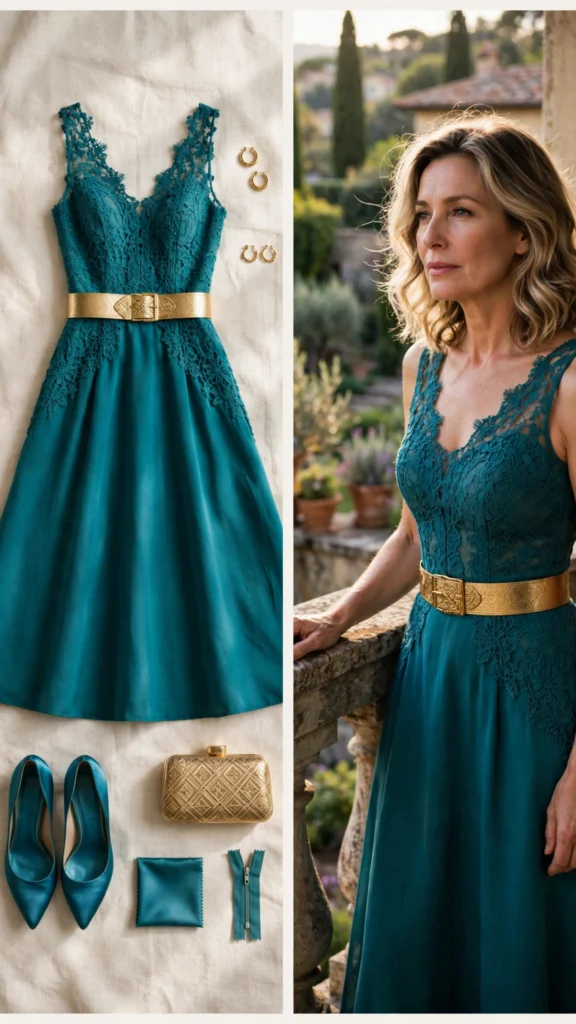
Why it works: A separate belt is a tailor's best friend: it defines the waist from outside, so the gown itself can be a straightforward lace A-line with a simple scoop neck and no internal shaping at all. Because the belt is bought or made separately, you can also swap it later and get a second look from the same dress.
Get the look: Order the gown in a jewel tone like teal or plum, where cord lace is widely stocked, and have the tailor add tiny thread loops at the side seams to keep the belt in place. A wide metallic or satin belt photographs as part of the gown, not an afterthought, when its color echoes your shoes or clutch.
Products to help you get this look:
- Teal cord lace fabric — Search on Amazon
- Wide gold metallic belt — Search on Amazon
- Teal satin heels — Search on Amazon
- Gold minaudiere clutch — Search on Amazon
- Concealed invisible zipper pack — Search on Amazon
19. Tea-Length Cord Lace Gown with Scalloped Hem

Why it works: Tea length is the budget-smart version of the scallop trick: the skirt ends at mid-calf, so the tailor cuts the hem straight along the lace's woven border and uses far less fabric than a floor-length gown. The shorter skirt also needs only one light net layer underneath, which keeps both making and alteration costs down.
Get the look: Ask for the hem to sit at the narrowest point of your calf and for a short net underskirt to give the skirt its vintage swing. This length suits registry offices, garden ceremonies and second weddings, and it shows off good shoes instead of hiding them.
Products to help you get this look:
- Dusty pink cord lace fabric — Search on Amazon
- Tea length dress sewing pattern — Search on Amazon
- Dusty pink block heel shoes — Search on Amazon
- Short net underskirt petticoat — Search on Amazon
- Rose gold stud earrings — Search on Amazon
20. Cord Lace Gown with Sheer Sleeves and Keyhole Back

Why it works: A keyhole back is a small bound opening closed by one button, which gives the effect of an open back with almost none of the fitting risk, because the bodice still has a full back panel holding its shape. Sheer unlined sleeves repeat the illusion effect on the arms using nothing more than the lace itself.
Get the look: Ask your tailor to keep the keyhole modest, about a hand's width, positioned between the shoulder blades where the back is flattest. One covered button and a hand-worked loop close it, and the rest of the back can take a standard concealed zip below the opening.
Products to help you get this look:
- Plum cord lace fabric by the yard — Search on Amazon
- Covered button making kit — Search on Amazon
- Plum satin heels — Search on Amazon
- Silver drop earrings — Search on Amazon
- Small silver clutch bag — Search on Amazon
21. Burgundy Cord Lace Gown with Bardot Neckline
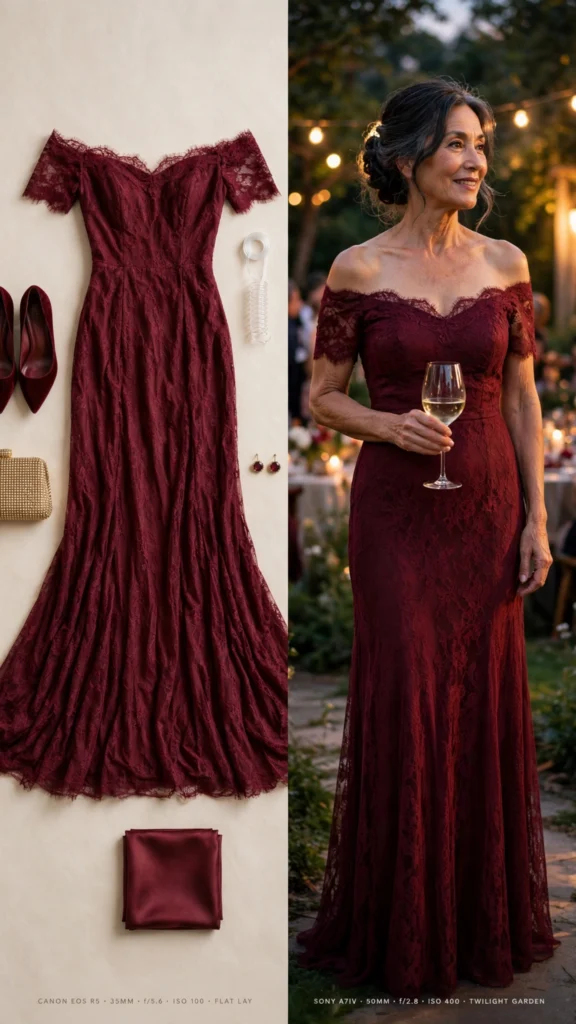
Why it works: The Bardot neckline is a straight band across the top of the arms, and its secret is a length of clear elastic threaded through the band's casing, which keeps it in place without any visible strap or structure. For a tailor this is a half-hour detail, yet it produces the most photographed neckline in evening wear.
Get the look: Ask for the band to be cut from the lace's scalloped border so the neckline edge is soft and finished, with the elastic tension tested while you lift your arms at the fitting. Burgundy cord lace is a staple stock color, so swatches are easy to compare before you commit to yardage.
Products to help you get this look:
- Burgundy cord lace fabric bridal — Search on Amazon
- Clear elastic sewing band — Search on Amazon
- Burgundy velvet heels — Search on Amazon
- Gold beaded clutch bag — Search on Amazon
- Garnet stud earrings — Search on Amazon
22. Champagne Cord Lace Gown with Draped Cowl Back

Why it works: A cowl back is cut on the bias as one soft panel that drapes itself, which means the tailor shapes it by hanging and pinning rather than by complex pattern work. The front of the gown stays a plain high-neck lace bodice, so all the drama is concentrated in a single easy panel at the back.
Get the look: Ask your tailor to cut the cowl from satin-backed lace or to layer lace over champagne satin so the drape has enough weight to fall in smooth folds. Two tiny dress weights or a fine chain at the cowl's lowest point keep it hanging evenly in photos and while you walk.
Products to help you get this look:
- Champagne cord lace fabric bridal — Search on Amazon
- Champagne satin fabric by the yard — Search on Amazon
- Dress weights hem sewing — Search on Amazon
- Champagne satin mules — Search on Amazon
- Pearl clutch bag — Search on Amazon
23. Black Cord Lace Evening Gown with Long Train
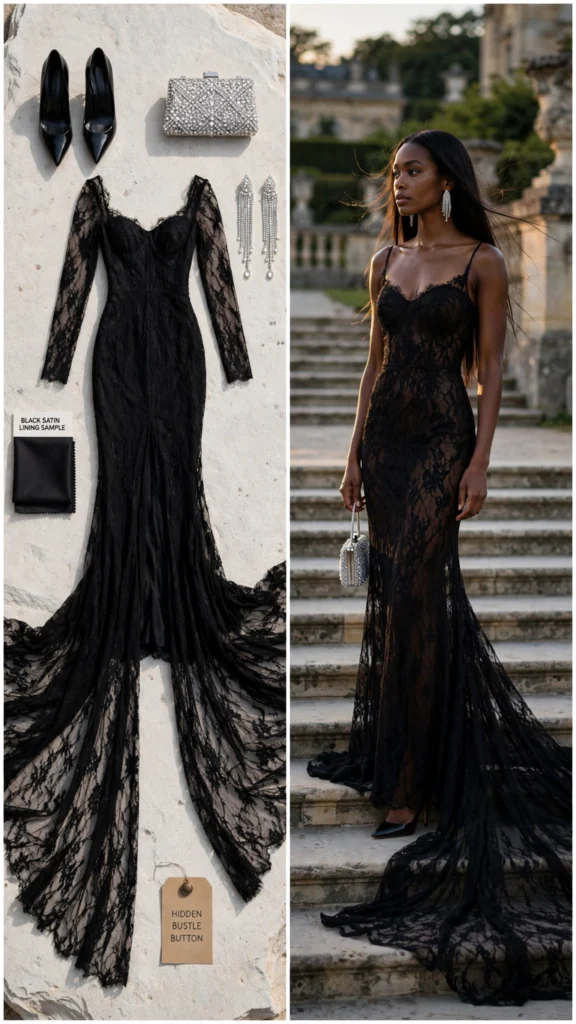
Why it works: A long train on a black evening gown is simply the back skirt panels cut longer and shaped into a point or curve, an extension of the same pattern rather than a separate construction. Black cord lace over black lining reads as one rich texture, which hides the join between bodice and skirt and makes the whole gown forgiving to fit.
Get the look: Ask your tailor to add a discreet bustle: one covered button at the back waist and a loop under the train, so the length lifts for dancing in seconds. Order one extra yard of lace beyond the estimate, because matching the motif flow down a long train is where yardage quietly disappears.
Products to help you get this look:
- Black cord lace fabric evening — Search on Amazon
- Black satin lining fabric — Search on Amazon
- Black patent stiletto heels — Search on Amazon
- Crystal embellished clutch — Search on Amazon
- Long crystal earrings — Search on Amazon
FAQs
How much cord lace should I buy for a tailor-made gown? For most styles here, four to six yards of standard-width cord lace covers a fitted or A-line gown, while full ball gown skirts in all-over lace can need seven to eight. Buy half a yard extra beyond your tailor's estimate, because motifs have to be matched and placed by hand, and running out mid-gown is the one problem money cannot fix quickly.
Can a tailor really copy a gown from a photo? Yes, and it is a normal part of dressmaking, as long as the design uses standard construction like the 23 styles above. Bring clear front, back and close-up photos, agree the fabrics and trims in person, and expect a toile or lining fitting first, because that plain trial version is how tailors honestly test a silhouette before cutting your lace.
How long does a tailor-made cord lace gown take, and what does it cost? Allow six to ten weeks including two or three fittings, and longer in peak wedding season when good tailors book up. Labor varies by city, but fabric from the links above plus a local tailor's making charge usually lands well below a designer gown of the same look, which is the entire point of recreating rather than buying the label.
Quick Wrap-Up
Every gown on this list was chosen because its beauty comes from the lace and the silhouette, not from impossible construction: borders that hem themselves, motifs appliquéd by hand, and bodices built on blocks your tailor already knows. Take the photo, the fabric and this list to a good local tailor, and the gown you saved is genuinely within reach.