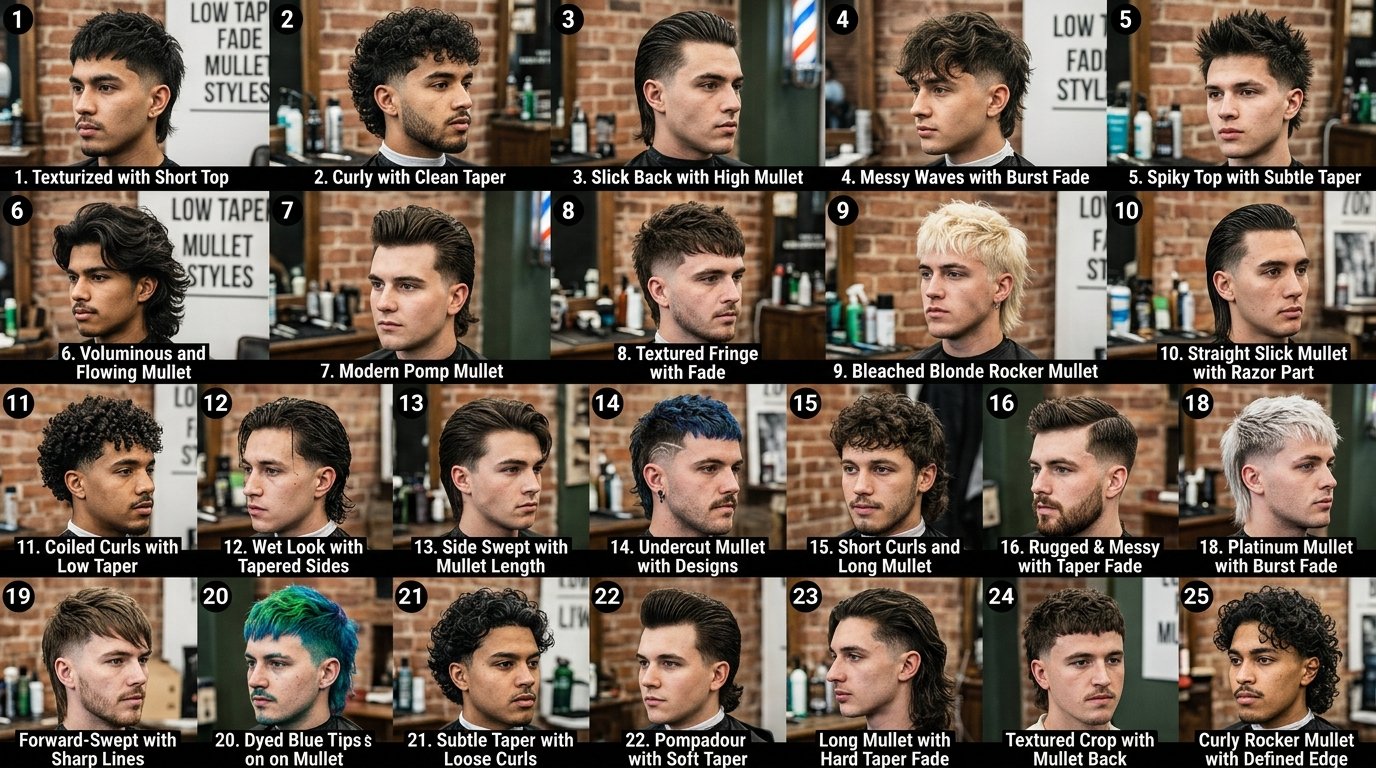
The mullet has a reputation problem — done wrong, it can look like an accident instead of a choice. Pair it with a taper that’s too harsh or too sloppy, and you end up with two haircuts fighting each other instead of one style that reads as intentional. That’s the balance a lot of guys struggle with: how do you keep the length and personality of a mullet without it looking dated or messy?
The fix isn’t a totally different cut — it’s dialing in the details. A low taper fade gives the mullet a clean, controlled base, and small changes in texture, part, or finish are what make each version feel fresh instead of like a throwback. Below are 25 low taper fade mullet styles built to stand out, from quick everyday options to ones worth booking extra chair time for.
25 Low Taper Fade Mullet Styles
1. Classic Low Taper Fade Mullet
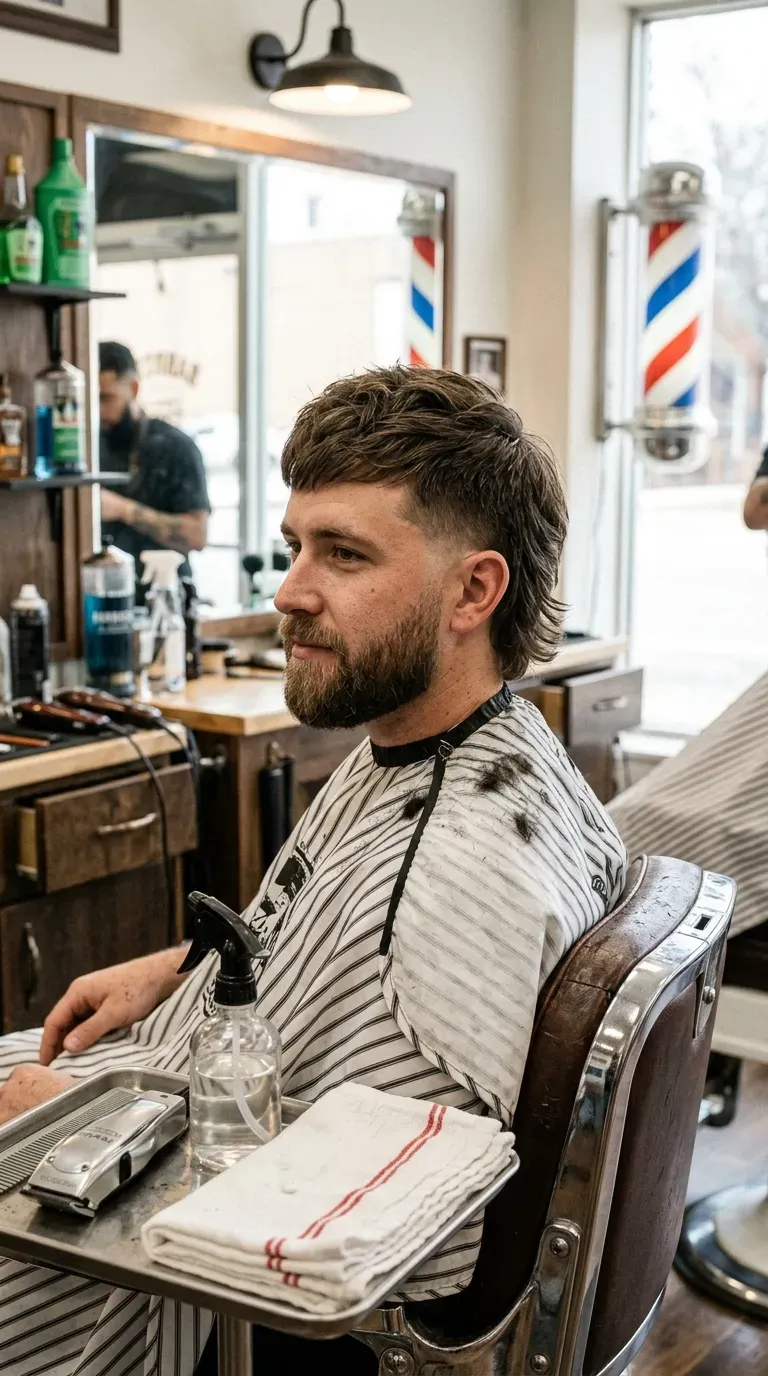
Why it works: Keeping the taper low and tight around the ears creates sharp contrast against the longer length left at the crown and back, which is what makes a mullet look deliberate instead of unfinished. That contrast is the whole foundation the rest of these styles build on.
Ask for: Ask your barber for “a low taper fade, blended tight from the ear down, with length left long through the crown and nape.”
Products to help you get this look:
- A matte styling clay → Search on Amazon
- A precision fade comb → Search on Amazon
- A lightweight texturizing spray → Search on Amazon
- A boar-bristle grooming brush → Search on Amazon
- A flexible-hold finishing spray → Search on Amazon
2. Textured Crop Mullet
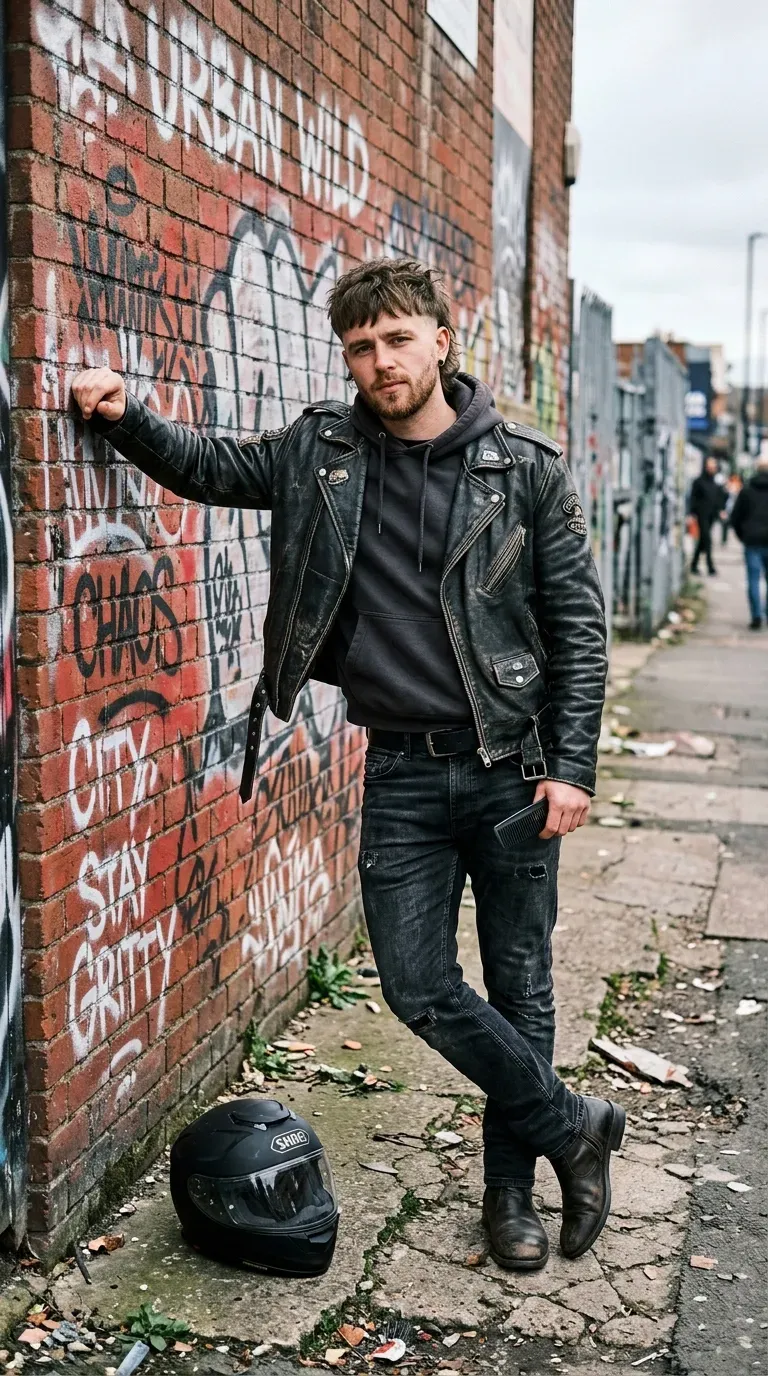
Why it works: The choppy, textured fringe adds movement and roughness up front, which stands out more than a smooth crop and keeps the eye from going straight to the length in back. It’s a style built around texture, not length, so it looks intentional even on a lazy styling day.
Ask for: Ask for “a textured crop on top, point-cut for choppiness, with a low taper fade blended into the sides.”
Products to help you get this look:
- A matte texturizing paste → Search on Amazon
- A sea-salt texturizing spray → Search on Amazon
- A blow dryer with concentrator nozzle → Search on Amazon
- A wide-tooth styling comb → Search on Amazon
- A light-hold matte hairspray → Search on Amazon
3. Curly Top Mullet

Why it works: Letting natural curls stay long on top gives the mullet built-in volume and texture that a straight cut can’t replicate, making the style stand out through shape alone. The tight taper underneath keeps the overall look controlled instead of overwhelming.
Ask for: Ask for “curls left long on top and through the back, cut with shears to preserve curl pattern, with a low taper fade at the sides.”
Products to help you get this look:
- A curl-defining cream → Search on Amazon
- A wide-tooth pick comb → Search on Amazon
- A diffuser attachment for curls → Search on Amazon
- A lightweight anti-frizz gel → Search on Amazon
- A microfiber towel for curl drying → Search on Amazon
4. Wolf Cut Mullet

Why it works: Heavy layering throughout the top and back creates a shaggy, voluminous silhouette that’s the whole point of the wolf-cut trend, and it stands out through sheer shape rather than sleekness. The low taper keeps the sides from competing with all that volume on top.
Ask for: Ask for “a wolf cut, heavily layered with lots of movement on top, kept long in the back, with a low taper fade underneath.”
Products to help you get this look:
- A volumizing texturizing spray → Search on Amazon
- A diffuser attachment → Search on Amazon
- A matte texturizing powder → Search on Amazon
- A wide-tooth comb → Search on Amazon
- A flexible-hold hairspray → Search on Amazon
5. Faux Hawk Mullet
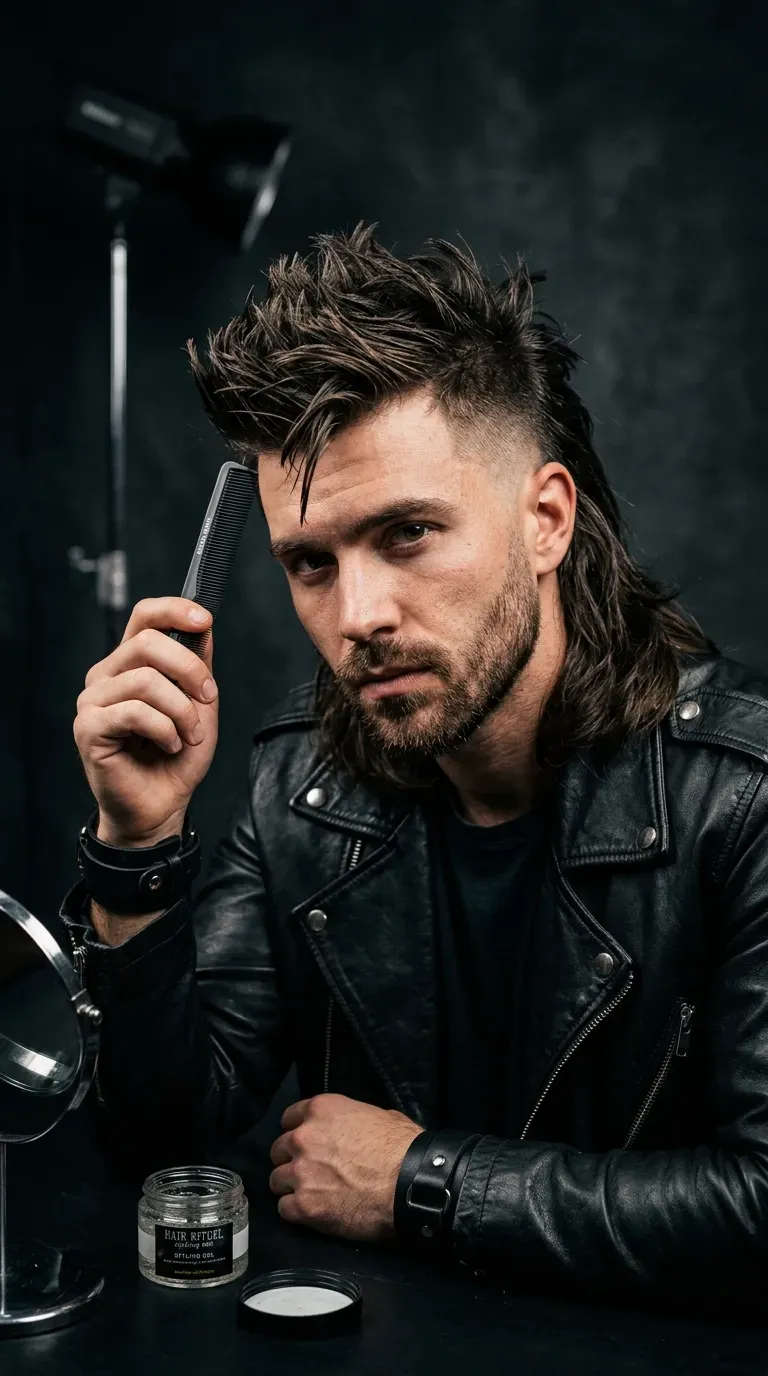
Why it works: Pushing the center section up and forward creates height and a strong center line that immediately draws the eye, making this one of the boldest ways to wear a mullet. The tapered sides frame that height without adding bulk that would compete with it.
Ask for: Work a strong-hold gel through the center strip while blow-drying it upward and forward, pinching sections between your fingers to build the ridge.
Products to help you get this look:
- A strong-hold styling gel → Search on Amazon
- A fine-tooth comb → Search on Amazon
- A blow dryer with concentrator nozzle → Search on Amazon
- A firm-hold finishing spray → Search on Amazon
- A heat protectant spray → Search on Amazon
6. Slicked-Back Mullet
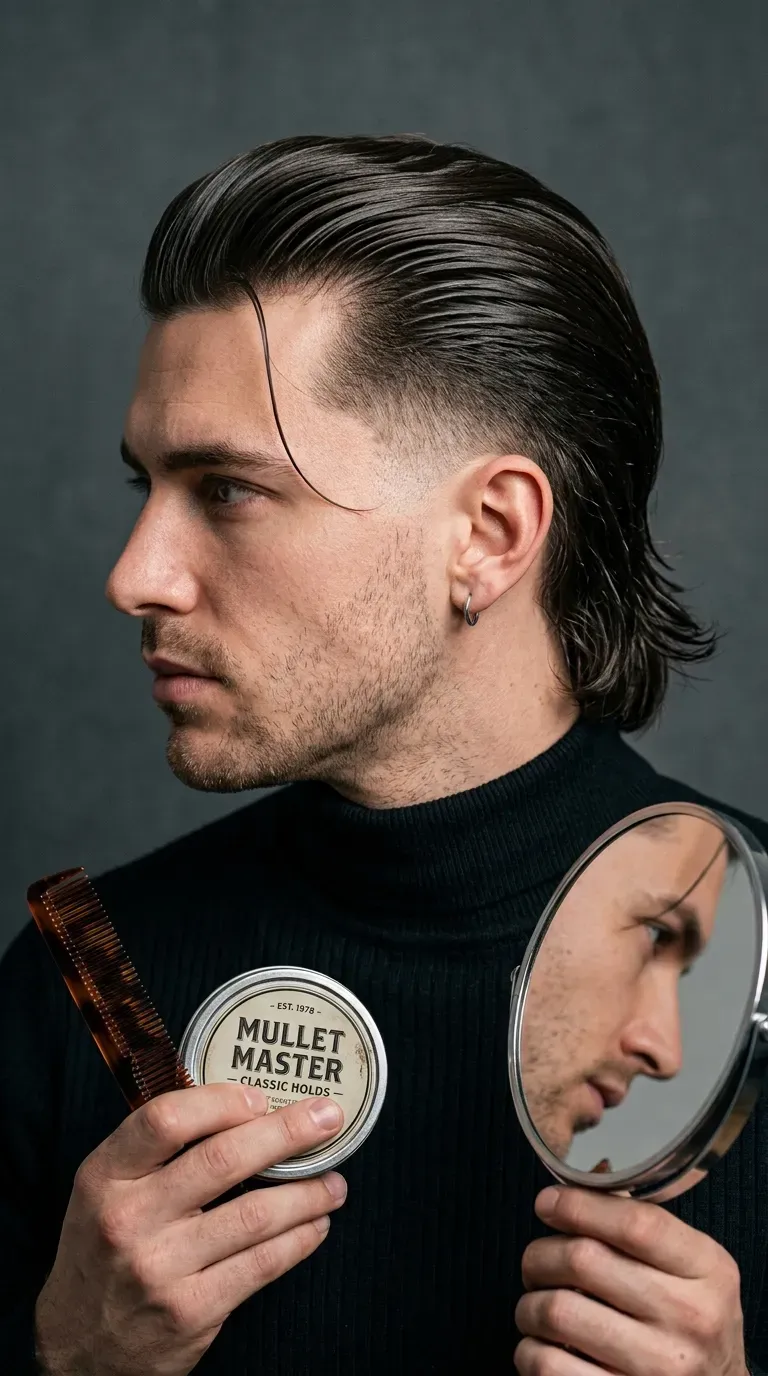
Why it works: A glossy, slicked-back top contrasts sharply against the matte, tapered sides, giving the style a polished, high-shine look that stands apart from the usual textured mullet. The smooth surface also makes the longer back length look more deliberate and tailored.
Ask for: Comb a water-based pomade through damp hair straight back from the hairline, then let it air-dry without touching it until fully set.
Products to help you get this look:
- A high-shine water-based pomade → Search on Amazon
- A fine-tooth comb → Search on Amazon
- A small spray bottle for damp restyling → Search on Amazon
- A high-shine finishing spray → Search on Amazon
- A boar-bristle brush → Search on Amazon
7. Spiky Textured Mullet
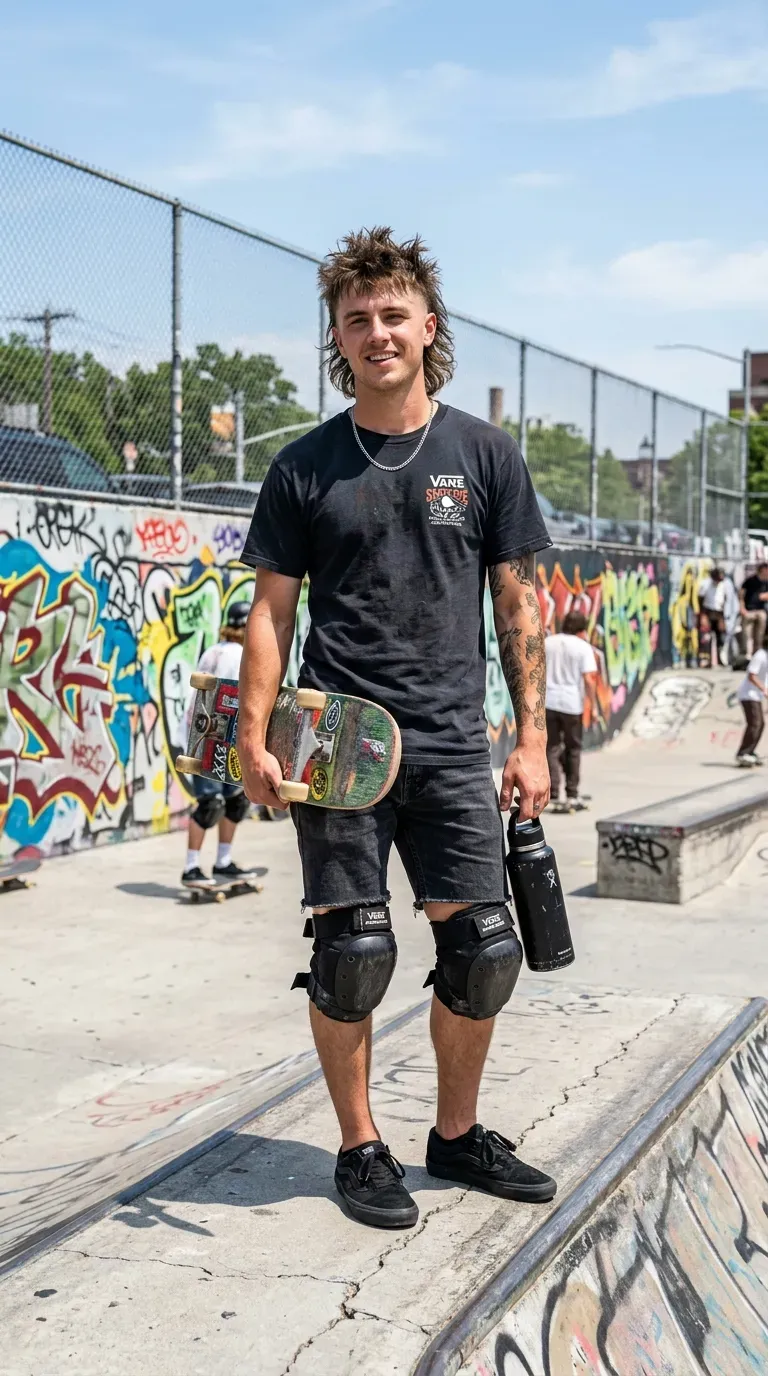
Why it works: Short, piecey spikes on top create a completely different texture from the smooth length in back, and that contrast in finish is what makes this version stand out from a typical shaggy mullet. It’s also one of the quickest styles here, since spikes forgive imperfection.
Ask for: Work a small amount of matte clay between your palms and push sections of the top upward into points, twisting the tips for definition.
Products to help you get this look:
- A matte styling clay → Search on Amazon
- A texturizing spray for grip → Search on Amazon
- A firm-hold hairspray → Search on Amazon
- A fine-tooth comb for sectioning spikes → Search on Amazon
- A blow dryer for pre-styling lift → Search on Amazon
8. Side-Swept Mullet
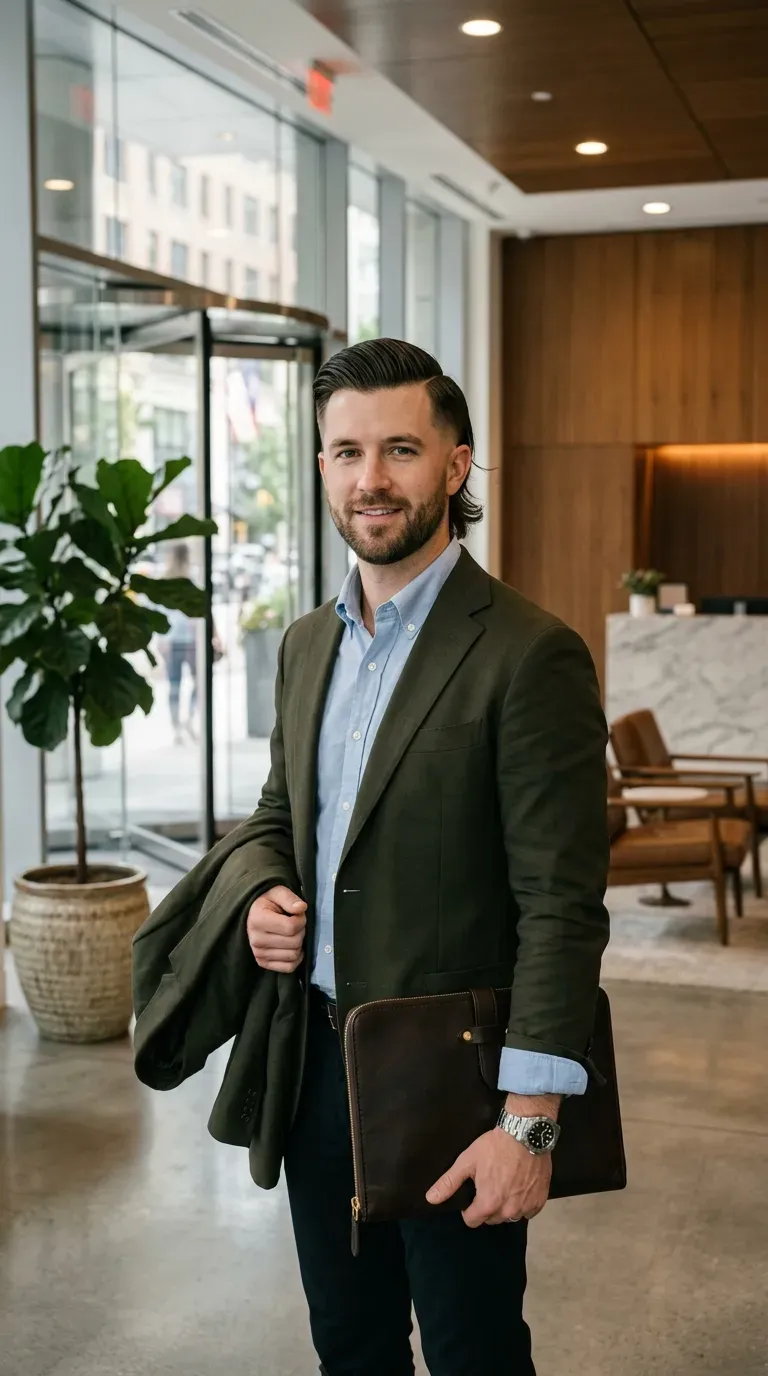
Why it works: Combing the top to one side with a defined part gives the mullet a more refined, put-together look up front, which stands out against the usual all-forward or spiked styling most mullets get. It also makes the cut versatile enough to wear in more buttoned-up settings.
Ask for: Comb the top section to one side while blow-drying, using a fine-tooth comb to create a sharp part line before applying a light hold product.
Products to help you get this look:
- A fine-tooth comb → Search on Amazon
- A light-hold styling cream → Search on Amazon
- A blow dryer with concentrator nozzle → Search on Amazon
- A heat protectant spray → Search on Amazon
- A flexible-hold finishing spray → Search on Amazon
9. Bleached Tips Mullet
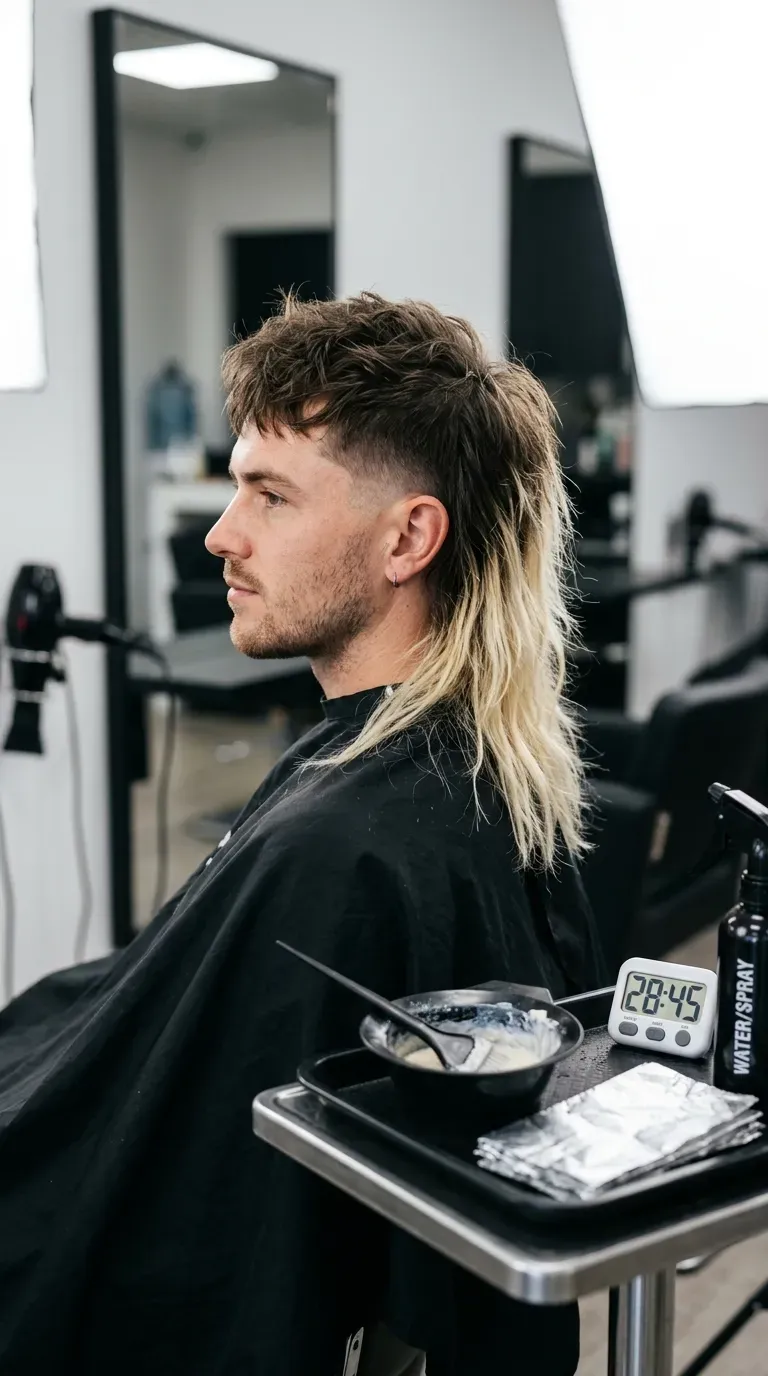
Why it works: Bleaching just the tips creates a hard color contrast that draws attention straight to the ends and the longer length of the mullet, making the cut’s shape impossible to miss. Keeping the roots natural also means less overall maintenance than a full bleach job.
Ask for: Ask your colorist for “tips-only bleaching, painted on the last inch or two of length, left natural at the roots.”
Products to help you get this look:
- A purple or blue toning shampoo for blonde tips → Search on Amazon
- A bond-repairing hair treatment → Search on Amazon
- A color-safe conditioner → Search on Amazon
- A UV-protecting leave-in spray → Search on Amazon
- A lightweight styling cream → Search on Amazon
10. Mullet with Hard Part Line
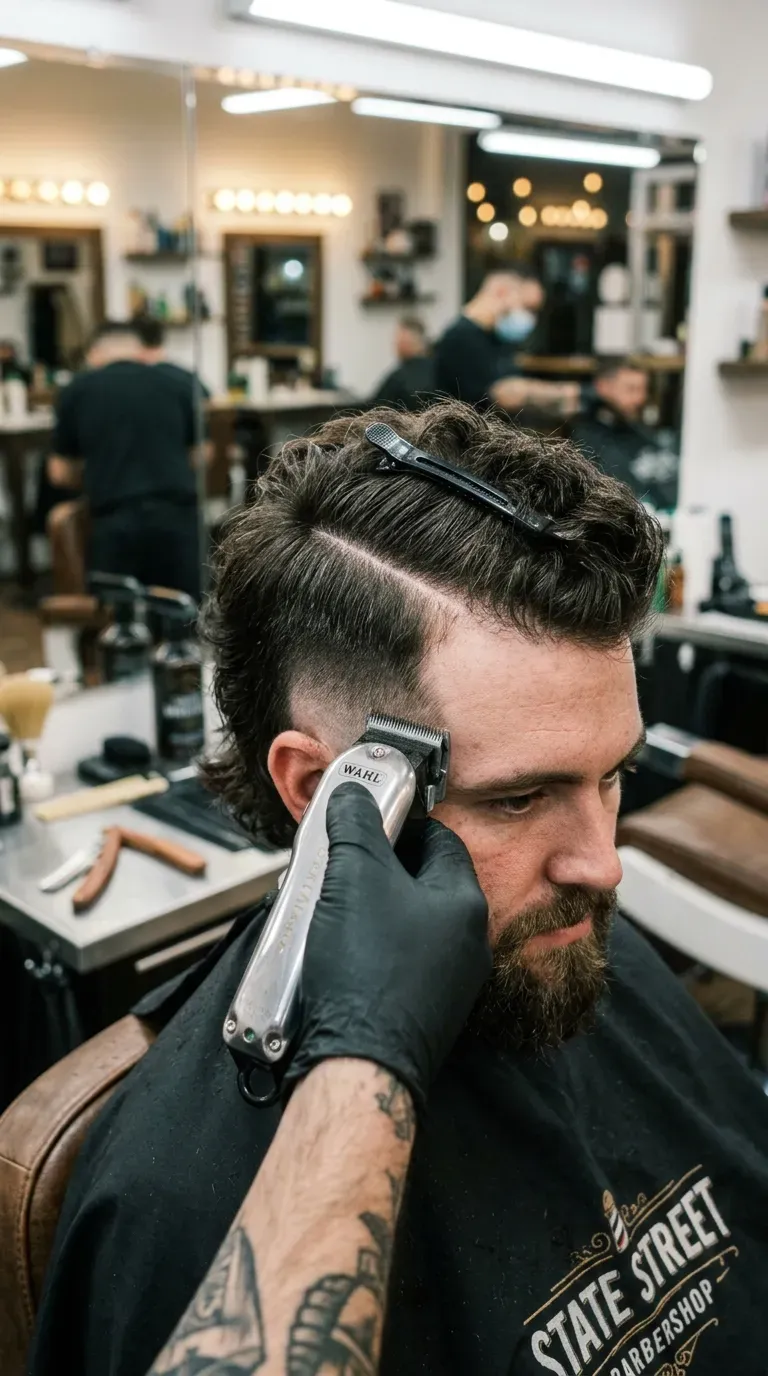
Why it works: A shaved hard part adds a crisp graphic line that stands out immediately, giving an otherwise classic mullet a modern, detail-oriented edge. It also makes styling easier day to day, since the part is built into the cut itself.
Ask for: Ask your barber for “a shaved hard part line above the temple, cut fresh every few weeks to keep it crisp.”
Products to help you get this look:
- A lightweight styling cream → Search on Amazon
- A fine-tooth comb → Search on Amazon
- A flexible-hold finishing spray → Search on Amazon
- A precision trimmer for touch-ups → Search on Amazon
- A shine-finishing pomade → Search on Amazon
11. French Crop Mullet
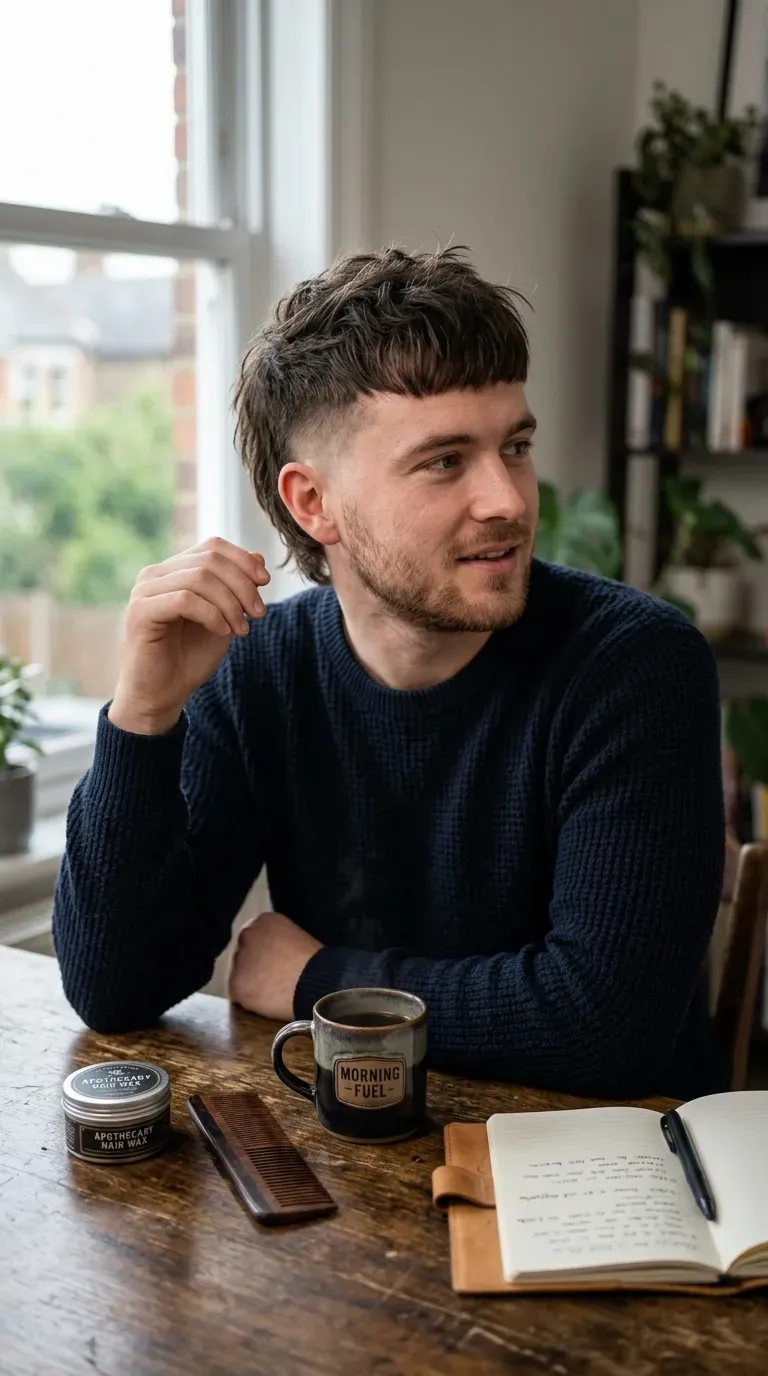
Why it works: Brushing a short, textured fringe forward creates a strong horizontal line across the forehead that balances out the vertical length in back, making the mullet look structured rather than lopsided. It’s also a low-maintenance front section that still reads as intentional.
Ask for: Ask for “a French crop on top, textured and pushed forward, blended into a low taper fade with length kept in back.”
Products to help you get this look:
- A matte styling wax → Search on Amazon
- A small styling comb → Search on Amazon
- A texturizing spray → Search on Amazon
- A blow dryer with concentrator nozzle → Search on Amazon
- A light-hold finishing spray → Search on Amazon
12. Pompadour Mullet
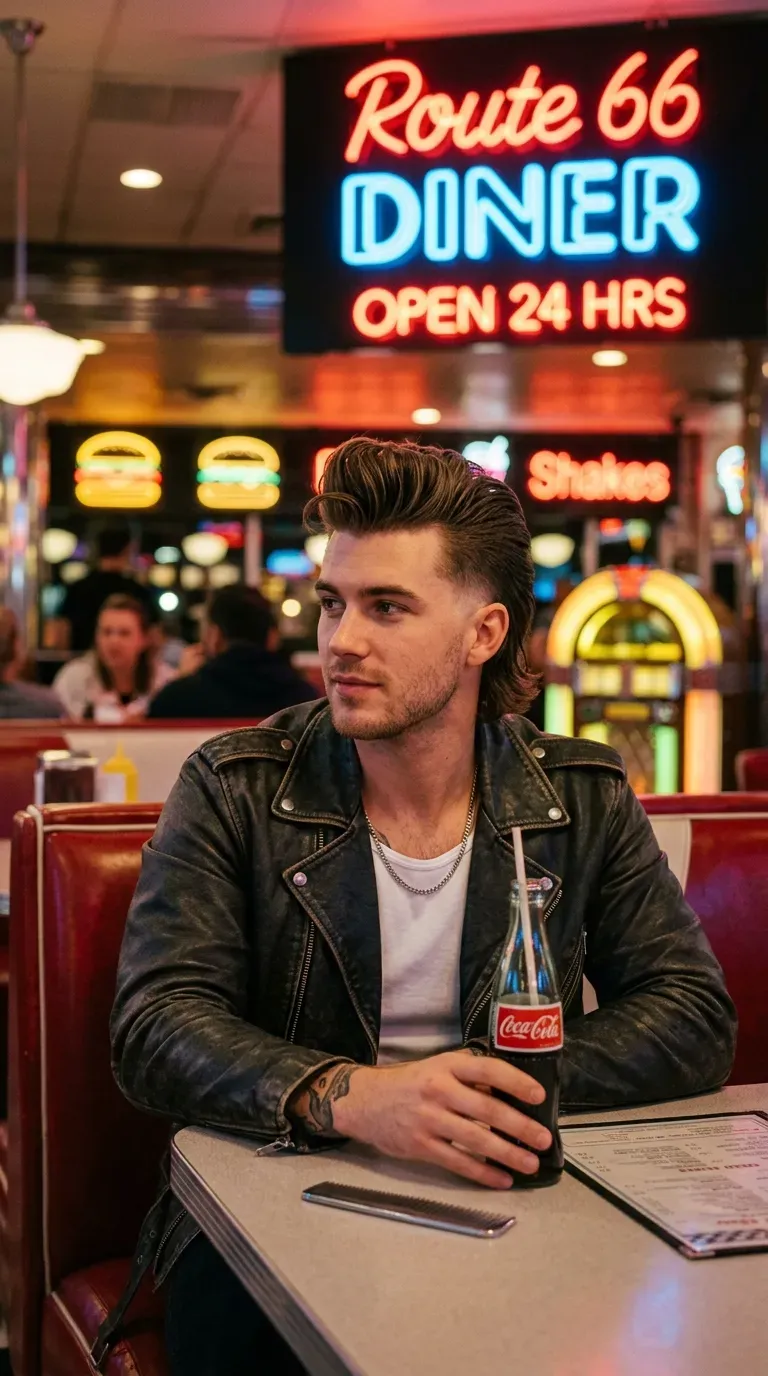
Why it works: The swept-up volume at the front creates height and drama that instantly sets this mullet apart from flatter, forward-styled versions. Combined with the low taper, it gives the whole look a retro-meets-modern edge that’s hard to miss.
Ask for: Blow-dry the front section back and up over a round brush, then set with a strong-hold pomade once fully cooled.
Products to help you get this look:
- A strong-hold pomade → Search on Amazon
- A medium round brush → Search on Amazon
- A blow dryer with concentrator nozzle → Search on Amazon
- A heat protectant spray → Search on Amazon
- A fine-tooth pocket comb → Search on Amazon
13. Disconnected Undercut Mullet
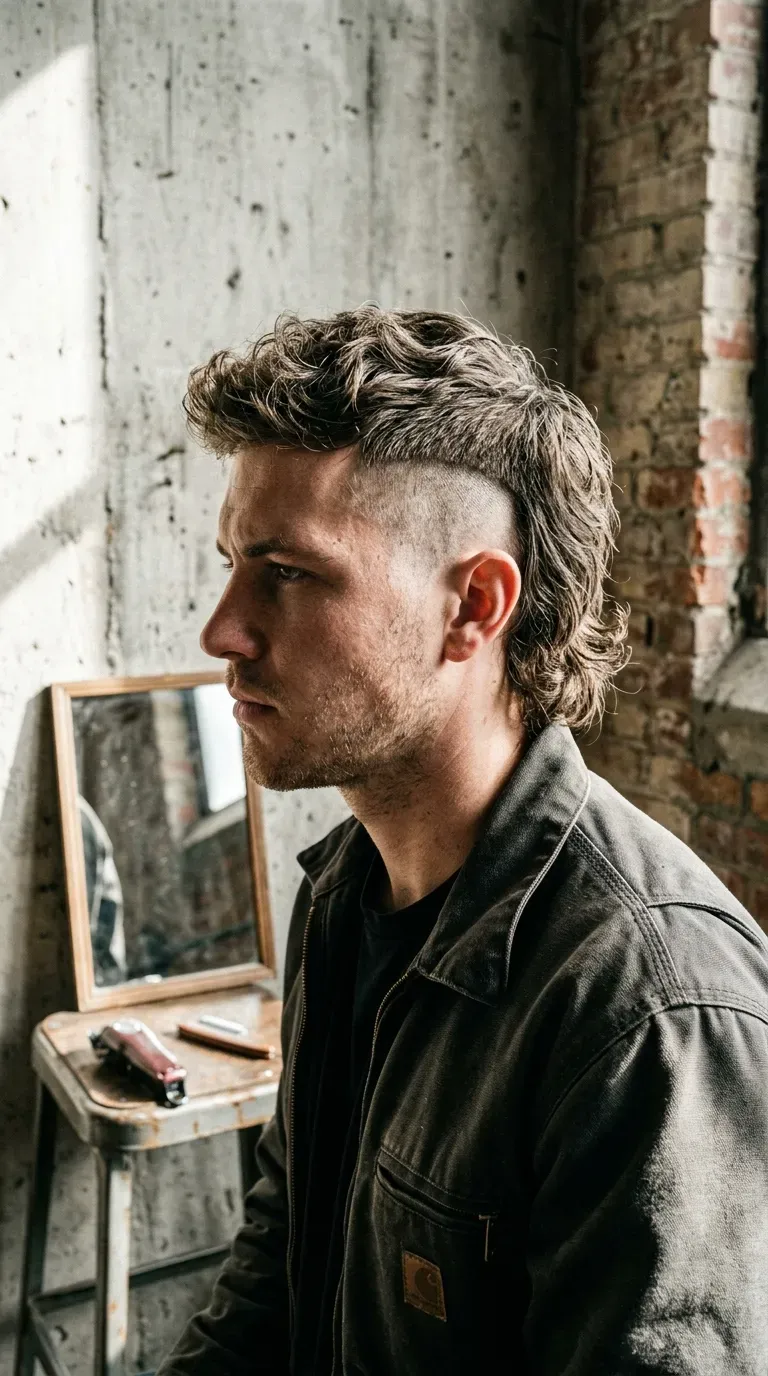
Why it works: Cutting an abrupt line instead of a gradual taper creates a much bolder contrast between short and long sections, which stands out more dramatically than any blended fade. It’s a style that announces itself rather than easing into the length.
Ask for: Ask your barber for “a disconnected undercut, cut short with clippers and no guard up to a hard stop, left long on top with no blending.”
Products to help you get this look:
- A matte texturizing paste → Search on Amazon
- A fine-tooth comb → Search on Amazon
- A texturizing spray → Search on Amazon
- A flexible-hold hairspray → Search on Amazon
- A precision trimmer for edge upkeep → Search on Amazon
14. Mohawk Mullet
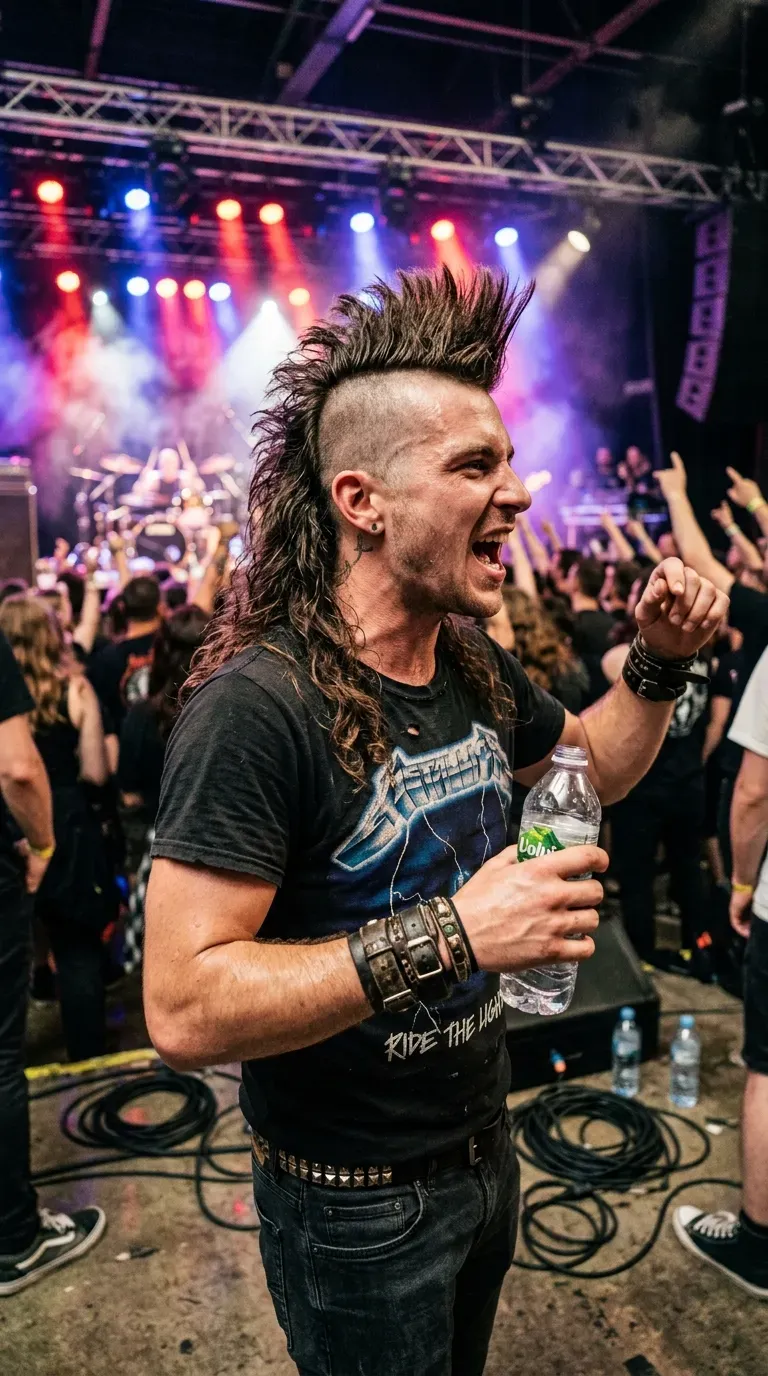
Why it works: Combining a raised mohawk strip with mullet length in back gives you two statement elements in one cut, making it one of the most attention-grabbing options on this list. The tapered sides keep the overall shape from feeling cluttered despite the boldness up top.
Ask for: Ask for “a center mohawk strip left long, low taper faded on both sides, blended into mullet length in the back.”
Products to help you get this look:
- A strong-hold styling gel → Search on Amazon
- A fine-tooth comb for the center strip → Search on Amazon
- A firm-hold hairspray → Search on Amazon
- A blow dryer for pre-styling lift → Search on Amazon
- A precision trimmer for edge maintenance → Search on Amazon
15. Permed Mullet
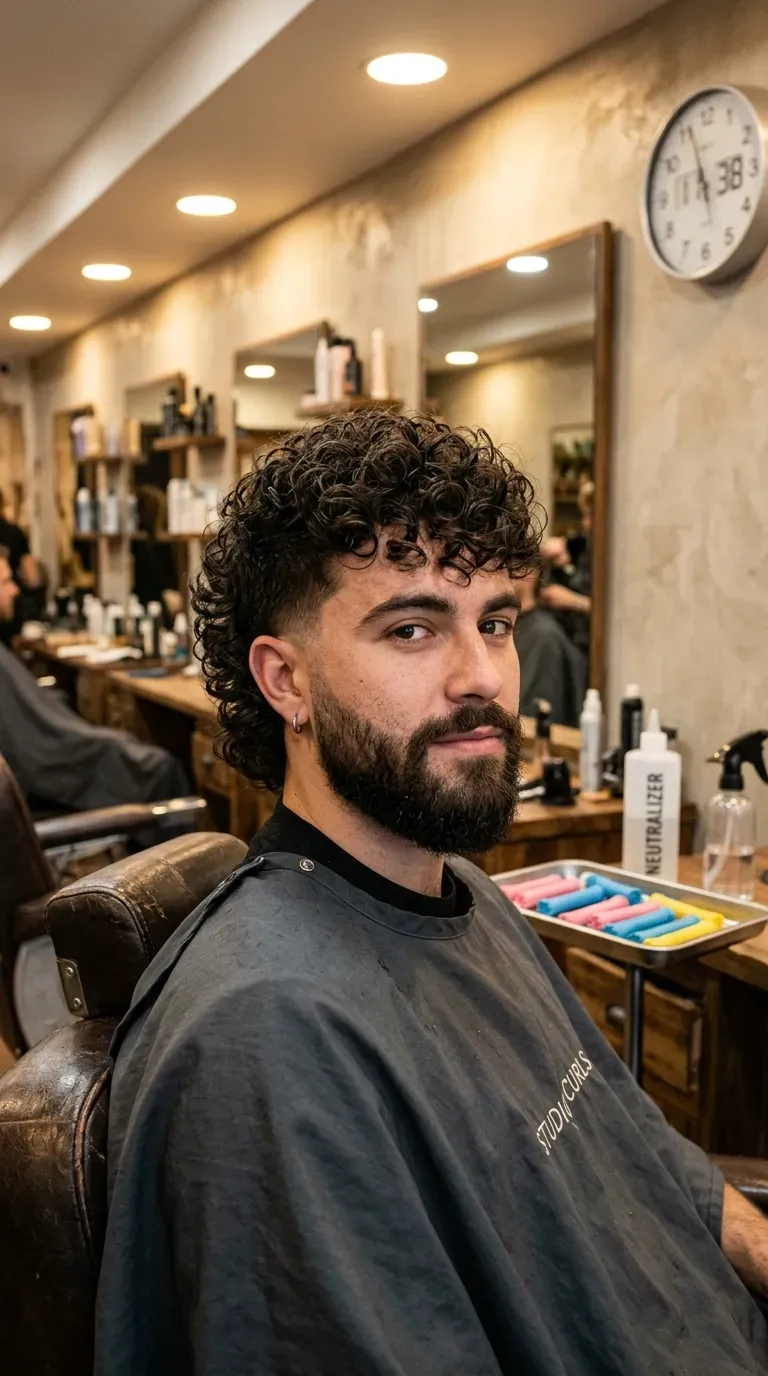
Why it works: A perm adds permanent texture and volume that naturally straight hair can’t achieve on its own, making the mullet’s length look fuller and more dramatic than it would air-dried straight. Because the curl holds through washing, it also cuts down on daily styling time.
Ask for: Ask your stylist for “a loose to medium perm through the top and back only, leaving the tapered sides unpermed.”
Products to help you get this look:
- A curl-defining cream → Search on Amazon
- A diffuser attachment → Search on Amazon
- A sulfate-free shampoo for permed hair → Search on Amazon
- A lightweight leave-in conditioner → Search on Amazon
- A wide-tooth pick comb → Search on Amazon
16. Shaggy Skater Mullet
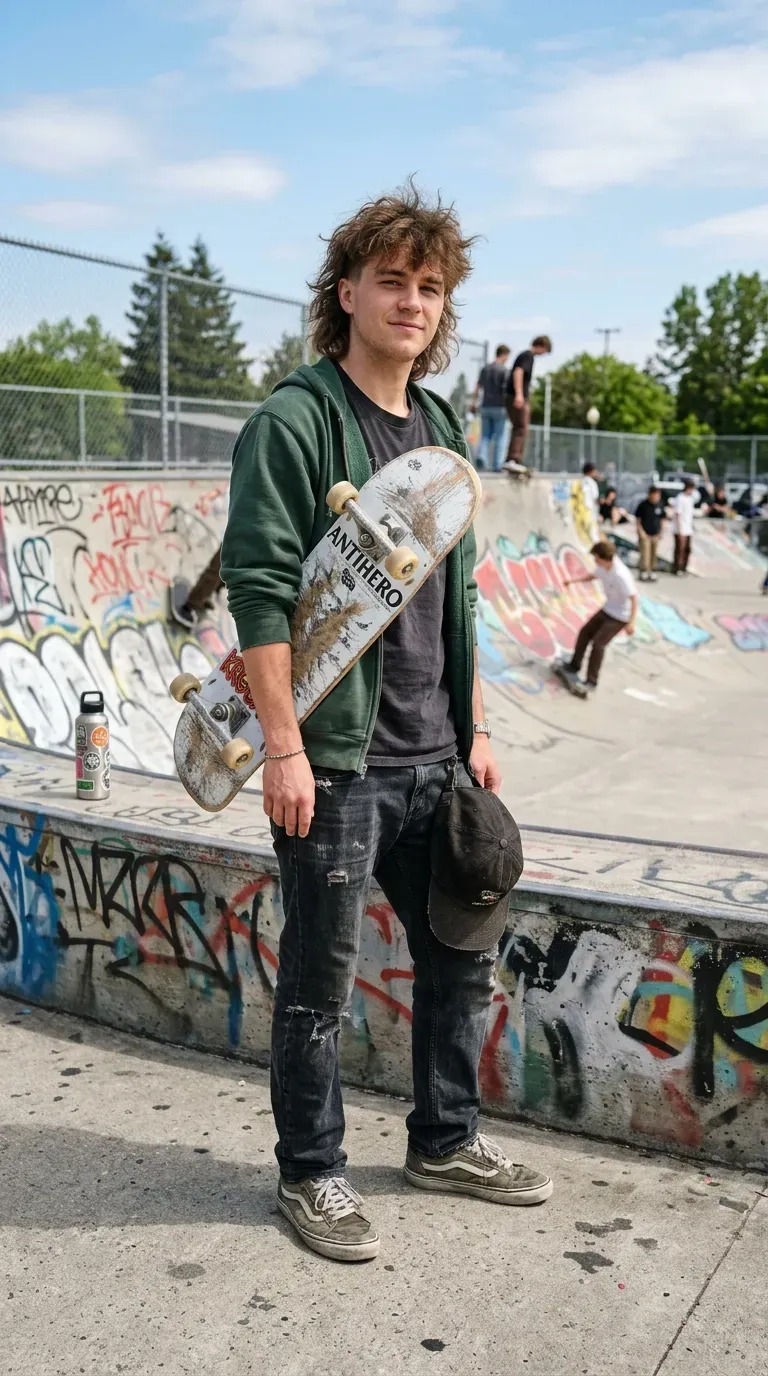
Why it works: Loose, tousled texture left deliberately undone gives this mullet a low-effort, lived-in look that stands out precisely because it doesn’t look overworked. It pairs an easygoing top with a clean taper so the whole style still reads as put-together.
Ask for: Scrunch a texturizing spray into damp hair, air-dry or diffuse, then tousle with your fingers instead of combing it smooth.
Products to help you get this look:
- A texturizing spray for undone finishes → Search on Amazon
- A matte texturizing clay → Search on Amazon
- A diffuser attachment → Search on Amazon
- A dry shampoo for texture and grip → Search on Amazon
- A flexible-hold finishing spray → Search on Amazon
17. Two-Tone Color Mullet
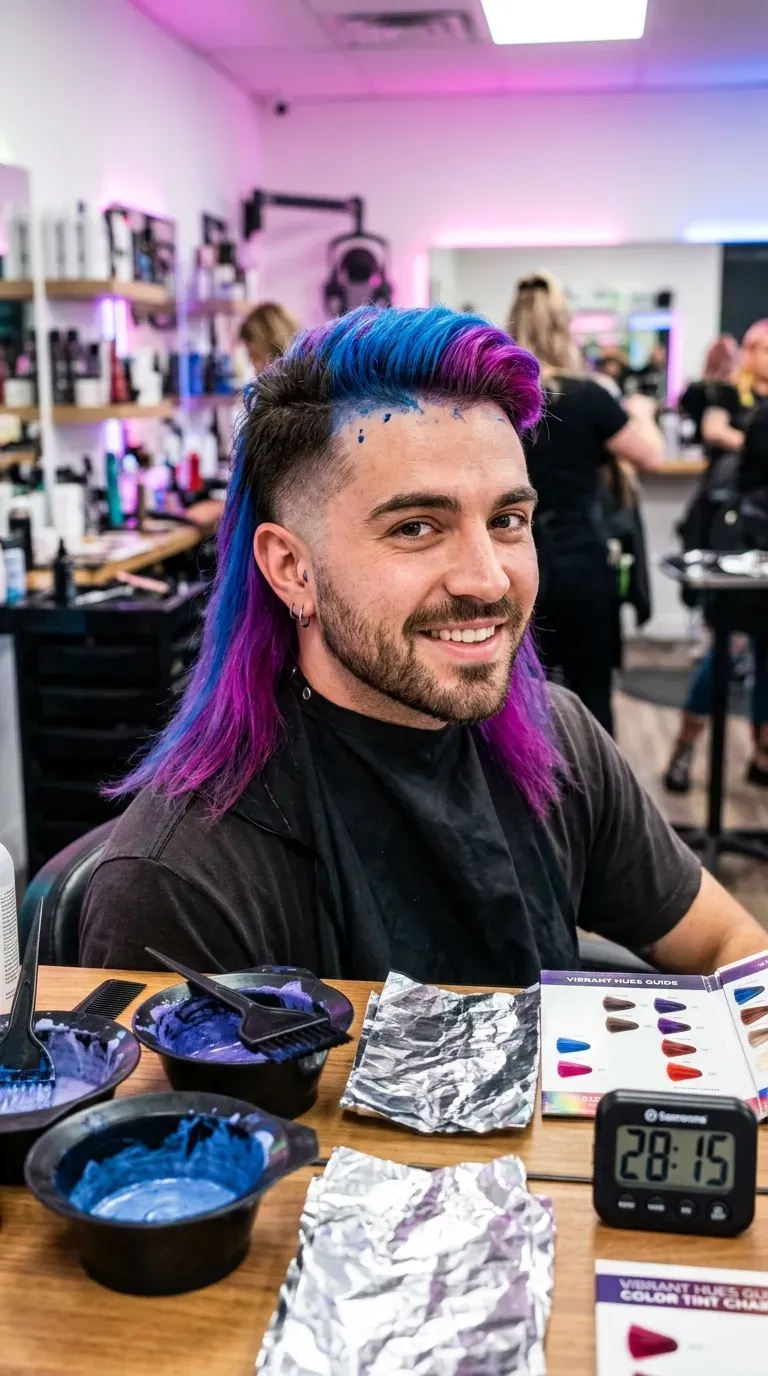
Why it works: A bold contrasting color concentrated in the mullet’s longer sections creates a visual split that’s impossible to overlook, turning the cut itself into a color statement. Keeping the tapered sides natural balances the boldness so it doesn’t overwhelm the whole head.
Ask for: Ask your colorist for “a solid contrasting color applied only through the top and back length, left natural at the tapered sides.”
Products to help you get this look:
- A color-safe, sulfate-free shampoo → Search on Amazon
- A color-depositing conditioner to maintain vibrancy → Search on Amazon
- A UV-protecting leave-in spray → Search on Amazon
- A bond-repairing treatment → Search on Amazon
- A lightweight styling cream → Search on Amazon
18. Mullet with Shaved Design
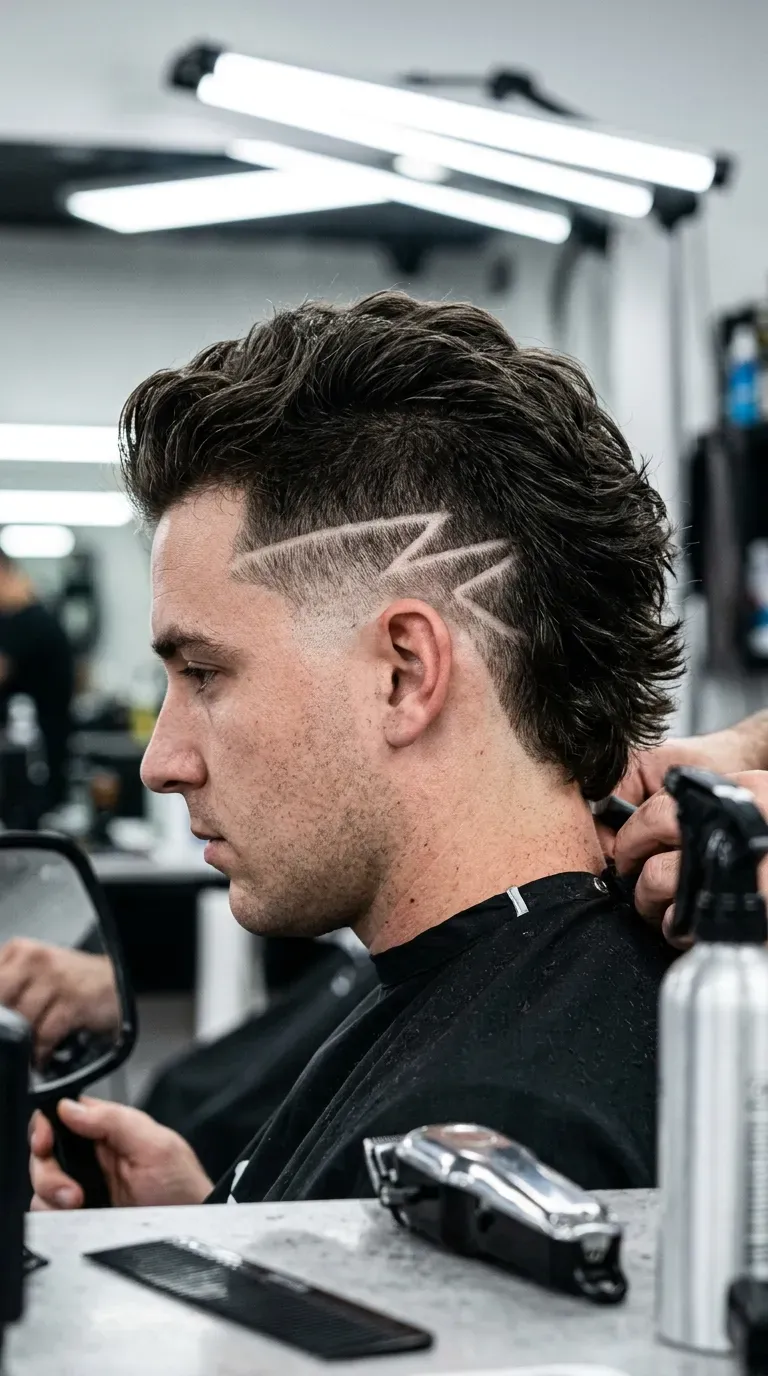
Why it works: A shaved design cut directly into the fade adds a custom, one-of-a-kind detail that makes the style instantly recognizable and personal. It’s a small addition that turns an already bold cut into something no one else has exactly the same way.
Ask for: Ask your barber for “a simple line or geometric design shaved into the taper,” keeping the design small enough to grow out easily between visits.
Products to help you get this look:
- A precision detail trimmer → Search on Amazon
- A matte styling clay → Search on Amazon
- A lightweight finishing spray → Search on Amazon
- A skin-soothing balm for freshly shaved skin → Search on Amazon
- A fine-tooth comb → Search on Amazon
19. Grunge Mullet
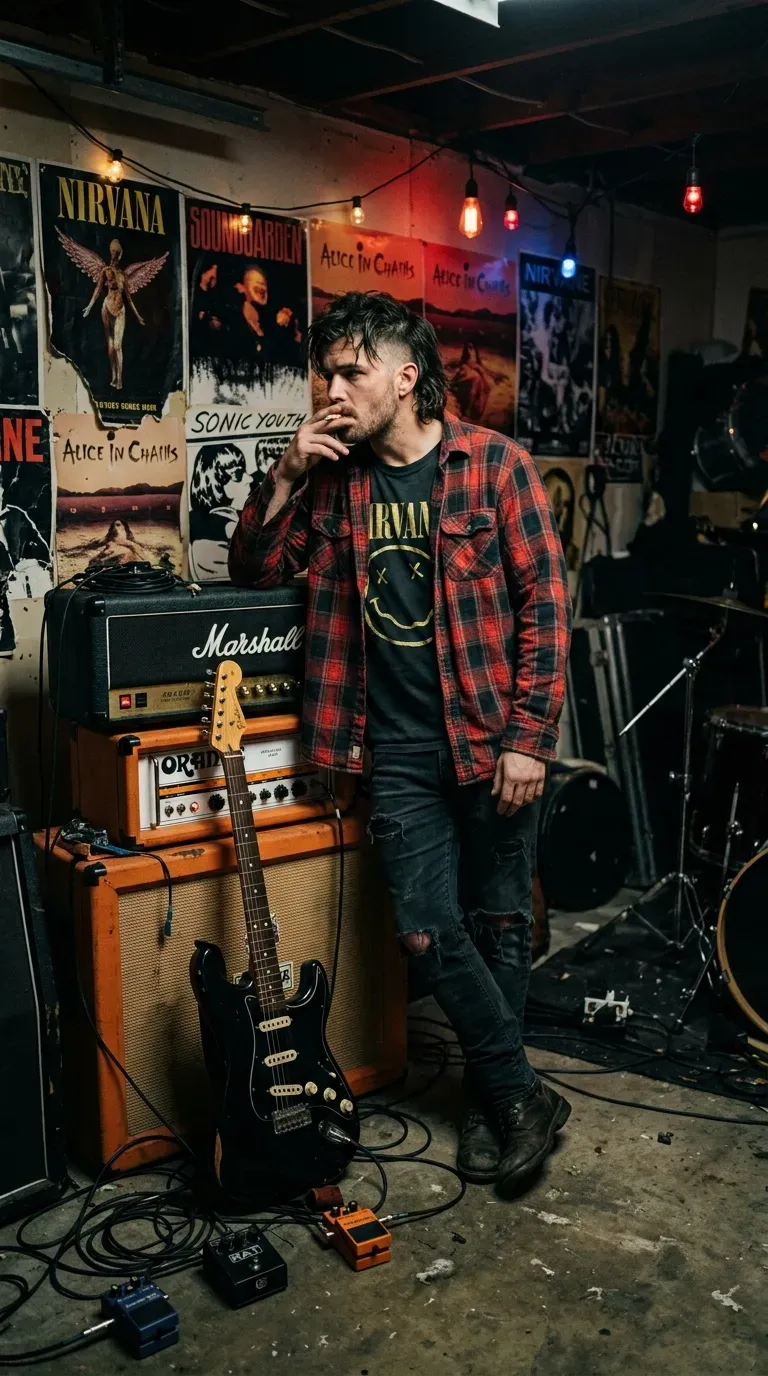
Why it works: Leaning into an unkempt, unwashed-looking texture is a deliberate style choice that stands out precisely because it rejects the polish of most other mullet variations. It works because the tapered sides still signal an intentional cut underneath the rough finish.
Ask for: Work a small amount of pomade through unwashed or day-old hair, pushing it into a messy, flattened shape without combing it smooth.
Products to help you get this look:
- A low-shine matte pomade → Search on Amazon
- A texturizing spray for grease-like texture → Search on Amazon
- A dry shampoo to control oil without flattening texture → Search on Amazon
- A wide-tooth comb → Search on Amazon
- A light-hold hairspray → Search on Amazon
20. Ducktail Mullet
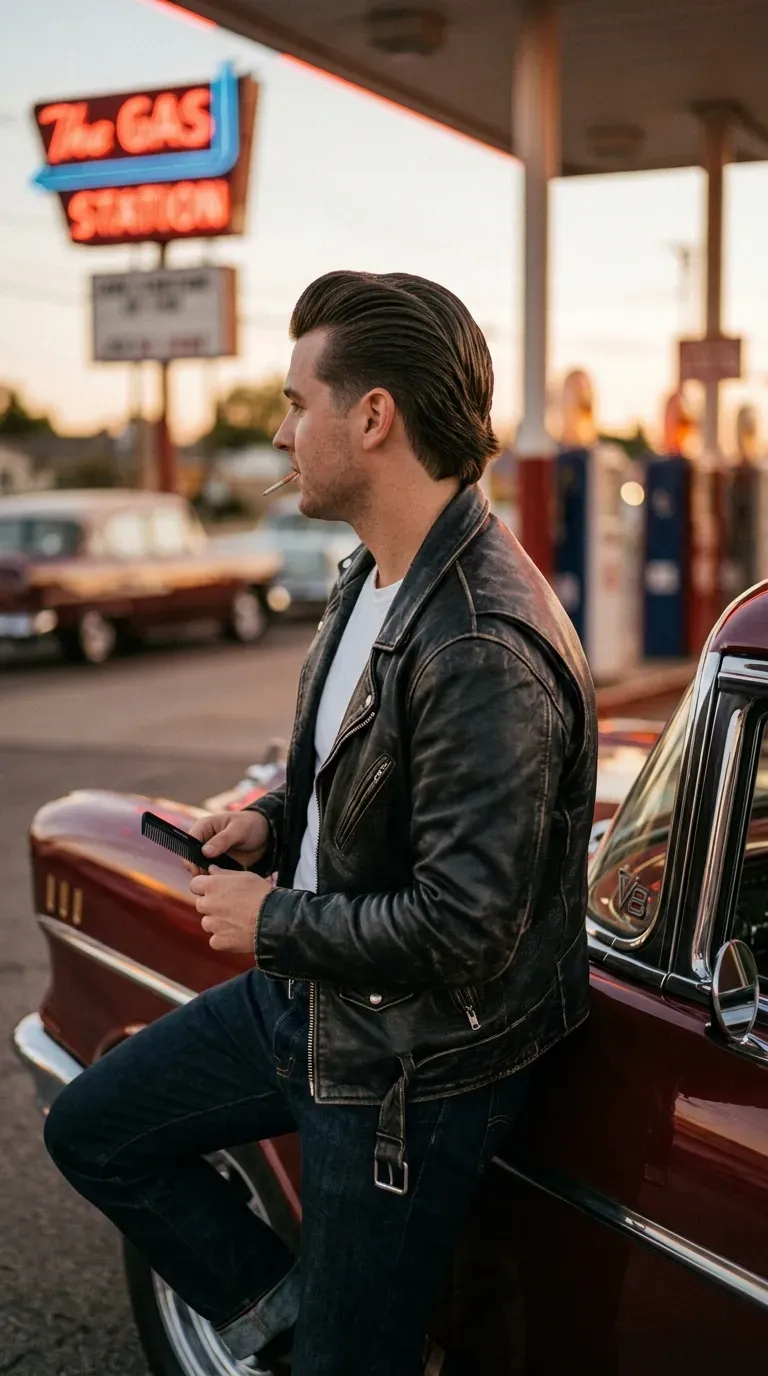
Why it works: Combing both sides back to meet in a defined point at the nape creates a distinct silhouette that’s instantly recognizable and different from a loosely styled mullet. The low taper keeps the sides from adding bulk that would blur that clean point.
Ask for: Comb both sides back toward the center of your nape, using a fine-tooth comb to press the meeting point into a sharp line, then set with pomade.
Products to help you get this look:
- A firm-hold pomade → Search on Amazon
- A fine-tooth comb → Search on Amazon
- A shine spray for a glossy finish → Search on Amazon
- A small spray bottle for damp restyling → Search on Amazon
- A boar-bristle brush → Search on Amazon
21. Quiff Mullet

Why it works: Lifting and rolling the front section back creates height right at the hairline, which draws the eye upward before it travels to the length in back, giving the whole style a balanced sense of drama. It’s a more polished way to add volume than a full pompadour, so it stands out without feeling costume-like.
Ask for: Apply mousse to damp hair, blow-dry the front section back and up over a round brush, then finish with a light-hold cream once dry.
Products to help you get this look:
- A volumizing styling mousse → Search on Amazon
- A medium round brush → Search on Amazon
- A blow dryer with concentrator nozzle → Search on Amazon
- A light-hold styling cream → Search on Amazon
- A heat protectant spray → Search on Amazon
22. Curtain Fringe Mullet

Why it works: Center-parted curtain fringe frames the face on both sides, softening the overall look and creating a strong contrast with the boldness of the mullet’s length in back. That front-to-back contrast between soft and dramatic is what makes this version distinct.
Ask for: Ask for “curtain fringe, center-parted and cut longer at the outer corners,” blended into a low taper fade with mullet length kept in back.
Products to help you get this look:
- A lightweight styling cream → Search on Amazon
- A round brush for fringe styling → Search on Amazon
- A heat protectant spray → Search on Amazon
- A wide-tooth comb → Search on Amazon
- A flexible-hold finishing spray → Search on Amazon
23. High-Volume Blowout Mullet
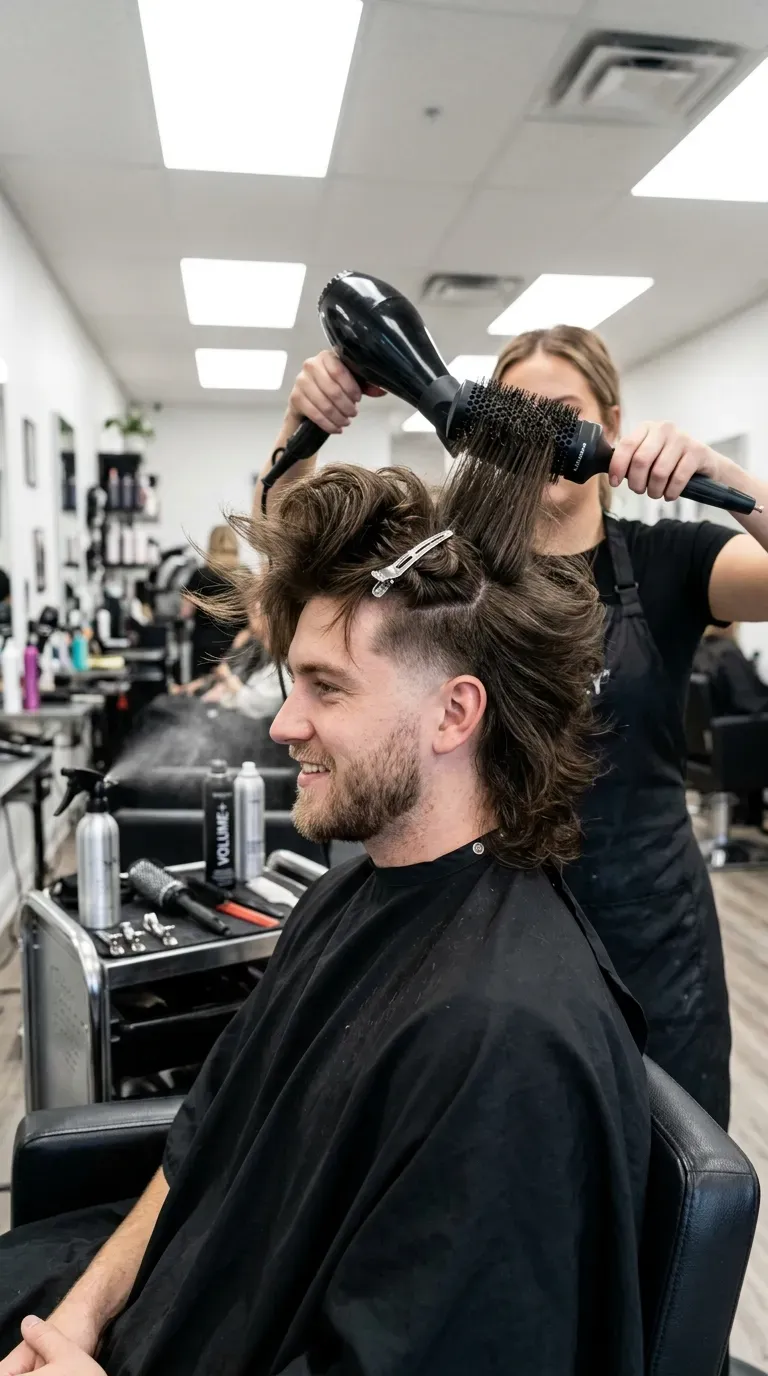
Why it works: Blow-drying the roots up and away from the head builds mechanical height throughout the top, giving the mullet a fuller, more dramatic silhouette than it would have air-dried flat. That extra lift makes the length in back look even more pronounced by comparison.
Ask for: Blow-dry your roots against the direction they naturally fall, lifting each section with a round brush before locking it in place with a cool shot.
Products to help you get this look:
- A large round brush → Search on Amazon
- A blow dryer with a concentrator nozzle → Search on Amazon
- A volumizing root mousse → Search on Amazon
- A heat protectant spray → Search on Amazon
- A firm-hold finishing spray → Search on Amazon
24. Braided Mullet

Why it works: Small braids worked into the mullet’s longer back section add a decorative, textured detail that stands out from any purely cut-based style. Because only a small portion is braided, the style stays low-maintenance for everyday wear and easy to switch back to loose length.
Ask for: Section off one or two small pieces at the back, braid them loosely to the ends, and secure with a small clear elastic.
Products to help you get this look:
- A texturizing spray for grip while braiding → Search on Amazon
- Small clear hair elastics → Search on Amazon
- A smoothing edge gel → Search on Amazon
- A fine-tooth comb for sectioning → Search on Amazon
- A lightweight finishing spray → Search on Amazon
25. Long Feathered Mullet
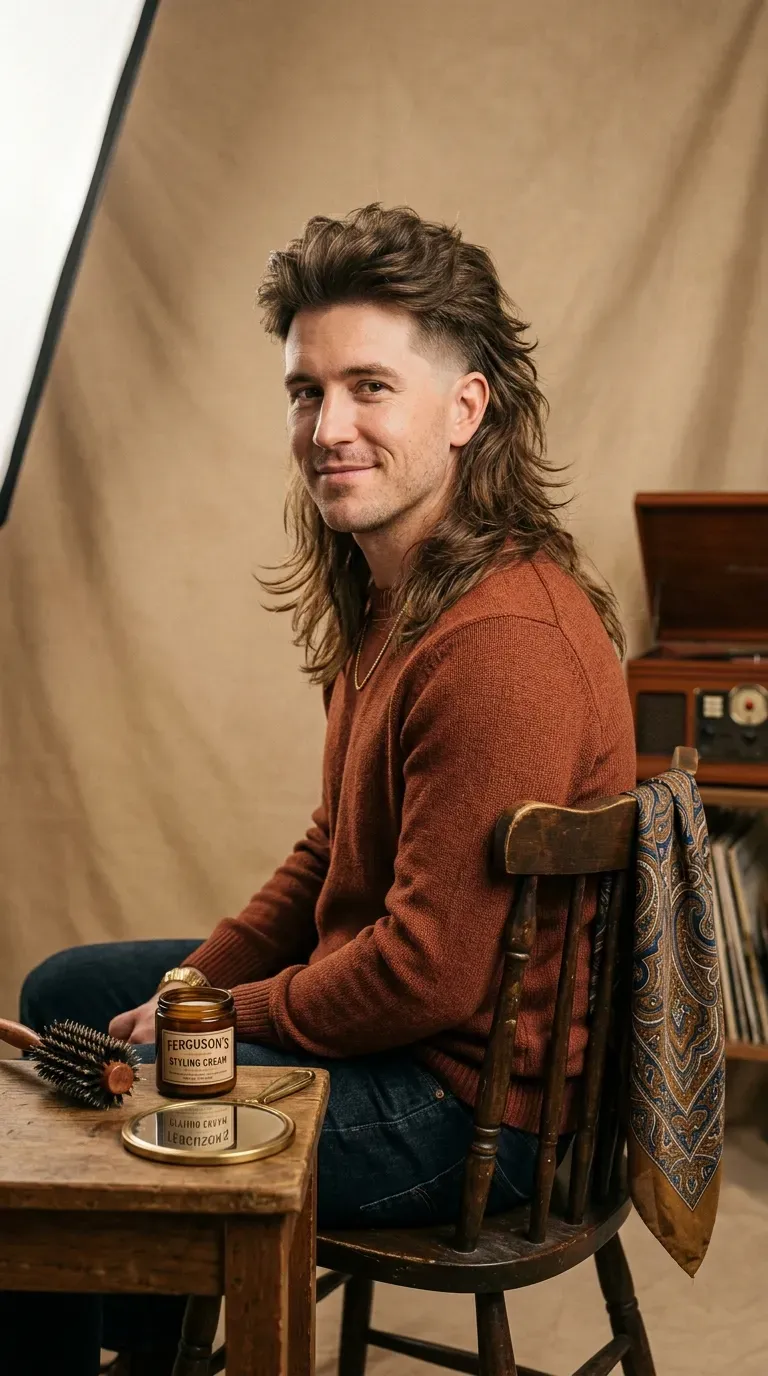
Why it works: Layered, feathered ends flick outward instead of hanging straight down, giving the length in back a soft, dynamic shape that stands out more than a blunt or shaggy finish. The feathering also adds movement that makes fine or straight hair look more voluminous overall.
Ask for: Ask for “feathered layers throughout the length, cut to flick outward,” then round-brush the ends outward while blow-drying to train the flip.
Products to help you get this look:
- A medium round brush → Search on Amazon
- A lightweight styling cream → Search on Amazon
- A heat protectant spray → Search on Amazon
- A shine-boosting finishing spray → Search on Amazon
- A blow dryer with concentrator nozzle → Search on Amazon
FAQs
What’s the best low taper fade mullet style to try? If you want something that’s easy to wear right away, the Classic Low Taper Fade Mullet, the Textured Crop Mullet, or the Shaggy Skater Mullet are great starting points. Each keeps the fade clean and low-maintenance while still giving you real personality up top and in the back.
How to make a low taper fade mullet stand out for everyday wear? Small details go a long way: keep the taper freshly blended every few weeks so the contrast with the longer length stays sharp, add texture with a matte product instead of leaving hair flat, and don’t be afraid of a little length variation, like a hard part or a shaved design, to give the cut a signature touch. Even switching between slicked-back and tousled styling on different days can make the same cut feel like two different looks.
Is a mullet hard to maintain? A low taper fade mullet is actually fairly manageable, since the sides need the same upkeep as any short fade and the longer top and back can mostly air-dry or be styled quickly with a texturizing product. The main thing to stay on top of is getting the taper refreshed regularly, since a grown-out fade is what makes a mullet start to look unintentional rather than styled.
Final Thoughts
A standout low taper fade mullet really comes down to the contrast you build in: how tight the fade is against how much length and texture you leave on top and in back, and whatever detail — a part, a color, a design — you use to make it yours. Try a few of these variations and see which balance of clean and bold feels most like your everyday style.