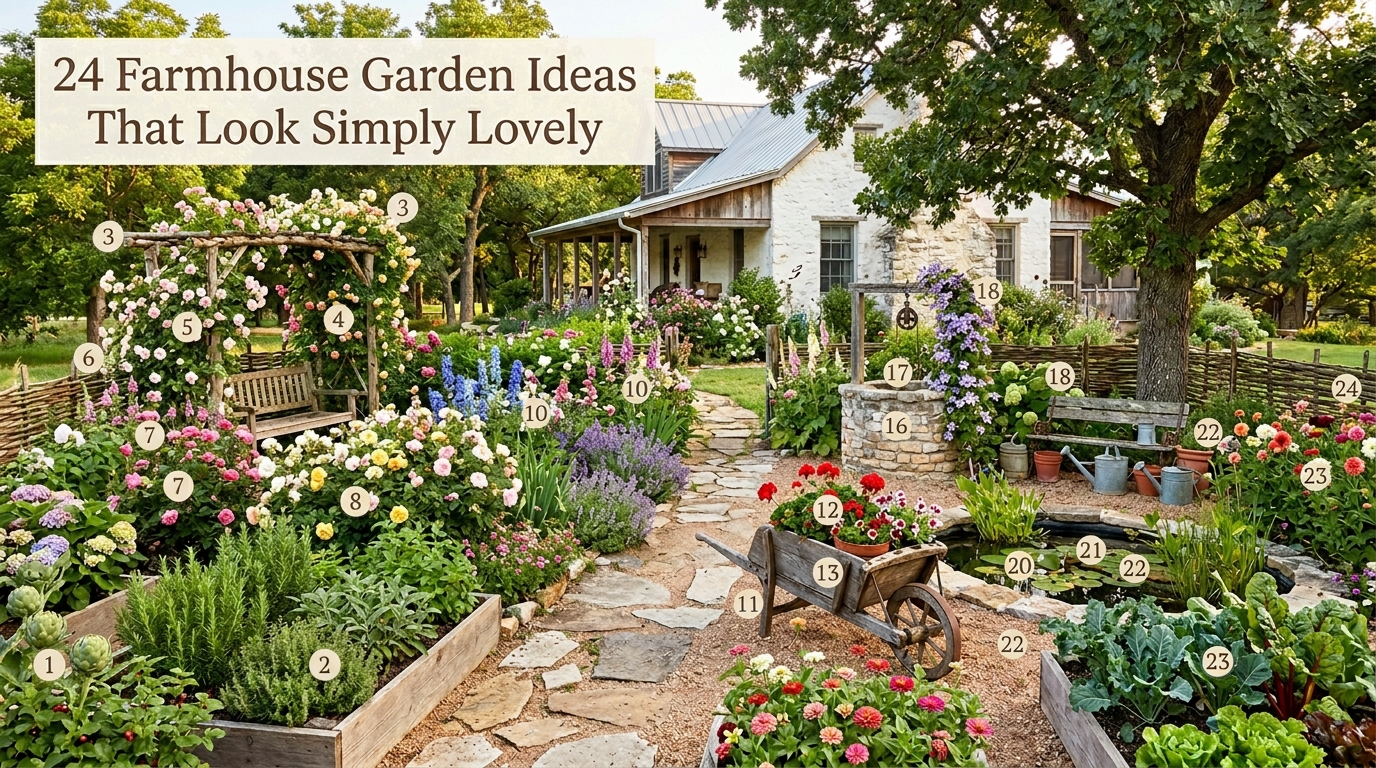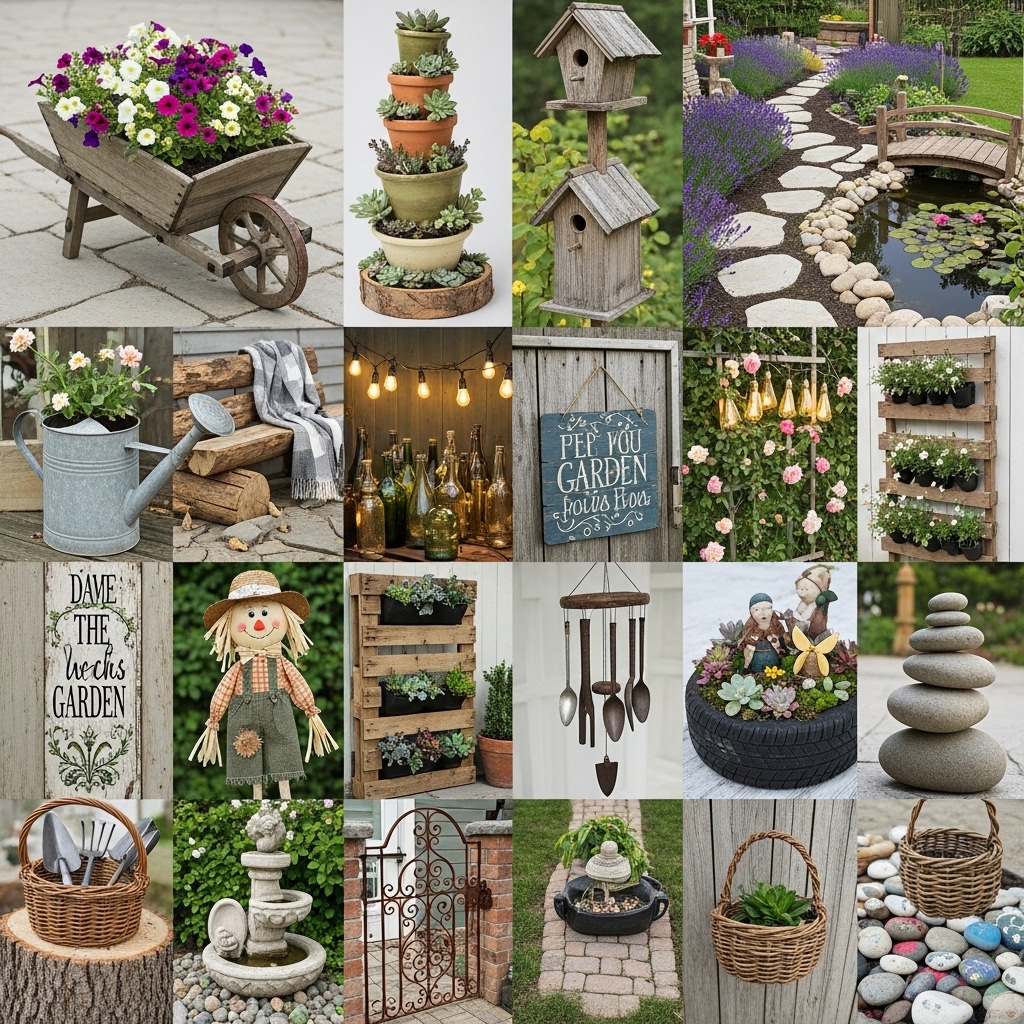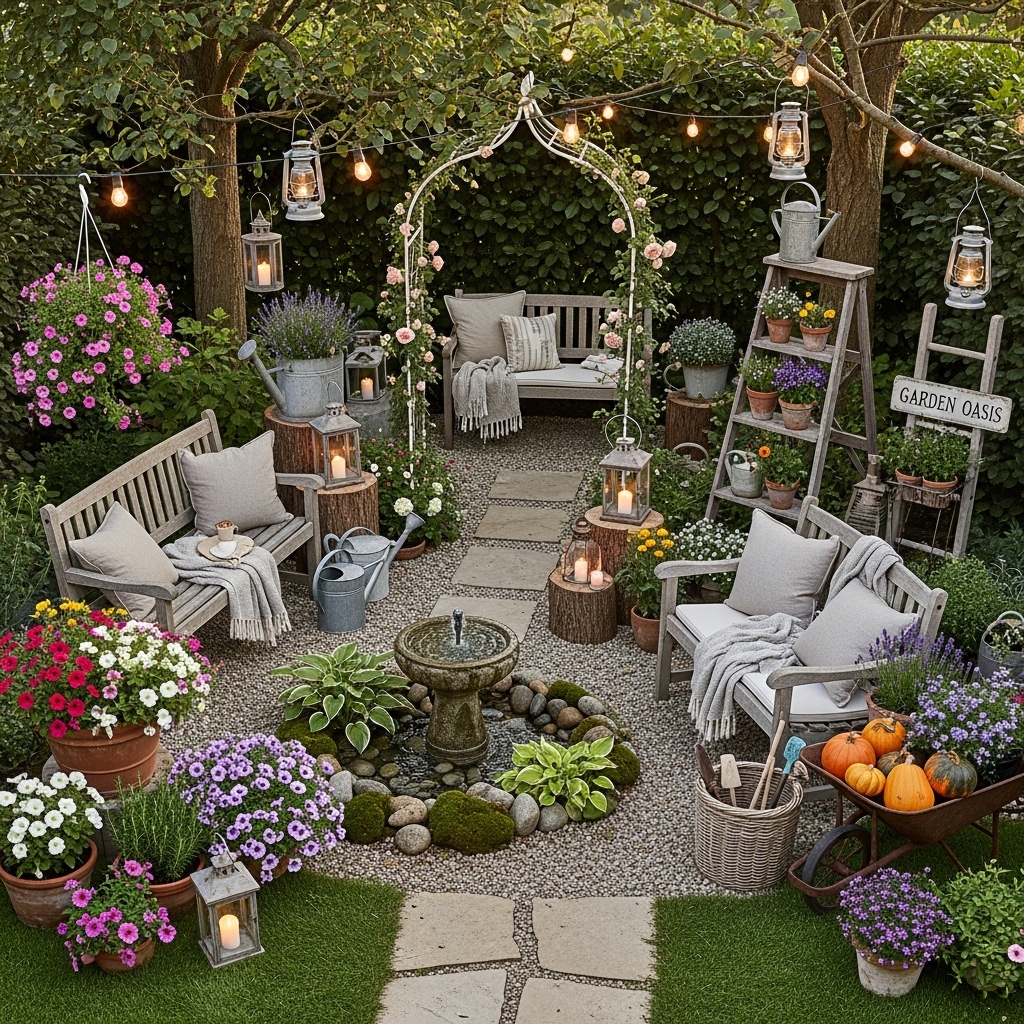
There’s something about a rustic outdoor space that feels like stepping into a storybook — weathered wood, trailing vines, the smell of earth and herbs, and the quiet invitation to simply stay a while. The rustic garden aesthetic captures everything we crave in a world that moves too fast: texture, imperfection, and soul. Whether you have a sprawling backyard, a modest patio, or a narrow balcony, this style transforms any square footage into a sanctuary you’ll never want to leave. These 25 rustic garden decor ideas are as actionable as they are inspiring — drawn from real design principles and grounded in the materials and techniques that make this aesthetic so enduringly beautiful. Let’s explore every one of them.
Why Rustic Works So Well in Outdoor Spaces
Rustic design succeeds outdoors because it works with nature rather than against it. Weathered textures, raw materials, and muted earth tones echo the colors already present in bark, stone, and soil — so instead of fighting the environment, a rustic space feels like a natural extension of it. That visual harmony is what makes this style feel so effortlessly serene, even when you’ve intentionally styled every corner.
The defining materials of rustic outdoor decor — reclaimed wood, galvanized metal, terracotta, hand-thrown pottery, wrought iron, and natural rope — carry a tactile richness that polished, modern materials simply can’t replicate. Each chip, grain, and patina tells a story. When layered together, these textures create the kind of depth that makes a space feel curated rather than decorated.
Rustic garden styling is also having a genuine cultural moment. The cottagecore movement, the rise of slow living aesthetics on Pinterest, and a broader cultural shift toward sustainability and vintage consumption have all pushed this look squarely into the mainstream. Searches for “rustic garden decor” and “cottage garden ideas” consistently spike in spring — and for good reason.
Even a small balcony or courtyard can achieve this aesthetic. The trick is editing carefully: a single reclaimed wood bench, a terracotta pot cluster, and a string of warm Edison bulbs can transform a plain concrete slab into something that feels genuinely magical.
1. Reclaimed Wood Raised Garden Beds
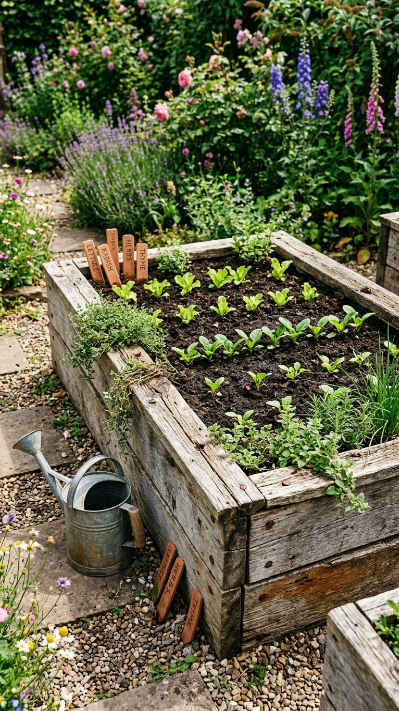
Vibe sentence: There’s an honest, grounded beauty to raised beds built from reclaimed timber — they look like they’ve always belonged exactly where they stand.
What makes it work: Reclaimed wood carries built-in character that new lumber simply can’t fake. The silvered grain, the knots, the occasional rusted nail hole — all of these “flaws” are precisely what make the structure feel rooted and intentional. The contrast between rough wood and vibrant green plantings creates a composition that photographs beautifully.
How to achieve it: Source rough-sawn cedar, old fence boards, or railway sleepers from salvage yards or Facebook Marketplace. Avoid pressure-treated timber near edible plants. Stack boards in three tiers for a proportionally satisfying height of about 12–16 inches, and leave slight gaps between planks for a more handcrafted look.
💡 Seal the inside with food-safe linseed oil — it protects the wood without making the exterior look too “finished.”
2. Vintage Lantern Clusters on Garden Steps
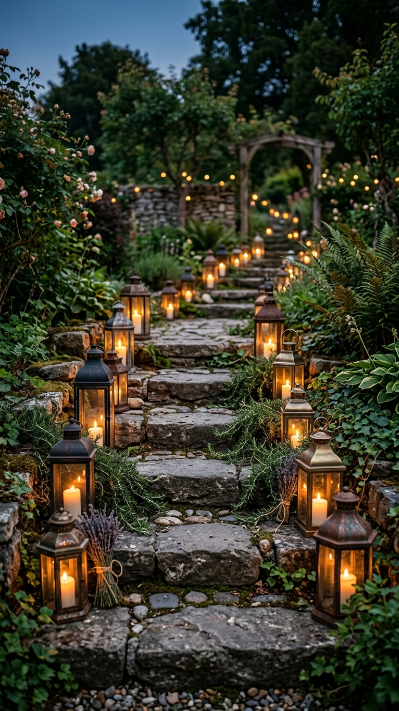
Vibe sentence: A cluster of mismatched vintage lanterns at dusk transforms ordinary garden steps into something that feels borrowed from a Provençal farmhouse.
What makes it work: The key is the mix — varying lantern heights (short, medium, tall) creates a natural, organic grouping that looks thoughtfully imperfect rather than store-bought. Warm candlelight bouncing through aged metal and glass produces a glow that no LED spotlight can replicate.
How to achieve it: Collect lanterns in aged black iron, antique brass, and oxidized copper from thrift stores or Anthropologie-style home stores. Odd numbers (three or five) always look more natural than pairs. Use real pillar candles in shorter lanterns, and opt for LED flame-flicker bulbs in taller ones for safety.
3. Weathered Wood Sign with Botanical Quote
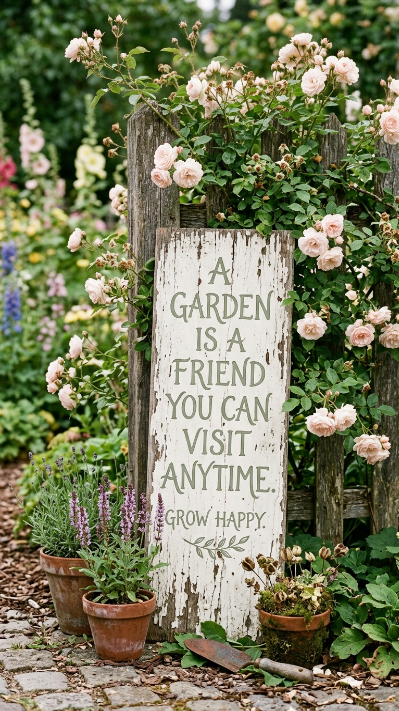
Vibe sentence: A hand-lettered sign propped against a climbing rose fence is the kind of detail that stops a garden visitor mid-step and makes them smile.
What makes it work: The distressed paint effect creates a layered, antique quality that looks far more expensive than it is. Leaning (rather than hanging) the sign gives it a casual, unstudied charm that perfectly suits the rustic aesthetic. The contrast of chipped white paint against lush greenery is a reliable visual anchor.
How to achieve it: Use chalk paint or milk paint on raw pine board, then sand the edges and raised grain once dry for an authentic worn look. Stencil or freehand your quote in a simple serif font. Prop it against fencing or a potting bench rather than mounting it flat — the slight lean reads as effortlessly organic.
💡 A quick coat of matte outdoor varnish protects the paint while preserving the chalky, not-too-shiny finish.
4. Terra Cotta Pot Tower for Vertical Herb Growing
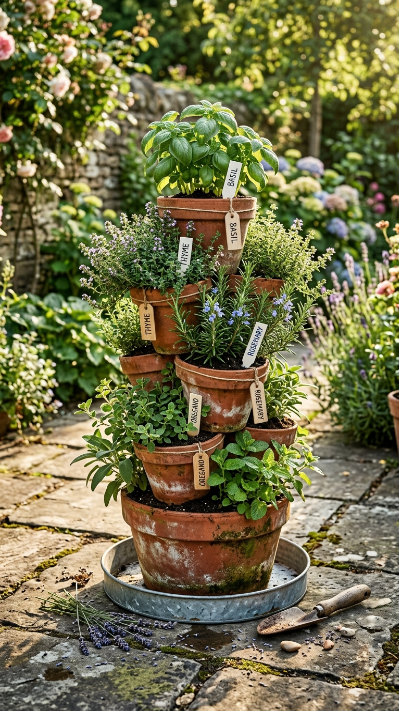
Vibe sentence: A terracotta tower overflowing with cascading herbs is equal parts functional and gorgeous — it smells as good as it looks.
What makes it work: The organic, asymmetrical spill of different herb textures (feathery dill, silvery rosemary, broad basil leaves) creates a lush, layered look that plain planters can’t achieve. Old, mineral-stained terracotta — the kind with white salt deposits and patches of moss — adds the aged character that makes this look feel genuinely rustic rather than store-fresh.
How to achieve it: Stack three graduated unglazed terracotta pots — 14″, 10″, and 6″ work beautifully — using a central stake to keep them stable. Choose herbs with different leaf textures and trailing habits. To age new pots quickly, paint them with plain yogurt and place in a shaded, damp spot for two weeks — moss will begin to form naturally.
5. Galvanized Metal Trough Planter
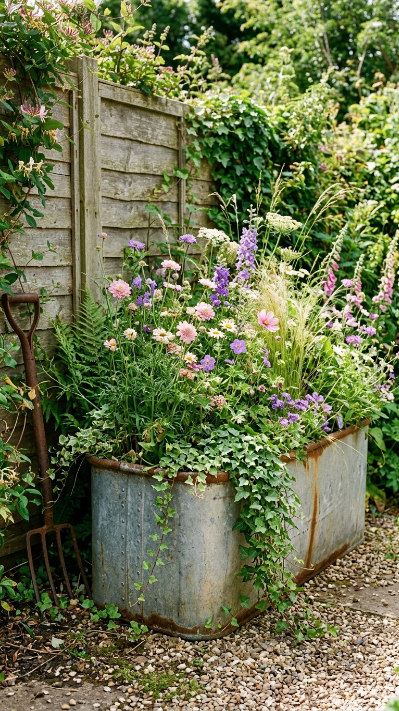
Vibe sentence: A galvanized metal trough brimming with wildflowers feels like a piece of working farm history repurposed for pure beauty.
What makes it work: The industrial matte silver of galvanized metal is the perfect counterpoint to soft, romantic florals — that tension between hard and soft, utilitarian and decorative, is what gives this pairing such visual energy. The larger the trough, the more impactful it reads in a garden or on a patio.
How to achieve it: Source galvanized stock tanks from agricultural supply stores like Tractor Supply — they’re far cheaper than garden-center equivalents. Drill drainage holes along the bottom, fill with well-draining potting mix, and plant a “thriller, filler, spiller” combination: one tall ornamental grass, dense mid-height blooms, and trailing ivy or creeping Jenny over the edges.
6. Wooden Garden Arbor with Climbing Roses
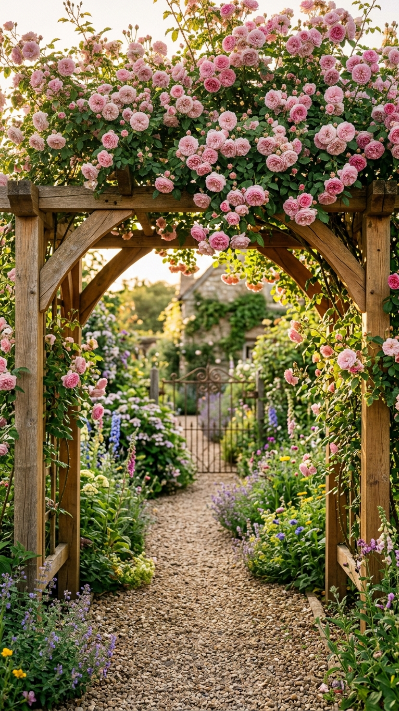
Vibe sentence: Walking beneath a rose-draped arbor is one of gardening’s greatest pleasures — it turns a simple path into a moment.
What makes it work: An arbor creates vertical structure in a garden, which is essential for depth and drama. Climbing roses trained over natural cedar develop a wild, organic drape over time that looks completely different from a planted container — it reads as something that has grown rather than been placed, which is the essence of rustic authenticity.
How to achieve it: Choose rough-sawn cedar for a genuinely rustic texture — it weathers to a beautiful silver-grey without staining. For roses, David Austin varieties like ‘Gertrude Jekyll’ or ‘The Generous Gardener’ are reliable climbers with a cottage-appropriate bloom. Train new shoots horizontally along the arbor’s crossbeams in early spring to encourage maximum lateral flowering.
💡 An arbor kit from a garden center starts around $150 — far cheaper than custom carpentry, and most can be assembled in an afternoon.
7. Mason Jar Herb Garden on a Fence Rail
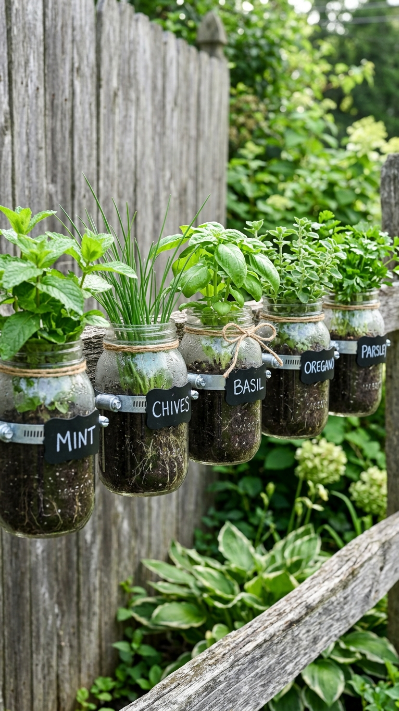
Vibe sentence: A row of mason jars bursting with fresh herbs along a fence rail is the most charming fusion of function and rustic aesthetics you can achieve in ten minutes.
What makes it work: The transparent glass of mason jars creates an interesting contrast with the solid, rough wood behind them — you see depth, roots, and layers. Varying herb heights and textures (spiky chives, broad basil, tumbling mint) creates a naturally varied rhythm along the rail that feels organic rather than rigid.
How to achieve it: Attach galvanized pipe hose clamps to fence boards with short screws — mason jars slot directly inside and hold perfectly. Space jars 6–8 inches apart for a natural grouping. Label each jar with small chalkboard tags tied with garden twine. Replace with fresh herbs each season; in winter, swap for evergreen sprigs or dried botanicals.
8. Repurposed Ladder as a Plant Display
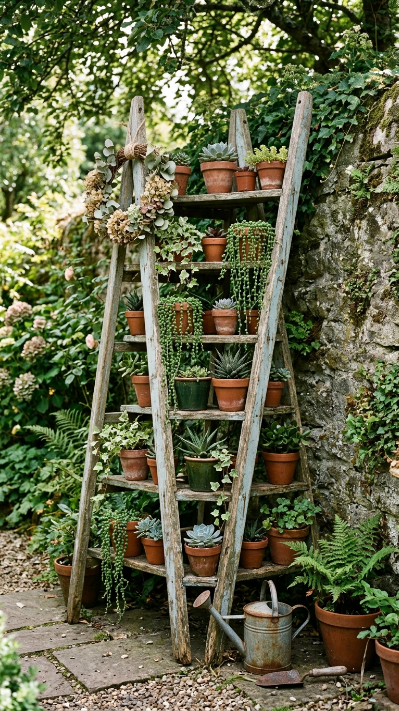
Vibe sentence: A weathered orchard ladder turned plant display is pure rustic poetry — it brings vertical layering to a garden without a single nail in the wall.
What makes it work: The ladder’s built-in rungs provide natural shelving at varied heights, creating a tiered display with three-dimensional depth. Mixing pot sizes and plant types — structured succulents alongside trailing vines alongside flowering specimens — creates a richly varied composition that holds the eye.
How to achieve it: Source old wooden ladders from estate sales, antique markets, or Craigslist — a faded paint finish beats a bare wood one for character. Stabilize the back legs with a small bolt or chain through the top rung to prevent it tipping forward. Style the rungs in odd numbers: three small pots here, two larger ones there, one trailing plant at the base.
9. Stone Path with Creeping Thyme Ground Cover
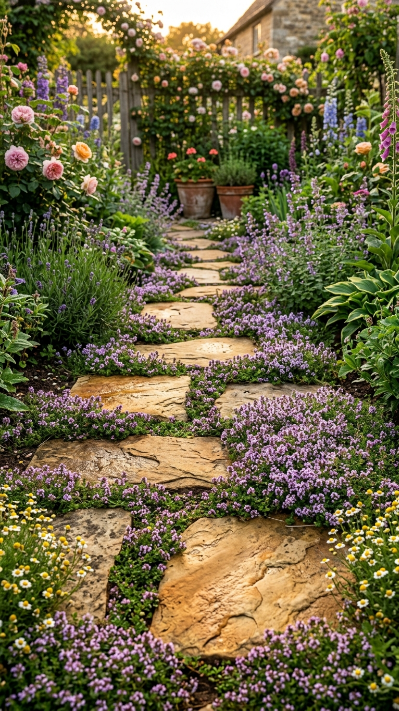
Vibe sentence: A thyme-filled stone path that releases fragrance underfoot is one of those garden luxuries that costs almost nothing but feels indescribably special.
What makes it work: Creeping thyme softens the hard geometry of stepping stones in a way that gravel or bare soil cannot — the organic spreading habit blurs the line between structure and planting, which is central to the rustic garden aesthetic. The tiny purple flowers in bloom add a delicate color pop against warm stone tones.
How to achieve it: Choose irregular-cut sandstone, flagstone, or reclaimed pavers rather than uniform concrete slabs — the irregular shapes read as far more rustic and organic. Plant Thymus serpyllum (creeping thyme) or Thymus praecox into the joints; they thrive on foot traffic and poor soil. Space stepping stones 18 inches apart for a comfortable, natural stride.
💡 Creeping thyme plug plants cost around $2–3 each at garden centers — far cheaper than buying packets of seed for instant results.
10. Wicker and Wood Patio Furniture Set
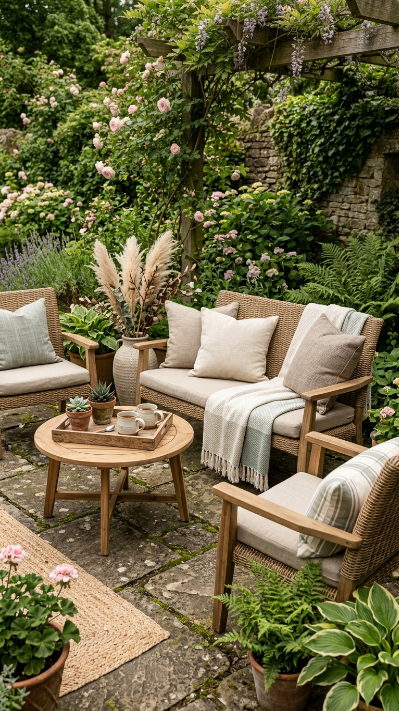
Vibe sentence: The right outdoor seating arrangement doesn’t just furnish a patio — it creates a destination, a reason to come outside and stay.
What makes it work: Natural rattan or wicker carries a warmth and organic texture that aluminium or plastic patio furniture simply can’t offer. Paired with solid teak or reclaimed wood accents and dressed with linen cushions in warm neutrals, this combination creates a layered, interior-quality look that elevates any outdoor space significantly.
How to achieve it: Look for rattan or wicker sets with powder-coated steel frames rather than solid wicker construction — they weather far better and last many more seasons. Dress cushions in Sunbrella fabric in colors like warm flax, sandy beige, or terracotta — these fade-resistant fabrics feel like linen but withstand outdoor conditions. Add a hand-woven cotton throw for cooler evenings.
11. Wildflower Meadow Border Along a Fence
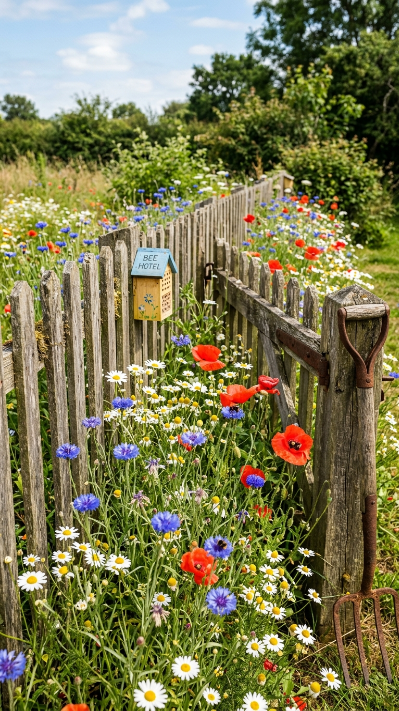
Vibe sentence: A wildflower meadow border is the rustic garden’s most effortlessly beautiful idea — and one of the only garden designs that actually improves the more you don’t interfere.
What makes it work: The deliberate informality of a mixed wildflower border — varying heights, blowsy blooms, the occasional poppy leaning the wrong way — creates visual richness that can’t be achieved with regimented bedding plants. The contrast of this soft abundance against a structured fence line creates the tension that makes it photogenic.
How to achieve it: Sow a mixed annual wildflower seed blend directly onto bare, scraped soil in early spring or autumn — wildflowers actually prefer poor, non-enriched soil. Include perennial varieties (echinacea, oxeye daisy) alongside annuals for a multi-year display. Let seed heads remain through autumn and winter for a beautiful structural display and natural reseeding.
12. Edison Bulb String Lights Through Tree Branches
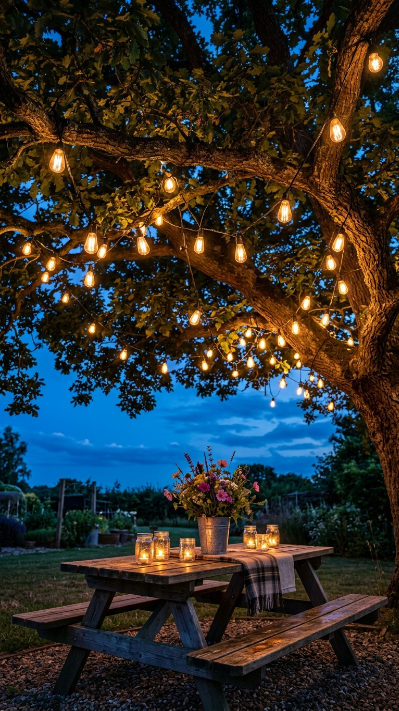
Vibe sentence: Edison bulbs strung through tree branches at twilight create the most enchanting outdoor room ceiling imaginable — the kind of light that makes everyone look beautiful and every conversation feel important.
What makes it work: The contrast between the deep blue of dusk and the warm amber filament glow is cinematic — it’s the same magic that makes bistro terraces in southern France look so romantic. The irregular distribution of bulbs through organic branch shapes prevents the rigid “Christmas light” look and keeps the aesthetic feeling natural and rustic.
How to achieve it: Choose G40 globe bulbs or vintage tubular Edison shapes in 2200K–2700K color temperature for the warmest glow. Drape loosely through branches rather than pulling taut — the organic sag is part of the charm. Solar-powered string lights now come in genuine Edison styles and eliminate any outdoor electrical concerns entirely.
💡 Solar Edison string lights from Amazon cost $15–30 and require zero wiring — simply clip the solar panel to a sunny spot and enjoy every evening automatically.
13. Driftwood Garden Sculpture or Centerpiece
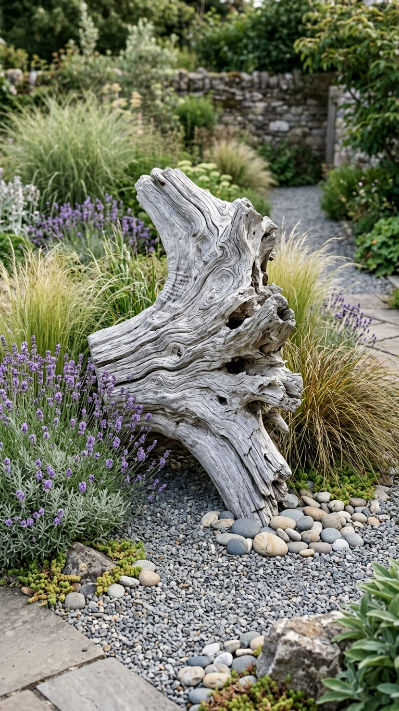
Vibe sentence: A single piece of statement driftwood in a gravel bed is the rustic garden’s equivalent of a piece of sculpture — naturally formed, completely unique, and impossibly atmospheric.
What makes it work: Driftwood’s bleached, sculptural quality introduces an organic architectural form that acts as a focal point without competing with planting. Its smooth, wave-worn texture contrasts beautifully with rough gravel and fine ornamental grass blades. Because it’s found rather than bought, it carries an authenticity that no manufactured garden ornament can replicate.
How to achieve it: Coastal beaches, rivers, and lakeshores are legal collection points for driftwood in most areas — check local regulations first. Seal with a UV-resistant matte outdoor finish to slow graying if desired. Place in a dry gravel or pebble garden bed (wet soil will cause rot) and surround with low-growing plants like sedum, thyme, or ornamental grasses to ground the composition.
14. Repurposed Watering Can as Planter
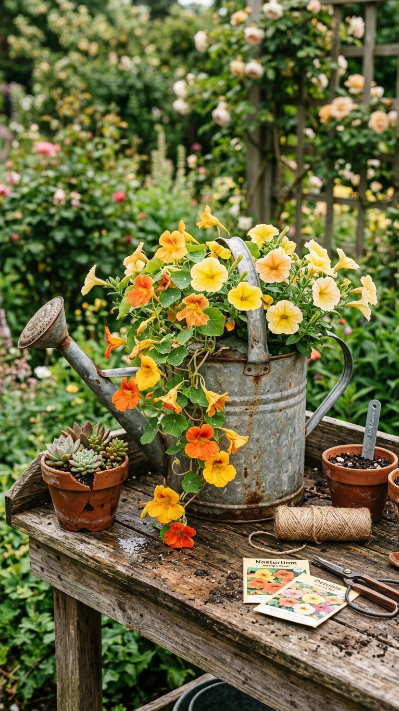
Vibe sentence: An old watering can overflowing with trailing flowers is the quintessential rustic garden vignette — modest, beautiful, and completely effortless.
What makes it work: The watering can’s spout creates an irresistible visual opportunity — positioning trailing nasturtiums or petunias so they appear to “pour” from the spout is a classic cottage garden trick that always earns a second look. The worn galvanized metal provides a neutral foil that makes warm orange or yellow blooms glow particularly vibrantly.
How to achieve it: Punch several drainage holes in the base of any metal watering can before using as a planter. Fill with a free-draining mix and plant trailing nasturtiums (direct sow), calibrachoa, or creeping Jenny for maximum spill effect. The “spill from the spout” arrangement requires simply training a few stems along the spout and securing briefly with a thin wire until they take their own direction.
15. Outdoor Chalkboard Menu or Welcome Board
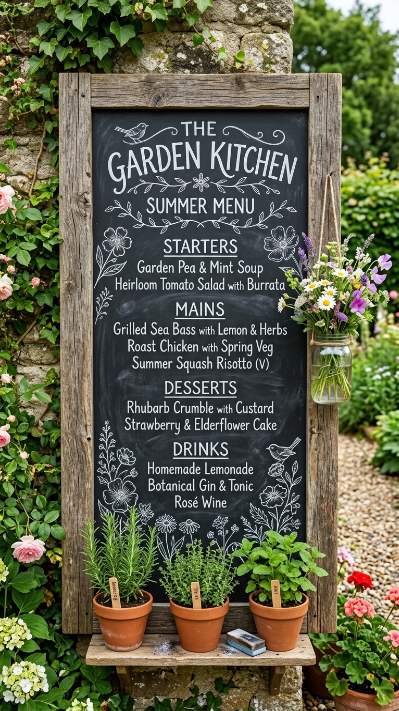
Vibe sentence: An outdoor chalkboard garden sign brings warmth and personality to a patio corner in a way that no printed or manufactured sign ever could.
What makes it work: Chalkboard surfaces offer maximum personality with minimum effort — the hand-lettered imperfection reads as genuinely human and warm in a way that printed signage cannot replicate. Framed in reclaimed wood, the piece anchors a garden corner or patio wall with a defined focal point and invites seasonal updating.
How to achieve it: Apply two coats of outdoor-rated chalkboard paint to a piece of plywood or MDF board, then frame with rough-sawn timber scraps. Season the surface before first use: rub the side of a chalk stick over the entire board and wipe away, or the first writing will permanently ghost. Update seasonally with menus, quotes, or simply a “Welcome” greeting.
💡 Liquid chalk markers last far longer outdoors than traditional chalk sticks and won’t smear in light rain.
16. Birdbath in Aged Stone or Concrete
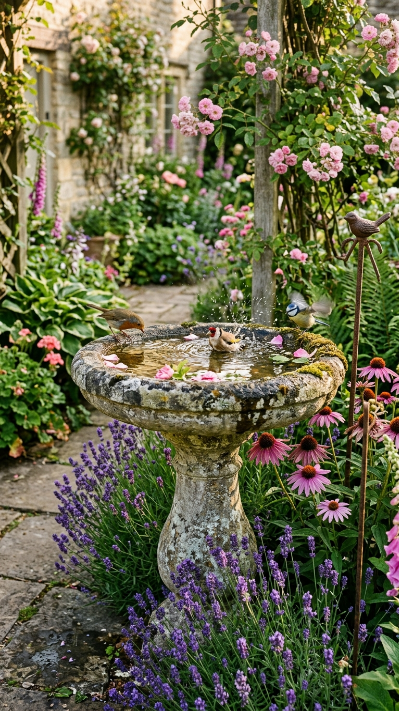
Vibe sentence: A moss-edged stone birdbath at the center of a cottage border is both a design statement and a gift to local wildlife — a rare combination in garden decor.
What makes it work: The key design element here is material and age. Genuine stone birdbaths develop lichen and moss organically over time, creating a patina that makes them look centuries old and perfectly of-the-earth. Positioned among soft cottage planting — lavender, roses, echinacea — a birdbath becomes a natural focal point that softens the garden’s overall geometry.
How to achieve it: If budget allows, cast stone or natural sandstone birdbaths are worth the investment — they weather beautifully over decades. For a faster aged look on a new concrete birdbath, paint diluted dark grey concrete stain into the surface crevices and wipe back, then apply yogurt to promote lichen growth. Position in dappled shade, not full sun — water stays cooler, cleaner, and more attractive to birds.
17. Rustic Potting Bench with Open Shelving
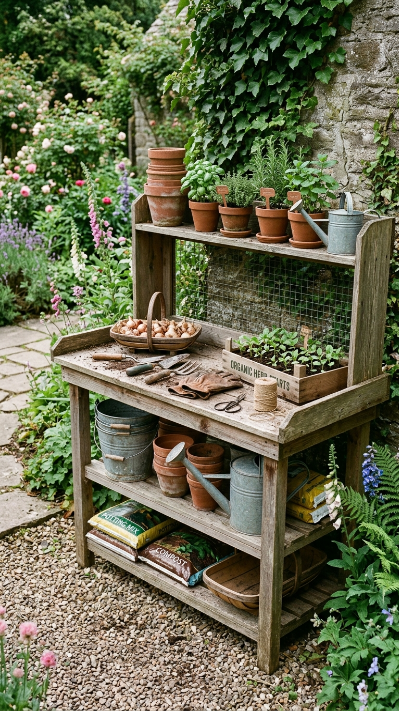
Vibe sentence: A well-loved potting bench doesn’t just hold your supplies — it becomes the visual heart of the kitchen garden, telling the story of every season that’s passed.
What makes it work: The potting bench achieves something rare: it makes organization look beautiful. Stacked terracotta pots, coiled garden twine, terracotta labels, and seedling trays grouped by use create a genuinely purposeful composition that reads as richly rustic without any forced styling.
How to achieve it: Build or buy in rough-sawn cedar (it weathers to a beautiful silver) or repurpose an old kitchen dresser by removing cabinet doors and adding a wire mesh back. Keep the work surface deliberately unstained — soil traces, scratches, and worn patches are part of the patina. Invest in mismatched terracotta pots in a consistent color family for a cohesive but organic look.
18. Hanging Macramé Planters from a Pergola
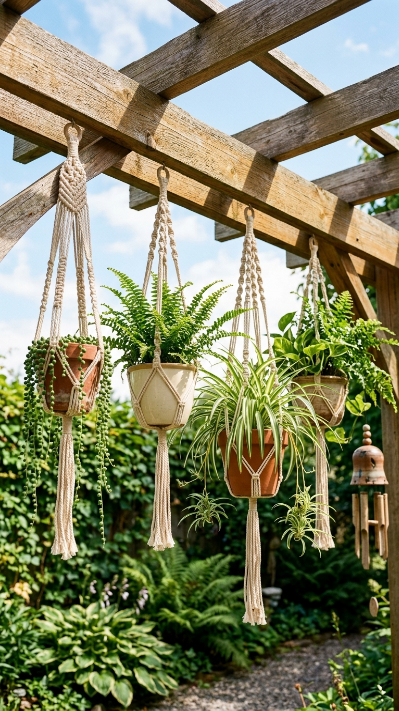
Vibe sentence: Macramé planters hanging at varied heights from a pergola create a living, swaying curtain of greenery that turns outdoor dining into a genuinely immersive experience.
What makes it work: Hanging plants introduce a vertical dimension that ground-level containers simply cannot achieve. The natural cotton rope of macramé matches perfectly with rustic wood and terracotta — its cream undyed tones are organic rather than stark. Varying the drop heights creates visual rhythm that makes the pergola space feel artfully layered.
How to achieve it: Hang planters using S-hooks over existing pergola beams — no drilling required. Choose plants suited to outdoor shade or dappled light: trailing nasturtiums, ferns, spider plants, or string of pearls (in sheltered positions). Weight each planter before hanging: a fully watered 6-inch pot can weigh 2–3 pounds, so ensure your rope and hook combination can hold safely.
💡 Ready-made macramé plant hangers cost $8–15 on Etsy — quicker than learning to knot your own, and handmade quality supports artisan sellers.
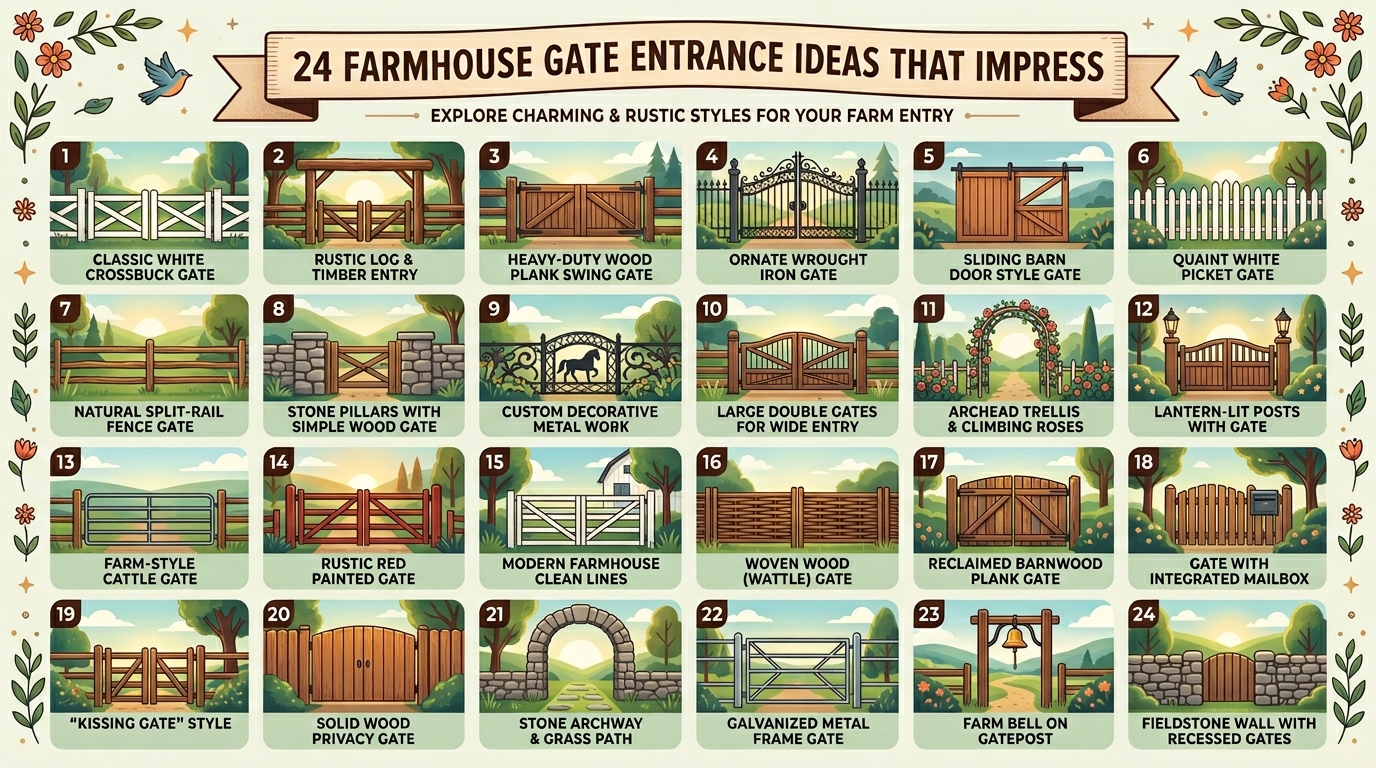
19. Antique Iron Gate as Garden Wall Decor
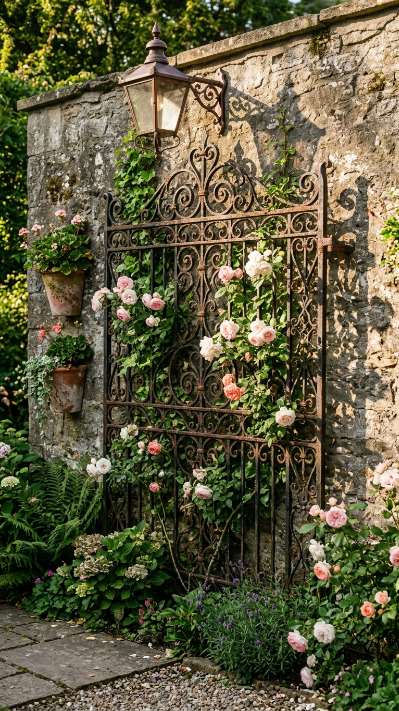
Vibe sentence: An antique iron gate mounted as wall art creates the most unexpectedly dramatic focal point a garden wall can offer — architecture repurposed as pure decoration.
What makes it work: Old iron gates carry genuine design vocabulary — scrollwork, proportions, and aged patina accumulated over decades. Mounted flat against a wall, they function as architectural art that creates beautiful shadow patterns in sunlight. Threading climbing plants through the ironwork gradually softens the piece and integrates it into the garden with lovely organic effect.
How to achieve it: Source Victorian or Edwardian iron gates from architectural salvage dealers, estate auctions, or specialist dealers like Salvoweb. Mount flat against a wall using heavy-duty masonry anchors at the top and securing points. Do not repaint — the existing patina is the aesthetic. Train climbing roses or clematis at the base and allow them to thread through the bars over one or two growing seasons.
20. Log Slice Stepping Stones

Vibe sentence: A woodland path made from log slices feels like something discovered rather than designed — as though the forest itself made a way through.
What makes it work: Log slice stepping stones are architectural and organic simultaneously — the visible growth rings and bark edges read as naturalistic garden design at its most poetic. In shaded areas, moss establishes quickly across the surface, accelerating the aged, woodland look that would take years to achieve with manufactured stone.
How to achieve it: Source large log slices from tree surgeons after storms — they’re often available free or at minimal cost. Choose dense hardwoods (oak, elm, sweet chestnut) which resist rot far longer than softwoods. Treat the underside with preservative before setting 2–3 inches into the ground, and top-dress the surface with a thin slurry of natural yogurt to encourage moss establishment in shaded conditions.
21. Hanging Wicker Basket Wall Garden
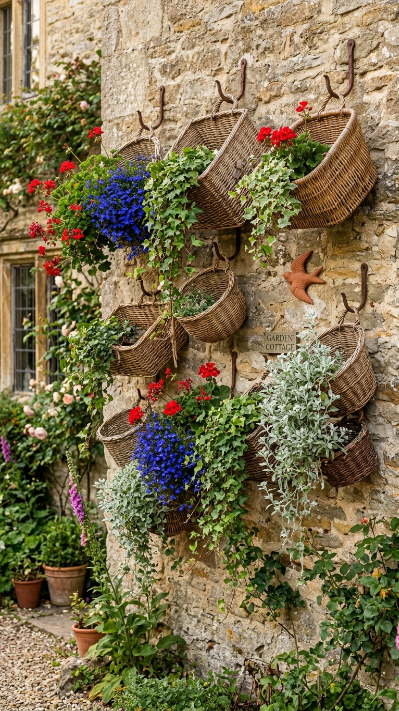
Vibe sentence: A wall of flowering wicker baskets transforms a bare stone surface into a vertical garden that tumbles with color all summer long.
What makes it work: Wicker’s warm tan tones are the ideal complement to stone or brick walls — they share an earthiness that makes the combination feel wholly organic. Arranging baskets at deliberately varied heights and in different sizes creates a gallery-wall effect that retains a looseness and informality appropriate to the rustic aesthetic.
How to achieve it: Line wicker baskets with coir fibre liner (not plastic) before planting — coir allows air circulation to roots while retaining moisture, and the natural brown tones visible at the edges look far more rustic than plastic. Choose a trailing geranium, a filler like lobelia or alyssum, and a spiller like trailing ivy for each basket — the classic combination ensures continuous color from May through October.
💡 Hanging basket brackets from hardware stores cost under $5 each — use self-drilling masonry screws for stone or brick walls for a solid, no-rawlplug installation.
22. Copper or Brass Garden Hose Nozzle and Watering Accessories
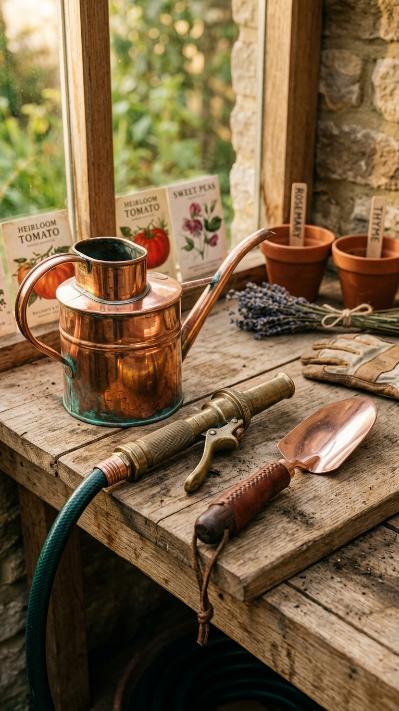
Vibe sentence: Copper and brass garden tools are where function becomes an art form — the kind of detail that elevates a potting bench from workstation to design feature.
What makes it work: Metal quality transforms a potting area from utilitarian to genuinely beautiful. Copper’s warm reddish tone develops a natural verdigris patina over time, progressing through honey, bronze, and eventually blue-green — each stage more beautiful than the last. Against rough wood shelving, these warm metal tones create a sophisticated rustic palette that feels both artisanal and timeless.
How to achieve it: Invest in one or two quality copper or brass pieces — a watering can and a hand trowel make the most visual impact. Sources include Haws (heritage British brand, $40–120), Barebones Living, or vintage finds at antique markets. Display them intentionally rather than storing in a shed — their beauty is partly the point. Wipe dry after use to slow patina development if you prefer a brighter tone.
23. Outdoor Lantern Table Centerpiece with Botanicals
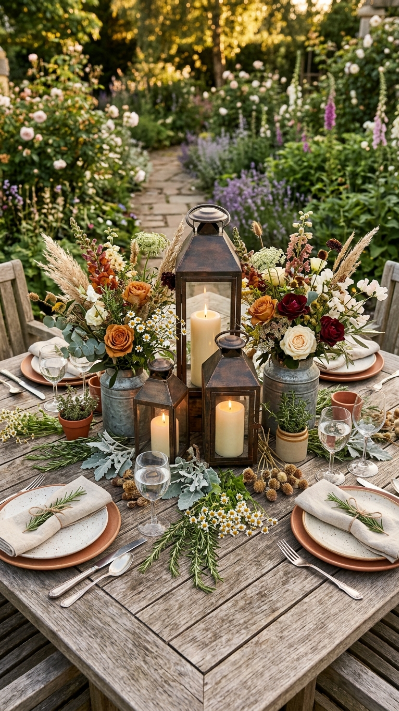
Vibe sentence: An outdoor table dressed with lanterns and loose botanical stems captures the spirit of al fresco dining in the south of France — unhurried, sensory, and deeply beautiful.
What makes it work: The combination of flickering candlelight and botanical matter creates a centerpiece with movement, warmth, and fragrance — three dimensions of sensory experience that makes al fresco dining feel genuinely special. Lantern heights varied at three levels (tall, medium, short) create visual structure that loose flowers then soften with an organic abundance.
How to achieve it: Use a galvanized bucket or wide-mouthed jar as your floral vessel — fill with a mix of structural stems (dried grasses, eucalyptus), bold blooms (sunflowers, cosmos), and detail flowers (chamomile, lavender). Keep the arrangement deliberately “unfinished” — no floral foam, no formal shaping. Lay loose herbs flat on the table surface around the vases to extend the arrangement naturally across the tabletop.
24. Woven Willow Fence or Hurdle Panel
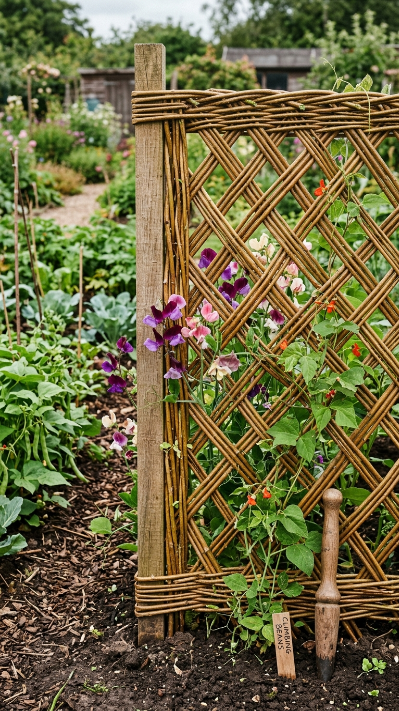
Vibe sentence: A woven willow hurdle brings a thousand years of British cottage garden craft into a contemporary outdoor space — and absolutely nothing else looks quite like it.
What makes it work: Woven willow has a handmade quality that’s unmistakably artisan — the slightly irregular weave, the visible knot points, the organic variation in rod thickness. It functions simultaneously as garden divider, windbreak, and climbing plant support, which makes it one of the most genuinely useful design elements in rustic garden decor.
How to achieve it: Ready-made woven willow hurdle panels are available from garden suppliers and country craft markets in standard 6-foot sections — no construction required. Push the stake ends 6–8 inches into soft ground for stability, or wire to existing posts. Living willow panels are also available: plant in late winter, weave young rods as they grow, and within one season you have a growing, living structure that remains permanently in leaf.
25. Fire Pit Seating Circle with Log Benches
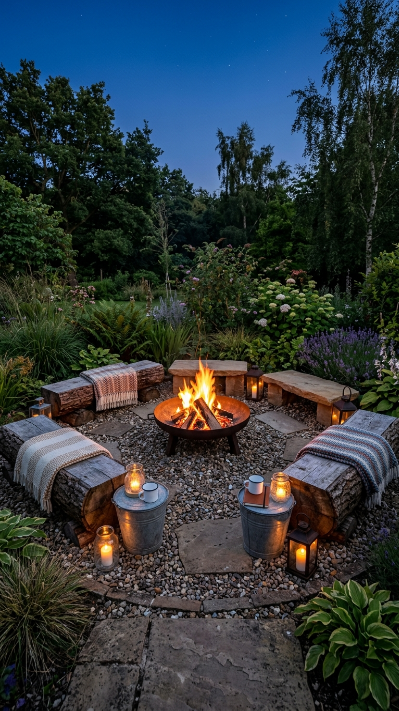
Vibe sentence: A fire pit circle at dusk, with log benches draped in wool throws and the smell of woodsmoke in the autumn air, is the rustic outdoor experience at its most complete and unforgettable.
What makes it work: The circular arrangement of seating around a central fire creates a natural gathering geometry that encourages conversation and connection in a way that linear patio furniture rarely achieves. Rough-hewn log benches with bark still attached are essential — they read as found and crafted, not manufactured, which is precisely what the rustic aesthetic demands.
How to achieve it: Flat-cut log halves (available from sawmills and timber merchants) make ideal benches when set on short post legs sunk into the ground. A cast iron fire bowl with legs (around $80–150 from garden suppliers) is preferable to an in-ground fire pit for rentals or for flexibility in rearranging the space. Surround the seating circle in gravel for a clearly defined outdoor room footprint and improved drainage.
💡 A cast iron fire bowl on legs can be repositioned across your garden as needed — far more versatile than a built-in pit.
How to Start Your Rustic Garden Transformation
The best place to begin a rustic garden transformation is not with a shopping list — it’s with one focal point. Choose the area of your outdoor space you see most often: the view from the kitchen window, the corner where you drink your morning coffee, or the patio table where you eat in summer. Invest in making that one space look exactly right, and let the rest follow naturally.
The most common mistake beginners make is buying everything at once from the same source. Rustic aesthetics depend on the collected, layered quality that only comes from mixing eras, materials, and origins. One piece from a salvage yard, one from a garden center, one inherited, one made — that combination is what creates authenticity. Matching “rustic sets” from a single retailer always look slightly hollow.
For budget-conscious starters, the highest-impact first moves are: terracotta pots in a cluster grouping (three sizes, same material), one string of warm Edison lights, and a single weathered wood planter or bench. These three elements alone can transform a plain patio into something that reads as intentionally styled.
Allow yourself a full growing season — spring through autumn — to develop the planting element of your rustic garden decor ideas. Plants take time to establish, trail, and bloom. The wait is part of the design process.
Frequently Asked Questions
What are the best plants for a rustic garden style?
The plant palette most suited to rustic garden decor includes soft, informal bloomers rather than rigid, architectural specimens. Lavender, echinacea, foxgloves, hollyhocks, climbing roses (particularly David Austin varieties), and wildflower mixes all suit this aesthetic beautifully. Herbs — rosemary, thyme, sage, and chamomile — double as both design elements and practical plants. Avoid overly manicured topiary or formal hedging, which conflicts with the deliberately relaxed rustic visual language.
Is rustic garden decor expensive to achieve?
Rustic garden decor is actually one of the most budget-friendly outdoor design styles, precisely because imperfection is the point. Reclaimed materials, salvage yard finds, vintage thrift store lanterns, and DIY elements cost far less than brand-new designer garden furniture. Focus spending on quality natural materials (terracotta rather than plastic, real wood rather than composite) and source decorative elements secondhand. A genuinely rustic space might cost $200–500 to establish beautifully, compared to $1,500+ for a formal patio redesign.
How do I stop rustic garden decor from looking messy or cluttered?
The key difference between “rustic” and “untidy” is curation and intention. Edit ruthlessly — five well-chosen pieces in a cohesive material palette (terracotta, wood, galvanized metal) look far better than twenty mismatched items. Anchor the space with one or two larger structural elements (a bench, a raised bed, an arbor) before adding accessories. Group smaller items rather than scattering them: a cluster of three pots reads as styled, while three separate single pots on different surfaces reads as random.
What colors work best for rustic garden decor?
The most successful rustic garden color palettes are drawn directly from nature. Earth tones — terracotta, warm brown, stone grey, mossy green — form the base. Accent colors work best in faded, muted versions rather than bright primaries: dusty rose rather than hot pink, cornflower blue rather than royal blue, warm amber rather than sharp yellow. For painted elements (furniture, fences, gates), chalky heritage colors like Farrow & Ball’s “Mizzle,” “Card Room Green,” or “Mouse’s Back” are consistently beautiful in outdoor settings.
What’s the difference between rustic and cottagecore garden styles?
The two aesthetics are closely related and frequently overlap, but there are meaningful distinctions. Rustic garden decor tends toward raw, natural materials with minimal color — weathered wood, stone, galvanized metal, and terracotta in muted earth tones. Cottagecore leans into soft florals, romance, and abundance — think overflowing roses, hand-painted signs, and a profusion of bloom at every turn. A rustic space might feel more Zen and structured; a cottagecore space feels perpetually mid-summer. Most garden lovers successfully blend both, using rustic materials and structure while allowing cottagecore planting abundance to soften every edge.
Ready to Create Your Dream Rustic Garden Space?
You now have 25 rustic garden decor ideas worth saving, pinning, and returning to season after season — from the simplest mason jar herb wall to the most evocative fire pit circle at dusk. What makes the rustic garden style so enduringly compelling is its honesty: every patina, every weathered plank, every hand-thrown pot tells a story of time, use, and genuine love for outdoor living. Save the ideas that resonated most deeply with you, and begin with just one. The transformation from plain to magical rarely requires a complete overhaul — more often, it takes a single terracotta cluster, a string of warm lights, or a beloved old ladder given new purpose. Your rustic outdoor sanctuary is already waiting — it just needs you to begin.