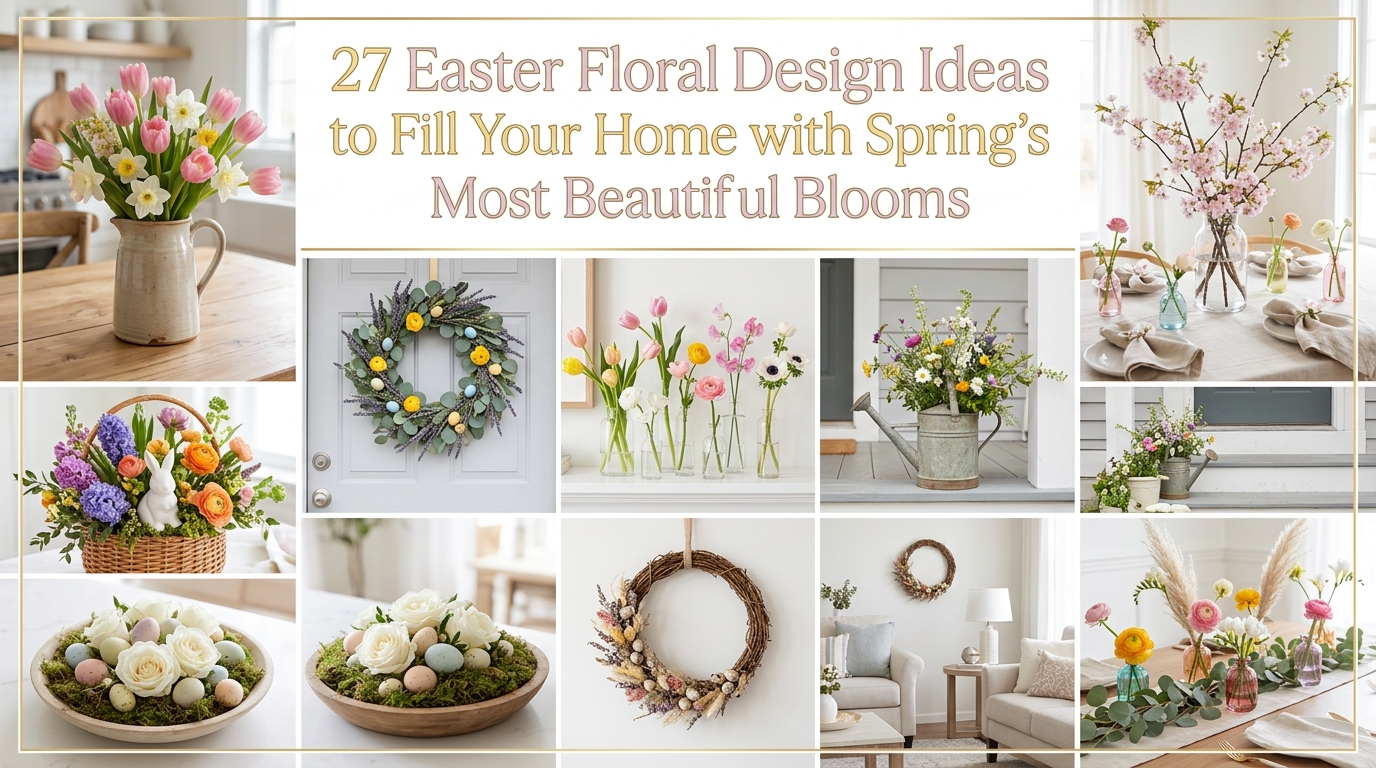
There’s something magical about the way fresh flowers transform a space in spring — suddenly everything feels lighter, softer, and full of quiet hope. Easter floral design captures that feeling perfectly, weaving together pastel blooms, lush greenery, and the kind of natural beauty that makes a room feel genuinely alive. Whether you’re decorating a dining table, a mantel, or a simple windowsill, these arrangements carry a warmth that no candle or throw pillow can quite replicate. The good news? You don’t need a florist’s training or a designer’s budget to pull it off beautifully. Here are 27 Easter floral design ideas worth saving.
Why Easter Floral Design Works So Well
Easter floral design sits at the intersection of nature, color, and seasonal ritual — and that’s exactly why it resonates so deeply. Unlike other holiday décor that can feel commercial or overdone, Easter arrangements draw on the raw beauty of spring itself: tulips just beginning to open, branches heavy with blossom, and the quiet elegance of a single stem in a bud vase.
The defining palette is all softness and contrast — blush, lavender, sage, butter yellow, and white, punctuated occasionally by deeper violets or coral. Materials lean natural: terracotta pots, aged ceramic pitchers, woven baskets, and raw linen table runners create the grounded backdrop that lets florals truly shine.
Culturally, this style is having a genuine moment. Pinterest searches for “Easter floral arrangements” and “spring tablescape ideas” spike dramatically each February and March, driven by a broader appetite for slow living and intentional seasonal decorating. People are craving connection to natural rhythms, and flowers are the simplest way to honor that.
Even small spaces respond beautifully to Easter florals. A single hyacinth in a vintage milk glass vase on a kitchen shelf does more visual work than an entire shelf of decorative objects. The scale is flexible — and that accessibility is part of what makes this style so enduring.
Tulip Cascade in a Weathered Ceramic Pitcher
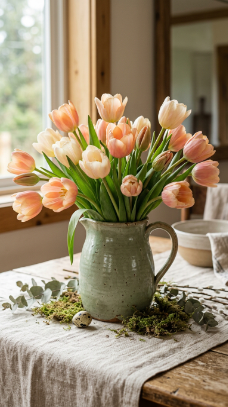
Vibe sentence: This arrangement feels like you gathered it from a cottage garden five minutes before guests arrived — relaxed, generous, and quietly stunning.
What makes it work: The secret is using a vessel with visual weight and history. A worn ceramic pitcher grounds the softness of the tulips, creating contrast between rustic and delicate. Varying stem heights — some tall and upright, others curved and drooping — gives the arrangement organic movement that a perfectly uniform bunch simply can’t achieve.
How to achieve it: Source tulips in three tones within the same family (e.g., deep blush, pale blush, and cream) rather than one solid color. Cut stems at varying lengths before placing them loosely — no floral foam required. Look for hand-thrown stoneware pitchers in sage, warm white, or aged terracotta at thrift stores or ceramic studios.
💡 Grocery store tulips work perfectly here — buy two bunches in soft tones and let them open at room temperature for a day before arranging.
Moss and Hyacinth Nest Centerpiece
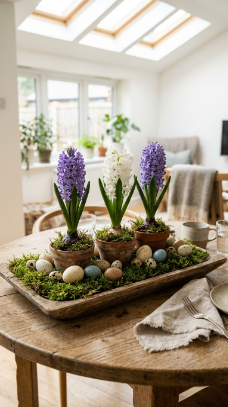
Vibe sentence: This centerpiece smells as good as it looks — hyacinths filling the room with that unmistakable spring perfume while the moss and eggs make it feel like a little world unto itself.
What makes it work: Nesting plants rather than cut flowers gives the arrangement surprising depth and texture. The contrast between the dense, architectural hyacinth blooms and the soft, sprawling moss creates visual tension that keeps the eye moving. Speckled eggs nestled into the greenery tie the Easter story in without feeling kitschy.
How to achieve it: Line a shallow tray or vintage bread board with damp sheet moss (available at craft stores). Tuck in potted hyacinths — bulbs still visible — at varying angles. Choose hyacinths in one or two complementary tones: deep violet paired with soft lilac, or pale pink alongside white works beautifully.
Single-Stem Bud Vase Gallery on a Windowsill
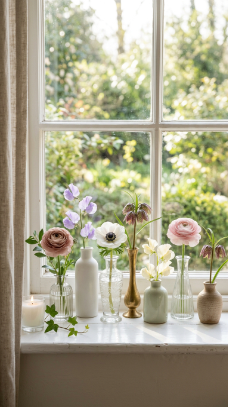
Vibe sentence: Seven small moments of beauty, lined up in the morning light — this is the kind of display that stops you mid-coffee and makes you feel grateful.
What makes it work: The gallery effect turns simple single stems into a cohesive visual statement. Varying vase heights and materials (glass beside ceramic beside brass) creates rhythm without chaos. Backlit by a window, even the most ordinary flower becomes luminous.
How to achieve it: Collect mismatched bud vases in a unified color family — all warm tones or all cool, muted tones — to keep the grouping harmonious. Use one bloom type per vase and vary the species rather than the colors. Spring stems that work perfectly: ranunculus, anemone, sweet pea, and muscari.
💡 Check thrift stores and charity shops for small vases — a collection of five to eight costs under $15 and looks infinitely more intentional than a matched set.
Overflowing Easter Basket Bouquet
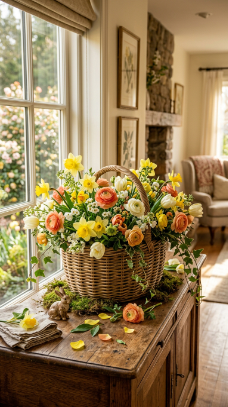
Vibe sentence: Generous and unrestrained, this arrangement feels like spring itself couldn’t be contained — which is entirely the point.
What makes it work: The basket vessel signals abundance and informality, giving you permission to pile flowers in without any arrangement anxiety. The mix of round blooms (ranunculus, tulips) with airy stems (daffodils, ivy trails) creates layered depth. Letting flowers spill over the edges amplifies the effect of natural, effortless fullness.
How to achieve it: Place a water-filled jar or floral foam inside the basket before adding stems. Build from the center outward, placing your largest, most colorful blooms first, then filling gaps with lighter, airier stems and trailing greens. Choose a color palette of no more than four tones for cohesion.
Pastel Ranunculus in Vintage Milk Glass
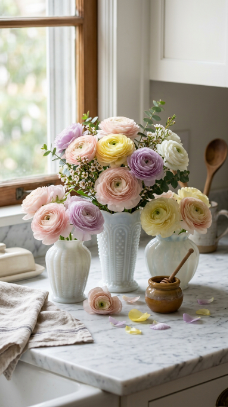
Vibe sentence: There’s a quiet romance to milk glass and ranunculus together — both layered, both luminous, both belonging to a gentler era.
What makes it work: Milk glass’s warm opacity reflects light softly, which flatters the paper-thin petals of ranunculus more than clear glass would. Grouping three vessels of different heights creates visual interest without overwhelming a smaller surface like a kitchen counter or bathroom shelf.
How to achieve it: Source milk glass at antique markets or estate sales — it’s still widely available and very affordable. Ranunculus are available at most florists from late winter through spring; choose them while still tightly budded so they open slowly and last longer. Fill each vase with just three to five stems for a deliberately intimate feel.
Cherry Blossom Branch Statement Arrangement
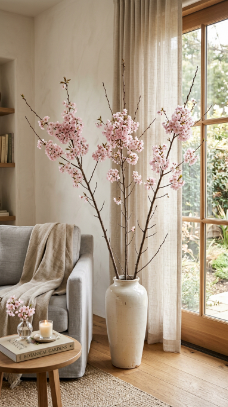
Vibe sentence: Tall flowering branches have an architectural presence that no compact arrangement can replicate — they bring the outside in and make the ceiling feel higher.
What makes it work: The scale contrast between delicate blossoms and substantial floor-level vessel is striking. Cherry blossom branches create movement and negative space, which is a sophisticated design principle — the “empty” areas around the blooms are as important as the blooms themselves.
How to achieve it: Look for cherry blossom branches at florists or Asian grocery stores in late winter and early spring. Use a heavy floor-level vase or large ceramic urn filled with rocks or marbles at the bottom for stability. Three to five branches is ideal — enough for impact without overcrowding.
💡 Forced flowering branches from your garden work too — cut forsythia or quince in late winter and place in warm water indoors.
Daffodil Mason Jar Cluster
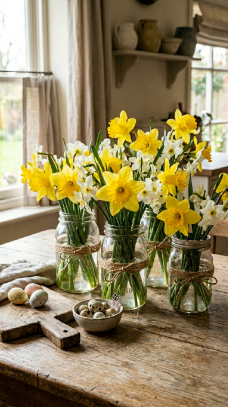
Vibe sentence: Cheerful and completely unfussy, this cluster of daffodils says “spring is here” louder than anything you could buy from a décor shop.
What makes it work: Clustering multiple small vessels creates the visual impact of one large arrangement without requiring a single large container. The transparency of glass lets the stems become part of the display, and twine bows add a handmade warmth that elevates what could otherwise feel utilitarian.
How to achieve it: Group mason jars in odd numbers — three, five, or seven — at slightly different heights (stack a book under one or two for variation). Trim daffodil stems short so heads sit just above the jar openings, giving a lush, full look with only three to four stems per jar.
Lavender and White Tablescape Florals
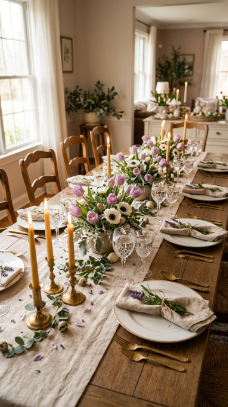
Vibe sentence: A tablescape like this turns an Easter lunch into something that feels genuinely ceremonial — everyone sits down a little straighter.
What makes it work: The low, linear runner format keeps sightlines open across the table while still creating lush visual impact. Alternating bloom heights and mixing round tulip heads with the star-shaped anemone petals keeps the eye moving without chaos. Brass candleholders warm the cool lavender palette beautifully.
How to achieve it: Use a long, shallow trough or line several bud vases end to end down the table center. Keep all arrangements below eye level when seated — 30cm maximum height. Stick to a two-color floral palette with varied greenery for texture.
💡 Lay a plain linen table runner first — it provides the “ground” that makes even simple flowers look deliberately styled.
Terracotta Pot Spring Garden Display
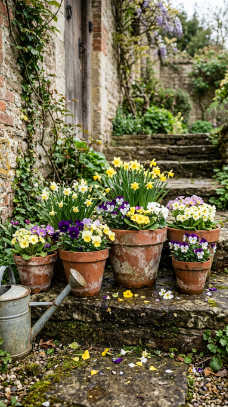
Vibe sentence: There’s something about aged terracotta and spring blooms together that feels both ancient and perpetually new.
What makes it work: The warm mineral tones of terracotta are the perfect complement to cool-toned spring flowers — the contrast is inherently harmonious. Varying pot sizes (one large, two medium, two small) creates a natural-looking composition that follows basic design hierarchy.
How to achieve it: Group pots asymmetrically — never in a perfectly straight line. Age new terracotta quickly by rubbing with natural yogurt and leaving in a damp spot for a week; moss will begin to grow, creating that coveted antique look. Plant in odd-numbered groupings per pot for a fuller effect.
Anemone Crown Wreath on a Door
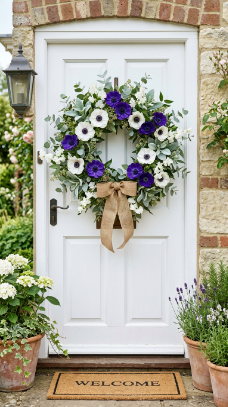
Vibe sentence: A door wreath does more than decorate — it sends a message to every visitor: something beautiful is happening here.
What makes it work: Anemones are ideal wreath flowers because their flat, graphic shape reads clearly at distance while their deep-colored centers add drama up close. Mixing silver-green lamb’s ear with eucalyptus creates tonal variety in the greenery itself, adding depth beyond simple filler foliage.
How to achieve it: Use a wire wreath form rather than foam for a lighter, airier look. Attach stems in bundles using floral wire, working around the circle in one direction. Soak all stems in water before attaching and mist the finished wreath daily to extend its life.
💡 Faux anemone wreaths are genuinely convincing now — look for silk versions with black velvet centers for a wreath that lasts season after season.
Wildflower Field Arrangement in a Galvanized Jug
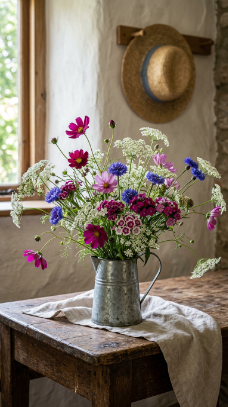
Vibe sentence: This is the arrangement that looks like it was gathered in five minutes from a meadow path — and that studied casualness is its entire charm.
What makes it work: The galvanized metal vessel provides industrial contrast that actually heightens the femininity of the flowers around it. Fine, airy stems like cow parsley or baby’s breath create a “halo” around denser blooms, giving the whole arrangement a floating, weightless quality.
How to achieve it: The key to a convincing wildflower look is using at least one fine, airy filler stem (cow parsley, baby’s breath, or love-in-a-mist). Cut stems at very varied lengths — a 10cm difference between your shortest and tallest creates the naturalistic feel you’re after.
Blush Peony and Eucalyptus Mantel Display
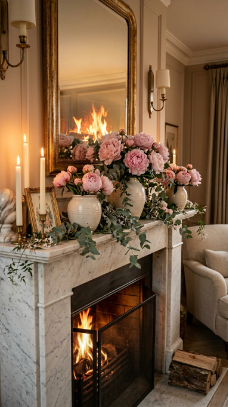
Vibe sentence: Peonies in various stages of opening on a mantel create the feeling of watching something beautiful happen in slow motion.
What makes it work: Spreading the arrangement across three separate vessels rather than one large vase creates rhythm along the mantel length. Letting eucalyptus trail flat along the surface rather than standing upright adds a horizontal dimension that anchors the vertical blooms.
How to achieve it: Buy peonies as tight buds and allow some to open fully while keeping others at bud stage for visual variety. Place vessels at different heights using stacked books or wooden blocks behind them. Silver dollar eucalyptus works best for trailing — its round leaves read as individual design elements rather than background filler.
Potted Narcissus in a Woven Basket
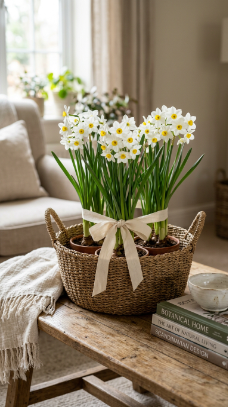
Vibe sentence: There’s a satisfying honesty to showing the whole plant — bulb, roots, and all — as if you’ve brought the garden itself indoors.
What makes it work: The seagrass basket makes the arrangement feel collected rather than constructed, which is exactly the casual-elegant tone Easter florals aim for. Grouping an odd number of pots within one vessel reads as a unified display rather than individual scattered plants.
How to achieve it: Line the basket with plastic before adding potted plants to protect against water damage. Narcissus bulbs are typically sold in flower at garden centers from January onward — look for tight buds so you enjoy the full opening process at home. After Easter, plant them in the garden for blooms next year.
💡 Tie a loose bow of cream ribbon or natural raffia around the base of the narcissus stems to gather them and add a gentle finishing touch.
Dusty Blue and White Dutch-Inspired Arrangement
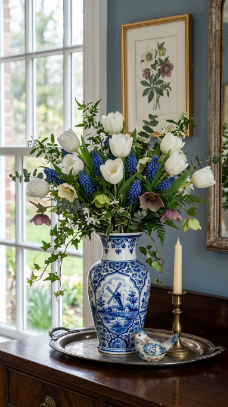
Vibe sentence: This arrangement feels like it stepped out of a seventeenth-century Dutch still-life — layered, lush, and intentionally imperfect.
What makes it work: Blue and white as a floral color story is underused and genuinely striking — particularly for Easter, when the default palette tends pink. Muscari (grape hyacinth) and white tulips together create a cool, sophisticated palette with deep visual contrast.
How to achieve it: The downward-nodding head of a hellebore is a design feature, not a flaw — let some stems hang lower than the arrangement’s main mass for depth. Use a tall, narrow-necked vase to support stems naturally without foam. A Delft or blue-and-white ceramic vessel anchors the whole color story.
Pressed Flower and Candle Easter Vignette
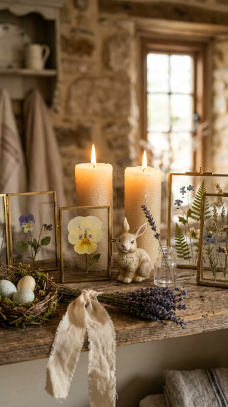
Vibe sentence: This is a vignette that rewards a second look — every small object carries meaning, and the whole thing glows in candlelight.
What makes it work: Combining living flowers with pressed floral art layers the theme without redundancy. The frames give pressed flowers the respect they deserve as objects of beauty rather than craft project afterthoughts. Candles warm the typically cool pastel palette with amber light.
How to achieve it: Press pansies, violas, and primroses between parchment paper in heavy books for two weeks. Frame them simply in small clip frames or inexpensive frames — no mat needed. Group frames at slightly different heights alongside a single live stem in a bud vase for a beautiful contrast between preserved and fresh.
Garden Cloche with Miniature Spring Blooms
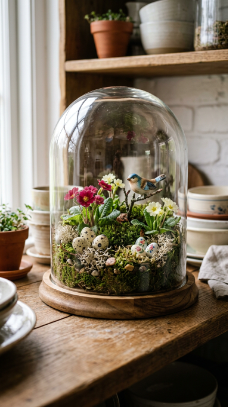
Vibe sentence: There’s something quietly enchanting about a tiny world under glass — it asks you to lean in, slow down, and really look.
What makes it work: The cloche format concentrates your gaze and gives even the simplest arrangement a sense of theatre. Miniature scale creates a charming diorama effect that larger arrangements simply can’t replicate. The wood base grounds the glass and adds warmth to what could otherwise feel cold and clinical.
How to achieve it: Use a glass cloche from a kitchen supplier or home décor store — the bell jar style works especially well. Create a base from a wooden board or slice, cover with sheet moss, then tuck in tiny potted primulas and decorative eggs. Keep the scene dry except for the planted element.
💡 Fairy light string tucked inside the base adds a magical glow visible through the glass — a beautiful Easter morning surprise.
Hanging Flower Chandelier Above the Dining Table
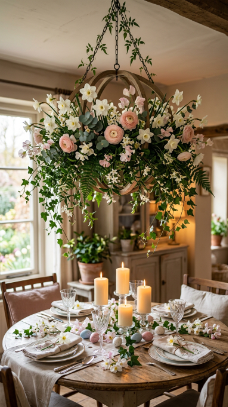
Vibe sentence: When flowers come from above, the whole table feels transformed — dining beneath a floral chandelier is an experience, not just a meal.
What makes it work: Vertical dimension is often forgotten in table styling, and a hanging installation solves it elegantly. The circular hoop mirrors the shape of a round table below, creating visual unity between ceiling and surface. Trailing ivy that descends toward the table connects the suspended element to the tabletop composition.
How to achieve it: Use a wooden embroidery hoop or a purchased wreath ring. Attach small water tubes (available at florists) filled with water along the hoop to keep cut flowers alive. Hang from the ceiling with clear fishing line for an almost invisible suspension.
Easter Egg and Flower Centerpiece Bowl
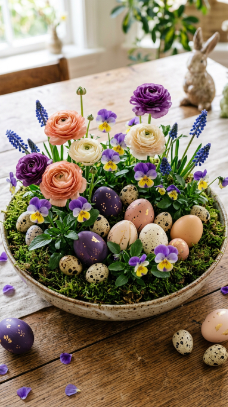
Vibe sentence: Mixing flowers and eggs in a single vessel creates something wonderfully generous — like a little treasure chest of spring.
What makes it work: Eggs and flowers share a symbolic language in spring design, and placing them together in one vessel amplifies that resonance without explanation. Using a wide, low bowl keeps the arrangement below sightline and creates a “discovered garden” feeling when viewed from above.
How to achieve it: Line a wide bowl with damp moss, press small water tubes or florist picks into it, and insert flower stems. Arrange eggs around the blooms, mixing natural speckled eggs with gently painted ones in tones that complement your flowers. Keep water tubes filled daily.
Herb and Flower Kitchen Windowsill Garden
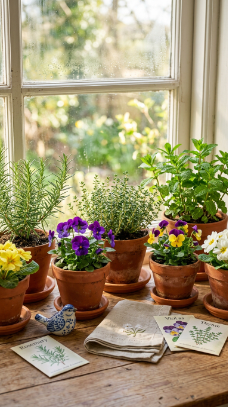
Vibe sentence: Herbs and flowers on a kitchen windowsill is both practical and deeply pleasing — beauty you can literally cook with.
What makes it work: Combining flowering plants with culinary herbs creates a layered sensory experience — texture, color, and fragrance together. The practical element (herbs you actually use) grounds the decorative one, making the display feel purposeful rather than purely ornamental.
How to achieve it: Alternate herb and flower pots rather than grouping each type separately — this creates visual rhythm. Choose flowers in tones that harmonize with the warm green of herb foliage: primroses in yellow and cream, violas in deep violet, or small pansies in soft orange.
Asymmetric Ikebana-Inspired Easter Arrangement
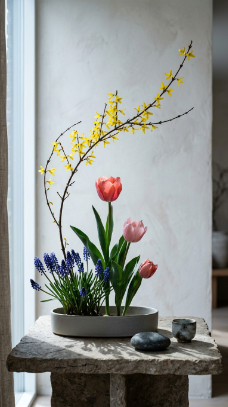
Vibe sentence: Less here is genuinely more — the empty space around each stem feels as considered as the flowers themselves.
What makes it work: Ikebana principles — using negative space, line, and asymmetry — give Easter florals a contemporary edge that typical symmetrical bunches can’t achieve. The dramatic diagonal of a forsythia or cherry branch establishes line and movement; the flowers below it anchor the composition.
How to achieve it: Use a kenzan (flower frog pin holder) in a low ceramic dish to position stems at precise angles without foam or filler. Choose three elements with distinct visual characters: one branch for line, one round bloom for mass, one fine spike or cluster for texture.
💡 A kenzan pin holder costs under $10 online and completely changes how you can position single stems — worth every penny.
Spring Flower Crown Display on a Stand
Vibe sentence: A flower crown on a stand is simultaneously wearable art and perfect décor — it belongs on a dressing table as much as any perfume bottle.
What makes it work: Displaying a flower crown on a ceramic head form elevates it from costume to sculpture. The delicacy of ranunculus and baby’s breath creates an almost cloud-like appearance that photographs beautifully and works as a focal point in any feminine space.
How to achieve it: Build the crown on a wire base using small bundles of flowers attached with floral wire, working in one direction around the circle. Use flowers with naturally short, sturdy stems and supplement with fine wire for more delicate blooms. Make it the day before to allow slight opening of any buds.
Statement Amaryllis in a Sculptural Vase
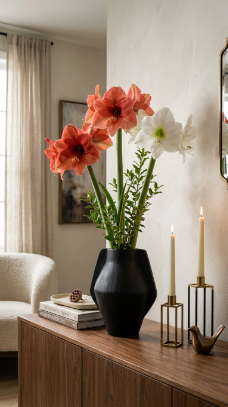
Vibe sentence: Amaryllis commands a room in a way that more delicate Easter flowers simply don’t — this is the arrangement for people who want drama.
What makes it work: The amaryllis’s scale and architecture make it genuinely sculptural, working as well in a contemporary interior as a traditional one. The contrast between soft organic flower form and a matte black geometric vase is a reliable high-design tension.
How to achieve it: Choose amaryllis in bold colors rather than pale pastels — coral, deep red, or salmon reads far more powerfully in a modern setting. A tall, narrow vase supports the hollow stems (which can snap under their own weight) — place a small internal stick inside hollow stems for additional support if needed.
Pressed Botanicals in Easter Window Display
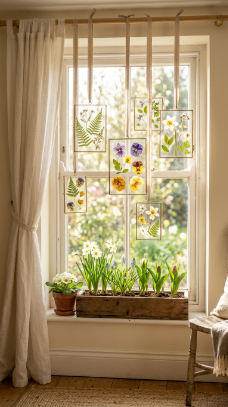
Vibe sentence: When pressed botanicals are backlit by a window, they become stained glass — translucent, jewel-bright, and entirely otherworldly.
What makes it work: Backlighting is the secret ingredient that makes pressed flower displays extraordinary. The thin petal cells, normally muted, glow amber and gold when lit from behind — a visual effect that no photograph fully does justice to in real life.
How to achieve it: Use clip frames with glass on both sides (no backing board) so light passes through completely. Hang at varying heights using linen ribbon tied to the curtain rod. Press flowers for at least two full weeks under heavy books before framing to prevent mold.
Garden Rose and Sweet Pea Bedroom Arrangement
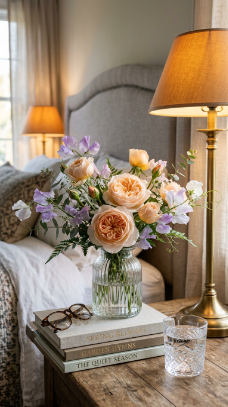
Vibe sentence: Waking up to flowers on the bedside table is a small act of self-kindness that costs almost nothing and changes everything about a morning.
What makes it work: The intimate scale of a bedside arrangement calls for fine, delicate flowers rather than dramatic statement blooms. Sweet peas’ butterfly-wing petals create extraordinary visual movement at close range, and their scent alone justifies the whole arrangement.
How to achieve it: Keep the arrangement small — a fluted glass or small ceramic can hold five to seven stems total. Mix roses that are half-open (so you enjoy them fully over several days) with sweet peas cut fresh every two days, as they wilt quickly. Refresh water daily for maximum vase life.
💡 One stem of sweet pea in a tiny bud vase on a bathroom shelf costs almost nothing and transforms the entire morning routine.
Nest and Bloom Easter Mantel Garland
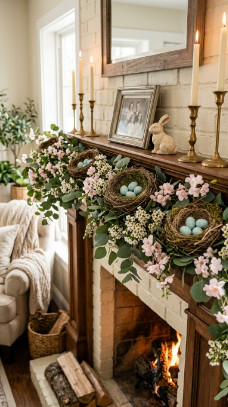
Vibe sentence: A garland draped across a mantel changes the entire architectural feel of a fireplace — suddenly it becomes the room’s storytelling heart.
What makes it work: The horizontal garland format works with mantel architecture rather than competing with it. Adding bird nests to a floral garland introduces a narrative element — the suggestion of new life beginning — that resonates deeply with Easter themes without relying on explicitly religious imagery.
How to achieve it: Build the garland on a long length of twine, binding fresh eucalyptus and waxflower bundles every 15cm with floral wire. Drape generously rather than pulling taut — the natural droop creates elegant festoons. Tuck nests into the garland after hanging, securing with a discreet loop of wire.
Wildflower Meadow Easter Cake Floral Styling
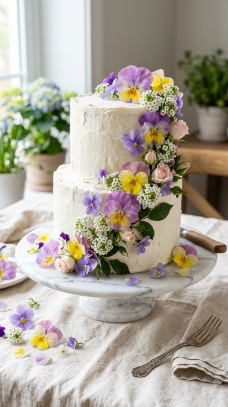
Vibe sentence: Flowers on a cake elevate a dessert into something that genuinely feels like a celebration — and this one looks almost too beautiful to cut.
What makes it work: The asymmetric cascade of flowers on one side of the cake creates visual movement and photography-ready composition. Using flowers in multiple sizes and tones across the frosting surface creates a “meadow” effect that feels deliberately naturalistic rather than overly controlled.
How to achieve it: Use only edible flowers directly on the frosting — pansies, violas, and nasturtiums are all food-safe. For non-edible blooms used decoratively, insert them via small food-safe floral picks to prevent stem contact with cake. Arrange flowers no more than two hours before serving to keep them fresh.
Climbing Floral Ladder Display
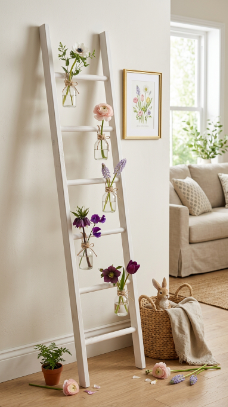
Vibe sentence: A floral ladder is the Easter floral design equivalent of a gallery wall — it uses vertical space inventively and turns simple flowers into an installation.
What makes it work: The ladder format is inherently hierarchical, which means a color gradient from light to dark (or vice versa) reads naturally and creates a satisfying visual journey from top to bottom. Each rung becomes its own small vignette while contributing to the whole.
How to achieve it: Use S-hooks or knotted twine to hang small bud vases from each rung. Plan your color gradient before buying flowers — white tulips, blush ranunculus, pale lavender sweet pea, and deep violet anemone creates a perfect descending palette. A weathered or painted ladder from a thrift store works beautifully.
💡 Decorative ladders are widely available at home décor stores and online for under $30 — a versatile piece that earns its place year-round.
How to Start Your Easter Floral Design Transformation
The best starting point is almost always your dining or kitchen table — it’s the space where Easter gathering happens, and a beautiful centerpiece there delivers the most impact for the least effort. Don’t attempt every room at once. Choose one surface, perfect it, and let that success inspire the rest.
The most common mistake in Easter floral design is overcomplicating the color palette. Limit yourself to two or three complementary tones per arrangement — mixing too many colors simultaneously creates visual noise rather than spring freshness. Blush and white, lavender and cream, or yellow and sage are reliable starting combinations.
Budget-friendly entry points are everywhere in spring. Garden centers sell potted hyacinths, narcissus, and primroses for a few dollars each — these deliver more visual impact than cut flowers and last significantly longer. A single potted hyacinth in a basket costs less than a coffee and perfumes an entire room.
Realistically, a full home Easter floral display takes two to three hours of preparation time spread across the days before Easter. Buy flowers and plants several days ahead so tight buds have time to open. Most arrangements will look their absolute best between days two and four after creation — plan accordingly.
Frequently Asked Questions
What flowers are best for Easter floral arrangements?
The best Easter flowers are those that bloom naturally in spring: tulips, narcissus, hyacinths, ranunculus, anemones, and sweet peas all peak between February and May. Hyacinths and narcissus offer scent alongside visual beauty, making them especially rewarding for indoor arrangements. Ranunculus are particularly prized for their layered, peony-like appearance but longer vase life — look for them at florists from late winter through April. If you want dramatic scale without a large budget, tulips remain the best value option: a bunch of twenty typically costs under $10 and lasts up to a week in fresh water.
How do I make an Easter floral arrangement last longer?
The single most effective step is cutting stems at a 45-degree angle under running water immediately before placing them in fresh, clean water. Change the vase water every two days and remove any leaves that fall below the waterline, as decaying foliage shortens vase life dramatically. Keep arrangements away from direct sunlight, heating vents, and fruit bowls — ethylene gas released by ripening fruit accelerates flower aging. Flower food sachets (included with most shop-bought bouquets) genuinely extend life, typically by two to three days. Potted plants like hyacinths and narcissus will outlast cut flowers by weeks if placed in a cool room.
What’s the difference between a formal Easter floral arrangement and a garden-style one?
A formal arrangement has intentional structure: symmetry, a clear focal point, and controlled height gradients. Flowers are typically placed in floral foam with precise positioning. A garden-style arrangement is intentionally casual — stems placed loosely in water, a “just gathered” look, with naturalistic asymmetry and trailing elements. For Easter home décor, the garden-style approach is generally more forgiving and actually more popular on Pinterest right now, reflecting the broader shift toward relaxed, organic interiors. You don’t need florist training for garden-style — you just need to resist the urge to make it too neat.
Is Easter floral design expensive?
It doesn’t need to be. A stunning Easter display built around potted plants from a garden center — hyacinths, primroses, narcissus, and a few violas — can cost as little as $20–$30 total. Cut flowers cost more but can still be managed affordably: a mixed spring bouquet from a grocery store florist typically runs $12–$18. The most cost-effective approach combines one small potted plant (for longevity) with one bunch of cut flowers (for visual impact). Avoid pre-arranged designer bouquets — buying individual stems and arranging them yourself delivers significantly more volume and customization for the same spend.
Can I use artificial flowers for Easter floral design?
Yes — and the quality of faux spring flowers has improved dramatically in recent years. High-quality silk ranunculus, peonies, and cherry blossom branches are now genuinely convincing, particularly in photographs. The honest tradeoff is that faux arrangements lack scent, which is a significant part of spring’s emotional appeal — that hyacinth perfume or fresh narcissus smell triggers genuine mood responses that artificial flowers simply can’t replicate. A practical middle ground is combining high-quality faux greenery (eucalyptus, olive branches) as a lasting base with fresh flowers inserted seasonally — giving you longevity and real floral beauty together.
Ready to Create Your Dream Easter Floral Design Space?
You now have 27 genuinely distinct Easter floral design ideas — from a single bud vase on a windowsill to a full dining table installation that will make your guests catch their breath. The point was never to do all twenty-seven at once; it was to give you enough variety that at least five or six feel completely right for your space, your budget, and your style.
Save the ideas that made you pause — those are your instincts speaking. Start with the one arrangement that feels most doable this week, perhaps a mason jar cluster of daffodils or a potted hyacinth in a basket, and let that success carry you forward to the next.
Spring only comes once, and Easter floral design is how you honor that arrival properly. The flowers won’t last forever — but the feeling they create in a room is worth every beautiful, fleeting moment.