There’s something quietly powerful about a well-styled home entrance — it sets the emotional tone for everything that follows. Whether yours is a grand foyer or a narrow hallway, the right decor turns that first step inside into a moment worth savoring. These 27 home entrance decor ideas cover every style, budget, and square footage, so whether you’re starting from scratch or just need a refresh, you’ll find something here that makes you want to grab a shopping cart immediately. Each idea is specific, actionable, and Pinterest-worthy in the best possible way. Let’s explore every one of them.
Why Home Entrance Decor Works So Well
The entrance of a home is the only space every single visitor experiences — and yet it’s one of the most neglected rooms in interior design. When done right, entrance decor creates an immediate sense of arrival: the feeling that this home has been thoughtfully curated from the very first square foot.
What makes entrance styling so impactful is the principle of contrast and compression. A smaller space actually amplifies design choices — a bold mirror, a dramatic light fixture, or a single sculptural console table reads with far more presence here than it would in a sprawling living room.
The good news: even a 4-foot-wide hallway can be transformed with the right mirror, a slim console, a statement light, and a well-chosen rug. Scale matters less than intention. These 27 home entrance decor ideas prove that every space, regardless of size, deserves a grand entrance.
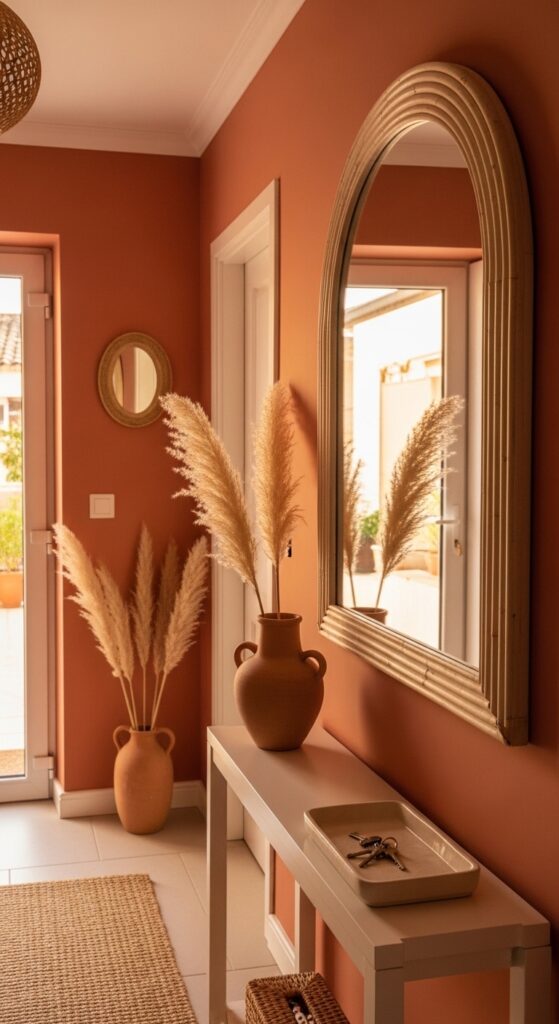
Warm Terracotta Walls With Arched Mirror Drama
Vibe sentence: This entrance feels like stepping into a sun-warmed courtyard in southern Europe — unhurried, textured, and deeply welcoming.
What makes it work: Terracotta is a naturally warm, earthy tone that reflects light beautifully without reading as orange. The arched mirror echoes architectural details found in Mediterranean and Moroccan homes, adding height and a sense of craftsmanship. Together, the curved form and matte finish create visual softness that makes narrow entrances feel cozy rather than cramped.
How to achieve it: Paint walls in Benjamin Moore’s “Moroccan Spice” or Sherwin-Williams “Cavern Clay.” Source an arched mirror in rattan or whitewashed wood for under $150 at most home stores.
💡 Add a small terracotta pot of dried eucalyptus on the console — the color echo makes the whole palette feel deliberate.
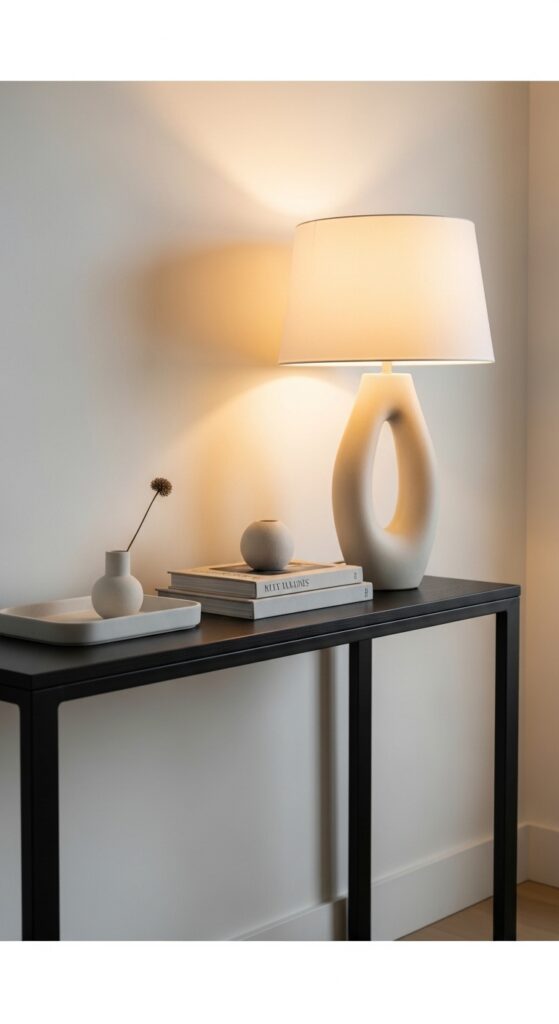
Sleek Black Console With Sculptural Table Lamp
Vibe sentence: Clean, confident, and quietly sophisticated — this entrance says “I know exactly what I like.”
What makes it work: A matte black console against a white or warm-white wall creates the sharpest possible contrast without color, making the architecture of the furniture the focal point. The sculptural lamp introduces organic form against geometric lines, which is a classic high-low tension that elevates simple styling.
How to achieve it: Look for a console table in powder-coated steel or black-lacquered wood with visible legs to keep the visual weight light. Pair with an oversized ceramic lamp (minimum 24″ tall) to draw the eye upward.
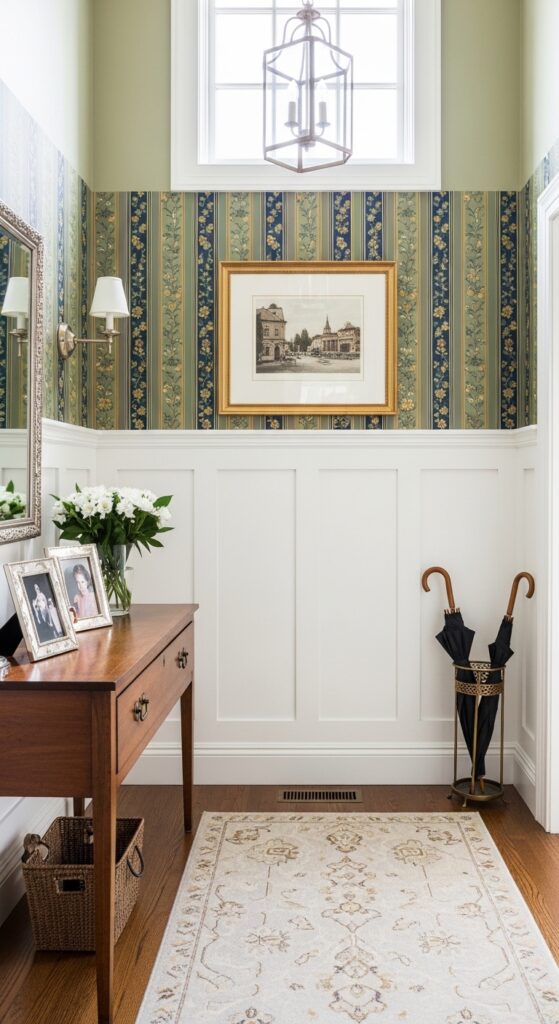
Wainscoting and Wallpaper Upper Half for Classic Drama
Vibe sentence: This entrance has the quiet confidence of a home that’s been loved for generations.
What makes it work: The horizontal line created by the chair rail visually anchors the room and makes ceilings feel taller by dividing the wall into two intentional zones. Wainscoting adds architectural richness that paint alone can’t replicate, while patterned wallpaper above introduces personality without overwhelming the space.
How to achieve it: Install pre-primed MDF wainscoting panels (available at most hardware stores as DIY kits) and top with a botanical or classic stripe wallpaper in sage, navy, or warm ochre.
💡 Paint the wainscoting in semi-gloss white and the upper walls in a complementary matte tone before wallpapering — it creates a more polished layered effect.
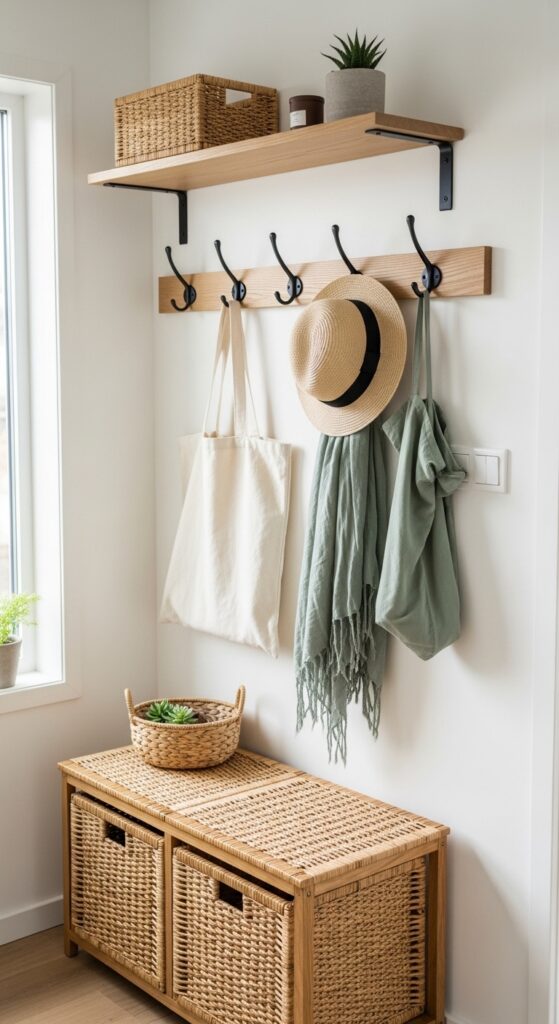
Floating Coat Rail With Rattan Baskets Below
Vibe sentence: Effortlessly organized and quietly beautiful — this entrance proves that function and style are not mutually exclusive.
What makes it work: A floating rail keeps the floor visually open, which is critical in smaller entrances where floor-standing furniture can quickly feel cluttered. The rattan baskets introduce warmth and organic texture, softening what could otherwise feel too utilitarian.
How to achieve it: Mount a solid oak or beech dowel rail at 60–65 inches from the floor with black iron wall-mounted hooks spaced 8 inches apart. Source matching rattan or seagrass baskets to tuck shoes, scarves, and bags out of sight below.
Statement Ceiling Light That Does All the Work
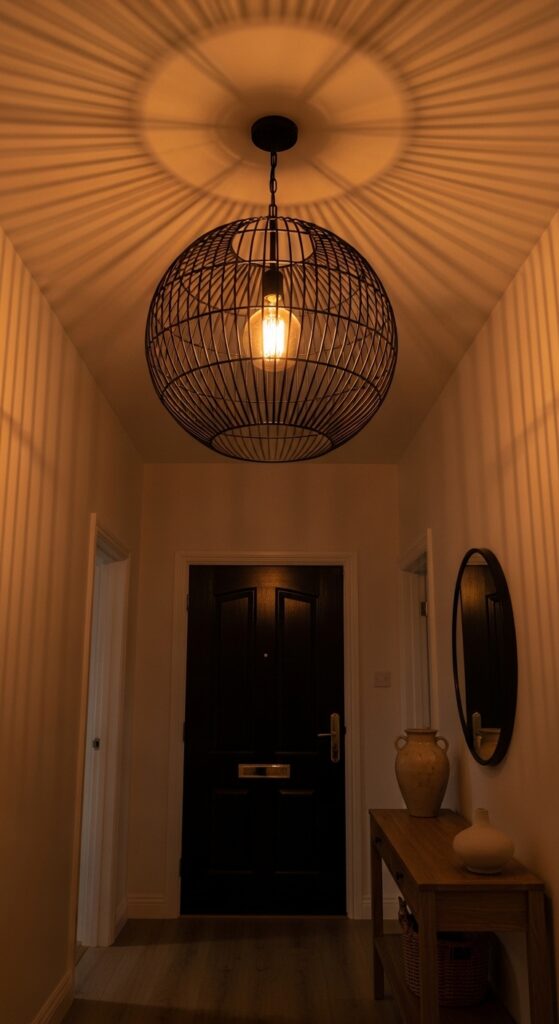
Vibe sentence: One bold light fixture and suddenly an ordinary hallway feels like a designer space.
What makes it work: Lighting is the single highest-impact change in any entrance — it determines mood, warmth, and perceived scale more than any furniture piece. An oversized pendant (hanging 7 feet from the floor minimum) draws the eye upward, making even an 8-foot ceiling feel grand.
How to achieve it: Choose a rattan or black iron open-frame pendant at least 18″ in diameter. Fit it with a warm 2700K Edison bulb for amber-toned, flattering light. This single swap costs $80–$250 and transforms the entire entrance.
💡 Install a dimmer switch for under $20 — it multiplies the mood-making potential of any statement light.
Vintage Wooden Bench With Cushion and Throw
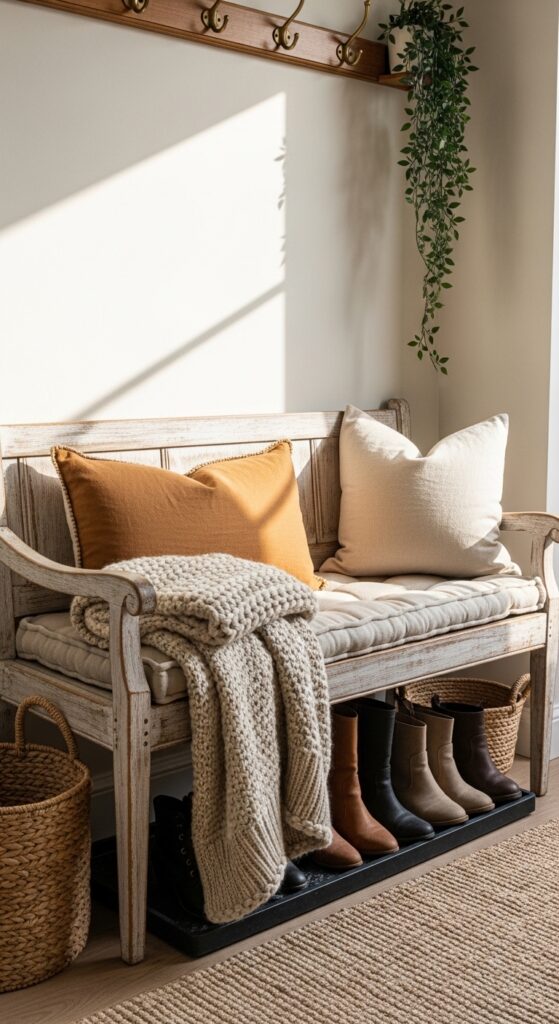
Vibe sentence: The kind of entrance where you actually want to sit for a moment before heading back out into the world.
What makes it work: A bench introduces horizontal mass at a low level, which grounds the space and creates a visual anchor. Layering a cushion, throw, and rug introduces three different textures at once — a technique interior designers call “texture stacking” — which makes any space feel instantly more considered.
How to achieve it: Source a vintage wooden bench at antique markets or thrift stores and repaint in Farrow & Ball “Elephant’s Breath” or Annie Sloan “Old White.” Top with a linen cushion cover in a warm neutral to complete the layered look.
Bold Geometric Tile Entryway Floor
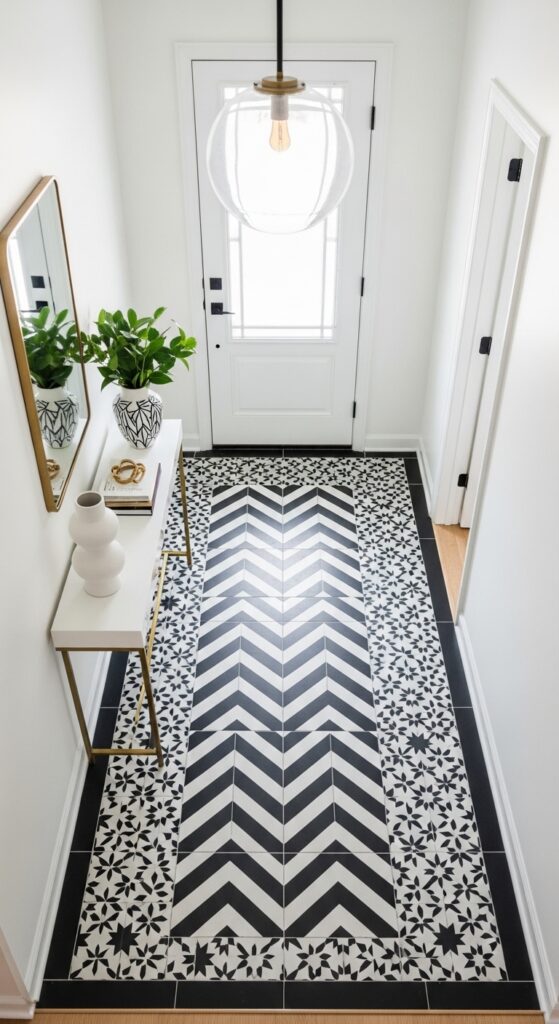
Vibe sentence: The floor becomes the artwork — and everything else gets to stay beautifully quiet.
What makes it work: A patterned tile floor works on the principle of deliberate contrast: when one element is dramatically bold, everything else can be minimal, and the room still feels rich and layered. Geometric or encaustic-style tiles have centuries of design history behind them, which gives any modern entrance an instant sense of depth.
How to achieve it: Look for cement encaustic tiles in classic black-and-white Moroccan or star patterns; they’re available from Clé Tile, Cement Tile Shop, or even budget options at IKEA. Keep walls white and furniture minimal to let the floor breathe.
💡 Peel-and-stick encaustic-style vinyl tiles offer the same visual impact for renters at a fraction of the cost.
Tall Indoor Plant as Living Sculpture
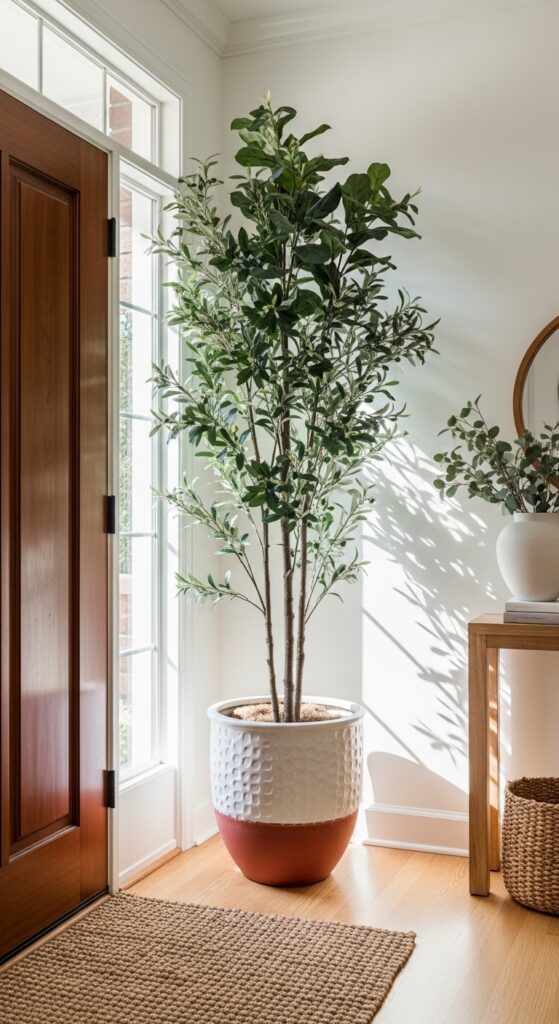
Vibe sentence: A tall, lush plant in an entrance is the closest thing to a living welcome sign.
What makes it work: A plant that reaches 5–6 feet tall occupies the same visual territory as a floor lamp or large sculpture — but with the added energy of something living. The vertical height draws the eye upward and creates a sense of scale that instantly makes an entrance feel more curated and intentional.
How to achieve it: Fiddle leaf figs, monstera deliciosa, or tall olive trees work beautifully. Place in a matte terracotta or concrete planter at least 14″ wide, and position near the brightest natural light source available in the entrance.
Gallery Wall of Personal Photography
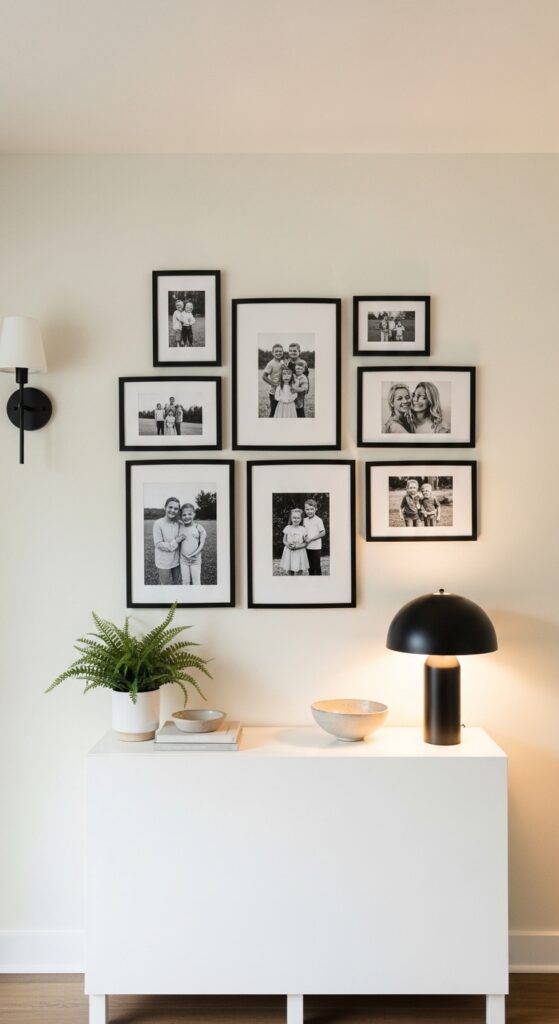
Vibe sentence: This entrance doesn’t just greet visitors — it tells them exactly who lives here.
What makes it work: A gallery wall of personal photos does something no store-bought art can: it gives a space genuine emotional resonance. Keeping all frames in a single matching finish (matte black, antique gold, or natural wood) transforms a personal collection into a cohesive editorial wall.
How to achieve it: Print photos in black-and-white and use a single frame style from IKEA’s RIBBA line for a cohesive, affordable look. Lay out your arrangement on the floor first, then transfer to the wall using paper templates and painter’s tape.
Wallpaper Mural Feature Wall
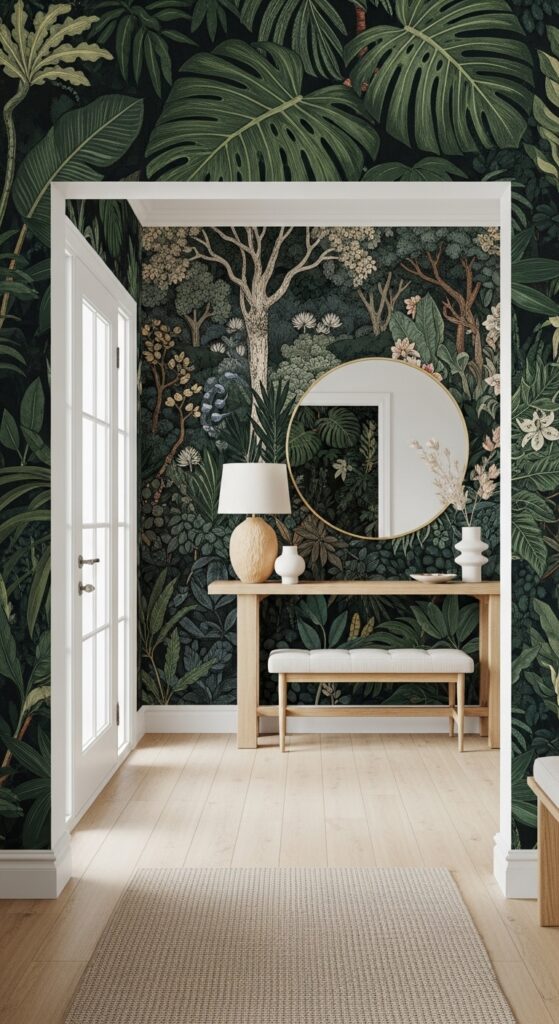
Vibe sentence: One wall, one decision, and suddenly your entrance feels like stepping into a painting.
What makes it work: A full-wall mural works because it uses scale and immersion rather than accumulation — instead of layering many decorative objects, one singular, large-format image carries all the visual weight. This is why even a simple console table looks extraordinary in front of a dramatic mural.
How to achieve it: Brands like Murals Wallpaper, Milton & King, and Rebel Walls offer peel-and-stick options that don’t require paste or professional installation. Choose a design in your dominant color family so the mural integrates rather than clashes.
💡 A single mural panel on just half the wall creates drama without overwhelming smaller entryways.
Minimalist Japanese-Inspired Entryway (Genkan Style)
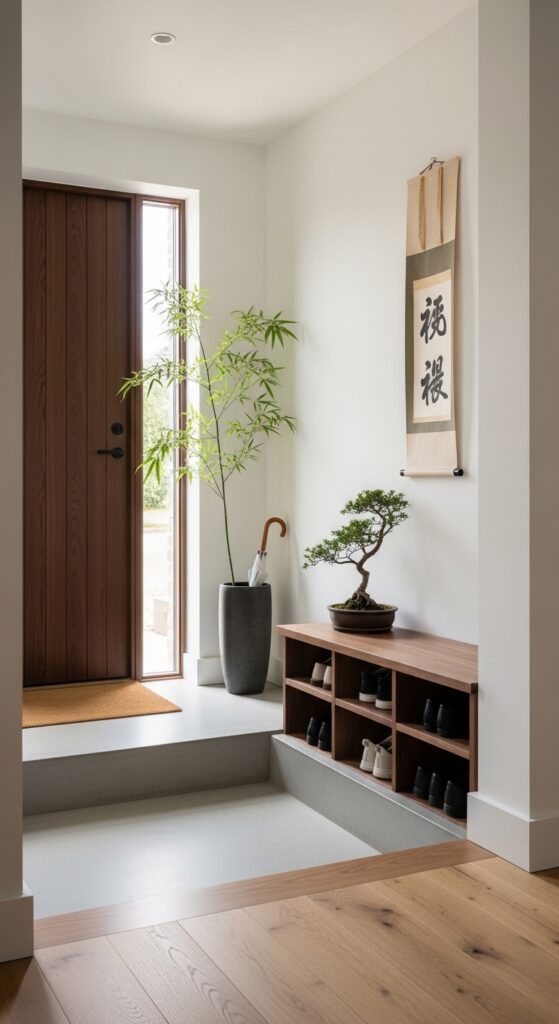
Vibe sentence: This entrance is so intentionally calm it makes you exhale the moment you walk in.
What makes it work: The Japanese genkan concept separates outside from inside with a clear transition zone — psychologically, this creates a ritual of arrival that modern Western homes rarely experience. The restraint of a single plant, a single bench, and open floor space creates a sense of spacious calm regardless of actual square footage.
How to achieve it: Use a low platform bench in natural walnut or oak with hidden shoe cubbies. Remove all visual clutter from the floor and limit decor to a single organic element — a bonsai, a stone, or one branch in a narrow vase.
Deep Navy Walls With Polished Brass Accents
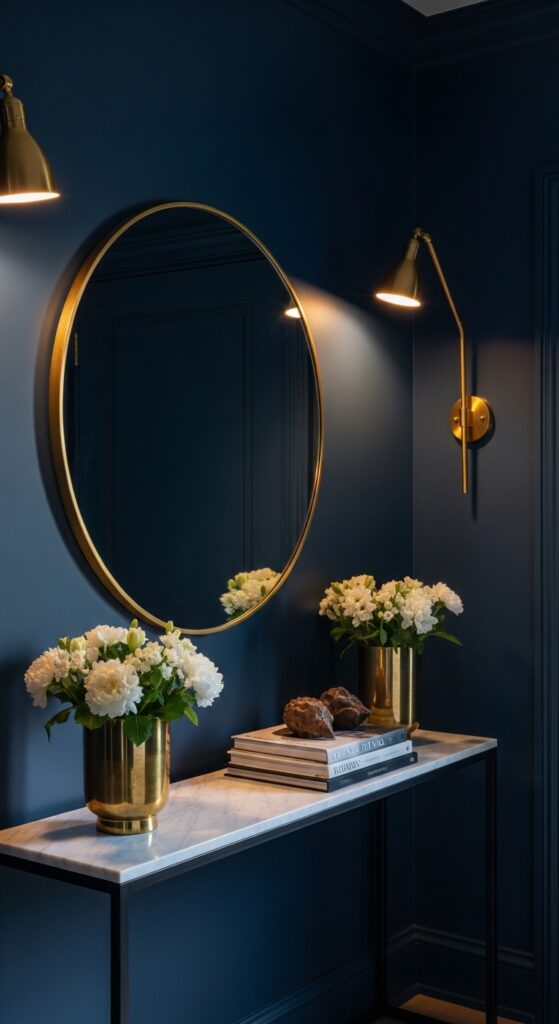
Vibe sentence: Rich, confident, and completely unforgettable — this entrance makes a case for going bold.
What makes it work: Deep navy is one of the most sophisticated neutrals in interior design — it recedes visually to create a sense of depth while making warm-toned metals like brass and gold read as almost luminous in contrast. The pairing of polished brass against a dark wall is a classic that never photographs badly.
How to achieve it: Use Farrow & Ball “Hague Blue” or Benjamin Moore “Newburyport Blue” in a matte or eggshell finish. Source unlacquered brass hardware and mirrors — they develop a warm patina over time that adds character.
💡 Paint just the entry ceiling the same deep navy for an enveloping “jewel box” effect.
Built-In Mudroom Storage Wall
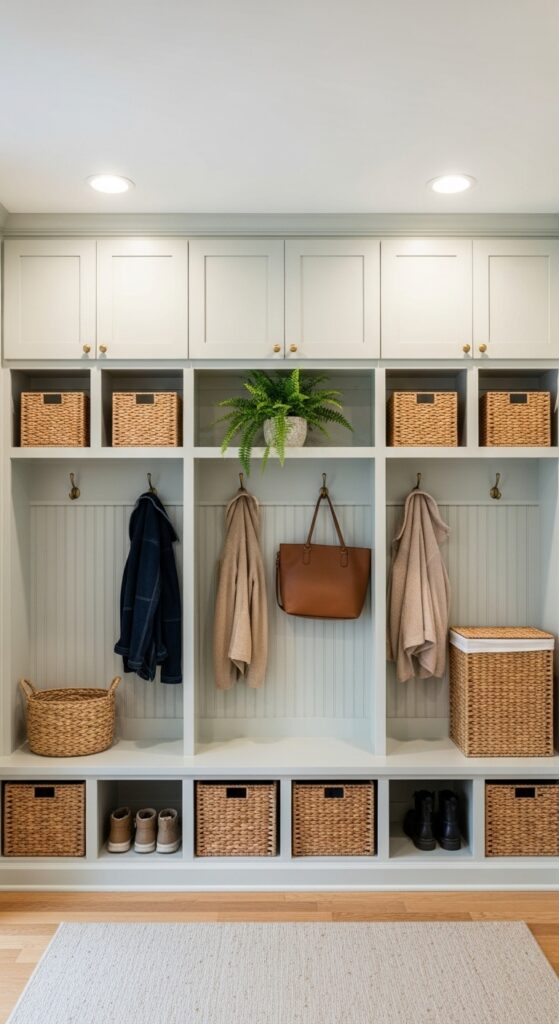
Vibe sentence: When storage is this beautiful, staying organized stops feeling like a chore.
What makes it work: Built-in storage eliminates the visual chaos of scattered shoes, bags, and coats — but the design detail of shaker cabinet doors, beadboard panels, or furniture-style legs elevates it from functional to genuinely attractive. The key is using one cohesive paint color across all elements so the wall reads as a considered whole.
How to achieve it: IKEA’s HEMNES or PAX systems can be customized with aftermarket shaker-style doors from Semihandmade or Reform to create a built-in look at a fraction of custom cabinet prices.
Round Mirror Over Scalloped Console Table
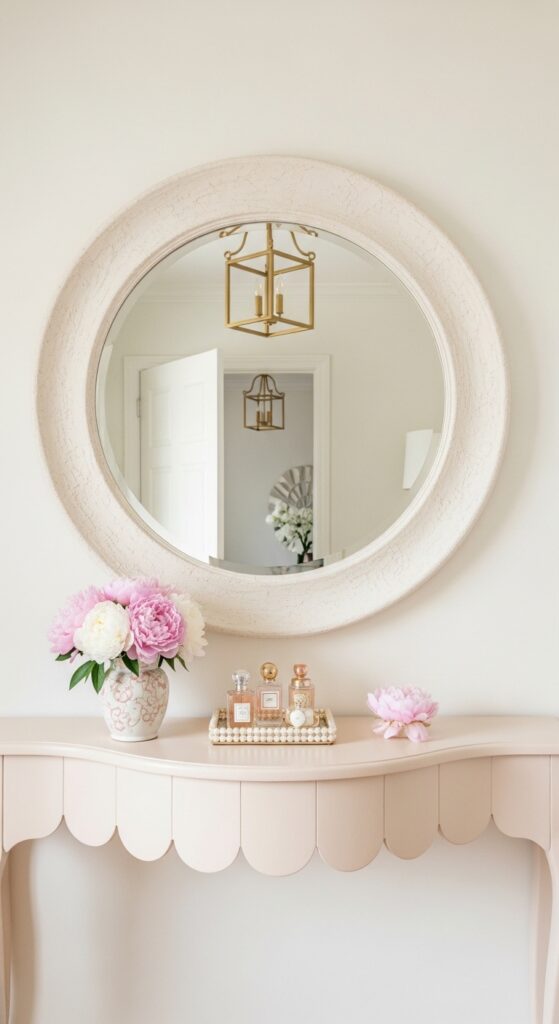
Vibe sentence: Soft, curvaceous, and completely enchanting — this entrance looks like it belongs in a French château.
What makes it work: Curved furniture edges paired with a round mirror creates visual harmony through repetition of form — a principle called “shape echo.” This is particularly effective in entrances because the eye naturally follows the curves, creating a gentle, welcoming energy entirely distinct from the crisp lines of modern design.
How to achieve it: Source a scalloped console in a cream or antique white painted finish from vintage markets or Anthropologie Home. Pair with a round mirror 6–10 inches wider than the console for ideal proportion.
💡 Plaster-finish round mirrors are widely available on Etsy for $80–$200 and instantly add that European antique feel.
Industrial Pipe Shelving With Urban Edge
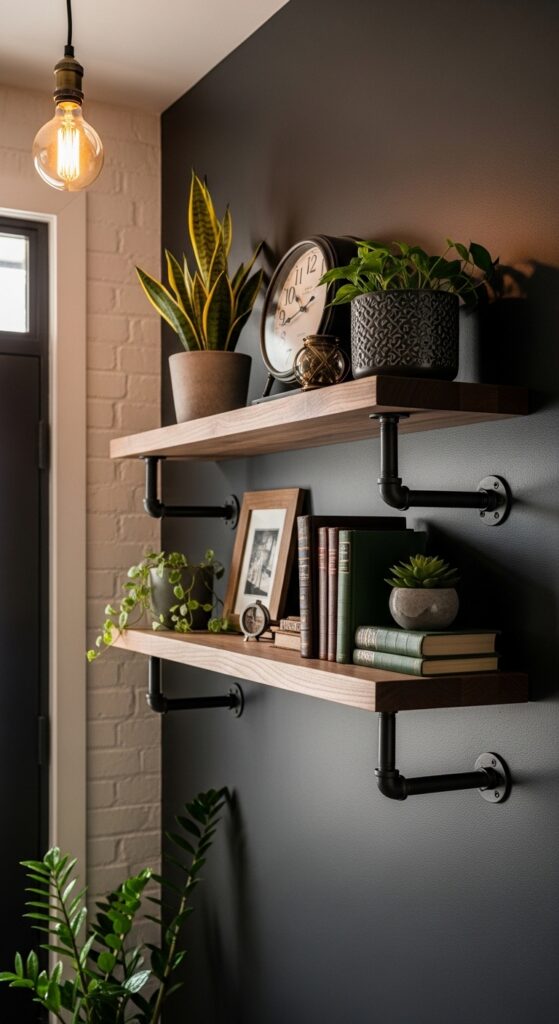
Vibe sentence: Gritty, warm, and a little rebellious — this entrance has the energy of a New York loft.
What makes it work: The combination of raw iron pipe, solid wood, and exposed wall surfaces creates textural contrast that feels authentically industrial rather than themed. The warmth of the wood prevents the palette from feeling cold, while the black iron provides the graphic visual weight the style demands.
How to achieve it: Purchase pipe shelf bracket kits from Amazon or a local hardware store (roughly $30–$60 per shelf). Pair with pre-finished walnut-veneer boards or solid pine stained in Minwax “Dark Walnut” for an affordable but rich-looking result.
Warm Wood Panel Accent Wall
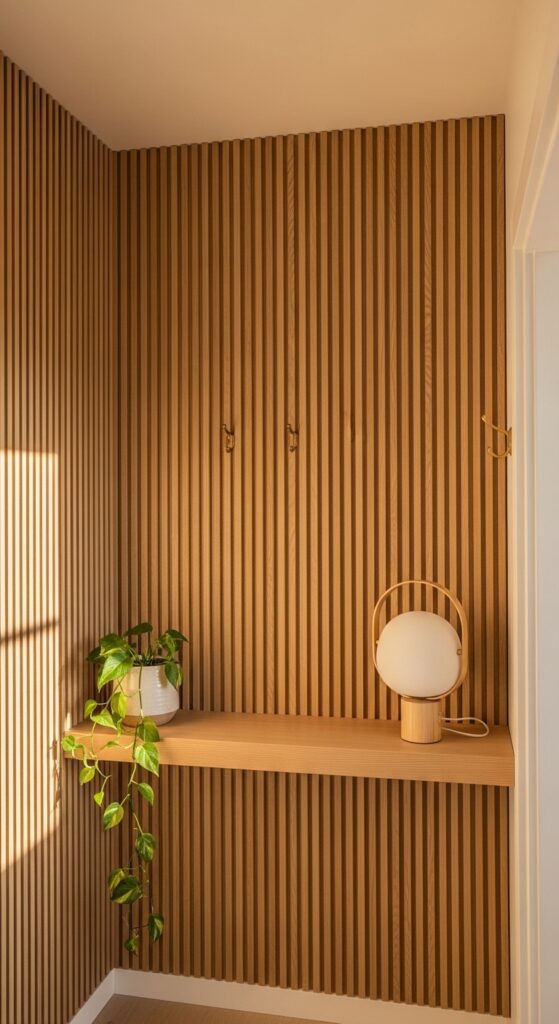
Vibe sentence: Natural wood slat walls do something paint simply cannot — they make a room feel both warmer and quieter at once.
What makes it work: Vertical slatted wood panels draw the eye upward, adding perceived height, while the natural grain and shadow lines of the slats introduce fine-grained texture that changes subtly throughout the day as light shifts. This is a key principle of Japandi and Scandinavian design: texture as a form of quiet visual richness.
How to achieve it: DIY slat wall kits are available from brands like Stikwood and at major home improvement stores. Install over drywall with construction adhesive — no carpentry skills required. Finish in a natural or light-wash stain to preserve warmth.
💡 Even a 3-foot-wide slat panel section beside the door creates the illusion of a designed, intentional feature wall.
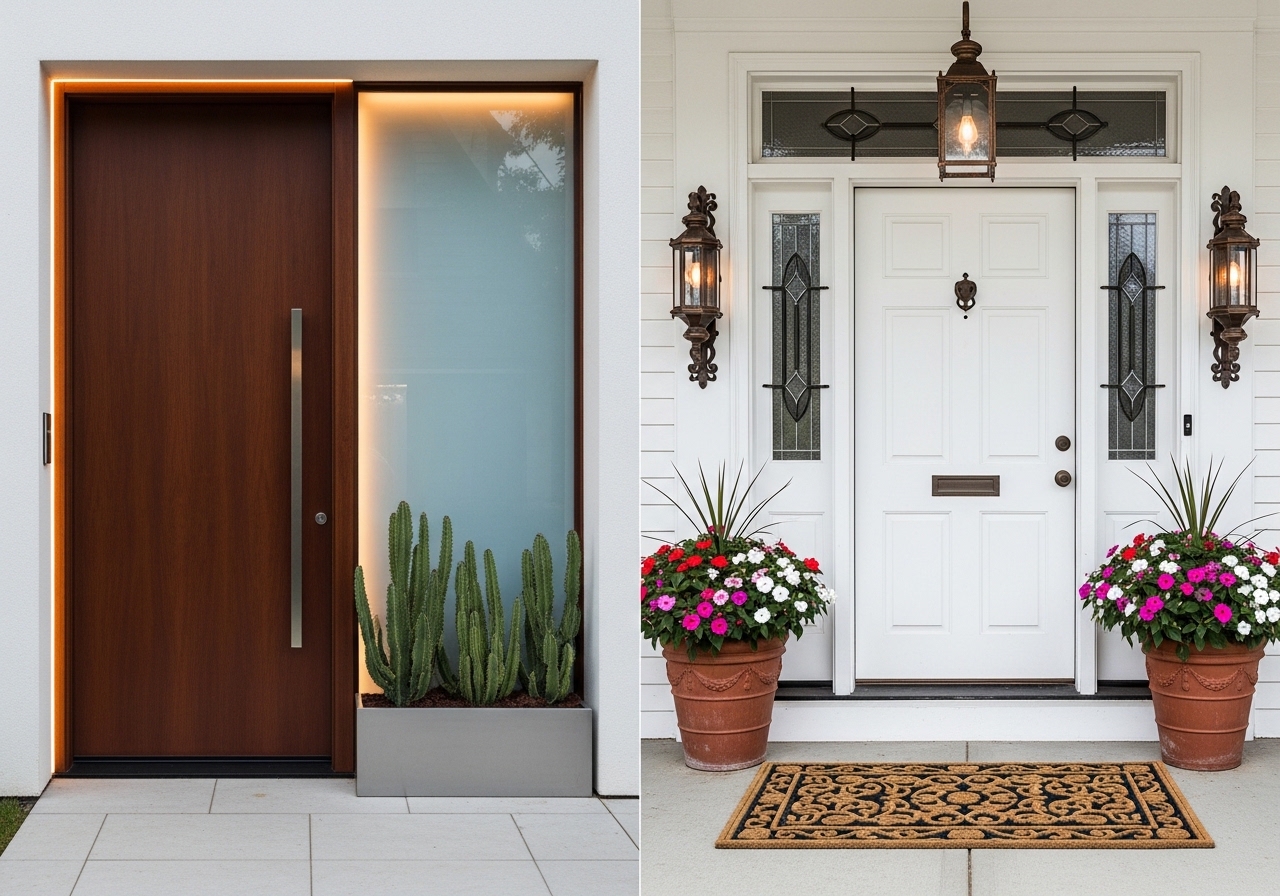
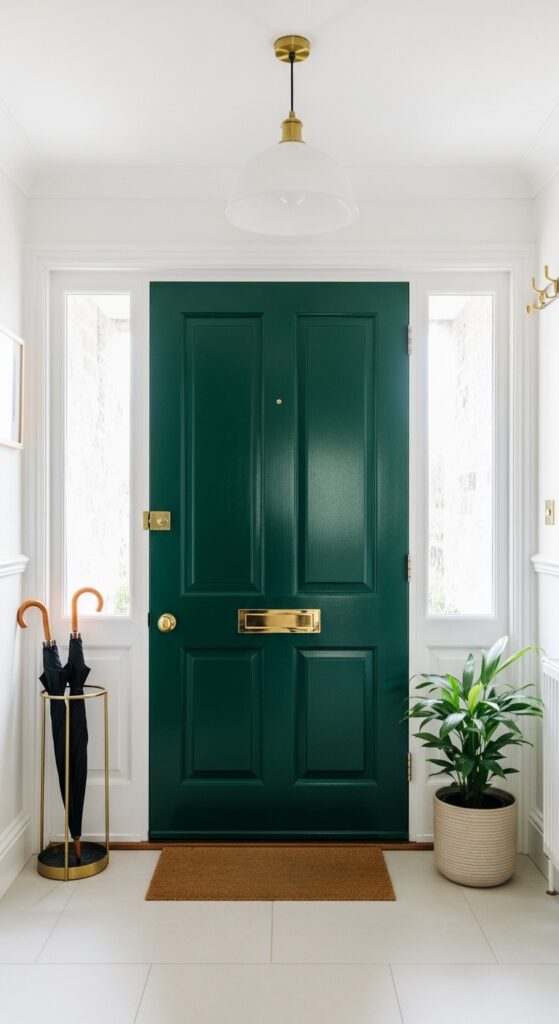
Freshly Painted Front Door Color Pop
Vibe sentence: The most transformative change you can make to an entrance costs less than a dinner out.
What makes it work: The interior-facing front door is the single most photographed surface in any entrance — and painting it in a confident color immediately creates a focal point that makes the whole space feel styled. A gloss or satin finish on the door reads as more polished and intentional than flat paint and is also more durable.
How to achieve it: Farrow & Ball “Deep Roo Green,” “Hague Blue,” or “Blazer” are all consistently popular choices. Sand lightly, apply a bonding primer, then two coats of satin-finish front door paint. One quart is sufficient for a standard door.
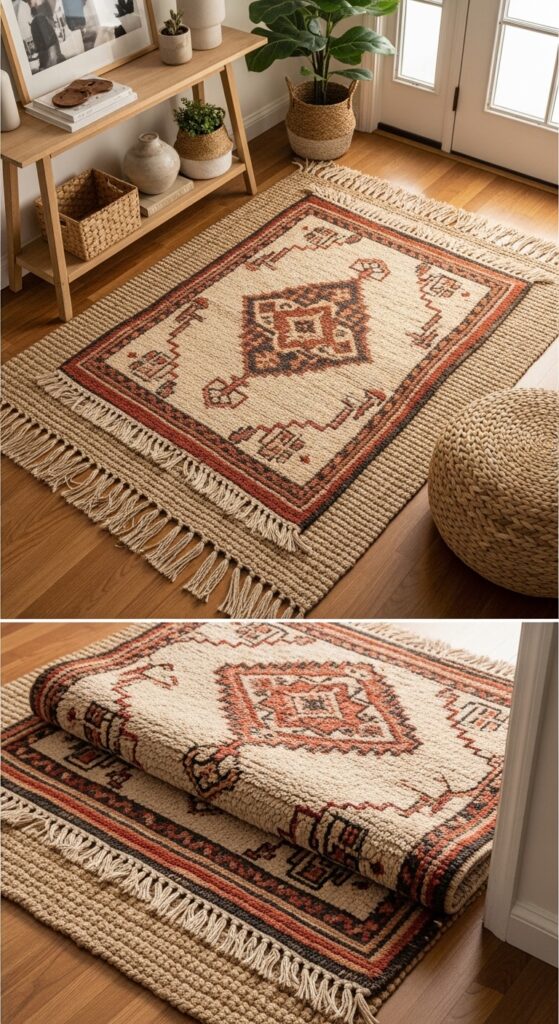
Layered Rug and Natural Fiber Textile Entry
Vibe sentence: Two rugs layered together create more personality than any single expensive rug ever could.
What makes it work: Rug layering is one of the most effective (and affordable) techniques for adding visual depth and color to an entrance without committing to paint or wallpaper. The contrast between a flat-weave natural fiber base and a plush or patterned top rug introduces both texture and pattern simultaneously.
How to achieve it: Use a flat-weave jute or sisal rug as your base (IKEA’s LOHALS is a budget favorite), then layer a vintage Persian or Moroccan-style rug from eBay, Etsy, or ThriftedTextiles on top. Aim for the top rug to be roughly 60% the size of the base.
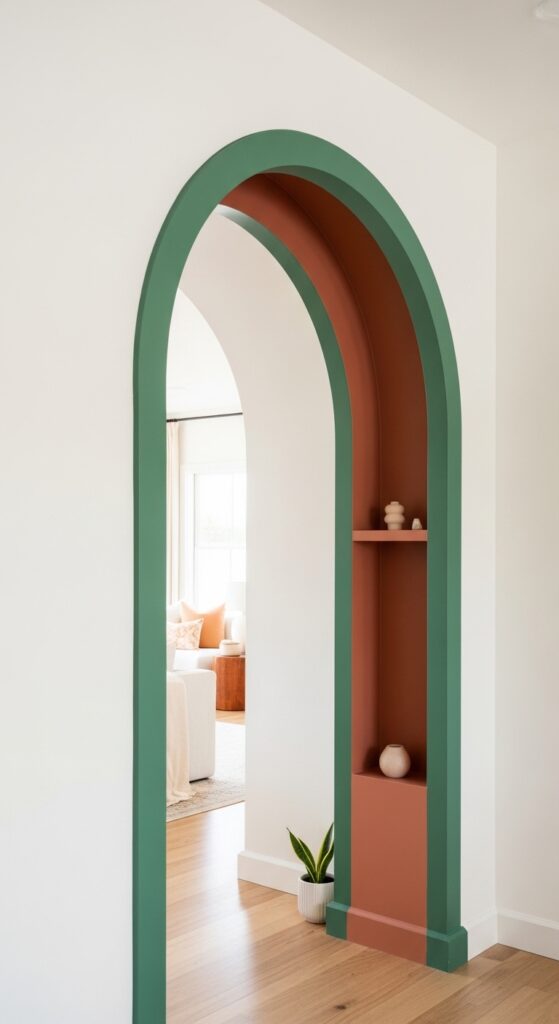
Arch Doorway Painted to Highlight Architecture
Vibe sentence: Painting an arch a contrasting color is a designer trick that turns a structural element into the most beautiful thing in the room.
What makes it work: An arched opening naturally draws the eye — it’s a frame. Painting it in a contrasting or complementary color makes the architecture legible and intentional, transforming what might otherwise be an ordinary doorway into a designed focal point. It also creates a sense of layered space by highlighting the transition between rooms.
How to achieve it: Use a small artist’s brush for a crisp edge and paint the interior depth of the arch as well as the face — this is what makes it look professionally done. Choose a color one to two shades deeper than your wall color for a subtle tonal arch, or go fully contrasting for a bolder effect.
💡 This technique requires only a sample pot of paint — usually under $10.
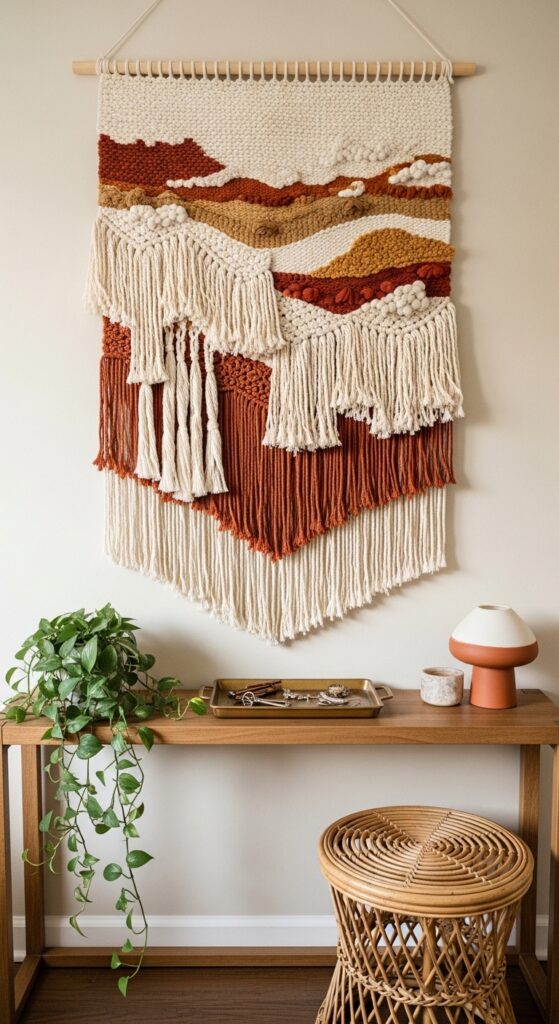
Woven Wall Hanging as Textile Art
Vibe sentence: A handwoven textile brings the kind of warmth and individuality that mass-produced art simply cannot replicate.
What makes it work: Large-scale textile art works in an entrance because it occupies the vertical real estate of a mirror or painting, but adds the dimensional, tactile quality of fiber — fringe, knots, loops — that creates shadow and depth at different times of day. A woven hanging in warm naturals instantly establishes an earthy, artisanal aesthetic.
How to achieve it: Source from independent makers on Etsy, or look for large macramé wall hangings at TJ Maxx and HomeGoods. Hang on a simple wooden dowel at ceiling height to maximize visual impact. Aim for a piece at least 24 inches wide for entrances.
Maximalist Bookshelf as Entrance Focal Point
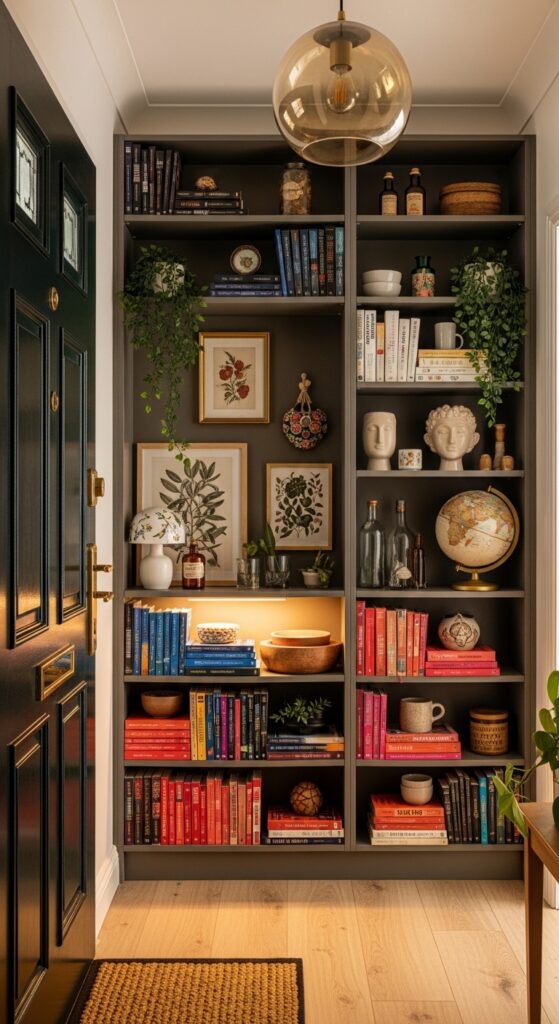
Vibe sentence: An entrance that announces “a curious, well-traveled person lives here” before a single word is spoken.
What makes it work: A bookshelf in an entrance works because it introduces density and personality in a way that immediately signals a lived-in, curated home. The key is arranging books by color and interspersing them with three-dimensional objects — ceramics, small plants, framed art — so the shelf reads as a composition rather than storage.
How to achieve it: Use a freestanding étagère from IKEA KALLAX or Billy series; add aftermarket legs and a coat of chalk paint in a muted forest green or warm terracotta to elevate the look. Group books by color in clusters of 5–7 and add one plant per shelf for organic rhythm.
Antique Console Table Styled With Found Objects
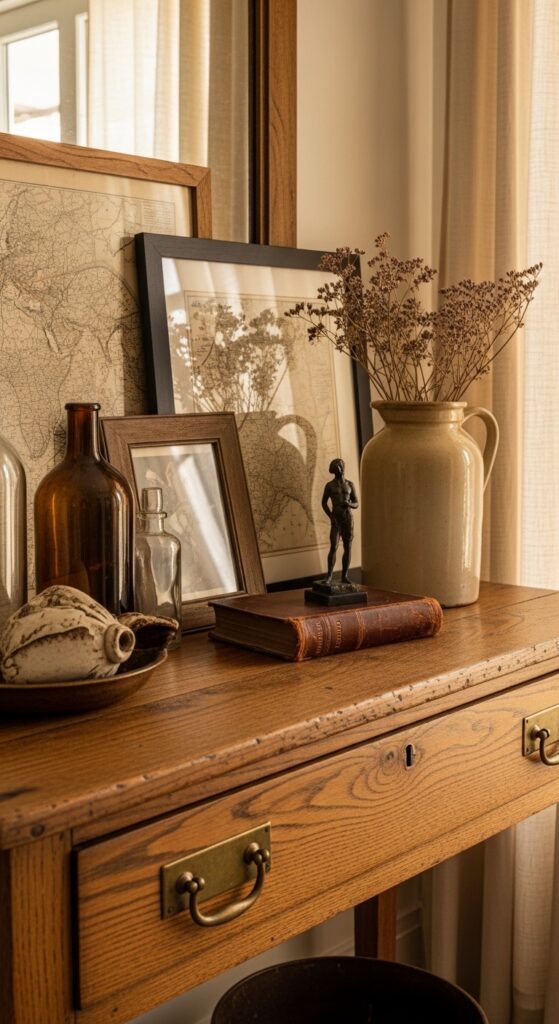
Vibe sentence: Some entrances look designed; this one looks lived, which is infinitely more interesting.
What makes it work: An antique or vintage console styled with genuinely collected objects — not store-bought “vintage-look” sets — creates a layered, dimensional composition that no single retail product can replicate. The mix of scales, materials, and age patinas is what gives the eye somewhere to travel.
How to achieve it: Source the console from a local antique market or Facebook Marketplace. Style it in odd-numbered groupings (3 or 5 objects) at varying heights, mixing something organic (dried flowers, wood), something reflective (glass, brass), and something personal (a book, a photo).
Herringbone Wood Floor With Dark Border
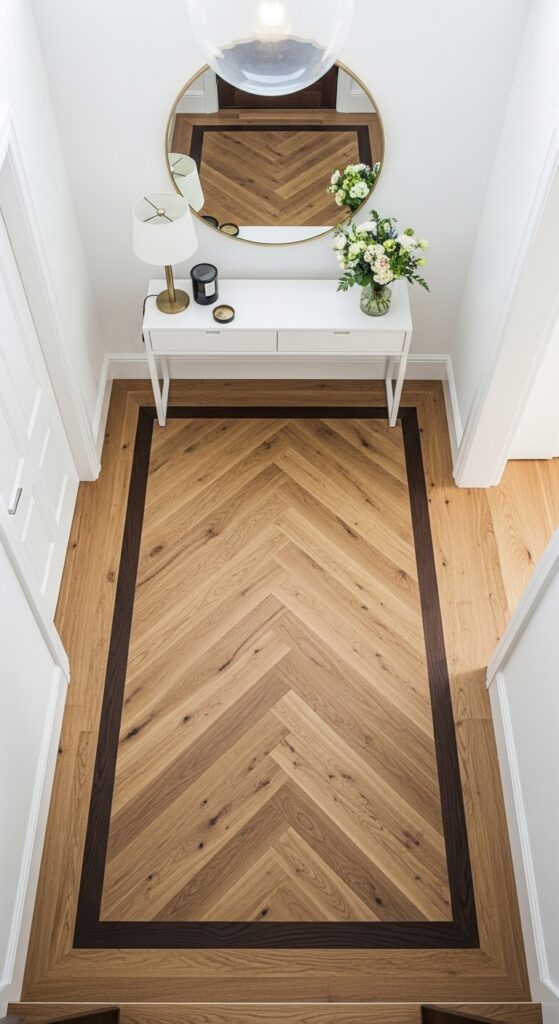
Vibe sentence: A herringbone floor with a dark border inlay makes a quiet but unmistakable statement about the quality of everything that follows.
What makes it work: The herringbone pattern is one of the most elegant and timeless floor layouts — the angled weave creates movement and energy without introducing color. The dark border acts as a picture frame around the pattern, a technique that defines the entrance zone architecturally and elevates the perceived quality of the flooring.
How to achieve it: Engineered oak herringbone flooring is available from retailers like Walls and Floors or Carpet Right from approximately $40–$70 per square meter. Create a faux border with dark wood stain and painter’s tape if using solid planks.
💡 Many luxury vinyl plank brands now offer herringbone formats at a fraction of real wood cost — and they’re more durable in high-traffic entries.
Soothing Sage Green Walls With Warm Wood Tones
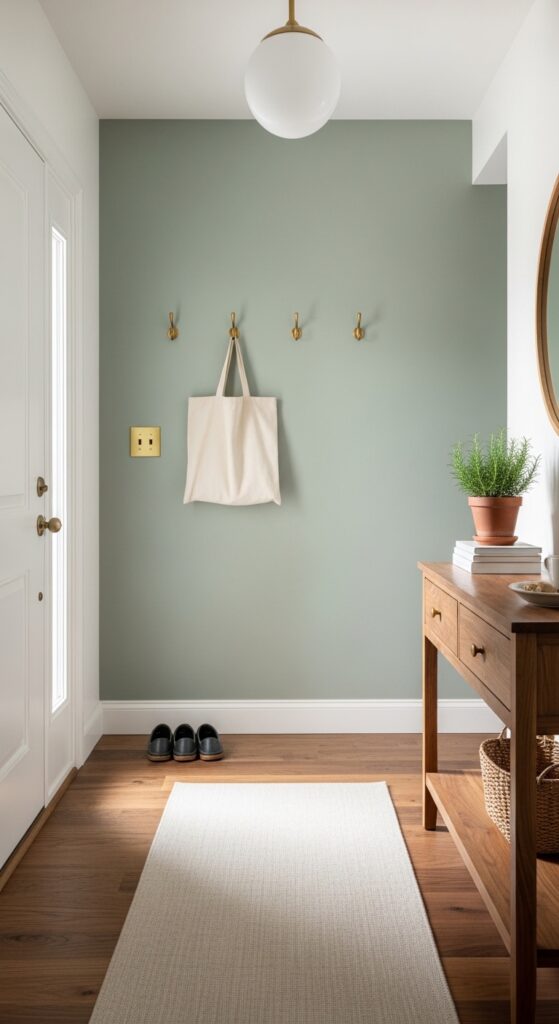
Vibe sentence: Sage green is the closest a wall color can get to bringing the outdoors inside — and nowhere does it feel more welcoming than in an entrance.
What makes it work: Sage green’s success comes from its dual warmth: it reads as both a neutral and a color, meaning it complements warm wood tones and brass metals without competing. The combination of sage walls with walnut flooring is nature’s own palette — leaf and bark — which our eyes find instinctively restful.
How to achieve it: Try Farrow & Ball “Mizzle,” Benjamin Moore “Saybrook Sage,” or Dulux “Tranquil Dawn.” Pair exclusively with warm-toned metals (brass, copper, or bronze) — cool metals like chrome or nickel undercut the organic warmth entirely.
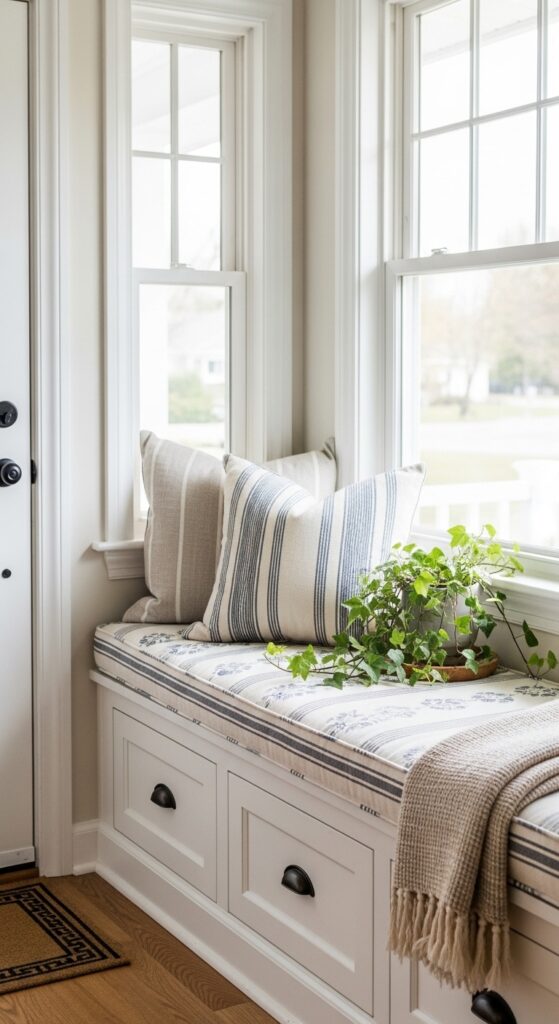
Window Seat Nook With Storage and Cushion
Vibe sentence: A window nook beside the front door is the most charming possible reason to linger before leaving.
What makes it work: A window seat converts an otherwise unused architectural alcove into a functional and visually compelling design moment. The combination of natural light, a cushioned surface, and vertical storage below achieves the design trifecta of form, function, and comfort in a typically transitional space.
How to achieve it: A simple box frame built from 3/4-inch MDF with a piano hinge lid creates instant storage and a seat in a window alcove. Have a foam cushion custom-cut at a fabric store and cover in an outdoor-rated fabric for durability in a high-traffic area.
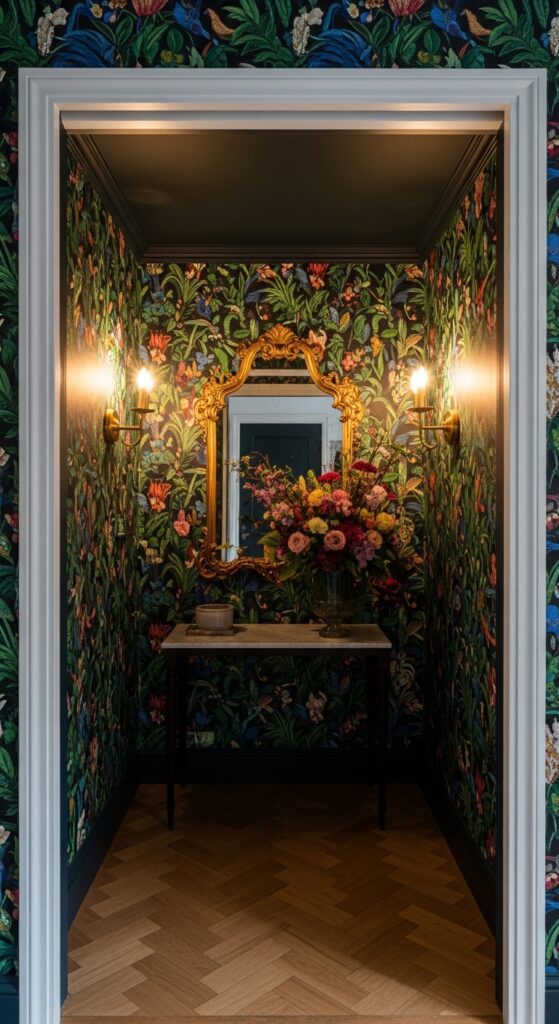
Dramatic Wallpaper in a Powder Room–Style Entry
Vibe sentence: When a space is small, going all-in on pattern is the bravest and most rewarding choice.
What makes it work: In a small, enclosed entrance (essentially a vestibule), covering all four walls and even the ceiling in a coordinating pattern creates an immersive, jewel-box effect. This technique — popularized in powder rooms and small entries — works because the limited square footage means the pattern never overwhelms; instead, it wraps.
How to achieve it: Choose a wallpaper with a dark or jewel-tone background so the small space feels intimate rather than chaotic. Coordinate the ceiling in the wallpaper’s darkest background color, and keep furniture to one or two minimal pieces so the walls can perform.
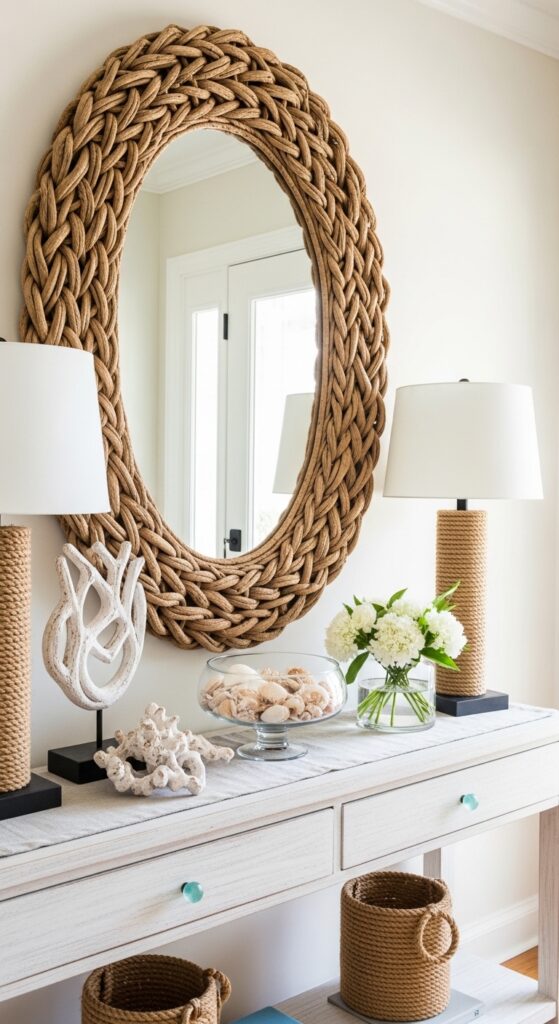
Coastal Rattan Mirror and Driftwood Accents
Vibe sentence: This entrance carries the light, unhurried energy of a beach house even if it’s a thousand miles from the coast.
What makes it work: The coastal palette succeeds through material honesty — natural rattan, bleached wood, linen, glass, and shells are all genuinely ocean-adjacent materials that reinforce the story being told. The large oval mirror amplifies light, creating the airy, sun-washed feeling synonymous with seaside living.
How to achieve it: Source a rattan-framed oval mirror from World Market, Pottery Barn, or Etsy sellers. Whitewash a thrifted console with watered-down white chalk paint, then add a few genuine shell or sea glass accents for authenticity over mass-produced “beach decor.”
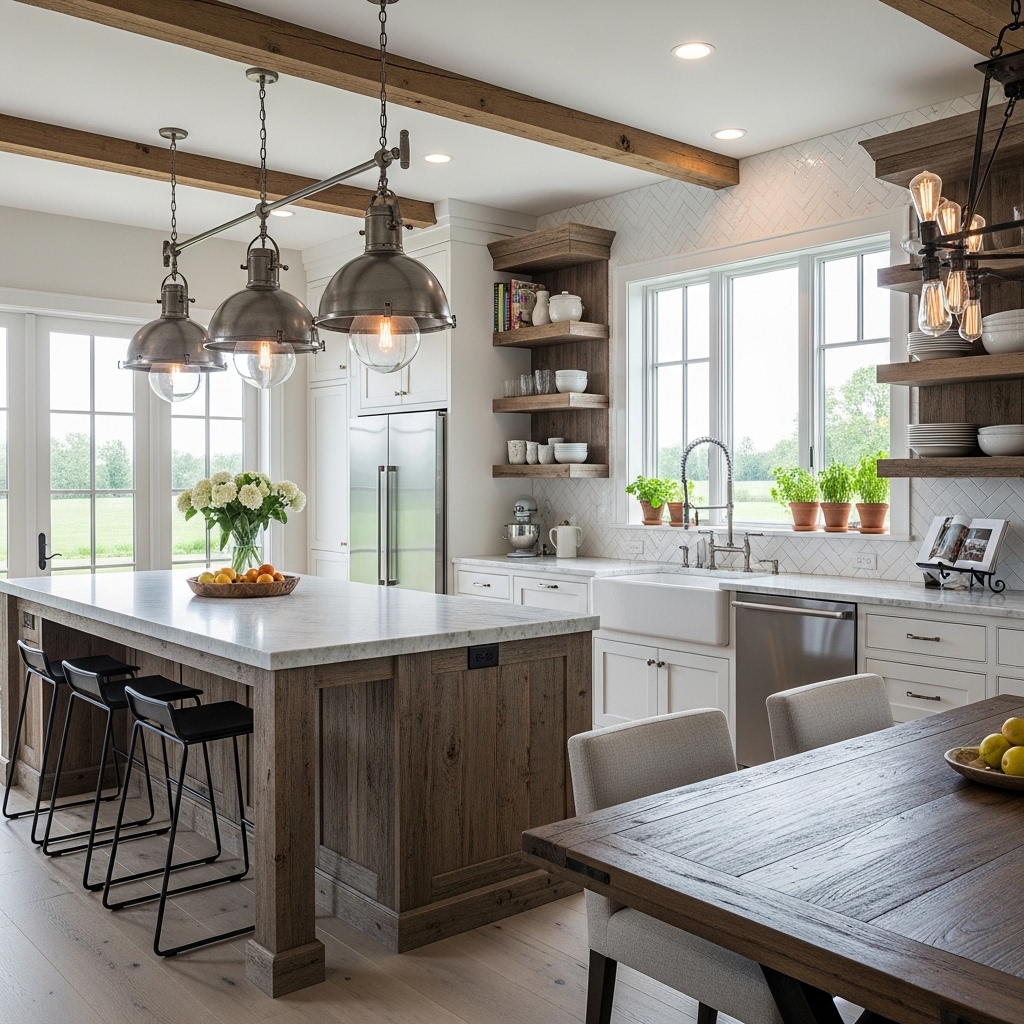
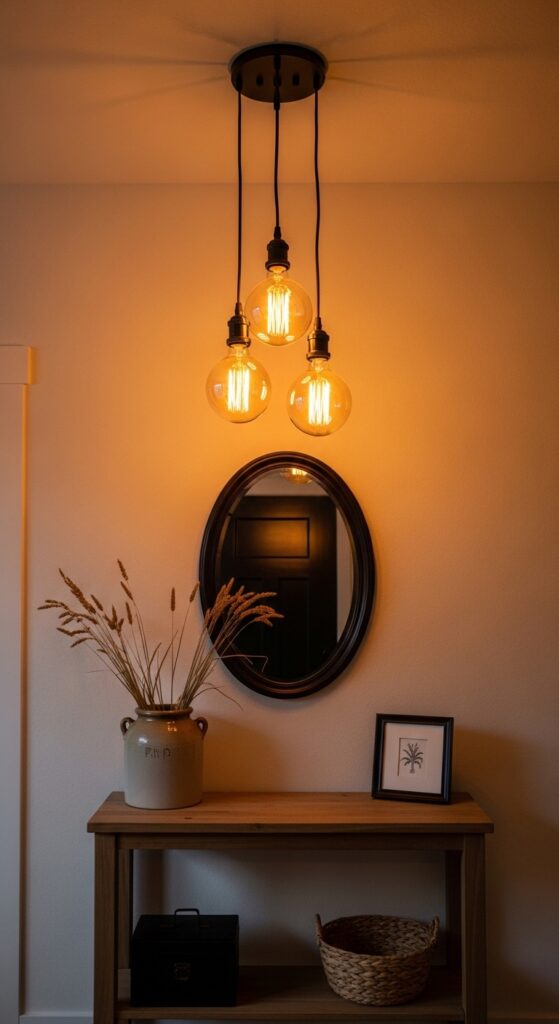
Hanging Pendant With Visible Edison Bulb Cluster
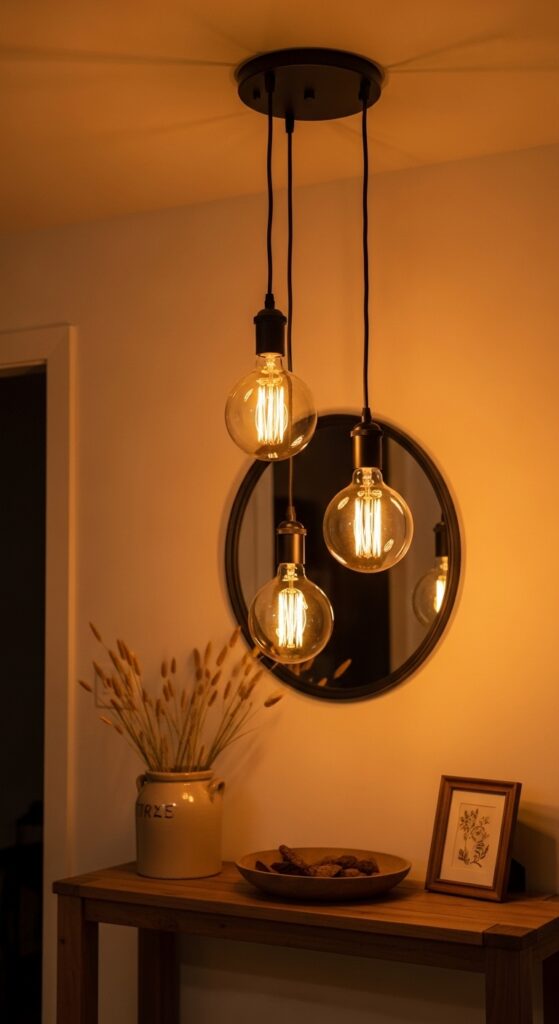
Vibe sentence: Three pendants hung at different heights achieve something a single overhead light never can: they turn illumination into atmosphere.
What makes it work: Clustering pendants at varied heights creates a sculptural overhead element that reads as intentional art rather than just a light fixture. The warm, amber tone of Edison bulbs is flattering to skin, warm to materials, and deeply atmospheric in an entry that transitions between daylight and evening use.
How to achieve it: Purchase separate pendant cord kits (widely available on Amazon for $15–$25 each) and fit with 40W-equivalent Edison-style LED bulbs. Install on a single ceiling canopy or three separate hooks at varying heights from 6.5 to 7 feet from the floor.
💡 Choose LED Edison bulbs in 2200K for the warmest, most amber-toned glow — standard “warm white” at 2700K is noticeably cooler.
How to Start Your Home Entrance Decor Transformation
The best place to begin any entrance makeover is with paint — it’s the highest-impact, lowest-cost change you can make. Before buying furniture or accessories, choose your wall color and test it in the actual space at different times of day. Entrance halls often have limited natural light, and colors can shift dramatically between morning and evening.
The most common mistake people make is buying storage furniture that’s too large. A console table that’s too deep or a coat rack that’s too wide can make even a generous hallway feel claustrophobic. Measure your space carefully: a console should be no deeper than 14 inches in most entries, and should leave at least 36 inches of walking clearance.
Budget-friendly entry points include: a fresh front door color ($25–$40 in paint), new hardware (hooks, door handles, switch plates) for under $100, a statement rug for $50–$150, and a secondhand console table. These four changes together deliver around 80% of the visual transformation.
Realistically, a full entrance refresh — paint, lighting, furniture, and accessories — takes one weekend to plan and one more to execute. Start with the walls and floor, add your largest furniture piece, then layer in accessories last. Resist the urge to do everything at once; entrances styled in stages tend to end up more layered and authentic.
Frequently Asked Questions
What colors work best for home entrance decor?
Warm neutrals — warm white, greige, sage green, and soft terracotta — are universally flattering because they work well with both natural and artificial light. Dark dramatic colors like navy, forest green, and charcoal also perform exceptionally well in entrances specifically because the limited square footage means the darkness reads as intimate rather than heavy. Avoid cool grays with yellow undertones, which can read as lifeless without abundant natural light. Benjamin Moore “White Dove,” Farrow & Ball “Elephant’s Breath,” and Sherwin-Williams “Sage” are among the consistently top-performing entry colors.
How do I make a small home entrance look bigger?
Use a large mirror positioned opposite or adjacent to the primary light source — this reflects light and creates the illusion of additional space beyond the wall. Keep floor furniture slim and elevated (visible legs on consoles and benches keep the floor “open”). Use a single, larger rug rather than multiple small ones, and paint the ceiling the same color as the walls in lighter shades to remove the visual boundary between surfaces. Vertical elements — tall plants, slatted wood walls, floor-to-ceiling drapery panels beside the door — draw the eye upward and increase perceived height.
What furniture is essential for an entrance hallway?
At minimum, a functional entrance needs: a surface to drop keys and bags (console table, shelf, or floating ledge), hooks or a coat rail, a place to sit when removing shoes (bench or stool), and a rug to define the zone and protect the floor. Beyond function, the most impactful single piece is a mirror — which adds light, provides a final check before leaving, and visually doubles the space. If your entry is very small, a wall-mounted key holder, a single floating shelf, and a small rug can achieve all of the above in under 24 inches of floor depth.
Is home entrance decor expensive to achieve?
Not necessarily. Many of the most effective home entrance decor changes are low-cost or DIY. Repainting a front door costs $25–$50 in paint and a Saturday afternoon. A secondhand console table from Facebook Marketplace or a thrift store can be found for $20–$80 and repainted. New hooks and hardware typically run $30–$80. The most expensive elements tend to be lighting (statement pendants or sconces: $80–$300) and rugs ($50–$300 for quality options). A complete, professionally styled-looking entrance makeover can realistically be achieved for $200–$500 with strategic sourcing.
How do I choose the right rug for my entrance?
Choose a rug size that allows the front door to open fully without catching — typically leaving 2 inches of clearance. In narrow hallways, a runner rug 24–36 inches wide and as long as the hall allows is ideal. For wider or square entries, a 4×6 or 5×7 rug defines the zone beautifully. Prioritize durability and flat weave over plush pile in high-traffic entries — natural fiber rugs like jute and sisal are durable and affordable, while flat-weave wool or cotton offers easier cleaning. Avoid light-colored cream or white rugs directly at the front door unless you’re committed to very frequent washing.
Ready to Create Your Dream Home Entrance?
You now have 27 home entrance decor ideas ranging from a $10 arch paint accent to a fully built-in mudroom storage wall — and every single one of them is achievable. Save your three or four favorites, start with the one that fits your current budget, and remember that the most beautifully styled entrances were never done all at once. They were layered, lived in, and evolved over time. Whether you go bold with navy walls and polished brass, or quiet and serene with sage green and natural wood, the right home entrance decor should make you feel something the moment you walk through the door. That feeling is worth every bit of effort.