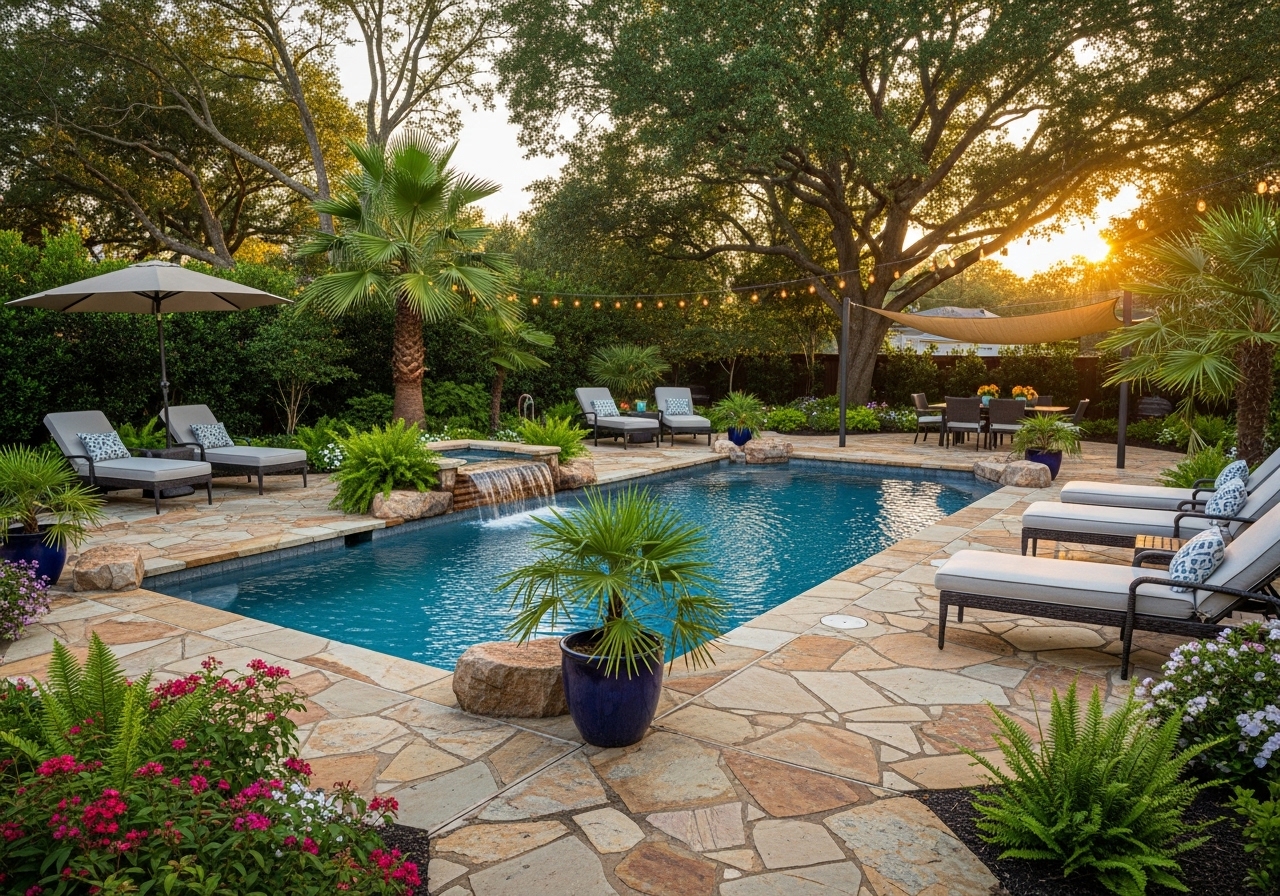
There’s a particular kind of bliss that belongs only to a backyard pool — the shimmer of light on water at golden hour, the feeling of stepping off warm stone into cool blue, the way an entire outdoor space transforms when it organises itself around something so alive and inviting. Backyard pool ideas have a way of capturing our deepest vision of what home could feel like: unhurried, sun-drenched, and entirely yours. Whether you’re working with a generous half-acre or a compact urban courtyard, the right pool design turns an ordinary backyard into an outdoor oasis you’ll never want to leave. Here are 28 ideas worth saving — each one a genuine blueprint for the retreat you’ve been imagining.
Why the Backyard Pool Oasis Works So Well
The outdoor oasis aesthetic endures because it speaks to something fundamental — our need for water, warmth, and a space that feels both private and expansive. A thoughtfully designed pool isn’t just a feature; it becomes the gravitational centre of an entire outdoor living scheme. Seating, planting, lighting, and architecture all orient themselves toward it, creating coherence that a garden without a focal point rarely achieves.
What makes this style visually compelling is the interplay of hard and soft elements: cool water against warm stone, geometric pool edges softened by cascading planting, crisp white sun loungers against deep green hedging. The palette draws from nature — aqua, white, sand, terracotta, and slate — in combinations that feel simultaneously timeless and deeply current.
Right now, the outdoor oasis aesthetic is at the peak of its cultural moment. Pinterest searches for “backyard pool landscaping,” “natural pool design,” and “pool garden ideas” have grown year over year, driven by a post-pandemic desire to invest in home spaces that genuinely restore. Biophilic design — the philosophy of bringing nature into every element of a space — has made naturalistic pool settings and plunge pools surrounded by planting deeply aspirational.
The best part is that scale is no longer a barrier. Plunge pools, cocktail pools, and compact rectangular lap pools have made the backyard pool oasis accessible to gardens of almost any size.
A Negative Edge Pool Overlooking a Garden View
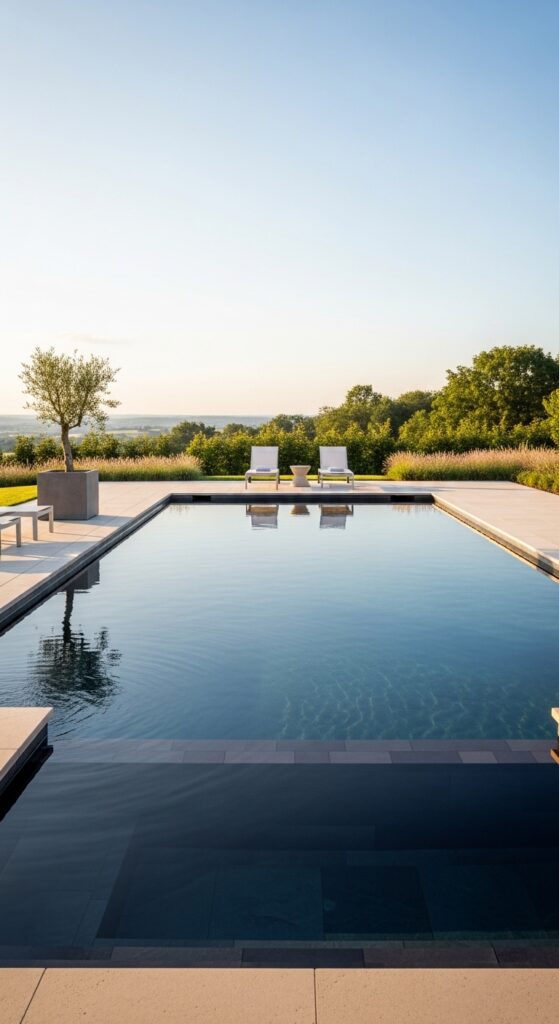
Vibe sentence: A negative edge pool doesn’t end — it simply dissolves into the view, making the garden feel infinite.
What makes it work: The infinity edge creates the optical illusion that the pool and the landscape beyond share the same plane, visually expanding the garden far beyond its actual boundaries. A dark-tiled pool interior — charcoal slate or deep navy mosaic — deepens the water colour dramatically, making the mirror effect far more striking than a pale-tiled pool would achieve.
How to achieve it: The negative edge requires a catch basin below the vanishing edge to recirculate overflow water — specify this early in the structural design phase. For maximum impact, position the vanishing edge parallel to your garden’s most compelling view: a treeline, a valley, or a distant hedge boundary.
💡 Dark pool interiors (charcoal, slate, deep navy) make water look dramatically richer in photographs and in person — a design choice worth the premium.
A Natural Swimming Pond with Planted Filtration Zones
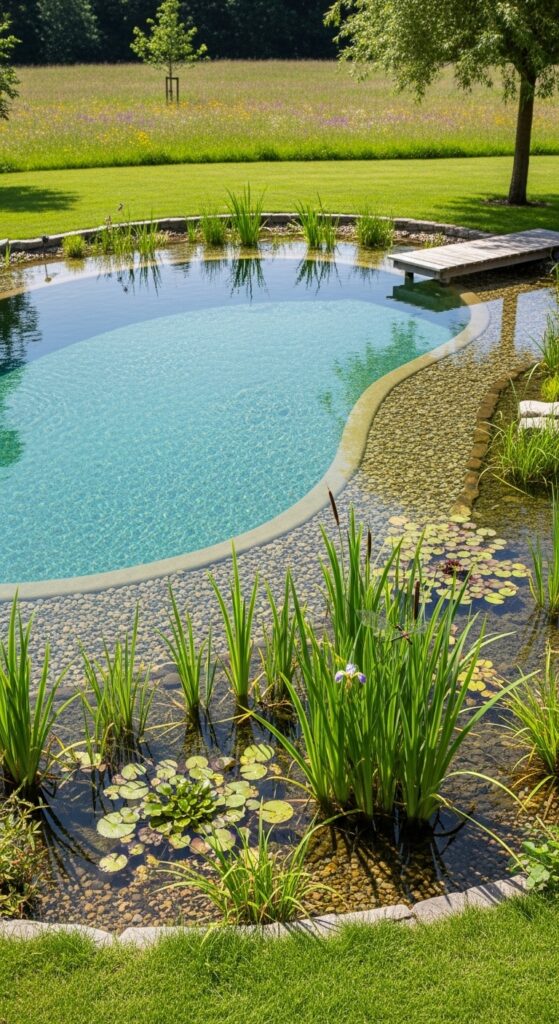
Vibe sentence: A natural swimming pond feels less like a built thing and more like a gift from the landscape.
What makes it work: Natural pools use aquatic plants — irises, reeds, watercress — as living biological filters, eliminating the need for chlorine entirely. The result is water that’s genuinely soft on skin and eyes, and a garden feature that actively supports biodiversity, attracting dragonflies, frogs, and birds year-round even when it’s not swimming season.
How to achieve it: Natural swimming ponds require a minimum total surface area of around 50m², split roughly 50/50 between swim zone and regeneration zone. Specialist contractors such as Gartenart and Biotop operate across the UK — budget £20,000–45,000 for a professionally installed natural pond, significantly less than a traditional chlorinated pool of equivalent size.
A Compact Plunge Pool for Smaller Gardens
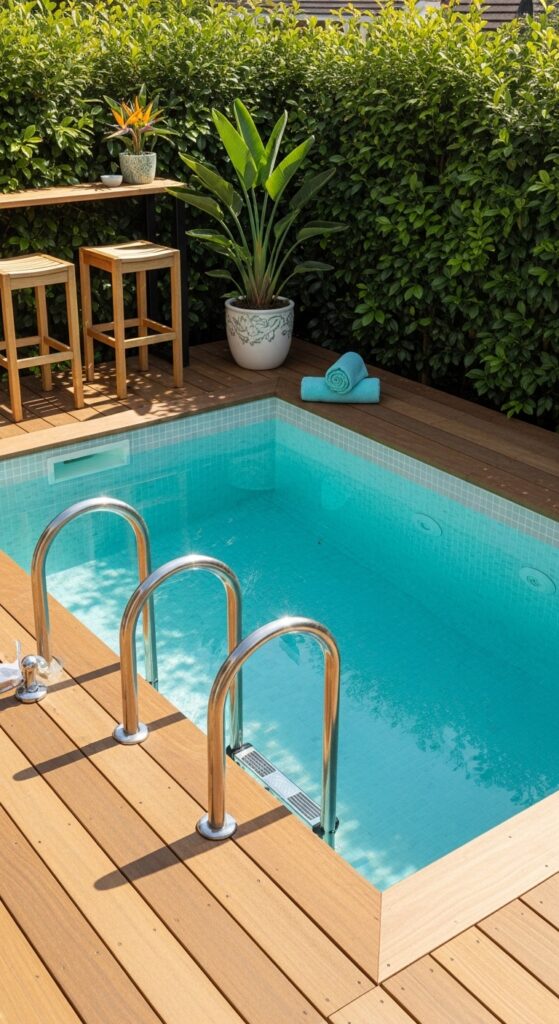
Vibe sentence: A plunge pool proves that the oasis feeling has nothing to do with square footage.
What makes it work: A plunge pool (typically 2.5–4m long by 1.5–2.5m wide) concentrates the cooling, immersive experience of a pool into a fraction of the footprint. Setting it into a raised deck rather than flush into the ground creates a sense of occasion — you step up to it rather than stepping around it, which elevates the experience considerably.
How to achieve it: Fibreglass shell plunge pools are the most straightforward installation option — they arrive as a single unit and require only groundworks and plumbing connection. Budget £8,000–18,000 installed including deck integration. Pale mosaic tile interiors (aqua, soft white, pearl) make small pools feel larger by reflecting maximum light.
💡 Add a hydro-jet system to a plunge pool for under £1,000 — it doubles as a hydrotherapy feature and justifies year-round use.
A Rectangular Lap Pool Edged in Limestone
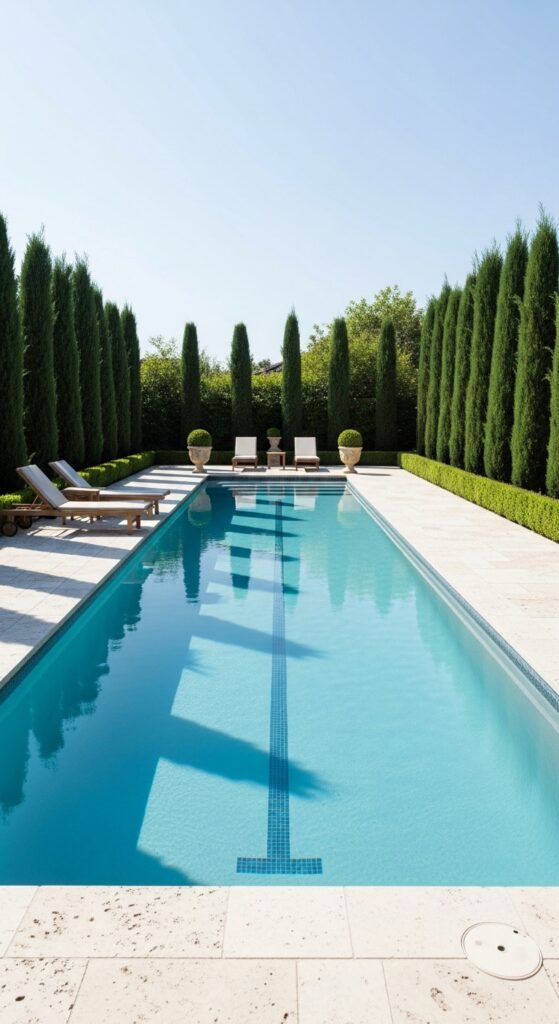
Vibe sentence: A limestone-edged lap pool has the quiet authority of something that has always been there.
What makes it work: The combination of a geometric pool form with formal planting — pencil cypress, clipped hedging, stone urns — creates a Mediterranean axis that feels architectural and intentional. Limestone coping in a honed or tumbled finish provides warmth and texture that concrete or composite alternatives rarely replicate convincingly.
How to achieve it: Specify Jerusalem Gold or Jura limestone for coping — both are authentically warm in tone and widely available in 600x400mm copings at £40–65 per linear metre. Pencil cypress (Cupressus sempervirens ‘Stricta’) planted at 1.5m centres provide the formal vertical rhythm within 2–3 growing seasons.
A Pool with a Built-In Shallow Tanning Ledge
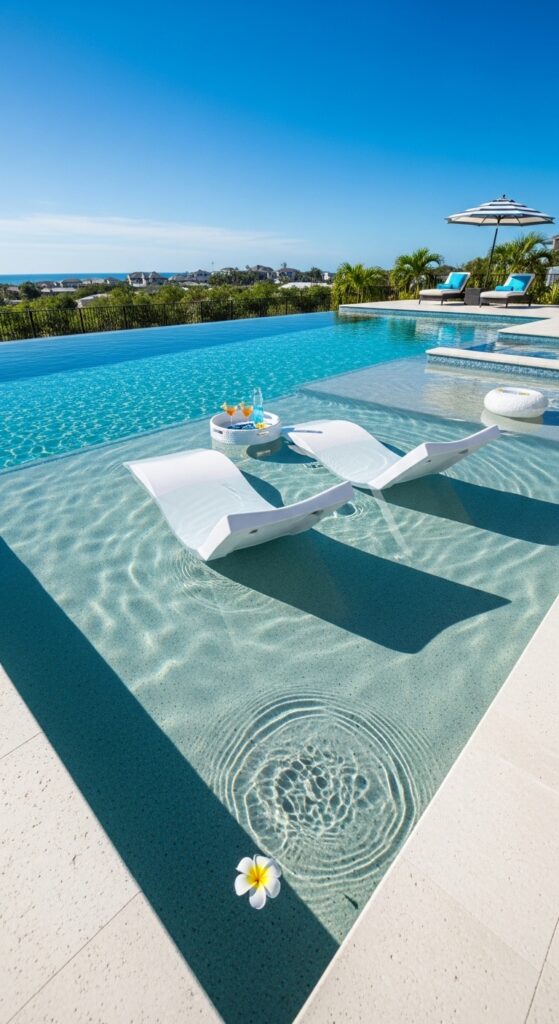
Vibe sentence: A tanning ledge makes a backyard pool feel immediately, undeniably resort-grade.
What makes it work: The tanning shelf — typically 20–30cm deep — gives pool users the sensation of lying in warm, shallow water without being fully submerged, which is uniquely pleasurable and makes pools dramatically more usable by children and those who simply want to cool off rather than swim. The visual effect of clear shallow water over a pale tiled surface reads as luxurious in photographs and in person.
How to achieve it: Specify the tanning ledge during pool design — it’s a concrete form poured as part of the shell, not an afterthought. Width should be a minimum 1.2m for in-pool lounger use; 1.8m is ideal. Pearl white or pale sand mosaic on the ledge floor maximises the light, warm-water aesthetic.
A Mosaic-Tiled Pool Interior in Jewel Blue
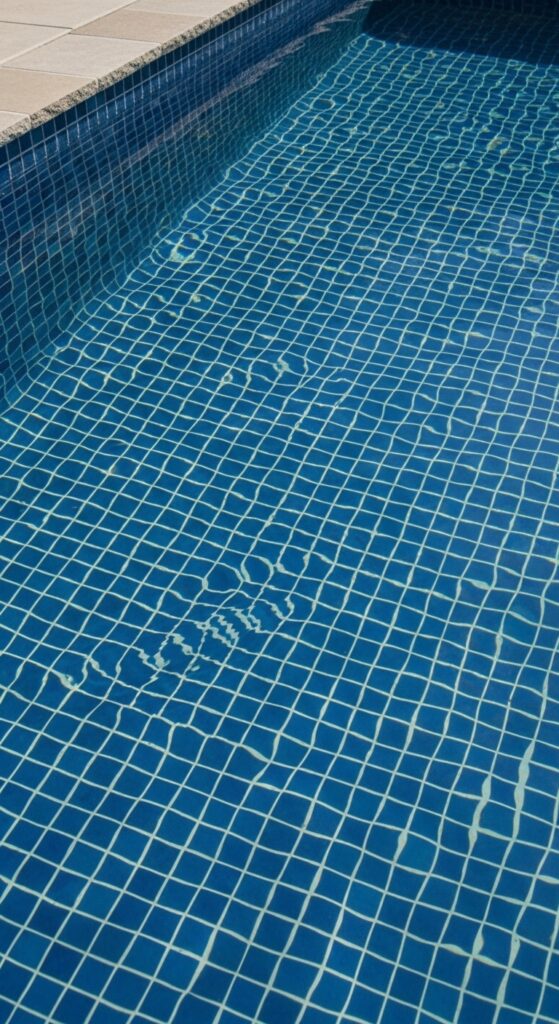
Vibe sentence: A jewel-toned mosaic pool interior turns water into something closer to gemstone than liquid.
What makes it work: Handmade glass mosaic tiles refract light differently from ceramic equivalents — each tile’s slight surface variation catches and scatters sunlight independently, creating the constantly shifting, shimmering effect that makes Mediterranean and Moroccan pools so visually arresting. The depth of colour intensifies the darker the tile, making deep sapphire and cobalt infinitely more spectacular than pale blues.
How to achieve it: Look for glass mosaic pool tiles from specialist suppliers such as Bisazza, Original Style, or Fired Earth. Budget £80–150 per m² for quality glass mosaic, applied over a pool-rated flexible adhesive and epoxy grout. Even applying mosaic only to the pool floor (rather than all surfaces) produces a dramatic result at reduced cost.
A Pool Surrounded by Tropical Planting
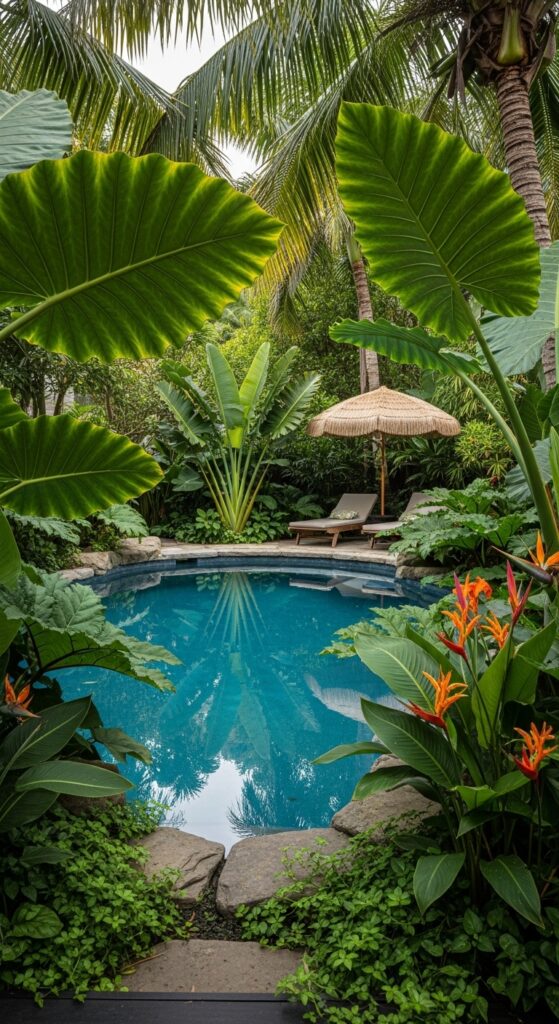
Vibe sentence: Tropical planting around a pool creates the sensation of swimming somewhere genuinely wild and far away.
What makes it work: Large-leaved architectural plants — bird of paradise, canna lily, tree fern, and gunnera — create instant tropical drama because their scale is genuinely impressive. Overlapping them at pool edges so foliage partially overhangs the water integrates the pool into the planting rather than leaving it as a separate feature in the garden.
How to achieve it: In cooler climates, achieve the tropical effect with hardy alternatives: Fatsia japonica, Trachycarpus fortunei (Chusan palm, fully hardy to -15°C), large-leaved hostas, and bamboo. Supplement with annual tender plants like canna and banana in containers, brought under cover for winter.
💡 A single mature Trachycarpus fortunei palm (£150–300 for a 1.5m specimen) instantly creates a tropical atmosphere that takes years to grow from scratch.
A Pool House with Changing Room and Bar
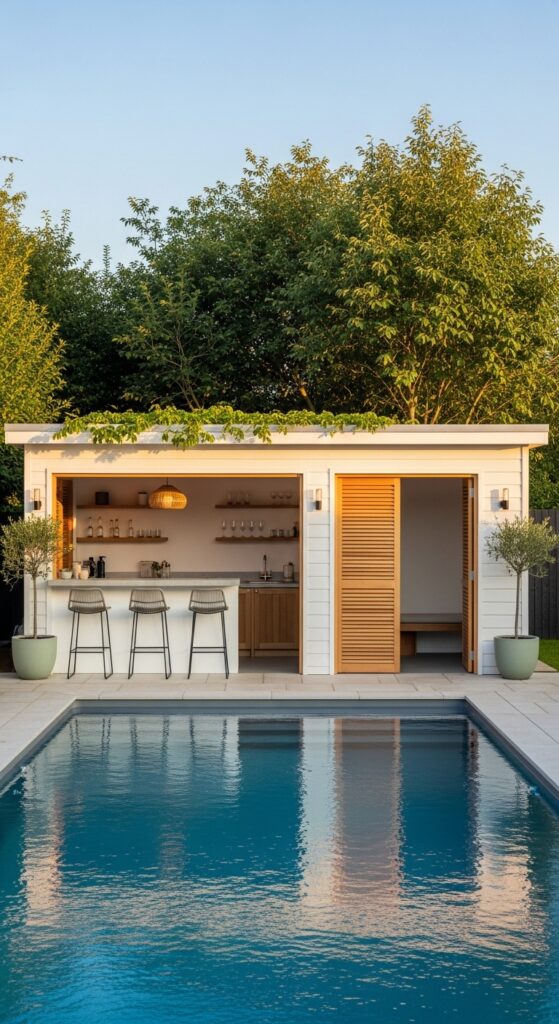
Vibe sentence: A pool house with a bar makes every summer afternoon feel like the best day of someone’s holiday.
What makes it work: Combining changing facilities with a sheltered bar and seating area in a single structure means the pool area functions as a complete outdoor room — you never need to go back inside the main house. Positioning it at the far end of the pool creates a visual terminus that gives the whole garden composition a satisfying sense of arrival and enclosure.
How to achieve it: A pool house needn’t be elaborate — even a 4x3m timber framed structure with louvred cladding, a concrete worktop, and open shelving functions beautifully. Use an exterior-grade satinwood in a warm white for render-look cladding panels, and specify weathered teak or iroko for counter surfaces that improve with exposure.
A Pool with a Waterfall Feature Wall
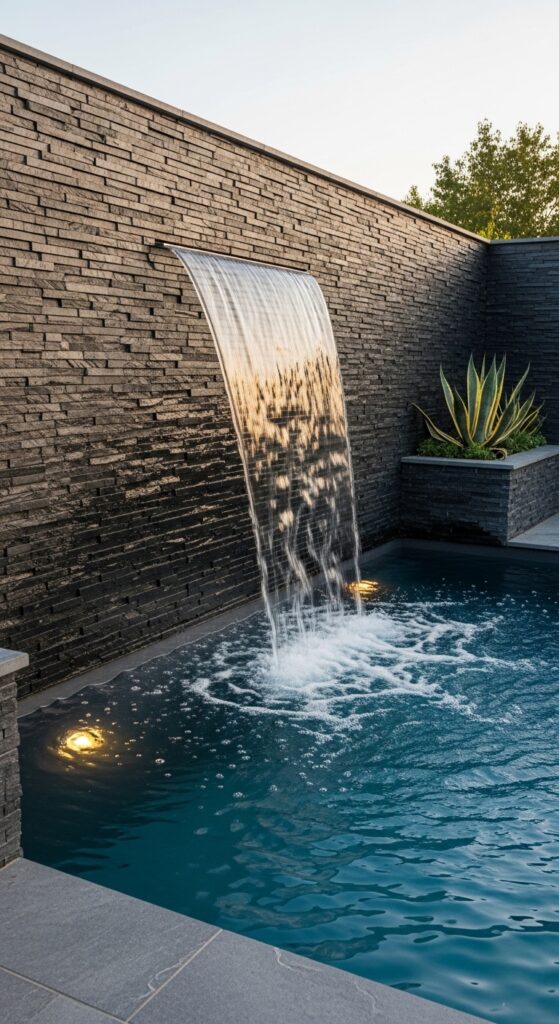
Vibe sentence: A waterfall wall introduces the sound of water to the garden — and sound changes everything.
What makes it work: A sheet waterfall over a dark stone wall creates both visual drama and acoustic pleasure — the steady white noise of falling water masks traffic and neighbour sound, making the pool area feel genuinely private even in an urban garden. Dark stone cladding (basalt, slate, or dark granite) makes the falling water appear brilliantly silver by contrast.
How to achieve it: A weir blade waterfall — a stainless steel channel that delivers a perfectly uniform sheet of water — is the cleanest solution and connects to the existing pool circulation pump. Specify a minimum flow rate of 20–30 litres per minute per metre of weir width for a satisfying water sheet. Dark slate cladding tiles are available from Mandarin Stone and Fired Earth from £45–85 per m².
A Pool Deck in Warm Teak Timber
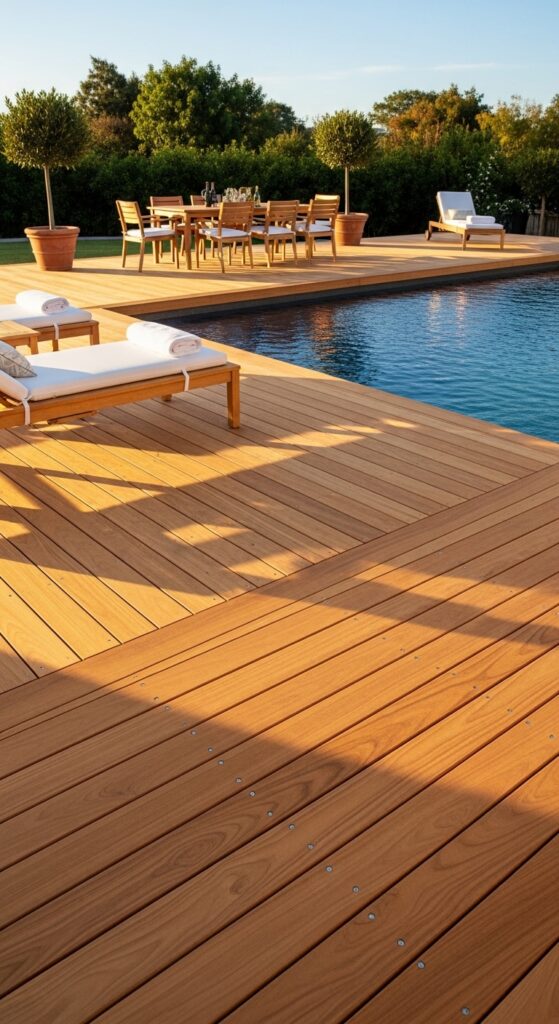
Vibe sentence: A teak deck around a pool makes bare feet feel like the entire point of the exercise.
What makes it work: Teak’s naturally high oil content means it stays warm and splinter-free even in direct sun — a critical practical consideration for a poolside surface. Its honey-gold colour in freshness and silver-grey in weather both read as beautiful, giving you two distinct looks across a pool deck’s lifetime without any maintenance obligation.
How to achieve it: Specify FSC-certified teak decking boards at 90mm or 120mm width in 21mm thickness — wider boards look more architectural. Fix with hidden stainless steel clips for a clean surface free of visible screws. Apply a teak oil annually if you prefer the golden tone; leave untreated if you prefer the distinguished silver-grey patina.
A Freeform Pool with Curved Naturalistic Edges
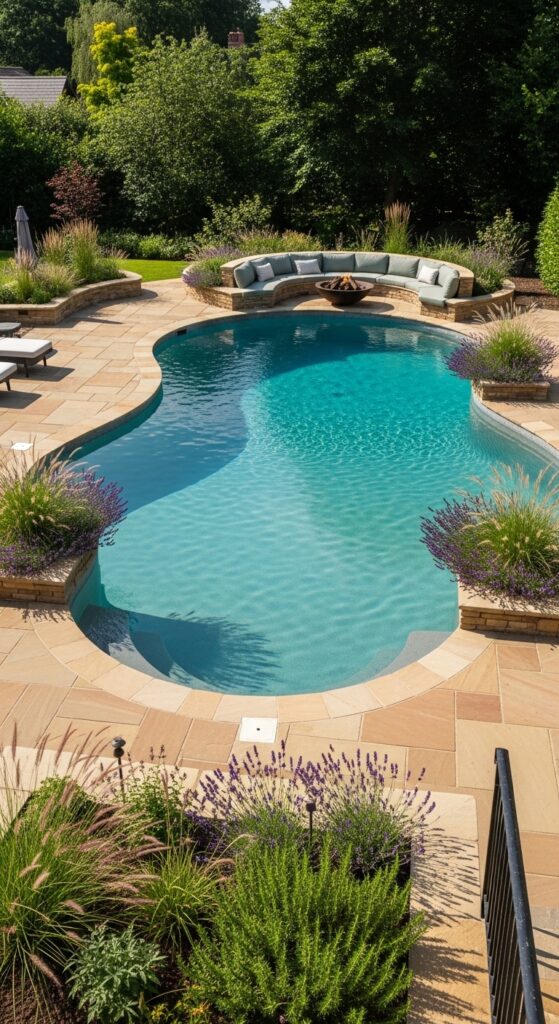
Vibe sentence: A freeform pool feels grown rather than built — as if the garden shaped it over decades.
What makes it work: Curved pool edges soften the geometry of an outdoor space, making the pool feel integrated into the garden rather than imposed upon it. Random-lay natural stone paving (rather than regular cut flags) reinforces the organic quality, while planting allowed to overhang the coping blurs the boundary between pool and landscape.
How to achieve it: Specify Yorkstone, sandstone, or limestone in random rectangular formats for the surround — avoid square-cut regular flags which fight against a freeform pool edge. Plant ornamental grasses (Pennisetum, Stipa), lavender, and trailing rosemary at the pool edge for planting that softens the coping without dropping excessive debris into the water.
A Pool at Night with LED Underwater Lighting
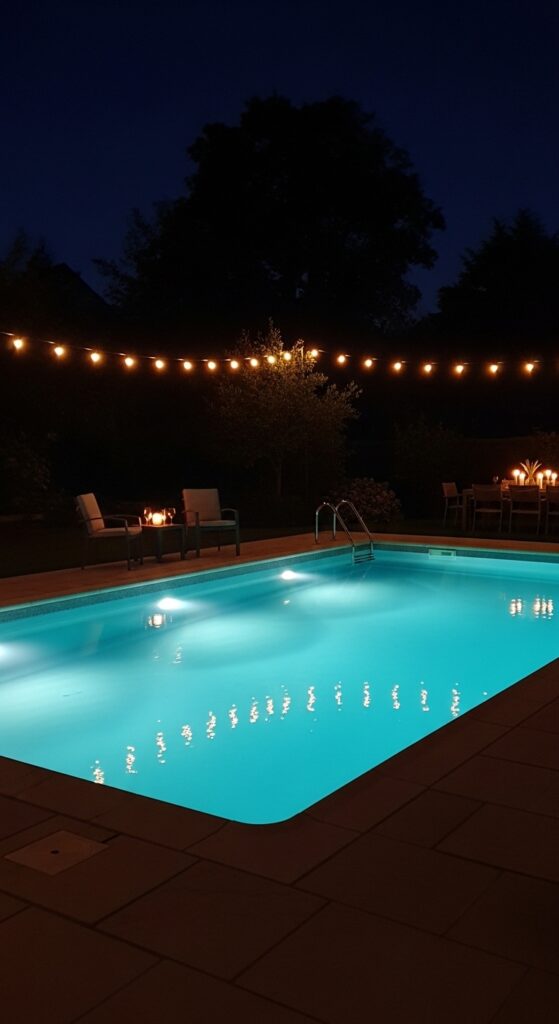
Vibe sentence: A pool lit from within at night is one of the most genuinely magical sights a garden can offer.
What makes it work: Underwater LED lighting transforms a pool from a daytime feature to an evening centrepiece — the glow radiates outward from the water surface, illuminating the surrounding terrace in shifting aqua light that no other garden feature can replicate. Multiple lights positioned at regular intervals eliminate shadow patches and create an even, enveloping glow.
How to achieve it: Specify a minimum of one LED pool light per 15–20m² of pool surface for even illumination. Choose colour-changing RGBW LED units (widely available from Pentair and Hayward) that allow you to shift from warm white for relaxed evenings to vivid aqua for parties. All pool lighting must be installed by a qualified electrician to current BS7671 Part P standards.
💡 Pairing underwater LEDs with warm bistro lights above the terrace creates a layered lighting scheme that looks professionally designed at minimal extra cost.
A Pool Enclosed by Mature Hedging for Privacy
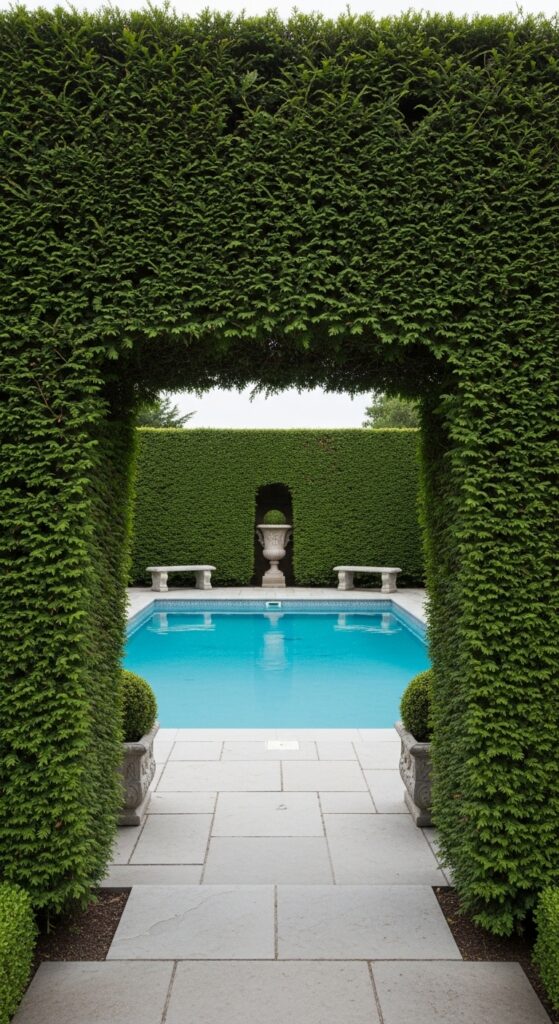
Vibe sentence: A hedge-enclosed pool creates the most private, serene outdoor space imaginable — a garden within a garden.
What makes it work: Mature hedging around a pool solves multiple problems simultaneously: privacy from neighbours, wind protection (a critical comfort factor for pool use), sound absorption, and the creation of an enclosed garden room that has its own complete atmosphere. Yew (Taxus baccata) and hornbeam (Carpinus betulus) are the two finest hedging choices — both clip crisply and establish faster than most people expect.
How to achieve it: Plant bareroot hornbeam at 45cm spacing in autumn for the fastest establishment and most economical cost — expect to pay £3–6 per plant versus £50–150 for container-grown specimens. Hornbeam reaches 2m in 5–7 years from planting. Apply a slow-release granular feed each spring to accelerate growth in the establishment years.
A Swim-Up Bar Built Into the Pool Edge
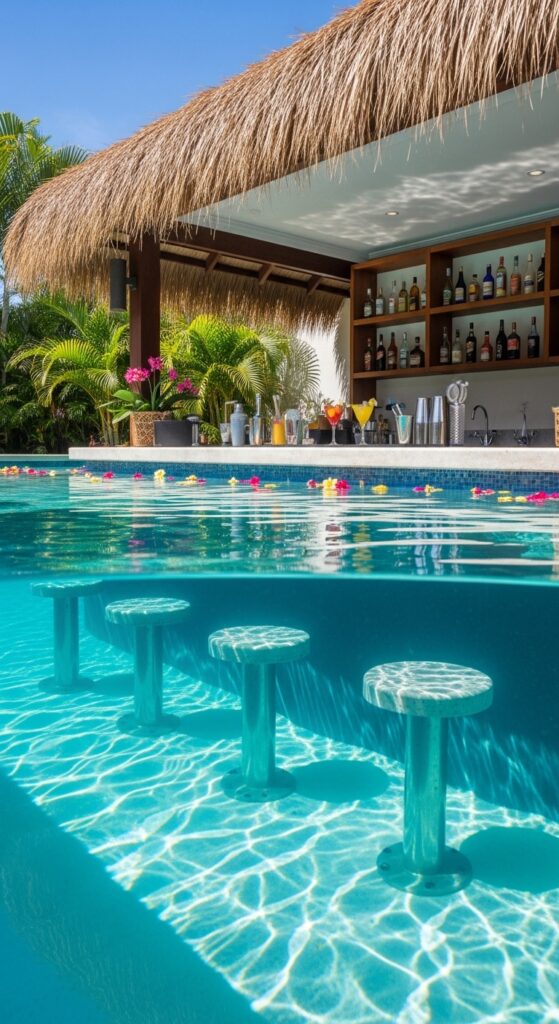
Vibe sentence: A swim-up bar makes it genuinely impossible to think of a reason to go back inside.
What makes it work: The swim-up bar works because it dissolves the boundary between swimming and socialising — you never have to leave the water to participate in the conversation or reach a drink. The counter height is set precisely at the pool waterline, which requires careful coordination between pool builder and bar designer during the planning stage.
How to achieve it: Specify underwater bar stools in UV-resistant resin or stainless steel, anchored to the pool floor with non-corrosive fixings — budget £200–450 per stool from specialist pool furniture suppliers. The bar counter overhang on the pool side should extend 30–40cm over the waterline so swimmers can lean comfortably without pressing against the structure.
A Pool with an Integrated Hot Tub Spillover
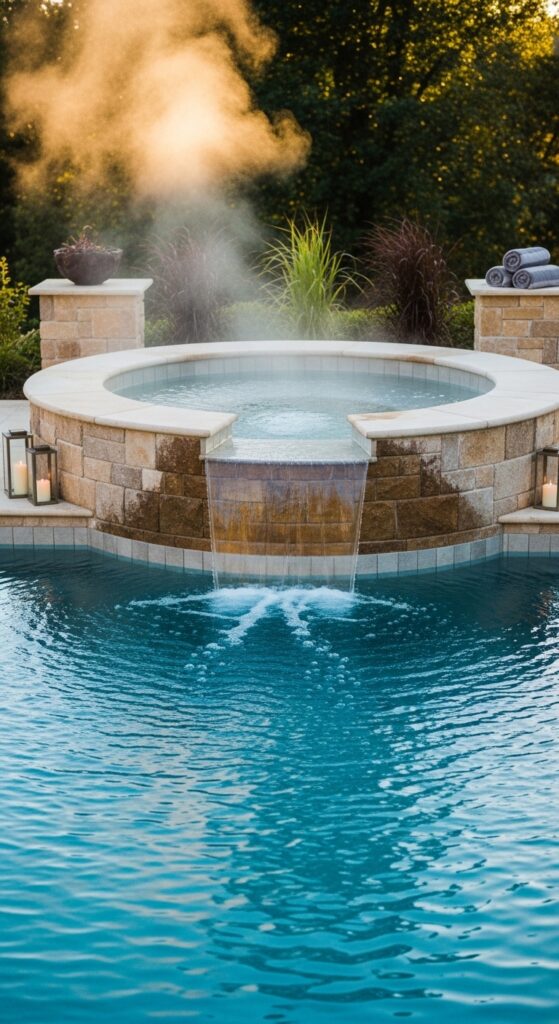
Vibe sentence: A spillover hot tub makes the backyard pool feel like a private resort — one you never have to check out of.
What makes it work: Positioning the hot tub slightly elevated above the main pool creates a visual hierarchy that reads as genuinely architectural — the eye travels upward from pool surface to hot tub edge, following the water’s path in reverse. The spillover acts as a constant water feature, adding both sound and movement to the pool area throughout the day.
How to achieve it: Integrate the hot tub into the pool design from the outset — retro-fitting is significantly more expensive and rarely as seamless. The spillover weir height of 5–10cm above waterline creates the most attractive thin-sheet effect. Both pool and hot tub should run on the same circulation and heating system where possible to reduce equipment and running costs.
A Cabana or Sail Shade Over the Poolside Lounge Area
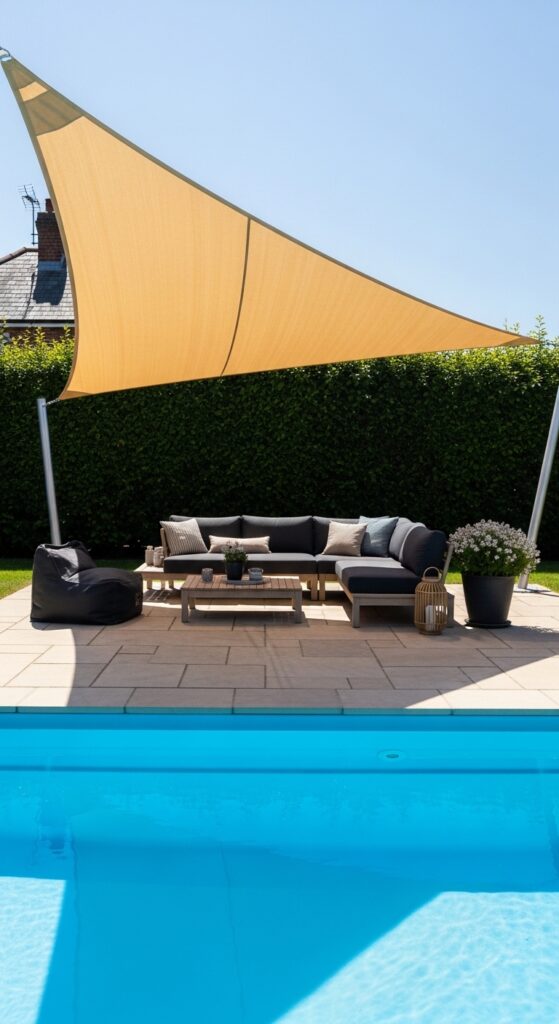
Vibe sentence: A sail shade beside a pool creates the kind of sheltered, dappled poolside retreat that makes you want to spend the whole day outdoors.
What makes it work: A tensioned sail shade provides UV protection and visual shelter without blocking the garden view or light in the way a solid pergola does — it filters rather than blocks, creating a dappled quality of shade that feels genuinely pleasant rather than gloomy. The geometric form of a triangular shade introduces an architectural element that costs far less than a permanent structure.
How to achieve it: Specify marine-grade stainless steel posts set in concrete footings for a system that handles wind loads safely. HDPE shade sail fabric in a GSM weight of 285+ provides 95% UV block — choose in sand, stone, or warm white for a neutral that complements any pool palette. Budget £800–2,500 for a professionally rigged sail shade in the 4–6m range.
A Pool Surrounded by Wildflower Meadow Planting
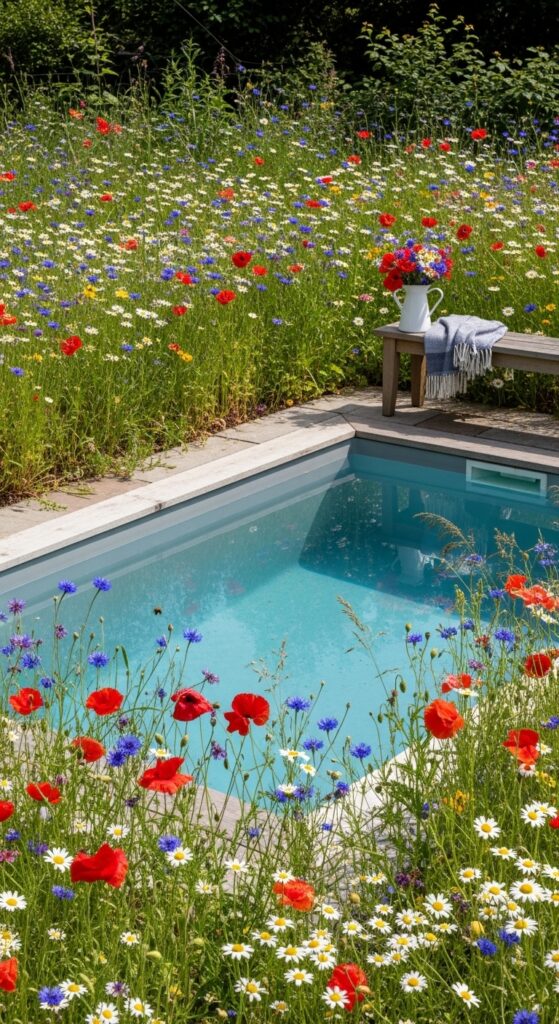
Vibe sentence: A pool set within a wildflower meadow looks like a painting and swims like a dream.
What makes it work: The contrast of a geometric, ordered pool edge with the completely unstructured exuberance of wildflower planting creates the most interesting possible tension in the garden — control and wildness in direct conversation. The pool becomes the still point around which everything else moves and flowers freely.
How to achieve it: Establish a wildflower meadow from a specialist seed mix (Pictorial Meadows and Emorsgate Seeds both supply excellent UK-native mixes from £8–20 per 10g, covering approximately 10m²). Choose an annual mix for year-one colour followed by a perennial mix for long-term establishment. Mow once in late September after seed has set.
A Pool Bar with an Outdoor Pizza Oven
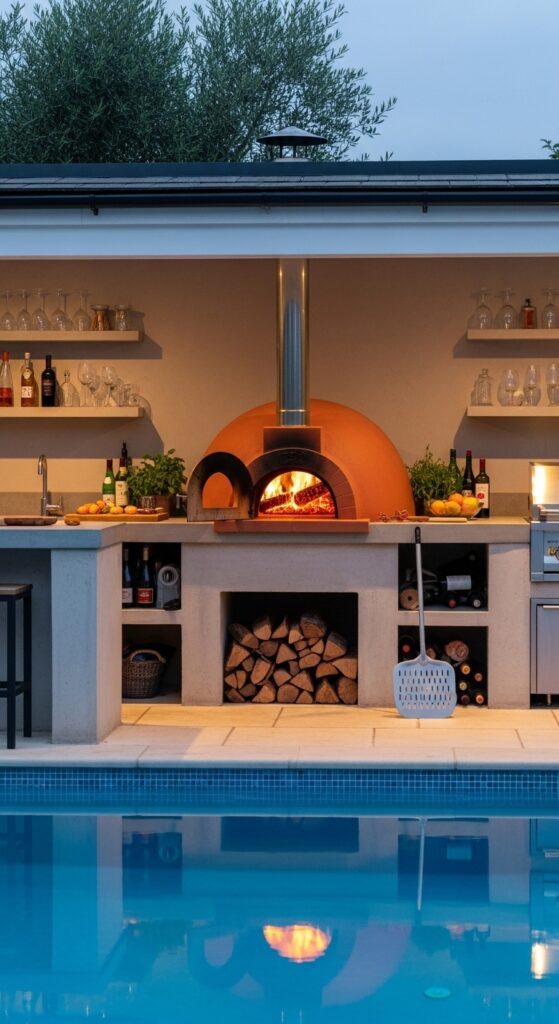
Vibe sentence: A pizza oven beside a pool turns a backyard into the kind of place people talk about for years afterward.
What makes it work: A wood-fired pizza oven introduces both function and theatre to the pool area — the process of building the fire, heating the dome, and sliding in pizzas is social in itself, and the scent of wood smoke and blistering dough makes an outdoor evening genuinely memorable. Positioning it within the pool bar structure keeps everything cohesive rather than feeling like a collection of separate appliances.
How to achieve it: Authentic wood-fired pizza ovens in terracotta or refractory brick start from £800–1,500 for a good mid-range dome oven. Build the supporting plinth from rendered blockwork at 900mm working height and finish the worktop in poured concrete or honed granite — both handle heat and outdoor conditions without complaint.
A Geometric Pool with a Stepped Water Cascade
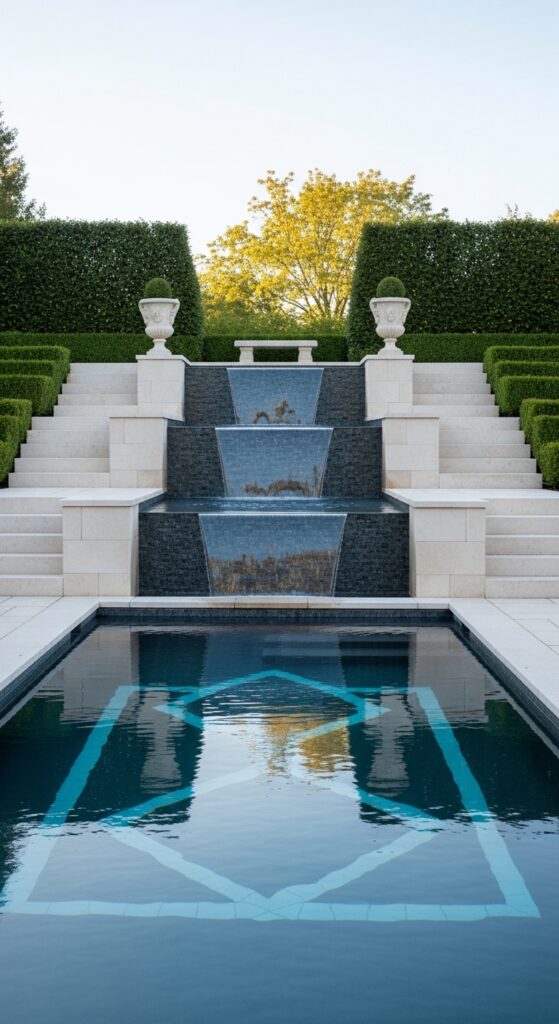
Vibe sentence: A cascading pool sequence introduces the most classical of garden experiences — the sound and sight of water descending in steps through the landscape.
What makes it work: The stepped cascade solves a gradient problem with a solution that becomes a feature — a sloping garden that would otherwise require costly retaining walls becomes the structural logic for a dramatic water journey. Each step acts as a weir, delivering a thin, even water sheet that catches light beautifully as it falls.
How to achieve it: Stepped pool systems require careful structural and hydraulic engineering — the cascade is driven by the main pool’s circulation pump, with water pumped to the highest level and returning by gravity. Specify limestone coping in a matching tone across all levels for visual unity. Each step should deliver a maximum 20–30cm water drop for an elegant rather than aggressive cascade.
A Pool Surrounded by Olive and Lavender — Mediterranean Style
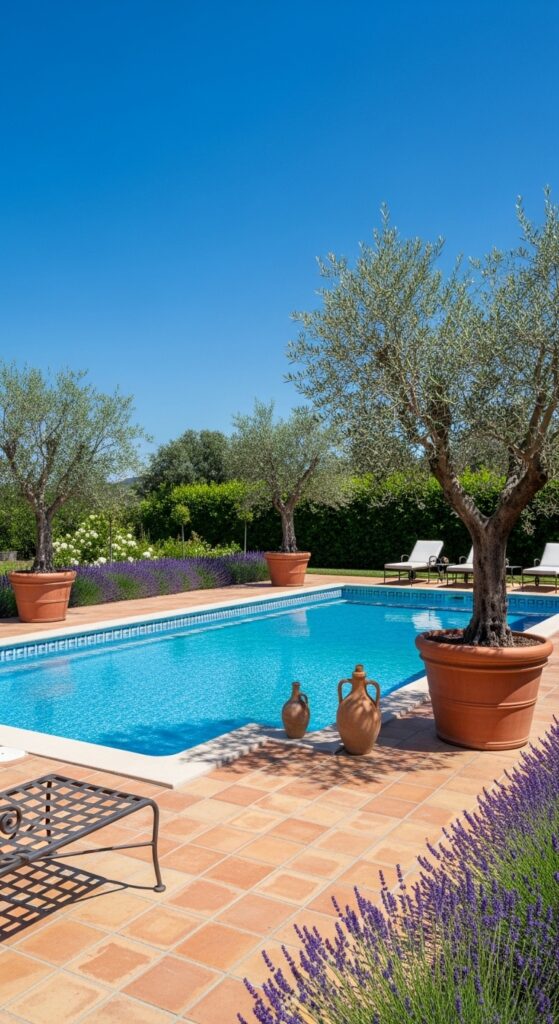
Vibe sentence: Olive trees and lavender around a pool make the air itself feel like a destination.
What makes it work: The Mediterranean palette — silver, terracotta, lavender, and aqua — is so visually cohesive because every element shares the same warm, sun-bleached tonal family. Olive trees are particularly effective as pool-side specimens because their silver foliage shimmer in the breeze, their root systems are non-invasive relative to many trees, and they tolerate the reflected heat from pool surfaces without complaint.
How to achieve it: Source semi-mature olive trees (Olea europaea) in terracotta pots at 1–1.5m height from garden centres or specialist nurseries — budget £80–200 per specimen. Plant lavender (Lavandula angustifolia ‘Hidcote’ for the deepest purple and most compact form) in borders edging the pool surround, spaced 30–40cm apart for a full planting effect within one season.
A Contemporary Pool with Sculptural Planting Beds
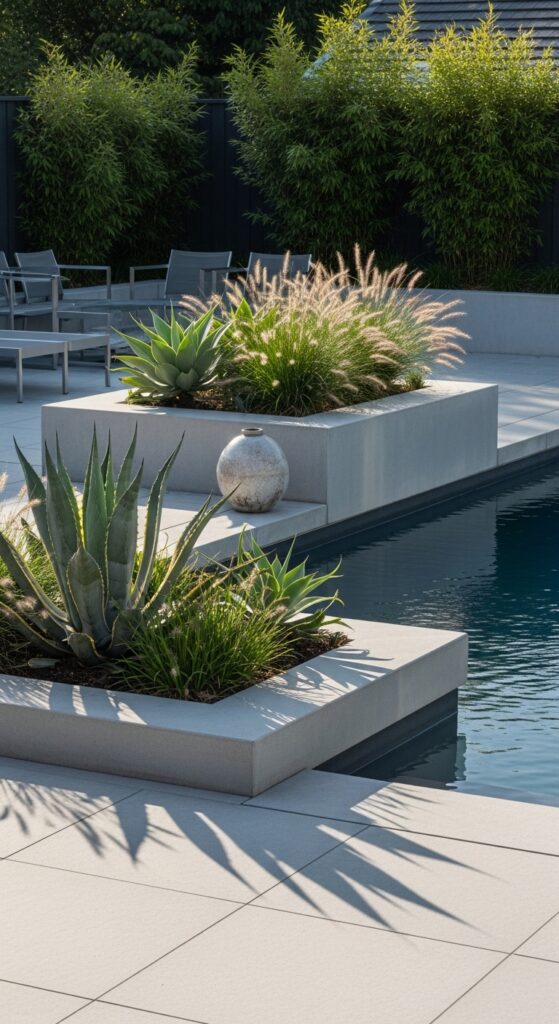
Vibe sentence: Integrated planting beds in a contemporary pool surround make the line between architecture and landscape genuinely disappear.
What makes it work: Raising planting beds to the same height as the pool coping creates a continuous horizontal plane that reads as a unified design rather than a pool with plants placed nearby. Architectural plants — agave, phormium, ornamental grasses, and sculptural bamboo — reinforce the contemporary aesthetic because their forms have the same precision as the pool’s geometry.
How to achieve it: Construct integrated planting beds from shuttered poured concrete to match the pool surround material — 450mm depth is adequate for most architectural perennials. Line with root barrier membrane before filling with a free-draining mix (50% John Innes No.3, 50% horticultural grit) to prevent water-logging against the pool structure.
A Changing Cabin with Outdoor Shower
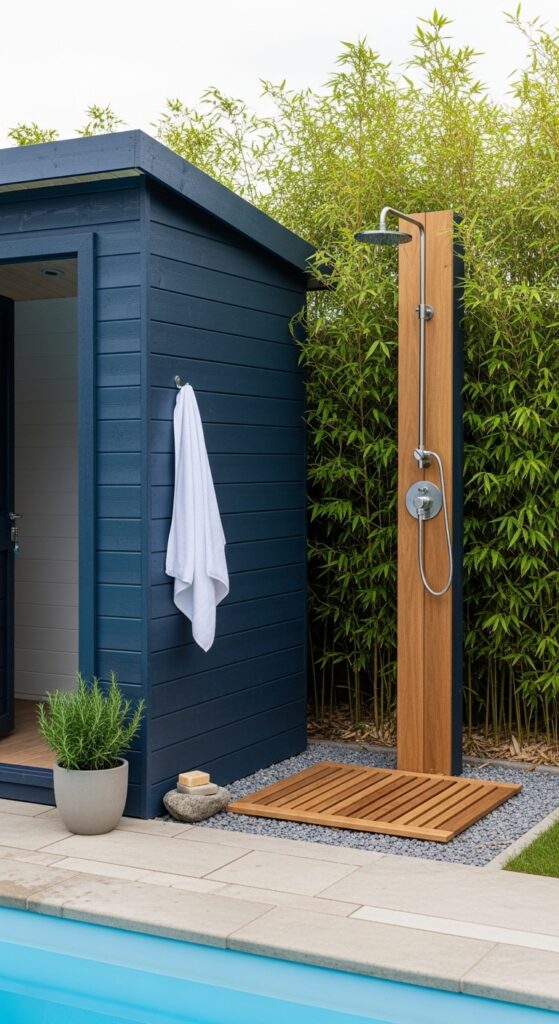
Vibe sentence: An outdoor shower beside a pool is one of those simple luxuries that makes every day feel like a conscious choice to live beautifully.
What makes it work: The combination of a well-designed changing cabin and outdoor shower means the pool area is completely self-contained — no wet footprints tracked through the house, no queuing for indoor bathrooms. Dark navy cladding gives even a compact structure a sophisticated, considered presence that white or natural timber rarely achieves at small scale.
How to achieve it: Connect the outdoor shower to mains cold water (a straightforward plumbing task, £200–500) and add a thermostatic mixer for hot water if sited near the house. A timber slatted mat in teak or iroko over a gravel drainage pit beneath provides the poolside-shower aesthetic without any drainage infrastructure required.
💡 A navy-painted outdoor shower surround costs less than £100 in paint and transforms the pool area instantly — it reads as designed, not functional.
A Poolside Fire Pit for Evening Gatherings
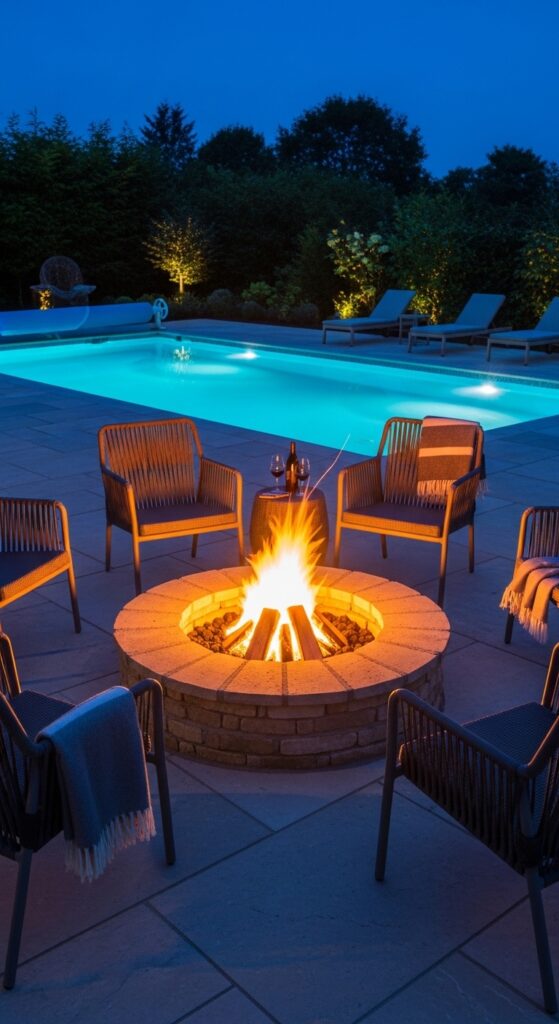
Vibe sentence: Fire and water together in one garden is one of the most primally satisfying design combinations there is.
What makes it work: The visual and experiential contrast between the cool aqua of an illuminated pool and the warm amber of a fire pit creates an atmosphere that neither feature achieves independently. Positioning the fire pit 3–4m from the pool edge — close enough to see both from either — is the sweet spot between safety clearance and visual connection.
How to achieve it: Build a sunken fire pit from engineering brick or natural stone set in a dry-laid ring approximately 80cm in diameter, sunk 15–20cm below the terrace surface for wind resistance. Alternatively, specify a cast iron bowl fire pit on legs (widely available from £80–250) for a no-groundworks option. Surround with all-weather outdoor chairs in woven polyethylene — brands like DEDON and Gloster produce weather-resistant weave chairs from £300–600 per piece.
A Pool with a Floating Timber Deck Island
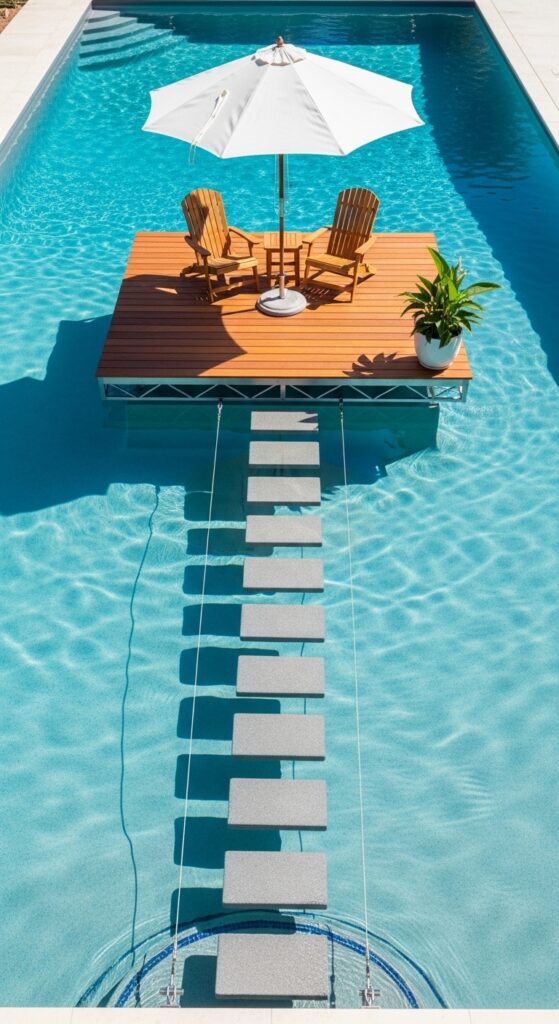
Vibe sentence: A floating island in a pool turns swimming into an adventure that never gets old, at any age.
What makes it work: A mid-pool platform creates a destination within the water — it transforms swimming from a solitary lap exercise into a social, exploratory experience. Submerged stepping stones (set at 5–10cm below the water surface) make access accessible to non-swimmers and children while adding a further design element visible through the clear water.
How to achieve it: Construct the floating platform from marine-grade treated timber or composite decking on a stainless steel pontoon frame — the frame must be engineered to support anticipated load without touching the pool finish. Anchor with stainless steel cables attached to anchor points in the pool floor. Commission from a specialist pool accessories company for structurally sound installation.
A Pool Lit by Candles and Lanterns at a Garden Party
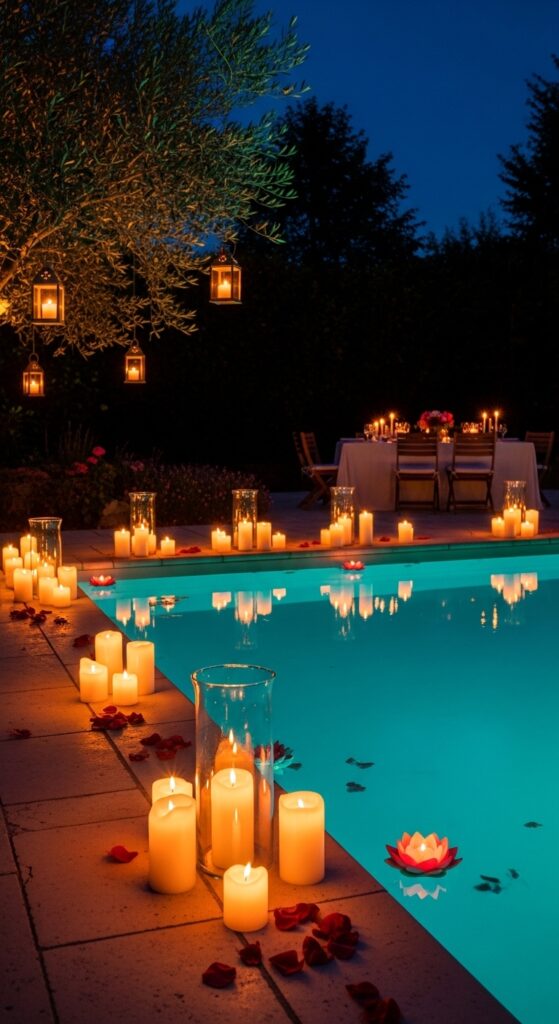
Vibe sentence: A pool by candlelight at a summer gathering is the most beautiful version of almost any evening.
What makes it work: Candlelight at pool level — set directly on the coping rather than elevated — creates reflections in the water that multiply every flame, producing an atmosphere entirely disproportionate to the number of candles used. Floating candle vessels on the pool surface extend the effect out across the water, making the pool itself glow.
How to achieve it: Use beeswax or soy pillar candles (more stable in warmth and less prone to collapse in summer temperatures than paraffin). Protect each with a glass hurricane to prevent wind extinction. For floating candles, use purpose-made floating tea light holders or natural wax lotus flower candles — widely available from £8–15 for a set of 12.
A Pool in a Walled Garden Setting
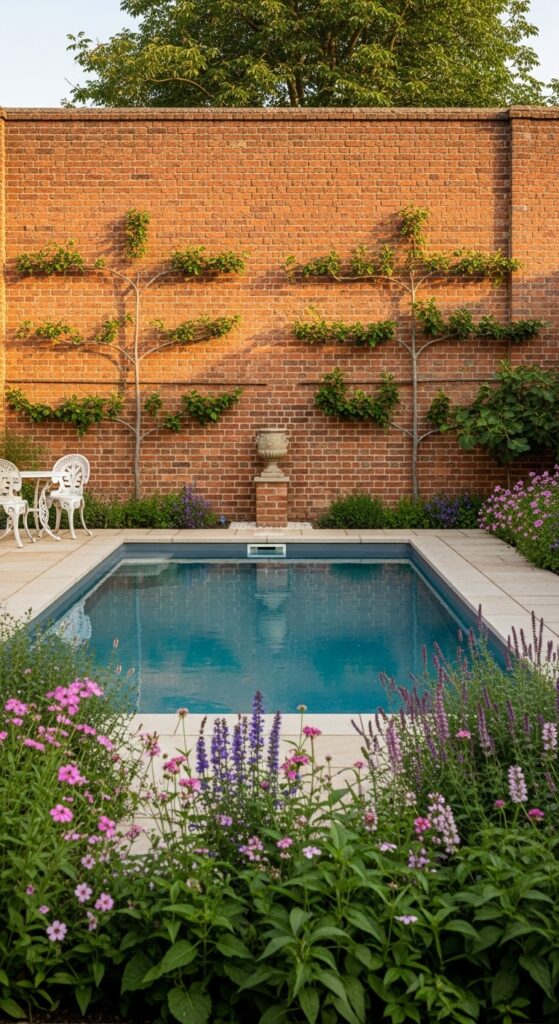
Vibe sentence: A pool within a walled garden is the most romantic combination in the history of outdoor space.
What makes it work: Aged brick walls create a thermal mass that radiates warmth long after the sun has moved — a walled pool enclosure genuinely extends the swimming season by several weeks because the protected microclimate is measurably warmer than an open garden. The walls also provide a backdrop of extraordinary texture and character that no planted boundary can replicate.
How to achieve it: If building new walls, specify handmade reclaimed-look bricks (£1.50–2.50 per brick) in a warm red-orange tone with a lime mortar rather than grey cement for a period-appropriate finish. Train espalier apple, pear, or fig against south and west-facing walls on horizontal wires fixed at 45cm intervals from 30cm above ground to eave height.
A Pool with a Beach Entry Gradient
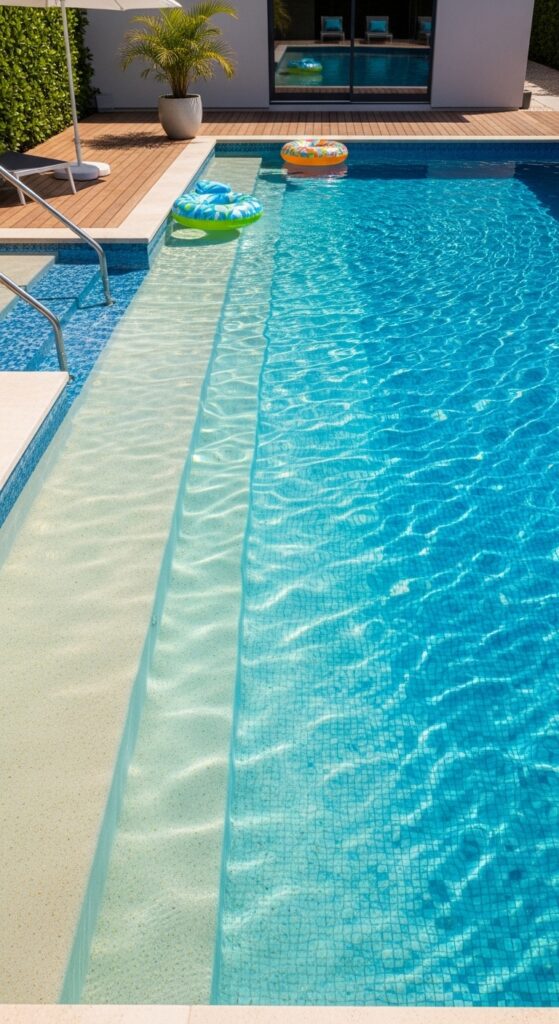
Vibe sentence: A beach entry pool changes the entire relationship between the swimmer and the water — it’s an invitation, not a dive.
What makes it work: The zero-entry gradient replicates the sensation of walking into the sea — gradual, unhurried, entirely on your own terms. It makes pools dramatically more accessible and enjoyable for young children, older adults, and anyone who finds traditional ladder or step entry uncomfortable. The visual effect of pale shallow water graduating to deep blue is also one of the most beautiful pool aesthetics available.
How to achieve it: Beach entry requires a significantly wider and longer structural gradient than standard pool steps — plan for a minimum 2.5m run from zero-entry to waist depth. Specify a pale sand or warm white mosaic in the shallow gradient zone and a deeper aqua or cobalt in the main pool for maximum visual contrast between depths. Anti-slip mosaic tile ratings of R11 or above are essential in the entry zone.
How to Start Your Backyard Pool Oasis Transformation
The most important first step isn’t choosing a pool shape or tile colour — it’s defining how you’ll actually use the space. A family with young children needs shallow water, safety fencing, and robust paving. A couple focused on aesthetics and entertaining needs atmospheric lighting, a bar area, and intimate seating. Pool design that follows use is always more successful than design led by aspiration alone.
The most common and costly mistake is under-specifying the surrounding landscape budget. The pool itself rarely costs more than 50–60% of what a truly beautiful pool environment actually requires — the remaining investment goes into paving, planting, lighting, structures, and furniture. Plan for the complete picture from the outset and you’ll avoid the deflating experience of a beautiful pool sitting in an unfinished garden for years.
Budget-friendly entry points for transforming an existing pool area include: exterior pool wall paint in a contrasting colour (£40–80), floating candle vessel sets for evening atmosphere (£15–30), a set of outdoor cushions in a cohesive palette (£60–120), and two or three specimen plants in matching terracotta pots (£80–200). These four investments cost under £450 and make an immediate, visible difference.
Give the planting element two full growing seasons before judging it. Structural planting — hedging, trees, climbers — always looks sparse in year one and transformative by year three. Patience here is genuinely rewarded.
Frequently Asked Questions
What is the best pool shape for a small backyard?
A rectangular plunge pool or a compact cocktail pool (typically 5–7m long by 2.5–3.5m wide) works best in a smaller backyard because the geometric form makes efficient use of space and creates a cleaner visual footprint than a freeform shape would in a tight area. A dark-tiled interior in deep charcoal or navy makes the pool appear to recede, reducing its visual weight in the garden. Raised deck integration — building the pool into a timber or stone deck rather than simply placing it in the garden — also makes small-pool installations feel intentional and architecturally resolved.
How much does a backyard pool cost to install in the UK?
A fibreglass shell pool installed with basic surrounds costs approximately £20,000–35,000. A bespoke concrete pool with quality paving, lighting, and filtration ranges from £40,000–80,000 depending on size and specification. A plunge pool or compact fibreglass pool can be installed for £8,000–18,000 including surround. Natural swimming ponds occupy a middle range of £20,000–45,000. Running costs for heating, filtration chemicals, and maintenance average £1,500–3,500 per year for a conventionally chlorinated pool in the UK.
What are the best plants for planting beside a pool?
The best poolside plants combine visual appeal with practical characteristics — specifically, they should be non-invasive at root level (so they don’t damage pool structure), low-shedding of leaves and debris (which clog filters), and tolerant of reflected heat and occasional splashing. Top choices include: ornamental grasses (Pennisetum, Stipa), lavender, olive trees, agapanthus, phormium, rosemary, and clipped box or yew. Avoid deciduous trees directly beside pools as autumn leaf drop creates significant maintenance. Bamboo planted in root-barrier containers provides excellent screening without root invasiveness.
Do I need planning permission for a backyard pool in the UK?
In most cases, an in-ground residential swimming pool in England does not require planning permission under permitted development rights, provided it is within the garden boundary, not forward of the principal elevation, and not in a designated area such as a conservation zone or AONB. However, a pool house or pool enclosure structure may require approval depending on its size and specification. Always check with your local planning authority before commencing groundworks — rules differ across Scotland, Wales, and Northern Ireland. A structural engineer’s sign-off is always required for the pool shell regardless of planning status.
How do I maintain a backyard pool without it becoming a full-time job?
The key is automating as much as possible: a variable-speed pump on a timer, an automatic pool cleaner (robotic cleaners from brands like Dolphin and Polaris cost £500–1,500 and handle most floor and wall cleaning independently), and a saltwater chlorination system that generates its own chlorine from dissolved salt, eliminating the need for manual chemical dosing. A pool cover — either manual, rolling, or automatic — dramatically reduces both heat loss and debris accumulation, cutting maintenance time and running costs simultaneously. With these systems in place, weekly pool maintenance reduces to a 15–20 minute water test and skim.
Ready to Create Your Dream Backyard Pool Oasis?
These 28 backyard pool ideas represent the full spectrum of what an outdoor oasis can be — from a compact plunge pool tucked into an urban courtyard to a natural swimming pond humming with wildlife, from a candlelit Mediterranean retreat to a contemporary architectural statement edged in dark slate. Whatever your space, your budget, or your vision, there is a version of this dream that is genuinely within reach. Save the ideas that made your heart move a little faster, pin the images that looked most like the life you want, and remember that every extraordinary pool garden begins with the decision to take the first step — even if that first step is simply a pot of paint and a handful of lavender plants. Your outdoor oasis is closer than you think.