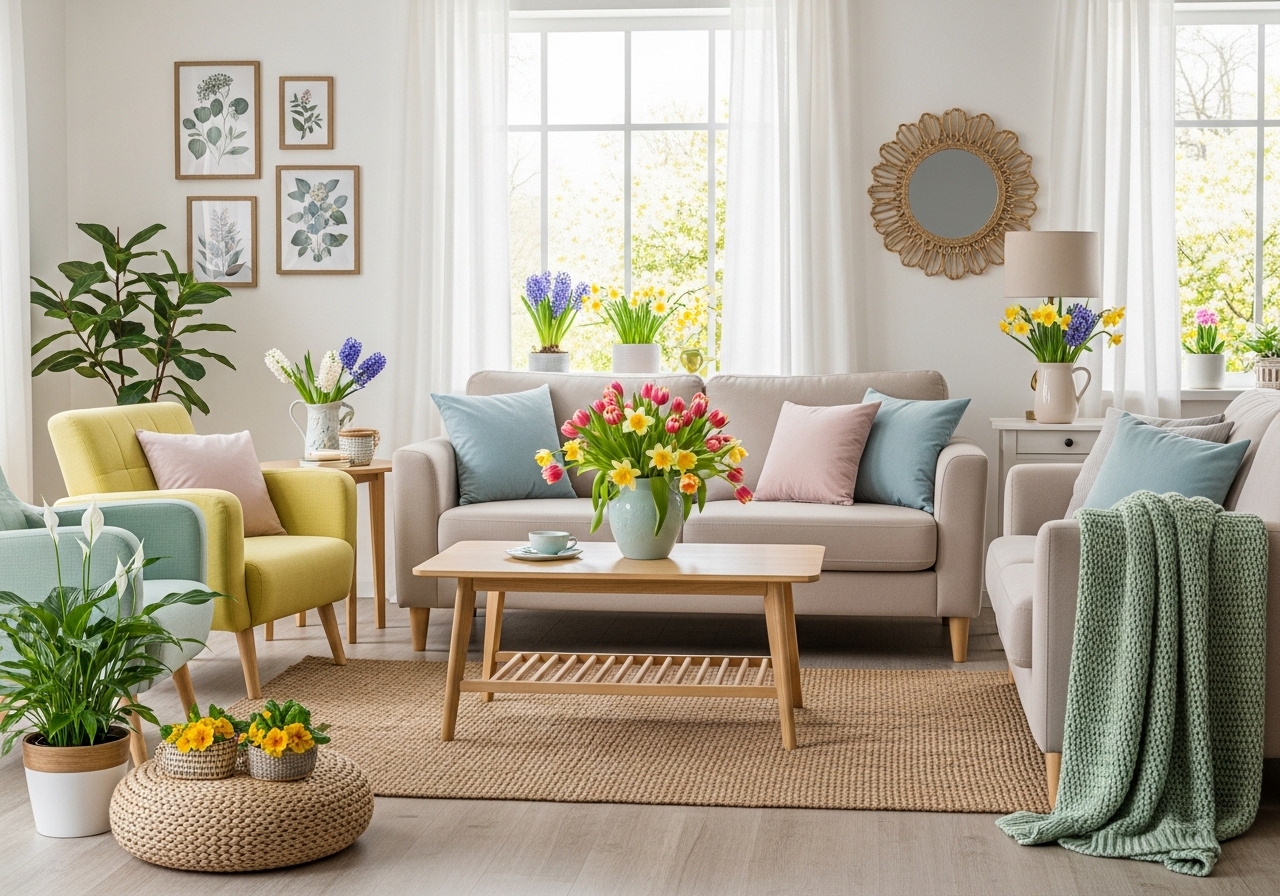
There’s something about a spring living room that feels like opening the windows after a long winter and letting the whole house exhale. The light looks softer, the colors feel happier, and even familiar furniture seems fresh again with the right seasonal styling. If you’ve been craving a space that feels brighter, lighter, and more alive, these spring living room ideas will give you 26 real ways to make it happen. Some are simple weekend updates, while others can completely shift the mood of the room. Here are 26 ideas worth saving.
Why Spring Living Room Ideas Work So Well
Spring style feels timeless because it is rooted in things that never really go out of fashion: light, airiness, softness, and connection to nature. Instead of relying on heavy contrast or overly formal decorating, it layers gentle color, natural materials, and easy textures that make a living room feel relaxed but still polished.
The look is usually defined by warm whites, soft sage, pale blue, buttercream, blush, and fresh botanical greens. Materials matter just as much as color. Linen, cotton, light oak, rattan, jute, ceramic, and glass all help create that breezy, lived-in feeling that makes spring decor feel so inviting.
It’s also having a real moment because Pinterest users and interior designers alike are leaning into homes that feel restorative rather than overly styled. People want rooms that look beautiful in photos but also support everyday life. That is exactly where spring living room ideas shine: they feel seasonal without being theme-y, elevated without being precious.
Even small spaces can pull off this aesthetic beautifully. A compact apartment living room can look brighter with one slipcovered chair, a floral branch arrangement, and a lighter rug. Spring home decor is less about square footage and more about visual weight, softness, and thoughtful styling.
Layered Linen Throw Pillows for an Instant Seasonal Lift
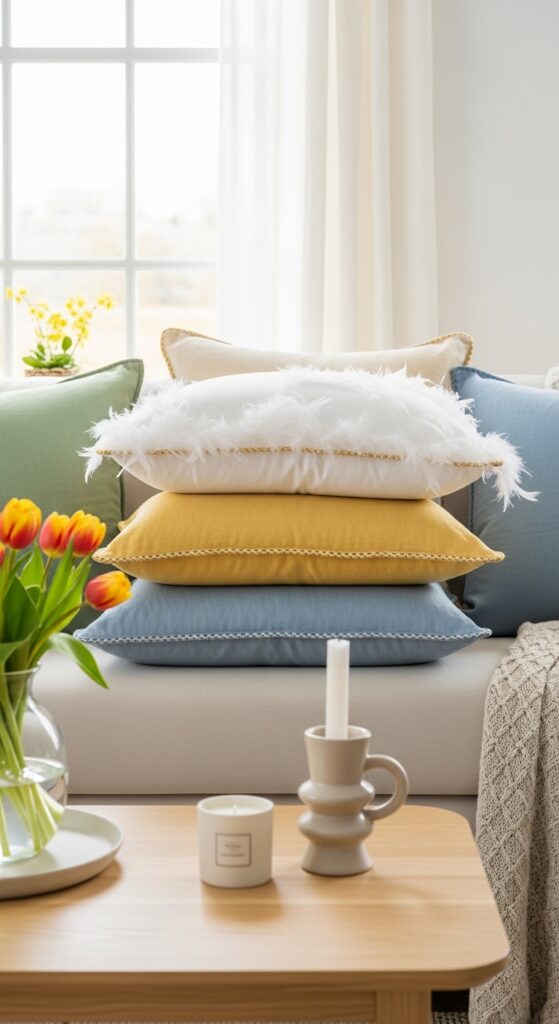
A spring living room feels instantly softer when the sofa gets a lighter, airier layer of pillows. Linen works especially well because it has that relaxed, slightly rumpled texture that catches daylight beautifully.
What makes it work is the mix of tone and texture rather than bold pattern. Using three or four shades in the same soft family creates movement without clutter, which is ideal for cozy living room aesthetic styling.
How to achieve it: swap out dark velvet or chunky winter covers for linen or cotton in sage, ivory, and buttercream. Stick to odd numbers and vary sizes slightly so the arrangement looks collected instead of overly matched.
💡 Pillow covers are the budget shortcut here—changing covers gives you a full seasonal refresh without buying new inserts.
A Pale Sage Accent Wall That Feels Fresh, Not Loud
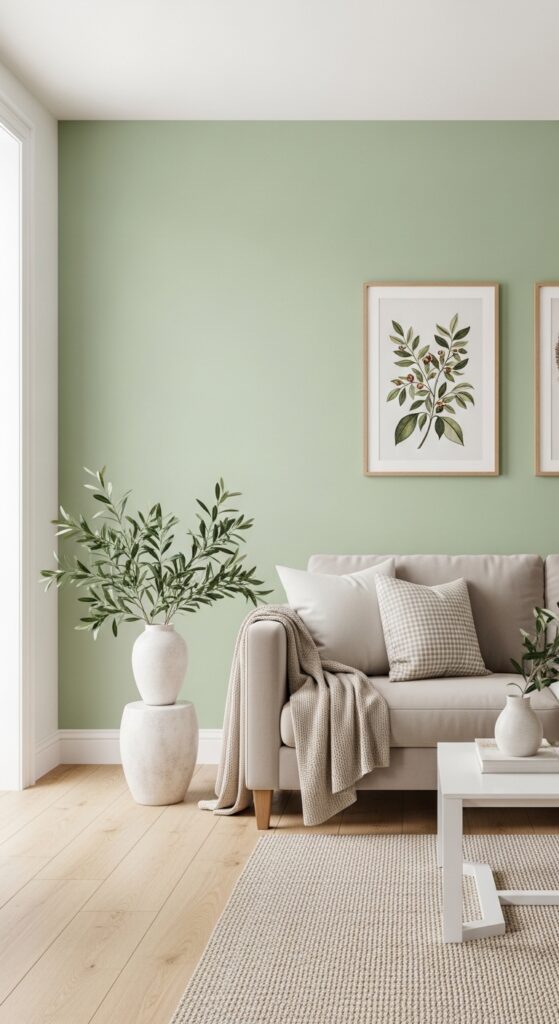
A pale sage wall gives the room that just-bloomed feeling without overwhelming the space. It feels grounded, botanical, and quietly cheerful.
This works because muted green acts almost like a neutral in spring home decor. Against warm white trim and beige upholstery, it adds depth while still reflecting light, which is important if you want a bright living room decor look.
How to achieve it: choose a soft, gray-based sage rather than a saturated green. Paint only the wall that anchors the main seating area, then repeat the tone in one or two accessories so the color feels intentional.
Sheer Curtains That Let the Sunshine Do the Decorating
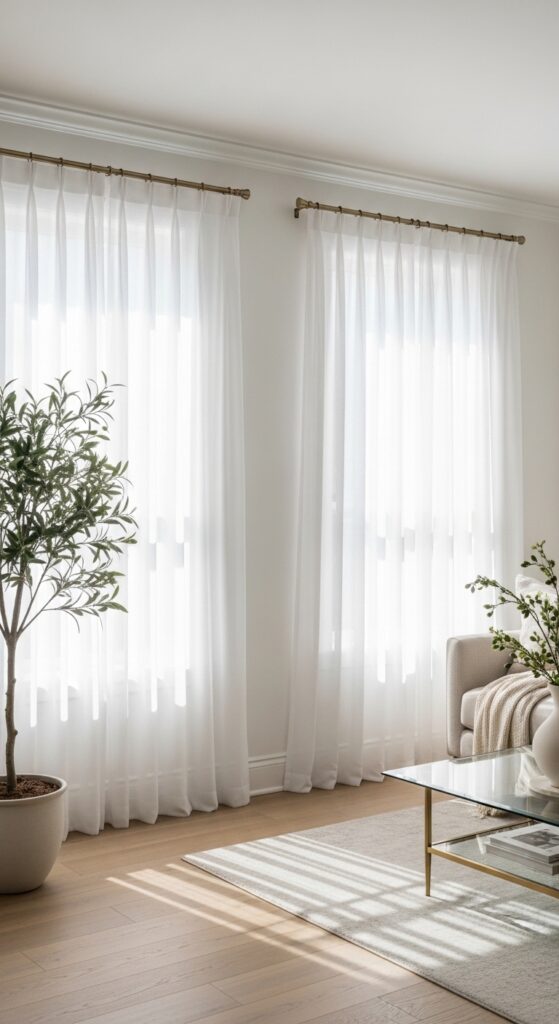
Nothing says spring quite like curtains that move a little when the windows are open. The whole room feels lighter before you change anything else.
What makes it work is the way sheer fabric softens hard lines and filters sunlight. It creates a hazy glow that flatters everything in the room, from wood tones to upholstery, and makes small living room decor ideas feel more expansive.
How to achieve it: replace lined drapes with gauzy cotton voile or linen-blend panels in off-white. Hang them high and let them just kiss the floor so the windows look taller and the room feels more elegant.
💡 If new curtains aren’t in the budget, simply remove heavy winter panels for a few months and keep the rods bare or lightly dressed.
Botanical Branches in a Large Ceramic Vase
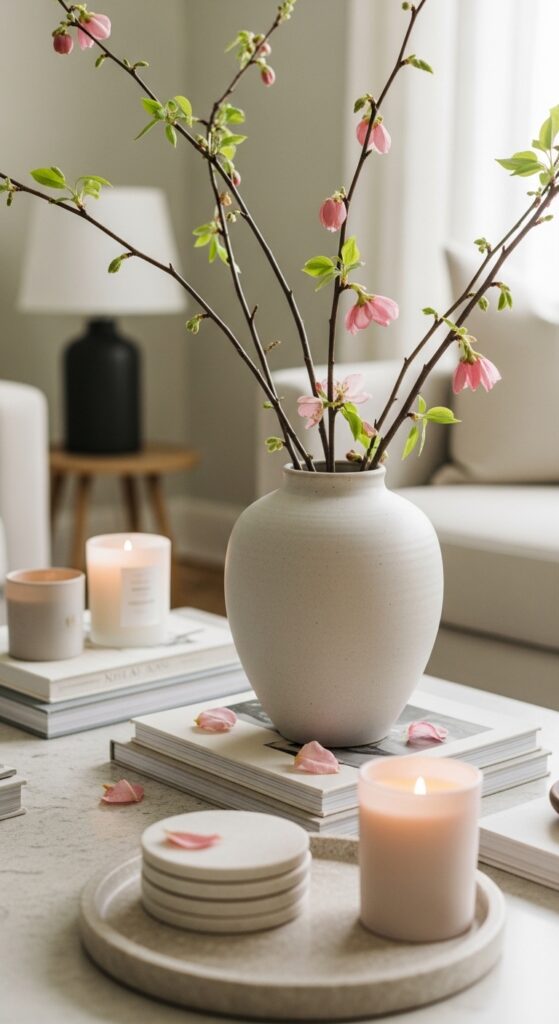
A few tall branches can make a living room feel styled, seasonal, and alive all at once. It’s a simple gesture, but it changes the energy of the whole space.
This idea works because vertical height draws the eye upward and adds organic movement. Blossoms or budding branches also introduce asymmetry, which makes a room feel more natural and less staged.
How to achieve it: use faux cherry blossom, dogwood, or magnolia stems if you want longevity, or clip real branches from the yard when possible. Choose a substantial ceramic vase so the arrangement feels grounded rather than flimsy.
A Light Jute Rug to Replace Heavy Winter Layers
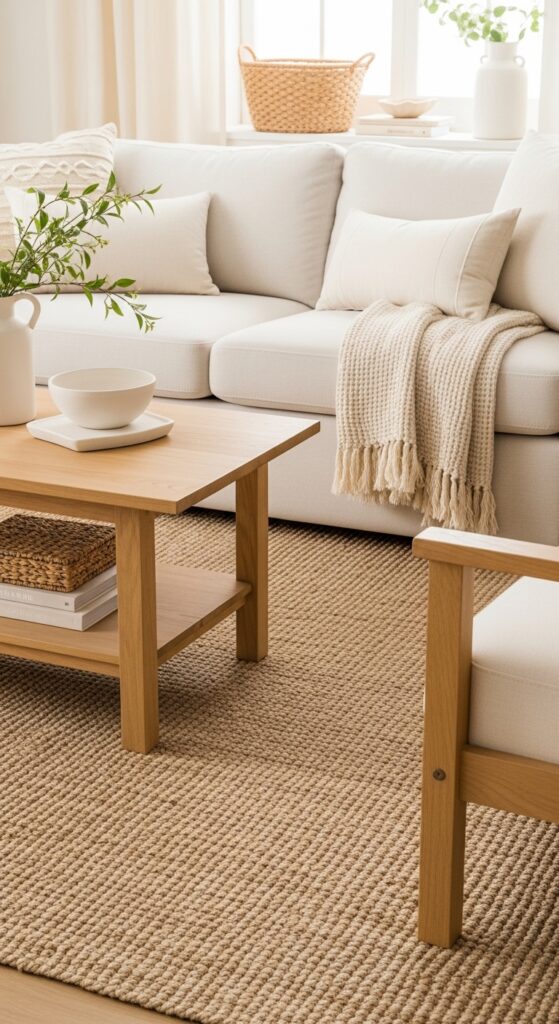
A natural-fiber rug gives a spring living room that easy, sun-washed texture that instantly feels seasonal. It’s casual, clean, and never fussy.
The reason it looks so good is contrast. Jute brings a slightly rough texture beneath smoother surfaces like linen upholstery, painted walls, and ceramic decor, which keeps the room from feeling flat.
How to achieve it: swap dense, dark rugs for a light jute or jute-wool blend in oatmeal or flax tones. If comfort matters, layer a smaller soft cotton rug on top near the coffee table for a more forgiving underfoot feel.
💡 A 5×7 jute rug layered over existing carpet can give the effect without the cost of fully replacing flooring.
Soft Floral Artwork Instead of Heavy Abstracts
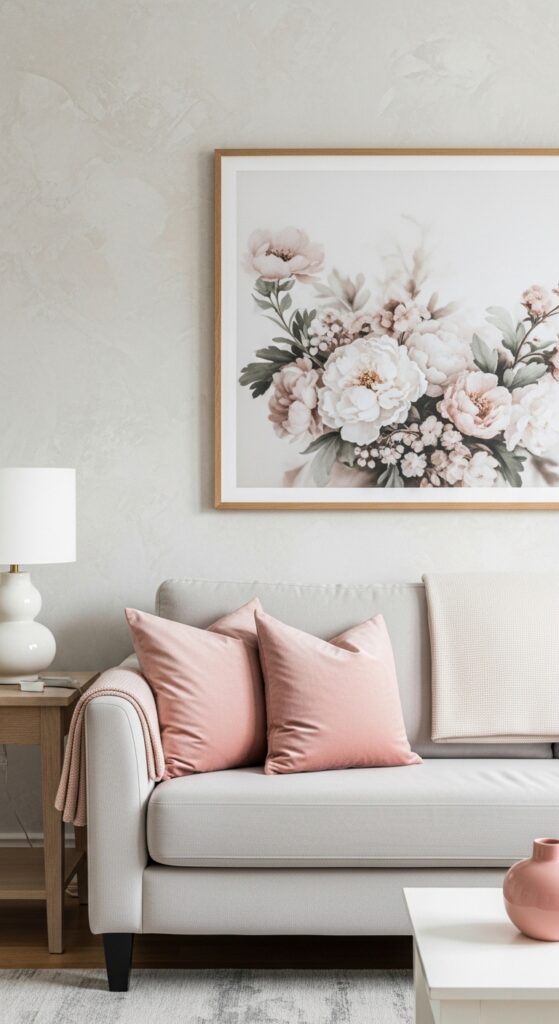
Floral art can feel incredibly fresh when it is done in a quiet, painterly way rather than a busy, traditional one. The room instantly reads softer and more seasonal.
This works because spring living room ideas often depend on visual lightness. Gentle botanical prints add interest without the visual heaviness that dark, high-contrast artwork can bring.
How to achieve it: look for oversized prints with muted backgrounds, watercolor edges, or vintage botanical studies. Keep frames simple in oak, white, or thin brass so the art feels integrated instead of overly formal.
A Slipcovered Sofa for Relaxed Cottage-Airiness
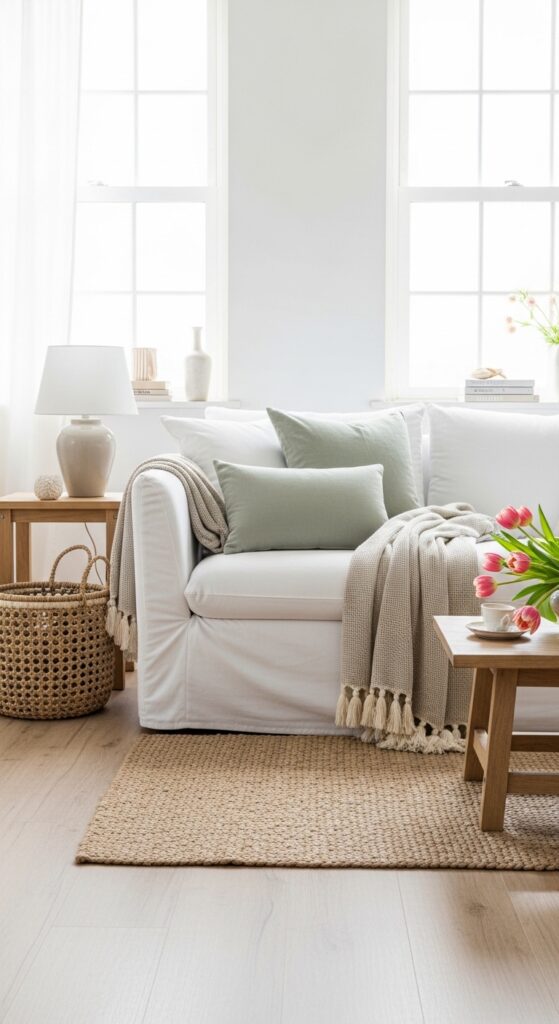
A slipcovered sofa makes the whole room feel easier, breezier, and a little more forgiving. It has that relaxed polish that works beautifully in spring interiors.
What makes it work is the softness of the silhouette. Loose lines and washable fabric reduce visual stiffness, which helps a living room feel welcoming rather than formal.
How to achieve it: choose cotton or cotton-linen slipcovers in warm white rather than stark bright white. Pair them with a few textured pillows and one knit throw so the sofa doesn’t read flat or sterile.
Open Coffee Table Styling With Space to Breathe
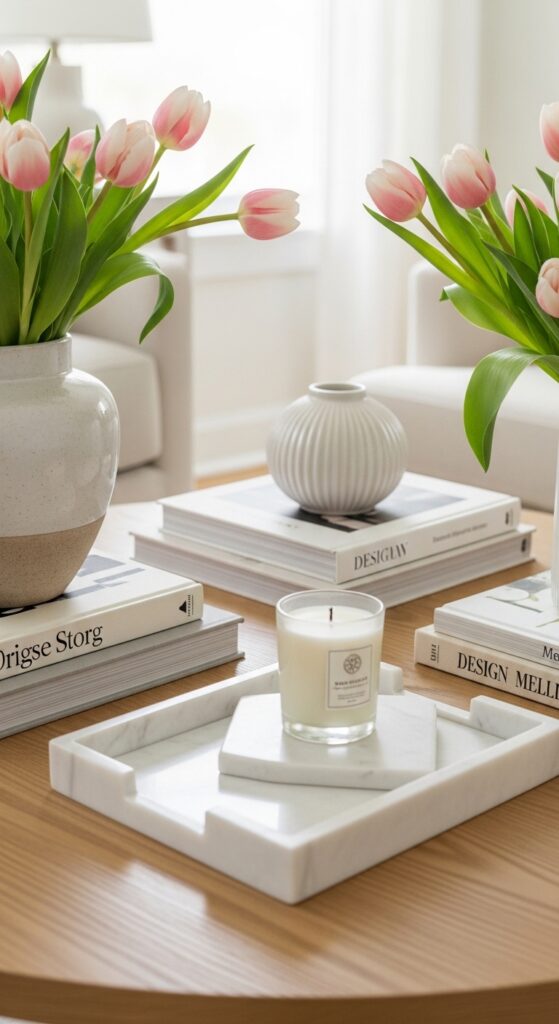
Spring styling looks best when the room doesn’t feel overfilled. A lightly styled coffee table gives the eye room to rest.
This works because negative space is a real design tool. When you keep only a few beautiful objects visible, each one has more impact, and the room feels brighter and less visually crowded.
How to achieve it: use a tray, a floral arrangement, and one low decorative object, then stop there. Edit away winter clutter like extra candles, heavy bowls, and stacks of unused accessories.
💡 Removing two objects often does more for a spring refresh than buying five new ones.
Lemon and Butter Yellow Accents for Gentle Warmth
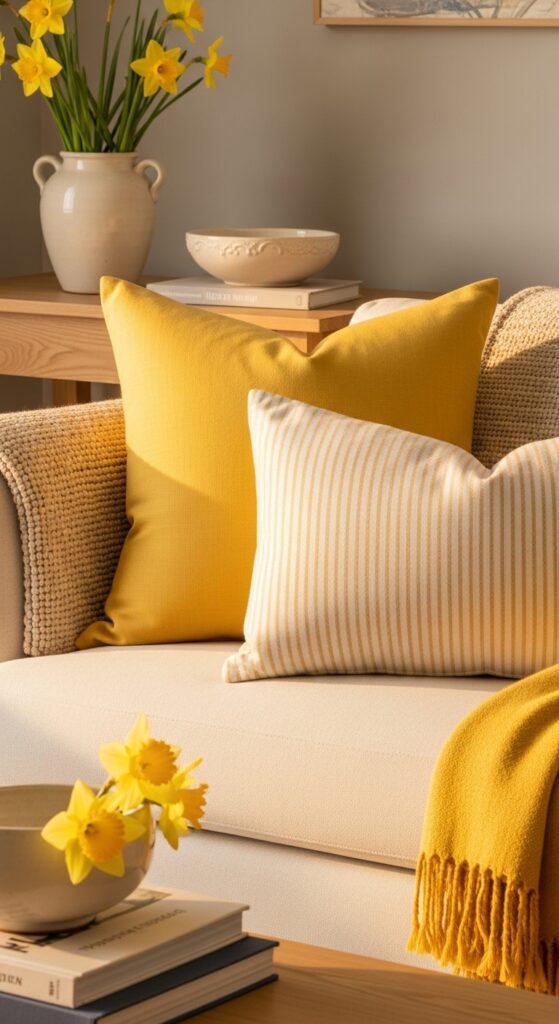
A touch of yellow can wake up a neutral room in the gentlest possible way. It feels sunny rather than loud when you keep it soft.
The appeal is all about temperature. Butter yellow adds warmth to cool neutrals and makes white walls feel friendlier, which is especially useful in rooms that don’t get strong afternoon light.
How to achieve it: bring in yellow through removable pieces like pillow covers, a throw, or fresh flowers. Stick to creamy, muted tones instead of sharp primary yellow for a more elevated spring decor look.
Woven Baskets That Double as Texture and Storage
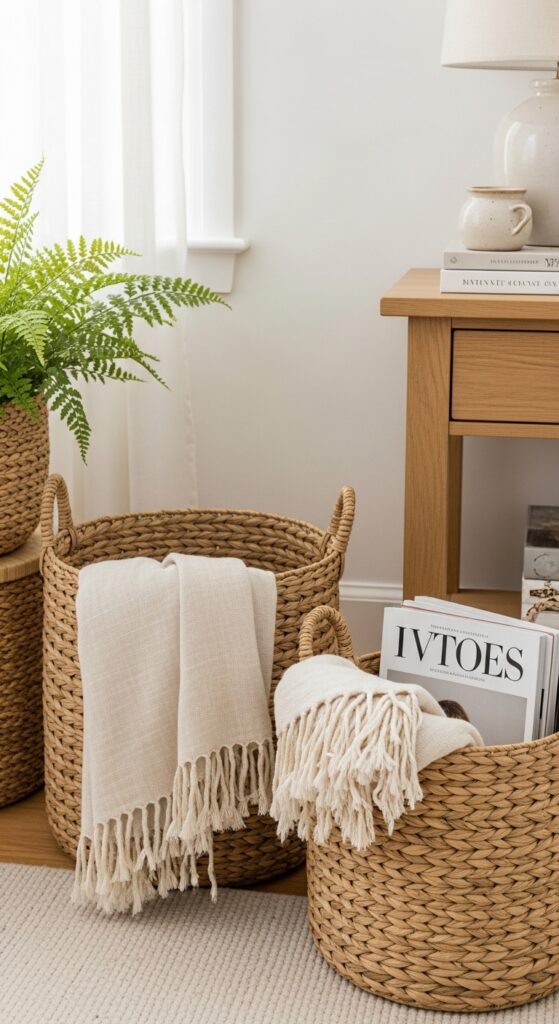
Spring rooms feel better when they are both lighter and less cluttered. Woven baskets help with both.
This idea works because texture can do the decorating for you. Seagrass, rattan, and water hyacinth add a natural layer that makes minimalist rooms feel warm instead of empty, while also hiding the practical mess.
How to achieve it: place one large basket beside the sofa for blankets and one smaller basket on a shelf for remotes or magazines. Choose natural tones over dark stains to keep the room feeling fresh.
Fresh White Lampshades for Cleaner Light
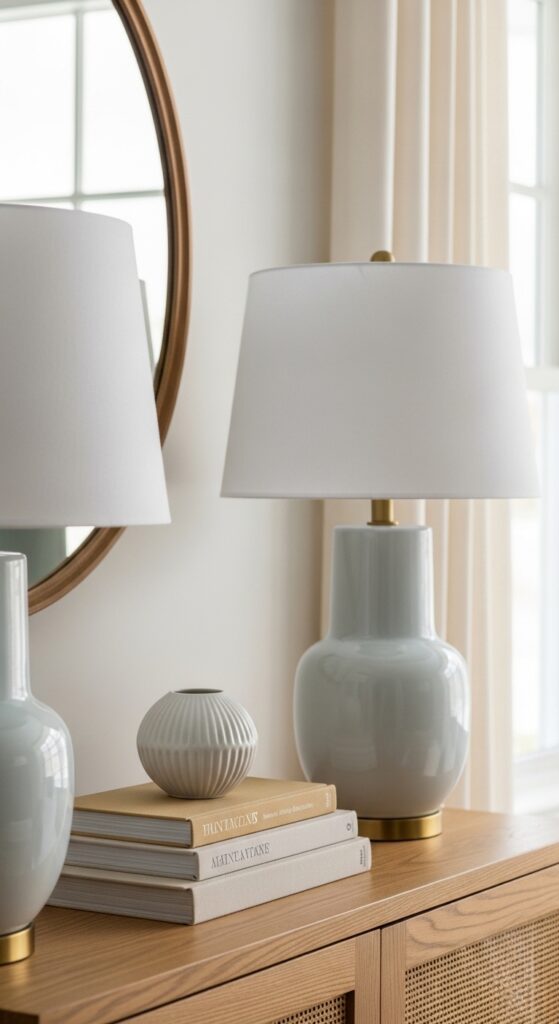
Lighting changes the mood of a room more than people expect, and fresh lampshades can make everything feel cleaner. It is a tiny upgrade with a surprisingly big payoff.
What makes it work is the way pale shades bounce light instead of muting it. They brighten corners, soften shadows, and make side tables and walls feel less visually heavy.
How to achieve it: replace yellowed shades or dark drum shades with crisp white or oatmeal linen ones. If possible, use warm LED bulbs around 2700K so the room feels bright but still cozy.
💡 New lampshades are often cheaper than new lamps and can modernize older bases instantly.
A Light Oak Side Table to Warm Up the Room
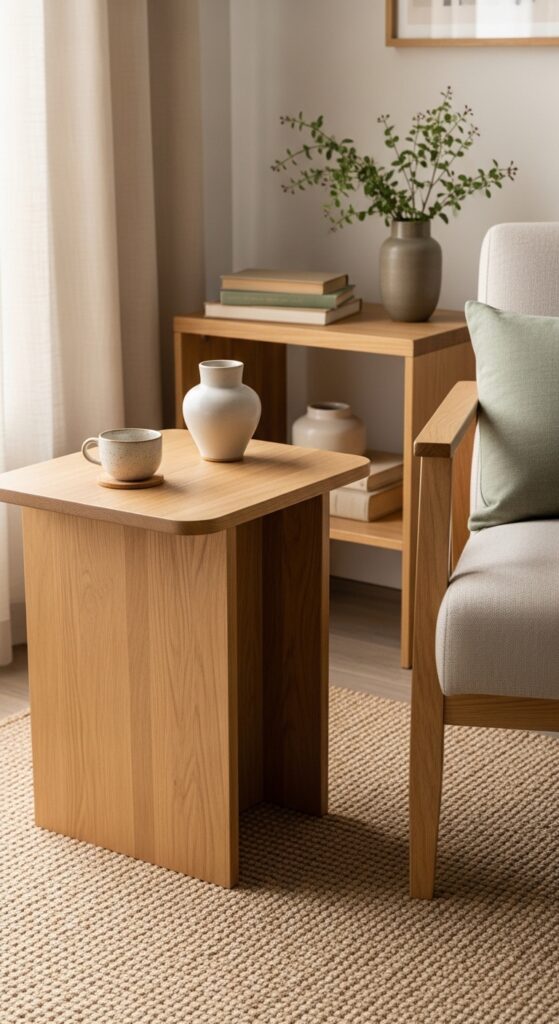
A lighter wood tone has a way of making a room feel sunlit even on cloudy days. It brings warmth without the heaviness of darker stains.
This works because light oak reflects more light and pairs beautifully with spring living room ideas built around whites, greens, and natural textures. Rounded forms also soften the look and keep the room feeling approachable.
How to achieve it: introduce one hero piece in pale oak, ash, or blonde wood before replacing everything at once. Keep nearby metals muted, like brushed brass or matte black, so the wood still feels organic.
Botanical Print Roman Shades for a Tailored Touch
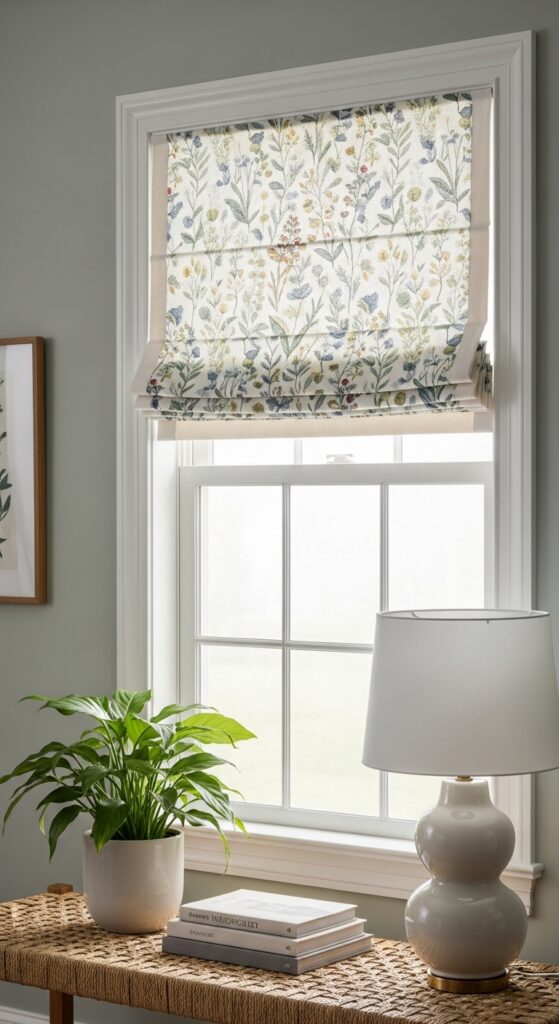
A patterned Roman shade adds spring personality without taking over the room. It feels polished but still playful.
The magic is in scale and placement. Because the pattern stays mostly at the window, it adds visual interest high in the room while leaving upholstery and larger furniture calm and versatile.
How to achieve it: choose a small-scale botanical or vine print on linen in muted colors. Pair it with plain throw pillows and simple furniture lines so the windows become the decorative focal point.
A Blue-and-White Porcelain Moment on the Console
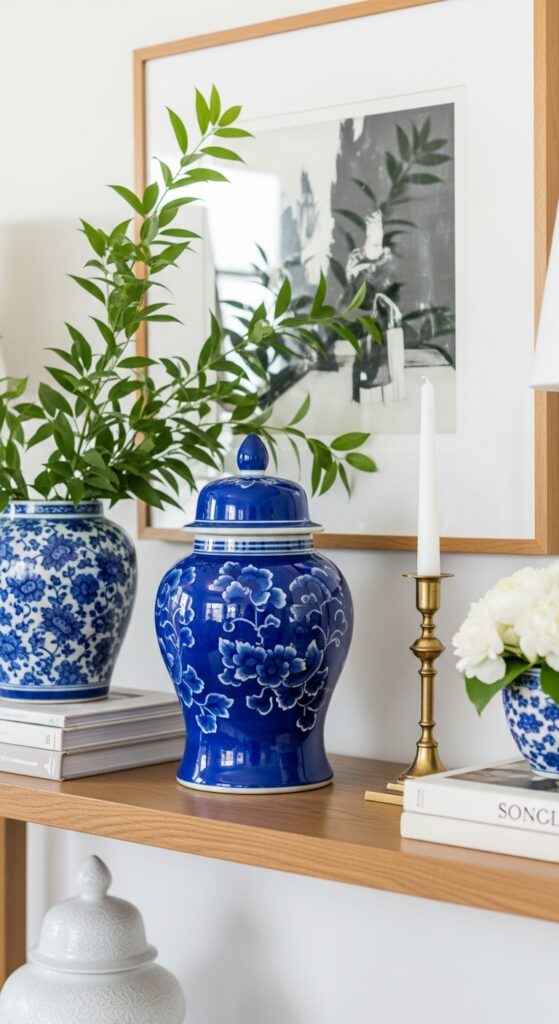
Blue-and-white ceramics bring a fresh, classic energy that feels especially right in spring. They add color in a way that still feels clean and tailored.
This works because glossy porcelain gives contrast to matte walls, woven textures, and soft upholstery. Even one or two pieces can make neutral living room decor feel more intentional and layered.
How to achieve it: style a console or shelf with a ginger jar, ceramic bowl, or small vase in blue and white. Keep the surrounding palette restrained so the pattern reads elegant rather than busy.
💡 Thrift stores and vintage markets often have affordable transferware and porcelain pieces that look far more expensive than they are.
Swapping Dark Throws for Lightweight Cotton Blankets
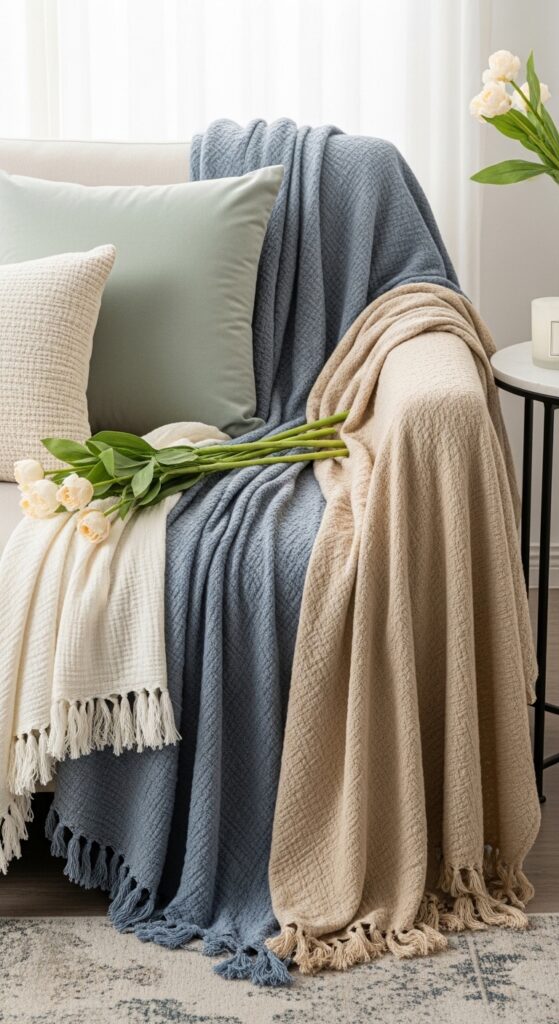
The smallest seasonal switch can change how a room feels, and blankets are a perfect example. Lightweight cotton instantly removes that winter heaviness.
This looks better because texture still matters in spring, but the weight should feel lighter. Gauzy cotton or waffle weave gives softness without making the sofa look bundled up.
How to achieve it: fold one throw neatly over the arm or drape it loosely across the corner cushion. Choose breathable materials in oat, sky, or sage instead of charcoal, burgundy, or thick faux fur.
A Curved Mirror to Bounce More Daylight Around
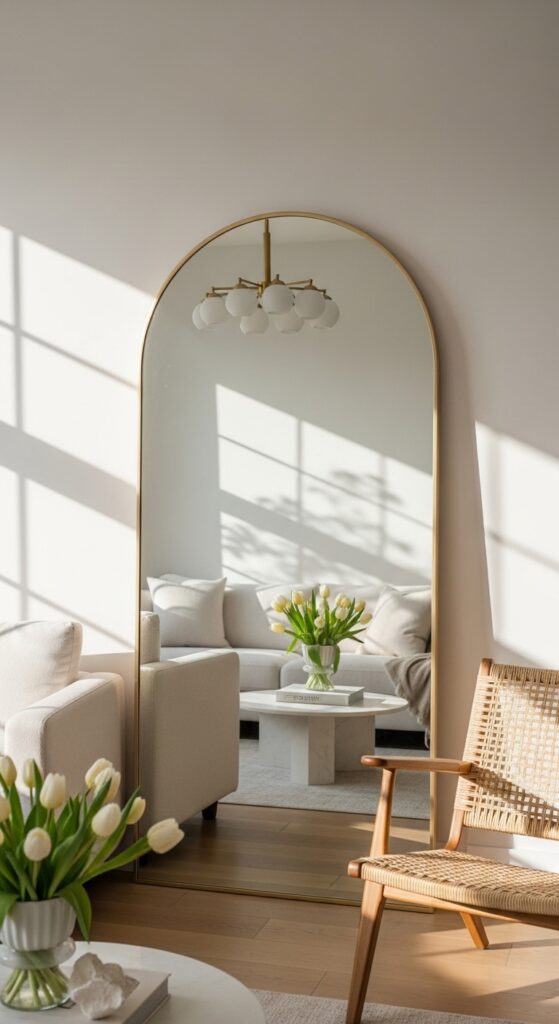
A mirror can make spring light feel twice as beautiful. When it reflects greenery or a bright window, the room feels more open and alive.
What makes it work is both shape and placement. A curved or arched mirror softens the geometry of the room and helps bounce daylight into darker corners, which is especially helpful in narrow spaces.
How to achieve it: place a large mirror opposite or adjacent to a window rather than above a crowded mantel. Thin brass, oak, or painted white frames tend to suit spring home decor best.
A Vase Collection in Soft Pastel Glass
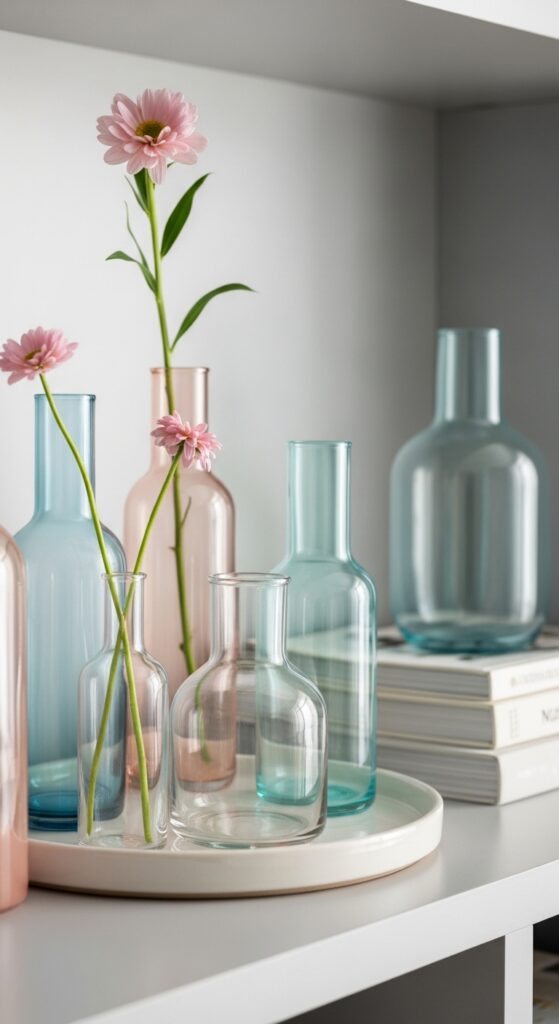
Pastel glass catches light in a way that feels almost like jewelry for the room. It adds color, but very softly.
This idea works because translucent objects don’t create heavy visual blocks. Instead, they shimmer and shift through the day, which gives shelves and tabletops a springy, collected look.
How to achieve it: group three to five vases in different heights but similar soft tones. Even without flowers, the color and reflection add enough interest to refresh a console, mantel, or open shelf.
💡 Start with clear glass from thrift stores, then add just one colored piece for a layered look that still feels cohesive.
Fresh Greenery in Woven Planters
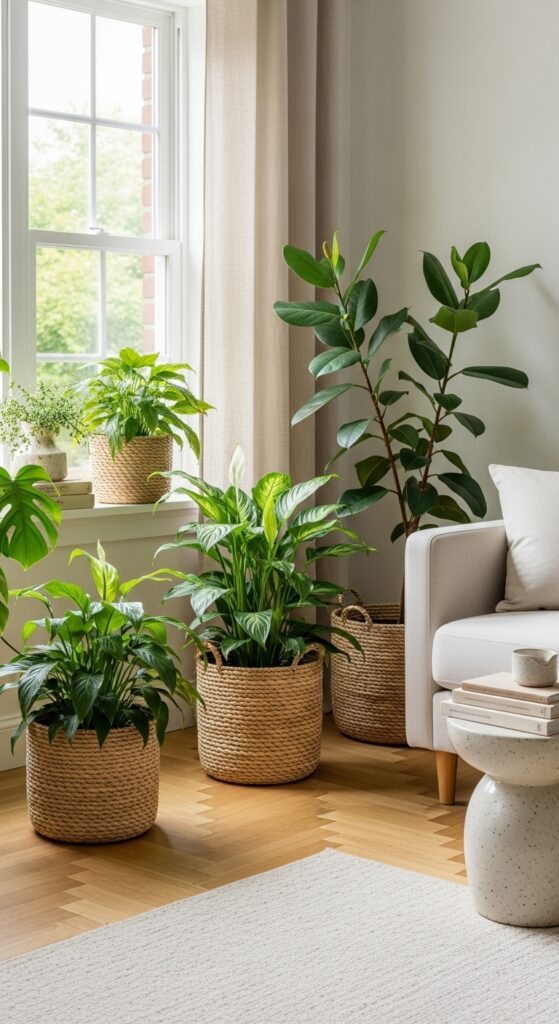
Nothing wakes up a living room faster than actual green life. Plants make the space feel healthier, more layered, and unmistakably seasonal.
The reason it works is contrast and repetition. Green leaves against pale walls create crisp visual definition, and woven planters tie that color back into the natural-material story of spring decorating.
How to achieve it: use easy plants like pothos, rubber plant, or parlor palm if you are a beginner. Hide nursery pots inside woven baskets or seagrass planters to make the whole setup feel more styled.
A Floral-Patterned Ottoman as the Hero Piece
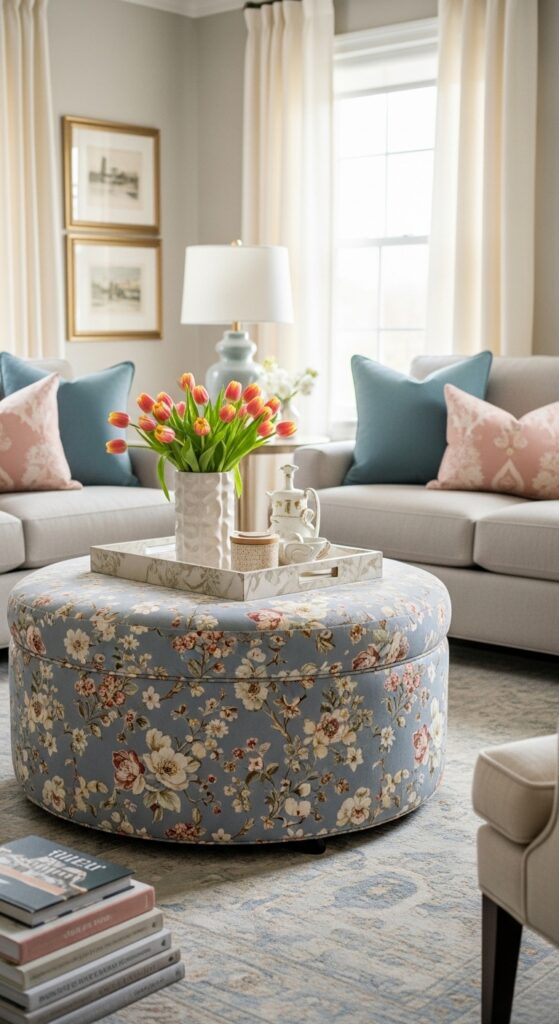
A floral ottoman brings the season into the room in one confident move. It feels charming, layered, and a little unexpected.
This works because one patterned anchor can energize a neutral room without requiring a total redesign. Since the ottoman sits low, the print adds personality without visually overwhelming the walls or seating.
How to achieve it: choose a muted floral with a cream background and two or three soft colors. Keep nearby textiles simpler so the ottoman becomes the feature rather than competing with everything else.
Painted Built-Ins in Warm White Instead of Stark White
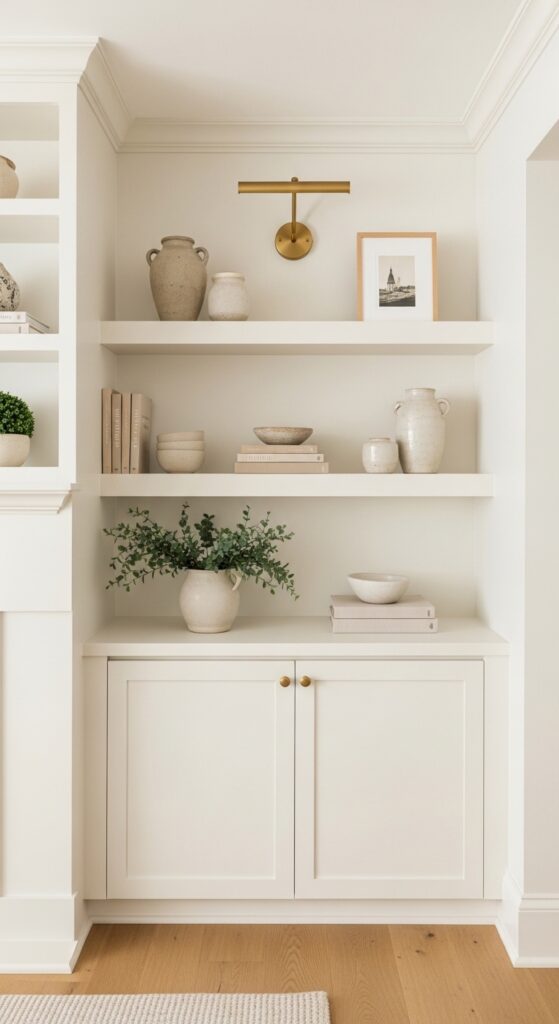
Warm white built-ins feel softer and more inviting than crisp, icy white. In spring, that subtle difference matters a lot.
This works because undertone controls mood. A creamy white feels richer against sunlight and natural wood, while cooler whites can sometimes look flat or slightly blue in shaded rooms.
How to achieve it: sample shades like Swiss Coffee, White Dove, or other soft off-whites before committing. Pair the paint with edited shelf styling—just books, ceramics, and one trailing plant—to keep the built-ins feeling fresh.
💡 Testing paint on poster board and moving it around the room is the quickest way to avoid undertone surprises.
Gingham Accents for a Playful Cottage Detail
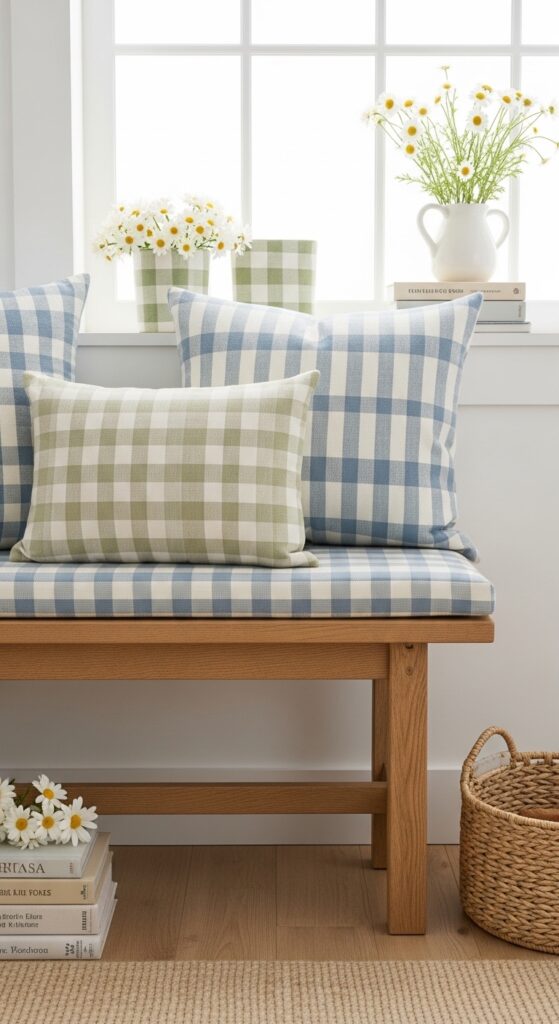
A little gingham adds a cheerful, cottage-style wink that feels perfect in spring. It is playful, but it can still look grown-up.
The secret is scale. Small gingham reads as texture from across the room, which makes it easier to mix into classic or modern spaces without tipping too sweet.
How to achieve it: use gingham in one or two places only, such as a lumbar pillow or bench cushion. Stick to muted blue, sage, or sand rather than high-contrast black-and-white for a softer seasonal look.
A Marble Tray for Crisp, Clean Coffee Table Styling
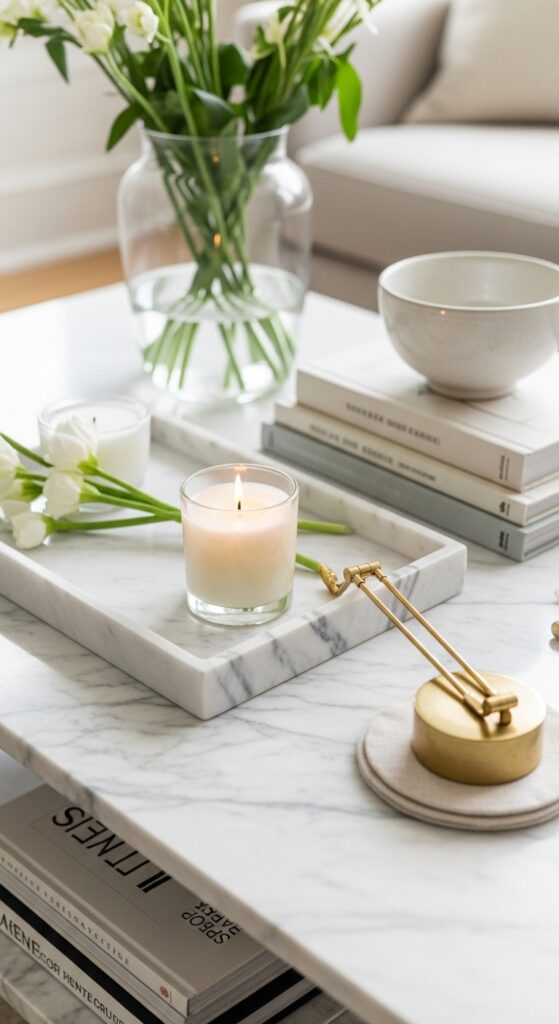
A marble tray brings a crisp, tailored note to all the softness of spring decor. It instantly makes everyday objects look more intentional.
This works because hard, cool stone balances fluffy textiles and woven surfaces. That contrast keeps the room from feeling overly casual and adds a subtle luxury that photographs beautifully.
How to achieve it: use the tray to corral a candle, matchbox, bud vase, and one decorative object. Choose honed or matte marble rather than super-shiny finishes for a more relaxed, designer look.
Soft Blue Painted Furniture for a Collected Look
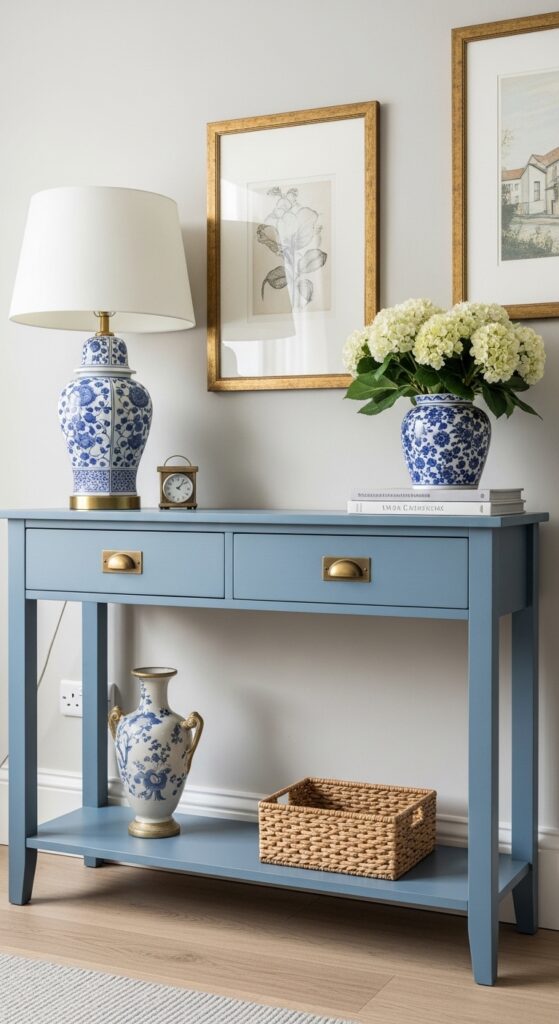
Painted furniture can bring in color without asking you to repaint the whole room. Soft blue feels especially fresh and versatile in spring.
This idea works because dusty blue pairs beautifully with warm whites, natural wood, and greenery. It feels classic rather than trendy, especially when used on a vintage or traditional-shaped piece.
How to achieve it: refresh a thrifted sideboard or console with a chalk-style or cabinet paint in a muted blue-gray. Finish it with aged brass hardware to make the piece feel collected instead of crafty.
💡 A single painted side table is an easy test run before committing to a larger furniture makeover.
Tailored Stripes That Keep the Room Feeling Crisp
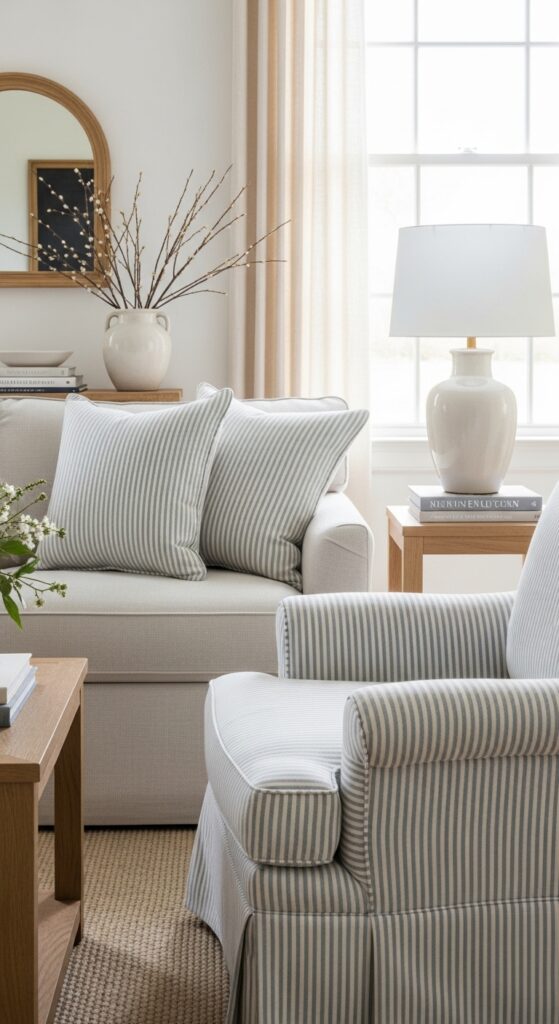
Stripes are one of the easiest ways to add pattern while keeping the room calm. They feel clean, tailored, and quietly coastal in the best way.
This works because linear pattern adds order. In a spring living room full of soft florals and natural textures, a restrained stripe gives structure and keeps the palette from feeling too floaty.
How to achieve it: look for ticking stripes, pencil stripes, or wide faded cabana stripes in soft neutrals. Use them on one accent chair or a couple of pillows, then balance with solids and organic shapes.
A Reading Corner With a Cane Chair and Light Throw
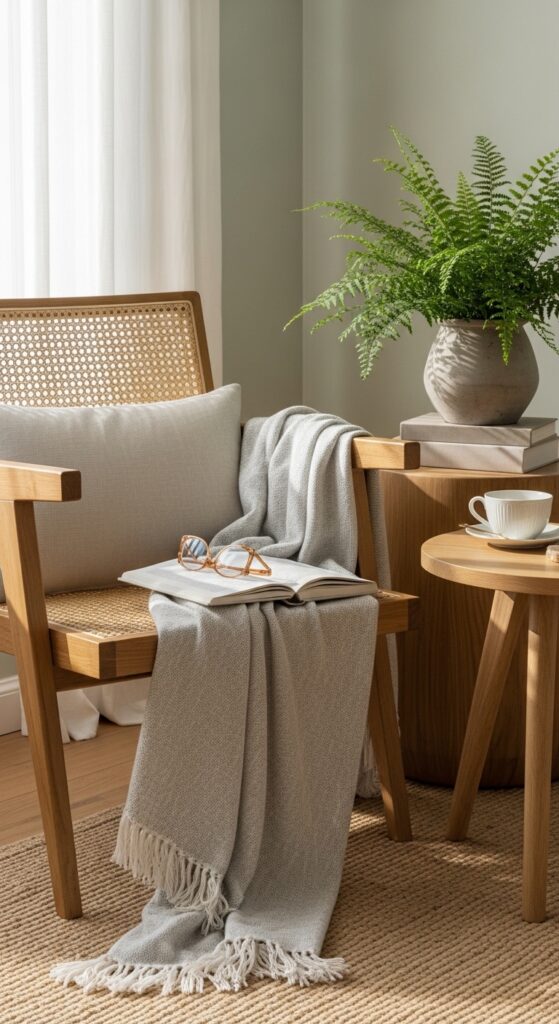
A dedicated spring reading nook makes the whole room feel more intentional and more lived in. It invites you to slow down, which is part of the charm.
The design works because cane and woven details visually lighten furniture. Instead of another bulky upholstered chair, you get texture, shape, and function with much less visual weight.
How to achieve it: place a cane or rush chair near a window with a small side table and one lightweight throw. Add a compact lamp or floor light so the corner feels finished, not accidental.
Tulip Arrangements for a Simple Weekly Reset
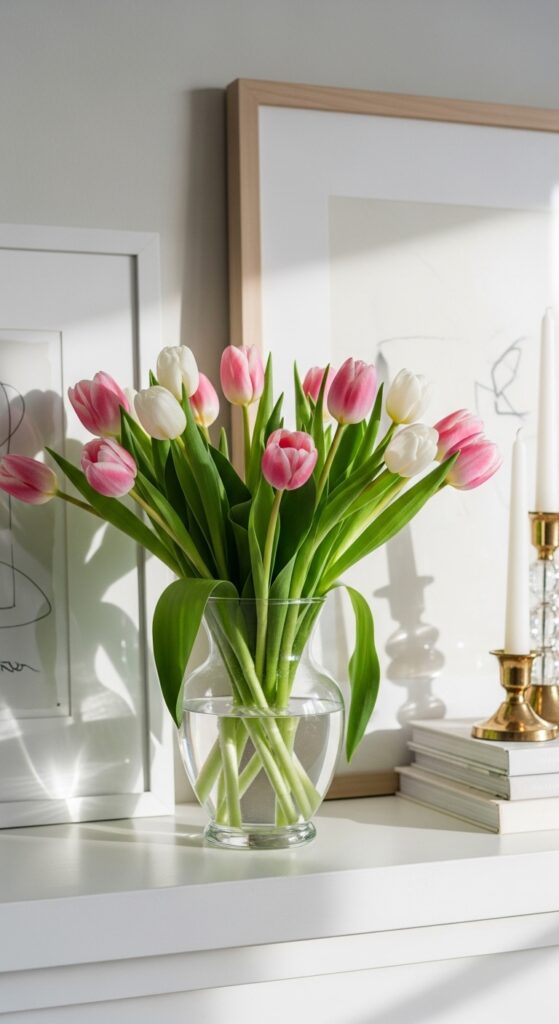
Fresh tulips do what almost no accessory can—they make a room feel instantly alive. Their loose, bendy stems look effortless in a way spring decorating should.
This works because tulips add color, movement, and a sense of season without needing additional styling. The organic curve of the stems softens all the straight lines that most living rooms naturally have.
How to achieve it: place one bunch in a clear cylindrical vase and let the stems show. Trim them short for coffee tables or keep them tall for mantels and consoles depending on where you want the eye to land.
💡 Grocery-store tulips often look just as pretty as florist versions and cost a fraction of the price.
A Neutral Gallery Wall With Botanical Sketches
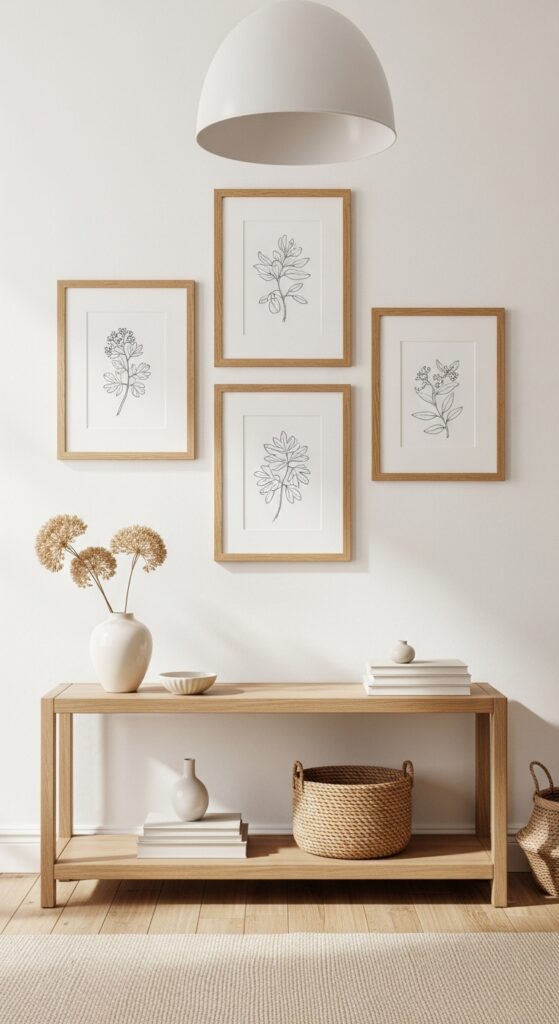
A botanical gallery wall brings character to a room without making it feel busy. It looks thoughtful, seasonal, and timeless all at once.
This idea works because repeating similar frames creates visual rhythm, while the subtle line drawings keep the palette quiet. The result suits everything from modern cottage to classic farmhouse living room decor.
How to achieve it: print vintage botanical sketches on textured paper and frame them with generous mats. Keep spacing consistent and use matching or closely related frames so the arrangement feels cohesive.
Glass and Brass Tables for a Lighter Visual Footprint
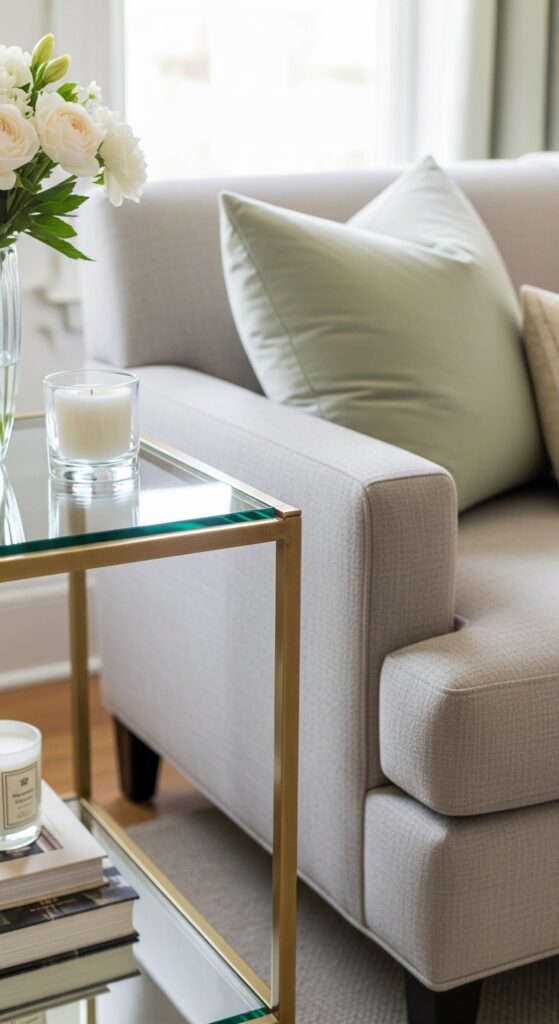
When a room feels visually heavy, transparent furniture can be the reset button. Glass and brass tables look polished without blocking light.
This works especially well in smaller living rooms because the eye moves through the furniture instead of stopping at a solid block of wood. Brass also adds just enough warmth to keep the room from feeling cold.
How to achieve it: swap one bulky side table for a slim glass-and-metal version with clean lines. Keep the tabletop styling minimal so the airy effect remains intact.
How to Start Your Spring Living Room Transformation
Start with what takes up the most visual space. In most living rooms, that means textiles first: pillows, throws, curtains, and the rug. If those layers feel heavy, dark, or wintery, even the prettiest spring accessories will struggle to shift the mood.
Next, choose one hero move instead of changing everything at once. Maybe it’s painting the walls a soft sage, adding a jute rug, or styling fresh branches in a large ceramic vase. One strong decision gives the room direction and helps every smaller choice feel more cohesive.
A common mistake is buying lots of tiny decor items without editing what is already there. Spring living room decor looks best when it is lighter both in color and in quantity. Clear surfaces, better light, and fewer but prettier objects usually matter more than an overflowing shopping cart.
If you are on a budget, begin with pillow covers, grocery-store flowers, thrifted ceramics, and new lampshades. Give yourself a few weekends rather than trying to finish in one day. The best spring living room ideas often come together through layering, not rushing.
Frequently Asked Questions
How do I make my living room look like spring without buying new furniture?
You can create a spring living room with textiles, color, and light instead of large furniture purchases. Start by changing pillow covers, adding a cotton throw, and removing heavy drapes or dark accessories. Fresh flowers, a $20–$40 jute-style runner, and lighter lampshades can shift the mood surprisingly fast. Focus on warm white, sage green, pale blue, and natural textures.
What colors work best for spring living room ideas?
The best colors for spring living room ideas are soft, light, and slightly muted. Warm white, butter yellow, pale sage, dusty blue, blush, and flax are especially versatile because they pair well with oak, rattan, linen, and ceramic decor. If your room gets little natural light, lean warmer with creamy whites and soft yellow accents. In brighter rooms, sage and pale blue feel especially crisp.
Is spring living room decor expensive to achieve?
Not necessarily. Some of the most effective spring home decor changes are also the least expensive, like fresh tulips, thrifted vases, lightweight pillow covers, or a new cotton throw. A realistic starter budget might be $75 to $200, depending on whether you need curtains or a rug. Save bigger purchases, like a slipcovered sofa or light oak tables, for later phases.
What is the difference between spring style and farmhouse living room decor?
Spring style is seasonal and mood-based, while farmhouse living room decor is a broader design style. Spring decorating focuses on airy color palettes, florals, greenery, and lighter materials, while farmhouse often includes rustic woods, black metal, shiplap, and vintage-inspired structure. The two pair beautifully, especially if you soften farmhouse elements with linen, botanical prints, and pale seasonal colors. Think less contrast, more freshness.
How do I decorate a small space with spring living room ideas?
Small spaces often benefit the most from spring decorating because lightness creates the illusion of more room. Use sheer curtains, mirrors, slim-leg furniture, and a restrained palette of two to four colors. Choose decor with a light visual footprint, like glass tables, cane chairs, or open baskets. In a compact room, even one tall vase of branches and a lighter rug can make a dramatic difference.
Ready to Create Your Dream Spring Living Room Space?
These 26 spring living room ideas prove that a seasonal refresh does not have to mean a full renovation. A softer color, a lighter textile, or a vase of tulips can be enough to make the whole room feel new again. Save your favorite spring living room ideas, pin the ones that match your style, and come back to them as you layer the look over time. The most beautiful rooms rarely happen all at once—they bloom through thoughtful little changes. Start with one corner, one color, or one texture, and let your spring living room unfold from there.