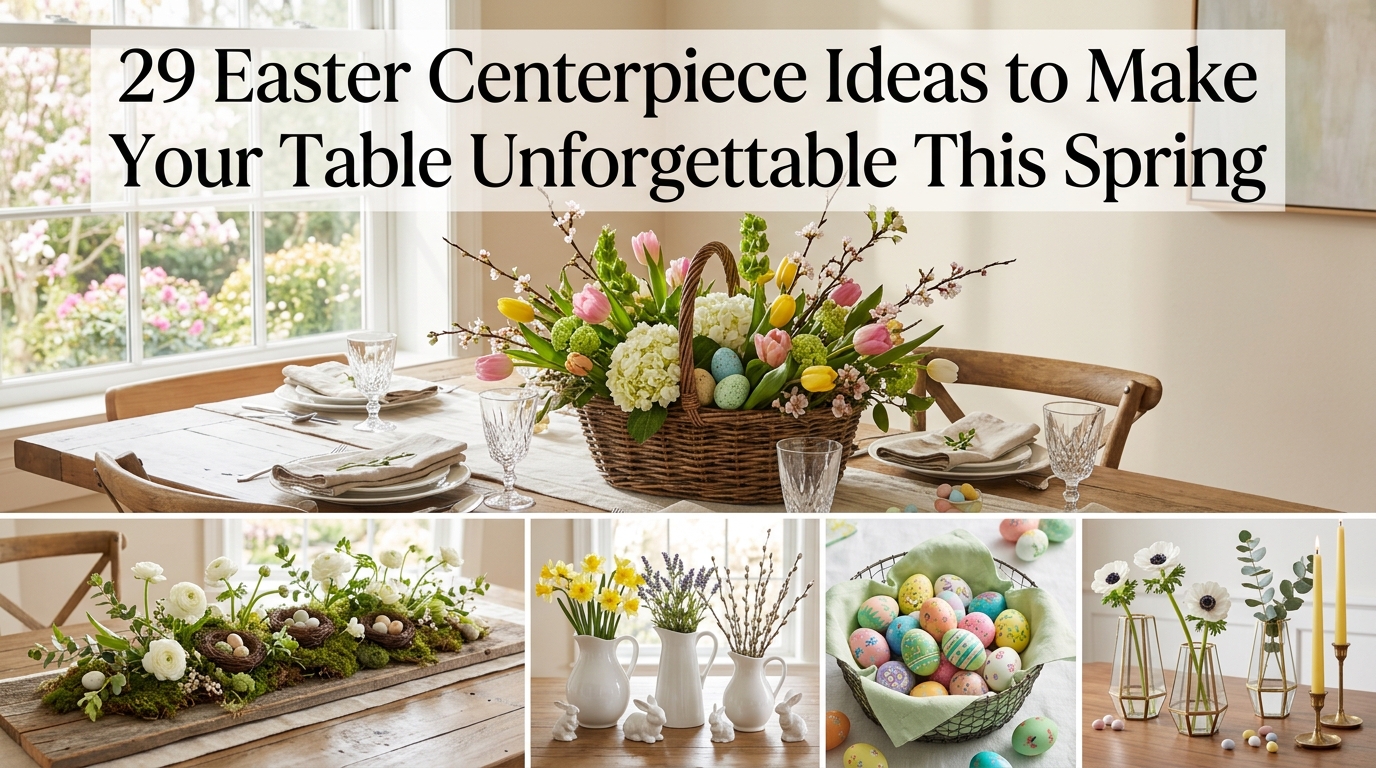
There’s something about a beautifully dressed table at Easter that makes the whole holiday feel complete — the kind of centerpiece that draws everyone in before a single dish is served, that makes guests slow down and actually notice the space they’re sitting in. Easter centerpiece ideas are having a genuine design moment right now, moving far beyond plastic grass and foil-wrapped chocolate eggs into something genuinely beautiful, seasonal, and worth keeping for years. Whether your home leans toward farmhouse warmth, modern minimalism, or garden-gathered abundance, the right centerpiece transforms an ordinary dining table into the heart of the celebration. Here are 29 Easter centerpiece ideas worth saving.
Why Easter Centerpieces Work So Well
A centerpiece is the only piece of decor that every person at the table engages with simultaneously — it sits at eye level, within arm’s reach, and anchors the entire visual experience of a shared meal. That shared focus is what makes Easter centerpiece ideas so creatively rewarding to execute.
Easter’s natural color palette does much of the heavy lifting. Soft lavender, butter yellow, blush pink, sage green, and crisp white form a family of colors that harmonize effortlessly — you almost can’t put them together incorrectly. This makes Easter centerpiece styling unusually forgiving, which is welcome news for anyone who doesn’t consider themselves a natural decorator.
The current design movement strongly favors what stylists call the “gathered garden” aesthetic — arrangements that look as though someone walked through a spring garden with a basket and brought everything interesting inside. Tight, formal bouquets have given way to loose, organic compositions that mix flowers with foliage, herbs, fruits, eggs, and candles in layered, textural displays. Pinterest data confirms this shift: searches for “organic Easter table” and “natural Easter centerpiece” have grown steadily for three consecutive spring seasons.
What makes Easter centerpiece ideas especially accessible is their scale flexibility. A single flowering branch in a tall vase works for a studio apartment dining nook. A full floral runner with candles works for a twelve-seat farmhouse table. The principles are identical regardless of size.
Loose Garden Rose and Eucalyptus Floral Runner
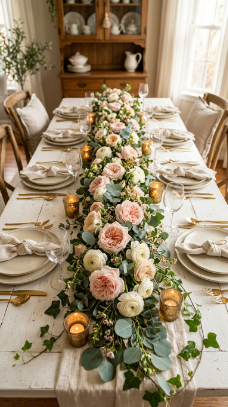
Vibe: The Easter table that earns a collective inhale the moment guests walk into the room.
What makes it work: A floral runner creates continuous visual movement down the full length of the table, which a single centerpiece arrangement simply cannot achieve. Varying the flower sizes — large garden roses anchoring the display, smaller ranunculus filling gaps, eucalyptus providing loose trailing texture — creates the layered depth that makes this format so photographically compelling.
How to achieve it: Lay a strip of moisture-retaining floral foam (wrapped in plastic to protect the linen) down the table center. Build the runner by inserting stems directly into the foam, working from the center outward and alternating flowers and foliage. Intersperse small votive holders before inserting any stems — it’s nearly impossible to add candles after the flowers are in.
💡 Whole Foods and Trader Joe’s sell garden rose bunches for $8–$12 — buy three bunches for a full runner.
Nested Pastel Egg Display in a Moss-Lined Wooden Tray
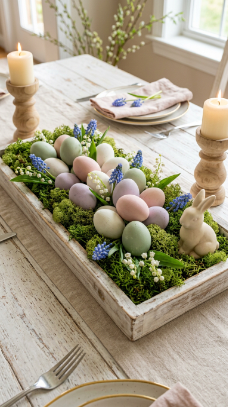
Vibe: Like Easter gathered itself into one generous, living tray — grounded, colorful, and completely unpretentious.
What makes it work: A tray defines a centerpiece’s boundaries visually, which creates a sense of organization and intention even in the most casually assembled display. The contrast between the rough, organic moss and the smooth, chalky egg surfaces is a textural pairing that rewards close examination. Muscari flowers — deep violet, tiny, clustered — add botanical detail that elevates the arrangement beyond a simple egg display.
How to achieve it: Press sheet moss firmly into the tray, then nest eggs in small clusters of three or five rather than scattering them individually — odd-number groupings read more naturally. Source matte-finish eggs from craft stores or create your own by spraying standard plastic Easter eggs with chalk paint.
Tall Cherry Blossom Branch Centerpiece in a Stone Vessel
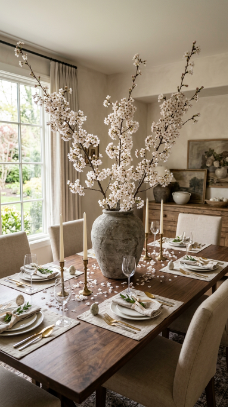
Vibe: Architectural and breathtaking — the centerpiece that makes every other option feel small.
What makes it work: Flowering branches achieve vertical scale that cut flowers in a vase simply cannot — they bring the full structure of a blooming tree to the table. The deliberate contrast between the rough, weighty stone urn and the delicate cloud of blossoms above it creates a beautiful visual tension. Fallen petals on the table should be left exactly where they land — they extend the arrangement downward and signal a living, natural object.
How to achieve it: Place a large water-filled bucket inside the urn to hold branches, hidden from view. Source cherry blossom, quince, or forsythia branches from florists in early spring. Hammer the bottom inch of each stem to help it drink, and the arrangement will last 10–14 days in fresh water.
Hyacinth Bulb Cluster in a Galvanized Metal Bin
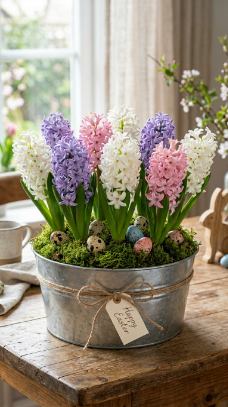
Vibe: The centerpiece you smell before you see it — generously fragrant and effortlessly beautiful.
What makes it work: Planting multiple hyacinth bulbs tightly together in a single vessel creates a mass-bloom effect that is far more impactful than individual pots. The alternating color sequence — white, lilac, pink, white, lilac — gives the cluster visual rhythm without requiring any design training. A galvanized bin’s industrial texture grounds the soft blooms and prevents the arrangement from reading as too precious.
How to achieve it: Purchase pre-started hyacinth bulbs from a garden center in late winter. Pack them into a galvanized bin with minimal spacing between bulbs — crowding actually improves the visual effect here. Cover the soil with preserved sheet moss to give the finished centerpiece a polished, florist-quality appearance.
💡 Place the bin in a cool room one week before Easter to slow the bloom and ensure peak fragrance on the day.
Rustic Wooden Box with Mixed Spring Flowers and Herbs
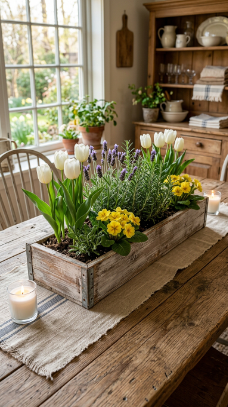
Vibe: The Easter centerpiece idea that looks like it was assembled by someone who grows their own food and cuts their own flowers.
What makes it work: Combining culinary herbs with spring flowers is a design move that introduces fragrance complexity — rosemary’s piney sharpness against lavender’s sweetness and tulips’ mild freshness creates an aromatherapeutic experience, not just a visual one. A long, low wooden box keeps the centerpiece below sightline for easy conversation across the table.
How to achieve it: Line a wooden planter box with burlap before adding floral foam or potting soil. Plant or insert purchased flowering plants and fresh herb cuttings, covering any visible soil with sheet moss. Position the box lengthwise down the table center rather than placing it crosswise for maximum visual flow.
Gilded Easter Egg Topiary on a Moss Base
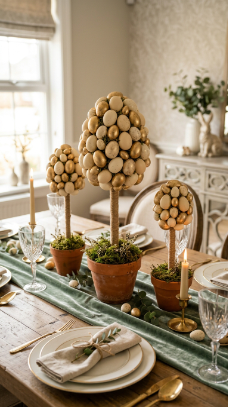
Vibe: Formal and playful in equal measure — the Easter centerpiece idea that surprises adults and delights children simultaneously.
What makes it work: Topiary form introduces vertical structure and sculptural interest that flat arrangements can’t achieve. The contrast between matte cream eggs and metallic gold ones creates tonal variety within a deliberately restrained palette — this is what separates a sophisticated Easter centerpiece from a generic one. Grouping three topiaries at different heights creates a composed vignette with natural rhythm.
How to achieve it: Push a wooden dowel into a styrofoam egg base and hot-glue small plastic eggs across the entire surface, alternating matte and metallic finishes. Mount the dowel into a moss-filled terracotta pot. Spray the metallic eggs with gold craft spray paint — two thin coats provide even, professional coverage.
Floating Flower and Candle Bowl Centerpiece
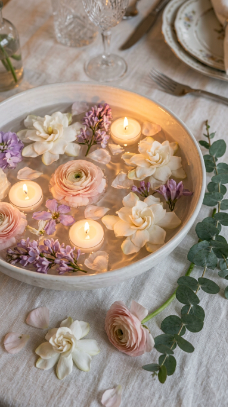
Vibe: Still water, floating petals, and living candlelight — a centerpiece that makes time slow down.
What makes it work: Floating arrangements work on a completely different visual principle than vertical ones — they create a horizontal, reflective plane that multiplies the candlelight across the water surface. The reflections of petals and flame below the waterline add a dimension of depth that no other centerpiece format achieves. This works best on a round or square table where guests view it from all sides equally.
How to achieve it: Fill a wide, shallow bowl (12–16 inches diameter, 3–4 inches deep) two-thirds with water. Cut flower heads with a 1-inch stem and place face-up — they’ll float naturally. Add floating tea lights last and light them just before guests are seated. Use gardenia, ranunculus, or daisy heads for the flattest float profile.
Easter Centerpiece with Daffodils in Vintage Terracotta
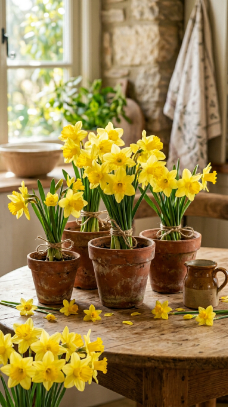
Vibe: Warmly straightforward and genuinely joyful — the Easter centerpiece that requires nothing to justify itself.
What makes it work: Grouping five terracotta pots of different sizes creates a centerpiece with natural variation in height without any formal arrangement skills. Daffodils in terracotta is a warm-warm color pairing — yellow against orange-terracotta — that reads as abundantly sunny rather than clashing. The informality of tied jute twine around the stems signals a deliberately casual, garden-gathered aesthetic.
How to achieve it: Place a small water jar inside each terracotta pot to hold flowers without wetting the pot’s interior. Gather a small bunch of daffodils per pot (three to five stems), cut to just above the pot rim, and tie with jute twine. Arrange pots so the tallest sits at the back, graduating to the shortest at the front.
💡 Daffodil bunches are typically $3–$5 at grocery stores — one of the most affordable Easter centerpiece flowers available.
Tiered Cake Stand Flower and Egg Display
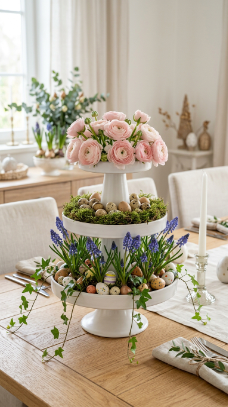
Vibe: Unexpectedly charming — proof that the best Easter centerpiece ideas are often just clever repurposing.
What makes it work: A tiered stand creates vertical interest through a series of horizontal platforms, each offering a different curated moment. This format is inherently organized — each tier has a clear role — which makes even a loosely assembled display look considered and deliberate. The contrast between the top tier’s flowers and the lower tiers’ eggs creates a narrative progression from decorative to symbolic.
How to achieve it: Assign each tier a single “theme” — flowers only, eggs only, mixed botanical — for visual clarity. Use small water-soaked floral foam pieces or damp cotton balls on the flower tier to keep fresh stems upright and hydrated without visible mechanics.
Candle Cluster with Moss and Spring Wildflowers
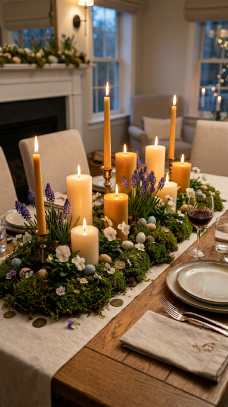
Vibe: Easter by candlelight — an arrangement that grows more beautiful as the sun goes down.
What makes it work: This format reverses the typical flower-as-hero arrangement: candles provide the structure and height while botanicals provide the color and organic texture at the base. The varying candle heights — some tall tapers, some short pillars — create the same kind of visual rhythm as different-sized flowers. Warm beeswax tones complement rather than compete with spring pastels.
How to achieve it: Group candles of different heights on a flat tray or shallow wooden board first, securing each with a small drop of hot glue. Pack moss tightly around all the bases, then tuck in small flower clusters and eggs. Never leave candles unattended, and use a tray with raised edges as a fire-safety measure.
Wicker Basket Overflowing with Mixed Easter Blooms
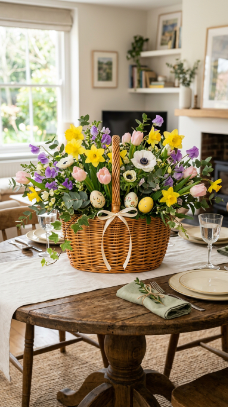
Vibe: Generous, exuberant spring — the centerpiece that says Easter with its whole chest.
What makes it work: A wicker basket transforms any flower arrangement into an Easter narrative object — it connects immediately to the season’s iconography while remaining sophisticated enough for an adult table. The key design principle here is intentional overflow: flowers must spill well beyond the basket’s rim in all directions to read as abundantly styled rather than simply full.
How to achieve it: Place a water-filled bucket or florist’s foam block inside the basket before adding flowers. Prioritize trailing stems (ivy, sweet peas, jasmine) around the outer edge so they cascade over the basket’s rim naturally. Work from the tallest center stems outward and downward.
Ombre Pastel Candle and Flower Easter Centerpiece
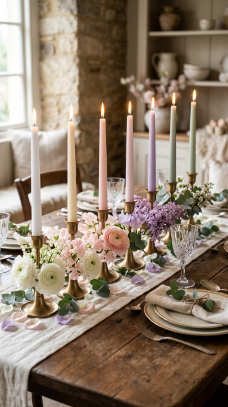
Vibe: Color theory made edible — this Easter centerpiece turns the dining table into a living watercolor.
What makes it work: Matching the candle color progression to the flower progression creates a cohesive gradient that treats the entire table length as a single designed composition. The ombre technique works here because Easter’s natural palette — white through pastels — already exists as a ready-made color family that progresses harmoniously from cool to warm.
How to achieve it: Source pastel taper candles from specialty candle shops or home stores — Anthropologie and CB2 both carry good seasonal ranges. Space the brass holders evenly down the table and assign each a specific color zone. Match flower clusters to each candle’s tone, placing them directly between holders.
Mason Jar Cluster Centerpiece with Wildflowers and Twine
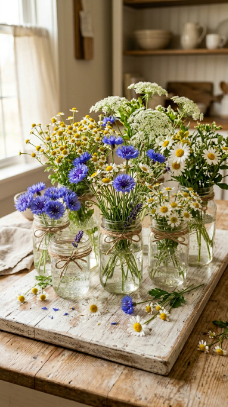
Vibe: Farmhouse Easter at its most honest and charming — assembled from kitchen cupboards and a walk through the yard.
What makes it work: The power of this centerpiece lies entirely in clustering — nine small jars grouped tightly on a single board read as one cohesive centerpiece rather than nine small vases. A wooden board or tray is the essential unifying element that makes this work visually. Wildflowers (Queen Anne’s lace, chamomile) provide the airy, just-gathered quality that makes the arrangement feel spontaneous rather than designed.
How to achieve it: Use a flat wooden cutting board, serving board, or whitewashed pallet piece as your base. Fill jars with water and arrange in a tight cluster, tucking smaller jars between larger ones. Purchase wildflower bunches from a farmers’ market or florist — typically $5–$8 per bunch, and one bunch fills three or four small jars.
💡 A farmers’ market wildflower bunch for $6 fills an entire mason jar centerpiece cluster with stems to spare.
Scandinavian Birch Branch and Hanging Egg Centerpiece
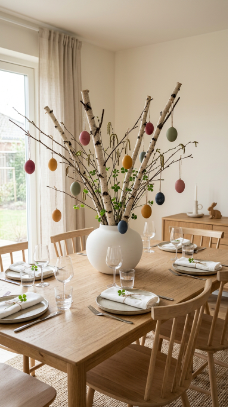
Vibe: Spare, purposeful, and quietly spectacular — the Easter centerpiece idea for minimalist homes.
What makes it work: The Påskris tradition — the Scandinavian practice of decorating birch branches with hanging Easter eggs — creates a living mobile effect that no other centerpiece format achieves. Eggs suspended in midair at different heights above the table give the arrangement genuine three-dimensional depth. Natural dye tones (beet, turmeric, cabbage) are infinitely more sophisticated than synthetic Easter colors and work beautifully within a minimalist palette.
How to achieve it: Arrange birch branches in a wide, heavy-based vase to prevent tipping. Thread thin natural twine through blown eggs and tie at varying lengths directly to the branches. Create natural dyes with kitchen ingredients: red cabbage for blue, turmeric for yellow, beet juice for pink. Each dye bath takes 30–60 minutes and produces matte, naturalistic results.
Lemon and White Flower Mediterranean Centerpiece
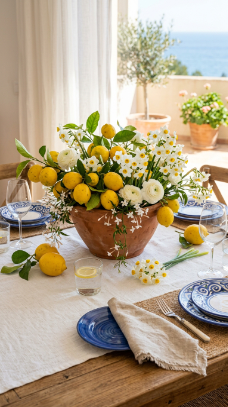
Vibe: Easter on the Amalfi Coast — sun-bright, fragrant, and completely transporting.
What makes it work: Citrus branches introduce a bold, graphic structural element — the weight and color of fruit on a stem — that creates immediate visual contrast with the delicate narcissus and ranunculus blooms. Yellow lemons against white flowers is a warm-neutral pairing that feels sunny and energetic without requiring any additional color. The terracotta bowl connects to the Mediterranean narrative the fruit branches introduce.
How to achieve it: Source lemon or kumquat branches from specialty florists or Asian grocery stores. Strip lower leaves from the branches before arranging to focus attention on the fruit and upper foliage. Pair with grocery store narcissus bunches — one of the most affordable and fragrant spring flowers available.
Nested Bird’s Nest Easter Centerpiece with Speckled Eggs
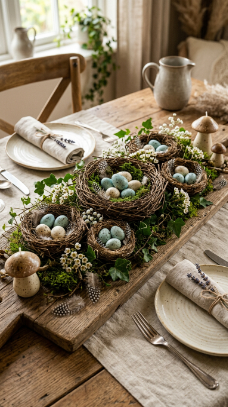
Vibe: The Easter centerpiece that looks like spring itself assembled it overnight.
What makes it work: Bird’s nests carry an inherent symbolism of new life and careful protection that makes them uniquely resonant at Easter. A collection of nests in different sizes creates a naturalist’s display with genuine visual variety — no two nests look identical, which gives the arrangement organic credibility. Robin’s egg blue against warm twig brown is one of nature’s own color combinations, which is precisely why it’s so visually satisfying.
How to achieve it: Purchase natural-material decorative bird’s nests from craft stores or home decor shops. Arrange on a wooden board in a loose cluster, varying their orientation slightly (some tilted, some flat). Fill with a combination of faux speckled eggs and a few smooth river stones for natural variation.
Antique Silver Compote with Blush Peonies and Garden Greenery
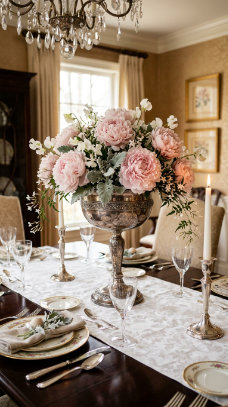
Vibe: Old-world grandeur with spring’s softest flowers — the centerpiece for the Easter table that takes itself seriously.
What makes it work: A compote vase raises the arrangement up on a pedestal, creating additional visual height and allowing trailing elements to cascade downward — a format impossible in a standard vase. Blush peonies against antique silver is a warm-cool contrast with centuries of decorative art precedent: the silver’s cool grey makes the warm blush appear richer and more saturated.
How to achieve it: Source antique silver compotes from estate sales, antique markets, or eBay — genuine silver-plate pieces are often available for $20–$60. Alternatively, silver-toned ceramic compotes from home stores achieve a similar silhouette at lower cost. Build the arrangement by placing the largest blooms (peonies) first, then weaving smaller elements through and allowing jasmine to trail over the compote’s edge.
Herb Garden Centerpiece in Terracotta with Fresh Labels
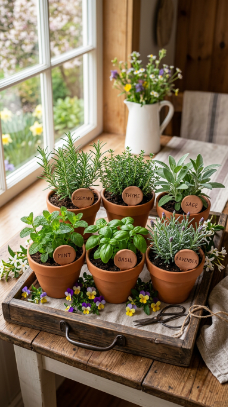
Vibe: The centerpiece guests can take home — genuinely functional, deeply charming, and smelling of a summer garden.
What makes it work: An herb garden centerpiece works because it’s simultaneously decorative and useful — guests can clip sprigs to tuck into their napkins, enhance their food, or take home as an Easter favor. The variety of herb textures (needle-like rosemary, soft sage leaves, round mint) creates natural diversity within a cohesive green palette that reads as both curated and living.
How to achieve it: Purchase small herb plants from a garden center — typically $2–$4 per pot. Cluster on a wooden tray or board. Write herb names on small clay label discs using a black marker or a fine paint pen. Tuck a few violas or primrose flowers between pots for the Easter-floral note.
💡 Pot each herb in its own terracotta and guests can take them home as living Easter favors.
Easter Centerpiece with Foraged Branches and Feathers
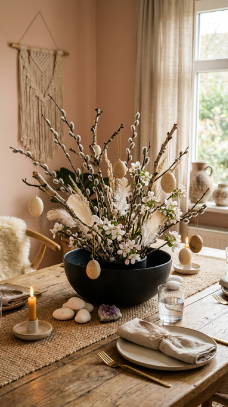
Vibe: Easter through a bohemian lens — grounded, organic, and quietly mystical.
What makes it work: Foraged branches introduce genuine structural character — the natural irregularity of real twigs, buds, and blossoms is impossible to replicate with purchased materials. Feathers and eggs hanging on gold thread create a mobile effect that shifts subtly with air movement, giving the arrangement a living quality. The matte black bowl is unexpected and sophisticated, making the natural elements above it feel even more organic by contrast.
How to achieve it: Collect pussy willow or apple blossom branches from a yard or florist. Arrange them in a heavy bowl to prevent tipping. Use ultra-thin gold thread (available from sewing or craft stores) to hang blown eggs from the branches — the near-invisible thread creates a floating effect.
Stacked Vintage Books with Bud Vases and Moss Accents
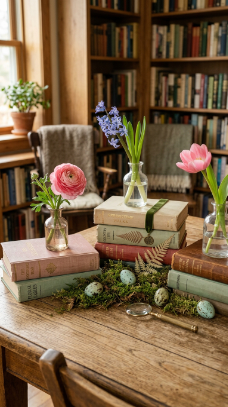
Vibe: Easter for the reader — a centerpiece that tells a story with every element it contains.
What makes it work: Stacked books create height through an entirely non-floral element, which gives the bud vases placed among them a gallery-like context — each flower suddenly feels like an exhibit rather than a decoration. The aged linen and leather covers provide a warm, textured neutral ground that makes any spring flower look curated against them. This centerpiece works without any floristry skill whatsoever.
How to achieve it: Choose books with interesting, aged covers — source from thrift stores or your own shelves. Stack in groups of three, varying heights, and place small bud vases (clear glass or small ceramic) between and on top of stacks. A single stem per vase maintains the editorial restraint the format requires.
Giant Paper Flower Centerpiece in Soft Pastels
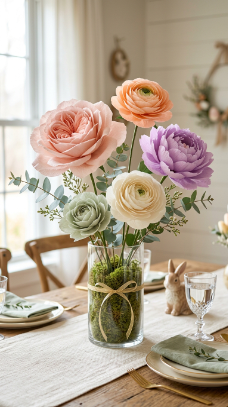
Vibe: Unapologetically beautiful and endlessly reusable — the Easter centerpiece idea that outlasts the holiday.
What makes it work: Scale is the entire strategy here — oversized paper flowers command attention in a way that identically sized real flowers cannot. Mixing five colors within Easter’s own pastel palette creates variety without visual chaos. The real eucalyptus stems tucked between paper flowers add an organic, fresh counterpoint that prevents the arrangement from feeling exclusively crafted.
How to achieve it: Use Italian crepe paper (Cartotecnica Rossi brand produces the most realistic petal texture) rather than tissue paper, which looks flat and cheap. Mount completed flowers on 18-inch floral wire stems. Pack moss tightly into the cylinder vase to hold stems upright at your chosen angles and heights.
Easter Cloche Collection as a Centerpiece Row
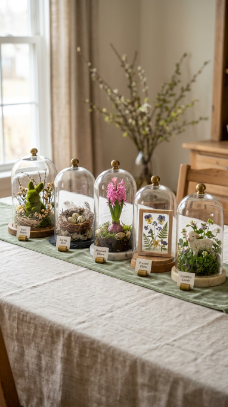
Vibe: Like a private Easter museum assembled on your dining table — each cloche a tiny, perfect world.
What makes it work: A row of cloches creates a centerpiece through repetition and variety simultaneously — the repeated form (dome shape) provides visual cohesion while the different contents of each provide constant discovery. This format works beautifully for long rectangular tables because it distributes visual interest evenly along the table’s length rather than concentrating it in one central point.
How to achieve it: Source glass cloches in similar but not identical sizes from home decor stores, antique shops, or online — aim for a 1–2 inch height variation between the tallest and shortest. Prepare a different miniature scene for each on a wooden disc or slate base before placing the cloche. Space evenly along the table or sideboard.
Copper Lantern Centerpiece with Spring Botanicals
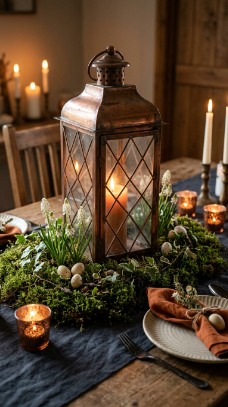
Vibe: Warm, glowing, and grown-up — the Easter centerpiece idea for people who want something genuinely dramatic.
What makes it work: A lantern centerpiece reverses the usual hierarchy — light becomes the central design element rather than flowers. The copper finish amplifies the warm tones of candlelight and casts the entire table in a golden glow that no flower arrangement can replicate. The botanical ground layer (moss, muscari, ivy) extending beyond the lantern’s footprint makes the centerpiece feel rooted and immersive rather than simply placed.
How to achieve it: Set the lantern on a flat serving board or tray. Pack sheet moss tightly around the base, extending well beyond the lantern’s edge. Tuck small flower clusters and eggs into the moss, pressing firmly so they stay in position. Use a real or battery-operated pillar candle inside the lantern.
💡 Battery pillar candles with a realistic flicker setting are entirely safe and look identical to real candles from a distance.
Individual Compote Vases as a Repeated Centerpiece Row
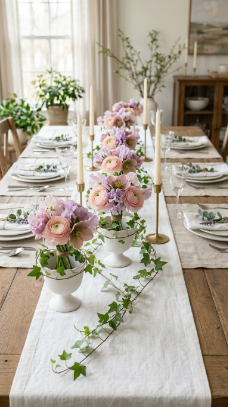
Vibe: Quietly disciplined and completely beautiful — the Easter centerpiece that rewards restraint.
What makes it work: Repetition is one of the most underused tools in home decor styling. Seven identical vessels down a table creates a formal, rhythmic structure that reads as genuinely sophisticated. The variation in flower type within each vase — different bloom, same color family — provides enough variety to maintain interest while the repeated vessel form provides cohesion. Ivy trailing between vases creates a physical connection that ties the whole arrangement together.
How to achieve it: Purchase seven identical bud vases or small compotes — IKEA often carries inexpensive options in consistent sizes. Prepare seven matching posies (three stems each) and bind tightly with floral tape before arranging in each vase. Lay long ivy stems between the vases after positioning all seven.
Seeded Wheatgrass Tray with Easter Eggs and Flowers
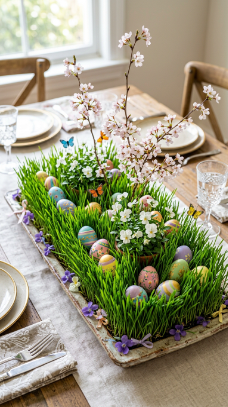
Vibe: Like a miniature Easter meadow grew overnight on your dining table — living, vivid, and genuinely joyful.
What makes it work: Wheatgrass creates an instant meadow effect — the vivid emerald green is more saturated and alive-looking than any moss or artificial green. Its dense, uniform texture creates a perfect foil for the contrasting elements placed within it: smooth eggs, delicate violas, structural blossom branches. The “found in nature” quality of half-buried eggs makes the display feel discovered rather than arranged.
How to achieve it: Sow wheatgrass seed in a tray with potting soil 10–14 days before Easter for peak growth timing. Water daily. On the day before Easter, nest decorated eggs into the grass and add any flowering accents. A standard 13×9 inch baking tray lined with plastic wrap works perfectly as a grow tray.
Easter Centerpiece with Hand-Dipped Beeswax Candles and Flowers
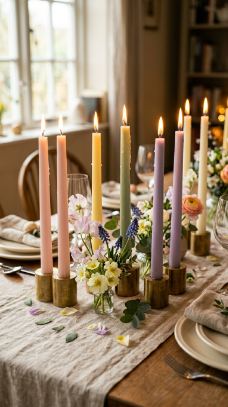
Vibe: The Easter table that feels genuinely handmade — warm, human, and quietly extraordinary.
What makes it work: Hand-dipped taper candles have a visible artisanal quality — the slight drips and variations in the wax surface signal that a person made this, which adds warmth and authenticity that factory-finished candles lack. Coordinating each candle’s color with the flowers beside it creates a tightly edited palette that feels deliberately composed rather than accidentally coordinated.
How to achieve it: Source hand-dipped pastel taper candles from artisan candle makers on Etsy — typical pricing is $12–$20 for a set of four. Alternatively, purchase white tapers and dip the lower third in Rit dye dissolved in hot water for a quick DIY version. Match flower clusters to each candle’s color zone.
How to Create Your Perfect Easter Centerpiece
The most effective starting point for any Easter centerpiece is choosing your vessel before you choose your flowers. The container determines the arrangement’s height, scale, and style — a galvanized bin signals farmhouse warmth, a silver compote signals formal elegance, a wicker basket signals relaxed abundance. Get the vessel right and the flowers will follow naturally.
Avoid the most common Easter centerpiece mistake: going too tall. A centerpiece above 12–14 inches makes conversation across the table genuinely difficult, which defeats the purpose of a shared meal. If you love height, use it at the ends of a long table with lower elements down the center, or choose a single dramatic tall arrangement for a console rather than the dining table itself.
Budget-wise, meaningful Easter centerpieces are achievable at almost any price point. A mason jar cluster with grocery store daffodils costs under $15. A full floral runner with garden roses and eucalyptus might run $50–$75. The wheatgrass tray approach — one of the most visually impressive options here — costs under $10 in seed and soil. Start with what you have before you buy anything new.
Give yourself more time than you think you need: most fresh flower centerpieces take 30–45 minutes to assemble properly, and they always look better after a 30-minute “settling” period once complete. Assemble the day before Easter and store in a cool room overnight.
Frequently Asked Questions
What are the best flowers to use for an Easter centerpiece?
Tulips, ranunculus, peonies, hyacinths, daffodils, and anemones are the most popular Easter centerpiece flowers because they’re all in peak season in spring, which means maximum freshness and the lowest prices of the year. Ranunculus is a particularly strong choice — its ruffled, layered petals photograph beautifully and a single bunch creates significant visual mass. For the longest-lasting arrangements, choose flowers still in bud stage and allow them to open gradually over the 2–3 days before Easter.
How do I make an Easter centerpiece without buying flowers from a florist?
Grocery stores, farmers’ markets, and your own garden are all excellent and affordable sources for Easter centerpiece flowers. Trader Joe’s, Whole Foods, and Costco consistently carry high-quality seasonal stems at significantly lower prices than florists — a bunch of tulips typically costs $4–$6 and a bunch of ranunculus runs $6–$10. For greenery and foliage, clip eucalyptus, rosemary, and ivy directly from garden plants. Wheatgrass grown from $3 seed packets, potted hyacinths from a garden center, and foraged branches from your yard can create stunning Easter centerpiece ideas with virtually no flower budget.
How far in advance can I make an Easter centerpiece?
Fresh flower centerpieces are best assembled 1–2 days before Easter and stored in a cool room overnight. Dried and botanical centerpieces — moss trays, dried wreath forms, paper flower arrangements — can be made weeks in advance with no quality loss. Wheatgrass centerpieces should be started 10–14 days before Easter for peak height on the day. If you’re using floral foam, soak it thoroughly the night before assembling and keep the finished arrangement away from heat and direct sunlight.
What is the right height for an Easter dining table centerpiece?
The general rule is to keep dining table centerpieces either under 12 inches (below comfortable sightlines) or dramatically tall — above 24 inches, where stems are thin enough not to obstruct views. The middle zone of 12–24 inches creates the most problematic sightline blocking and should generally be avoided. Low, horizontal formats — moss trays, floral runners, cloche rows — are the safest choice for any table where guests need to see and speak to each other comfortably. Reserve tall, dramatic centerpieces for console tables, sideboards, or the ends of very long tables.
How do I make an Easter centerpiece that works for both kids and adults?
The most successful dual-audience Easter centerpiece ideas combine visual interest at multiple levels — something for children to discover (speckled eggs, a small ceramic animal, colorful blooms) and something for adults to appreciate (sophisticated color palette, interesting vessels, quality botanicals). Wheatgrass trays with nested eggs, wicker basket arrangements, and moss-and-cloche displays all read as both playful and refined. Avoid explicitly child-targeted props like plastic bunnies or cartoon-character motifs, which tend to undermine the overall aesthetic for adult guests.
Ready to Style Your Easter Centerpiece?
You now have 29 genuinely different Easter centerpiece ideas to work with — from a single floating flower bowl that costs almost nothing to a full floral runner that transforms a dining room into something worth photographing. The right centerpiece doesn’t have to be expensive or complicated; it just has to be considered. Pin the ideas that feel most like your table, gather your vessel before your flowers, and remember that even the simplest Easter centerpiece idea — five daffodils in terracotta pots, a single flowering branch in a basket, nine wildflower jars on a board — has the power to make everyone who sits down feel that this moment was prepared for them.