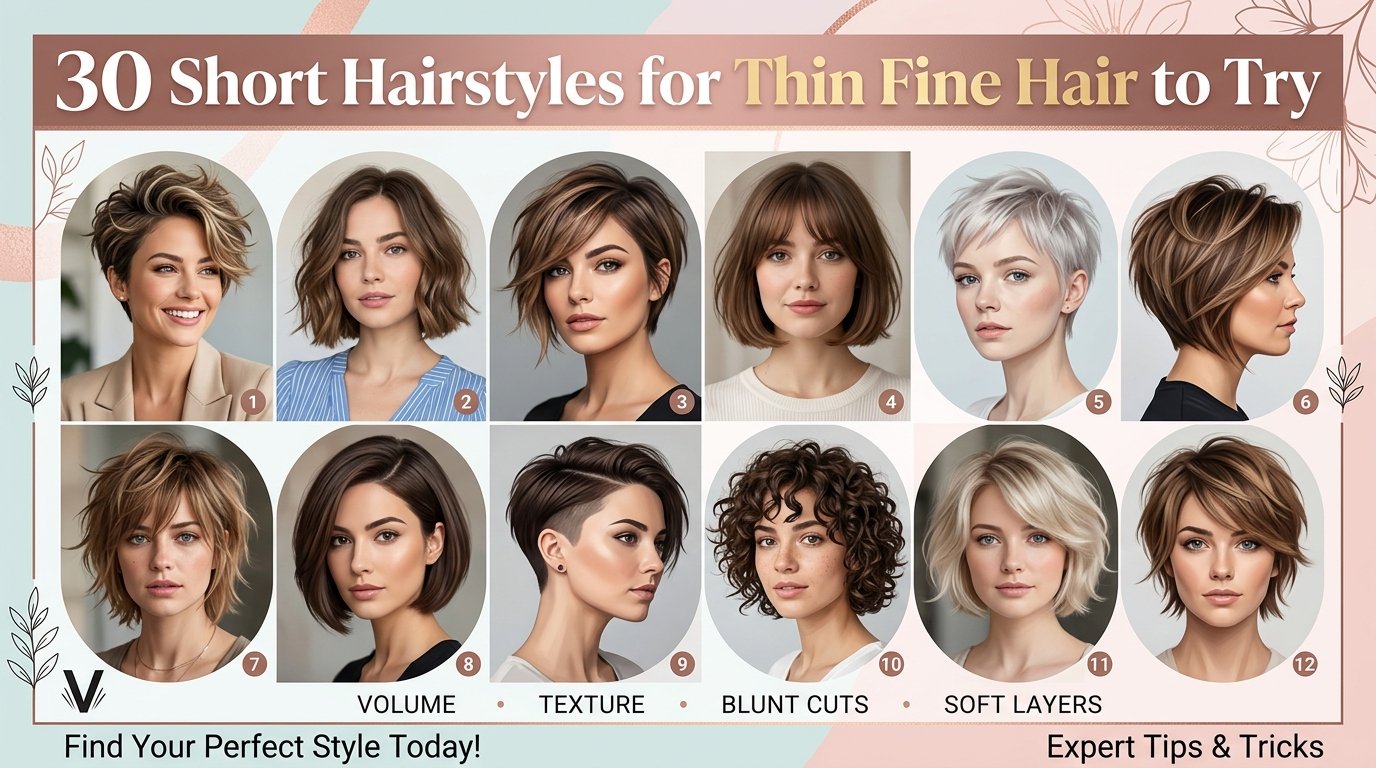
If your hair is thin and fine, you already know the daily frustration: it looks great right after you style it, and flat an hour later. Volume seems to disappear by lunchtime, the roots collapse, and even a good blowout can feel like it was a waste of time. It’s not that your hair is “bad” — it’s just working against gravity more than most, and long styles often make that harder, not easier.
The good news is you don’t need a dramatic transformation to fix this. A shorter length, cut the right way, does most of the work for you by removing the weight that pulls fine strands flat. Below are 30 short hairstyles built specifically for thin, fine hair, so you can find one that fits your everyday routine and actually holds up.
1. Textured Pixie Cut
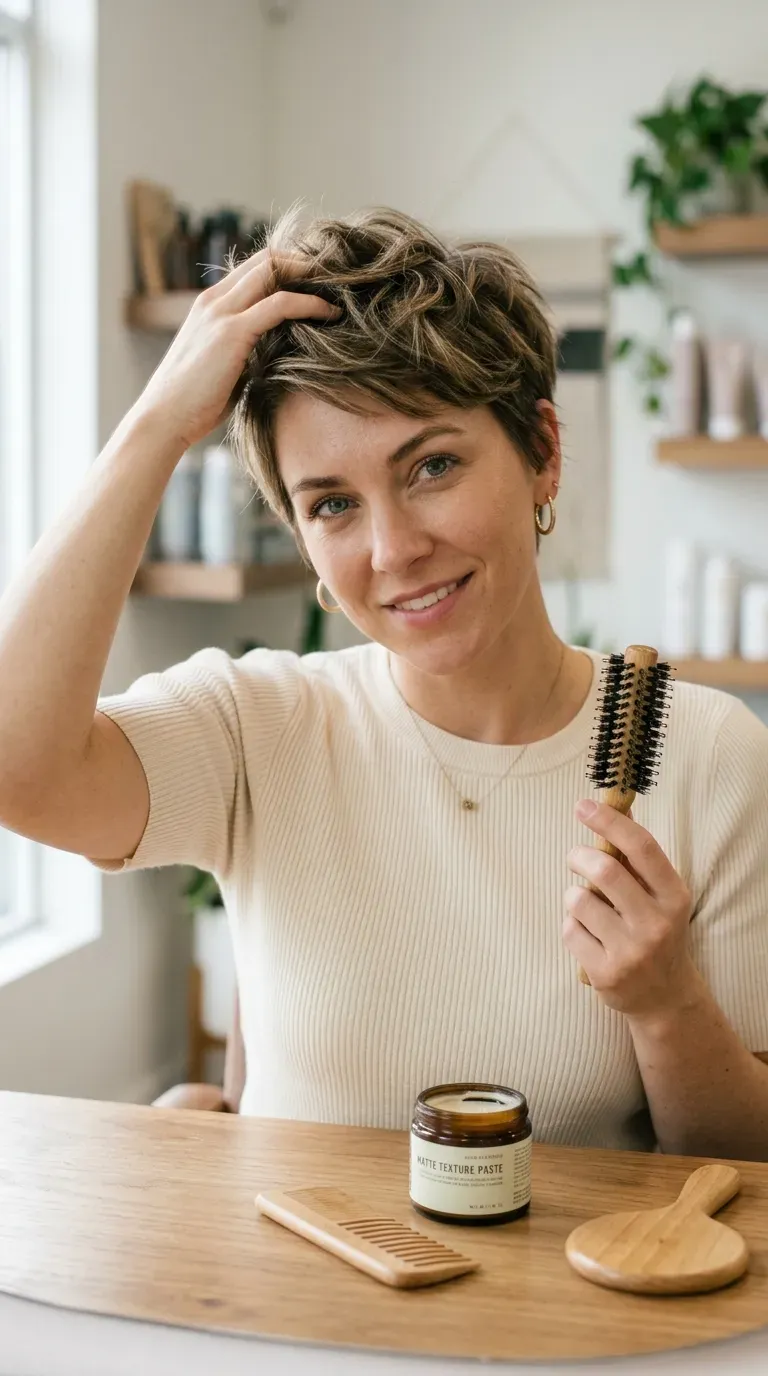
Why it works: The very short length removes the weight that normally drags fine hair down, so the choppy top pieces can stand up on their own. Point-cut layers create texture without needing extra thickness from the hair itself.
Ask for: Ask your stylist for a textured pixie with point-cut layers on top and a closely tapered nape.
Products to help you get this look:
- a small amount of matte texturizing paste
- a compact round brush for lift at the crown
- a lightweight sea-salt spray
- a boar-bristle styling brush
- a travel-size volumizing dry shampoo
2. Blunt Bob with Fringe
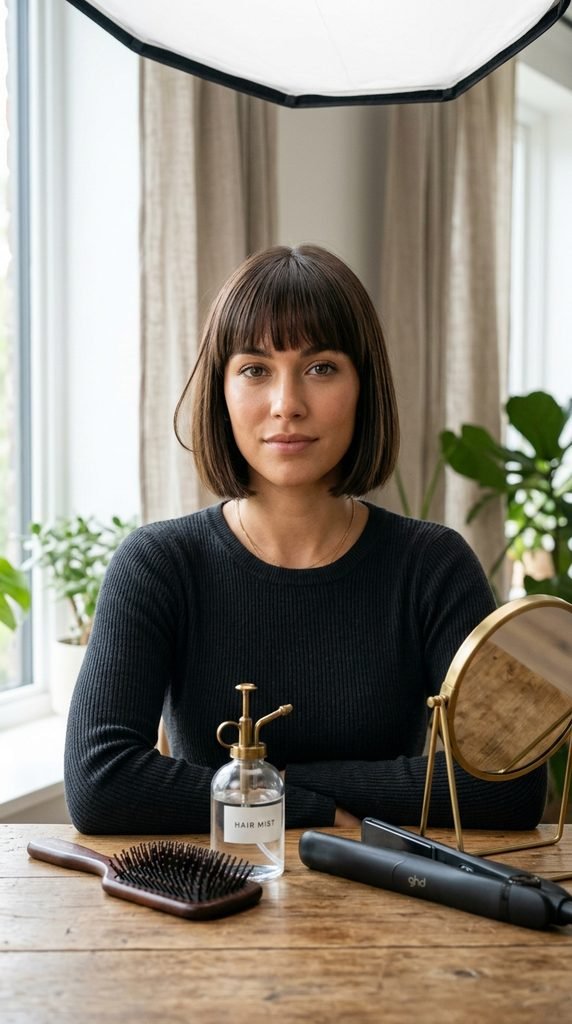
Why it works: Cutting all the ends at one blunt line tricks the eye into seeing denser hair, since there’s no gradual thinning at the tips. The full fringe adds visual weight right at the hairline, where fine hair often looks sparsest.
Ask for: Request a one-length blunt bob at the chin with a full, blunt-cut fringe.
Products to help you get this look:
- a root-lift spray for damp hair
- a flat paddle brush
- a small ceramic flat iron for smoothing the ends
- a light-hold finishing spray
- a fine-tooth comb for the fringe
3. Soft Layered Bob
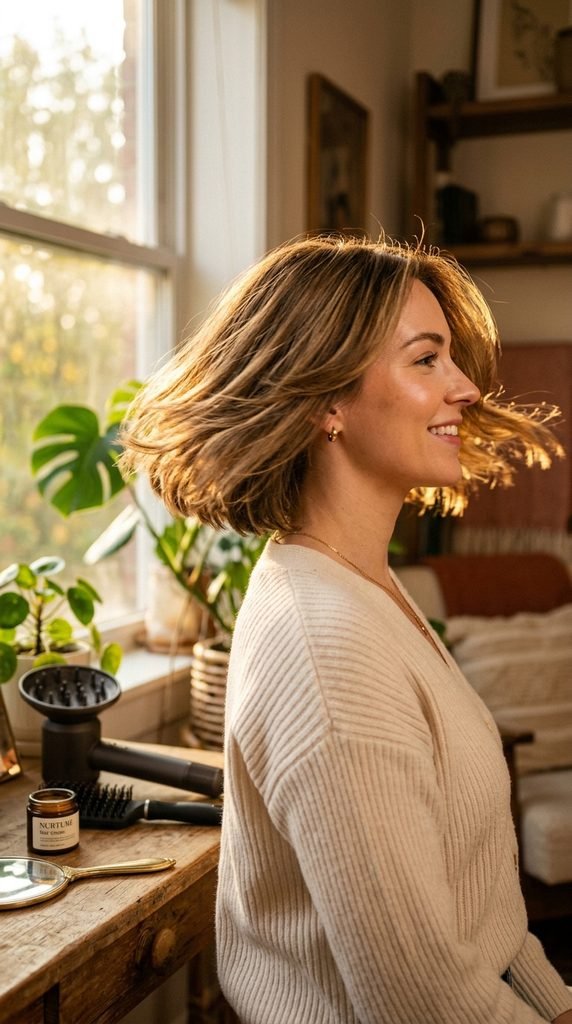
Why it works: Gentle layers remove just enough bulk to create movement without stripping away the density fine hair needs at the ends. It’s a softer alternative to a blunt cut for anyone who still wants some texture.
Ask for: Ask for long, soft layers starting around the cheekbone rather than short choppy ones near the crown.
Products to help you get this look:
- a lightweight blow-dry cream
- a vent brush
- a diffuser attachment for your blow-dryer
- a flexible-hold hairspray
- a shine mist that won’t weigh hair down
4. Choppy Pixie
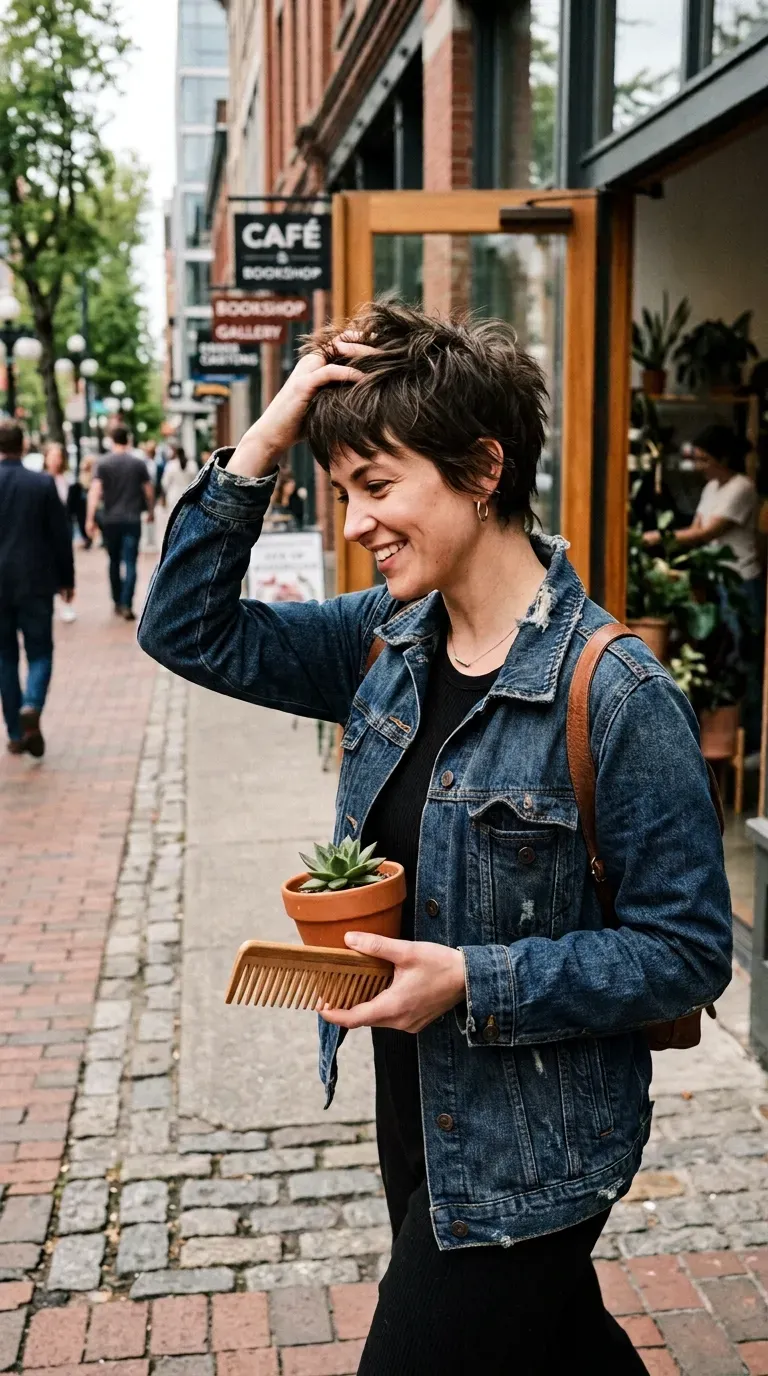
Why it works: Razored, uneven ends catch light from different angles, which reads as fullness even when the strand count underneath is low. The short length also means less time for gravity to flatten the roots.
Ask for: Ask for a choppy pixie with razor-cut ends rather than blunt shears throughout.
Products to help you get this look:
- a matte styling clay
- a wide-tooth comb
- a texturizing sea-salt spray
- a small flat iron for piece-y ends
- a light finishing wax
5. Side-Swept Asymmetrical Pixie
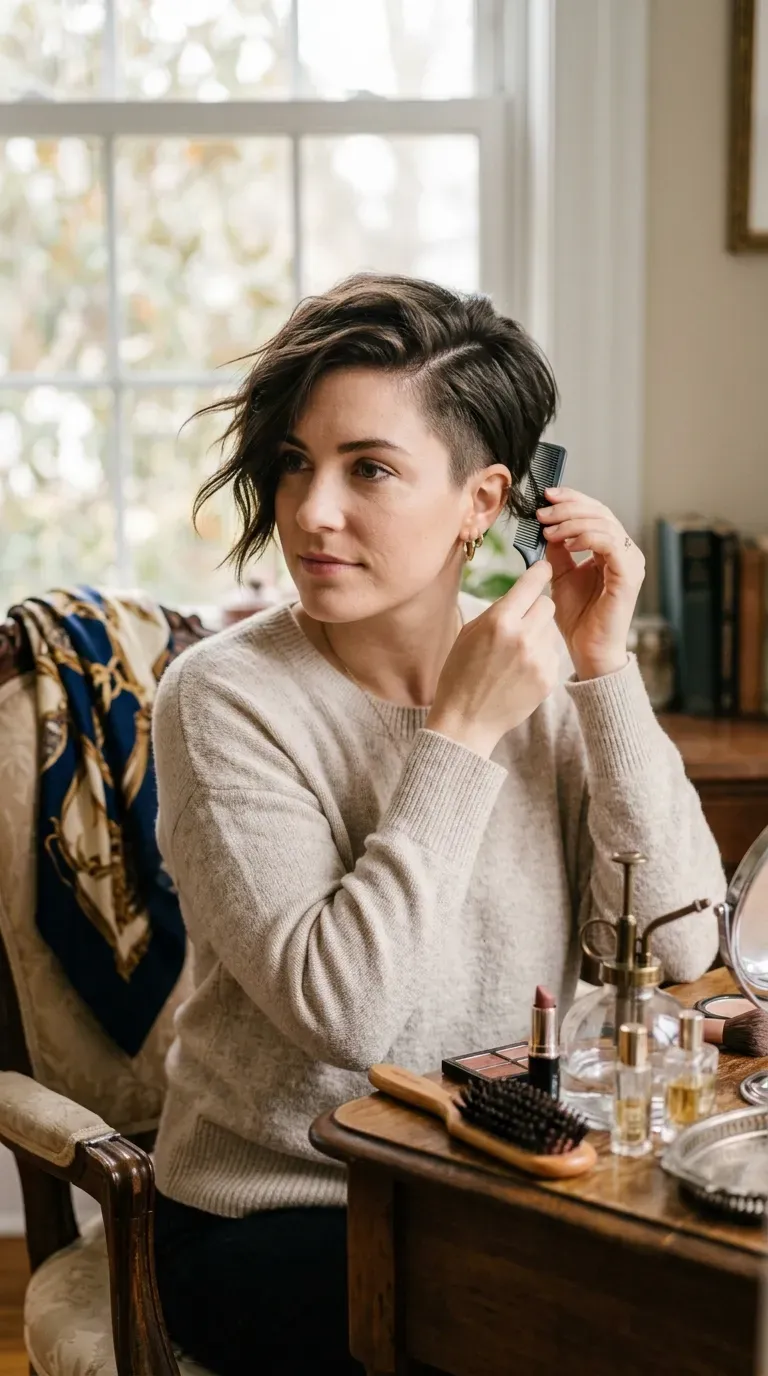
Why it works: Longer pieces on one side create a diagonal line that draws the eye across the head, making the cut look more dynamic than a symmetrical one. The uneven lengths also add the appearance of dimension.
Ask for: Ask for an asymmetrical pixie, longer on one side, with the shorter side kept close to the head.
Products to help you get this look:
- a lightweight styling cream
- a fine-tooth comb for the side part
- a small round brush
- a flexible-hold spray
- a shine serum used sparingly
6. Root-Lift Bob with Undercut Nape
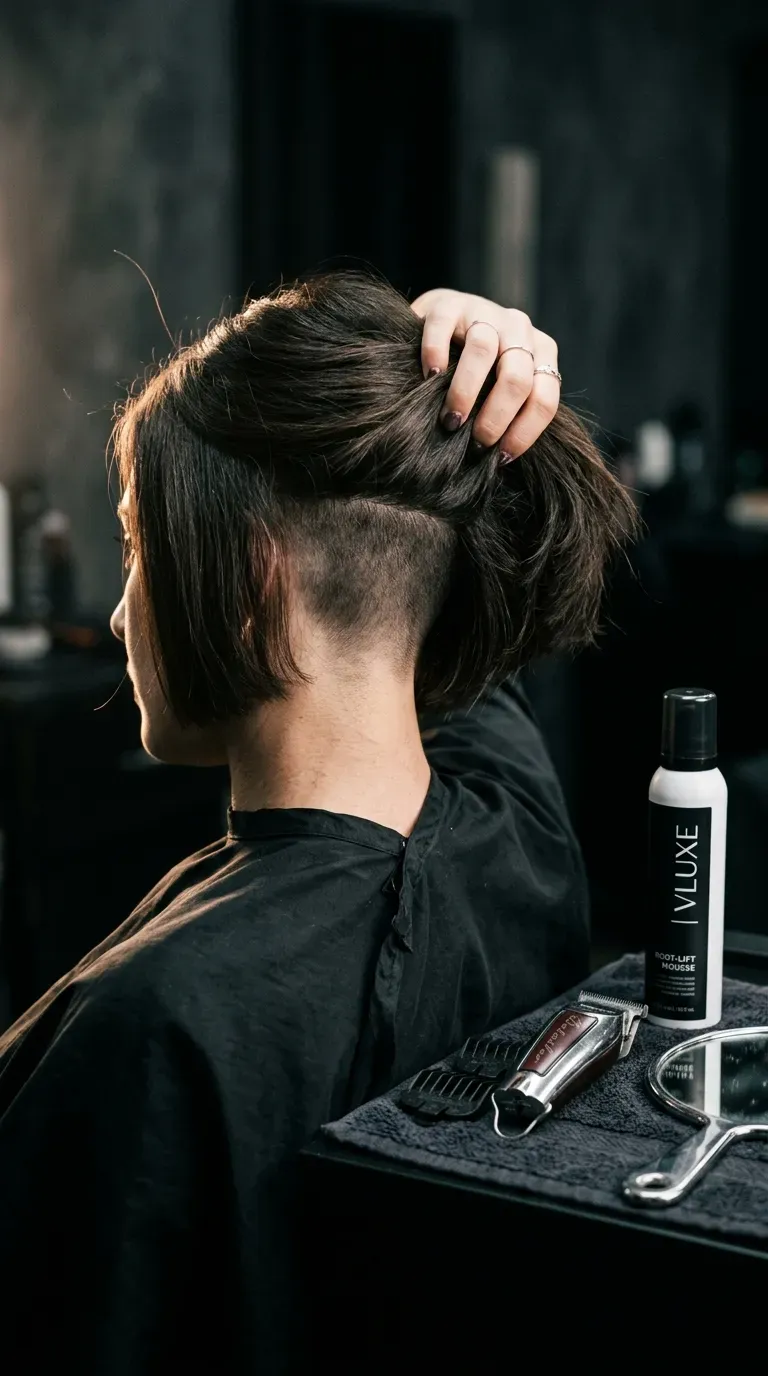
Why it works: Removing bulk underneath the visible top layer lets the top hair sit higher and fuller instead of being pushed down by heavy layers beneath it. This is especially useful for thin hair that’s dense enough at the crown but thin at the ends.
Ask for: Ask your stylist for a jaw-length bob with a light undercut clipped short at the nape.
Products to help you get this look:
- a root-lift mousse
- a fine round brush
- a light-hold styling gel for the undercut
- a boar-bristle brush
- a texturizing finishing spray
7. Long Asymmetrical Bob
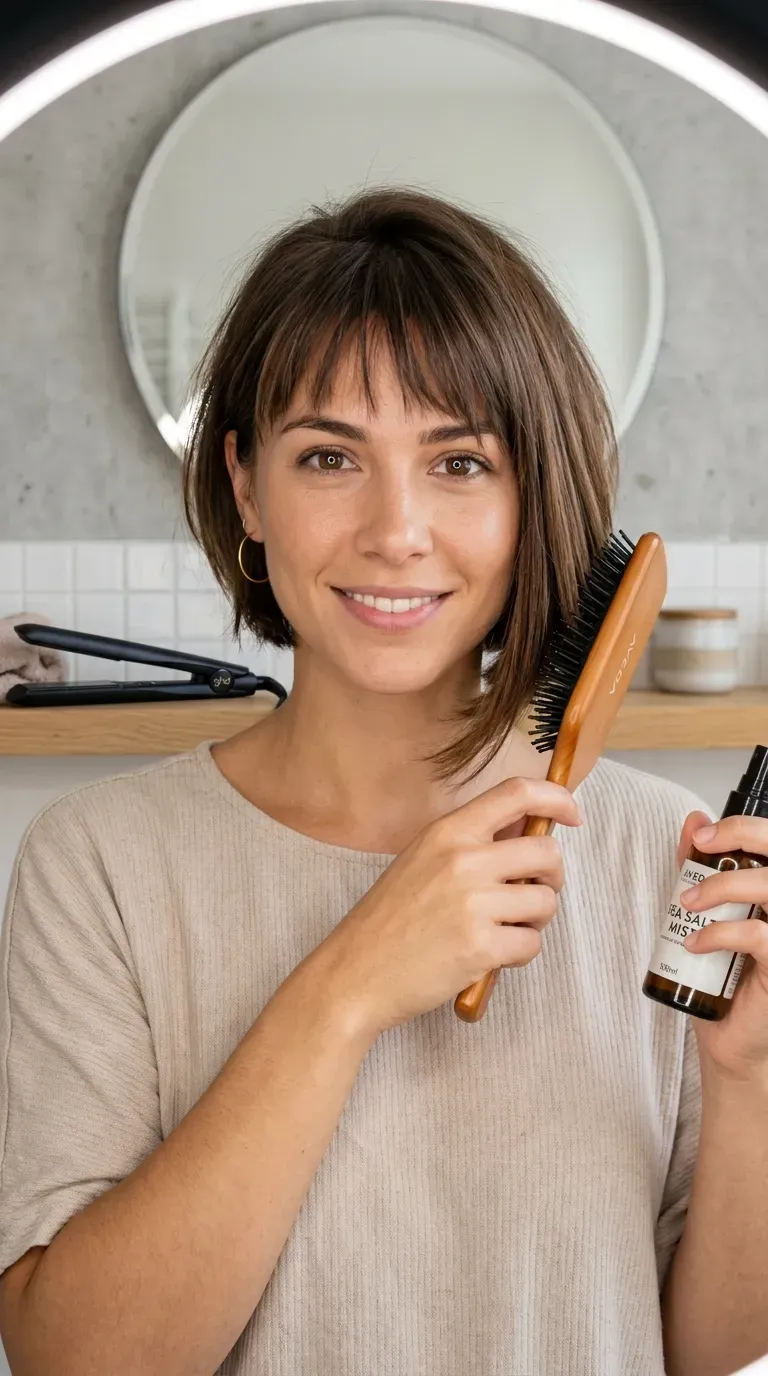
Why it works: The diagonal line from short to long keeps the eye moving across the cut instead of settling on any one flat section. It’s a subtler way to add dimension than a fully layered style.
Ask for: Ask for an asymmetrical bob that’s noticeably shorter in the back and longer toward the chin in front.
Products to help you get this look:
- a smoothing heat-protectant spray
- a ceramic flat iron
- a paddle brush
- a light shine spray
- a small amount of anti-frizz serum
8. Short Shag
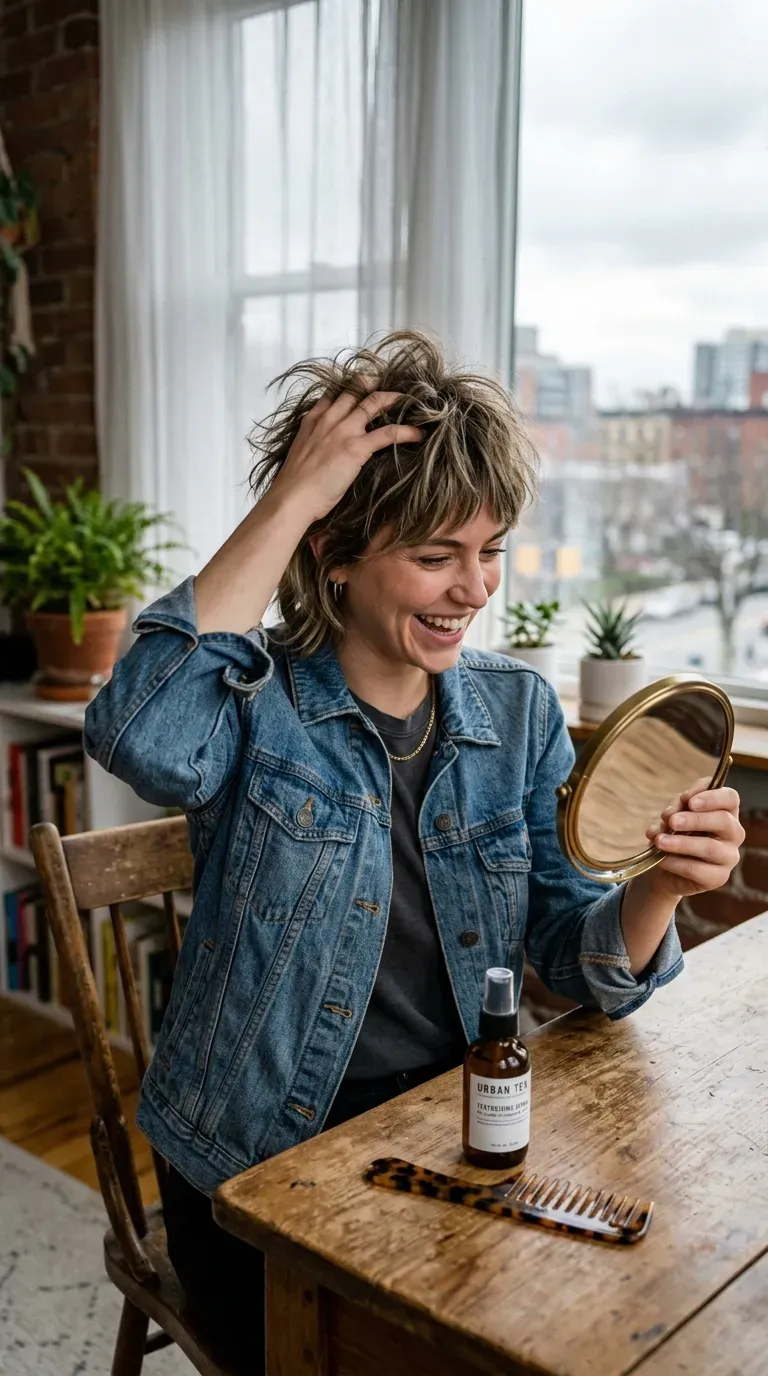
Why it works: Because the shag is built entirely from layers, the texture does the work that thickness normally would, so the style looks intentional even on days you don’t style it much. The choppy pieces disguise gaps between thin strands.
Ask for: Ask for a short shag with heavy layering throughout and a slightly longer fringe.
Products to help you get this look:
- a texturizing salt spray
- a small amount of matte paste
- a wide-tooth comb
- a light-hold hairspray
- a diffuser attachment for air-drying
9. Feathered Pixie
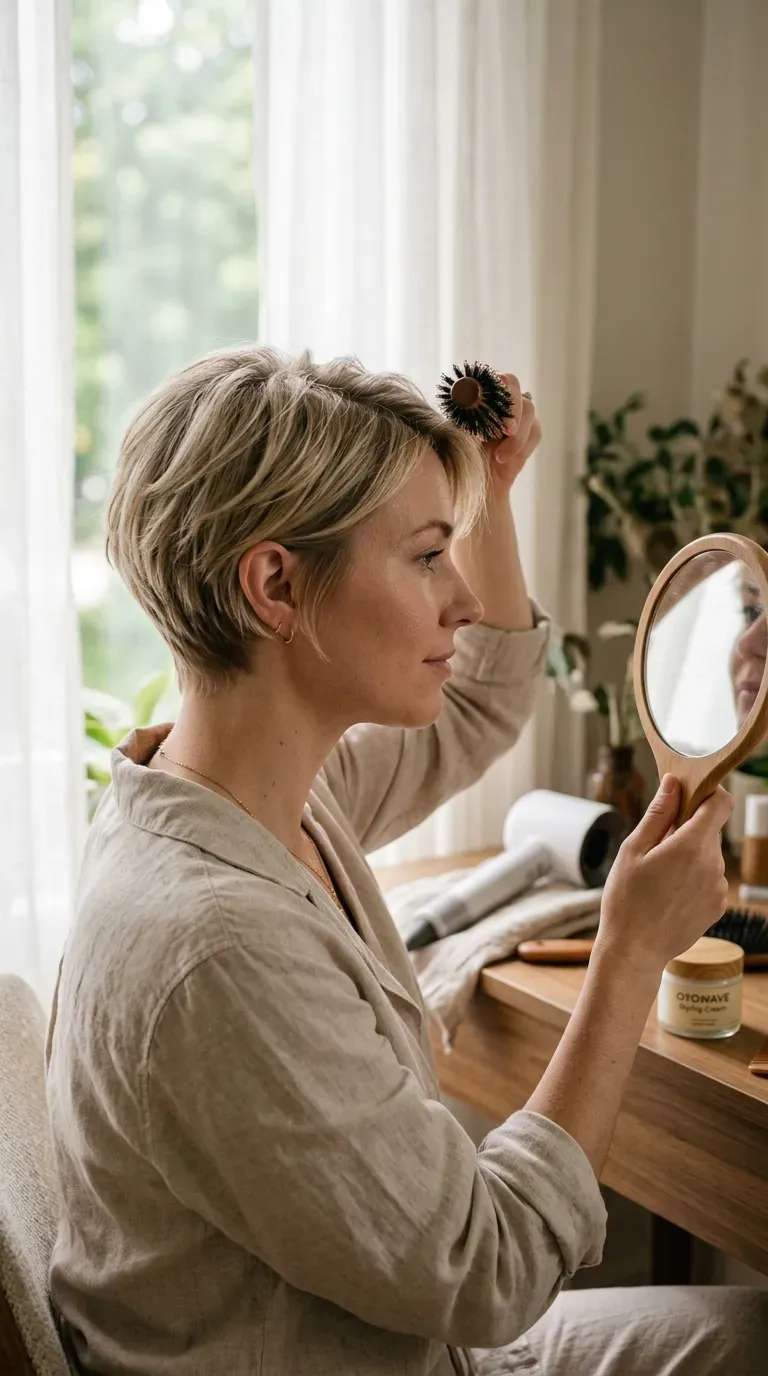
Why it works: Feathered layers blend gradually instead of ending abruptly, which softens the look of thin ends and adds gentle movement. It’s a good middle ground between a choppy pixie and a smooth one.
Ask for: Ask for a feathered pixie with softly blended layers rather than sharply textured ones.
Products to help you get this look:
- a lightweight blow-dry cream
- a small round brush
- a flexible-hold finishing spray
- a shine mist
- a fine-tooth comb
10. Wavy Chin-Length Bob
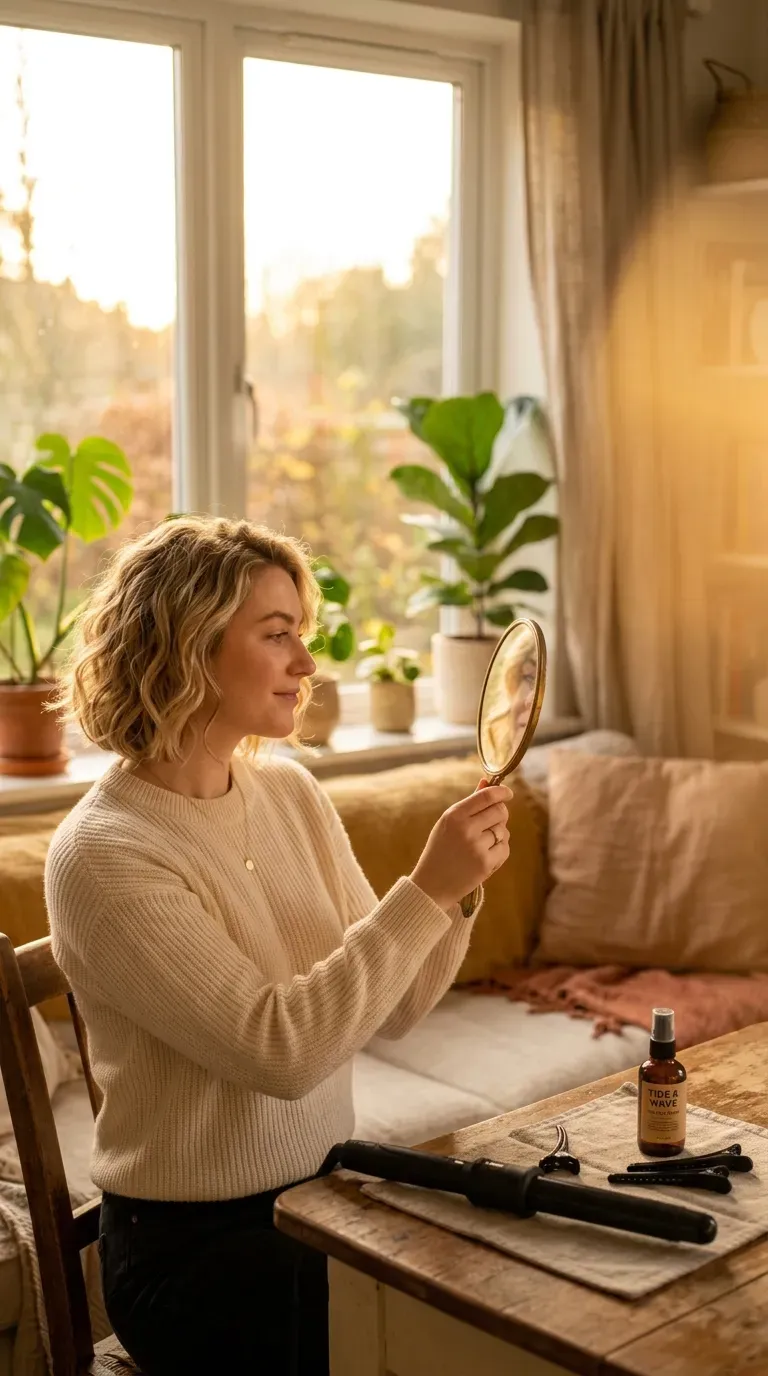
Why it works: Loose waves break up the smooth, flat surface that makes thin hair look sparse, creating visual texture without needing extra length or thickness. The chin-length cut keeps the waves from pulling straight under their own weight.
Ask for: Ask for a chin-length bob and request soft, loose waves rather than tight curls.
Products to help you get this look:
- a curling wand
- sectioning clips
- a texturizing sea-salt spray
- a light-hold curl spray
- a wide-tooth comb for loosening curls
11. Textured Crop
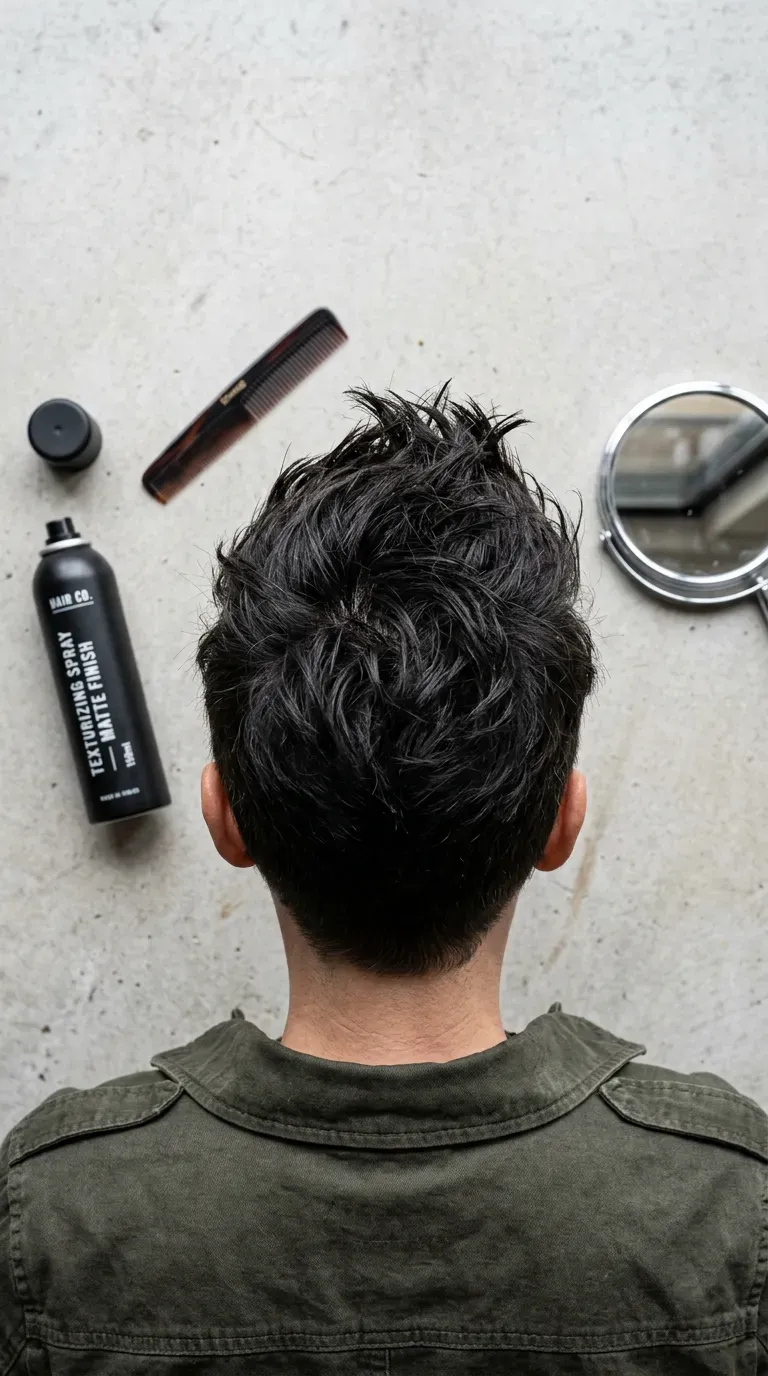
Why it works: Heavy texturizing on a slightly longer top section builds height at the crown, one of the areas fine hair tends to fall flattest. The short sides keep the overall cut low-maintenance.
Ask for: Ask for a textured crop, short on the sides with heavy texturizing left longer on top.
Products to help you get this look:
- a texturizing spray
- a small styling comb
- a matte finishing paste
- a light-hold gel for the sides
- a volumizing root spray
12. Bob with Shaved Undercut
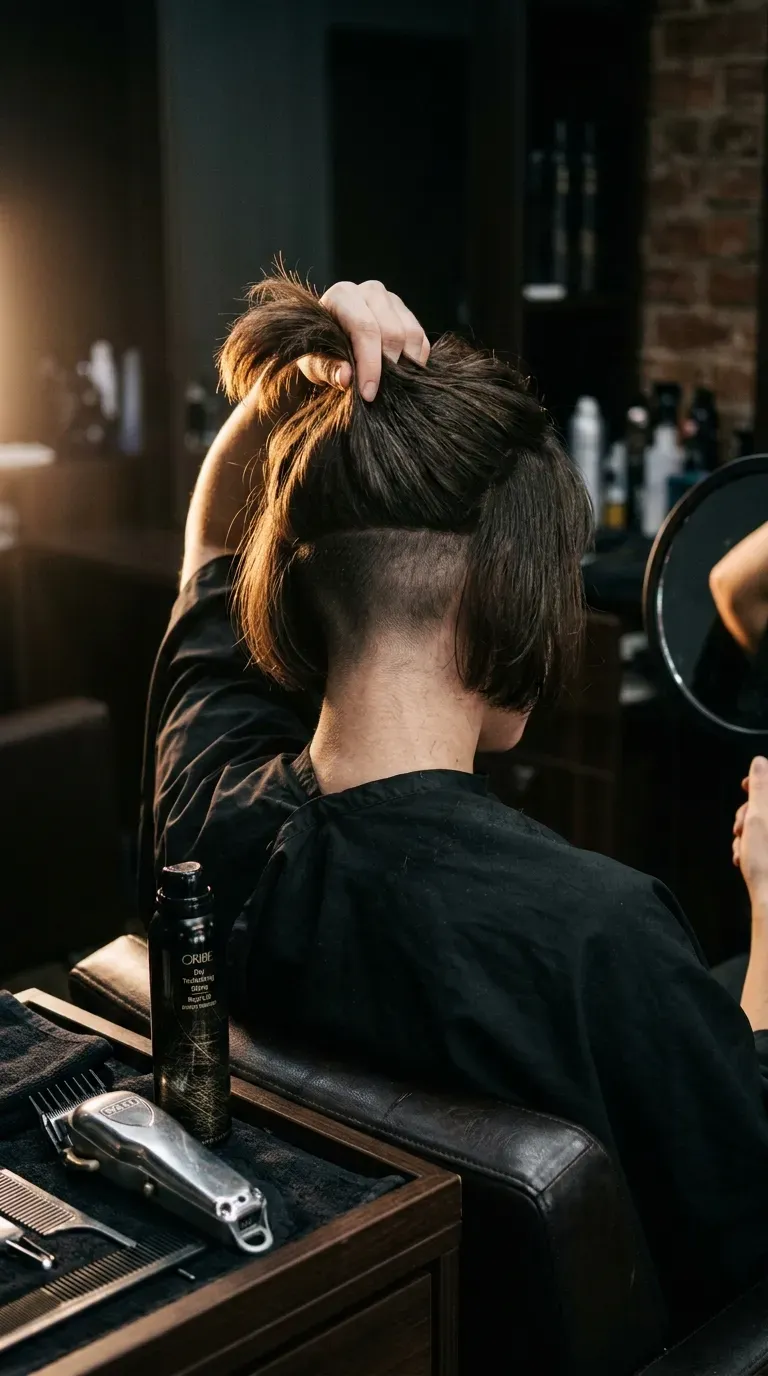
Why it works: Shaving away the underlayer removes weight and bulk from beneath the visible hair, letting the top layer rest with noticeably more lift. It’s a more dramatic version of the undercut-nape approach for thicker crown density.
Ask for: Ask for a bob with a fully shaved undercut underneath, keeping the top layer at your preferred length.
Products to help you get this look:
- a root-lift mousse
- clippers for undercut maintenance
- a light styling gel
- a boar-bristle brush
- a texturizing finishing spray
13. Wispy Pixie with Bangs
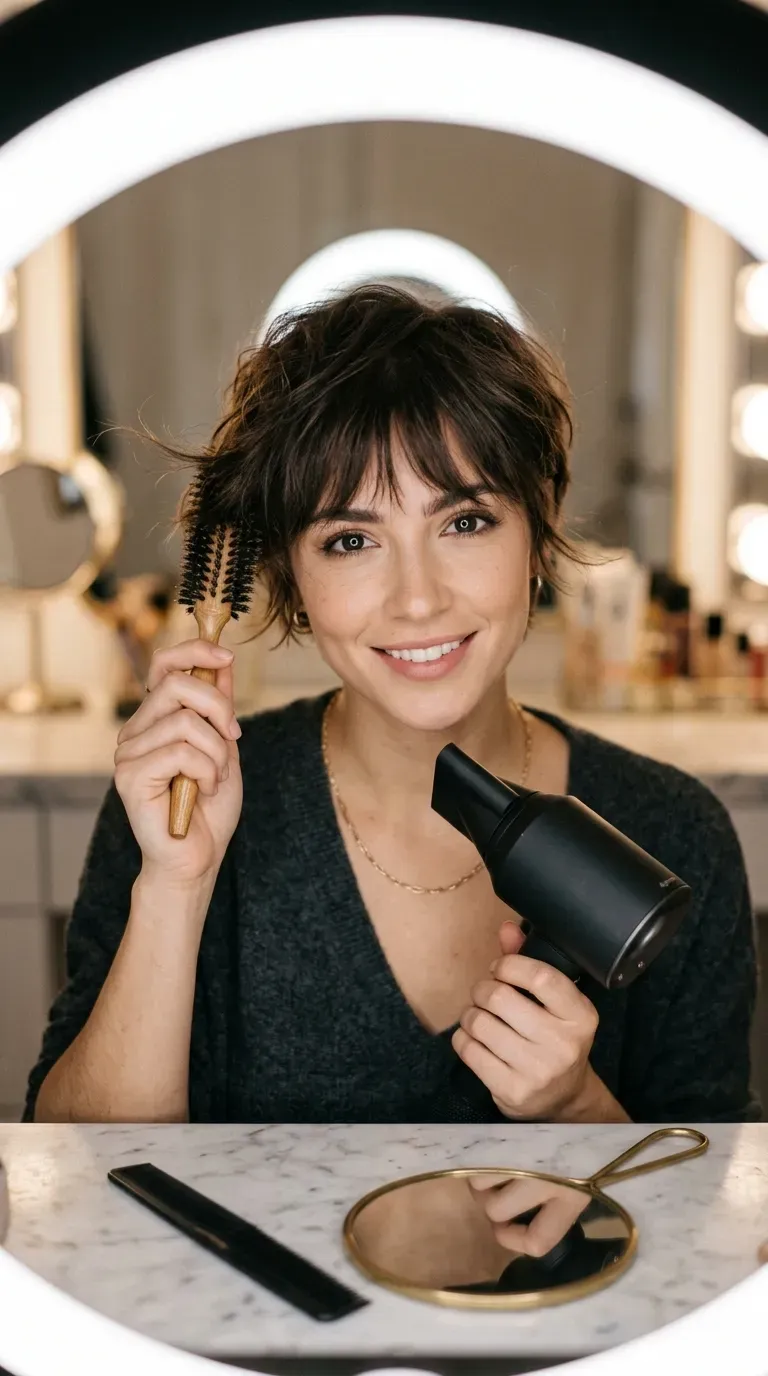
Why it works: Soft, wispy bangs add another textured layer right at the hairline, which is often where fine hair looks thinnest. The lightness of the fringe keeps it from looking heavy against a short cut.
Ask for: Ask for a pixie with soft, wispy bangs cut with a razor for a feathered edge.
Products to help you get this look:
- a lightweight blow-dry cream
- a small round brush
- a fine-tooth comb
- a flexible-hold finishing spray
- a shine mist
14. Rounded Under-Curl Bob
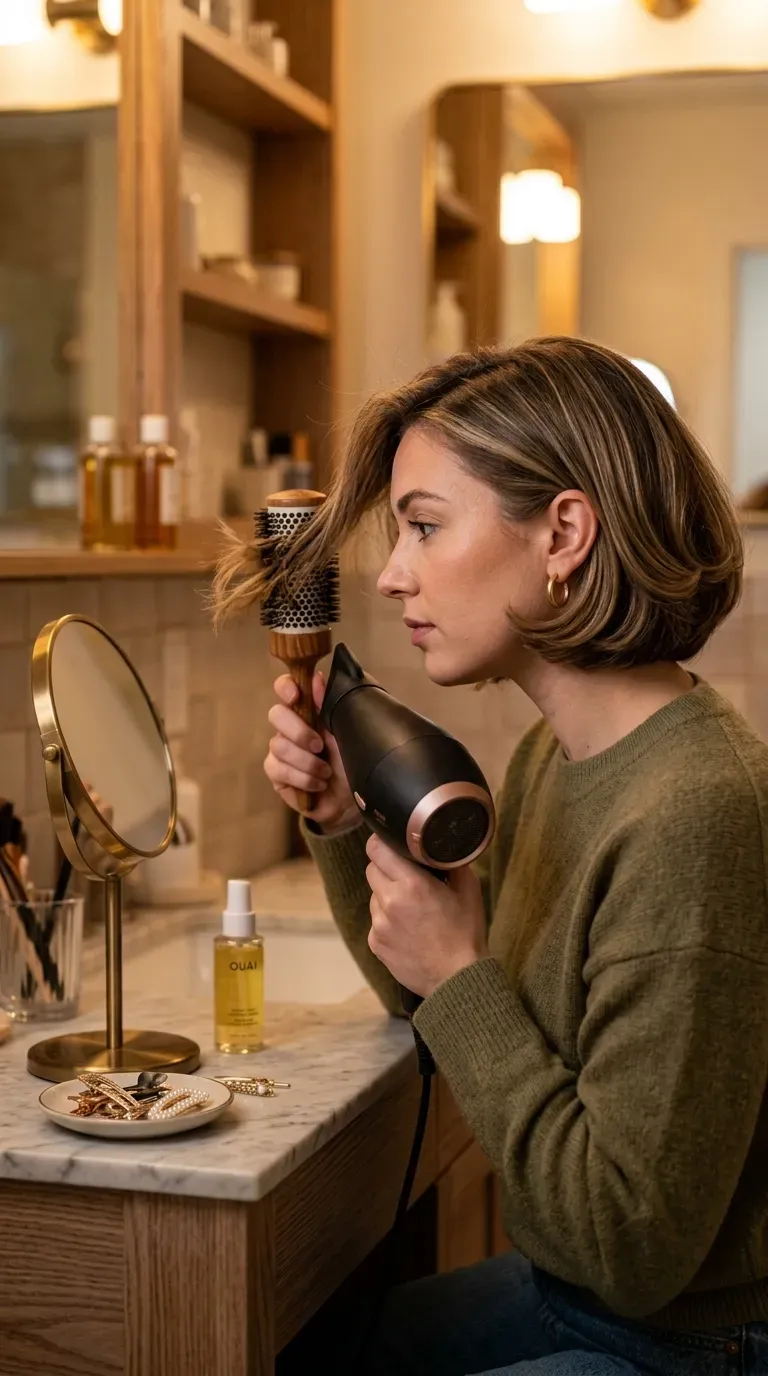
Why it works: Curving the ends under adds a rounded shape that reads as fuller from every angle, especially the back and sides. It’s a classic trick for making a simple bob look denser without any layering.
Ask for: Ask your stylist for a rounded bob and use a round brush to curl the ends under while blow-drying.
Products to help you get this look:
- a medium round brush
- a blow-dryer with a concentrator nozzle
- a light-hold setting spray
- a smoothing serum
- sectioning clips
15. Curly Cropped Pixie
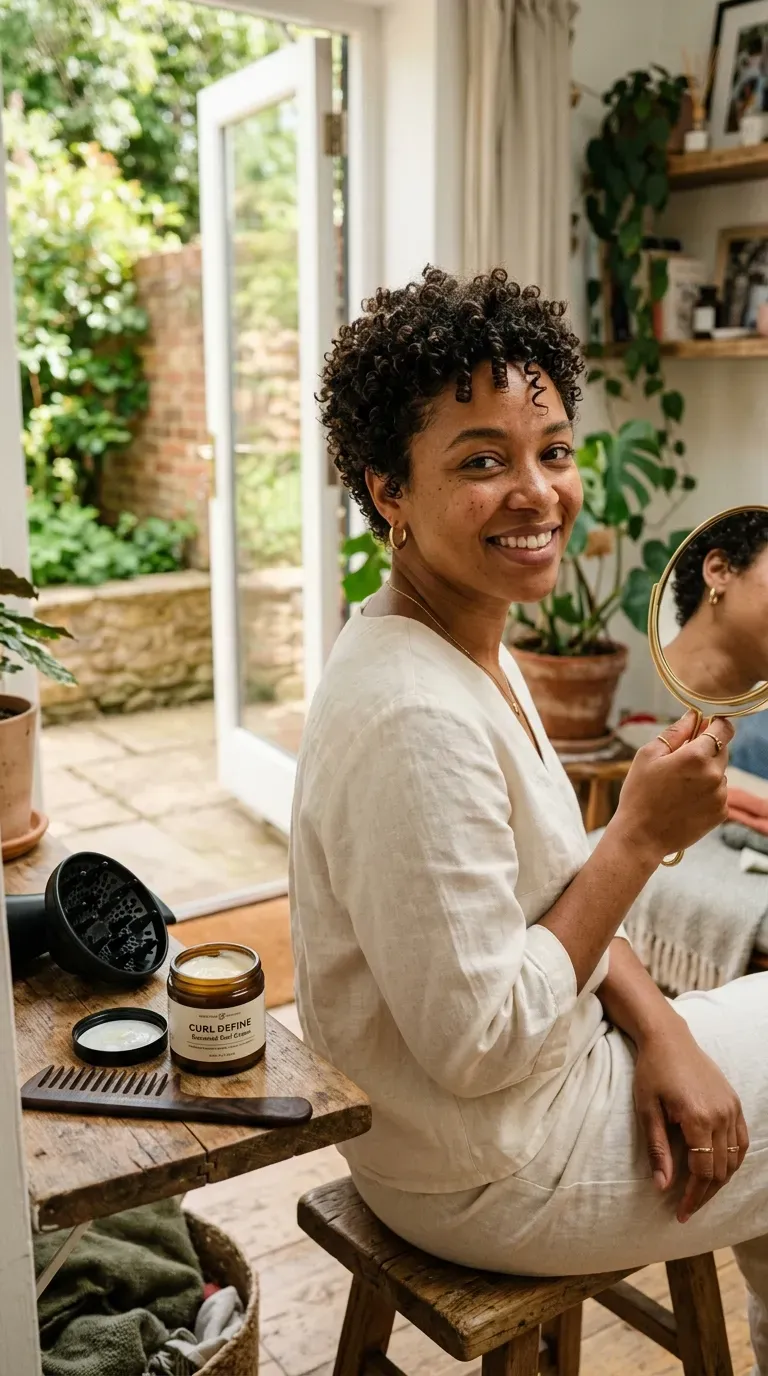
Why it works: Natural curl patterns lift hair away from the scalp on their own, giving built-in volume that straight fine hair doesn’t have. Cropping the curls short keeps them from weighing themselves down.
Ask for: Ask for a curly pixie cut while your hair is dry, so the stylist can see how each curl falls.
Products to help you get this look:
- a lightweight curl cream
- a diffuser attachment
- a wide-tooth comb
- a curl-defining gel
- a microfiber towel for drying
16. Graduated Stacked Bob
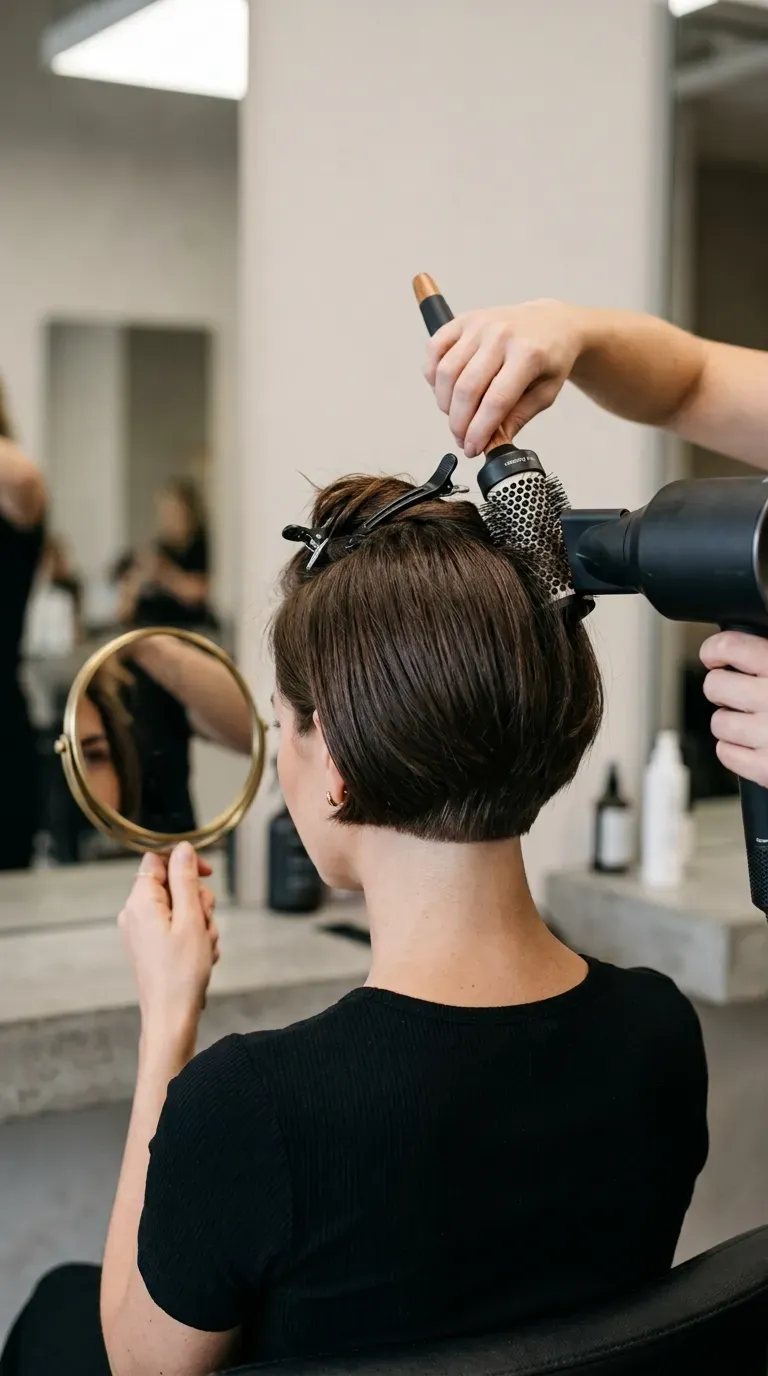
Why it works: Stacking shorter layers underneath the back section builds volume right where fine hair often falls flattest against the neck. The graduation also tapers smoothly into the front for a balanced shape.
Ask for: Ask for a graduated bob with stacked layers at the back and a smooth taper toward the front.
Products to help you get this look:
- a root-lift spray
- a medium round brush
- a blow-dryer with a concentrator nozzle
- sectioning clips
- a light finishing spray
17. Ultra-Short Ear-Length Pixie
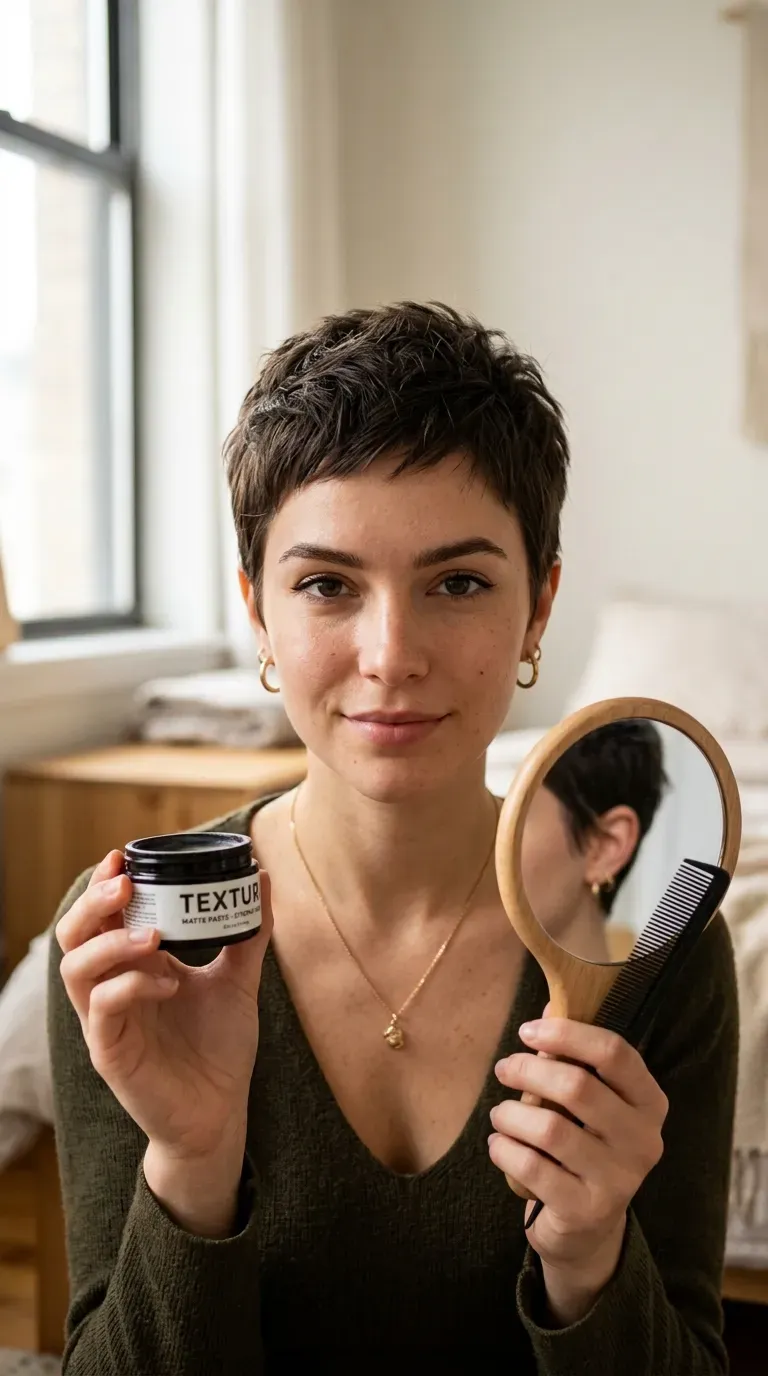
Why it works: At this length, there’s almost no distance between the root and the tip, so gravity has very little chance to pull the style flat. It’s one of the most reliable options for consistent all-day volume.
Ask for: Ask for an ultra-short pixie cut close above the ears with slight texture on top.
Products to help you get this look:
- a small amount of matte paste
- a fine-tooth comb
- a light-hold pomade
- a texturizing spray
- a boar-bristle brush
18. Barely-There Layered Bob
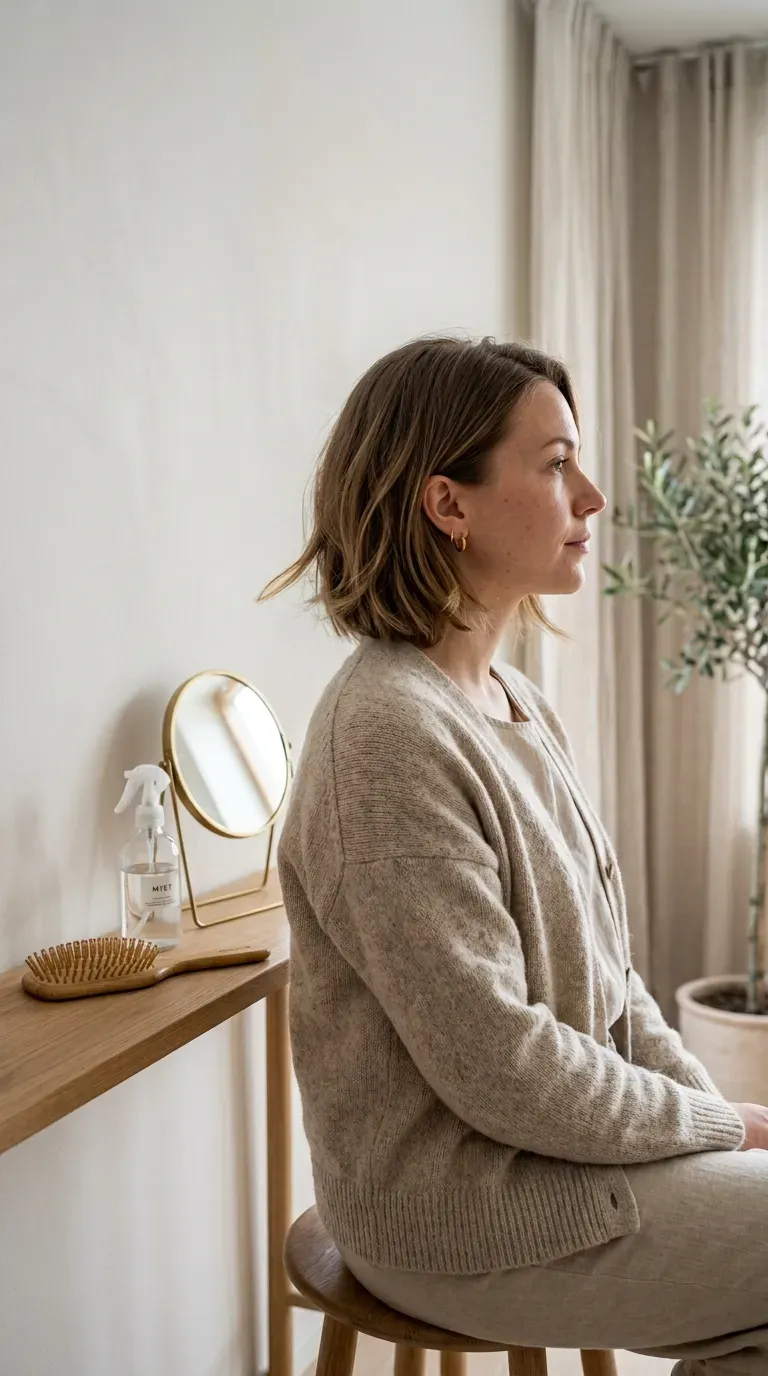
Why it works: Keeping the layering minimal preserves as much density as possible at the ends, since removing too much bulk can make fine hair look even thinner. A small amount of movement is added without sacrificing that fullness.
Ask for: Ask for internal layers only, with the outer perimeter left blunt for density.
Products to help you get this look:
- a lightweight leave-in conditioner
- a paddle brush
- a light shine spray
- a flexible-hold hairspray
- a smoothing serum used sparingly
19. Bob with Micro-Fringe
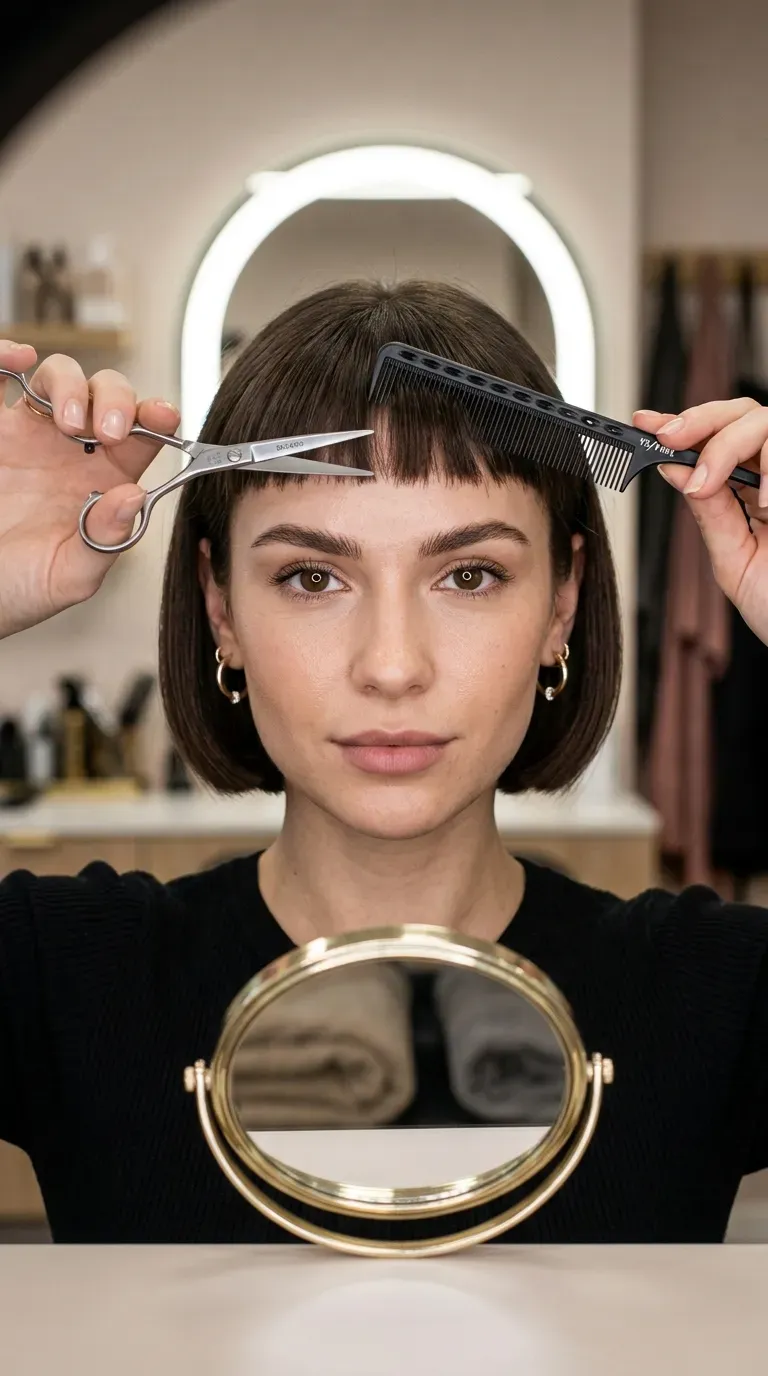
Why it works: A short, blunt micro-fringe adds a graphic block of hair right at the forehead, drawing the eye upward and making the whole style read as fuller. It also breaks up an otherwise plain hairline.
Ask for: Ask for a very short, blunt-cut micro-fringe above the brow line.
Products to help you get this look:
- a fine-tooth comb
- a small pair of precision scissors for at-home trims
- a light-hold finishing spray
- a smoothing cream
- a shine serum
20. Tapered Neckline Pixie
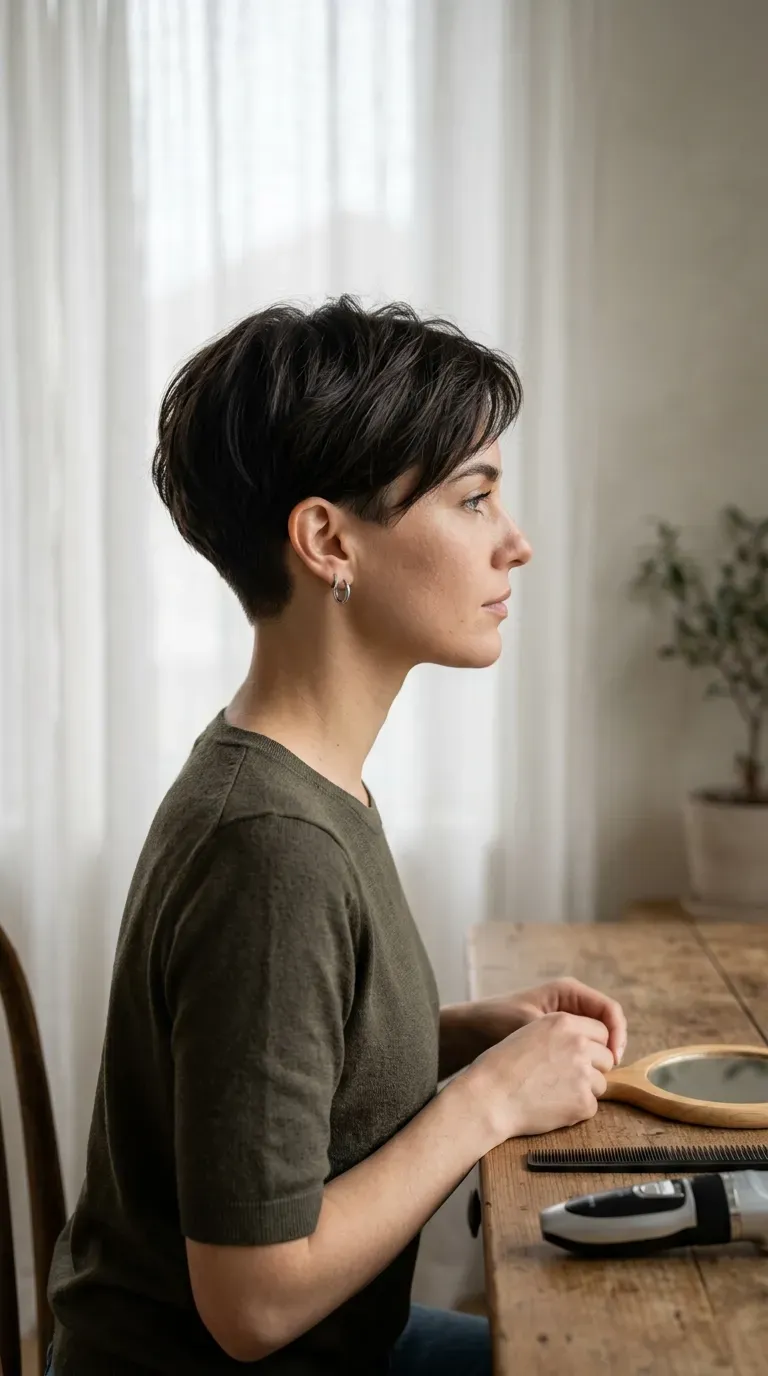
Why it works: Tapering the neckline keeps the silhouette neat and prevents any bulk from building up at the back, while the slightly longer top gives you room to build volume where it’s most visible.
Ask for: Ask for a tapered neckline with the top section left a bit longer for styling.
Products to help you get this look:
- a light-hold styling cream
- a fine-tooth comb
- a small round brush
- a texturizing spray
- a matte finishing wax
21. Deep Side-Part Textured Bob
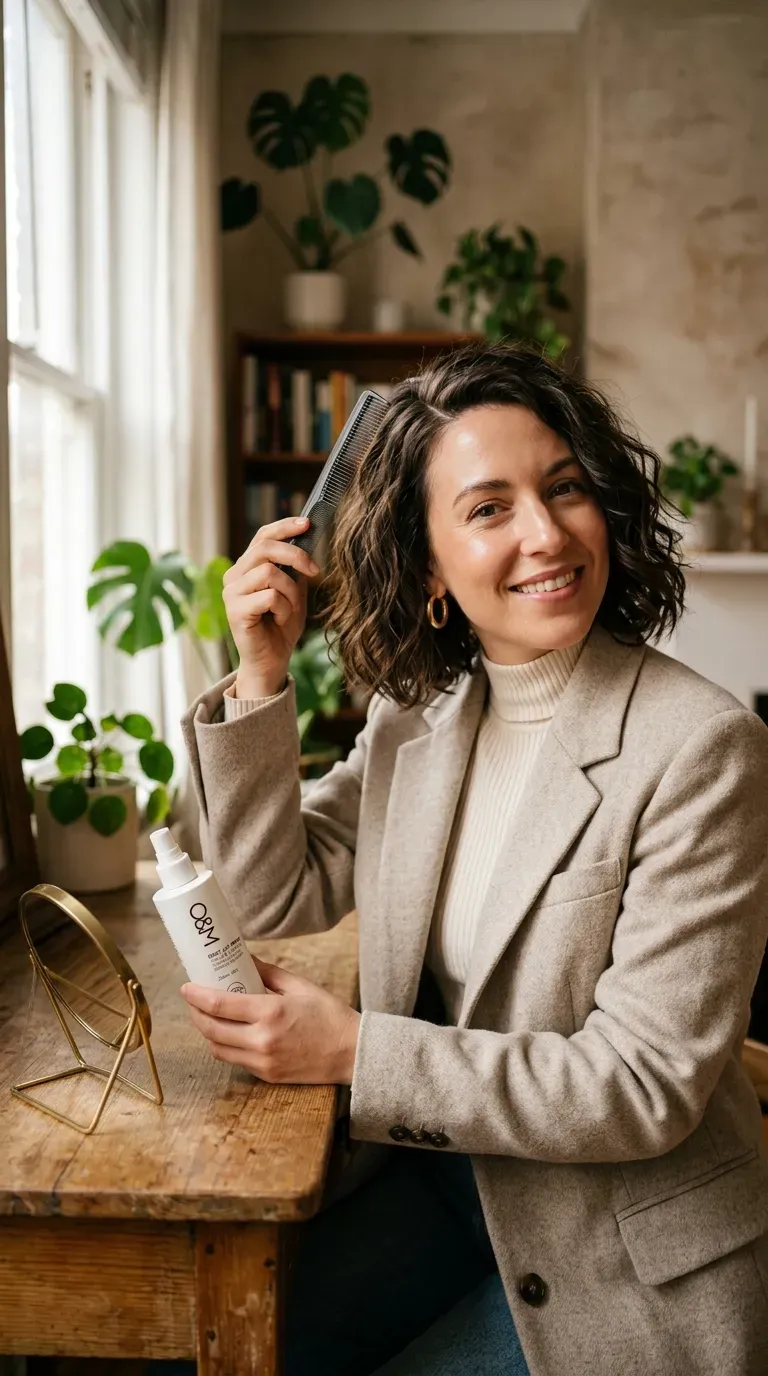
Why it works: A deep side part naturally lifts the roots on one side, since hair falls away from the part line at a steeper angle. Paired with light texturizing, it’s an easy way to add volume without changing the cut itself.
Ask for: Ask for a deep side part when your stylist finishes the cut, and keep it there for daily styling.
Products to help you get this look:
- a root-lift spray
- a fine-tooth comb
- a texturizing spray
- a boar-bristle brush
- a light-hold finishing spray
22. Short Beachy Wavy Bob
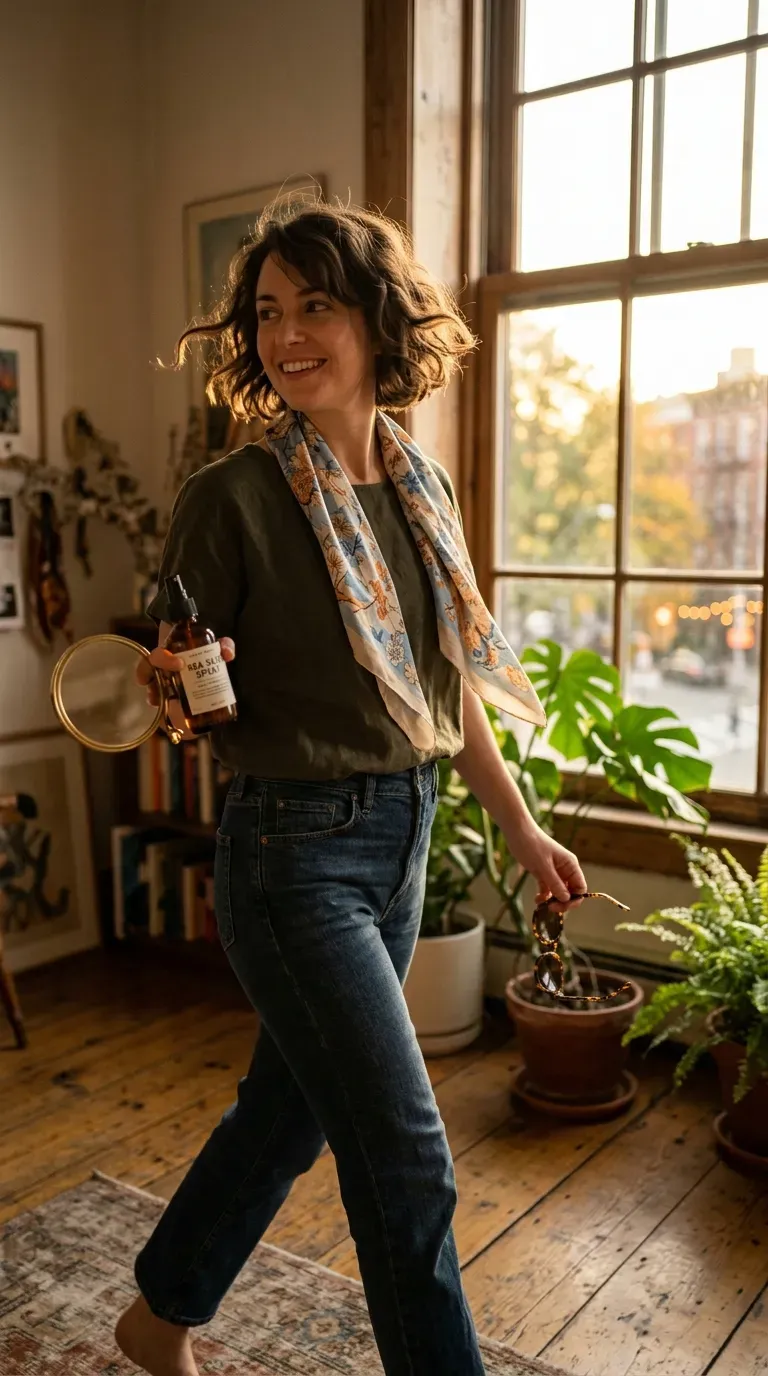
Why it works: Loose, beachy waves create texture across the entire length of the bob, which helps disguise thin strands better than a completely smooth finish. The relaxed shape also feels less precious for everyday wear.
Ask for: Ask for a short bob and request loose, undone waves rather than tight, defined curls.
Products to help you get this look:
- a texturizing sea-salt spray
- a curling wand for loose waves
- a wide-tooth comb
- a light-hold finishing spray
- a small amount of matte paste for the ends
23. Undercut Sides Cropped Pixie
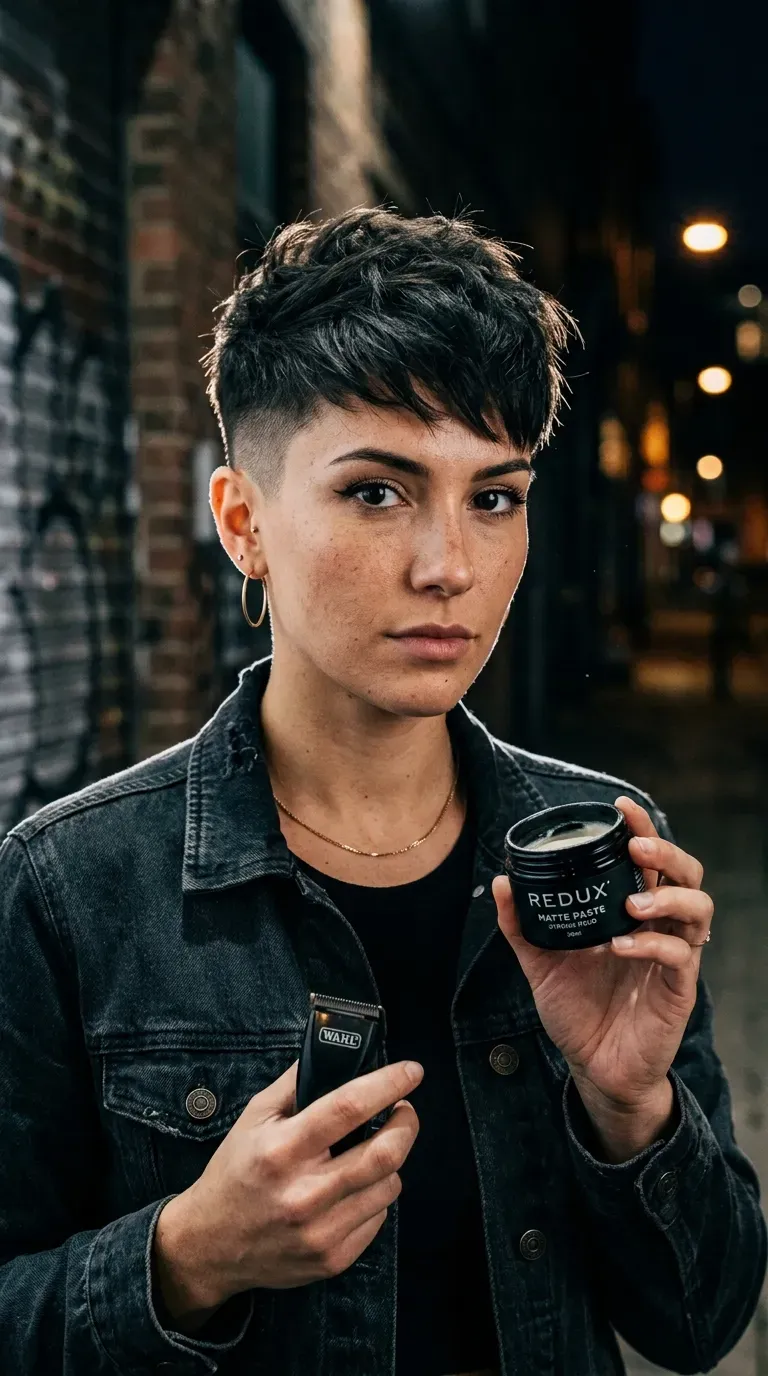
Why it works: The very short, closely cropped sides create sharp contrast against the slightly longer top, which makes the top section appear much fuller by comparison. It’s a bold way to maximize the look of volume where it counts.
Ask for: Ask for closely clipped undercut sides with a longer, textured top section.
Products to help you get this look:
- a matte texturizing paste
- clippers for maintaining the undercut
- a small styling comb
- a light-hold pomade
- a texturizing spray
24. Blunt One-Length Pixie
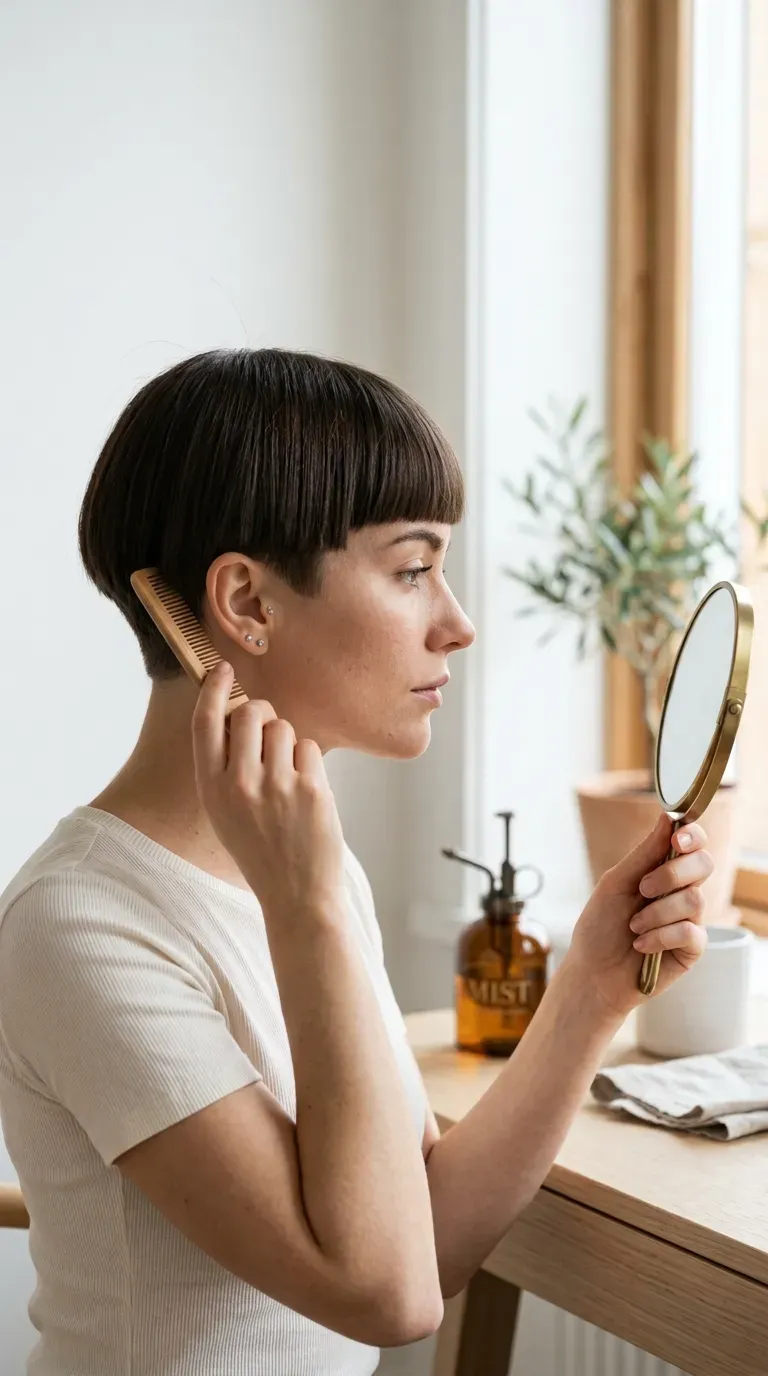
Why it works: With minimal layering, all the ends land at nearly the same length, creating the same density illusion as a blunt bob but in pixie form. It’s a good option for anyone who finds choppy layers too textured for their taste.
Ask for: Ask for a pixie with minimal layering so the ends land at one consistent length.
Products to help you get this look:
- a light-hold styling cream
- a fine-tooth comb
- a smoothing serum
- a small round brush
- a flexible-hold finishing spray
25. Bob with Curtain Bangs
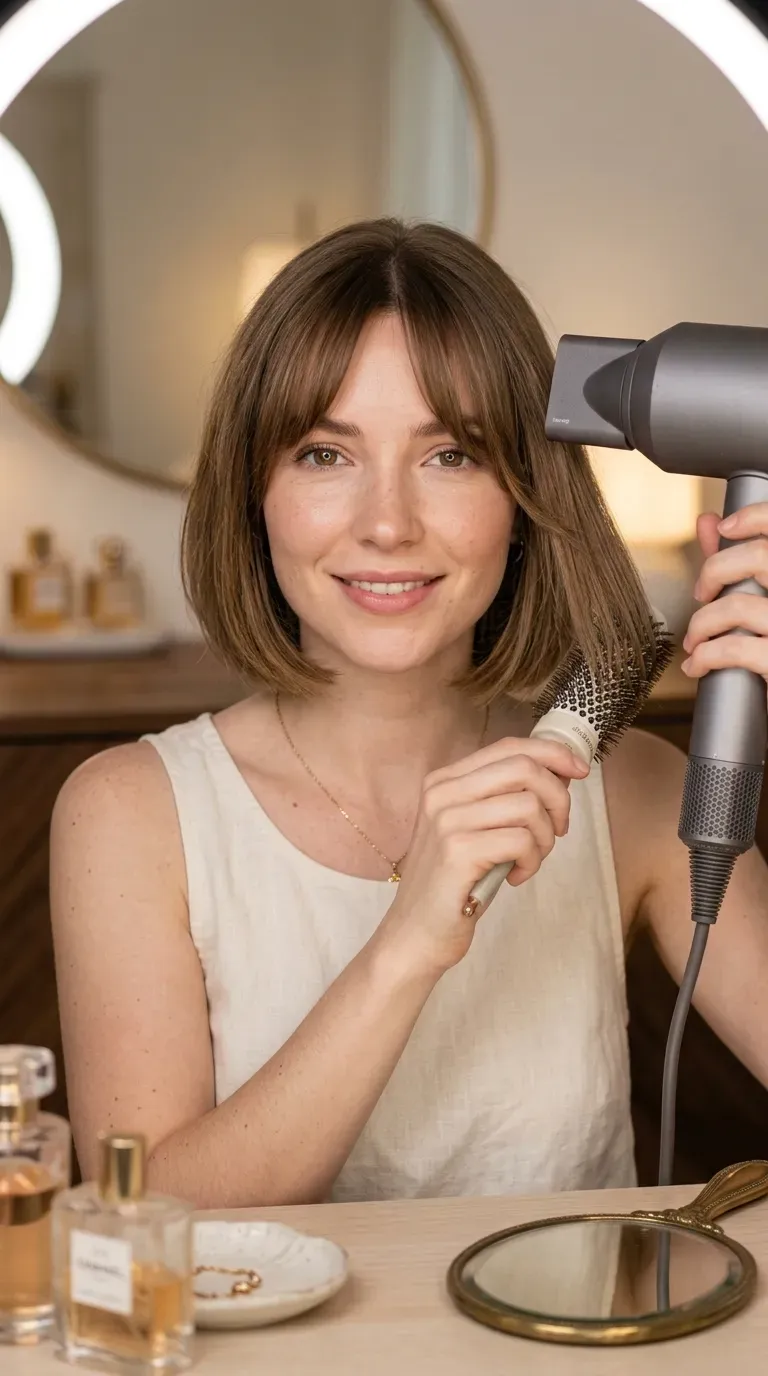
Why it works: Curtain bangs part naturally down the middle and frame both sides of the face, adding movement exactly where fine hair tends to look its thinnest — right at the part and hairline.
Ask for: Ask for curtain bangs cut to fall just above the cheekbones on each side.
Products to help you get this look:
- a small round brush
- a blow-dryer with a concentrator nozzle
- a lightweight styling cream
- a flexible-hold finishing spray
- a fine-tooth comb
26. Upward-Styled Volumized Crop
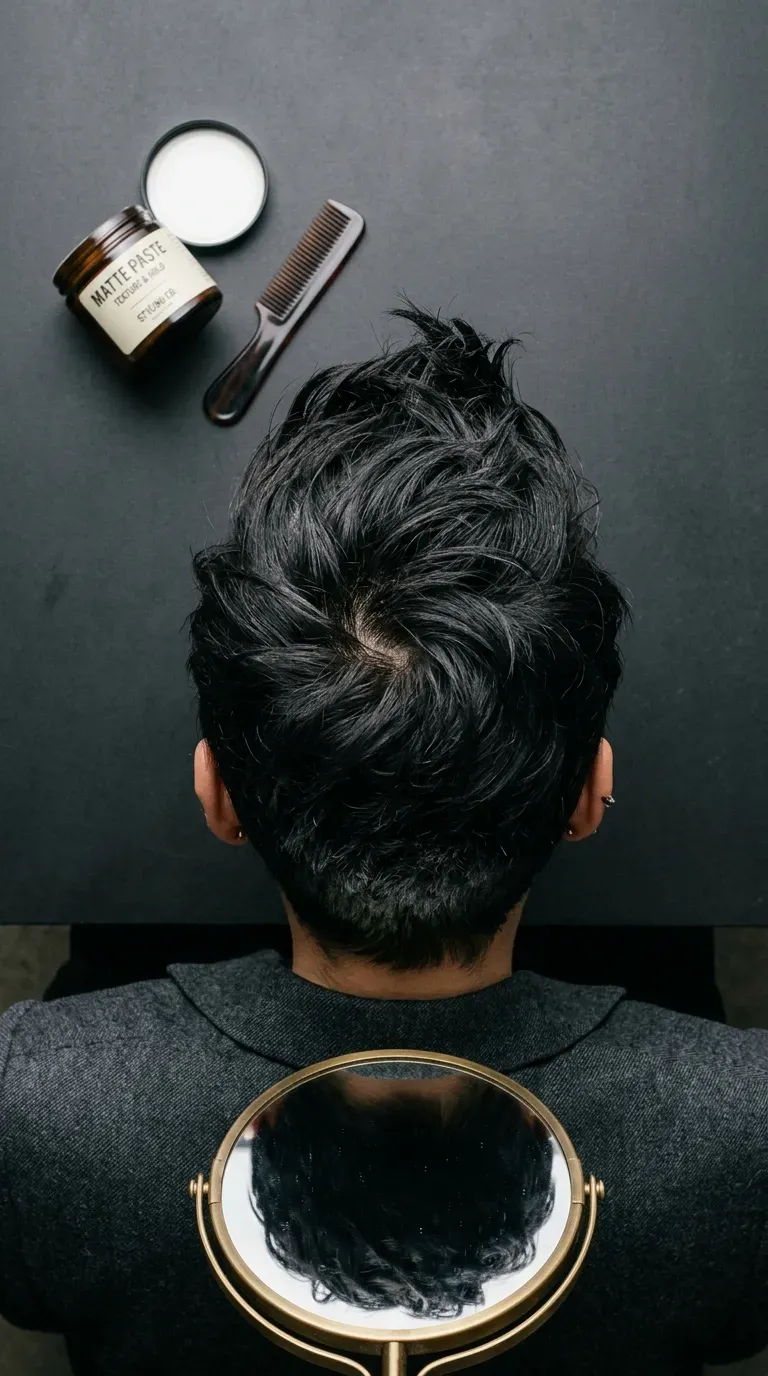
Why it works: Styling the longer top section upward and slightly forward maximizes height at the crown, the area most likely to fall flat on fine hair by midday. The short sides keep the rest of the cut simple to maintain.
Ask for: Ask for a crop with a slightly longer top section built specifically to be styled upward.
Products to help you get this look:
- a matte finishing paste
- a small styling comb
- a root-lift spray
- a light-hold gel for the sides
- a texturizing spray
27. Front-Heavy Angled Bob
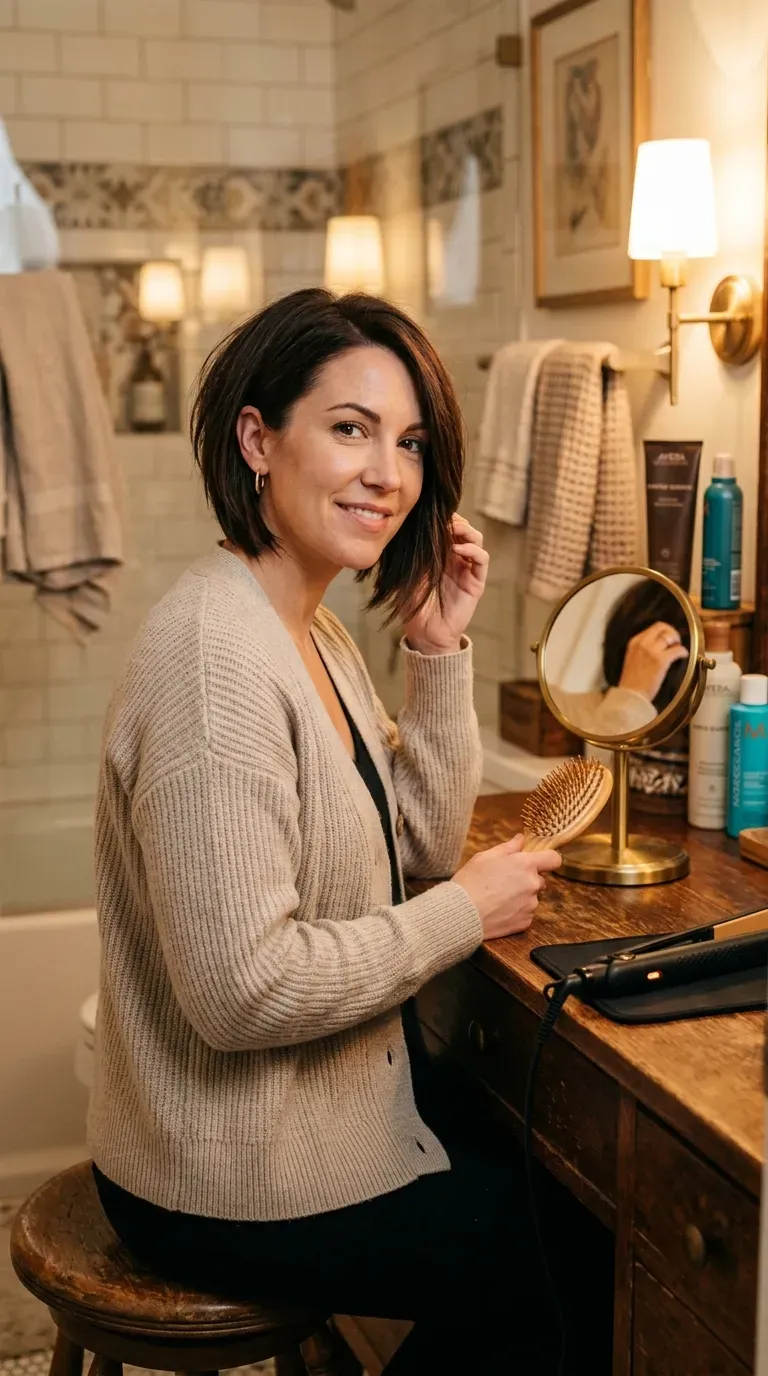
Why it works: The sharp angle from short to long keeps the eye moving along a diagonal line, making the cut feel fuller and more dynamic than a blunt, even bob would on the same hair.
Ask for: Ask for an angled bob that’s notably shorter at the back and longer toward the chin in front.
Products to help you get this look:
- a smoothing heat-protectant spray
- a ceramic flat iron
- a paddle brush
- a light shine spray
- a fine-tooth comb
28. Long Side-Swept Bang Pixie
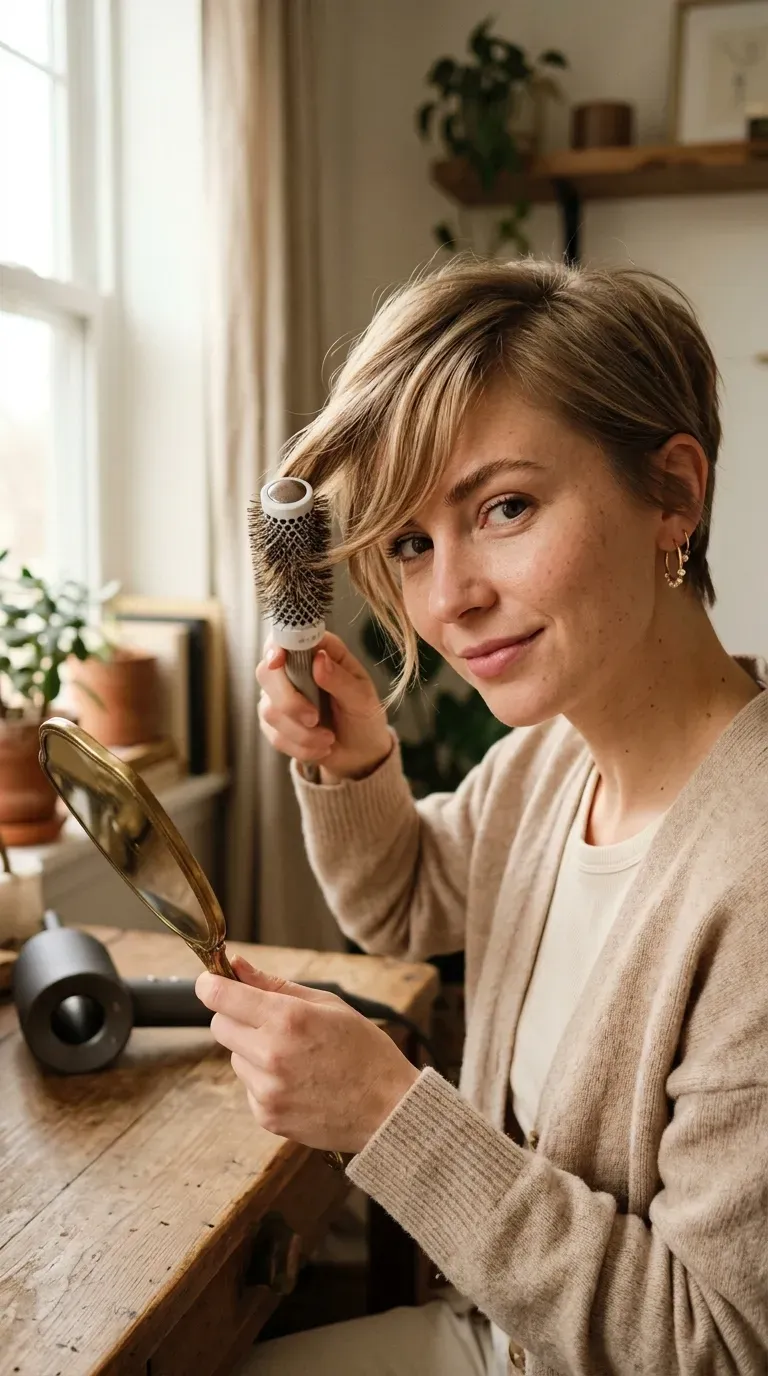
Why it works: Leaving one section longer to sweep across the forehead gives you a soft, face-framing option and more styling flexibility than an all-short pixie, without adding any real weight.
Ask for: Ask for a pixie with one longer front section left to sweep across the forehead.
Products to help you get this look:
- a lightweight styling cream
- a small round brush
- a flexible-hold finishing spray
- a fine-tooth comb
- a shine mist
29. Root-Permed Short Bob
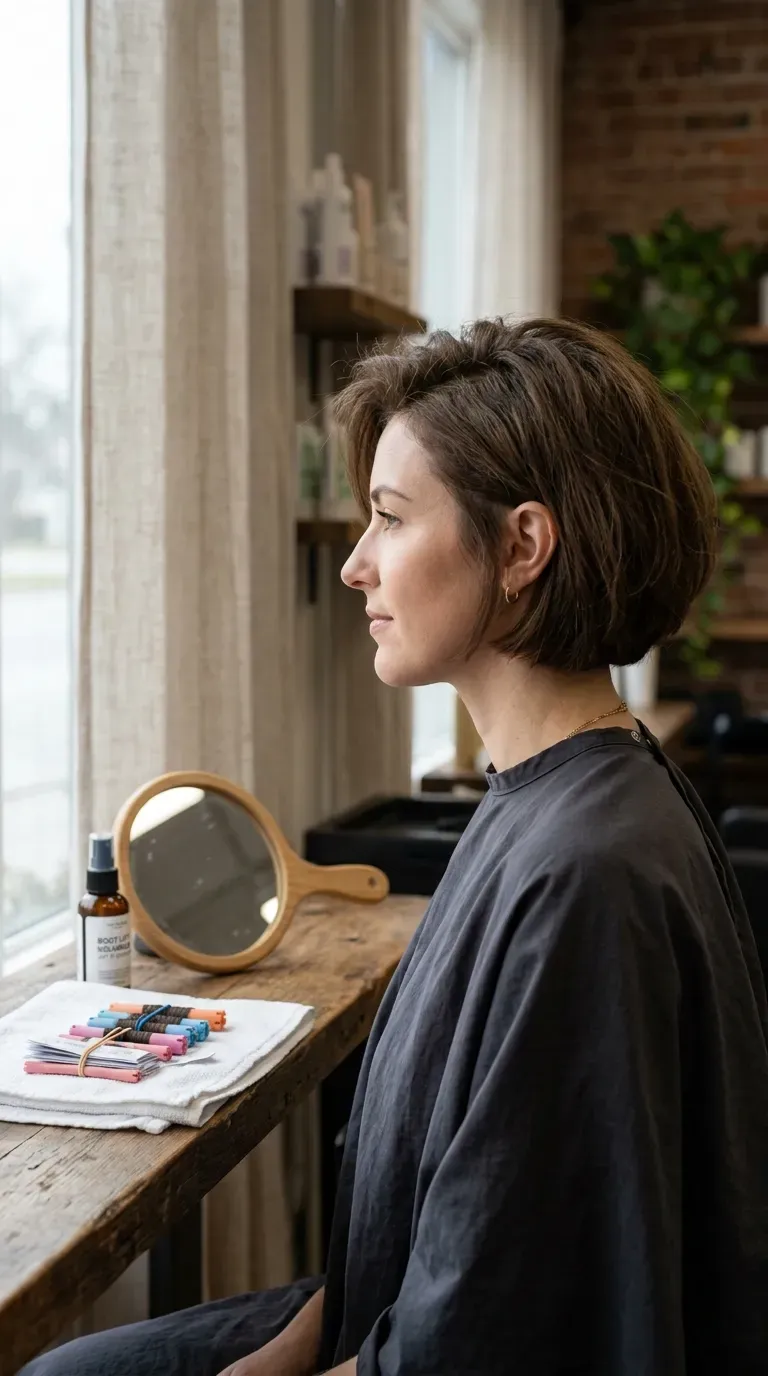
Why it works: A perm applied only at the roots lifts fine hair away from the scalp permanently, so volume is built into the hair itself rather than relying on daily styling to recreate it each morning.
Ask for: Ask a salon specifically for a root perm rather than a full-length perm, applied only near the scalp.
Products to help you get this look:
- a sulfate-free shampoo for permed hair
- a lightweight leave-in conditioner
- a diffuser attachment
- a light-hold curl spray
- a wide-tooth comb
30. Sleek Glossy Micro-Bob
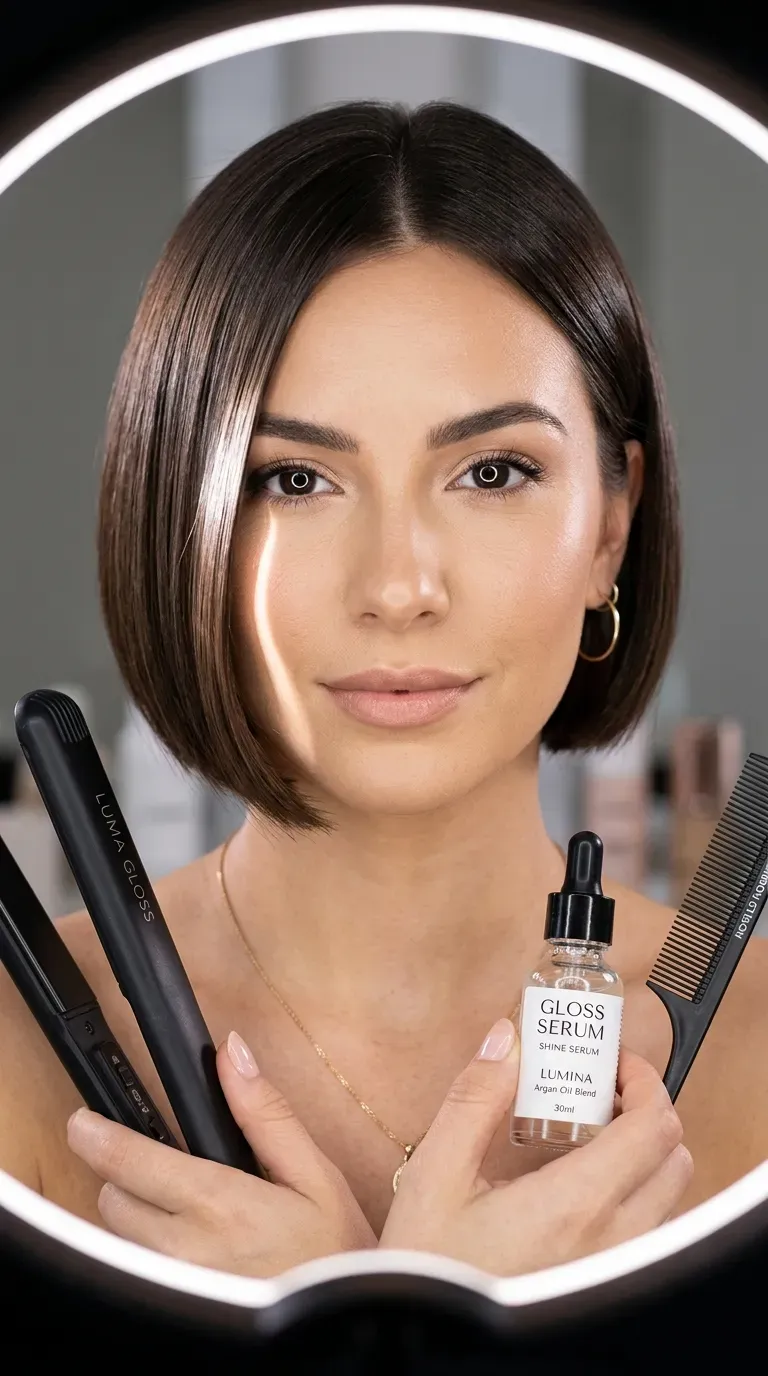
Why it works: A short, glossy, smooth bob proves fine hair doesn’t always need volume tricks — a clean, polished finish can look intentional and full simply because there’s no visible flyaway or gap between strands.
Ask for: Ask for a very short, blunt micro-bob and finish it smooth with a flat iron rather than adding texture.
Products to help you get this look:
- a smoothing heat-protectant spray
- a ceramic flat iron
- a lightweight shine serum
- a fine-tooth comb
- a light-hold finishing spray
FAQs
What’s the best everyday hairstyle for thin, fine hair? A textured pixie, a blunt bob with fringe, or a root-lift bob with an undercut nape are three of the most reliable everyday options. Each one either removes weight, blunts the ends, or lifts the roots — the three main strategies for making fine hair look fuller.
How to make thin, fine hair look fuller for everyday wear? Blow-dry your roots upside down or use a round brush to lift them before the rest of your hair dries. Stick to lightweight mousses and sprays instead of heavy creams, and try a deep side part, since it naturally lifts the roots on one side.
Do layers help thin, fine hair look thicker? It depends on the type of layering. Long, soft layers or internal layers that keep the perimeter blunt can add movement without sacrificing density, while very short, heavy layers can sometimes remove too much bulk and make hair look thinner at the ends.
Wrap-Up
The right short style for thin, fine hair usually comes down to shape, softness, and where the weight sits. A blunt line adds density, layers add movement, and a good part or undercut adds lift right where it’s needed. Whichever style you choose, pick the one that fits how much time you actually want to spend styling it every day — that’s what will make it feel effortless, not just look it.