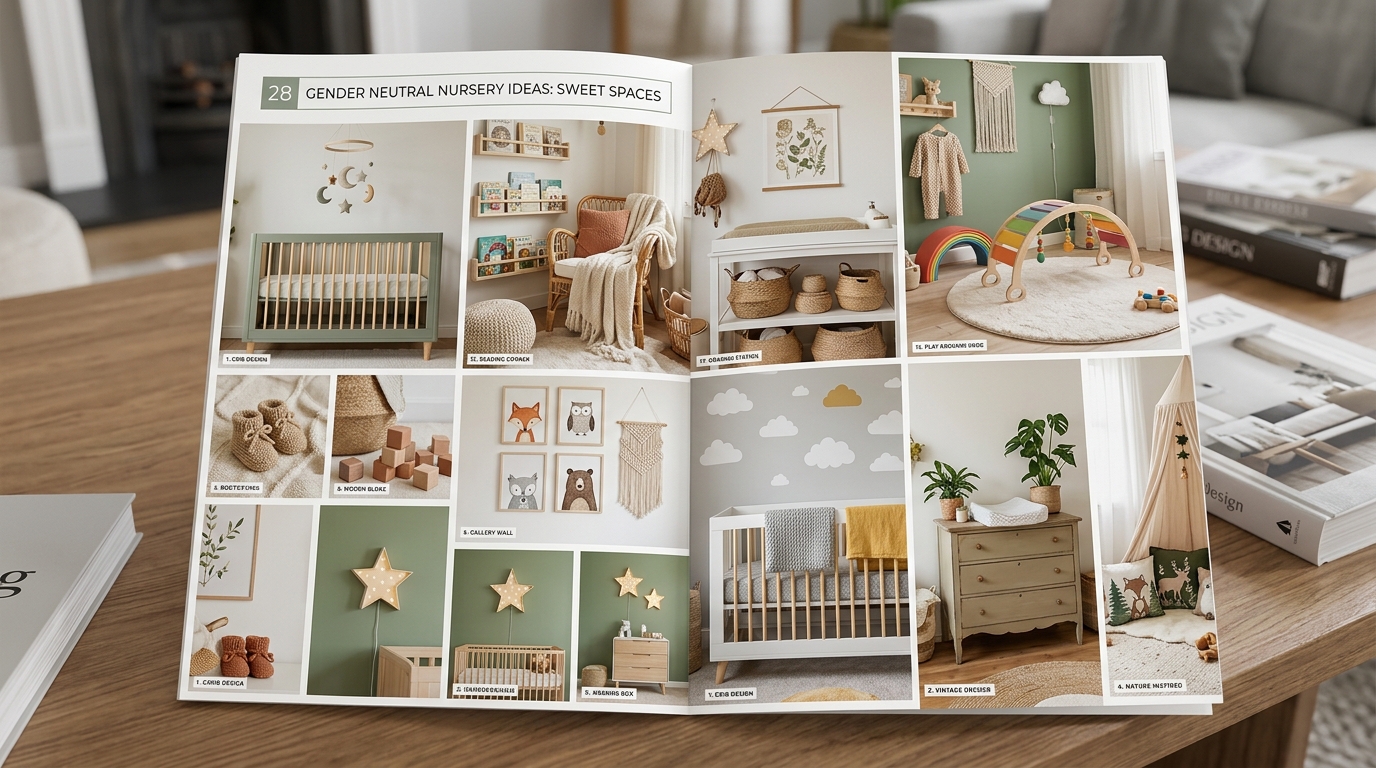
There’s something especially lovely about a nursery that feels soft, timeless, and full of personality without leaning too heavily in one direction. A gender neutral nursery gives you that freedom—it feels calm, thoughtful, and easy to grow with as your baby’s world expands. The best gender neutral nursery ideas balance beauty with real-life function, so the room works at 2 a.m. as well as it does in photos. Ahead, you’ll find 28 warm, actionable ideas that blend comfort, storage, texture, and lasting style. Here are 28 ideas worth saving.
Why Gender Neutral Nursery Ideas Work So Well
Gender neutral nursery ideas feel timeless because they focus less on clichés and more on atmosphere. Instead of relying on overly themed color palettes, they build a room through softness, balance, and materials that age well. That gives the nursery a calmer foundation and makes it easier to adapt as your child grows from baby to toddler.
The look is often defined by warm whites, greige, sage green, oatmeal, clay, muted blue, and soft wood tones. Natural oak, cane, linen, cotton, boucle, jute, and wool all add texture without making the room feel busy. Those layers matter in a nursery, where gentle contrast and tactile materials help a space feel cozy rather than flat.
This style is also having a real moment because parents are drawn to rooms that feel personal, elevated, and less disposable. Pinterest boards are full of unisex nursery design, earthy baby room inspiration, and cozy nursery aesthetic ideas that look beautiful now and still work later. It is a practical design move as much as a visual one.
Even a small nursery can pull this off beautifully. A compact room with smart storage, one soft paint color, and a few natural textures can feel warm and complete without being crowded. That flexibility is a big reason gender neutral nursery decor continues to resonate.
Warm Greige Walls with a Natural Oak Crib
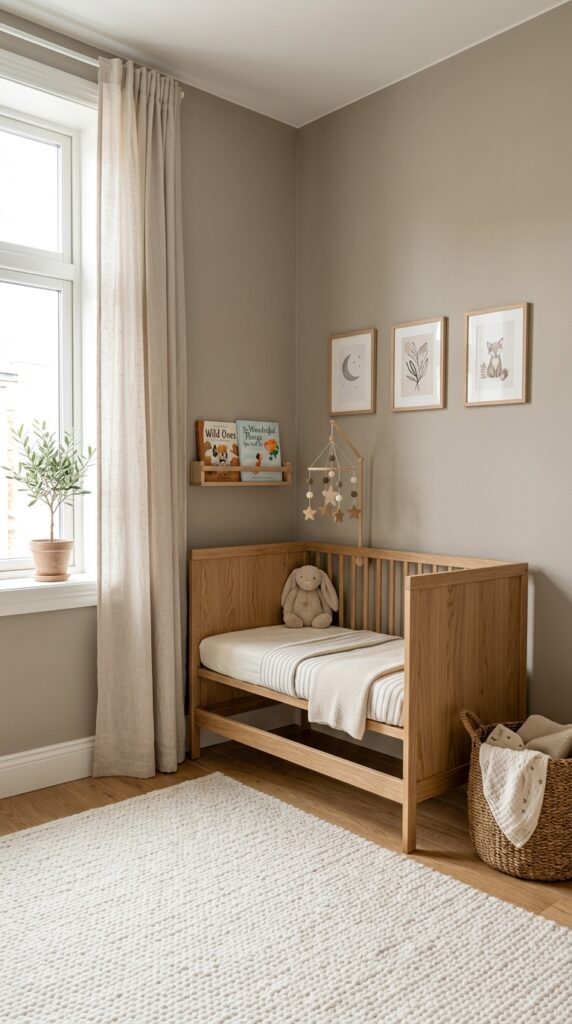
Vibe sentence: This room feels calm and cocooning, like the nursery version of a deep breath.
What makes it work: Warm greige gives you more depth than plain white while still acting like a neutral backdrop. Paired with natural oak, it creates gentle contrast that feels grounded and timeless instead of theme-heavy.
How to achieve it: Choose a paint color with beige undertones rather than cool gray, especially in rooms with limited sunlight. Pair it with an unfinished or matte oak crib and keep bedding simple so the wood becomes the hero.
💡 If repainting the whole room feels like too much, start with one greige accent wall behind the crib.
Sage Green Walls for a Soft Nature-Inspired Look
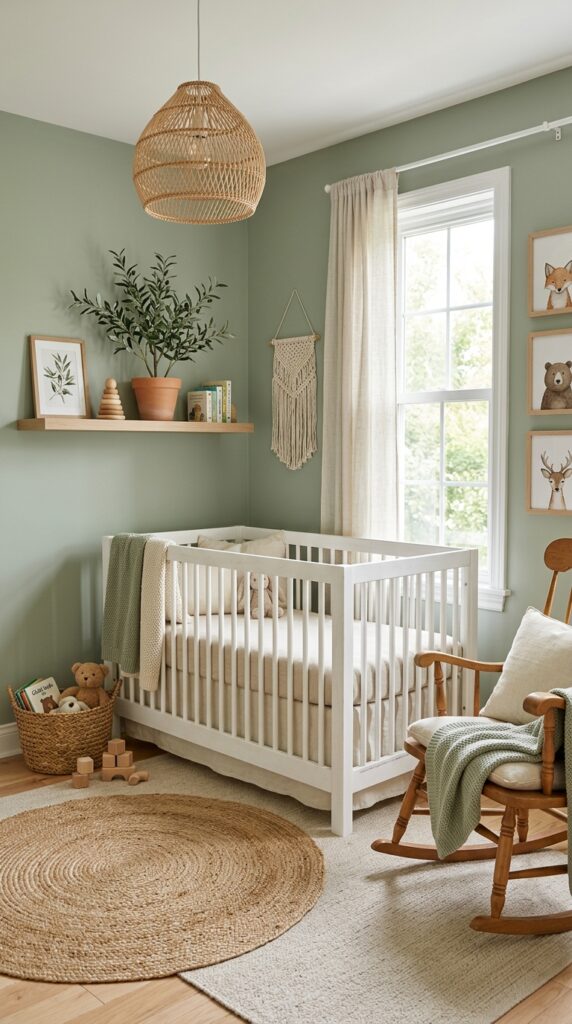
Vibe sentence: It feels fresh and restful, with just enough color to make the room feel special.
What makes it work: Sage is one of the easiest neutral nursery colors because it reads earthy rather than sugary. It also pairs beautifully with white, oak, cane, and brass, which makes styling the rest of the room much easier.
How to achieve it: Use a muted sage with gray undertones instead of anything too bright or minty. Repeat the tone in small ways through a blanket, changing pad cover, or artwork for a cohesive finish.
Soft Striped Wallpaper That Adds Quiet Movement
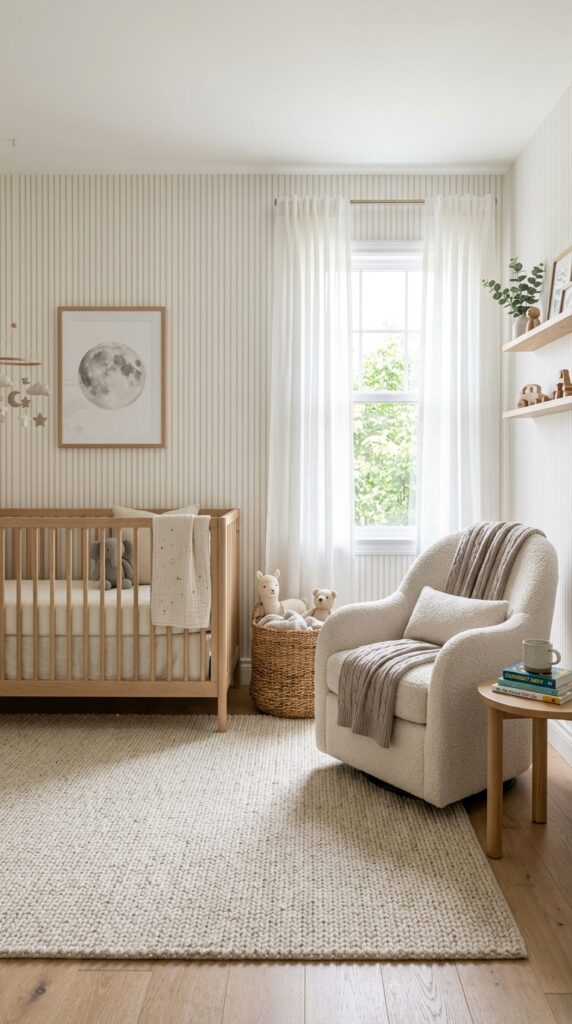
Vibe sentence: The space feels light and airy, with a softness that still has a little visual rhythm.
What makes it work: Thin stripes add movement without overwhelming a nursery the way busier prints can. They also subtly draw the eye upward, which helps small nurseries feel taller and less boxy.
How to achieve it: Choose wallpaper in ivory and sand or oatmeal and white for a barely-there look. Keep furniture simple and low-contrast so the stripe remains gentle instead of becoming fussy.
Olive Accent Wall Behind the Crib
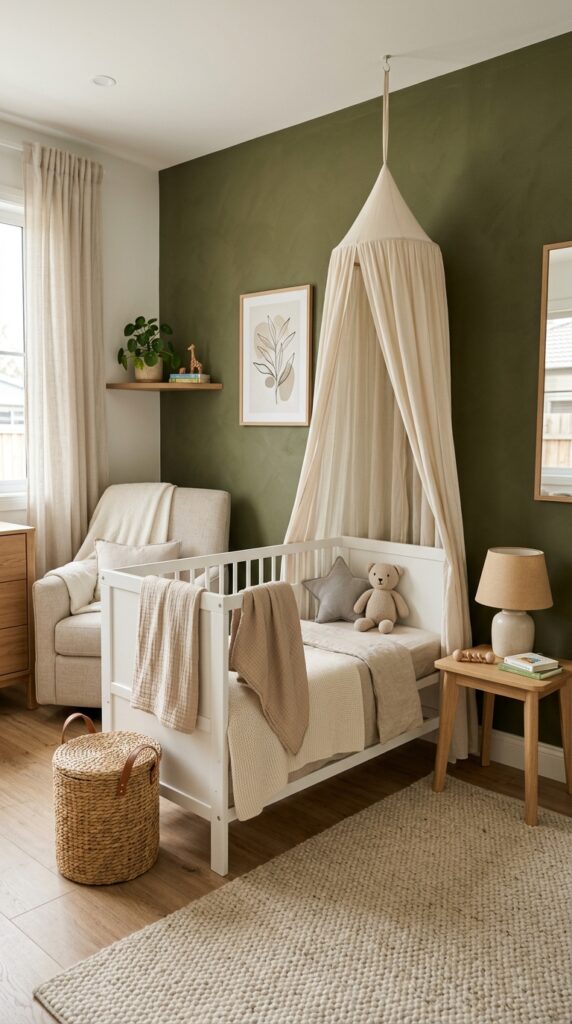
Vibe sentence: This look feels grounded and intimate, giving the nursery a little more depth without losing softness.
What makes it work: Olive creates stronger contrast than sage, so it works beautifully as a single focal wall. The deeper tone makes white furniture feel crisper and helps lighter textiles stand out.
How to achieve it: Paint only the crib wall if you want color without shrinking the room. Choose an olive with brown-gray undertones, then balance it with ivory curtains and a light rug.
💡 An accent wall is often the easiest way to add personality without committing to a whole-room color.
Mushroom Paint with Oatmeal Linen Drapes
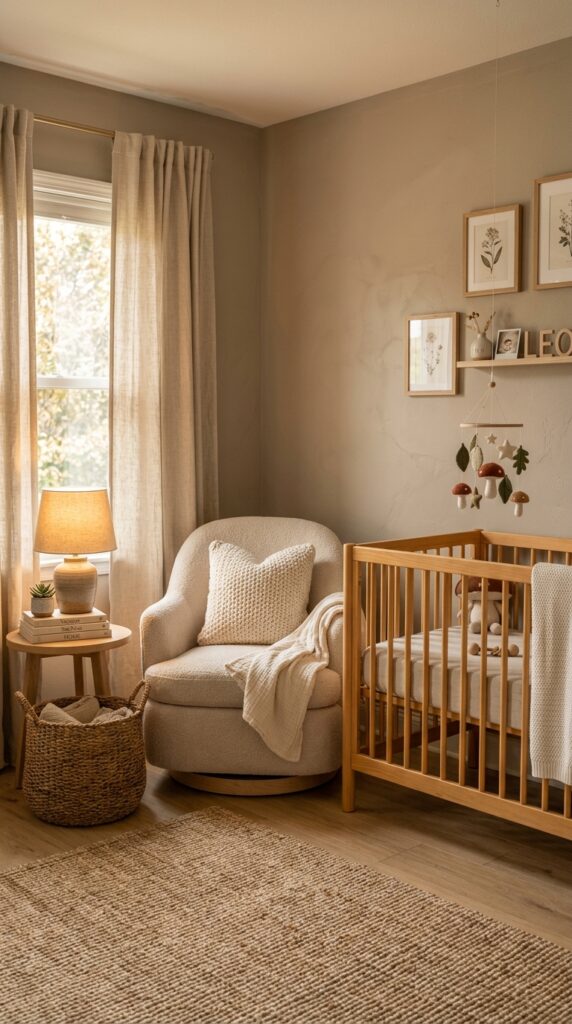
Vibe sentence: The room feels quiet and wrapped in softness, almost like a favorite cashmere blanket.
What makes it work: Mushroom sits between taupe and greige, so it gives the room depth without reading too pink or too gray. Linen drapes add relaxed texture and soften hard window lines beautifully.
How to achieve it: Pick a washable linen-blend curtain in oatmeal or flax and hang it close to the ceiling for height. Keep the wall color matte so the whole palette feels velvety and calm.
A Woven Pendant Light for Gentle Texture Overhead
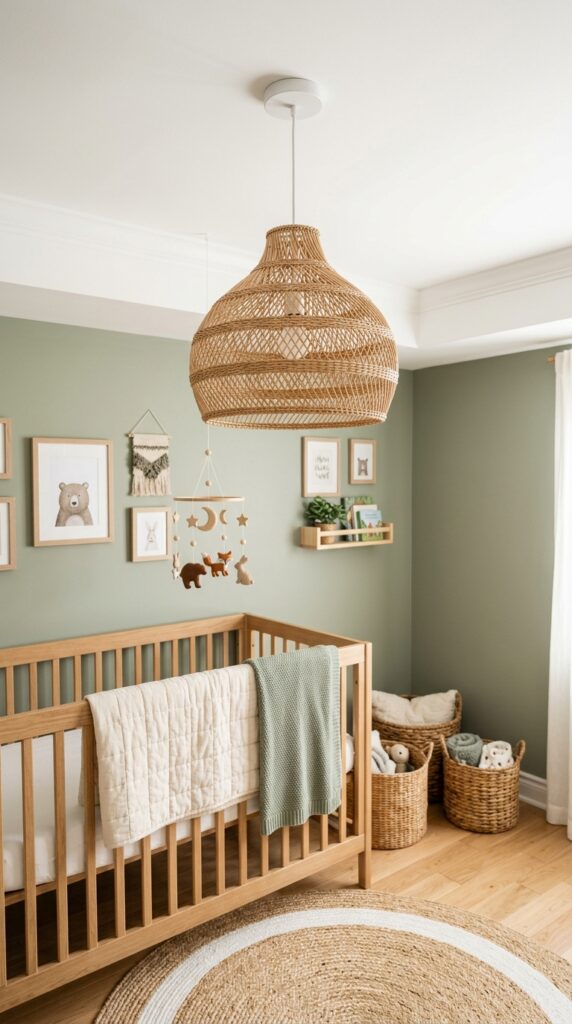
Vibe sentence: This detail makes the room feel warm and designed, even when the rest of the nursery stays simple.
What makes it work: Overhead lighting is one of the biggest visual surfaces in a room, so swapping a basic fixture changes the mood fast. Woven shades bring texture and filter light in a softer way than plain glass.
How to achieve it: Choose a pendant with a diffuser or use a warm bulb around 2700K to avoid harsh shadows. Make sure the scale suits the room so it feels intentional, not bulky.
💡 A new ceiling light can make a basic nursery feel finished long before the styling is complete.
A Dresser That Doubles as a Changing Station
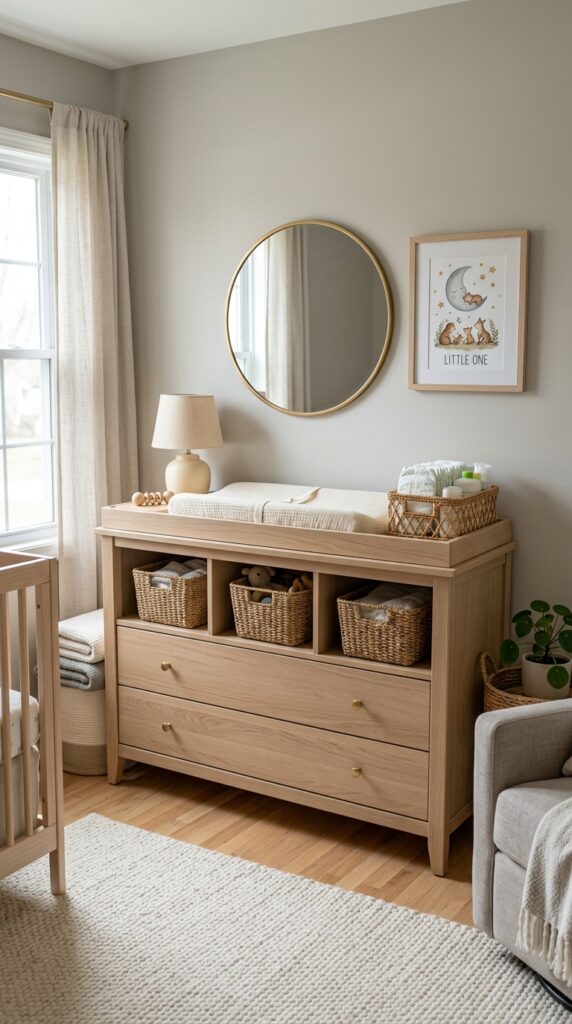
Vibe sentence: The nursery feels more grown-up and polished when storage looks like furniture instead of baby gear.
What makes it work: A real dresser grounds the room and gives you closed storage, which is essential in a nursery. It also transitions far better into toddler years than a stand-alone changing table.
How to achieve it: Choose a dresser about waist height and add a secure changing topper or contoured pad. Look for solid wood or quality veneer in oak, walnut, or soft painted finishes that can age with the room.
Book Ledges That Turn Covers into Wall Art
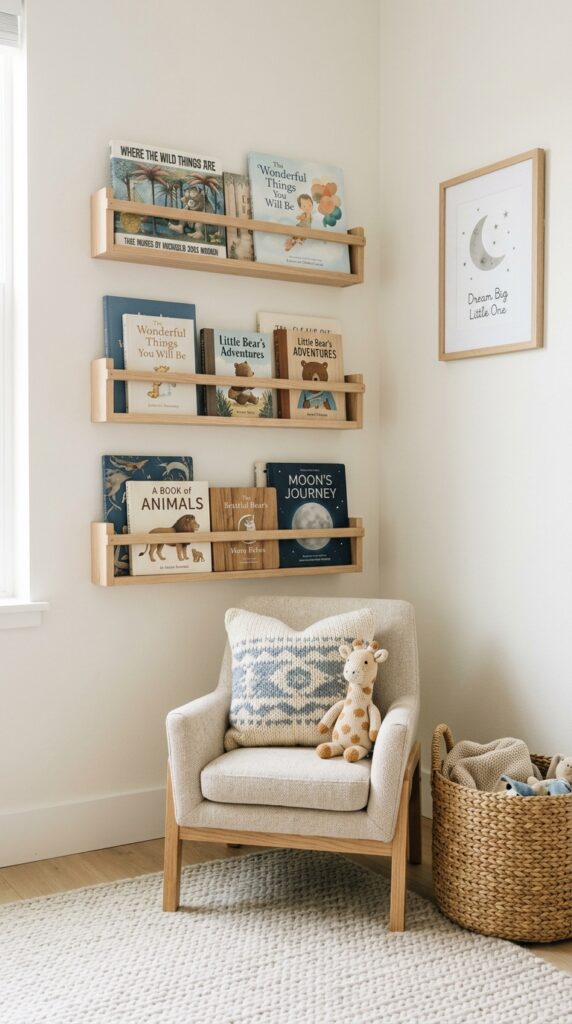
Vibe sentence: This corner feels sweet and thoughtful, adding color and personality without visual clutter.
What makes it work: Forward-facing book covers bring art, story, and softness into the nursery all at once. Slim ledges keep the wall light, which is especially helpful in a small nursery.
How to achieve it: Install two or three narrow ledges low enough to reach later on. Choose books with muted covers in sage, cream, rust, or dusty blue so the display feels cohesive.
Gender Neutral Nursery Ideas with Framed Animal Sketches
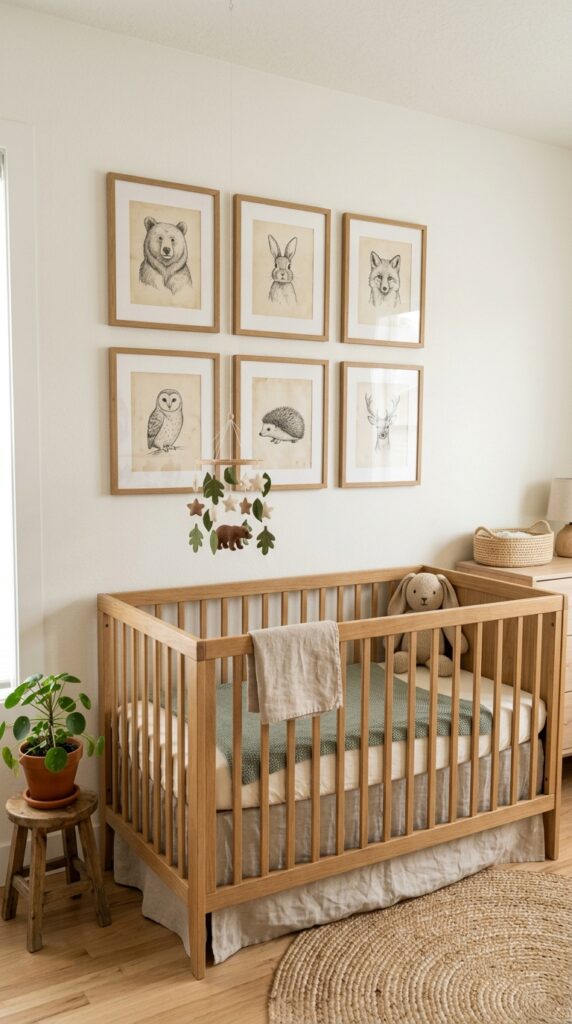
Vibe sentence: The space feels storybook-sweet without tipping into anything too themed or overly precious.
What makes it work: Sketch-style art brings personality while keeping the palette soft and refined. Animal subjects feel playful for a nursery, but the restrained linework makes them timeless enough to last.
How to achieve it: Use matching or near-matching wood frames to keep the gallery calm. Choose art in sepia, charcoal, or muted watercolor rather than bright primary colors for a more elevated look.
💡 Printable art is an easy budget upgrade when you want the wall to feel finished fast.
A Soft Checkerboard Rug in Neutral Tones
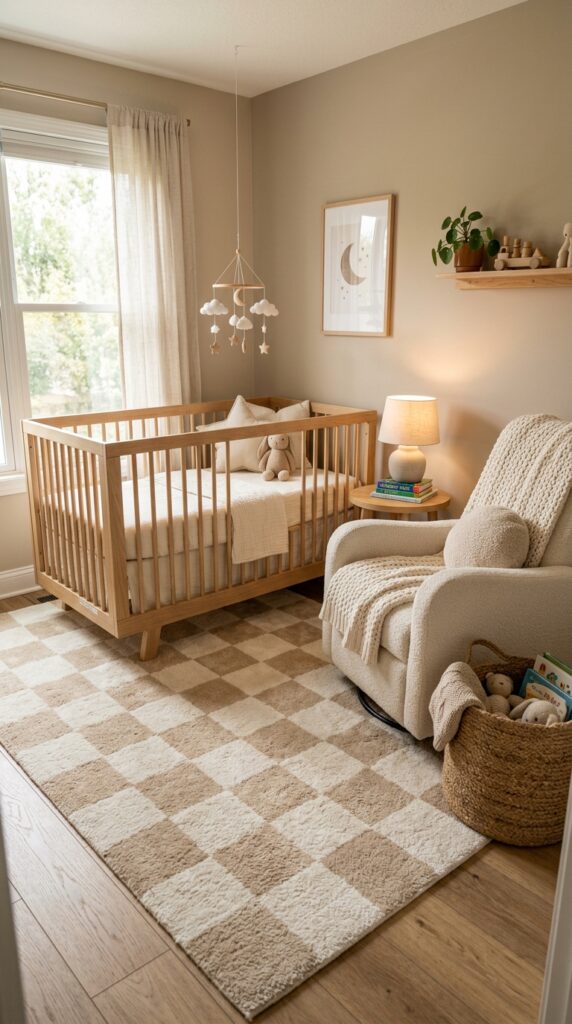
Vibe sentence: It feels playful in a very quiet way, adding just enough pattern to keep the room from feeling flat.
What makes it work: A checkerboard pattern introduces rhythm without the busyness of floral or novelty prints. In cream and sand, it reads modern and soft rather than loud.
How to achieve it: Look for a washable or low-pile wool-blend rug with subtle contrast. Keep the rest of the room fairly simple so the floor pattern can add movement without competing with wall decor.
A Cane-Front Wardrobe for Beautiful Hidden Storage
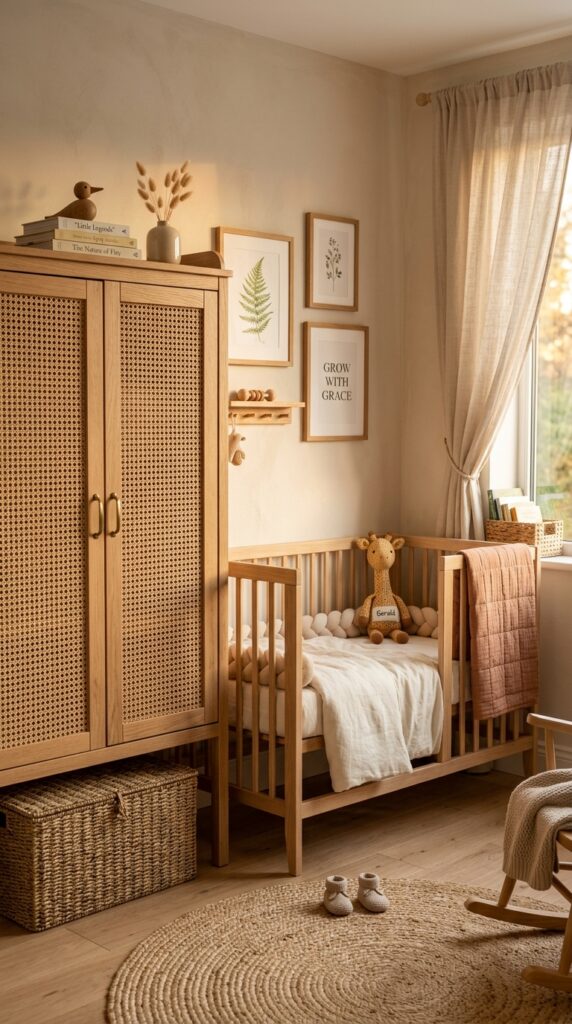
Vibe sentence: This makes the room feel collected and furniture-forward instead of overloaded with visible baby storage.
What makes it work: Cane brings airy texture, which helps a larger storage piece feel lighter. Closed doors also keep diapers, wipes, extra blankets, and tiny clothes from turning into everyday visual clutter.
How to achieve it: Choose a wardrobe with shallow depth if the nursery is small. Pair it with a matching wood tone elsewhere, like shelves or the crib, so the room feels cohesive.
💡 If a full wardrobe is too expensive, cane door fronts or inserts can upgrade an existing cabinet beautifully.
A Cloud Mobile in Linen and Wood
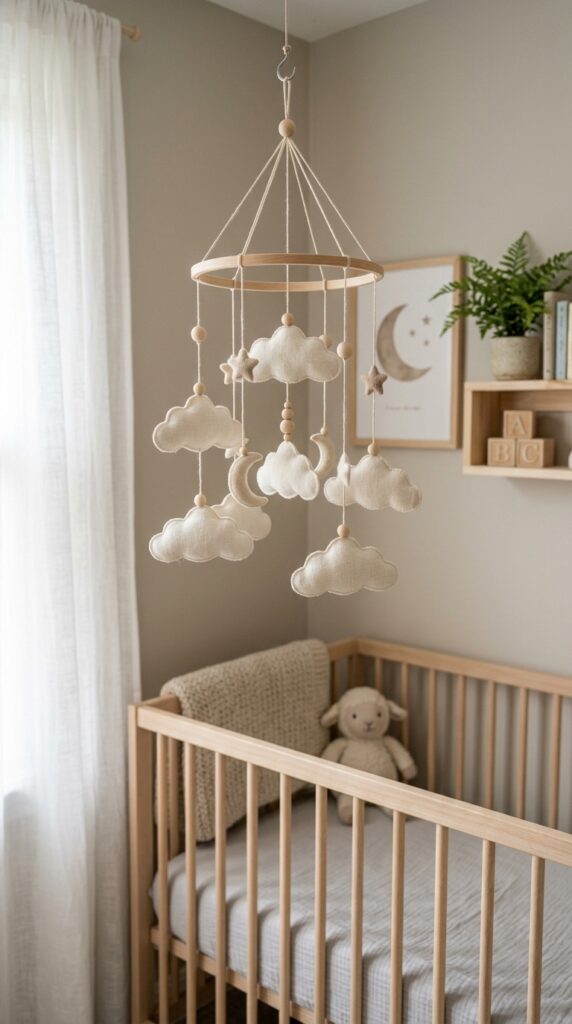
Vibe sentence: The detail feels airy and dreamy, adding movement without shouting for attention.
What makes it work: Mobiles bring a sense of softness overhead, but the best ones use shape and texture instead of bright plastic color. Linen and wood fit beautifully into a cozy nursery aesthetic.
How to achieve it: Choose a handmade or minimal mobile in fabric, felt, or unfinished wood. Keep it simple and hang it in a safe position above the crib area according to current nursery safety guidance.
Two-Tone Beadboard for Gentle Architecture
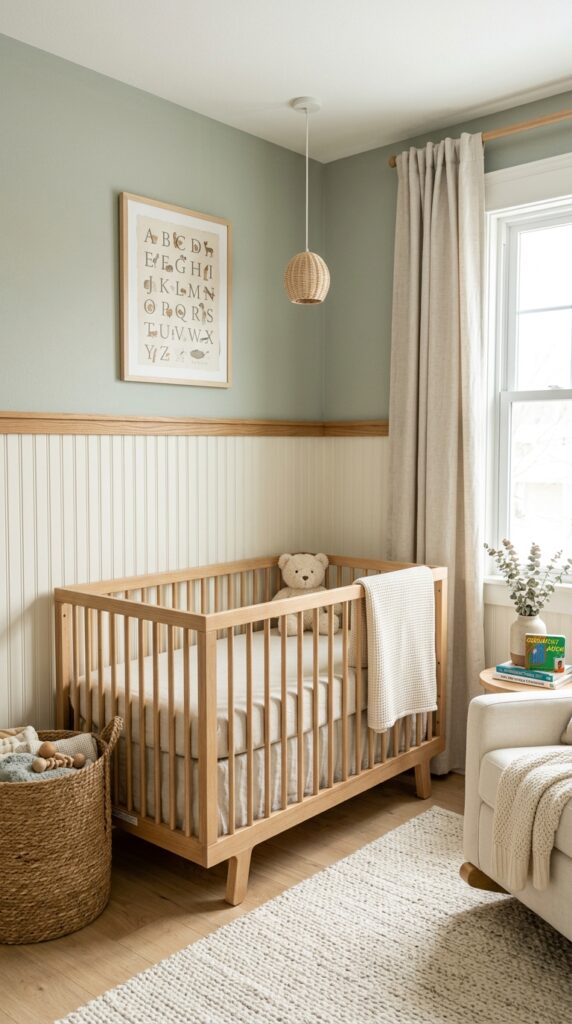
Vibe sentence: The room feels classic and quietly tailored, with more character than plain drywall ever gives.
What makes it work: Beadboard adds texture and shadow, which makes a nursery feel finished even before the accessories go in. The two-tone paint split also helps small rooms feel grounded while keeping the upper walls light.
How to achieve it: Install moisture-resistant beadboard to about one-third wall height, then top with a slim rail. Paint the lower half warm white and the upper wall sage or greige for subtle contrast.
A Reading Corner with a Low Shelf and Floor Cushion
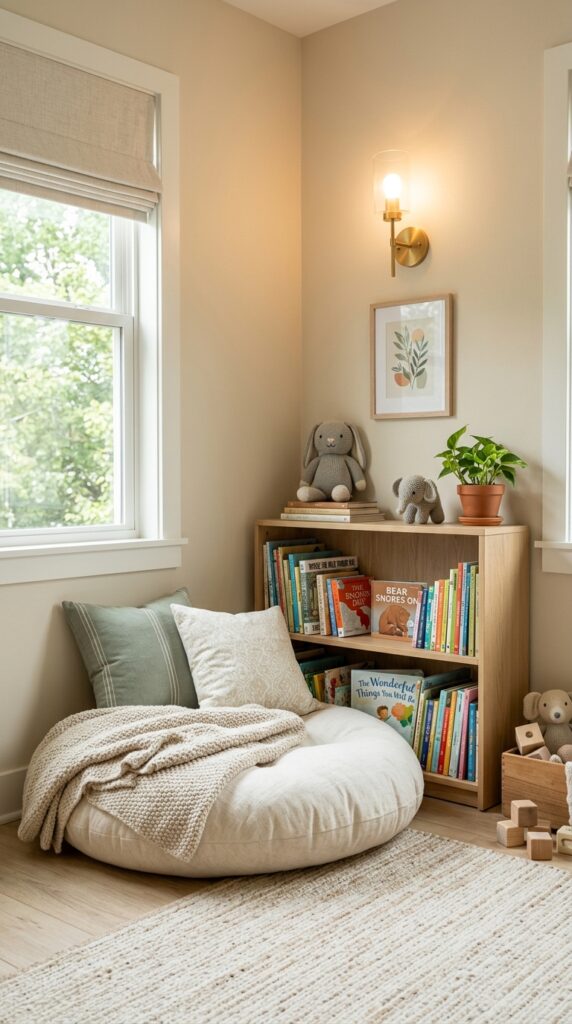
Vibe sentence: This corner feels tender and lived-in, like a space designed for slow bedtime rituals.
What makes it work: A dedicated reading zone adds purpose to an unused corner and breaks the room into gentle activity areas. Lower furniture also keeps the nursery visually open and approachable.
How to achieve it: Use a short shelf or ledge unit and add one oversized washable floor cushion in boucle or cotton canvas. Layer in a plug-in wall sconce or table lamp for softer evening light.
💡 A simple basket of books beside a floor cushion can create the same mood without buying new furniture.
A Vintage-Inspired Washable Runner Beside the Crib
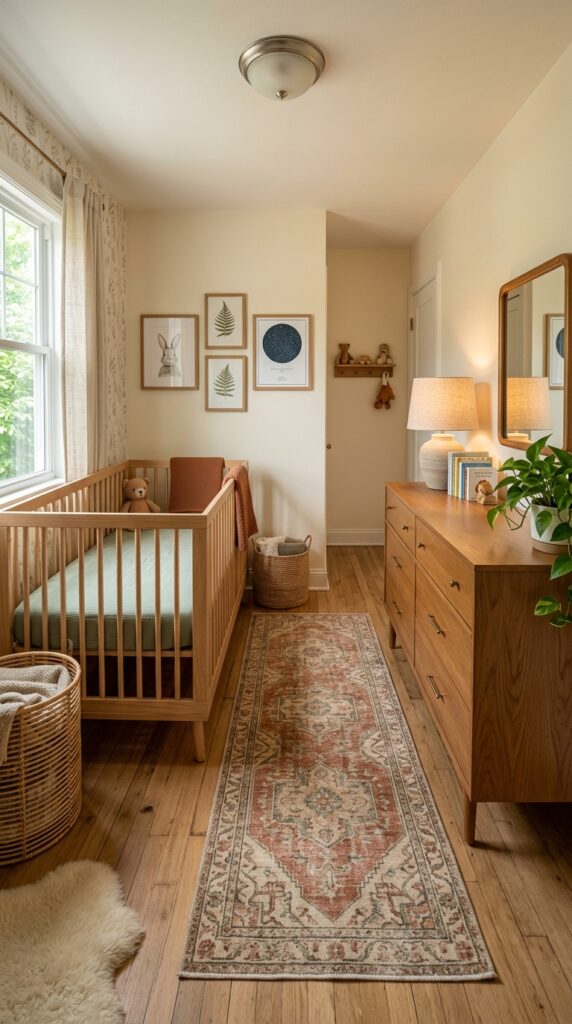
Vibe sentence: The room feels layered and cozy, with just enough pattern to make the floor feel intentional.
What makes it work: A runner is ideal beside the crib or changing station because it softens the space where you stand most. A faded pattern hides lint and small messes better than a plain pale rug.
How to achieve it: Choose a washable runner with muted rust, sage, or taupe tones instead of bright nursery colors. Make sure it is thin enough to clean easily and safe underfoot.
A Monochrome Mountain Mural in Soft Taupe
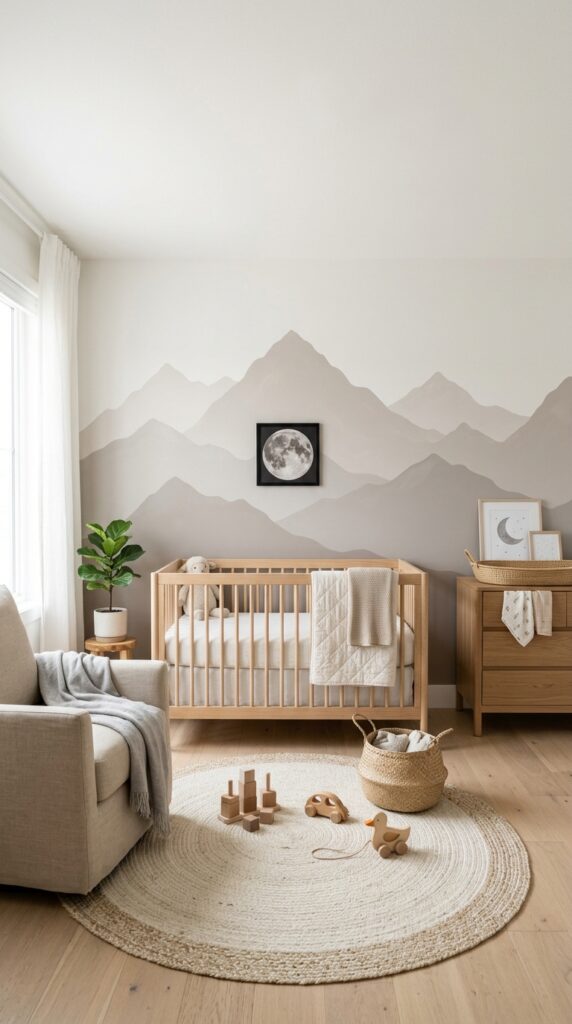
Vibe sentence: This wall feels imaginative without being busy, giving the nursery a quiet sense of wonder.
What makes it work: Tone-on-tone murals create visual interest through shape rather than loud color. That makes them easier to live with long term and keeps the room feeling restful.
How to achieve it: Use peel-and-stick wall decals or paint simplified mountain shapes in two taupe tones. Keep furniture understated so the mural has room to breathe.
Floating Shelves with Matching Storage Baskets
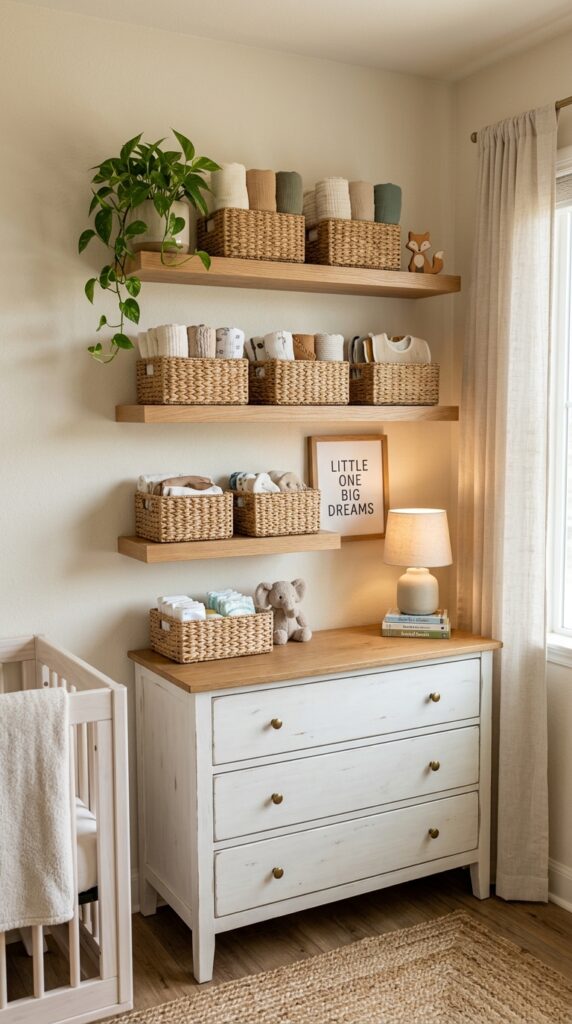
Vibe sentence: The room feels calm and organized, with everything easy to reach but not visually messy.
What makes it work: Open shelving can become cluttered fast, but matching baskets create rhythm and hide everyday supplies. The wood shelves also add warmth to wall space that might otherwise feel blank.
How to achieve it: Limit the shelf palette to two or three basket styles at most. Use labeled bins for diapers, burp cloths, and creams so the setup stays functional during real nursery life.
💡 Matching baskets instantly make open shelves look more styled, even when they are full of practical baby gear.
An Oatmeal Roman Shade for Soft Filtered Light
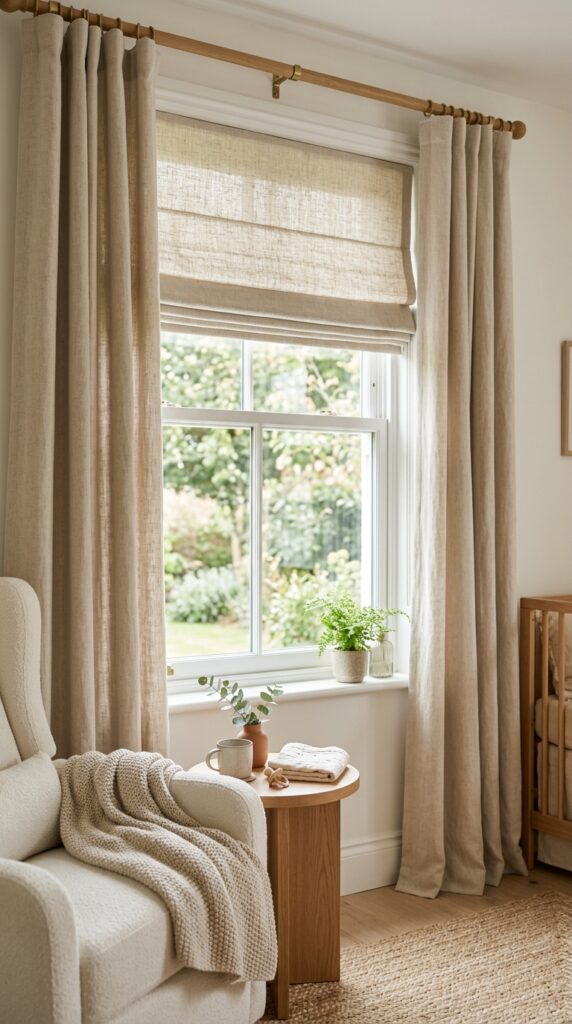
Vibe sentence: The light feels gentler here, which instantly makes the whole nursery seem more restful.
What makes it work: Window treatments do more than finish a room—they shape the mood. Oatmeal fabric filters daylight softly and looks warmer than stark white, especially next to wood furniture.
How to achieve it: Layer a blackout liner behind a linen-look Roman shade if naps are a priority. Choose a warm flax or oatmeal tone that works with both daytime light and evening lamp glow.
A Brass Wall Sconce Above the Glider
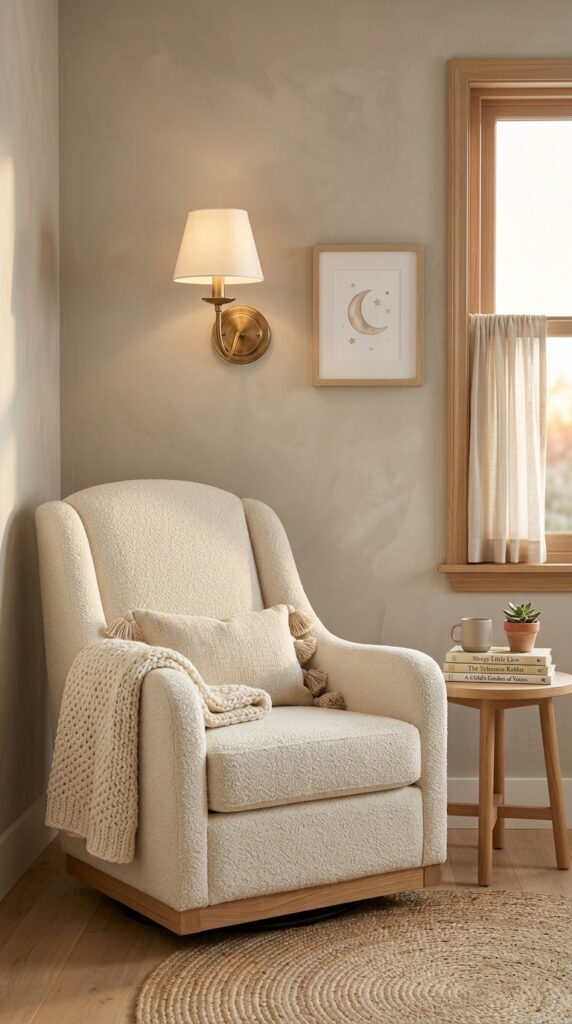
Vibe sentence: This corner feels warm and intimate, perfect for quiet feeds and late-night rocking.
What makes it work: A wall sconce adds focused light exactly where you need it without taking floor or table space. Brass introduces a bit of warmth and polish, which helps neutral nursery decor feel layered rather than flat.
How to achieve it: Use a dimmable plug-in or hardwired sconce with a fabric shade or frosted globe. Mount it high enough to clear the chair but low enough to cast a gentle reading glow.
💡 A dimmer switch matters more than a fancy fixture when you want a nursery to feel soothing at night.
Gender Neutral Nursery Ideas with a Sage-Painted Ceiling
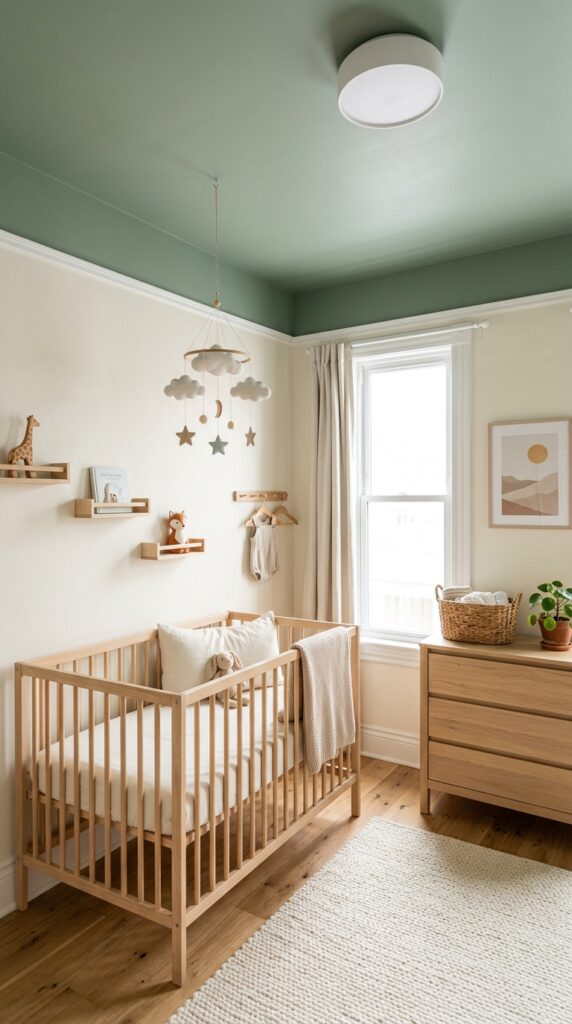
Vibe sentence: The room feels airy and a little whimsical, like a subtle surprise that makes the whole space more special.
What makes it work: Ceiling color pulls the eye up and adds dimension without taking up storage or floor area. A muted sage keeps the effect soft and works especially well in nurseries with white walls.
How to achieve it: Choose a pale sage with a chalky finish and repeat it lightly in textiles or art. This idea works best when the walls stay quiet and the room gets a little natural light.
A Peg Rail for Tiny Clothes and Keepsakes
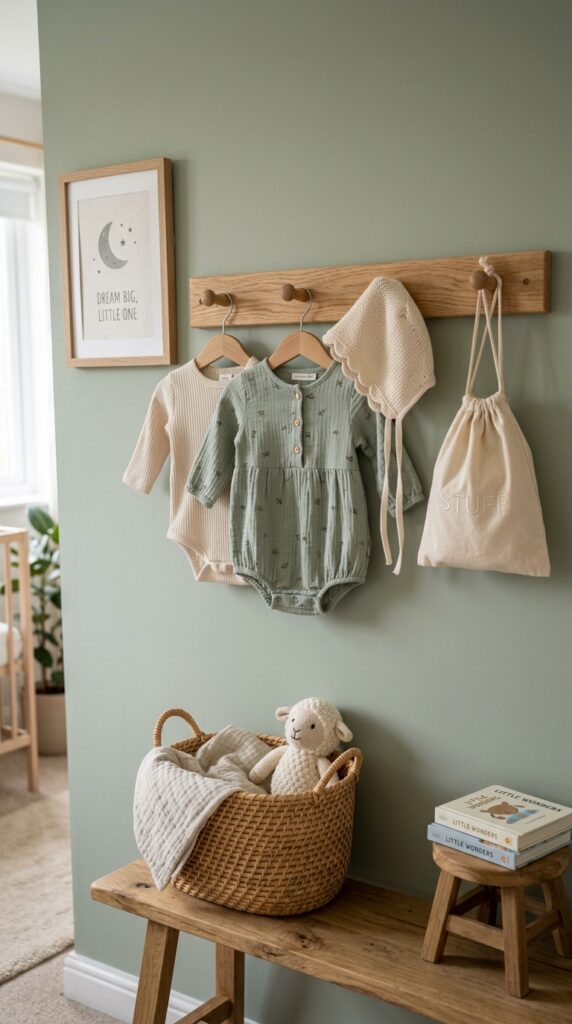
Vibe sentence: This little detail makes the nursery feel personal and lovingly layered.
What makes it work: A peg rail adds function and charm at the same time. Because it sits flat to the wall, it gives you display space without the bulk of another furniture piece.
How to achieve it: Mount a simple oak or painted peg rail above dresser height and limit it to a few beautiful essentials. Choose soft cotton or linen baby pieces in muted tones so the display feels intentional.
💡 Use the peg rail for the prettiest practical items, not every single baby outfit you own.
Terracotta and Dusty Blue for a Balanced Palette
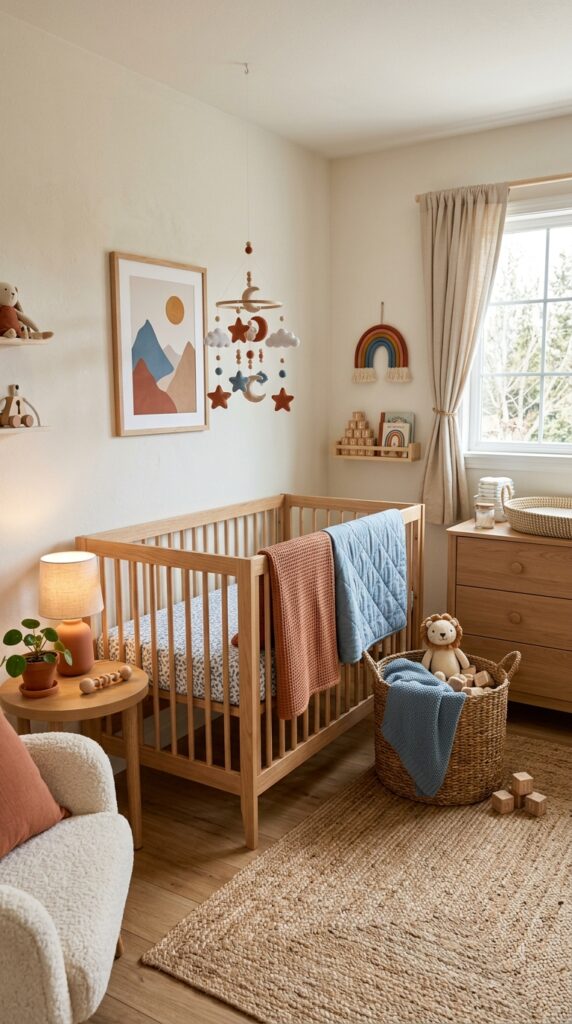
Vibe sentence: This color mix feels fresh and earthy, giving the room character without boxing it into a theme.
What makes it work: Terracotta adds warmth while dusty blue cools the palette, so the room feels balanced. Used in small doses, both colors keep a neutral nursery from becoming too beige.
How to achieve it: Start with neutral walls and add these tones through textiles, art, and a rug rather than large furniture. Stick to dusty, muted versions of both shades for a softer result.
Gender Neutral Nursery Ideas with Painted Shiplap
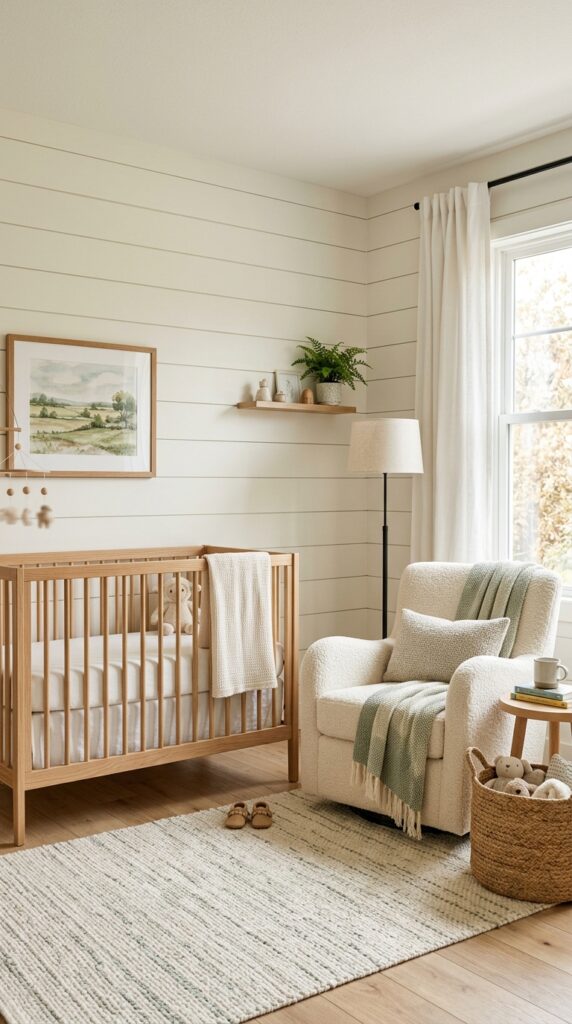
Vibe sentence: The room feels quietly classic, with texture that gives plain walls a lot more presence.
What makes it work: Shiplap adds subtle architectural interest through shadow lines and spacing. Painted in warm white, it keeps the nursery bright while adding more depth than flat drywall.
How to achieve it: Use real wood boards or quality MDF panels with narrow gaps for a cleaner look. Avoid stark bright white paint and go for a softer creamy shade that feels warmer at night.
A Rattan Mirror Above the Dresser
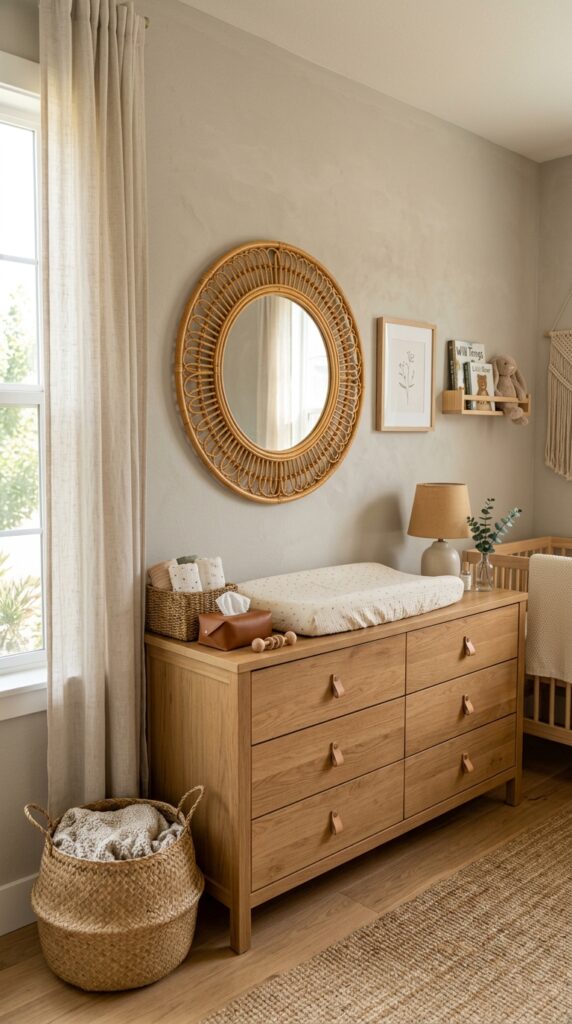
Vibe sentence: This spot feels brighter and more finished, with just enough texture to make the wall feel alive.
What makes it work: Round mirrors soften the hard lines of dressers and cribs, which helps the room feel gentler overall. Rattan adds texture and warmth without introducing another heavy color.
How to achieve it: Choose a mirror with a simple woven frame rather than a busy sunburst shape. Hang it securely and keep the surrounding decor minimal so the texture can stand out.
💡 One well-scaled mirror can make a small nursery feel more open almost instantly.
A Nursing Nook with a Floor Lamp and Side Table
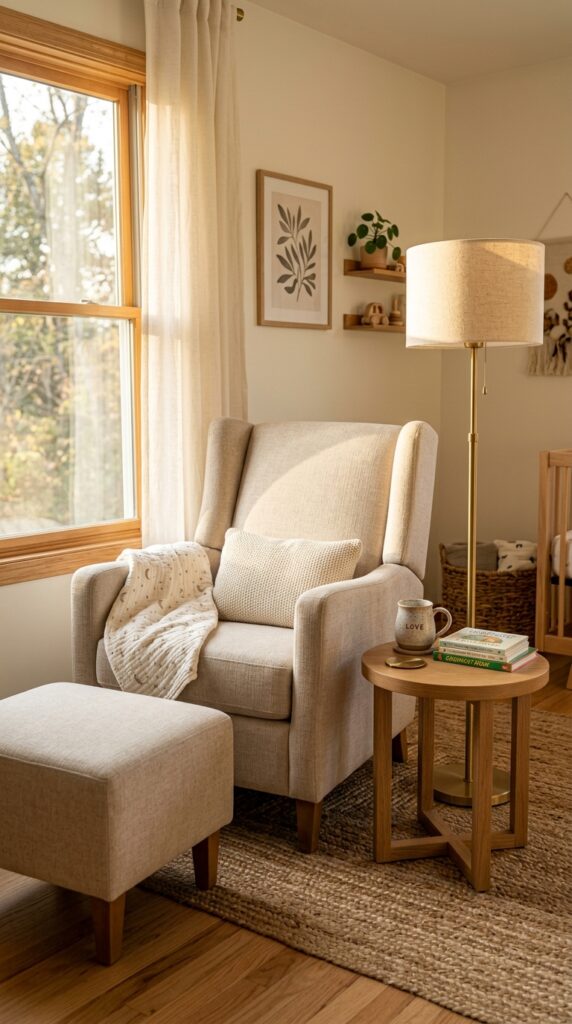
Vibe sentence: This corner feels truly lived in, designed for comfort rather than just photographs.
What makes it work: A nursery works best when one area is clearly dedicated to feeding and settling. The lamp, chair, and table create a functional trio that supports real routines and makes the room more usable.
How to achieve it: Choose a compact round table that can hold a bottle, burp cloth, and water glass. Add a warm floor lamp or sconce so you are not relying on overhead light during night feeds.
A Boucle Storage Ottoman That Hides the Mess
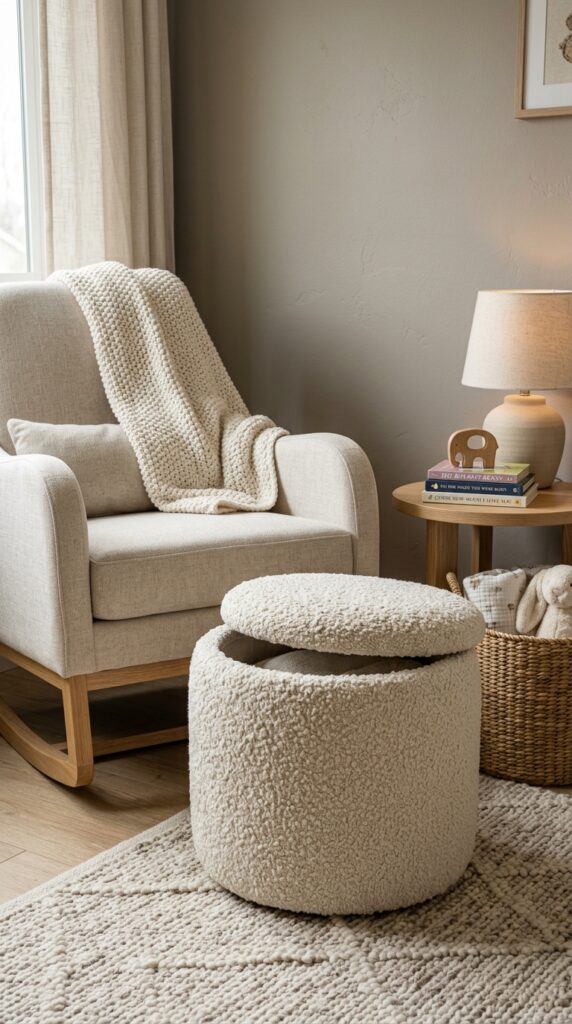
Vibe sentence: It feels soft and collected, with storage that disappears into the room instead of shouting for attention.
What makes it work: Ottomans pull double duty in a nursery by giving you a place to rest your feet and a place to hide extra blankets or toys. Boucle adds texture, which helps a neutral palette feel richer.
How to achieve it: Look for a rounded storage ottoman in cream or oatmeal boucle with easy-lift access. Keep it near the chair so it works as both a comfort piece and hidden storage spot.
💡 This is one of the smartest small-space nursery ideas because it adds function without visual bulk.
Gender Neutral Nursery Ideas for Small Rooms with Vertical Shelving
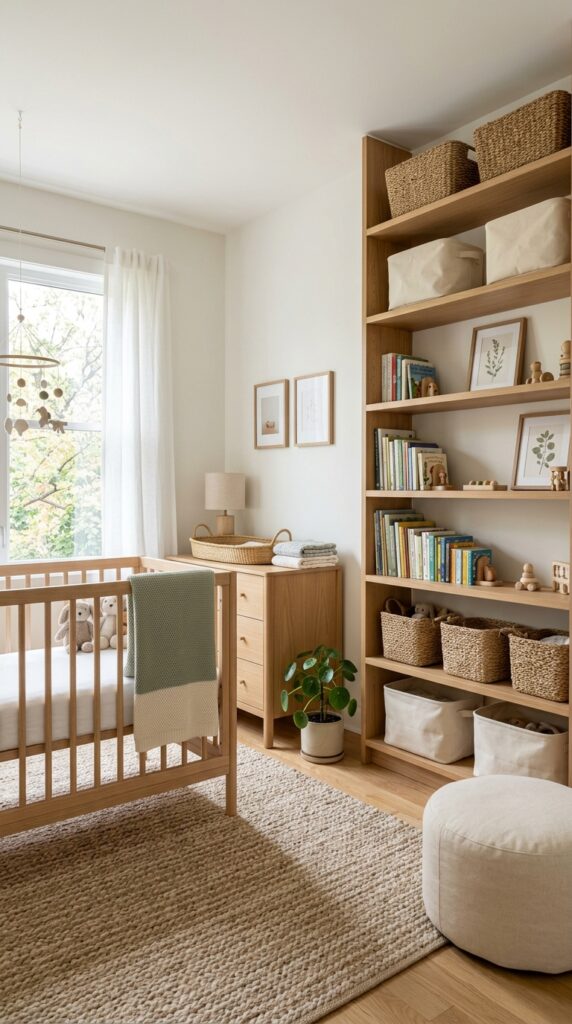
Vibe sentence: The nursery feels airy and surprisingly open, even with everything a baby room needs.
What makes it work: Vertical storage uses wall height instead of precious floor space, which is crucial in a compact room. It also lets you keep the center of the nursery open, making the layout feel calmer.
How to achieve it: Choose tall shelving no deeper than necessary and anchor it securely. Use baskets on higher shelves and keep daily essentials at arm’s reach near the dresser or chair.
A Basket for Blankets and One Special Heirloom Piece
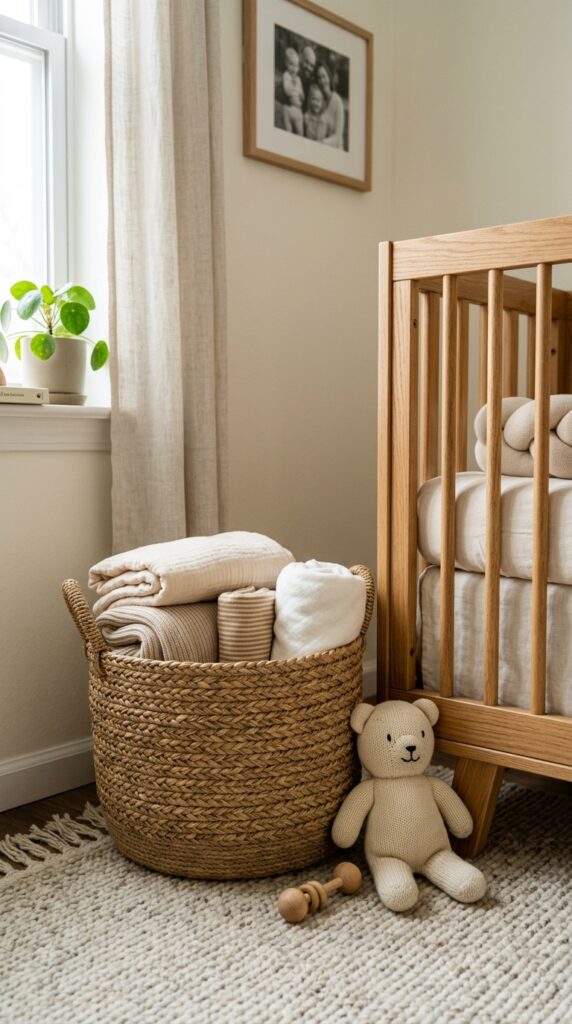
Vibe sentence: This final layer makes the room feel personal, like it belongs to a family and not just a mood board.
What makes it work: Nurseries need softness, but they also need emotional warmth. A basket of blankets plus one meaningful object adds texture and story without creating clutter.
How to achieve it: Use a sturdy woven floor basket in seagrass or cotton rope and fold only two or three blankets visibly. Add one heirloom toy, baby book, or framed family detail so the room feels genuinely yours.
💡 A single meaningful object often does more for a nursery than a shelf full of generic decor.
How to Start Your Gender Neutral Transformation
Start with the foundation pieces first: wall color, crib finish, and the main storage furniture. Those three decisions shape nearly every other choice in the room and make it easier to build a gender neutral nursery that feels cohesive instead of random. If you feel stuck, begin with warm white or greige walls, a natural wood crib, and one soft accent color like sage or clay.
The most common mistake is choosing too many trendy pieces at once. A nursery gets busy fast, so if the wallpaper, rug, art, mobile, and bedding all compete, the room can start to feel restless rather than soothing. Keep one or two focal points, then let texture do the rest of the work.
For a budget-friendly start, swap in a washable rug, framed printable art, baskets, and better lighting before replacing major furniture. Those small upgrades can completely shift the mood of the room.
Give yourself permission to layer the space over time. The best gender neutral nursery ideas rarely happen in one shopping trip—they come together slowly, with practical pieces first and sweeter styling added as the room begins to live with you.
Frequently Asked Questions
What colors work best for a gender neutral nursery?
Warm white, greige, sage green, mushroom, oatmeal, and dusty blue are some of the easiest colors to live with. They feel soft, flexible, and pair well with natural wood, brass, cane, and linen. If you want a little more warmth, clay or muted terracotta works beautifully in rugs, pillows, or art.
How do I make a gender neutral nursery feel cozy instead of plain?
Texture is the secret. Layer materials like boucle, linen, cotton, wool, wood, and woven baskets so the room feels warm even if the palette stays quiet. A soft rug, fabric curtains, and warm 2700K lighting usually make a bigger difference than adding more color.
Is a gender neutral nursery more expensive to design?
Not necessarily. In many cases, it is easier to reuse furniture and decor because the palette is more flexible and less theme-specific. A simple oak crib, neutral paint, and washable rug can look elevated without costing more than a heavily themed nursery.
What is the difference between a neutral nursery and a gender neutral nursery?
A neutral nursery usually describes the color palette, while a gender neutral nursery is more about the overall styling approach. You can have a gender neutral room with sage, dusty blue, or terracotta accents as long as the design is balanced and not locked into one traditional formula. It is more about flexibility and longevity than beige alone.
How can I decorate a small gender neutral nursery?
Focus on vertical storage, a dresser that doubles as a changing station, and a light wall color that reflects natural light. Use one rug, one strong lighting choice, and a few meaningful decor pieces instead of lots of tiny accessories. In a small nursery, edited styling almost always looks better than trying to fit too much in.
Ready to Create Your Dream Gender Neutral Space?
These 28 gender neutral nursery ideas show just how sweet, layered, and personal a baby room can feel without leaning on predictable formulas. Save or pin the ones that speak to you most, whether that is a sage ceiling, a cane wardrobe, or simply a warmer paint color. The best nursery transformations often begin with one practical decision that makes the whole room click. Start small, trust the textures, and build a space that feels calm, loving, and ready to grow right alongside your baby.