
There’s something about a Japandi living room that feels like a deep breath at the end of a noisy day. It blends the warmth of Scandinavian simplicity with the quiet restraint of Japanese interiors, creating a space that feels calm, useful, and deeply beautiful. If you’ve been saving Japandi living room ideas and wondering how to make them feel real instead of too stark, these 26 looks will give you plenty of practical inspiration. Each one is designed to help you create minimalist zen designs that still feel livable, soft, and personal. Here are 26 ideas worth saving.
Why Japandi Works So Well
Japandi works because it strips a room back to what matters, then makes those essentials feel beautiful. It combines Japanese restraint with Scandinavian comfort, so the result is never cold minimalism. Instead, the room feels intentional, grounded, and quietly restorative.
The palette is one of the biggest reasons this style feels timeless. Japandi living room decor usually leans on warm white, greige, mushroom, oat, charcoal, muted olive, pale oak, walnut, and blackened wood. Materials matter just as much: linen, wool, travertine, plaster, oak, paper, boucle, and handmade ceramics all bring softness through texture rather than visual noise.
This style is having such a strong moment because people are craving calmer homes. Pinterest and interior design trends continue to favor minimalist living room design, organic modern living room styling, and serene spaces that support slower routines. Japandi answers that beautifully because it values both function and atmosphere.
It also works especially well in smaller spaces. Low-profile furniture, edited decor, and warm neutral layers can make a compact room feel more open and more peaceful. Instead of filling every corner, Japandi living room ideas focus on proportion, natural light, and materials that quietly do the talking.
Japandi Living Room Ideas With a Low Oak Sofa
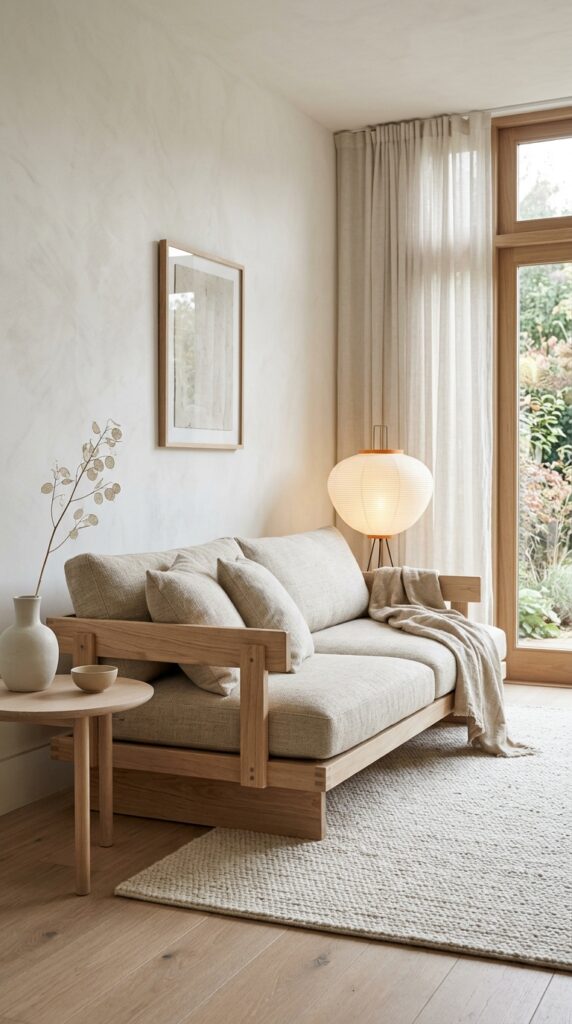
Vibe sentence: This look feels grounded and restful, like the whole room has settled into a quieter rhythm.
What makes it work: A low sofa instantly changes the proportions of the room, making ceilings feel taller and the space feel calmer. The visible oak frame adds warmth and structure without the heaviness of bulky upholstery.
How to achieve it: Look for a sofa with exposed wood arms or legs and cushions in linen or linen-look fabric. Keep the seat depth generous but the overall height low to preserve that minimalist zen effect.
💡 A simple low platform sofa in light oak can shift an ordinary room toward Japandi almost instantly.
Japandi Living Room Ideas in Warm Greige Layers
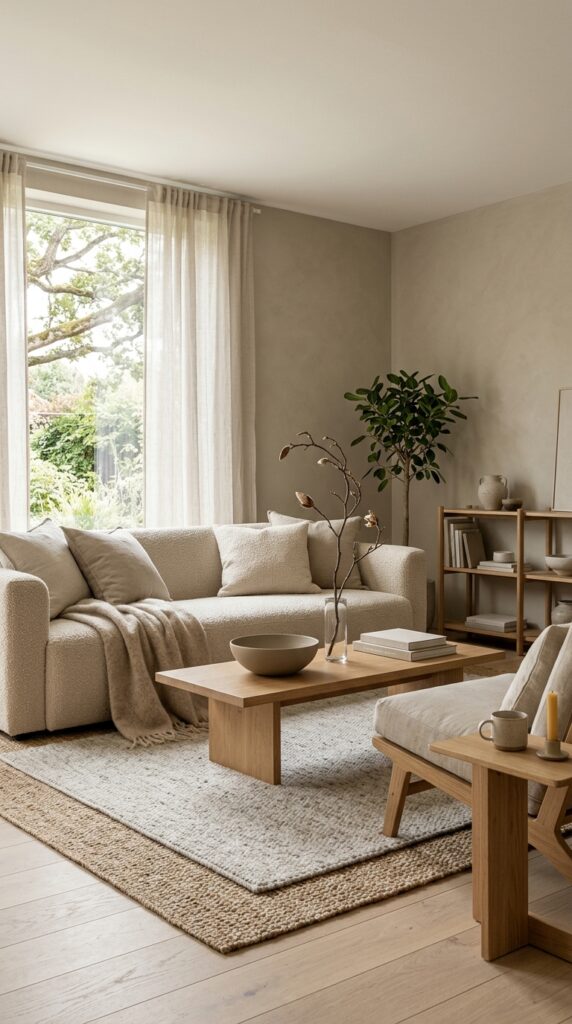
Vibe sentence: It feels soft and quiet, with every tone blending into the next in a deeply soothing way.
What makes it work: Japandi relies on low contrast, and warm greige keeps the room visually smooth without becoming flat. Tonal layering lets texture stand out, which is what gives the room richness without clutter.
How to achieve it: Choose one color family like greige or mushroom and repeat it across paint, upholstery, curtains, and rugs. Use matte finishes and natural fibers so the palette stays warm rather than slick.
Japandi Living Room Ideas With Shoji-Inspired Panels
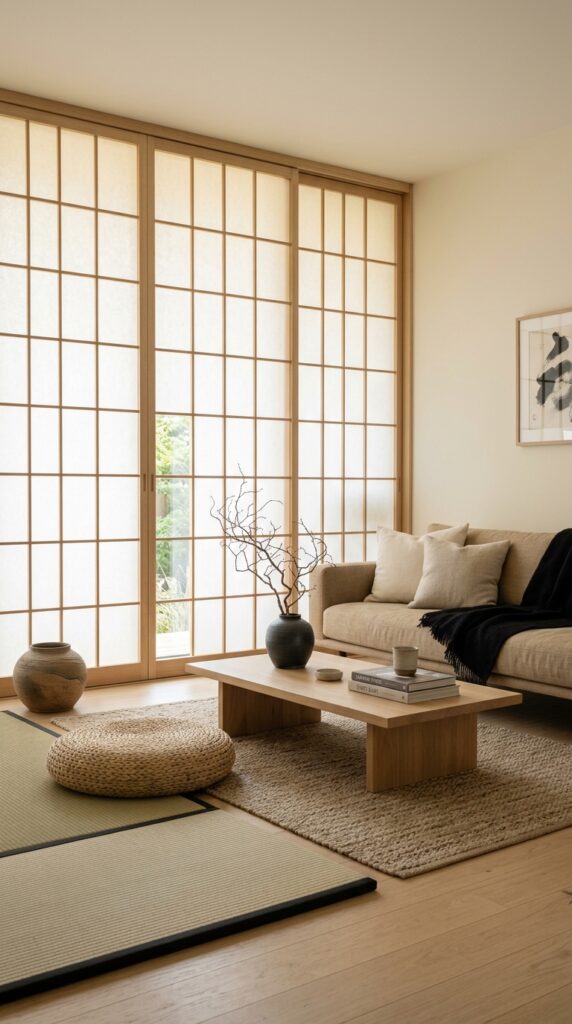
Vibe sentence: This room feels serene and architectural, with light filtered in the gentlest possible way.
What makes it work: Shoji-style panels bring rhythm and softness at the same time. The grid introduces structure, while the translucent surface diffuses light, which is one reason Scandinavian Japanese interior design feels so calming.
How to achieve it: Use sliding panels, fixed screens, or even cabinet fronts with a wood grid pattern and a soft backing material. Keep nearby decor minimal so the panel detail remains the visual focus.
💡 Even one shoji-inspired screen can make a standard living room feel far more Japandi.
A Paper Lantern Pendant Over the Seating Area
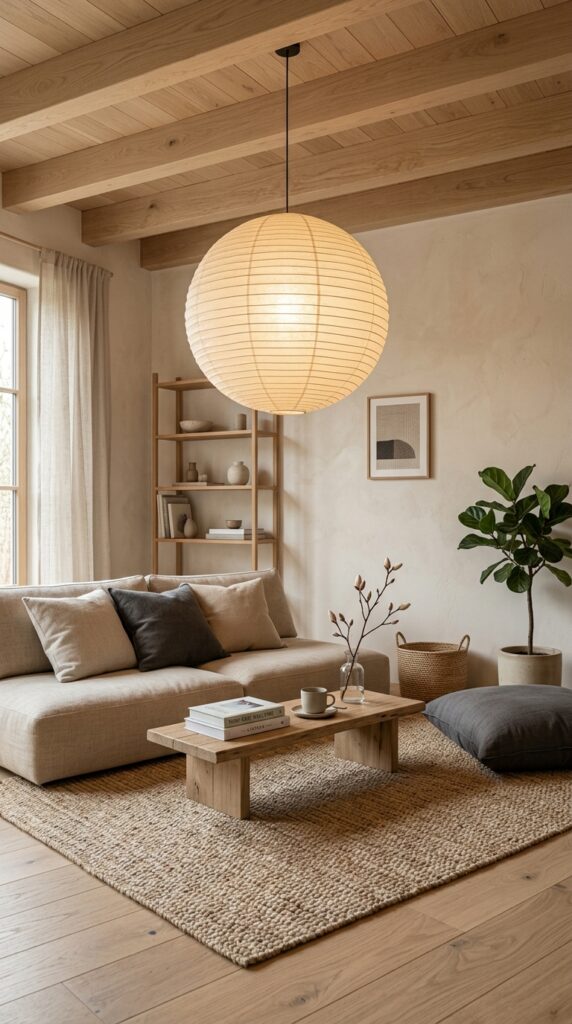
Vibe sentence: The room feels gentle and luminous, like the light itself is part of the decor.
What makes it work: Paper lanterns soften overhead lighting in a way that flatters every surface in the room. Their rounded shape also offsets the straight lines of a low sofa, media console, and window trim.
How to achieve it: Choose a large rice-paper or fabric-look pendant with a simple shape and warm bulb. Center it over the seating zone so it feels intentional rather than floating without purpose.
Limewash Walls for Quiet Movement
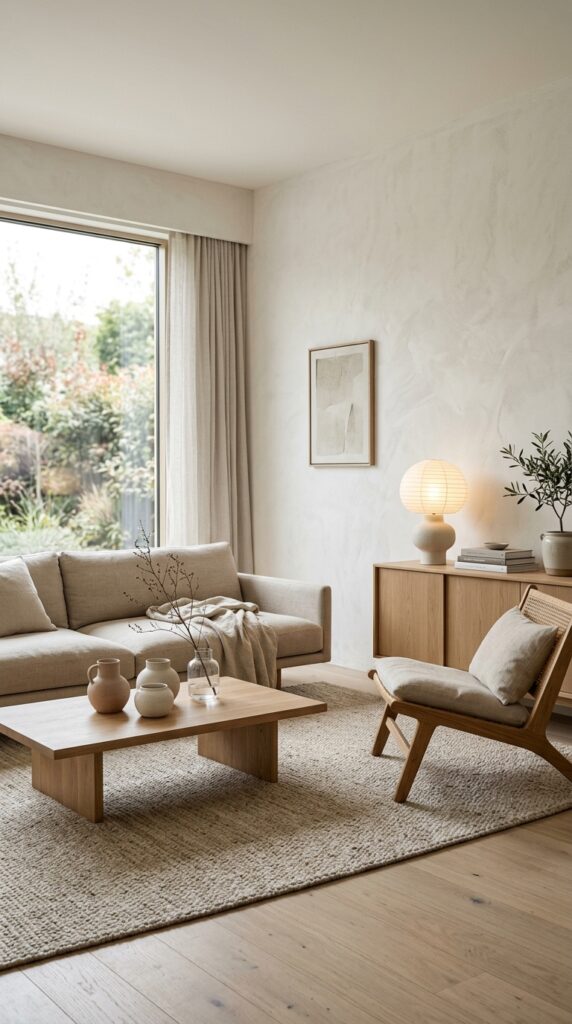
Vibe sentence: It feels calm but never flat, with subtle wall movement that makes the whole room breathe.
What makes it work: Limewash adds depth without pattern, which is ideal for a minimalist living room design. The cloudy finish catches light softly, helping even simple rooms feel layered and intentional.
How to achieve it: Use limewash or mineral paint in a warm white, bone, or pale putty shade. Keep art minimal and let the wall texture become part of the room’s character.
💡 A textured paint finish often adds more Japandi mood than buying extra decor ever will.
Blackened Wood Accents for Contrast
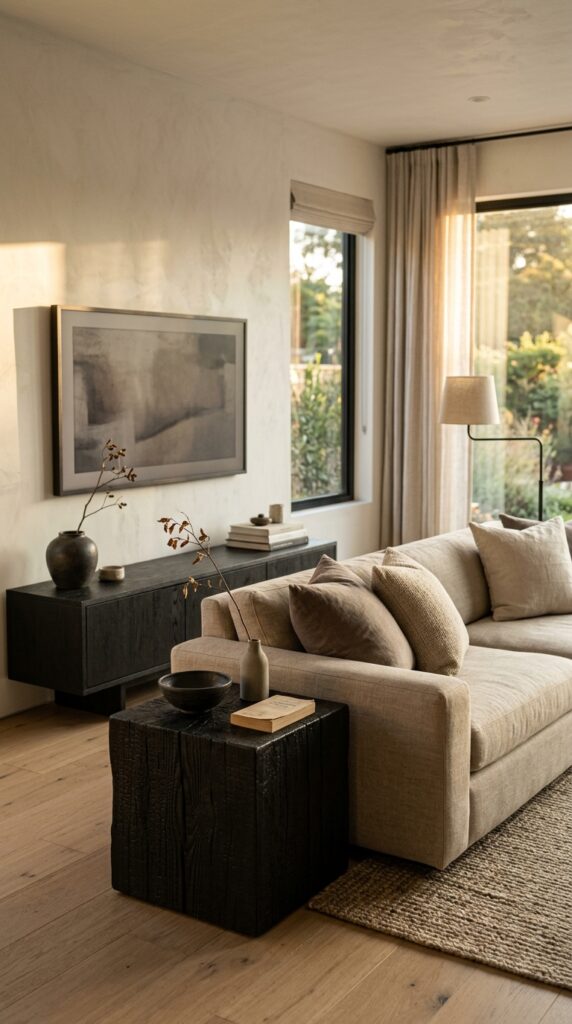
Vibe sentence: This look feels grounded and refined, with just enough contrast to sharpen the room without disturbing its calm.
What makes it work: Japandi spaces need contrast, but it is usually controlled and material-based rather than colorful. Blackened wood defines edges and anchors pale neutrals, which keeps the room from drifting into beige sameness.
How to achieve it: Introduce one or two black or espresso-toned wood pieces, then repeat that darker note in a lamp base or frame. Keep the rest of the palette soft so the contrast stays elegant.
Floor-to-Ceiling Linen Drapes in Oatmeal
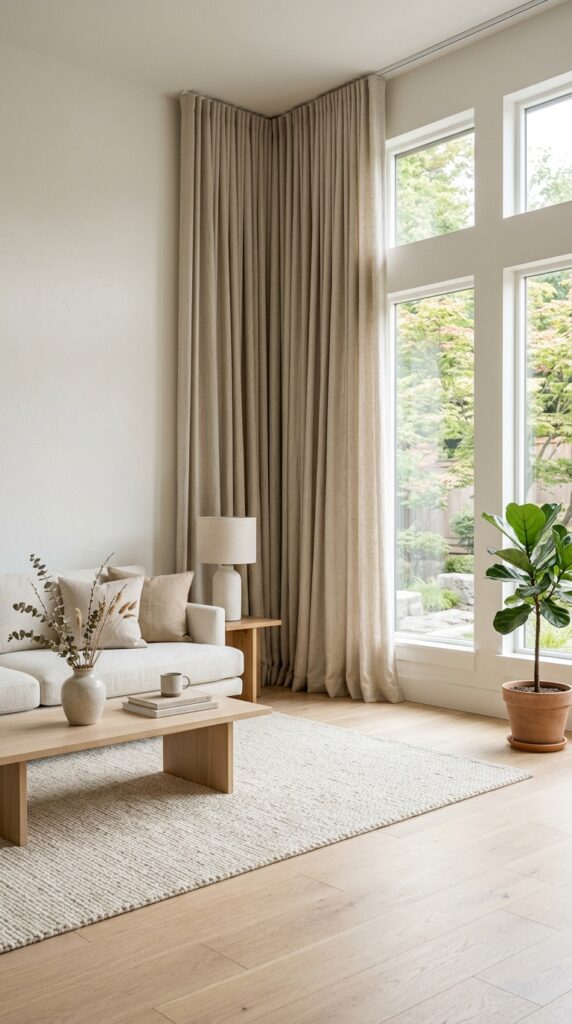
Vibe sentence: The room feels airy and hushed, with light softened into something almost tactile.
What makes it work: Full-height drapes add softness and vertical scale, which helps a minimalist room feel complete rather than sparse. Linen works especially well because its texture adds warmth while still looking relaxed and natural.
How to achieve it: Hang drapery close to the ceiling and let it just skim the floor. Choose oatmeal, flax, or soft stone rather than crisp bright white for a warmer Japandi finish.
💡 Switching basic curtains to full-length linen panels is one of the quickest ways to make a living room feel more serene.
A Low Slab Coffee Table in Pale Wood
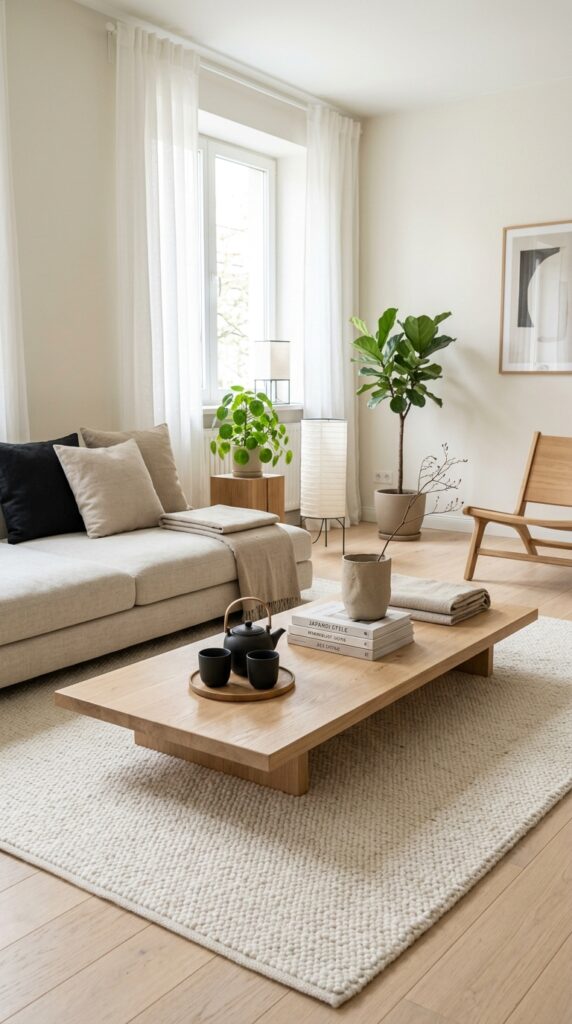
Vibe sentence: It feels grounded and meditative, with furniture that encourages the room to settle lower and slower.
What makes it work: Low tables are central to Japandi because they support the style’s emphasis on calm proportions. A slab form also keeps the room simple, letting wood grain and silhouette do the visual work instead of decorative detailing.
How to achieve it: Look for a coffee table no taller than the sofa seat and keep the top mostly clear. One tray, one vessel, and one book stack are usually enough.
A Soft Ivory Wool Rug With Visible Texture
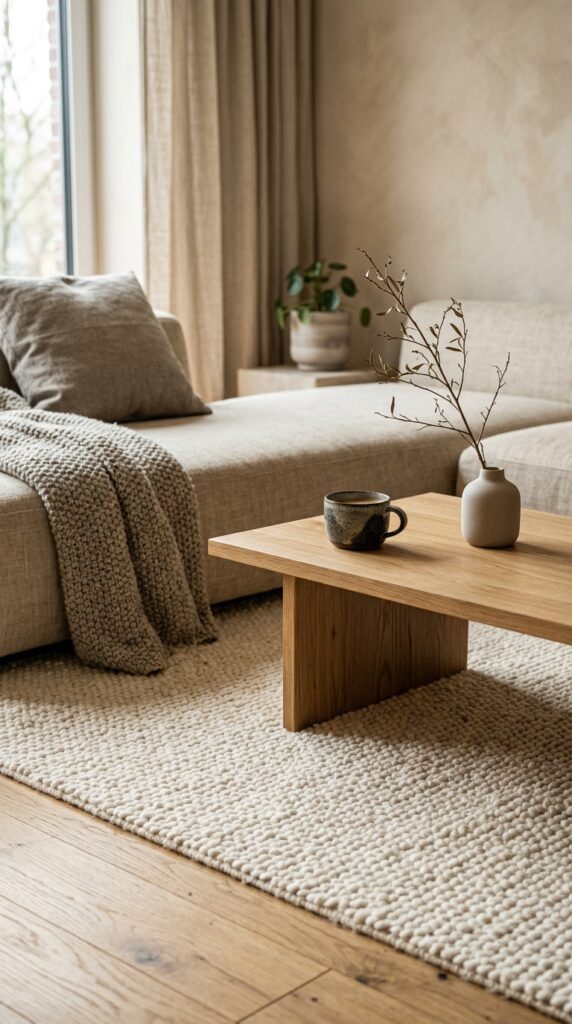
Vibe sentence: The space feels soft underfoot and visually quiet, with texture doing the work that pattern usually would.
What makes it work: A textured rug adds depth while keeping the palette serene. In Japandi living room decor, that kind of tactile layering is essential because the room depends on material richness rather than busy visual contrast.
How to achieve it: Choose wool, wool-blend, or handwoven cotton in ivory, sand, or mushroom and size it generously. Avoid high-contrast borders or loud motifs if you want the room to stay zen-like.
💡 A larger neutral rug often makes more impact than adding several extra decor pieces.
One Oversized Branch in a Handmade Vase
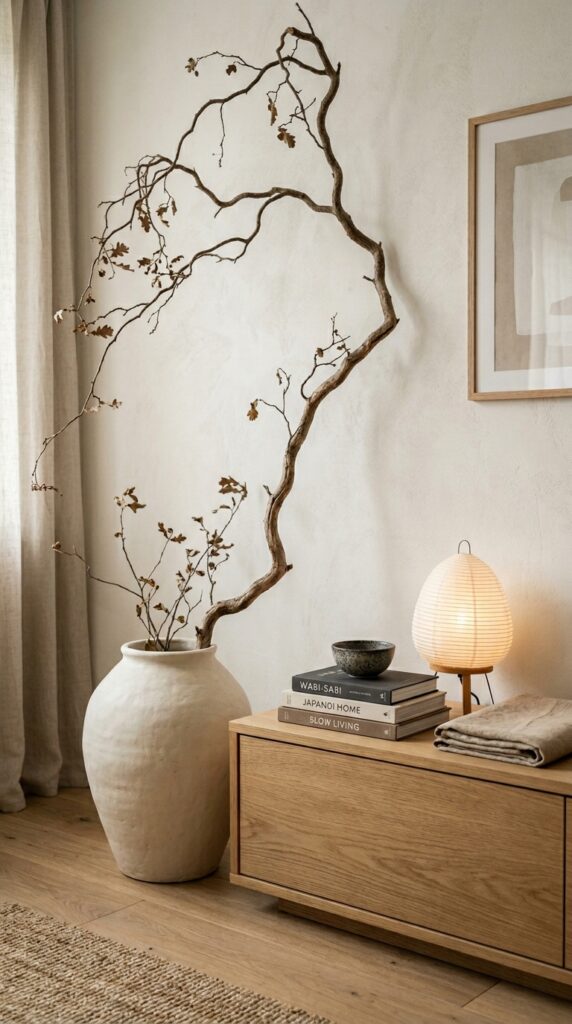
Vibe sentence: It feels poetic and still, like one natural element is enough to animate the whole room.
What makes it work: Japandi often favors asymmetry, and a single branch arrangement brings that principle in gently. The scale feels intentional, while the simplicity preserves the quiet restraint that makes the room restful.
How to achieve it: Use one sculptural branch—olive, magnolia, or bare quince—in a matte ceramic vase with weight and texture. Leave the surrounding console mostly empty so the arrangement has room to breathe.
Built-In Oak Media Wall With No Visual Noise
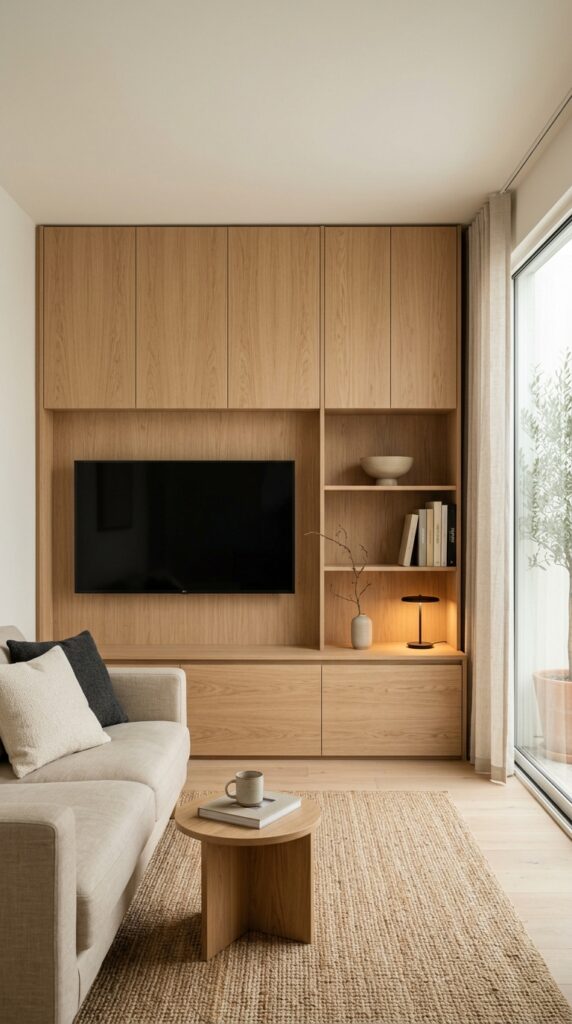
Vibe sentence: The room feels composed and quiet, with technology fading gently into the architecture.
What makes it work: Visual calm is essential in a zen living room, and built-in storage keeps wires, remotes, and clutter out of sight. Oak adds warmth so the cabinetry feels organic rather than sterile.
How to achieve it: Choose flat-panel or very simple slab fronts and keep open shelving to a minimum. Use concealed cord management and limit surface styling to one or two meaningful objects.
💡 Hiding media clutter often makes a room feel more Japandi than changing the sofa ever could.
Floor Cushions Beside the Sofa for Flexible Seating
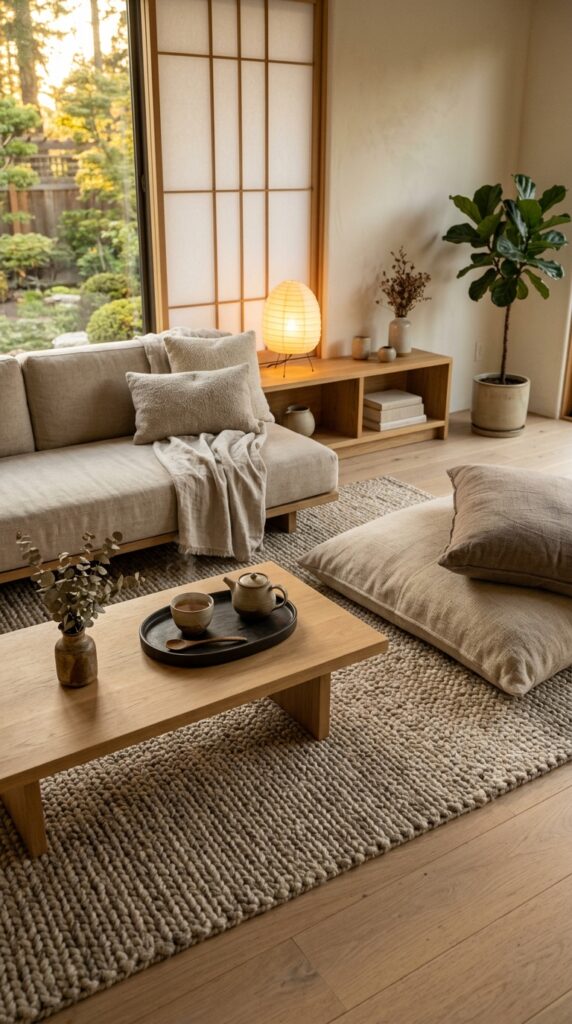
Vibe sentence: It feels relaxed and grounded, inviting the room to be used in a slower, more flexible way.
What makes it work: Floor cushions support the low, grounded posture that gives Japandi its distinctive calm. They also add softness and extra seating without introducing bulky furniture that would interrupt the room’s openness.
How to achieve it: Choose large, structured cushions in flax, oat, or muted olive rather than bright accent colors. Tuck them partly under the coffee table or beside the sofa when not in use so the room stays tidy.
Travertine Side Tables for Organic Weight
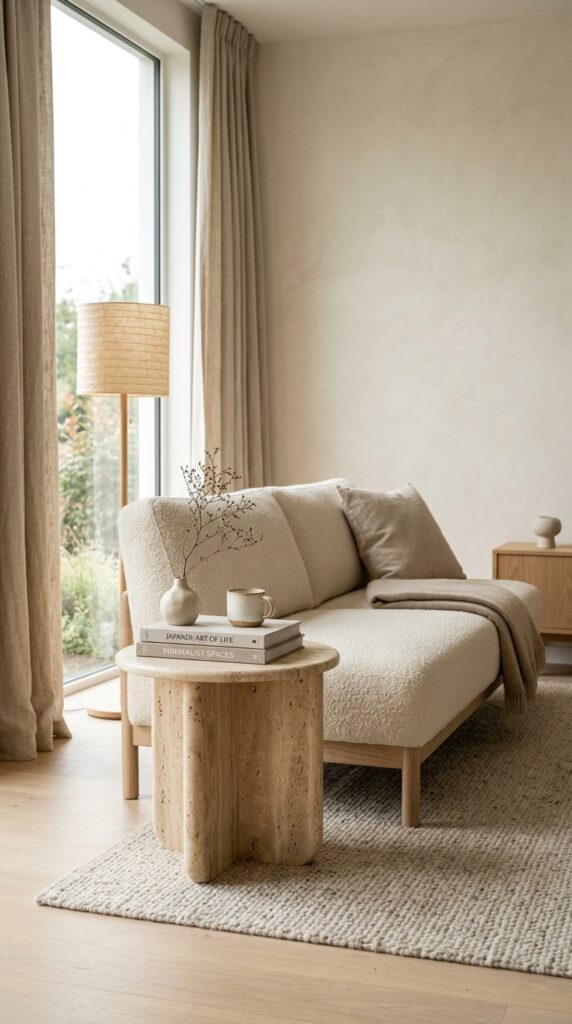
Vibe sentence: The room feels earthy and quiet, with stone adding presence without heaviness.
What makes it work: Travertine brings natural variation and subtle weight, which keeps a pale room from feeling insubstantial. Rounded forms also soften the stricter lines of minimalist furniture, which is an important Japandi balance.
How to achieve it: Use one small side table in honed travertine or a convincing stone-look finish and keep the top styling spare. Pair it with linen, wool, or wood so the material mix stays grounded.
💡 One travertine-look accent table can add instant organic richness without a full stone investment.
A Slatted Wood Divider for Subtle Separation
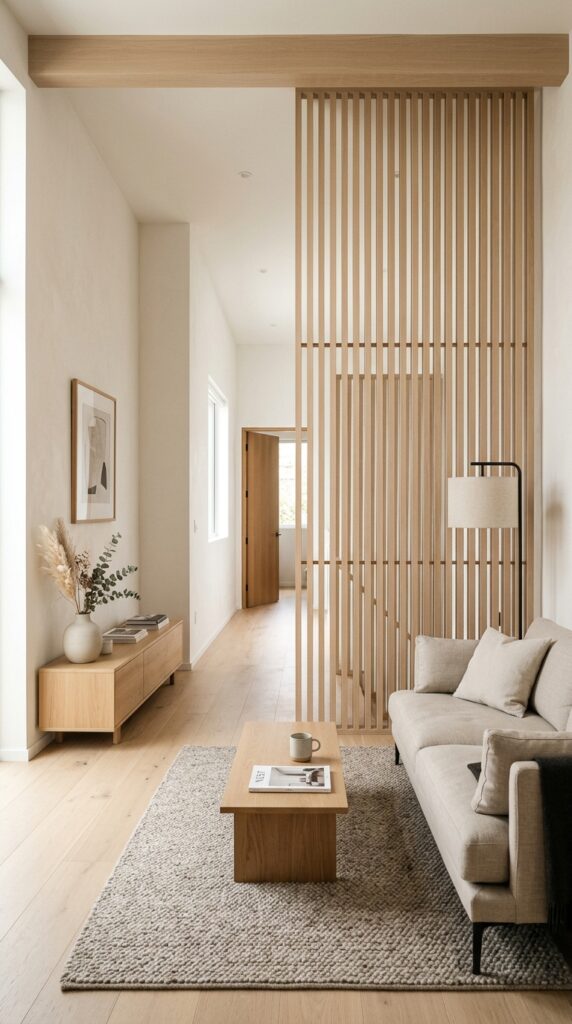
Vibe sentence: It feels open yet gently defined, with just enough architecture to make the room feel intentional.
What makes it work: Slatted dividers separate zones without blocking light, which is perfect for Japandi’s airy, uncluttered feeling. The repeated vertical lines also echo Japanese design language while staying modern and soft.
How to achieve it: Use slim oak or ash battens in a simple grid or floor-to-ceiling screen. Keep the spacing regular and the stain natural so the divider reads as calm architecture, not decorative fretwork.
Sculptural Ceramics on a Minimal Console
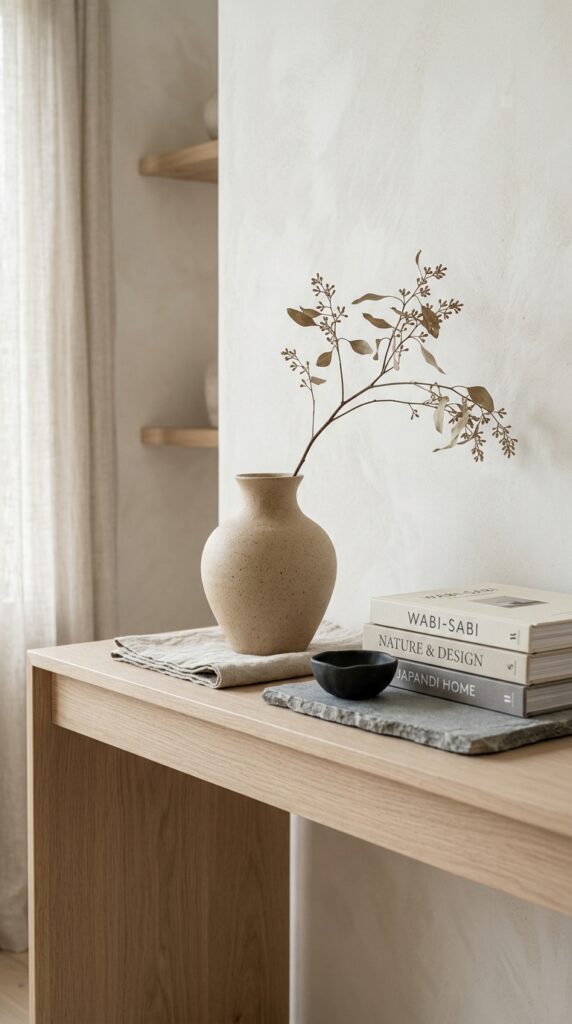
Vibe sentence: The space feels considered and artful, with objects chosen for form as much as function.
What makes it work: Japandi decor relies on fewer pieces with stronger presence. Handmade ceramics add irregularity and soul, which keeps a minimalist room from feeling overly polished or impersonal.
How to achieve it: Style a console with two or three objects in related earthy tones rather than many smaller accessories. Vary height and shape, but leave generous negative space between each piece.
💡 Edit down until each object can be noticed on its own—that is where Japandi styling really starts to work.
A Window Seat With Hidden Storage Below
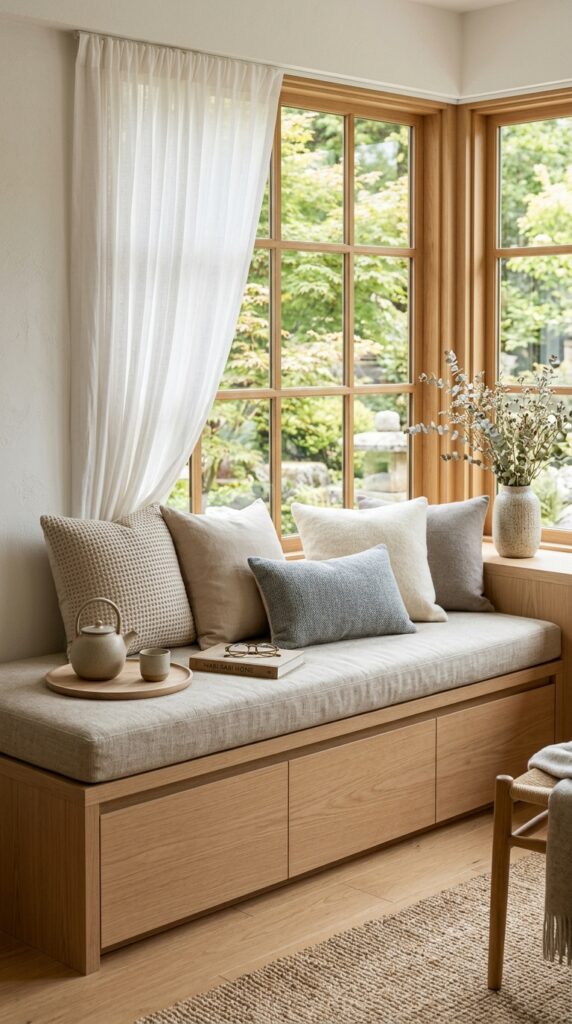
Vibe sentence: It feels peaceful and practical, like the room quietly knows how to hold more without looking like it does.
What makes it work: Hidden storage supports the uncluttered look Japandi needs, while a window seat adds an extra pause point that feels reflective and useful. It also keeps the furniture profile low, which helps the room remain visually calm.
How to achieve it: Build a simple seat box with drawers or lift-up storage and top it with a firm linen cushion in oat or mushroom. Keep the pillow count minimal so the seat stays aligned with the style.
Plaster Fireplace With No Heavy Mantel Styling
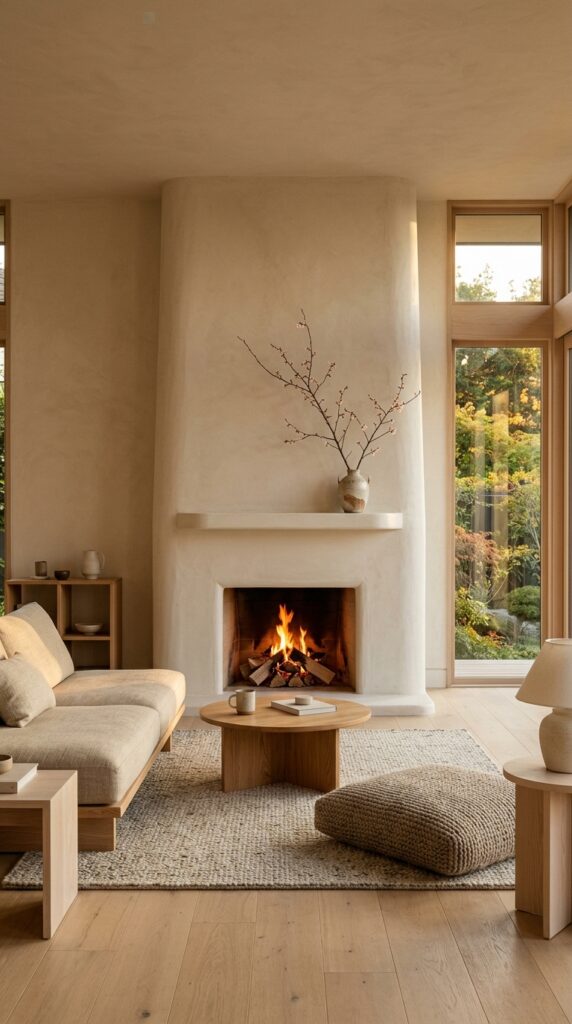
Vibe sentence: The room feels warm and centered, with the fireplace acting more like architecture than display shelf.
What makes it work: A plastered surround softens the fireplace and makes it feel integrated into the room rather than like a separate feature. Leaving the mantel mostly bare preserves Japandi’s sense of quiet and visual relief.
How to achieve it: Use lime plaster, microcement, or a smooth mineral finish in bone or warm white. Style the mantel with one object or none at all, especially if the room is already rich in texture.
💡 Removing excess mantel decor often makes a fireplace feel more expensive and more Japandi at the same time.
Muted Olive Accents in a Neutral Room
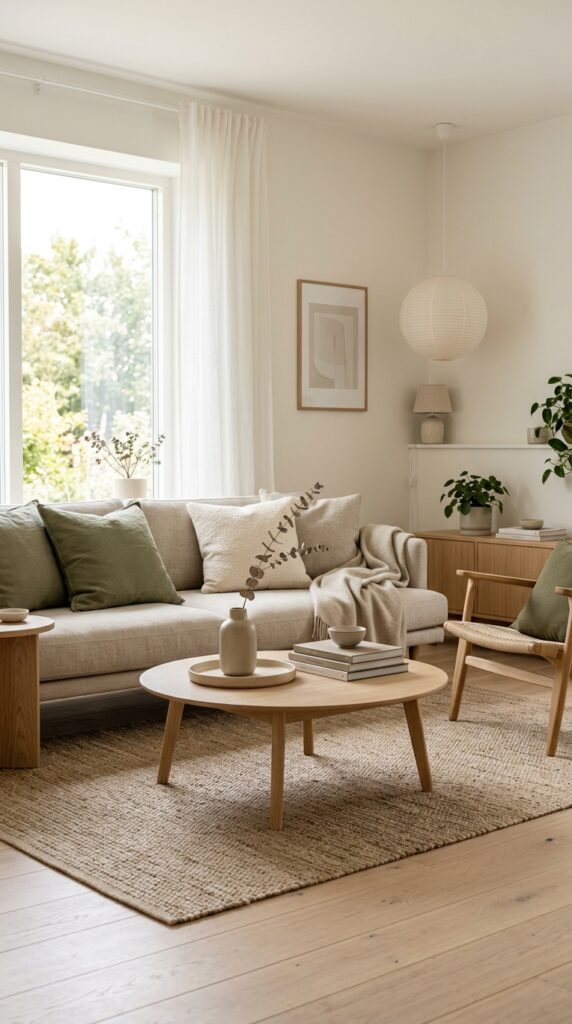
Vibe sentence: It feels softly connected to nature, with color that grounds the room without disturbing the calm.
What makes it work: Japandi color is usually restrained, and muted olive brings depth while still behaving almost like a neutral. It pairs especially well with warm woods and plaster tones, which makes the palette feel organic and serene.
How to achieve it: Add olive through one pillow, a throw, or a single upholstered chair instead of painting the entire room. Choose dusty, gray-green tones rather than bright botanical green.
A Ribbed Wood Console Behind the Sofa
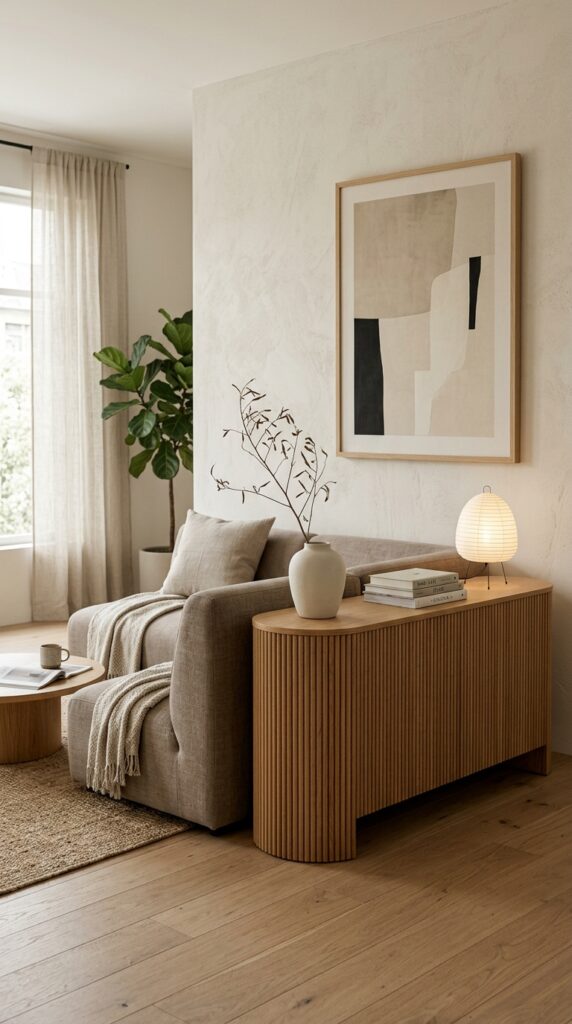
Vibe sentence: The room feels subtly detailed, with texture that reveals itself slowly rather than all at once.
What makes it work: Ribbing adds shadow and rhythm, which is ideal in a minimalist room where every surface counts. A slim console also helps define the sofa area without taking up as much visual space as a full cabinet.
How to achieve it: Use a shallow console with fluted or slatted fronts in oak, ash, or walnut. Keep styling asymmetric and light so the wood texture remains the focus.
💡 A ribbed-front piece can add a lot of Japandi character even if the rest of the room is quite simple.
One Oversized Neutral Artwork Instead of Many Frames
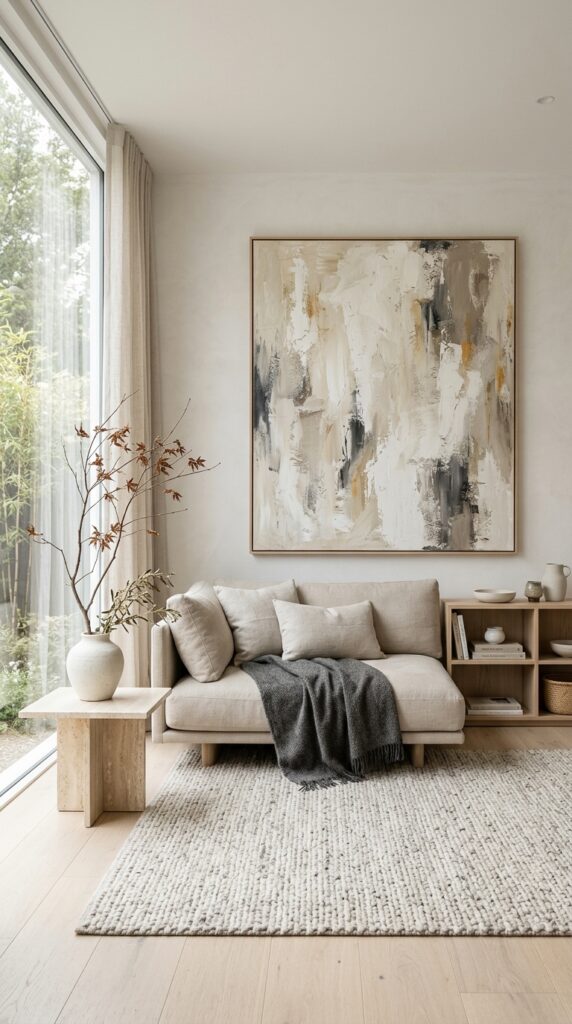
Vibe sentence: It feels calm and confident, with one visual anchor that keeps the room from needing anything more.
What makes it work: One oversized piece creates focus without the busyness of a gallery wall. In Japandi interiors, scale matters, and a single large artwork often feels quieter and more architectural than many smaller frames.
How to achieve it: Choose abstract, tonal, or brushstroke-style art in muted neutrals and frame it simply in oak, black, or float-mounted canvas. Keep the palette close to the room so the art feels integrated rather than loud.
An Indoor Tree in a Handmade Planter
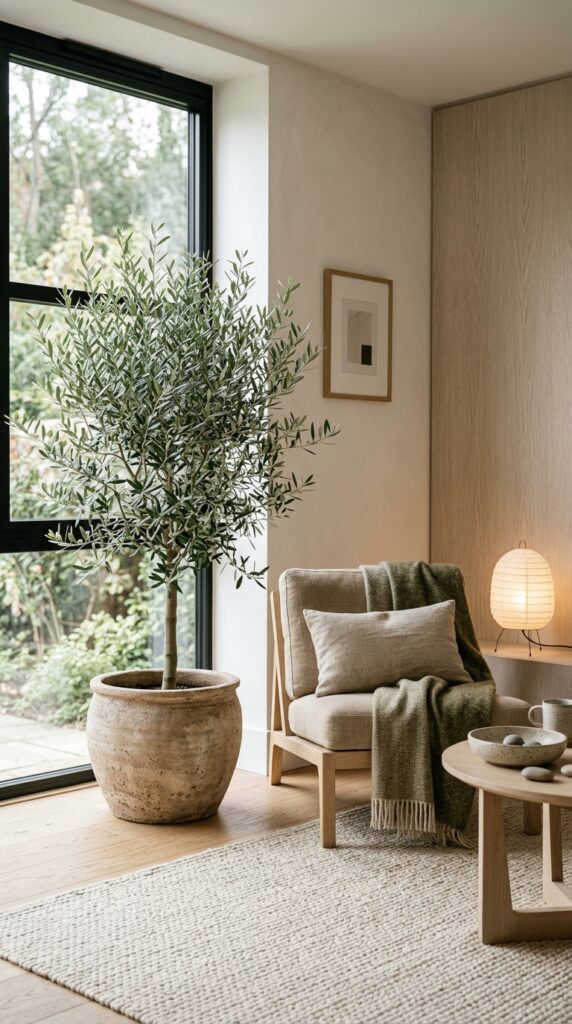
Vibe sentence: The room feels alive and quiet at once, with one natural shape softening all the clean lines.
What makes it work: A single tree adds height, movement, and organic asymmetry, which keeps a minimalist space from feeling too controlled. The planter material matters too—handmade clay or matte stone helps the greenery feel more integrated.
How to achieve it: Use an olive tree, ficus, or well-made faux version in a neutral ceramic or clay planter with simple lines. Give it one corner and avoid surrounding it with extra filler decor.
💡 One well-scaled plant often works better in Japandi than several smaller ones scattered around the room.
Tatami-Inspired Rug Layering in a Seating Zone
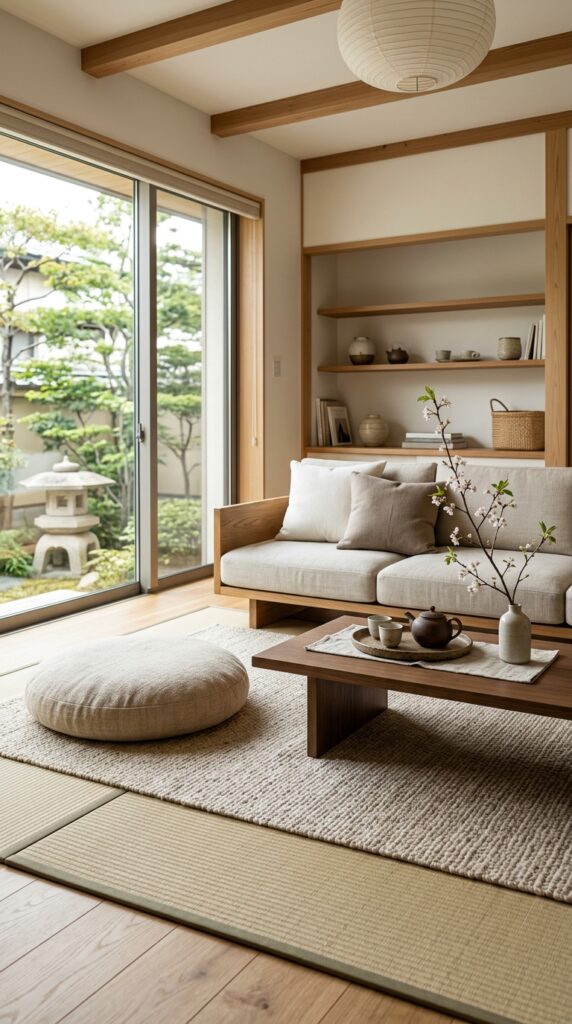
Vibe sentence: It feels grounded and tactile, with the floor becoming a quiet but powerful part of the room’s mood.
What makes it work: Woven mat textures echo Japanese interiors and bring subtle pattern without visual noise. Layering them beneath a softer rug or under a coffee table creates definition while keeping the palette and mood serene.
How to achieve it: Use a natural fiber flatweave, tatami-inspired mat, or tightly woven jute in a soft straw tone. Keep surrounding textures soft—linen, wool, and oak help the floor treatment feel intentional rather than rustic.
A Curved Accent Chair in Boucle or Linen
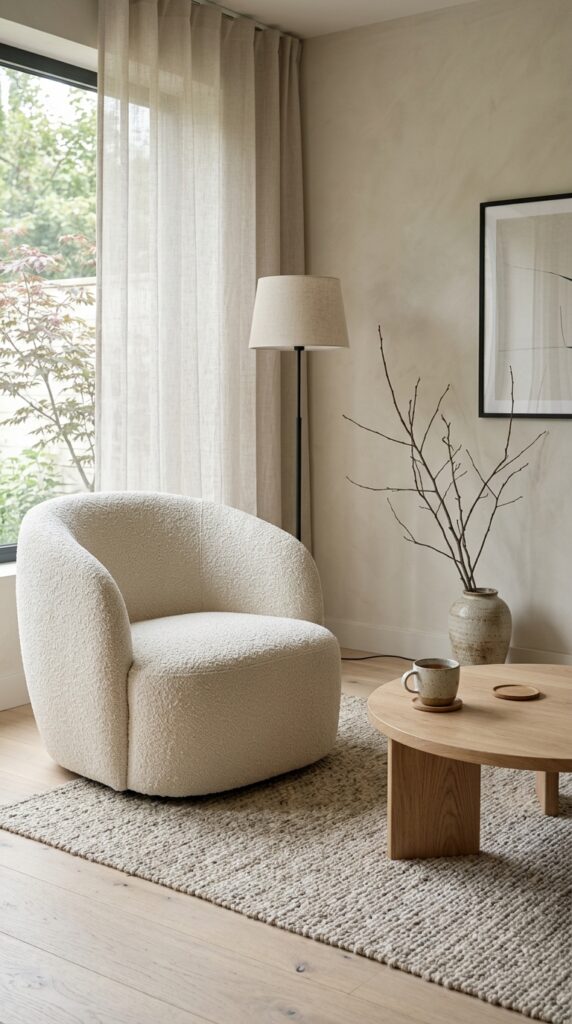
Vibe sentence: The room feels soft and sculptural, with one rounded piece loosening the straight lines around it.
What makes it work: Curves are important in Japandi because they soften minimal architecture without adding clutter. A single accent chair in boucle or linen also introduces tactile richness while keeping the room’s palette gentle.
How to achieve it: Choose one chair with a rounded back or barrel form in cream, mushroom, or oat. Pair it with a simpler sofa so the silhouette contrast feels deliberate.
💡 One curved chair can make a boxy living room feel instantly more balanced and inviting.
Floating Shelves Styled With Almost Nothing
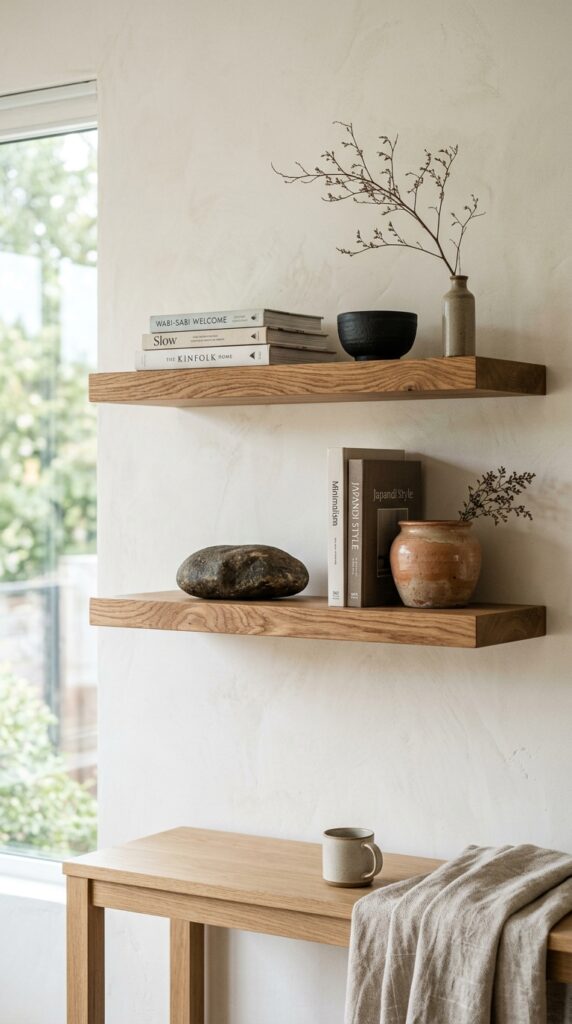
Vibe sentence: It feels restrained in the best way, with each object given room to matter.
What makes it work: Open shelving can easily become cluttered, but in Japandi it works only when styled with strong editing. The negative space is part of the design, helping the wall feel light and intentional.
How to achieve it: Use a few thicker oak shelves and place only two or three items per shelf. Mix matte ceramics, one stack of books, and one natural element, then stop before the composition feels full.
Stone Table Lamp With a Warm Linen Shade
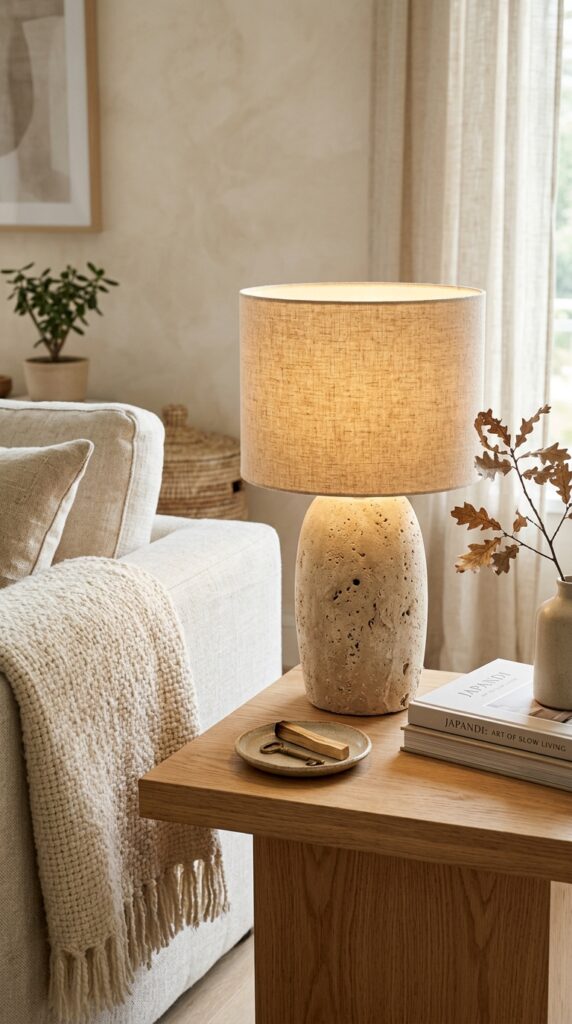
Vibe sentence: The corner feels intimate and gentle, with light that seems to soften the whole room around it.
What makes it work: Japandi lighting should feel warm and low rather than harsh and overhead. A stone base adds organic weight, while a linen shade diffuses light in a way that flatters textured walls, wood, and fabric.
How to achieve it: Look for a lamp with a travertine, plaster, ceramic, or stone-look base and a plain linen shade in cream or oat. Use warm bulbs and avoid shiny chrome or stark white shades.
💡 Changing one lamp can alter the mood of a room faster than almost any furniture swap.
Tonal Beige Upholstery With Barely-There Contrast
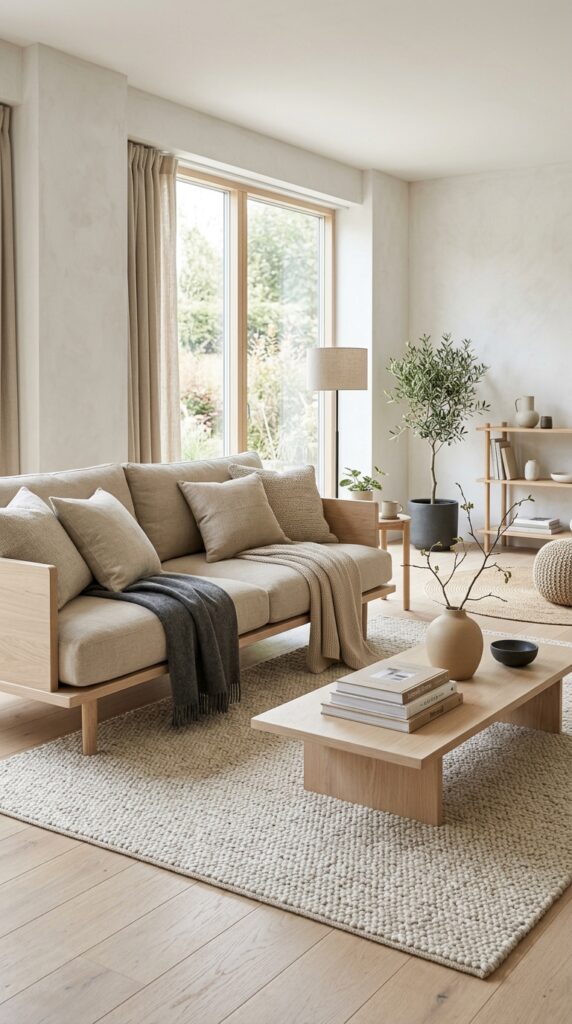
Vibe sentence: The room feels soft and expansive, with every tone chosen to calm rather than compete.
What makes it work: Minimal contrast is a defining feature of a warm neutral living room, and Japandi does it especially well. Subtle shifts between beige, oat, and mushroom create enough variation to feel layered while keeping the eye relaxed.
How to achieve it: Choose upholstery, pillows, and rugs within one narrow tonal range, then add only one darker accent like charcoal or blackened wood. That small amount of contrast is usually all the room needs.
How to Start Your Japandi Transformation
Start with the biggest visual surfaces first: wall color, sofa shape, and rug. Japandi living room ideas work best when the foundation already feels calm, so a warm white, greige, mushroom, or oat paint color is usually the smartest first move. Then focus on one low-profile furniture piece that sets the tone, whether that is a pale oak sofa, a simple coffee table, or a larger neutral rug.
The most common mistake is confusing Japandi with emptiness. This style is minimal, but it is not cold or unfinished. If the room lacks softness, texture, and natural materials, it can start to feel flat instead of peaceful.
For a budget-friendly update, begin by editing rather than buying. Remove small clutter, swap bright accessories for linen or wool textures, and replace harsh lighting with a paper lantern or warm linen-shaded lamp. Even one handmade ceramic piece or one branch arrangement can shift the mood.
Expect the room to evolve in layers. Japandi is about restraint, so it often comes together more slowly than trend-driven decorating. Start with function, then add texture, then refine until the room feels calm enough to exhale in.
Frequently Asked Questions
How do I make my living room look Japandi?
Begin with a warm neutral palette, low-profile furniture, and natural materials like oak, linen, wool, and ceramic. Remove visual clutter first, then add back only a few meaningful objects with strong texture or shape. A pale oak coffee table, oatmeal curtains, and one paper lantern can already move a room noticeably toward Japandi style.
What colors work best in a Japandi living room?
Warm white, greige, mushroom, oat, soft charcoal, muted olive, and pale wood tones are some of the best choices. These shades feel calming because they create gentle contrast instead of sharp color breaks. If you want a fail-safe starting point, try warm white walls with pale oak furniture and mushroom or oat upholstery.
Is Japandi the same as minimalist design?
Not exactly. Minimalist design can sometimes feel cooler or more severe, while Japandi usually feels warmer and more tactile. Japandi living room decor uses the same restraint, but softens it with linen, wood grain, handmade ceramics, wool rugs, and a stronger connection to nature.
What furniture works best for Japandi living room ideas?
Low sofas, simple wood coffee tables, rounded accent chairs, hidden storage pieces, and slim media consoles work especially well. Look for pale oak, walnut, blackened wood, linen upholstery, and quiet silhouettes without ornate trim. Furniture with a visible grain or matte finish often feels more authentic than glossy lacquer or heavy tufting.
Can a small space still have minimalist zen designs?
Absolutely. Small rooms often suit Japandi particularly well because the style depends on editing, not excess. A larger rug, one low sofa, full-height drapes, and a restrained palette can make a compact room feel more open, more intentional, and more serene.
Ready to Create Your Dream Japandi Space?
These 26 Japandi living room ideas prove that minimalist zen designs can still feel warm, soft, and deeply livable. Save the looks that speak to you, pin your favorite textures and layouts, and start with one change that immediately calms the room. Maybe that is a lower coffee table, a warmer paint color, or simply better lighting at night. Japandi does not ask for more—it asks for better, quieter choices. Build slowly, edit gently, and let your living room become the calmest place in your home.