
A wall with a window on each side can feel tricky to style, and these tv wall ideas between two windows make the centre feel calm and balanced. Bright daylight, equal space and a clear focal point are the keys, and the ideas below show how to use them without blocking light or crowding the room. You will find floating consoles, slim shelves, soft curtains, warm wood and clever storage, all chosen for real living rooms with two windows. Each idea explains what to use, where to place it and why it works, so you can pick one that fits your room, your budget and your style. Start with the look you love most, then build around it.
Centered Floating Console

- A centered floating console sits neatly between the windows, which keeps the wall balanced and the light even.
- Light oak, cream and soft grey tones keep the wall calm, so the screen does not fight with bright daylight.
- Pair it with a low cream sofa facing the wall for a look that feels planned, comfortable and easy to live with.
- Use a floating console centred on the wall to keep the wall looking finished and stop it feeling bare.
A centered floating console can make the wall between two windows feel calm and balanced. It gives the television a clear centre, so daylight from both sides stays even and the room does not feel lopsided. Pair it with a low cream sofa facing the wall and use light oak, cream and soft grey tones to keep the look soft, then step back and check the balance from your usual seat. When the centre feels steady, the whole living room feels easier to relax in. The room feels larger, lighter and much easier to enjoy.
This idea suits real homes because it is easy to build, easy to clean and easy to change later. A centered floating console does not need a large budget or a full rebuild, and it works with the sofa and storage you already own. Keep the styling simple and use light oak, cream and soft grey tones to tie the wall to the windows and the rest of the room. The result is a living room that feels calmer in the morning and more relaxing after a long day. The wall looks tidy and welcoming.
Slim Wood Shelves

- Warm oak, white and soft beige tones keep the wall calm, so the screen does not fight with bright daylight.
- Pair it with a beige sofa and a pale rug for a look that feels planned, comfortable and easy to live with.
- Use slim shelves on both sides of the screen to keep the wall looking finished and stop it feeling bare.
- Keep the screen centred, so each window gets equal space and the wall feels steady.
If the wall between your windows feels tricky, a slim wood shelf pair is a simple place to start. It creates one tidy focal point in the middle, which helps the bright light on both sides feel intentional instead of distracting. Use warm oak, white and soft beige tones and a beige sofa and a pale rug to keep the colours calm, then keep the screen at eye level from the sofa. That steady centre makes the room feel planned, even when the windows are large. The result feels calm, tidy and welcoming every day.
This setup works in real homes because it keeps daily life simple. The television stays at a comfortable height, the light stays soft and the floor stays clear for children, pets and guests. A slim wood shelf pair in warm oak, white and soft beige tones blends with a beige sofa and a pale rug, so the room feels calm rather than crowded. Add one warm detail for a personal touch, and the wall will feel finished without looking staged or fussy. The result is a living room that feels calm and well put together.
Sheer Linen Curtains

- Pair it with a pale sofa and a wooden coffee table for a look that feels planned, comfortable and easy to live with.
- Use sheer curtains that soften daylight from both windows to keep the wall looking finished and stop it feeling bare.
- Keep the screen centred, so each window gets equal space and the wall feels steady.
- Use soft colours and simple lines, then let one warm detail give the wall its character.
A sheer linen curtain works well between two windows because it uses the centre space wisely. It gives the television a neat home without blocking light, and it leaves the window areas free for curtains, plants or a clear view. Choose white linen, cream and light oak tones and pair the wall with a pale sofa and a wooden coffee table, which keeps the look warm and easy to follow. Leave equal space on both sides, and the wall will feel balanced from every seat. The room feels larger, lighter and much easier to enjoy.
Small changes on this wall make a big difference to how the room feels. A sheer linen curtain brings order to the screen area, and white linen, cream and light oak tones keep the look soft in both daylight and evening light. Pair it with a pale sofa and a wooden coffee table and keep one warm detail close by, so the space feels useful as well as pretty. The room will feel more settled, and you will find it easier to relax there. The finished wall looks tidy, warm and easy to live with.
Warm Oak Panels

- A warm oak panel wall sits neatly between the windows, which keeps the wall balanced and the light even.
- Warm oak, cream and soft brown tones keep the wall calm, so the screen does not fight with bright daylight.
- Pair it with a tan sofa and a cream rug for a look that feels planned, comfortable and easy to live with.
- Use oak panels that warm the space between the windows to keep the wall looking finished and stop it feeling bare.
Start with a warm oak panel wall when the space between the windows feels empty or hard to use. It creates one clear focal point, so the eye rests in the middle instead of jumping between bright glass and bare wall. Work in warm oak, cream and soft brown tones and add a tan sofa and a cream rug nearby, which helps the television feel like part of the room. Check the height, the glare and the seating distance together, because those details decide how comfortable the setup feels. The wall looks tidy and welcoming.
The best part of this idea is how practical it feels day to day. A warm oak panel wall holds the television steady, hides the messy parts and leaves room for the things you actually use. Work with warm oak, cream and soft brown tones and a tan sofa and a cream rug to keep the wall calm, then finish with one warm detail for warmth. You will notice the room feels tidier, brighter and more welcoming, even on busy days. A calm wall makes the sofa area feel like a proper place to rest.
White Built In Cabinets

- Crisp white, pale grey and light oak tones keep the wall calm, so the screen does not fight with bright daylight.
- Pair it with a grey sofa and a glass coffee table for a look that feels planned, comfortable and easy to live with.
- Use white cabinets that frame the screen neatly to keep the wall looking finished and stop it feeling bare.
- Keep the screen centred, so each window gets equal space and the wall feels steady.
A white built in cabinet can make the wall between two windows feel calm and balanced. It gives the television a clear centre, so daylight from both sides stays even and the room does not feel lopsided. Pair it with a grey sofa and a glass coffee table and use crisp white, pale grey and light oak tones to keep the look soft, then step back and check the balance from your usual seat. When the centre feels steady, the whole living room feels easier to relax in. The room feels bright and welcoming today.
This idea suits real homes because it is easy to build, easy to clean and easy to change later. A white built in cabinet does not need a large budget or a full rebuild, and it works with the sofa and storage you already own. Keep the styling simple and use crisp white, pale grey and light oak tones to tie the wall to the windows and the rest of the room. The result is a living room that feels calmer in the morning and more relaxing after a long day. The result feels welcoming.
Soft Sage Backdrop

- Pair it with a cream sofa and green cushions for a look that feels planned, comfortable and easy to live with.
- Use a sage wall that links the two windows to keep the wall looking finished and stop it feeling bare.
- Keep the screen centred, so each window gets equal space and the wall feels steady.
- Use soft colours and simple lines, then let one warm detail give the wall its character.
If the wall between your windows feels tricky, a soft sage backdrop is a simple place to start. It creates one tidy focal point in the middle, which helps the bright light on both sides feel intentional instead of distracting. Use sage green, cream and light wood tones and a cream sofa and green cushions to keep the colours calm, then keep the screen at eye level from the sofa. That steady centre makes the room feel planned, even when the windows are large. The finished wall looks tidy, warm and easy to live with.
This setup works in real homes because it keeps daily life simple. The television stays at a comfortable height, the light stays soft and the floor stays clear for children, pets and guests. A soft sage backdrop in sage green, cream and light wood tones blends with a cream sofa and green cushions, so the room feels calm rather than crowded. Add one warm detail for a personal touch, and the wall will feel finished without looking staged or fussy. The result feels calm, tidy and welcoming every day. The wall looks tidy and welcoming.
Black Frame Balance

- A black frame balance sits neatly between the windows, which keeps the wall balanced and the light even.
- Black, white and warm wood tones keep the wall calm, so the screen does not fight with bright daylight.
- Pair it with a light sofa and a pale wood floor for a look that feels planned, comfortable and easy to live with.
- Use a slim black frame that balances the bright windows to keep the wall looking finished and stop it feeling bare.
A black frame balance works well between two windows because it uses the centre space wisely. It gives the television a neat home without blocking light, and it leaves the window areas free for curtains, plants or a clear view. Choose black, white and warm wood tones and pair the wall with a light sofa and a pale wood floor, which keeps the look warm and easy to follow. Leave equal space on both sides, and the wall will feel balanced from every seat. The finished wall looks tidy, warm and easy to live with.
Small changes on this wall make a big difference to how the room feels. A black frame balance brings order to the screen area, and black, white and warm wood tones keep the look soft in both daylight and evening light. Pair it with a light sofa and a pale wood floor and keep one warm detail close by, so the space feels useful as well as pretty. The room will feel more settled, and you will find it easier to relax there. You will notice the difference every time you switch the screen on.
Brass Wall Lights

- Brass, cream and warm brown tones keep the wall calm, so the screen does not fight with bright daylight.
- Pair it with a beige sofa and a brass floor lamp for a look that feels planned, comfortable and easy to live with.
- Use brass lights that glow softly in the evening to keep the wall looking finished and stop it feeling bare.
- Keep the screen centred, so each window gets equal space and the wall feels steady.
Start with a brass wall light when the space between the windows feels empty or hard to use. It creates one clear focal point, so the eye rests in the middle instead of jumping between bright glass and bare wall. Work in brass, cream and warm brown tones and add a beige sofa and a brass floor lamp nearby, which helps the television feel like part of the room. Check the height, the glare and the seating distance together, because those details decide how comfortable the setup feels. The room feels bright and welcoming today.
The best part of this idea is how practical it feels day to day. A brass wall light holds the television steady, hides the messy parts and leaves room for the things you actually use. Work with brass, cream and warm brown tones and a beige sofa and a brass floor lamp to keep the wall calm, then finish with one warm detail for warmth. You will notice the room feels tidier, brighter and more welcoming, even on busy days. The result feels calm, tidy and welcoming every day. The wall looks tidy and welcoming.
Low Media Bench

- Pair it with a grey sofa and a round rug for a look that feels planned, comfortable and easy to live with.
- Use a low bench that sits neatly below the screen to keep the wall looking finished and stop it feeling bare.
- Keep the screen centred, so each window gets equal space and the wall feels steady.
- Use soft colours and simple lines, then let one warm detail give the wall its character.
A low media bench can make the wall between two windows feel calm and balanced. It gives the television a clear centre, so daylight from both sides stays even and the room does not feel lopsided. Pair it with a grey sofa and a round rug and use pale wood, white and soft grey tones to keep the look soft, then step back and check the balance from your usual seat. When the centre feels steady, the whole living room feels easier to relax in. The room feels larger, lighter and much easier to enjoy.
This idea suits real homes because it is easy to build, easy to clean and easy to change later. A low media bench does not need a large budget or a full rebuild, and it works with the sofa and storage you already own. Keep the styling simple and use pale wood, white and soft grey tones to tie the wall to the windows and the rest of the room. The result is a living room that feels calmer in the morning and more relaxing after a long day. The wall looks tidy and welcoming.
Gallery Frames Both Sides

- A framed gallery pair sits neatly between the windows, which keeps the wall balanced and the light even.
- Cream, black and soft sage tones keep the wall calm, so the screen does not fight with bright daylight.
- Pair it with a neutral sofa and framed prints nearby for a look that feels planned, comfortable and easy to live with.
- Use small frames that echo the window shapes to keep the wall looking finished and stop it feeling bare.
If the wall between your windows feels tricky, a framed gallery pair is a simple place to start. It creates one tidy focal point in the middle, which helps the bright light on both sides feel intentional instead of distracting. Use cream, black and soft sage tones and a neutral sofa and framed prints nearby to keep the colours calm, then keep the screen at eye level from the sofa. That steady centre makes the room feel planned, even when the windows are large. The finished wall looks tidy, warm and easy to live with.
This setup works in real homes because it keeps daily life simple. The television stays at a comfortable height, the light stays soft and the floor stays clear for children, pets and guests. A framed gallery pair in cream, black and soft sage tones blends with a neutral sofa and framed prints nearby, so the room feels calm rather than crowded. Add one warm detail for a personal touch, and the wall will feel finished without looking staged or fussy. The result feels calm, tidy and welcoming every day. The wall looks tidy and welcoming.
Textured Plaster Wall

- Cream, warm white and pale stone tones keep the wall calm, so the screen does not fight with bright daylight.
- Pair it with a beige sofa and linen cushions for a look that feels planned, comfortable and easy to live with.
- Use a soft plaster texture that cuts glare to keep the wall looking finished and stop it feeling bare.
- Keep the screen centred, so each window gets equal space and the wall feels steady.
A textured plaster wall works well between two windows because it uses the centre space wisely. It gives the television a neat home without blocking light, and it leaves the window areas free for curtains, plants or a clear view. Choose cream, warm white and pale stone tones and pair the wall with a beige sofa and linen cushions, which keeps the look warm and easy to follow. Leave equal space on both sides, and the wall will feel balanced from every seat. You will notice the difference every time you switch the screen on.
Small changes on this wall make a big difference to how the room feels. A textured plaster wall brings order to the screen area, and cream, warm white and pale stone tones keep the look soft in both daylight and evening light. Pair it with a beige sofa and linen cushions and keep one warm detail close by, so the space feels useful as well as pretty. The room will feel more settled, and you will find it easier to relax there. The result is a living room that feels calm and well put together.
Dark Green Panels
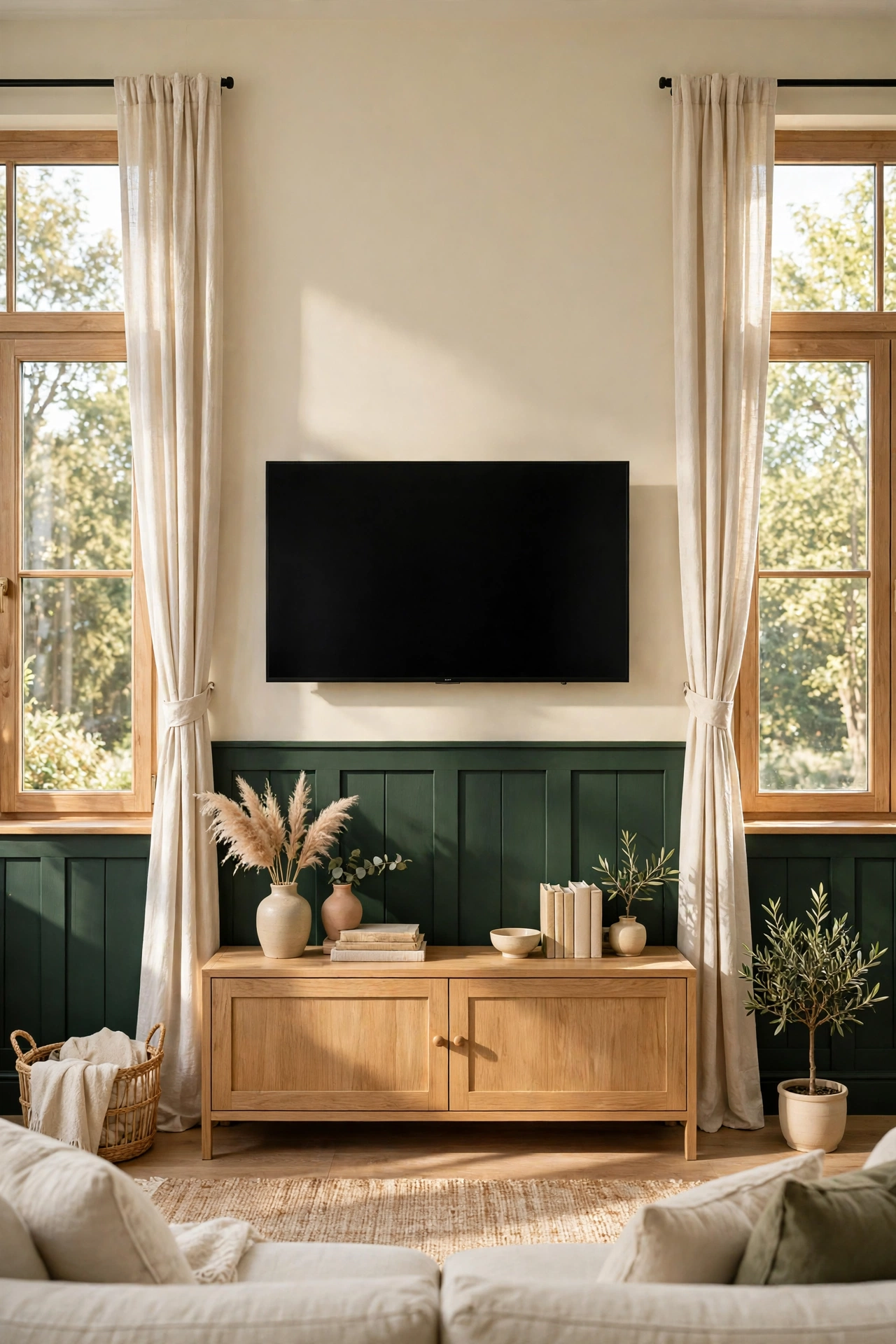
- Pair it with a cream sofa and brass details for a look that feels planned, comfortable and easy to live with.
- Use deep green panels that calm the bright wall to keep the wall looking finished and stop it feeling bare.
- Keep the screen centred, so each window gets equal space and the wall feels steady.
- Use soft colours and simple lines, then let one warm detail give the wall its character.
Start with a dark green panel wall when the space between the windows feels empty or hard to use. It creates one clear focal point, so the eye rests in the middle instead of jumping between bright glass and bare wall. Work in deep green, cream and light oak tones and add a cream sofa and brass details nearby, which helps the television feel like part of the room. Check the height, the glare and the seating distance together, because those details decide how comfortable the setup feels. The room feels bright and welcoming today.
The best part of this idea is how practical it feels day to day. A dark green panel wall holds the television steady, hides the messy parts and leaves room for the things you actually use. Work with deep green, cream and light oak tones and a cream sofa and brass details to keep the wall calm, then finish with one warm detail for warmth. You will notice the room feels tidier, brighter and more welcoming, even on busy days. The result feels calm, tidy and welcoming every day. The wall looks tidy and welcoming.
Arched Window Harmony

- An arched window harmony sits neatly between the windows, which keeps the wall balanced and the light even.
- Cream, warm white and light oak tones keep the wall calm, so the screen does not fight with bright daylight.
- Pair it with a curved sofa and a soft rug for a look that feels planned, comfortable and easy to live with.
- Use an arch detail that echoes the window tops to keep the wall looking finished and stop it feeling bare.
An arched window harmony can make the wall between two windows feel calm and balanced. It gives the television a clear centre, so daylight from both sides stays even and the room does not feel lopsided. Pair it with a curved sofa and a soft rug and use cream, warm white and light oak tones to keep the look soft, then step back and check the balance from your usual seat. When the centre feels steady, the whole living room feels easier to relax in. The room feels larger, lighter and much easier to enjoy.
This idea suits real homes because it is easy to build, easy to clean and easy to change later. An arched window harmony does not need a large budget or a full rebuild, and it works with the sofa and storage you already own. Keep the styling simple and use cream, warm white and light oak tones to tie the wall to the windows and the rest of the room. The result is a living room that feels calmer in the morning and more relaxing after a long day. The wall looks tidy and welcoming.
Marble Top Console

- White marble, soft grey and brass tones keep the wall calm, so the screen does not fight with bright daylight.
- Pair it with a grey sofa and a brass lamp for a look that feels planned, comfortable and easy to live with.
- Use a pale marble top that adds quiet luxury to keep the wall looking finished and stop it feeling bare.
- Keep the screen centred, so each window gets equal space and the wall feels steady.
If the wall between your windows feels tricky, a marble top console is a simple place to start. It creates one tidy focal point in the middle, which helps the bright light on both sides feel intentional instead of distracting. Use white marble, soft grey and brass tones and a grey sofa and a brass lamp to keep the colours calm, then keep the screen at eye level from the sofa. That steady centre makes the room feel planned, even when the windows are large. The room feels larger, lighter and much easier to enjoy.
This setup works in real homes because it keeps daily life simple. The television stays at a comfortable height, the light stays soft and the floor stays clear for children, pets and guests. A marble top console in white marble, soft grey and brass tones blends with a grey sofa and a brass lamp, so the room feels calm rather than crowded. Add one warm detail for a personal touch, and the wall will feel finished without looking staged or fussy. A calm wall makes the sofa area feel like a proper place to rest.
Open Oak Shelving

- Pair it with a grey sofa and a wooden ladder shelf for a look that feels planned, comfortable and easy to live with.
- Use open oak shelves with plants and books to keep the wall looking finished and stop it feeling bare.
- Keep the screen centred, so each window gets equal space and the wall feels steady.
- Use soft colours and simple lines, then let one warm detail give the wall its character.
An open oak shelving works well between two windows because it uses the centre space wisely. It gives the television a neat home without blocking light, and it leaves the window areas free for curtains, plants or a clear view. Choose light wood, white and soft black tones and pair the wall with a grey sofa and a wooden ladder shelf, which keeps the look warm and easy to follow. Leave equal space on both sides, and the wall will feel balanced from every seat. The room feels larger, lighter and much easier to enjoy.
Small changes on this wall make a big difference to how the room feels. An open oak shelving brings order to the screen area, and light wood, white and soft black tones keep the look soft in both daylight and evening light. Pair it with a grey sofa and a wooden ladder shelf and keep one warm detail close by, so the space feels useful as well as pretty. The room will feel more settled, and you will find it easier to relax there. The finished wall looks tidy, warm and easy to live with.
Cream Curtain Layers

- A layered cream curtain sits neatly between the windows, which keeps the wall balanced and the light even.
- Cream, warm white and pale linen tones keep the wall calm, so the screen does not fight with bright daylight.
- Pair it with a beige sofa and a linen throw for a look that feels planned, comfortable and easy to live with.
- Use layered cream curtains that frame both windows to keep the wall looking finished and stop it feeling bare.
Start with a layered cream curtain when the space between the windows feels empty or hard to use. It creates one clear focal point, so the eye rests in the middle instead of jumping between bright glass and bare wall. Work in cream, warm white and pale linen tones and add a beige sofa and a linen throw nearby, which helps the television feel like part of the room. Check the height, the glare and the seating distance together, because those details decide how comfortable the setup feels. The room feels bright and welcoming today.
The best part of this idea is how practical it feels day to day. A layered cream curtain holds the television steady, hides the messy parts and leaves room for the things you actually use. Work with cream, warm white and pale linen tones and a beige sofa and a linen throw to keep the wall calm, then finish with one warm detail for warmth. You will notice the room feels tidier, brighter and more welcoming, even on busy days. The result feels calm, tidy and welcoming every day. The wall looks tidy and welcoming.
Slim Black Shelves

- Black, white and light oak tones keep the wall calm, so the screen does not fight with bright daylight.
- Pair it with a white sofa and a black side table for a look that feels planned, comfortable and easy to live with.
- Use slim black shelves that add contrast without bulk to keep the wall looking finished and stop it feeling bare.
- Keep the screen centred, so each window gets equal space and the wall feels steady.
A slim black shelf can make the wall between two windows feel calm and balanced. It gives the television a clear centre, so daylight from both sides stays even and the room does not feel lopsided. Pair it with a white sofa and a black side table and use black, white and light oak tones to keep the look soft, then step back and check the balance from your usual seat. When the centre feels steady, the whole living room feels easier to relax in. The room feels larger, lighter and much easier to enjoy.
This idea suits real homes because it is easy to build, easy to clean and easy to change later. A slim black shelf does not need a large budget or a full rebuild, and it works with the sofa and storage you already own. Keep the styling simple and use black, white and light oak tones to tie the wall to the windows and the rest of the room. The result is a living room that feels calmer in the morning and more relaxing after a long day. The room feels bright and welcoming today.
Rustic Wood Beam

- Pair it with a linen sofa and a woven rug for a look that feels planned, comfortable and easy to live with.
- Use a thick beam shelf with a natural grain to keep the wall looking finished and stop it feeling bare.
- Keep the screen centred, so each window gets equal space and the wall feels steady.
- Use soft colours and simple lines, then let one warm detail give the wall its character.
If the wall between your windows feels tricky, a rustic wood beam is a simple place to start. It creates one tidy focal point in the middle, which helps the bright light on both sides feel intentional instead of distracting. Use reclaimed wood, cream and soft brown tones and a linen sofa and a woven rug to keep the colours calm, then keep the screen at eye level from the sofa. That steady centre makes the room feel planned, even when the windows are large. The room feels larger, lighter and much easier to enjoy.
This setup works in real homes because it keeps daily life simple. The television stays at a comfortable height, the light stays soft and the floor stays clear for children, pets and guests. A rustic wood beam in reclaimed wood, cream and soft brown tones blends with a linen sofa and a woven rug, so the room feels calm rather than crowded. Add one warm detail for a personal touch, and the wall will feel finished without looking staged or fussy. A calm wall makes the sofa area feel like a proper place to rest.
Light Reflecting Mirrors

- A light reflecting mirror sits neatly between the windows, which keeps the wall balanced and the light even.
- Silver, white and light grey tones keep the wall calm, so the screen does not fight with bright daylight.
- Pair it with a pale sofa and a glass table for a look that feels planned, comfortable and easy to live with.
- Use slim mirrors that bounce window light around the room to keep the wall looking finished and stop it feeling bare.
A light reflecting mirror works well between two windows because it uses the centre space wisely. It gives the television a neat home without blocking light, and it leaves the window areas free for curtains, plants or a clear view. Choose silver, white and light grey tones and pair the wall with a pale sofa and a glass table, which keeps the look warm and easy to follow. Leave equal space on both sides, and the wall will feel balanced from every seat. You will notice the difference every time you switch the screen on.
Small changes on this wall make a big difference to how the room feels. A light reflecting mirror brings order to the screen area, and silver, white and light grey tones keep the look soft in both daylight and evening light. Pair it with a pale sofa and a glass table and keep one warm detail close by, so the space feels useful as well as pretty. The room will feel more settled, and you will find it easier to relax there. The result is a living room that feels calm and well put together.
Cozy Reading Corner

- Soft grey, cream and light oak tones keep the wall calm, so the screen does not fight with bright daylight.
- Pair it with an angled armchair and a small side table for a look that feels planned, comfortable and easy to live with.
- Use a reading chair tucked beside one window to keep the wall looking finished and stop it feeling bare.
- Keep the screen centred, so each window gets equal space and the wall feels steady.
Start with a cozy reading corner when the space between the windows feels empty or hard to use. It creates one clear focal point, so the eye rests in the middle instead of jumping between bright glass and bare wall. Work in soft grey, cream and light oak tones and add an angled armchair and a small side table nearby, which helps the television feel like part of the room. Check the height, the glare and the seating distance together, because those details decide how comfortable the setup feels. The wall looks tidy and welcoming.
The best part of this idea is how practical it feels day to day. A cozy reading corner holds the television steady, hides the messy parts and leaves room for the things you actually use. Work with soft grey, cream and light oak tones and an angled armchair and a small side table to keep the wall calm, then finish with one warm detail for warmth. You will notice the room feels tidier, brighter and more welcoming, even on busy days. A calm wall makes the sofa area feel like a proper place to rest.
Minimal White Balance
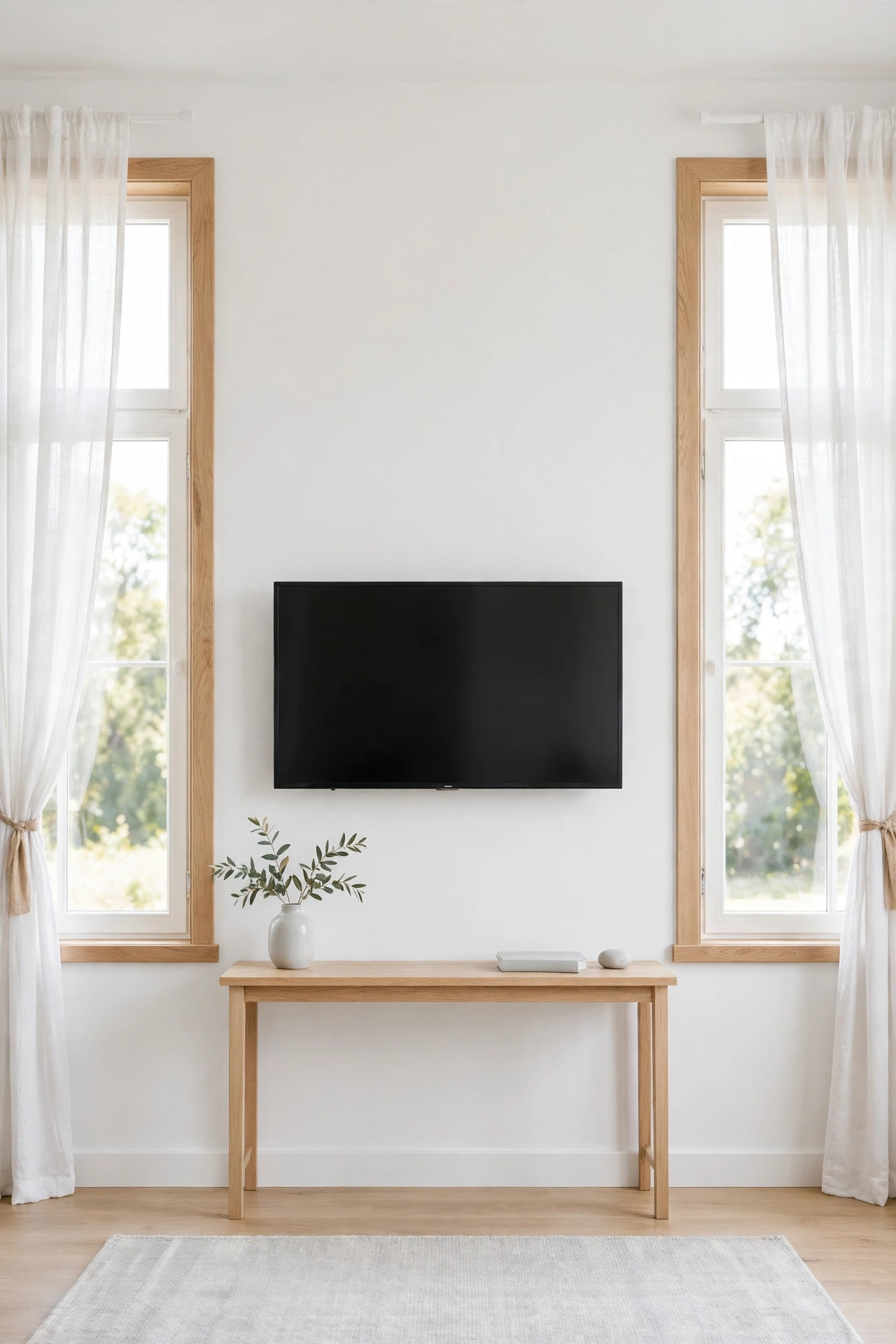
- Pair it with a white sofa and a clear glass table for a look that feels planned, comfortable and easy to live with.
- Use a clean white wall with almost no clutter to keep the wall looking finished and stop it feeling bare.
- Keep the screen centred, so each window gets equal space and the wall feels steady.
- Use soft colours and simple lines, then let one warm detail give the wall its character.
A minimal white balance can make the wall between two windows feel calm and balanced. It gives the television a clear centre, so daylight from both sides stays even and the room does not feel lopsided. Pair it with a white sofa and a clear glass table and use pure white, pale grey and light oak tones to keep the look soft, then step back and check the balance from your usual seat. When the centre feels steady, the whole living room feels easier to relax in. A calm wall helps the room feel welcoming.
This idea suits real homes because it is easy to build, easy to clean and easy to change later. A minimal white balance does not need a large budget or a full rebuild, and it works with the sofa and storage you already own. Keep the styling simple and use pure white, pale grey and light oak tones to tie the wall to the windows and the rest of the room. The result is a living room that feels calmer in the morning and more relaxing after a long day. The room feels calmer now.
Pick one idea from this list that fits your room and your budget, then start with the centre of the wall and the light from both windows. Small changes, like a floating console or soft curtains, can make a whole living room feel brighter and more balanced. These tv wall ideas between two windows work best when you keep the centre simple and let daylight do the talking. Save this guide on Pinterest for later, try one idea this weekend, and share it with a friend who is planning a living room refresh. Enjoy the calmer room every day.