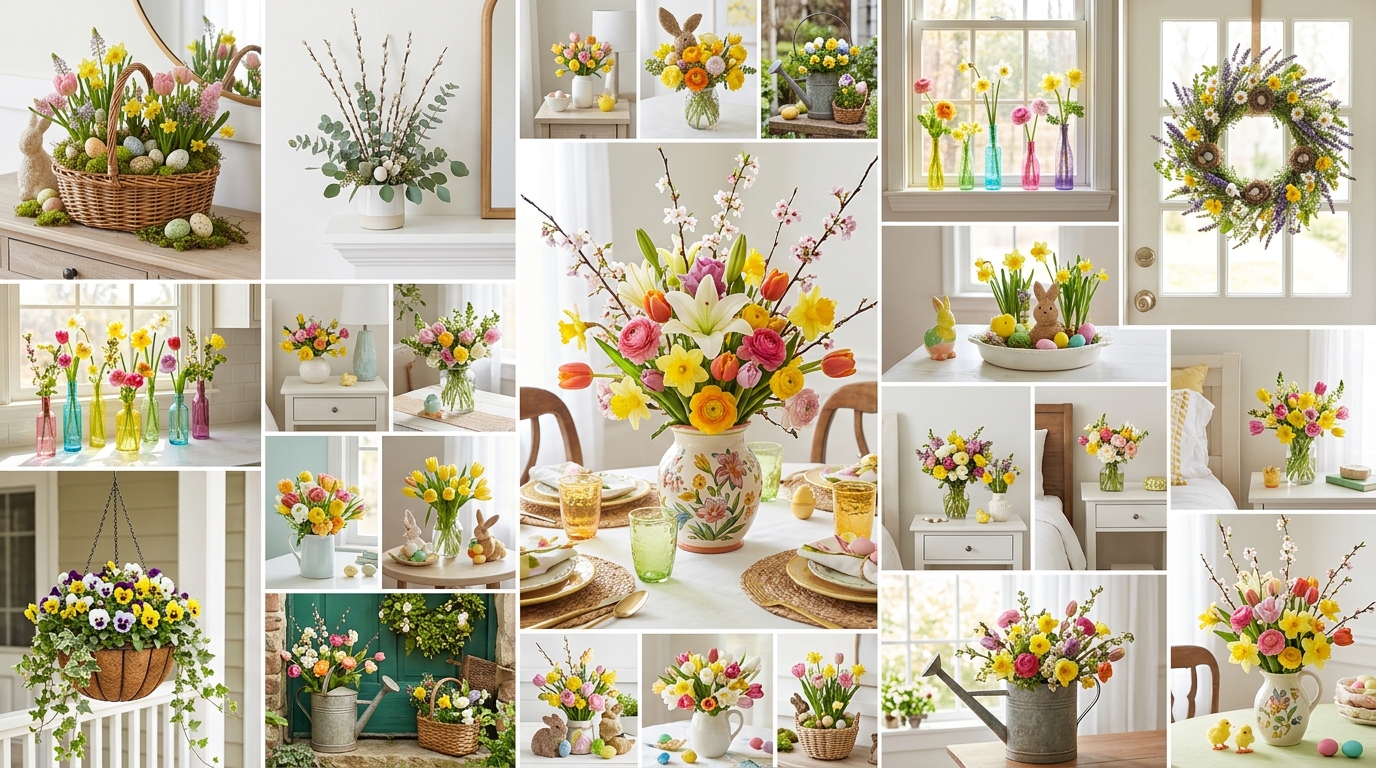
There’s something quietly magical about Easter flowers — the way a cluster of tulips in a mason jar can make an entire room feel like spring has finally arrived for good. Whether you’re decorating a formal dining table or simply want a cheerful vignette on your entryway console, the right Easter flower arrangement transforms any space into something worth lingering in. From soft pastels to bold botanical statements, the possibilities are genuinely limitless — and you don’t need a florist’s budget to pull them off beautifully. These 27 Easter flower arrangements ideas run the full range: simple, sculptural, rustic, refined, and everything in between. Here are 27 ideas worth saving.
Why Easter Flower Arrangements Work So Well
Easter florals occupy a unique sweet spot in home decorating — they’re seasonal enough to feel intentional, yet natural enough to work in virtually any interior style. Unlike heavily themed holiday décor, flower arrangements carry their own inherent beauty. A bowl of ranunculus doesn’t need a bunny figurine beside it to feel Easter-appropriate.
The defining palette of Easter flowers — soft blush, butter yellow, lavender, sage green, and crisp white — happens to align perfectly with the broader spring interior trend of “quiet nature.” These tones photograph beautifully, layer effortlessly with neutral home bases, and feel elevated without being precious.
What’s driving the cultural moment right now is a return to organic, imperfect beauty. Pinterest data consistently shows a surge in searches for “loose garden-style arrangements,” “foraged spring florals,” and “wildflower Easter décor” — a move away from tight, formal centerpieces toward something that looks like it was just gathered from the garden.
Even in small apartments or compact entryways, a single well-chosen bloom in a bud vase makes an outsized impact. The scale of your Easter flower arrangement matters far less than the intention behind it.
1. Pastel Tulip Tower in a Tall Glass Vase
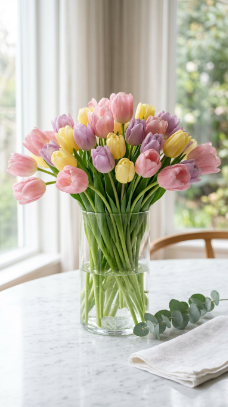
Vibe sentence: This arrangement has the effortless grace of a Parisian florist’s window — abundant without being fussy.
What makes it work: Tulips have a natural draping quality that softens the rigidity of a tall glass vase, creating beautiful movement. Using three tones within the same pastel family gives the arrangement depth without visual chaos. The transparent vase doubles the design by showcasing the clean green stems as part of the composition.
How to achieve it: Buy tulips in bud form and let them open at room temperature — they’ll naturally spread into that loose, arching shape. Use a tall vase that holds the stems at least two-thirds submerged for the cleanest look.
💡 Add a small amount of sugar to the water — it extends tulip life by 2–3 days.
2. Wildflower Basket with Woven Texture
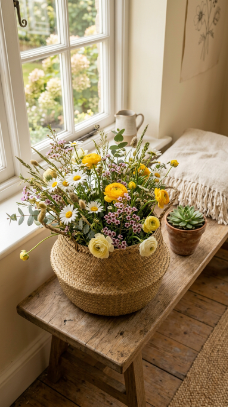
Vibe sentence: It looks like someone just wandered back from a meadow, arms full, and set the whole thing down without overthinking it.
What makes it work: The rough texture of woven seagrass creates a deliberate contrast with the delicate softness of wildflowers — that tension is what makes this look so visually satisfying. Loose, varied flower heights mimic how flowers grow naturally, which reads as sophisticated even though the method is completely effortless.
How to achieve it: Use a hidden inner container (a plastic cup or small mason jar with water) tucked inside the basket to keep stems hydrated. Choose flowers with varied stem heights and textures — avoid anything too uniform.
3. Monochromatic White Arrangement in a Ceramic Pitcher
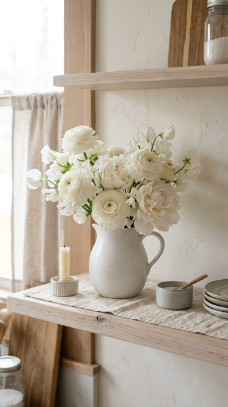
Vibe sentence: Tonal white arrangements carry a quiet luxury that feels almost meditative — all texture, no noise.
What makes it work: The secret here is that “white” is never just one color. Ranunculus petals read as pure white, peonies lean ivory, and sweet peas add a soft cream, creating subtle tonal variation that gives the arrangement richness. A matte ceramic pitcher grounds the softness with tactile weight.
How to achieve it: Source a handmade or hand-glazed ceramic pitcher in warm white — slight imperfections in the glaze add to the organic quality. Look for variations in white florals rather than matching them identically.
💡 Grocery store white carnations, when mixed with garden-style blooms, disappear beautifully into high-end arrangements — nobody notices, and they last longest.
4. Moss and Egg Nest Centerpiece
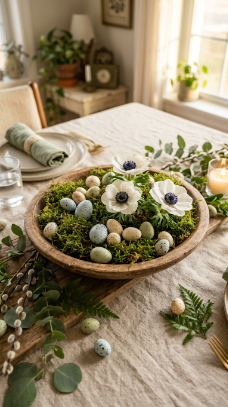
Vibe sentence: This centerpiece sits at the intersection of Easter tradition and modern organic styling — earthy, sweet, and completely charming.
What makes it work: The moss provides a lush, living base that makes the eggs and flowers appear naturally nestled rather than placed. Anemones with their dark centers add graphic contrast that keeps the arrangement from feeling too soft or childlike.
How to achieve it: Purchase sheet moss from a craft store and dampen it before arranging — this keeps it looking fresh for the entire Easter weekend. Use floral picks to anchor the anemone stems directly into the moss.
5. Daffodil Clusters in Vintage Milk Bottles
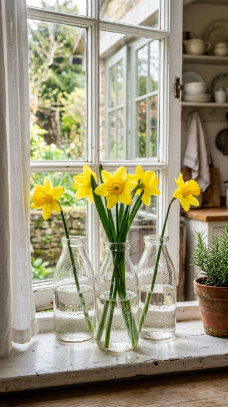
Vibe sentence: Three little bottles, three stems each — and the whole kitchen smells like Easter morning.
What makes it work: Grouping small bud vases creates a more dynamic visual than one large arrangement, especially on a windowsill where the light plays through both the glass and the translucent petals. Daffodils have a natural cheerfulness that requires almost no styling help.
How to achieve it: Collect mismatched vintage-style glass bottles (thrift stores are ideal) in varying heights. Keep groupings in odd numbers — three or five bottles — for a composition that feels natural rather than symmetrical.
💡 Change daffodil water daily — they release a sap that shortens neighboring flowers’ lifespan.
6. Lavender and Eucalyptus Spring Wreath as a Table Ring
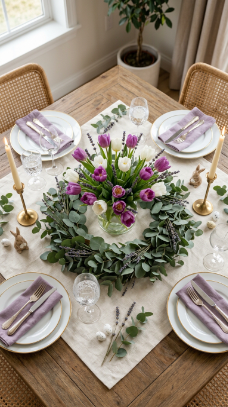
Vibe sentence: Laying a wreath flat on the table turns a wall accent into an entirely unexpected, utterly elegant centerpiece.
What makes it work: A wreath-as-table-ring creates an encircling effect that draws every seated guest’s eye toward the center. The mix of dried lavender (textural, scented) with fresh eucalyptus (cool, waxy) gives the arrangement multi-sensory dimension.
How to achieve it: Purchase a pre-made eucalyptus wreath and supplement it with a few bundles of dried lavender tucked between the leaves using floral wire. Place a low, heavy vase at the center so the wreath lies flat and stable.
7. Hyacinth in Terracotta Pots with Moss Topping
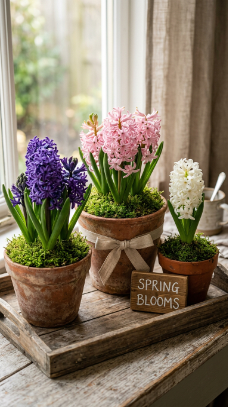
Vibe sentence: Potted hyacinths carry that rare combination of beauty and scent that turns any room into a sensory experience.
What makes it work: Terracotta’s warm burnt-orange tone creates striking contrast against hyacinth’s cool purples and pinks. Displaying them on a wooden tray unifies them as a composed arrangement rather than three separate plants — a small detail with significant visual payoff.
How to achieve it: Cover the soil surface with sheet moss to hide the potting mix and give the display a finished, styled look. Group the pots asymmetrically — varying heights matter more than matching pot sizes.
8. Ranunculus in a Fluted Glass Bowl
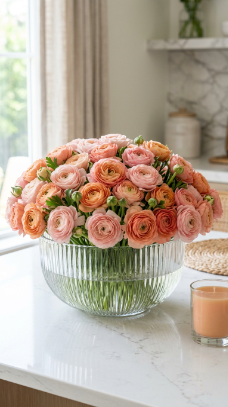
Vibe sentence: There is something about ranunculus — all those papery, layered petals — that feels like holding a bloom that’s too beautiful to be real.
What makes it work: Cutting stems short and packing ranunculus densely into a low bowl creates a lush, garden-gathered look that’s far more modern than a tall vase arrangement. The fluted glass adds period charm without feeling dated.
How to achieve it: Choose a bowl with a wide opening (at least 6 inches across). Cut all stems to the same short length — about 3 to 4 inches — and pack blooms tightly so they support one another upright.
💡 Ranunculus last longest when kept out of direct sunlight and refreshed with cool water every two days.
9. Branches with Forced Blooms in a Stoneware Vase
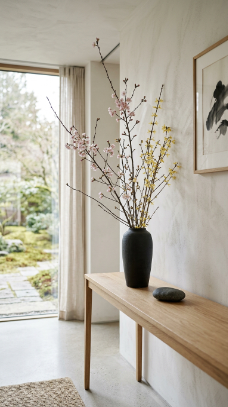
Vibe sentence: A single branch of cherry blossoms in a dark vase is everything — architectural, fragile, and quietly spectacular.
What makes it work: Forced branches (cherry, forsythia, or quince) bring that outdoor-indoor quality that no cut flower fully replicates. The contrast between a heavy, dark stoneware vessel and the featherlight blossoms creates visual tension that reads as genuinely artistic.
How to achieve it: Cut branches at an angle and place immediately in warm water — warm water encourages buds to open faster. Remove any branches below the waterline and split the cut end vertically to maximize water absorption.
10. Peony and Sweet Pea Loose Bouquet in Linen Twine
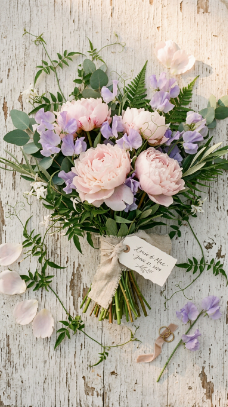
Vibe sentence: A just-tied bouquet lying on a table is a styling moment in itself — no vase required.
What makes it work: Flat-lay bouquet photography has become one of Pinterest’s most-saved aesthetics, and the real-life version is just as lovely as a hostess gift, table accent, or entryway detail. Linen twine keeps the natural, garden-gathered mood intact without overpowering the florals.
How to achieve it: Build your bouquet in hand, rotating slightly with each addition to create a spiral stem structure. Wrap at the binding point with linen twine at least three times before knotting — this keeps the bouquet tight enough to hold its shape when laid flat.
11. Herb and Flower Mixed Arrangement
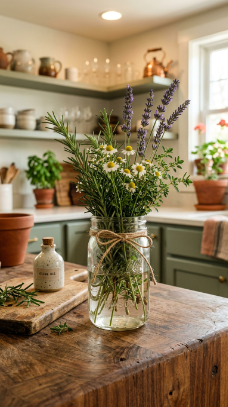
Vibe sentence: When your Easter arrangement doubles as the best-smelling thing in the room, that’s the real win.
What makes it work: Mixing culinary herbs with flowers blurs the line between functional and decorative in a way that feels genuinely clever. Texturally, herbs like rosemary and thyme provide a spiky, linear structure that complements rounder flower heads beautifully.
How to achieve it: Look for herb plants at a garden center — buying the whole plant is cheaper than cut stems and you can snip fresh arrangements all season. Rosemary, mint, lavender, and chamomile all work beautifully together.
💡 A mason jar with a small piece of chicken wire crumpled inside gives you an invisible grid to arrange stems exactly where you want them.
12. Potted Spring Bulbs in a Galvanized Trough
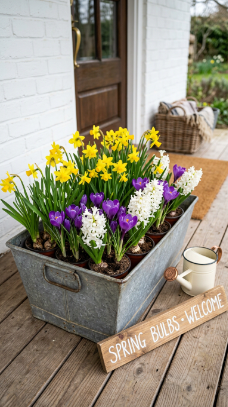
Vibe sentence: A trough of mixed spring bulbs is the Easter version of having your whole garden in one beautiful container.
What makes it work: The galvanized metal provides an industrial-meets-cottage contrast to the soft organic blooms. Planting three different bulb types creates a visual tapestry — varying bloom heights, petal shapes, and colors that feel designed rather than random.
How to achieve it: Keep bulbs in their nursery plastic pots and simply nest them inside the galvanized trough — this makes it easy to swap out finished blooms and keeps roots healthy. Cover the pot rims with extra soil or moss.
13. Single Stem in a Bud Vase Collection
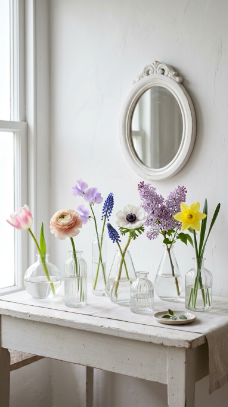
Vibe sentence: There is a certain art-gallery quality to a collection of bud vases — each bloom given its own moment to shine.
What makes it work: Single-stem arrangements highlight each flower’s individual character: the way muscari’s grape-like clusters differ entirely from a tulip’s clean cup. Varied glass shapes across the collection add visual rhythm without requiring a theme.
How to achieve it: Collect small bud vases over time — check thrift stores for vintage glass pieces. Group seven to nine in an overlapping cluster rather than a straight line, letting heights vary naturally.
14. Compote Bowl Elevated Centerpiece
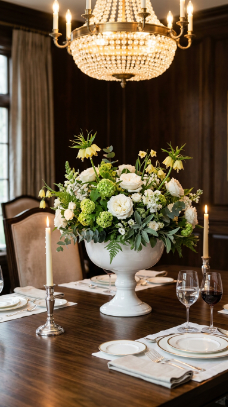
Vibe sentence: Elevation is everything — raising your arrangement on a pedestal bowl transforms a simple centerpiece into something genuinely table-stopping.
What makes it work: A compote bowl’s height lifts the arrangement so it creates visual drama across the table without obstructing guests’ sightlines when seated. The pedestal silhouette is inherently elegant and works in both traditional and transitional interiors.
How to achieve it: Use floral foam inside the compote bowl to anchor stems at varying angles, including some that trail down over the pedestal edge. This downward movement is what makes a compote arrangement feel luxurious rather than stiff.
💡 White garden roses from Trader Joe’s or Costco, mixed with supermarket greenery, produce a compote arrangement that looks florist-professional.
15. Hanging Floral Mobile Over a Table
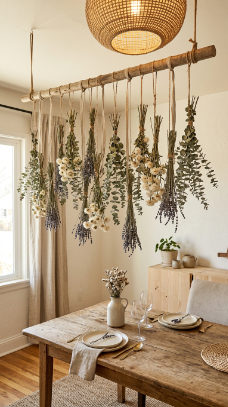
Vibe sentence: A floral mobile turns the air above your table into part of the decoration — and it lasts well beyond Easter.
What makes it work: Dried floral installations work on a fundamentally different design principle than fresh arrangements — they introduce height and dimension into the space rather than just the table surface. Asymmetrical cord lengths create organic movement even in a static display.
How to achieve it: Tie bundles of dried flowers at varied lengths (12, 16, and 24 inches) along a wooden dowel, then hang the dowel from your existing light fixture or a ceiling hook. Dried arrangements here mean no watering, no wilting.
16. Pressed Flower Lantern Insert
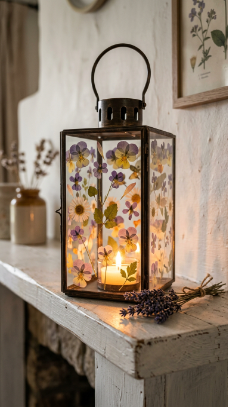
Vibe sentence: When candlelight glows through pressed petals, the result is something that looks genuinely handmade and completely irreplaceable.
What makes it work: The translucency of pressed flowers means they transform entirely under backlighting — petal veins and color gradients appear that are invisible in normal light. This dual-mode display (beautiful in daylight, spectacular at night) makes it one of the most high-impact Easter crafts possible.
How to achieve it: Adhere pressed flowers to the inside of glass panels using a thin layer of Mod Podge. Press your own pansies or violets for two weeks between heavy books, or purchase pre-pressed flowers from craft stores.
17. Blue and White Chinoiserie Vase with Tulips
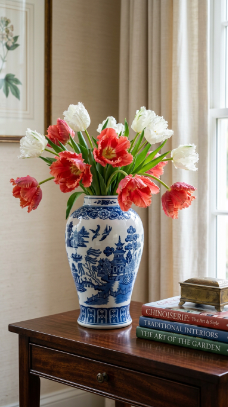
Vibe sentence: The combination of a bold blue-and-white chinoiserie vase with wild parrot tulips is the kind of arrangement that looks like it belongs in a design magazine.
What makes it work: Parrot tulips — with their frilled, dramatic petal edges — have enough visual personality to hold their own against a highly decorative vessel. The warm coral tones of the tulips play beautifully against the cool cobalt blue, creating complementary contrast.
How to achieve it: Source a chinoiserie vase from HomeGoods or TJ Maxx — both consistently carry them. Choose parrot tulips specifically over standard tulips for this look; their ruffled edges are what make the pairing work so effectively.
18. Asymmetrical Ikebana-Inspired Easter Arrangement
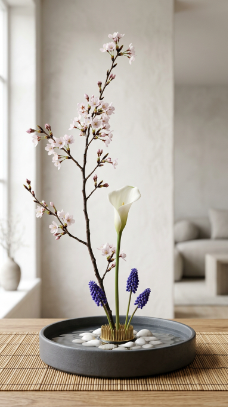
Vibe sentence: Ikebana teaches that what you leave out of an arrangement is just as important as what you put in.
What makes it work: The deliberate use of negative space — allowing air and emptiness to be part of the composition — elevates this far beyond a typical Easter arrangement. The three-height structure (tall branch, mid-height lily, low muscari) follows Ikebana’s heaven-earth-human principle and produces an effortless visual hierarchy.
How to achieve it: Purchase a metal kenzan (pin frog) from a floral supply or Japanese home goods store — they’re typically under $15 and are the foundation of any Ikebana-inspired arrangement. Choose a shallow, wide, matte ceramic dish in a neutral tone.
💡 Use only three to five elements maximum — restraint is the entire point.
19. Easter Wreath on a Door with Fresh Florals
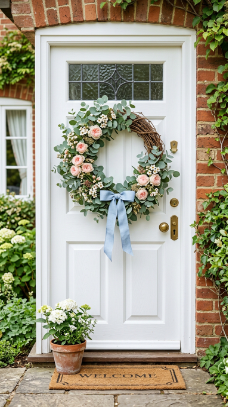
Vibe sentence: A fresh floral wreath on the front door is an invitation — it tells every visitor that something beautiful is happening inside too.
What makes it work: A grapevine base has natural texture and organic structure that foam or wire wreaths lack, giving the finished piece a genuinely artisan quality. Fresh garden roses distributed throughout rather than clustered in one spot create visual balance around the full circle.
How to achieve it: Hot-glue small water tubes (available at floral supply stores) to the wreath base to keep rose stems hydrated. This technique extends a fresh floral wreath’s life by three to four days.
20. Floral Frog and Shallow Bowl Statement Piece
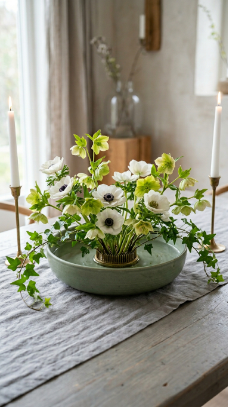
Vibe sentence: A floral frog arrangement has that understated expertise of someone who genuinely loves flowers — not just someone who bought them.
What makes it work: A floral frog (pin frog or brass flower frog) allows you to place stems at precise horizontal angles, creating a low, spreading arrangement that’s impossible to achieve with a standard vase. This shape allows table conversation to flow unobstructed, making it ideal for a seated Easter dinner.
How to achieve it: Fill the bowl with just enough water to cover the frog’s pins. Position your tallest stems first at the center, then work outward with progressively shorter and trailing stems. Hellebores and anemones work beautifully in this format.
21. Ombre Arrangement with Gradated Bloom Colors
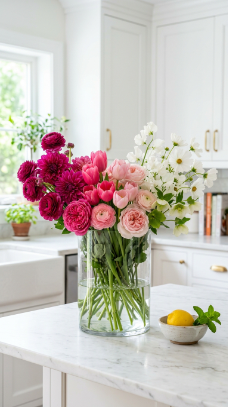
Vibe sentence: An ombre arrangement is proof that the transition between colors can be as beautiful as any single bloom.
What makes it work: Gradating color from saturated to pale creates a built-in visual movement that draws the eye across the entire arrangement. It works best when all flowers share the same warm or cool undertone — mixing warm pinks with cool purples disrupts the gradient.
How to achieve it: Arrange blooms in distinct color sections, keeping each shade grouped rather than mixing. Start with your deepest color at one side, then layer progressively paler blooms moving across the vase. Use a large-opening vessel so blooms stay positioned.
💡 Keep the stem lengths consistent so bloom heads sit at the same height — this is what makes the color gradient read clearly rather than chaotically.
22. Windowsill Herb Garden with Easter Eggs Tucked In
Vibe sentence: Tucking tiny decorated eggs among growing herb pots is the most playful, low-effort Easter styling you’ll ever do — and it looks completely intentional.
What makes it work: This idea marries the functional (a kitchen herb garden) with the seasonal (Easter eggs) in a way that feels organic rather than themed. The vivid green of fresh herbs provides natural color contrast that makes the eggs pop without any additional styling.
How to achieve it: Use wooden or ceramic decorative eggs rather than real ones so they can be reused year after year. Paint them in two or three coordinating tones that complement your kitchen’s existing color story.
23. Flowering Branch Canopy Above a Dining Table
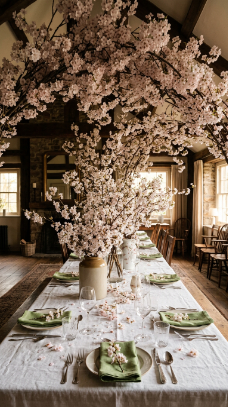
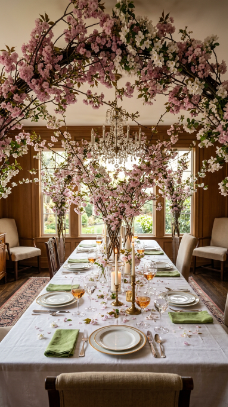
Vibe sentence: When flowering branches arch overhead at the dinner table, the meal becomes an event.
What makes it work: Multiple vases running the table’s length work as a unified installation rather than separate arrangements. The natural arching habit of flowering branches does the dramatic work for you — no special technique required, just height and abundance.
How to achieve it: Use the heaviest, most stable vases you own (or borrow) and fill them with an inch of pebbles at the bottom for stability before adding water. Branches with fresh cuts soak up water quickly, so check levels daily.
24. Miniature Floral Arrangements for Easter Place Settings
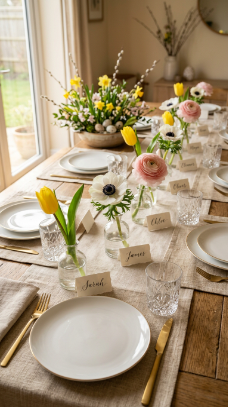
Vibe sentence: A single bloom at each guest’s place setting is hospitality made visible — a small signal that someone thought of them specifically.
What makes it work: Individual place-setting arrangements personalize the table in a way that a single centerpiece simply cannot. Varying the bloom at each seat creates a collected, curated rhythm down the table length.
How to achieve it: Assign each bloom a different pastel color that follows a pattern down the table — yellow, white, pink, yellow, white, pink. Attach small handwritten name tags to double as both place card and floral gift for guests to take home.
💡 Purchase single-stem bouquets from Trader Joe’s or Aldi the day before — they’re typically under $4 each and enormously varied.
25. Dried Pampas and Spring Flower Hybrid Arrangement
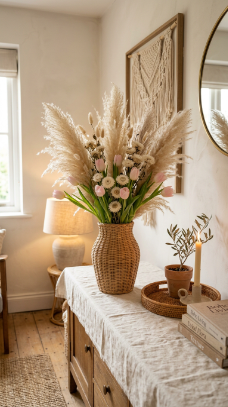
Vibe sentence: Combining dried pampas with fresh spring flowers creates an arrangement that exists in two seasons at once — and it’s unexpectedly beautiful.
What makes it work: The visual contrast between pampas grass’s soft, feathery texture and a tulip’s smooth, clean form creates exactly the kind of layered complexity that makes an arrangement feel designed. Dried elements also extend the arrangement’s life significantly — the pampas remains beautiful long after the tulips fade.
How to achieve it: Establish the dried pampas as the structural skeleton of the arrangement first, then add fresh stems into gaps. The pampas fronds will naturally support and splay fresh flowers outward, reducing the need for a floral grid.
26. Water-Floating Flower Bowl
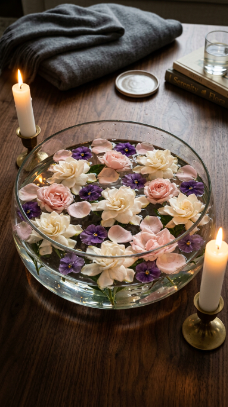
Vibe sentence: A floating flower bowl turns a coffee table into a still-life painting — best experienced at the end of Easter dinner with candles lit.
What makes it work: Floating flowers remove the stem entirely, which means the bloom’s full face is displayed. The still water acts as a mirror, doubling the visual richness of the arrangement. This technique works particularly well for evening gatherings when candles amplify the water’s reflective quality.
How to achieve it: Cut gardenia and rose heads cleanly at the base, leaving no stem. Arrange the largest blooms first, then scatter smaller petals loosely around them. Float a few small tea lights in the same bowl for a spectacular evening effect.
27. Garden Cloche with a Single Bloom Display
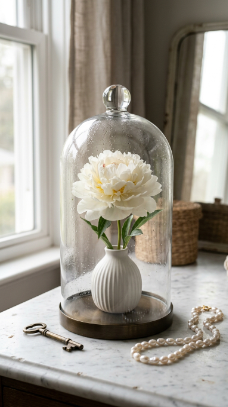
Vibe sentence: Placing a single perfect peony under a glass cloche turns one flower into a statement — like a museum piece you grew yourself.
What makes it work: The cloche references the Victorian era’s love of botanical display, giving a single bloom the drama it deserves. A peony fully open beneath glass has an almost theatrical quality, while the small scale keeps it intimate enough for a nightstand or vanity.
How to achieve it: Source a glass cloche from HomeGoods, World Market, or antique markets. Choose a cloche tall enough that the bloom doesn’t touch the glass. Leave the cloche open for a few hours each day to prevent excessive moisture buildup.
💡 This works beautifully as a fragrance delivery system too — peony and gardenia scent concentrate beautifully under glass.
How to Start Your Easter Flower Arrangement Transformation
The biggest mistake most people make with Easter flowers is waiting too long. Spring blooms sell out fast — tulips and ranunculus disappear from grocery stores by mid-week before Easter. Start shopping for long-lasting varieties (eucalyptus, pampas, dried elements) the week before, then add fresh statement blooms two days before the holiday.
Begin with one hero arrangement rather than trying to do every room at once. A well-executed dining table centerpiece or a beautiful entryway display has more impact than six mediocre arrangements scattered throughout the house.
Budget-wise, the biggest return on investment comes from flowers you buy in bulk (a bunch of 10 tulips for $7 can be split into three separate bud vase arrangements). Supplement with grocery store flowers, which are genuinely excellent for arrangements when mixed with a few specialty stems.
Don’t overlook greenery — eucalyptus, ferns, and even herbs from the grocery store’s produce section cost under $3 and fill out arrangements beautifully. The flowers get the glory; the greenery does the structural work.
Frequently Asked Questions
What flowers are most popular for Easter arrangements?
Tulips, ranunculus, hyacinths, daffodils, and sweet peas are the quintessential Easter flowers. They’re all naturally spring-blooming, widely available in February through April, and come in the soft pastel palette most associated with Easter. Ranunculus are particularly versatile — they work in both rustic and formal arrangements and last 7–10 days in a vase with fresh water changes.
How do I make Easter flower arrangements last longer?
Change the water every two days, cut stems at a 45-degree angle each time you refresh the water, and keep arrangements away from direct sunlight and ripening fruit (which emits ethylene gas that shortens flower life). Adding a tiny drop of bleach and a pinch of sugar to the water creates a simple homemade flower food that genuinely extends vase life by several days.
Are Easter flower arrangements expensive to create?
They don’t have to be. Grocery stores like Trader Joe’s, Whole Foods, and Aldi carry high-quality spring florals for $3–$10 per bunch. The key is supplementing grocery store flowers with a small number of specialty stems (ranunculus or peonies from a florist) to elevate the look. A complete dining table centerpiece can cost under $25 with thoughtful shopping.
What containers work best for Easter flower arrangements besides a vase?
Mason jars, vintage milk bottles, ceramic pitchers, terracotta pots, galvanized troughs, shallow ceramic bowls with floral frogs, woven baskets with hidden inner containers, and even teacups all work beautifully for Easter arrangements. The container’s material and texture become part of the design — choose one that complements your existing home style.
What color palette works best for Easter flower arrangements?
The most versatile Easter palette combines one soft neutral (white, ivory, or cream) with two accent tones — typically from blush pink, soft lavender, butter yellow, sage green, or sky blue. This three-color framework is flexible enough to work across traditional, modern, farmhouse, and bohemian interiors without clashing. For a more contemporary approach, try a single tonal palette in all-white or all-blush — the variation in flower textures provides all the visual interest needed.
Ready to Create Your Dream Easter Flower Arrangement?
These 27 Easter flower arrangements ideas cover the full range — from a single stem under a glass cloche to a dramatic flowering branch canopy — because the best Easter arrangement is simply the one that makes you happy when you walk into the room. Save the ideas that resonated most and let them be your starting point. A transformation doesn’t require doing everything at once — it starts with one tulip in one jar on one windowsill, and that’s already more than enough. Spring is short, and Easter flowers even shorter — let yourself enjoy every petal of it.