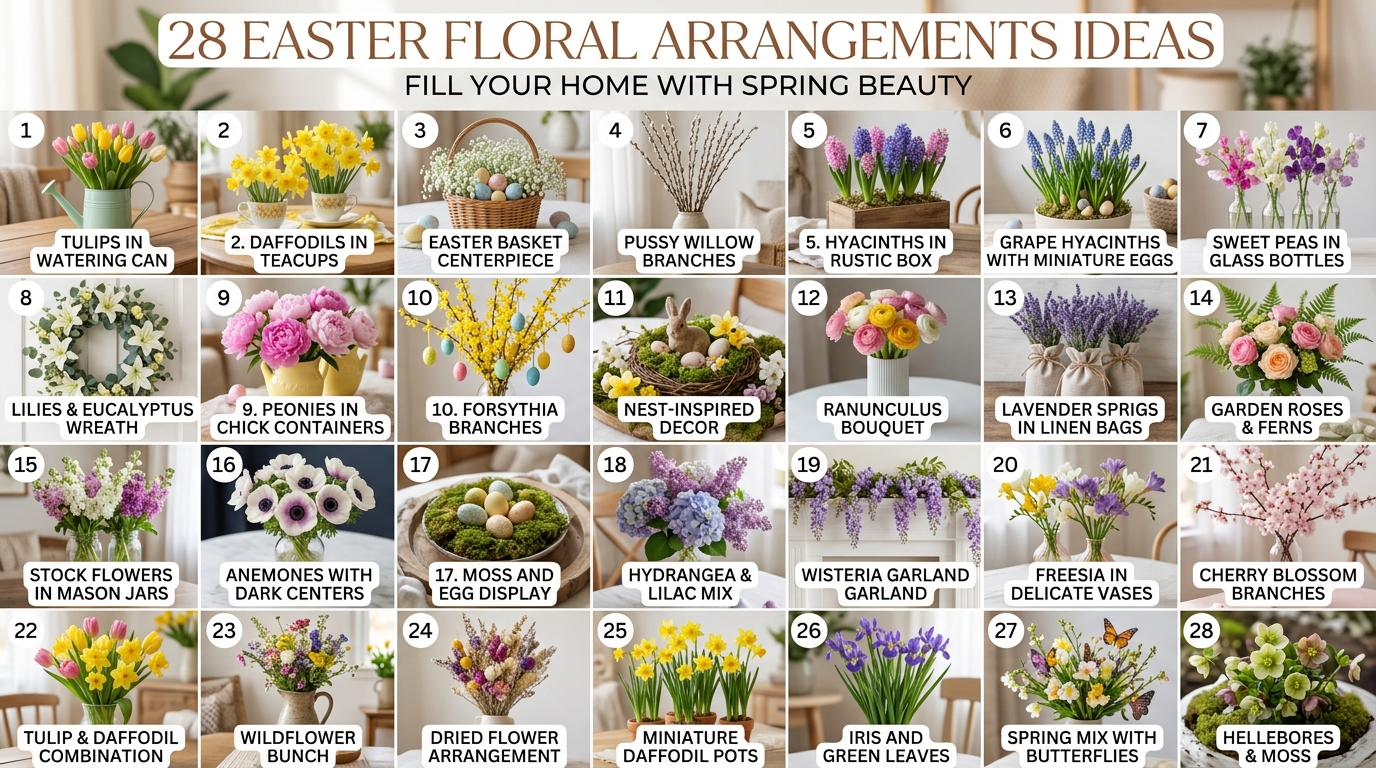
There’s something quietly magical about the moment you bring fresh flowers indoors and the whole room seems to exhale — suddenly it’s spring, even if there’s still a chill outside. Easter floral arrangements carry that same transformative energy: soft pastels, garden-fresh greenery, and blooms that make every surface feel like it was styled by someone who really loves this season. Whether you’re decorating a dining table for a big family brunch or simply want a quiet corner that whispers “spring is here,” these ideas will give you exactly what you need. Here are 28 Easter floral arrangement ideas worth saving.
Why Easter Floral Style Works So Well
Easter florals occupy a uniquely joyful corner of interior styling — they sit somewhere between the structured elegance of holiday decorating and the loose, breathing quality of everyday botanicals. The hallmark of this aesthetic is its palette: soft blush, lavender, butter yellow, mint green, and creamy white layered together in combinations that feel both intentional and effortlessly natural.
What makes Easter floral arrangements so versatile is their scale. A single stem in a bud vase reads as effortlessly chic on a bathroom shelf, while a lush centerpiece overflowing with peonies, ranunculus, and eucalyptus becomes the anchor of an entire room. The style adapts beautifully to farmhouse, modern, cottagecore, and even minimalist interiors.
Right now, Pinterest is seeing a massive surge in “spring table styling” and “Easter centerpiece ideas” — driven by a broader cultural pivot toward slow living, seasonal rituals, and the simple pleasure of a well-set table. People want their homes to mark the seasons, and florals are the easiest, most beautiful way to do that.
Even a studio apartment can lean into this aesthetic. A mason jar with tulips on a kitchen windowsill, or a small wreath of dried flowers above a doorway, carries the full spirit of Easter floral style without demanding square footage.
Pastel Peony Centerpiece in a White Ceramic Compote
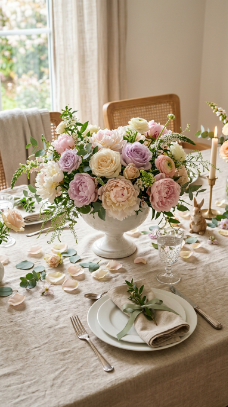
Vibe: This is the arrangement that stops conversation — a generous, overflowing cloud of peonies that makes your dining table feel like a garden party.
What makes it work: The compote’s raised height gives the arrangement visual importance without blocking sightlines across the table. Layering three peony tones — blush, cream, and lavender — creates depth while staying within a cohesive pastel palette. The loose, slightly undone edges signal abundance rather than stiffness.
How to achieve it: Choose a white ceramic or matte porcelain compote 6–8 inches tall. Build the base with eucalyptus or Italian ruscus, then layer peonies from largest to smallest, letting outer blooms drape slightly over the rim.
💡 Grocery store peonies in bud stage will fully open within 48 hours in warm water — buy them two days before Easter for peak bloom.
Single-Stem Tulip Bud Vases in a Row
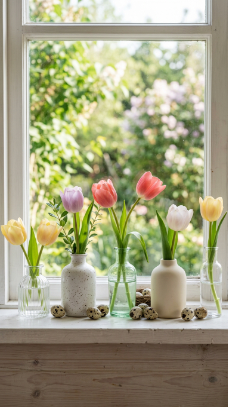
Vibe: Quietly joyful — like each tulip is a little exclamation point in a sentence about spring.
What makes it work: The repetition of individual stems creates a gallery-style rhythm, while mismatched vessels (clear glass, matte white ceramic, terracotta) add visual texture without chaos. Varying tulip heights naturally prevents the display from feeling too regimented.
How to achieve it: Collect bud vases in three different materials but stick to a consistent height range of 4–8 inches. Cut tulip stems at a sharp diagonal and change water daily — tulips drink heavily and droop quickly in stale water.
Wildflower Meadow Arrangement in a Terracotta Pot
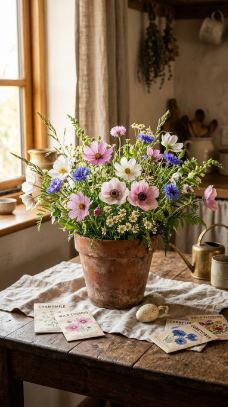
Vibe: A handful of flowers picked straight from a country garden — imperfect, fragrant, and completely charming.
What makes it work: Terracotta’s warm, earthy tone grounds the delicate pastel blooms, creating contrast that makes the flowers pop. The unstructured, “just-gathered” shape reads as effortlessly beautiful rather than styled, which is precisely what makes it feel so inviting.
How to achieve it: Line a terracotta pot with a water-filled glass jar or florist foam. Mix at least five flower varieties at different heights, keeping the tallest stems about 1.5 times the pot height.
Easter Egg Vase Arrangement on the Dining Table
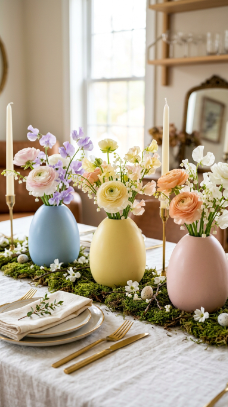
all floral clusters — ranunculus, sweet peas, and lily of the valley — arranged as a trio centerpiece on a white tablecloth. Lighting: soft diffused daylight. Camera angle: eye-level slight angle. Mood: whimsical and elegant. Key details: egg vases in powder blue, soft yellow, and blush pink with matte glaze finish. Decor accents: moss runner beneath, gold cutlery, ivory candles. Color palette: powder blue, blush, soft yellow, ivory. Style tags: photorealistic, 8K resolution, interior design photography, Pinterest vertical 2:3 ratio, no people, magazine quality.
Vibe: Playfully sophisticated — the kind of Easter table that’s festive without sacrificing elegance.
What makes it work: Using the vase itself as a seasonal design element means the arrangement does double duty as decor even before the flowers are added. The trio of egg-vases at varying heights (use small risers if needed) creates a miniature landscape that draws the eye across the table.
How to achieve it: Source egg-shaped ceramic bud vases from Easter decor collections or Etsy ceramicists. Keep flowers delicate and small-scale — large blooms overpower the vase’s proportions.
💡 No egg vases? Hollow out real blown eggs (size XL) and nestle a tiny water-filled test tube inside each one for a DIY version.
Lavender and White Ranunculus in a Mercury Glass Vase
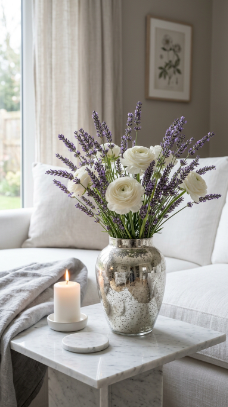
Vibe: Cool, silvery elegance that makes a living room feel like an exclusive boutique hotel in spring.
What makes it work: Mercury glass reflects light in a way that adds shimmer without heaviness — it bridges the gap between casual and formal beautifully. Lavender’s linear stem structure contrasts with the full, layered roundness of ranunculus, making the arrangement visually interesting from every angle.
How to achieve it: Cut lavender stems to about two-thirds the height of the ranunculus and nestle them behind the blooms so they provide height without dominating. Ranunculus last best in cool water — add a pinch of sugar to the vase.
Cascading Spring Wreath with Fresh Eucalyptus and Roses
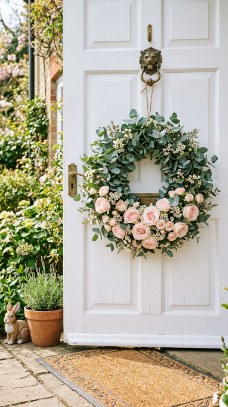
Vibe: A welcome-home moment — the kind of front door that makes guests stop and smile before they even ring the bell.
What makes it work: Fresh eucalyptus as the base layer brings instant fragrance and a silvery-green depth that makes every other color read more vividly. Clustering roses rather than distributing them evenly creates a natural focal point that prevents the design from looking busy.
How to achieve it: Use a grapevine or wire wreath base. Secure eucalyptus with florist wire, then add roses in clusters of three at the 4 o’clock and 8 o’clock positions for a balanced asymmetric look.
Tulip and Pussy Willow Arrangement in a Woven Basket
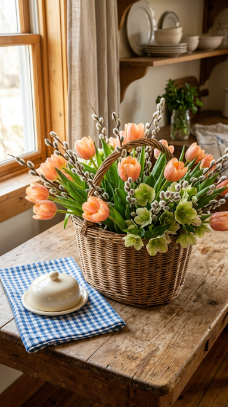
Vibe: Farmhouse Easter in its purest form — the kind of arrangement your grandmother might have made, but styled for a design-forward home.
What makes it work: Pussy willow’s silvery, tactile texture brings an unexpected material contrast to soft flower petals — it’s the difference between a flat composition and a genuinely dimensional one. The wicker basket bridges organic and structured, making it feel at home on any surface from kitchen table to entryway console.
How to achieve it: Line the basket with a waterproof liner and floral foam. Insert pussy willow branches at the tallest points first, then fill with tulips and hellebores at progressively lower heights.
Moss and Succulent Nest Arrangement with Eggs
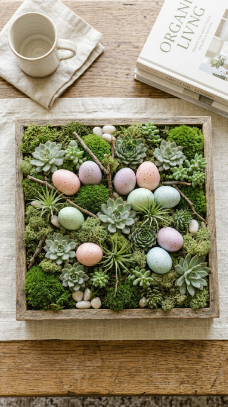
Vibe: An Easter nest reimagined as living sculpture — grounded, modern, and surprisingly long-lasting.
What makes it work: Succulents and moss require no water infrastructure, making this the most beginner-friendly arrangement on this list. The flat, tray-based format works beautifully on coffee tables where tall arrangements block television sight lines. The eggs read as organic inclusions rather than obvious Easter kitsch.
How to achieve it: Use preserved sheet moss (available at craft stores) as your base layer, then press small succulent cuttings and air plants into the moss. Speckled eggs in cream and blush add the Easter reference without overwhelming the botanical feel.
💡 Air plants need only a weekly 20-minute soak — this arrangement can stay on your table for weeks post-Easter.
Cherry Blossom Branch in a Tall Cylindrical Vase
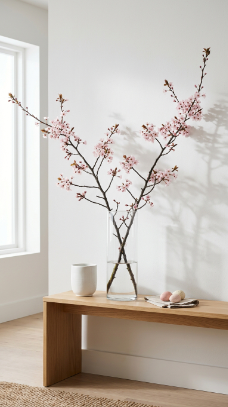
Vibe: Understated poetry — the kind of arrangement that transforms a hallway into a moment.
What makes it work: The architectural contrast between the rigid dark branch and delicate floating blossoms is visually dramatic in the best possible way. Using only two or three branches allows each bloom cluster to be seen clearly — the restraint is what makes it feel expensive.
How to achieve it: Purchase forced cherry blossom branches from florists in late February or March. Score the cut ends with a knife and place in warm water to encourage blooming. A cylindrical vase at about two-thirds the branch height provides the right proportion.
Spring Herb and Flower Arrangement in Kitchen Window Pots
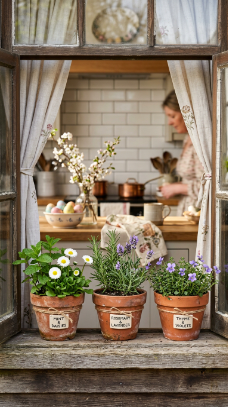
Vibe: A kitchen that smells like Easter Sunday morning — florals you can actually cook with.
What makes it work: Pairing herbs with flowers serves double purpose — fragrance and visual interest — while keeping the arrangement genuinely functional. The terracotta pot creates a warm, earthy anchor that makes small mixed plantings look intentional and designed rather than haphazard.
How to achieve it: Combine herbs and flowers with similar water needs: mint with daisies, rosemary with lavender. Plant in 4-inch terracotta pots. This arrangement thrives on a bright kitchen windowsill for weeks.
Dried Flower and Bunny Grass Arrangement in a Rattan Vase
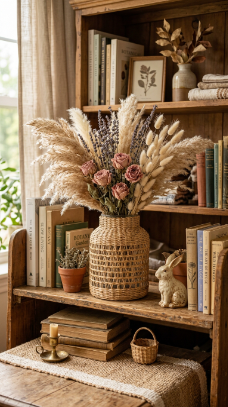
Vibe: Easter meets boho — permanently beautiful, zero maintenance, and somehow even more charming as it ages.
What makes it work: Bunny tail grass (Lagurus ovatus) is practically made for Easter — its soft, rounded seed heads bring texture and a whimsical spring reference without being overtly seasonal. Against dried lavender and dusty pink roses, the neutral palette works year-round.
How to achieve it: Build the arrangement with the tallest dried grasses first, then layer in dried roses and lavender. Bunny tail grass is widely available at craft stores and Trader Joe’s in spring.
💡 Lightly spray dried arrangements with hairspray to prevent shedding and extend their lifespan by weeks.
Blush and Gold Easter Table Runner with Floral Clusters
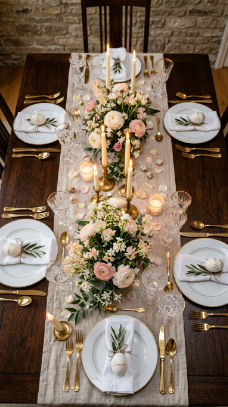
Vibe: An Easter dinner table so beautiful it feels wrong to sit down and eat — but you do anyway.
What makes it work: Distributing flowers in clusters along a runner rather than in one central arrangement keeps the table visually dynamic across its full length and ensures every guest has florals in their immediate sightline. Gold flatware against blush and cream flowers creates warmth without heaviness.
How to achieve it: Create small water-pick clusters wrapped in florist tape and place them every 12–14 inches along the runner. This technique keeps flowers fresh for 6–8 hours during a dinner.
Oversized White Hydrangea Arrangement in a Blue Ginger Jar
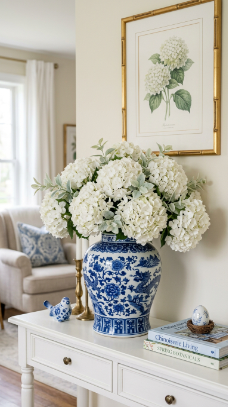
Vibe: Timeless Easter elegance — the blue-and-white combination that interior designers have loved for centuries, refreshed with spring’s most abundant bloom.
What makes it work: The visual weight of full hydrangea heads balances the decorative density of a chinoiserie pattern — simpler flowers would get lost against the busy design. The contrast between the cobalt blue vessel and brilliant white blooms is one of the cleanest, most satisfying color relationships in interior design.
How to achieve it: Cut hydrangea stems at a steep diagonal and immediately place in warm water. If heads droop, submerge the entire flower head in cold water for 20 minutes to revive.
Lemon Tree Branch and White Freesia in a Stone Vessel
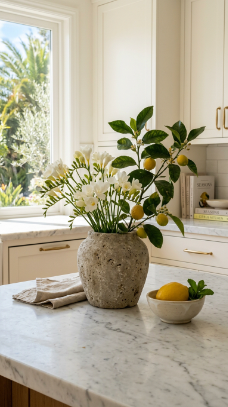
Vibe: A kitchen corner that feels like Easter morning on the Amalfi Coast.
What makes it work: The lemon branch introduces texture and dimension through its leaves and fruit, giving the arrangement architectural interest that flowers alone rarely achieve. Freesia’s waxy, trumpet-shaped blooms have a refined quality that pairs beautifully with the citrus’s casual elegance.
How to achieve it: Source lemon branches from florists or farmers’ markets in spring. A stone or cement vessel grounds the organic elements while keeping the arrangement from feeling too feminine or sweet.
Ombré Tulip Arrangement from Deep Violet to Pale Blush
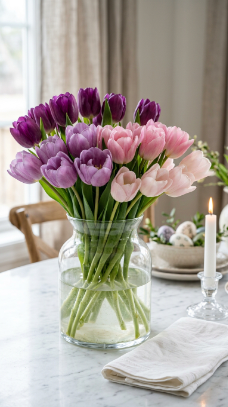
Vibe: The floral equivalent of a sunset — a single arrangement that tells a full color story.
What makes it work: Using a transparent glass vase is essential here — the ombré effect reads through the glass, extending the gradient effect all the way to the waterline. The technique transforms a simple monotype flower into a sophisticated, intentional composition that looks designed.
How to achieve it: Purchase tulips in five shades within a single color family (violet to blush). Arrange them in gradient rows from darkest to lightest, placing deepest tones at the back and palest at the front for a dimensional gradient visible from all angles.
Hanging Floral Mobile for Easter Brunch Table
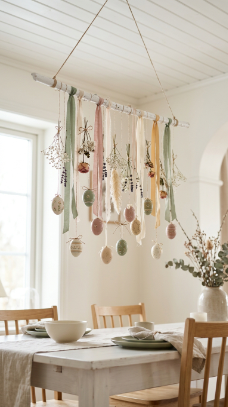
Vibe: Easter overhead — a floating meadow that transforms the ceiling into part of the decoration.
What makes it work: Overhead floral installations work so well because they use the one dimension most home decorators completely ignore. A hanging mobile brings the eye upward, making the room feel taller and the Easter atmosphere more immersive — especially magical for children’s table settings.
How to achieve it: Paint a birch branch white and suspend it from the ceiling with clear fishing wire. Tie dried flower clusters and blown eggs on ribbons of varying lengths (8–20 inches) for a layered, wind-chime effect.
💡 Hang the branch from a curtain tension rod in a doorway for a rental-friendly version that requires no ceiling hooks.
Pressed Flower Bud Vases in Apothecary Bottles
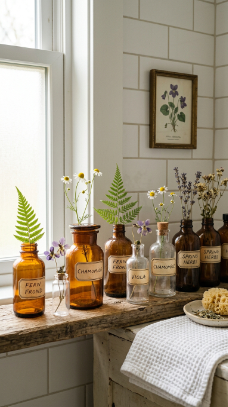
Vibe: A little Easter apothecary — understated, intellectual, and beautifully detailed.
What makes it work: Apothecary bottles and amber glass jars bring an antique, collected quality that elevates even the simplest single-stem arrangement. The amber glass acts as a color filter, warming every botanical placed inside it and creating a warm, golden glow in low light.
How to achieve it: Source vintage apothecary bottles from thrift stores or antique markets. Semi-dried botanicals (fern fronds, chamomile, violas) placed in empty bottles without water create a low-maintenance shelf installation that lasts for months.
Lily of the Valley Pitcher on a Breakfast Tray
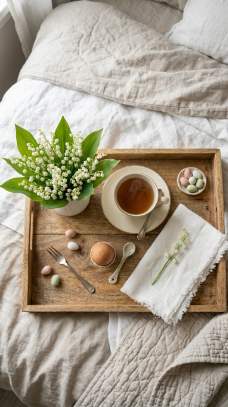
Vibe: The most quietly beautiful Easter moment — a breakfast tray that makes waking up on Easter morning feel like a gift.
What makes it work: Scale is the secret here — lily of the valley’s tiny bells are perfectly proportioned for a small pitcher, creating an arrangement that feels jewel-like rather than undersized. The intimacy of a breakfast tray context makes this one of the most Pinterest-worthy Easter arrangements precisely because it’s so personal and achievable.
How to achieve it: Cut lily of the valley short — about 4 inches — and arrange in a small cream or white ceramic pitcher. These flowers are intensely fragrant, making a breakfast tray an ideal location where the scent can be fully appreciated.
Pastel Sweet Pea Bouquet Tied with Velvet Ribbon
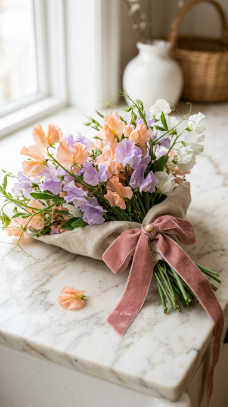
Vibe: A bouquet that looks like it was picked for you by someone who knows your favorite flowers — effortless, fragrant, completely personal.
What makes it work: Sweet peas have a naturally ruffled, layered petal structure that photographs beautifully — every image they appear in reads as lush even when the bunch is relatively small. The velvet ribbon adds a tactile luxury that elevates the market-bought bouquet into something that feels genuinely artisan.
How to achieve it: Purchase sweet peas in three closely related pastel tones. Build the bouquet in a spiral grip, rotating each stem as you add it. Tie with a 1.5-inch velvet ribbon in dusty pink or sage for maximum texture contrast.
💡 Sweet peas last longer when placed in shallow rather than deep water — fill your vase only halfway.
Flowering Branches in a Hammered Copper Vase
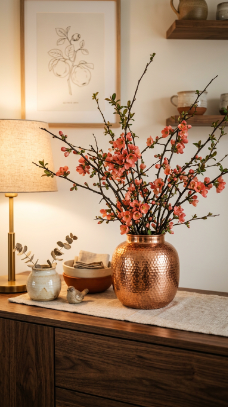
Vibe: The arrangement that proves Easter florals don’t have to be soft and pastel to be breathtakingly seasonal.
What makes it work: Quince branches bloom in early spring, making them perfect for Easter timing, and their warm orange-pink blossoms against the hammered copper create a tonal harmony that feels both designed and organic. The bare branch structure gives the arrangement architectural elegance even before the blooms fully open.
How to achieve it: Hammer the cut ends of quince branches before placing in water — this helps them absorb water efficiently. Source from florists in late March or April. The hammered copper vessel can be found at home goods stores or online for $30–$60.
Micro-Garden Easter Table with Potted Primroses and Moss
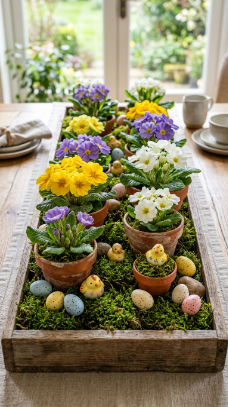
Vibe: A miniature spring garden that arrived on your table — vivid, joyful, and impossible to resist touching.
What makes it work: Potted primroses are one of spring’s most saturated, cheerful flowers — their jewel-toned colors (true violet, butter yellow, magenta) give an Easter table vibrancy that cut flowers in pastels simply can’t match. Arranging pots of different sizes on a wooden tray creates an instant cohesion without requiring any floral arranging skills.
How to achieve it: Buy 3–5 primrose varieties in contrasting colors. Group in a long wooden tray or crate, filling gaps with sheet moss. After Easter, plant them in the garden — they’re perennials.
Floating Flower Bowl Centerpiece
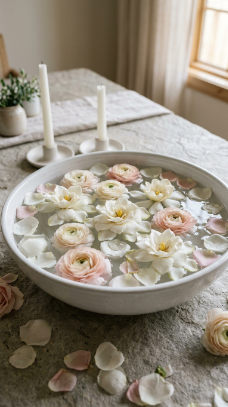
Vibe: The Easter arrangement for someone who appreciates Zen as much as spring — elemental, breathtaking, completely original.
What makes it work: A floating arrangement removes the vessel-height variable entirely, keeping your table sightlines completely open while delivering maximum visual impact at eye level. The water’s surface reflection doubles the effect of every bloom — essentially giving you twice the floral impact for half the flowers.
How to achieve it: Use a shallow, wide bowl at least 12 inches in diameter. Float individual flower heads (gardenias, whole ranunculus, or camellia blooms) and scatter individual petals for a full surface. Add floating tea light candles for evening dining.
Cottagecore Floral Cloche Arrangement
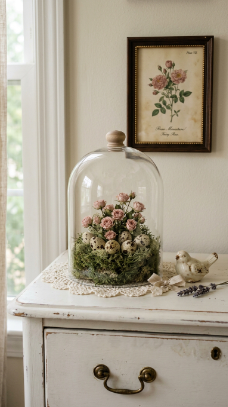
Vibe: A tiny Easter world under glass — nostalgic, precious, and impossibly charming.
What makes it work: A glass cloche frames its contents like a museum exhibit, automatically elevating anything placed beneath it into something worth examining closely. The juxtaposition of living florals with preserved botanical elements and eggs creates a layered narrative about spring and renewal that feels poetic.
How to achieve it: Use a glass dome/cloche available at homeware or craft stores ($15–$40). Build a base of preserved moss, add a small dried or faux floral cluster, then position quail eggs (real blown or ceramic) nestled against the arrangement.
💡 Real blown eggs can be speckled with a toothbrush dipped in watercolor for a naturalistic look.
Monochromatic White Easter Arrangement in a Pedestal Vase
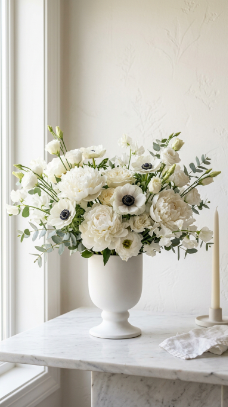
Vibe: The all-white arrangement that proves restraint is its own form of extravagance.
What makes it work: A monochromatic white arrangement forces the eye to find interest in texture and form rather than color — and the difference between the ruffled surface of a peony, the papery layers of lisianthus, and the graphic simplicity of an anemone becomes strikingly apparent and beautiful. The dark anemone centers provide the one graphic contrast that prevents the arrangement from disappearing into a white room.
How to achieve it: Commit fully to white — even the greenery should be pale eucalyptus or white-tipped pittosporum. The only contrast allowed is the natural dark center of white anemones. Use a matte or chalky white ceramic pedestal vase to maintain the monochromatic discipline.
Bright Yellow Daffodil Cluster in a Vintage Milk Bottle
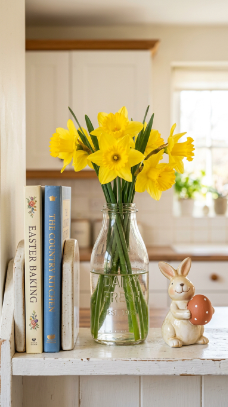
Vibe: Pure uncomplicated Easter joy — the yellow that says spring is genuinely, irrevocably here.
What makes it work: Daffodils are one of the few flowers that look best when NOT over-arranged — a simple cluster in a single vessel communicates their energy far more effectively than a complex mixed arrangement would. The vintage milk bottle’s casual, domestic quality perfectly matches daffodil’s cheerful, no-fuss personality.
How to achieve it: Keep daffodils separate from other cut flowers initially — they exude a sap that shortens the lifespan of flowers they’re mixed with. After 24 hours in a solo container, the sap dissipates and they can be safely combined with other blooms.
Eucalyptus and Blush Rose Arch for an Easter Mantel
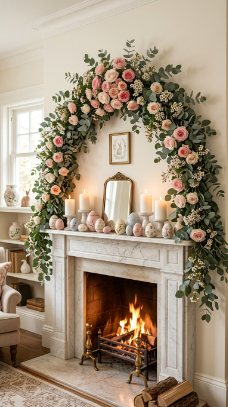
Vibe: An Easter mantel that makes the whole living room feel dressed for celebration — generous, romantic, completely show-stopping.
What makes it work: A garland arch uses the mantel’s natural horizontal surface to create a large-scale floral moment without needing a structural base. Clustering the most beautiful blooms at the arch’s peak (the visual center) ensures the arrangement reads as intentional rather than randomly distributed.
How to achieve it: Build the garland base with eucalyptus stems wired together, then hot-glue or wire in rose heads and wax flower clusters. For fresh flowers, use water picks inserted into the eucalyptus base to keep roses hydrated for 2–3 days.
Garden Clippings Easter Arrangement in a Mason Jar
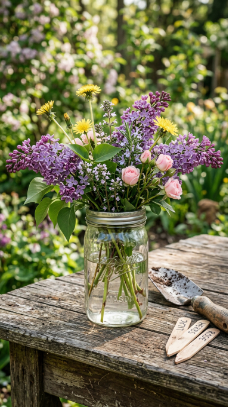
Vibe: The arrangement made from whatever the garden offers — imperfect, fragrant, and full of the joy of actually going outside.
What makes it work: Mixed garden clippings in a mason jar achieve something professional floristry often struggles with: genuine authenticity. The variety of textures — woody lilac stems, soft herb flowers, round rose buds — creates visual richness without any formal arrangement technique required.
How to achieve it: Clip whatever is blooming in your garden at a 45-degree angle in the early morning when stems are most hydrated. Lilac, herb flowers (chive, rosemary, thyme), wild violets, and dandelions all work beautifully. Change water every day.
Speckled Egg and Lily Arrangement in a Wooden Crate
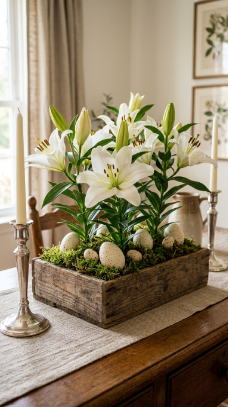
Vibe: Easter abundance in its most natural form — florals and eggs the way they might be found in an actual nest, only beautiful.
What makes it work: Placing eggs directly within the floral arrangement rather than beside it creates a true Easter narrative that reads instantly. The wooden crate’s rough texture against lily’s waxy, smooth petals creates a material contrast that gives the arrangement genuine visual complexity.
How to achieve it: Line a shallow wooden crate or box with floral foam covered in sheet moss. Insert lily stems, then nestle blown or ceramic eggs between stems at ground level. The eggs appear to emerge from the arrangement naturally.
How to Start Your Easter Floral Transformation
The best starting point for Easter floral decorating is your most-used surface — the dining table or kitchen island. These are the spaces where the arrangement will be seen most often and where seasonal florals have the greatest impact on daily mood. Start with one hero arrangement rather than trying to fill every surface at once.
The most common mistake is buying too many flower varieties and ending up with a busy, visually cluttered arrangement. A single flower type in three tonal variations — like the ombré tulip idea above — consistently outperforms a “more is more” mixed approach. Restraint is a design skill.
Budget-friendly entry points include grocery store tulips and daffodils ($3–$8 per bunch), preserved sheet moss from craft stores ($5–$8), and thrifted vessels like mason jars, vintage pitchers, and ceramic mugs that you likely already own.
For timing, purchase cut flowers 2–3 days before Easter Sunday so they’re at peak bloom for your event. Succulents, dried arrangements, and potted primroses are excellent choices if you want decor that lasts beyond the holiday weekend without wilting.
Frequently Asked Questions
What flowers are best for Easter arrangements?
Tulips, ranunculus, peonies, sweet peas, daffodils, hyacinths, and lily of the valley are the classic Easter florals because they naturally bloom in spring and carry the season’s signature pastel palette. Ranunculus is particularly versatile — available in nearly every pastel shade, long-lasting in a vase, and photographically beautiful. For budget arrangements, grocery store tulips (available in 10+ colors) and daffodils provide excellent value at $3–$6 per bunch.
How do I make Easter floral arrangements last longer?
Always cut stems at a 45-degree angle under running water to prevent air bubbles from blocking uptake. Change vase water every one to two days, add a small pinch of sugar or a commercial flower food packet, and keep arrangements away from direct sunlight and heating vents. Sweet peas last best in shallow water. Daffodils should be conditioned solo for 24 hours before mixing with other flowers.
What vases work best for Easter floral arrangements?
Vessel choice should complement the arrangement style. For loose, wildflower-style arrangements, terracotta pots and wicker baskets work beautifully. For elegant centerpieces, white ceramic compotes and mercury glass vases add sophistication. For modern minimal looks, tall clear glass cylinders and cylindrical vases showcase stem architecture. Mismatched collected vessels in a consistent material (all ceramics, or all glass) create a curated look without formal matching.
How can I create Easter floral arrangements on a tight budget?
Focus on single-variety arrangements — a bunch of grocery store tulips ($5–$8) in a simple clear vase looks genuinely beautiful and requires no arranging skill. Supplement purchased flowers with garden clippings (lilac, herb flowers, dandelions) at zero cost. Use vessels you already own — mason jars, ceramic mugs, old pitchers. Dried flower arrangements (bunny tail grass, dried lavender, preserved roses) cost $15–$30 total and last for months.
Can Easter floral arrangements work in small spaces?
Absolutely — Easter florals scale down beautifully. A row of bud vases on a windowsill, a single stem in a small ceramic mug on a bathroom shelf, or a tiny cloche arrangement on a nightstand deliver the full seasonal impact without requiring a large surface area. For very small spaces, opt for fragrant flowers like lily of the valley, hyacinths, or sweet peas — the scent creates an atmospheric effect that transcends square footage.
Ready to Create Your Dream Easter Floral Space?
You now have 28 Easter floral arrangement ideas — from the grandly impressive eucalyptus mantel garland to the quietly perfect lily of the valley breakfast tray — and every single one of them is achievable this weekend. Save the ones that made your heart speed up a little, because that reaction is always the right guide. Easter florals don’t require a florist’s training or an unlimited budget; they require only the decision to bring something living and beautiful indoors and let spring do the rest. Start with one arrangement, one vessel, one bunch of tulips from the grocery store — and watch how quickly your home remembers what this season is supposed to feel like.