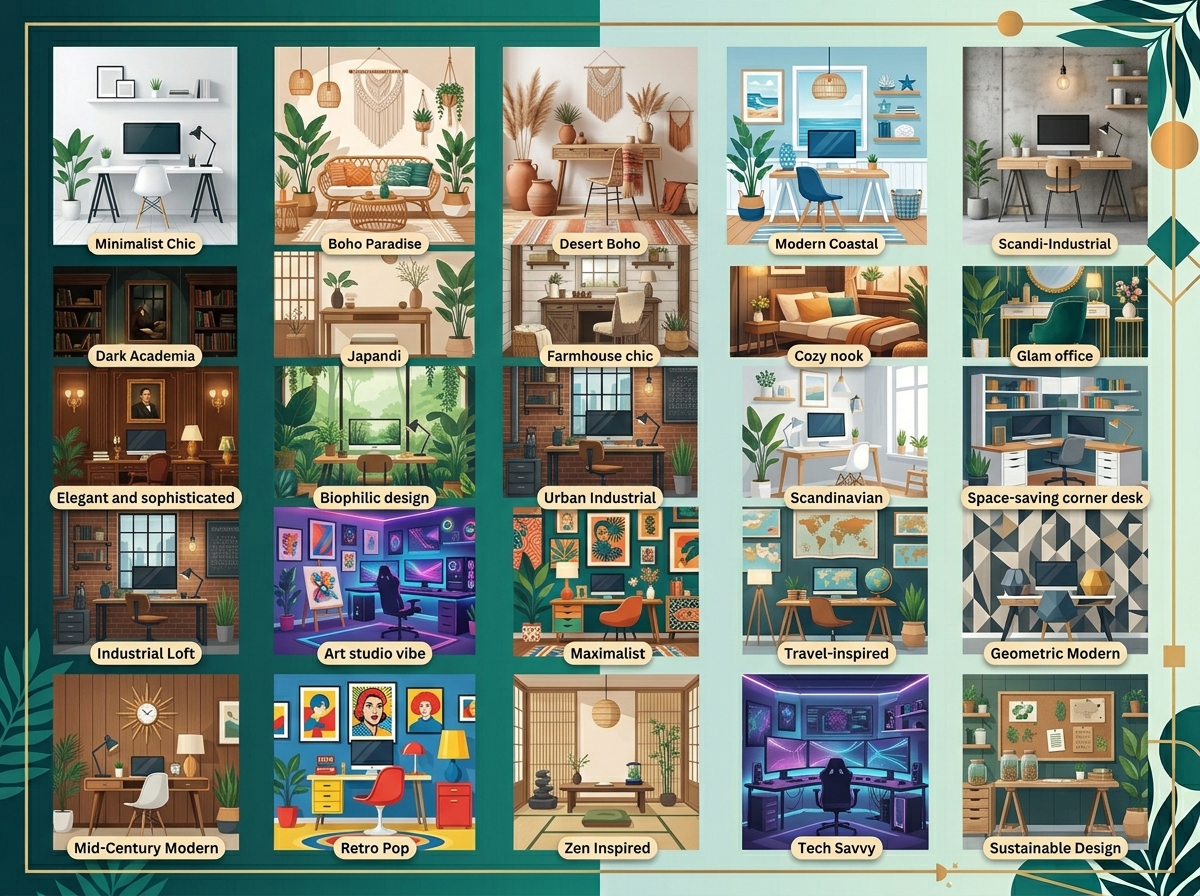
There’s something quietly powerful about a home office that truly feels like yours — a space where creativity flows as easily as the morning light through a well-placed window. Whether you’re designing from scratch or refreshing a forgotten corner, the right aesthetic can transform your entire relationship with work. Home office aesthetic ideas span everything from warm, textured minimalism to bold, moody maximalism, and the best part? You don’t need a dedicated room or a designer’s budget to pull any of them off. Here are 25 ideas worth saving.
Why Home Office Aesthetics Work So Well
The home office has become one of the most intentionally designed spaces in modern homes — and for good reason. Unlike a kitchen or living room that serves the whole household, a home office is deeply personal. It reflects how you think, how you work, and what inspires you. That specificity is what makes the aesthetics of this space so compelling to explore.
What makes a home office aesthetic cohesive isn’t one dramatic element — it’s the harmony between materials, light, and proportion. A warm walnut desk paired with linen storage, a single piece of art at eye level, and a task lamp with a brass finish can do more for a space than an entire cart of accessories. The key is intentionality.
Right now, home office design is having a cultural moment driven by the remote work shift and a broader hunger for spaces that feel productive and beautiful. Pinterest searches for “home office aesthetic” have grown steadily, with styles ranging from dark academia to Japandi to vintage editorial dominating saved boards. People are no longer willing to work in beige boxes.
Even small spaces — a nook under the stairs, a corner of a bedroom, a converted closet — can carry a strong aesthetic. The ideas ahead cover a range of styles, budgets, and room sizes. You’ll find something that clicks.
1. Warm Minimalist Desk Setup with Natural Wood Tones
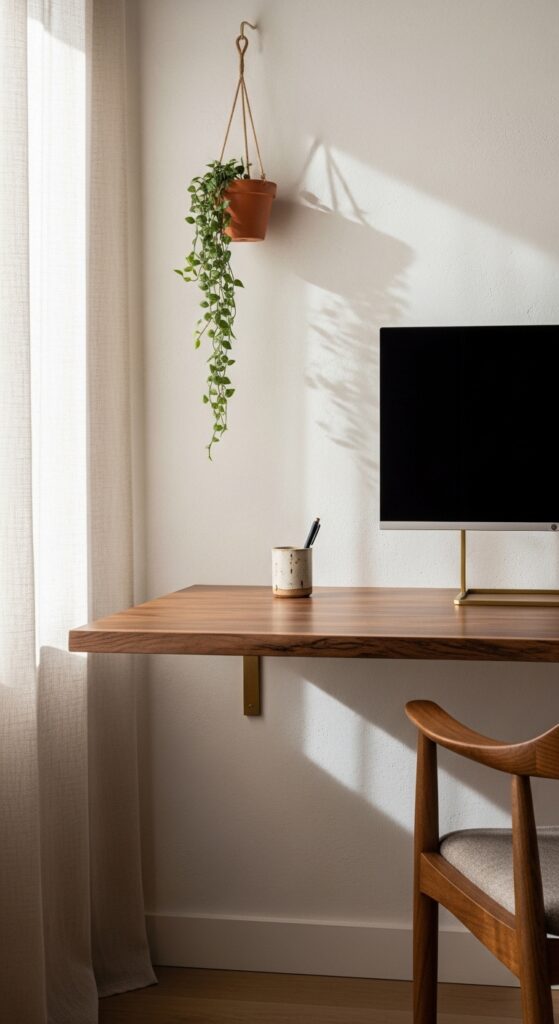
Vibe sentence: This setup feels like a deep breath — unhurried, warm, and entirely distraction-free.
What makes it work: The contrast between the organic grain of walnut wood and a smooth plaster wall creates visual interest without clutter. Natural materials naturally regulate the eye, so even a monitor and cables don’t break the serenity. The warmth of wood tones prevents the minimalism from feeling cold or clinical.
How to achieve it: Source a floating walnut or oak desk shelf from IKEA’s LACK or similar systems, then mount it at standing-height or sitting-height depending on your workflow. Keep the wall behind it in a warm white like Benjamin Moore’s “White Dove” or Farrow & Ball’s “Pointing.”
💡 Add a single trailing pothos in a terracotta pot — it takes five minutes and instantly softens any minimal setup.
2. Dark Academia Moody Study with Deep Emerald and Leather
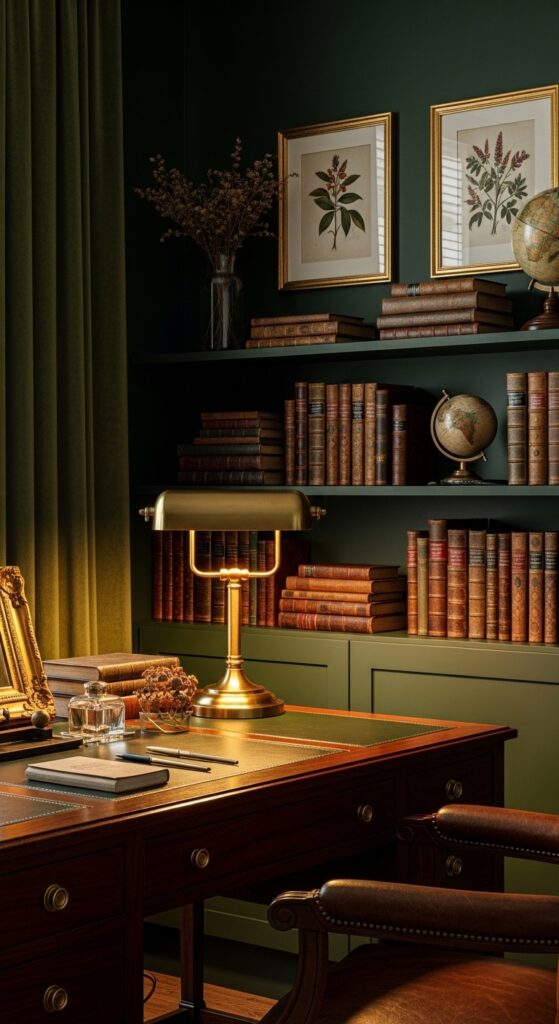
Vibe sentence: It feels like studying in a Victorian library where every object has a story and the lamplight makes everything feel more important.
What makes it work: Dark academia leans on tonal depth — layering deep greens, mahogany browns, and warm brass creates a cocoon-like atmosphere that genuinely stimulates focused thinking. The key is texture contrast: smooth leather against rough book spines, cold glass against warm wood.
How to achieve it: Paint one wall in a deep, saturated green like Farrow & Ball’s “Calke Green” or Sherwin-Williams’ “Jasper.” Add a brass banker’s lamp (vintage or reproduction) and start stacking books with spines facing out in coordinating tones.
3. Japandi Calm with White Oak and Wabi-Sabi Details
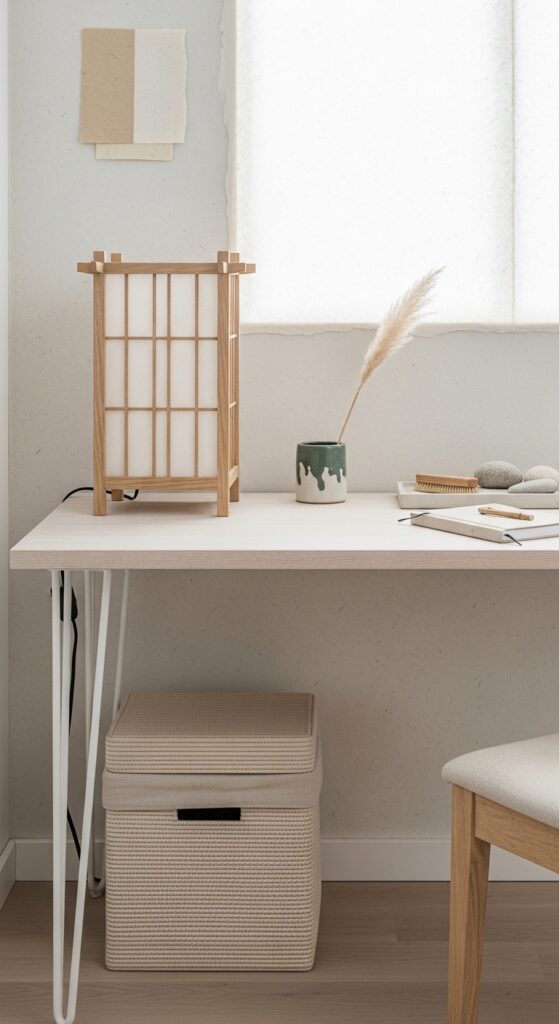
Vibe sentence: The quiet here is intentional — every object earns its place, and nothing competes for attention.
What makes it work: Japandi blends Japanese wabi-sabi (celebrating imperfection) with Scandinavian functionalism, producing spaces that feel both simple and soulful. The low desk line keeps energy grounded; natural fibers and unglazed ceramics add tactile warmth without visual noise.
How to achieve it: Choose a desk in white oak or light ash, ideally with minimal hardware. Replace any plastic organizers with handwoven seagrass or linen baskets. Keep your wall decor to one or two objects with genuine meaning — a single framed print or a hanging ceramic piece.
💡 A washi paper pendant lamp costs under $40 and immediately shifts a space toward Japandi calm.
4. Vintage Editorial Corner with Gallery Wall and Rattan Accents
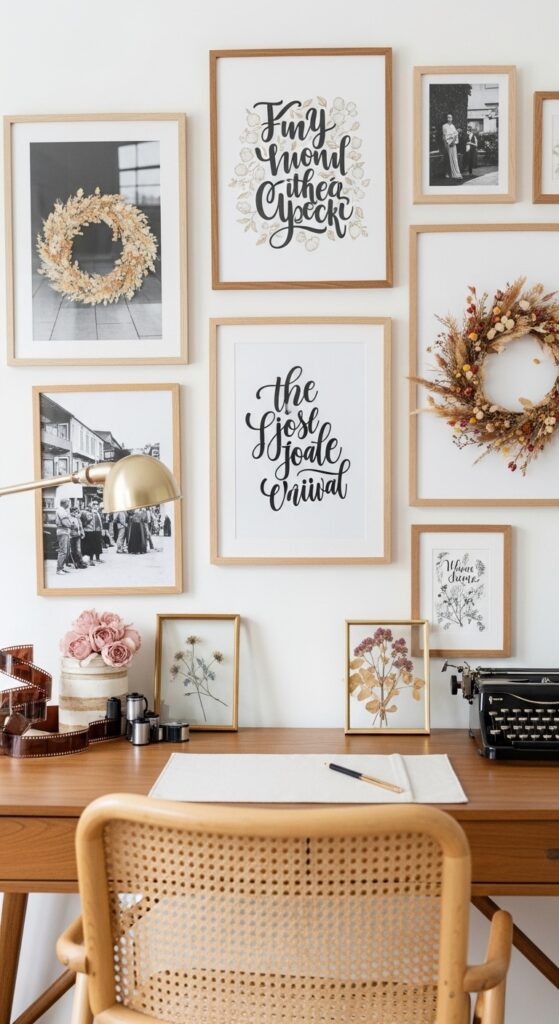
Vibe sentence: This corner belongs to someone curious — a collector of beautiful things who also gets real work done.
What makes it work: A gallery wall anchors a desk visually, giving the eye something rich to land on without requiring architectural changes. The rattan desk and chair introduce organic texture that softens the structured nature of framed art.
How to achieve it: Build your gallery wall before choosing frames — lay prints on the floor to find a balanced arrangement first. Mix frame finishes intentionally: thin brass, raw wood, and matte black work together when the art inside shares a consistent color tone like warm cream and black.
5. Sage Green Shiplap Office with Farmhouse Charm
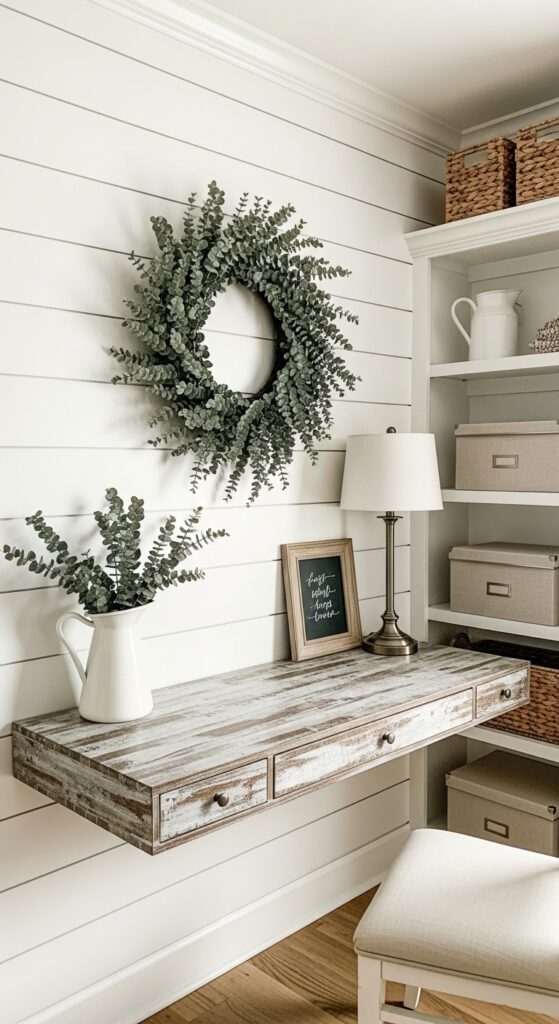
Vibe sentence: It’s the kind of office that smells like dried lavender and makes you want to sit down and write something real.
What makes it work: Sage green is a deeply restful color — it reduces visual fatigue, which makes it ideal for long work sessions. Shiplap adds architectural interest and texture to what would otherwise be a flat wall, grounding the space in farmhouse personality.
How to achieve it: Paint shiplap (real or faux peel-and-stick panels) in Sherwin-Williams’ “Softened Green” or Benjamin Moore’s “Aganthus Green.” Pair with open shelves in distressed white pine and use matching linen or cotton storage bins throughout.
💡 Peel-and-stick shiplap panels are available for under $50 and require zero tools — perfect for renters.
6. Industrial Loft Style with Exposed Brick and Black Metal
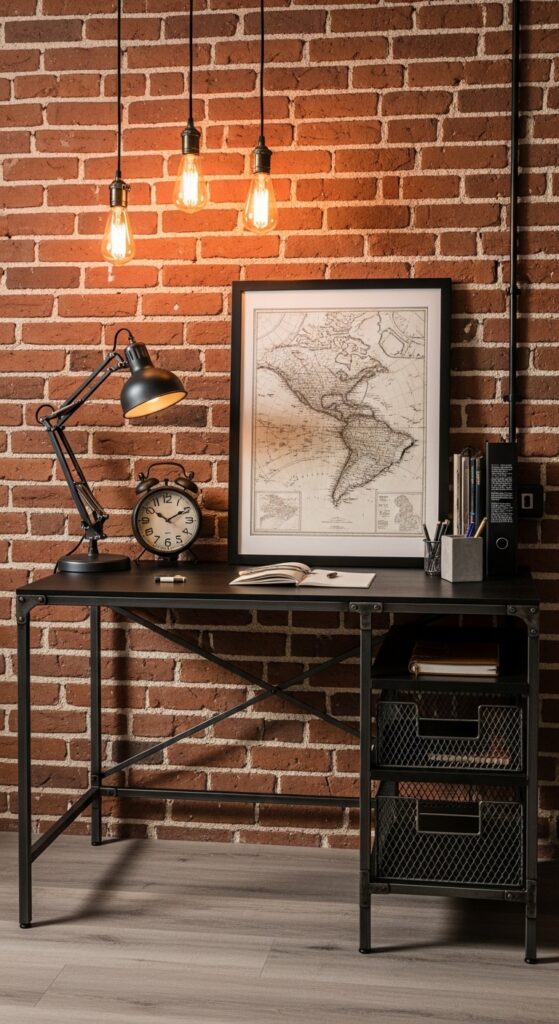
Vibe sentence: Raw, purposeful, and unafraid of contrast — this office says “I get things done.”
What makes it work: Exposed brick brings natural texture and warmth that counterbalances the cool hardness of metal. The industrial aesthetic thrives on honest materials — nothing is painted to look like something else, and that authenticity reads as confidence.
How to achieve it: If you don’t have real brick, faux brick wallpaper in a terracotta tone creates a convincing effect. Pair with a black metal desk frame (IKEA ALEX legs work well) and replace standard lighting with an Edison bulb pendant or gooseneck lamp.
7. Bohemian Maximalist Office with Layered Textiles and Plants
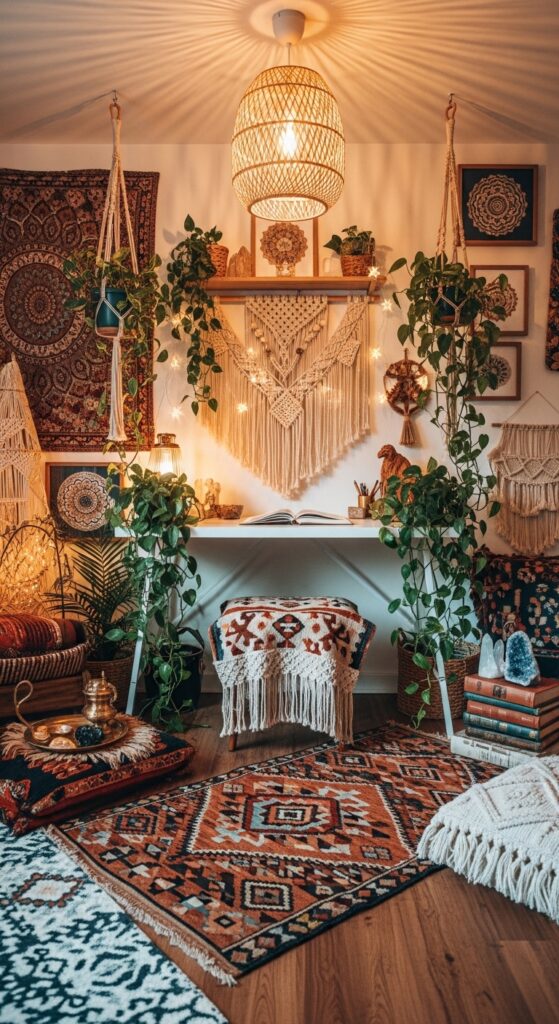
Vibe sentence: Every corner tells a different story, and somehow they all make sense together.
What makes it work: Bohemian layering works because it follows an underlying logic: warm analogous colors (terracotta, rust, amber) keep the visual chaos harmonious. The plants act as living connective tissue, tying disparate objects together with their common organic green.
How to achieve it: Start with a layered rug — place a flat-weave kilim over a jute rug for instant texture depth. Add plants in macramé hangers at varying heights. Limit your main color palette to three warm tones and let the patterns vary freely within those bounds.
8. Coastal Calm with White Linen and Natural Light
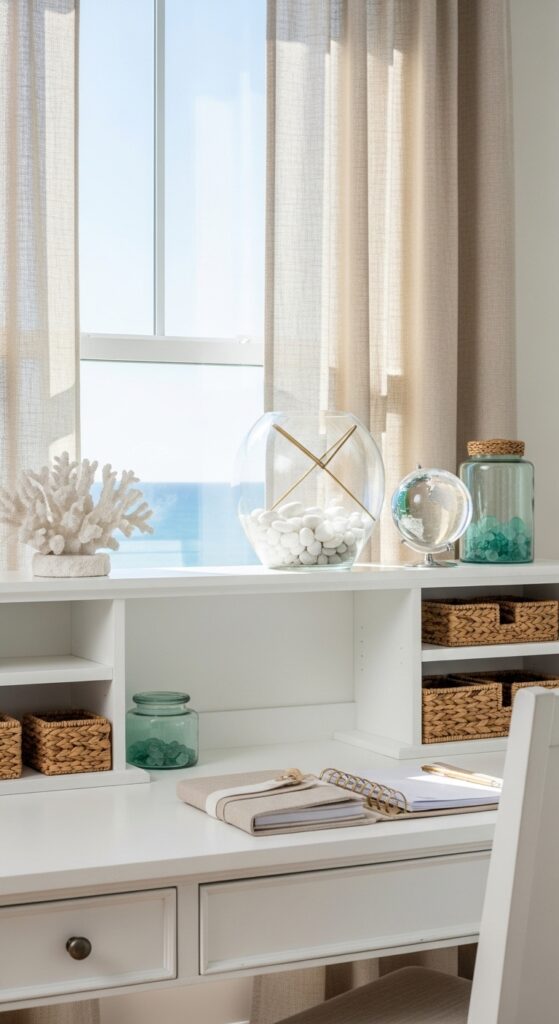
Vibe sentence: Working here feels like a long exhale — breezy, open, and quietly optimistic.
What makes it work: The coastal aesthetic is defined by light over color. Maximizing natural brightness makes any room feel larger and more energizing. Seagrass, linen, and whitewashed wood layer different textures in the same neutral family, creating depth without busyness.
How to achieve it: Swap heavy curtains for sheer white linen panels — they diffuse light beautifully without blocking it. Accessorize with seagrass and rattan items rather than plastic or painted pieces. Keep the palette to white, sand, and one soft blue accent throughout.
💡 White-wash any dark wood desk with a diluted white latex paint for a coastal transformation — no new furniture needed.
9. Mid-Century Modern Setup with Walnut, Mustard, and Clean Lines
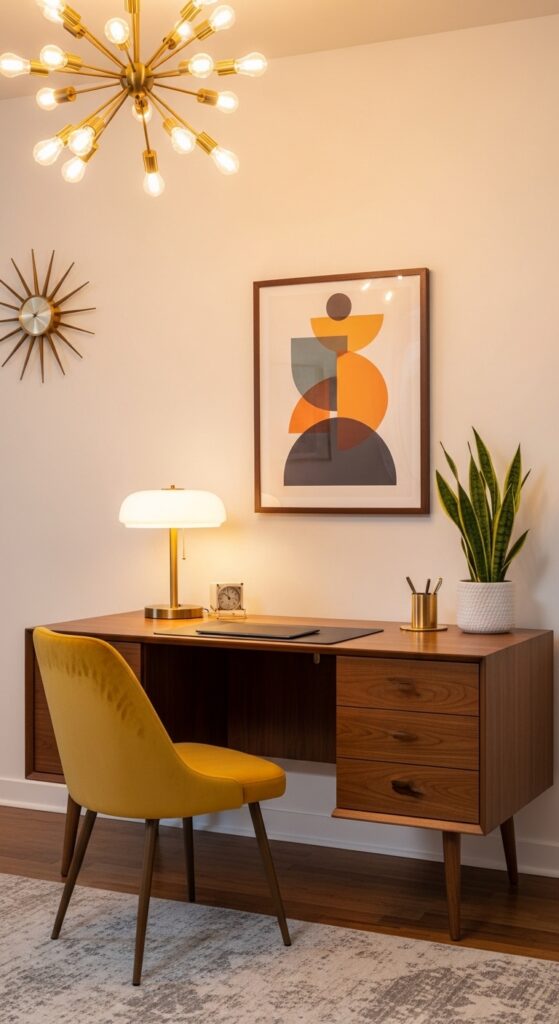
Vibe sentence: There’s a timeless optimism to mid-century modern — it feels both nostalgic and completely current.
What makes it work: Mid-century design succeeds through the tension between warm materials (walnut, velvet) and clean geometric forms. The mustard accent color keeps the palette from feeling too brown or heavy, while brass hardware adds warmth without ornamentation.
How to achieve it: Look for a desk with tapered legs — this single detail signals mid-century style more than any other. Add one bold mustard or burnt orange accent (chair cushion, throw, or lamp shade) and keep wall decor geometric and abstract.
10. Monochrome Black and White Office with Graphic Art
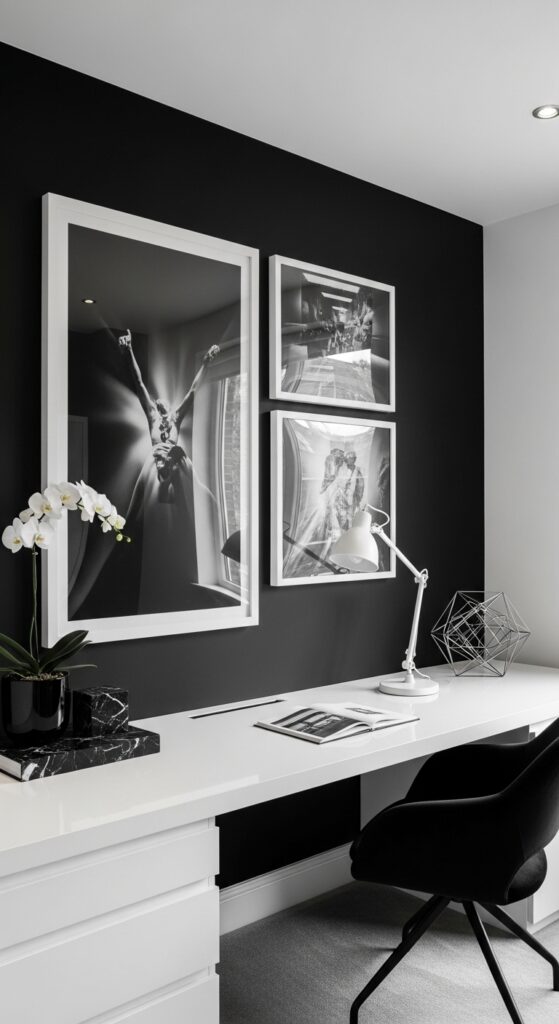
Vibe sentence: This space has the confidence of someone who decided to commit — fully — to a single vision.
What makes it work: Monochrome design relies on finish variation to avoid flatness — matte black walls recede while gloss white furniture advances, creating spatial depth without any color. Large-scale graphic art anchors the wall without introducing competing hues.
How to achieve it: Paint one wall in matte black (Benjamin Moore “Black Beauty” is a favorite). Keep all other walls white. Mix gloss and matte finishes deliberately — gloss on surfaces you touch, matte on walls. One large black-and-white photo print does more than ten small ones.
💡 Print a high-contrast photo at Costco or Walgreens in a 24×36″ size for under $20 — mount in a thin black frame for an instant editorial wall.
11. Cottagecore Soft Office with Floral Wallpaper and Warm Cream
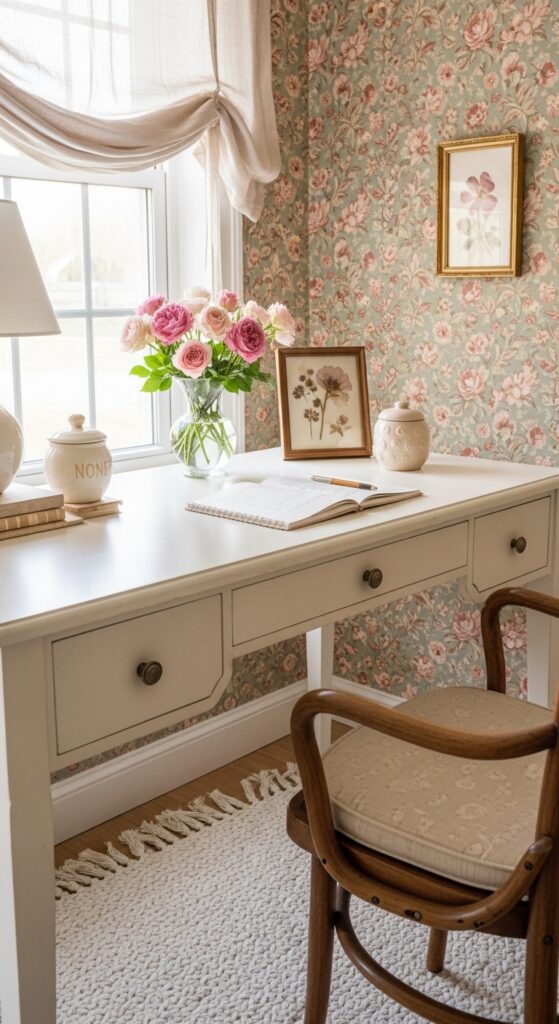
Vibe sentence: Sitting at this desk feels like writing letters you actually want to send.
What makes it work: Cottagecore warmth comes from pattern — but patterned wallpaper only feels cozy rather than overwhelming when paired with solid, muted furnishings in complementary tones. The blush-and-sage palette keeps the florals readable without competing with the desk surface.
How to achieve it: Apply removable floral wallpaper to one wall — this works perfectly in rentals and takes an afternoon. Paint desk furniture in a warm cream like Benjamin Moore’s “Ivory White.” Keep accessories handmade-looking: braided rugs, ceramic mugs, pressed botanical frames.
12. Built-in Bookshelf Office Nook with Painted Shelves
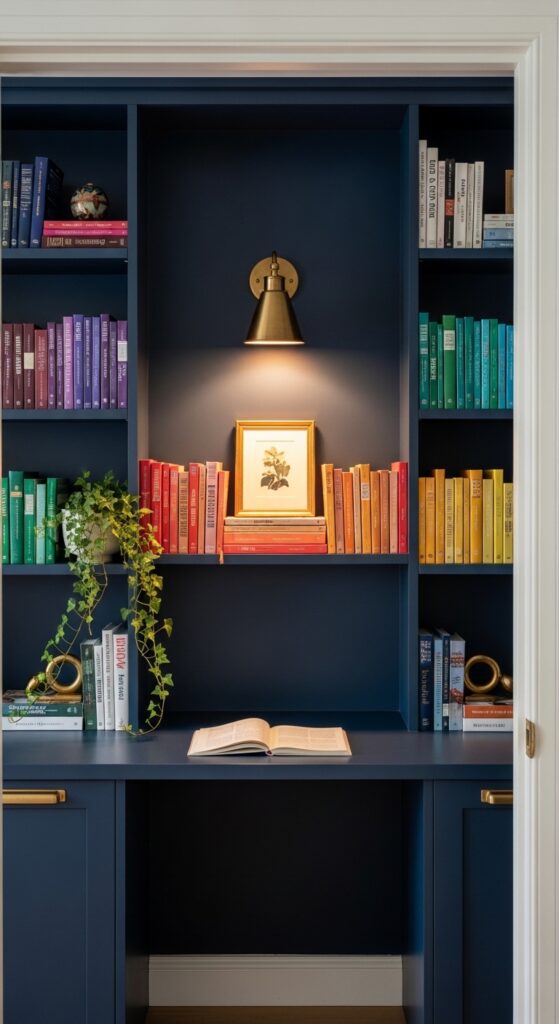
Vibe sentence: There’s something almost magical about being surrounded by books in every direction — it quiets the mind instantly.
What makes it work: Painting built-in shelves in a deep, saturated tone like navy or hunter green creates a gallery-like depth that makes books, objects, and art pop visually. Color-organized bookshelves add graphic order to what can otherwise feel chaotic.
How to achieve it: Use a semi-gloss or gloss finish in your dark color — it catches light more beautifully than matte and is easier to clean. Organize books by color gradient (light to dark or one color family per shelf) rather than by subject for a styled look.
13. Velvet and Gold Glamour Office for a Luxe Aesthetic
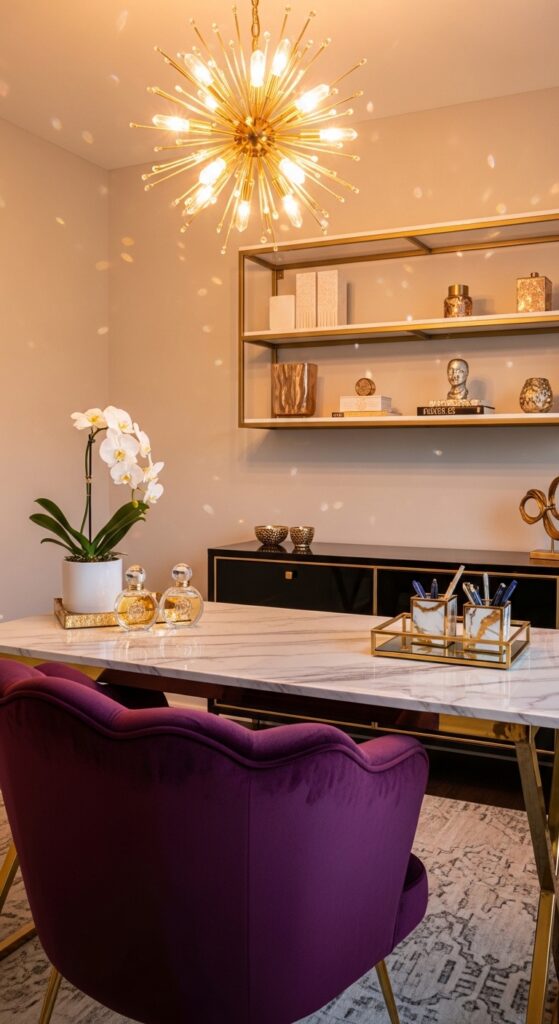
Vibe sentence: This office doesn’t apologize for being beautiful — it uses beauty as fuel.
What makes it work: The combination of a deep jewel tone (plum or emerald) with gold hardware creates the visual richness associated with luxury spaces at a fraction of the cost. Velvet’s light-absorbing quality makes it ideal for this palette — it catches shadow in ways that amplify the drama.
How to achieve it: A velvet desk chair in a jewel tone is the highest-impact single purchase for this look — look for deep plum, forest green, or sapphire. Add gold accessories via affordable sources: gold-dipped pen cups, brass desk trays, and gold-framed small art create the palette without a designer price tag.
💡 Spray paint any existing desk accessories in metallic gold for a cohesive glam look — total cost under $10.
14. Scandinavian White and Pine with Functional Simplicity
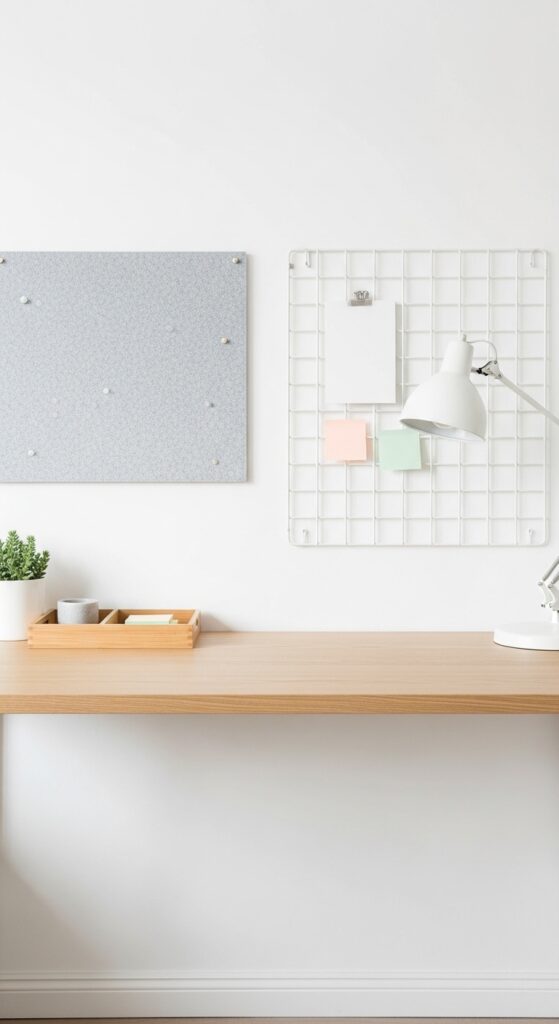
Vibe sentence: Function and beauty are not opposites here — they’re collaborators.
What makes it work: Scandinavian design keeps the eye moving efficiently — white walls recede, light wood grounds the space, and carefully chosen black or grey accents provide just enough contrast to prevent the palette from feeling washed out.
How to achieve it: A white pegboard mounted above the desk is the most functional aesthetic addition you can make to a Scandi office — it provides flexible storage while keeping walls visually tidy. Source light pine or birch accessories; avoid orange-toned pine, which reads as dated.
15. Terracotta and Arched Plaster for a Mediterranean Mood
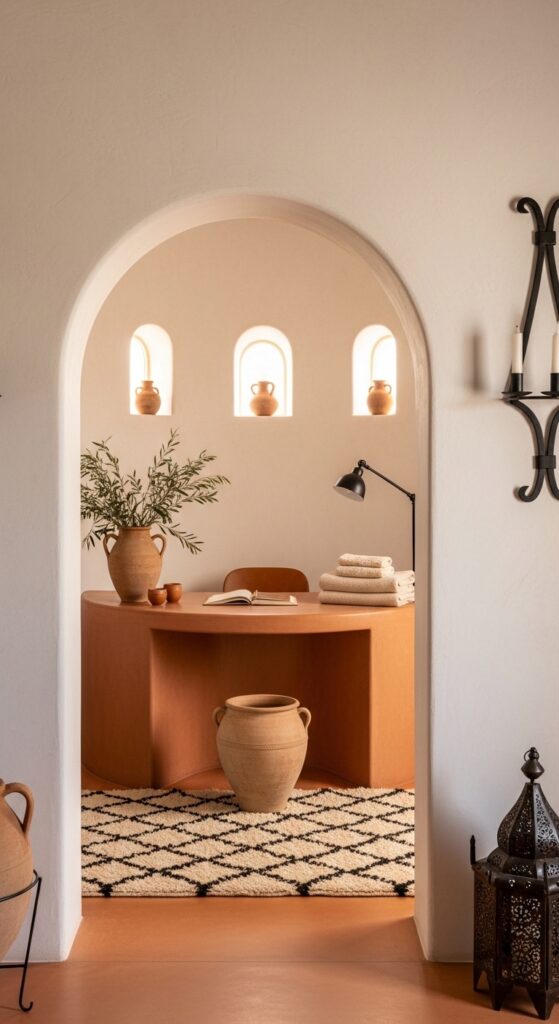
Vibe sentence: Working here feels like being somewhere the sun has always warmed the walls.
What makes it work: The arch is the design hero — it frames the workspace architecturally and signals a level of intentionality that immediately elevates the room. Terracotta and plaster white are a complementary pair that has survived centuries because they genuinely look right together.
How to achieve it: You can fake a plaster arch with curved foam trim molding painted in matte white — no construction required. Paint the interior of the arch in a warm terracotta like Benjamin Moore’s “Moroccan Spice” and style the desk space within with clay and iron accessories.
16. Maximalist Colorful Office with an Accent Rainbow Bookshelf
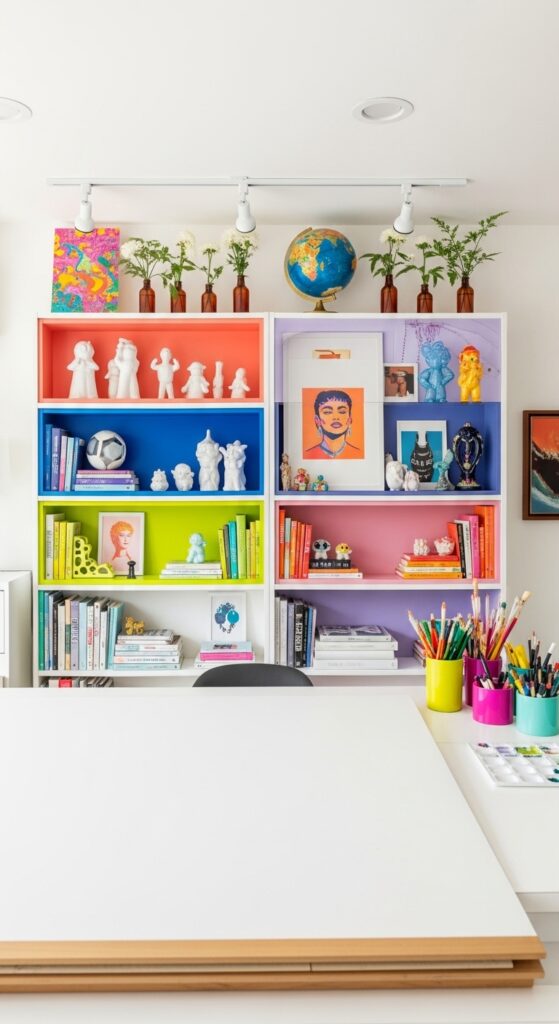
Vibe sentence: This office commits to joy the way other spaces commit to neutrals — fully and without apology.
What makes it work: Painting individual bookshelf compartments in distinct colors creates a graphic, almost poster-like effect that works because each color is contained. The white desk and white outer frame of the shelf act as visual breathing room, preventing the palette from becoming overwhelming.
How to achieve it: Take a standard IKEA KALLAX or BILLY bookcase and paint each section interior a different color using sample-sized paint pots — total cost under $20. Keep the shelf exterior and room walls white or neutral so the color reads as curated, not chaotic.
17. Rustic Cabin Study with Reclaimed Wood Shelves and Flannel Textures
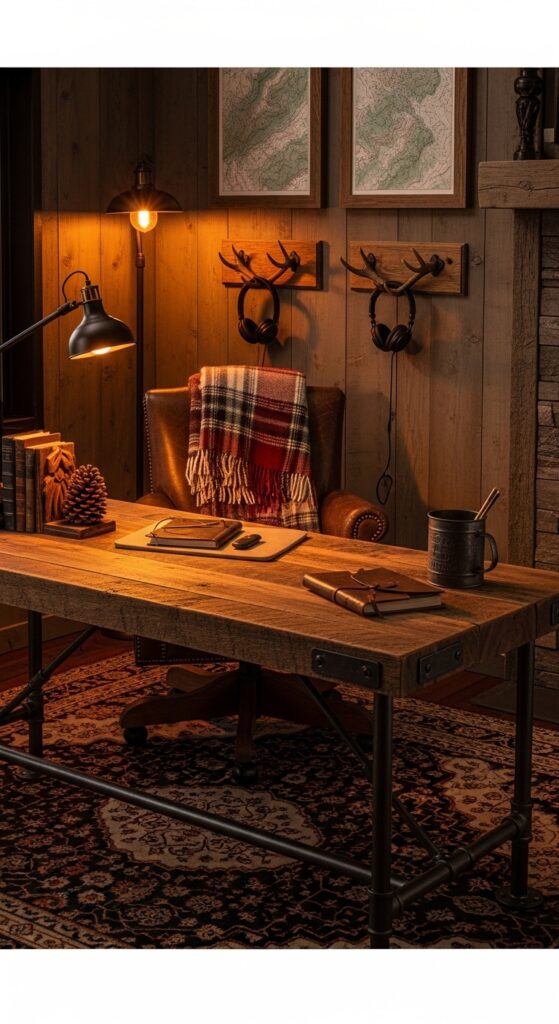
Vibe sentence: This office feels like a writing retreat in the mountains — focused, warm, and completely disconnected from the ordinary.
What makes it work: Reclaimed wood carries history in its grain — knots, color variations, and weathering marks give the space a visual richness that no new material can replicate. Industrial pipe details provide contrast that keeps the look from becoming too rustic-sweet.
How to achieve it: Source reclaimed wood planks from a salvage yard or Etsy seller and have them cut to desk length. Mount on black pipe brackets from any hardware store. A single plaid throw and leather accessories complete the palette at minimal cost.
💡 Pipe shelving kits from Home Depot cost under $40 and are one of the most recognizable cabin-industrial design signatures.
18. Neutral Tonal Desk Nook with Greige Walls and Linen Storage
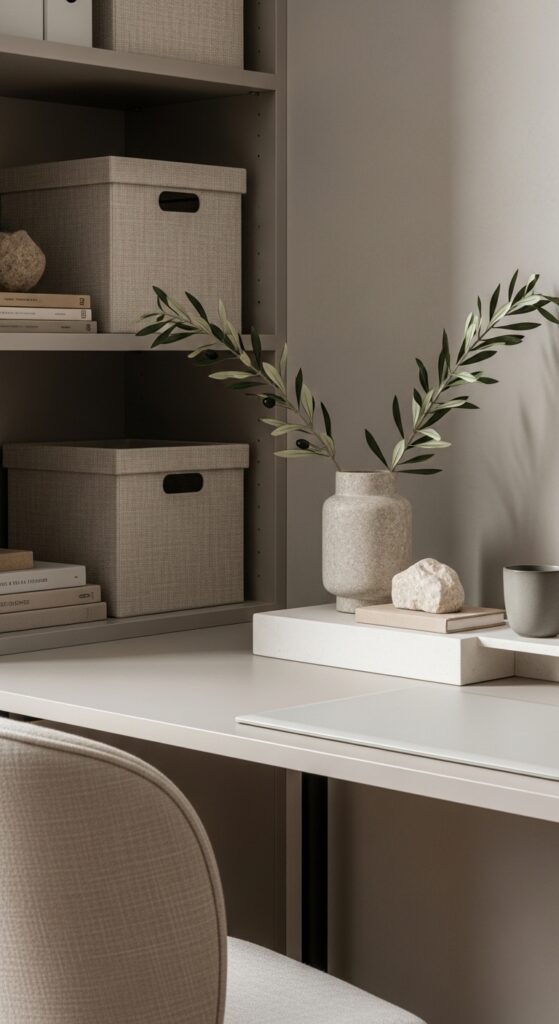
Vibe sentence: Nothing shouts here — and yet somehow the room feels perfectly considered.
What makes it work: Tonal decorating — building a palette from shades of the same color family — creates a sophisticated calm that feels expensive even when it’s not. Greige (grey-beige) is the ideal neutral for a home office because it reads as warm in incandescent light and cool in daylight, adapting all day.
How to achieve it: Choose Dulux “Mole’s Breath” or Benjamin Moore “Pale Oak” for a perfectly tonal greige wall. Coordinate storage in natural linen (baskets, magazine files, cable boxes) to maintain the tone-on-tone effect throughout.
19. Biophilic Design with Living Walls and Natural Materials
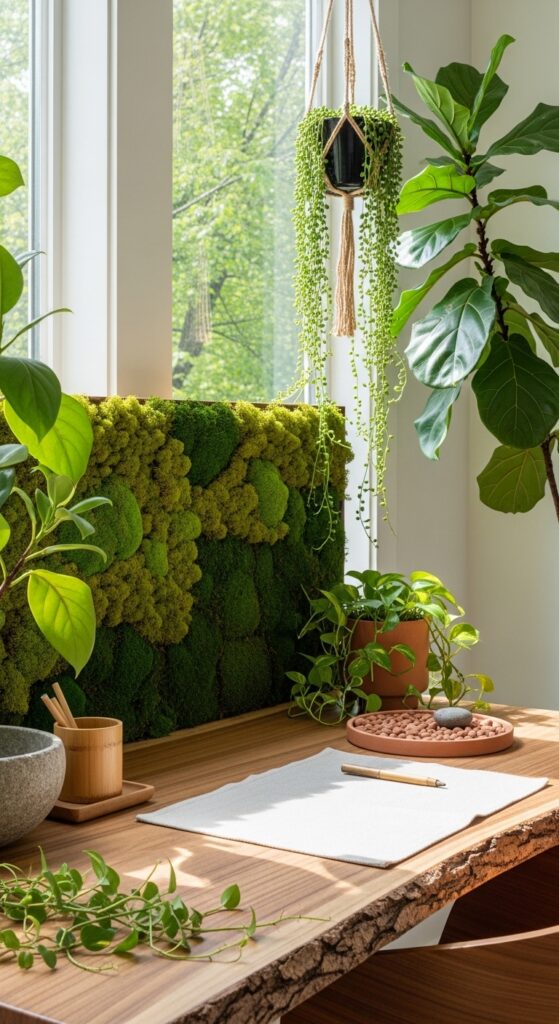
Vibe sentence: This office breathes — literally and figuratively.
What makes it work: Biophilic design is backed by research showing that exposure to natural materials and living plants reduces cortisol and improves focus. A living wall or even a dense grouping of trailing plants changes the acoustic and visual quality of a room dramatically.
How to achieve it: Preserved moss wall panels (no watering required) are available from Amazon and Etsy for $50–$150 and mount like artwork. Pair with a live-edge desk — look for slabs at local lumber yards — and add trailing plants at varying heights to create that immersive, garden-office feeling.
20. Vintage French Provençal with Painted Furniture and Toile
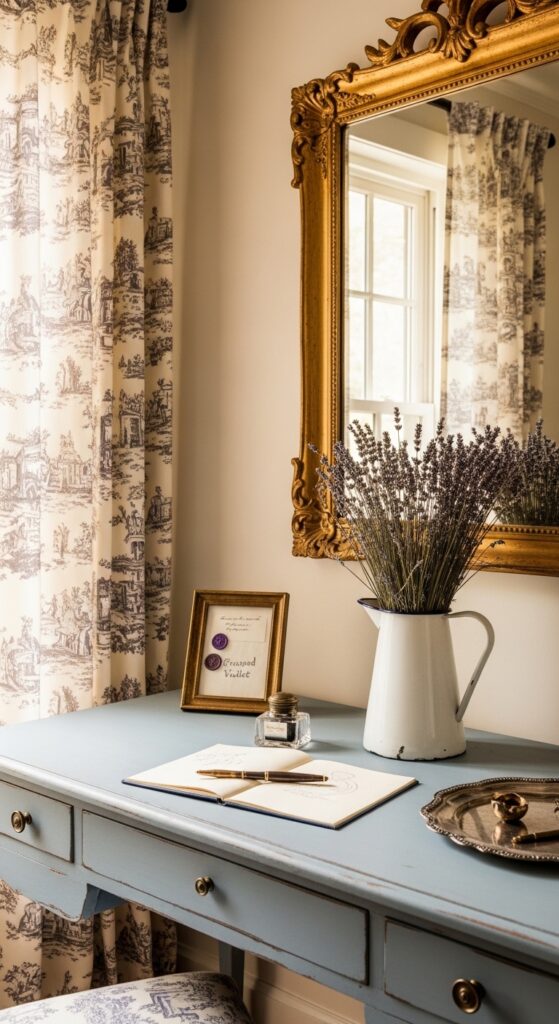
Vibe sentence: Every detail here whispers of long summer afternoons and unhurried correspondence.
What makes it work: The French Provençal palette — duck egg blue, aged cream, warm gilt — is timeless because it references bleached summer light and natural limestone. Chalk paint is essential to this aesthetic: its matte, powdery finish creates the “antique” quality that gloss or satin cannot replicate.
How to achieve it: Buy a secondhand ornate desk or chair at a thrift store and chalk paint it in duck egg or soft sage. Annie Sloan’s chalk paints are the gold standard for this effect. Add one length of toile fabric as a curtain or desk skirt to immediately establish the French Provençal tone.
21. Gallery-Style White Office with Museum-Quality Art Display
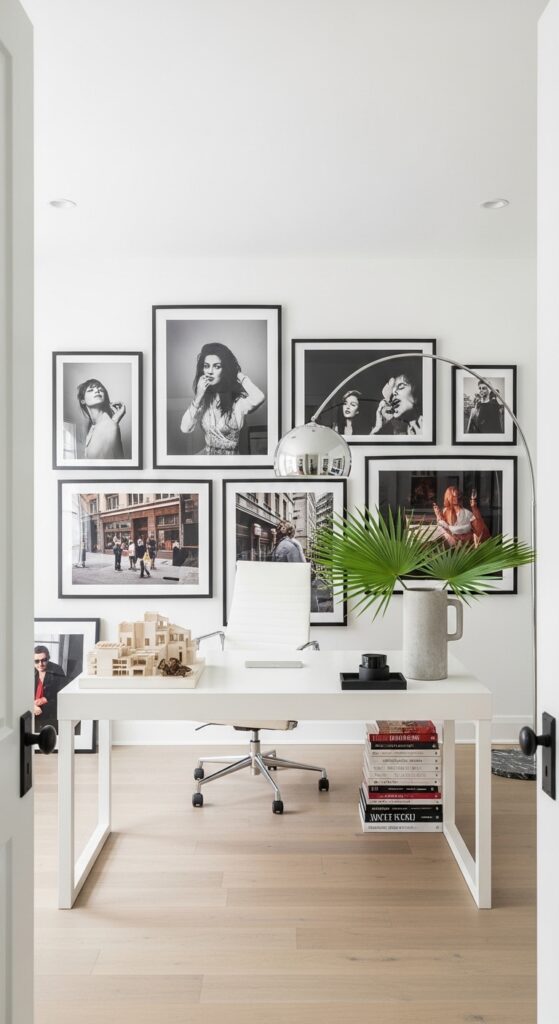
Vibe sentence: This office treats creativity like the serious discipline it is — spacious, deliberate, museum-grade.
What makes it work: White-on-white gallery spaces direct all attention toward the art, which in a home office means your work and your inspirations take visual priority. The salon-style arrangement (frames close together, different sizes) creates a collected feeling that single-hung art can’t achieve.
How to achieve it: Print your favorite photographers’ work from Unsplash using a large-format print service like Persnickety Prints or Nations Photo Lab. Mount in uniform thin black frames. Arrange on the floor first using the salon technique: densest cluster at eye level, expanding outward.
💡 Trace and cut paper templates of your frames to arrange on the wall with painter’s tape before hammering — saves dozens of nail holes.
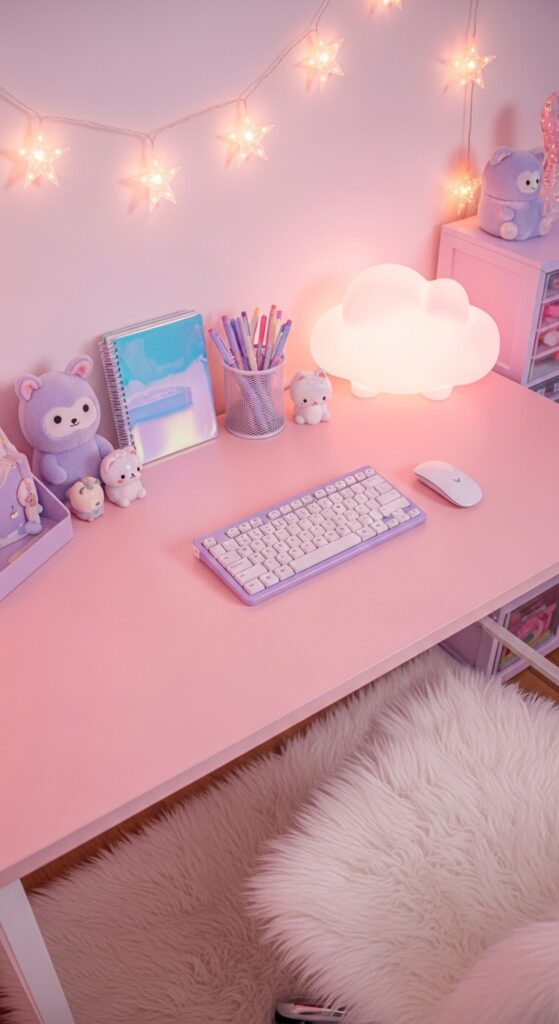
22. Pastel Kawaii Aesthetic with Soft Pink and Lavender Accents
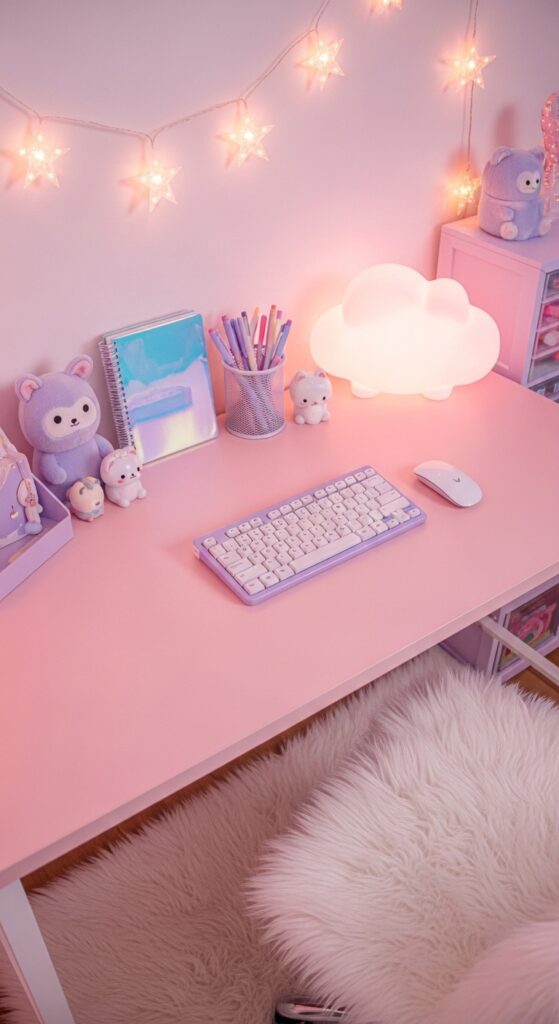
Vibe sentence: This setup makes you want to sit down and create something purely because it looks like a place where good ideas live.
What makes it work: The pastel kawaii aesthetic uses lighting as its primary mood-setter — cloud lamps, LED strips, and fairy lights replace hard overhead light with diffused, tinted glow that makes the space feel otherworldly. The key is keeping the palette soft: nothing saturated, everything slightly desaturated.
How to achieve it: A cloud lamp (available for under $30 on Amazon) is the single most impactful item for this aesthetic. Pair with blush pink or lavender desk accessories and a white fluffy rug. LED strips behind a monitor add backlight glow without expense.
23. Zen Meditation-Inspired Office with Low Seating and Incense
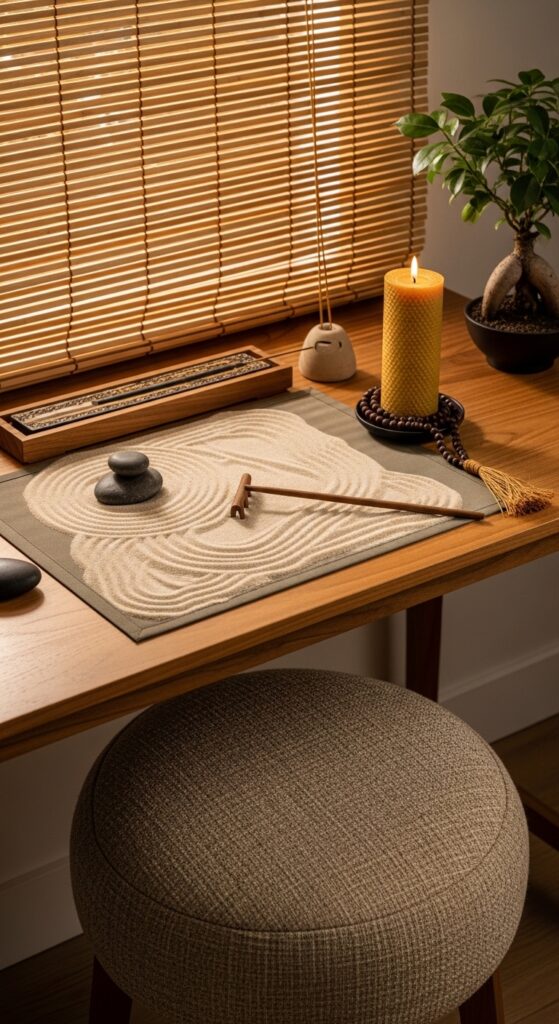
Vibe sentence: Even the air feels quieter here — this is a space designed to protect your focus.
What makes it work: Low seating changes your relationship to work — it signals a deliberate slowing down that standing or high-chair setups don’t. Natural materials (teak, bamboo, linen) contribute to the sensory calm, while a zen sand garden provides a tactile reset during thinking pauses.
How to achieve it: Source a low teak tray desk (floor desk) on Etsy or from Japanese furniture suppliers. Pair with a zafu meditation cushion and a bamboo roll-up blind for the window. Limit accessories to five or fewer objects; in zen design, negative space is the design feature.
24. Retro 70s Vibe with Warm Browns, Harvest Gold, and Shag Textures
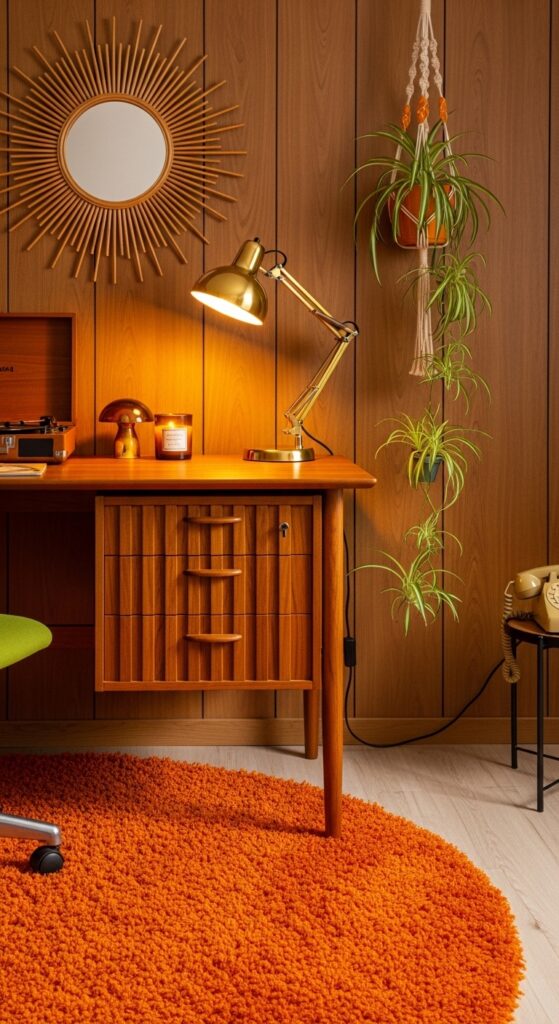
Vibe sentence: This office has the warmth of a memory you can’t quite place but never want to leave.
What makes it work: The 70s palette succeeds because it is built from deeply warm, analogous tones — harvest gold, burnt orange, olive green, and teak brown all live in the same color temperature, creating an enveloping warmth. Layered textures (shag, macramé, smooth teak) add dimension without adding complexity.
How to achieve it: Start with a round shag rug in burnt orange or harvest gold — it instantly grounds the 70s palette. Add a sunburst mirror (available affordably from HomeGoods and Target) and at least one macramé hanging element. Teak furniture — new or vintage — is the defining material.
💡 Thrift stores are goldmines for vintage 70s desk accessories: amber glass, mushroom lamps, and teak trays appear constantly.
25. Sleek Dual-Monitor Gamer Office with LED Ambient Lighting
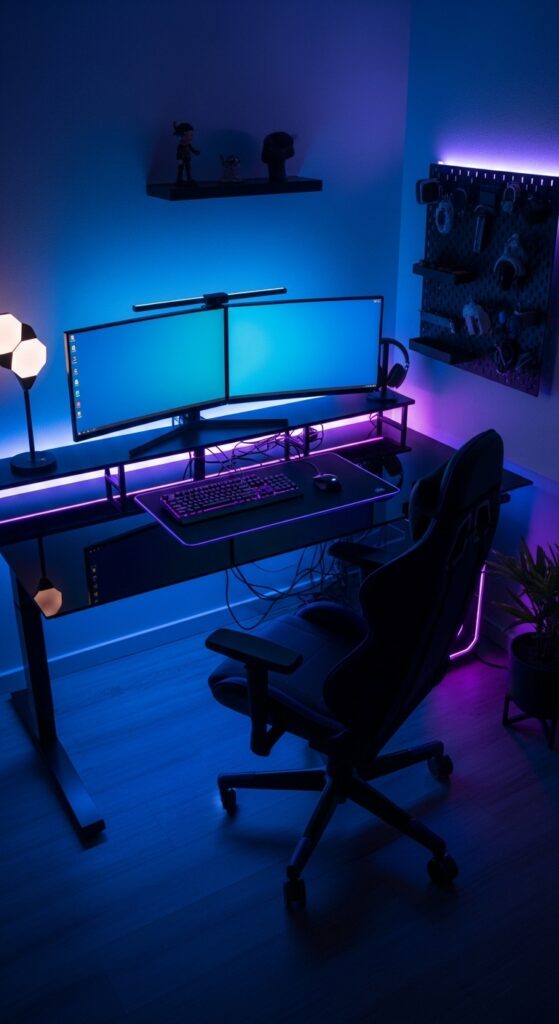
Vibe sentence: This setup doesn’t just support focus — it creates an atmosphere that makes even routine tasks feel cinematic.
What makes it work: The gaming aesthetic is defined by controlled, immersive lighting — the RGB strips behind the monitor and under the desk create a bias lighting effect that reduces eye strain while making the setup look dramatic. The black monochrome base lets the color accents do all the visual work.
How to achieve it: Govee or Philips Hue LED strips behind your monitor cost $20–$40 and are the single biggest impact update for this aesthetic. Choose a tempered glass or matte black desk surface. Cable management is non-negotiable — run cables through desk grommets or along cable raceways to maintain the sleek look.
How to Start Your Home Office Aesthetic Transformation
The most common mistake people make when redesigning a home office is trying to do everything at once. Instead, pick one design anchor — usually the desk — and build outward from there. Your desk determines the scale, material, and style of everything else in the room.
Begin with color. Before buying anything, paint a large sample swatch (at least 12×12 inches) on your wall and observe it at different times of day. Home office colors behave dramatically differently in morning light versus artificial evening light. This single step saves most people a costly repaint.
Next, tackle storage — because clutter destroys any aesthetic, no matter how expensive the furniture. Open shelving looks beautiful and forces you to keep only what’s worthy of display. Closed linen or rattan bins on shelves give you flexibility without sacrificing the look.
Finally, add lighting layers. Overhead light alone makes any room look flat and institutional. Add a task lamp, an ambient light source (floor lamp, LED strip, candle), and if possible, maximize natural light with sheer curtains instead of heavy blinds. Budget roughly $200–$400 for a meaningful transformation using most of the ideas in this article.
Frequently Asked Questions
What is the best home office aesthetic for small spaces?
For small spaces, the best home office aesthetics are those that maximize light and visual simplicity — Japandi, coastal, and warm minimalist styles all work exceptionally well. Choose a desk that fits the wall rather than floating in the room, and use vertical storage (pegboards, tall shelves) rather than wide footprints. Light wood tones and white or greige walls make small spaces feel open and larger than they are. Avoid heavy furniture in dark finishes unless you have high ceilings to compensate.
How do I make my home office look aesthetic on a budget?
The highest-impact, lowest-cost changes are paint, lighting, and desk accessories. Repainting one wall in a bold or deep color dramatically shifts the aesthetic for $30–$50. Replacing standard overhead light with a desk lamp and LED strip adds warmth and dimension for under $50. Thrift stores and Facebook Marketplace are excellent sources for vintage and mid-century desk pieces — patience pays off. Matching your accessories (pen cup, tray, plant pot) in one color or material creates a “styled” look without buying expensive items.
What colors are best for a productive home office?
Research in environmental psychology consistently points to blues and greens as the most focus-enhancing colors for work environments. Sage green reduces visual fatigue, muted blues improve concentration, and warm neutrals like greige or warm white keep the space calm without feeling sterile. Avoid bright saturated reds and oranges as the main wall color — they’re energizing in short bursts but can cause fatigue during long work sessions. Deep jewel tones like navy and emerald work beautifully in offices with good natural light.
What desk setup items make the biggest aesthetic difference?
The single biggest aesthetic upgrade is a monitor riser — it immediately makes any desk look more intentional and styled. After that, cable management (a desk grommet, cable box, or velcro ties) eliminates visual noise that competes with any aesthetic. Third, replace any mismatched desk accessories with coordinated pieces in one material family (all matte black, all brass, all natural wood). A quality task lamp — not a plastic desk lamp but a simple Anglepoise style or warm-bulb lamp — transforms the evening ambiance of any setup.
Is it expensive to achieve a styled home office aesthetic?
Not at all — the most visually cohesive home office aesthetics are often achieved through restraint rather than spending. The Japandi, Scandinavian, and warm minimalist styles actually rely on having fewer objects. A single $20 plant, a $30 desk lamp, and a $5 can of paint can produce a more intentional-looking space than a room full of mismatched purchases. The most important investment is your desk chair — you’ll spend hours in it, so ergonomics and aesthetics must align. Budget $150–$300 for a chair that looks as good as it feels.
Ready to Create Your Dream Home Office Aesthetic Space?
You’ve just explored 25 distinct home office aesthetic ideas — from the meditative calm of zen floor desks to the cinematic glow of RGB gaming setups, from cottagecore florals to dark academia bookshelves. The range is intentional, because your workspace should reflect you, not a trend you found on someone else’s feed. Save the ones that made you stop scrolling, and start there.
Transformation doesn’t require a complete overhaul. Pick one idea from this list — just one — and commit to executing it well. A fresh coat of paint, a single coordinated accessory set, or a new lamp can shift the entire feeling of a space. Small, intentional changes compound into rooms that feel genuinely designed.
Your home office aesthetic is yours to define. Now go create the space that makes you want to show up and do your best work every single day.