Open-plan living is one of the most beloved and enduring trends in interior design — and for good reason. When your living room and dining room flow naturally into one another, the result feels generous, welcoming, and beautifully cohesive. But achieving that seamless connection takes more than simply removing a wall. It’s about creating visual continuity, defining zones with intention, and making both spaces feel like they genuinely belong together. Whether you’re working with a wide-open floor plan or a semi-divided layout, these ideas will help you unite the two beautifully.
1. Unify With a Single Paint Color
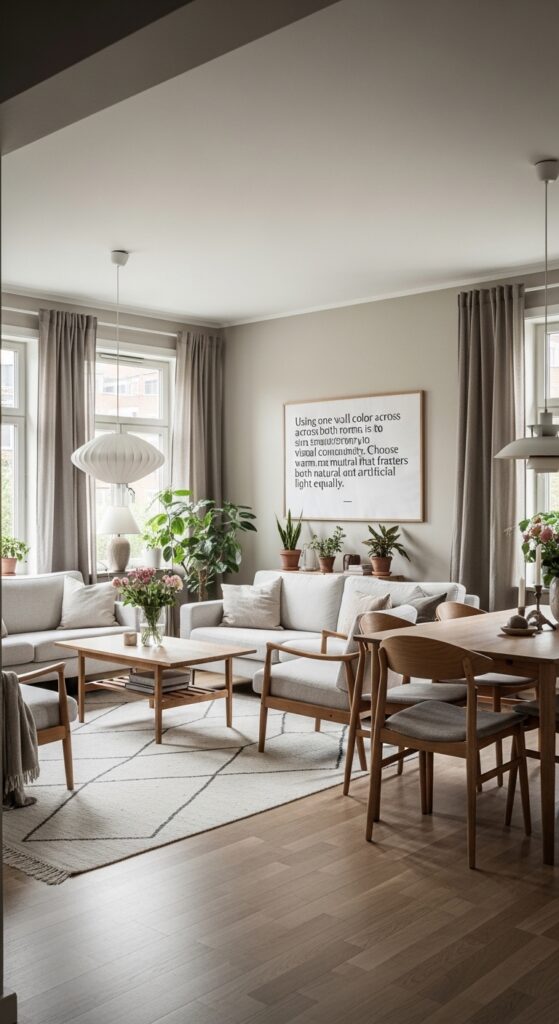
Text: Using one wall color across both rooms is the simplest way to create visual continuity. Choose a warm neutral that flatters both natural and artificial light equally.
2. Lay One Large Area Rug
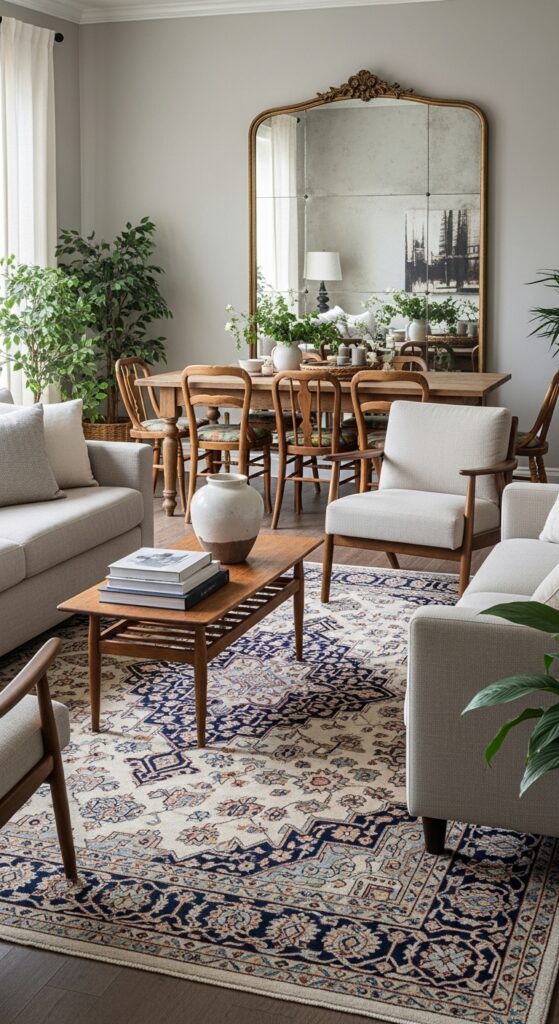
Text: A single large rug that stretches across both zones visually stitches the rooms together. It’s a bold move that pays off dramatically in spatial cohesion.
3. Choose a Consistent Wood Tone
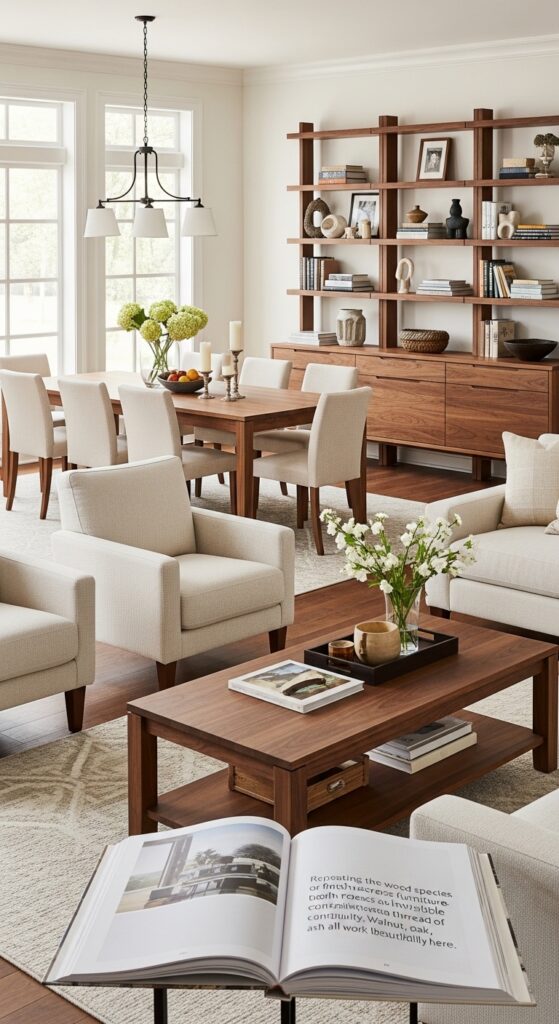
Text: Repeating the same wood species or finish across furniture in both rooms creates an invisible thread of continuity. Walnut, oak, and ash all work beautifully here.
4. Install Continuous Flooring
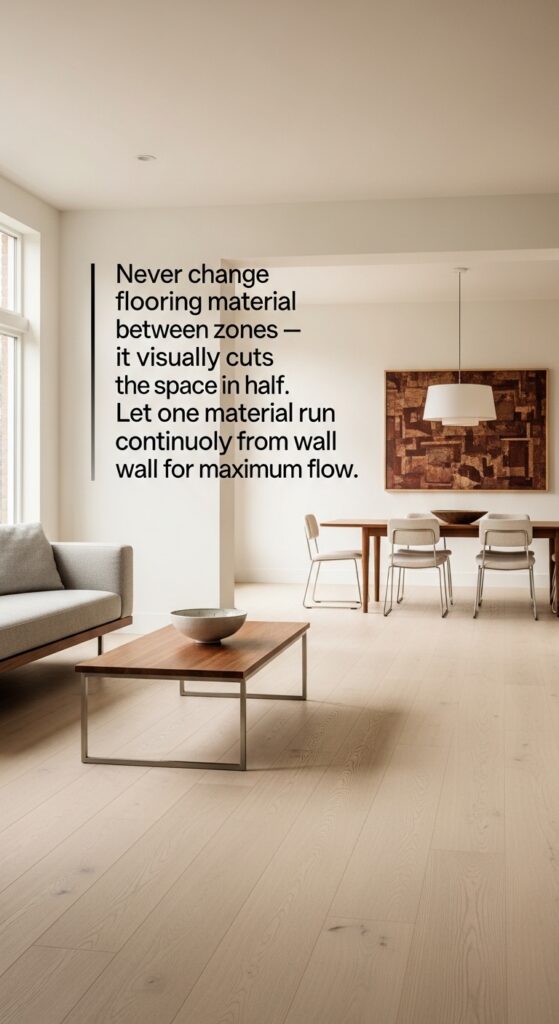
Text: Never change flooring material between zones — it visually cuts the space in half. Let one material run continuously from wall to wall for maximum flow.
5. Mirror Your Color Palette
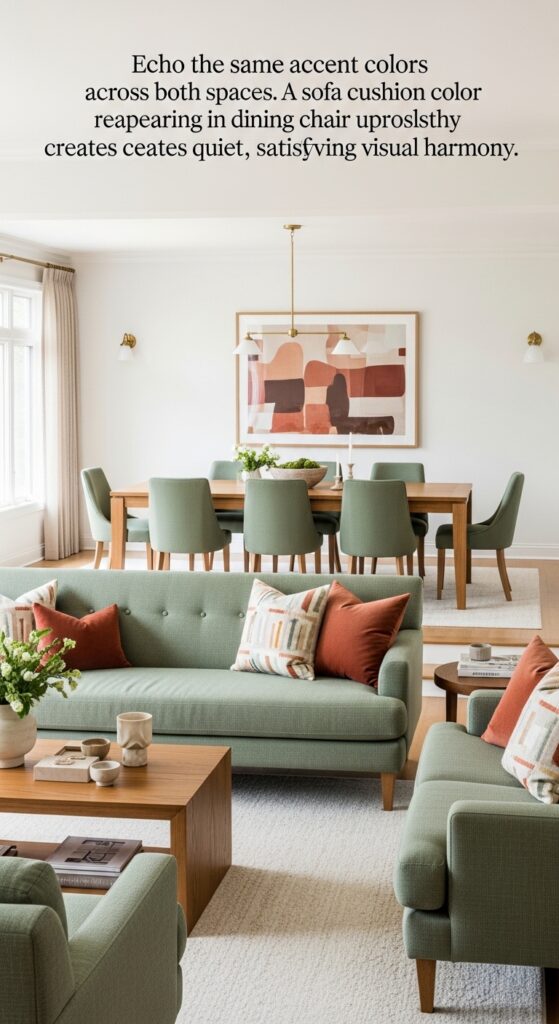
Text: Echo the same accent colors across both spaces. A sofa cushion color reappearing in dining chair upholstery creates quiet, satisfying visual harmony.
6. Use a Double-Sided Bookshelf
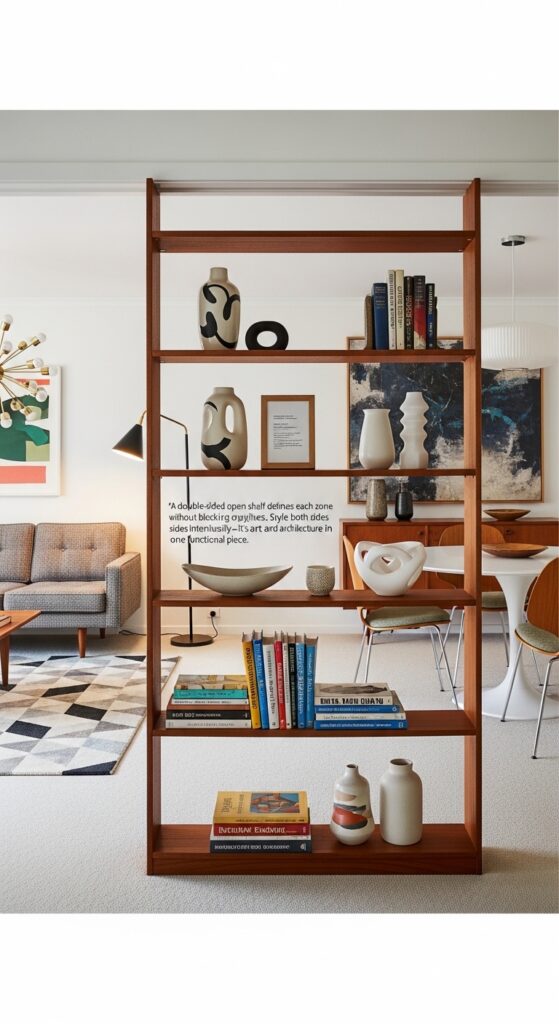
Text: A double-sided open shelf defines each zone without blocking light or sightlines. Style both sides intentionally — it’s art and architecture in one functional piece.
7. Align Furniture Along a Common Axis
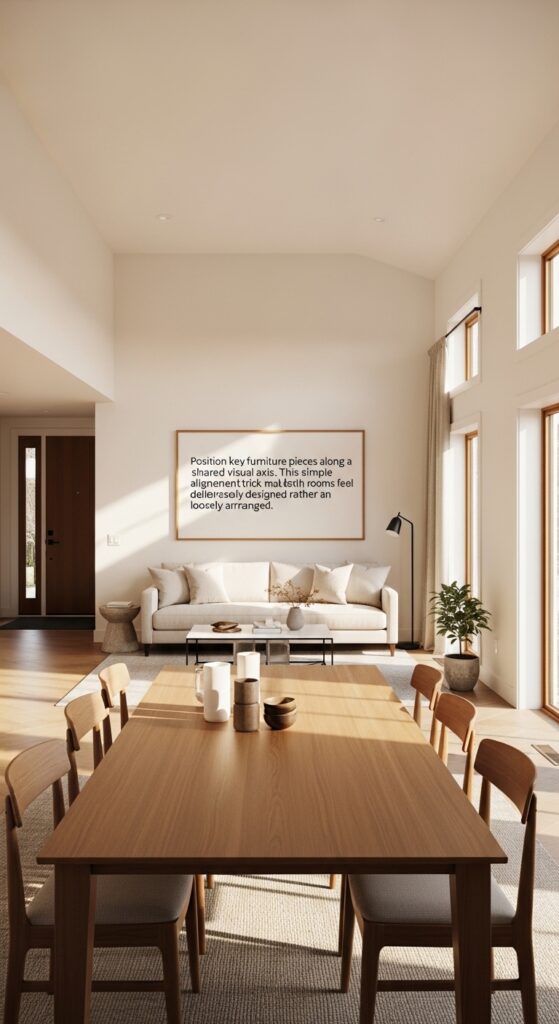
Text: Position key furniture pieces along a shared visual axis. This simple alignment trick makes both rooms feel deliberately designed rather than loosely arranged.
8. Repeat a Signature Material
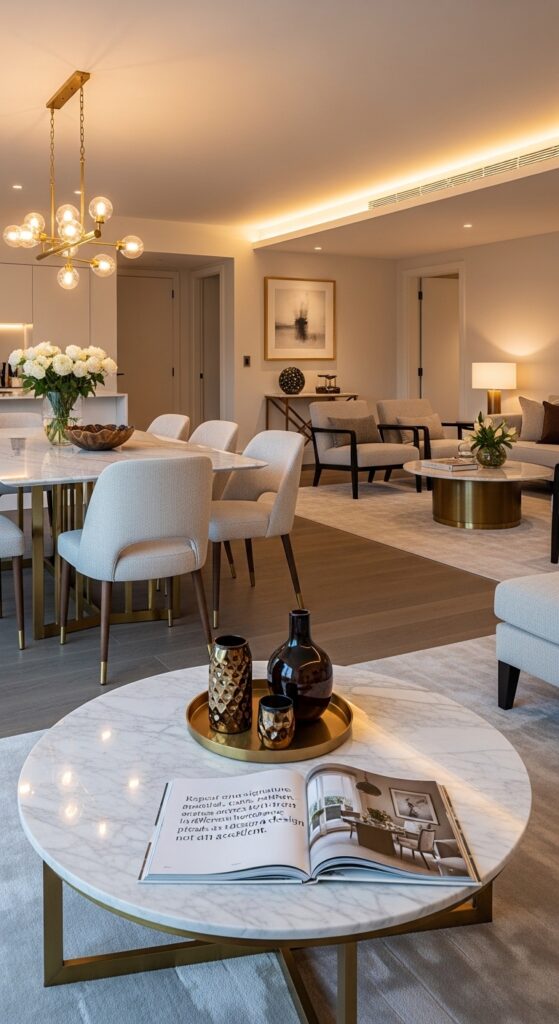
Text: Repeat one signature material — marble, cane, rattan — across both zones in different furniture pieces. It reads as a design decision, not an accident.
9. Coordinate Lighting Styles
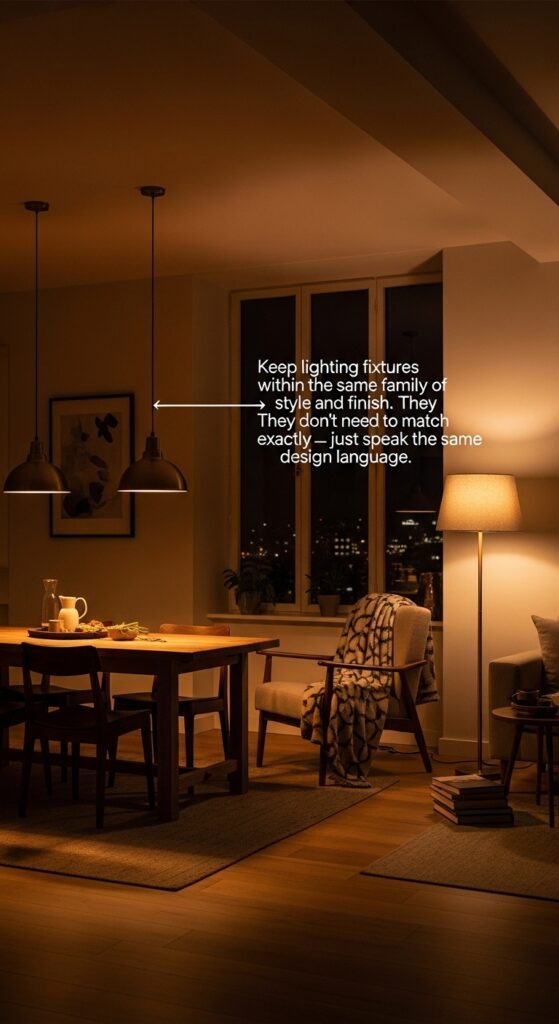
Text: Keep lighting fixtures within the same family of style and finish. They don’t need to match exactly — just speak the same design language.
10. Create a Transitional Console Table
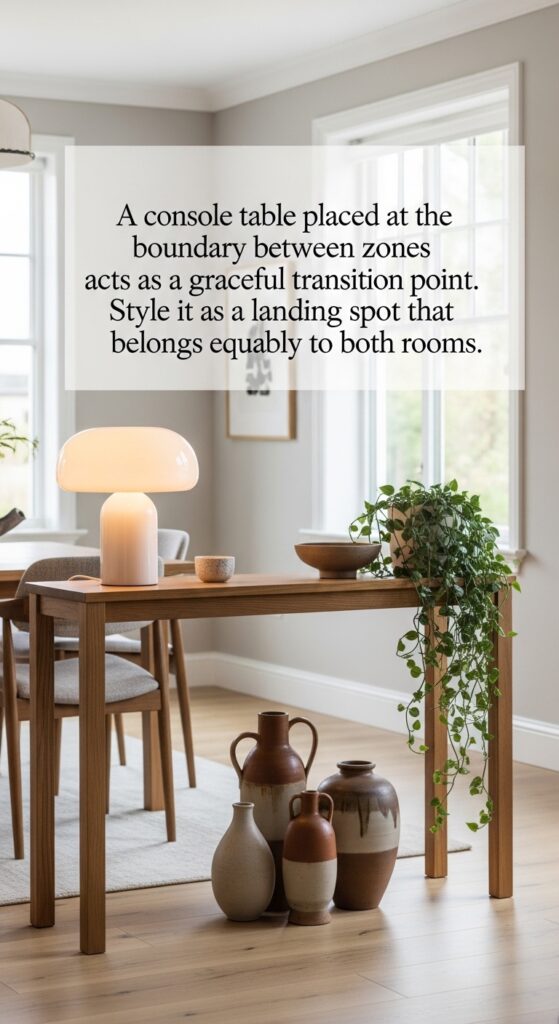
Text: A console table placed at the boundary between zones acts as a graceful transition point. Style it as a landing spot that belongs equally to both rooms.
11. Use Curtains to Define Without Dividing
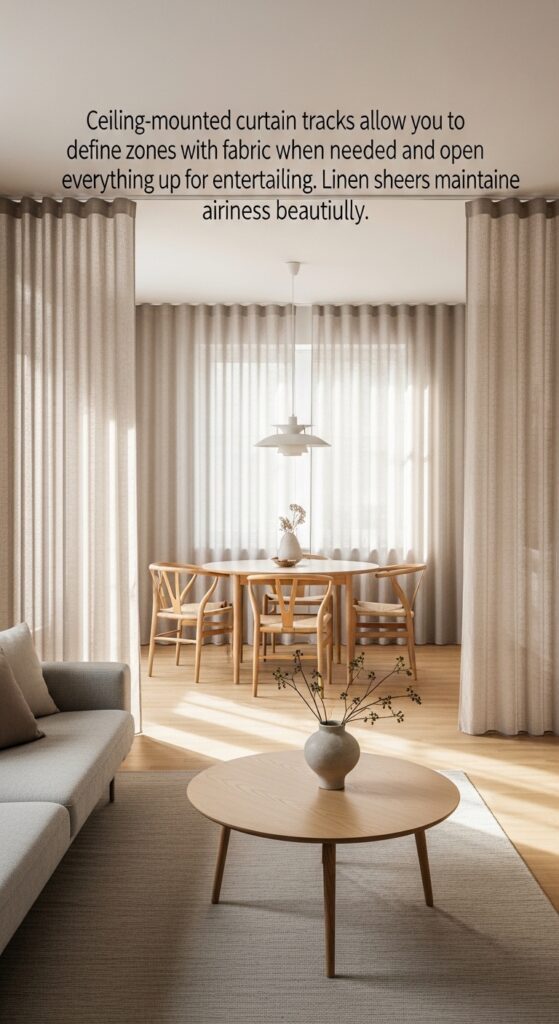
Text: Ceiling-mounted curtain tracks allow you to define zones with fabric when needed and open everything up for entertaining. Linen sheers maintain airiness beautifully.
12. Choose a Unified Ceiling Treatment
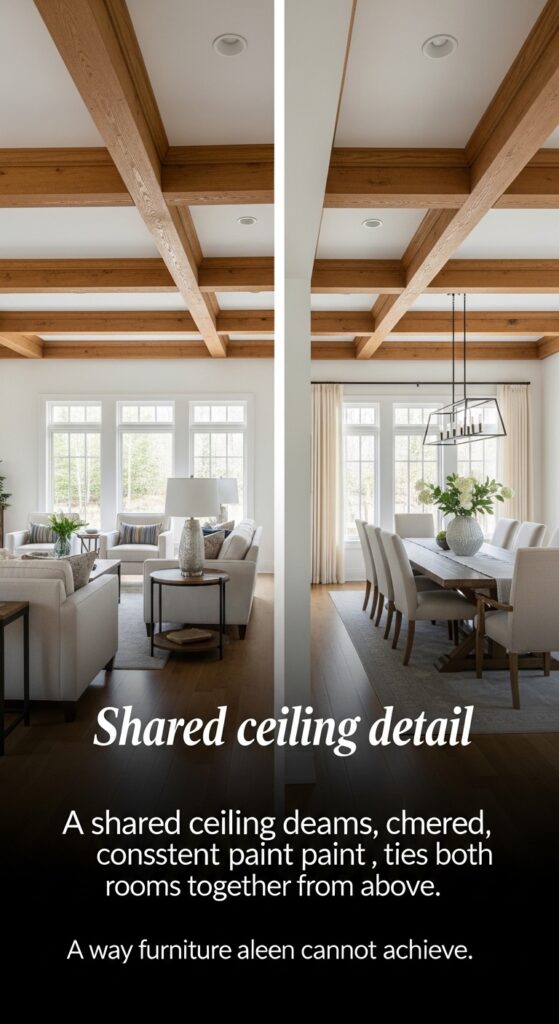
Text: A shared ceiling detail — beams, coffered panels, or a consistent paint color — ties both rooms together from above in a way furniture alone cannot achieve.
13. Install a Statement Fireplace on a Shared Wall
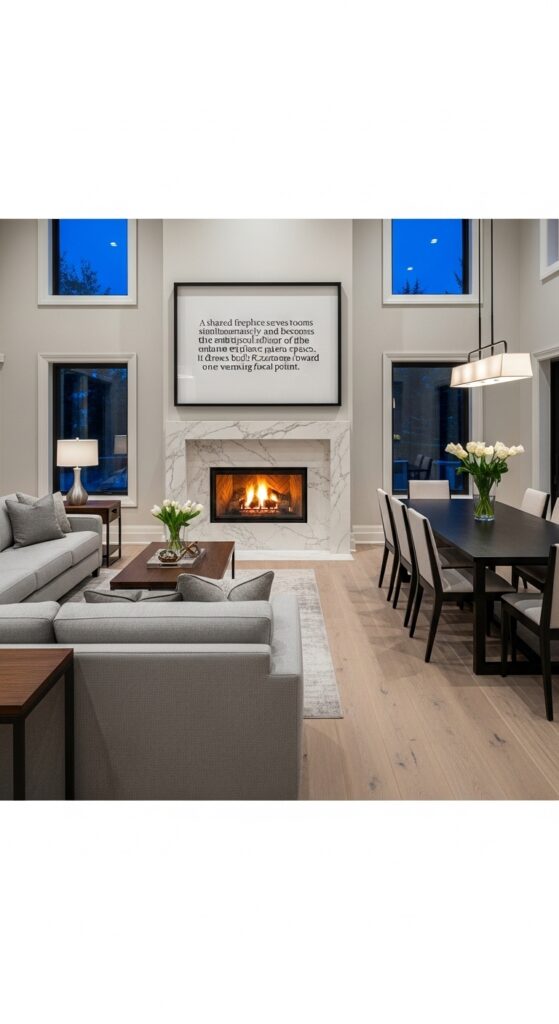
Text: A shared fireplace serves both rooms simultaneously and becomes the natural anchor of the entire open-plan space. It draws both zones toward one warming focal point.
14. Select Chairs That Work in Both Zones
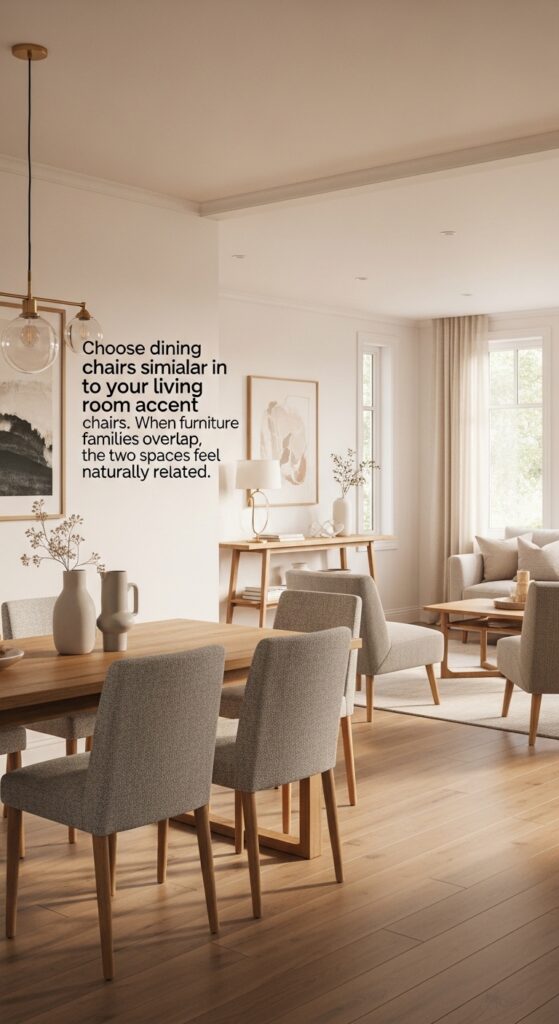
Text: Choose dining chairs similar in profile to your living room accent chairs. When furniture families overlap, the two spaces feel naturally related.
15. Use Architectural Columns as Dividers
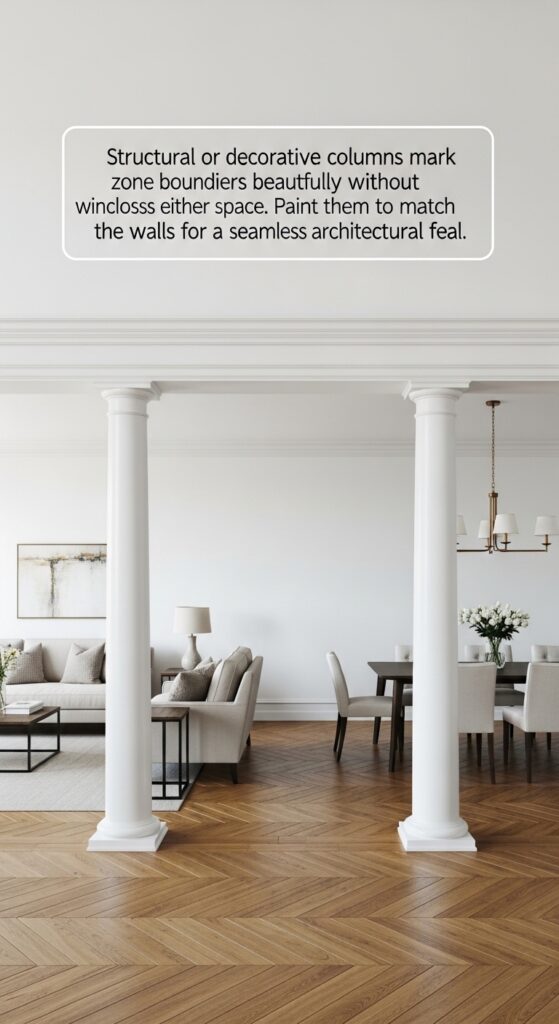
Text: Structural or decorative columns mark zone boundaries beautifully without enclosing either space. Paint them to match the walls for a seamless architectural feel.
16. Run Millwork Continuously
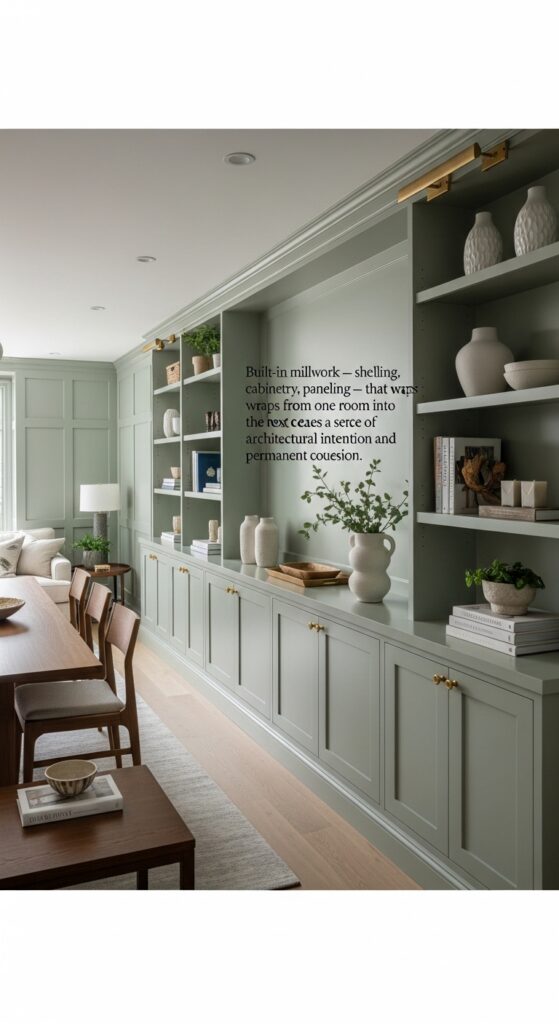
Text: Built-in millwork — shelving, cabinetry, paneling — that wraps from one room into the next creates a sense of architectural intention and permanent cohesion.
17. Choose a Hero Artwork Visible From Both Zones
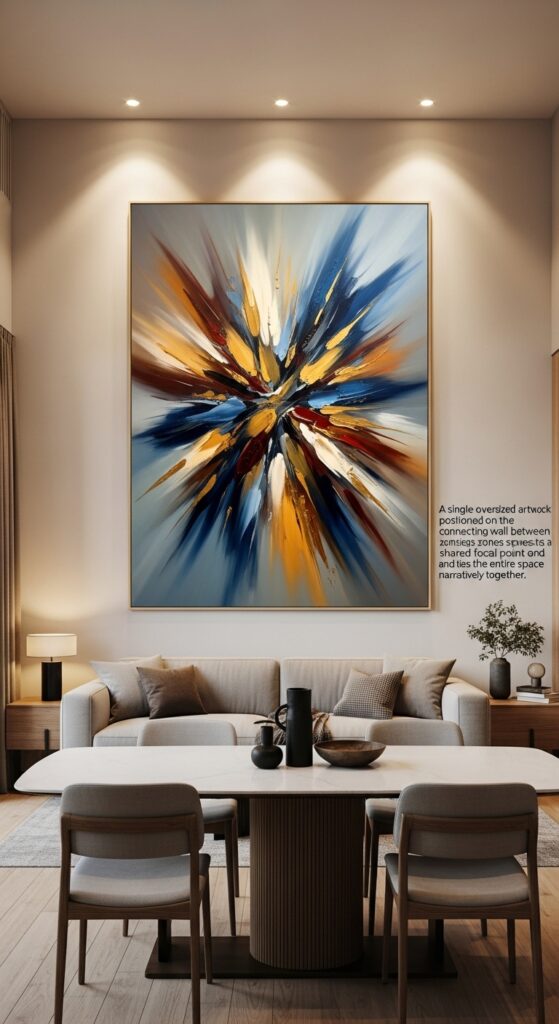
Text: A single oversized artwork positioned on the connecting wall between zones serves both rooms as a shared focal point and ties the entire space narratively together.
18. Layer the Same Textile in Different Forms
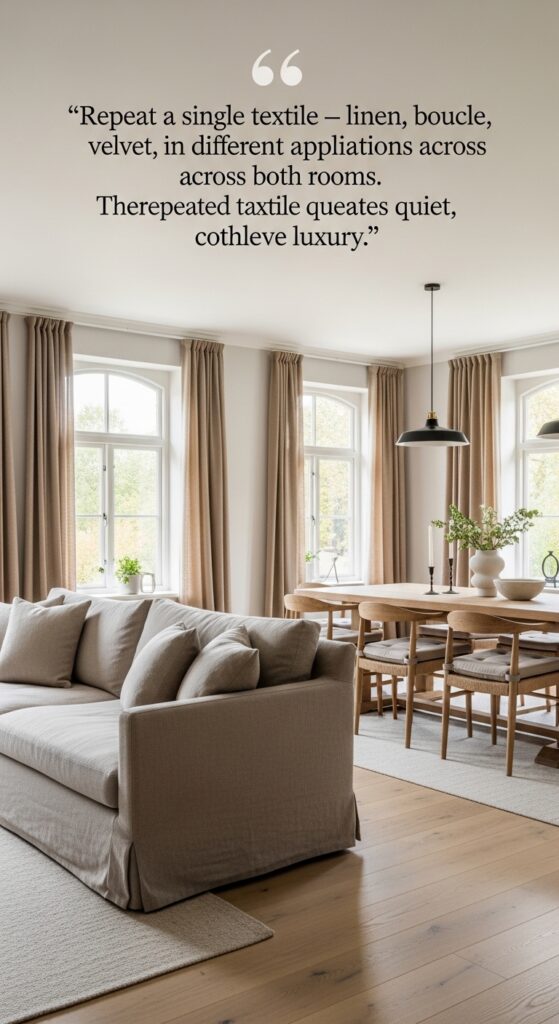
Text: Repeat a single textile — linen, boucle, velvet — in different applications across both rooms. The repeated tactile quality creates quiet, cohesive luxury.
19. Design a Transitional Island or Bar Cart
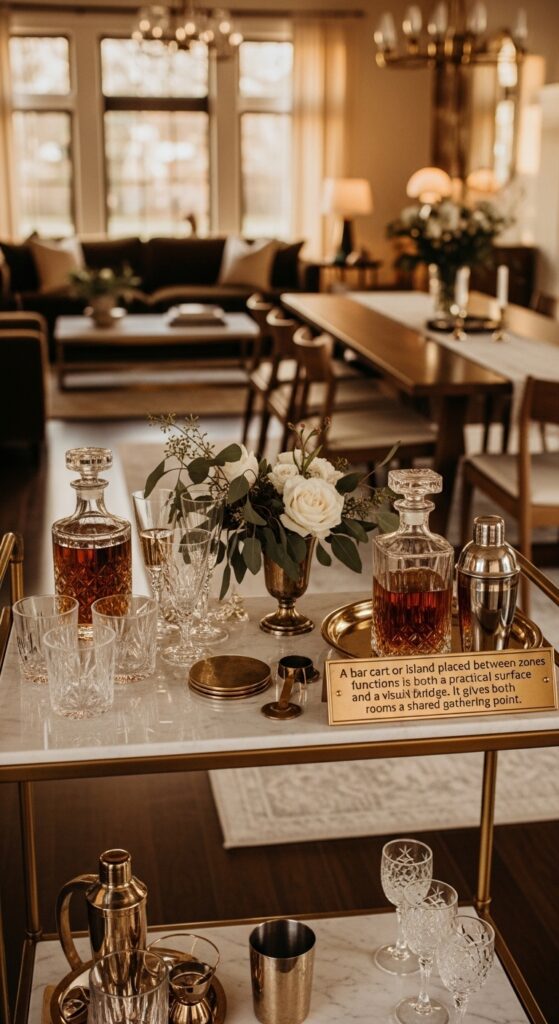
Text: A bar cart or island placed between zones functions as both a practical surface and a visual bridge. It gives both rooms a shared gathering point.
20. Keep Window Treatments Identical
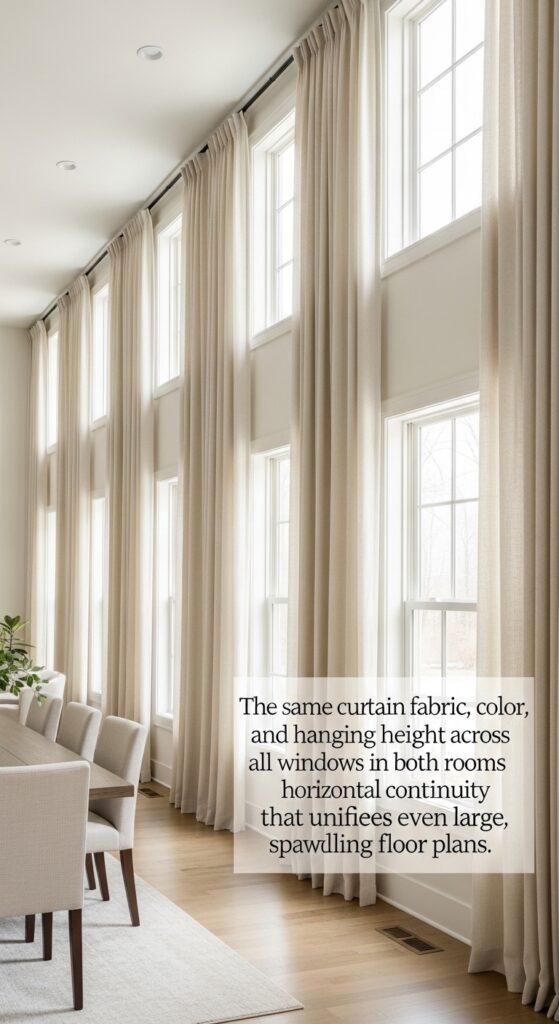
Text: The same curtain fabric, color, and hanging height across all windows in both rooms creates horizontal continuity that unifies even large, sprawling floor plans.
21. Use a Low-Profile Sofa to Preserve Sightlines
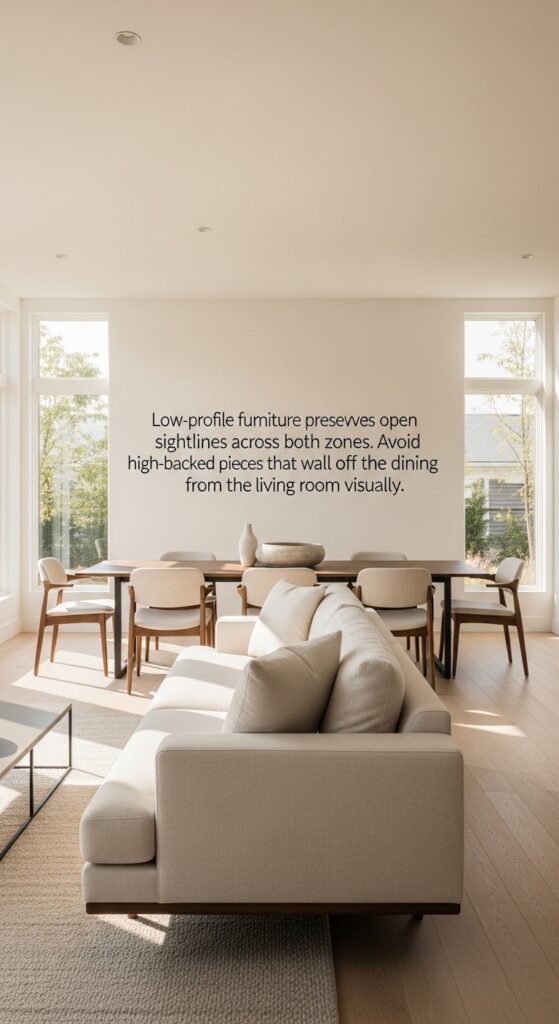
Text: Low-profile furniture preserves open sightlines across both zones. Avoid high-backed pieces that wall off the dining area from the living room visually.
22. Connect With a Shared Plant Moment
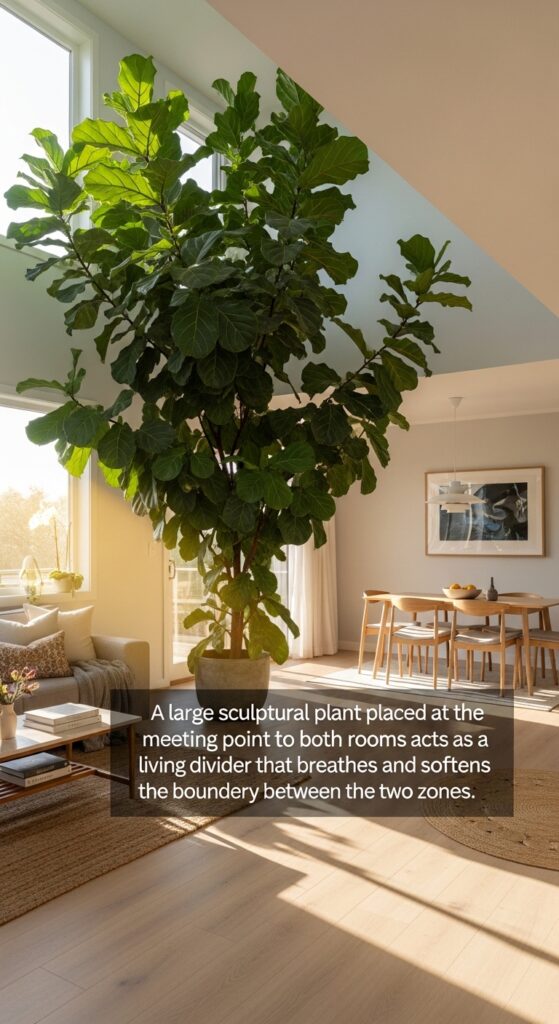
Text: A large sculptural plant placed at the meeting point of both rooms acts as a living divider that breathes and softens the boundary between the two zones.
23. Echo Metal Finishes Throughout
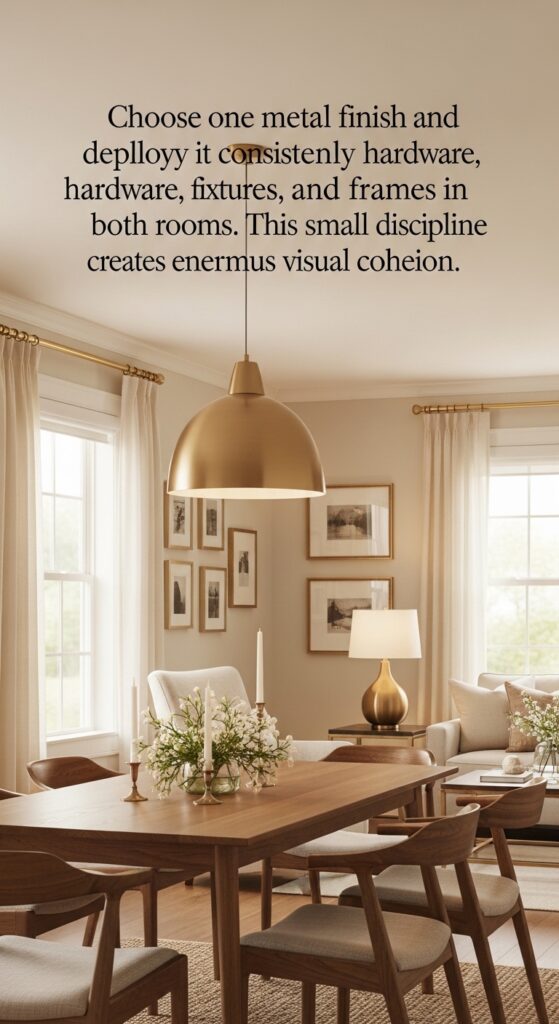
Text: Choose one metal finish and deploy it consistently across hardware, fixtures, and frames in both rooms. This small discipline creates enormous visual cohesion.
24. Design a Unified Gallery Wall Spanning Both Zones
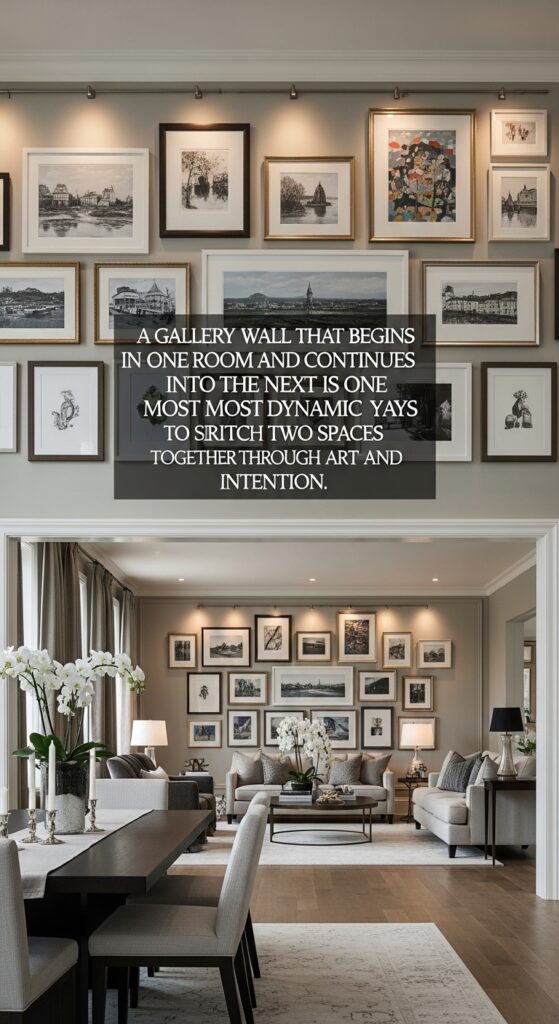
Text: A gallery wall that begins in one room and continues into the next is one of the most dynamic ways to stitch two spaces together through art and intention.
25. Use Architectural Molding Continuously
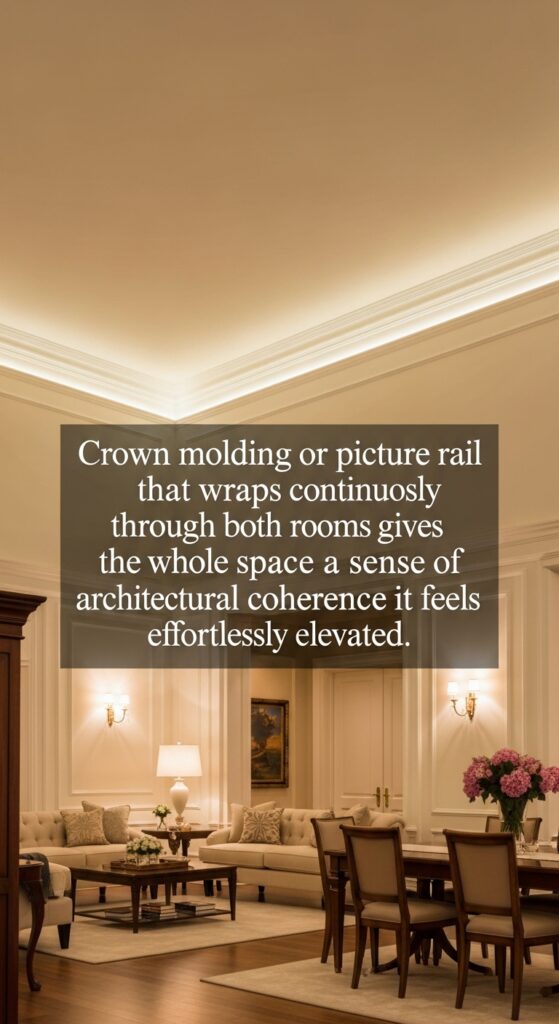
Text: Crown molding or picture rail that wraps continuously through both rooms gives the whole space a sense of architectural coherence that feels effortlessly elevated.
26. Anchor Both Zones With the Same Ceiling Color
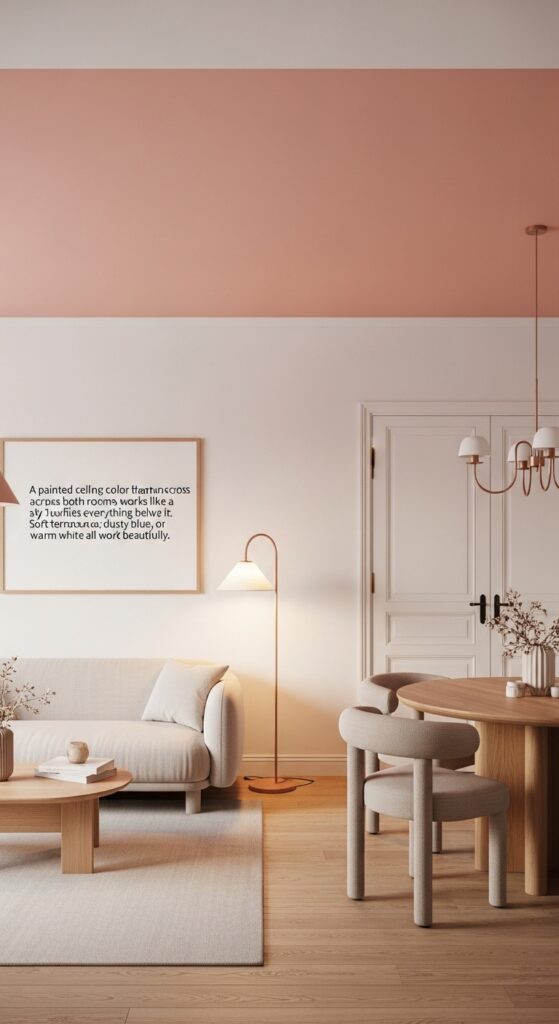
Text: A painted ceiling color that runs across both rooms works like a sky — it unifies everything below it. Soft terracotta, dusty blue, or warm white all work beautifully.
27. Create a Visual Rhythm With Pendants
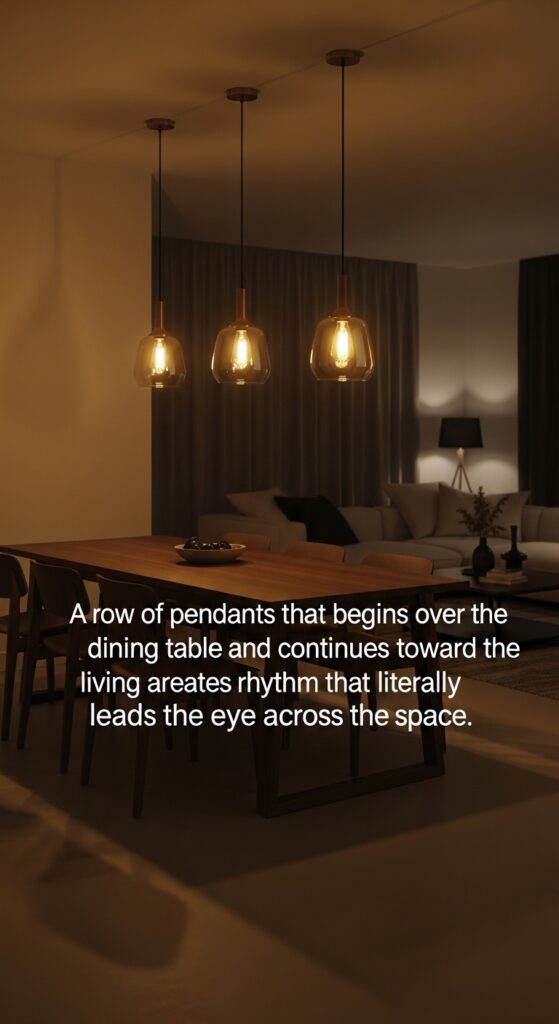
Text: A row of pendants that begins over the dining table and continues toward the living area creates visual rhythm that literally leads the eye across the space.
28. Match Seat Heights Across Both Rooms
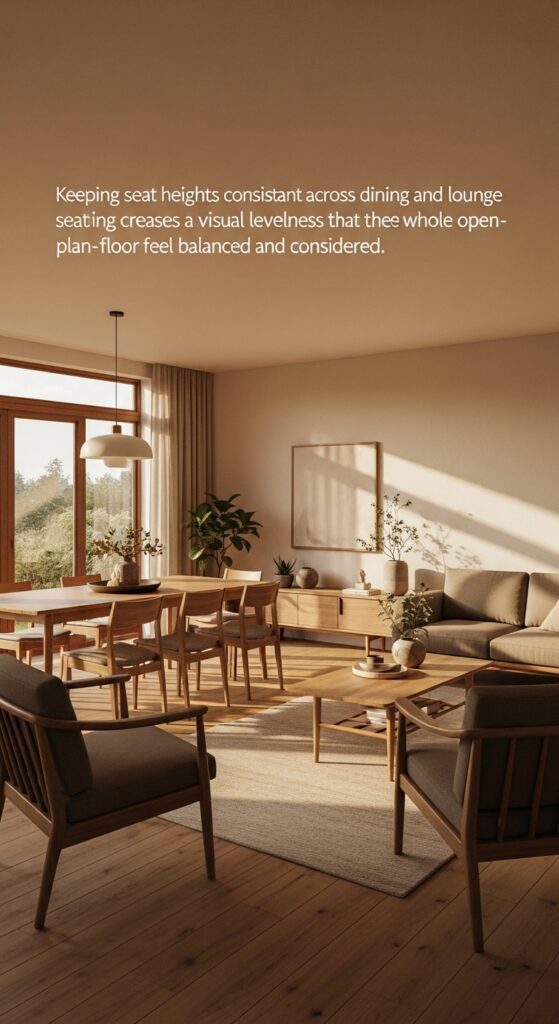
Text: Keeping seat heights consistent across dining and lounge seating creates a visual levelness that makes the whole open-plan floor feel balanced and considered.
29. Use a Shared Accent Color Sparingly
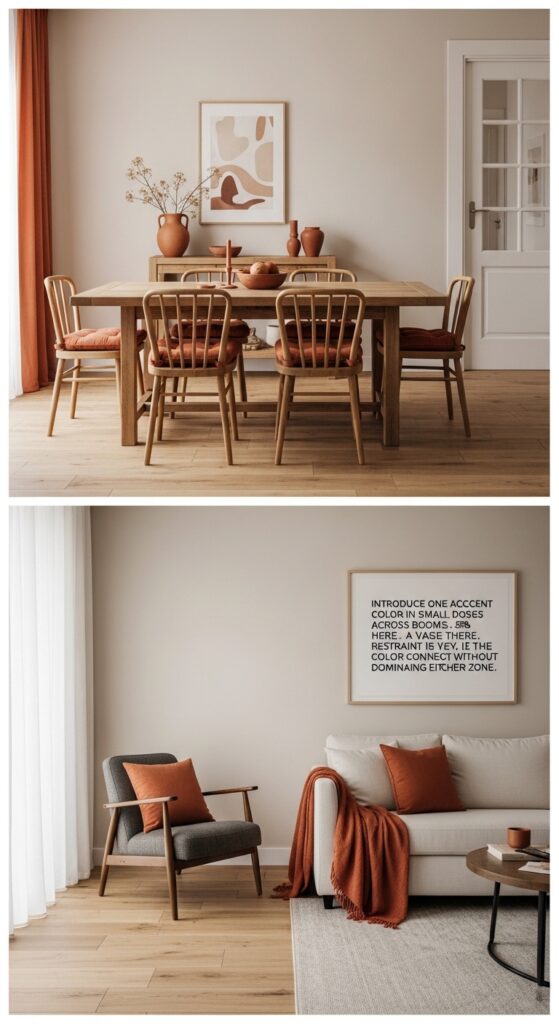
Text: Introduce one accent color in small doses across both rooms — a cushion here, a vase there. Restraint is key; let the color connect without dominating either zone.
30. Design Around a Central Sightline
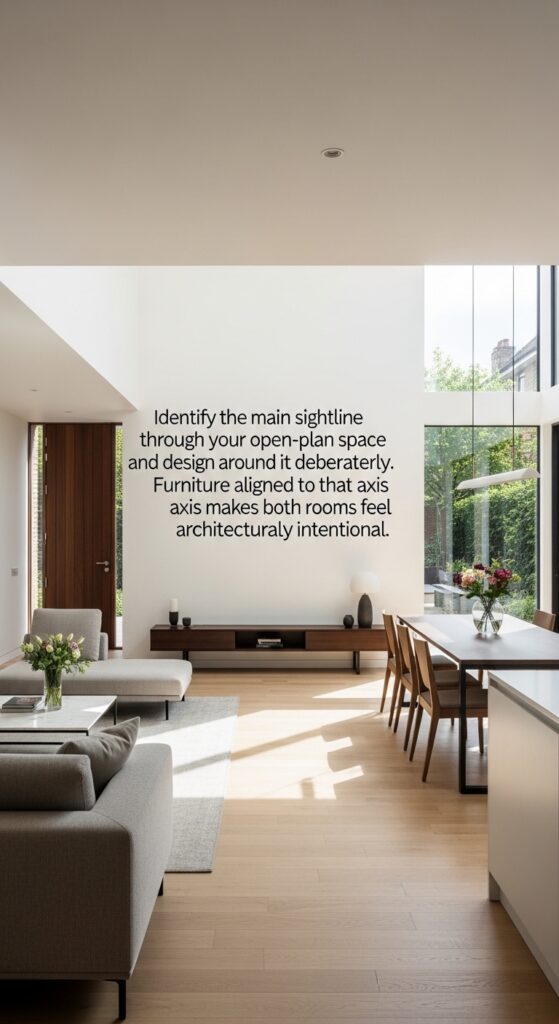
Text: Identify the main sightline through your open-plan space and design around it deliberately. Furniture aligned to that axis makes both rooms feel architecturally intentional.
31. Let Negative Space Do the Work
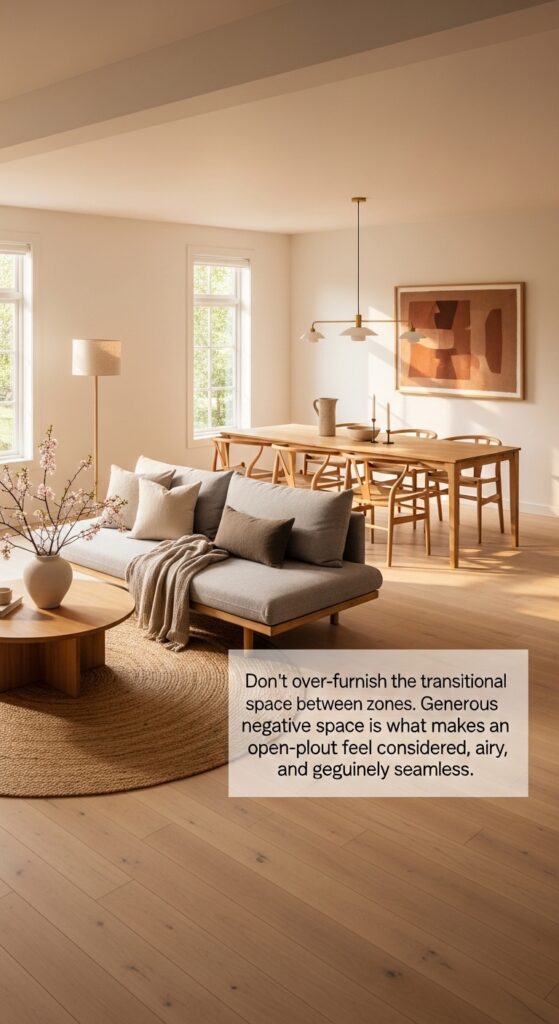
Text: Don’t over-furnish the transitional space between zones. Generous negative space is what makes an open-plan layout feel considered, airy, and genuinely seamless.
Final Tips
The secret to a truly seamless open-plan space lies in discipline and repetition — choosing a small set of materials, colors, and finishes and committing to them across both rooms.
- Start with flooring: it’s the single most powerful continuity tool in any open-plan space.
- Limit your palette: two to three colors across both rooms will always outperform five or more.
- Repeat, don’t match: echoing elements feels curated; perfectly matching everything feels staged.
- Respect the boundary: define each zone clearly — a rug, a pendant, a sofa back — so neither room loses its identity within the shared space.
- Edit ruthlessly: open-plan rooms accumulate clutter quickly; less furniture and fewer objects always read as more intentional and more beautiful.