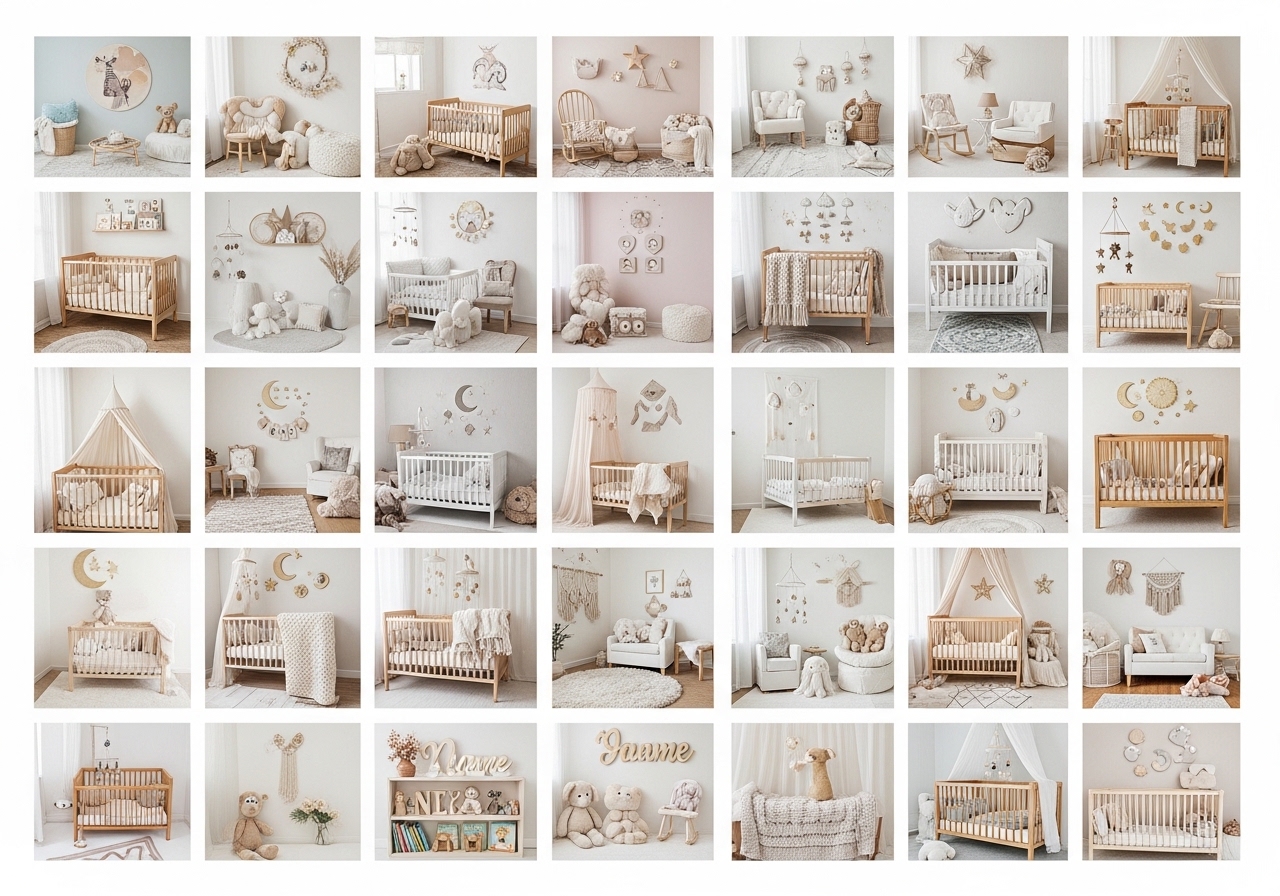
There’s something quietly magical about designing a nursery — a room that holds so much hope, tenderness, and possibility before your little one even arrives. Adorable nursery decor isn’t just about aesthetics; it’s about crafting a sanctuary where your baby feels safe and you feel at peace. Whether you’re drawn to soft pastels, earthy neutrals, whimsical themes, or modern minimalism, the right details can transform a plain room into something truly enchanting. These 29 nursery decor ideas span every style, budget, and square footage — each one thoughtfully chosen to inspire and guide you. Let’s explore every one of them.
Why Nursery Decor Works So Well
A well-designed nursery does something few other rooms can — it balances pure function with deep emotion. Every choice you make, from the crib placement to the curtain fabric, contributes to a space that both soothes a newborn and sustains a new parent through long, bleary-eyed nights. That dual purpose is what makes nursery design so uniquely rewarding.
The most enduring nursery aesthetics lean into softness: rounded furniture edges, muted color palettes, natural textures like linen and wood, and gentle lighting that mimics the warm glow of dusk. These aren’t just pretty choices — they’re rooted in child development research showing that calm, low-stimulation environments support better sleep and sensory regulation.
Right now, nursery decor is having a genuine cultural moment. Pinterest boards are flooded with earthy, organic nurseries featuring rattan bassinets, terracotta accent walls, and hand-painted murals — a deliberate move away from the primary-colored, cartoon-heavy nurseries of decades past. Today’s parents want spaces that feel grown-up and intentional, not just “baby-ish.”
Even a small nursery — a converted walk-in closet or a shared bedroom corner — can achieve this aesthetic with the right focal point, a carefully edited color palette, and smart vertical storage. Scale doesn’t limit beauty here; thoughtfulness does.
1. Soft Cloud Canopy Above the Crib

Vibe: This is the nursery equivalent of sleeping inside a cloud — soft, weightless, and completely wrapped in calm.
What makes it work: A canopy adds height and drama to a crib without overwhelming the room, drawing the eye upward and making even low ceilings feel loftier. The sheer fabric filters light beautifully, creating a dappled, gentle glow that soothes rather than stimulates. It’s one of the few decor choices that looks just as good in daylight as it does in a dimly lit 3 a.m. feeding session.
How to achieve it: Install a single ceiling hook above the crib center, thread a brass or matte black ring through it, and drape 3–4 yards of lightweight muslin or voile fabric. Opt for ivory or white rather than bright white — it photographs warmer and reads softer in person.
💡 IKEA’s HJÄRTELIGA canopy is under $25 and works beautifully with a simple ceiling hook — no sewing required.
2. Warm Terracotta Accent Wall
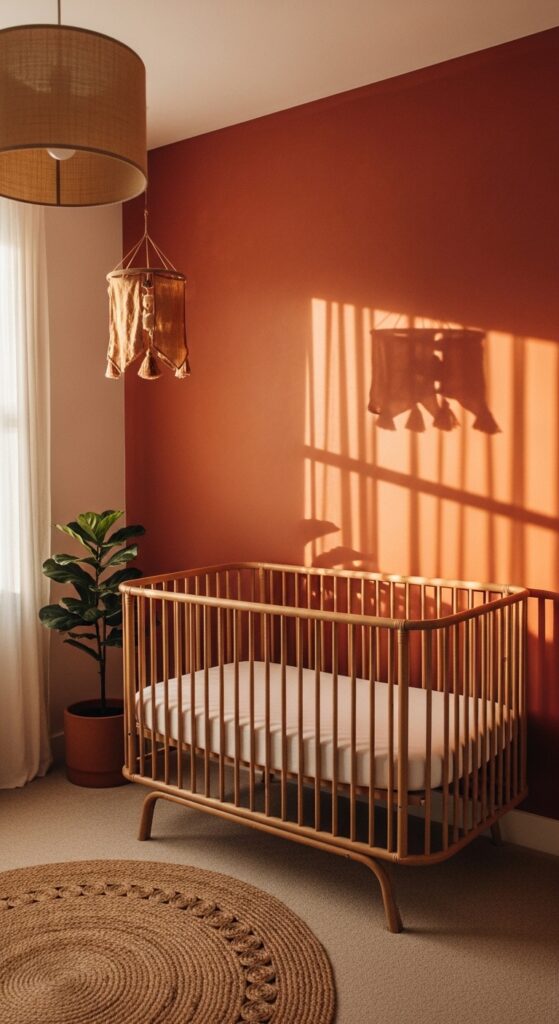
Vibe: Earthy, grounding, and unexpectedly modern — this wall feels like a warm embrace the moment you walk in.
What makes it work: Terracotta is one of the most forgiving and flattering wall colors in a nursery because it shifts warmly with natural light — reading almost peachy at noon and deeply amber at dusk. Against white trim and natural wood furniture, it creates a sophisticated contrast that feels curated rather than childish. It also pairs naturally with the organic textures trending heavily in nursery design right now.
How to achieve it: Choose a matte or limewash finish rather than eggshell — the texture absorbs light rather than reflecting it, keeping the mood soft. Farrow & Ball’s “Red Earth” or Benjamin Moore’s “Pueblo” are excellent starting points. Stick to one wall to avoid overwhelming the room.
3. Gallery Wall of Framed Botanical Prints
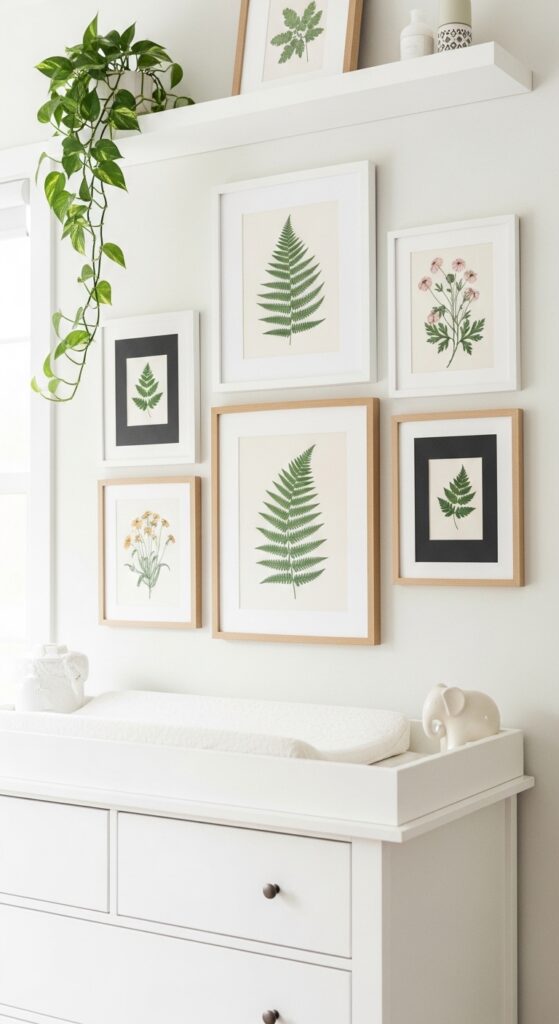
Vibe: Like a little naturalist’s study — curious, gentle, and effortlessly refined.
What makes it work: Botanical prints bridge the gap between “adult art” and “nursery decor” beautifully, making the space feel intentional rather than themed. The asymmetric arrangement adds movement and personality without looking cluttered, especially when you anchor the grouping with one larger print as a visual centerpiece.
How to achieve it: Download free botanical prints from sites like Rawpixel or The Graphics Fairy, print them at your local copy shop on cream cardstock, and frame in a mix of sizes. Vary your mat widths — wider mats on smaller prints make them read larger and more gallery-like.
💡 Thrift stores are goldmines for mismatched frames — a coat of white or natural wood spray paint unifies them instantly.
4. Rattan and Wicker Accent Furniture
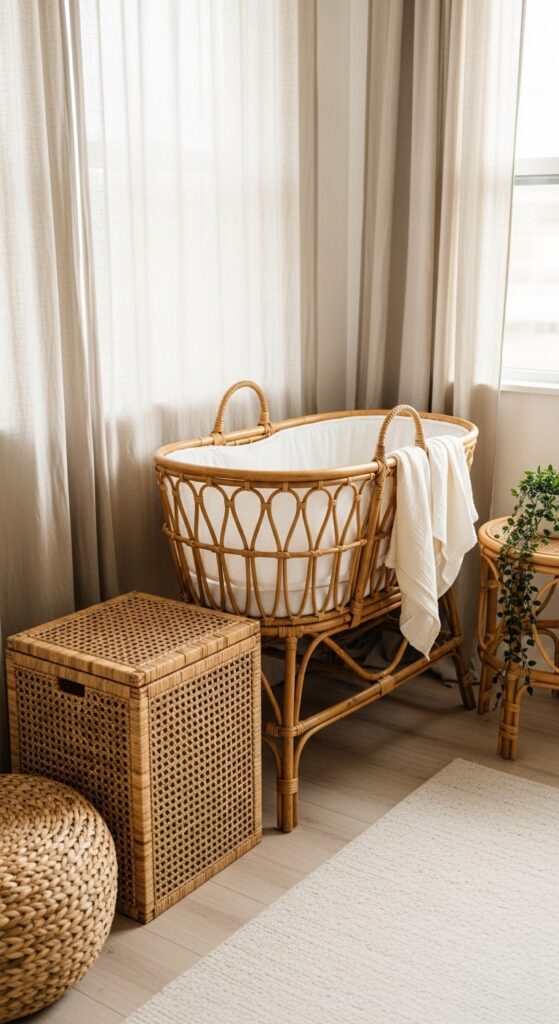
Vibe: Sun-soaked and naturally beautiful — like a nursery that grew organically from the earth up.
What makes it work: Rattan introduces organic warmth and texture without adding visual weight, making it ideal for smaller nurseries where bulky furniture can feel oppressive. The woven pattern catches light in shifting, interesting ways throughout the day, keeping the room visually dynamic without introducing pattern through prints or wallpaper.
How to achieve it: Look for rattan or water hyacinth baskets to replace plastic storage bins — they function identically but elevate the room instantly. Pair with linen or cotton fabric accents in cream or warm white to keep the palette cohesive.
5. Celestial Moon and Stars Theme
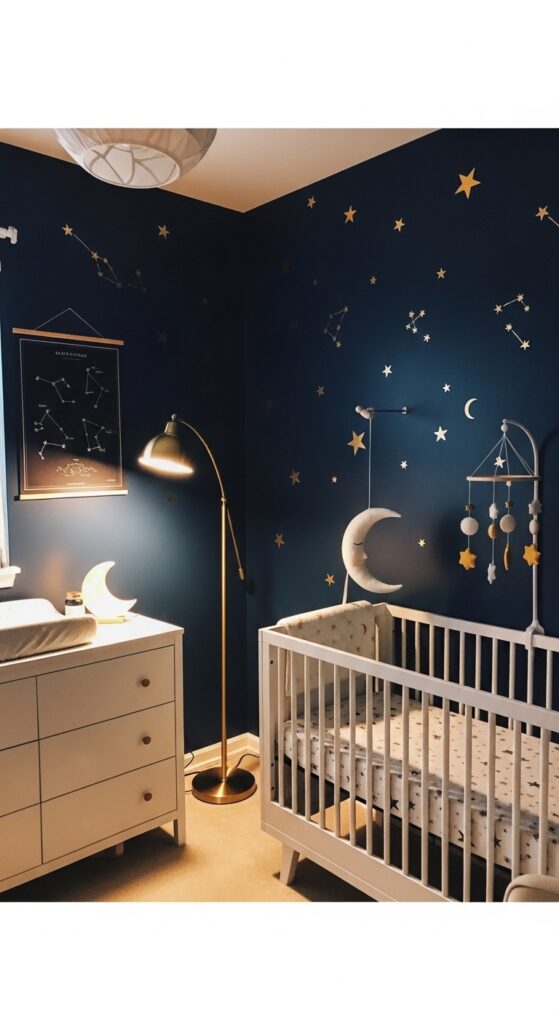
Vibe: Mystical and serene — like your baby will spend every nap drifting through a gentle, star-filled sky.
What makes it work: Deep navy is one of the rare dark paint colors that actually works in a nursery, creating a cocoon-like calm rather than a heavy or institutional feel. Gold accents read as warm rather than flashy against a matte navy backdrop, and the contrast between light and dark creates a visually striking room that photographs exceptionally well.
How to achieve it: Use a fine artist’s brush and gold leaf paint (available at craft stores) to hand-dot stars of varying sizes across one wall — it takes about two hours and costs under $15. Vary the sizes and spacing for a more authentic celestial feel rather than uniform polka dots.
6. Shiplap Feature Wall in Soft White
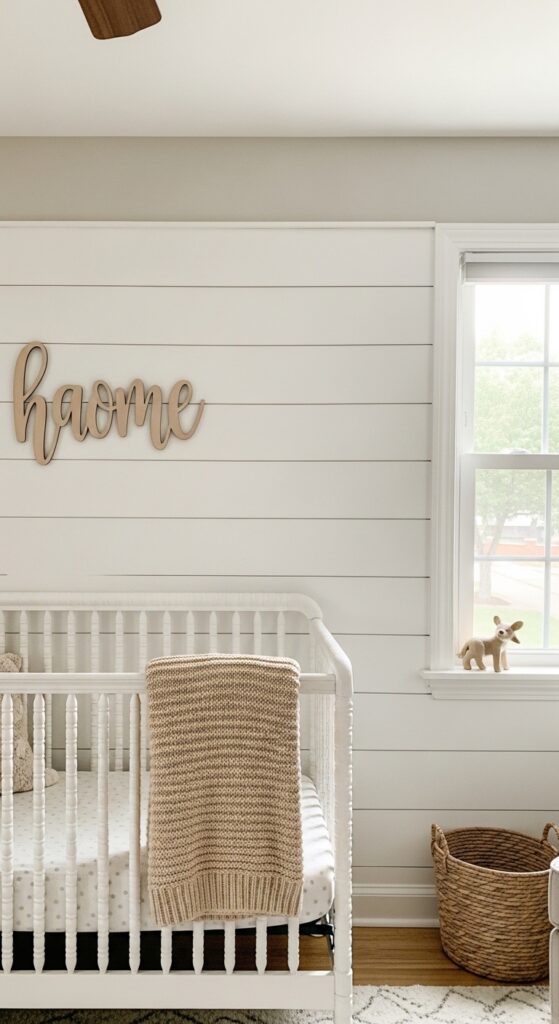
Vibe: Farmhouse-gentle and forever classic — the kind of nursery that feels right the moment you walk in.
What makes it work: Shiplap adds architectural interest and texture to a nursery without relying on color or pattern, making it the ideal backdrop for furniture and accessories to shine. The subtle shadow lines between boards create depth and dimension that flat paint simply can’t replicate, especially in rooms with natural light.
How to achieve it: Peel-and-stick shiplap panels (available on Amazon and at Home Depot) make this a weekend DIY project without any tools. Paint in a warm white — Benjamin Moore’s “Simply White” or Sherwin-Williams “Alabaster” — rather than a stark bright white for a cozier feel.
💡 Thin MDF strips painted white and glued directly to the wall mimic shiplap for under $40 total in a standard nursery.
7. Oversized Floor Cushion Reading Nook
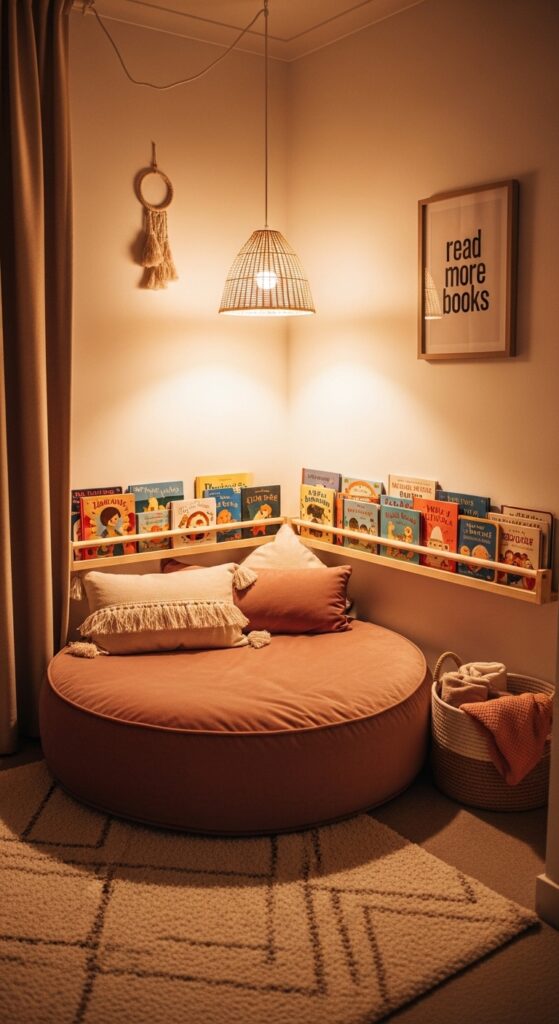
Vibe: The softest, most inviting corner in the house — where story time becomes the best part of every day.
What makes it work: A dedicated reading nook signals to children (and parents) that this corner has a purpose, which builds lovely daily rituals from infancy onward. The low, accessible shelf keeps books within reach and in view — research shows children read more when books are displayed face-out rather than spine-out.
How to achieve it: A large round pouf or floor cushion (look for ones with washable covers) plus two floating shelves at sitting height is all you need. Keep the book selection small and curated — 10 to 15 titles displayed face-forward looks intentional and makes choosing easier for toddlers.
8. Linen Blackout Curtains in Sage Green

Vibe: The room exhales — sage green curtains make everything feel quieter, greener, and more at ease.
What makes it work: Curtains mounted at ceiling height rather than window frame height make any nursery feel significantly taller and more luxurious, regardless of actual ceiling height. Sage green is one of the most restful colors in the spectrum, and its natural undertones bridge seamlessly between earthy and fresh aesthetics.
How to achieve it: Mount your curtain rod 4–6 inches below the ceiling rather than above the window frame — this single change transforms the room’s proportions. Choose a fabric with a built-in blackout lining rather than adding a separate liner, which tends to shift and bunch over time.
9. Handpainted Mural of Rolling Hills
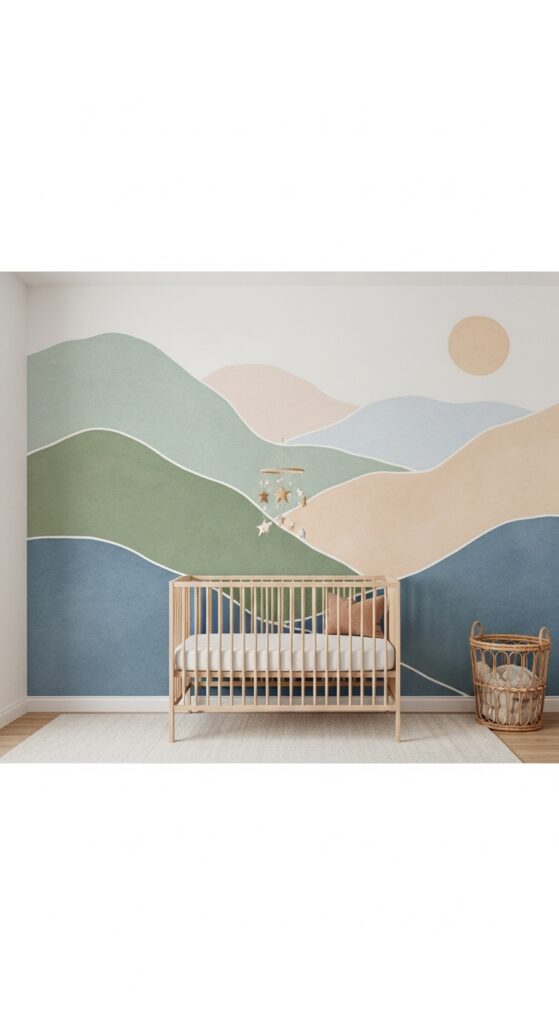
Vibe: Like your baby’s first view of the world is an endless, gentle landscape of softly painted hills and open sky.
What makes it work: A mural creates a visual focal point that makes furniture arrangement effortless — everything simply faces the art. The organic, watercolor-style approach feels modern and bespoke without requiring professional artist skill, especially when shapes are kept simple and colors stay within a muted, harmonious palette.
How to achieve it: Sketch simple hill curves lightly in pencil first, then paint with diluted craft paint in two to three coats for a soft, watercolor effect. You don’t need to be an artist — abstract rolling hills are forgiving shapes that look intentional even when imperfect.
💡 Peel-and-stick mural wallpapers from Minted or Tempaper let you achieve this look with zero painting skill and zero commitment.
10. Wooden Name Letters Above the Crib
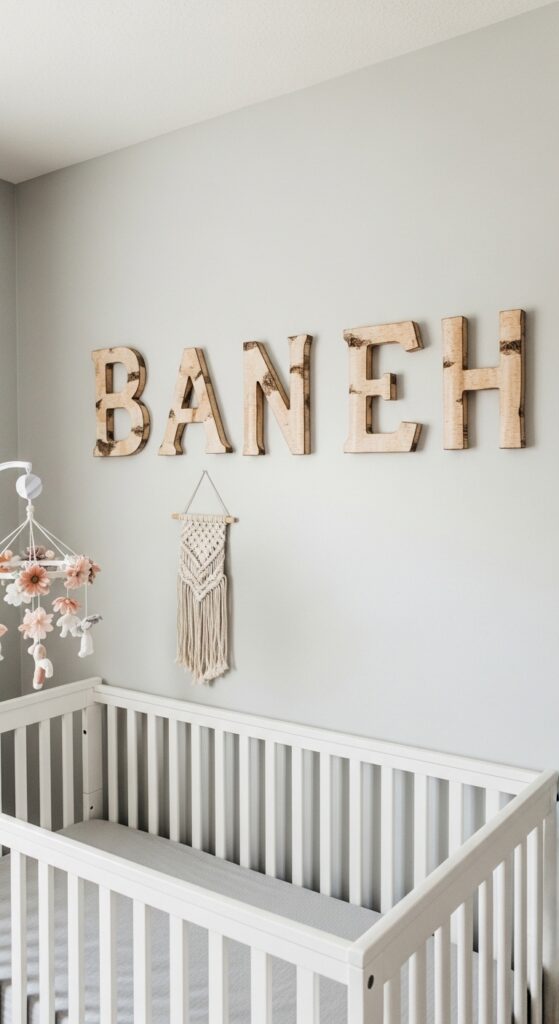
Vibe: Personal, warm, and unmistakably theirs — this wall says “this room was made just for you.”
What makes it work: Name letters work visually because they fill vertical wall space above a crib in a way that feels purposeful rather than random. Natural birch or unpainted wood letters have a warmth and texture that painted MDF lacks, making them feel like heirloom pieces rather than nursery accessories.
How to achieve it: Space letters evenly using painter’s tape as a guide before committing to nails. Command strips work well for lighter wooden letters and are completely wall-safe for rentals. Sand the edges lightly if the letters arrive sharp — it also reveals beautiful wood grain.
11. Soft Mobile with Dried Botanicals
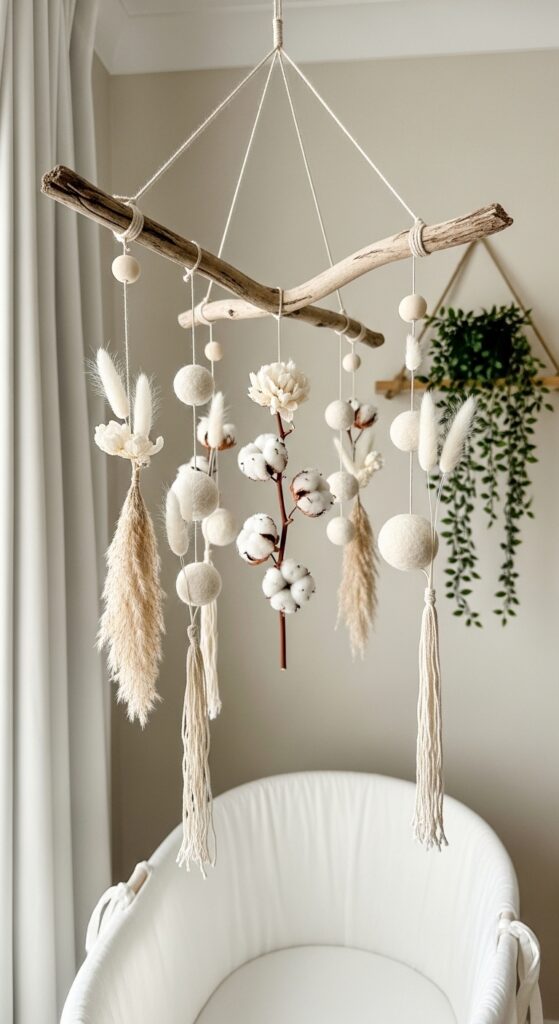
Vibe: Like something found at the edge of a wildflower meadow — effortless, natural, and impossibly pretty.
What makes it work: Botanical mobiles move gently in air currents, providing subtle visual stimulation for newborns without the jarring brightness of primary-color toy mobiles. The organic materials — dried pampas, cotton stems, linen thread — keep the room grounded in natural texture, tying together any earthy nursery aesthetic.
How to achieve it: Source a straight or forked driftwood branch from a craft store or nature walk. Attach linen cord at two points for balance, then suspend dried botanicals and felt balls on threads of varying lengths. The asymmetry is part of the beauty — don’t overthink the arrangement.
12. Velvet Glider in Blush Pink
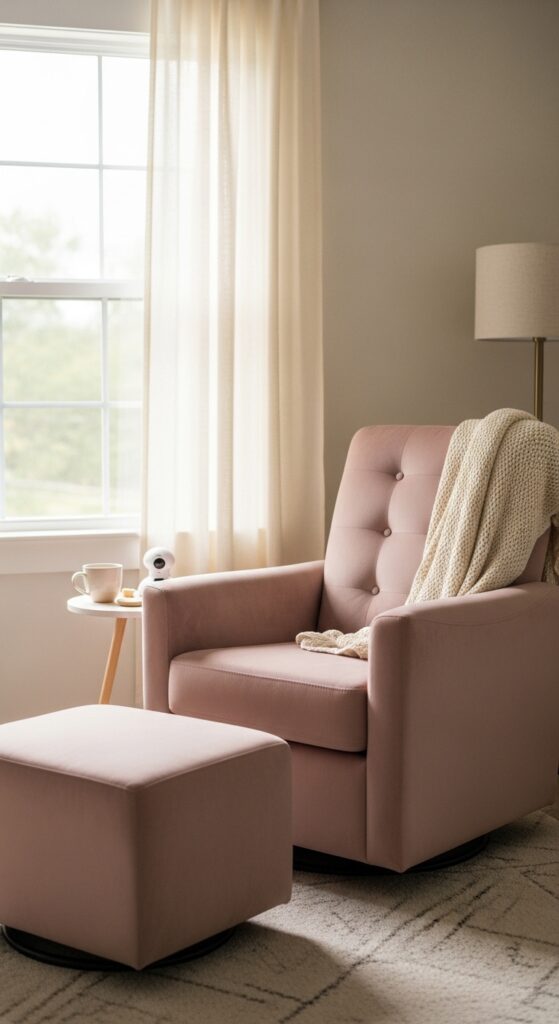
Vibe: The chair that makes 3 a.m. feel almost bearable — plush, quiet, and entirely on your side.
What makes it work: A glider is the most-used piece of furniture in any nursery, so investing in one that feels luxurious pays dividends through hundreds of feeding sessions. Velvet upholstery adds visual richness without pattern, letting the chair serve as a design anchor while remaining versatile enough to move to a living room later.
How to achieve it: Look for gliders with performance or stain-treated velvet rather than standard velvet — the weave is identical but the fabric repels moisture far better. Dusty blush, sage green, and warm grey are the three colorways that photograph most beautifully and age most gracefully in a nursery.
💡 Slipcover chairs or add a velvet throw if a full upholstered glider is out of budget — the effect from across the room is surprisingly similar.
13. Floating Wall Shelves with Styled Vignettes
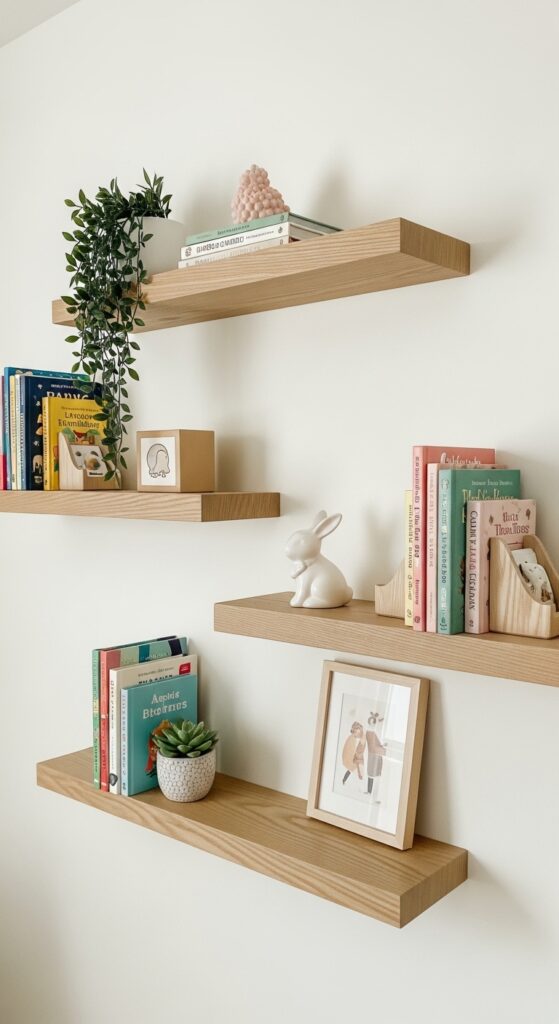
Vibe: Every shelf a tiny, curated world — styled with intention and a little bit of joy.
What makes it work: Staggered shelves at three different heights add visual rhythm to a flat wall and allow you to play with negative space — a principle borrowed from gallery curation that makes even a few simple items look thoughtfully placed. The key is restraint: three to five items per shelf maximum, with varied heights.
How to achieve it: Alternate between tall items (a small plant), medium items (a figurine or book), and low flat items (a small framed print face-forward) on each shelf. Use the rule of odd numbers — groups of three or five always read more naturally than even-numbered arrangements.
14. Rope Swing or Hammock Chair in the Corner
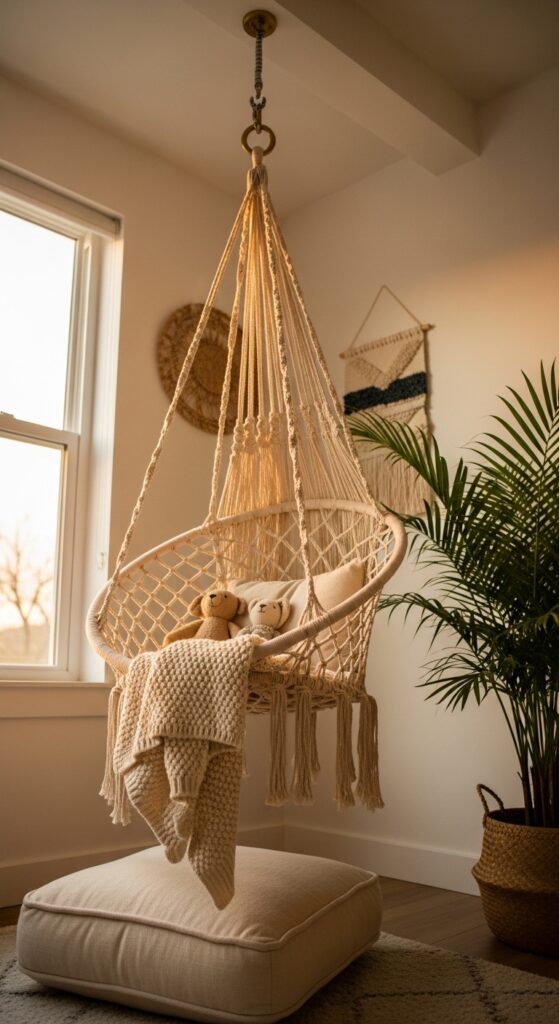
Vibe: Bohemian, breezy, and full of childhood magic — even when empty, it makes the room feel adventurous.
What makes it work: A hanging chair or small hammock adds three-dimensional interest to a nursery corner that no floor furniture can replicate. It draws the eye upward, reinforcing a sense of vertical space, and becomes an irresistible spot for older toddlers as the room evolves.
How to achieve it: Install a heavy-duty ceiling hook into a stud — not just drywall — and use a weight-rated swivel hook for added safety. Look for chairs explicitly rated for toddler use once your child can sit independently. In the newborn stage, use it as a cozy display spot for plush toys and throws.
15. Dusty Blue Nursery with Gold Accents
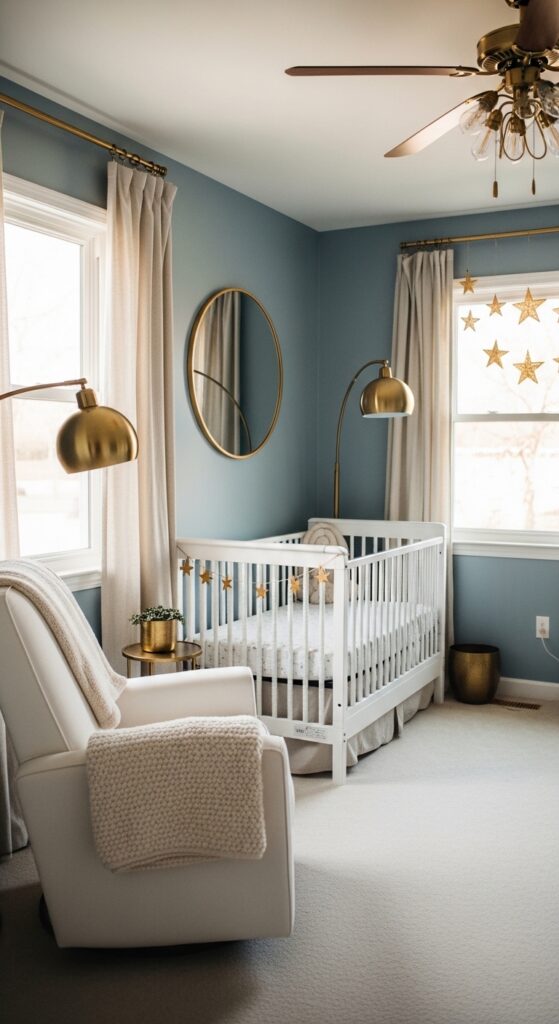
Vibe: Like the sky just before sunrise — quietly breathtaking, infinitely calming, and touched with a gentle glow.
What makes it work: Dusty blue has a natural grey undertone that prevents it from reading “baby blue,” making it feel sophisticated and gender-neutral. Gold accents warm up the cool base color beautifully, creating a complementary contrast that keeps the palette feeling rich rather than flat.
How to achieve it: Look for dusty blue paint with LRV (light reflectance value) between 35–50 for best results in a nursery — light enough to keep the room bright, but saturated enough to read as a true color. Benjamin Moore’s “Raindrop” and Sherwin-Williams “Interesting Aqua” both hit this sweet spot.
16. Macramé Wall Hanging as Focal Point
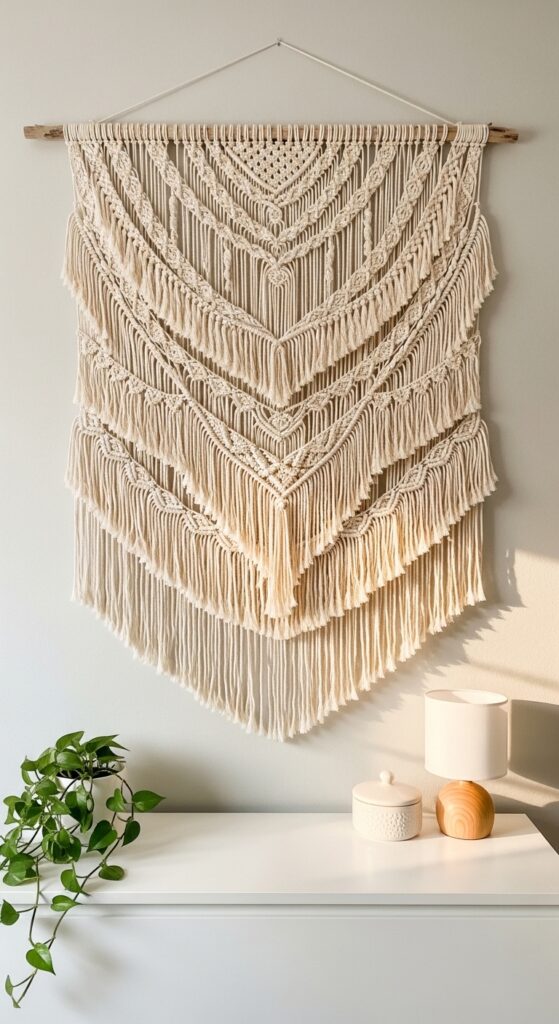
Vibe: Artisan-made and deeply textured — this wall hanging is art that you can actually feel from across the room.
What makes it work: A large macramé piece solves one of nursery design’s biggest challenges — filling vertical wall space with something that adds warmth and texture without adding visual weight or requiring a gallery wall. The organic shapes and natural fiber introduce a handmade quality that no print or poster can replicate.
How to achieve it: Size matters dramatically here — the piece should be at minimum two-thirds the width of the furniture it hangs above. Too small, and it floats awkwardly. Look for macramé with varied knot depths and fringe lengths for the most visually interesting texture.
17. Neutral Rainbow Arched Shelf Display
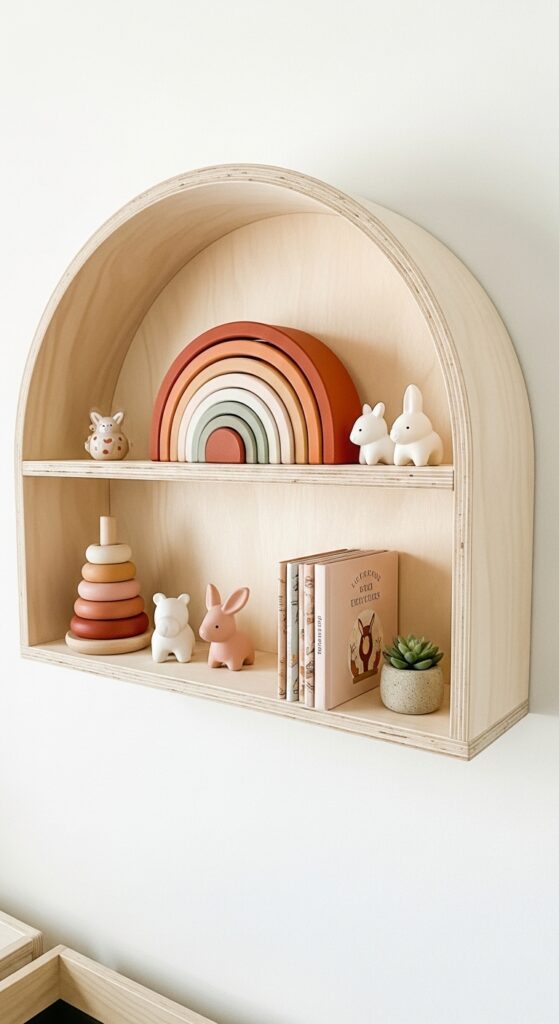
Vibe: Playful without being loud — a shelf that makes toys look like art and art look like play.
What makes it work: Arched shelves have the same silhouette softening effect as arch doorways — they introduce movement and warmth without the hard geometry of rectangular shelving. Displaying toys on shelves rather than in bins keeps them visible, which encourages independent play and reduces the “dump everything out” effect of toy boxes.
How to achieve it: Choose Montessori-palette toys in muted, earthy tones rather than primary colors for the display shelf — they photograph better and keep the nursery cohesive. Reserve primary-color toys for the toy basket below, out of frame.
💡 IKEA’s MOSSLANDA picture ledge in a paint-matched arch can replicate this look for under $20 with a little woodworking creativity.
18. Linen Crib Bedding in Warm Neutrals

Vibe: Naturally breathable and effortlessly beautiful — crib bedding that prioritizes safety and still looks like it belongs in an editorial.
What makes it work: Linen bedding in neutral tones is one of the most universally flattering choices in a nursery because it pairs with every wall color and furniture style without competing for attention. The natural slub texture of linen adds visual interest without pattern, and quality linen actually becomes softer with every wash.
How to achieve it: Stick to a fitted sheet and a single breathable blanket — safe sleep guidelines recommend keeping the crib otherwise bare. Look for GOTS-certified organic linen or cotton for the closest-to-skin fabrics, which matters most for newborns with sensitive skin.
19. Peel-and-Stick Wallpaper in a Woodland Pattern
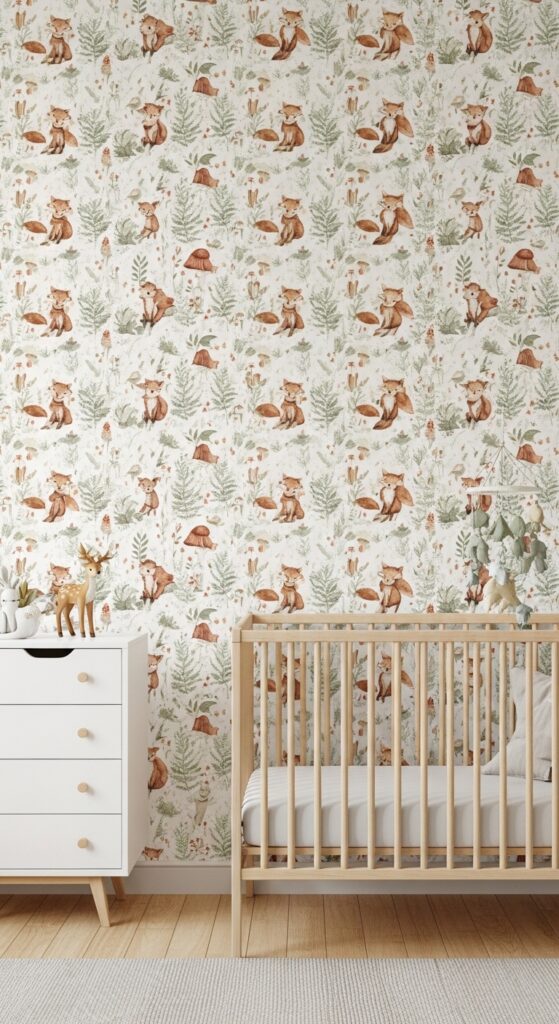
Vibe: Step into a quiet forest at dawn — small, careful creatures amid ferns and mushrooms, painted just for your baby.
What makes it work: A woodland pattern in muted, earthy tones rather than saturated cartoon colors reads as genuinely sophisticated nursery design. The illustrated style — especially hand-drawn or watercolor-rendered animals — brings warmth and uniqueness that solid paint walls simply can’t offer.
How to achieve it: Peel-and-stick wallpaper from Society6, Chasing Paper, or Tempaper can be applied and removed without damaging walls — ideal for renters or for parents who anticipate redecorating when children grow. Apply from top to bottom, using a squeegee to eliminate air bubbles as you go.
20. Woven Jute Rug with a Plush Play Mat Layer
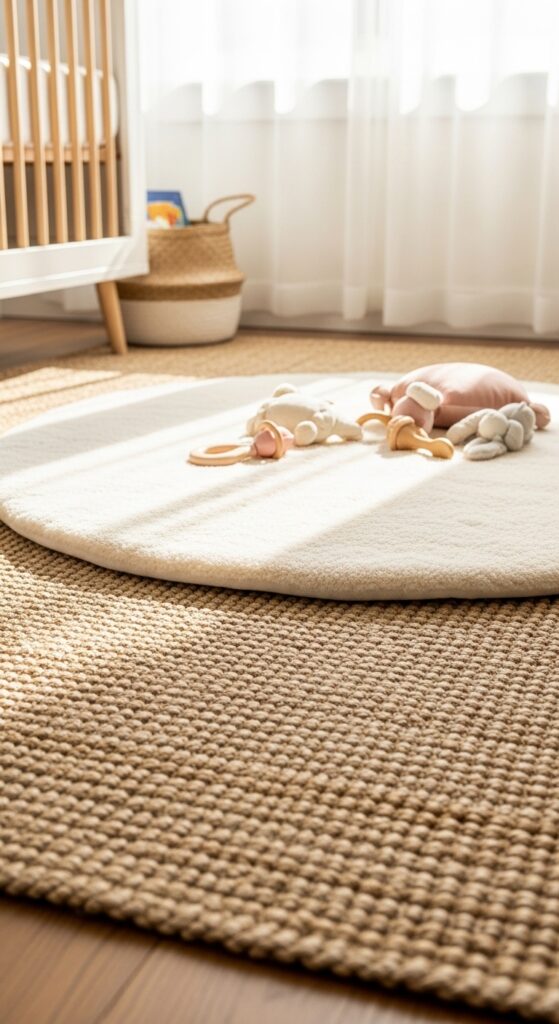
Vibe: Grounded and utterly cozy — the kind of floor space that invites you to sit down and stay a while.
What makes it work: Layering rugs solves one of the nursery’s practical challenges — jute is beautiful but rough for bare baby skin, while plush mats are practical but visually flat. Layering gives you the natural texture and room-anchoring size of jute with the softness and cushioning of a play mat exactly where it matters most.
How to achieve it: Size the jute rug to extend 18–24 inches beyond the crib and furniture footprint. Layer a round or rectangular plush mat (minimum 4’x6′ for adequate play space) centered in the open floor area. Use a rug pad beneath the jute to prevent sliding on hardwood floors.
21. Boho Tassel Garland Strung Across the Wall
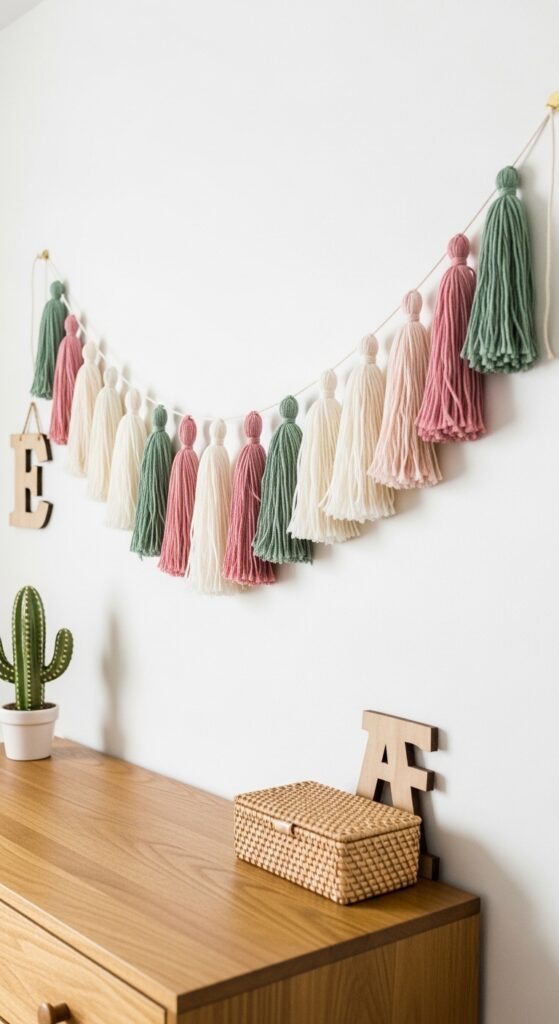
Vibe: Festive but never loud — a garland that brings a quiet, boho celebration to the wall every single day.
What makes it work: Horizontal garlands activate the middle zone of a wall — the space above furniture but below the ceiling — which is frequently overlooked in nursery design. The rhythmic repetition of tassel shapes creates a cohesive decorative element that’s more dynamic than a single piece of art but less permanent than wallpaper.
How to achieve it: DIY tassel garlands from embroidery floss or yarn cost under $10 and take about 90 minutes. Cut 20–30 strands per tassel, fold in half, tie the loop end, and knot onto a linen cord. Alternate two or three colors in a pattern for the most visual polish.
💡 Etsy shops offer beautifully made tassel garlands in custom color palettes for $20–40 — worth it if DIY isn’t your thing.
22. Cloud-Shaped Nightlight on the Dresser
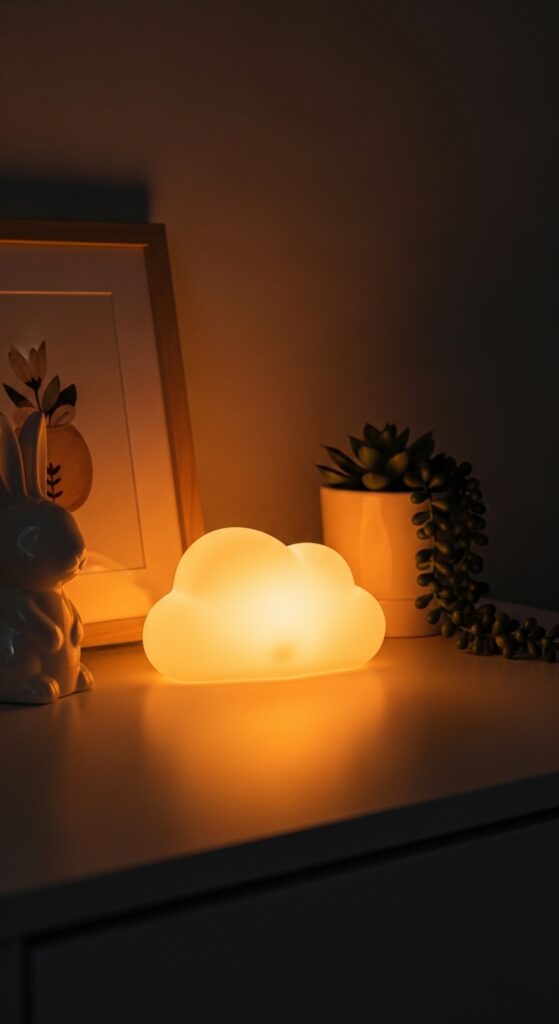
Vibe: Like a tiny moon landed on the dresser — warm, quiet, and glowing with the softest possible light.
What makes it work: Amber-toned nightlights are significantly better for infant sleep than white or blue-toned lights because amber wavelengths don’t suppress melatonin production. A sculptural, design-forward shape means the nightlight functions as decor during the day and a sleep aid at night — pulling double duty beautifully.
How to achieve it: Look for silicone LED nightlights with adjustable brightness and a warm amber or red color temperature (2200K–2700K range). Avoid any nightlight that emits blue or white light for a sleep space — it actively works against infant sleep biology.
23. Fabric Storage Bins in Coordinated Colors
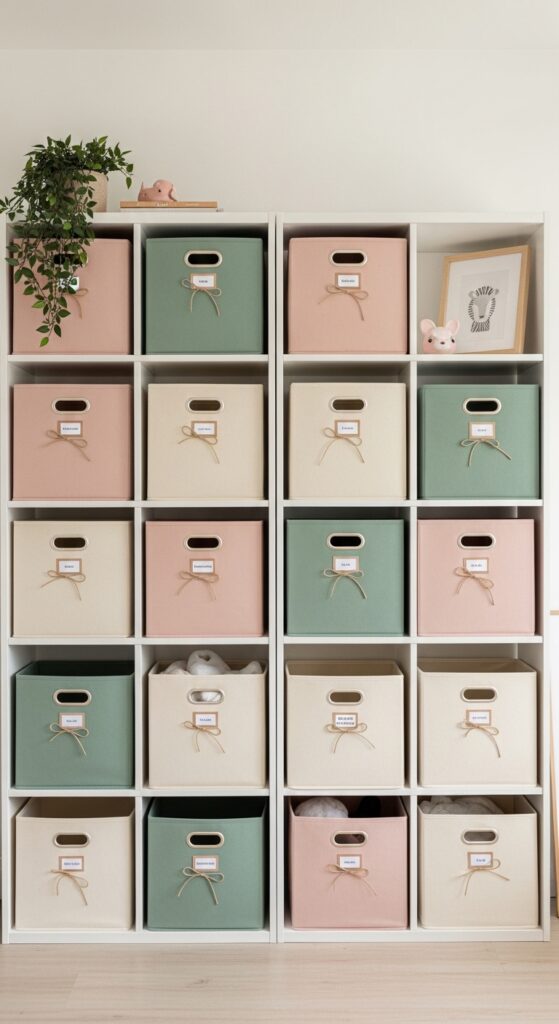
Vibe: Organized bliss — storage that’s so pretty you’d almost want to leave the shelving unit open all the time.
What makes it work: Matching fabric bins in a coordinated color palette transform utilitarian open shelving into a designed, cohesive feature wall. The soft edges of fabric bins also mean no sharp corners at toddler eye-level, which is both safer and visually softer than plastic alternatives.
How to achieve it: Choose two to three colors from your nursery palette for the bins and alternate or arrange them in a pattern across shelves. IKEA KALLAX shelving units are the standard base for this look — one or two units side by side create generous storage that grows with your child through the toddler years.
24. Personalized Birth Stats Print Above the Changing Table
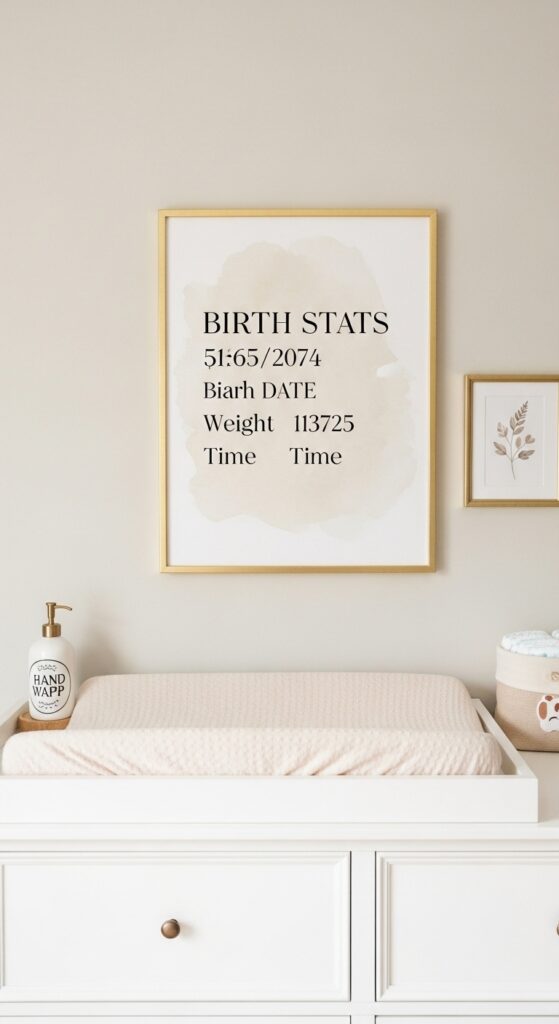
Vibe: The most personal art in the room — a beautiful record of the exact moment everything changed.
What makes it work: Birth stat prints serve as both meaningful keepsakes and functional wall decor, filling the critical eye-level space above the changing table with something personal and beautiful. A simple, typography-forward design on quality paper looks far more sophisticated than illustrated or heavily decorated versions.
How to achieve it: Etsy sellers offer customizable birth stat prints from $10–25, usually delivered digitally for home printing. Print on cardstock or matte photo paper at 8×10 or 11×14 inches, then frame in a simple gold, black, or natural wood frame. The result looks custom and considered.
25. Soft Stuffed Animal Display on a Low Bench

Vibe: Quiet, tender magic — the shelf that holds all the softness your baby will ever need.
What makes it work: A dedicated display spot for stuffed animals keeps them from accumulating chaotically in the crib (where they’re a safety concern anyway) and turns a collection into a curated, styled vignette. The low bench height also keeps animals accessible for toddlers during independent play.
How to achieve it: Edit ruthlessly — five to seven animals maximum for a display that reads as intentional. Choose a color-coordinated collection in muted, earthy tones for a cohesive look. A simple IKEA Knagglig crate or low Hemnes bench both work beautifully for this styling moment.
26. Mounted Wooden Airplane or Animal Sculpture
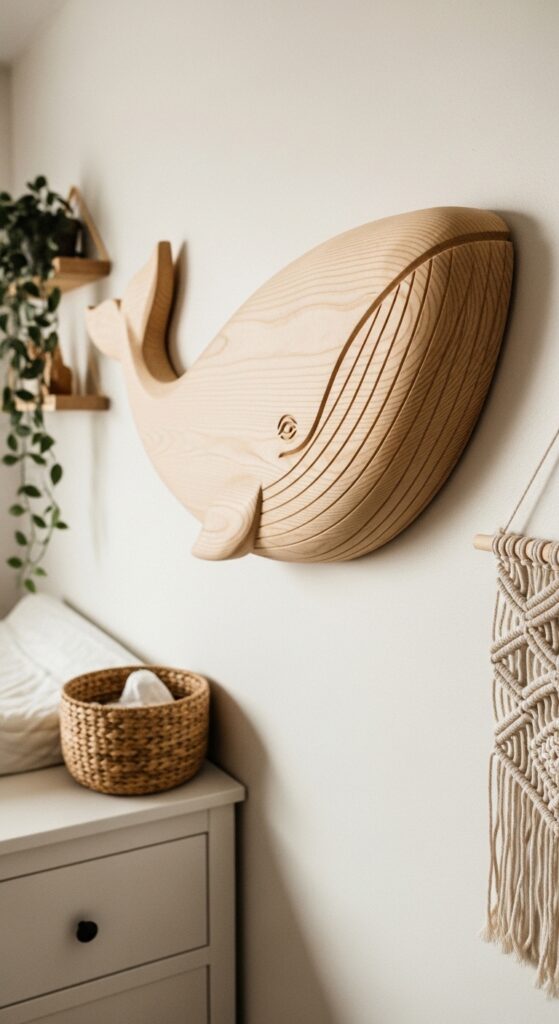
Vibe: Artisan, three-dimensional, and quietly spectacular — art that casts shadows and tells a story.
What makes it work: Three-dimensional wall sculptures create depth and shadow play that flat art cannot, making them especially visually interesting to newborns who are developing visual tracking. Carved wooden animals in particular carry a handmade quality that gives a nursery genuine soul — the sense that something was made with care for this child specifically.
How to achieve it: Search Etsy for “wooden wall sculpture nursery” — handmade carved animals range from $40–120 and represent some of the best value in nursery decor. Choose unfinished or oil-finished natural wood rather than painted versions to keep the organic warmth intact.
27. String Lights Behind Sheer Curtains
Vibe: Stardust through linen — the most effortlessly magical lighting trick in any nursery.
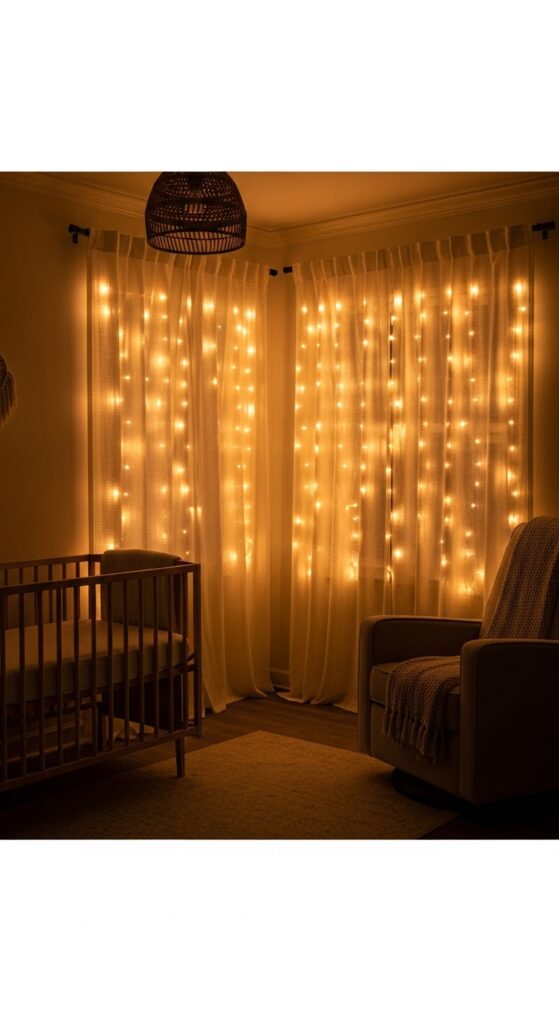
What makes it work: Diffusing string lights through sheer fabric eliminates the visual “busy-ness” of visible bulbs, creating an even, glowing warmth that feels far more sophisticated than bare string lights. The effect mimics the soft luminosity of expensive bespoke lighting at a fraction of the cost.
How to achieve it: Thread battery-operated or USB string lights through the curtain rod pocket or tape them flat against the wall behind the curtain panel. Use warm white (2700K or lower) rather than cool white — the difference in warmth and mood is enormous. Keep string lights as decorative only rather than primary lighting in the sleep space.
💡 USB-powered fairy lights with a smart plug timer automatically create this glow at dusk and switch off at bedtime.
28. Pastel Pom-Pom Garland Across the Ceiling
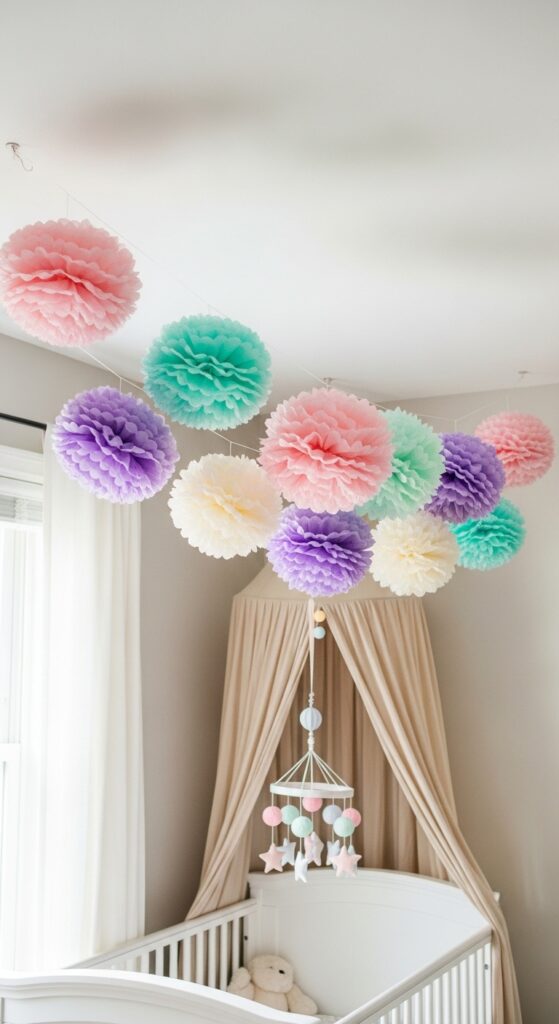
Vibe: A permanent celebration, strung above the crib like the room itself is always ready for a party.
What makes it work: Ceiling decor is one of the most underused dimensions in nursery design — and one of the most impactful for a baby’s visual development, since newborns spend the most time looking upward. Pom-pom garlands add color, softness, and dimensional movement to the ceiling without the weight or installation complexity of hanging fixtures.
How to achieve it: Tissue paper pom-poms are a 10-minute craft project per pom — fold, cut, and fluff layers of tissue paper, securing the center with wire. Hang from the ceiling with clear fishing line and small Command hooks. Make poms in three to four sizes for the most visually dynamic arrangement.
29. Lemon Tree or Citrus Branch Print for a Fresh, Modern Nursery
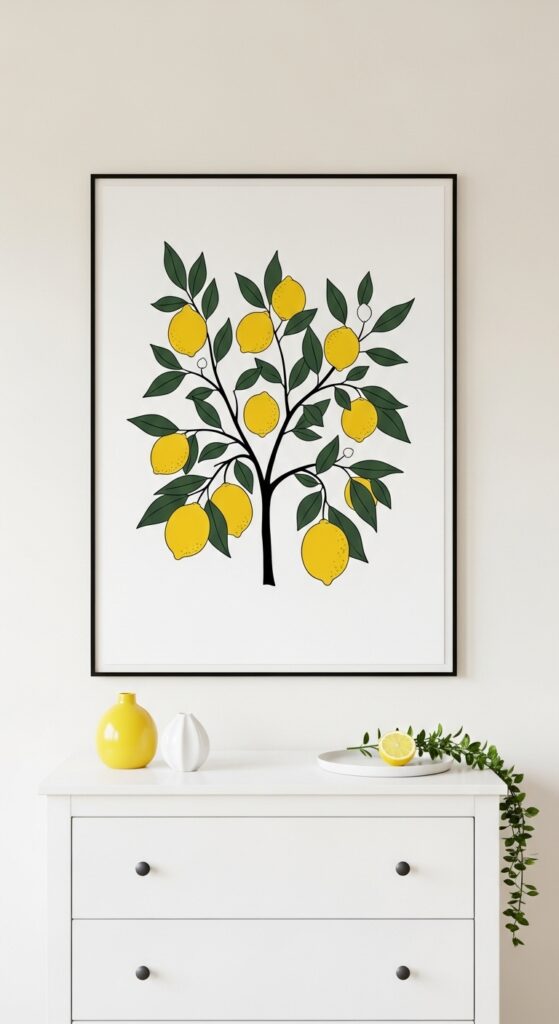
Vibe: Crisp, sunny, and unexpectedly modern — the freshest possible energy for a room that deserves a bright start.
What makes it work: Citrus prints have emerged as one of the strongest modern nursery trends because they introduce color and botanical freshness without leaning into traditional baby motifs. The high contrast of lemon yellow against white feels graphic and modern, bridging the gap between nursery and adult design aesthetic in a way that ensures the room still feels current as children grow.
How to achieve it: Look for large-format botanical prints at 18×24 or 24×30 inches for maximum visual impact — anything smaller reads as decorative rather than architectural. Frame in thin black or brass to keep the look clean and modern. One statement botanical print often delivers more impact than a busy gallery wall.
How to Start Your Nursery Decor Transformation
Begin with your walls — not your furniture. Paint color or wallpaper sets the entire emotional tone of a nursery before a single piece of furniture arrives, and it’s far easier to choose furniture to complement a finished wall than to repaint around existing pieces. Pick one anchor color first, whether that’s a soft terracotta, a muted sage, or a classic warm white, and build everything else from there.
The most common nursery decorating mistake is buying everything at once before you have a clear vision. Instead, invest in two or three hero pieces — a quality crib, a glider you genuinely love, and a rug that anchors the room — and fill in accessories gradually. This approach also saves money and prevents the “too many ideas fighting for attention” look that can make nurseries feel chaotic rather than curated.
Budget-wise, splurge on the furniture that gets used daily (the crib and glider) and save on decorative elements like art, garlands, and accessories, which can be sourced from Etsy, IKEA, and secondhand shops for a fraction of retail prices.
Expect the nursery to evolve. Most parents find they rearrange, add, and edit for the first three months after baby arrives, discovering what actually functions well in the room. Leave room for that organic process — a nursery doesn’t have to be perfect on day one.
Frequently Asked Questions
What is the best color for a nursery?
Soft, muted colors in the cool-neutral or warm-neutral family consistently perform best for nurseries. Colors like dusty sage, warm white, muted terracotta, dusty blue-grey, and soft blush create calm, restful environments that support infant sleep. Avoid highly saturated or primary-color walls, which can be visually overstimulating. For the most versatile starting point, Benjamin Moore’s “White Dove” or Sherwin-Williams “Accessible Beige” pair beautifully with nearly any accent color or furniture style.
How do I make a small nursery feel bigger?
Mount curtains at ceiling height rather than window frame height — this single change adds at least a foot of visual height to any room. Choose furniture with legs rather than pieces that sit flush to the floor, which allows light to travel beneath them and creates a sense of openness. A large mirror on one wall doubles the perceived depth of the space. Finally, edit accessories ruthlessly — a few well-chosen pieces always read larger and more intentional than a crowded room.
Is nursery decor expensive?
It doesn’t have to be. The most impactful nursery investments are a quality crib ($200–600), a comfortable glider ($300–800), and a safe mattress ($100–250). Decorative elements — wall art, garlands, mobiles, fabric bins, rugs — can be sourced almost entirely from Etsy, IKEA, Target’s Hearth & Hand line, or secondhand markets for a total accessory budget under $200. DIY elements like painted shiplap, tissue paper pom-poms, and handmade tassel garlands can bring that number down further.
What nursery decor styles are most popular right now?
The dominant nursery aesthetic in 2024–2025 leans heavily organic and earthy — rattan furniture, neutral palettes of cream and terracotta, botanical prints, natural wood elements, and handmade textiles like macramé and woven baskets. Celestial themes (moons, stars, and constellations) remain consistently popular, as do woodland animal themes in muted, illustrated styles. The shift away from primary-color, character-branded nurseries toward more sophisticated, design-led spaces continues to accelerate on Pinterest and Instagram.
How do I choose a nursery theme without it looking dated?
Choose a mood rather than a theme. “Earthy and organic” ages far better than “safari animals” because it’s rooted in texture and color rather than specific illustrated characters that children may outgrow quickly. If you love animals, express it through one or two sculptural or illustrated pieces rather than committing every element to that motif. Stick to a palette of three to four colors maximum, and let texture — linen, rattan, macramé, wood grain — do the heavy visual lifting rather than pattern or novelty items.
Ready to Create Your Dream Nursery Space?
These 29 adorable nursery decor ideas cover every corner, every style, and every budget — from the ceiling garland down to the layered rug on the floor. The most important thing to remember is that you don’t need all 29 ideas in one room; you need the five or six that feel undeniably, personally right. Save the ones that make your heart skip. Pin the images that you keep returning to. That intuitive response is your design direction speaking clearly.
Start with one change — a wall color, a canopy above the crib, or a piece of art that makes you smile — and let the room build from there. The most beautiful nurseries are never designed in a single weekend; they’re layered over time, shaped by what your family actually loves and lives with. Your baby’s room doesn’t have to be perfect. It just has to feel like yours.