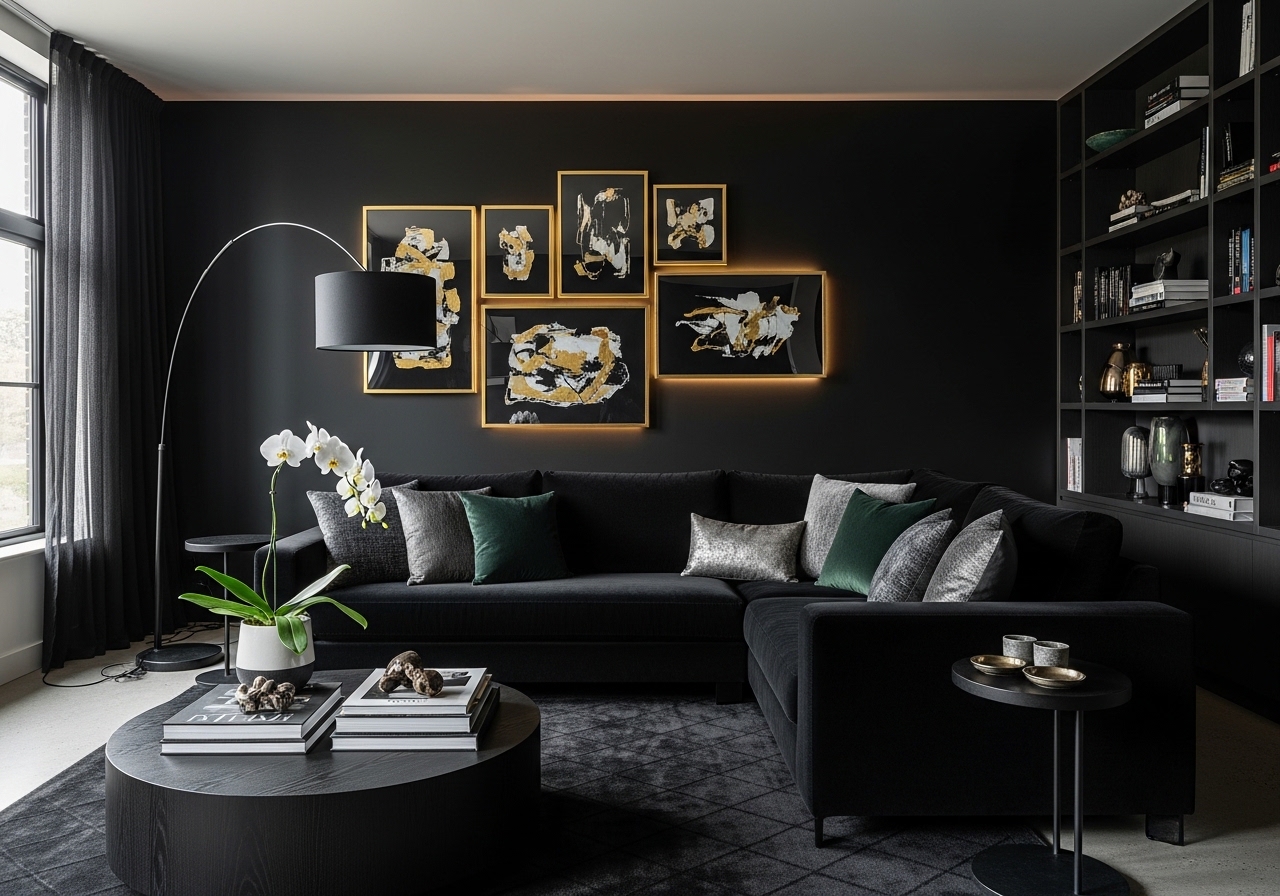
A black sofa is one of the boldest, most confident pieces of furniture you can place in a living room — and yet, in the right hands, it becomes the anchor that makes everything else sing. Far from the cold or uninviting reputation it sometimes carries, a black sofa styled thoughtfully is warm, dramatic, endlessly versatile, and genuinely timeless in a way that trend-driven beige sectionals simply never are. These 26 black sofa living room design ideas cover every aesthetic from moody maximalist to bright Scandinavian minimalist, proving that this one piece of furniture works harder and more beautifully than almost any other. Let’s explore every one of them.
Why Black Sofa Living Room Design Works So Well
The black sofa succeeds where other statement furniture pieces sometimes fail because it operates as a true neutral. In color theory, black grounds every other color in a room — it anchors a palette the way a picture frame anchors a painting, defining the edges so everything within them reads with more clarity and intention. A black sofa doesn’t compete with your art, your rug, your cushions, or your walls. It gives them a stage.
The materials available in black upholstery make an enormous difference to the feeling of a room. A black velvet sofa reads as lush and maximalist; the same silhouette in black linen feels relaxed and Scandinavian; in leather, it becomes urban and architectural. This material versatility means the black sofa is genuinely style-agnostic — it belongs equally in a Parisian apartment, a Brooklyn loft, a Japanese-influenced minimalist space, and a richly layered English drawing room.
Right now, black sofa living rooms are having a significant cultural moment on Pinterest, driven by a broader design movement away from the “greige everything” aesthetic of the early 2020s toward spaces with genuine contrast, depth, and personality. Searches for “dark living room aesthetic,” “black sofa styling,” and “moody living room design” have grown sharply, reflecting a collective appetite for interiors that feel curated and bold rather than safe.
Perhaps most importantly, the black sofa solves a very practical problem: it hides wear, pet hair in dark tones, and the inevitable marks of a lived-in life better than almost any other upholstery color. Beauty and practicality, in perfect alignment.
Black Velvet Sofa With Jewel-Tone Cushion Layering
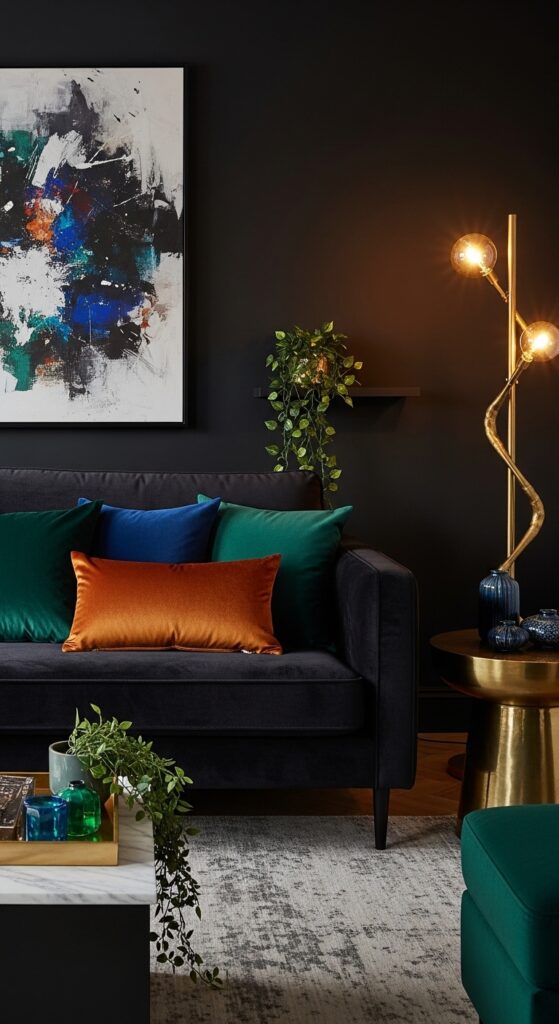
Vibe sentence: This living room feels like the inside of a jewel box — rich, layered, and completely, unapologetically opulent.
What makes it work: Black velvet acts as the perfect backdrop for jewel tones because its deep, light-absorbing surface makes every color placed against it appear more saturated and luminous. The principle at play is simultaneous contrast — colors always appear more vivid against black than against white or neutral backgrounds. Layering cushions in three distinct jewel tones creates a composition rather than a collection.
How to achieve it: Style the sofa with an odd number of cushion groupings — try two large 22-inch cushions in emerald, two medium in sapphire, and one lumbar in amber. Choose cushion covers in velvet, silk, or a velvet-silk blend to maintain the tactile luxury register of the sofa itself. All cushion covers should share the same fabric family for cohesion.
💡 Vary cushion sizes but keep all covers in the same fabric weight — mixing velvet with cotton on a velvet sofa creates a jarring textural mismatch.
Black Leather Sofa in a Warm Caramel and Walnut Interior
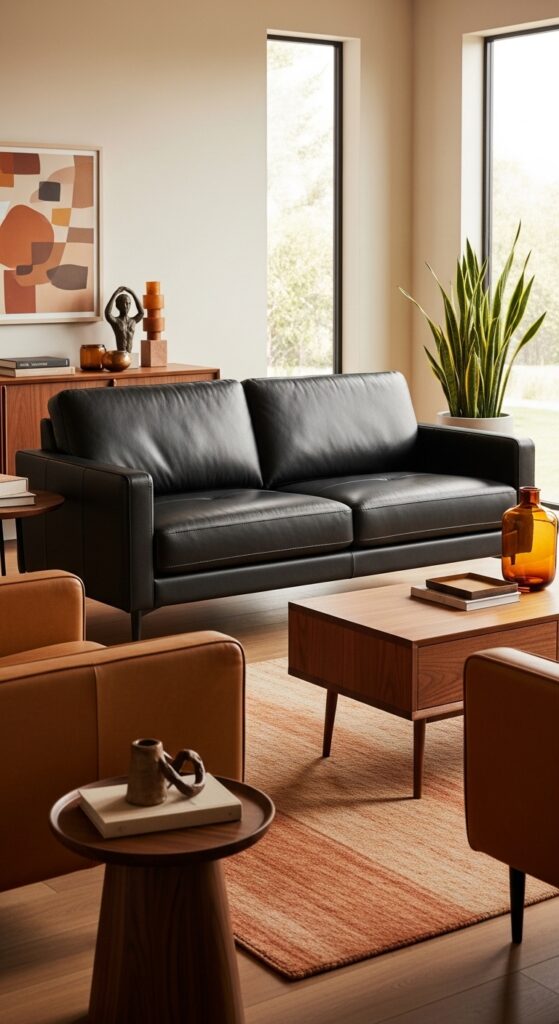
Vibe sentence: Black leather surrounded by warm caramel and walnut tones feels less like furniture and more like a perfectly composed still life.
What makes it work: The pairing of black leather with warm caramel leather and walnut wood works on the principle of tonal family — all three materials share warm brown undertones, which means the black reads as part of the same warm palette rather than a contrasting interloper. The slight sheen of full-grain leather catches the warm afternoon light, preventing the sofa from ever feeling heavy or absorbing.
How to achieve it: Look for a black leather sofa with visible slim legs in black metal or walnut — exposed legs are essential to keep the visual weight of the piece light enough to work in a warm, layered interior. Pair with a wool rug in amber, terracotta, or rust tones to bring warmth to the floor plane.
Black Sofa Against a Warm White Wall With Oversized Art
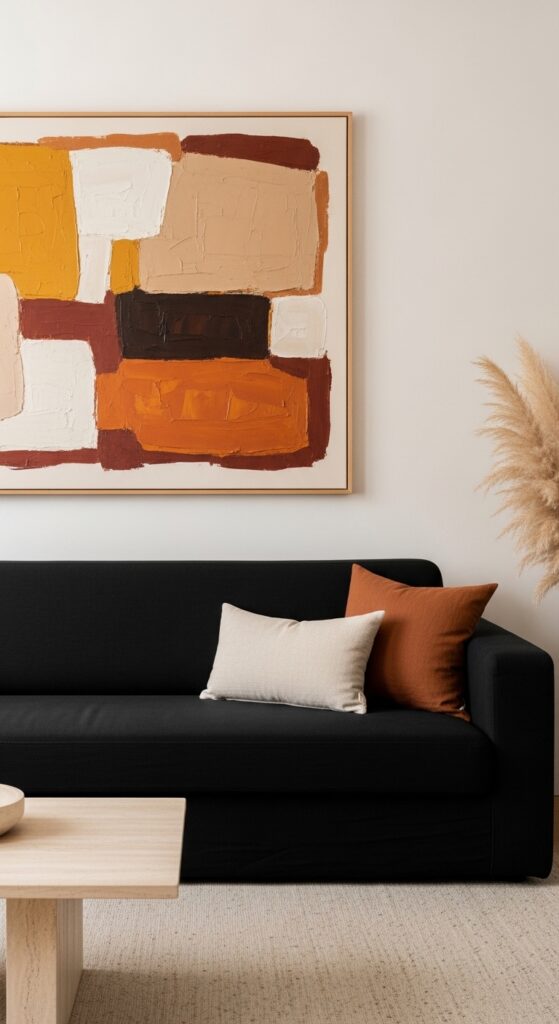
Vibe sentence: One black sofa, one great painting, one warm white wall — proof that restraint, done well, is the most powerful design statement of all.
What makes it work: Centering a black sofa against a warm white wall creates the highest possible contrast backdrop for artwork — the dark sofa and light wall together form a two-tone composition that makes the art above read with extraordinary clarity and presence. The key design rule here is scale: the artwork should be at minimum as wide as the sofa’s seat cushions, and ideally as wide as the full sofa back.
How to achieve it: Hang art so its center sits at 57–60 inches from the floor (standard gallery hanging height) and maintain a precise 6-inch gap between the top of the sofa back and the bottom of the frame. Source oversized abstract canvases from Society6, Minted, or local art markets — original work isn’t necessary; a well-chosen print in a quality frame achieves the same effect.
💡 Have art professionally printed on canvas at a local print shop — a 40×50 inch canvas print typically costs $80–$150 and looks indistinguishable from original work at room distance.
Moody Dark Living Room With Black Sofa and Forest Green Walls

Vibe sentence: Dark green walls and a black sofa create the kind of room that pulls you in and doesn’t let you leave — and you won’t want to.
What makes it work: Forest green and black is one of the most naturally harmonious dark combinations in interior design — both colors share deep, cool-leaning undertones while the green introduces a natural, organic warmth that prevents the palette from feeling stark. The effect is often described as “living in a forest at night” — immersive, enveloping, and genuinely atmospheric.
How to achieve it: Use Farrow & Ball “Studio Green” or “Hornbeam,” or Benjamin Moore “Tarrytown Green” for walls. The key is keeping all other materials warm — brass, walnut, rust wool, jewel-toned rugs — to prevent the dark palette from reading as cold. Install dimmer switches on all lighting for maximum atmospheric control.
Black Sofa With Blush Pink and Cream Accents
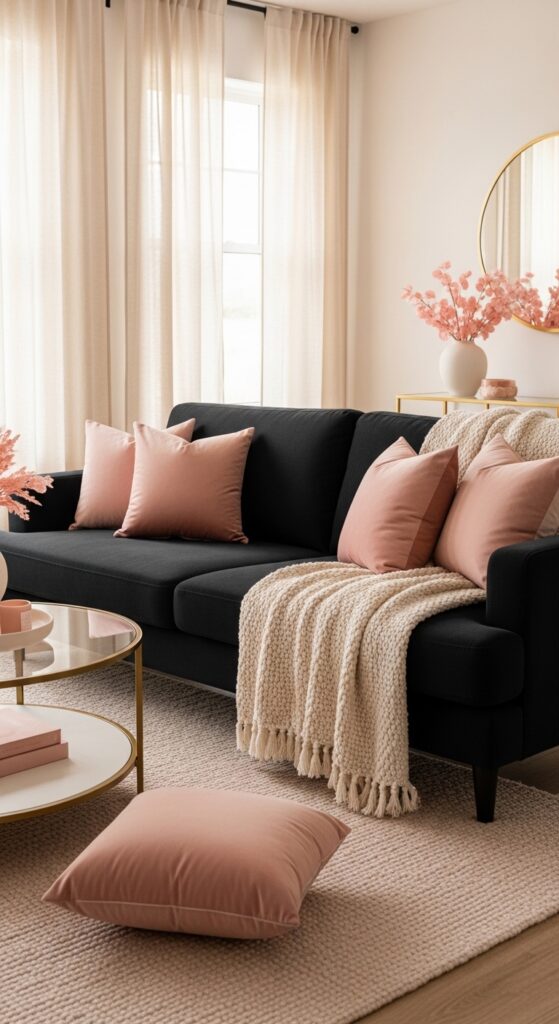
Vibe sentence: Black and blush is the combination that shouldn’t work on paper and then absolutely, completely does in person.
What makes it work: The pairing succeeds because blush pink is tonally warm and carries a creamy softness that prevents any sense of coldness next to black. The contrast is high but not harsh — blush is simply too gentle and warm to create a jarring contrast with even a deep matte black. The addition of cream textiles as a bridge tone further softens the transition between the two anchors.
How to achieve it: Style a minimum of three blush elements against the black sofa — cushions, rug, and a throw or vase — to make the color choice feel deliberate rather than accidental. Choose blush tones with warm peachy undertones rather than cool lilac-leaning pinks, which can look cold against black upholstery.
Black Sofa in a Bright White Scandinavian Living Room

Vibe sentence: In a room this white and this quiet, a black sofa doesn’t just sit — it speaks.
What makes it work: In a Scandinavian white-on-white interior, the black sofa functions as the room’s sole graphic element — the one strong visual statement against which everything else is measured. The restraint of the surrounding space amplifies the sofa’s presence enormously, turning a piece of furniture into an architectural feature. This is the principle of negative space applied to interior design.
How to achieve it: Keep every other material in the room within a narrow range of white, cream, and natural oak. The black sofa must be the only dark element — one black cushion cover or one black side table can work, but avoid introducing a second large dark piece, which would break the deliberate singularity of the design.
💡 In a high-contrast white room, choose a black sofa with natural wood or white-painted legs — black legs on a black sofa can make the piece look heavier than intended.
Black Sofa With Warm Terracotta and Earthy Tones

Vibe sentence: Black against terracotta is the color combination of the earth itself — volcanic stone and sun-baked clay, together in a room.
What makes it work: Terracotta and black share deep, warm undertones — terracotta is essentially burnt earth, and matte black absorbs the same warm light spectrum. Together they create a palette that feels primal and organic, drawing on the materials of natural landscape rather than the color wheel. The warmth of the terracotta entirely prevents the black from reading as cold or stark.
How to achieve it: Paint walls in a terracotta plaster or limewash finish using Portola Paints Roman Clay in “Desert,” “Sonoma,” or “Pompeii.” Pair with a handwoven wool rug in rust or burnt sienna, and introduce copper or bronze metalwork — never chrome or silver, which would immediately cool the palette.
Black Sofa in a Maximalist Gallery Living Room
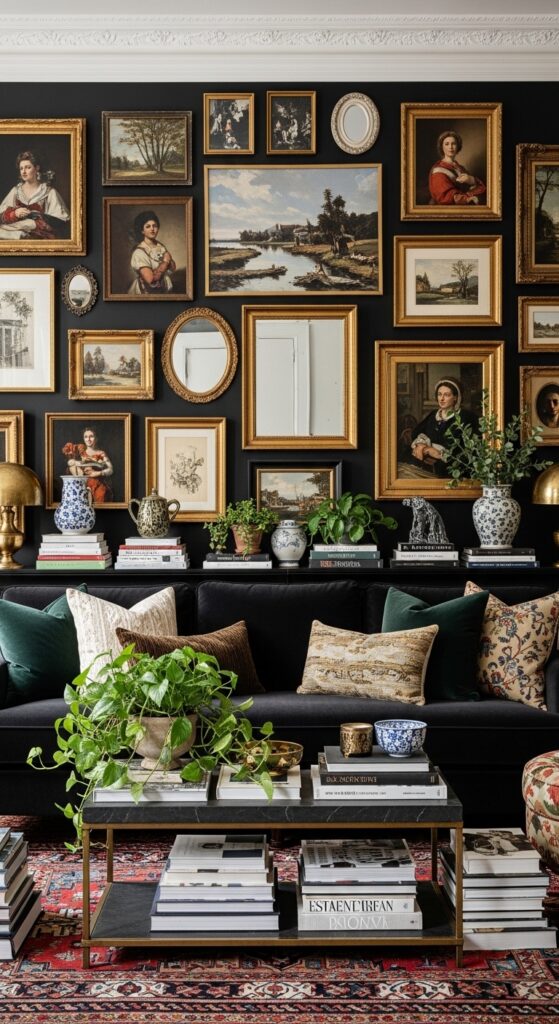
Vibe sentence: This room says “collector, traveler, reader” — and the black sofa is the calm, dark eye at the center of a beautifully curated storm.
What makes it work: In a maximalist room, the black sofa functions as a visual anchor — the one element consistent enough in its simplicity and darkness to prevent the richness of the surrounding decor from tipping into chaos. The gallery wall works behind the sofa because the sofa’s dark horizontal mass provides a grounding baseline from which the art can ascend vertically.
How to achieve it: Build the gallery wall starting from the center and working outward, keeping the bottom row of frames 6–8 inches above the sofa back. Mix frame finishes deliberately — antique gold, matte black, and natural wood together — but keep a consistent mat border color (warm white) across all framed works to unify the eclectic mix.
Black Sofa With Natural Rattan and Woven Textures
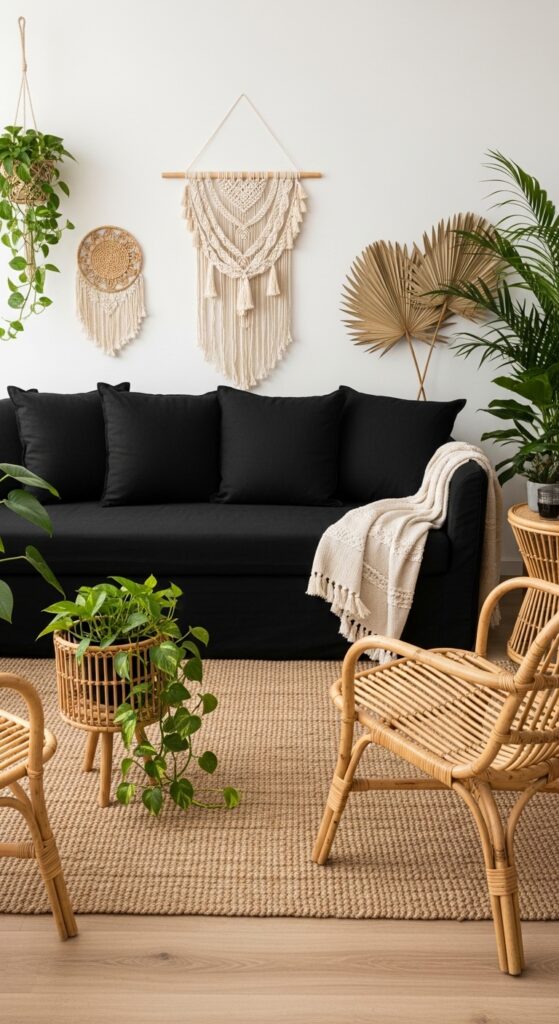
Vibe sentence: Black linen against natural rattan and jute creates a contrast that feels less designed and more discovered — like a room that assembled itself organically.
What makes it work: The juxtaposition of dark matte black with light natural fibers (rattan, jute, cotton, linen) creates a high-contrast but completely organic palette. All of these materials — whether dark or light — share an honest, unprocessed quality that makes them feel naturally at home together. The warmth of the natural tones prevents the black from dominating.
How to achieve it: Pair a black linen or cotton canvas sofa with rattan or cane accent chairs in natural (un-painted) finish. Layer a jute or sisal rug as the floor anchor and bring in at minimum three plant varieties at different heights — trailing, mid-level, and tall — to complete the organic, living quality of the space.
Black Sofa With Bright Mustard Yellow Accents
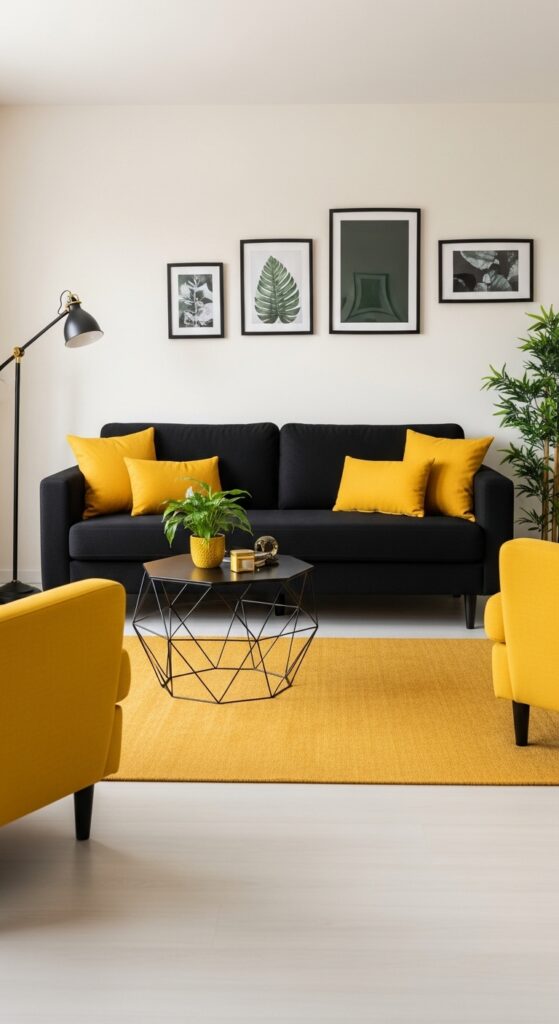
Vibe sentence: Black and mustard yellow is the living room equivalent of a perfectly tailored suit with a pocket square — graphic, confident, and completely put together.
What makes it work: Mustard yellow and black is a classic chromatic pairing — the warmth and saturation of mustard creates maximum visual impact against the darkest possible neutral. The key is using mustard yellow consistently across at least three elements (cushions, rug, and one accent chair or throw) so it reads as a deliberate palette choice rather than a single accent that accidentally survived.
How to achieve it: Choose mustard tones with warm ochre undertones rather than bright lemon-yellow, which reads as cool and graphic rather than warm and welcoming. Farrow & Ball “Babouche” or Benjamin Moore “Goldfinch” are excellent wall reference points if you want to bring the mustard onto the walls as well.
💡 One mustard yellow cushion is an accident; three mustard elements is a design decision. Always repeat an accent color in at least three places.
Low-Profile Japanese-Inspired Black Sofa Interior
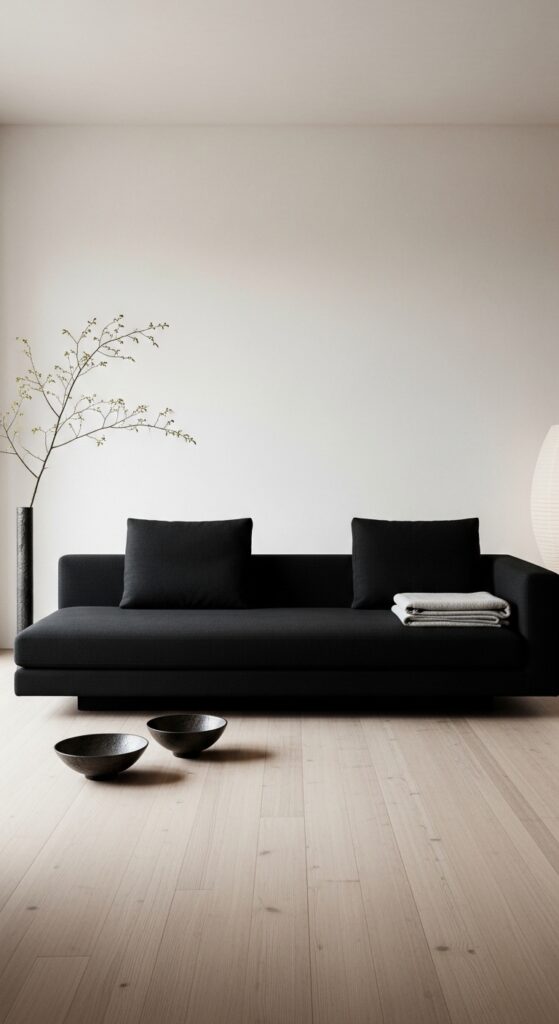
Vibe sentence: A room this quiet and this considered makes the act of sitting feel almost ceremonial.
What makes it work: Low-profile furniture in a Japandi or Japanese-influenced interior works by lowering the visual center of gravity — everything in the room feels anchored, calm, and deliberately close to the earth. The black sofa at near-floor height reads as a dark, grounding plane rather than a floating piece of furniture, creating a sense of rootedness and stillness.
How to achieve it: Look for platform-style sofas with a seat height of 14–17 inches (standard is 18–20 inches) — the difference is immediately visible. Keep all other furniture in the room similarly low-profile. Avoid any decorative accessory above eye level; in a truly Japandi space, the ceiling and upper wall remain completely clear.
Black Sofa in an Industrial Loft With Exposed Brick
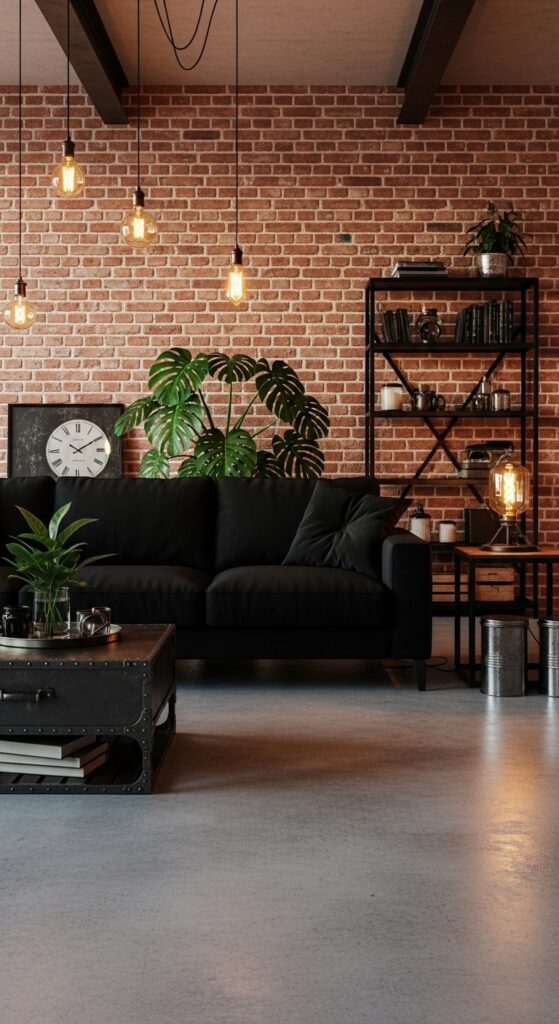
Vibe sentence: A black sofa against exposed brick in a loft space feels like the opening scene of every great city novel ever written.
What makes it work: The warmth of red or warm-toned brick against a black sofa creates a naturally beautiful material contrast — rough and smooth, warm and dark, ancient and contemporary. The brick’s irregular surface texture is amplified by the Edison bulb warmth, creating a living, textured backdrop that no painted wall can replicate.
How to achieve it: If your space doesn’t have genuine exposed brick, thin brick slip veneers (Reclaimed Brick Slips from specialist suppliers) applied to a single feature wall achieve an identical visual effect. Keep industrial accessories consistent — black steel, aged brass, raw concrete, and dark walnut work together naturally in this aesthetic.
Black Sofa With Sage Green Walls and Warm Wood
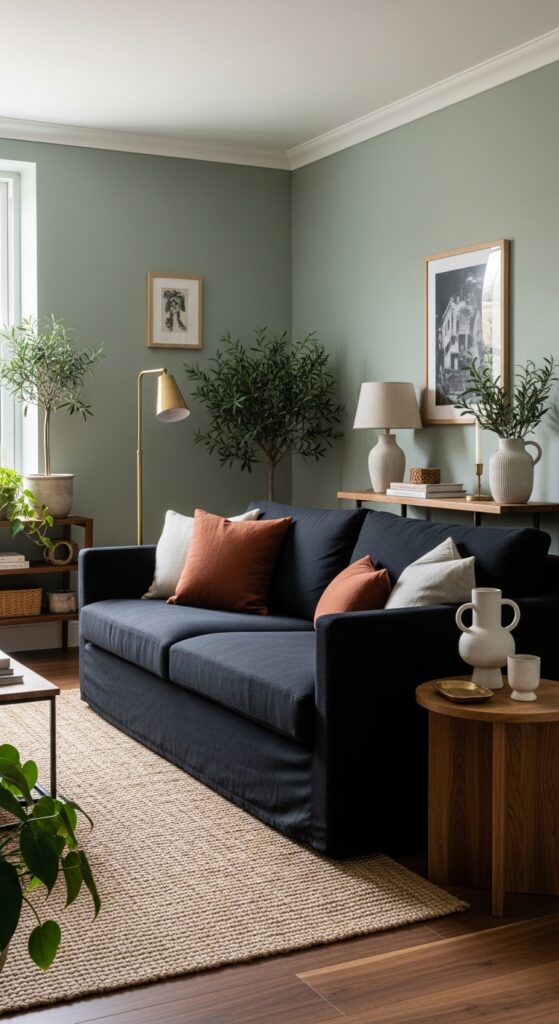
Vibe sentence: Sage green walls and a black sofa feel as natural together as bark and leaf — deeply calm, organic, and beautifully considered.
What makes it work: Sage green and black share an organic quality — both are deeply rooted in nature’s palette — which is why they feel genuinely harmonious rather than merely contrasting. Sage green walls push the black sofa forward visually while simultaneously warming it, preventing the dark upholstery from appearing to recede into shadow.
How to achieve it: Try Farrow & Ball “Mizzle,” “Mist,” or “Card Room Green,” or Benjamin Moore “Saybrook Sage” for the walls. The critical supporting element is warm wood — walnut flooring, an oak side table, a teak shelf — which bridges the dark sofa and the organic wall color into a cohesive palette.
Black Sofa With Layered Neutral Textures
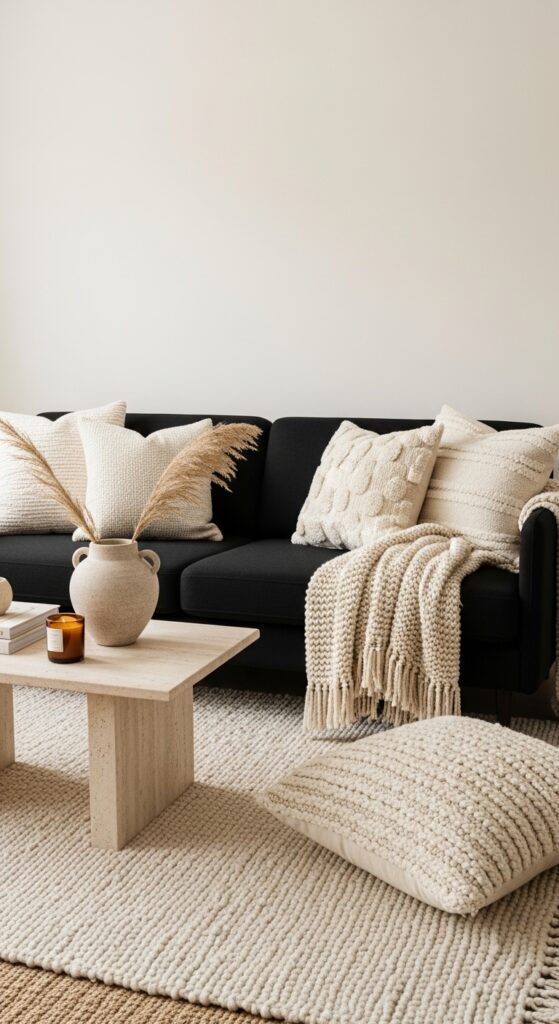
Vibe sentence: When every other element in the room is a warm, textured neutral, the black sofa stops being furniture and starts being architecture.
What makes it work: Surrounding a black sofa with exclusively warm, textured neutrals removes all color competition and shifts the design focus entirely onto surface texture — the difference between bouclé and linen, chunky knit and woven jute. This is a masterclass in tonal dressing, where the absence of color forces the eye to engage with material quality instead.
How to achieve it: Choose cushion covers exclusively in natural fibers — bouclé, linen, chunky wool knit, and cotton canvas — in a range of cream to warm oatmeal tones. The key is texture variety at consistent color temperature. Every element should be warm-white to deep oatmeal; introduce no bright white and no cool gray.
💡 Add a single deep-toned ceramic vase or amber glass object as the room’s only “color” moment — it will read as richly intentional against the tonal backdrop.
Black Sofa With Monochrome Black and White Styling
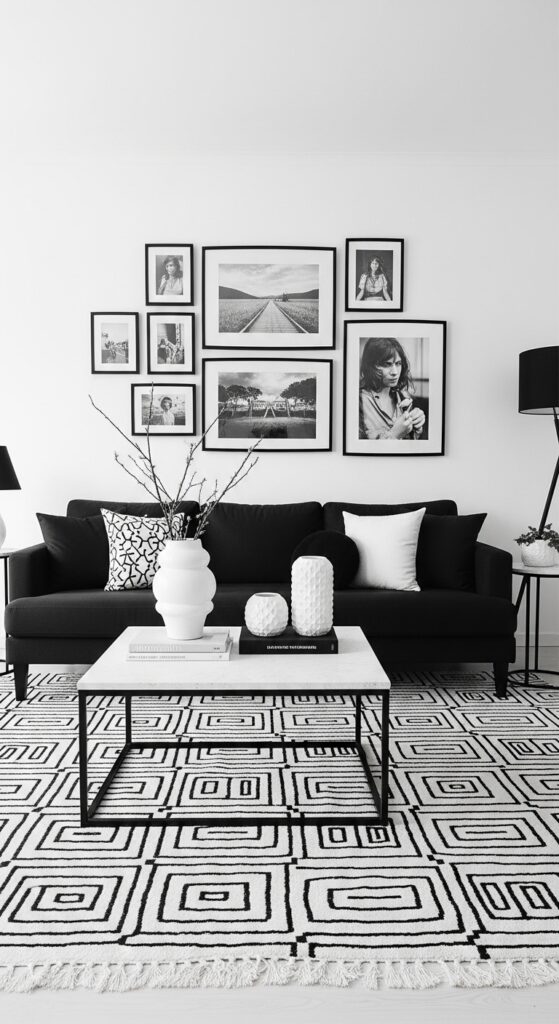
Vibe sentence: A fully committed black-and-white living room is the interior design equivalent of a perfect photograph — graphic, timeless, and deeply resolved.
What makes it work: A monochrome black-and-white room succeeds when the commitment is total — any warm beige or cream element introduced into the palette immediately breaks the graphic tension that makes the design compelling. The key is maintaining genuine contrast: bright white and true black, with mid-tone gray used sparingly as a transition.
How to achieve it: The most critical element in a monochrome room is pattern — a geometric or organic black-and-white rug provides the visual complexity that prevents the palette from feeling flat or clinical. Choose a rug with an organic, hand-drawn quality rather than a mechanical repeat, which will soften the graphic nature of the palette.
Black Sofa With Deep Burgundy and Gold Accents
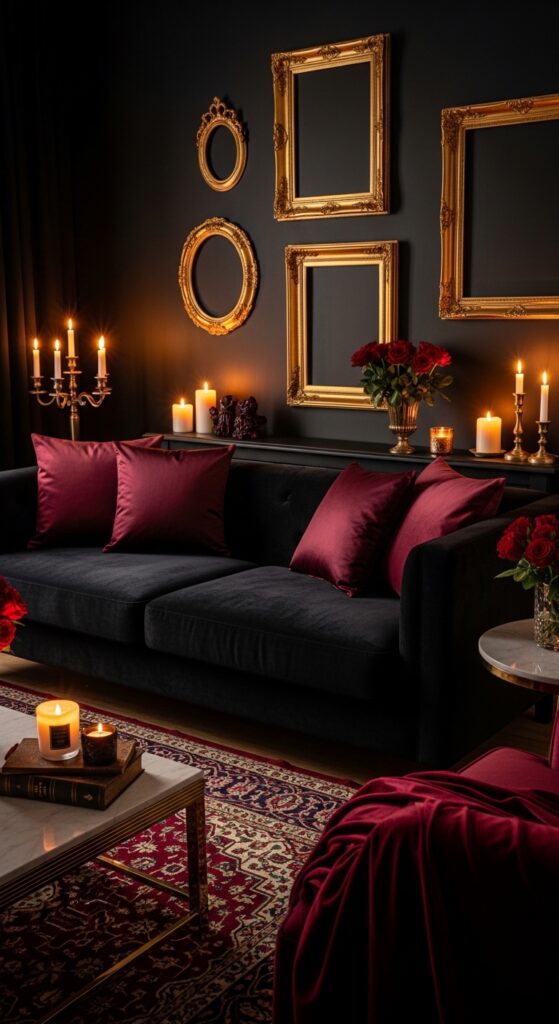
Vibe sentence: Black velvet and deep burgundy by candlelight is a combination so rich it should probably require a permission slip.
What makes it work: Burgundy and black share a similar depth of tone — both absorb light generously — which means the combination creates a layered darkness rather than a stark contrast. Gold accents act as the essential counterpoint, introducing reflective warmth that prevents the deep palette from feeling heavy or oppressive. This is the classic Renaissance interior palette translated into a contemporary living room.
How to achieve it: Introduce burgundy in at minimum three places: cushion covers, a section of the rug, and a smaller accessory like a candle or book cover. Use genuinely warm antique gold rather than bright modern yellow-gold — Venetian plaster finishes, aged brass candlesticks, and ornate gold frames all carry the warm, aged quality the palette requires.
Black Sofa Paired With a Statement Arch Floor Lamp
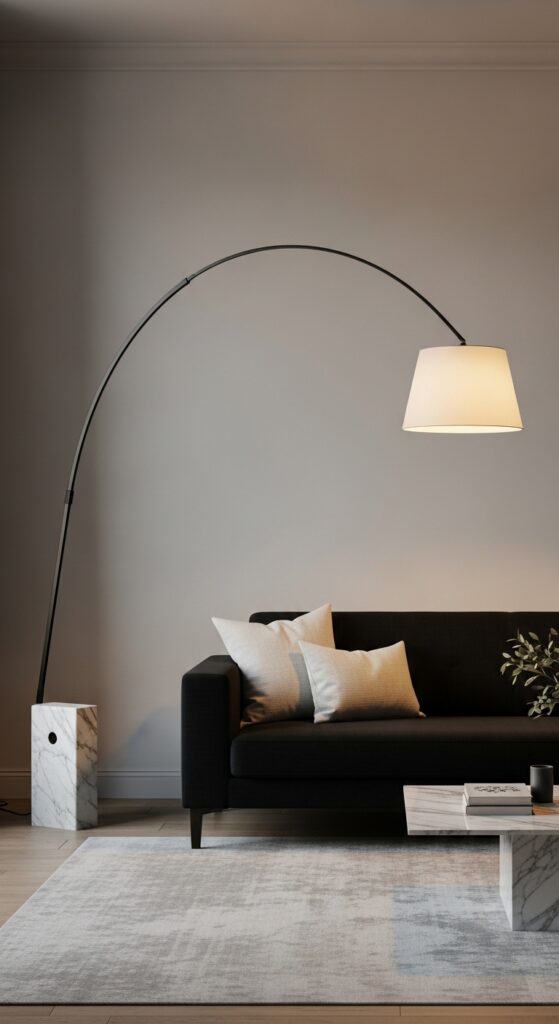
Vibe sentence: The right floor lamp above a black sofa doesn’t just provide light — it draws a line through the air that turns the seating area into a room within a room.
What makes it work: An oversized arc floor lamp creates a defined overhead boundary for the sofa seating zone, functioning like a partial ceiling that makes the seating feel more intimate and purposeful within a larger living room. The visual tension of the sweeping steel arm above the dark sofa — curved against angular, light against dark, marble against fabric — is genuinely sculptural.
How to achieve it: The marble base is essential for visual balance — a small or lightweight base on an oversized arc lamp looks precarious and unresolved. Position the lamp so the shade hangs directly over the center of the sofa at approximately 5.5–6 feet from the floor. Fit with a warm 2700K LED bulb for the most flattering light.
💡 Angle the lamp shade slightly toward the sofa rather than straight down — this creates a more flattering directional pool of light rather than a harsh overhead wash.
Black Sofa in a Coastal Eclectic Living Room
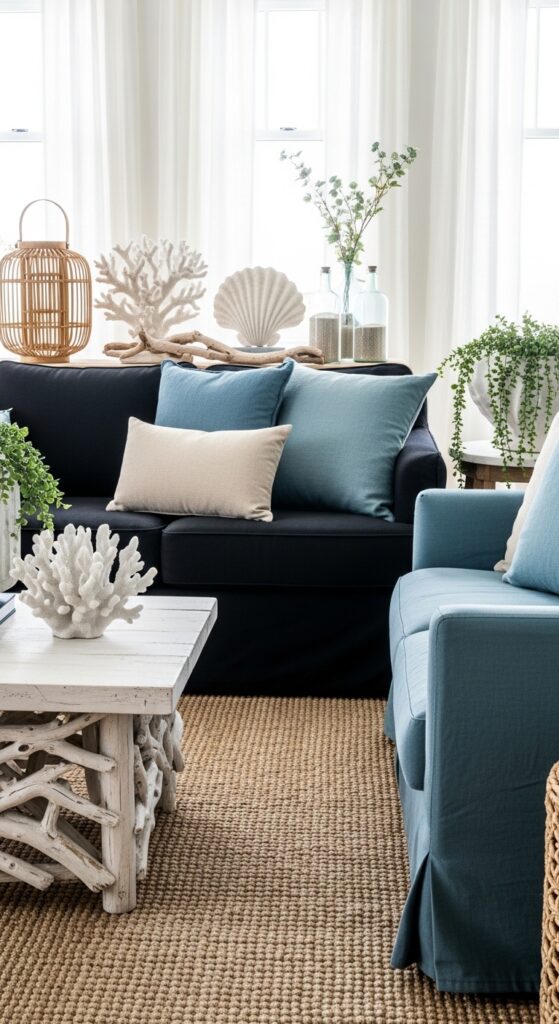
Vibe sentence: A black sofa in a coastal room is unexpected in the best possible way — it makes the blues and whites around it feel cleaner, crisper, and more vividly ocean-like.
What makes it work: The darkest element in a room instinctively defines and intensifies everything around it — in a coastal palette of blues, whites, and sandy naturals, the black sofa makes the light colors appear even lighter and more luminous, much like the dark lines of a wave make the white foam above appear to glow. The effect is a coastal interior with considerably more visual depth than the typical all-white version.
How to achieve it: Keep the black sofa’s cushions in soft ocean blue and natural linen only — avoid bright white cushions, which will compete with the intentional contrast between the sofa and the rest of the room. Bleached driftwood, rattan, and sea glass accents reinforce the coastal material story without undermining the bold dark anchor of the sofa.
Black Sofa With Warm Copper and Metallic Accents
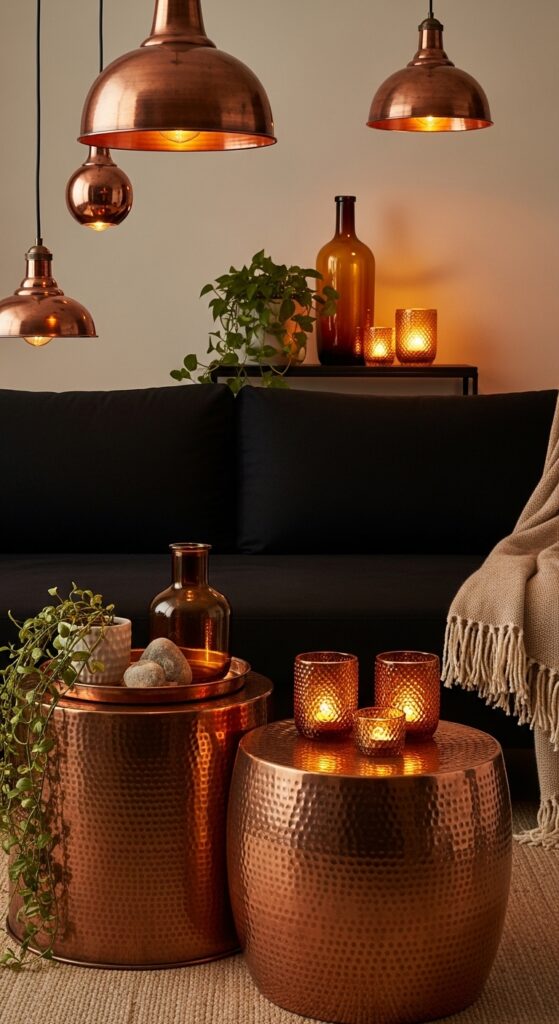
Vibe sentence: Copper against black glows like embers — there is no warmer, richer, more atmospheric pairing in a living room after dark.
What makes it work: Copper and black create a light-and-dark dynamic that is deeply warm rather than cool — copper’s reddish warmth sits at the opposite end of the metallic spectrum from chrome or silver, and against matte black its warmth is amplified dramatically. The hammered texture of artisan copper objects catches and scatters light in multiple directions, creating a room that feels genuinely alive in the evening.
How to achieve it: Use copper in at least two different applications — one large (a side table or pendant light) and one small (a tray, vase, or candleholder) to create a genuine palette. Combine with amber glass — the two materials share the same warm amber-gold frequency and look extraordinarily beautiful together in candlelight.
Black Sofa With Rich Moroccan Layering

Vibe sentence: Buried under layers of hammered gold, rust, and saffron cushions, the black sofa becomes the rich, dark foundation of a room that feels like a beautifully kept secret.
What makes it work: Moroccan interiors operate through accumulation and layering — the richness comes from the density of pattern, textile, and material rather than from any single statement piece. The black sofa provides the dark anchoring foundation that Moroccan design traditionally achieves with dark stained cedar wood or deep-toned zellij tile floors, grounding the abundance of color and pattern above it.
How to achieve it: Layer a minimum of six to eight cushions in varying sizes and fabrics — kilim, velvet, embroidered cotton, and hammered satin all work together in a Moroccan context. The Beni Ourain rug is the single most important investment: its cream and charcoal geometry creates a foundation that bridges the black sofa and the warm-toned walls above.
Black Sofa in a Plant-Filled Biophilic Living Room

Vibe sentence: Against a living wall of green, a black sofa looks less like furniture and more like rich, dark forest floor — the natural resting place at the base of something wild.
What makes it work: Black is the color of rich soil, volcanic rock, and the shaded forest floor — all the dark, fertile foundations from which plant life grows. This means a black sofa in a biophilic, plant-rich interior doesn’t contrast with the greenery; it roots it, making the plant life feel even more alive and vivid by providing the darkest possible backdrop.
How to achieve it: Aim for a minimum of seven plants at three distinct heights: hanging or ceiling-level (pothos, string-of-pearls), mid-level (monstera, rubber tree), and floor-level (snake plant, peace lily). Cluster plants asymmetrically — avoid symmetric placement on either side of the sofa, which looks staged rather than grown.
Black Sofa With Dramatic Ceiling-Height Curtains
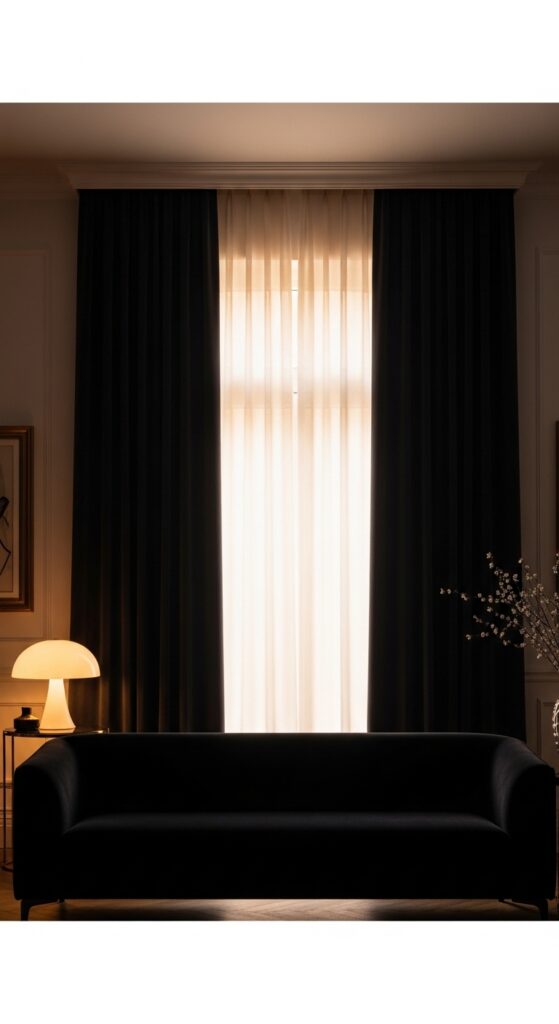
Vibe sentence: Ceiling-height curtains behind a black sofa create a sense of scale that makes an ordinary living room feel like the private sitting room of a very good hotel.
What makes it work: Dark, heavy curtains hung from ceiling height create a vertical architectural backdrop that amplifies the drama of the black sofa in front. The relationship between the sofa and the curtains is one of tone-on-tone depth — slightly different textures and shades of dark that create a richly layered dark background, making anything placed in front of it — a white lamp, a gold frame, a vase — read with exceptional crispness.
How to achieve it: Always hang curtain tracks or rods directly at ceiling level, not above the window frame — the visual difference is dramatic and immediate. Choose curtains in a fabric with weight: velvet, interlined linen, or heavy cotton canvas. They should puddle slightly on the floor for maximum drama and perceived luxury.
Black Sofa in a Colorful Eclectic Bohemian Room
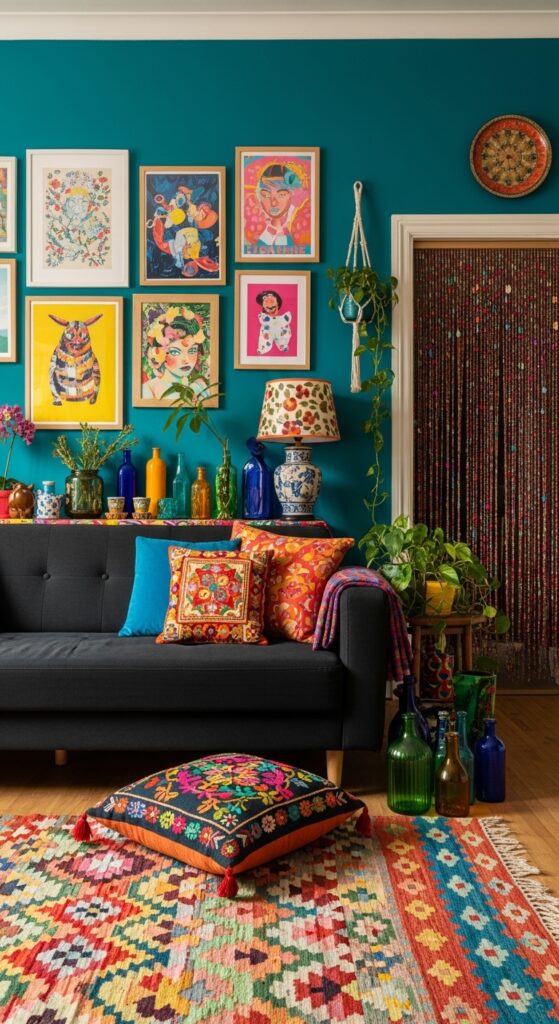
Vibe sentence: In a room of maximum color and pattern, the black sofa is the visual anchor that holds everything together — without it, the room would float away in the most joyful possible chaos.
What makes it work: This is the most important structural role a black sofa can play in interior design: the dark anchor in a maximally colorful space. Every color — teal, saffron, cobalt, rust — reads more vividly and more distinctly when placed against or near the black sofa, because black intensifies color perception in all surrounding elements. Remove the sofa and replace it with a beige one, and the room immediately loses its compositional coherence.
How to achieve it: In a colorful bohemian room, the black sofa should be the one consistent, simple element — avoid patterned upholstery or heavily decorated cushions. Keep the sofa’s own styling minimal (two or three cushions in colors already present in the room) so it performs its anchoring function without competing with the deliberately maximal energy around it.
Black Sofa With Concrete Walls and Minimalist Architecture
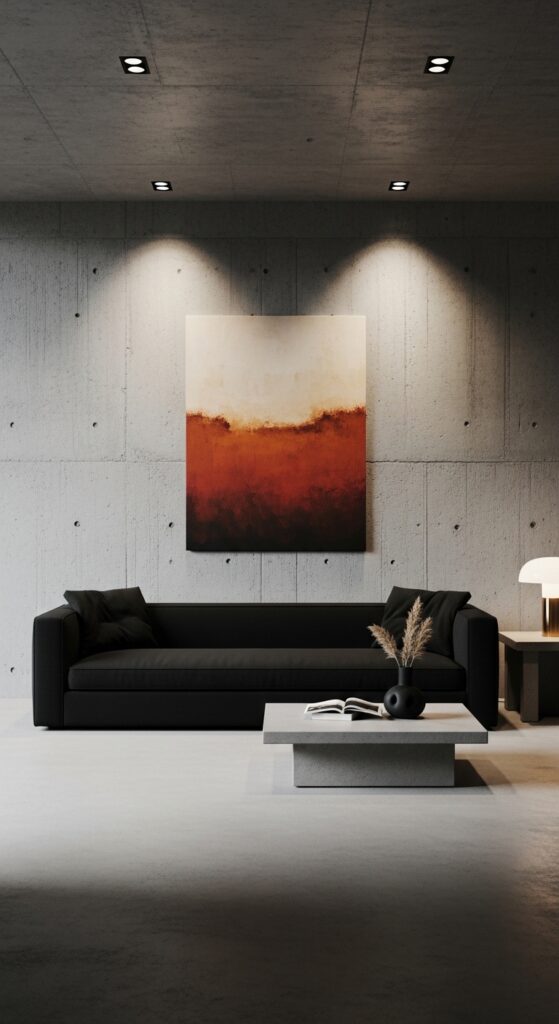
Vibe sentence: A black sofa against raw concrete is one of the purest design statements possible — material honesty in its most architectural and uncompromising form.
What makes it work: Concrete and black share the same design language: honest, undecorated, architectural. Together they create a palette in which material quality and form do all the work — there is nowhere to hide and nothing to distract from the pure quality of the shapes, surfaces, and light. A single large artwork or plant introduces just enough organic life to prevent the composition from feeling cold.
How to achieve it: The quality of the sofa design matters more in a concrete-and-black interior than in any other context — choose a silhouette with strong, clear lines and quality fabric. A single piece of oversized art (minimum 40×50 inches) in warm tones (ochre, rust, cream) introduces necessary warmth without compromising the architectural severity.
Black Sofa With Warm Library Wall Styling
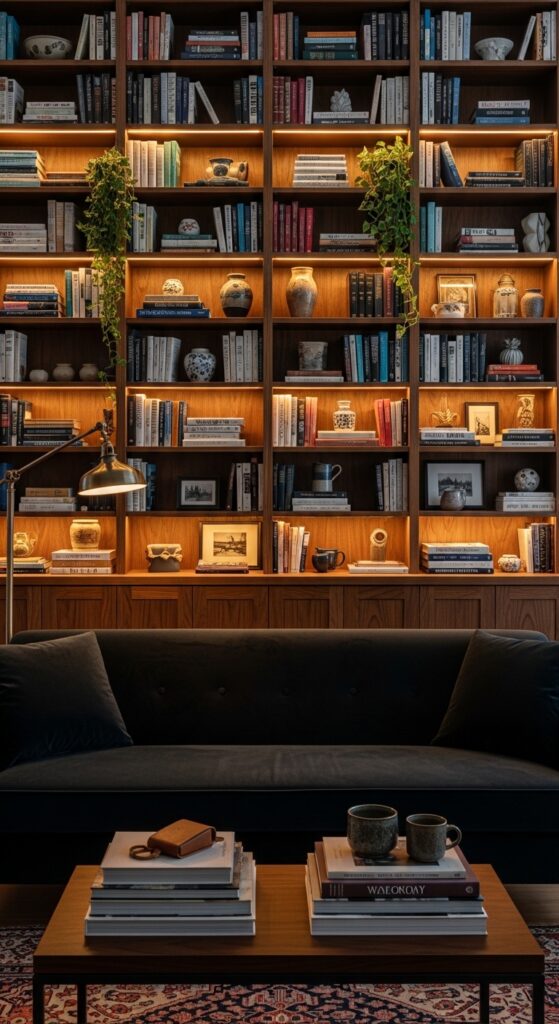
Vibe sentence: A black sofa in front of a floor-to-ceiling library wall is the living room version of a scholar’s retreat — and it is deeply, completely irresistible.
What makes it work: The floor-to-ceiling bookshelf wall behind a black sofa creates one of the richest possible visual backdrops — thousands of book spines in varied colors, depths, and sizes creating an endlessly complex, endlessly interesting surface. The dark sofa in front acts as a reading-chair and visual barrier, separating the viewer from the wall and creating a sense of depth that makes the room feel significantly larger than it is.
How to achieve it: Organize books loosely by color family rather than strict gradient — aim for color zones of five to seven books each, then intersperse ceramic objects, small framed prints, and trailing plants at regular intervals. Under-shelf LED strip lighting (warm 2700K) installed in each shelf bay illuminates the books beautifully and makes the wall glow.
💡 Mount the lowest shelf at 14–16 inches from the floor and use that bottom shelf exclusively for oversized books and large ceramics — it grounds the entire wall visually.
How to Start Your Black Sofa Living Room Transformation
The best starting point for a black sofa living room isn’t the sofa itself — it’s deciding what the room’s primary mood will be. A black sofa can anchor a room that is bright and airy, dark and dramatic, warm and organic, or bold and colorful. Your first decision is which direction to take, because the wall color, rug, and lighting you choose will feel entirely different depending on that choice.
The most common mistake people make is treating the black sofa as a problem to solve rather than an asset to build around. Black sofas don’t need to be “softened” or “lightened up” — they need warm, complementary companions. The single most impactful supporting change is always the rug: a warm-toned, textured rug in rust, cream, amber, or jewel tones immediately gives the black sofa a warm foundation to sit on and prevents it from ever reading as cold.
Budget-friendly entry points include: new cushion covers in three complementary colors ($15–$40 each), a warm throw in a contrasting texture ($30–$80), and a statement floor lamp with a warm-toned bulb ($60–$200). These three changes can completely transform the feeling of any black sofa living room for under $300.
Realistically, a full room refresh around a black sofa takes one weekend of planning and styling. Resist painting walls before you’ve lived with the sofa for at least two weeks — you’ll develop a much clearer sense of what the room needs once the sofa is in place and you’ve experienced it at different times of day.
Frequently Asked Questions
What colors go best with a black sofa in a living room?
A black sofa pairs beautifully with warm, saturated colors: forest green, terracotta, deep burgundy, mustard yellow, cobalt blue, and sage green all work exceptionally well. The general rule is to choose colors with warm undertones rather than cool ones — warm colors sit naturally against black, while cool gray-leaning tones can make a black sofa feel heavy and cold. For a lighter, airier feel, warm white walls with cream, blush, and natural linen accents create a fresh, high-contrast look that keeps the room feeling bright despite the dark sofa.
Is a black sofa hard to style?
A black sofa is actually one of the easiest pieces of furniture to style because it works as a true neutral — it doesn’t compete with color, pattern, or art the way a patterned or boldly colored sofa does. The key principle is warmth: ensure that the materials and colors surrounding the sofa are warm-toned, and the black will read as rich and grounding rather than harsh. The most common mistake is pairing a black sofa with cool gray walls and cool white accessories, which creates a genuinely cold and uninviting combination.
What rug works best under a black sofa?
A warm-toned rug with texture or pattern works best under a black sofa. Persian or Moroccan-style rugs in jewel tones (rust, saffron, cobalt, emerald) are the classic pairing — the pattern and color provide warmth and visual complexity that a solid rug cannot. For a more contemporary look, a large natural fiber rug in jute or sisal provides organic warmth without pattern. Avoid gray or cool-toned rugs, which will reinforce the darkness of the sofa rather than counterbalancing it with warmth.
Does a black sofa make a room look smaller?
Not necessarily — the effect of a black sofa on perceived room size depends entirely on the surrounding palette and lighting. In a dark room with dark walls, a black sofa can contribute to a feeling of enclosure. But in a bright room with white or light walls, good natural light, and a pale rug, a black sofa often reads as a crisp, graphic anchor that actually enhances the perception of space by creating strong visual contrast. Slim-profile sofas with visible legs and light-colored surroundings are the formula for keeping a black sofa from visually dominating a smaller room.
What type of fabric is best for a black sofa?
For everyday family use, a tightly woven performance fabric, brushed cotton canvas, or microfiber in black is the most practical choice — all three are durable, cleanable, and hold their color well. For a more luxurious aesthetic, black velvet is extraordinary in its visual richness but requires more maintenance and can show wear in high-traffic areas. Black linen strikes the best balance between style and practicality — it looks organic and textural, wears well, and is available from most quality sofa manufacturers. Black leather is the most durable and easiest to clean of all options, and develops a beautiful patina with age.
Ready to Create Your Dream Black Sofa Living Room?
You now have 26 black sofa living room ideas to draw from — from the bright and minimal to the dramatically moody, from the plant-filled and organic to the opulent and jewel-toned. Save the three ideas that made you stop scrolling, and start there. Remember that the black sofa itself is only the beginning: it’s the rug beneath it, the light above it, the colors beside it, and the textures layered onto it that determine everything. One warm throw, one great lamp, and one well-chosen rug can transform a black sofa from an afterthought into the most deliberate and beautiful decision in your living room. Trust the dark — it always repays the confidence.