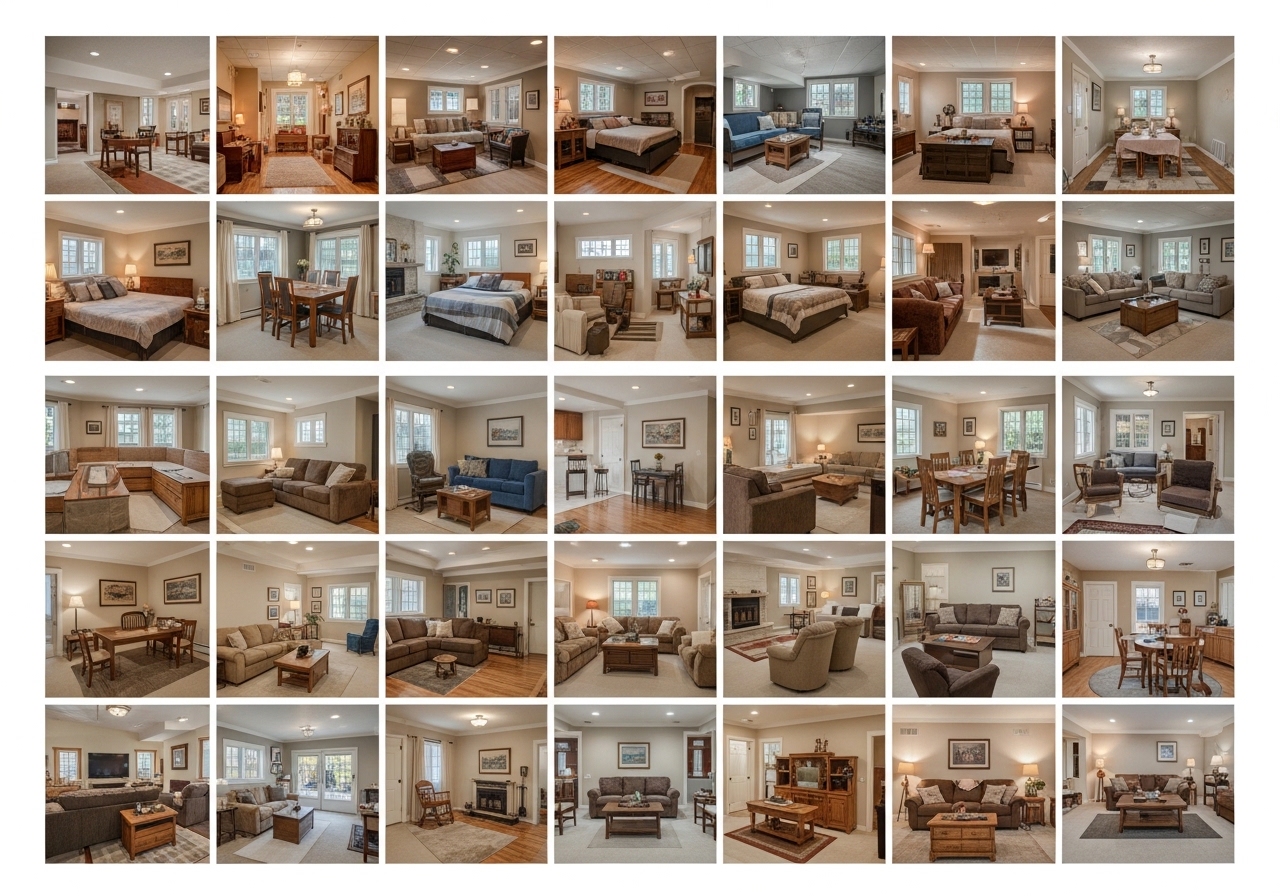
There’s something uniquely wonderful about a basement that has been fully, lovingly transformed — a space that was once a dark utility room or forgotten storage zone becoming the most-used, most-loved room in the entire house. Cozy basement ideas take what is often the home’s most challenging square footage and turn it into a layered, warm, genuinely welcoming family sanctuary that no other room can quite replicate. The lower level naturally insulates sound, stays cool in summer, and wraps around you with a sense of enclosure that above-ground rooms simply don’t have — qualities that, with the right design thinking, become profound assets rather than limitations. Whether you’re dreaming of a family movie room, a kids’ playspace, a teen hangout, a home bar, or simply a second living room where everyone gravitates without being asked, these 29 cozy basement ideas will give you a real, actionable roadmap. Let’s explore every one of them.
Why Cozy Basement Design Works So Well
The basement’s greatest design challenge — its separation from the rest of the house, its lower ceilings, its limited natural light — is simultaneously its greatest design opportunity. No other room in the home offers the same degree of enclosure, acoustic separation, and design freedom. You’re not constrained by street-facing curb appeal, by architectural coherence with a formal living room, or by the need to impress first-time visitors. The basement belongs entirely to the people who live there.
What makes cozy basement design specifically distinctive is the deliberate embrace of warmth, texture, and layering as compensations for what basements naturally lack. Where an above-ground room can rely on natural light and outdoor views to create atmosphere, a well-designed basement creates its own atmosphere entirely from within — through lighting schemes, material choices, ceiling treatments, and the careful layering of textiles and furniture that builds warmth from the ground up.
The current cultural moment for basement design is driven by a significant shift in how families use their homes. The rise of flexible working and home-based entertainment has made below-grade space more valuable than ever — Pinterest searches for “cozy basement family room,” “basement movie room ideas,” and “finished basement decor” have surged consistently, reflecting a generation of homeowners finally willing to invest seriously in space that previous generations treated as purely functional.
Even genuinely small or awkward basements — those with low ceilings, structural posts, or oddly shaped footprints — respond beautifully to thoughtful cozy basement design. In fact, constraints often produce the most creative and characterful results, transforming structural limitations into design features that give a basement its own unique identity.
1. Full-Wall Built-In Media Unit with Flanking Shelves
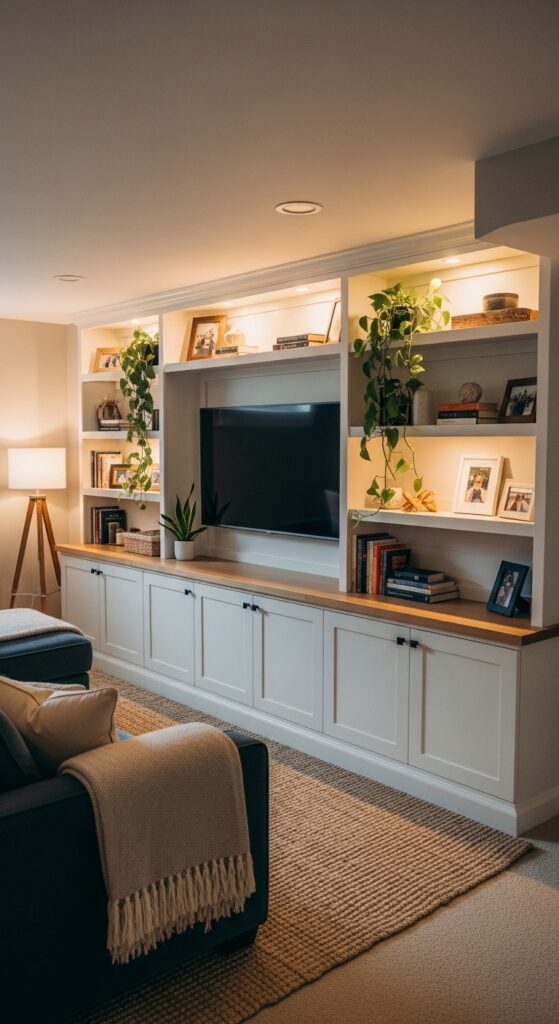
Vibe: Everything you need, exactly where you need it — a built-in wall that makes the basement feel like the most organized, welcoming room in the house.
What makes it work: A full-width built-in media unit solves the basement’s most persistent challenge — the absence of architectural features — by creating an entire focal wall of purposeful structure. The combination of open display shelving with closed lower cabinet storage addresses both the aesthetic and practical needs of a family space simultaneously, giving the room visual interest and hiding the inevitable accumulation of remote controls, game controllers, and blankets.
How to achieve it: IKEA’s BESTA system is the most cost-effective route to a custom-looking built-in — frame individual units with a floor-to-ceiling surround of 18mm MDF, add shaker-style overlay doors, and paint everything the same color as the wall for a seamless built-in effect. Budget approximately $1,500–2,500 for a full-width 4-meter unit using this approach, versus $6,000–12,000 for true custom cabinetry.
💡 Painting the inside of open shelving a contrasting darker tone makes styled objects pop dramatically and gives the unit more visual depth.
2. Cozy Home Cinema Corner with Stadium Seating
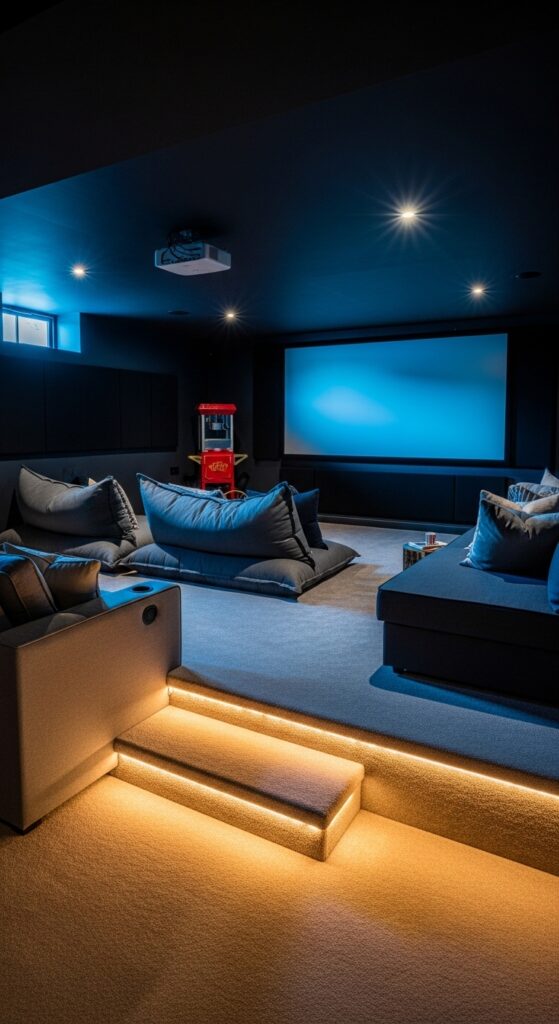
Vibe: Every movie night becomes an event — two levels of seating, total darkness, and the kind of sound that you feel in your chest.
What makes it work: The raised rear platform is the defining feature that elevates a home cinema from “sofa facing a screen” to a genuine tiered viewing experience. Even a single 200mm platform step changes the sightlines enough that rear-row viewers look comfortably over front-row heads, and the step riser LED lighting doubles as practical night-navigation lighting without breaking movie atmosphere.
How to achieve it: Build the rear platform from standard timber framing and plywood decking — a 3m x 2m platform at 200mm height is achievable with basic carpentry skills in a weekend. Cover with carpet matching the main floor, and install LED strip lighting (warm white, 2700K) along the front riser face. A 100-inch pull-down projection screen mounted ceiling-flush costs less than a large television and delivers a far more cinematic visual experience.
3. Shiplap Accent Wall in Warm White
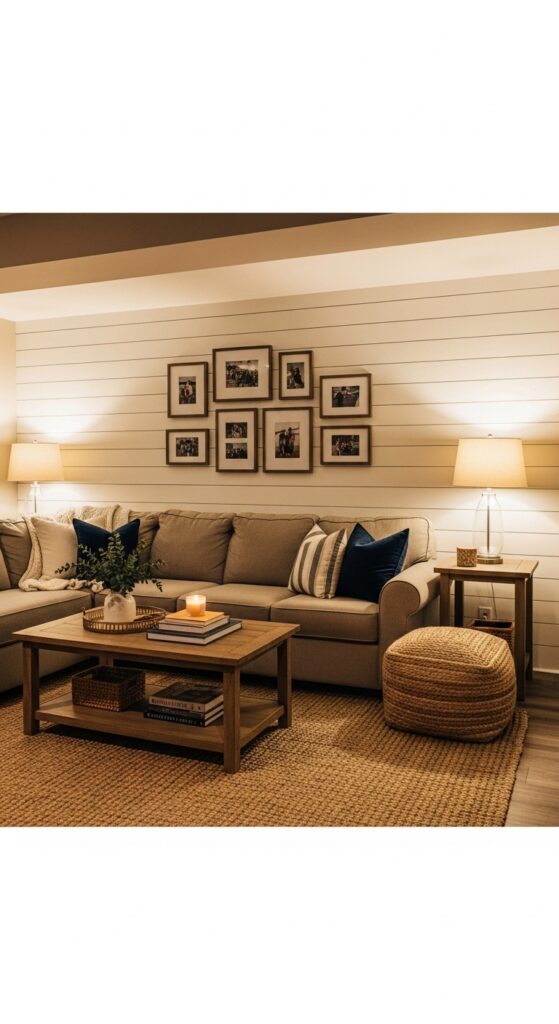
Vibe: Farmhouse warmth meets below-grade cosiness — a wall that makes the whole basement feel intentionally designed and deeply welcoming.
What makes it work: Shiplap introduces horizontal architectural lines to a basement wall, which is one of the most effective visual tricks for making low-ceiling spaces feel wider and more expansive. The shadow gap between each board creates depth and dimension that flat painted drywall cannot replicate, giving the basement a sense of crafted character rather than standard construction.
How to achieve it: Peel-and-stick shiplap panels (available at Home Depot and Lowe’s) make this a genuine weekend project without tools or expertise. Alternatively, cut 1×6 pine boards to length, nail horizontally with a consistent 3mm spacer gap, then paint with two coats of interior eggshell in Sherwin-Williams “Alabaster” or Benjamin Moore “Simply White” for the most classic warm-white result.
💡 Running shiplap horizontally in a low-ceiling basement emphasizes width rather than height — always the better choice below grade.
4. Sectional Sofa Conversation Pit Layout
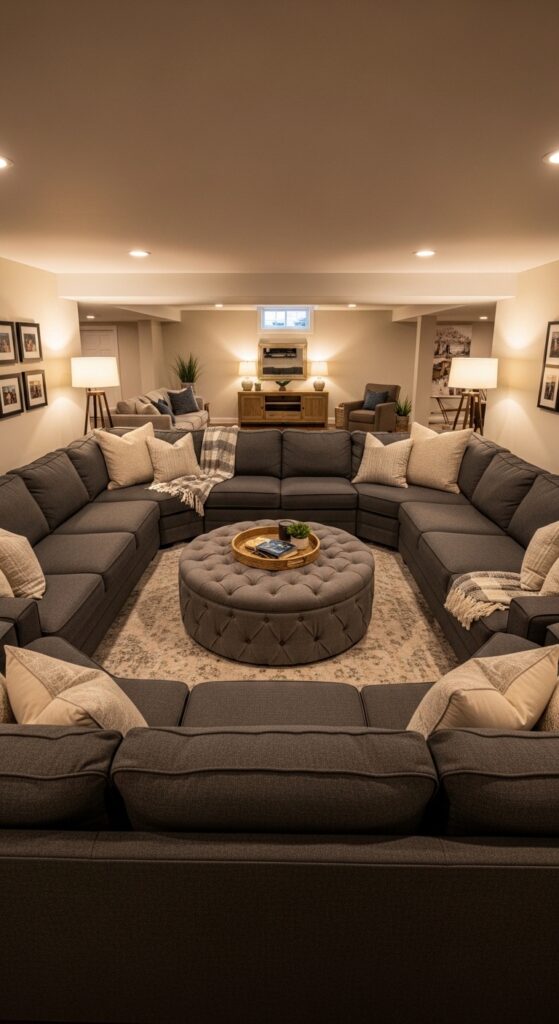
Vibe: The room that everyone gravitates to — an inward-facing circle of cushions and conversation that makes every gathering feel effortlessly easy.
What makes it work: A U-shaped or L-shaped sectional arranged as a conversation pit solves the basement’s social challenge — the absence of a fixed focal point like a fireplace or view — by making the seating arrangement itself the focal point. The inward orientation encourages face-to-face connection rather than parallel screen-gazing, making the basement genuinely multi-functional as both a media room and a social space.
How to achieve it: Size the sectional to leave at minimum 900mm of clear walking space on at least two sides of the arrangement. Choose a performance fabric (look for Crypton, Sunbrella indoor, or any fabric with a 30,000+ martindale rub count) for basement sectionals where family use will be heaviest. A round or square ottoman with a removable tray top functions as both footrest and coffee table.
5. Warm Wood Plank Ceiling Treatment
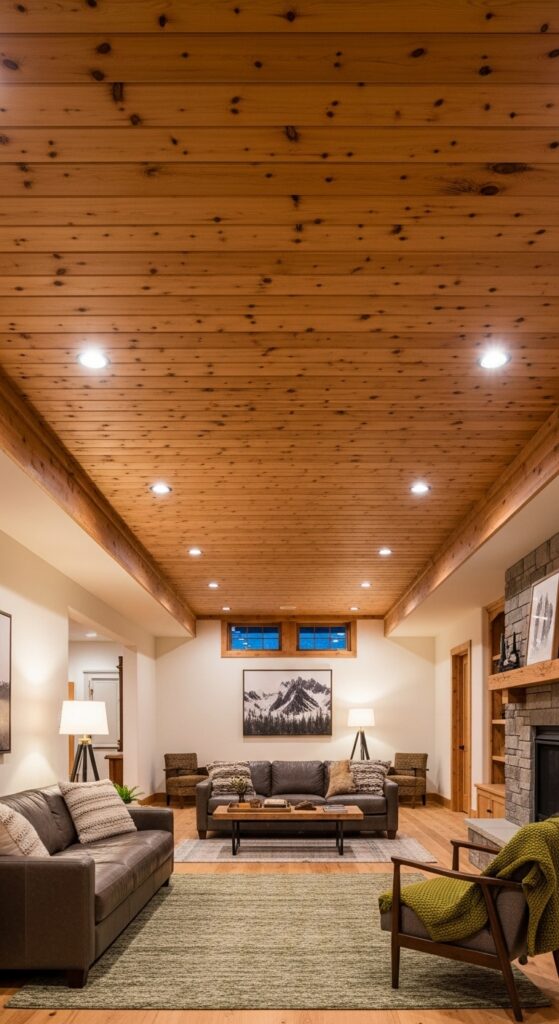
Vibe: A mountain cabin landed in your basement — warm timber above you, soft wool below, and a room that gives like a deep breath.
What makes it work: A wood plank ceiling is the single most transformative ceiling treatment available for a basement, converting what is typically the room’s most problematic surface (a flat grey concrete slab or drop-tile ceiling) into its most beautiful architectural feature. The warm timber tone offsets the inherent coolness of below-grade spaces and brings an organic warmth that no paint color can replicate.
How to achieve it: Use tongue-and-groove pine or cedar planking (available pre-primed from lumber yards) nailed directly to furring strips attached to the concrete ceiling joists. Install all electrical, HVAC, and plumbing runs in the ceiling cavity before planking — access afterward requires board removal. Finish with a clear penetrating oil rather than polyurethane to preserve the natural wood warmth and allow future re-oiling without stripping.
6. Cozy Reading Nook Built Into a Basement Alcove
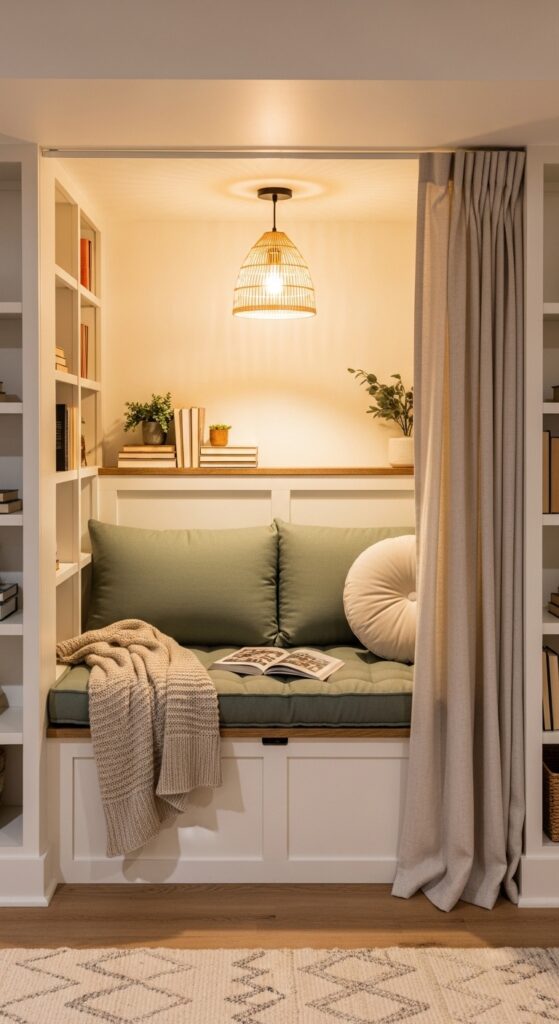
Vibe: The best chair in the house, but better — a nook that makes reading feel like disappearing into a different world entirely.
What makes it work: Basement alcoves — the recesses created by structural columns, under-stair spaces, or HVAC chases — are typically treated as dead space or awkward obstructions. Transforming one into a built-in reading nook converts a liability into the room’s most desirable feature. The enclosed three-sided seating creates a naturally intimate micro-environment within the larger basement space.
How to achieve it: A basic reading nook bench requires only a plywood box frame, a timber face frame, and a custom-cut foam cushion with a slipcover in a performance fabric. Add a hinged lid to the bench box for generous storage of blankets and books. Built-in flanking shelves can be constructed from 18mm MDF with a simple face frame, painted in the same color as the walls for a seamless built-in appearance.
7. Exposed Concrete Walls with Warm Industrial Styling
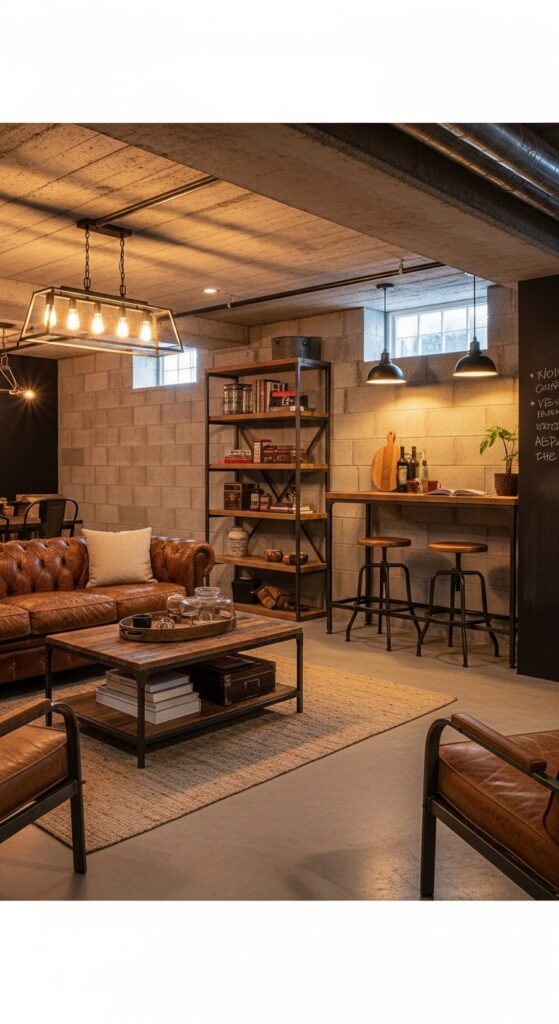
Vibe: Industrial warmth without trying — a basement that wears its structure honestly and looks all the better for it.
What makes it work: Treating exposed concrete walls as a deliberate design choice rather than an unfinished problem saves the cost of drywalling while delivering an aesthetic that is genuinely fashionable and honest. The key is the material pairing — raw concrete paired with warm leather, aged timber, and Edison bulb lighting creates a sophisticated industrial warmth that feels curated rather than incomplete.
How to achieve it: Seal exposed concrete or concrete block walls with a penetrating concrete sealer in matte finish — this stabilizes any efflorescence, prevents dust, and gives the surface a clean, intentional appearance without changing its natural color. Follow with warm industrial lighting as the primary aesthetic driver: Edison filament bulbs (2200K color temperature) in black steel pendant fixtures are the most effective single change.
8. Basement Wet Bar with Subway Tile Backsplash
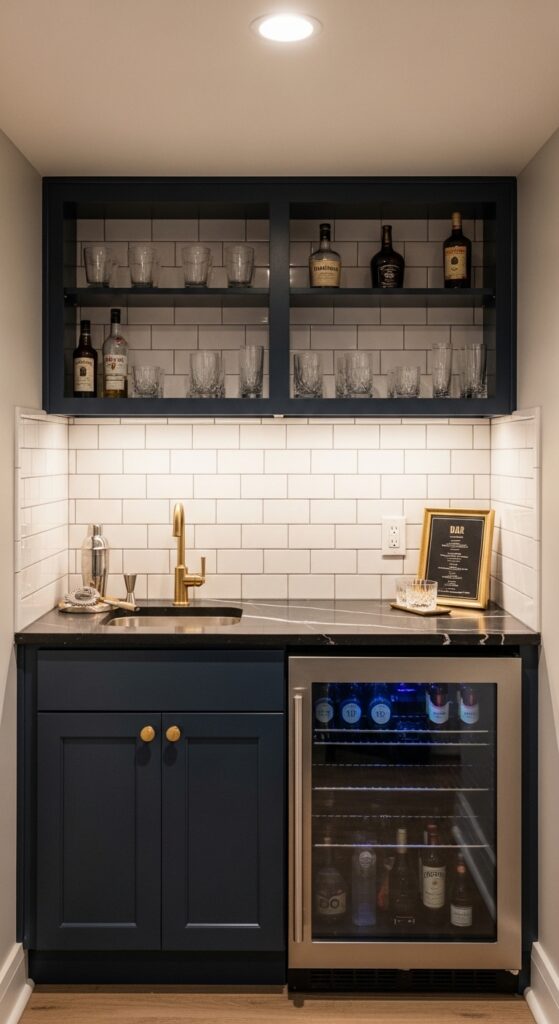
Vibe: The bar you always wanted — compact, considered, and ready for any occasion from Tuesday night to New Year’s Eve.
What makes it work: A wet bar elevates a basement family room from comfortable to genuinely entertaining-capable — the dedicated beverage preparation zone keeps the hosting function contained and purposeful rather than relying on trips up to the kitchen. The subway tile backsplash is the classic choice because its glossy surface bounces undercabinet light beautifully, making a small bar area feel brighter and more professional than its size suggests.
How to achieve it: A basic wet bar requires a single plumbing rough-in (cold supply and drain) which can typically connect to an existing basement bathroom stack or utility sink line. Base cabinetry from IKEA’s SEKTION kitchen range fits exactly to bar dimensions and takes standard overlay doors — paint or replace door fronts for a custom look. Budget $3,000–6,000 for a fully functional 2-meter wet bar including plumbing, cabinetry, countertop, and tile.
💡 An under-counter beverage refrigerator ($300–500) is the single most impactful functional addition to a basement bar — keep it separate from the main kitchen fridge upstairs.
9. Cozy Game Room with Pool Table and Neon Sign
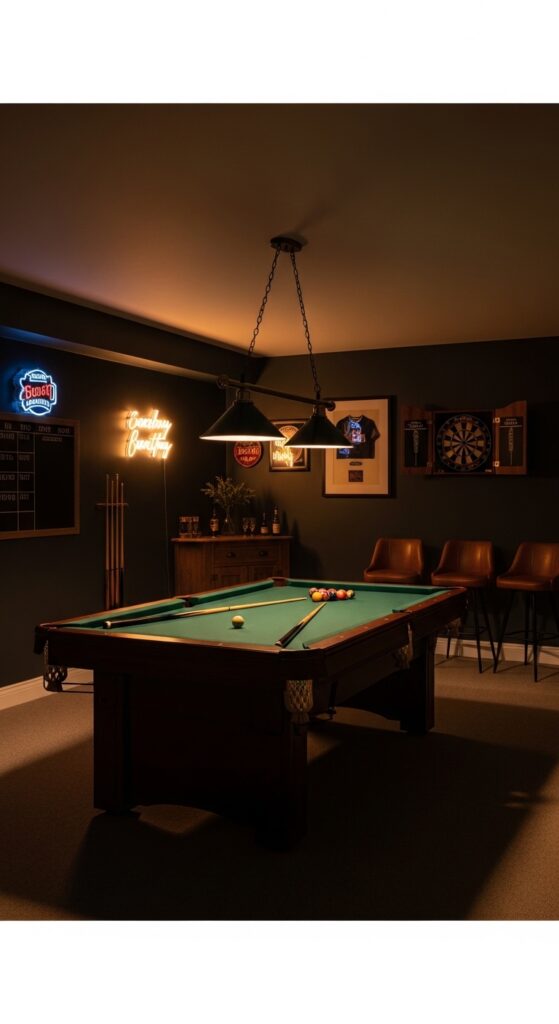
Vibe: Your own private pub — social, slightly competitive, and exactly where you want to spend a Friday night.
What makes it work: The pool table’s rise-and-fall pendant lighting is the defining element of a well-designed game room — positioned 800–900mm above the table surface, it creates a dramatically lit playing surface while leaving the surrounding room in atmospheric shadow, concentrating attention and energy on the game. Dark painted walls amplify this contrast beautifully.
How to achieve it: Allow minimum 1.4 meters of clear cue space on all four sides of a standard 7-foot pool table (2.1m x 1.2m) — this is the most commonly underestimated clearance requirement and the reason many basement pool tables end up unusable near walls. Use a rise-and-fall pendant fitting so the lights can be raised for room cleaning and lowered for play. Choose 8mm solid slate bed tables over MDF — the playing quality is substantially superior and the resale value is far higher.
10. Plush Wall-to-Wall Carpet in a Deep Neutral Tone
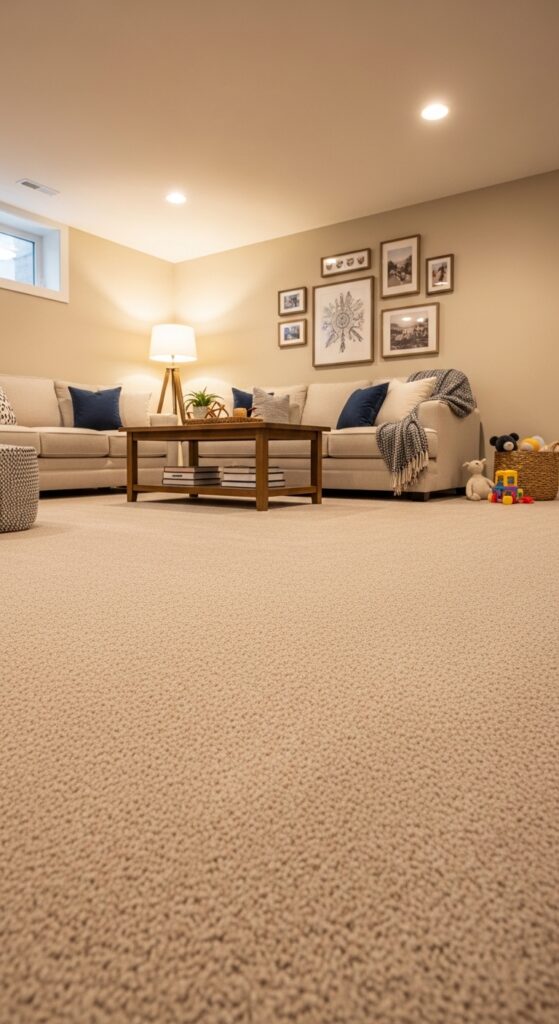
Vibe: The floor you actually want to sit on, lie on, and live on — deep, warm, and permission to be entirely comfortable.
What makes it work: Wall-to-wall carpet is the most acoustically effective floor treatment for a basement — it absorbs sound, reduces echo, and eliminates the hollow footstep sound that hard floors transmit through the concrete slab. In a family basement where children play, people watch films, and gatherings happen at floor level, carpet delivers comfort dividends that no hard flooring can match.
How to achieve it: Choose a carpet with a minimum pile weight of 40oz per square yard for basement family rooms — lighter-weight carpets flatten quickly under heavy family use. Install over a high-density foam underlay (10mm minimum) for maximum cushioning and insulation from the cold concrete slab below. Opt for a solution-dyed nylon or triexta fiber for stain resistance — these fiber types resist moisture and cleaning chemicals far better than wool or polypropylene in a family environment.
11. Kids’ Playroom Zone with Chalkboard Wall
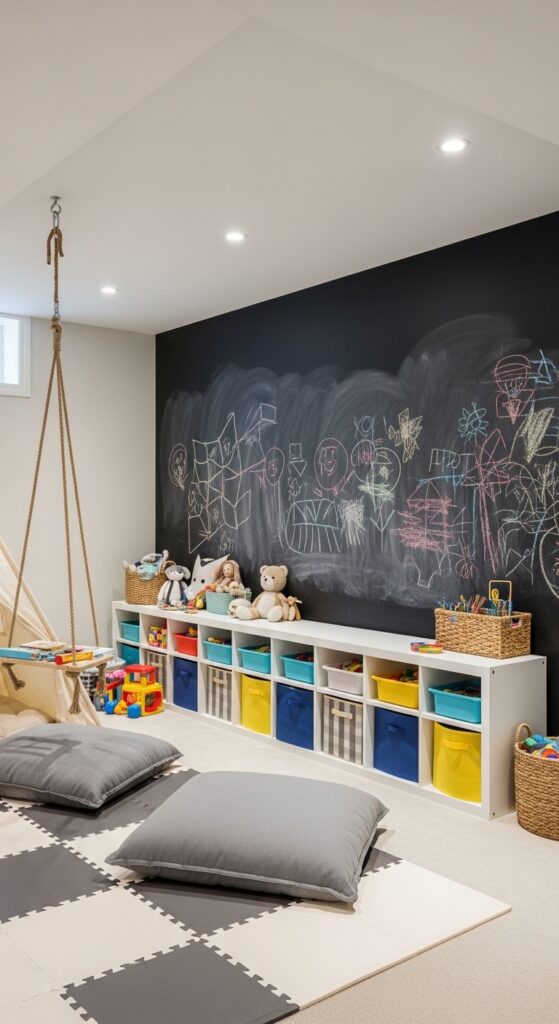
Vibe: Every child’s dream room — an entire wall that exists solely to be drawn on, without anyone ever saying stop.
What makes it work: A chalkboard wall in a dedicated basement playroom solves a common family tension — children’s natural desire to draw on surfaces, channeled into a designated space that celebrates rather than prohibits it. The basement location is ideal because creative play mess is contained away from the home’s primary living areas, and the floor can be easily wiped rather than protected.
How to achieve it: Apply two coats of chalkboard paint (available in quart cans from any paint supplier, or as a specialty product from brands like Rust-Oleum) over a smooth, primed wall surface. Season the chalkboard before first use by rubbing the flat side of a chalk stick across the entire surface and erasing — this fills the microscopic paint pores and prevents ghost images from the first drawings. Build low cube storage from IKEA KALLAX units at child-accessible 600mm height.
12. Basement Home Office Nook with Glass Partition
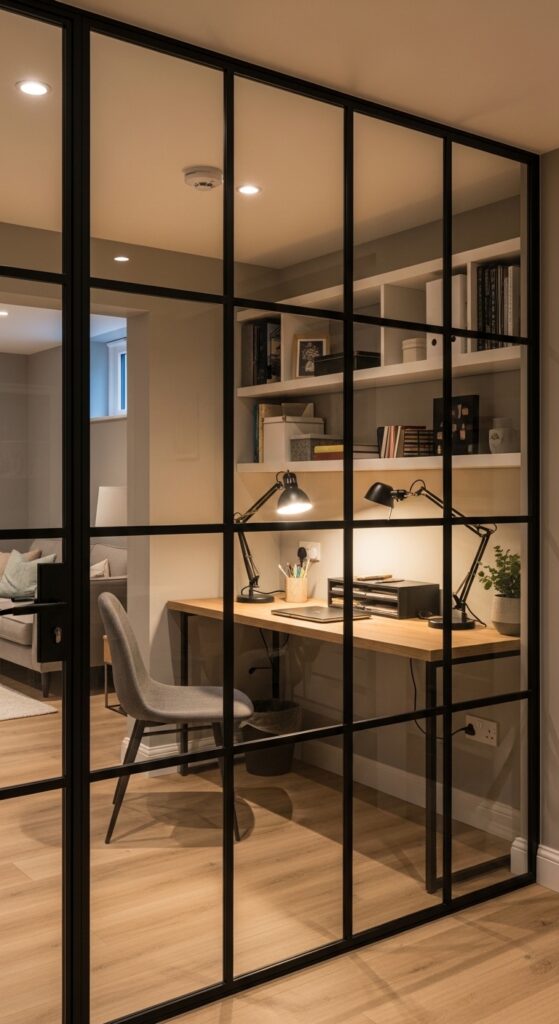
Vibe: Work and family life in peaceful coexistence — visually connected, acoustically separated, and thoroughly modern.
What makes it work: A glass partition with a steel frame creates the visual openness of an open-plan layout while delivering the acoustic privacy necessary for focused work. The transparency means a working parent remains visually present with children in the family room while genuinely able to concentrate — a meaningful functional compromise that solid walls cannot achieve.
How to achieve it: Steel-framed glass partition systems are available as modular flat-pack kits from specialist suppliers (Crittal-style systems from companies like IQ Glass or Mondrian Steel) for $200–400 per square meter, making a partial partition extremely cost-effective compared to custom building. A partial partition of 2m x 1.5m is sufficient to define the office zone without completely closing it off from the family space.
13. Warm Layered Lighting Scheme with Dimmer Controls
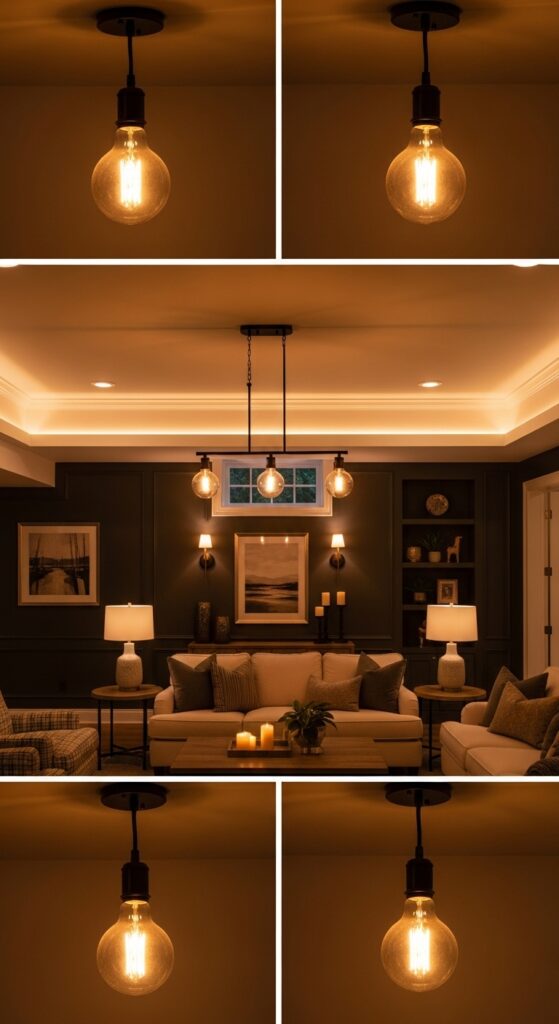
Vibe: A basement that knows exactly how to set a mood — warm, layered, and completely in control of its own atmosphere.
What makes it work: Layered lighting is the single most transformative investment in a basement because it solves the space’s fundamental atmospheric challenge — the absence of natural light. By combining ceiling ambient lighting, task lighting, accent lighting, and decorative lighting at different heights and intensities, all on separate dimmer circuits, the basement gains total atmospheric control from bright and practical to warm and intimate within seconds.
How to achieve it: Plan a minimum of four separate lighting circuits in a basement: ceiling recessed ambient, pendant or feature lights, floor and table lamp outlets (switched from the wall), and accent LED strip lighting. All should be on dimmer switches compatible with LED loads. Choose exclusively 2700K color temperature bulbs throughout — warmer than the standard 3000K — for the most inviting, amber-toned atmosphere.
💡 Smart bulbs (Philips Hue, LIFX) allow full color temperature and brightness control from a phone app, making basement mood lighting infinitely adjustable without complex wiring.
14. Cozy Basement Bar with Brick Accent Wall
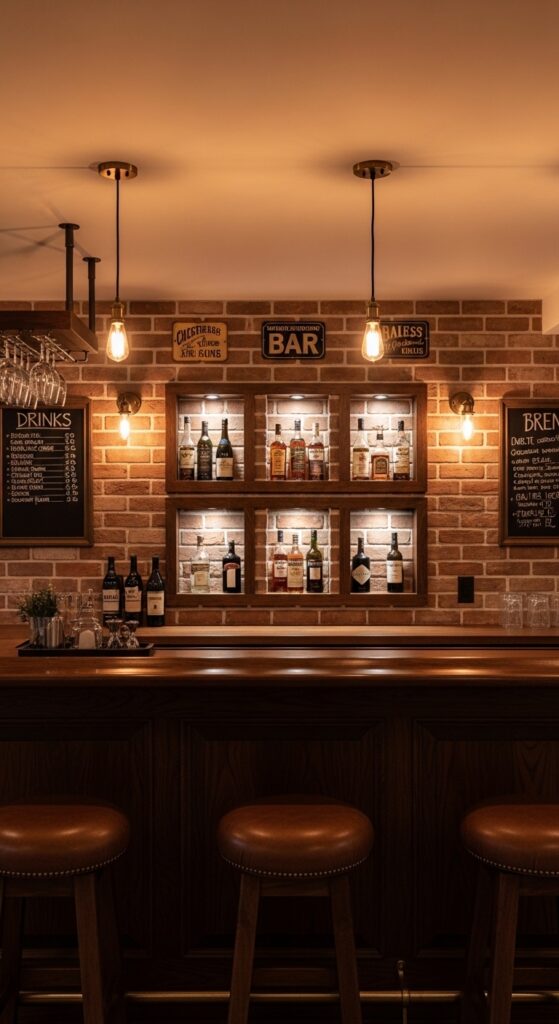
Vibe: A basement speakeasy that never had to hide — atmospheric, warm, and entirely your own private establishment.
What makes it work: Brick behind a bar is one of interior design’s most reliable combinations — the warm, irregular texture of masonry provides the perfect tactile and visual contrast to the smooth counter surfaces and glassware of the bar itself. The material also reads as authentically aged in a way that no wallpaper or paint treatment can replicate, lending the bar immediate credibility and character.
How to achieve it: Faux brick panels (available in thin-set tile format from suppliers like Boral and Z Brick) achieve a near-identical visual result to real brick at significantly lower cost and weight — critical in a basement where additional structural load may be a concern. Apply using standard tile adhesive and grout, then seal with a penetrating brick sealer for a realistic matte finish. Recessed bottle display niches can be framed into the brick panel installation at the same time.
15. Acoustic Panel Wall Art for Sound Control
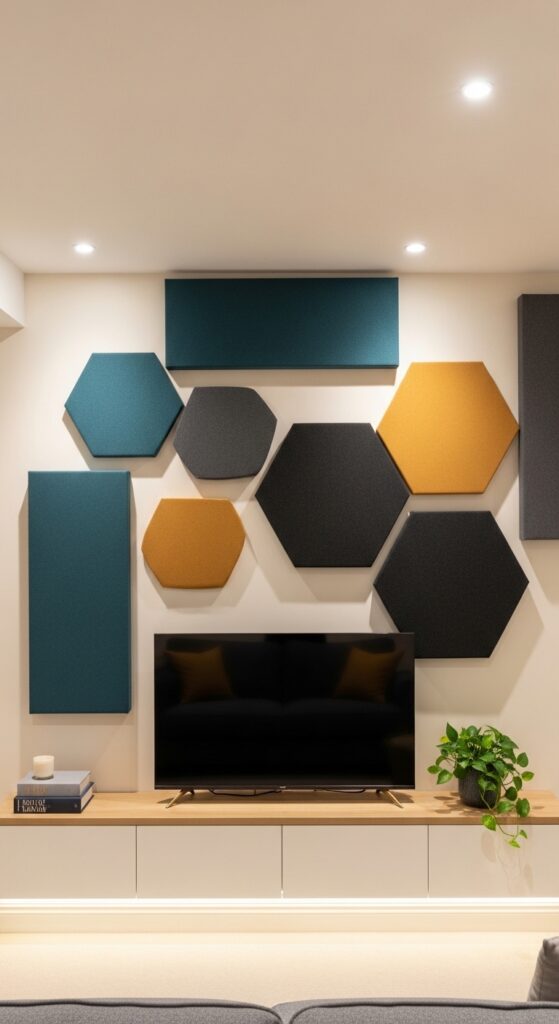
Vibe: Sound engineering as wall art — panels that look like a design decision and function like a recording studio.
What makes it work: Basement rooms suffer acutely from sound reflection off concrete walls and ceilings, creating a hard, echoey acoustic environment that makes conversation and media consumption tiring. Fabric-wrapped acoustic panels absorb mid and high-frequency sound reflection, dramatically improving the room’s acoustic quality — and when arranged as a deliberate wall composition in coordinated colors, they function simultaneously as the room’s primary artwork.
How to achieve it: DIY acoustic panels require only a timber frame (50x25mm pine), compressed acoustic foam or mineral wool board cut to fit the frame, and upholstery fabric stretched and stapled over the assembled unit. A 600x1200mm panel costs approximately $40–60 in materials and takes 45 minutes to construct. Commercial fabric-wrapped acoustic panels from brands like Acoustimac or GIK Acoustics cost $80–150 per panel but offer ready-made solutions in hundreds of fabric options.
16. Basement Yoga and Wellness Studio Corner
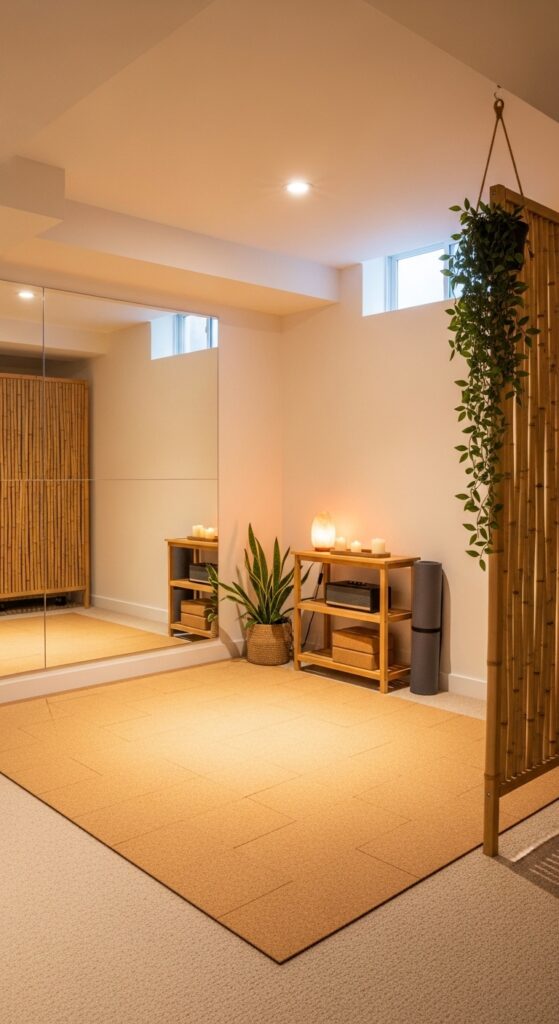
Vibe: A personal sanctuary one floor below the household — quiet, warm, and entirely restorative.
What makes it work: A basement wellness zone works for the same reason that professional yoga studios are often below grade — the acoustic insulation, stable temperature, and separation from household noise creates a naturally conducive meditation and movement environment. The addition of a mirror wall transforms a corner into a functional studio space by allowing self-correction during practice.
How to achieve it: Cork floor tiles (available in 300x300mm interlocking format from specialty flooring retailers) provide natural cushioning, warmth underfoot, and acoustic absorption — an ideal yoga floor material. Install a full-height mirror panel (minimum 1.2m wide) on the flattest wall using frameless mirror clips. A partial bamboo screen room divider ($80–150 from home goods stores) defines the wellness zone without requiring any construction.
17. Dark Dramatic Walls in Deep Forest Green

Vibe: A jewel box you can live in — every surface deep with color, every lamp a warm star in the green, and absolutely no desire to leave.
What makes it work: Deep green paint in a basement is a masterclass in turning a constraint into an asset — the below-grade enclosure that might make a lighter color feel institutional instead makes a dark color feel deliberate and cocooning. Forest green in particular has warm botanical undertones that relate naturally to plants and organic materials, preventing the darkness from feeling cold or oppressive.
How to achieve it: Choose a matte or flat sheen paint finish for dark basement walls — sheen on a dark color highlights every surface imperfection and can make walls feel plastic. Farrow & Ball’s “Dix Blue” or “Mizzle,” or Sherwin-Williams “Hunt Club” and “Cascades” are excellent deep green options with the botanical warmth necessary for basement success. Pair with the lightest possible ceiling — brilliant white — to maintain the vertical contrast that keeps the room from feeling cave-like.
18. Cozy Fireplace Feature Wall in the Basement
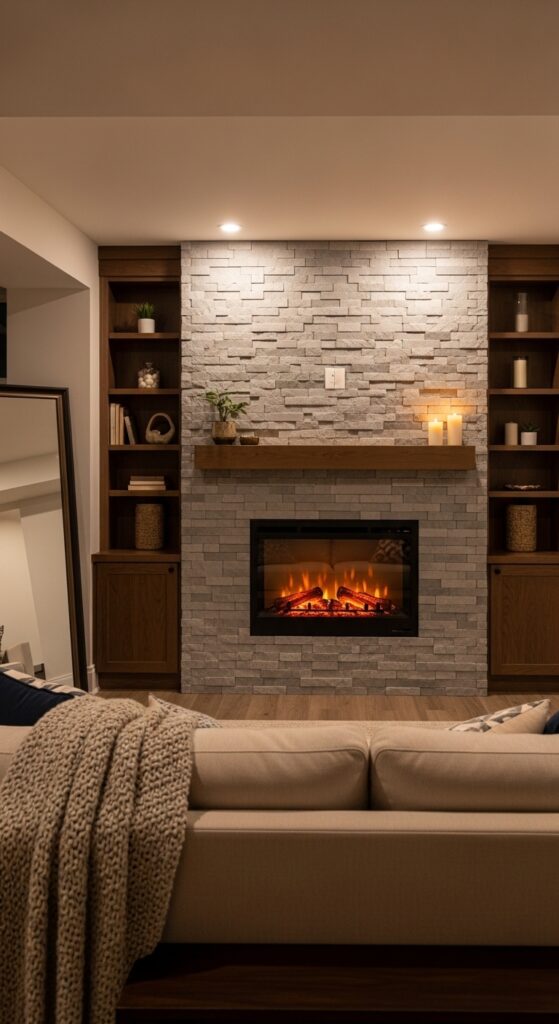
Vibe: The heart of the house moved downstairs — a fireplace that makes the basement the room everyone wants to be in on a cold night.
What makes it work: A fireplace is the most powerful focal point any room can have, and its psychological effect — warmth, gathering, safety — is especially profound in a basement that might otherwise lack a natural center. An electric fireplace insert eliminates all venting, gas line, and combustion challenges of a real fireplace in a below-grade space, while delivering a visually convincing flame effect and genuine radiant heat output.
How to achieve it: Electric fireplace inserts from brands like Dimplex, Napoleon, or Touchstone range from $500–2,500 and require only a standard 240V outlet — no gas line, no chimney, no specialist installation. Build the surround from stacked stone veneer panels (thin-set adhesive, same as tile), which weigh approximately 25kg per square meter — manageable on any basement floor slab. Add a timber mantel shelf for display and the feature is complete.
💡 Stacked stone veneer panels at $60–90 per square meter create a dramatically more expensive look than their actual cost suggests.
19. Industrial Pipe and Reclaimed Timber Shelving
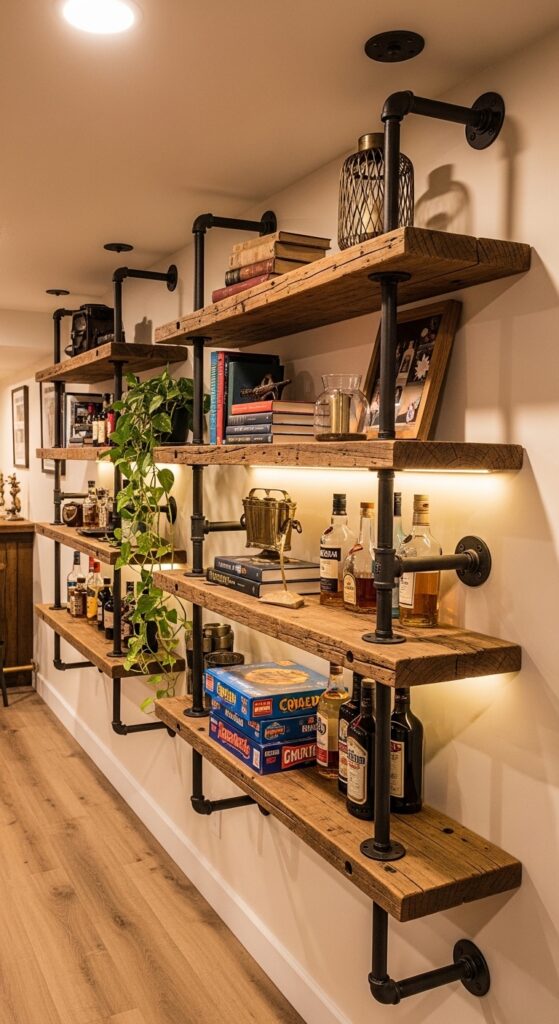
Vibe: Made by someone who cares — every plank mark and pipe fitting a reminder that the best shelving tells a story.
What makes it work: Industrial pipe shelving delivers a visual richness and handcrafted authenticity that manufactured shelving systems cannot approach. The combination of reclaimed timber’s organic warmth with the geometric precision of iron pipe fittings creates a material contrast that is one of interior design’s most enduring and reliable pairings — simultaneously raw and refined.
How to achieve it: Source reclaimed timber planks from architectural salvage yards or specialty reclaimed timber suppliers — Douglas fir, pine, and oak are most common and best suited to shelving spans. Pre-drill flanges and mount directly into wall studs or use wall anchors rated for the combined shelf, fitting, and load weight. Standard 3/4-inch black iron pipe with floor flanges is available from plumbing suppliers far more cheaply than specialty shelf pipe kits.
20. Cozy Basement Playroom with Indoor Climbing Wall
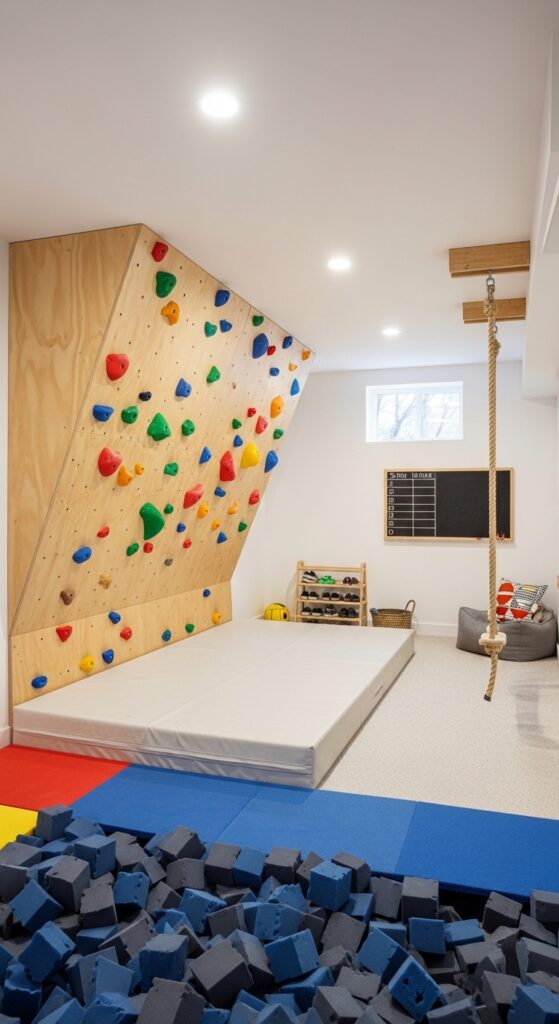
Vibe: Adventure meets homework — the basement that makes children want to come home, and stay there.
What makes it work: An indoor climbing wall in a basement converts what would otherwise be blank wall space into the most-used square footage in the house. The full ceiling height available in most basements — typically 2.4–2.7 meters — is ideally suited to a climbing wall that would be impractical in a ground-floor room, and the concrete slab floor provides an ideal base for the foam crash mat.
How to achieve it: A basic climbing wall requires 18mm plywood (minimum two sheets for a standard 2.4m x 1.2m section) angled at 5–15 degrees of overhang using a timber frame. Install T-nut inserts in a 200mm grid across the plywood before finishing — this allows holds to be repositioned as climbers improve. Load-rated ceiling beams or manufactured swing points rated for dynamic loading must be used for any rope or swing installation above.
21. Velvet Sofa and Layered Rug Styling
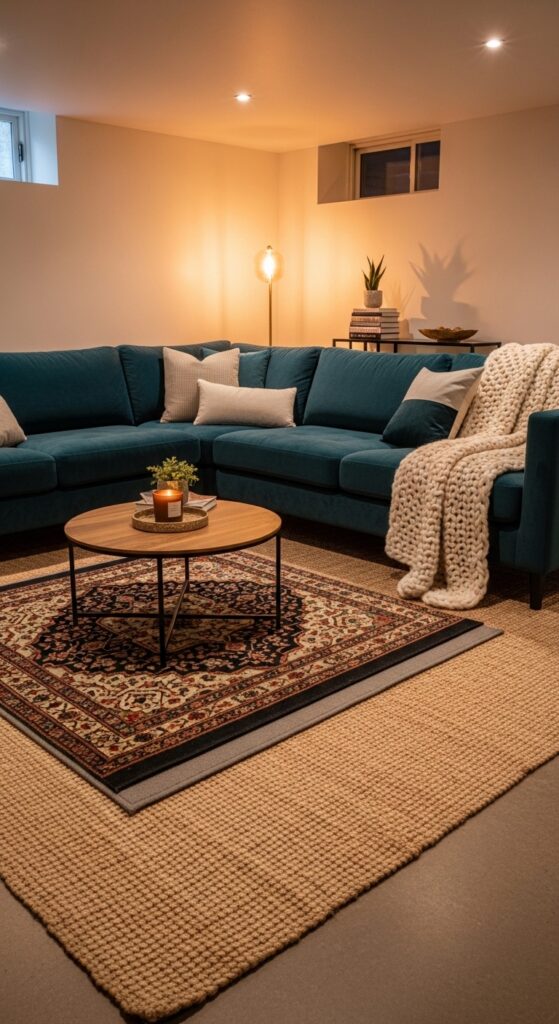
Vibe: The sofa that ends arguments about where to spend the evening — deeply soft, richly layered, and winning every time.
What makes it work: Layered rugs solve two basement-specific problems simultaneously — the cold, hard concrete slab floor and the visual flatness that a single rug on a large floor creates. The jute base rug grounds the furniture arrangement and adds natural texture, while the smaller Persian overlay adds color, pattern, and the jewel-toned warmth that makes a basement family room feel genuinely luxurious.
How to achieve it: Size the jute base rug so all sofa legs sit on it — minimum 2.4m x 3m for a standard sectional arrangement. Layer a vintage-style Persian rug at approximately 60% of the base rug’s dimensions, positioned to float centrally within the jute border. Use a non-slip rug pad between the two rugs to prevent the upper rug from shifting during use.
22. Basement Teen Hangout with Gaming Setup
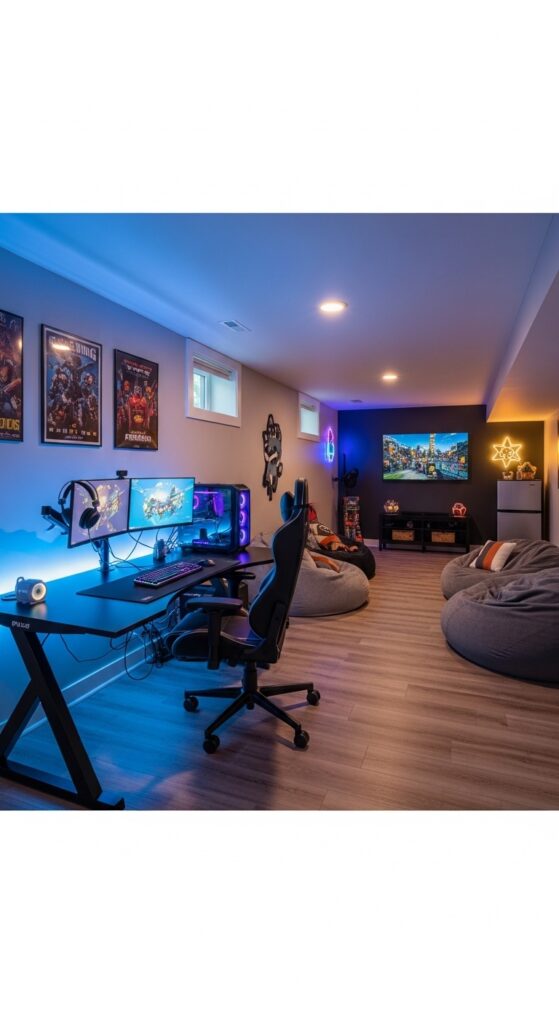
Vibe: The room that makes your teenager actually want to be home — fully equipped, entirely theirs, and social enough for a crowd.
What makes it work: A dedicated teen gaming setup in the basement benefits from the space’s natural acoustic separation — sound-intensive gaming and group hangouts stay below grade, away from the rest of the household. Dividing the room between an active gaming desk zone and a social seating zone makes the space genuinely multi-functional rather than single-purpose, accommodating the full range of teenage social activities.
How to achieve it: Position the gaming desk against the longest uninterrupted wall to maximize monitor width and prevent sightline obstruction. Install a dedicated 20-amp circuit for the gaming setup — standard gaming hardware draws significantly more power than general household circuits handle comfortably. A mini-fridge ($150–250) in the teen basement is the single most-requested addition and the one that most effectively keeps teenagers (and their friends) happily contained.
23. Whitewashed Brick Basement Wall Treatment
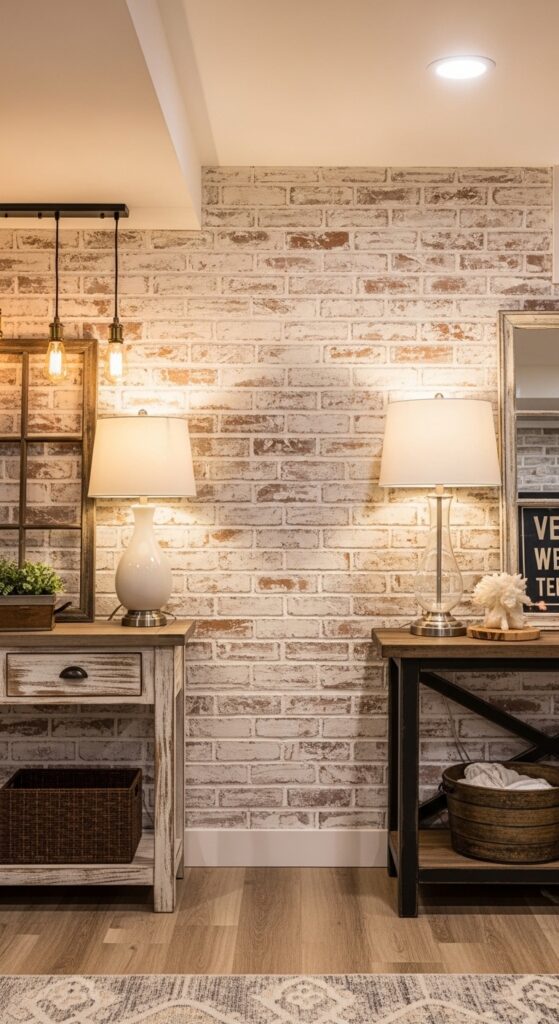
Vibe: Old and new in complete agreement — a wall that has clearly been somewhere, and is better for every year of it.
What makes it work: Whitewashed or limewashed brick walls are uniquely effective in basements because the technique both brightens the surface (critical in a below-grade space with limited natural light) and preserves the texture and material honesty of the original masonry. The translucent white coating catches light without eliminating the warmth and irregularity of the brick beneath.
How to achieve it: Mix exterior grade limewash paint with water at a 1:1 ratio and apply in thin, irregular coats with a natural bristle brush, working into the mortar joints and varying the pressure for an organic, uneven result. German smear technique uses undiluted mortar thinned with water, applied and partially wiped back while wet — it produces a rougher, more heavily textured result than limewash. Both techniques are permanent — test in an inconspicuous corner before committing.
24. Ceiling Coffers with LED Strip Lighting
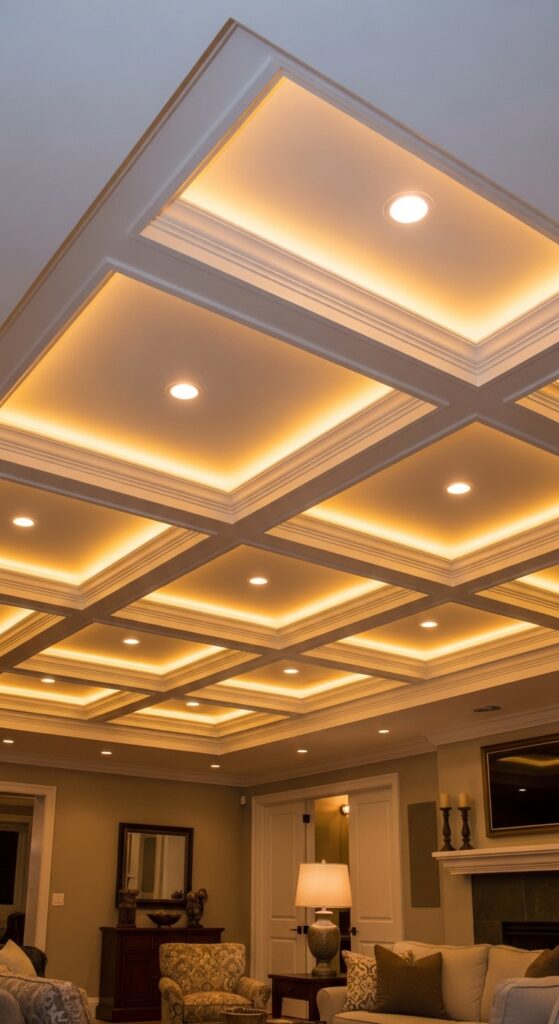
Vibe: A ceiling so beautiful it becomes the room’s signature — architectural depth, warm light, and the sense that every detail was considered.
What makes it work: A coffered ceiling achieves two critical things for a basement — it creates the impression of greater ceiling height through shadow and depth illusion, and it provides an ideal concealed housing for LED strip indirect lighting that illuminates the ceiling itself rather than shining downward. The result is a soft, ambient upper-room glow that makes the space feel genuinely architectural rather than simply finished.
How to achieve it: Coffer frames are built from standard 18mm MDF cut into strips and assembled into a grid directly onto the existing ceiling, with decorative moulding added at the coffer edges. LED strip lighting is recessed into a shadow gap at the inner coffer perimeter, facing upward. The entire assembly is painted in a single white to blend with the ceiling plane — depth reads as shadow rather than material change.
25. Basement Laundry Room Hidden Behind Barn Doors
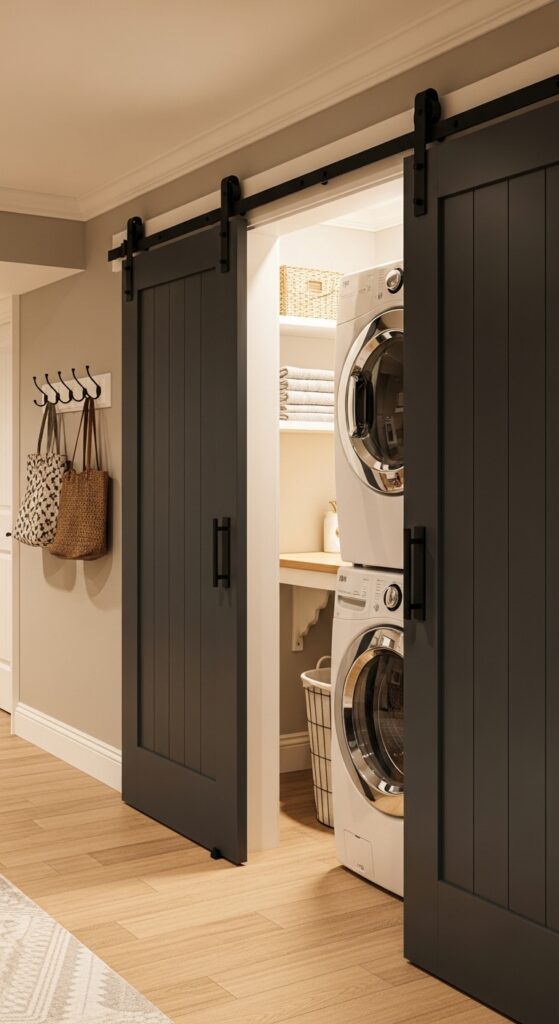
Vibe: The cleverest room in the basement — hidden in plain sight behind doors beautiful enough to display rather than disguise.
What makes it work: Barn doors are the ideal concealment strategy for basement utility functions because their surface area covers wide openings (a laundry room typically requires a 1.5–1.8m opening) without the swing clearance of traditional hinged doors — critical in basement layouts where space is premium. Painted in a strong color with decorative hardware, the doors become a design feature rather than a utility disguise.
How to achieve it: Bypass barn door hardware kits (where two doors slide past each other) are the most space-efficient solution for wider openings, available from hardware retailers in the $150–350 range for a two-door kit. Use solid-core doors rather than hollow-core for better acoustic performance over the laundry room — hollow-core doors transmit washer and dryer vibration sound clearly. Install a self-closing mechanism on at least one door for convenience during laundry transfers.
💡 Painting barn doors in the same color as adjacent walls makes them recede visually; in a contrasting color, they become the room’s focal point — both are valid.
26. Statement Wallpaper on One Basement Wall
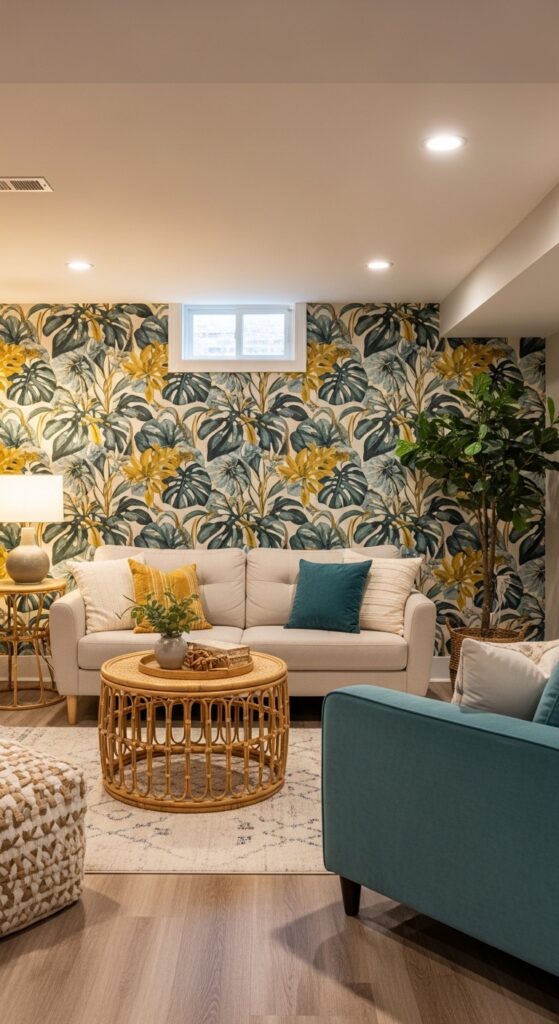
Vibe: The basement wall that stops everyone mid-sentence — bold, alive, and proving that below grade can be the most interesting room in the house.
What makes it work: A single feature wall of bold wallpaper in a basement has far more visual impact than the same paper used in an above-ground room because the enclosed basement space concentrates attention on the wall — there is no competing exterior view or natural light source to pull the eye elsewhere. The wallpapered wall becomes the entire visual experience, which means the choice pays back its investment with interest.
How to achieve it: Apply the feature wallpaper to the wall directly opposite the room’s entry point — this ensures the first view upon entering the basement is the most impactful one, creating immediate atmosphere and purpose. Use a paste-the-wall non-woven paper for easiest application in a basement where humidity levels may fluctuate more than above-grade rooms.
27. Basement Snack and Concession Station
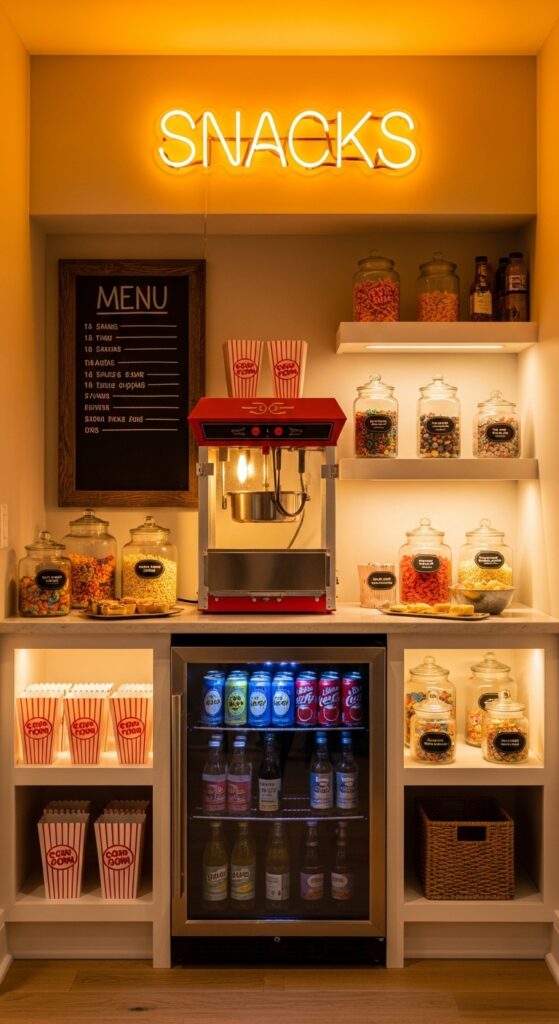
Vibe: Movie-night magic made permanent — a snack station that turns every basement evening into a small celebration.
What makes it work: A dedicated snack station concentrates the food-and-drink function of a basement family room into one organized, visually appealing zone — eliminating the constant trips upstairs that interrupt movies, games, and family time. The concession station aesthetic (popcorn machine, candy jars, neon sign) turns a practical storage solution into a playful design feature that children and adults both genuinely love.
How to achieve it: A countertop popcorn machine ($80–200 for a good-quality tabletop model) is the anchor purchase — mount it on a dedicated shelf at a height accessible to children. Add a glass-door beverage fridge ($250–400) below the counter for drinks. Use glass storage jars for candy and snacks rather than original packaging — they look dramatically better on display shelves and make portion control visual rather than requiring a separate counting step.
28. Soft Kids’ Corner with Teepee and Fairy Lights
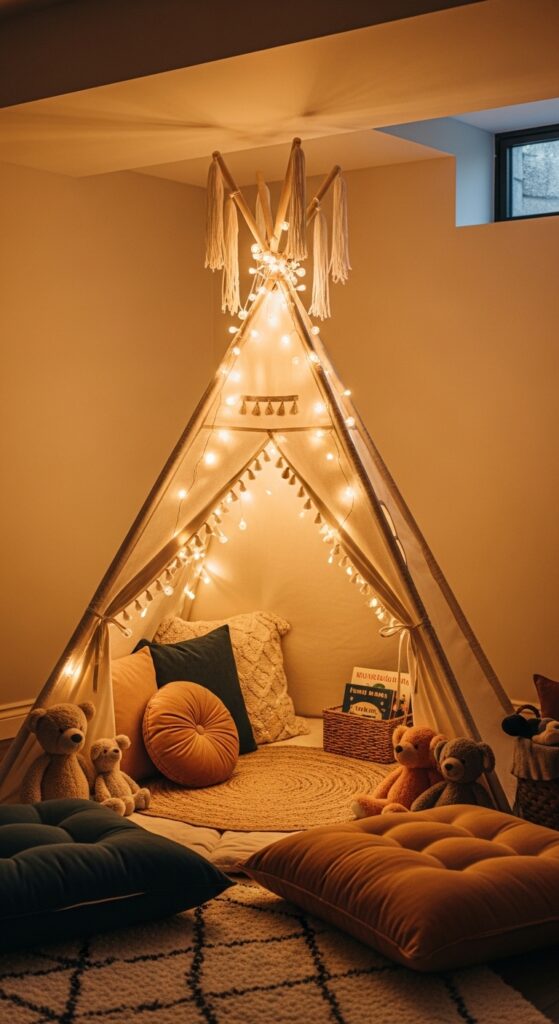
Vibe: Every child’s favorite place in the entire house — their own small world inside the larger world of the family room.
What makes it work: A teepee in a basement children’s corner creates an enclosed micro-space within the larger room — a child’s equivalent of a private room, with the comfort of proximity to parents and family. The fairy light interior adds warmth and magic that makes it irresistible for reading, quiet play, and imaginative games, extending the basement’s usefulness into younger childhood ages.
How to achieve it: Canvas teepees in large sizes (1.8–2m height) are available from children’s furniture retailers in the $80–150 range. Position in a basement corner so two walls provide backdrop protection and the teepee’s open face looks into the room. Battery-operated micro fairy lights require no wiring and can be easily replaced or removed when batteries expire. Line the floor inside with a washable cotton play mat for easier cleaning.
29. Basement Scent, Sound, and Atmosphere System
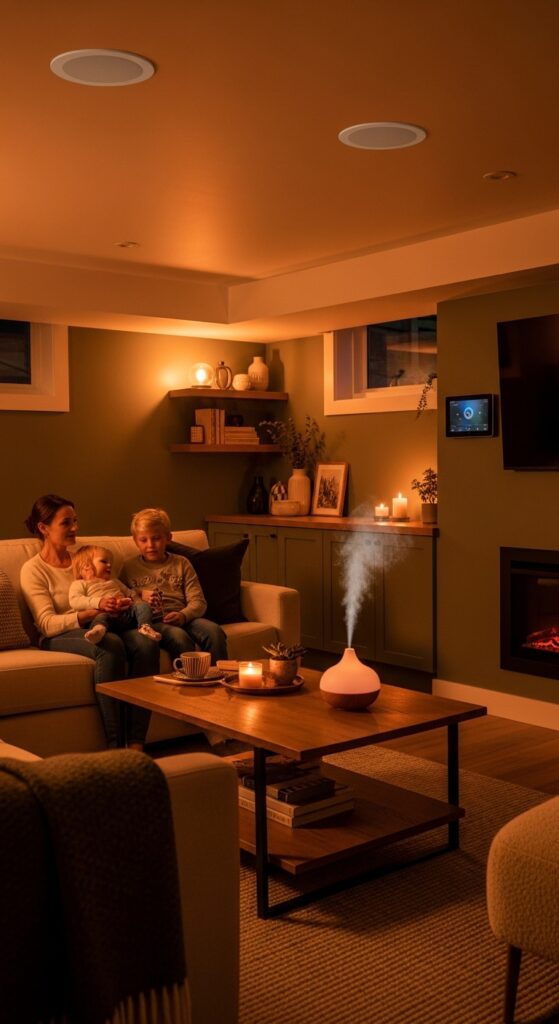
Vibe: Total sensory warmth — a basement that wraps around you completely, every sense attended to, every evening transformed.
What makes it work: The most memorable cozy basement spaces succeed not because of any single design element but because of the combined atmospheric effect of multiple sensory layers — sound, scent, light, and texture working in concert. In-ceiling speakers create music that fills the room without visible hardware; a diffuser adds subtle warmth through scent; smart lighting sets mood precisely — together they create an experience that no amount of furniture or surface treatment can replicate alone.
How to achieve it: Install in-ceiling speakers during the basement finishing stage if possible — retrofitting requires cutting ceiling drywall and running wire through finished spaces. Sonos, Klipsch, and Polk Audio all produce excellent in-ceiling speaker options in the $200–600 per pair range. Smart lighting can be added to any existing setup via smart bulbs or dimmers, and a quality ultrasonic essential oil diffuser ($60–150) rounds out the atmospheric system with minimal investment.
💡 A whole-basement smart home scene triggered by a single button or voice command — warm light, music on, diffuser running — transforms every evening automatically.
How to Start Your Cozy Basement Transformation
Begin with moisture, not aesthetics. Before a single design decision is made, assess the basement for moisture infiltration, efflorescence on walls, or evidence of water pooling after rain. No amount of beautiful flooring, wallpaper, or furniture will survive a wet basement — address the moisture source first, whether through exterior waterproofing, interior drainage channels, a sump pump installation, or vapor barrier installation on walls and slab. This single preparatory step protects every subsequent investment.
Once the space is dry and sound, tackle the four fundamentals in order: floor, ceiling, lighting, and walls. These establish the room’s architectural character and determine what all subsequent furniture and decor choices must work within. Replacing a drop-tile ceiling with drywall or a wood plank treatment, installing warm layered lighting on dimmers, and choosing a warm floor material will transform the raw space more dramatically than any amount of furniture or decoration applied to an untreated shell.
Budget intelligently by allocating the largest proportion of your investment to the elements that can’t easily be changed later — structural improvements, electrical work, plumbing for a wet bar or bathroom, and built-in cabinetry. Furniture and accessories can evolve over time; infrastructure is effectively permanent.
Expect a phased timeline: moisture remediation and structural finishing typically takes two to four weeks with professional contractors; electrical and plumbing rough-in adds one to two weeks; finishes (drywall, flooring, painting) another two to three weeks. Budget eight to twelve weeks from empty space to finished basement, and plan your furniture and accessory purchases to arrive in that final window.
Frequently Asked Questions
How much does it cost to finish a basement as a cozy family space?
Basement finishing costs vary significantly by scope, finish level, and local labor rates. A basic finished basement — drywall, flooring, lighting, and paint — typically runs $25–50 per square foot in the United States, putting a 1,000-square-foot basement at $25,000–50,000. Mid-range finishes with built-ins, a wet bar, and quality lighting run $50–100 per square foot. High-end finishes with home cinema, full bathroom, custom cabinetry, and premium materials can reach $100–200 per square foot. DIY finishing of structural elements (framing, drywall) with professional finishing of trades (electrical, plumbing) offers the most cost-effective middle ground.
What flooring is best for a cozy basement family room?
Luxury vinyl plank (LVP) is the most practical and popular choice for basement family rooms — it is 100% waterproof, handles the temperature and humidity fluctuations of below-grade spaces without warping, installs as a floating floor over concrete without adhesive, and comes in wood-look finishes indistinguishable from real timber at a fraction of the cost. For maximum coziness, wall-to-wall carpet over a thick foam underlay is unbeaten — warm, soft, and acoustically superior to any hard floor. Avoid real hardwood flooring in basements, which will cup, warp, or buckle with the moisture movement inherent in below-grade environments.
How do I make a dark basement feel brighter and more welcoming?
Lighting is the primary lever — invest in a layered lighting scheme with warm-white (2700K) recessed ceiling lights, supplemented by table lamps, floor lamps, and LED strip accent lighting. Mirrors are highly effective in basements — a large-format mirror on one wall can double the perceived brightness of a room by reflecting existing light sources. Light wall colors (warm white, cream, or pale greige) reflect more light than dark tones, though counterintuitively, deeply saturated dark colors on all four walls can make a basement feel intentionally cozy rather than simply dark. White or very light ceiling paint is essential regardless of wall color — a dark ceiling in a basement creates oppressive weight.
Do I need a building permit to finish my basement?
In most jurisdictions, yes — any work that creates new livable or habitable square footage, adds electrical circuits, installs plumbing, or modifies structural elements requires a building permit. Permit requirements protect homeowners by ensuring work meets current fire safety codes (egress window requirements for sleeping rooms, smoke detector placement, electrical load capacity) and protects resale value by creating documented, inspected finished space. Working without permits can result in having to tear out finished work during a home sale inspection. Always consult your local building department before beginning basement finishing work.
How do I handle low ceilings in a basement family room?
The most effective visual ceiling-heightening strategies are: mounting all lighting flush with the ceiling (recessed rather than hanging fixtures), running flooring planks lengthwise in the direction of travel to elongate the room’s apparent proportions, painting the ceiling the same color as the walls or even slightly lighter for visual continuity, and keeping furniture proportions low — platform beds, low-profile sofas, and low coffee tables all compress less visual space than tall furniture. Avoid hanging anything from the ceiling (including pendant lights unless on high-rise fittings), and use vertical-striped or floor-to-ceiling curtains to draw the eye upward. Ceilings below 2.1 meters are genuinely challenging; below 1.9 meters, some activities (pool table, exercise equipment) become impractical and require creative spatial planning.
Ready to Create Your Dream Cozy Basement Family Space?
These 29 cozy basement ideas represent every dimension of below-grade transformation — from the foundational decisions of flooring, ceiling, and lighting to the finishing details of snack stations, teepee corners, and full atmospheric systems. The basement you’re imagining — warm, layered, genuinely loved, and constantly used by the whole family — is absolutely achievable in the space below your feet right now. Save the ideas that speak most directly to your family’s specific life, and let those anchor the design rather than trying to incorporate everything at once.
Start with one bold decision — a deep paint color, a built-in media wall, a projector screen, a fireplace, or simply the right lighting scheme — and let the room build outward from that first commitment. The most successful cozy basements aren’t finished in a single weekend or a single budget cycle; they’re layered over time by families who use the space, learn what they actually need, and make each addition with intention. Your basement is waiting. The warmest room in the house is the one you make for yourselves.