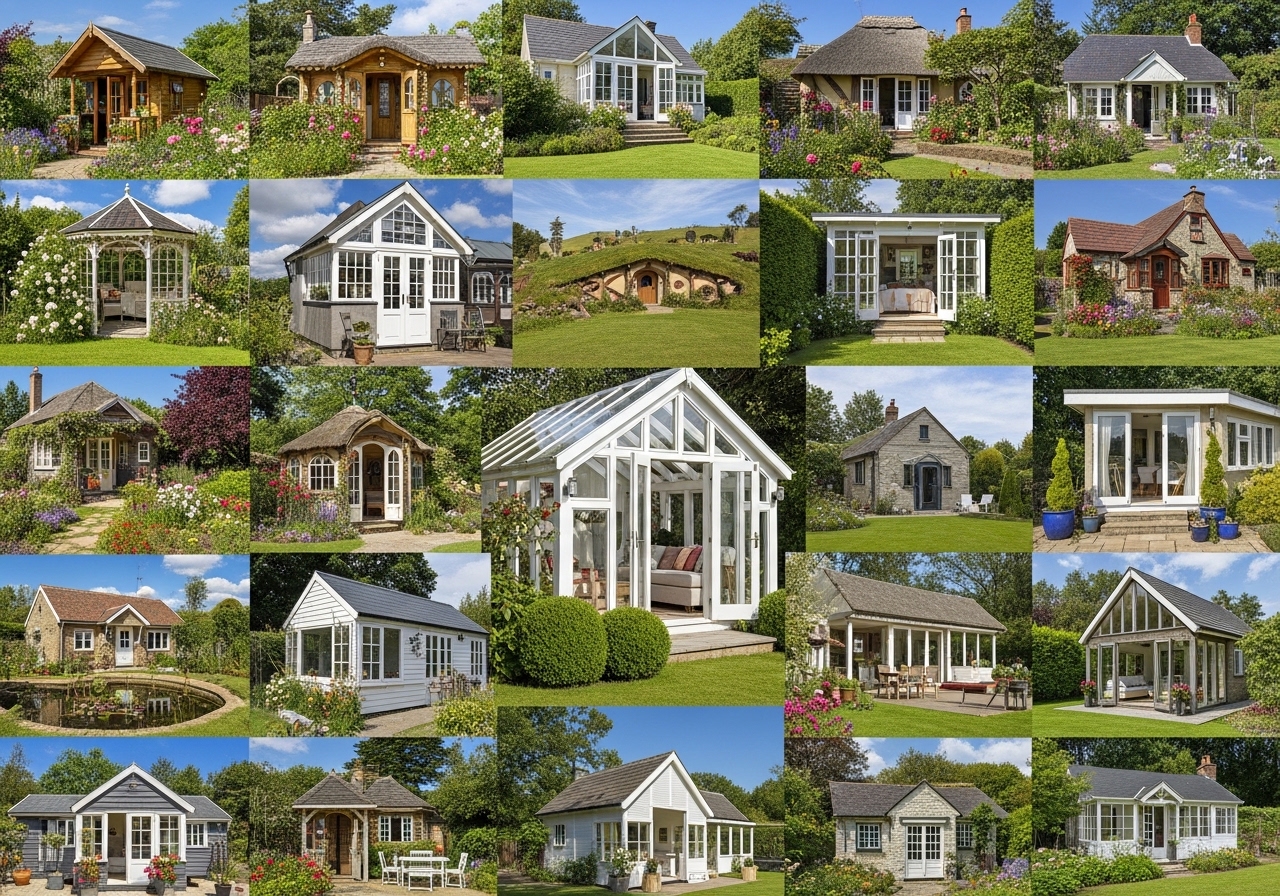
There’s something quietly magical about a garden retreat that feels like a world apart — a sun-warmed room where the boundary between indoors and outdoors simply dissolves. Summer house ideas have captured the imagination of garden lovers everywhere, and it’s easy to see why: these intimate spaces promise the charm of a second home without leaving your own backyard. Whether you’re dreaming of a reading nook wrapped in climbing roses or a full entertaining pavilion with lanterns glowing at dusk, the right design transforms even a modest structure into something truly special. Here are 27 summer house ideas worth saving — each one a real, actionable stepping stone toward your own beautiful garden retreat.
Why the Garden Retreat Aesthetic Works So Well
The summer house aesthetic endures because it taps into something deeply human — our longing for a space that is ours, tucked away from the demands of daily life. Unlike interior rooms constrained by architecture, a garden retreat is defined by its relationship to the outside world: light shifts through the day, breezes carry the scent of lavender and cut grass, and the visual boundary between the room and the garden is deliberately blurred.
What makes this style visually cohesive is its layering of natural materials — aged timber, rattan, linen, terracotta, and weathered metal — all in a palette drawn from the garden itself. Think warm whites, sage greens, dusty pinks, soft greys, and sun-bleached taupes. These are colors that breathe.
Right now, the aesthetic is having a cultural moment driven by a widespread appetite for slow living, biophilic design, and intentional outdoor spaces. Pinterest boards dedicated to cottagecore, maximalist botanical, and Scandinavian outdoor living have collectively generated hundreds of millions of saves.
The best part? Even a compact 6×8 ft garden shed can achieve this look fully. Scale is no barrier — thoughtful styling does the work.
Climbing Roses Over a Pale Timber Façade
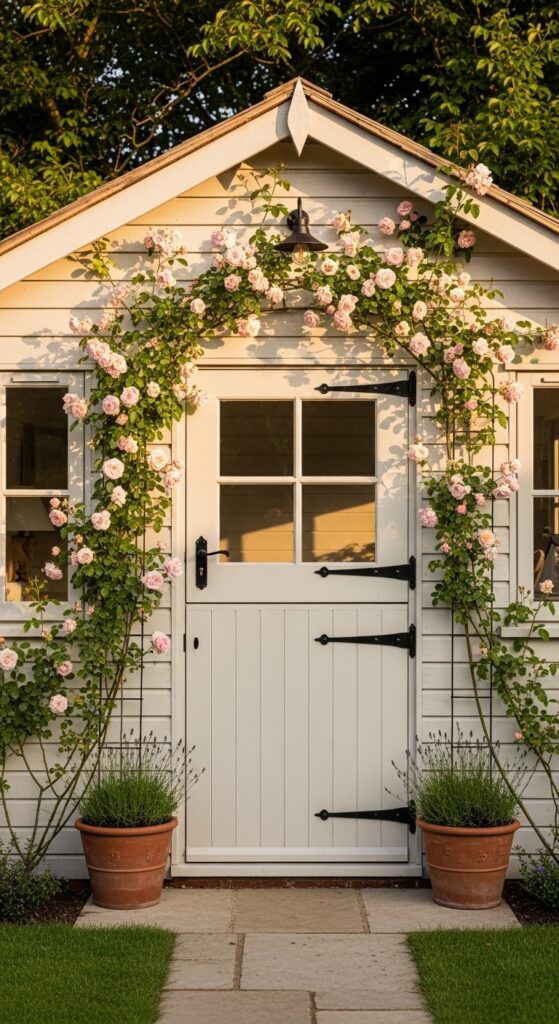
Vibe sentence: This is the summer house you imagined as a child — soft, romantic, and wrapped in living colour.
What makes it work: The contrast between pale painted timber and the rich, tumbling mass of roses creates the kind of effortless beauty that looks decades in the making. The dark ironwork hardware anchors the softness without hardening the overall feel, providing visual weight that stops the façade from feeling washed out.
How to achieve it: Paint exterior cladding in a warm white such as Farrow & Ball’s “Pointing” or Little Greene’s “Slaked Lime.” Train a repeat-flowering climber like ‘Zéphirine Drouhin’ (thornless and wonderfully fragrant) along a simple tensioned wire system fixed to the fascia.
💡 Plant climbing roses in autumn for the strongest root establishment before their first summer bloom.
A Dutch Door Opening Onto the Garden

Vibe sentence: A Dutch door makes every single morning feel like an arrival somewhere wonderful.
What makes it work: The divided door design lets you capture the breeze and the view while keeping pets or small children safely inside — form following function in the most beautiful way. Painting it in sage green anchors the structure in the landscape, making the house feel like it belongs among the planting.
How to achieve it: Source pre-hung Dutch door kits from specialist joinery suppliers, or convert an existing door with a horizontal split and a simple bolt mechanism. Finish in an exterior-grade satinwood in a colour like Farrow & Ball’s “Mizzle” or Dulux’s “Sage Advice.”
Rattan Furniture Dressed in Linen Cushions
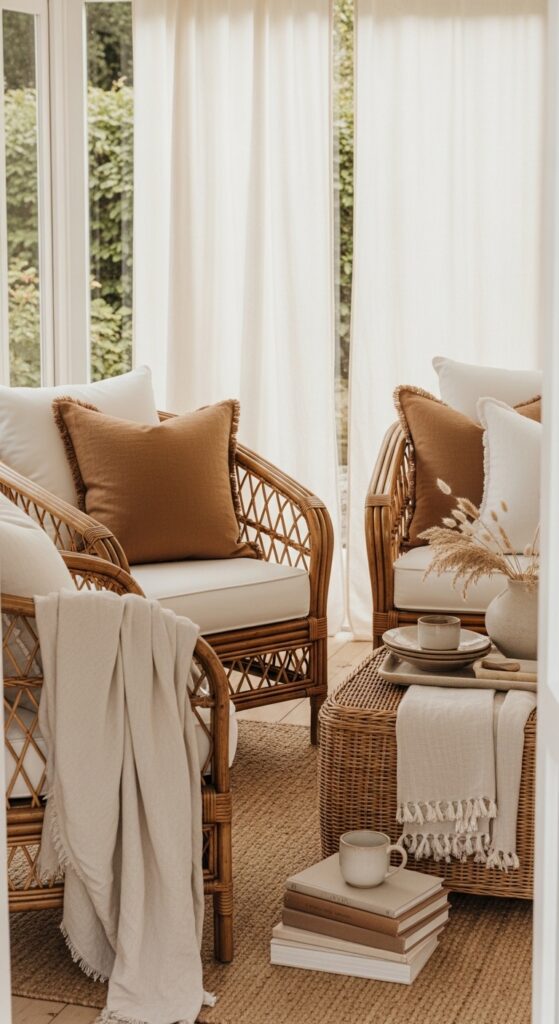
Vibe sentence: Rattan and linen together is the material equivalent of a long, unhurried afternoon.
What makes it work: Rattan’s organic texture adds warmth and visual interest without heaviness — it reads as relaxed but never cheap when paired with high-quality natural textiles. The tonal palette of warm neutrals creates a cohesive, restful space that doesn’t compete with the garden view outside.
How to achieve it: Look for rattan or cane furniture with tight, even weave and solid frames. Cushion covers in washed linen (ideally a weight of 180–220 gsm) drape and crease naturally, adding to the lived-in appeal. Stick to undyed or stone-coloured linens for longevity.
💡 IKEA’s JUTHOLMEN rattan range is surprisingly durable outdoors and under £100 for a chair.
A Pegboard Tool Wall Turned Potting Station
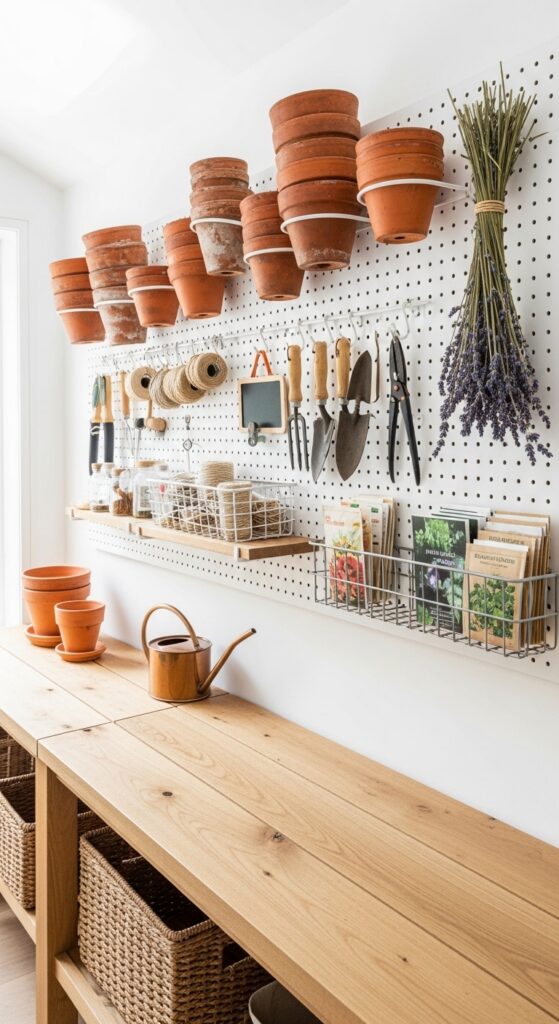
Vibe sentence: A potting station this beautiful makes you want to get your hands in the soil.
What makes it work: Pegboard is endlessly reconfigurable — hooks, shelves, and baskets can shift with the seasons — while keeping everything visible and accessible. Painting it white makes the colourful tools and terracotta pots pop against it, turning pure function into a display.
How to achieve it: Mount 6mm pegboard on 25mm timber battens (this creates the gap needed for hooks to sit correctly). Paint with a chalky emulsion for a matt, gallery-wall feel. Arrange tools by type and height for a composition that’s as pleasing to look at as it is practical.
Fairy Lights Strung Beneath Open Rafters
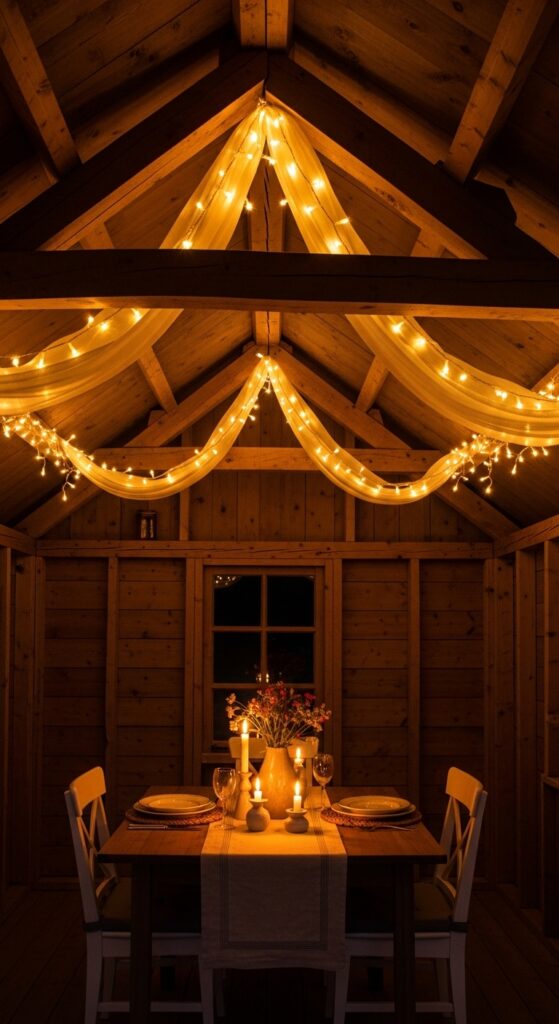
Vibe sentence: The moment the lights come on at dusk, the summer house becomes somewhere completely enchanted.
What makes it work: Draped rather than stretched taut, fairy lights create softly undulating pools of light that mimic candlelight — far more flattering and atmospheric than overhead fixtures. Exposed timber rafters provide the perfect structure to drape from, making the room feel like an outdoor room that got lucky with a roof.
How to achieve it: Choose warm white (2200K–2700K) bulbs with visible filaments for an Edison effect. Drape lights loosely on large cup hooks screwed into the rafter undersides, with swags no more than 40cm deep. Run all lights to a single timer socket so the atmosphere arrives automatically every evening.
A Full-Length Bifold Wall Opening to the Garden
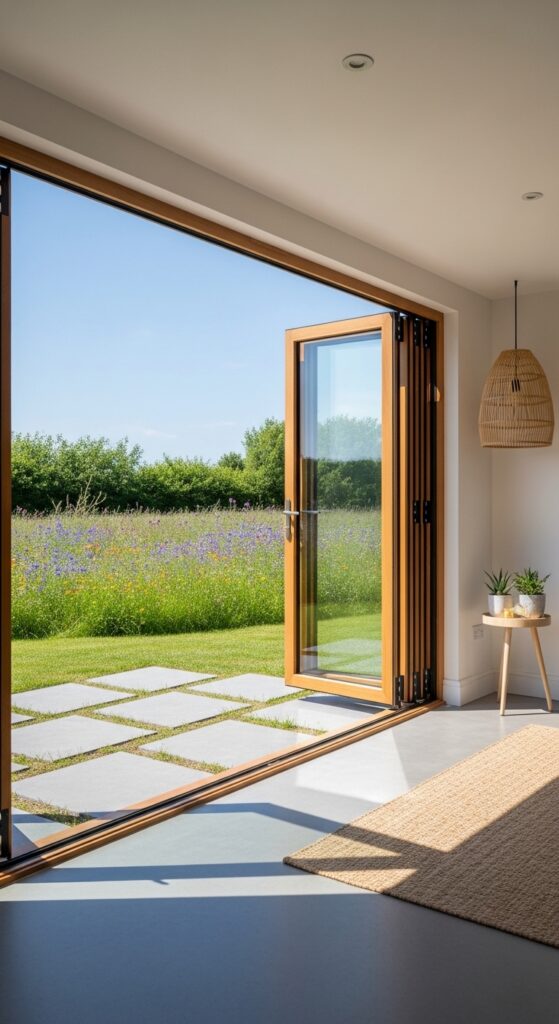
Vibe sentence: When the bifolds are open, indoors simply ceases to exist.
What makes it work: Full-width bifold doors remove the visual barrier between structure and garden entirely — the summer house becomes a pavilion, open to light, sound, and air. Continuing the same floor material outside (a poured concrete slab or timber decking) reinforces the seamless transition.
How to achieve it: Specify slim-profile aluminium-clad timber bifolds in a bronze or dark grey finish to minimise visual frame bulk. A single continuous threshold strip (rather than a step) makes the flow between surfaces feel architectural rather than makeshift.
Sage Green Painted Walls with White Trim
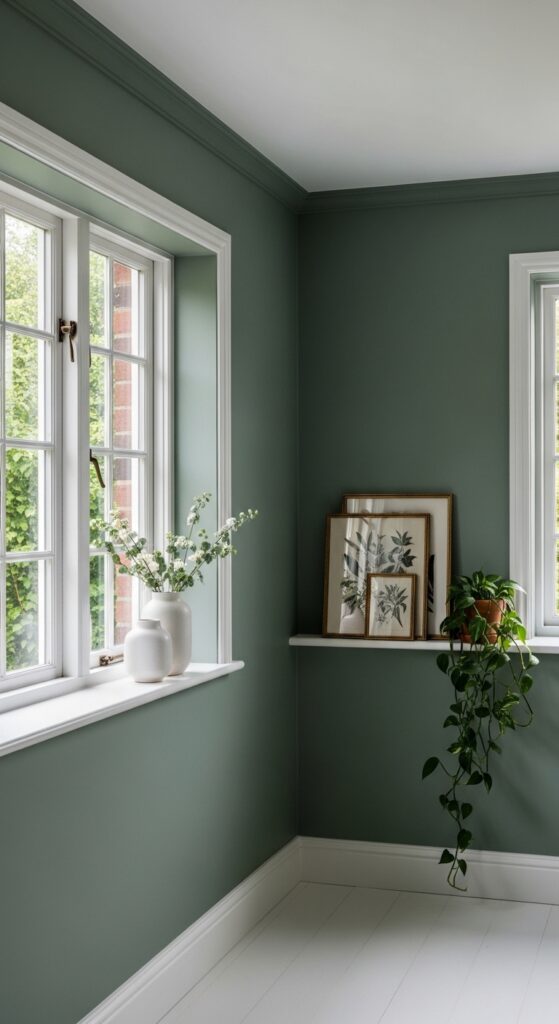
Vibe sentence: Sage green walls make a room feel like it’s been filtered through leaves — calm, cool, and entirely alive.
What makes it work: The deep, muted green draws the eye inward while simultaneously referencing the garden outside, creating a sense of immersion in the landscape. White trim provides the necessary contrast that keeps the space feeling crisp rather than cave-like.
How to achieve it: Look for sage shades with a grey rather than yellow undertone — Farrow & Ball’s “Mizzle,” Dulux’s “Sage Advice,” or Benjamin Moore’s “Sage Mountain” all perform beautifully in varying light. Apply walls in a flat emulsion and trim in a satin for light-catching contrast.
💡 Paint a single wall first and live with it for 48 hours before committing — sage greens shift dramatically between cloudy and sunny days.
A Window Seat Built Into the Eaves
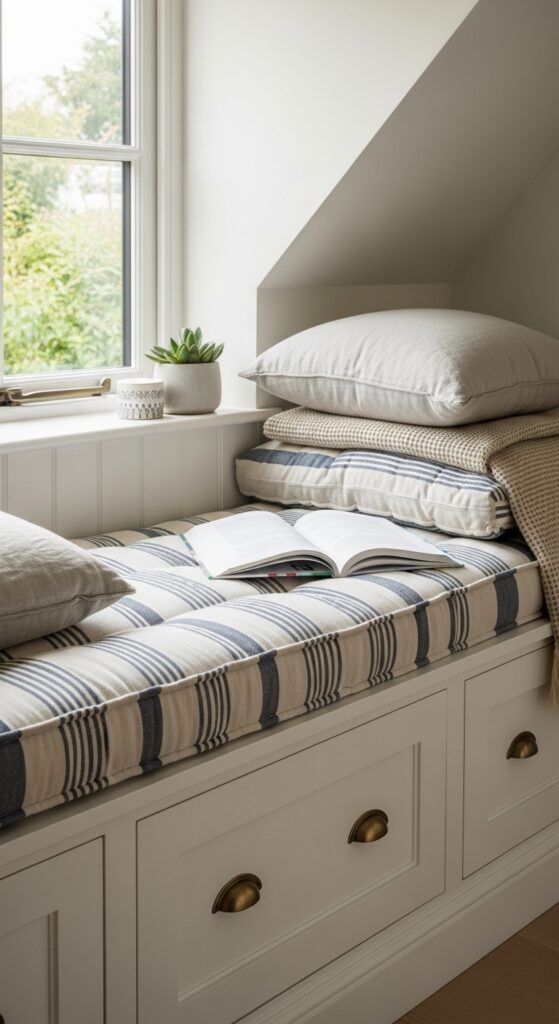
Vibe sentence: A window seat in the eaves is the adult version of a childhood hiding place — and just as perfect.
What makes it work: Building the seat into the awkward low-eave zone turns an architectural constraint into the most desirable spot in the room. The integrated storage below makes it hardworking as well as beautiful, and the low viewpoint frames the garden like a living painting.
How to achieve it: Construct the base from 18mm plywood with tongue-and-groove MDF panelling on the front, painted in a durable satinwood. Commission a foam cushion at 100–120mm depth upholstered in an outdoor-rated fabric for longevity in a summer house environment.
Terracotta Pots Grouped in Clusters
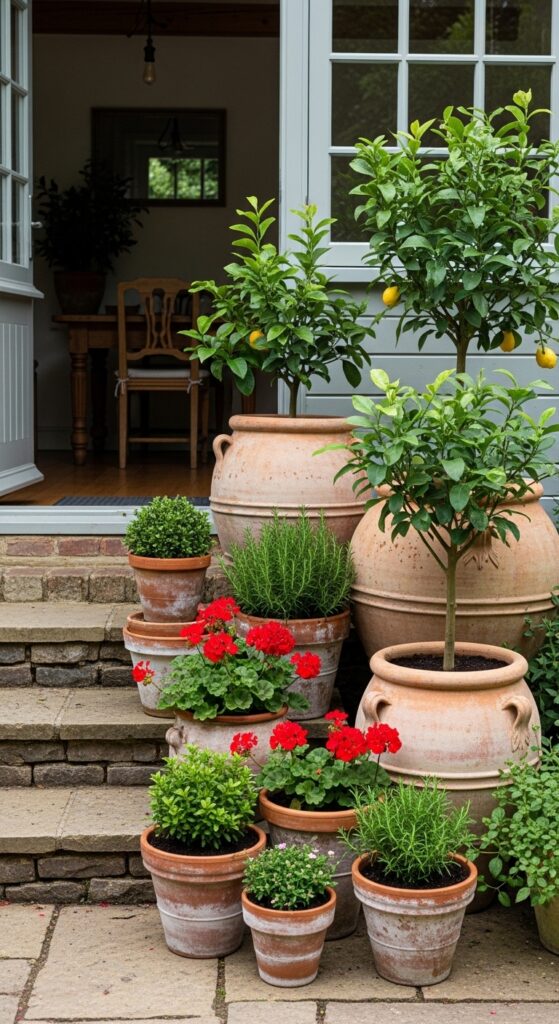
Vibe sentence: A cluster of terracotta pots makes the approach to a summer house feel like the entrance to a Mediterranean courtyard.
What makes it work: Grouping in odd numbers (3, 5, or 7 pots) and varying heights by at least 15–20cm between each creates a composition with rhythm and visual movement. The aged patina of terracotta adds immediate warmth that plastic or glazed pots simply cannot replicate.
How to achieve it: Source genuine hand-thrown Italian or Portuguese terracotta — the thicker walls insulate roots better and age more beautifully. Arrange the largest pot at the back, medium in the middle, smallest at front-left or right to create depth even in a flat arrangement.
💡 Speed-age new terracotta by painting on a thin wash of natural yoghurt — moss colonises within weeks.
A Reclaimed Timber Workbench as a Bar
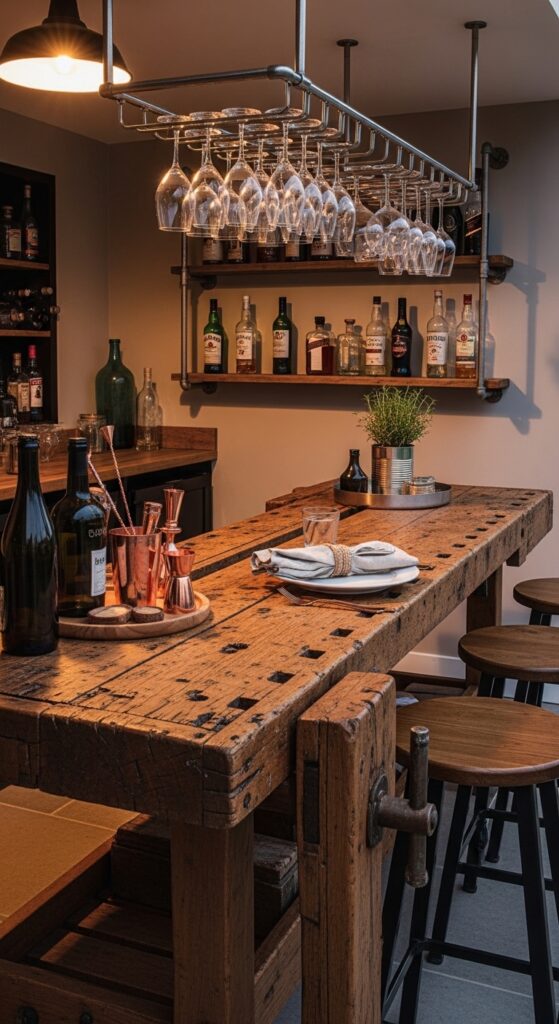
Vibe sentence: A reclaimed timber bar makes every evening in the garden feel like a genuine occasion.
What makes it work: The contrast between the rough, character-rich timber surface and the precision of properly arranged glassware creates that coveted rustic-luxe tension — it looks effortful but deliberately so. Wall-mounted shelving in steel pipe keeps bottles accessible without cluttering the bench surface.
How to achieve it: Source reclaimed elm, oak, or pine workbench tops from architectural salvage yards — budget £80–200 for a good 1.8m length. Sand lightly and seal with a food-safe hardwax oil rather than varnish, preserving the texture. Add a simple stemware rack above using stainless steel wire-hanging systems.
Sheer White Curtains Softening Glazed Walls
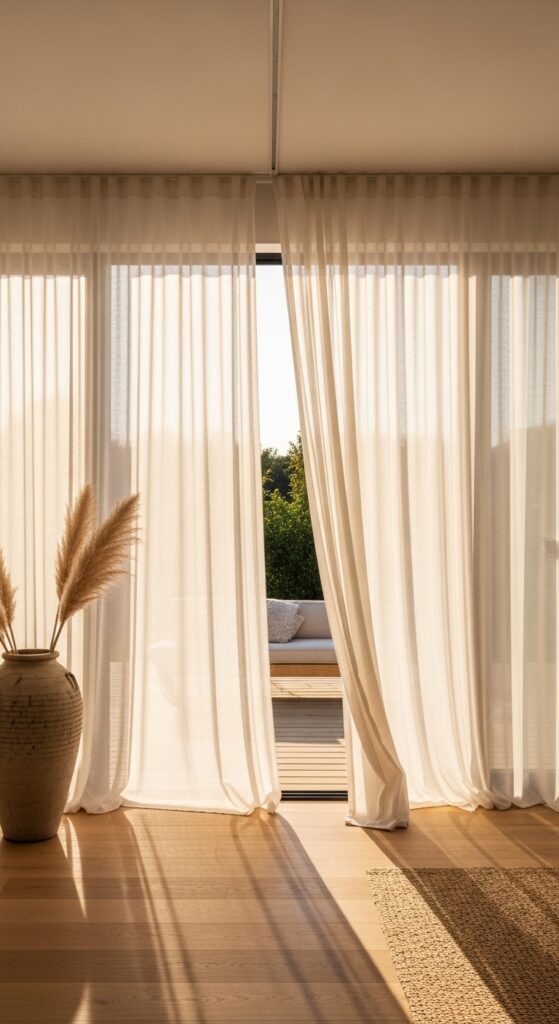
Vibe sentence: Sheer curtains turn every afternoon into something cinematic.
What makes it work: Mounting curtain tracks close to the ceiling and letting fabric pool slightly on the floor creates height and drama in a compact structure. The sheers diffuse direct light into a warm ambient glow rather than blocking it, preserving the connection to the garden while eliminating glare.
How to achieve it: Choose a sheer fabric with at least 60% linen content for a natural drape and texture that reads as intentional rather than budget. Hang on a slim ceiling-mounted track (not a rod) in white or brass, extending the track 20–30cm beyond the window on each side so curtains frame rather than cover the glass when open.
A Vintage Lantern Collection on the Entrance Steps
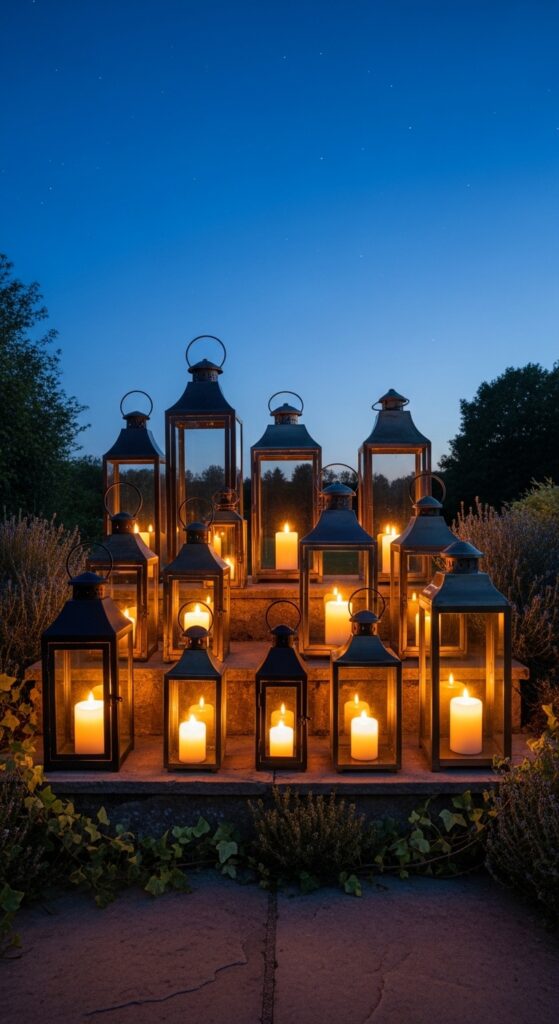
Vibe sentence: A lantern collection at dusk signals that something worth arriving to waits inside.
What makes it work: Mixing metals — aged black iron, antique brass, and pewter — within the same lantern collection adds richness without chaos, because all are in the same warm, muted tonal family. Varying heights and scale across the steps creates a graduated composition that draws the eye upward toward the door.
How to achieve it: Use battery-operated LED candles with warm flicker settings (2700K or below) inside lanterns for safety and longevity. Source antique lanterns from eBay or Etsy, or look for weathered reproductions at garden centres in the £15–40 range.
Botanical Print Wallpaper as a Feature Wall
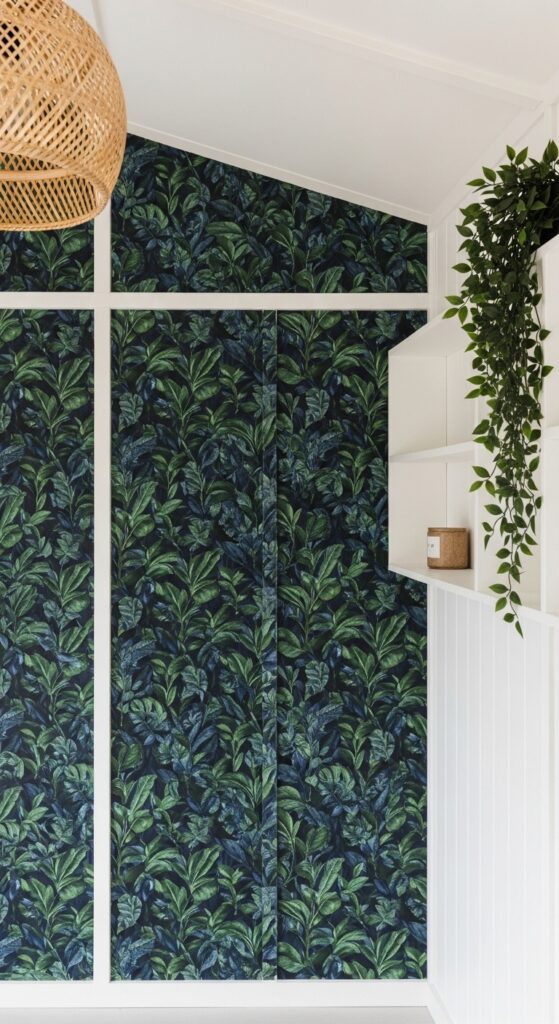
Vibe sentence: One wall of botanical wallpaper turns a plain summer house into a room you genuinely want to spend time in.
What makes it work: Confining the bold print to a single feature wall lets you use a dramatic pattern without overwhelming a small space. The contrast with plain white on the remaining walls gives the paper room to breathe and ensures it reads as a considered design choice rather than an impulse.
How to achieve it: Look for paste-the-wall papers to simplify installation in timber-framed summer houses (easier to adjust). Designers Guild, Scion, and Graham & Brown all produce botanical prints at varying price points. Always hang a test strip first — prints can shift in colour under different light conditions.
💡 Peel-and-stick botanical wallpaper from Etsy is a £40–80 commitment vs. £200+ for paste papers — perfect for summer houses you might restyle.
A Hammock Strung Between Interior Posts
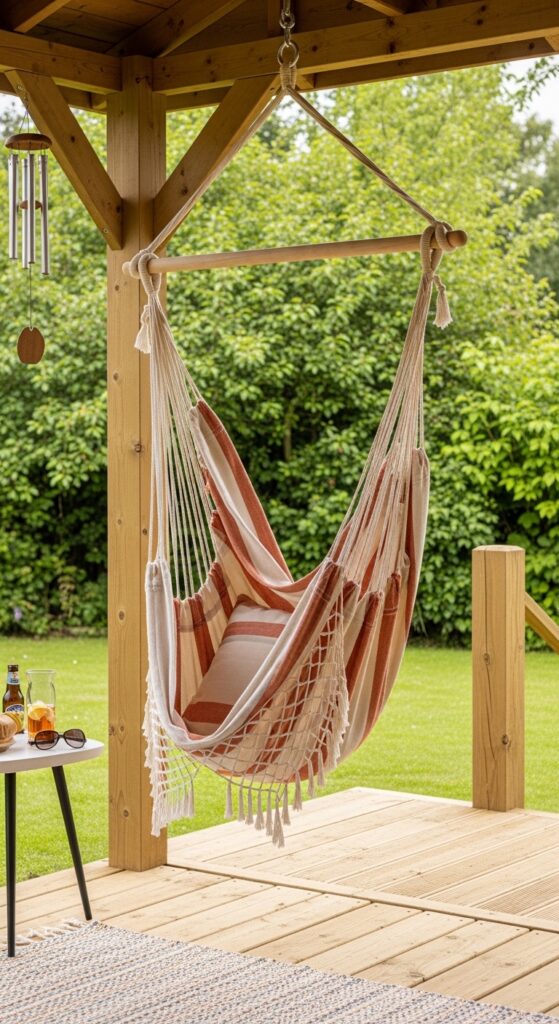
Vibe sentence: The only thing better than a garden hammock is a garden hammock with a roof over it.
What makes it work: Hanging a hammock indoors means full enjoyment regardless of sun or light rain — the open sides provide the breeze while the structure provides shade and shelter. Structural timber posts (already a feature of most garden room builds) do the job perfectly, requiring only heavy-duty hammock fixings.
How to achieve it: Specify M10 stainless steel eye bolts set into structural posts at a height of approximately 1.5m for a comfortable hang angle. A hand-woven Nicaraguan or Brazilian cotton hammock (widely available from £40–90) is more comfortable and more beautiful than synthetic alternatives.
A Stone or Concrete Floor with Outdoor Rugs
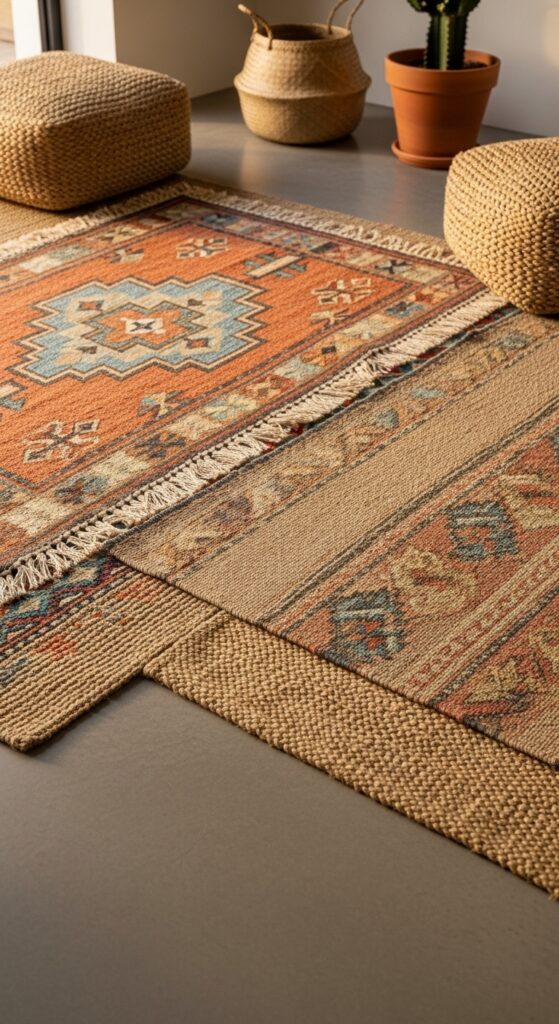
Vibe sentence: Layered rugs on concrete create a ground plane that feels genuinely curated, not accidental.
What makes it work: The pairing of a cool, smooth concrete base with warm, textured rugs creates the tactile contrast that makes a room feel designed. Layering — a large jute base rug under a smaller kilim — adds a relaxed, collected quality that single rugs rarely achieve.
How to achieve it: Choose outdoor-rated polypropylene rugs for the base layer (they resist moisture and mould) and layer genuine kilim or dhurrie flat-weave rugs on top for colour and texture. Outdoor polypropylene kilim-style rugs are widely available from Wayfair and IKEA (the LAPPLJUNG range) from around £45.
Open Timber Shelving Styled with Ceramics
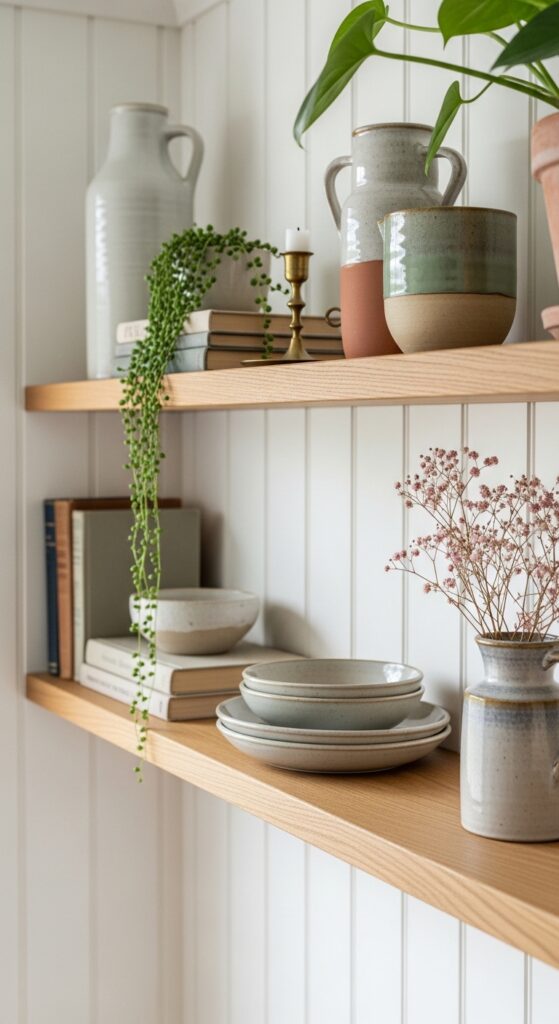
Vibe sentence: A well-styled shelf tells a story — and in a summer house, that story should feel like summer itself.
What makes it work: The combination of organic ceramics, natural materials, and living plants creates a shelf display that feels curated and personal rather than staged. Varying the height of objects — tall vessels at back, low dishes at front, trailing plants breaking the shelf line — creates a composition with genuine visual rhythm.
How to achieve it: Work in the “rule of three” when grouping objects: one tall item, one mid-height, one low or trailing. Ceramics in a shared glaze palette (earth tones, sage, warm white) read as a collection even when they’re unrelated pieces. Source from independent potters on Etsy or local craft markets.
💡 Fix shelves using a hidden bracket system for a truly floating look — L-brackets drilled into the shelf underside are invisible and far stronger than visible corbels.
A Chalkboard Wall for Garden Planning
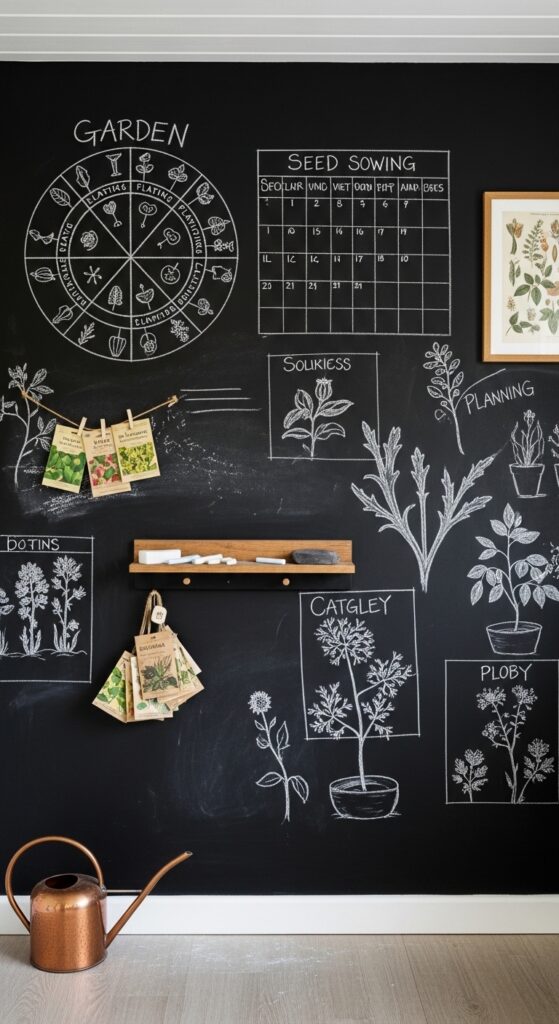
Vibe sentence: A chalkboard wall turns a summer house into a genuine creative studio — part potting shed, part planning room.
What makes it work: Chalkboard paint on a full wall creates a functional centrepiece that earns its place in any garden retreat used for planning, journalling, or children’s play. The contrast of matte black with white chalk marks is graphically striking and immediately characterful.
How to achieve it: Apply three coats of specialist chalkboard paint (available from Rust-Oleum and Farrow & Ball in 1L tins, £25–40) over a primed wall. Season the surface before first use by rubbing the flat side of chalk across the entire wall, then erasing — this prevents ghosting of first marks.
A Wisteria-Covered Pergola as an Outdoor Anteroom
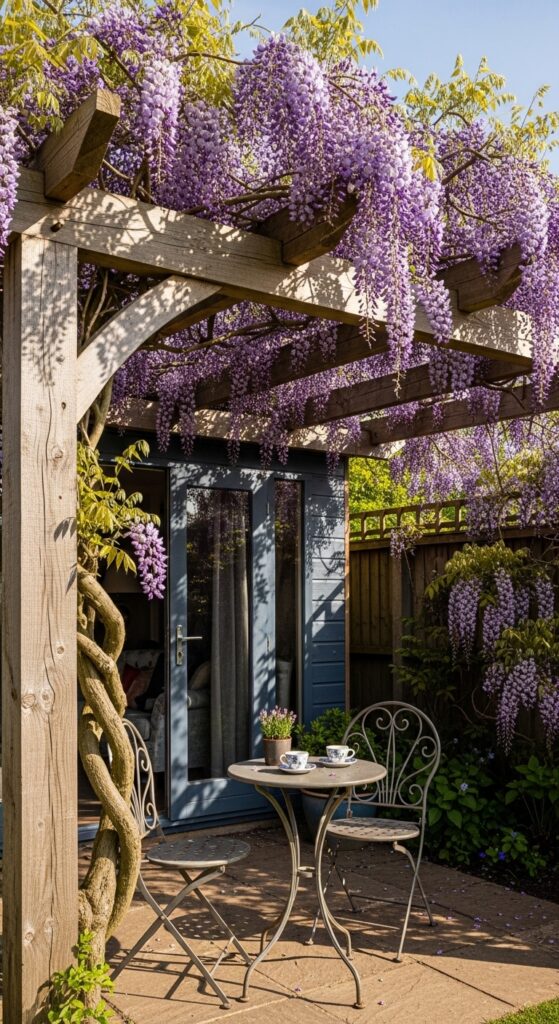
Vibe sentence: A wisteria pergola creates an outdoor room before you’ve even stepped inside — entirely unforgettable.
What makes it work: Wisteria’s cascading flower clusters create a canopy that shifts with the breeze, filtering light into constantly moving dappled patterns — a living ceiling that changes by the minute. The pergola structure frames the summer house entrance architecturally, giving even simple buildings a grand sense of arrival.
How to achieve it: Build the pergola from pressure-treated timber in a minimum 100x100mm post section and 50x150mm beam section for a scale that suits wisteria’s eventual weight. Plant Wisteria sinensis ‘Alba’ for a white variation or ‘Prolific’ for the fastest-establishing purple.
Vintage Botanical Prints in Mismatched Frames
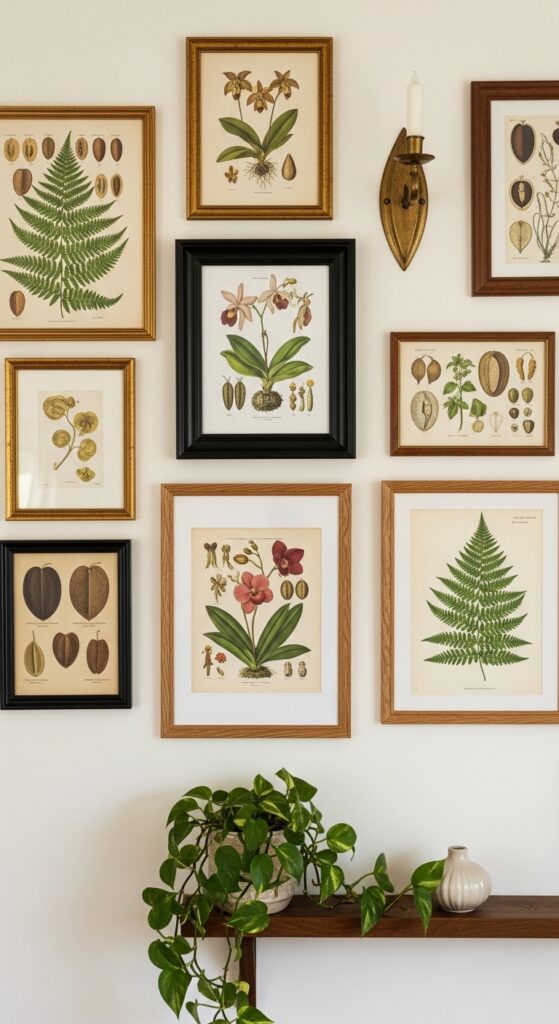
Vibe sentence: A gallery wall of vintage botanicals turns an ordinary summer house into something that feels genuinely collected over a lifetime.
What makes it work: Mismatched frames in coordinating tones — all warm metals, or all natural woods — give a gallery wall the relaxed, organic quality of prints genuinely collected over time. The botanical subject matter bridges the gap between the room and the garden beyond, tying the interior to the outdoor setting.
How to achieve it: Source vintage botanical prints from Etsy, antique markets, or free print archives such as the Biodiversity Heritage Library (biodiversitylibrary.org). Frame in a mix of charity shop finds spray-painted in complementary tones — all in gold, all in black, or all in natural timber.
💡 Print your own botanicals on cream-toned card stock at home and frame them — virtually indistinguishable from antique originals at a fraction of the cost.
A Zinc or Copper Watering Can as a Design Object
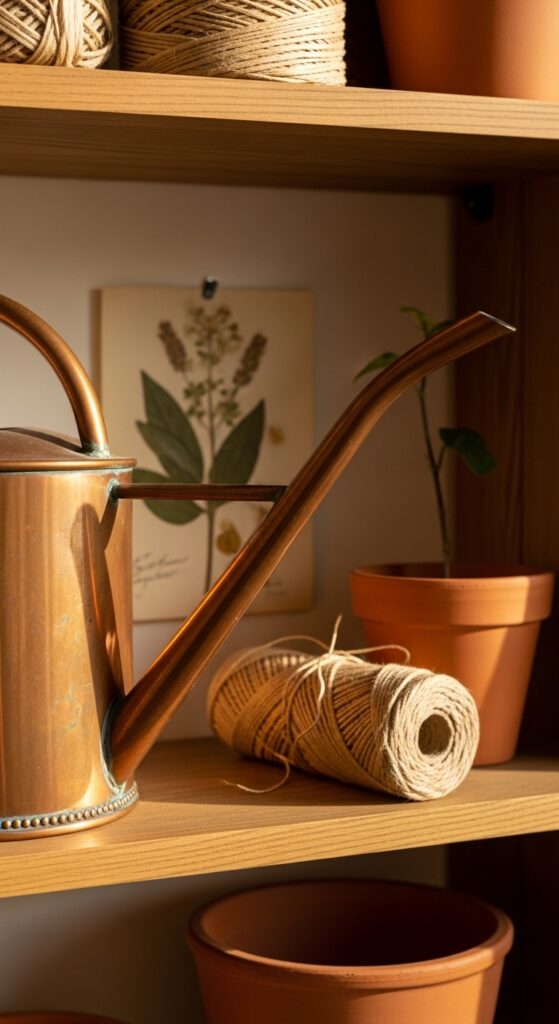
Vibe sentence: A copper watering can is the most hardworking beautiful object in any garden retreat.
What makes it work: Copper develops a living patina that makes it more beautiful with every use — the blue-green verdigris that accumulates over years is genuinely irreplaceable by any artificial finish. Displayed on open shelving, it reads as both tool and sculpture.
How to achieve it: Look for traditional long-reach copper cans from Haws (the British manufacturer, established 1886) or similar specialist suppliers. A genuine copper can costs £60–120 but outlasts plastic alternatives by decades. Position on open timber shelving at approximately eye height where the light can catch the patinated surface.
A Daybed Piled with Outdoor Cushions
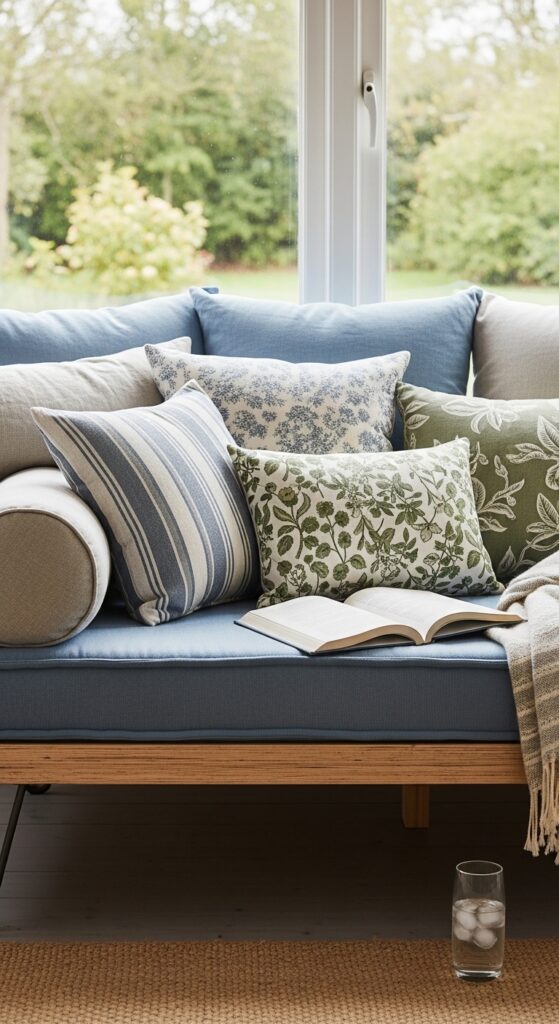
Vibe sentence: A daybed is the single piece of furniture that most transforms a summer house from a room into a retreat.
What makes it work: Width is everything — a daybed that’s at least 90cm wide reads as genuinely generous rather than an afterthought. Layering cushions in varying sizes and slightly mismatched patterns (tied by a shared colour palette) creates the effortless abundance that makes the space feel like you’re meant to actually use it.
How to achieve it: Build a simple platform base from 18mm plywood on hairpin legs, finished with two coats of exterior satinwood. Source a custom foam pad (90mm minimum) cut to your dimensions from a foam merchant — budget £60–100 for a 90x200cm pad. Cover in an outdoor-rated fabric rated to 10,000 Martindale rubs minimum.
Raised Timber Planting Beds Framing the Entrance
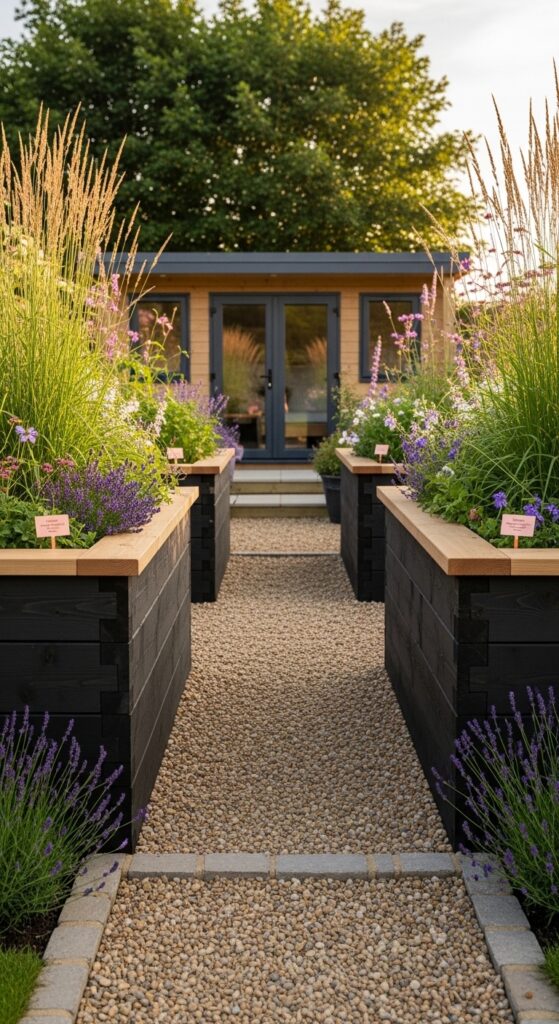
Vibe sentence: Raised beds flanking a summer house entrance turn a simple path into a proper garden arrival.
What makes it work: Matching beds create symmetry and a sense of intentional design that instantly elevates the overall garden scheme. Planting at varying heights — low lavender at front, tall grasses behind — gives the beds depth and movement across the season.
How to achieve it: Construct beds from 38mm-thick larch or Douglas fir boards treated with a dark exterior oil (Ronseal’s “Ebony” or “Dark Oak”) for a refined look that weathers gracefully. Fill with a 60/40 mix of topsoil and horticultural grit for excellent drainage in a raised environment.
A Pegboard Herb Garden Inside the Summer House
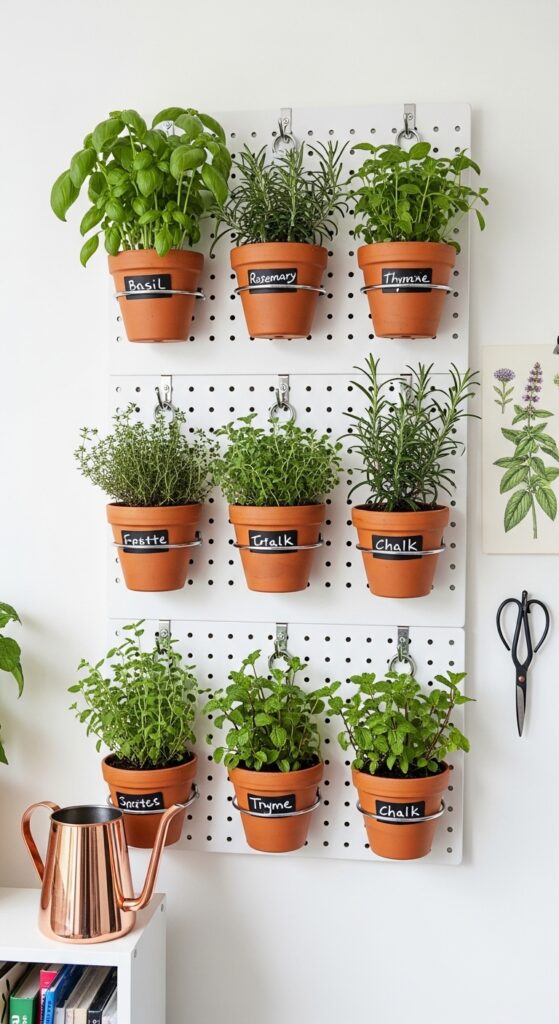
Vibe sentence: A living herb wall inside the summer house is garden utility made genuinely beautiful.
What makes it work: Growing herbs vertically on a wall-mounted pegboard system brings scent and colour into the room while keeping the floor plan clear. The repetition of small terracotta pots in a grid creates a visual pattern that functions as both wall art and kitchen resource.
How to achieve it: Use 90mm terracotta pots fitted with clip-on hanging frames designed for pegboard (available from garden centres and online). Position the board within 1.5m of a natural light source — a south-facing window is ideal. Herbs requiring most sun (basil, rosemary, thyme) go at the top nearest maximum light.
💡 Label pots with a white paint pen directly on the terracotta rim — more durable than chalk labels and just as charming.
A Firepit or Log Burner for Year-Round Use
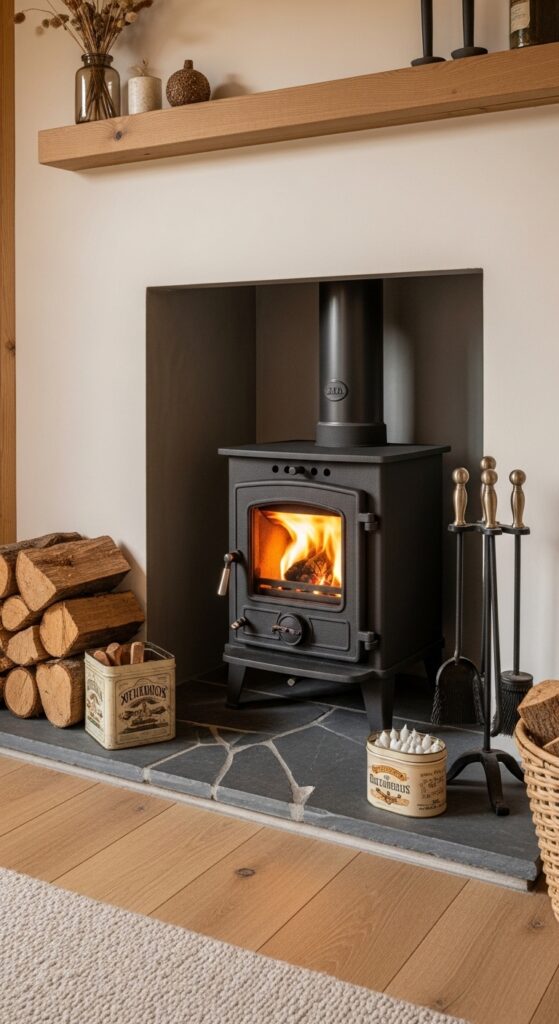
Vibe sentence: A wood burner transforms a summer house into a room you can use in October and April without apology.
What makes it work: A small 3–5kW output stove is scaled perfectly for garden room dimensions of 20–40m², heating the space efficiently without overwhelming it. The visual focus of a stove — the dancing flame, the cast iron detail — creates a focal point the room organises itself around, even when unlit.
How to achieve it: Specify a DEFRA-approved stove for use in smoke-controlled areas. Consult a HETAS-registered installer for correct flue installation in a timber structure — this is non-negotiable for safety. Brands like Charnwood, Morso, and Contura offer compact models starting around £800–1200 before installation.
Solar Powered Garden Lighting Along the Path
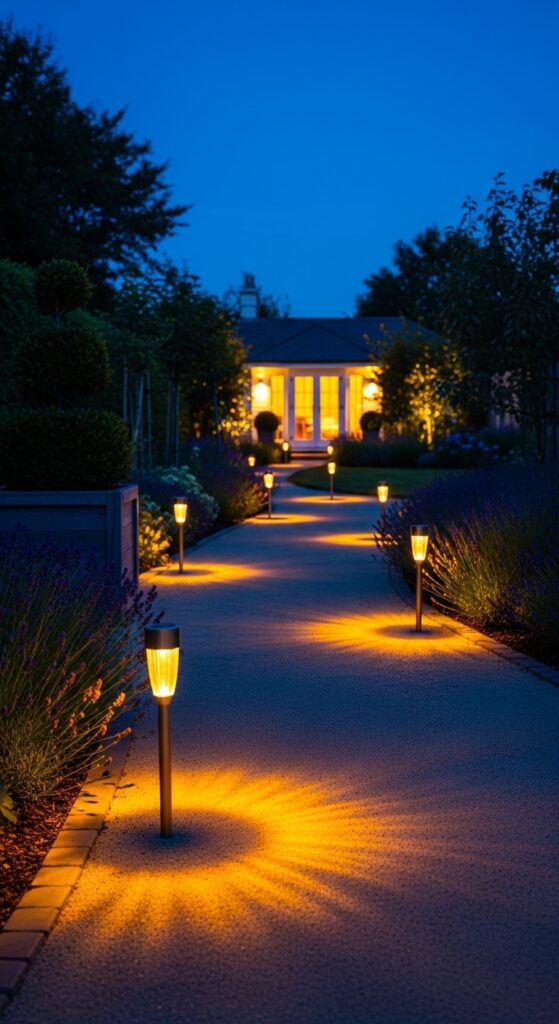
Vibe sentence: Solar path lighting makes every evening walk to the summer house feel like an event.
What makes it work: Consistent stake light spacing (typically 60–90cm apart) creates a rhythm that draws the eye along the path and toward the destination. Bronze or aged steel finishes read as architectural rather than ornamental, elevating the overall scheme.
How to achieve it: Choose solar stake lights with a warm white LED output (2700K or below) and a minimum 8-hour run time. Place panels in maximum available sun during daylight hours. Brands like Philips Hue Lily and Garden Lights Mimosa offer reliable output at the £15–30 per unit price point.
A Built-In Bed Nook for Weekend Stays
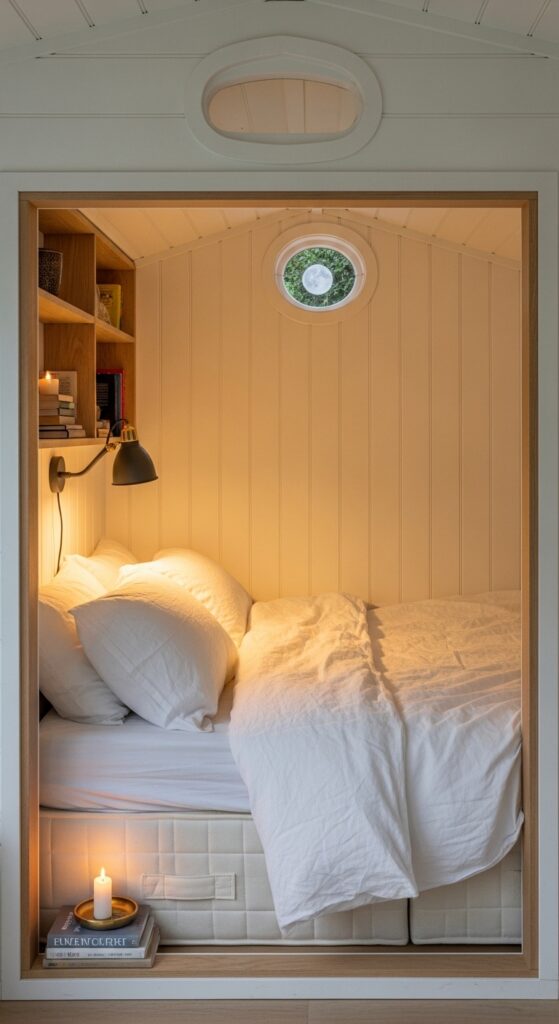
Vibe sentence: A built-in bed nook turns a summer house into a genuine sanctuary — a room that changes everything about how you experience your own garden.
What makes it work: Enclosing the sleeping area within a built-in alcove creates a sense of cocooned privacy that freestanding beds rarely achieve. The integrated shelving on either side makes the bed feel designed-in rather than placed, and the beadboard panelling adds texture that a plain wall never could.
How to achieve it: Construct the alcove frame from 47x100mm C16 timber stud, line with 9mm MDF and beadboard facing, and finish in a durable satinwood throughout. A quality pocket-sprung mattress cut to your alcove dimensions (most mattress specialists cut to size for £30–80 extra) makes all the difference to genuine comfort.
A Greenhouse-Style Lean-To for Growing and Gathering
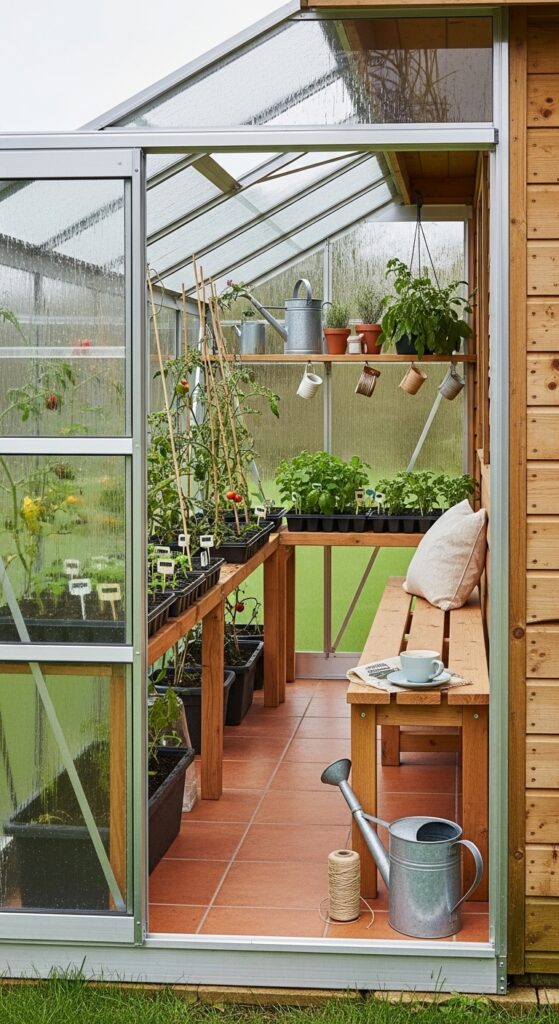
Vibe sentence: A lean-to greenhouse beside your summer house is the most productive and beautiful addition your garden can have.
What makes it work: The lean-to’s south-facing glass panels trap heat and light while the shared wall with the summer house provides insulation — a genuinely efficient design. Combining growing space with a simple seating bench means the space works as both a productive glasshouse and an early morning sipping-coffee spot.
How to achieve it: Aluminium-frame lean-to greenhouse kits are available from Halls Greenhouses and Eden Greenhouses in widths from 1.5m at approximately £400–800 installed. Orient the opening on the south or south-west face of the summer house for maximum solar gain. Terracotta quarry tile flooring retains heat through the day and releases it overnight.
How to Start Your Garden Retreat Transformation
The single most impactful place to begin is exterior paint colour. A summer house that reads as part of the landscape — painted in sage green, deep blue, or soft charcoal — looks designed, while an unpainted or default-stained structure looks like a shed. Commit to one exterior colour first; it costs relatively little and instantly changes the way the whole garden reads.
The most common mistake is buying furniture before clarifying how the space will actually be used. A summer house used primarily for reading needs a daybed and good shelving. One used for entertaining needs a table, bar area, and good lighting. Define the primary use before spending anything.
Budget-friendly entry points include: exterior paint (£30–60), a set of rattan chairs (£80–150), outdoor cushions (£40–80 per pair), and solar path lighting (£10–20 per stake). Together, these four investments cost under £350 and make a transformative difference to both exterior and interior.
Realistically, a well-designed garden retreat comes together over one to two full seasons — not a single weekend. Plan the structural elements (flooring, lighting, built-ins) first, and allow the styling layer (plants, textiles, ceramics) to evolve naturally with use.
Frequently Asked Questions
What’s the best paint colour for a summer house exterior?
Sage green, deep charcoal, and soft forest green are the most enduring choices for summer house exteriors because they integrate naturally with garden planting. Farrow & Ball’s “Mizzle,” Dulux’s “Teal Tension,” and Little Greene’s “Sage” all perform beautifully in outdoor conditions. Avoid pure brilliant white — it shows weathering and algae quickly and tends to look stark against a garden backdrop. Always use an exterior-rated satinwood or masonry paint for longevity.
How do I make a small summer house feel bigger?
The most effective techniques are light-coloured walls, mirrors placed opposite windows, and furniture scaled to the room — nothing over-sized. Floor-to-ceiling curtains make the ceiling feel higher, while keeping the floor as clear as possible (using wall-mounted shelving rather than floor-standing units) creates a sense of spatial generosity. Glazed panels or bifold doors that open fully also dissolve the boundary between inside and outside, making the room feel much larger than its footprint.
Can I use a summer house all year round?
Yes — with the right additions. A small 3–5kW wood-burning stove or electric infrared panel heater makes a garden room comfortably usable through autumn and mild winter days. Good insulation (50mm rigid insulation board in walls and roof, covered with internal lining) dramatically reduces heat loss. Double-glazed panels rather than single-glazed make a significant difference to heat retention. With these three elements, a summer house is genuinely four-season usable in most UK climates.
What flooring works best in a garden retreat?
Engineered timber, concrete-effect porcelain tile, and treated timber decking boards are the three most practical options for summer houses. They tolerate the foot traffic between garden and interior, resist moisture tracking in from outside, and work beautifully with layered outdoor rugs. Avoid carpet entirely — it deteriorates quickly in a space with fluctuating humidity. Engineered oak in a brushed natural finish (around £40–60 per m²) provides the warmth of timber with significantly better moisture resistance than solid hardwood.
How much does it cost to create a beautiful summer house garden retreat?
A well-styled basic garden retreat — using an existing structure — can be achieved for £500–1,500 covering paint, furniture, textiles, and lighting. A new-build bespoke garden room with insulation, electrics, and quality finishes typically ranges from £8,000–25,000 depending on size and specification. The good news is that the styling layer (plants, ceramics, prints, textiles) has enormous impact relative to cost — the difference between a bare room and a genuinely beautiful retreat is often achieved for £300–600 in considered styling choices.
Ready to Create Your Dream Garden Retreat?
These 27 summer house ideas prove that a beautiful garden retreat is far more achievable than it looks — and far more transformative than you’d expect. Whether you start with a pot of sage green paint and a copper watering can or go all-in with bifold doors and a wood-burning stove, every one of these ideas has the power to change the way you experience your outdoor space. Save the ideas that made you pause, pin the ones that made you plan, and remember: every extraordinary retreat begins with one single decision to begin. Your garden is already waiting — your summer house just needs to be ready for it.