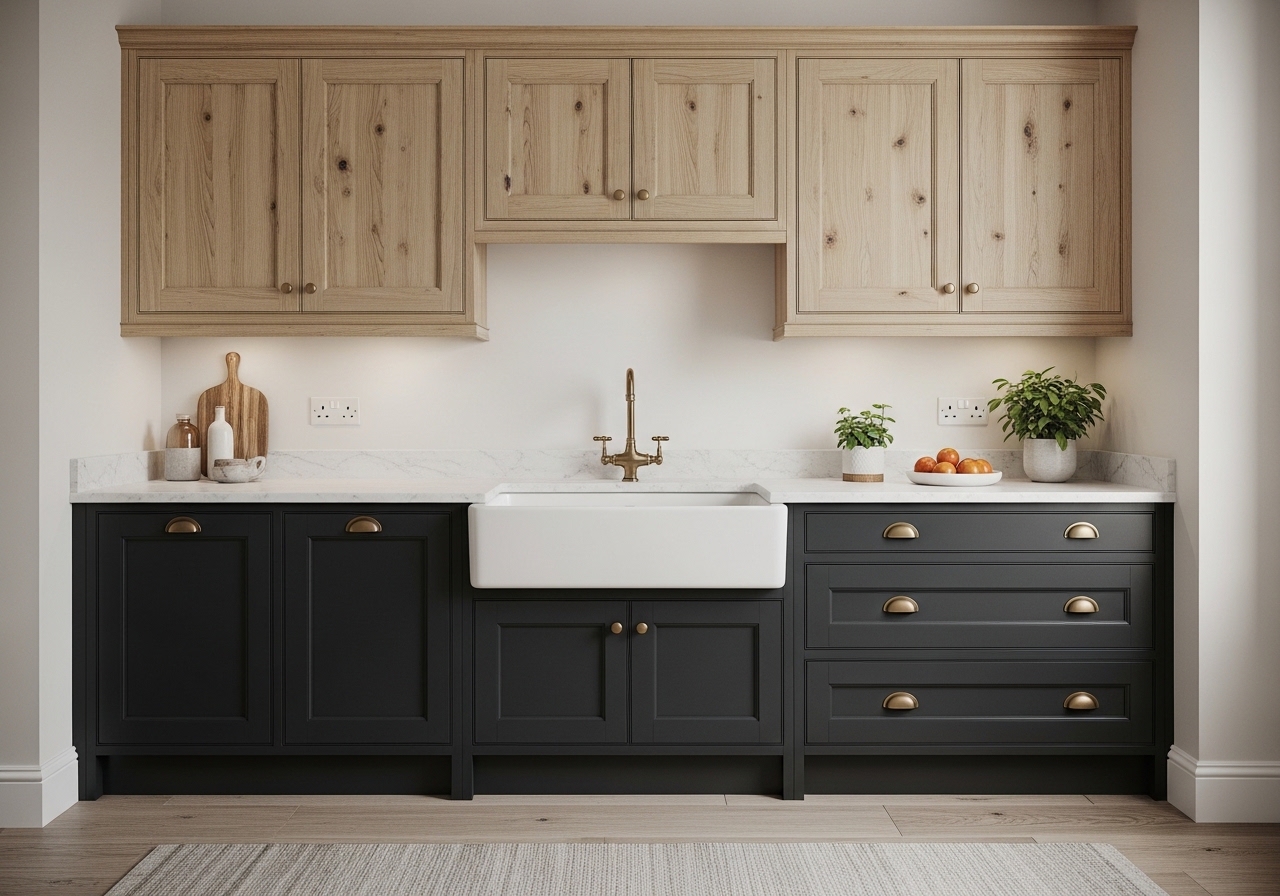
There’s something magical about a kitchen that layers two cabinet colors instead of settling for one safe choice. A two-tone kitchen has a way of feeling brighter, richer, and more designed, even before you add the bar stools or pendant lights. If you’ve been craving a space that feels custom but still approachable, these 26 two tone kitchen cabinet combinations ideas will give you real, actionable inspiration. Some are soft and timeless, some are bold and dramatic, and every one of them is easy to picture in a real home. Here are 26 ideas worth saving.
Why Two Tone Kitchen Cabinet Combinations Work So Well
Two-tone cabinetry feels special because it creates contrast without chaos. Instead of one uninterrupted block of color, you get visual movement: something light to lift the room, something deeper or warmer to ground it. That balance makes kitchens feel more layered and intentionally styled.
The look also plays beautifully with the materials people already love in kitchens. Think warm white paint against rift-cut oak, navy beside marble-look quartz, or soft greige paired with unlacquered brass. The mix of painted and natural finishes adds texture in a way that feels warmer than an all-white kitchen and more flexible than an all-wood one.
Part of the reason this look is having such a moment is that homeowners want kitchens to feel less flat and more personal. Better Homes & Gardens notes that painted islands and lower cabinetry have become a mainstream way to refresh wood kitchens, while the 2025 Houzz kitchen trends study shows white, wood tones, and off-white still dominate cabinet choices—exactly the palette range that makes two-tone schemes feel timeless rather than trendy. Better Homes & Gardens Houzz
It also works in small kitchens. Home Decorators Cabinetry points out that lighter uppers with darker lowers draw the eye upward, making a room feel taller and airier. That means even compact layouts can pull off two tone kitchen cabinet combinations without feeling busy, especially when the undertones stay consistent and the countertop acts as a bridge between the two finishes. Home Decorators Cabinetry
1. Two Tone Kitchen Cabinet Combinations with White Uppers and Greige Lowers
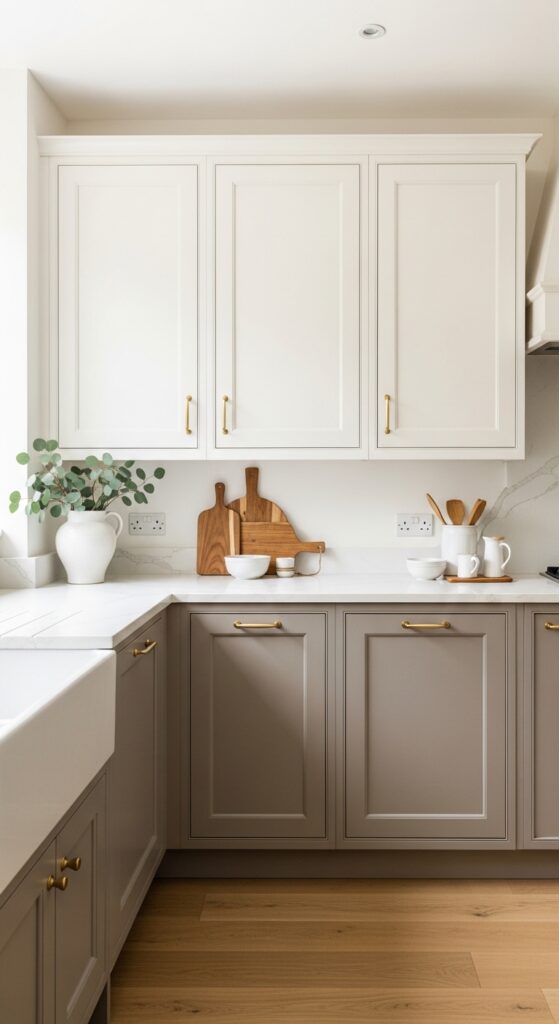
Vibe: This look feels calm, polished, and quietly expensive without trying too hard.
What makes it work: Warm white uppers bounce light around the room, while greige lowers add depth without the heaviness of charcoal or black. The contrast is gentle, so the eye reads texture and proportion rather than stark color blocking.
How to achieve it: Choose a creamy white like Swiss Coffee or Slipper Satin for the upper run, then pair it with a mushroomy greige on the base cabinets. Satin paint and slim brushed brass hardware keep the finish soft instead of overly glossy.
💡 Quick Win Tip: Paint only the lower cabinets greige first if you want a low-risk test of the look.
2. Navy Island with Warm White Perimeter Cabinets
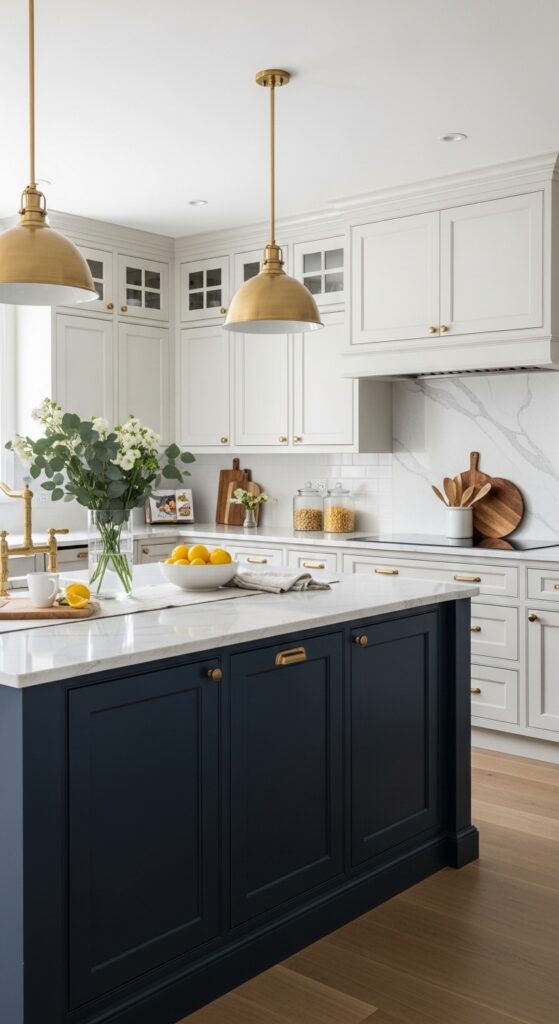
Vibe: It feels tailored and classic, like a kitchen that’s ready for both weeknight pasta and holiday hosting.
What makes it work: Keeping the perimeter light maintains openness, while a navy island gives the room a focal point and visual anchor. The darker center adds weight exactly where the room can handle it, making the layout feel intentional.
How to achieve it: Use the island as your bold statement zone and keep surrounding cabinets in a warm white or soft ivory. Pair the navy with honed marble-look quartz and brass pendants so the scheme feels layered rather than flat.
3. Sage Green Lowers with Creamy Uppers
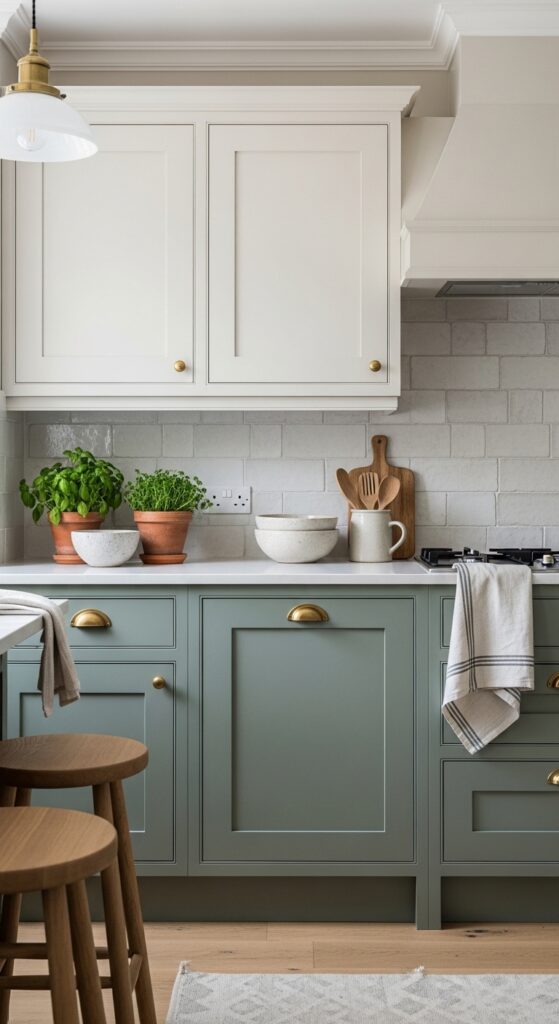
Vibe: This pairing feels garden-fresh, soft, and quietly lived-in.
What makes it work: Sage has enough pigment to add personality, but it still behaves like a neutral when paired with cream. The cream uppers prevent the green from closing in the room, and the zellige backsplash adds gentle movement that echoes the painted finish.
How to achieve it: Look for a muted sage with gray undertones rather than a bright botanical green. Add unlacquered brass knobs and an off-white handmade tile so the palette feels collected and slightly old-world.
💡 Quick Win Tip: Even one sage-painted island can give you this effect if a full cabinet repaint isn’t in the budget.
4. Black Base Cabinets with Natural Oak Uppers
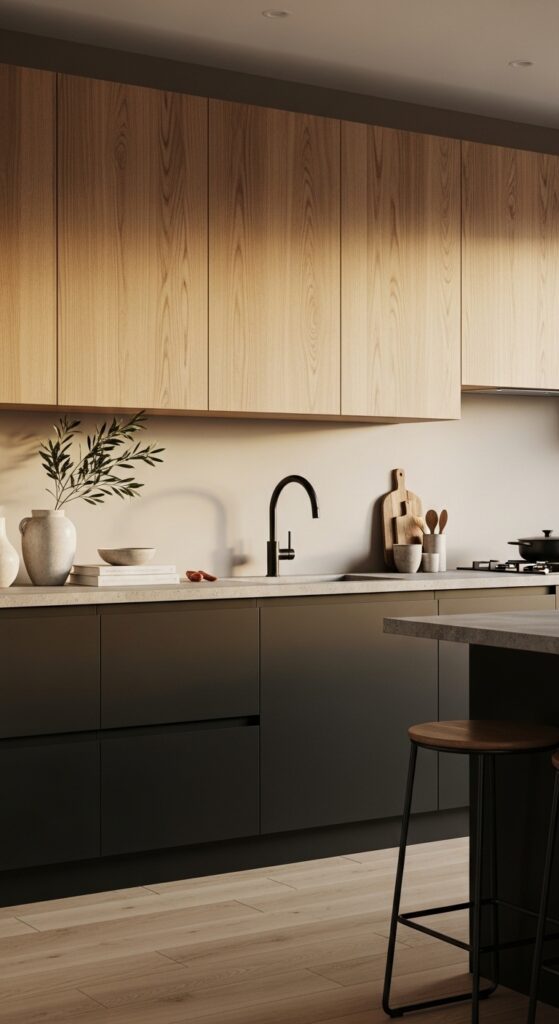
Vibe: It feels architectural and grounded, with just enough warmth to keep the drama from turning cold.
What makes it work: Matte black adds strong contrast at floor level, while natural oak introduces grain and warmth higher up. That mix of dark paint and honest wood texture keeps modern kitchens from feeling sterile.
How to achieve it: Choose a flat-panel or slab profile so the palette stays clean and contemporary. Use black sparingly elsewhere—faucet, stools, or light frames—then soften the whole scheme with warm beige walls or a light oak floor.
5. Mushroom Cabinets Paired with a Walnut Island
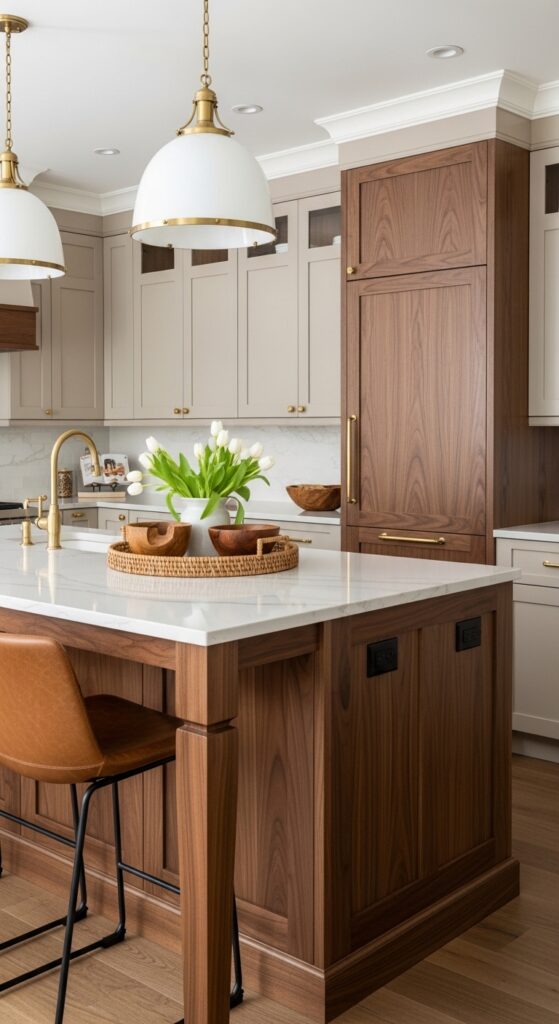
Vibe: This kitchen feels wrapped in warmth, like a luxury coffee shop translated into cabinetry.
What makes it work: Mushroom is softer than gray and more sophisticated than beige, so it bridges modern and traditional elements beautifully. A walnut island adds a richer, deeper note that makes the whole room feel custom and furniture-like.
How to achieve it: Use a taupe-mushroom paint on the perimeter and reserve the walnut for one standout element, like the island or tall pantry wall. Leather or faux-leather stools help echo the wood tone without adding visual clutter.
💡 Quick Win Tip: Add walnut-look bar stools first to test whether this warmer direction suits your space.
6. Dusty Blue and Ivory Shaker Cabinets
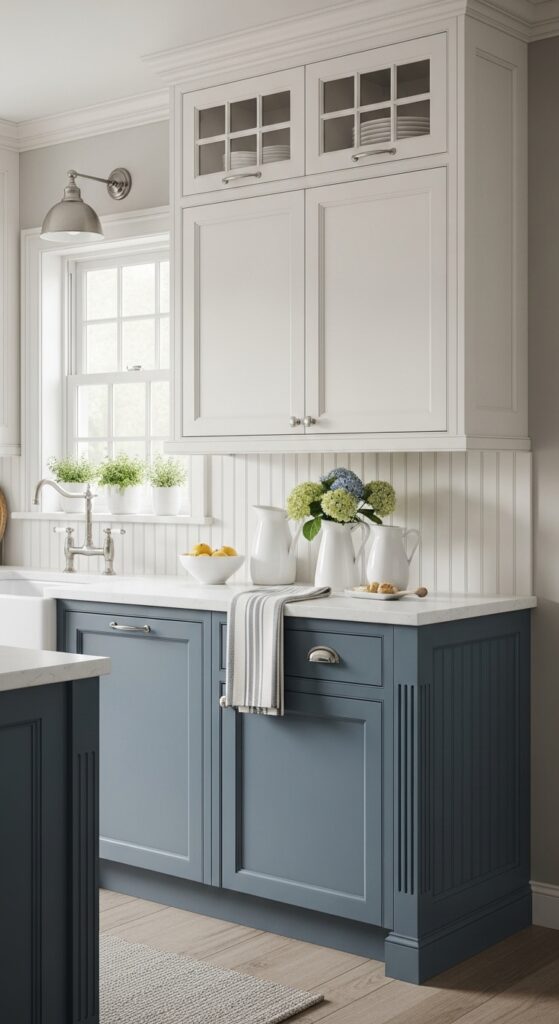
Vibe: It feels breezy and reassuring, with a classic charm that never looks fussy.
What makes it work: Dusty blue introduces color in a muted, low-contrast way, while ivory softens the whole composition more than a stark bright white would. Beadboard and polished nickel keep it timeless and slightly coastal without leaning theme-y.
How to achieve it: Pick a gray-blue rather than a saturated navy, and pair it with a creamy ivory on the uppers. A simple white quartz top and apron-front sink help the color story stay clean and easy to maintain.
7. Forest Green Island with Linen-White Cabinets
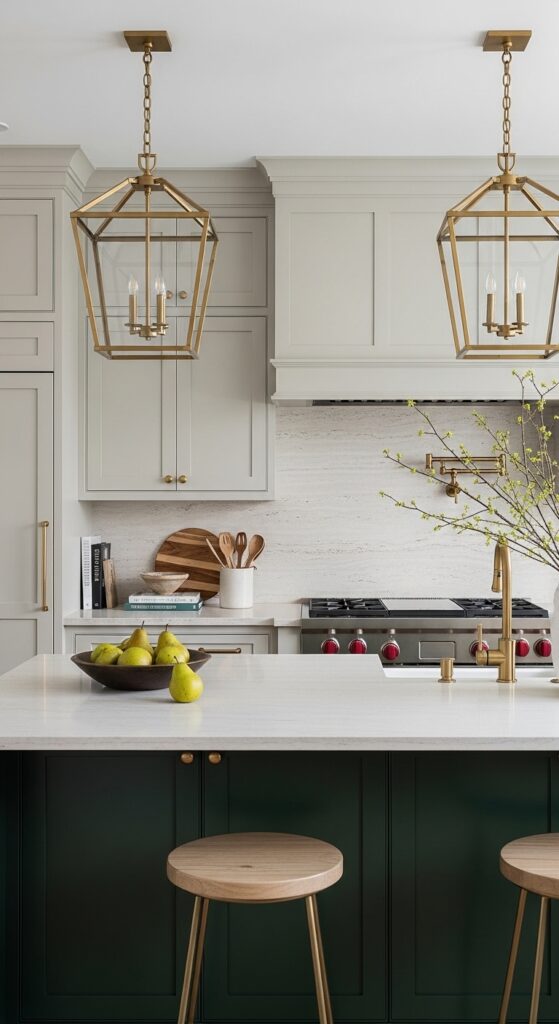
Vibe: This combination feels moody in the best way—lush, grounded, and beautifully grown-up.
What makes it work: Forest green has enough depth to anchor the room, but the linen-white perimeter prevents the palette from getting heavy. When you add a matching stone backsplash, the space feels seamless and high-end.
How to achieve it: Use green on the island only if you want a bold move without repainting everything. Choose a warm white perimeter, then repeat the green in a small way through artwork, a vase, or seat cushions.
💡 Quick Win Tip: Swap in antique brass knobs against white cabinets to preview how green-and-brass will feel.
8. Charcoal Lowers with Pale Oak Tall Cabinets
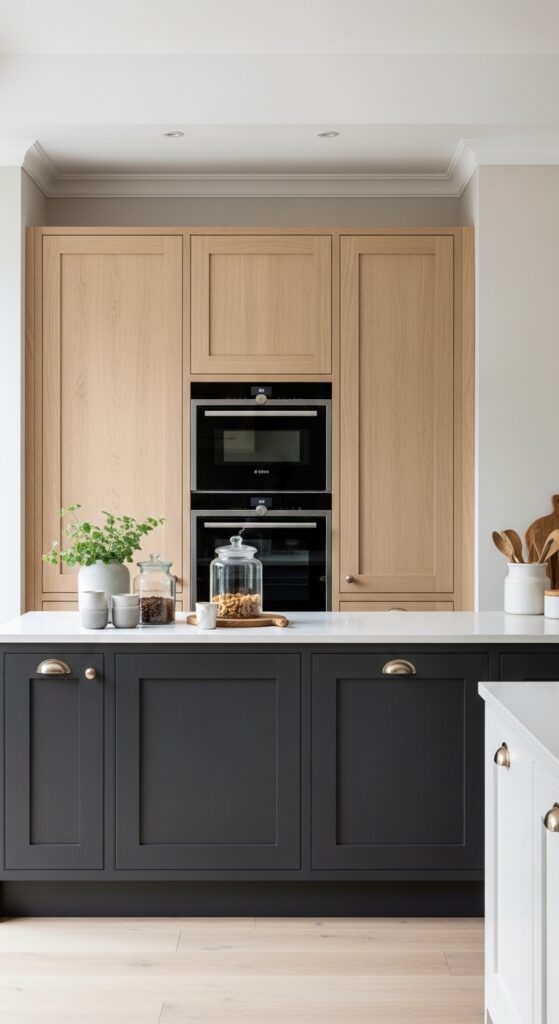
Vibe: It feels clean and modern, but still approachable enough for everyday family life.
What makes it work: Charcoal lowers hide scuffs and create definition, while pale oak tall cabinets stop the darker base from dominating the room. The vertical wood grain also draws the eye upward, which helps streamlined kitchens feel taller.
How to achieve it: Keep cabinet profiles flat and hardware minimal for a modern result. A thin quartz countertop, warm white walls, and integrated appliance panels keep the transition between charcoal and oak looking intentional.
9. Soft Taupe Uppers with Crisp White Lowers
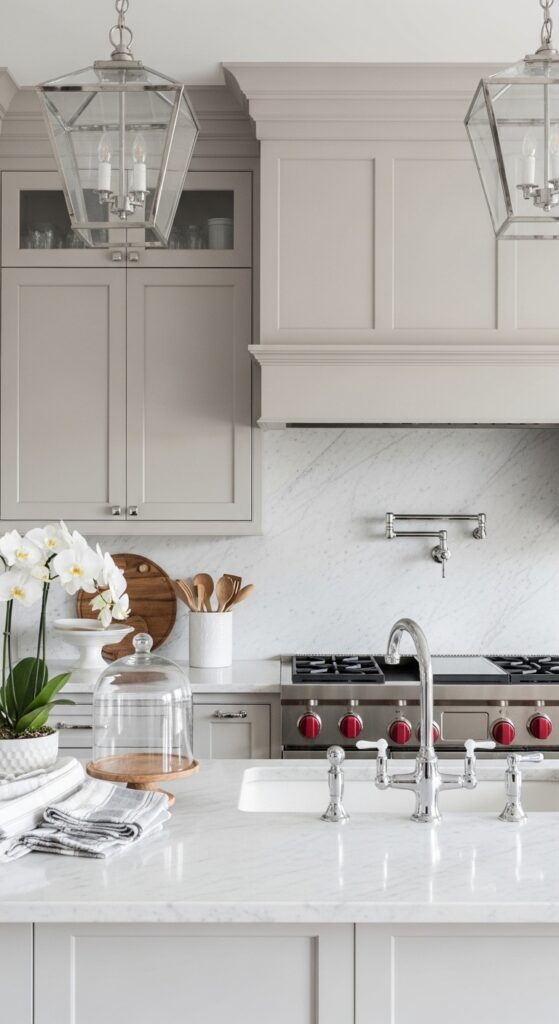
Vibe: This look feels airy but less expected than the classic dark-bottom, light-top formula.
What makes it work: Putting taupe above creates a cocooning softness while the crisp white base keeps the room visually clean. The contrast is subtle, so it works especially well in kitchens with lots of natural light and reflective surfaces.
How to achieve it: Use this approach only if your ceiling height is generous and your backsplash is light enough to keep the upper run from feeling heavy. Chrome or polished nickel hardware brightens the taupe and keeps the scheme fresh.
💡 Quick Win Tip: Test taupe on a sample door first—undertones shift dramatically between morning and evening light.
10. Matte Black Pantry Wall with White Base Cabinets
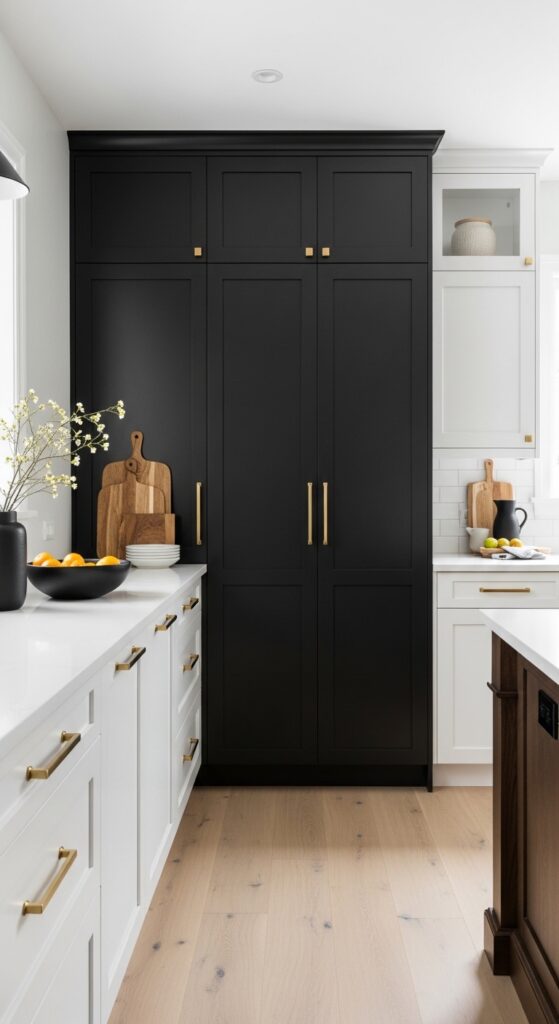
Vibe: It feels bold and tailored, like a designer move that instantly gives the room structure.
What makes it work: Concentrating the darker color on one storage wall creates a strong architectural block instead of scattering contrast everywhere. White base cabinets keep prep zones bright, so the black reads as intentional drama rather than visual weight.
How to achieve it: Use black on tall pantry units or an appliance wall, not every cabinet in the room. Hidden pulls, a pale floor, and a clean white countertop make the dark wall feel sleek instead of overpowering.
11. Putty Cabinets with a Stained Wood Island
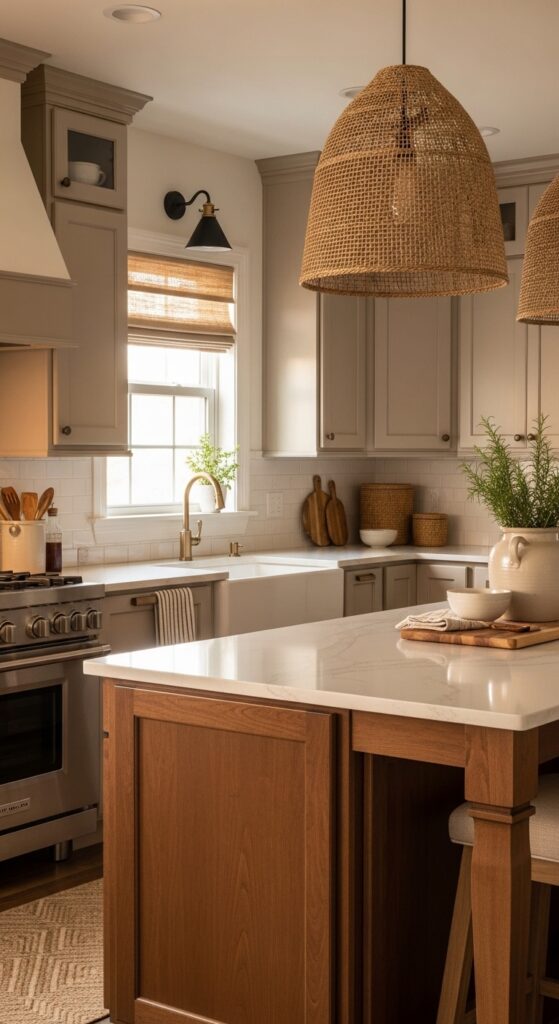
Vibe: This kitchen feels sun-warmed and grounded, with a softness that suits both modern rustic and transitional homes.
What makes it work: Putty has that hard-to-define gray-beige-clay quality that blends beautifully with natural wood. A stained island breaks up the painted cabinetry and adds the “furniture piece” effect designers use to make kitchens feel less built-in.
How to achieve it: Pair putty paint with medium wood rather than red-toned dark cherry for a fresher result. Woven pendants, linen Roman shades, and a creamy quartz surface reinforce the earthy palette.
💡 Quick Win Tip: A wood-look island panel kit can mimic this custom effect without replacing the entire island.
12. Deep Teal Lowers with Rift-Cut Oak Uppers
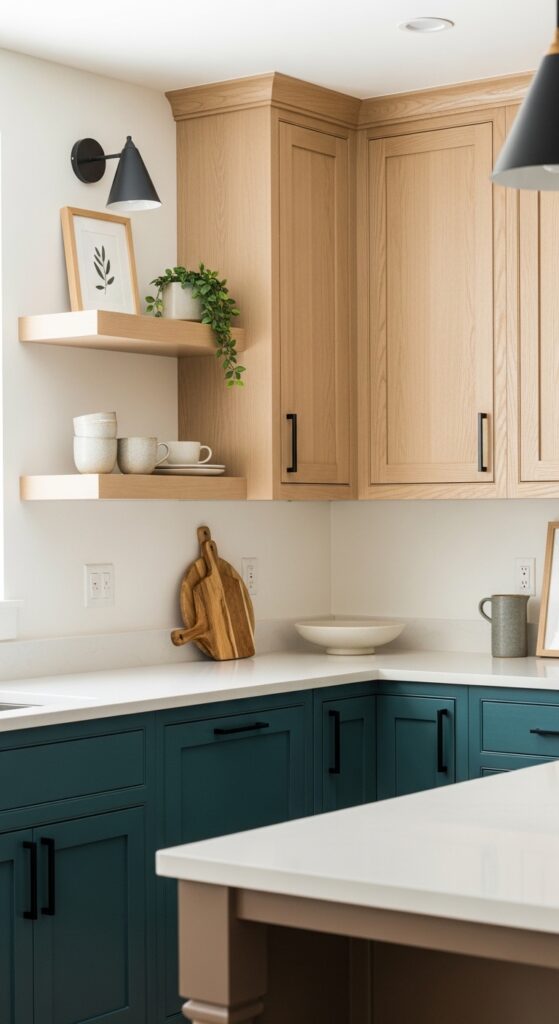
Vibe: It feels artistic and crisp, with the kind of color confidence that still reads sophisticated.
What makes it work: Teal brings more personality than navy, while rift-cut oak keeps the composition linear and calm. The cool richness of the lower cabinets is balanced by the dry, natural texture of the wood grain above.
How to achieve it: Use a teal with a slightly muted base so it doesn’t veer tropical. Thin black sconces or pulls sharpen the look, while plain white quartz stops the palette from feeling too busy.
13. Cream Cabinets with a Clay-Toned Island
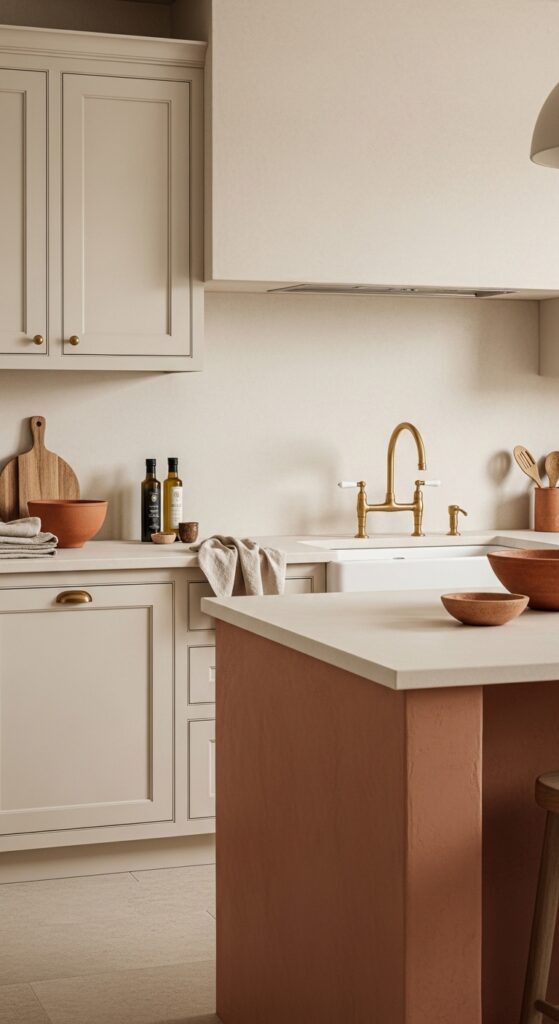
Vibe: This one feels sunbaked, quiet, and gently Mediterranean without becoming literal.
What makes it work: The cream perimeter keeps the kitchen bright, while the clay-toned island introduces warmth that feels softer than brick red or orange. Because both colors sit in a warm family, the contrast feels natural instead of high-drama.
How to achieve it: Choose a muted terracotta or clay paint with beige undertones, then pair it with warm cream cabinets and brushed brass. Plaster-look walls or handmade-look tile help the island color feel fully integrated.
💡 Quick Win Tip: Try clay on just the island back panel if you want a subtle version of this palette.
14. Olive Green and Warm White with Soapstone Accents
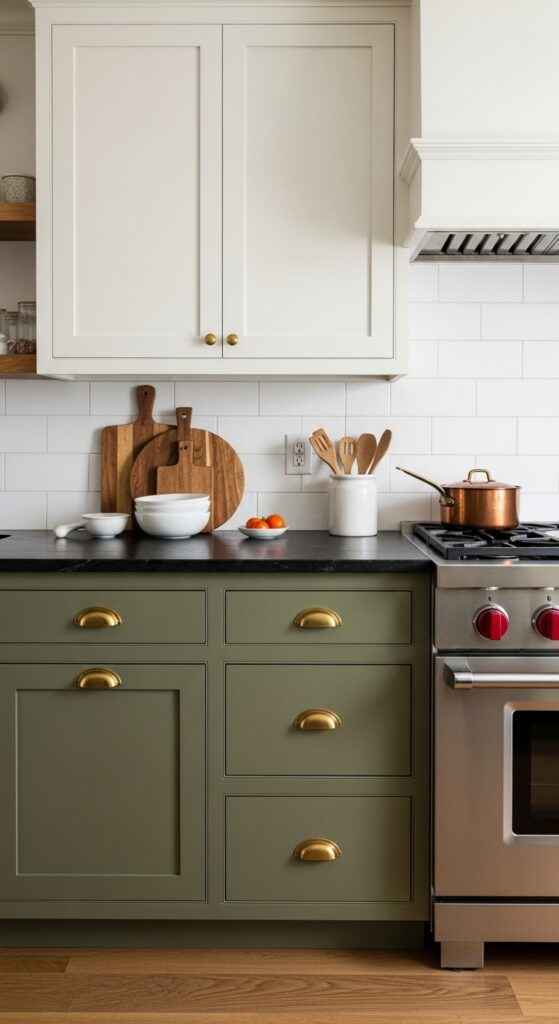
Vibe: It feels storied and practical, like a kitchen that gets used every day and looks better for it.
What makes it work: Olive is earthier than emerald and less trendy than bright sage, so it settles into a kitchen beautifully. Warm white uppers keep the room light, while soapstone-style counters deepen the green and give the whole palette a heritage feel.
How to achieve it: Use olive on the lowers, then add cup pulls and a dark countertop with a soft matte finish. This combination pairs especially well with off-white subway tile and medium-tone wood flooring.
15. Smoky Gray with Blonde Wood Flat-Front Cabinets
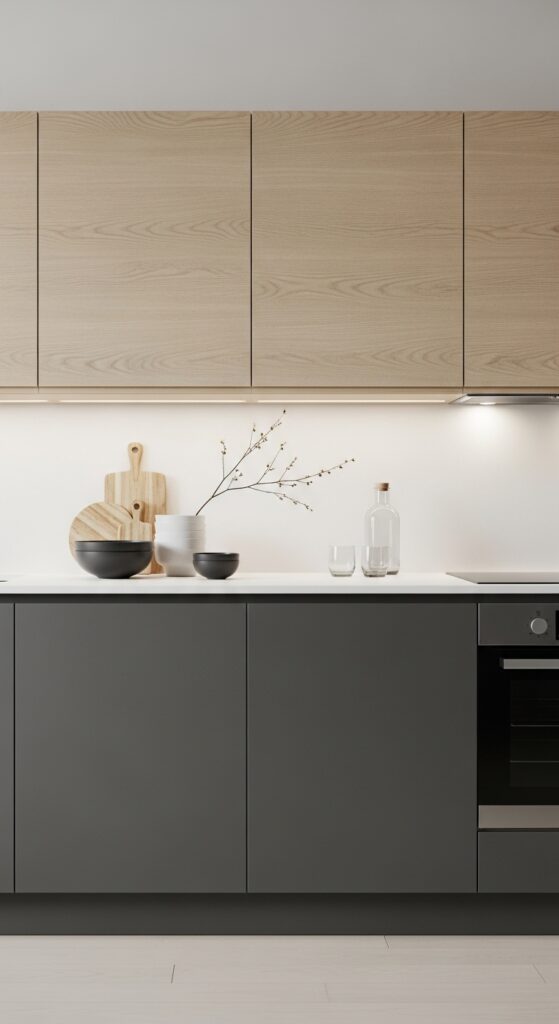
Vibe: This kitchen feels clean and understated, with a calm hotel-like polish.
What makes it work: Smoky gray offers contrast without the severity of black, and blonde wood keeps the upper half of the room warm and breathable. Flat-front cabinetry emphasizes line and proportion, which makes the two-tone effect feel especially refined.
How to achieve it: Use integrated or edge pulls to preserve the minimalist look. Under-cabinet LED strips are worth the effort here—they bring out the wood grain and stop the gray from reading dull.
💡 Quick Win Tip: Warm LED tape lighting under existing uppers can instantly make gray cabinets look richer.
16. Ink Blue Lowers with Glass-Front White Uppers
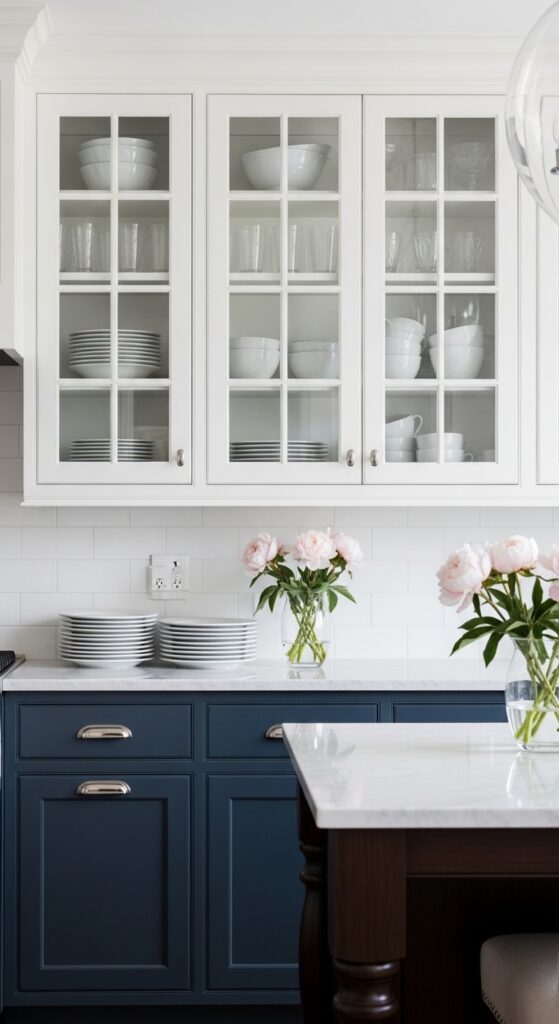
Vibe: It feels collected and light, with just enough formality to feel special.
What makes it work: Glass-front uppers visually break up the cabinet mass, which keeps the room open even with a dark lower color. Ink blue provides depth at the base, while white frames and display space introduce sparkle and rhythm.
How to achieve it: Use glass on only a few upper sections so the look stays practical. Keep what’s inside coordinated—white dishes, clear glassware, or pale stoneware—so the cabinets read styled rather than cluttered.
17. Sand Beige Cabinets with a Dark Espresso Island
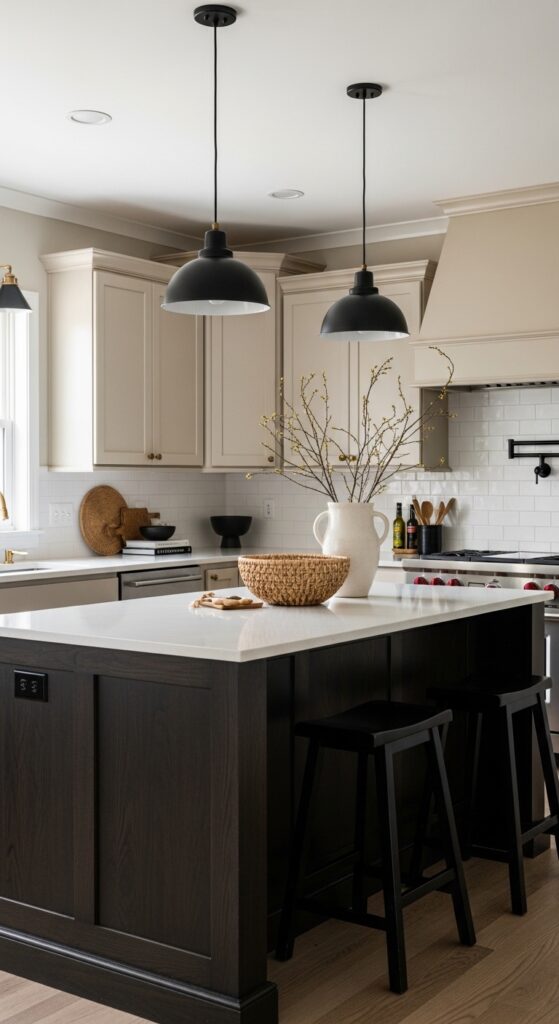
Vibe: This palette feels rich and grounded, but softer than the usual black-and-white contrast.
What makes it work: Sand beige has enough warmth to make the room feel welcoming, while the espresso island delivers contrast through depth rather than stark color. That keeps the kitchen cozy and layered, especially in homes with warm flooring.
How to achieve it: Use a beige with muted undertones, not a yellow cream, and pick an island stain with a low-sheen finish. Black pendants or stools help echo the deeper island tone without overwhelming the palette.
💡 Quick Win Tip: Restaining an island darker often costs less than repainting every cabinet in the room.
18. Pale Sage Perimeter with White Oak Open Shelving
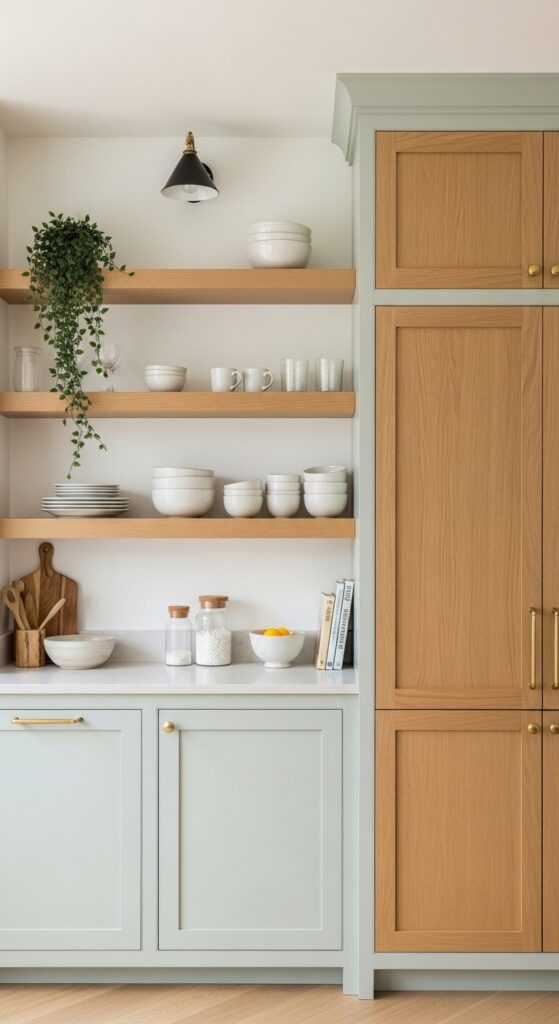
Vibe: It feels bright, relaxed, and a little Scandinavian in the prettiest way.
What makes it work: Pale sage acts almost like a neutral, and white oak shelving keeps the upper half of the room visually light. The mix works especially well when you want color without a full wall of upper cabinets.
How to achieve it: Paint the lower and pantry cabinets pale sage, then use sealed white oak shelves for everyday dishes or ceramics. Keep the shelf styling sparse so the wood feels architectural, not cluttered.
19. Mocha Lowers with Alabaster Uppers
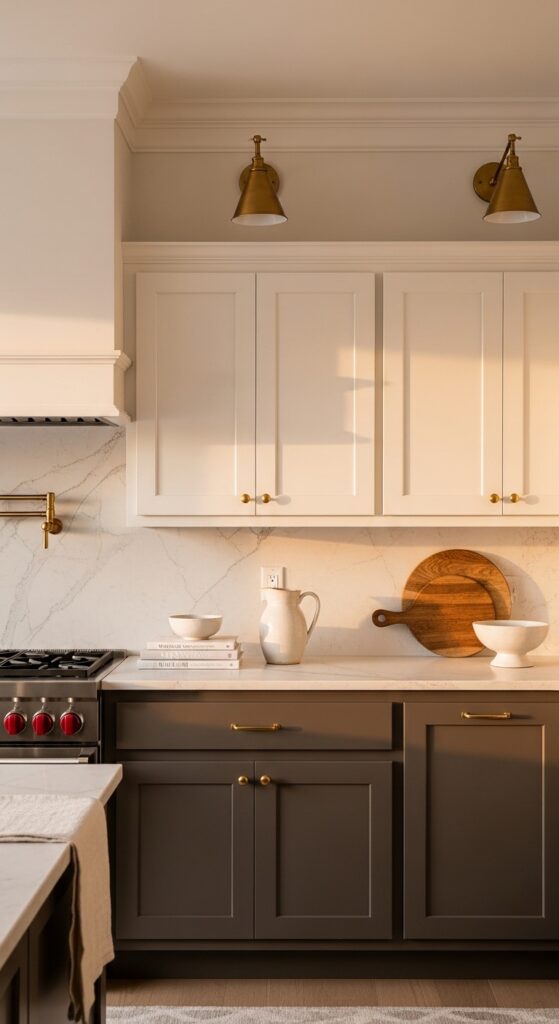
Vibe: This kitchen feels enveloping and elegant, like a softer take on a moody palette.
What makes it work: Mocha brings warmth and depth that black can’t always offer, while alabaster uppers keep the room light and creamy. The result feels especially inviting in north-facing kitchens that need color with warmth built in.
How to achieve it: Choose a brown with gray or taupe undertones rather than anything reddish. Pair it with alabaster paint, warm marble-look quartz, and brass sconces so the whole scheme glows instead of feeling heavy.
💡 Quick Win Tip: Even mocha bar stools against alabaster cabinets can preview this warmer contrast direction.
20. Slate Blue and Mushroom for a Soft European Feel
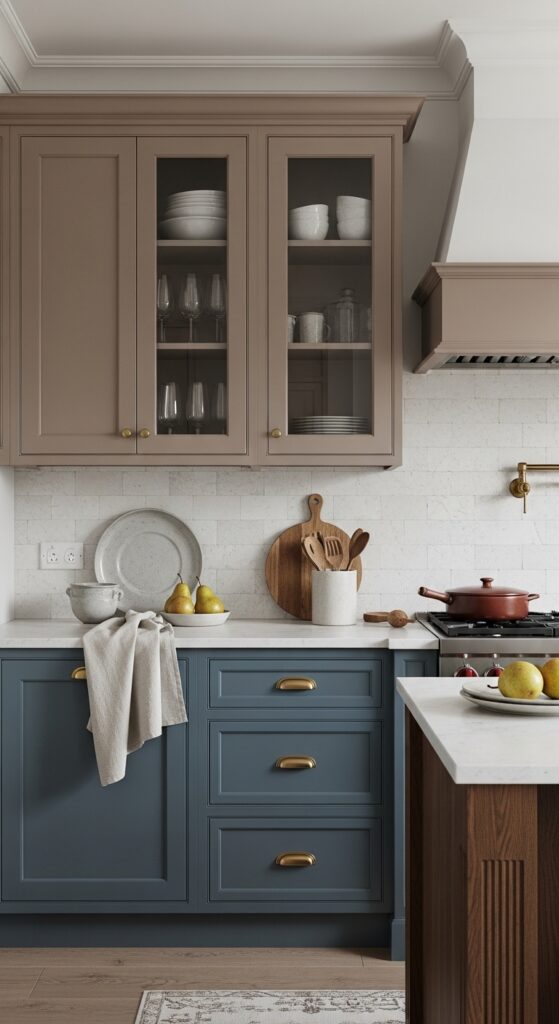
Vibe: It feels hushed and collected, with the romance of an old townhouse kitchen.
What makes it work: Slate blue gives cool depth, while mushroom introduces earthy warmth, so the pairing lands right in the sweet spot between crisp and cozy. Because both colors are muted, the combination feels layered rather than loud.
How to achieve it: Use framed cabinet fronts, aged brass pulls, and a stone-look backsplash to support the European mood. Skip bright white here; the gentler mushroom tone is what makes the blue feel sophisticated.
21. Warm White Cabinets with a Fluted Walnut Island
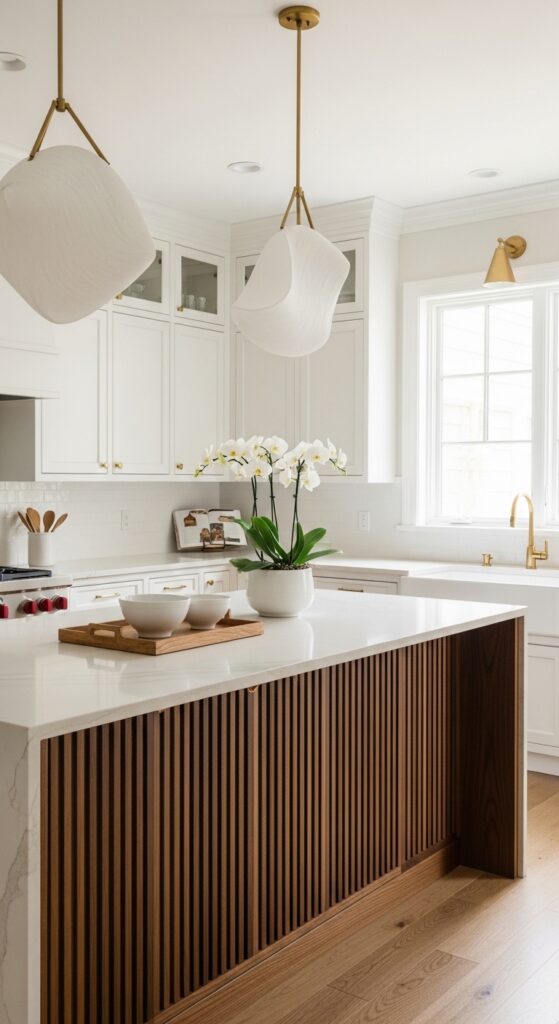
Vibe: This look feels fresh and modern, but the walnut adds enough soul to keep it from feeling showroom-cold.
What makes it work: Warm white cabinets create a clean envelope, while a fluted walnut island adds texture, shadow, and a furniture-like center point. The vertical ribbing catches light beautifully, which makes the island feel like a true statement piece.
How to achieve it: Keep surrounding cabinetry simple and let the island carry the texture. Choose a quartz with warm veining and a soft white paint rather than a stark bright white to better complement the walnut.
💡 Quick Win Tip: Fluted wood adhesive panels can upgrade a plain island base for far less than a rebuild.
22. Terracotta Pantry Cabinets with Putty Perimeter Units
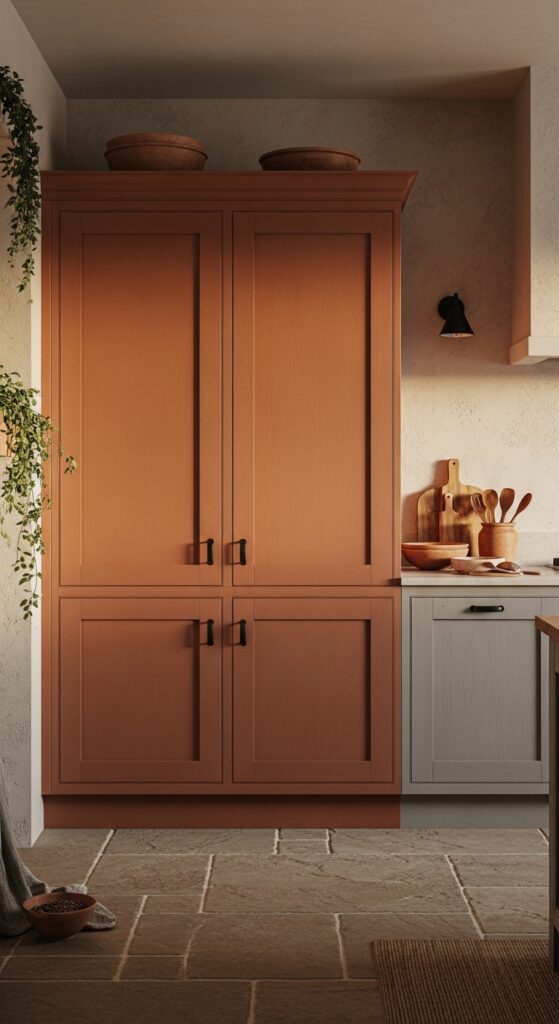
Vibe: It feels earthy and full of character, like a kitchen with stories already built into it.
What makes it work: Putting terracotta on the tall pantry bank keeps the color concentrated and architectural instead of overwhelming. Putty perimeter units calm the palette and allow the warm clay tone to feel intentional and refined.
How to achieve it: Use terracotta only where you want emphasis, such as pantry doors or an appliance garage wall. Ground the look with matte stone-look flooring, warm wood accents, and simple black or aged bronze hardware.
23. Pewter Gray Cabinets with Honey Oak Highlights
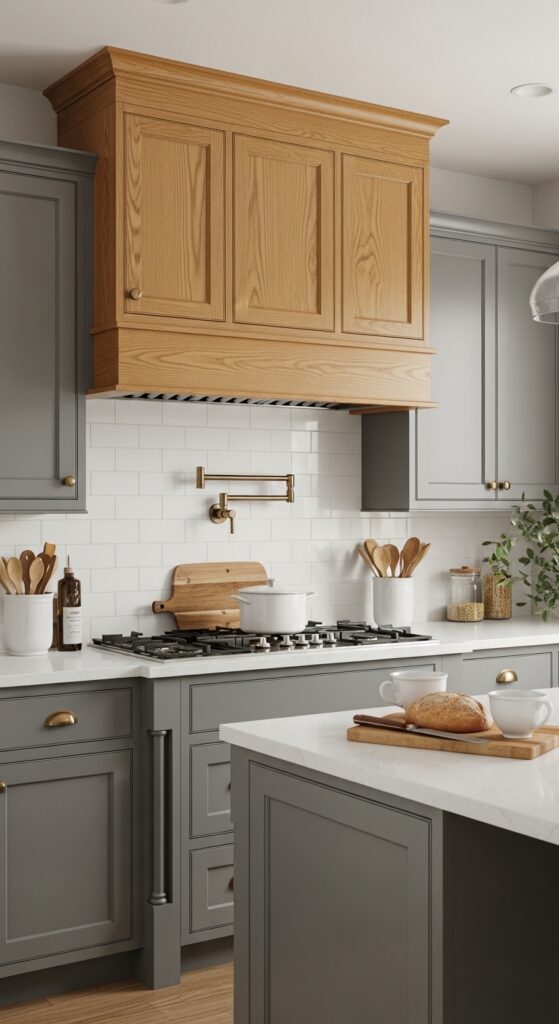
Vibe: This kitchen feels steady and timeless, with a little extra warmth exactly where you want it.
What makes it work: Pewter gray is neutral enough to be versatile, but honey oak prevents it from feeling cool or flat. By placing the oak on the island or hood surround, you create focal points that break up long cabinet runs.
How to achieve it: Keep the oak mid-tone and slightly matte so it feels current, not overly orange. Brushed brass or satin nickel both work here, depending on whether you want the palette to skew warmer or cleaner.
💡 Quick Win Tip: A wood range hood cover is an easy way to add this honey-oak accent without redoing every cabinet.
24. Off-White Uppers with Soft Black Lowers and Champagne Hardware
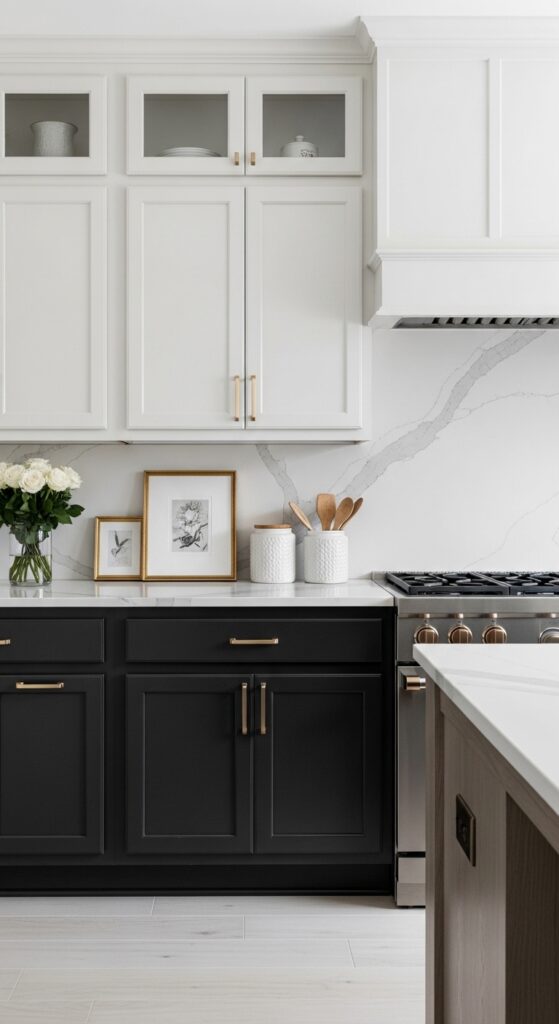
Vibe: It feels crisp and dramatic, but the off-white and champagne hardware make it softer than a harsh black-and-white kitchen.
What makes it work: Soft black grounds the room and hides daily wear, while off-white uppers maintain brightness. Champagne bronze introduces warmth, which is key because it keeps the palette from tipping too cold or graphic.
How to achieve it: Choose a black with a velvety undertone instead of a pure jet black. Pair it with off-white uppers, warm-veined quartz, and champagne bronze hardware for a look that feels current and still timeless.
25. Seafoam Gray Cabinets with Driftwood-Toned Island
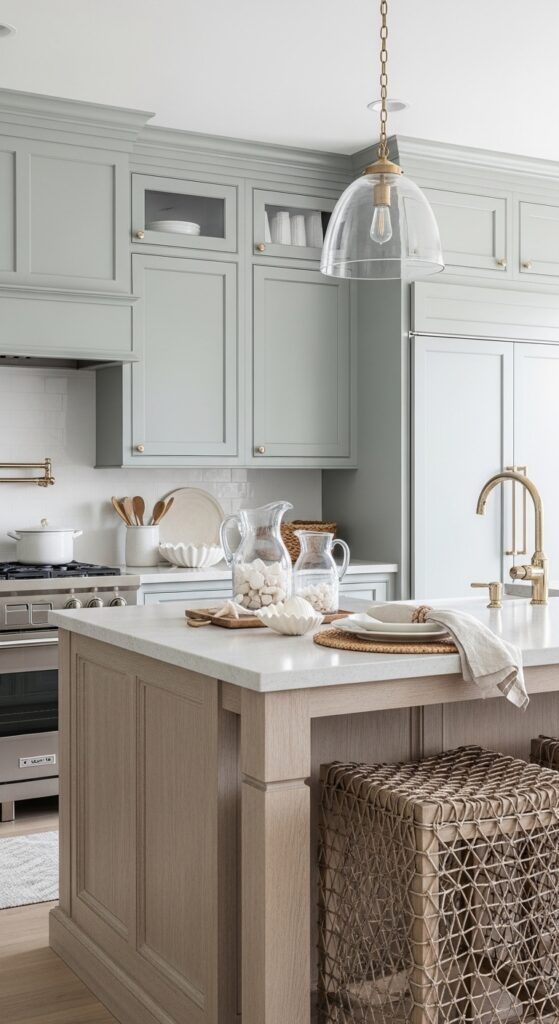
Vibe: This kitchen feels airy and restful, like a deep breath translated into cabinetry.
What makes it work: Seafoam gray is softer than blue and cooler than sage, so it brings a fresh tone without shouting for attention. A driftwood-toned island adds texture and keeps the scheme from feeling overly painted or one-note.
How to achieve it: Use a desaturated seafoam with lots of gray, then pair it with a wire-brushed wood finish on the island. Woven stools and pale counters enhance the calm, natural feel.
💡 Quick Win Tip: Limewash-style decor and woven stools can pull this palette together before any major cabinet work begins.
26. Ceiling-Height Warm White Cabinets with a Mid-Tone Wood Island
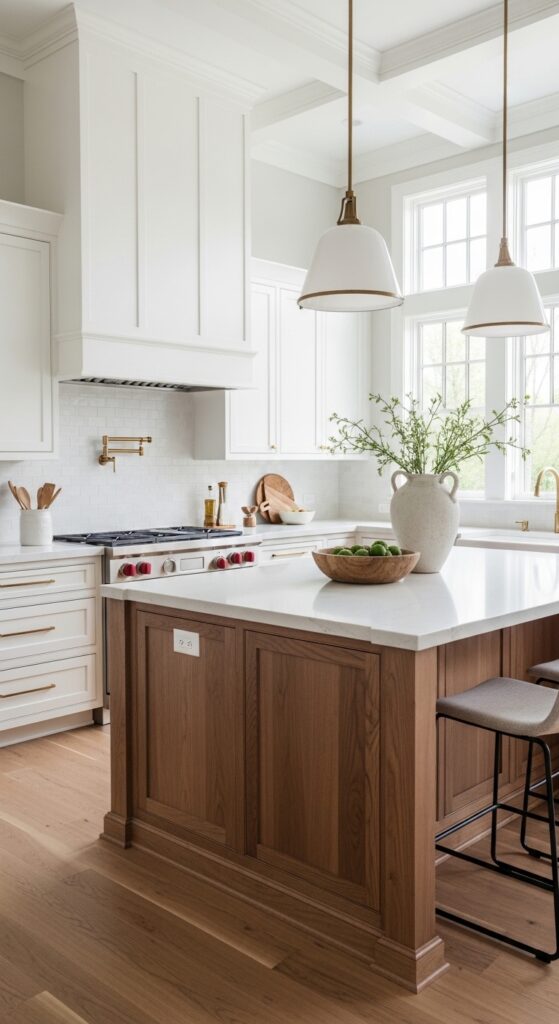
Vibe: This look feels bright, expansive, and beautifully custom from top to bottom.
What makes it work: Ceiling-height warm white cabinetry stretches the room visually, while a wood island breaks up the painted wall and adds warmth right at the center. The combination feels especially polished when paired with a full-height backsplash and tall windows.
How to achieve it: If you’re renovating, extend the cabinets to the ceiling and keep the perimeter one quiet warm white. Then use a mid-tone oak or walnut island to add contrast without sacrificing the airy feeling.
How to Start Your Two Tone Transformation
Start with the element that will create the biggest visual shift for the least disruption. In many kitchens, that means the island first, then the lower cabinets, then the hardware. If you already have good cabinet boxes, paint can do a lot of the heavy lifting.
Before choosing colors, study your fixed finishes. Flooring, countertop veining, backsplash tile, and even the light in your room will affect whether a cabinet color reads warm, cool, muddy, or crisp. Testing samples in your own natural light is one of the smartest steps you can take before committing. Home Decorators Cabinetry
The biggest mistake is choosing two colors that fight each other in undertone. A cool gray upper next to a creamy yellow-white lower can feel off even if both colors look good alone. Another common miss is adding too many competing finishes—if your cabinets are already doing the visual work, let the backsplash and countertops support rather than compete.
For a budget-friendly entry point, try paint plus new knobs, or repaint just the island and add updated pendants. A full transformation can happen in phases, and that’s often the best way to build a kitchen that feels considered instead of rushed.
Frequently Asked Questions
What colors work best for two tone kitchen cabinet combinations?
The easiest two tone kitchen cabinet combinations start with one light neutral and one grounding tone. Warm white with oak, greige with walnut, navy with white, and sage with cream are all dependable because the contrast is clear but still livable. If you want something timeless, stay within the same temperature family—warm with warm, cool with cool. That keeps the kitchen feeling cohesive instead of patchy.
Do two tone kitchen cabinets make a small kitchen look bigger?
They can, especially when the uppers are lighter than the lowers. Home Decorators Cabinetry notes that lighter upper cabinets draw the eye upward and make a kitchen feel taller and airier. In a small room, pair warm white or off-white uppers with greige, olive, or navy lowers, and keep the countertop light for the best effect. Home Decorators Cabinetry
Should upper or lower cabinets be darker?
In most kitchens, darker lowers are the safer and more flattering choice. They ground the room, hide scuffs better, and leave the upper half feeling open. That said, darker uppers can work in a large kitchen with tall ceilings, strong natural light, and a pale backsplash that keeps the whole wall from feeling too heavy.
Are two tone kitchen cabinets more expensive than one-color cabinets?
Not necessarily. If you’re painting existing cabinets, the labor is often similar whether you use one color or two, especially if the second color is limited to the island or lower run. The bigger cost jump usually comes from specialty materials like walnut veneer, fluted panels, or brand-new custom cabinetry. Starting with paint and hardware is the most budget-friendly route.
What countertop goes best with two tone kitchen cabinet combinations?
A bridging countertop usually works best. White quartz with soft gray or beige veining can connect painted cabinets to wood finishes, while soapstone-style surfaces pair beautifully with green, navy, or warm white cabinetry. If your cabinet colors are bold, keep the countertop quieter so the palette feels layered instead of busy.
Ready to Create Your Dream Two Tone Space?
These 26 two tone kitchen cabinet combinations ideas prove that a kitchen doesn’t need a full gut renovation to feel custom and unforgettable. Save the looks that match your light, your flooring, and the way you actually live, then start with one change—paint, hardware, or a standout island. The beauty of a two-tone kitchen is that it can grow in phases and still look intentional at every step. Pin your favorites now, come back when you’re ready, and trust that even one smart cabinet color shift can completely change the feeling of your kitchen.