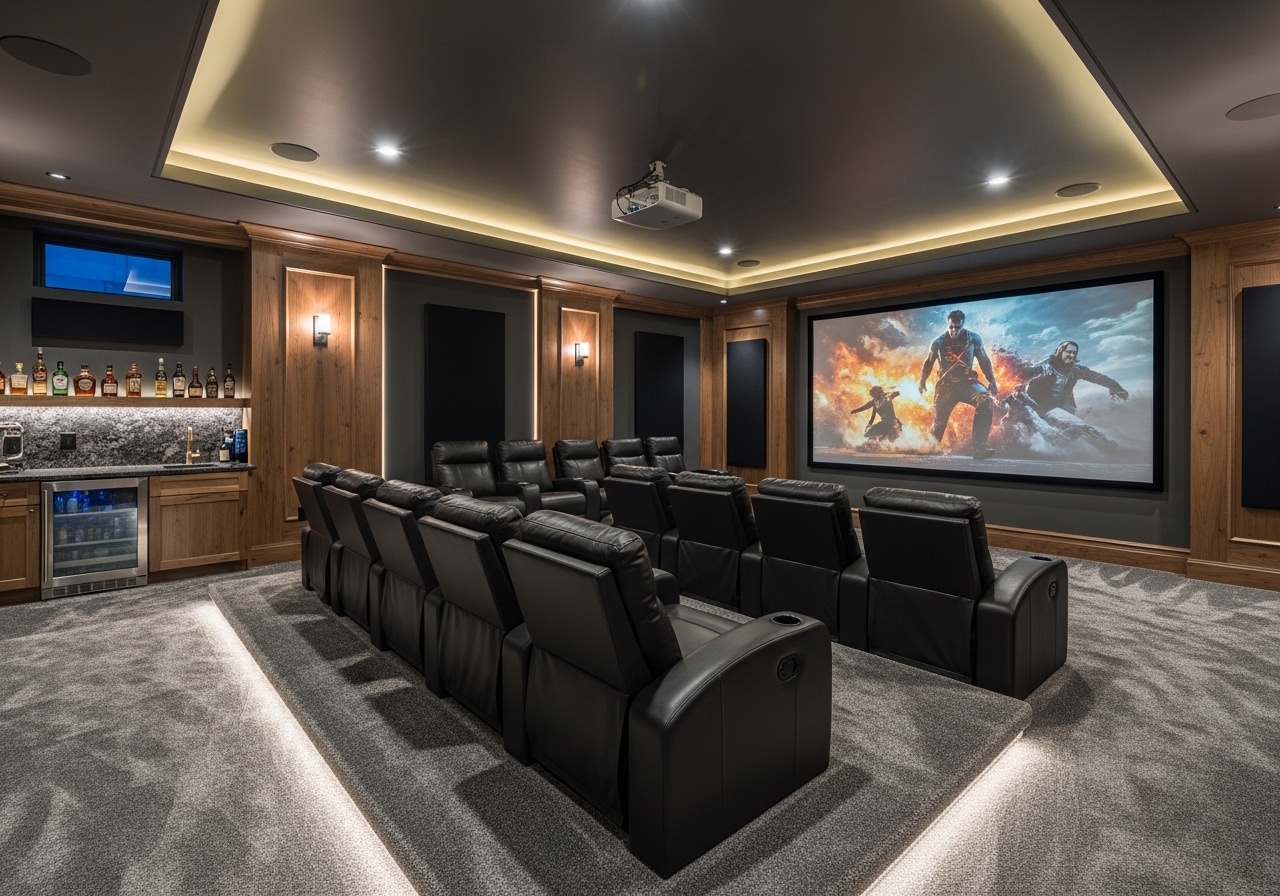
There’s something about a basement home theater that feels like pure escape at the end of a long day. The lights go low, the walls fade back, and suddenly your own house feels like a private cinema designed just for comfort. If you’ve been collecting basement home theater ideas and wondering how to make them feel stylish as well as functional, you’ll find 29 real, actionable looks here. Some lean moody and modern, some feel family-friendly and cozy, but all of them are built to make movie night better. Here are 29 ideas worth saving.
Why Basement Works So Well
Basement design works beautifully for a home theater because the space already has many of the conditions you want for immersive viewing. Less natural light means fewer screen reflections, and below-grade walls often make the room feel tucked away from the busy parts of the house. That built-in separation helps a theater feel intentional rather than like a TV dropped into a spare room.
The most successful basement home theater ideas usually lean into darker, richer finishes. Think charcoal, deep navy, espresso brown, warm black, and soft greige layered with velvet, wool, acoustic felt, leather, slatted wood, and matte paint. These materials absorb light, improve acoustics, and create the kind of texture that keeps a darker room from feeling flat.
Basement theaters are having a strong Pinterest moment because people want more from their homes than just open-concept living. There’s a renewed interest in dedicated spaces that feel experiential, whether that means cinema seating, a snack bar, or hotel-style lighting. The trend also fits perfectly with the move toward moodier interiors and comfort-driven design.
Even a small basement can pull off this aesthetic. A projector wall, blackout shades, one sectional, and a deep paint color can completely transform the feel of the room. Basement style is not about having a giant footprint. It is about controlling light, sound, and atmosphere with smart materials and better layout choices.
Basement Home Theater Ideas With Matte Charcoal Walls
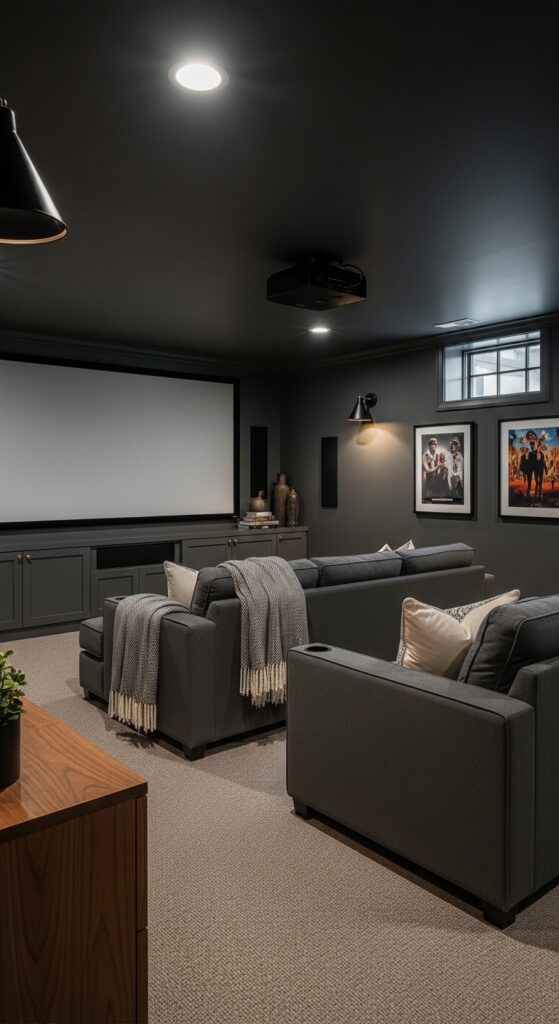
Vibe sentence: This look feels cocooning, cinematic, and wonderfully free of visual distraction.
What makes it work: Matte charcoal reduces screen glare and helps the television or projector wall disappear into the room. The dark envelope also makes lighting feel softer and more dramatic, which is exactly what a basement theater needs.
How to achieve it: Choose a flat or matte paint in charcoal, iron ore, or deep graphite and carry it onto the trim for a seamless effect. This works especially well in basements with low ceilings because contrast lines stay minimal.
💡 Paint the ceiling the same dark tone as the walls to make ductwork and soffits recede instantly.
Acoustic Wood Slat Feature Wall Behind the Screen
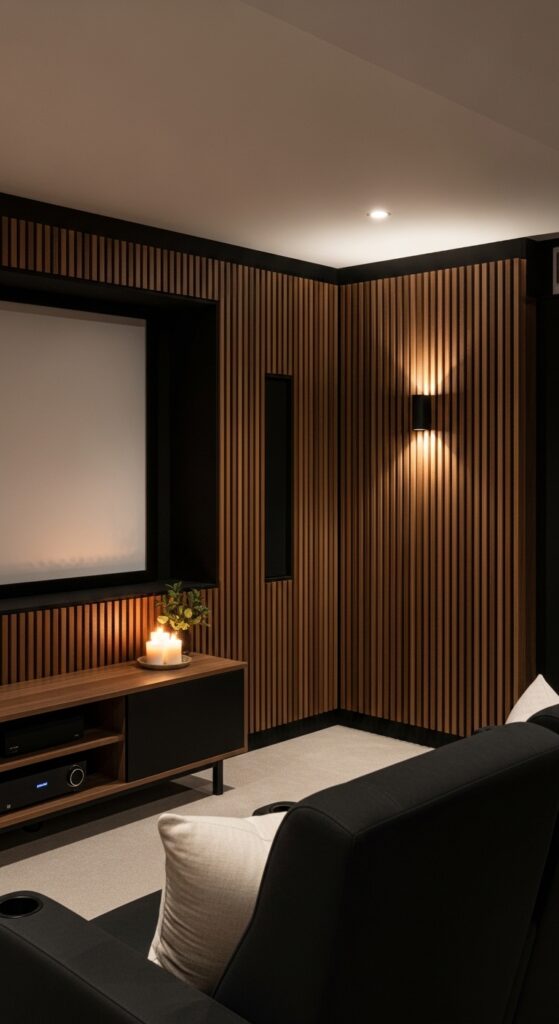
Vibe sentence: The room feels richer and more custom the moment warm wood meets a dark theater palette.
What makes it work: Slatted panels add texture and help absorb sound, which matters in a basement where echoes can make dialogue muddy. The vertical lines also visually stretch the wall, making the theater feel more tailored.
How to achieve it: Install acoustic slat panels on the screen wall or the rear wall where sound bounce is strongest. Walnut or smoked oak tones pair especially well with black felt backing and matte black trim.
Tiered Riser Seating for Better Sightlines
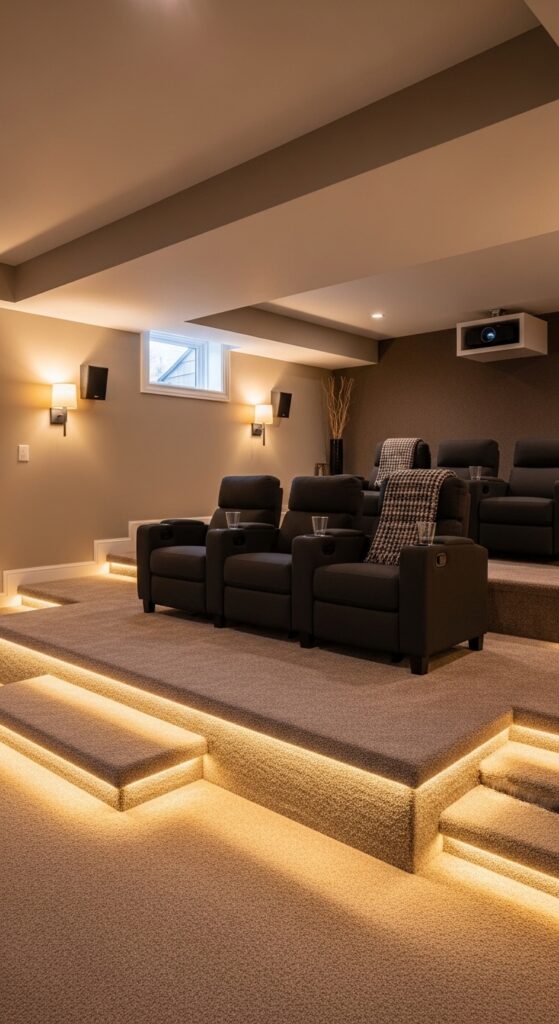
Vibe sentence: Tiered seating gives a basement theater that true cinema feeling as soon as you walk in.
What makes it work: A riser solves one of the biggest layout issues in multiperson theaters: blocked sightlines. It also makes the room feel purpose-built rather than like regular furniture pushed toward a screen.
How to achieve it: Build the rear platform at least 8 to 12 inches high, depending on screen placement and seat depth. Wrap it in low-pile carpet or carpet tiles for traction, sound control, and a cleaner finish.
💡 Add hidden storage inside the riser for blankets, board games, or extra cables.
Wall-to-Wall Sectional for Family Movie Nights
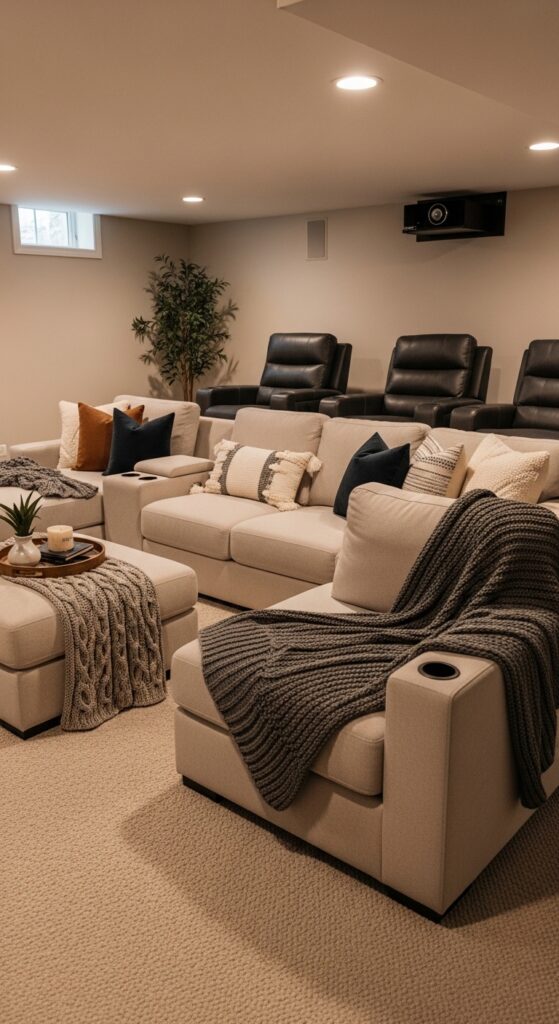
Vibe sentence: This setup feels relaxed, generous, and made for long movie marathons with everyone piled in.
What makes it work: A sectional maximizes seating without the visual gaps that separate recliners can create. In a basement, that fuller footprint helps the room feel warm and anchored instead of sparse.
How to achieve it: Choose a sectional with deep seats, stain-resistant upholstery, and a lower back so sightlines stay open. Soft greige, mushroom, or deep taupe fabrics hide wear better than crisp white in a theater zone.
Leather Recliners With Hidden Cupholders
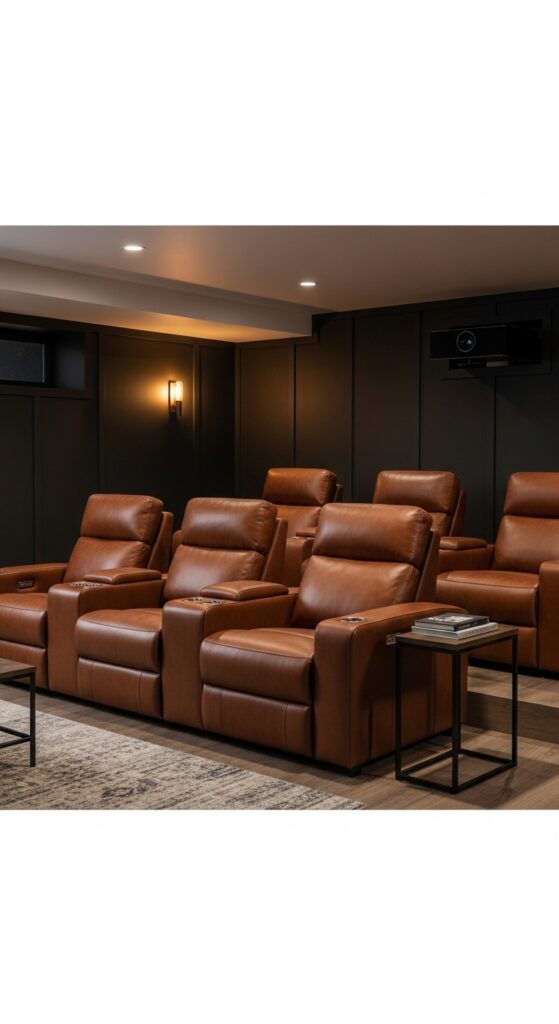
Vibe sentence: The room feels like a private screening lounge with just enough polish to stay timeless.
What makes it work: Leather adds structure, durability, and easy cleanup, all of which matter in a heavily used basement. Hidden cupholders keep the look sleeker than oversized theater chairs with bulky molded arms.
How to achieve it: Look for top-grain leather or high-quality faux leather in cognac, espresso, or matte black. Prioritize slim profiles if your basement is narrow so you preserve walking space between rows.
💡 A row of three compact recliners often looks better in a basement than five oversized seats crammed together.
Basement Home Theater Ideas With a Velvet-Framed Screen Wall
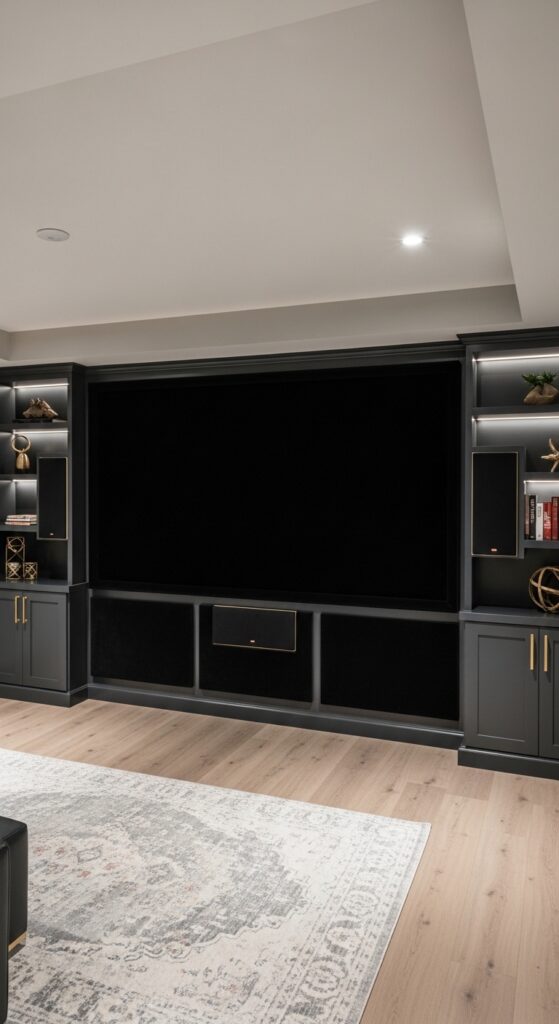
Vibe sentence: A velvet-framed screen wall makes the whole room feel more immersive before the movie even starts.
What makes it work: Black velvet absorbs light better than almost any other soft finish, which reduces bounce around the screen. That improves contrast and gives the front wall a more professional cinema look.
How to achieve it: Wrap simple panels in black velvet or microsuede and place them around the screen wall. This is especially effective if you use a projector and want the image edge to feel sharper.
Built-In Media Cabinetry That Hides the Tech
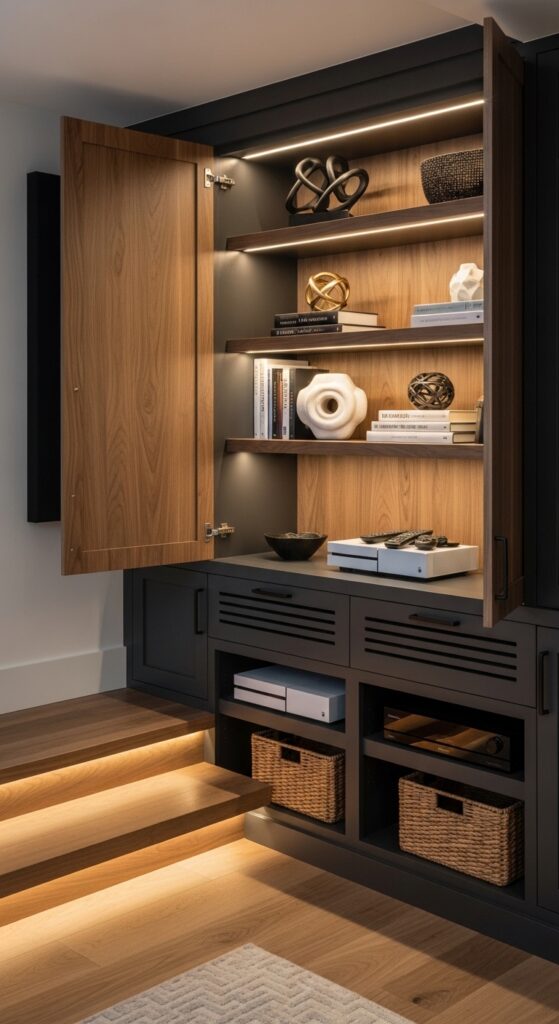
Vibe sentence: Hidden storage makes the theater feel calmer, cleaner, and far more expensive.
What makes it work: Basement theaters can quickly look cluttered once game consoles, remotes, and cords start collecting. Built-ins create visual order, which is essential in a room meant to feel immersive.
How to achieve it: Use closed cabinetry with ventilation cutouts for components and keep the finish dark enough that it recedes during viewing. Walnut, smoked oak, or painted black cabinetry all work beautifully in theater-style basements.
LED Step Lights Along the Riser Edge
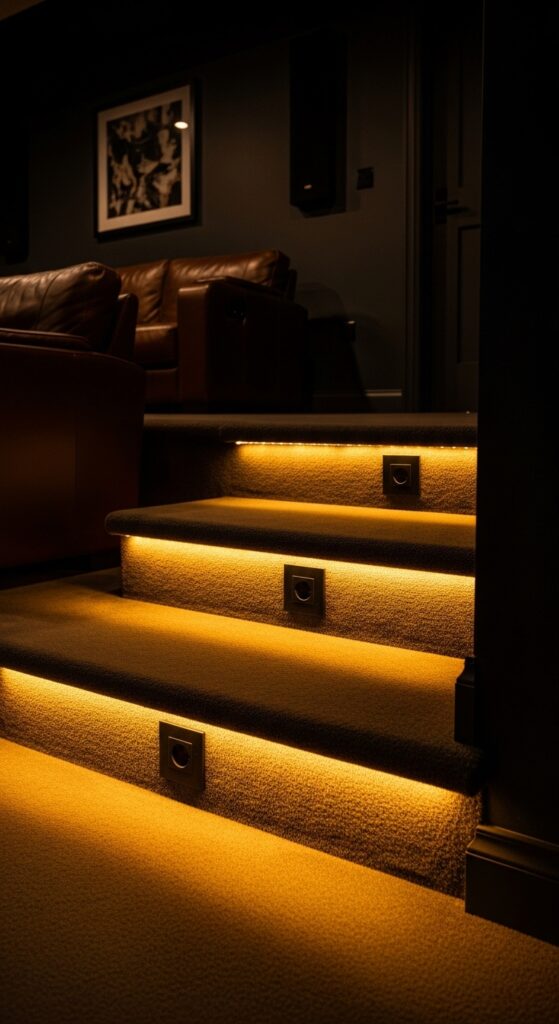
Vibe sentence: This glow gives the room that unmistakable cinema mood while quietly guiding every step.
What makes it work: Low-level lighting improves safety without flooding the room with brightness. When it sits under a tread or riser lip, the light feels architectural rather than decorative.
How to achieve it: Choose dimmable warm LEDs around 2200K to 2700K and use diffusers so the strip does not show individual dots. Amber-toned light is gentler on the eyes than cool white in a dark theater.
💡 Battery puck step lights can mimic this look if hardwiring is not in the plan yet.
A Fiber Optic Star Ceiling for Full Cinema Drama
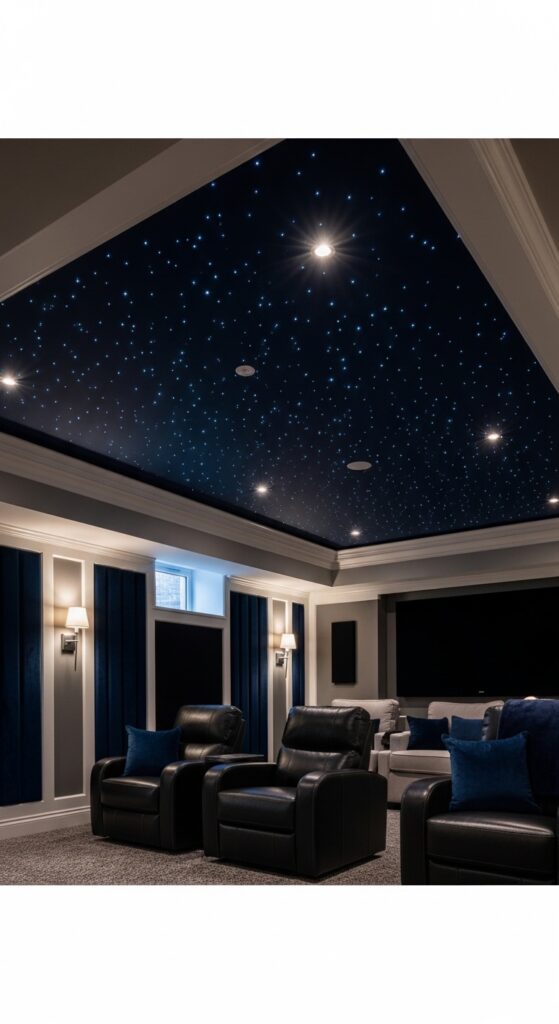
Vibe sentence: The ceiling turns the whole basement into an experience rather than just a TV room.
What makes it work: A star ceiling draws attention upward and makes a low basement feel more atmospheric. The tiny points of light add drama without the brightness of recessed cans.
How to achieve it: Use a dark navy or black ceiling panel system with fiber optic lighting placed in subtle constellations. This works best when the rest of the room lighting is dimmable and kept warm.
Blackout Shades for Those Small Basement Windows
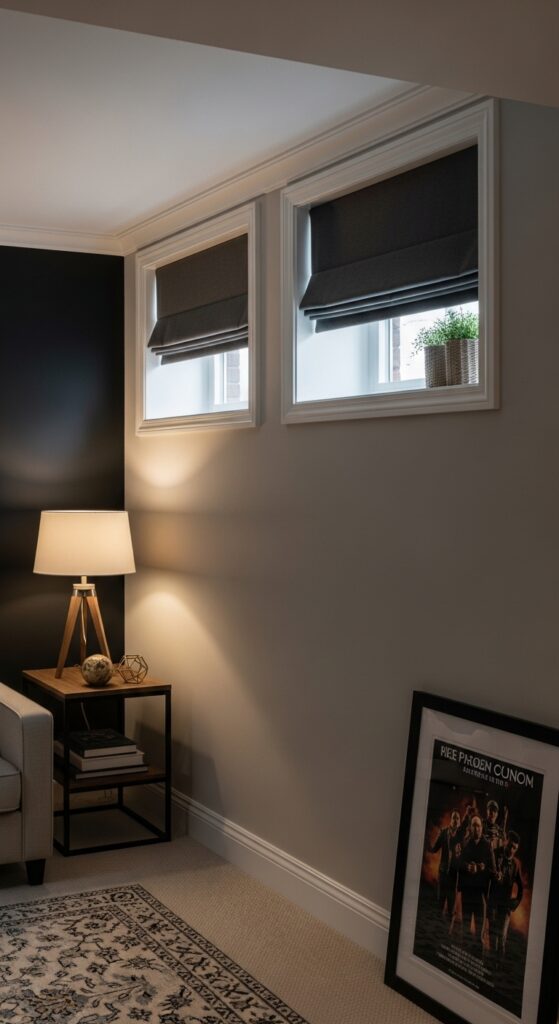
Vibe sentence: The room feels instantly more cinematic when daylight disappears completely.
What makes it work: Even small basement windows can create glare at the wrong angle. Proper blackout treatments protect image quality and keep the room visually streamlined.
How to achieve it: Use inside-mount blackout Roman shades or roller shades with side channels if possible. Choose fabric colors close to the wall tone so the window area disappears when the shades are down.
💡 Add blackout liner behind existing shades if you want a faster, lower-cost upgrade.
Wall-to-Wall Carpet Tiles in a Deep Tone
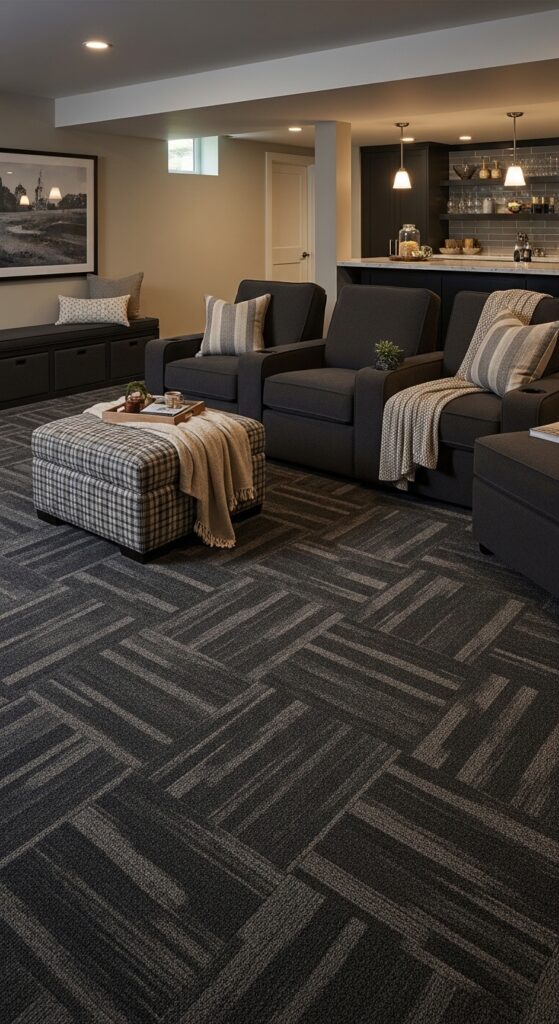
Vibe sentence: Soft flooring makes the whole room feel quieter, warmer, and far more comfortable.
What makes it work: Carpet helps absorb sound reflections and reduces echo, which is crucial in basement theaters with hard concrete below. Tiles are especially practical because damaged sections can be replaced without redoing the whole floor.
How to achieve it: Choose commercial-grade carpet tiles in charcoal, graphite, or deep taupe with subtle tonal variation. Low pile performs better under recliners and snack spills than plush shag.
A Quartz-Topped Snack Bar at the Back Row
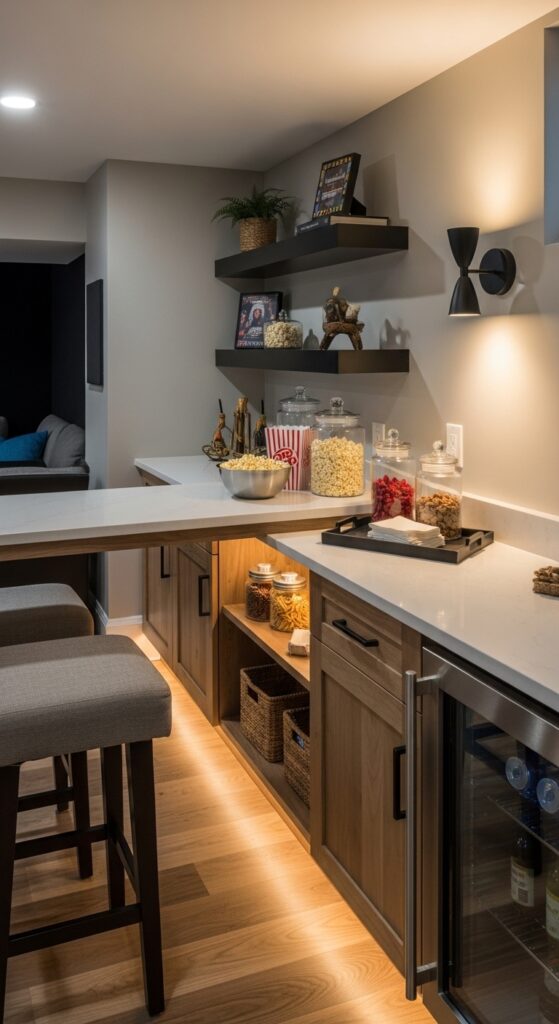
Vibe sentence: This little bar zone makes the theater feel like a destination, not just another basement corner.
What makes it work: A rear snack ledge gives overflow seating, keeps food off the main coffee table, and adds hospitality to the room. Quartz is easy to wipe clean and brightens a darker palette with a crisp surface.
How to achieve it: Build a shallow counter behind the last row or along one wall using quartz, laminate-stone, or butcher block. Add closed storage below for snacks, napkins, and serving trays.
Floating Shelves for Curated Movie Memorabilia
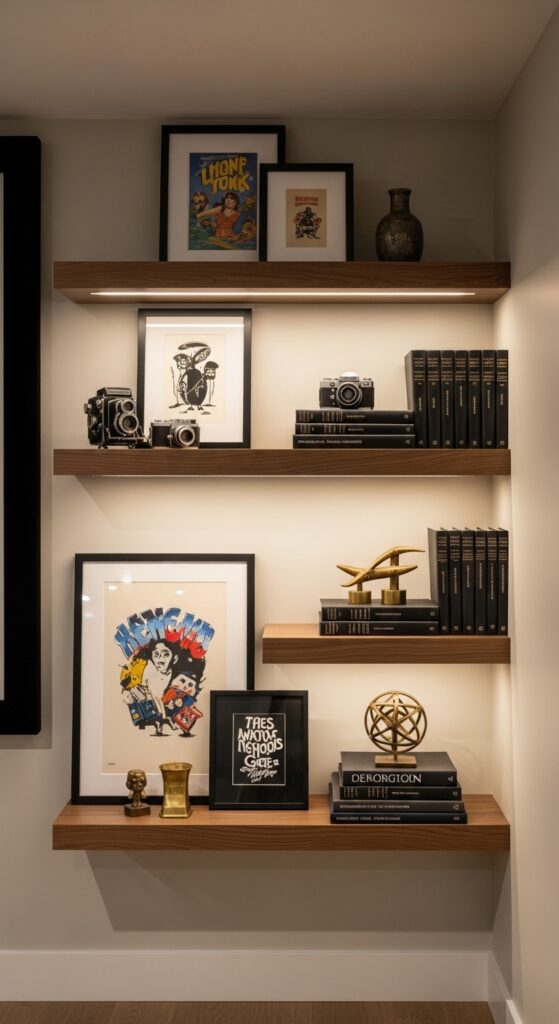
Vibe sentence: The room feels more personal when it hints at your movie taste without turning into a souvenir shop.
What makes it work: A few shelves add story and character, but keeping them edited prevents visual clutter that can distract from the screen wall. The key is using display like background texture rather than the main event.
How to achieve it: Style in small clusters with framed art, one or two collectibles, and dark-toned book spines. Keep the shelving on a side wall so the screen remains the visual focus.
💡 Use museum putty on lightweight display pieces so nothing shifts when the bass gets loud.
Oversized Wall Sconces for a Soft Theater Glow
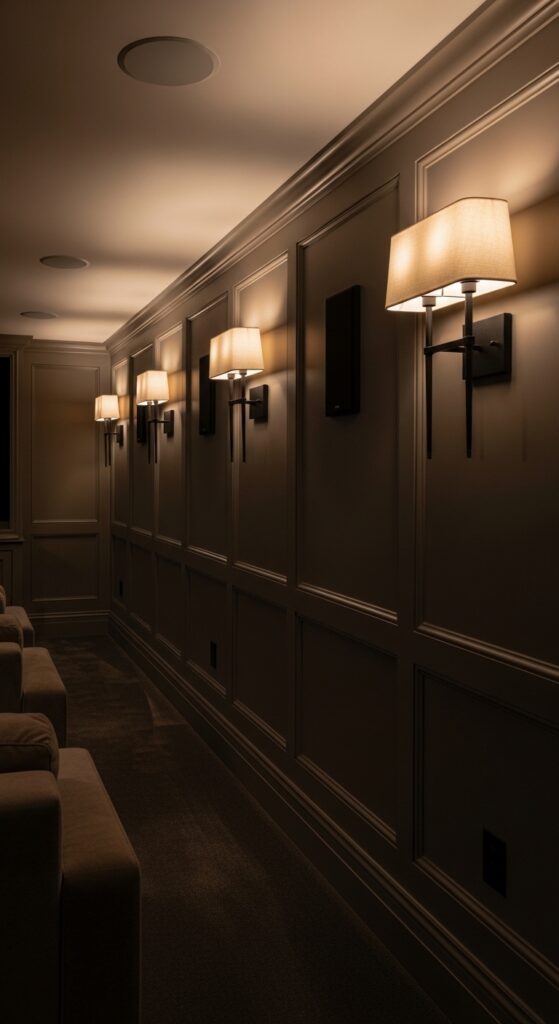
Vibe sentence: Sconces make the room feel finished in that classic old-theater way people instantly love.
What makes it work: Side lighting is gentler than overhead light and gives walls a layered glow without washing out the screen. Oversized fixtures also help a basement feel deliberate rather than builder-basic.
How to achieve it: Choose dimmable sconces with frosted glass or fabric shades and place them evenly along the longest wall. Warm bronze, matte black, or aged brass finishes suit most basement theater palettes.
Basement Home Theater Ideas in Moody Navy and Cognac
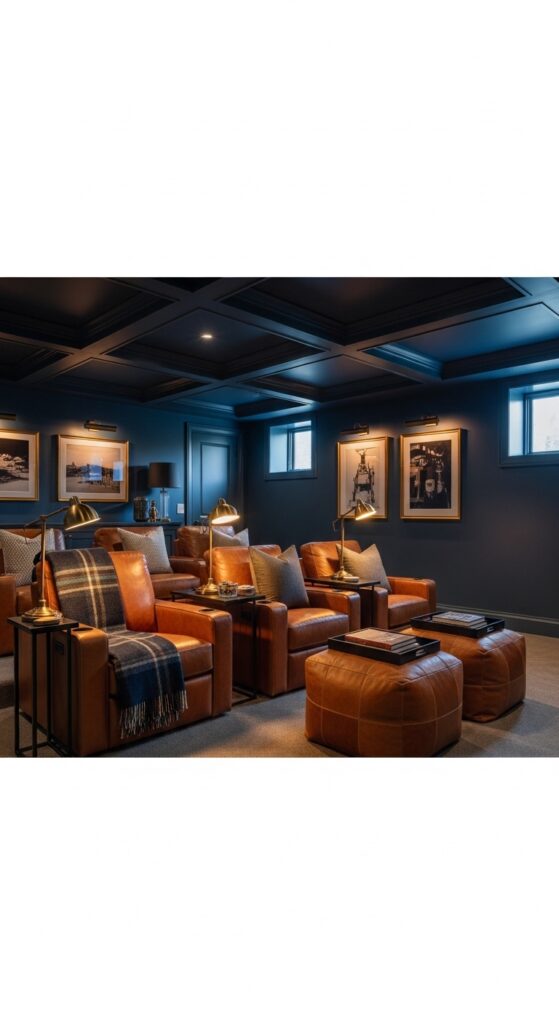
Vibe sentence: This palette feels rich, masculine, and still warm enough for everyday family use.
What makes it work: Navy gives depth without going fully black, while cognac leather adds warmth and contrast. Together they create a classic cinema feel that pairs well with both modern and traditional basement finishes.
How to achieve it: Paint the walls a deep inky navy and bring cognac in through recliners, ottomans, or stitched leather pillows. Balance the palette with black metal and dark walnut so it stays grounded.
Coffered Ceiling Painted One Deep Shade
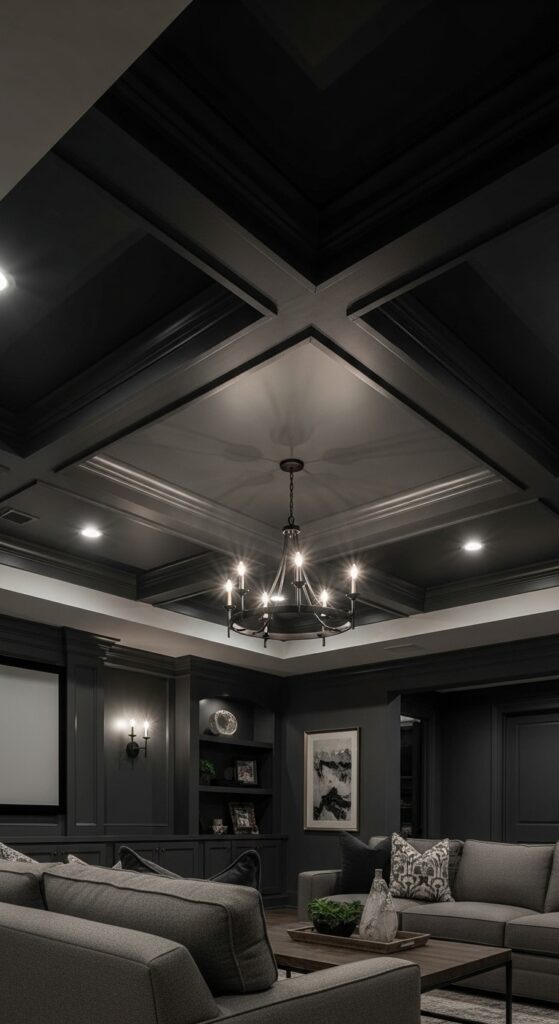
Vibe sentence: A detailed ceiling makes the basement feel more like a custom retreat than a finished lower level.
What makes it work: Coffers add structure and dimension overhead, which is valuable in basement spaces that can otherwise feel flat. Painting the whole ceiling one deep tone keeps the detail subtle instead of visually busy.
How to achieve it: Use shallow beams if ceiling height is limited, and paint the beams and background the same charcoal or black. Add dimmable perimeter lights only if you want a softer cinematic wash.
💡 Faux beam coffers can create this look without the weight or cost of full hardwood construction.
Hidden Storage Ottomans for Blankets and Games
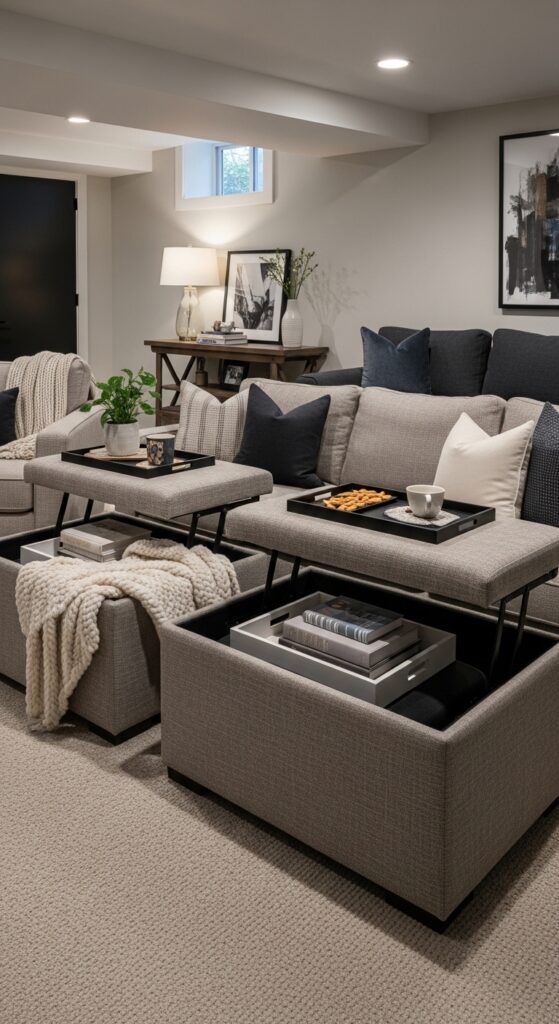
Vibe sentence: This setup feels relaxed and family-friendly without losing that tailored theater mood.
What makes it work: Storage ottomans do three jobs at once: they hold clutter, offer footrest comfort, and act as flexible tables. In a basement theater, multifunction pieces are what keep the room from becoming overfurnished.
How to achieve it: Choose a lift-top ottoman in performance fabric, faux leather, or wool blend that complements the main seating. Use trays on top for snacks so the surface stays practical during movie nights.
Solid-Core Doors for Better Sound Control
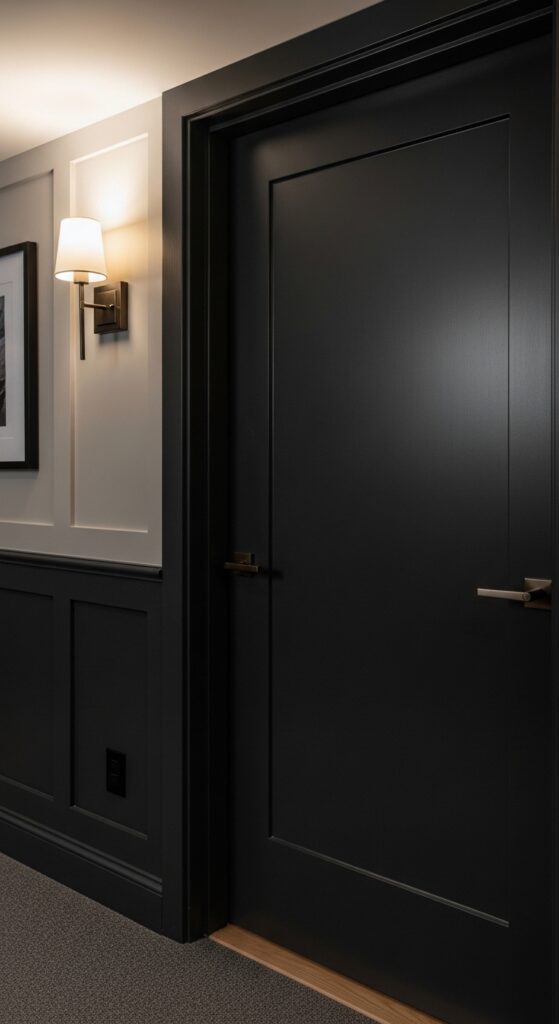
Vibe sentence: A heavier door makes the room feel more private before the movie even begins.
What makes it work: Sound leakage is one of the fastest ways a theater loses its immersive feel. A solid-core door dampens noise far better than a hollow one and helps contain bass in the room.
How to achieve it: Upgrade to a solid-core slab and add perimeter acoustic seals plus a door sweep at the threshold. Paint it to match the trim or walls so it feels intentional and tucked in.
💡 This is one of the highest-impact upgrades if your basement theater shares a wall with bedrooms or a family room.
A Slim Mini Fridge Hidden in the Cabinet Run
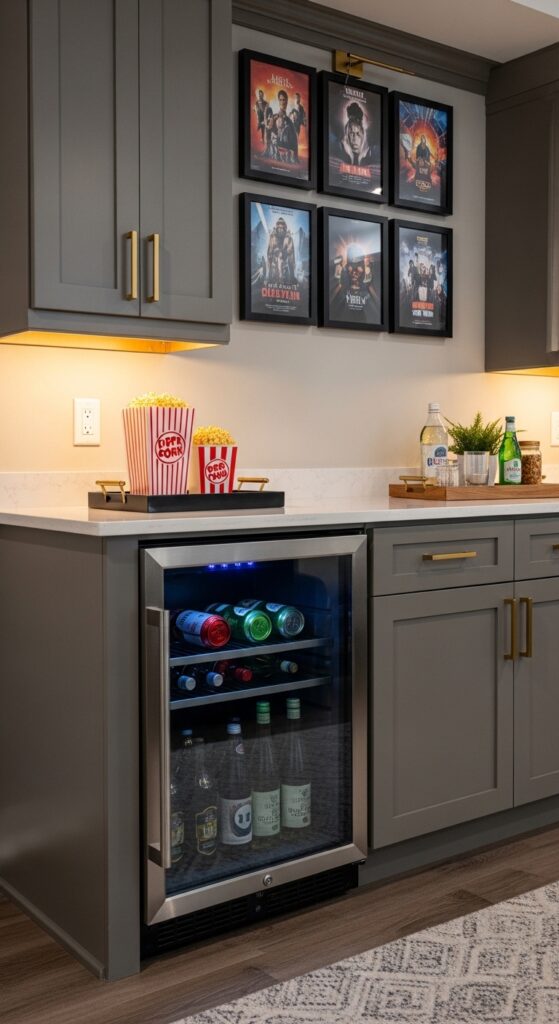
Vibe sentence: A hidden beverage station makes the theater feel easy, relaxed, and a little indulgent.
What makes it work: Built-in refreshment storage reduces trips upstairs and keeps the room more self-contained. Tucking the fridge into cabinetry preserves the polished look instead of making it feel like an appliance zone.
How to achieve it: Choose a quiet compact fridge with a reversible glass or panel-ready door and place it near the snack bar. Keep the cabinet hardware simple so the whole wall still reads as furniture.
Framed Movie Poster Grid in Black and Brass
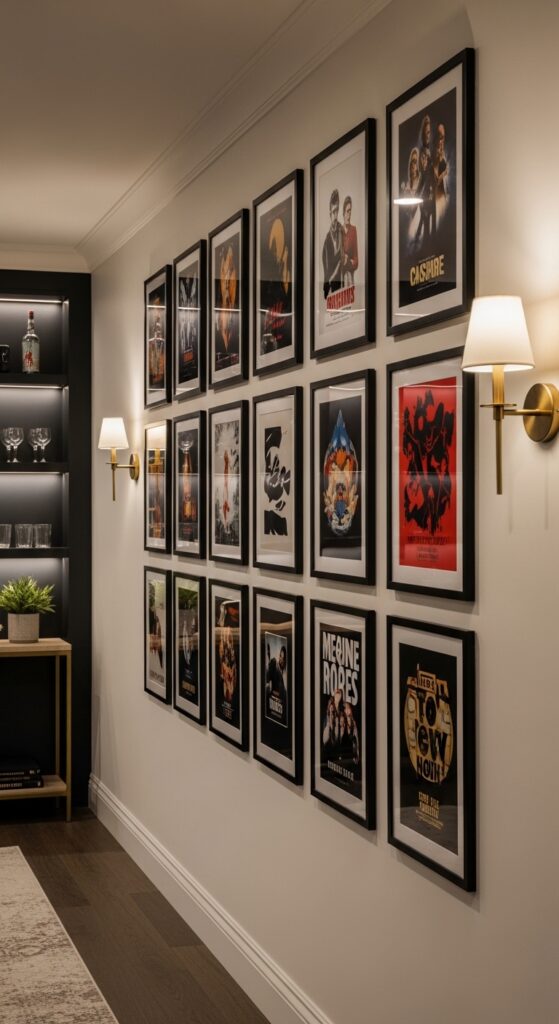
Vibe sentence: This wall makes the approach to the theater feel like part of the movie-night ritual.
What makes it work: A consistent grid creates order, which is essential when using bold poster art. Black or brass frames unify different graphics so the collection feels elevated rather than chaotic.
How to achieve it: Choose posters with a similar color mood or convert favorites into muted art prints for a more grown-up look. Leave even spacing between frames and keep the arrangement to one wall for maximum impact.
Backlit Open Shelving for a Moody Bar Niche
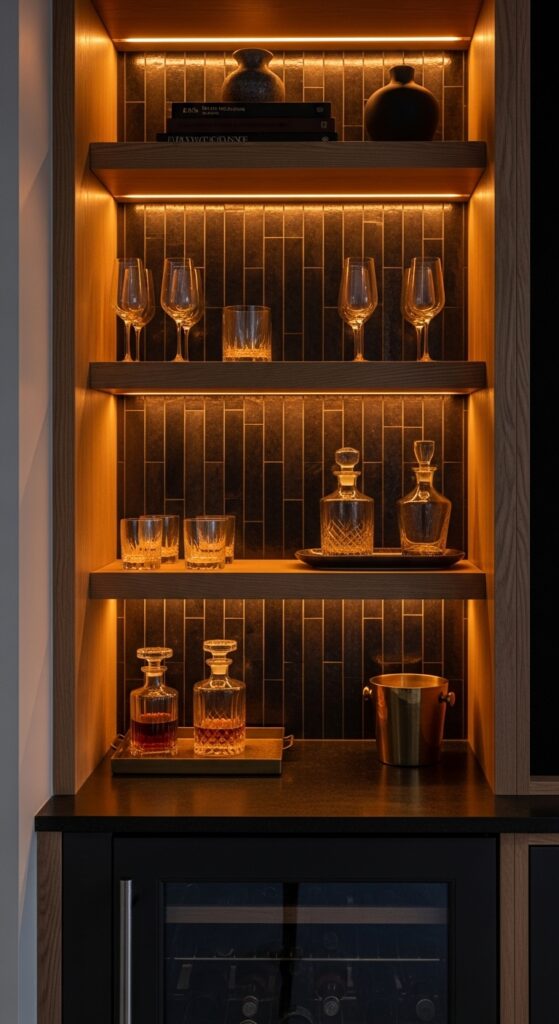
Vibe sentence: The glow from a tucked-away bar nook makes the whole basement feel more lounge-like and complete.
What makes it work: Backlighting creates depth and highlights texture without competing with the screen. A compact bar niche also gives the theater a hospitality layer that feels very intentional in a basement setting.
How to achieve it: Use smoked oak or black shelves with warm LED strips hidden behind the front lip. Add a dark tile or stone backsplash so the glassware stands out softly against the background.
💡 Even one floating shelf over a compact cabinet can create a mini version of this look.
Warm Walnut Millwork With Matte Black Hardware
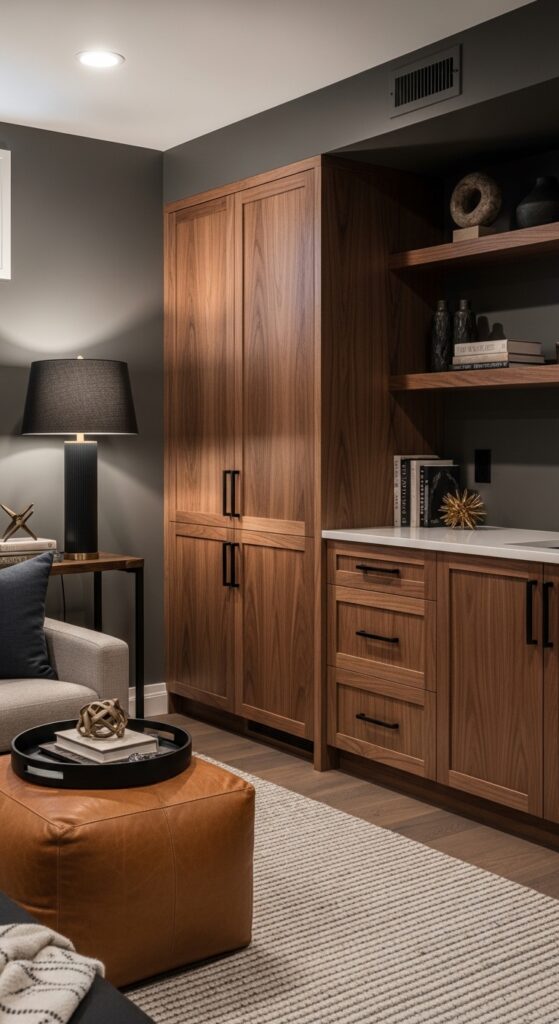
Vibe sentence: Walnut and black together make a basement feel warmer, smarter, and far more custom.
What makes it work: Walnut adds natural movement and warmth, which darker basement palettes often need. Matte black keeps the look current and prevents the wood from skewing too traditional.
How to achieve it: Use walnut on cabinetry, wall panels, or shelving, then repeat matte black in hardware, lighting, and vent covers. This pairing works especially well with charcoal walls and pale quartz counters.
A Double-Duty Gaming and Movie Zone
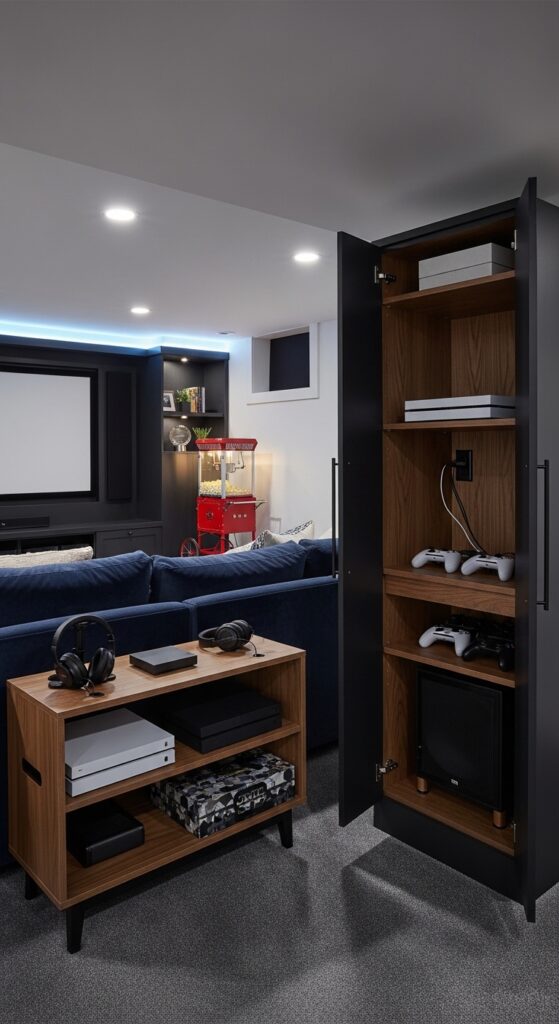
Vibe sentence: This setup feels modern and practical without sacrificing the grown-up theater mood.
What makes it work: Many basements need to serve more than one purpose, and integrated gaming keeps the room versatile. The key is making the tech disappear when not in use so the theater identity still leads.
How to achieve it: Dedicate one cabinet bay to consoles, charging docks, and controller storage with proper ventilation. Keep visible accessories minimal and use one screen setup that works for both movies and gaming.
A Compact Popcorn Station With Vintage Details
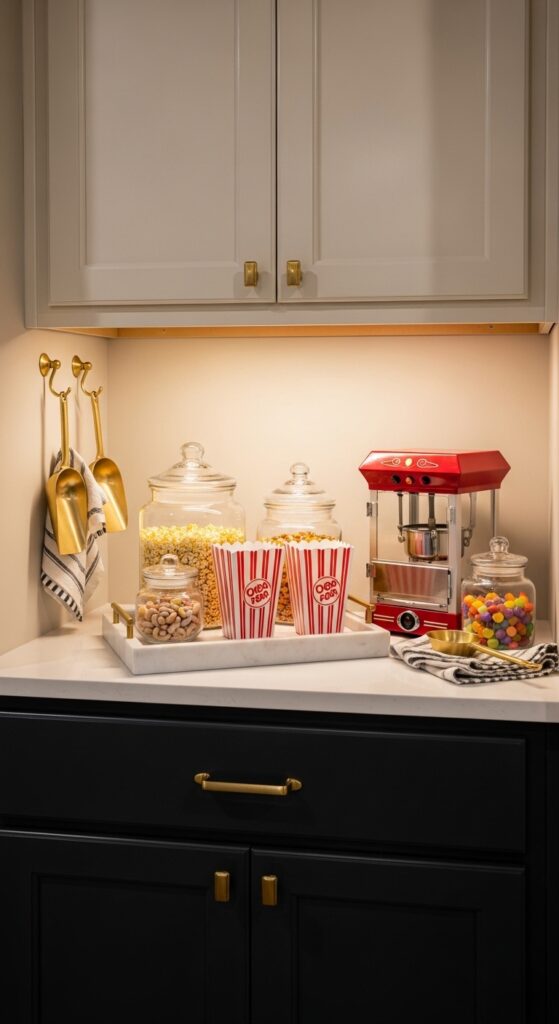
Vibe sentence: A tiny popcorn corner makes the room feel playful in a way that instantly draws people in.
What makes it work: The station adds ritual and personality, which helps a basement theater feel memorable. Keeping it compact prevents the nostalgic details from turning into clutter.
How to achieve it: Use one small appliance, two or three glass jars, and a tray to corral boxes or toppings. Vintage-inspired red works best in small doses against darker, more modern finishes.
💡 A tray with striped popcorn tubs and a lidded jar of kernels can create the same charm without a machine.
Narrow Drink Tables Between Theater Seats
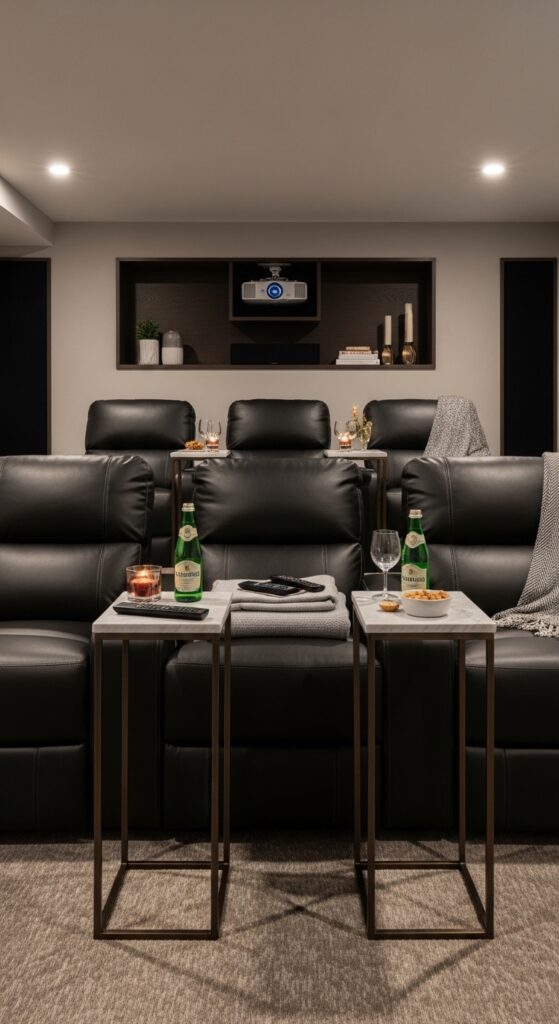
Vibe sentence: Small tables make the room feel more polished because every seat has a place to land the essentials.
What makes it work: Even a narrow perch helps keep drinks, remotes, and snacks off upholstery. Slender tables preserve circulation better than bulky side tables in tight basement layouts.
How to achieve it: Choose C-tables or pedestal drink tables with 8- to 12-inch tops in marble, black metal, or smoked glass. Position them where they are easy to reach without blocking recline function.
A Projector Niche Built Into the Rear Wall
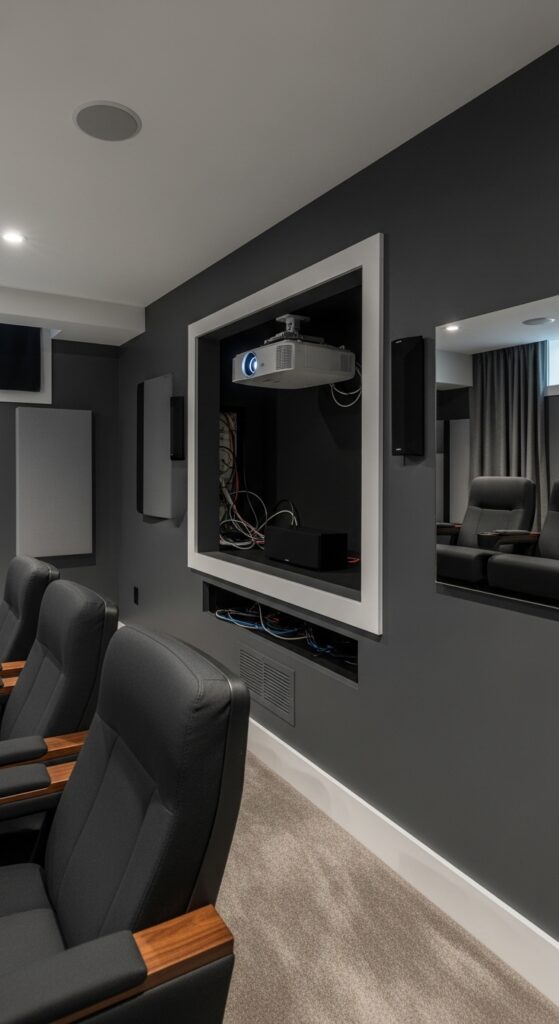
Vibe sentence: Hiding the projector makes the whole room feel quieter and more intentional.
What makes it work: Projectors can visually interrupt a carefully designed basement if they are suspended awkwardly in the room. A niche integrates the equipment into the architecture and makes cable management far easier.
How to achieve it: Build a rear wall recess with ventilation and cable access sized to your projector’s throw requirements. Paint the interior dark so the equipment visually disappears during use.
Acoustic Drapery on the Back Wall
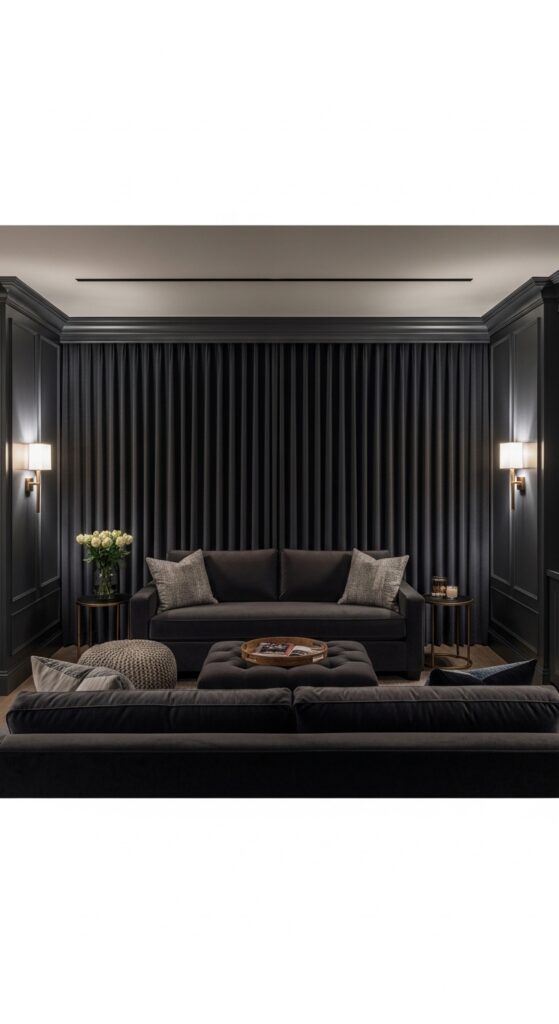
Vibe sentence: A fabric-covered wall makes the room feel hushed, plush, and incredibly cinema-like.
What makes it work: Heavy drapery on the rear wall helps absorb sound reflections, especially in rectangular basements. It also softens the hard geometry of a room filled with screens, speakers, and cabinetry.
How to achieve it: Use velvet, suede-look, or dense theater drapery on a ceiling track behind the main seating. Deep navy, charcoal, or black all work well because they enhance acoustics and minimize distraction.
💡 This is a smart solution if you want better sound without installing hard acoustic panels everywhere.
Basement Home Theater Ideas With a Deep Greige Envelope
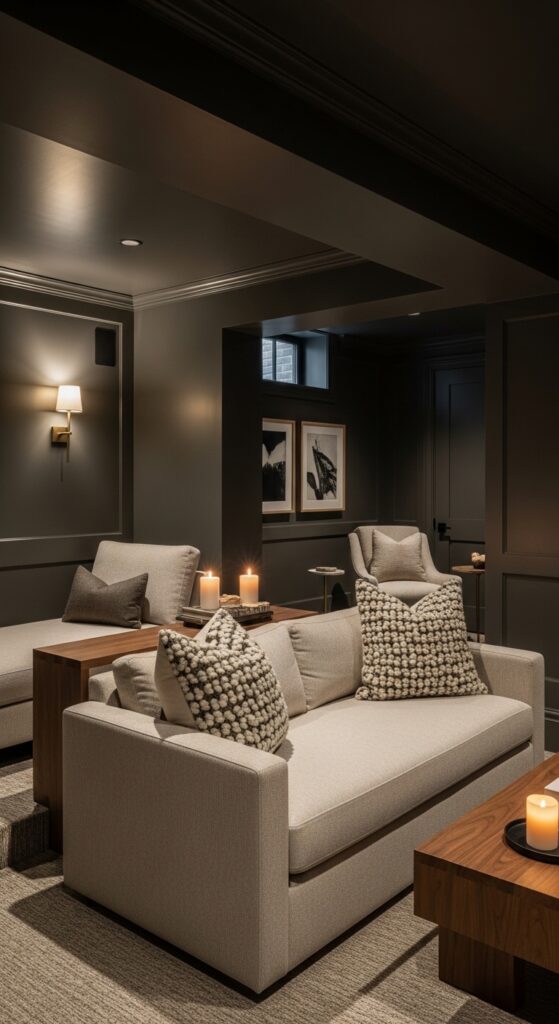
Vibe sentence: This palette feels softer than black but still moody enough for a true theater atmosphere.
What makes it work: Deep greige gives you shadow and depth without the starkness of a fully black room. It pairs beautifully with walnut, cream, leather, and brass, which makes the basement feel more like a designed retreat.
How to achieve it: Try a rich greige like a warm mushroom-charcoal and extend it across walls, trim, and built-ins. This works especially well if you want the theater to double as a lounge or family media room.
Plush Chaise Lounge in One Corner
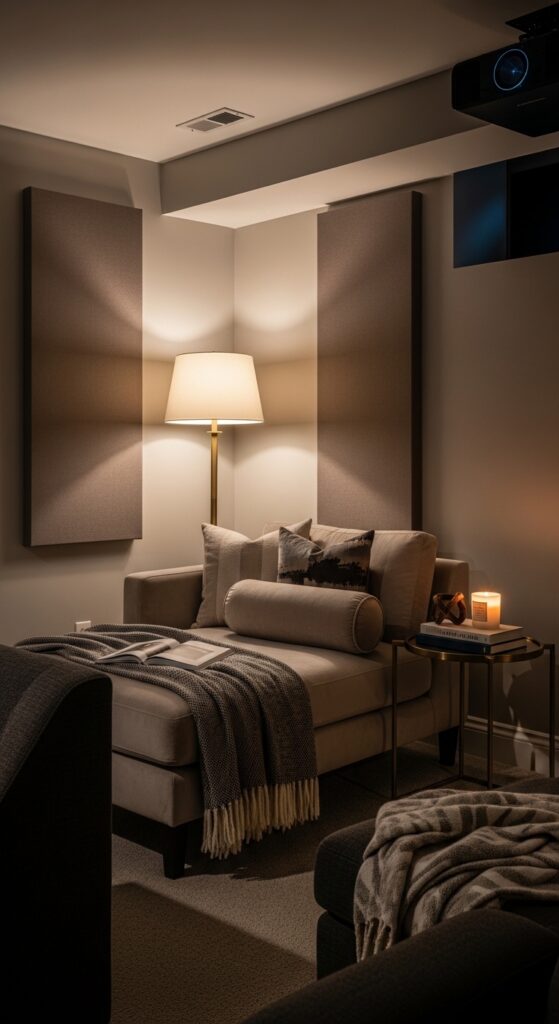
Vibe sentence: A corner chaise makes the theater feel less rigid and more like a private retreat.
What makes it work: Not every basement needs rows of identical seating. One chaise introduces softness and gives the room a more lounge-like, designer feel while still supporting movie viewing.
How to achieve it: Place the chaise at an angle that still faces the screen and use a floor lamp behind it for reading or lower-light lounging. Velvet, chenille, or performance boucle all add welcome texture in darker rooms.
Trimmed-Out Speaker Panels That Blend Into the Walls
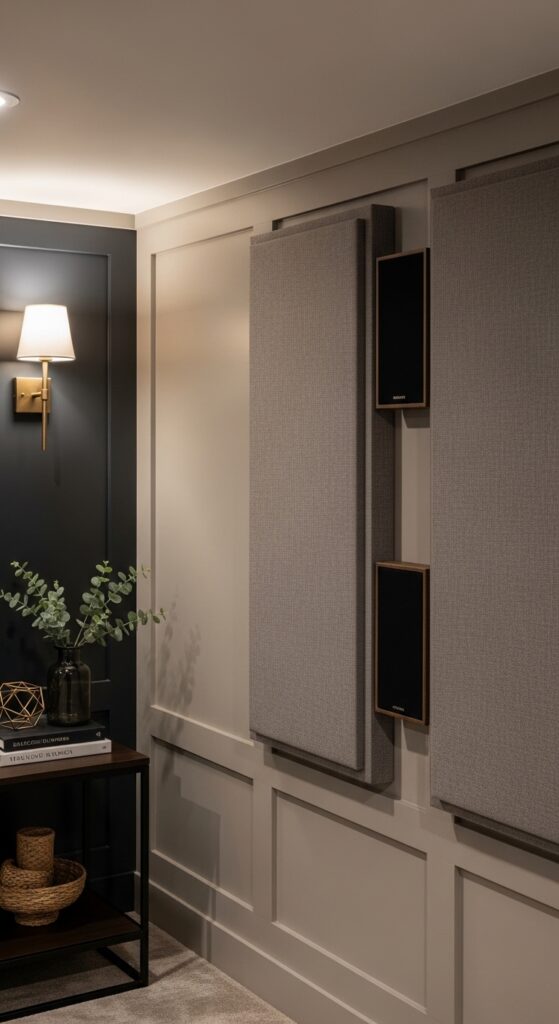
Vibe sentence: The room feels more refined when the sound system works hard without visually taking over.
What makes it work: Large visible speakers can fight with the clean lines of a finished basement theater. Fabric panels let the technology recede while still supporting strong audio performance.
How to achieve it: Use acoustically transparent fabric in a tone close to the wall color and frame the panels neatly for a built-in look. This approach pairs especially well with paneled or slatted theater walls.
💡 If in-wall speakers are not possible, choose speaker covers in dark fabric so they visually blend in better.
How to Start Your Basement Transformation
Start with the elements that affect performance first: light control, sound control, and layout. In most basements, that means darkening the walls, choosing the screen wall, and figuring out whether you want one row of seating, two rows with a riser, or a large sectional. Once those decisions are made, the rest of the design becomes much easier.
One of the most common mistakes with basement home theater ideas is focusing only on the screen and forgetting the envelope around it. Hard flooring, bright paint, uncovered windows, and too many reflective finishes can all make the room feel less immersive. Good acoustics and low-glare surfaces matter just as much as the size of the TV or projector.
If you are working with a tighter budget, begin with matte paint, blackout shades, carpet tiles, and better lighting. Those four updates can transform the mood of a basement faster than most electronics upgrades. A simple sectional, a dark wall color, and a snack ledge can already feel incredibly inviting.
Expect the room to come together in layers. First solve sound and sightlines, then add storage, lighting, and finishing touches like posters or a popcorn station. The best basement theater does not happen all at once. It gets better each time you make the room a little darker, softer, and more intentional.
Frequently Asked Questions
What colors work best for a basement home theater?
The best colors are darker, low-sheen tones that reduce glare and help the screen stand out. Charcoal, deep navy, warm black, espresso brown, and deep greige all work beautifully in basement home theater ideas because they absorb more light than bright paint. If you want something softer than black, a mushroom-toned greige or inky blue is often the most forgiving choice.
Is carpet necessary in a basement home theater?
It is not absolutely required, but it helps a lot. Carpet or carpet tiles reduce echo, soften footsteps, and make the room feel warmer, which matters in basements with concrete underneath. Low-pile commercial carpet tiles are especially practical because they handle spills better than plush carpet and can be replaced one square at a time.
What is better for a basement theater, a sectional or recliners?
It depends on how you use the room. A sectional is great for family movie nights, casual lounging, and tighter budgets, while recliners give a more classic cinema feel and better personal comfort for longer viewing. In a smaller basement, one deep sectional often fits more naturally than several bulky recliners.
How do I make a basement home theater feel expensive?
Focus on finishes that control clutter and improve atmosphere. Dark matte paint, built-in cabinetry, warm dimmable sconces, a walnut accent wall, and acoustic fabric panels all help the room feel more custom. You do not need a massive screen to get a luxury look if the lighting, materials, and storage are handled well.
Can a small basement still become a real home theater?
Absolutely. Many of the best basement home theater ideas work in compact rooms because basements already support darkness and sound control. A projector wall, blackout shades, one sectional, and a deep charcoal paint color can create a true theater feeling without needing a huge footprint.
Ready to Create Your Dream Basement Space?
These 29 home theater ideas prove that a basement can become one of the most inviting rooms in the house when comfort and atmosphere work together. Save or pin your favorites, then start with one meaningful change, whether that is darker paint, better lighting, or a more intentional seating plan. The magic of a basement theater is that it does not need to feel flashy to feel unforgettable. It just needs the right balance of softness, darkness, and smart design. Start there, and your movie nights will never feel ordinary again.