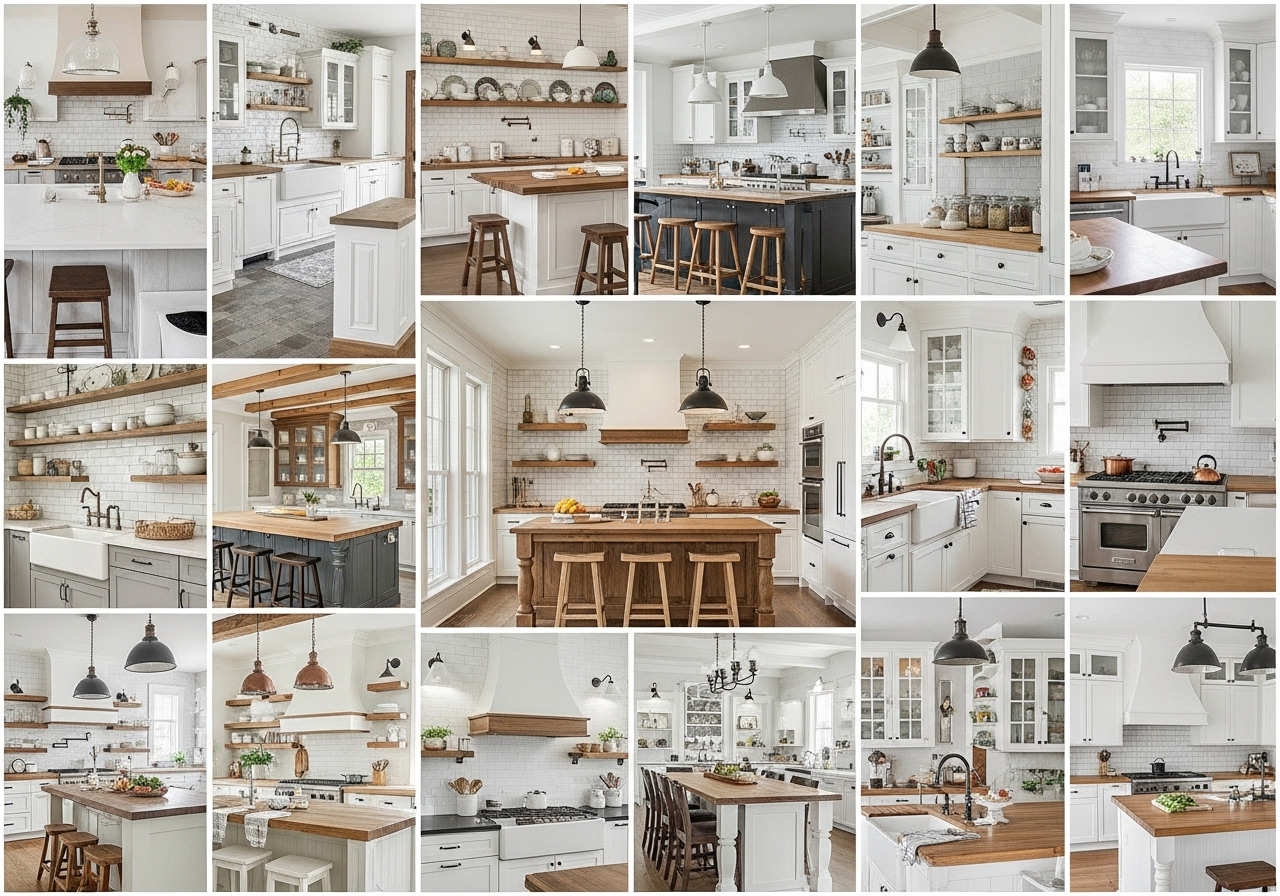
Modern farmhouse kitchen ideas blend the warmth of traditional country kitchens with the cleaner lines, quieter palettes, and streamlined function of contemporary design. These 22 ideas will show you exactly how to build that look through color, materials, lighting, furniture, layout, and small-space tricks that actually work.
This style feels bright but not cold, lived-in but not cluttered. It carries the texture of wood, stone, and iron while still leaving room for light, calm, and easy movement. A good modern farmhouse kitchen feels collected, practical, and gently polished all at once. Here are 22 ideas worth saving — and stealing.
Why Modern Farmhouse Kitchen Ideas Work So Well
Modern farmhouse style grew out of classic rural farmhouse interiors but shed some of the heavier rustic detailing in favor of cleaner lines and a more restrained palette. Architectural Digest notes that the modern version leans more contemporary—sometimes even slightly Scandinavian—while still holding onto exposed wood, reclaimed materials, and the comfort-first practicality that defines farmhouse design. Architectural Digest
Its core materials are warm white Shaker cabinetry, reclaimed oak, soapstone, honed marble, brick, shiplap, unlacquered brass, wrought iron, fluted glass, and hand-finished tile. The palette lives in creamy white, greige, pine green, muted blue, warm black, and weathered wood tones, with darker accents used sparingly to sharpen the softness. Homes & Gardens Better Homes & Gardens
It is still trending because kitchens are no longer just work zones; they are gathering spaces, homework counters, coffee bars, and visual anchors for open-plan homes. Modern farmhouse kitchens answer that shift especially well by feeling timeless, textured, and welcoming without reading dated, which is exactly why editors keep framing them as the sweet spot between classic and current. Homes & Gardens Southern Living
Small kitchens can absolutely carry this look, but scale control matters. Prioritize one warm cabinet color, one honest wood tone, slimmer lighting, and selective open shelving; if you stack on oversized pendants, chunky islands, and decorative clutter all at once, the room stops feeling airy fast. Southern Living
| Element | Farmhouse Warmth | Modern Restraint |
| Philosophy | Comfort and utility | Clean-lined simplicity |
| Materials | Reclaimed oak, soapstone | Fluted glass, brass, matte black |
| Color palette | Warm white, pine green | Greige, charcoal, muted blue |
1. Modern Farmhouse Kitchen Ideas With Warm White Shaker Cabinets
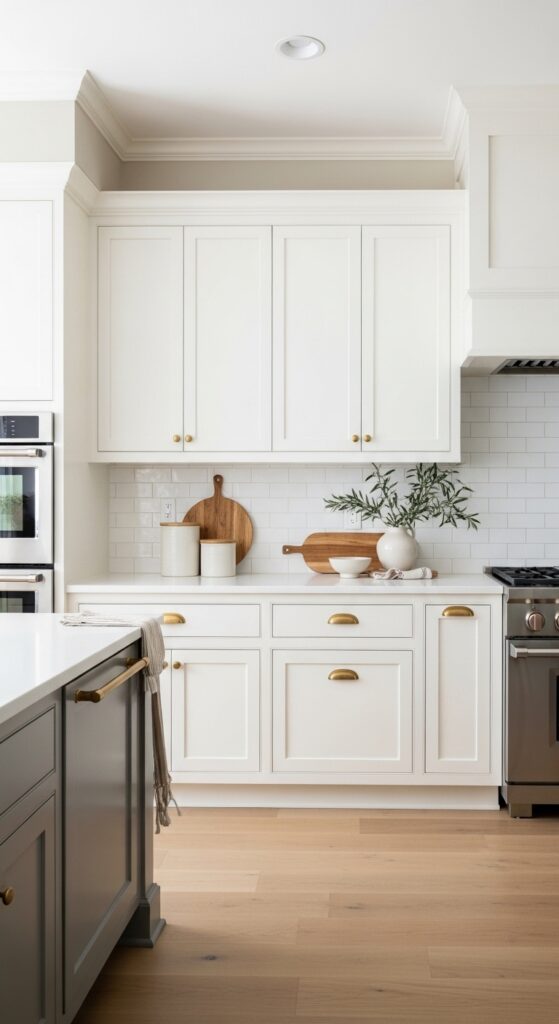
Vibe: The room feels luminous and quietly tailored.
Why it works: Warm white cabinets create an airy envelope, but the Shaker profile keeps the kitchen from going flat. The clean rail-and-stile lines deliver just enough shadow and proportion, while brass and wood add warmth so the palette feels soft rather than sterile.
How to get it: Paint cabinets in Benjamin Moore White Dove or Swiss Coffee instead of a cool architectural white. Pair that finish with a slightly deeper wall tone—think pale greige—so the cabinetry reads intentional and layered.
2. Honed Soapstone Counters That Age Gracefully
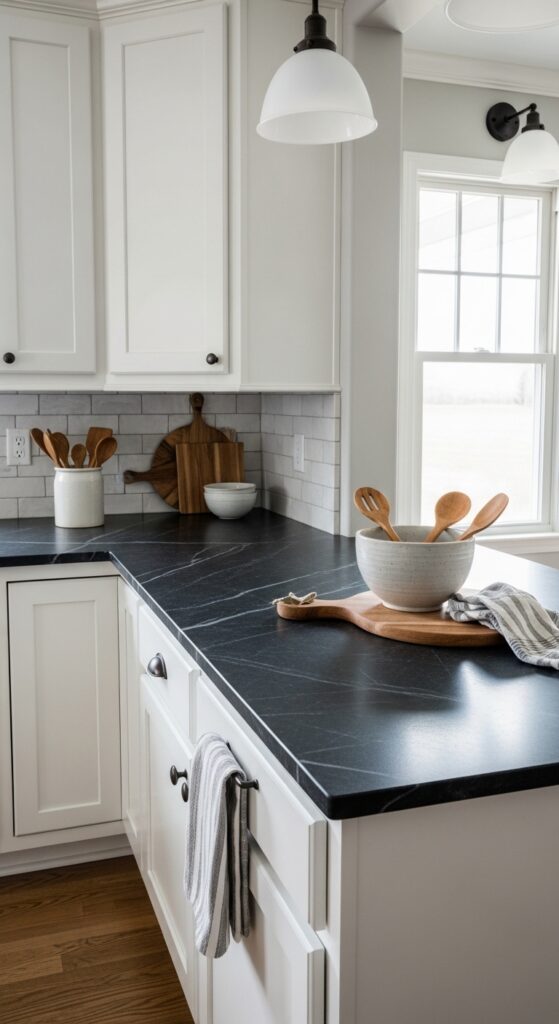
Vibe: It feels grounded, tactile, and slightly moody in the best way.
Why it works: Soapstone adds visual weight where a farmhouse kitchen needs anchor, especially against lighter cabinets. Because the finish is matte rather than glossy, it supports the style’s lived-in character and lets wood, tile, and metal share the spotlight instead of competing for it.
How to get it: Choose honed soapstone with an eased edge rather than ornate ogee detailing. If full slabs are out of budget, use it just on the island or coffee station where the patina can become a focal point.
💡 Quick Win: A dark soapstone-look cutting board on the counter gives you the contrast before you commit to stone.
3. Oversized Black Lantern Pendants Over the Island
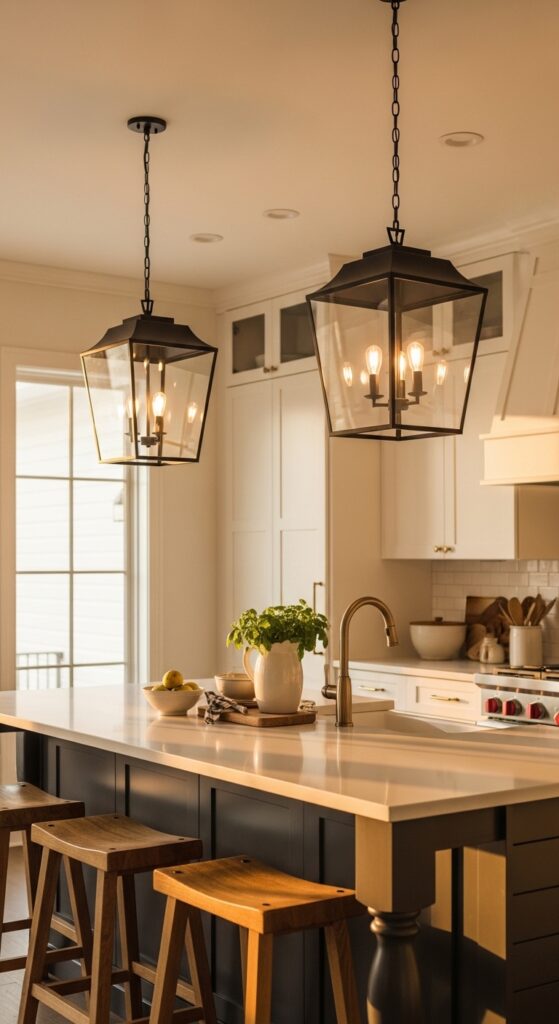
Vibe: The kitchen feels sun-warmed and architecturally clear.
Why it works: Lantern pendants create vertical structure, which is especially useful in open kitchens that need definition. Their black outlines sharpen the room’s softer surfaces, giving contrast without the heaviness of a closed drum shade or oversized chandelier.
How to get it: Hang pendants 30 to 36 inches above the island and scale them to the island length rather than the room size. Rejuvenation and Schoolhouse both make shapes that feel clean enough for modern farmhouse instead of overly rustic.
4. A Furniture-Style Island With Turned Legs
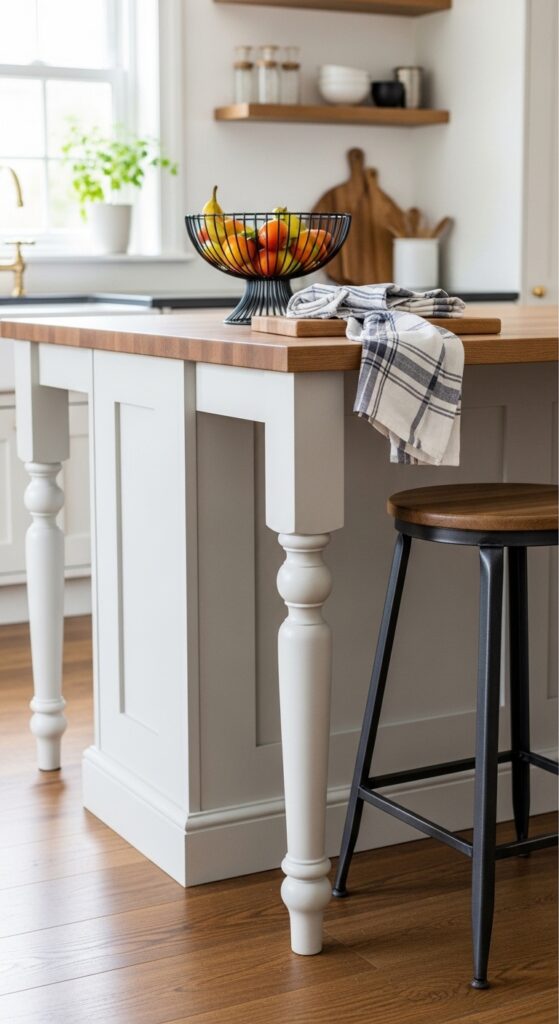
Vibe: It feels layered and welcoming, like the island belongs to the house rather than the showroom.
Why it works: A furniture-style island breaks up the boxiness that can make contemporary kitchens feel generic. Exposed legs reduce visual bulk at floor level, which helps the island feel lighter while still giving the room that farmhouse sense of handcrafted utility.
How to get it: Add applied end panels, turned feet, or furniture-style posts to a plain island base rather than replacing the whole piece. Keep the countertop edge simple so the island stays classic instead of decorative.
💡 Quick Win: Furniture feet kits can make a standard island read custom for well under $50.
5. Open White Oak Shelves Styled Sparingly
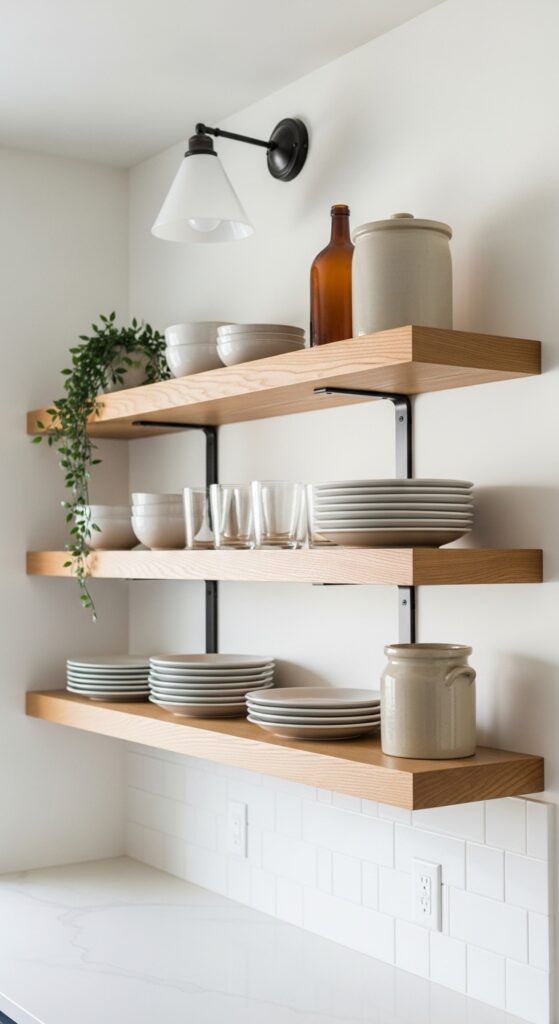
Vibe: The kitchen feels layered but still easy to breathe in.
Why it works: Open shelving adds negative space where upper cabinets would create visual density. White oak brings warmth and grain variation, and when the shelf styling stays sparse, the eye reads texture and openness rather than storage overload.
How to get it: Use shelves at least 1.5 inches thick and limit yourself to three groupings per run—plates, glasses, one crock, done. This works best on one wall only; too much open shelving can make a hardworking kitchen feel exposed.
6. A Farm Table in Place of a Built-In Island
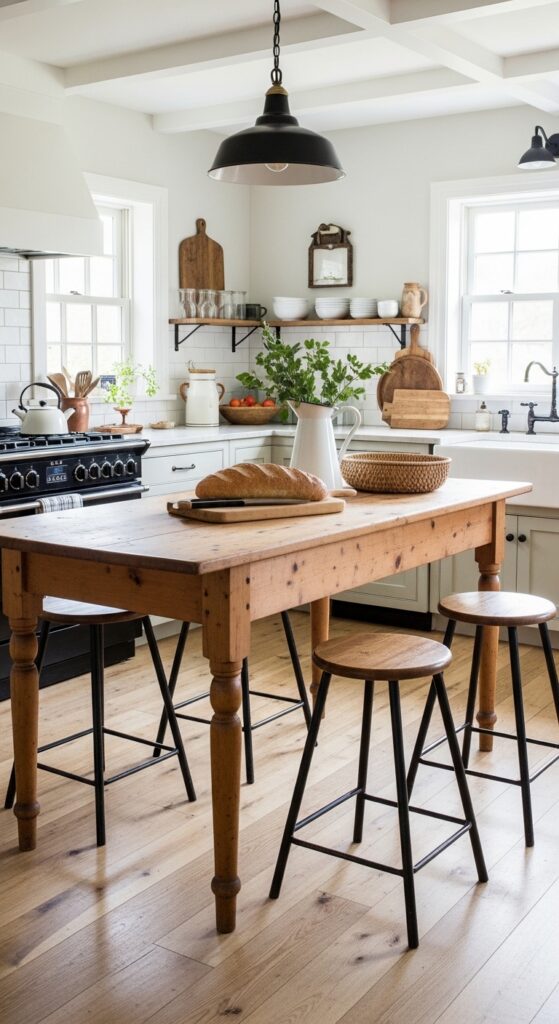
Vibe: It feels easygoing and communal, with real room to gather.
Why it works: A freestanding table softens the kitchen’s footprint and improves traffic flow because it reads as furniture, not cabinetry. That shift matters in long or narrow rooms where a heavy built-in island would block movement and increase visual weight.
How to get it: Look for a pine or maple table around 30 inches high and give yourself at least 36 inches of clearance around all sides. Add locking casters only if you truly need flexibility; fixed legs usually feel more settled.
💡 Quick Win: A thrifted harvest table instantly gives a builder-grade kitchen more character than most decor ever will.
7. A Single-Wall Setup That Still Feels Farmhouse
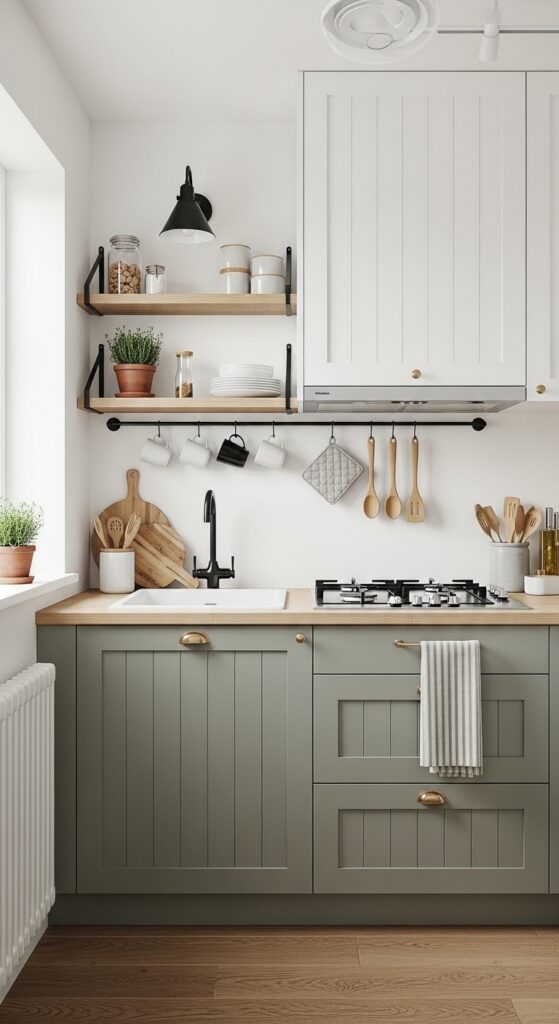
Vibe: The space feels still and efficient rather than squeezed.
Why it works: In a small footprint, modern farmhouse succeeds when every visible element earns its place. A single-wall layout keeps circulation clear, while peg rails and one short shelf add that farmhouse note without the bulk of extra cabinetry.
How to get it: Use full-height uppers, then add a slim wooden peg rail beneath the hood or beside a window for daily tools. Keep the countertop nearly clear so texture, not clutter, becomes the design feature.
8. Modern Farmhouse Kitchen Ideas With Muted Sage Base Cabinets
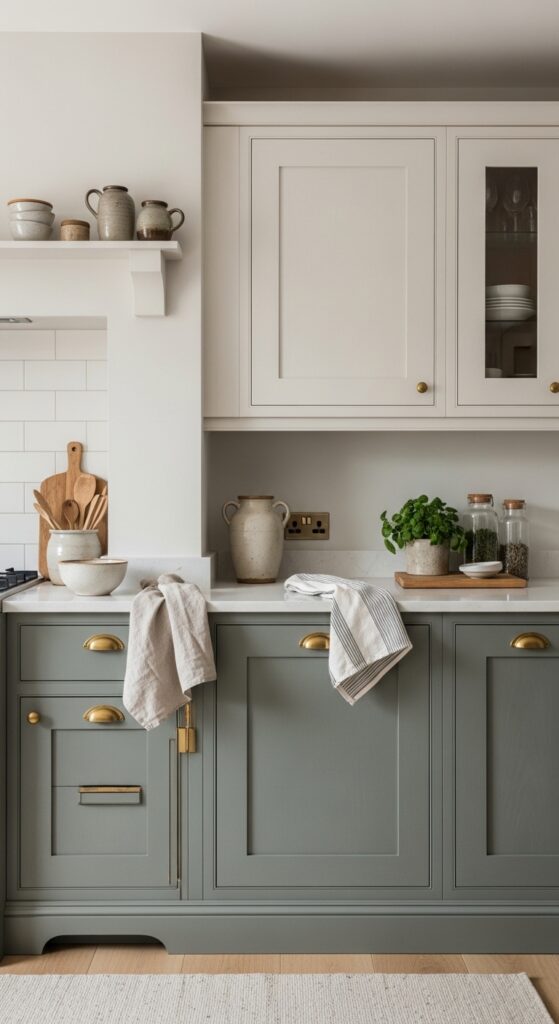
Vibe: It feels hushed and fresh, like the room carries a little garden air.
Why it works: Sage gives color without visual noise, especially when confined to the lower cabinets. That placement grounds the room and keeps the upper half lighter, which preserves the airy quality farmhouse kitchens need.
How to get it: Try Farrow & Ball Pigeon or a similar gray-green on the bases only, then keep uppers creamy rather than bright white. This palette works best in rooms with decent daylight; in dim kitchens, go slightly warmer so the green does not turn flat.
💡 Quick Win: Even one sage-painted pantry door can soften an all-white kitchen instantly.
9. Handmade Zellige Backsplash for Gentle Movement
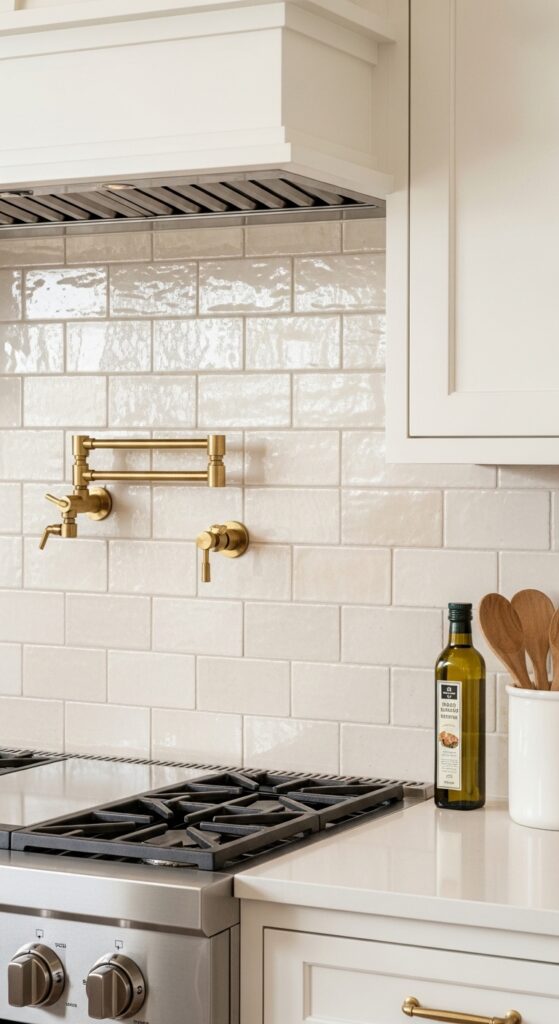
Vibe: The wall feels luminous, with movement that stays quiet.
Why it works: Handmade tile introduces surface variation, which keeps a neutral kitchen from feeling over-smoothed. The reflective glaze catches daylight differently across each tile, adding dimension without relying on busy pattern or high-contrast color.
How to get it: Use 4×4 or 2×6 zellige in stacked rows and a grout color that nearly disappears. If you prefer a cleaner look, stop the backsplash at the shelf line instead of running it through every wall.
10. Hidden Undercabinet Lighting That Makes Everything Glow
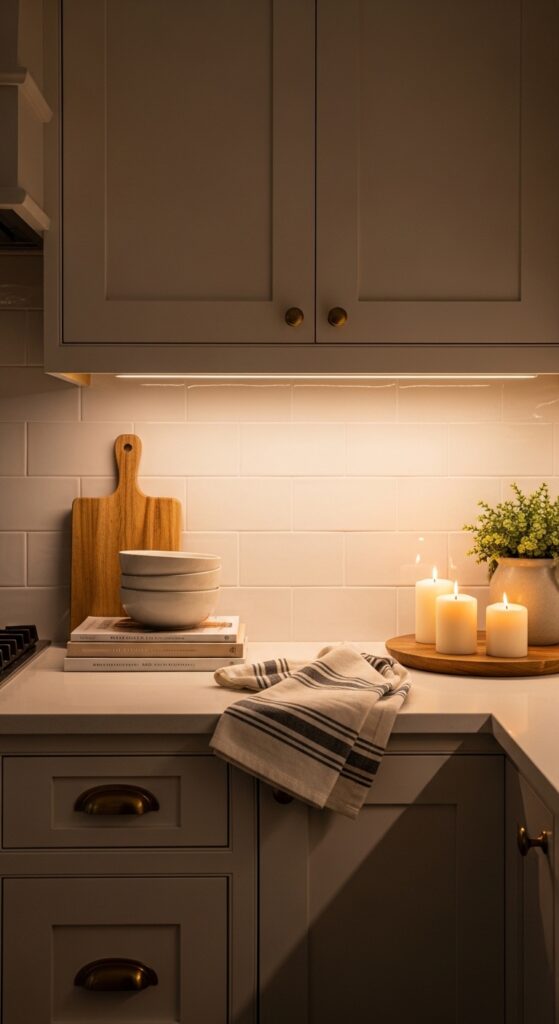
Vibe: The kitchen feels warm and quietly functional after dark.
Why it works: Good farmhouse kitchens are not just daytime-pretty; they need to feel inviting at 7 p.m. too. Hidden task lighting adds a low, even glow across counters and tile, reducing harsh shadow lines and making the entire room feel more considered.
How to get it: Install 2700K LED tape lights inside aluminum channels so the strip disappears and the light stays diffuse. Skip cool white bulbs entirely; they flatten wood tones and make brass look harsh.
💡 Quick Win: Rechargeable puck lights under one shelf can test the mood before you wire anything.
11. Counter Stools in Mixed Wood and Rush
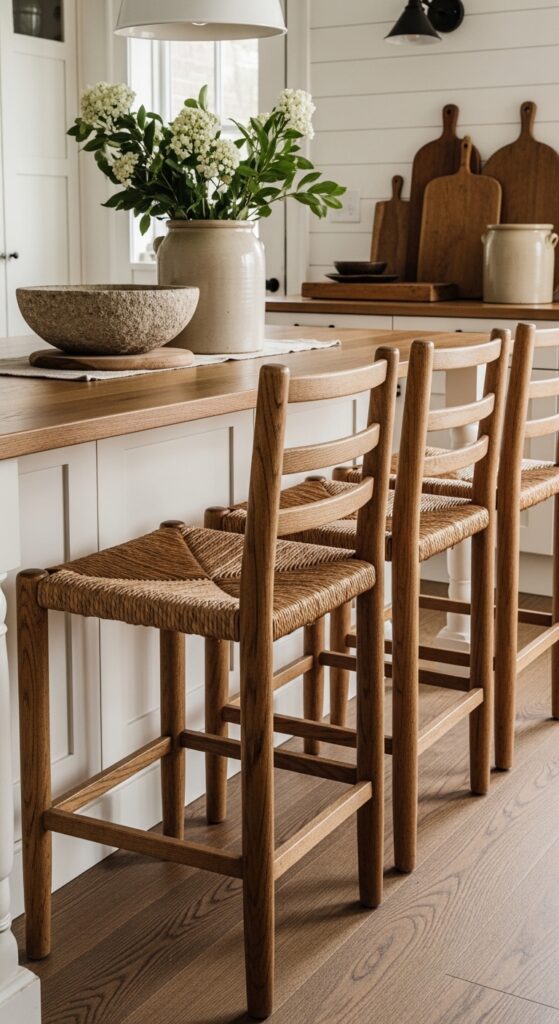
Vibe: It feels grounded and relaxed, with the right amount of texture at eye level.
Why it works: Stools often decide whether a kitchen feels generic or lived-in. Rush introduces organic texture, while mixed wood tones keep the space from feeling too matched, which is essential in modern farmhouse rooms that depend on layered authenticity.
How to get it: Choose stools with open backs or no backs at all if sightlines matter, and stay within 24 to 26 inches for standard counter height. One slightly worn finish usually looks better here than anything glossy or heavily lacquered.
12. Antique Boards and Copper Pieces as Real Decor
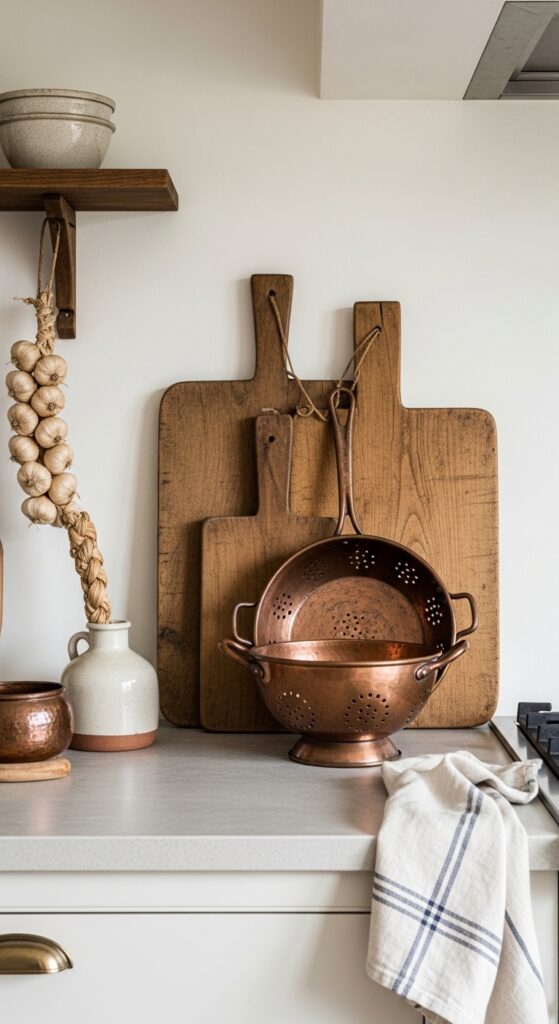
Vibe: The room feels layered and useful rather than decorated for decoration’s sake.
Why it works: Farmhouse styling lands best when the accents could plausibly be used. Antique boards and copper pieces add warmth, patina, and shape variation, but because they are kitchen tools first, they avoid the staged feeling that too many purely decorative accessories create.
How to get it: Lean two or three boards at different heights against the backsplash and let one copper piece sit in front. Keep the grouping near the range or sink so it feels integrated into the kitchen’s working rhythm.
💡 Quick Win: A single flea-market bread board can warm up a blank backsplash in under a minute.
13. Modern Farmhouse Kitchen Ideas With a Dark Island and Light Perimeter
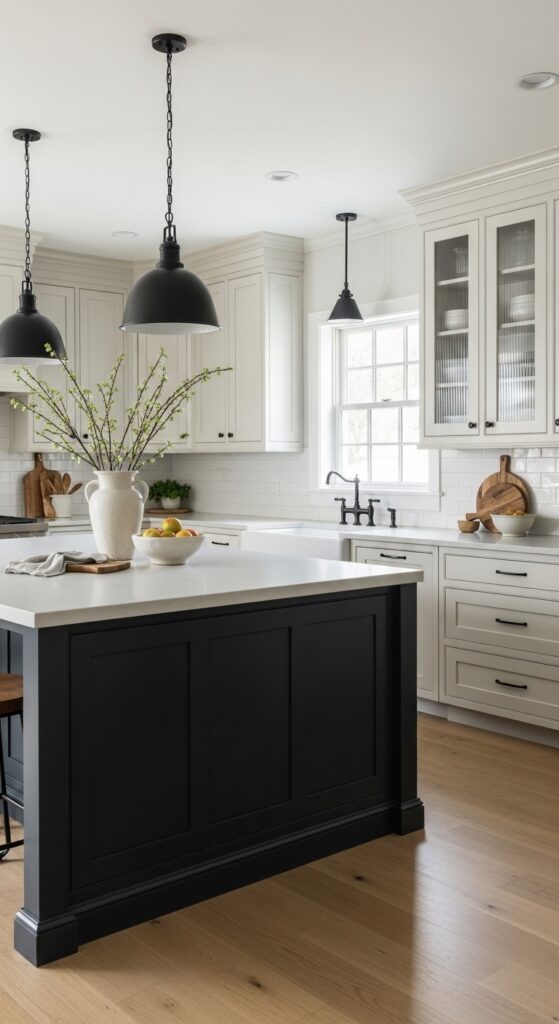
Vibe: The kitchen feels anchored and crisp without losing its softness.
Why it works: A dark island concentrates visual weight in the center of the room, which helps large kitchens feel more coherent. The light perimeter then keeps the edges open, creating a balanced contrast that feels both classic and current.
How to get it: Paint the island in Sherwin-Williams Iron Ore, Hague Blue, or a similar grounded shade while keeping perimeter cabinetry in a creamy neutral. Repeat the dark tone in one or two smaller touches—like pendants or window frames—so it feels woven in.
14. Fluted Glass Uppers for Softly Hidden Storage
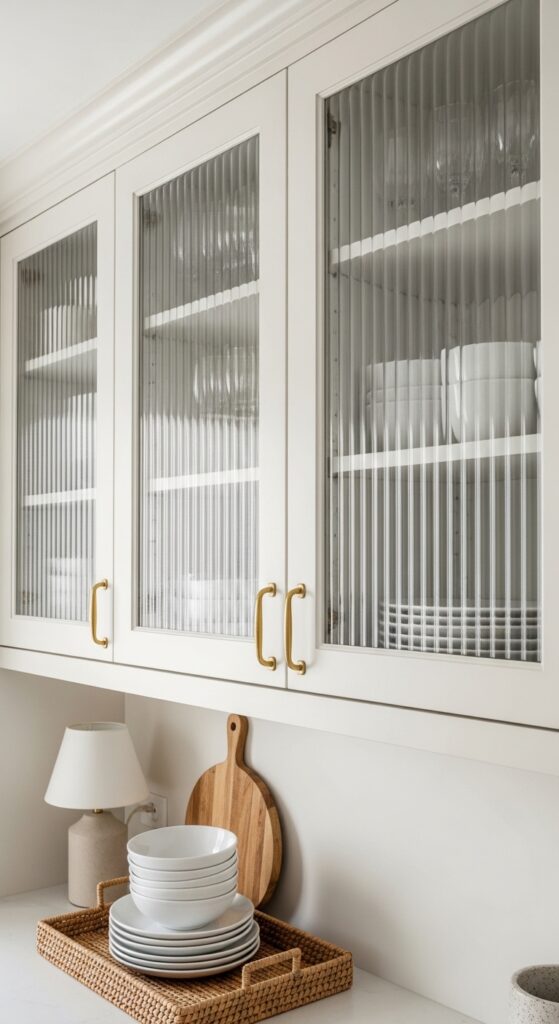
Vibe: It feels airy and tidy, with just a little old-house softness.
Why it works: Fluted glass diffuses what is behind it, which gives you the openness of glass-front cabinets without demanding showroom-level organization. The vertical ribbing also adds a delicate texture that helps the upper cabinetry feel lighter and more custom.
How to get it: Retrofit one cabinet bank with reeded glass inserts instead of changing every door. This works especially well on coffee-bar uppers or dish cabinets where you want depth and a touch of reflection.
💡 Quick Win: Peel-and-stick reeded window film can mimic the effect on existing glass doors.
15. Wall Sconces That Make the Window Wall Feel Finished
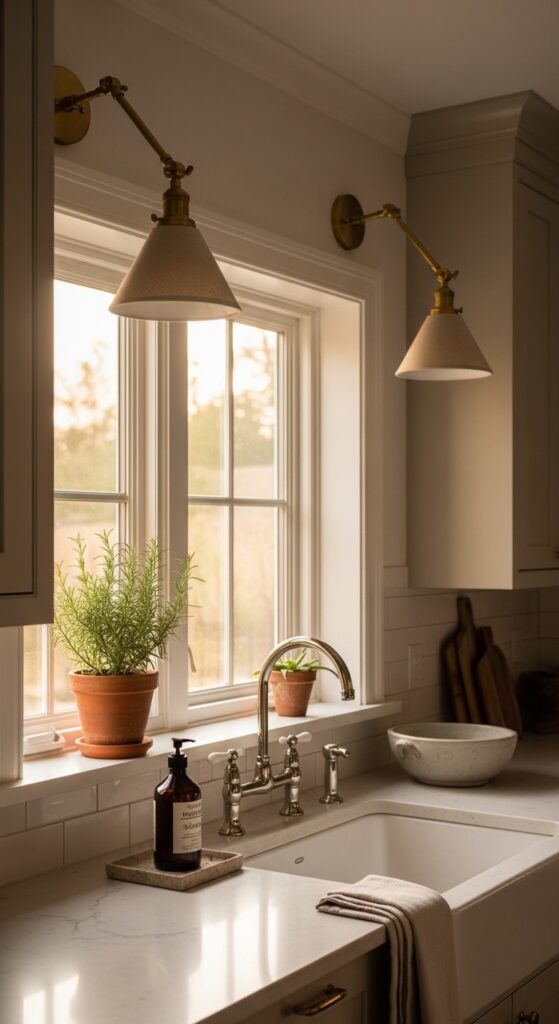
Vibe: The space feels layered and gently lit, even when the sun drops.
Why it works: Kitchens often rely too heavily on cans and pendants, which can leave the sink wall visually unfinished. Sconces add a smaller, more intimate layer of light that softens the room and helps functional areas feel more composed.
How to get it: Install sconces with a compact projection so they do not interfere with cabinets or window trim. Linen or metal shades both work, but keep them simple—Schoolhouse-style silhouettes suit this look particularly well.
16. An Unfitted Pantry Hutch Instead of More Built-Ins
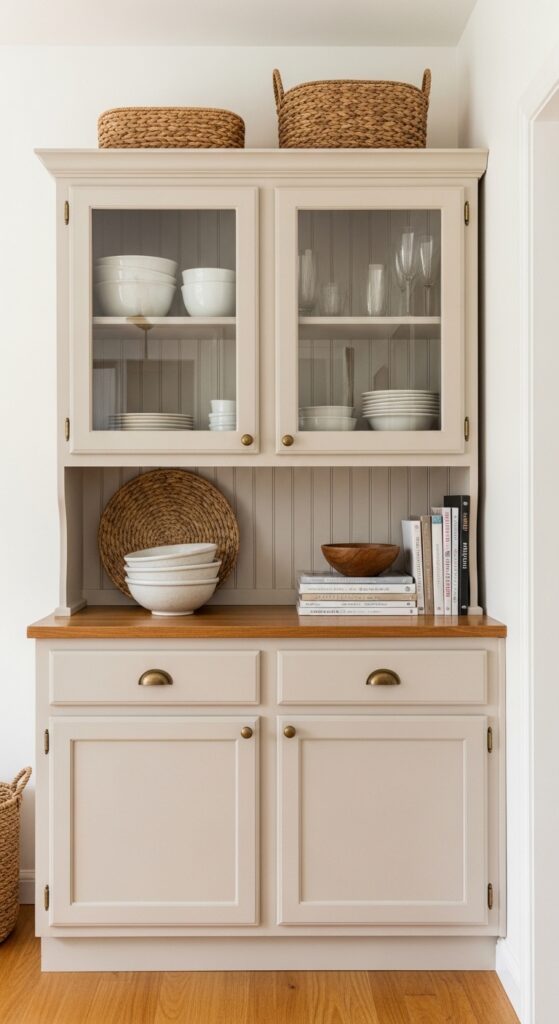
Vibe: It feels collected and rooted, like the kitchen grew over time.
Why it works: Unfitted furniture breaks the wall of cabinetry that can make modern kitchens feel overbuilt. A hutch brings vertical storage and character at once, and that slight mismatch is exactly what gives farmhouse spaces their depth.
How to get it: Place a shallow hutch on a blank wall or dining edge and style only the upper third with visible pieces. If the kitchen is tight, choose a narrow depth first; a bulky hutch can crowd circulation quickly.
💡 Quick Win: A painted Facebook Marketplace cabinet can mimic custom pantry charm for a fraction of millwork costs.
17. Linen Café Curtains That Soften Hard Surfaces
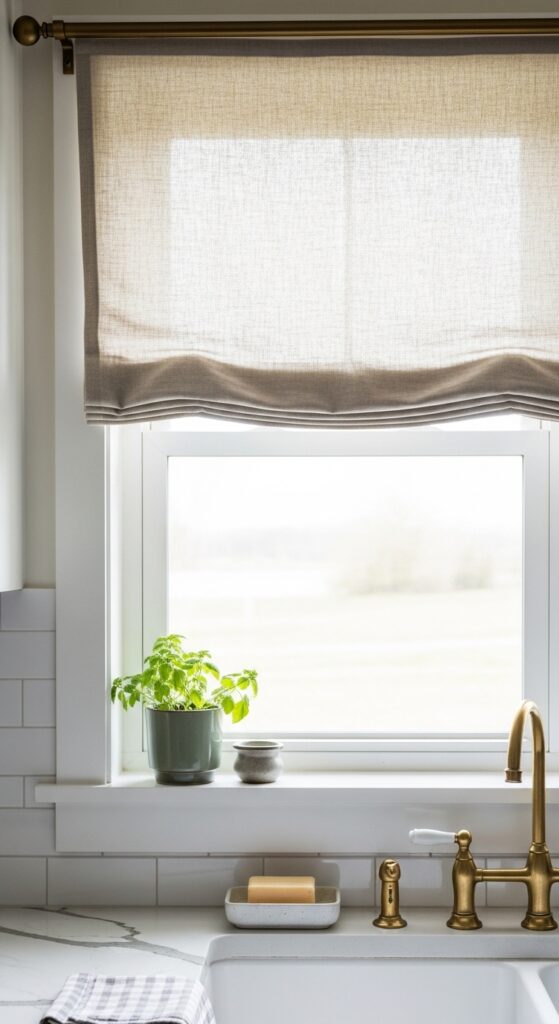
Vibe: The sink area feels hushed and lightly nostalgic.
Why it works: Kitchens are full of hard, wipeable surfaces, so a little fabric matters more here than people expect. Café curtains soften the window line, filter light beautifully, and add farmhouse warmth without swallowing the room the way full drapery can.
How to get it: Use Belgian linen or a linen-cotton blend mounted inside the frame on a simple brass or black rod. Keep the hem around halfway up the window so you gain softness without losing the daylight.
18. A Dedicated Coffee Zone That Keeps the Main Run Clear
Vibe: The kitchen feels orderly and more generous to use.
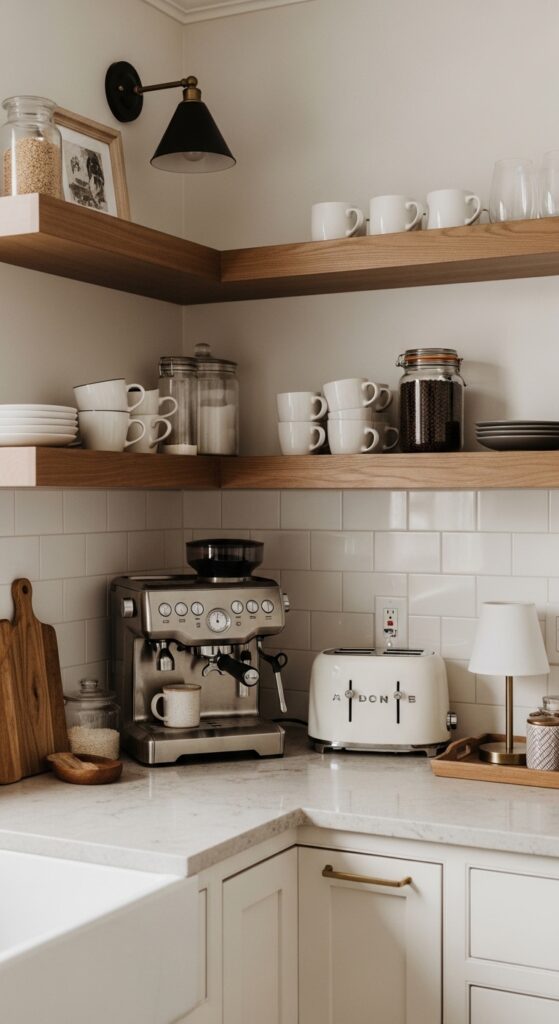
Why it works: Layout is where modern farmhouse becomes more than a look. Giving coffee, toaster, or baking tools their own zone reduces countertop spread, improves workflow, and lets the main prep run stay visually quiet.
How to get it: Claim one 24- to 36-inch stretch of counter and keep related items there only. Add a small tray or lamp so the zone feels intentional rather than like appliances drifted into a corner.
💡 Quick Win: Corral your coffee maker, mugs, and sugar jar onto one wooden tray today and the whole counter will look calmer.
19. A Slim Peninsula for a Small Modern Farmhouse Kitchen
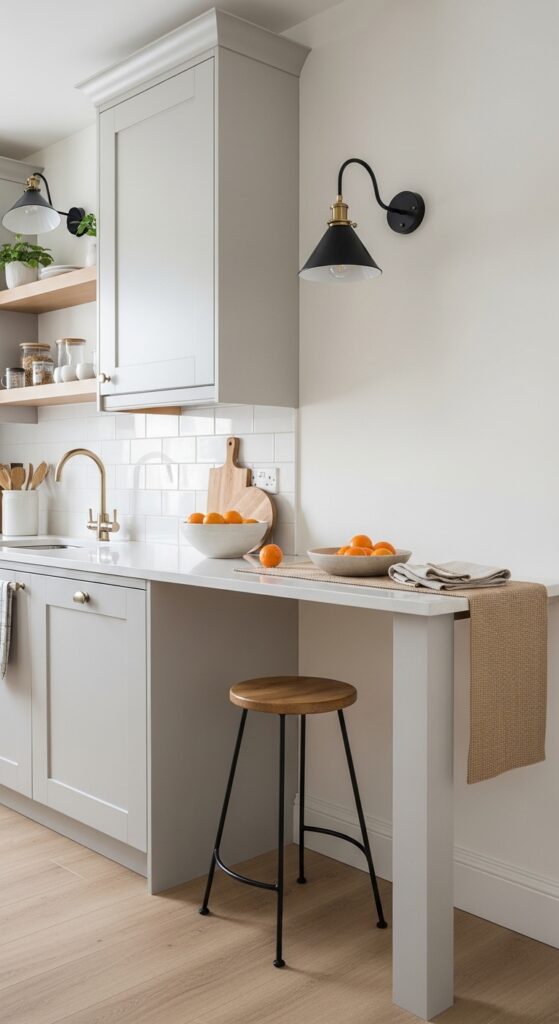
Vibe: The room feels airy but still useful, which is the hard balance in a small kitchen.
Why it works: A full island can overwhelm a compact footprint, but a slim peninsula adds prep space and a perch without cutting the room in half. It also defines the kitchen edge in open plans while preserving the clear pathways small spaces need.
How to get it: Keep the depth modest and reserve seating for one or two stools only. If aisles fall below comfortable clearance, skip the extra seat—function matters more than squeezing in a pretend breakfast bar.
20. Modern Farmhouse Kitchen Ideas With Warm Taupe Walls and Oak
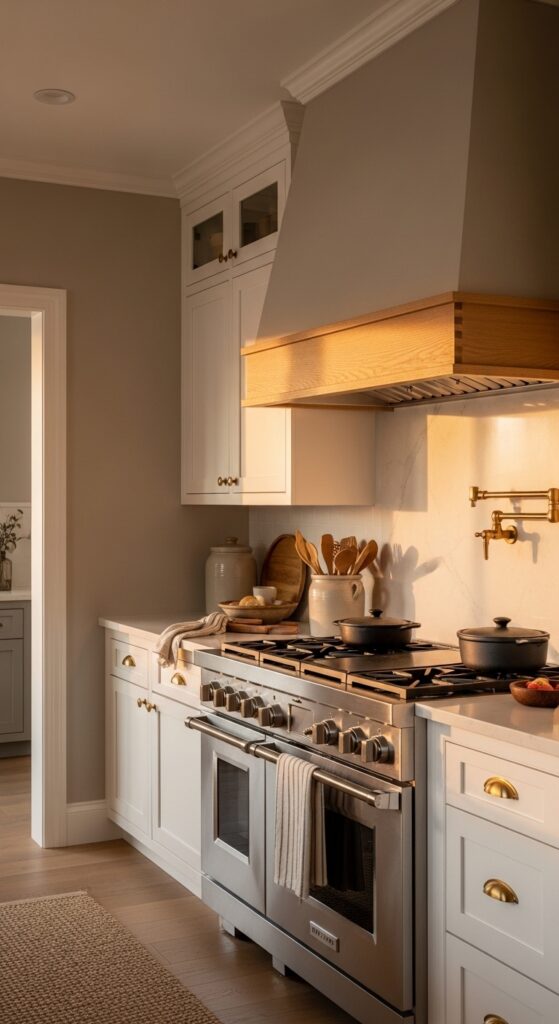
Vibe: The room feels sun-warmed and enveloping, not stark.
Why it works: Taupe creates a more forgiving backdrop than plain white, especially next to oak and brass. The tonal relationship between wall color and wood keeps the kitchen cohesive, while the cabinetry still provides enough light contrast to feel fresh.
How to get it: Choose a paint with a muddy, earthy undertone—think Farrow & Ball Mouse’s Back Lite territory rather than pink-beige. Test it in morning and evening light; the wrong taupe can skew flat fast.
💡 Quick Win: Paint just the pantry alcove or breakfast niche in warm taupe before committing to the whole room.
21. Unlacquered Brass Hardware That Gets Better Over Time
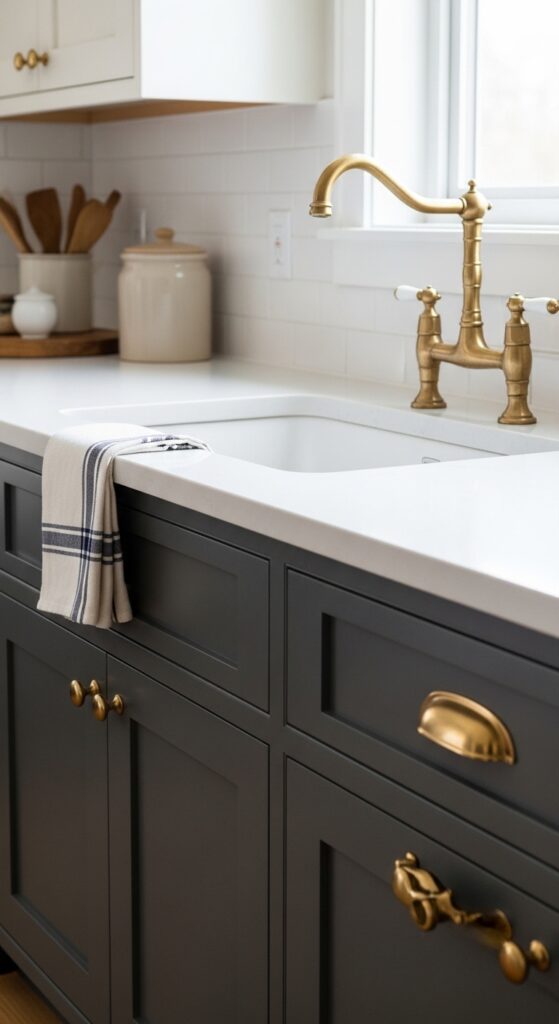
Vibe: The detail feels grounded and quietly luxurious.
Why it works: Modern farmhouse thrives on materials that age well, and unlacquered brass does exactly that. Its living finish adds warmth and subtle irregularity, which balances cleaner cabinetry and keeps the room from feeling too new or too polished.
How to get it: Swap in 3- to 5-inch unlacquered brass pulls and, if budget allows, one bridge or gooseneck faucet in the same finish. Avoid mixing shiny brass and brushed gold in the same sightline; the undertones fight each other.
22. Skip Uppers on the Window Wall in a Small Kitchen
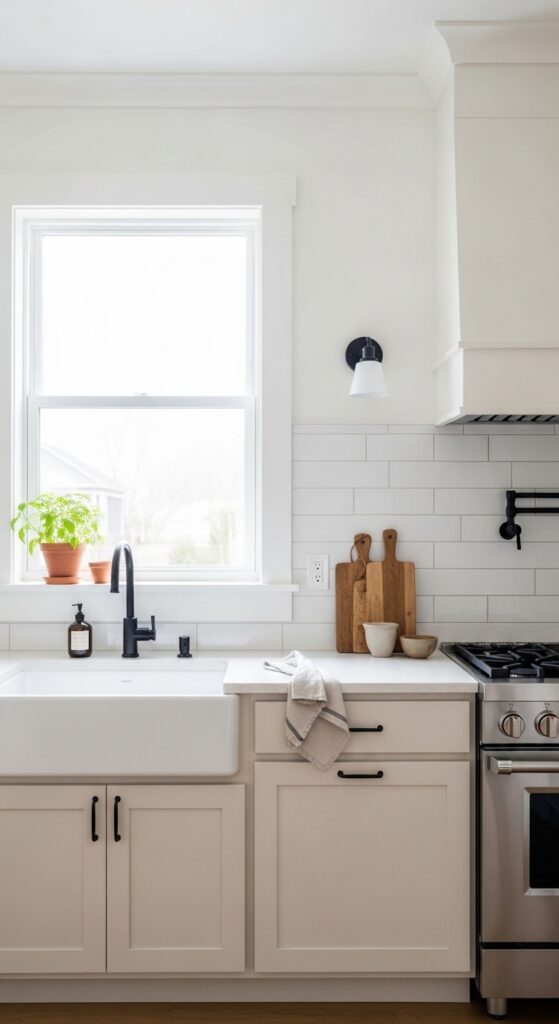
Vibe: The kitchen feels still, open, and far larger than it is.
Why it works: In a tight kitchen, upper cabinets near a window often create the exact heaviness you are trying to escape. Leaving that wall open lets daylight travel farther, reduces visual compression, and gives modern farmhouse kitchens the airy, easy rhythm they need.
How to get it: Compensate with taller pantry storage elsewhere rather than forcing cabinetry onto every wall. One short shelf or a pair of sconces can be enough; once the light is working for you, the room needs less decorating.
💡 Quick Win: Remove just one upper cabinet beside a window and patch the wall before assuming you need a full remodel.
How to Start Your Modern Farmhouse Kitchen Transformation
Start with cabinet paint. Benjamin Moore White Dove on simple Shaker fronts creates the kind of warm, neutral foundation that makes wood, brass, black metal, and stone all look like they belong together instead of arriving from different mood boards.
The most common mistake is mixing clashing undertones—cool white cabinets, orange oak floors, gray marble, and yellow brass in one room. That combination breaks the look because modern farmhouse depends on controlled warmth; fix it by choosing one undertone direction first, then repeating it in at least three places.
For budget entry points, buy a fluted glass canister set, one vintage-look bread board in dark wood, and a striped linen tea towel in flax and cream. Each can be found for under $50, and together they add texture, utility, and softness without changing the kitchen’s layout.
A starter refresh can happen in a weekend for roughly $200 to $800 if you focus on paint, hardware, styling, and lighting swaps. A fuller transformation with counters, cabinetry changes, tile, and custom millwork usually lands between $6,000 and $25,000 depending on labor, and the best thrifted or unfitted elements often take a few months to source well.
Frequently Asked Questions About Modern Farmhouse Kitchen Ideas
What is the difference between modern farmhouse and rustic farmhouse kitchens?
Modern farmhouse kitchens use the same comfort-driven bones as farmhouse style, but the lines are cleaner and the palette is more restrained. Architectural Digest describes modern farmhouse as more neutral, more contemporary, and sometimes slightly Scandinavian in form, while traditional or rustic farmhouse kitchens lean harder into patina, vintage furniture, deeper colors, and heavier rustic detailing. If your kitchen has smooth Shaker fronts, matte brass, and a quiet palette, it is probably reading modern farmhouse. Architectural Digest
What colors work best in a modern farmhouse kitchen?
Warm white, greige, muted sage, pine green, soft taupe, and charcoal accents work especially well. Editors at Homes & Gardens point to warmer neutrals with darker accents as a defining move in this style, while Better Homes & Gardens highlights white, greenish-gray, blue, and black as recurring farmhouse-friendly tones. If you want the easiest starting palette, pair creamy white cabinetry with one grounded accent shade like sage or Iron Ore. Homes & Gardens Better Homes & Gardens
Is a modern farmhouse kitchen expensive to achieve?
It can be, but it does not have to start expensively. You can get a convincing first layer with paint, hardware, shelves, and better lighting, while bigger-ticket choices like soapstone, custom cabinetry, and furniture-style islands push the budget up fast. A light refresh often stays under $1,000, while a full renovation with stone, tile, and custom work can move into five figures. That is why this style works so well in phases.
Can I mix modern farmhouse with other kitchen styles?
Yes, and it often looks better when you do. Southern Living repeatedly frames modern farmhouse kitchens as successful because they mix old and new—industrial pendants, vintage tables, shiplap, dark windows, sleek appliances, and heirloom-style details all in one room. The trick is to keep the material language consistent, so the mix feels intentional rather than random. Southern Living
What lighting works best in a modern farmhouse kitchen?
The most effective mix usually includes one statement pendant type, discreet task lighting, and a smaller decorative layer like sconces or a table lamp. Southern Living and Better Homes & Gardens both highlight lantern pendants, antique-inspired fixtures, and industrial accents as strong farmhouse choices, especially when paired with warm bulbs and clear sightlines. If you only change one thing, start with 2700K lighting and one pair of oversized pendants above the island. Southern Living Better Homes & Gardens
Ready to Try These Modern Farmhouse Kitchen Ideas?
These 22 modern farmhouse kitchen ideas covered the full picture—warm palettes, honest materials, layered lighting, smarter layouts, and the smaller details that make a kitchen feel settled instead of staged. You do not need to tackle everything at once; this style almost always looks better when it is built gradually, with a few grounded choices repeated well. Pull one piece of natural texture into your kitchen today—a dark wood bread board, a white oak shelf, or a brass pull—and watch how quickly the room starts to soften. Once the space comes together, the payoff is not just visual; the kitchen feels calmer, warmer, and easier to live in every day. Save the ideas with the sage cabinets, soapstone counters, lantern pendants, and farm-table islands first—those are usually the moves that give modern farmhouse its real staying power.
Sources and visual inspiration: The Spruce, Southern Living, Architectural Digest, Better Homes & Gardens, Homes & Gardens.