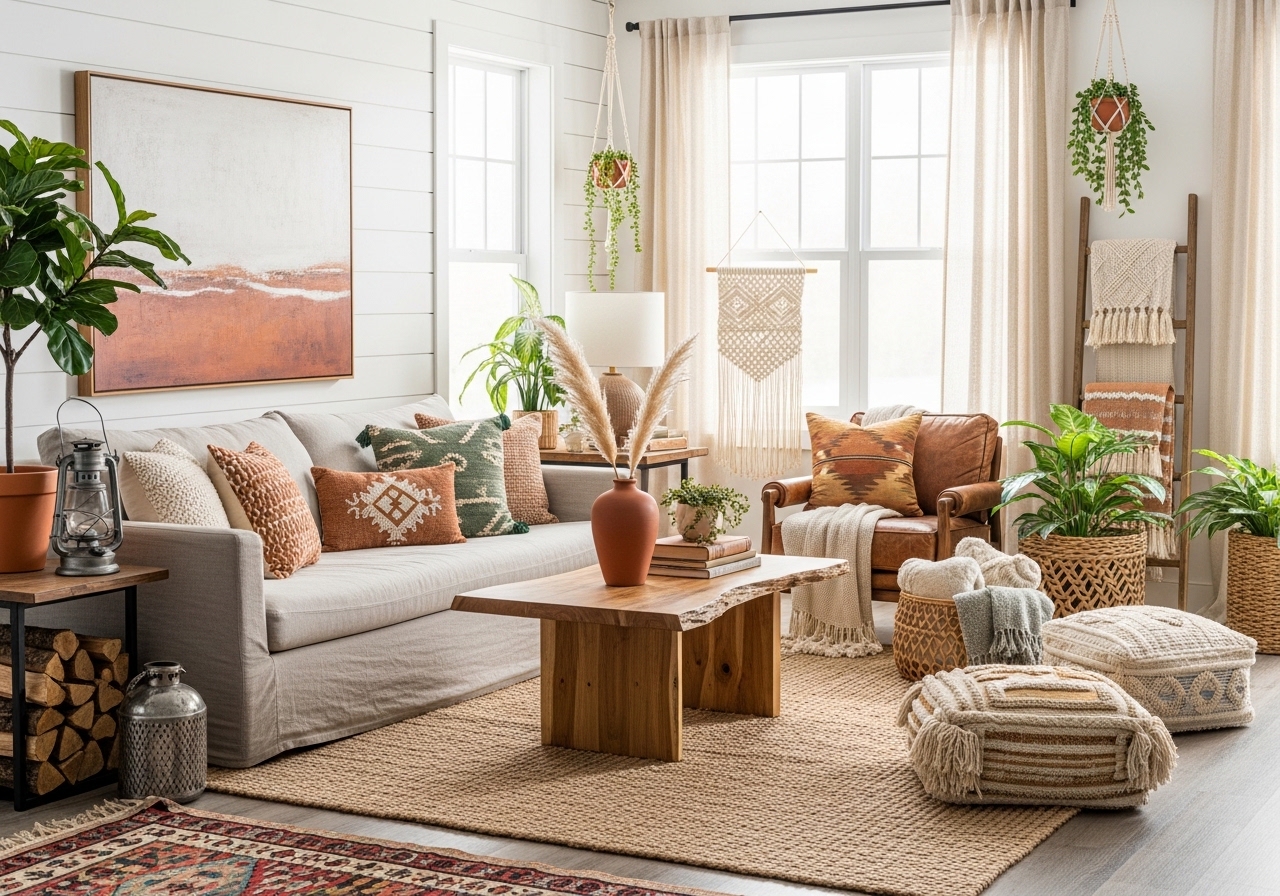
Boho farmhouse living room ideas blend free-spirited bohemian layering with the grounded warmth of farmhouse design, creating a space that feels collected, tactile, and easy to live in. These 25 ideas show you exactly how to bring that mix home through color, texture, lighting, layout, and furniture choices.
This style feels sun-warmed rather than styled within an inch of its life. It invites linen you want to touch, woods that look time-softened, and corners that glow instead of glare. A boho farmhouse living room carries both ease and memory: rustic, personal, and quietly expressive. Here are 25 ideas worth saving — and stealing.
Why Boho Farmhouse Living Room Ideas Work So Well
Boho farmhouse is a hybrid style with two distinct roots: bohemian interiors shaped by artistic, unconventional living and global pattern-mixing, and farmhouse rooms descended from practical rural homes built for comfort and utility. What makes the blend distinct is balance: less polished than modern farmhouse, more edited than full boho, and warmer than minimal rustic spaces. Architectural Digest Better Homes & Gardens
Its core palette leans warm white, oatmeal, greige, muted sage, clay, terracotta blush, rust, and soft charcoal. Materials do the heavy lifting: limewash walls, reclaimed pine, white oak, linen slipcovers, cane, jute, pottery, aged brass, blackened iron, and nubby wool. The mix works because the farmhouse side supplies structure while the boho side adds movement and softness.
It feels current because people want homes with more touch, soul, and flexibility. Pinterest’s 2025 trend data showed major growth around “warm rustic living room,” “earthy boho living room,” thrifted decor, and farmhouse cottage interiors, while Houzz highlighted warmth, woven materials, layered textures, and natural finishes as defining design moves. Pinterest Houzz
Yes, small spaces can absolutely do this style, but restraint matters. Start with one warm wall tone, one honest wood finish, and two or three layered textiles; too many small accessories will make the room feel busy instead of lived-in.
| Element | Bohemian Influence | Farmhouse Influence |
| Philosophy | expressive, collected living | comfort, utility, warmth |
| Materials | rattan, jute, pottery | pine, oak, linen, iron |
| Color palette | clay, rust, muted olive | warm white, greige, charcoal |
1. Boho Farmhouse Living Room Ideas in Warm White and Clay
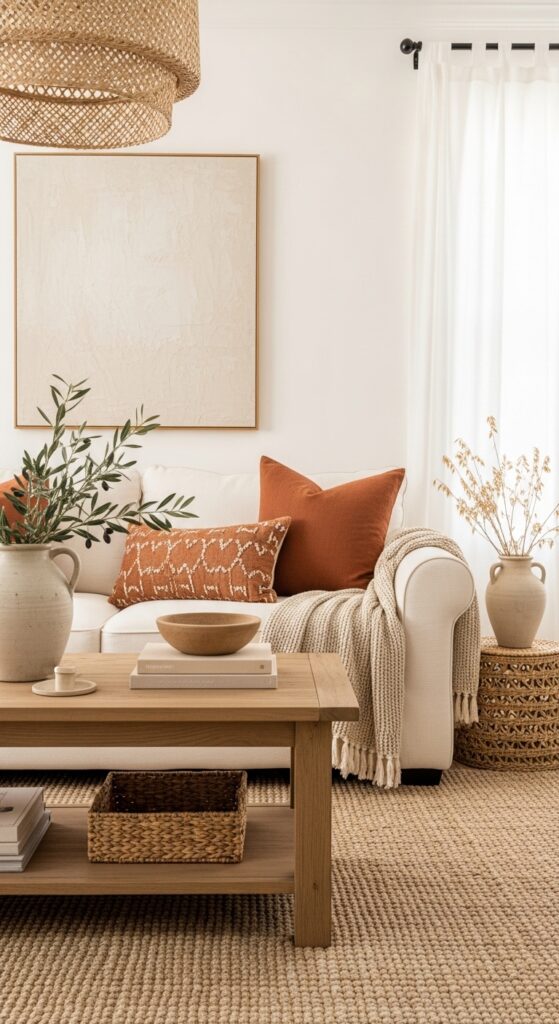
Vibe: The room feels sun-warmed and settled, with color that reads earthy rather than heavy.
Why it works: Warm white creates negative space, so the clay accents feel intentional instead of loud. The contrast between pale walls and mid-tone oak keeps the room from flattening out, while terracotta and rust add visual heat without overwhelming the architecture.
How to get it: Use a creamy paint like Benjamin Moore White Dove on walls, then repeat clay in three places only: one pillow, one ceramic vessel, and one textile. That rule keeps the palette layered but controlled.
💡 Quick Win: Swap one bright white pillow cover for a rusty terracotta linen version; it shifts the whole room instantly.
2. Reclaimed Wood Beams with Soft Linen Layers
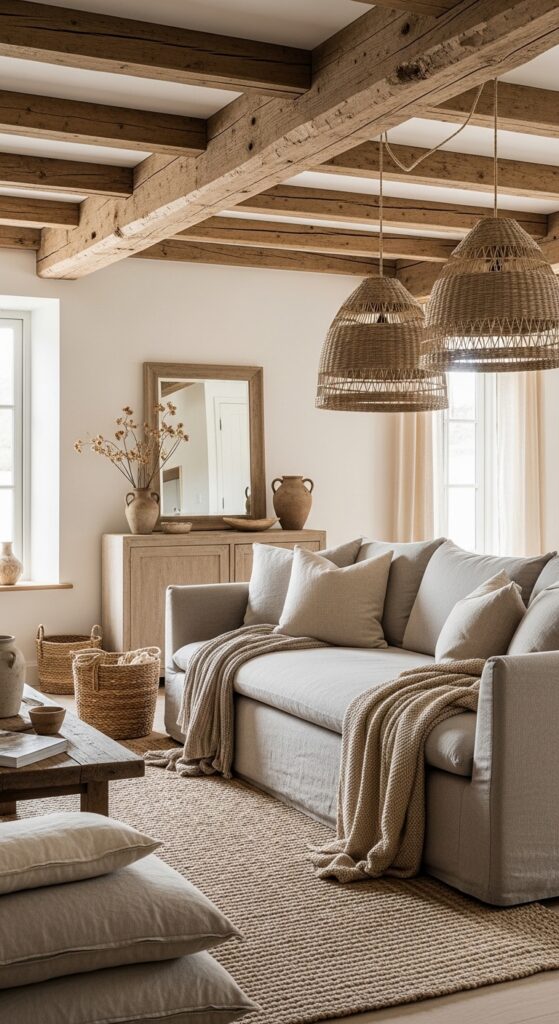
Vibe: It feels raw in the best way—soft where you sit, rugged where the eye lands.
Why it works: The rough beam texture gives the room architectural weight, while linen diffuses that heaviness. This is classic texture layering: one coarse surface, one relaxed upholstery, one woven floor. The materials do more than pattern ever could.
How to get it: If you do not have real beams, use faux reclaimed box beams in a medium brown finish and pair them with a flax slipcovered sofa. Keep undertones warm so the wood and fabric talk to each other.
3. Woven Pendants Over a Low, Cozy Seating Zone
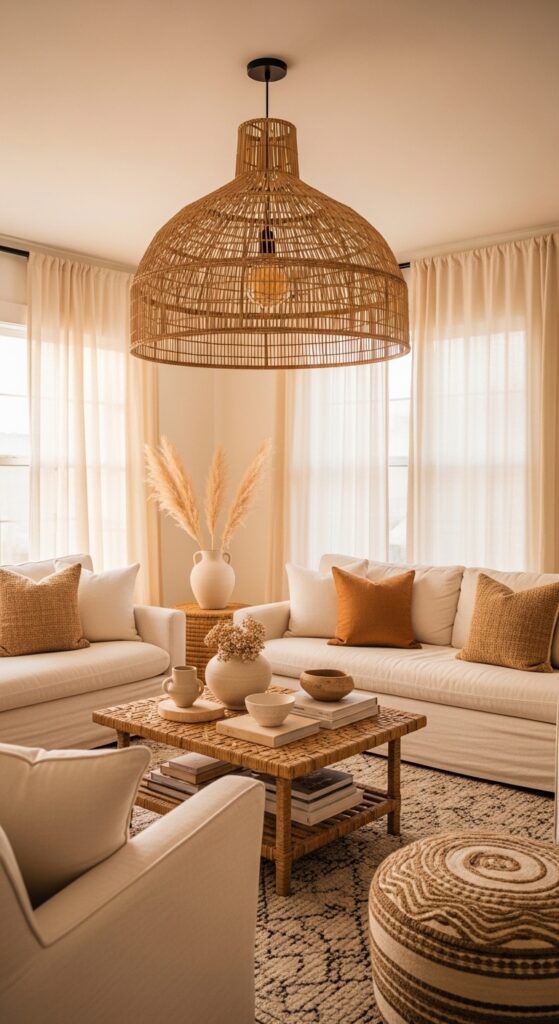
Vibe: The space feels luminous, with light that lands softly instead of bouncing harshly.
Why it works: Woven shades filter light, so the room gains pattern without visual clutter. Hanging them low over the conversation area also lowers the perceived ceiling line, which makes open living rooms feel more intimate and anchored.
How to get it: Choose a rattan or seagrass pendant at least 24 inches wide and use a 2700K bulb for warmth. Center it over the rug, not the whole room, so the seating area reads as one zone.
💡 Quick Win: A plug-in wicker pendant swagged from the ceiling gives you the look without rewiring.
4. A Slipcovered Sofa with One Vintage Leather Chair
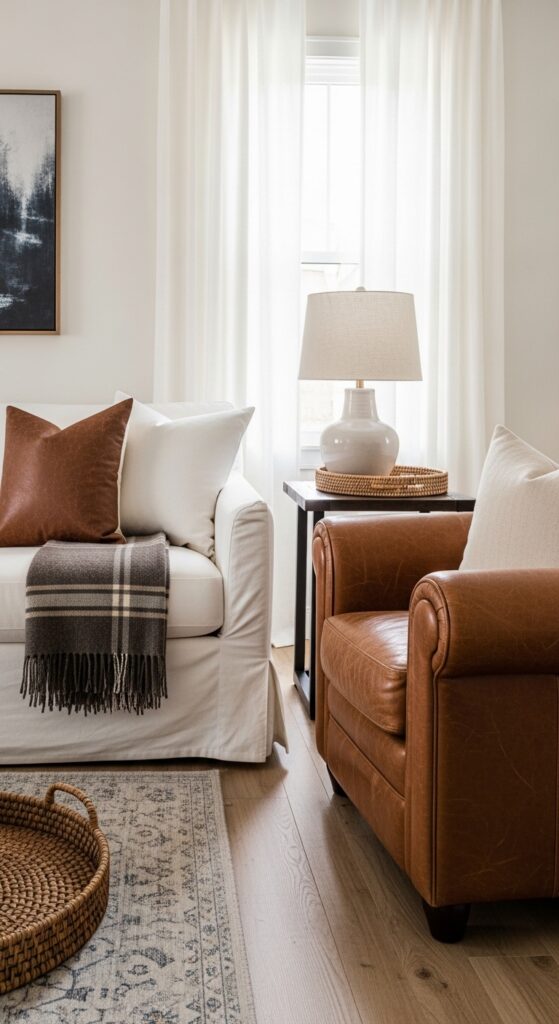
Vibe: It feels layered and human, like a room collected over time instead of ordered in one click.
Why it works: The sofa brings softness and volume; the leather chair adds contrast and a tighter silhouette. That difference in profile creates rhythm, which is why mixed seating nearly always looks more convincing than a matching set.
How to get it: Start with one relaxed-arm slipcovered sofa, then add a single vintage-style leather club chair rather than two. Keep the leather slightly distressed so it bridges farmhouse utility and boho ease.
5. Mud-Cloth Pillows on a Farmhouse-Neutral Base
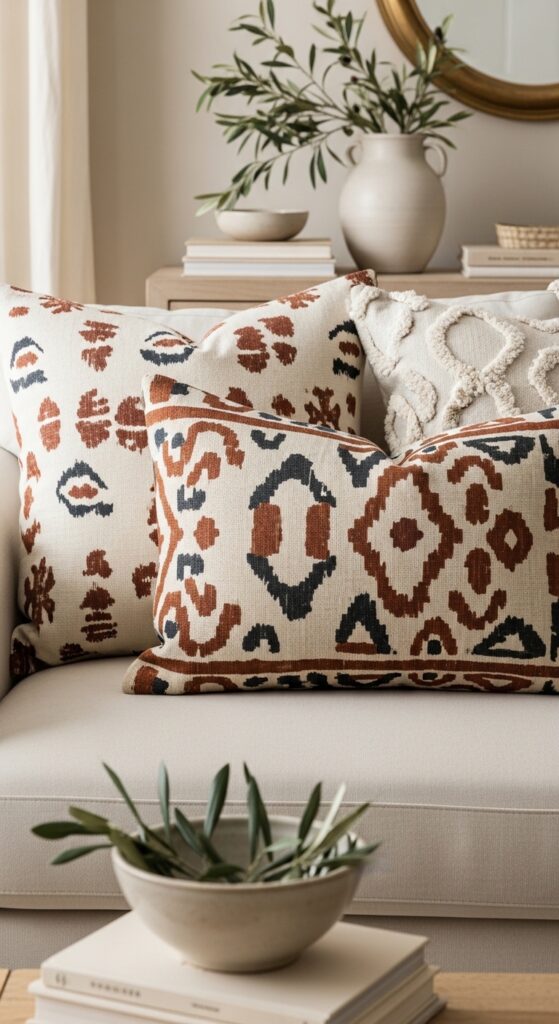
Vibe: The room feels layered, with just enough irregularity to keep it from looking flat.
Why it works: Graphic textiles pull the eye forward, which gives a neutral room shape and movement. Because the background stays restrained—linen upholstery, pale walls, simple wood—the bold pillow pattern reads as art, not noise.
How to get it: Use one pattern family only, like mud cloth or block print, and cap it at three cushions. Mix one square, one lumbar, and one textured solid so the sofa stays balanced.
💡 Quick Win: Replace generic polyester inserts with feather-blend inserts; better fill makes even budget covers look more refined.
6. Float the Furniture to Create a Softer Gathering Space
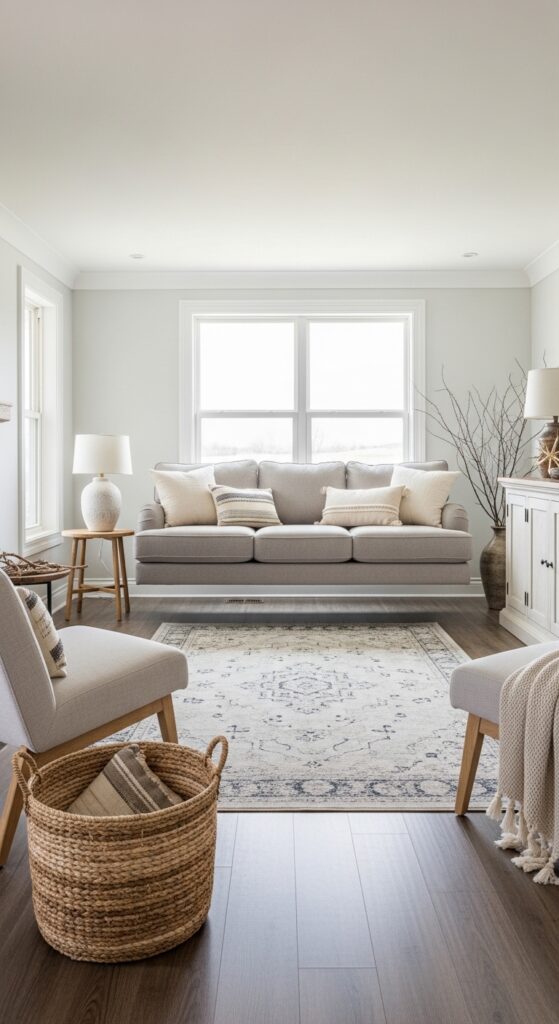
Vibe: It feels still and intentional, with the seating area reading like a destination instead of leftover space.
Why it works: Floating the furniture adds negative space around the perimeter, which actually makes most rooms feel larger. It also creates a clearer conversation zone and improves traffic flow, especially in open-plan layouts.
How to get it: Pull the sofa 8 to 12 inches off the wall and center the front legs of every seat on the rug. Leave at least 30 inches for walking behind major pieces so the room keeps breathing.
7. Apartment-Scale Boho Farmhouse with Leggy Furniture
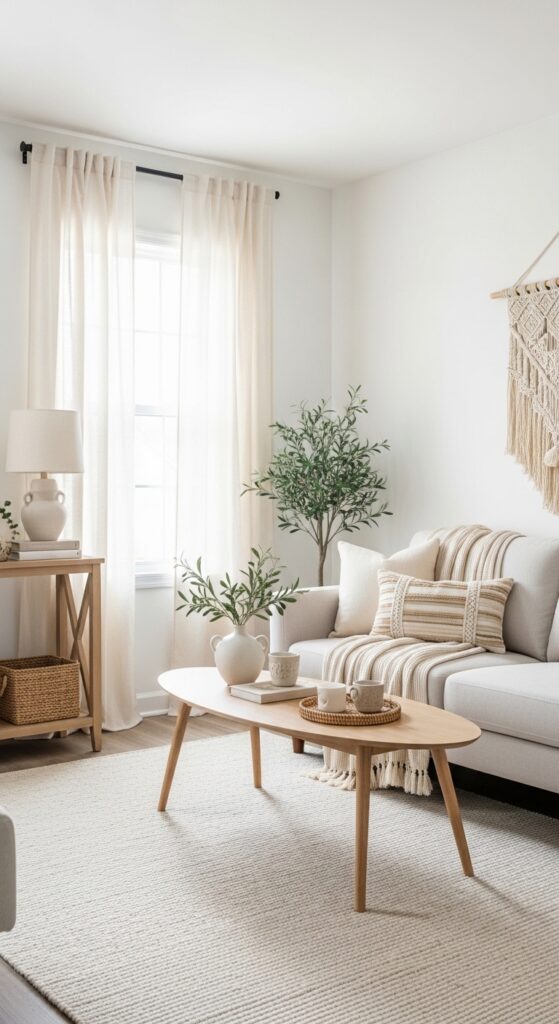
Vibe: The room feels light on its feet, not crowded.
Why it works: Exposed legs create visible floor area, which tricks the eye into reading more openness. In a small boho farmhouse living room, that matters more than adding extra decor, because bulk is what usually kills the style first.
How to get it: Choose a sofa under 80 inches wide with visible wood legs and pair it with a narrow oval coffee table. Skip oversized sectionals; they erase circulation and make layered styling feel cramped.
💡 Quick Win: Swap a solid cube side table for a spindle-leg version and you gain visual air immediately.
8. Muted Sage Built-Ins for a Quiet Accent Color
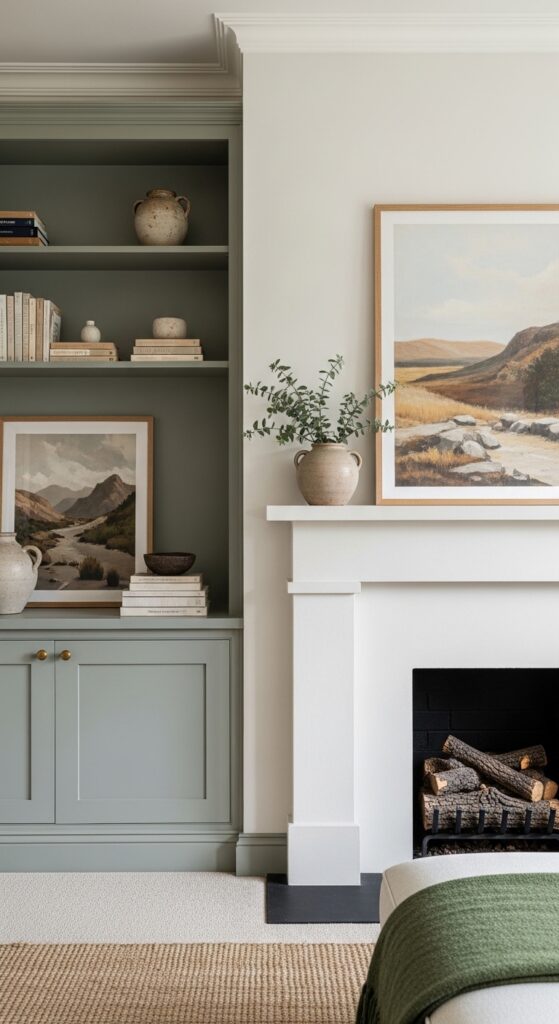
Vibe: It feels hushed and grounded, like the room exhaled.
Why it works: Muted sage adds color through architecture rather than accessories, so the effect feels calmer and more permanent. Against warm whites and oak, green reads organic, which supports both the farmhouse connection to nature and the boho love of earthy tones.
How to get it: Paint built-ins or a media wall in Farrow & Ball Mizzle or a similar softened sage. Repeat that green only in one plant and one textile to keep it from turning thematic.
9. Jute Under Wool for That Lived-In Layered Floor
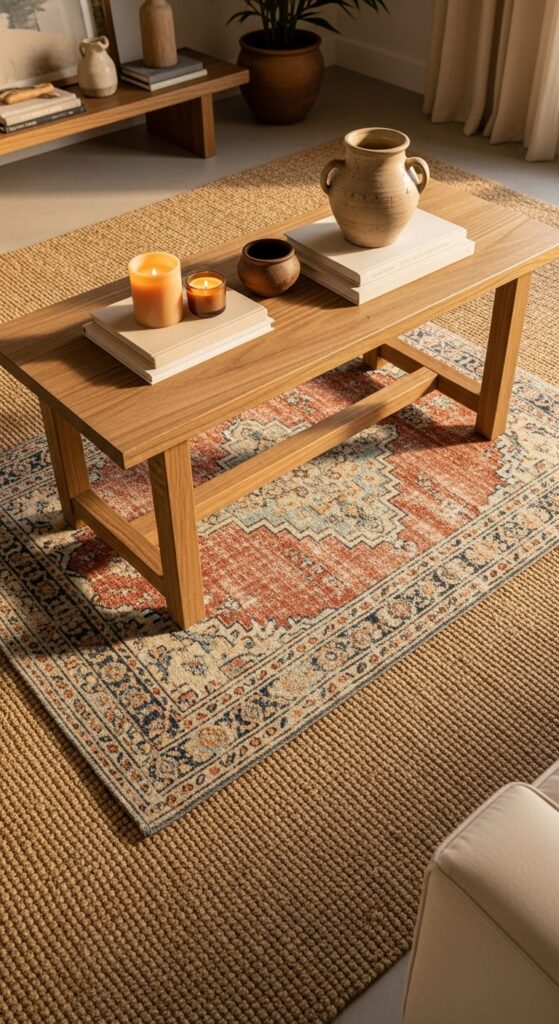
Vibe: The room feels grounded, with texture underfoot doing half the design work.
Why it works: A flat jute base gives the room scale, while a smaller wool rug adds softness and pattern exactly where you want attention. That layered-floor approach creates depth without relying on too many objects at eye level.
How to get it: Use an 8×10 jute rug first, then top it with a 5×7 vintage-look wool rug centered under the coffee table. Keep the upper rug faded, not high-contrast, so the palette stays easy.
💡 Quick Win: Try a washable printed rug over jute if kids or pets make vintage wool unrealistic.
10. Lamps at Three Heights for a Sunset Glow
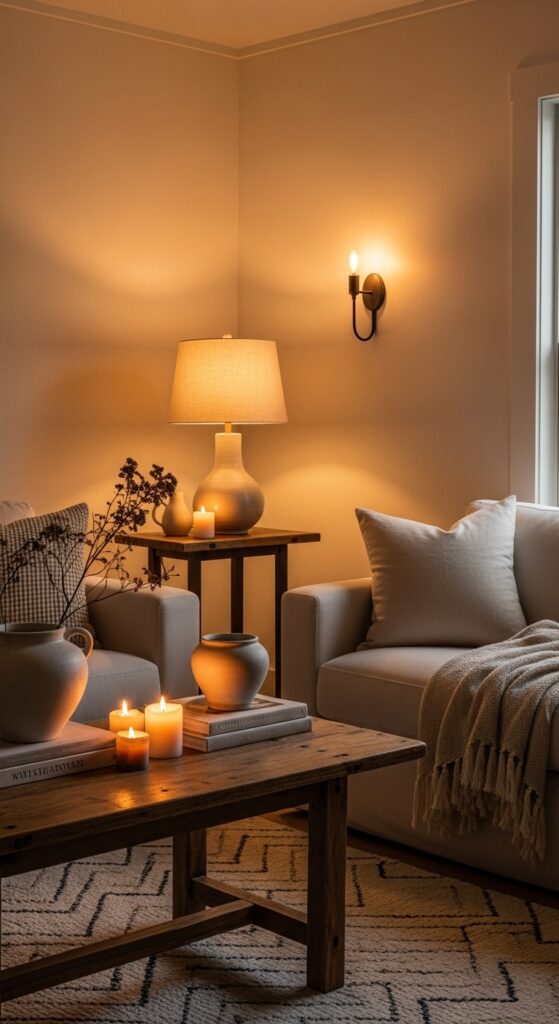
Vibe: It feels amber-lit and intimate, like late afternoon lasted all evening.
Why it works: Layered lamp light distributes visual weight and eliminates the flatness of a single ceiling fixture. Different heights also pull the eye around the room, which helps textured surfaces—linen, wood, plaster—read richer after dark.
How to get it: Use one floor lamp, one table lamp, and one sconce or cordless accent lamp, all with linen shades. Keep every bulb in the 2200K to 2700K range so the glow stays soft, not blue.
11. A Chunky Farm Table as the Coffee Table
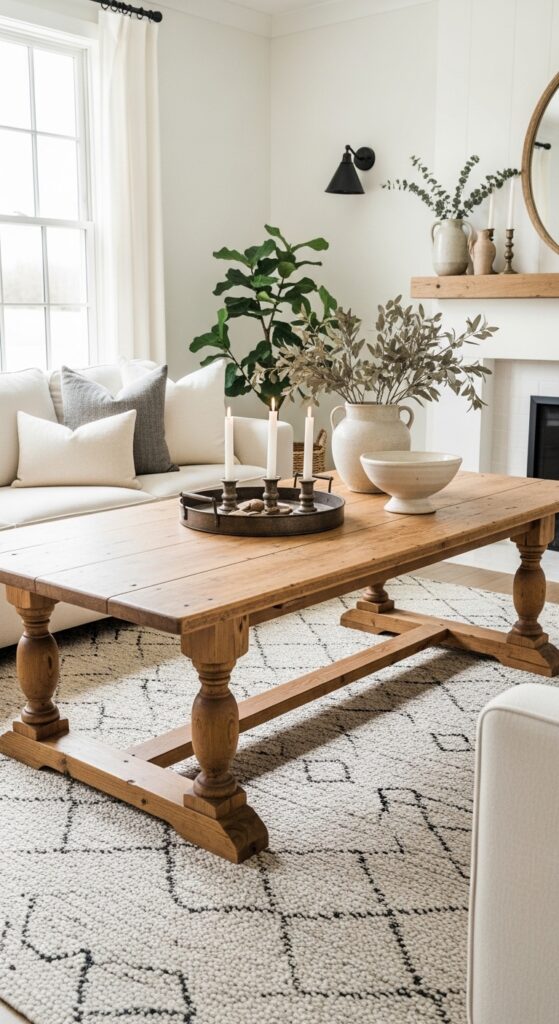
Vibe: The space feels sturdy and lived with, not delicate.
Why it works: A large, honest coffee table gives the room a visual anchor. In boho farmhouse rooms, that central weight is important because so many surrounding elements—textiles, baskets, plants—are softer and lighter.
How to get it: Look for a coffee table with thick legs or a trestle base in pine or reclaimed oak, ideally 18 inches high and at least two-thirds the sofa length. One substantial piece beats several tiny tables every time.
💡 Quick Win: Facebook Marketplace and antique malls are often better for this than big-box stores.
12. Tall Branches and Olive Trees Instead of Fussy Decor
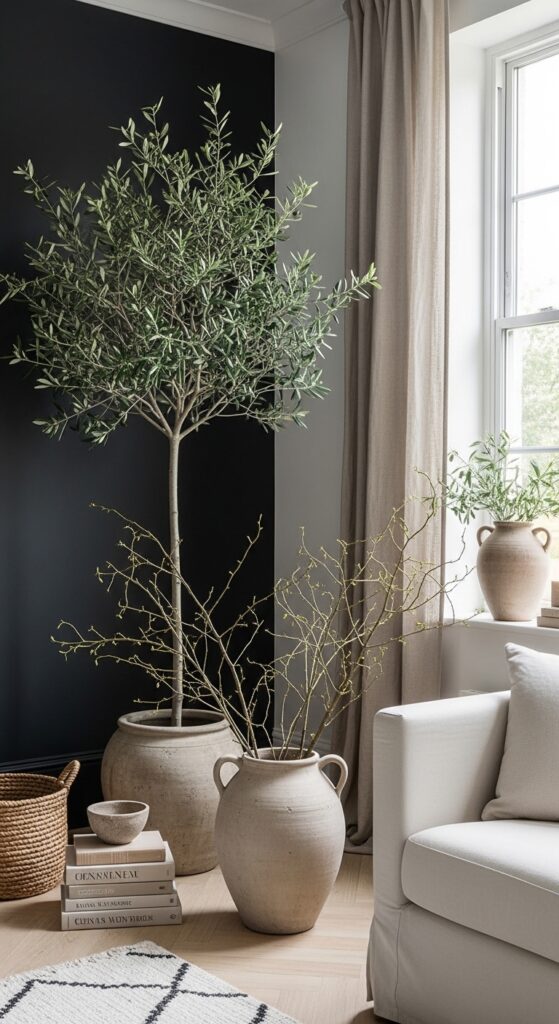
Vibe: The room feels fresh and organic, with movement that is quiet rather than busy.
Why it works: Large botanicals add height and softness at once, which is more effective than scattering many small accessories. They also introduce asymmetry, a useful counterpoint to the sturdy, often symmetrical bones of farmhouse furniture.
How to get it: Use one substantial olive tree or a branch arrangement in a matte terracotta pot near a window. Keep tabletops mostly clear so the greenery reads sculptural instead of decorative clutter.
13. Boho Farmhouse Living Room Ideas with a Charcoal Accent Wall
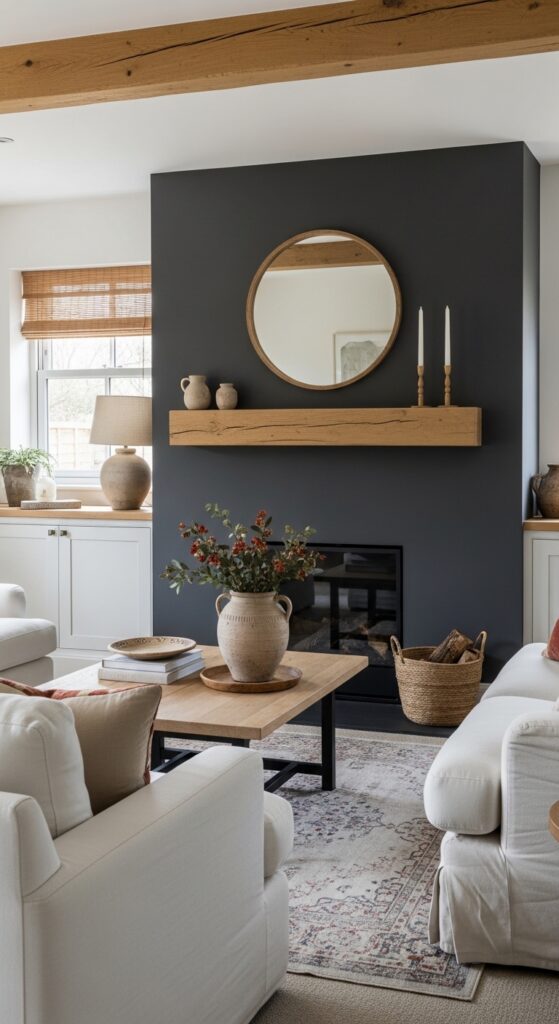
Vibe: It feels moody and cocooning without losing warmth.
Why it works: Deep color behind a focal point creates depth, especially when the rest of the room stays light and textured. The darker wall visually pushes back, so pale linen and natural wood come forward with more definition.
How to get it: Paint only the fireplace wall or built-in niche in a warm charcoal like Farrow & Ball Mole’s Breath. Balance it with ivory upholstery and at least one honey-toned wood so the contrast stays inviting, not stark.
💡 Quick Win: Test charcoal on a removable paint board first; north-facing rooms can make cool grays look flat.
14. Cane, Ceramic, and Travertine in One Tight Mix
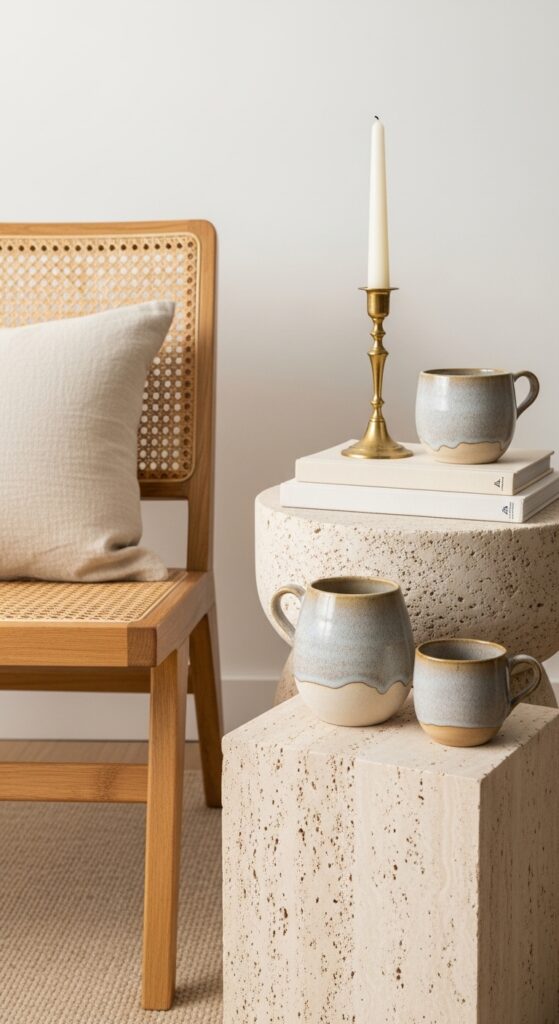
Vibe: The room feels tactile, with every surface asking to be touched.
Why it works: This combination succeeds because the textures contrast without competing: airy cane, dense stone, and softly irregular ceramic. When you mix open, solid, and handmade surfaces, the room gains dimension even if the colors stay quiet.
How to get it: Limit yourself to those three materials in one vignette—a cane chair, a small travertine table, and two matte ceramic pieces. Repetition of texture is less effective here than controlled variety.
15. Candlelight Corners with Brass and Linen
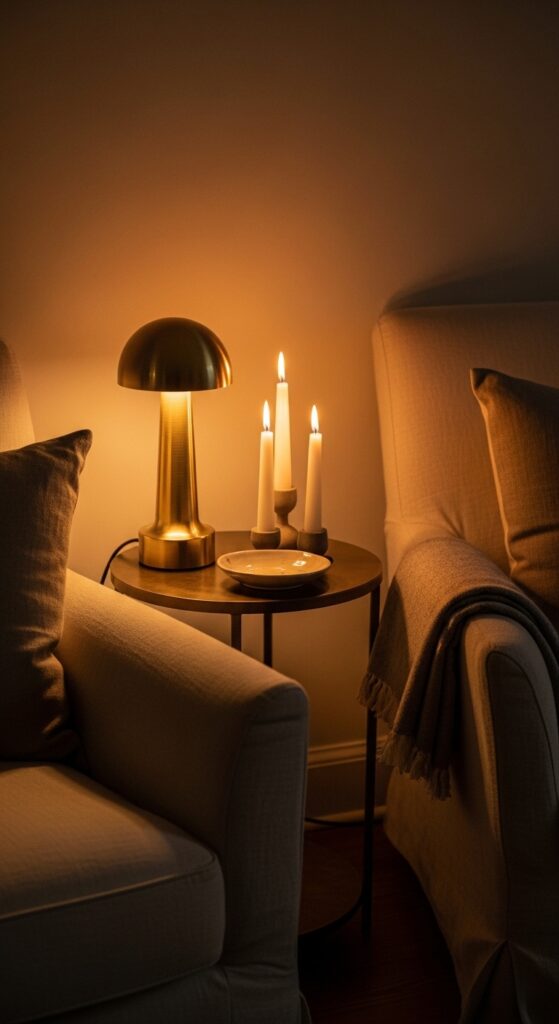
Vibe: The corner feels hushed and low-lit, with warmth that reads emotional as much as visual.
Why it works: Brass catches and reflects small amounts of light, which amplifies candle glow without needing brighter bulbs. Linen shades and textured upholstery soften the reflection, preventing the corner from feeling glossy or formal.
How to get it: Add one brushed-brass cordless lamp to a side table and style three real or flameless taper candles nearby. Keep metals warm and slightly aged; polished chrome breaks the mood fast.
💡 Quick Win: Rechargeable picture lights clipped above art can mimic candlelit glow for under $40.
16. Curved Wood Pieces to Soften Boxy Architecture
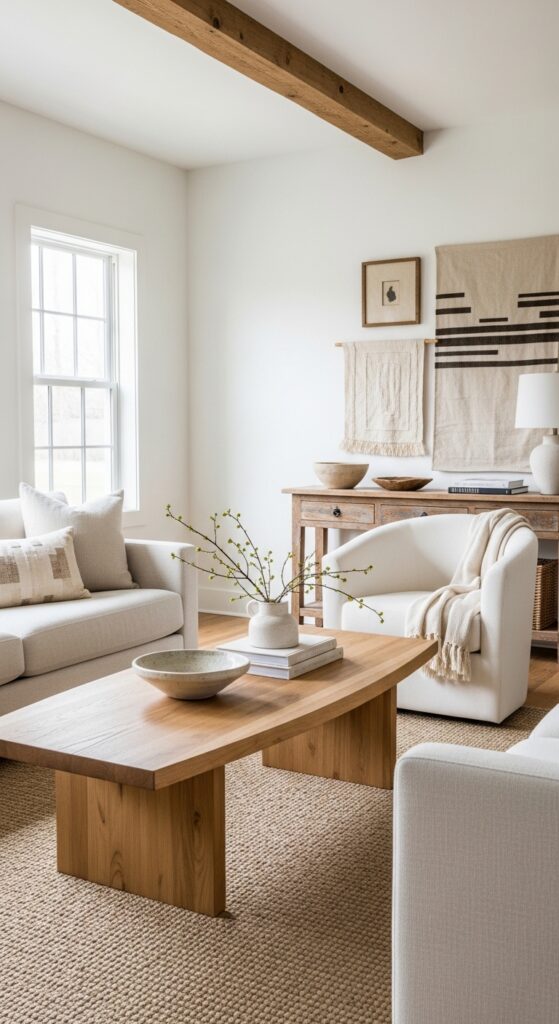
Vibe: The space feels balanced, with farmhouse sturdiness softened at the edges.
Why it works: Many farmhouse rooms already have boxy architecture—rectangular windows, mantels, beams, and sofas. Curved furniture interrupts that geometry, which keeps the room from feeling rigid and adds a more relaxed boho line.
How to get it: Introduce one rounded coffee table or barrel chair in white oak or light walnut. One curved form is usually enough to loosen the room without losing the farmhouse backbone.
17. A Textile Gallery Wall Above a Timeworn Console
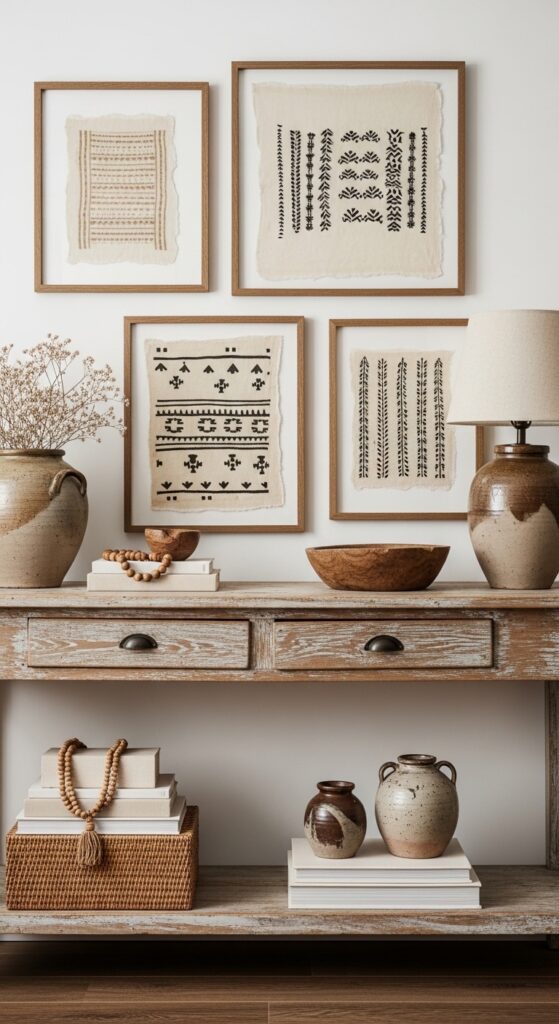
Vibe: It feels personal and layered, like the room has stories instead of filler.
Why it works: Textile art introduces softness on the wall, which matters in rooms full of hard surfaces like fireplaces, windows, and furniture frames. A weathered console beneath it adds horizontal weight so the composition feels grounded, not floaty.
How to get it: Frame linen, block-print, or mud-cloth remnants in mismatched wood frames above a vintage console. Keep the palette tonal—cream, sand, ink—so the wall reads curated rather than chaotic.
💡 Quick Win: Fabric remnants from Etsy often cost less than framed art and look more custom.
18. One-Room-Only Tricks for a Small Boho Farmhouse Setup
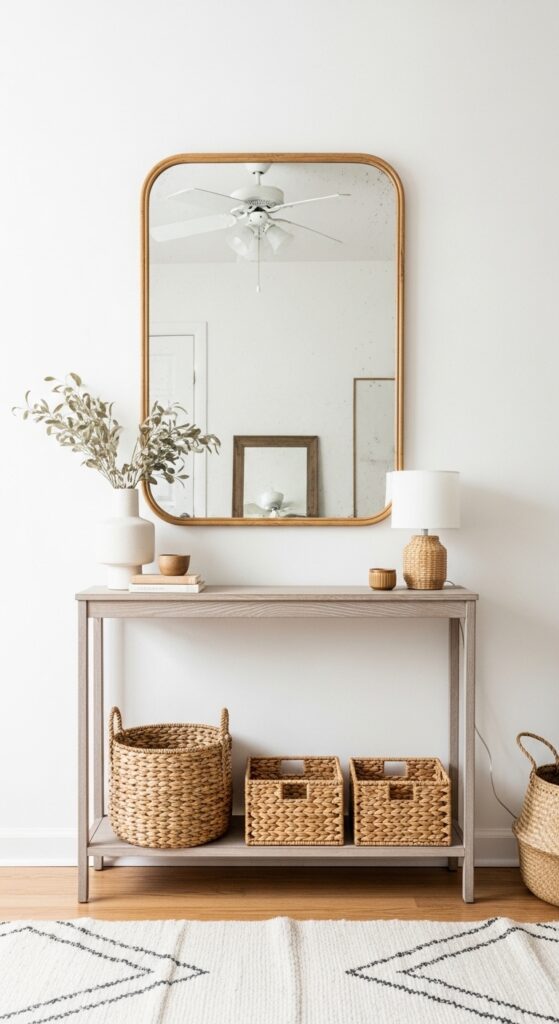
Vibe: The room feels open and lifted rather than squeezed.
Why it works: In small spaces, reflection and floor visibility matter more than more furniture. A mirror bounces light, and slim pieces reduce visual weight, which lets boho texture show up without closing in the room.
How to get it: Hang one oversized vintage-look mirror opposite a window and use a console no deeper than 12 inches. Choose closed storage only where you truly need it; too many baskets in a tiny room can feel busy.
19. Boho Farmhouse Living Room Ideas in Rust, Oatmeal, and Faded Indigo
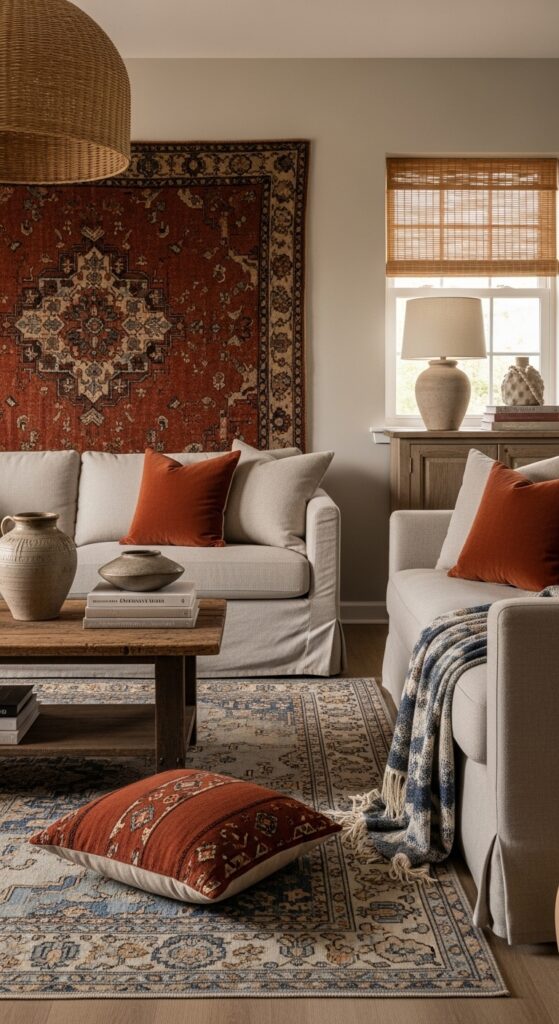
Vibe: It feels collected and grounded, with color that has memory in it.
Why it works: Rust and indigo are natural opposites—warm and cool—so they create balanced contrast when softened by oatmeal neutrals. The result is more dimensional than an all-beige room but still calm enough for everyday living.
How to get it: Bring in indigo through one faded rug or throw, then echo rust in a lumbar pillow and ceramic vase. Keep both colors dusty rather than saturated so the room stays relaxed.
💡 Quick Win: A vintage-look indigo rug is often the fastest way to add both boho character and farmhouse age.
20. Blackened Iron for Crisp Rustic Contrast
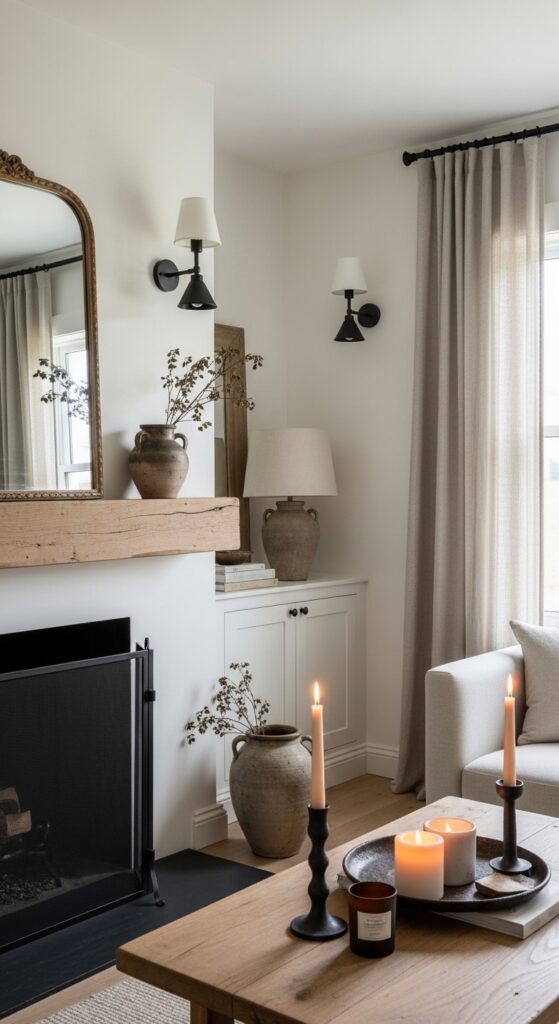
Vibe: The room feels crisp and grounded, with just enough edge.
Why it works: Dark metal adds line and definition to a room full of soft materials. Because blackened iron is matte rather than shiny, it sharpens the space without making it feel industrial or cold.
How to get it: Repeat blackened iron in exactly three places—curtain rod, lamp or sconce, and one fireplace or table detail. That repetition creates cohesion; sprinkling random black accents does not.
21. Sheer Flax Curtains That Let the Light Do the Styling
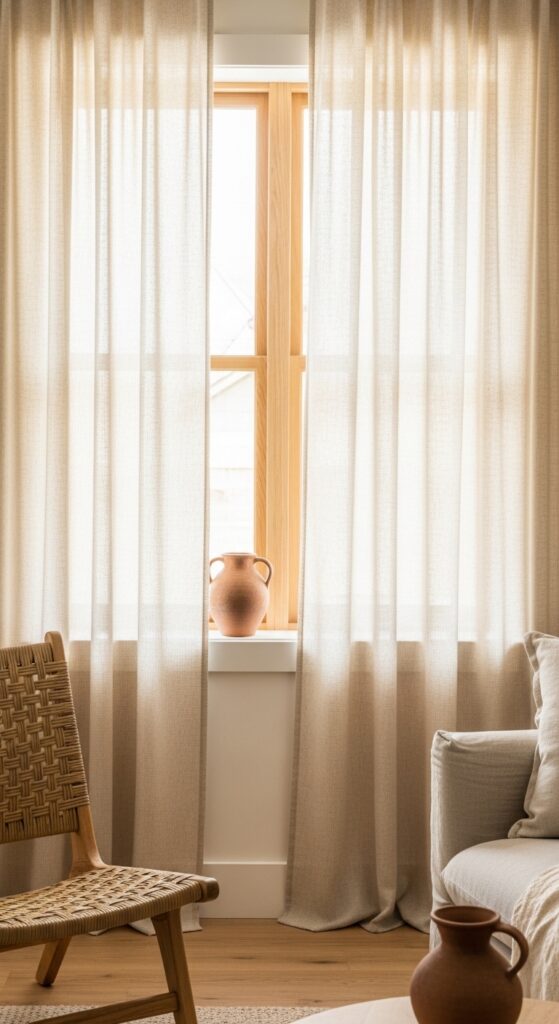
Vibe: The room feels airy and luminous, almost moving.
Why it works: Sheer flax curtains diffuse daylight without blocking it, which makes walls, woods, and textiles look softer. They also add vertical movement, a useful counterbalance to the low, grounded furniture common in this style.
How to get it: Hang flax or linen-blend panels high and wide, with the rod 6 to 8 inches above the window and extending beyond the frame. That trick makes windows feel taller and the room more open.
💡 Quick Win: Steam-store curtains read far more custom than wrinkled ones, even if they are IKEA.
22. Asymmetrical Seating Around the Fireplace
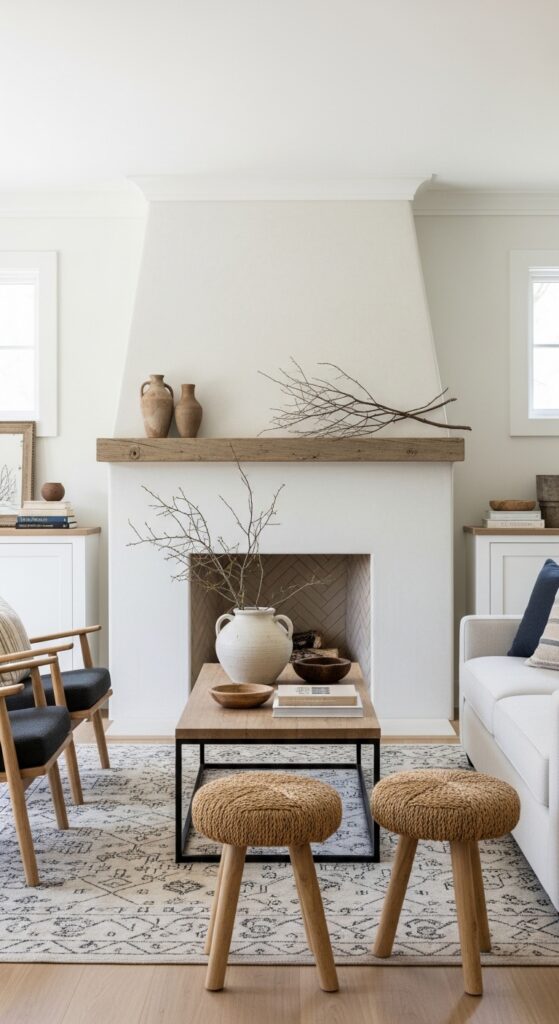
Vibe: The layout feels relaxed and real, not formal.
Why it works: Symmetrical architecture can handle asymmetrical furniture; in fact, it often benefits from it. Offsetting one chair or adding a bench on one side keeps the fireplace from turning the whole room into a rigid mirror image.
How to get it: Anchor with a centered sofa, then place one chair at an angle and use a stool or bench on the opposite side instead of matching pairs. The mix feels more boho while the fireplace still keeps things ordered.
23. Oversized Baskets as Storage You Can Actually See
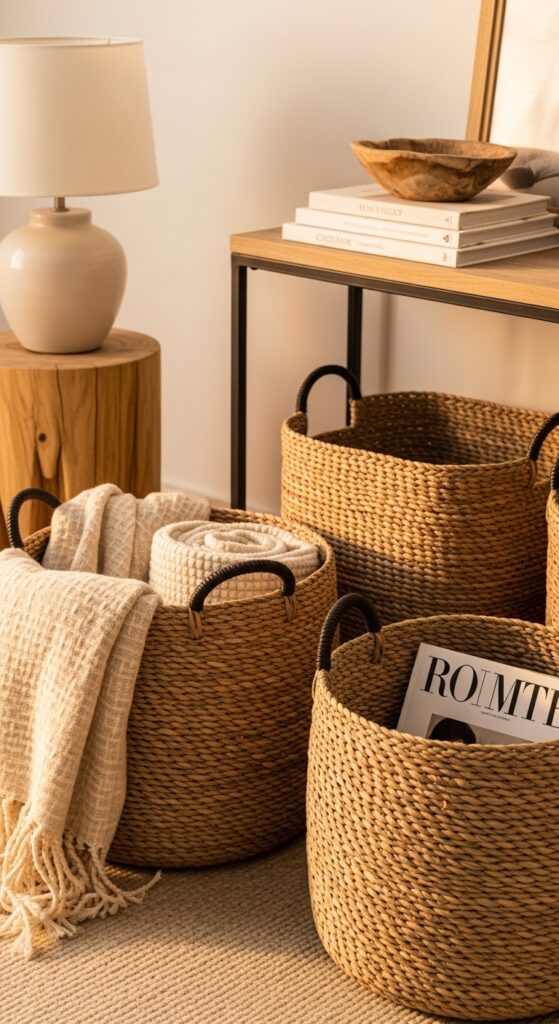
Vibe: The room feels warm and practical, with storage that adds texture instead of hiding from it.
Why it works: Baskets solve two problems at once: they reduce visual clutter and introduce a woven element that suits both boho and farmhouse rooms. Their scale matters; one large basket looks calmer than three little ones.
How to get it: Use oversized seagrass or water-hyacinth baskets for throws beside the sofa or under a console. Choose a tight weave if you want the room to feel cleaner, looser weave if you want more rustic character.
💡 Quick Win: One large floor basket by the fireplace can replace an entire cluttered side shelf.
24. Use a Bench to Zone an Open-Plan Living Room
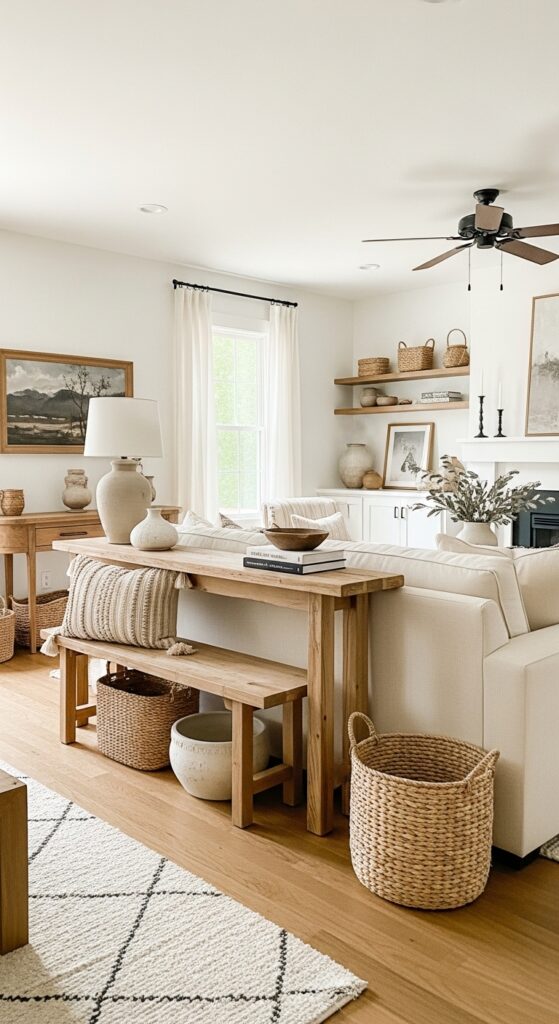
Vibe: The space feels orderly and calm, even with multiple functions happening nearby.
Why it works: A bench behind the sofa creates a soft boundary without blocking sightlines. That matters in open-plan homes where you need the living room to feel defined but still connected to the rest of the house.
How to get it: Place a narrow wood bench or console directly behind the sofa, then style it lightly with a lamp and one basket below. It draws the perimeter of the room without adding a bulky divider.
25. Boho Farmhouse Living Room Ideas with Tonal Neutrals and One Deep Accent
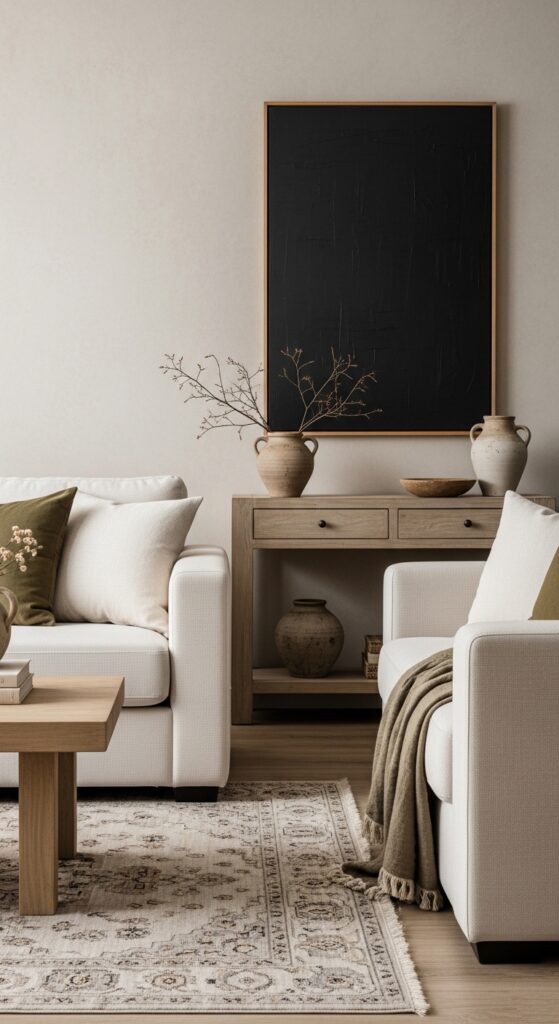
Vibe: The room feels serene, with depth coming from restraint rather than excess.
Why it works: Tonal rooms rely on subtle contrast—mushroom against greige, flax against cream—so one deeper accent gives the eye a place to rest. That balance keeps a neutral scheme from reading washed out or unfinished.
How to get it: Build the room in three neutrals with shared warm undertones, then add one deep olive, tobacco, or charcoal note through art or a throw. Limit the darkest tone to about 10 percent of the room.
💡 Quick Win: Start with one deep olive pillow on a greige chair and see how much sharper the whole palette feels.
How to Start Your Boho Farmhouse Transformation
Start with paint. Benjamin Moore White Dove is an ideal first move because it gives you a warm, forgiving backdrop that works with oak, pine, brass, rattan, clay, and vintage textiles. Once the wall tone is right, every layered piece that follows feels chosen instead of random.
The most common mistake is mixing the wrong wood undertones—cool gray wood-look pieces with warm oak, pine, and terracotta accents. That clash breaks the room’s rhythm fast. Fix it by choosing one dominant wood temperature, then repeating it in at least two major pieces before adding smaller accents.
For under-$50 impact, try a rust linen pillow cover, a large seagrass basket, and a matte terracotta vase with faux olive stems. Each one adds texture and shape immediately, and all three are easy to find from IKEA, H&M Home, Target, or Etsy.
A starter version can happen in a weekend for about $150 to $500 if you focus on paint, textiles, and lighting. A fuller room transformation usually lands closer to $1,500 to $5,000 depending on furniture. Layout changes and styling can happen fast; vintage sourcing, custom drapery, and better lighting layers often take months.
Frequently Asked Questions About Boho Farmhouse Living Room Ideas
What is the difference between boho farmhouse and modern farmhouse?
Modern farmhouse is cleaner, more architectural, and usually more restrained in pattern and color. Boho farmhouse keeps the farmhouse bones—wood, comfort, utility—but adds global textiles, woven materials, softer asymmetry, and a more collected feel. Think white oak bench and slipcovered sofa for modern farmhouse; add mud-cloth pillows, baskets, and a faded indigo rug, and you move into boho farmhouse territory. Architectural Digest Better Homes & Gardens
What colors work best in a boho farmhouse living room?
The strongest palettes mix warm neutrals with earthy accents. Start with warm white, oatmeal, greige, or mushroom, then layer in muted sage, terracotta, rust, faded indigo, or soft charcoal. If your room gets little sunlight, lean creamier—stark white can make the space feel cold instead of relaxed. A reliable combination is warm white walls, oat upholstery, oak wood, and rust textiles.
Is boho farmhouse design expensive to achieve?
Not necessarily. You can create the look affordably by prioritizing paint, textiles, baskets, and secondhand wood furniture before investing in bigger pieces. A $35 seagrass basket, a $25 rust pillow cover, and a $40 linen-look lamp shade can shift the room more than one expensive decor object. The style actually benefits from thrifted finds, which makes it friendlier than many trend-led looks.
Can I mix boho farmhouse with other styles?
Yes, but keep one backbone style in charge. Boho farmhouse mixes especially well with rustic, organic modern, cottage, and even a little coastal if the palette stays earthy. The easiest rule is 70/30: let roughly 70 percent of the room stay boho farmhouse, then use the remaining 30 percent for another influence. That keeps the room layered rather than confused.
What lighting works best in a boho farmhouse living room?
The best lighting mix includes one woven or linen-shaded overhead fixture, one table lamp, one floor lamp, and warm bulbs in the 2200K to 2700K range. Aged brass, blackened iron, ceramic, and rattan all work well because they add texture even when the lights are off. If you want one easy formula, pair a wicker pendant with a ceramic table lamp and a slim black floor lamp. That combination gives you overhead, task, and mood lighting in one room.
Ready to Create Your Dream Boho Farmhouse Living Room?
These 25 boho farmhouse living room ideas covered the real building blocks of the look—warm color palettes, honest materials, softer layouts, layered lighting, and accessories with texture instead of fuss. You do not need to do everything at once; in fact, this style looks better when it grows slowly and picks up character as it goes. Pull one natural wood piece into your living room this week—a tray, stool, or chunky bowl—and let it set the tone for what comes next. When the room is finished, it should feel grounded, personal, and easy to sink into at the end of the day. Save the ideas with the clay tones, woven light, and timeworn wood that felt most like home, because those are the ones you will actually use.