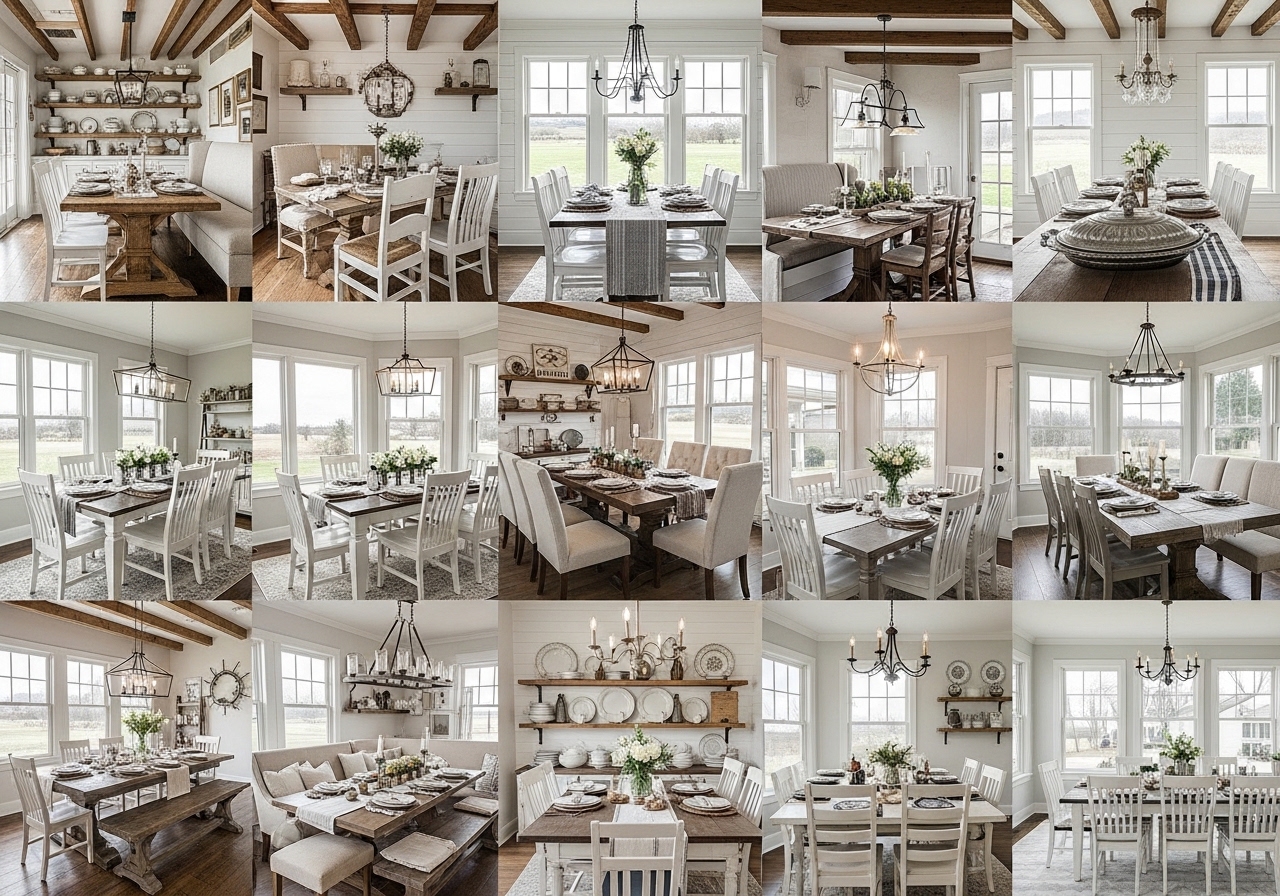
Farmhouse dining room ideas blend practical country warmth with cleaner, more livable design, giving you a space that feels welcoming enough for weeknight pasta and special enough for holiday gatherings. These 20 ideas will show you exactly how to shape that feeling through color, furniture, lighting, layout, and layered detail.
The mood is candle glow on wood grain, linen softening hard edges, and chairs that invite people to stay longer than planned. A farmhouse dining room should feel grounded, generous, and quietly collected rather than overly themed. It is warmth with structure. Here are 20 ideas worth saving — and stealing.
Why Farmhouse Dining Room Ideas Work So Well
Farmhouse style grew from rural American homes where dining spaces had to be durable, practical, and easy to gather in. Its signature today is still that mix of utility and comfort, but modern farmhouse dining rooms feel more edited than traditional country style and less sleek than minimalist design. Architectural Digest describes farmhouse as warm, simple, and functional, with elements like reclaimed wood, antique accents, neutral palettes, and large comfortable furniture; traditional versions lean more rustic, while modern farmhouse pulls in cleaner lines and quieter finishes Architectural Digest.
The core palette is warm white, greige, mushroom, muted sage, charcoal, dusty blue, and soft black. The materials are equally specific: white oak or reclaimed pine tables, linen slipcovers, jute rugs, Windsor or metal chairs, shiplap, rattan, unlacquered brass, and weathered iron. Better Homes & Gardens highlights wood tables, rattan, linen drum shades, galvanized chairs, jute rugs, and neutral tones as key dining-room ingredients Better Homes & Gardens.
It is trending because dining rooms are working harder now. People want spaces that can host, linger, and flex for everyday life, and Architectural Digest notes that entertaining is moving toward relaxed formality, adaptable layouts, and rooms that feel social rather than stiff Architectural Digest.
Yes, small spaces can absolutely do this. HGTV recommends banquettes, benches, shiplap for visual height or width, and mixed seating that keeps the room functional without overcrowding it HGTV.
| Element | Core Trait | Supporting Trait |
| Philosophy | gathered comfort | practical simplicity |
| Materials | wood, linen, jute | iron, rattan, antique brass |
| Color palette | warm white, greige, sage | charcoal, dusty blue, soft black |
1. Farmhouse Dining Room Ideas With a Long Reclaimed Wood Table
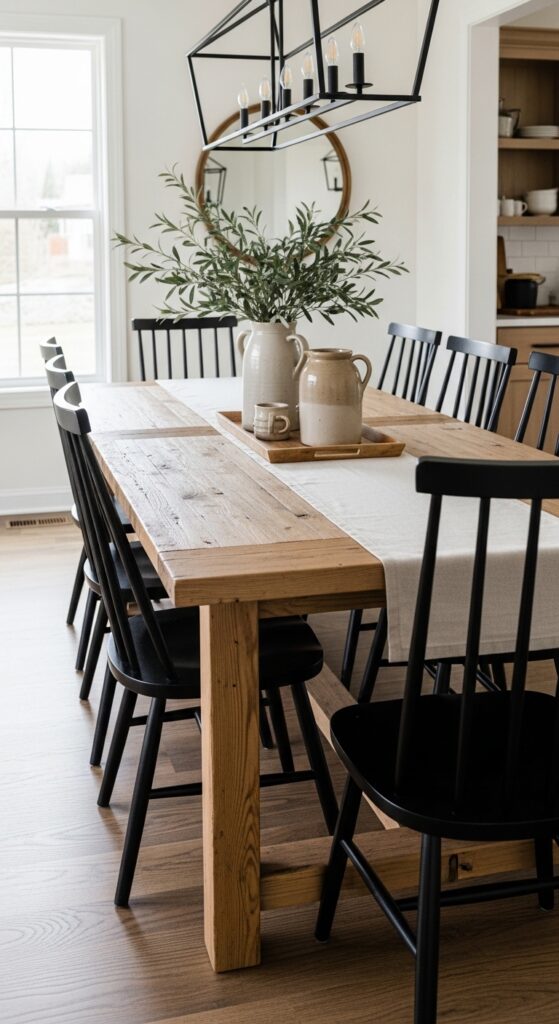
Vibe: The room feels grounded and ready to hold a real gathering.
Why it works: A long wood-planked table gives the room immediate visual weight, which is the anchor farmhouse dining rooms need. The rougher grain and softened edges add texture layering, while black Windsor chairs sharpen the outline so the space does not dissolve into beige-on-beige softness.
How to get it: Look for a table in reclaimed pine or lightly distressed oak with a matte finish rather than a glossy lacquer. Keep at least 36 inches of clearance around it so the table feels generous, not crammed.
💡 Quick Win: A vintage-style plank-top table from Facebook Marketplace often looks more convincing than a brand-new “farmhouse” set.
2. A Jute Rug That Softens the Entire Zone
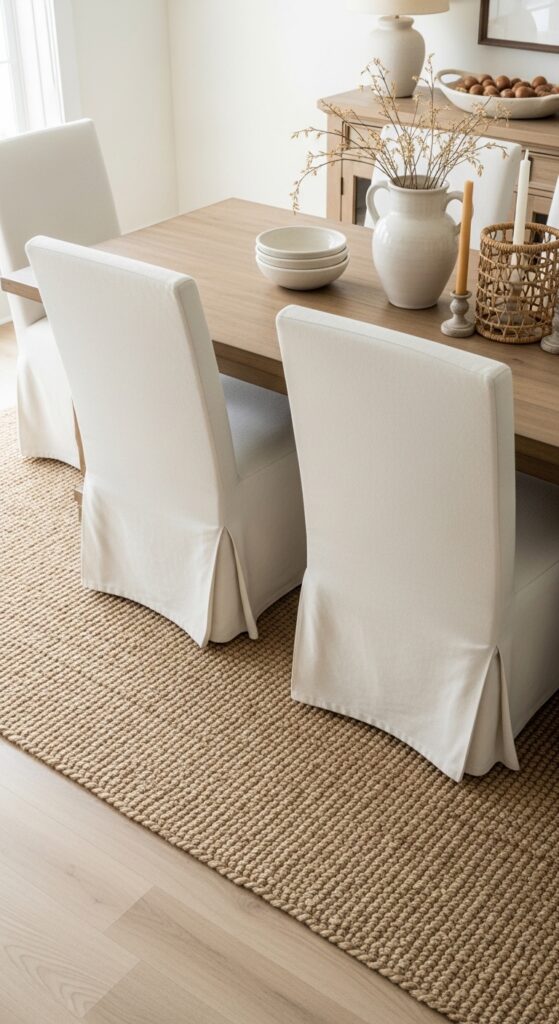
Vibe: The room feels warm and lightly cushioned.
Why it works: Dining rooms are full of hard surfaces, so a jute rug introduces friction, softness, and a subtle color bridge between floor and furniture. It also defines the dining zone clearly, which matters in open-plan homes where the table can otherwise float.
How to get it: Size the rug so every chair stays on it when pulled out—usually at least 24 inches beyond the table edge. A tighter basket weave is easier for chair legs to move across than a loose chunky braid.
3. A Wagon-Wheel Chandelier With Real Presence
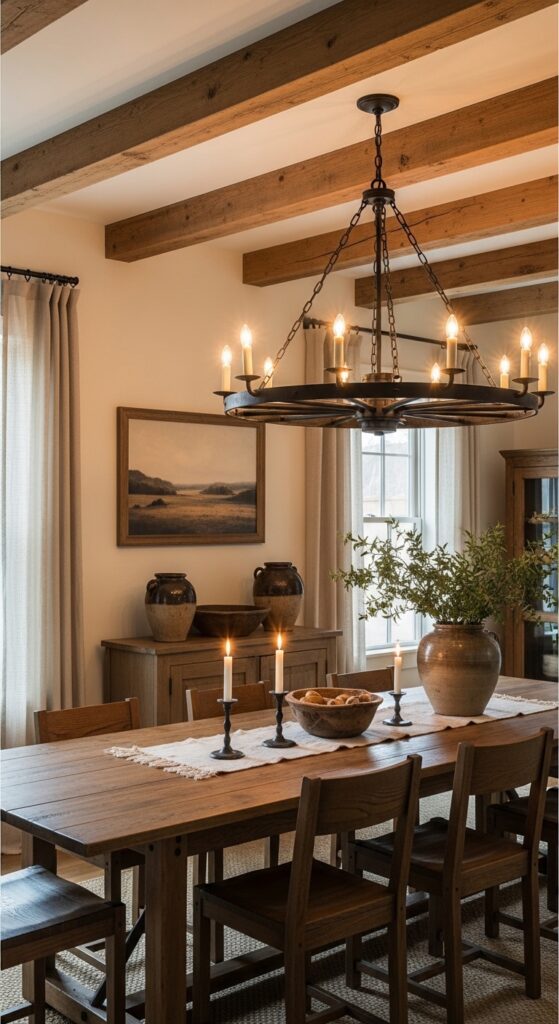
Vibe: The room feels luminous and quietly dramatic.
Why it works: Lighting is the visual center of a dining room, and a wagon-wheel form brings both scale and circular softness above a long rectangular table. The iron finish adds contrast, while candle bulbs echo the old-house warmth that keeps farmhouse style from feeling too polished.
How to get it: Choose a chandelier roughly one-half to two-thirds the width of your table and hang it 30 to 36 inches above the surface. Use 2700K bulbs so the light stays warm instead of clinical.
4. A Round Pedestal Table for Easier Conversation
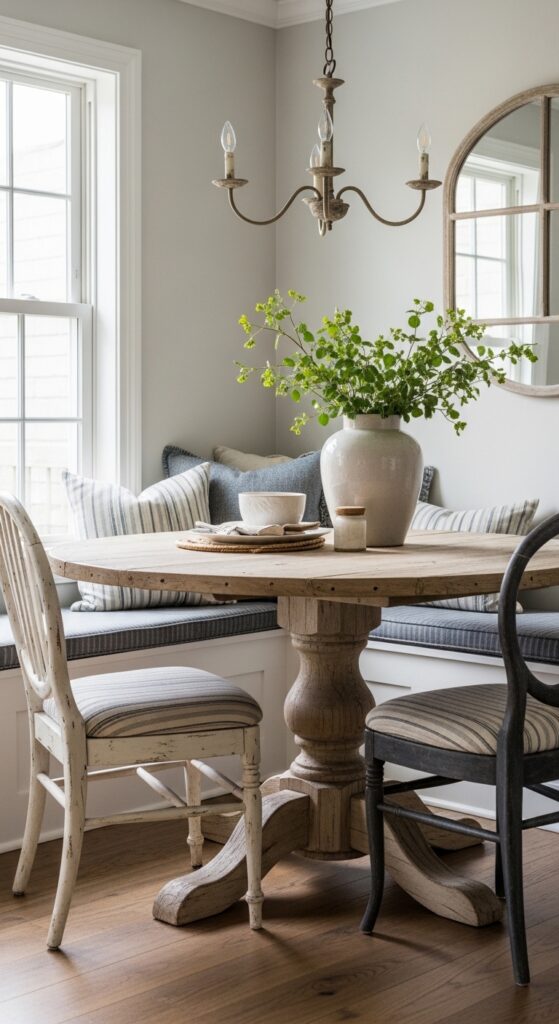
Vibe: The space feels intimate and more social by design.
Why it works: Round tables reduce hierarchy because every seat faces into the center of the room. In farmhouse dining spaces, a pedestal base also removes the heavy interruption of four legs, which makes movement easier and softens the furniture profile.
How to get it: Use a 48- to 54-inch pedestal table in smaller rooms, then mix chairs with similarly low visual weight. One curved or oval chair back among straighter chairs keeps the look collected rather than matched.
💡 Quick Win: Even swapping a rectangular table for a thrifted round one can make a tight dining nook feel twice as usable.
5. Ironstone and Cutting Boards on a Sideboard
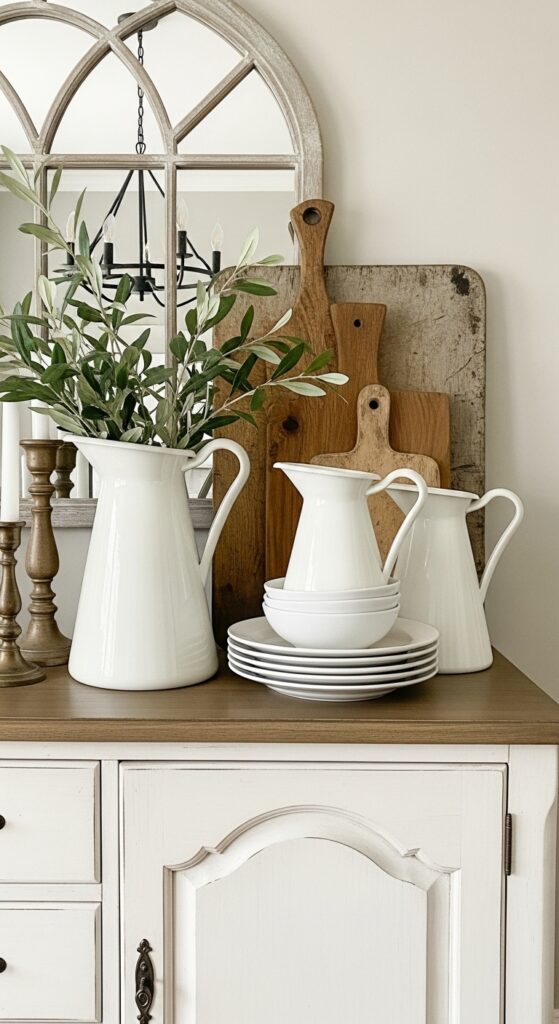
Vibe: The corner feels layered and quietly storied.
Why it works: Farmhouse accessories work best when they look useful first and decorative second. Ironstone repeats the room’s lighter tones, while antique boards add roughness, patina, and vertical variation that keep the sideboard from feeling too flat or staged.
How to get it: Use the three-height rule: one tall pitcher, one medium stack, and one leaning board or tray. Keep the palette limited to whites, woods, and one greenery note so the styling stays edited.
6. A Dining Room Centered by a Fireplace Wall
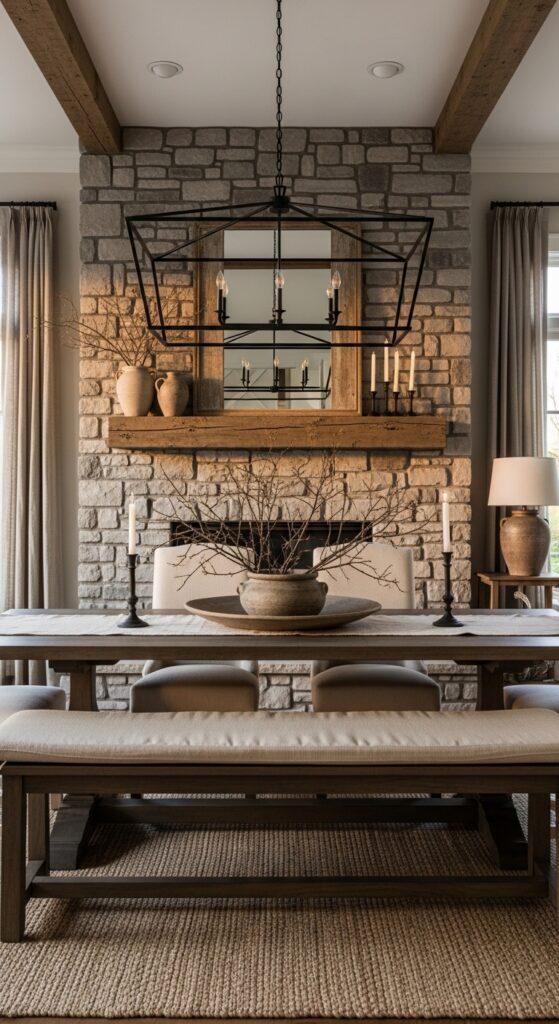
Vibe: The room feels still and architecturally anchored.
Why it works: A fireplace gives the dining room a natural focal wall, which is useful in farmhouse spaces that rely on substance more than ornament. Centering the table to that mass creates strong proportion and makes the room feel intentional, especially in open homes where dining zones need definition.
How to get it: Align the table with the fireplace, not just the ceiling fixture, then repeat the material tone with wood or iron nearby. Even a faux focal wall with an oversized mirror or hutch can mimic this effect.
7. A Slipcovered Banquette for Small-Space Warmth
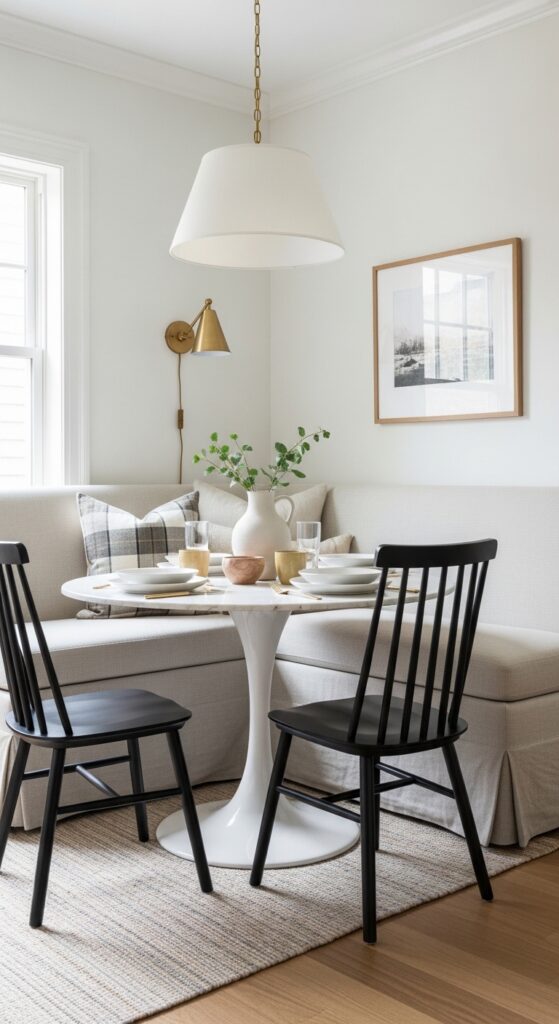
Vibe: The nook feels cozy and surprisingly spacious.
Why it works: Banquettes use wall space instead of aisle space, which is why they work so well in smaller dining rooms. The slipcover adds softness and texture, while the built-in feel gives the room more architectural depth than a cluster of freestanding chairs could.
How to get it: Push the table toward the banquette and leave the chair side open for circulation. Keep the upholstery in washable linen or performance fabric so the room stays practical, not precious.
💡 Quick Win: A simple bench with a custom skirted cushion can fake the look before you invest in a full built-in.
8. Farmhouse Dining Room Ideas With a Warm White and Greige Palette
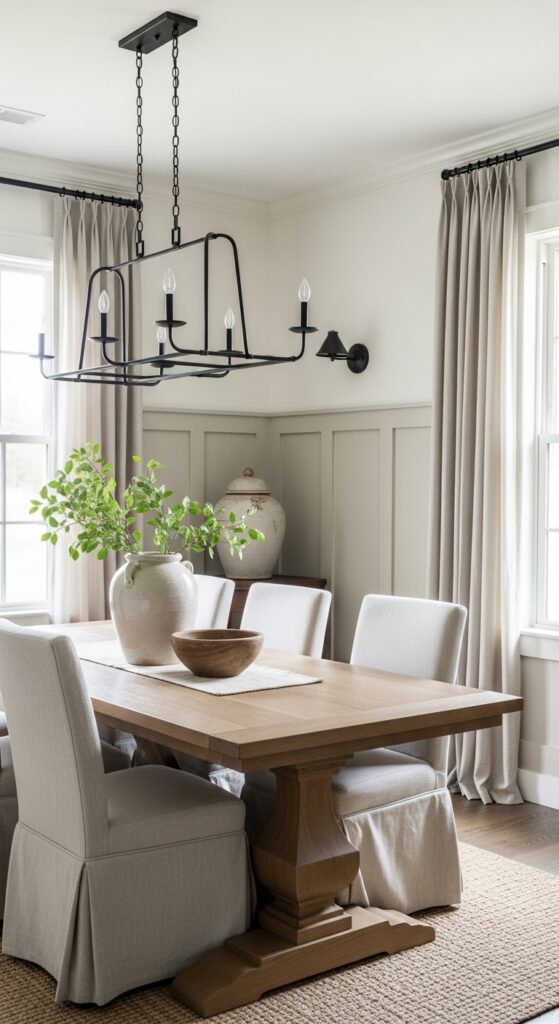
Vibe: The room feels serene and softly wrapped.
Why it works: Farmhouse rooms often rely on restraint, so tonal contrast matters more than loud accent color. Warm white above and greige below create depth without drama, allowing wood grain, black metal, and ceramics to carry the personality.
How to get it: Try Benjamin Moore White Dove on upper walls and Edgecomb Gray or Pale Oak on paneling or wainscoting. Keep the finish matte or eggshell so the palette stays velvety, not slick.
9. Cane-Back Chairs That Lighten a Heavier Table
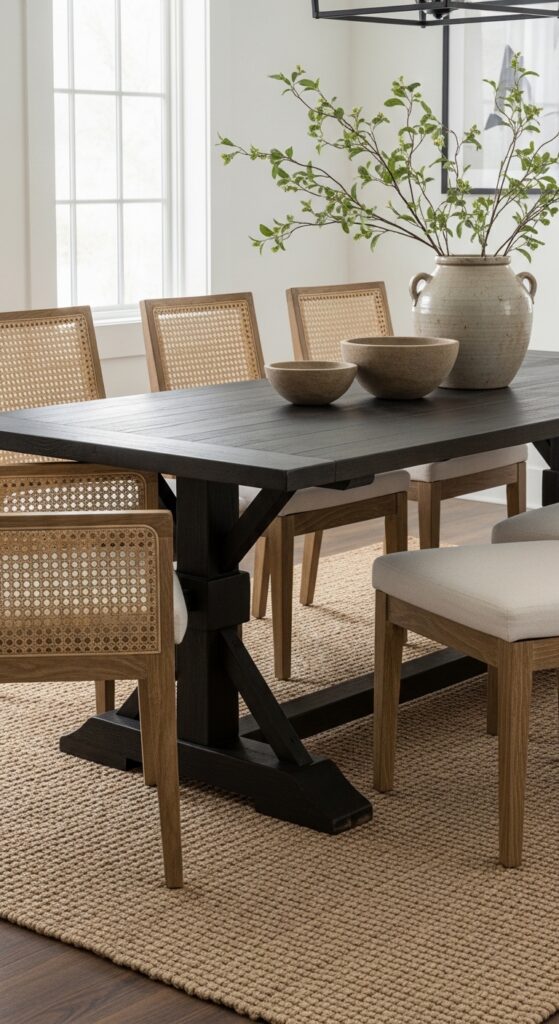
Vibe: The room feels airy despite the table’s visual heft.
Why it works: Cane is one of the best counterweights to a thick plank table because it introduces openness inside the chair silhouette. That negative space keeps the furniture mix from feeling too dense, especially in farmhouse dining rooms with heavier wood and darker finishes.
How to get it: Use cane or rattan on side chairs only, then ground the table with a sturdier host chair or bench. This mix keeps the room balanced and prevents all the seating from feeling visually identical.
10. Schoolhouse Pendants Over a Narrow Dining Table
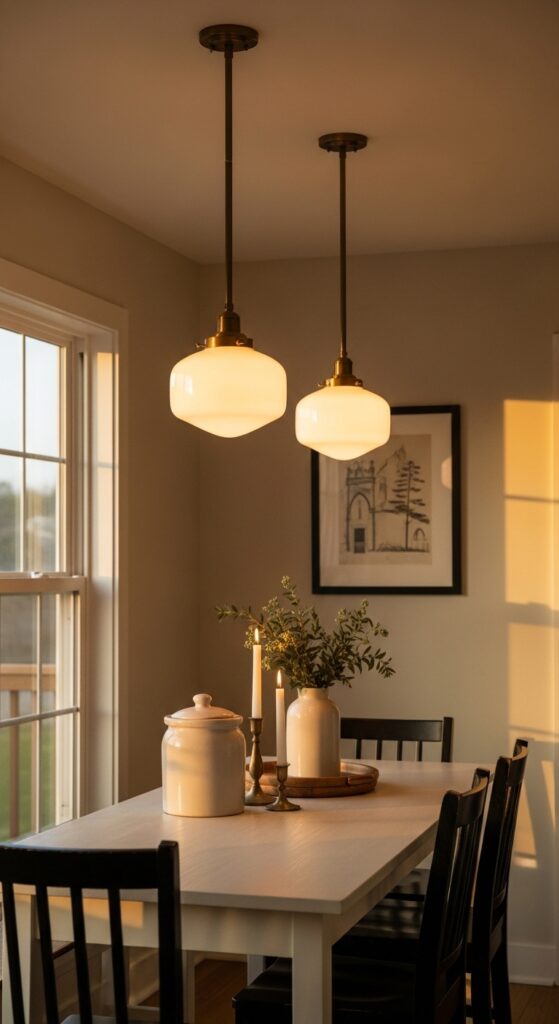
Vibe: The table zone feels warm and quietly tailored.
Why it works: Schoolhouse pendants soften the top of the room with rounded glass while still bringing that workmanlike farmhouse utility. Using two pendants instead of one single fixture over a narrow table creates better light distribution and a cleaner sense of rhythm.
How to get it: Space the pendants evenly over the table rather than centering them to the room. Rejuvenation and Schoolhouse-style fixtures work especially well here because the forms are classic without becoming kitschy.
💡 Quick Win: If rewiring is not realistic, use one centered pendant with a wider opal shade to mimic the same softness.
11. A Trestle Table With End Slipcovered Chairs
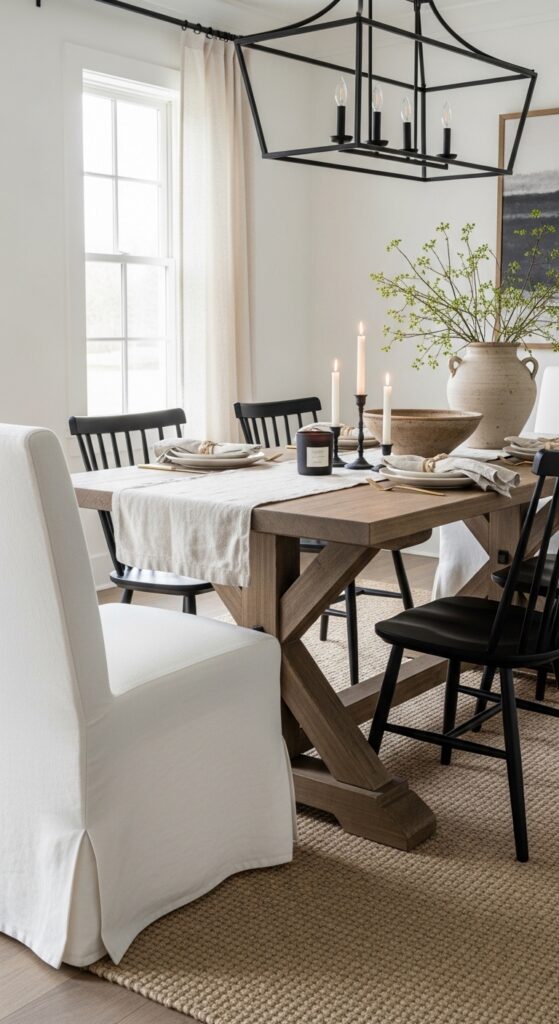
Vibe: The room feels grounded and comfortably formal.
Why it works: A trestle table brings architectural strength, while slipcovered end chairs soften the composition at the most visible points. That balance of sturdy and relaxed is what keeps farmhouse dining rooms from feeling either too rugged or too dressy.
How to get it: Use the cushioned chairs only at the heads so the room stays varied but not overupholstered. Choose washable flax or natural performance linen instead of stark white cotton for a more forgiving, lived-in finish.
12. A Linen Runner and Low Ceramic Centerpiece
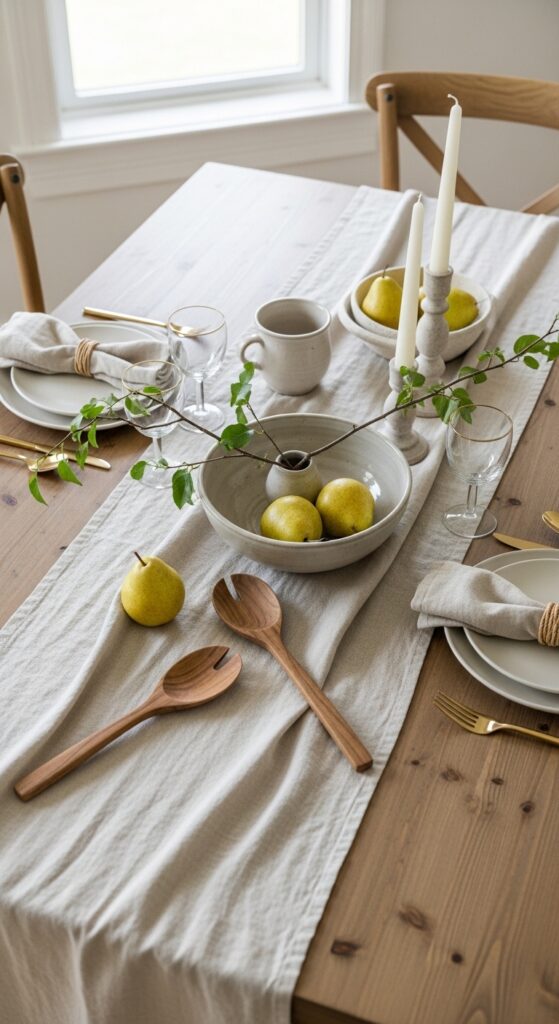
Vibe: The table feels still and ready to be used.
Why it works: Accessories in a dining room need to respect sightlines and serving space. A low centerpiece keeps conversation open, while an undyed linen runner adds softness and texture without swallowing the grain of the table underneath.
How to get it: Keep the centerpiece lower than eye level when seated and limit it to one vessel plus something organic inside it. A wide ceramic bowl, a few pears, or clipped branches is usually enough.
💡 Quick Win: Skip bulky florals and start with a neutral runner plus one handmade bowl from Target, IKEA, or a local pottery shop.
13. Farmhouse Dining Room Ideas With Dusty Blue Accent Chairs
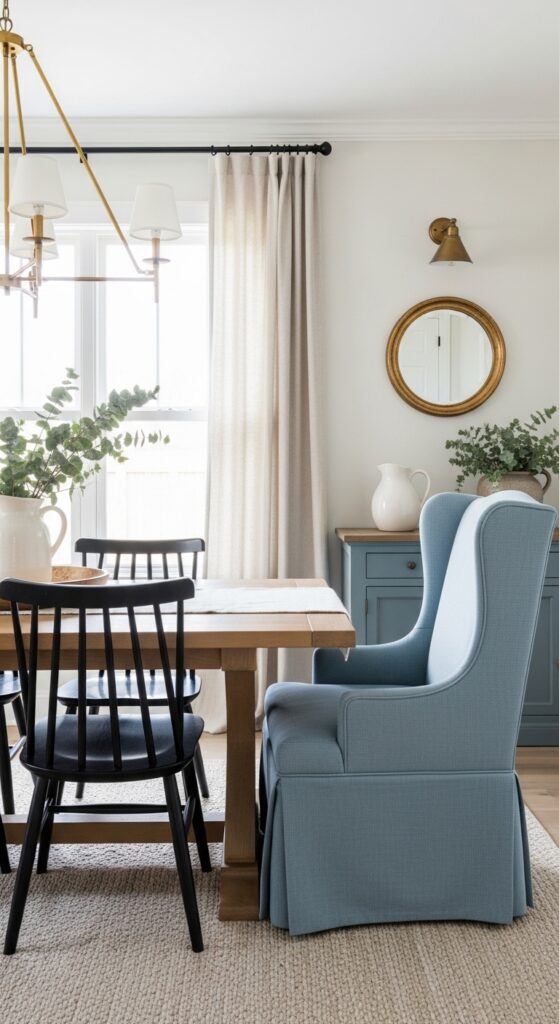
Vibe: The space feels calm with just enough color to linger on.
Why it works: Color works best in farmhouse rooms when it is controlled. Dusty blue at the table ends introduces contrast and a focal cue, but because the hue is grayed down, it still harmonizes with wood, iron, linen, and neutral walls.
How to get it: Confine the blue to only two chairs or one painted cabinet so the room stays rooted in neutrals. Look for fabric shades that lean muted rather than coastal-bright.
14. Shiplap Walls That Quietly Add Texture
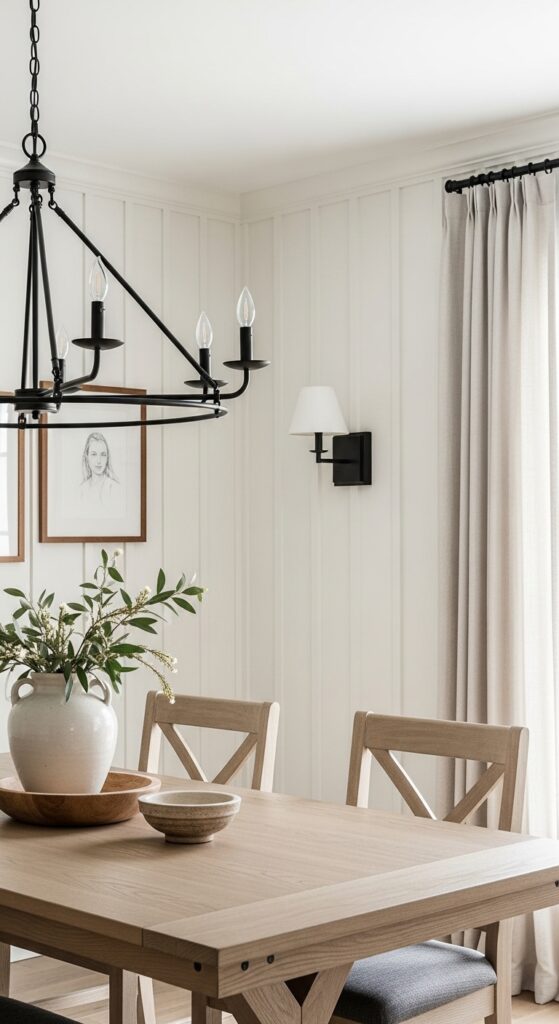
Vibe: The room feels airy and gently architectural.
Why it works: Shiplap or paneled walls give a farmhouse dining room depth without relying on busy decor. The vertical rhythm catches light and shadow, which adds subtle texture and helps lower ceilings feel a little taller.
How to get it: Paint the boards and trim in the same warm white so the texture stays quiet rather than high-contrast. Vertical application feels fresher than the heavily repeated horizontal look.
15. A Wood-Bead Chandelier for Softer Overhead Texture
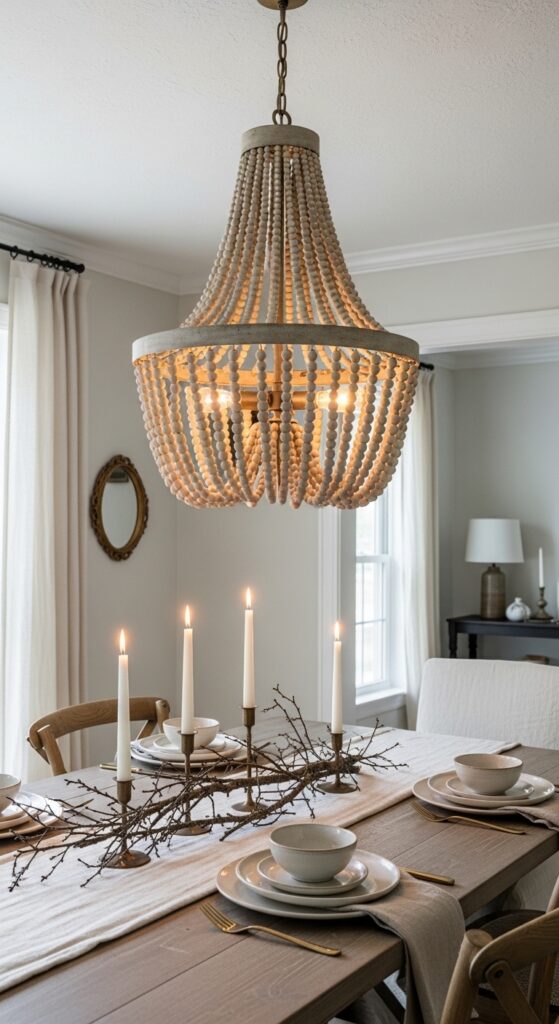
Vibe: The room feels romantic and softer from above.
Why it works: Not every farmhouse dining room wants black iron overhead. A wood-bead chandelier introduces texture instead of hard contrast, which can be a better fit in lighter rooms with pale woods, linen upholstery, and a more relaxed modern farmhouse mood.
How to get it: Use wood-bead lighting in rooms with enough ceiling height for a fuller silhouette. Keep the rest of the metal finishes quiet so the chandelier’s texture, not competing hardware, becomes the feature.
💡 Quick Win: Swapping just the dining light is one of the fastest ways to change the whole room’s tone.
16. A Narrow Console-Style Sideboard for Real Storage
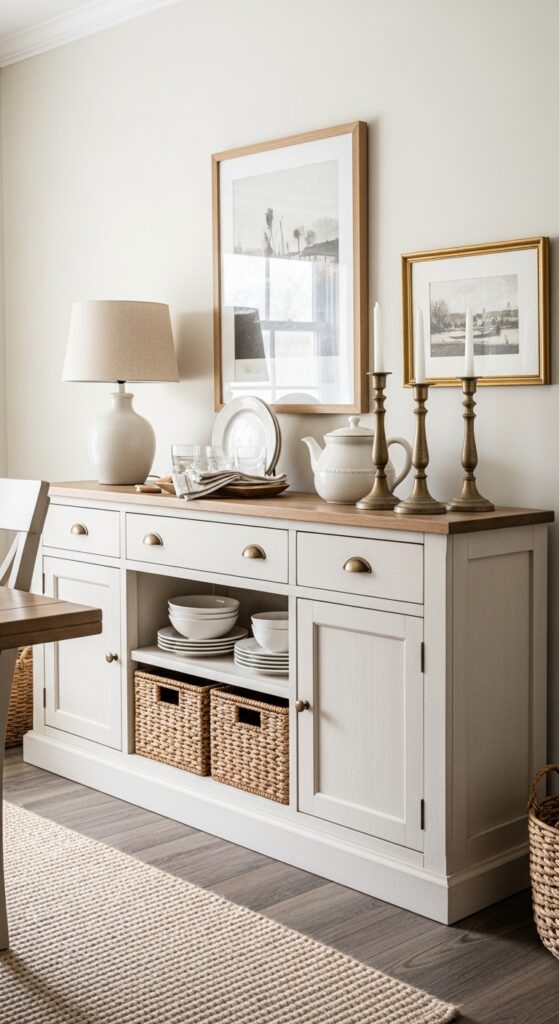
Vibe: The room feels practical without losing warmth.
Why it works: Farmhouse dining rooms are at their best when they support how people actually host. A slim sideboard provides visual grounding on one wall while storing serving pieces, linens, and candles that would otherwise make the table or kitchen feel cluttered.
How to get it: Choose a piece under 18 inches deep if the room is tight, and style only the top third of it. The lower storage should do the heavy lifting so the surface can stay calm and useful.
17. Botanical Art in Dark Frames Instead of Farm Signage
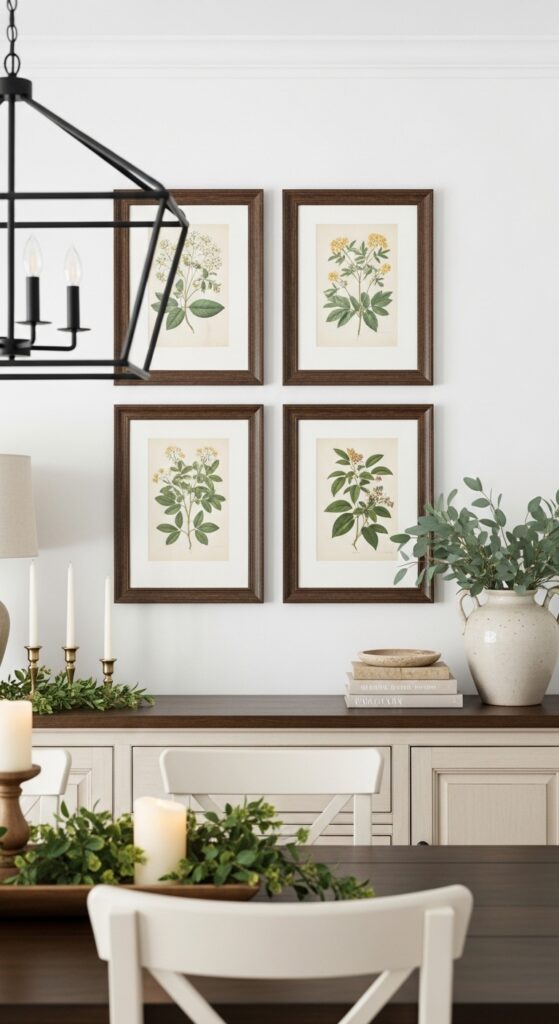
Vibe: The wall feels collected and quietly intellectual.
Why it works: Farmhouse style looks more current when it avoids literal “farm” slogans and leans into things that feel gathered over time. Botanical art adds shape, softness, and history without making the room feel themed or overly rustic.
How to get it: Hang a tight grid or gentle asymmetrical cluster of two to four prints above a sideboard. Use darker wood or black frames to give creamy walls and pale furniture a bit of structure.
💡 Quick Win: Download public-domain botanical prints and frame them in thrifted wood frames for an inexpensive upgrade.
18. A Two-Zone Layout for Dining and Lingering
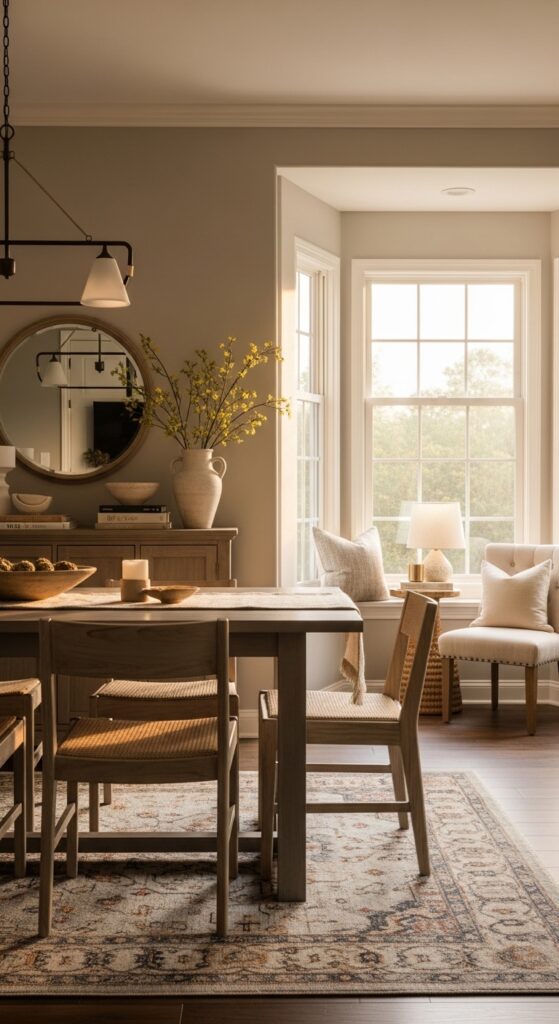
Vibe: The room feels inviting and more social than formal.
Why it works: Dining rooms feel more relevant now when they support lingering, not only eating. A second mini zone—a chair by the window, a tiny drinks perch, or a side stool—gives the room a double life and echoes the more flexible entertaining layouts designers are calling for Architectural Digest.
How to get it: Keep the extra zone visually lighter than the dining table so it reads as a supporting moment, not competition. One chair, one lamp, and one small table are enough.
19. Farmhouse Dining Room Ideas With a Charcoal Hutch
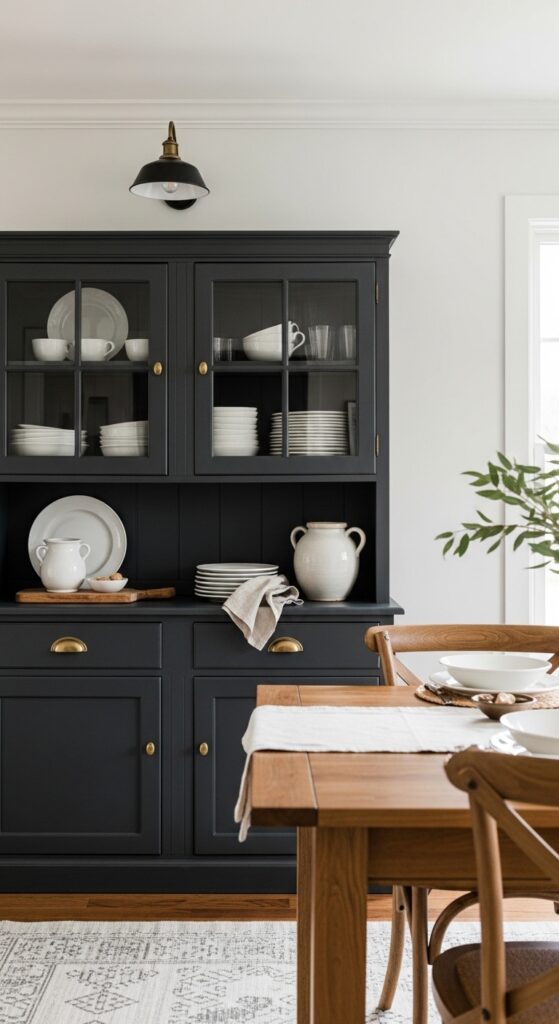
Vibe: The room feels moody and better balanced.
Why it works: Light farmhouse rooms often need one deeper note to keep them from feeling too airy or washed out. A charcoal hutch introduces visual weight, gives white dishes stronger contrast, and makes the rest of the room’s woods and metals feel more intentional.
How to get it: Paint one cabinet or vintage hutch in a softened charcoal like Farrow & Ball Down Pipe or Benjamin Moore Kendall Charcoal. Keep the walls warm, not stark, so the contrast feels layered instead of sharp.
20. Mixed-Metal Dining Chairs Around a Thick Oak Table
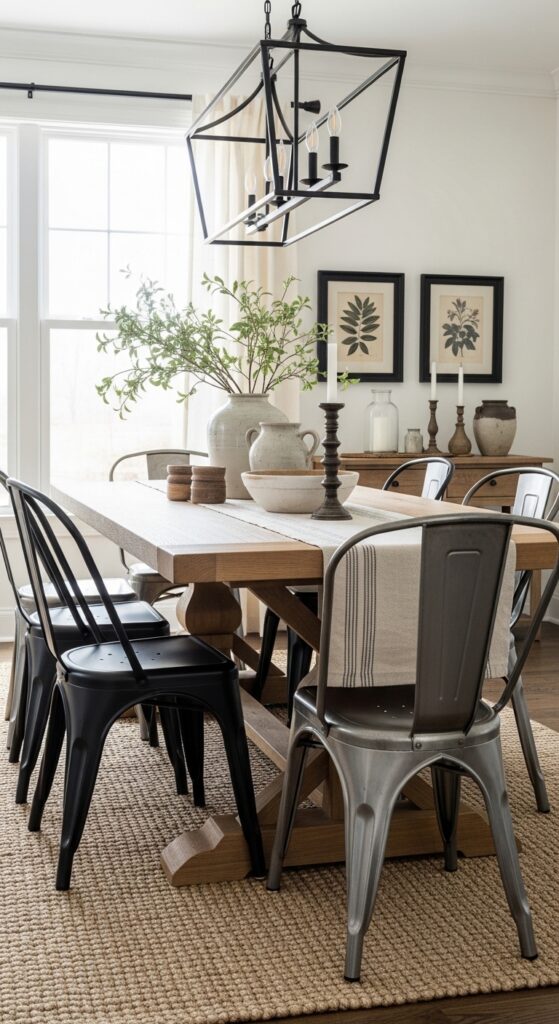
Vibe: The setup feels rustic and casually confident.
Why it works: Metal chairs cut through the softness of linen, wood, and rugs with a firmer silhouette. When paired with a thick oak table, they create material contrast that feels sturdy and lived-in—especially useful if you want farmhouse style with less sweetness.
How to get it: Mix one finish family only, such as matte black with weathered zinc, rather than combining too many metals. Add seat pads in flax or oatmeal if you need more comfort without losing the cleaner profile.
How to Start Your Farmhouse Transformation
Start with the table. A solid wood farmhouse table—preferably in white oak, pine, or a reclaimed finish—is the one move that anchors everything else, because every other decision in the room will either soften it, sharpen it, or balance it.
The most common mistake is over-theming the room with signs, faux-distressed accessories, and too many obviously rustic pieces. That breaks the collected feeling farmhouse dining rooms need. Fix it by choosing one true focal point—the table, a hutch, or the light fixture—and letting the rest stay quieter.
For budget-friendly impact, start with three pieces under $50: an undyed linen runner, a handmade-look ceramic bowl in chalk white or sand, and two dark-wood or black frames for vintage botanical art. Those three additions can shift the room fast without buying new furniture.
A starter refresh can happen in a weekend for about $150 to $500 if you are styling, swapping the light, painting a cabinet, or adding a rug and accessories. A fuller transformation with a new table, seating, wall treatment, and storage usually lands between $1,500 and $6,000 depending on size and sourcing. Styling and paint are quick; furniture hunting takes longer, especially if you want older pieces.
Frequently Asked Questions About Farmhouse Dining Room Ideas
What is the difference between farmhouse and modern farmhouse dining rooms?
Traditional farmhouse dining rooms lean more rustic, often using vintage furniture, deeper colors, plaid, and more obvious country references. Modern farmhouse dining rooms keep the warmth but clean up the silhouettes, neutral palette, and finishes, sometimes borrowing a little from Scandinavian simplicity Architectural Digest. If you want a room that feels current, keep the “farm” details quieter and let the materials do more of the talking Better Homes & Gardens.
What colors work best in a farmhouse dining room?
Warm white, greige, mushroom, muted sage, dusty blue, charcoal, and soft black all work especially well. Better Homes & Gardens points to neutrals, light wood tones, and charcoal accents as reliable farmhouse dining room choices, while Architectural Digest notes that deeper burgundy, green, or blue can work in more traditional farmhouse versions Better Homes & Gardens Architectural Digest. If your room gets limited natural light, warmer whites and greiges will feel more welcoming than cooler gray paint.
Is farmhouse dining room design expensive to achieve?
It does not have to be. The style often works better with secondhand wood tables, vintage hutches, and simple materials like jute, linen, and painted furniture than with overly polished matching sets. You can create a strong farmhouse dining room with one solid table, a textural rug, and a better light fixture before spending money on every accessory at once.
Can I mix farmhouse dining room style with other styles?
Yes, and that is usually what keeps it from looking dated. HGTV and Better Homes & Gardens both highlight combinations like industrial tables with crystal chandeliers, modern silhouettes with rustic wood, and formal chairs with casual benches HGTV Better Homes & Gardens. The key is consistency in palette and texture: warm neutrals, natural wood, and restrained metal finishes.
Which lighting works best in a farmhouse dining room?
Wagon-wheel chandeliers, lantern pendants, schoolhouse pendants, wood-bead chandeliers, and aged-brass or iron fixtures all work well. HGTV specifically emphasizes chandeliers, pendants, and lanterns with silhouettes and finishes that support the farmhouse look, while BHG points to wagon-wheel, cage, and linen-shaded fixtures as especially effective HGTV Better Homes & Gardens. For the most flattering atmosphere, use 2700K bulbs instead of cooler bright white light.
Ready to Create Your Dream Farmhouse Dining Room?
These 20 ideas covered the layers that matter most—paint tone, wood character, storage, seating, lighting, layout, and the quieter accessories that make a room feel lived in. Starting small is not settling; it is often the smartest way to build a farmhouse dining room that feels personal instead of copied. Pull one piece of honest wood into your dining space this week—a table, bench, tray, or chair—and watch how quickly the room gains warmth. Once the balance is right, the whole space begins to feel calmer, more generous, and far more inviting for long meals and lingering conversations. Save the ideas with the reclaimed tables, jute rugs, charcoal hutches, and schoolhouse lights so your farmhouse dining room can come together one memorable layer at a time.
Visual inspiration sources: Cozy farmhouse room by Becky Shea Architectural Digest image, rustic-modern farmhouse dining room Better Homes & Gardens image, Joanna Gaines-inspired farmhouse dining space HGTV image.
:max_bytes(150000):strip_icc()/modern-farmhouse-dining-room-03-4c9b9b5e5a6a4c369e9a5c8e76c7b9e7.jpg)
