
Tight corners, a sofa that seems too big, and walkways that feel squeezed can make any living room feel hard to love. Learning to arrange furniture in a small living room starts with a few simple choices, not a full makeover or a big budget. This guide walks you through 23 smart ways that actually work for renters and homeowners, from measuring and picking a focal point to lighting, rugs, and pieces that do more than one job. You will learn clear pathways, balanced layouts, mirrors, round tables, reading nooks, and small changes that make a tight room feel calm, open, and welcoming. Use the ideas one at a time, test what suits your daily life, and enjoy a living room that finally feels made for you and your family.
Measure First

- Measure the length and width of the room before you move a single piece of furniture.
- Note door swings, window heights, outlet spots, and radiator positions on your sketch.
- Measure each large piece too, including depth and arm height, so nothing blocks a doorway.
- Keep your notes on paper or your phone so you can check sizes while you shop.
Your tape measure is the best friend your living room will ever have. Start with the full room size, then mark the spots where doors open, windows sit, and plugs live on the wall. Those small details decide whether a sofa fits or blocks the path to the kitchen. A quick sketch with real numbers stops you from guessing, and guessing is what leads to heavy lifting and returns. When the numbers are clear, every later choice feels calmer and much easier to make. That small habit saves time, money, and stress when you start shopping for new pieces.
Leave at least 75 centimetres for main walkways and about 45 centimetres between the sofa and the coffee table. Those gaps let people pass without turning sideways or knocking a knee on a table edge. Measure the depth of chairs and sofas as well, because deep seats can eat floor space fast in a tight room. Clear numbers help you pick pieces that fit the room you have, not the room you wish you had. Keep the tape measure handy while you test layouts, because small shifts can change how open the room feels each day.
Pick Focal Point

- Pick one main feature first, such as a fireplace, a large window, or the television.
- Angle the sofa toward that feature so the room has a clear sense of direction.
- Add chairs at a slight turn so talks with guests still feel easy and natural.
- Keep the focal wall simple, with one larger piece of art or a mirror above it.
Every good layout starts with one clear star of the show. Look around your room and notice where your eyes land first, because that spot should guide the rest of the plan. When the sofa, rug, and lamps all point the same way, the room feels calm, settled, and easy to use. Without that focus, chairs drift, tables crowd the middle, and the space can feel busy even when it is tidy. One clear centre gives every piece a job. That focus makes shopping easier, because you can judge each piece by how well it supports the main feature.
A fireplace, a bright window, or a television can all work well as a focal point. Choose the one that fits how you live each day, not the one that looks best in a photo. Then leave breathing room around it, with no cluttered shelves or small frames fighting for attention. Guests will know where to sit and where to look, and you will feel the difference each time you walk in. Leave space for a lamp or a plant beside the focal wall, so the centre feels styled and calm rather than crowded and busy.
Float Sofa Away

- Pull the sofa a few centimetres away from the wall to create depth and shadow.
- Slip a slim console table behind it for books, a lamp, or a small plant.
- Keep the gap tidy so it looks planned, not like the sofa drifted by mistake.
- Use the extra space to run a lamp cord safely out of the walkway.
That tiny gap behind your sofa can change the whole feel of a room. Most people push seating flat against the wall to save space, but that habit can make a room feel boxed in and flat. A small space behind the sofa adds shadow, depth, and a sense of purpose to the layout. It also gives you a spot for a slim console, a floor lamp, or a folded throw. The room starts to feel styled, not just filled. Try the gap for a week and notice how the room feels when you walk in each morning.
Floating the main seat also opens better flow around the sides, which matters when floor space is tight. People can pass behind or beside the sofa without squeezing past a table edge. Keep the back neat with a low console or a narrow shelf, and the gap will read as a choice. In my experience, this one small shift often makes a compact room feel larger at once. A tidy back also hides cords and keeps the walkway clear, which makes daily life smoother for everyone in the home every day.
Choose Right Scale

- Choose slim seats with raised legs so you can see floor beneath them.
- Check seat depth and arm width before you buy, not after delivery day.
- Skip bulky recliners and wide tables that leave no room to walk past.
- Pick one compact armchair instead of a second large sofa when space is tight.
Scale matters more than style when floor space is limited. One oversized sofa can undo an otherwise thoughtful layout, even if the colour and fabric are perfect. Slim arms, raised legs, and a narrower depth leave more visible floor, and visible floor tricks the eye into reading the room as larger. A loveseat plus one compact chair can seat three people well without swallowing the whole wall. Measure first, then shop with those numbers in hand. Leave a little space around each piece so the room can breathe and the layout feels calm.
Look for pieces that match the size of your walls and windows, not just your wish list. A low profile sofa keeps sight lines open, while a tall bulky chair can block light and make the room feel closed. Leave clear gaps between pieces so light can pass around them. When each piece fits its spot, the room feels calm, open, and easy to move through every day. That open floor also makes cleaning easier, because you can reach under seats and around table legs without moving heavy furniture. Small gaps make a big difference.
Create Clear Pathways

- Mark the main route from the door to the next room and keep it fully clear.
- Leave at least 45 centimetres between the sofa and the coffee table for legs.
- Push side tables close to seating, not out into the walkway where feet catch them.
- Choose rounded table corners where the path feels tight or near a doorway.
Clear paths change how a room feels to live in, even if the furniture stays the same. When people can walk from the door to the kitchen without turning sideways or stepping around a table, the room feels larger and calmer. Good flow also protects your rug, your table edges, and your toes from daily bumps. Think of the path as a road through the room, and keep it free of baskets, cords, and shoes. Small changes to the path often make the biggest difference to how a room feels each day.
Check the route at night too, because lamps, chargers, and bags often creep into paths after dark. Walk the route yourself and notice where you slow down or shift your body to pass. Move the piece that causes that pause, even by a few centimetres, and the walk will feel smoother. A room that is easy to cross is a room that is easy to enjoy. A clear route also helps guests feel welcome, because no one has to ask where to walk or squeeze past a chair. Keep it clear and the room stays calm.
Use Multipurpose Pieces

- Pick a storage ottoman that hides blankets, games, and remotes out of sight.
- Use nesting tables that appear only when guests need an extra surface.
- Choose a sofa bed if overnight guests visit often and floor space is short.
- Keep each piece true to daily life, not just a rare occasion or holiday.
Multipurpose furniture earns its floor space by doing two jobs instead of one. A storage ottoman can serve as a coffee table, a footrest, and a blanket box all at once. Nesting tables tuck away when you need floor space, then pull out when friends drop by for tea. A sofa bed welcomes a guest without needing a spare room. Each smart pick means fewer pieces in the room, and fewer pieces mean more air. That kind of smart choice keeps the room useful, tidy, and easy to enjoy every single day.
Choose pieces that match how you live each day, not how you live once a year. If you read every night, a storage ottoman for books makes sense. If you work from the sofa, a small drop leaf table may help more than a large desk. In my experience, the best dual purpose pieces are the ones you use weekly, because they stay useful and never feel like clutter. Test each piece for a week and keep only the ones that earn their place in your daily routine. That is the secret to a room that works.
Layer Lighting Well

- Start with one main ceiling light, then add a floor lamp and a table lamp.
- Use warm bulbs near 2700K so the room feels soft, not cold and clinical.
- Place lamps near seats and reading spots where light is needed in the evening.
- Add a mirror opposite a lamp or window to bounce light further across the room.
Layered light gives a small room depth after dark, and depth is what makes a tight space feel generous. Three small sources at different heights beat one bright ceiling light every time. A warm lamp in the corner softens the walls, a table lamp makes reading easy, and the ceiling light can stay low or off. The room shifts from flat and stark to warm and welcoming with just a few small changes. The right mix of lamps can make a plain room feel warm, soft, and ready for a quiet evening.
Do not rely on a single harsh overhead bulb, because it flattens the room and casts sharp shadows. Keep windows clear of tall furniture so daylight can do its work during the day. Leave no dark corner untouched, since unlit corners make walls feel closer than they are. When light reaches every part of the room, the whole space feels bigger, calmer, and far more inviting. Good light also helps you read, talk, and relax without strain, which makes the room feel more welcoming. Warm light makes evenings feel soft and calm.
Anchor With Rug
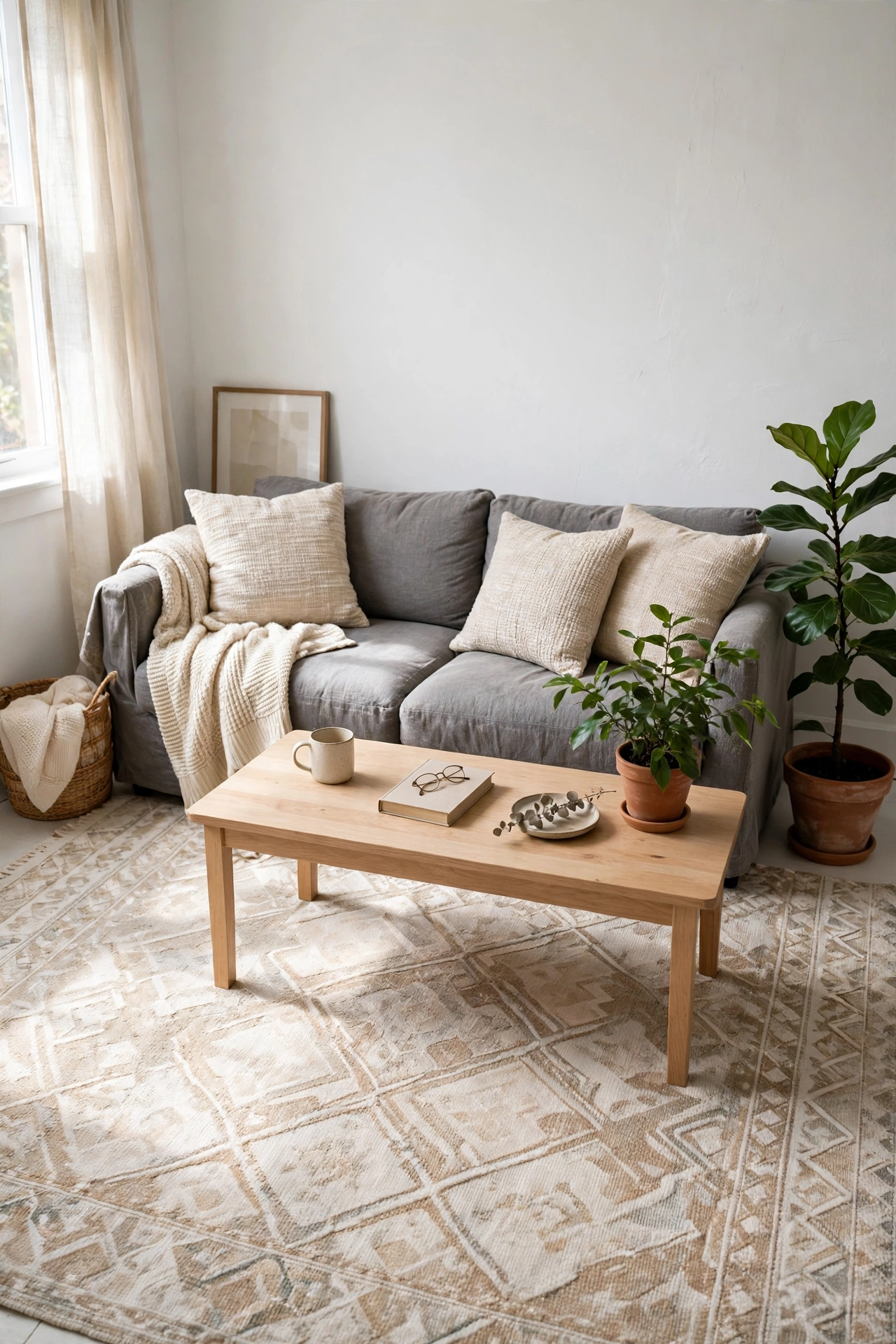
- Choose a rug large enough for the front legs of the sofa and chairs.
- Pick a low pile rug in a pale tone so the room stays light and easy to clean.
- Leave a border of floor showing around the rug to frame the seating group.
- Keep the pattern simple so it grounds the room without stealing attention.
A rug marks where the living area begins and ends, and that boundary matters in a small open room. When the front legs of the sofa and chairs sit on the rug, the seating group feels joined and purposeful. A rug that is too small can make the room look scattered, with chairs floating on bare floor. A larger rug pulls the pieces together and makes the whole group feel like one calm zone. A well placed rug can make even a plain sofa and table look like a thoughtful, finished group.
Choose a pale, low pile pattern that can handle daily life and still look soft underfoot. The rug should feel like a base for the room, not a loud feature that fights the sofa. Leave a neat border of floor around the edges so the rug has room to breathe. Once the rug is right, the rest of the layout often falls into place around it. Take time to test the size with tape on the floor before you buy, so the rug fits the seating group. The right size makes the whole room feel settled.
Balance Visual Weight

- Spread heavy pieces around the room instead of stacking them on one wall.
- Pair a dark bookshelf with a light chair, a mirror, or pale curtains opposite.
- Keep tall items near the edges and lighter pieces toward the centre of the room.
- Step back to the doorway to check the balance, because that view shows it fast.
Heavy pieces pull the eye, so spread that weight around instead of loading one side. A dark bookshelf on the left feels calmer when a light chair, a mirror, or pale curtains sit on the right. Colour, height, and texture all add weight, not just size, so a tall plant can balance a solid cabinet. When weight is shared across the room, the layout feels restful even when the room is full of furniture. That balance also makes photos of the room look better, because no single wall steals all the attention.
An unbalanced room can feel tense, even if you cannot name why at first. Keep the centre light and airy, with lower pieces near the middle and taller pieces near the walls. A round mirror can soften a heavy corner, while a woven basket adds texture without bulk. Take a photo from the doorway, because the camera often reveals a lopsided wall that your eyes have missed. Small shifts in height and colour can fix a lopsided room without buying any new furniture at all. A balanced room feels restful from the very first glance.
Use Vertical Space

- Use tall shelves to free floor space for seating, walking, and a larger rug.
- Hang curtains close to the ceiling and let them fall to the floor for height.
- Leave some empty shelf space so tall storage does not feel top heavy.
- Add one tall plant or floor lamp in a corner to fill height without bulk.
Vertical storage works best when it stays tidy and light, because crowded high shelves can feel heavy over the seating. Tall shelves draw the eye upward and free the floor for the pieces you use each day. Curtains hung near the ceiling make walls look taller, and a tall plant adds life without taking much floor. The goal is height that helps the room, not storage that looms over your sofa. Use the shelves for books and plants you love, so the height feels personal and not just like storage.
Group books by size, mix in a plant or a framed print, and leave gaps for air. Keep the top shelf simple so dust and clutter do not build up out of reach. A ladder shelf can hold throws and books in a narrow gap, while floating shelves suit plants and small art. When the walls work hard, the floor stays clear and the room feels open. Keep the look light and simple, and the tall shelves will add style without making the room feel crowded. Tall storage should help the room, never crowd it.
Define Conversation Zones
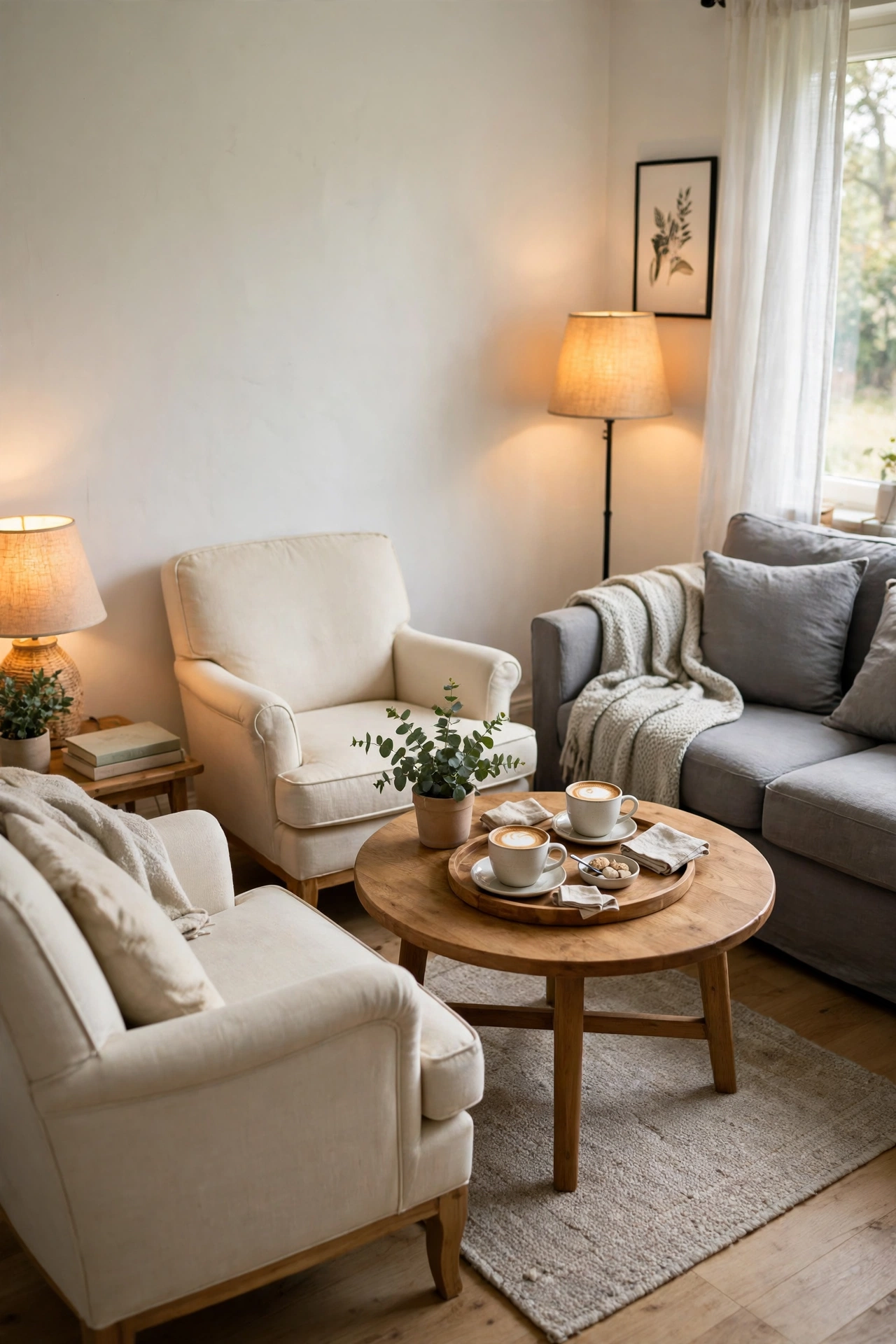
- Angle chairs slightly toward the sofa to form a clear conversation circle.
- Leave about 60 centimetres between seats so talks feel easy and relaxed.
- Use a rug to mark the seating zone and a smaller mat for a reading corner.
- Keep the table within easy reach so cups and books stay close at hand.
A clear zone helps a small room serve more than one purpose without feeling messy. Turn chairs slightly toward the sofa instead of lining them flat against the walls, and guests will feel included at once. That small angle creates a circle where people can talk without raising their voices or leaning forward. The seating group sits on a rug, while a reading chair can use a different light and a smaller mat nearby. That simple habit makes hosting easier, because guests can see each other and join the talk without effort.
Defined zones tell everyone how each part of the room works, even in one open space. A work corner can sit near a window with a small table, while the main seats stay near the television or fireplace. Keep each zone simple, with just the pieces it needs, and the room will feel organised rather than crowded. Small rooms work best when every corner has a clear and simple job. Clear zones also help the room stay tidy, because each item has a home and a clear purpose in the space.
Edit And Refresh

- Remove one item from each surface, then live with the clearer room for a week.
- Keep two cushions on the sofa and let the rest find a home in storage.
- Give every surface one useful or beautiful item, not a pile of small things.
- Repeat the edit each season so the layout keeps up with daily habits.
Editing is the cheapest step in setting up a compact living room, and often the most powerful one. Extra cushions, old magazines, and a broken lamp can slowly take over a good layout until the room feels busy and tired. Take one item from each surface and notice how much lighter the room feels at once. Fresh flowers, a folded throw, and clear tables can make the same furniture look intentional, calm, and ready for guests. That pause often shows you what matters, and the room stays calmer when only loved items return.
Live with the clearer room for a week before you add anything back, because that pause shows what you truly miss. If an item stays in storage without a thought, it may not belong in the room at all. A regular refresh keeps the layout working as seasons, needs, and daily habits change. In my experience, a small edit each month keeps a tight room feeling fresh without any new spending. A fresh room can lift your mood each morning and make the whole home feel more cared for. Small edits add up fast.
Angle Chairs Inward

- Angle each chair a little toward the sofa so seats form one friendly group.
- Leave a clear gap behind each chair for a lamp, a plant, or a side table.
- Keep the front legs of chairs on the rug so the group stays joined together.
- Test one chair first, then move the others until the group feels close and calm.
Have you ever sat in a chair that faces the wall and felt left out of the talk? A slight inward angle changes that feeling at once, because it turns separate seats into one friendly group. Pull each chair a little toward the sofa, leaving a soft curve that invites eyes to meet and voices to stay low. The room still keeps its floor space, yet the seats now work as a team instead of standing alone. Try a small turn first, then adjust until the group feels close without feeling crowded or stiff.
Angled chairs also make a small room look wider, because the eye follows the curve instead of stopping at a flat wall. Leave a clear gap behind each chair for lamps, plants, or a small side table that holds a cup. Keep the front legs on the rug so the group stays joined, even when the chairs sit at a slight turn. Walk the room after each move and check that no chair blocks the door, the window, or the main path. Small turns often bring the biggest change, so test one chair today and enjoy the warmer talks tomorrow.
Add Slim Side Tables
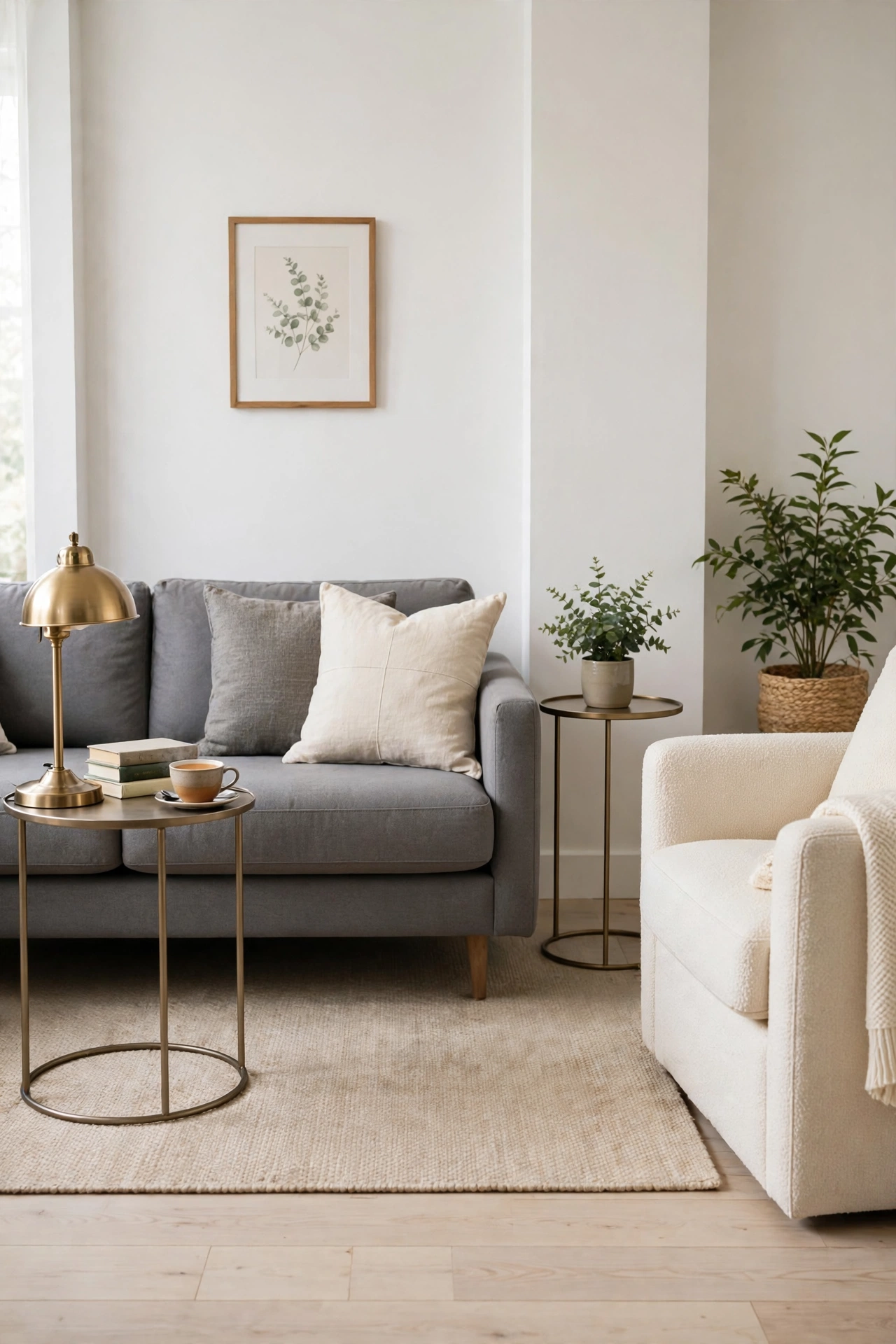
- Place a slim table beside each seat so drinks and books stay within easy reach.
- Choose round tops and thin legs to save floor space and soften sharp corners.
- Pick tables with a lower shelf for books, remotes, or a small basket.
- Keep the table height close to the arm height so reaching feels natural.
Do your cups and books end up on the floor because no table sits near your seat? Slim side tables fix that small daily annoyance without eating the floor space you need for walking. Place one beside each seat, close enough to reach but far enough to keep the path clear and open. A round top with thin legs looks light, holds a lamp or a cup, and leaves room for feet below. Choose a height near the chair arm so you can set things down without leaning or stretching far.
Side tables also give each seat its own small zone, which helps a shared room feel calm and organised. Use the lower shelf for books, a basket, or a charger, and keep the top clear for one lamp or plant. Avoid wide square tables that jut into walkways, because they catch hips and make the room feel tight. Move the tables a few centimetres at a time until the seats feel served and the floor still feels open. With the right slim tables, every seat gains a helper and the whole room works a little better daily.
Try Diagonal Sofa Placement

- Turn the sofa at a soft angle instead of flat against the longest wall.
- Use the corner behind it for a floor lamp, a plant, or a small shelf.
- Keep the front of the sofa open so the rug and table stay easy to reach.
- Test the angle for a few days before you move heavy tables to match it.
What if the best spot for your sofa is not flat against the wall at all? A soft diagonal angle can break a boxy room and make the seating feel fresh, open, and full of life. The corner behind the sofa gains a use, holding a lamp, a tall plant, or a narrow shelf with books. Your eyes travel across the room instead of stopping at one long flat wall, which helps the space feel larger. Keep the angle gentle, near forty five degrees at most, so the layout still feels calm and easy to walk around.
Diagonal seating works best in rooms with a corner that feels empty or hard to use each day. Place the rug to match the new angle, with the front legs of the sofa and chairs resting on its edge. Add a round coffee table, because its soft shape suits the angle and leaves no sharp corner in the path. Check the view from the door, because a diagonal sofa should invite you in, not block the first step inside. If the angle feels awkward after a week, slide the sofa back a little until the room feels right again.
Create Reading Nook

- Pick a quiet corner near a window for a chair, a lamp, and a small table.
- Add a soft throw and one cushion so the seat feels warm and inviting.
- Keep books within reach on the table or a low shelf beside the chair.
- Leave the nook slightly apart from the main seats so it feels like a retreat.
Would a small corner of your own make the living room feel more personal and restful each day? A reading nook needs only a chair, a lamp, and a table, yet it can change how the whole room works. Place the chair near a window so daylight helps you read, and add a warm lamp for quiet evenings at home. A soft throw and a small stack of books turn a plain chair into a place you look forward to each morning. Keep the nook simple, with the pieces you use, so it stays calm instead of turning into storage.
A nook also gives a small room a second job without adding a wall or crowding the main seating group. Angle the chair slightly away from the television so reading feels separate from screen time and noise. Use a small rug or mat to mark the corner, and keep a plant nearby for fresh colour and life. Test the seat at different times of day, because light and noise change and the best spot may shift. When the nook feels right, you gain a quiet retreat and the main sofa stays free for family talks.
Add Mirrors For Depth

- Hang one large mirror opposite a window to bounce light across the room.
- Place a mirror above the sofa or a console to lift a plain wall.
- Choose a simple frame in wood, brass, or black that suits your other pieces.
- Keep the mirror clean and free of clutter in its reflection for a calm look.
Have you noticed how a mirror can make a narrow room feel twice as wide in a single glance? A large mirror opposite a window catches daylight and sends it deep into corners that once felt dark. The reflection also adds a second view of plants, art, and light, which tricks the eye into seeing more space. Hang the mirror at eye level above the sofa or a console, so it lifts the wall without feeling high or distant. One clear mirror beats several small ones, because a single calm reflection keeps the room feeling open and tidy.
Mirrors work best when the view they reflect is worth seeing, so check what sits opposite before you hang one. A tidy window, a plant, or a piece of art makes a lovely reflection, while a messy shelf can double the clutter. Keep the frame simple and close to the colours already in the room, so the mirror blends in rather than shouting. Wipe the glass each week, because dust and marks dull the light and make the reflection feel tired and grey. A placed mirror adds light and depth for little cost, and it never takes floor space.
Use Round Coffee Table

- Swap a square table for a round one to free corners and ease the walkway.
- Pick a size that leaves about 45 centimetres between the table and the sofa.
- Choose wood, glass, or rattan to match the light and mood of your room.
- Keep the top clear with one tray, a book, or a small vase of flowers.
Do sharp table corners catch your knees every time you cross a small living room at night? A round coffee table removes that daily bump, because its soft edge lets people pass without turning sideways. The curve also suits a tight seating group, making the centre feel open instead of boxed in by straight lines. Choose a size that leaves room for legs and feet, with the front of the sofa close enough to reach a cup. A round shape invites people to gather, because no one sits at a corner and every seat feels equal and near.
Round tables also pair well with angled chairs and diagonal sofas, because the soft shape follows the flow. A glass top can look lighter still, while wood adds warmth and rattan brings a relaxed natural texture to the room. Keep the surface simple with one tray, a book, or a vase, so the table stays useful and never looks crowded. Measure the gap to the sofa before you buy, because a table that sits too far away feels hard to use daily. With the right round table, the centre of the room feels softer, safer, and easier to move around.
Place Sofa Facing Windows
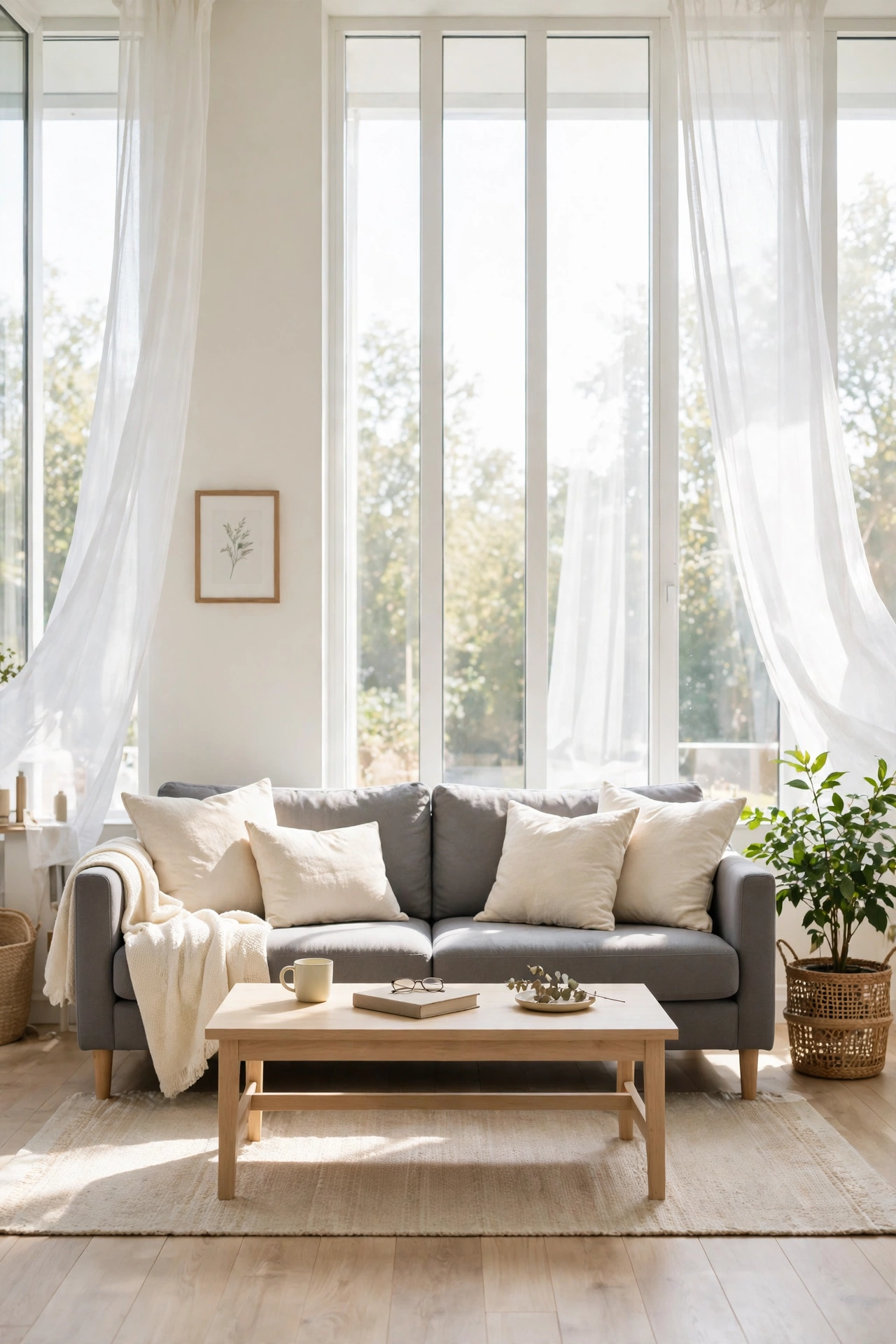
- Turn the sofa toward the largest window so daylight falls on the seating group.
- Keep the window clear of tall furniture so light and views stay open.
- Add sheer curtains for soft light and privacy without blocking the sun.
- Place a low table in front so the view stays clear from every seat.
Have you ever sat with your back to the window and felt the room grow darker behind you each afternoon? Turning the sofa toward the glass lets daylight fall on faces, books, and cups, and the room feels brighter at once. The view outside becomes part of the decor, whether it shows trees, sky, or a quiet street below your home. Keep tall shelves and plants away from the glass, so light reaches the sofa and the window stays the star. Sheer curtains soften the sun without hiding it, giving privacy while the room feels open and full of light.
Window facing seating also helps the room feel larger, because the eye travels past the sofa to the world outside. Place a low coffee table in front, so no tall piece blocks the view or casts a shadow across the seats. Add a small side table near the window for a plant, a book, or a cup of tea in the morning sun. Check the glare at midday, because strong sun can make screens hard to see and seats too warm to enjoy. If glare proves strong, add a light blind that filters the sun while keeping the feeling intact.
Keep Centre Open
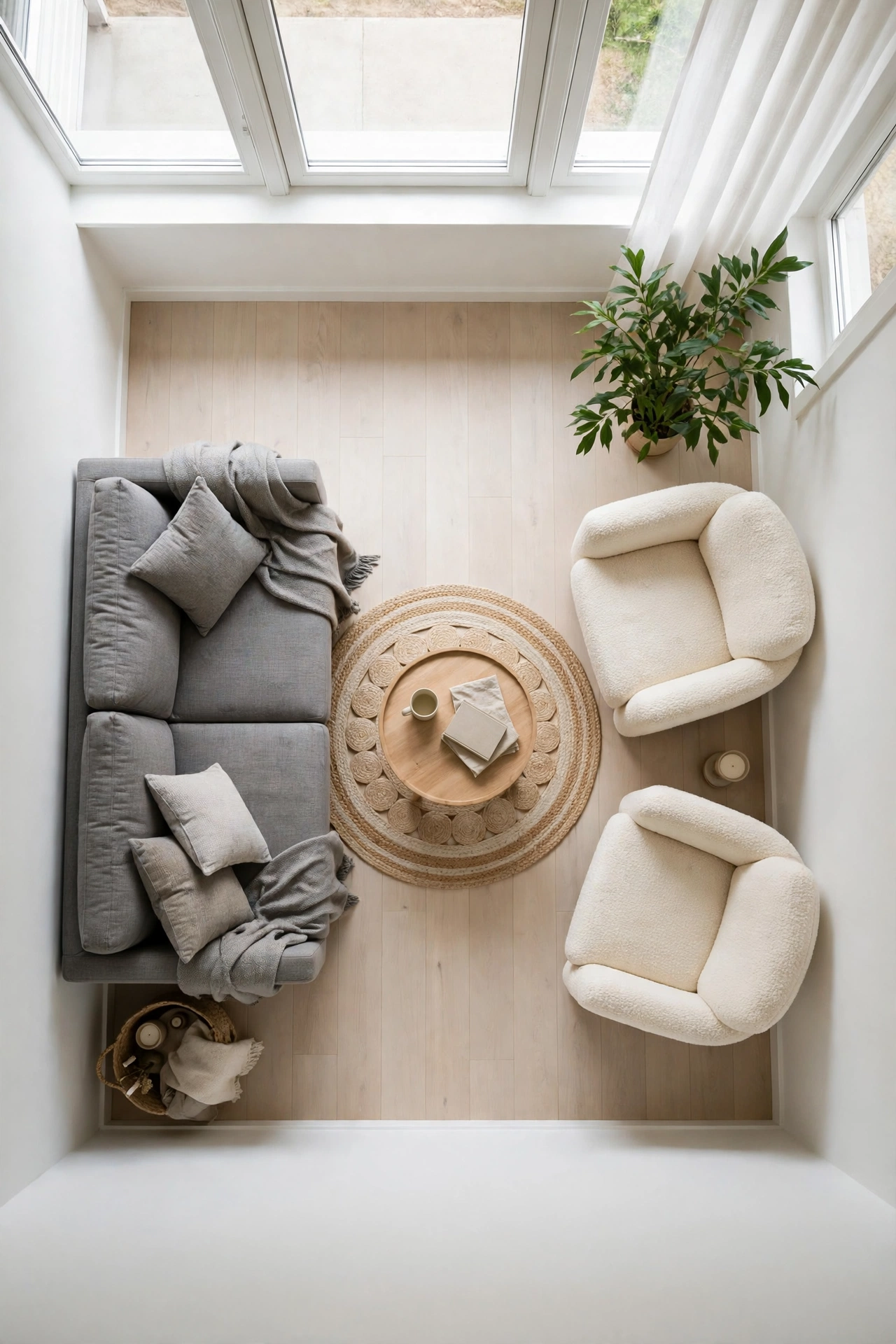
- Leave the middle of the rug clear so the room can breathe and feet can move.
- Push tables and baskets to the edges instead of filling the centre with clutter.
- Choose a small rug that marks the group without covering the whole floor.
- Walk the centre each evening and return stray items to their proper home.
Does the middle of your living room slowly fill with baskets, toys, and tables until no floor is left to see? An open centre gives a small room its breathing space, and that empty floor makes the whole layout feel larger. Push side tables, baskets, and extra chairs to the edges, keeping only the rug and a low table in the middle. Your feet gain room to move, children gain space to play, and the room looks tidy even on a busy day. Test the centre for a week, and notice how the room feels when the floor is clear.
Open centres also make cleaning easier, because you can sweep and vacuum without moving a pile of furniture each time. A small rug can still mark the seating group, as long as its edges leave a clear border of floor around it. Keep the coffee table low and slim, so it serves the sofa without turning the middle into a crowded island. Return stray shoes, bags, and books to their homes each night, and the centre will stay open without much effort. An empty middle is not wasted space, because it gives other pieces room to shine and breathe daily.
Add Storage Bench Seat

- Place a bench under a window or along a short wall for extra seats and storage.
- Choose a lift top or drawers that hide throws, toys, games, and spare cushions.
- Add a slim cushion on top so the bench feels soft enough to sit on daily.
- Keep the bench low so it never blocks light, views, or the flow of the room.
Do you need one more seat and one more hiding place, but have no floor left for another large chair? A storage bench answers both needs at once, giving you a seat by day and a tidy box for clutter by night. Place it under a window or along a short wall, where it adds seating without blocking the main path or view. A lift top hides throws, games, and toys in seconds, so the room can shift from play time to guest time fast. Add a cushion, and the bench becomes a reading seat or a perch for tea.
Benches also suit entry corners and window walls that feel empty, because they fill the gap without adding bulk. Keep the height low and the colour close to your sofa, so the bench reads as part of the group, not a stray box. Store only the items you use each week, because a bench packed with forgotten things soon feels heavy and useless. Clear it each season, check what still earns its place, and enjoy a seat that also keeps the room tidy. With one bench, you gain seating, storage, and a calmer room, all without buying a larger sofa.
Zone With Bookcase Divider

- Use a low open bookcase to split the living area from a work or dining corner.
- Keep the divider below eye level so light still passes across the whole room.
- Style the shelves with books, plants, and one or two calm objects per shelf.
- Leave a clear gap at each end so people can walk around the divider with ease.
Would a gentle divider help your small room serve two jobs without building a wall or losing light? A low open bookcase marks the edge of the seating area while still letting light and talk pass across the room. Place it at the end of the sofa, with books and plants on the shelves, and the work corner gains its own calm zone. Keep the height below eye level, because a tall divider can close the room and block the light you need each day. Leave a gap at end, so the divider guides flow instead of forcing narrow opening.
Dividers also add storage without a new cabinet, because the shelves hold books, baskets, and plants you already own. Style each shelf with care, leaving empty space between groups so the divider feels light rather than packed and heavy. Turn the bookcase so its back faces the quieter zone, and keep the pretty side toward the main seats and guests. Check the light after you place it, because a divider should soften the room, never darken the corner behind it. With a low bookcase, one open room gains two clear jobs and feels bright, open, and easy to live in.
Rotate Layout Seasonally

- Move the sofa or chairs a little each season to match light, heat, and daily use.
- Shift the rug and lamps with the seats so each new layout still feels joined.
- Keep a short note of layouts you liked, with a quick photo for next time.
- Change only one or two pieces at a time so the room never feels unsettled.
Has your living room felt stale lately, even though the furniture and colours have not changed at all? A small seasonal move can wake the room up, because new light and a fresh angle make old pieces feel new again. In winter, pull seats near the warmest wall, and in summer, turn them toward open windows and cool evening air. Move only one or two pieces at a time, then live with the change for a week before you shift anything else. Keep a photo of layouts you love, so you can return to a setup without starting from scratch.
Seasonal moves also reveal what you no longer need, because a piece that blocks the new layout may belong elsewhere. Shift the rug and lamps with the seats, so the group stays joined and the light still falls where you read. Ask family what they think, because a layout that suits one person may block a path or a view for another. Keep the changes small and kind to your back, moving light pieces first and asking for help with heavy sofas. A layout each season keeps the room feeling loved, and you may find a spot you never tried.
Small rooms reward patience, clear measurements, and thoughtful choices more than big budgets or perfect furniture. Start with one idea, move a chair, clear a pathway, or add a rug, and notice how the room responds. Learning to arrange furniture in a small living room is a skill you can build slowly, and each change teaches you more about how you live. Save this guide on Pinterest, try your favourite idea this weekend, and share it with a friend who needs a calmer, cozier living room too. I have seen this work in real homes, and the best rooms feel easy to live in.