
Do you walk into your living room and feel tired before you even sit down? Finding small living room storage ideas that actually work can feel tricky when every shelf, drawer, and corner already seems full. If your living room doubles as a playroom, office, or guest space, clutter builds up fast, and a tidy room can feel out of reach. The fix is rarely a bigger home. It is smarter storage that hides what you do not need to see, keeps daily items close, and leaves room to relax. This guide shares 25 practical ideas for beginner homeowners and renters, from storage ottomans and floating shelves to labeled bins, nesting tables, and ceiling racks. Each idea is simple, budget friendly, and easy to try in a weekend. Use the ones that fit your room, your budget, and your daily habits, and enjoy a calmer space that still feels like home.
Storage Ottoman Seating

- Choose a firm top that works as a footrest and a spare seat for guests.
- Keep blankets, remotes, chargers, and board games inside the hidden compartment.
- Pick a fabric that matches your sofa so the ottoman looks planned, not added.
- Select a light weight that one person can move with one hand.
Look around your living room right now and count how many small items have no real home. A storage ottoman solves that problem in a quiet and useful way, because it holds the everyday clutter that usually lands on the sofa, the floor, or the coffee table. You can lift the lid, drop in a folded throw, tuck away game pieces, and close it in seconds. The room instantly looks calmer, the seating stays clear, and you still have a soft spot to rest tired feet after a long day at work.
In my experience, the best ottoman is the one you actually use every single day without thinking about it. Choose a size that fits your room without blocking the walkway, and store only the items you reach for each week so the inside stays useful. A heavy lid can feel like a chore, while a light lid makes quick tidy ups easy before guests arrive. Keep the top clear when you are not using it, and this one piece will do the work of a basket, a table, and an extra chair.
Floating Wall Shelves

- Mount shelves above eye level to keep daily clutter off tables and floors.
- Group books, plants, and one small basket on each shelf for balance.
- Leave breathing space between objects so shelves feel styled, not crowded.
- Use light wood or white shelves with matching brackets for an airy look.
Your walls are free storage space waiting to be used, and floating shelves make the most of that height. Start with one row above the sofa or beside the television, and place only the items you love and use often in that spot. Books, a small plant, and a basket for remote controls can live there without taking up any floor space at all. The result is a room that feels taller, lighter, and easier to clean, because the surfaces below stay clear for daily life and quiet evenings. That lift alone makes tidying feel easier every day.
Measure twice and use proper wall anchors, because a shelf that sags will soon become a worry instead of a help. Keep heavy books low on the shelf run, and leave the top row for lighter decor that you do not need to grab in a hurry. A single well placed shelf can clear a whole side table, which makes a compact room feel noticeably larger. Dust the shelves once a week, rotate one or two items each season, and the wall will stay fresh without constant work. A calm wall makes the whole room easier to enjoy.
Hidden Coffee Table
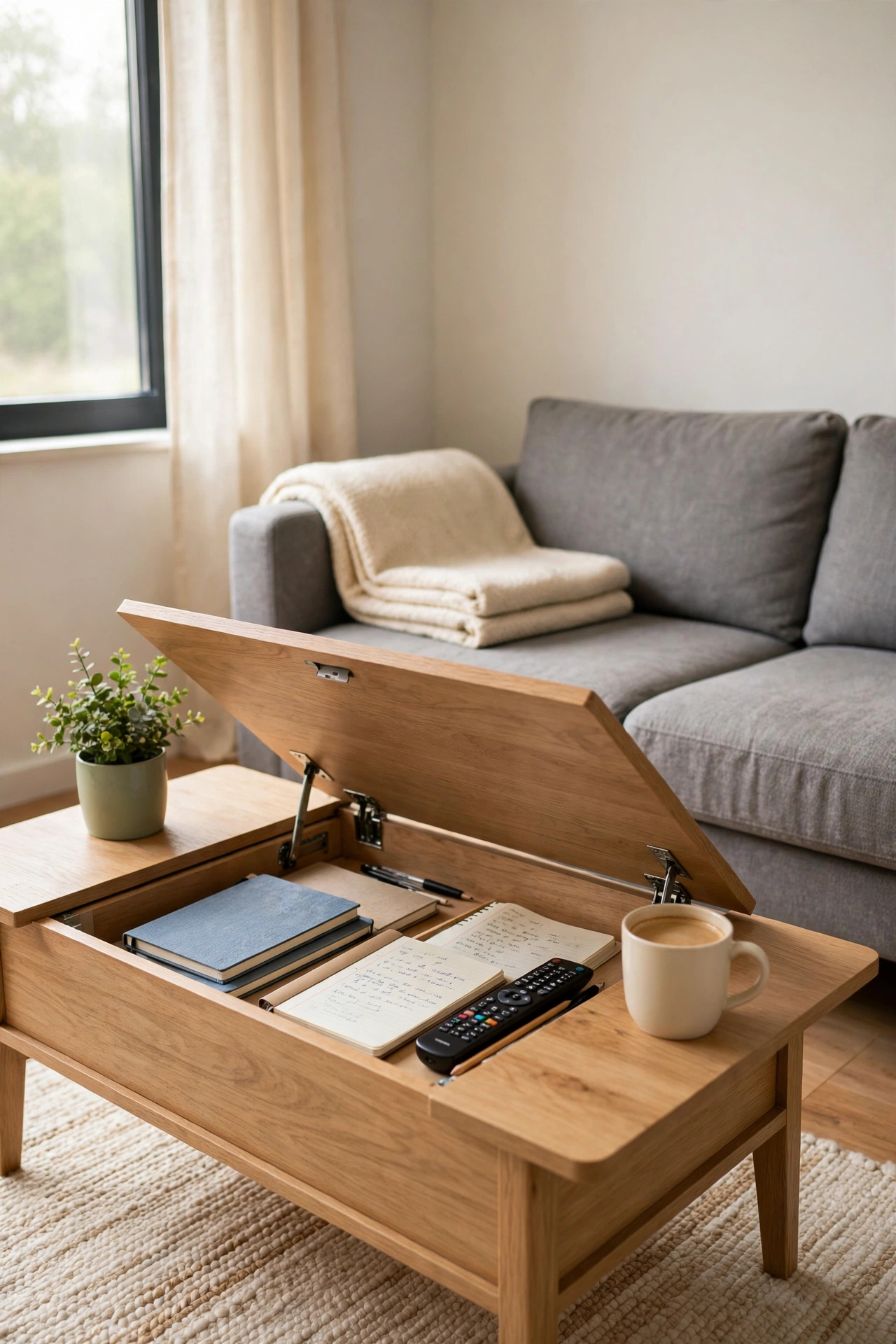
- Choose a lift top with a shallow compartment for remotes and notebooks.
- Look for smooth hinges and a lid that stays open while you reach inside.
- Keep heavier items on lower shelves so the top lifts easily every day.
- Pick a finish that hides fingerprints and suits your sofa and rug.
The middle of the room is where clutter gathers fastest, and a hidden coffee table keeps that centre clear. You can work from the sofa with a laptop on the raised top, then lower it and tuck the notebook away when dinner is ready. Chargers, magazines, and small toys slip inside at night, so the room greets you with a clean surface each morning. It feels like a normal table from across the room, yet it quietly holds the items that would otherwise pile up in view. That simple habit keeps the centre clear for relaxing.
Check the size before you buy, because a table that is too wide will crowd the walkway and make the sofa hard to reach. Sit on your sofa and test the height with your knees, your elbows, and a mug in hand, since comfort matters as much as storage. A lift top should move with one smooth motion and close without a loud thud. Keep the inside for flat items only, wipe the top after meals, and this table will earn its place every single day. That care keeps the table smooth and pleasant to use.
Behind Sofa Storage

- Measure the gap first, then choose storage no deeper than the space allows.
- Use a slim console or a low row of baskets for throws and games.
- Keep weekly items within reach and seasonal items further back.
- Leave a small space for air flow so dust does not build up behind furniture.
That narrow gap behind your sofa is often the most wasted space in the whole room. A slim console table or a row of low baskets turns that dead zone into useful storage for throws, charging cables, and board games, while the sofa stays exactly where it is. The room looks finished from every angle, because the back of the sofa no longer shows a dark strip of floor and lost items. You gain storage without adding a large piece of furniture or losing any seating at all. That small change makes the room feel finished and calm.
I have seen this work well in rental homes where drilling and built in units are not allowed. A freestanding console needs no fixings, and baskets can move with you when your layout changes. Choose a height that sits just below the sofa back, so the storage stays hidden from the front and easy to reach from behind. Label one basket for cables, one for games, and one for throws. Clear the row once a month, and the gap will stay useful instead of turning into a hidden pile. That routine keeps the gap useful instead of forgotten.
Basket Storage System

- Measure the shelf or bench, then choose baskets that fit it exactly.
- Label each basket by use, such as toys, crafts, or winter accessories.
- Place daily items at eye level and seasonal items up high or low down.
- Empty each basket once a month and return only what still earns its place.
Baskets hide visual noise while keeping things easy to grab, which is why they work so well in a busy living room. Natural fibres add warmth and texture, lidded baskets hide mess best, and open baskets suit the items you use every day. When every basket has a clear job, putting things away takes seconds instead of feeling like a chore. The shelves look calm from across the room, yet a toy, a scarf, or a charger is still within reach when you need it. That habit keeps baskets useful instead of turning into clutter.
Pick one colour family and one material so the row looks planned rather than random. Mix sizes only when the shelf heights demand it, and keep the tallest baskets at the ends for a neat shape. Put a small label on the front, even if the basket is open, because a clear label helps everyone in the home put things back in the right place. Start with three baskets, test the system for two weeks, and add more only when you know what is missing. That simple rule keeps the shelves calm and easy to use.
Slim Console Tables

- Compare depth before style, because a deep table will crowd the walkway.
- Use the top for a lamp, a vase, and one small stack of books.
- Store flat items and cables in a drawer or on a lower shelf.
- Choose a slim frame with open legs to keep the floor visible below.
A slim console table adds storage to a wall that is too narrow for a cabinet, and it does so without making the room feel heavy. It can hold keys, mail, a lamp, and a charging station in a footprint only a few inches deep, which leaves the main floor free for seating and movement. The open space below keeps the room feeling light, while the top gives you a clear drop zone for the items that usually end up on the sofa arm or the coffee table. That restraint keeps the table useful instead of cluttered.
Think about how you enter the room and what you carry in your hands each day. If mail and keys are the problem, choose a console with a drawer and a small tray. If books and throws are the problem, choose one with a lower shelf and a basket below. Keep the top simple, with three items at most, so the table reads as a calm surface rather than another cluttered shelf. Wipe it down when you tidy the room, and it will stay useful. That limit keeps the table calm and ready for daily use.
Vertical Bookcase Corners

- Place the bookcase in a corner that gets daylight but stays out of the walkway.
- Anchor tall furniture to the wall for safety, especially with children or pets.
- Keep heavy books low and lighter decor up high for balance.
- Leave some empty space on each shelf so the unit feels calm, not packed.
Tall storage draws the eye upward, which makes ceilings feel higher and floors feel freer. A narrow bookcase fits corners that a wide unit never could, and it holds a surprising amount when the shelves are spaced well. Books, baskets, and a plant can share the same corner without blocking light or seating, and the vertical shape uses wall height that would otherwise stay empty. The room gains storage, yet the floor plan stays open and easy to walk through. A tall unit also gives books and baskets a clear home, which stops piles forming on chairs and tables.
Style the top shelf lightly, keep the middle at eye level for books you read often, and let the bottom hold heavier items that anchor the unit. Do not block a window or a radiator, and do not fill every shelf, because crowded shelves make a room feel smaller. Mix books with one basket per shelf for small items, and keep the colour palette simple. Anchor the unit, check it once a year, and the corner will stay safe and tidy. That simple spacing keeps the corner calm, safe, and easy to tidy each week.
Multi Use Side Tables

- Match the table height to your sofa arm for easy reach.
- Choose a drawer for remotes and chargers, plus a lower shelf for books.
- Pick a round top if walkways are tight, because soft edges are easier to pass.
- Add a small tray on top to keep drinks steady and stop rings.
Side tables with storage punch above their size in a compact room, and they sit right where you need them most. A drawer hides remotes and chargers, a lower shelf holds books and a folded throw, and a tray top keeps drinks steady beside the sofa. You do not need to stand up to tidy the area, because everything has a spot within arm’s reach. The table looks small, yet it clears the coffee table and the sofa cushions of the items that usually collect there. That small habit keeps the table useful for years.
I have tried both square and round side tables in tight rooms, and round tops win when space is short. They are easier to pass in the dark, they do not bruise shins, and they soften a room full of straight lines. Choose a sturdy base that will not tip when you lean on it, and test the drawer with one hand while you sit down. Keep only daily items inside, move the rest to a larger store, and the table will stay helpful instead of turning into a second junk drawer.
Under Window Benches

- Build or buy a low bench with lift up lids for easy access.
- Add a cushion in a washable fabric for daily sitting and reading.
- Store board games, craft supplies, or out of season shoes underneath.
- Leave the top clear except for a plant or a small stack of books.
A bench under the window turns a sunny spot into seating, toy storage, and a reading nook in one tidy piece. You can sit with a book in natural light, lift the lid to grab a throw on a chilly evening, and close it again without any mess showing. The bench uses the wall below the window, which is often empty, and it adds a seat without adding a chair that blocks the room. Guests love it, children use it, and the floor stays clear. That balance keeps the bench calm and ready to use.
I have noticed a window bench quickly becomes the favourite seat in the house, especially on bright mornings with a warm drink in hand. Choose a bench that fits the window width without covering the frame, and keep the cushion washable if pets or children use the room. Store only flat or soft items inside, so the lid closes flat every time. Fold throws neatly, keep games in one box, and the bench will feel calm and ready to use. That habit keeps the bench inviting instead of turning it into another storage pile.
Wall Mounted Cabinets

- Mount cabinets at eye level so everyday items stay easy to reach.
- Choose light colours and slim handles to keep the wall from feeling heavy.
- Store board games, chargers, and craft supplies behind closed doors.
- Leave one open shelf for books and a plant to soften the look.
Wall cabinets free up floor space while hiding the clutter that usually lands on tables. A pair of small cabinets often works better than one large unit, because it spreads weight, looks more balanced, and gives you two separate zones for different items. The room keeps its open floor, the walls do the storage work, and the closed doors mean you do not need to style every shelf. You can close the door on a busy evening and the room still looks calm. That planning keeps the cabinets useful instead of turning them into hidden clutter.
Measure the wall and check for studs before mounting, and keep the depth shallow so the room still feels open. A deep cabinet will jut out and crowd the seating, while a slim one holds games and cables without taking over the wall. Ask a second person to hold the unit while you mark the fixings, and test the doors before you load the shelves. Keep daily items at arm height, seasonal items higher, and the cabinet will stay easy to use. That routine keeps the wall calm and the room easy to tidy.
Decorative Storage Boxes
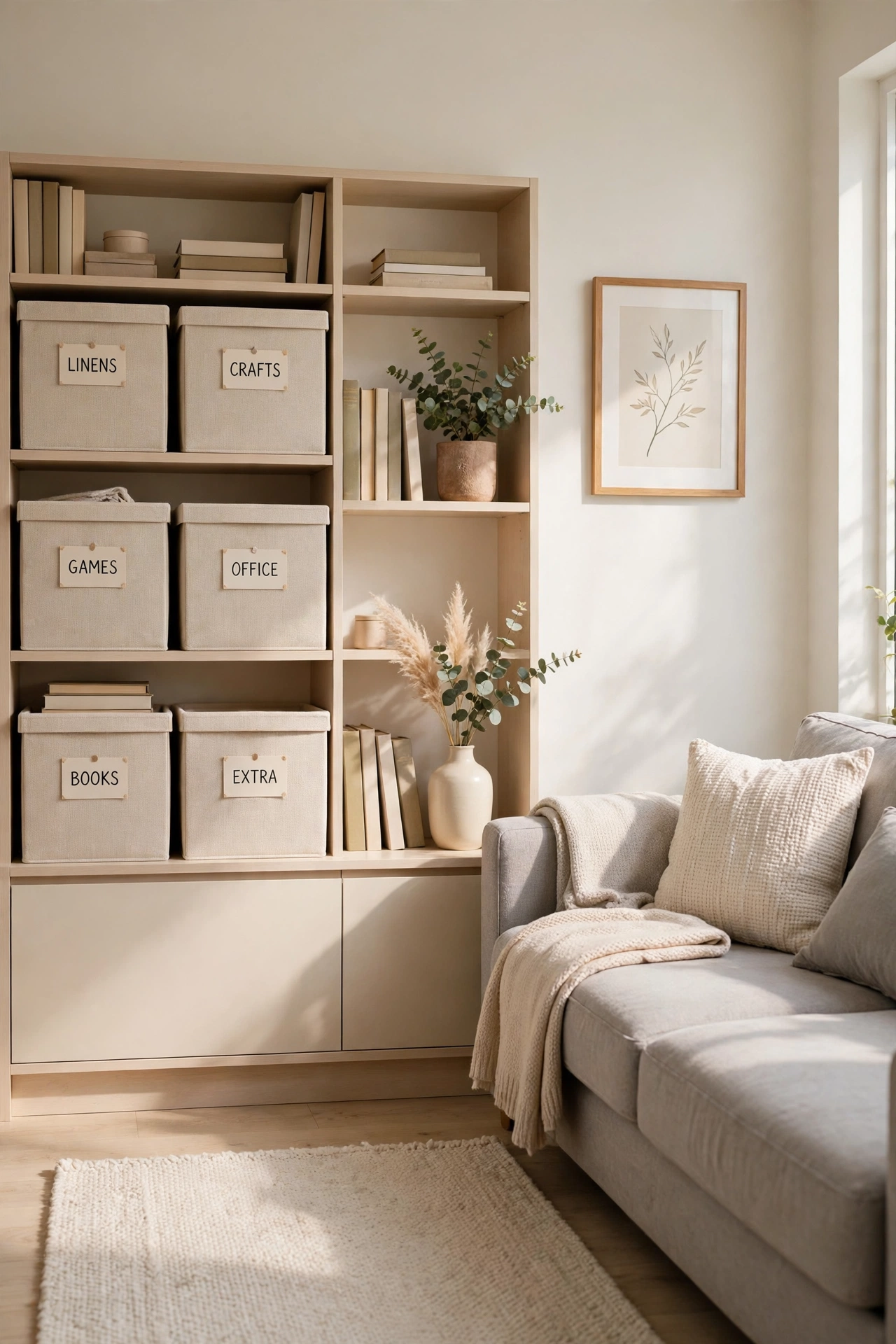
- Choose boxes in one colour family so a shelf looks planned, not random.
- Add a small label on the front, and put daily items in the easiest box.
- Use fabric boxes for soft items like scarves, toys, and throws.
- Use sturdy lidded boxes to protect papers, photos, and small keepsakes.
Decorative boxes turn open shelves into hidden storage without adding new furniture. They let you keep a tidy look on the outside while the inside holds the small items that are hard to style, such as cables, spare batteries, and craft bits. A row of matching boxes reads as one calm block of colour, which helps a busy shelf feel quiet and intentional. You can pull one box down, find what you need, and slide it back without disturbing the rest of the shelf. That care keeps the boxes neat and easy to reach.
Mix sizes with care, keep the tallest boxes at the ends, and leave space at the front so you can pull a box out without moving the others. Fabric boxes suit soft items, while sturdy lidded boxes protect papers and photos from dust and light. Write the label in simple words, one category per box, and check the contents every few months. When a box no longer earns its place, empty it and let the shelf breathe again. That small step keeps the boxes useful and stops the shelf from slowly filling with forgotten items.
Over Door Organizers

- Choose a slim organizer that does not stop the door closing fully.
- Keep heavy items low so the door stays balanced and easy to open.
- Sort pockets by person or by use, such as shoes, scarves, or cables.
- Clear one pocket each week to stop small items building up again.
The back of a door is storage space that costs nothing and needs no drilling. A slim over door organizer holds shoes, scarves, chargers, and small toys in clear pockets, so the entry stays clear and the living room feels calm the moment you walk in. It works best on a door you open often, because the items are right where you need them, yet they stay out of sight when the door is closed. Renters can use it without changing the home at all. That habit keeps the entry calm from the first step inside.
Check the hook depth before you buy, because a hook that is too thick will stop the door from closing and may mark the frame. Use clear pockets for items you need to find fast, and fabric pockets for items you want to hide. Keep the top pockets for light items and the bottom pockets for shoes, so the weight stays low and the door swings smoothly. Hang it, load it in one go, and the entry will feel calmer the same day. That care keeps the door swinging smoothly every day.
Stacked Crate Shelving

- Sand and paint three wooden crates in one soft colour for a calm look.
- Stack two crates upright and one on its side to create open cubbies.
- Secure the crates together with small screws and anchor the unit to the wall.
- Add baskets or folded throws inside each cubby for hidden storage.
Stacked crates bring a relaxed, handmade feel to a compact room without a big budget. They suit books, plants, toys, and folded blankets, and you can rearrange them when your needs change. A low stack keeps the room feeling open, while the open cubbies still hide soft items inside baskets. The unit looks warm and personal, yet it holds as much as a small shelf unit and costs far less to build or buy. A low stack also keeps the room feeling open, while the baskets inside still hide toys, books, and folded throws neatly.
Keep the unit low and stable, leave the top clear for a lamp or a plant, and choose crates with smooth edges that will not snag clothes or throws. Paint the inside as well as the outside, because a clean finish makes the crates look like furniture rather than packing boxes. Test the stack for wobble before you load it, and anchor it if children climb nearby. Rearrange one cubby at a time, and the unit will grow with your room. That care keeps the crates looking like furniture, not packing boxes.
TV Stand Drawers

- Measure your TV width first, then choose a stand wider than the screen.
- Leave space for air around media boxes so they do not overheat.
- Keep one drawer for remotes and chargers, and one for games and discs.
- Choose a low stand so the screen sits at a comfortable viewing height.
A TV stand with drawers hides the cables, discs, and controllers that crowd a living room. The top stays clear for a plant or a photo, while the drawers hold the media clutter that usually spills onto the floor. A wider stand also balances the screen visually, so the television looks like part of the room rather than a large black box on a small table. The result is a calmer wall, a safer floor, and a viewing area that is easy to tidy in seconds. That habit keeps the viewing wall calm and easy to enjoy.
Check the drawer runners before you buy, because smooth runners make daily use pleasant and stiff runners soon get ignored. Drill a small cable hole at the back if the stand does not have one, and use cable ties to keep wires tidy inside the drawer. Keep only the media you use each week in the stand, and move old discs and spare cables to a box elsewhere. Dust the top weekly, and the unit will stay neat. That habit keeps the stand tidy and stops spare cables from piling up behind the television again.
Rolling Storage Carts

- Choose a slim cart with locking wheels so it stays put when needed.
- Keep the top shelf for daily items like books and a water bottle.
- Roll the cart beside the sofa for movie nights, then tuck it away after.
- Check the wheel locks and keep the weight balanced across all shelves.
Rolling carts suit renters because they move without drilling holes or buying new furniture. A three tier cart holds snacks, crafts, chargers, and books in a small footprint, and it slides into a gap when guests arrive. You can wheel it to the sofa for a film, to a chair for reading, or to the table for a craft session, then roll it back out of sight. The cart adds storage that follows you, rather than storage that fixes you to one spot. That freedom makes the cart useful in every corner of the room.
Pick a sturdy frame with a low centre of gravity, and test the wheels on your floor before you load the shelves. A cart that tips easily will soon become a hazard, especially in a home with small children or pets. Do not overload the top shelf, keep heavy items low, and lock the wheels when the cart is parked. Wipe the shelves after snacks, check the locks monthly, and the cart will stay safe and useful. That balance keeps the cart steady, safe, and ready to roll wherever you need extra storage next.
Corner Cabinet Solutions

- Measure both walls, and leave room for doors to open fully.
- Match the cabinet colour to your walls for a built in look.
- Store heavier items low so the unit stays stable and safe.
- Use the top for a plant or a lamp, and keep the middle for daily items.
Corner cabinets use space that sits empty, even in the tiniest living rooms. A triangular or L shaped unit fits snugly, hides a surprising amount, and keeps the centre of the room free for seating and movement. Books, games, and seasonal items can live in that corner without blocking light or a walkway, and the closed doors keep the contents out of sight. The room gains a useful cupboard, yet the floor plan feels no smaller than before. That habit keeps the corner tidy and stops the cabinet from becoming a forgotten cupboard.
I have seen this work best when the cabinet colour matches the wall, because the unit then reads as part of the room rather than a bulky add on. Measure both walls twice, because corners are rarely perfectly square, and leave a small gap for the doors to swing. Anchor the unit to at least one wall, keep daily items at waist height, and store seasonal items on the top shelf. Open the doors fully once a month to check for dust. That check keeps the corner safe and easy to use.
Labeled Storage Bins

- Use clear labels, simple words, and one category per bin.
- Keep daily bins low and easy to reach, and seasonal bins higher.
- Check labels every few months as your needs change over time.
- Start with three bins, then add more only when the system works.
Labeled bins end the mystery of what lives where, so everyone in the home can find things and put them back without asking. A small label maker or neat handwritten tags work just as well, and the system stays useful only if putting things away feels quick and obvious. When a bin says cables, toys, or winter hats, there is no guessing, no digging, and no pile left on the floor. The shelves look calm, the room stays tidy, and daily routines run more smoothly for the whole household. That clarity saves time every single day.
Keep the labels large enough to read from across the room, and use the same style on every bin so the shelf looks calm. Place the bins you use most at waist height, where a child or a guest can reach them without help. Empty one bin each week, return only what belongs there, and update the label when the contents change. A simple system that everyone understands will last far longer than a perfect system that only one person uses. That simple habit keeps the system working for the whole household.
Under Sofa Drawers

- Measure the space under your sofa before buying shallow drawers.
- Choose drawers on smooth glides so they open without dragging the floor.
- Keep throws, magazines, and spare chargers in the lowest drawer.
- Pick a finish that matches the sofa legs for a built in look.
Look under your sofa and you will find the most ignored storage spot in the room. Low drawers slide into that empty space and hold throws, magazines, board games, and spare chargers without adding a single piece of furniture to the floor plan. The room keeps its open feel, the sofa stays exactly where it is, and the clutter that used to pile on the coffee table finally has a home. You can pull a drawer open with one hand, grab a blanket on a cold evening, and slide it shut again in seconds.
Start with one pair of shallow drawers and test them for a week before adding more. Measure the height under the sofa first, because a drawer that is too tall will jam, while one that is too shallow will waste the space you hoped to gain. Choose smooth glides that run quietly, keep heavy items at the back so the drawer stays balanced, and label the front if two people share the room. Dust the runners once a month, keep only flat or soft items inside, and the drawers will stay smooth and silent for years.
Nesting Side Tables

- Choose a set of three tables that tuck fully under each other.
- Pull out one table for drinks and one for books when guests arrive.
- Pick round tops with soft edges for tight walkways and small rooms.
- Keep the smallest table free for a lamp or a phone charger.
Need an extra surface in a hurry, and nesting tables are the answer you can pull out in seconds. A set of three tables stacks into the footprint of one, yet it gives you three surfaces when friends drop by for coffee or a film. Slide one beside the sofa for drinks, one beside the armchair for a book, and keep the third tucked away until you need it. The room stays open, and no bulky side table blocks the walkway. When the evening ends, the tables nest again, the floor clears, and the room looks calm again.
Buy the set as one matched group, because mixed tables rarely nest neatly together. Check the height of the largest table against your sofa arm, and make sure the smallest table slides fully under the next size up. Keep the tops clear except for one or two daily items, so each table is ready to pull out at a moment notice. Wipe the tops after drinks, push the set together each night, and the tables will stay useful. That small nightly habit keeps the corner tidy and the surfaces ready for guests.
Hanging Wall Pockets

- Hang pockets near the sofa so remotes and notebooks stay within reach.
- Choose clear or labelled pockets so everyone finds items fast.
- Keep heavy items in the lowest pockets to protect the hooks.
- Clear one pocket each week to stop small items building up again.
Your walls can hold more than pictures, and hanging pockets prove it every single day. A row of fabric pockets beside the sofa holds remotes, pens, notebooks, and charging cables without taking up any floor or shelf space at all. The items you grab most often stay visible and easy to reach, while the coffee table and the sofa cushions stay clear. Renters love this idea because it needs only one or two small hooks, and the pockets come down in minutes when you move. That simple change keeps daily clutter off every surface in the room.
Sort the pockets by person or by use, and the system will stay tidy without much effort. Give each person one pocket, or label pockets for remotes, crafts, and mail, so nothing lands in the wrong place. Keep the top pockets for light items like pens and notes, and the bottom pockets for heavier items like books and chargers. Check the hooks once a month to make sure they hold firm, wash fabric pockets when they look dusty, and replace a torn pocket before it sags. A small pocket wall can clear a whole side table in one afternoon.
Fold Down Wall Desk
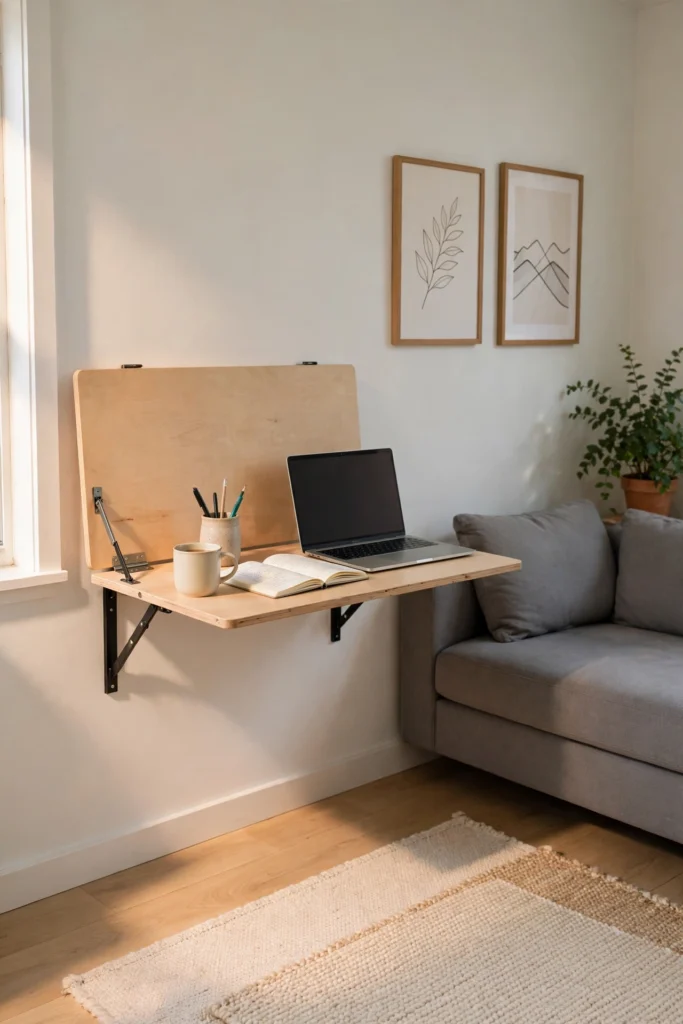
- Mount the desk at elbow height so you can work from a chair.
- Choose a model with shelves inside for notebooks and chargers.
- Fold it up after work to hide the mess and free the wall.
- Pick a light wood finish that matches your shelves and floor.
Work from home in a small room, and a fold down desk can save your evenings. The desk folds flat against the wall when you finish, hiding notebooks, chargers, and pens behind a clean panel that looks like simple wall decor. You gain a real workspace without giving up floor space to a large desk, and the room returns to a relaxing living room in seconds. It suits renters too, because most models need only a few screws, and the wall stays neat when the desk is closed. That tidy switch makes small space living feel much easier every day.
Test the height with your chair before you drill a single hole in the wall. Sit down, rest your elbows at a natural angle, and mark the spot where your hands fall, because a desk that is too high will ache your shoulders by noon. Check the wall for studs, use strong fixings, and test the fold down motion with a laptop on top. Keep only daily work items inside, move old papers to a box each Friday, and wipe the surface before you fold it away. That weekly habit keeps the desk light, safe, and ready for Monday morning.
Storage Bench Seating

- Place the bench along a free wall or under a large window.
- Choose a lift up lid with slow close hinges for safety.
- Store board games, spare cushions, and out of season throws inside.
- Add a washable cushion so the bench works as extra seating.
One long bench can seat three guests and hide a shelf of clutter at the same time. It sits against a free wall or under a window, holds board games, spare cushions, and winter throws inside, and offers a soft seat for reading or chatting. The room gains storage without a tall cabinet, and the low shape keeps sight lines open. Guests can sit down without hunting for a chair, and children can lift the lid to find a game. That mix of seating and storage makes the bench a hero in a compact room.
Measure your wall twice, because a bench that is too long will block a door or a radiator. Leave a small gap at each end so the lid opens fully and air can move behind the bench. Choose slow close hinges if children use the room, and keep heavy items low inside so the lid stays easy to lift. Fold throws neatly, keep games in one box, and clear the bench top each night so it stays inviting. A bench that stays tidy becomes the seat everyone reaches for first on a lazy Sunday morning.
Magnetic Strip Holders

- Mount strips near the door for keys and near a chair for craft tools.
- Choose a strong magnet that holds scissors and small metal items safely.
- Keep strips out of reach of small children to avoid pinched fingers.
- Wipe the strip monthly so dust does not weaken the magnetic hold.
Small metal items vanish into sofa cushions, and a magnetic strip can stop that habit for good. A slim strip on the wall holds keys, scissors, craft tools, and small metal clips, so you never dig through a drawer again. The strip takes no shelf space, needs only two screws, and turns a blank wall into a tidy drop zone. Place one near the door for keys and one near your reading chair for craft bits, and the clutter that once spread across tables will gather in one neat line. That visible order makes routines faster and calmer.
Pick a strip with a strong magnet, because a weak one will drop items onto the floor. Test it with your heaviest scissors before you trust it with daily use, and mount it at a height that adults can reach but small children cannot. Keep the strip for metal items only, and give paper, fabric, and plastic their own homes nearby. Wipe the surface once a month, check the screws twice a year, and replace a strip that has lost its pull. A firm magnetic strip keeps small tools visible, safe, and always within reach.
Pull Out Cabinet Shelves
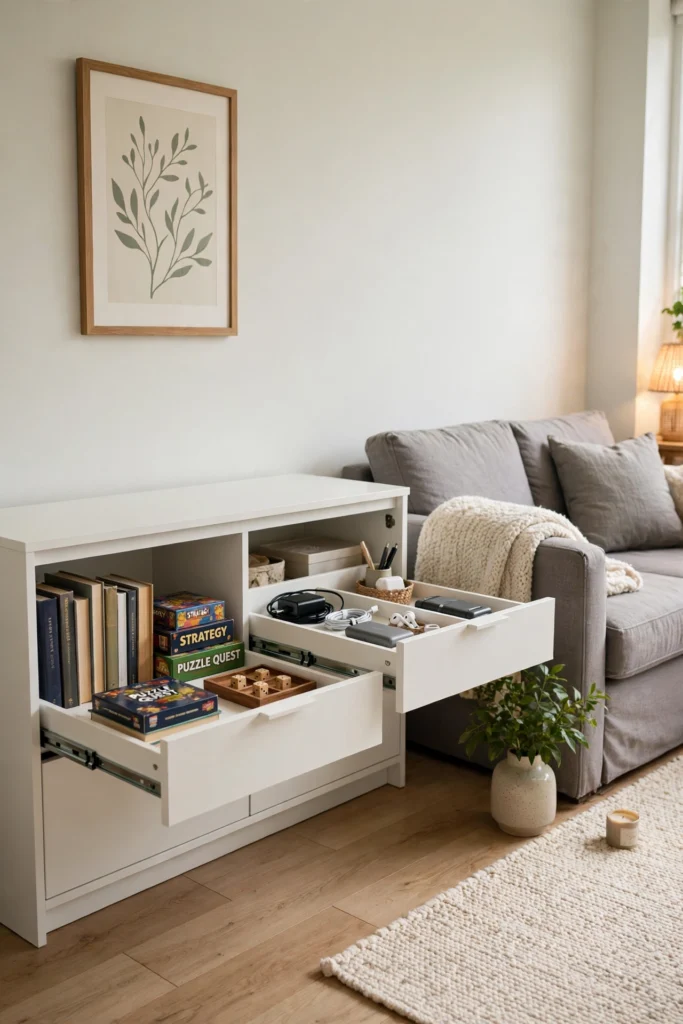
- Fit pull out shelves inside an existing cabinet to reach the back easily.
- Choose full extension runners so no item hides in a dark corner.
- Sort shelves by use, such as games on one and cables on another.
- Keep heavy items low so the shelves glide smoothly every time.
Deep cabinets hide half their contents, and pull out shelves bring every item into the light. A shelf that glides toward you lets you reach games, cables, and craft supplies at the very back without kneeling or emptying the whole cabinet. The room keeps its calm look, because the cabinet doors still close over a tidy interior, yet nothing gets lost in a dark corner again. You can fit these shelves into a cabinet you already own, which saves money and avoids buying new furniture. That simple upgrade turns a frustrating cupboard into the easiest storage in the room.
Measure the inside of your cabinet before you order a single runner or shelf. Note the width, the depth, and the height between shelves, because a shelf that is too wide will jam and one that is too short will waste space. Choose full extension runners that hold the weight of books and games, and test the glide with a full load before you call the job done. Label the front edge of each shelf, keep daily items at waist height, and wipe the runners twice a year. That care keeps every shelf gliding smoothly for years.
Ceiling Hung Storage Racks

- Hang racks high on a strong ceiling joist, never on plasterboard alone.
- Use light baskets for seasonal items you reach for only a few times a year.
- Keep the rack above a sofa or a corner so it never hangs over a walkway.
- Check the fixings twice a year to keep the rack safe and secure.
Look up, because the ceiling above your sofa holds storage space most rooms never use. A hung rack with light baskets stores seasonal throws, spare cushions, and holiday decor high above the floor, where they stay out of the way yet easy to reach with a step stool. The floor stays free for seating and play, the walls stay clear for art, and the room gains an extra shelf without a cabinet. It suits tall rooms best, and it turns wasted air space into a tidy store. That lift keeps the room feeling open while clutter stays above eye level.
Safety comes first, so fix the rack into a solid ceiling joist with strong hardware. Never hang a loaded rack from plasterboard alone, and ask a second person to help you lift and level the frame. Keep the load light, store only soft or seasonal items up high, and never hang the rack over a walkway where it could bump a tall guest. Check the fixings every six months, lower the baskets with care, and the rack will stay safe and steady. A well hung rack adds storage without taking a single inch of floor.
Your small living room does not need more stuff to feel organized. It needs storage that fits your habits, hides the mess, and leaves space for the life that happens there. Pick one of these small living room storage ideas, try it this weekend, and notice how much calmer the room feels. Save this guide on Pinterest so you can find it again, share it with a friend who is tackling a tiny space, and tell us which idea you tried first. Small changes add up, and your tidy, welcoming living room is closer than you think.