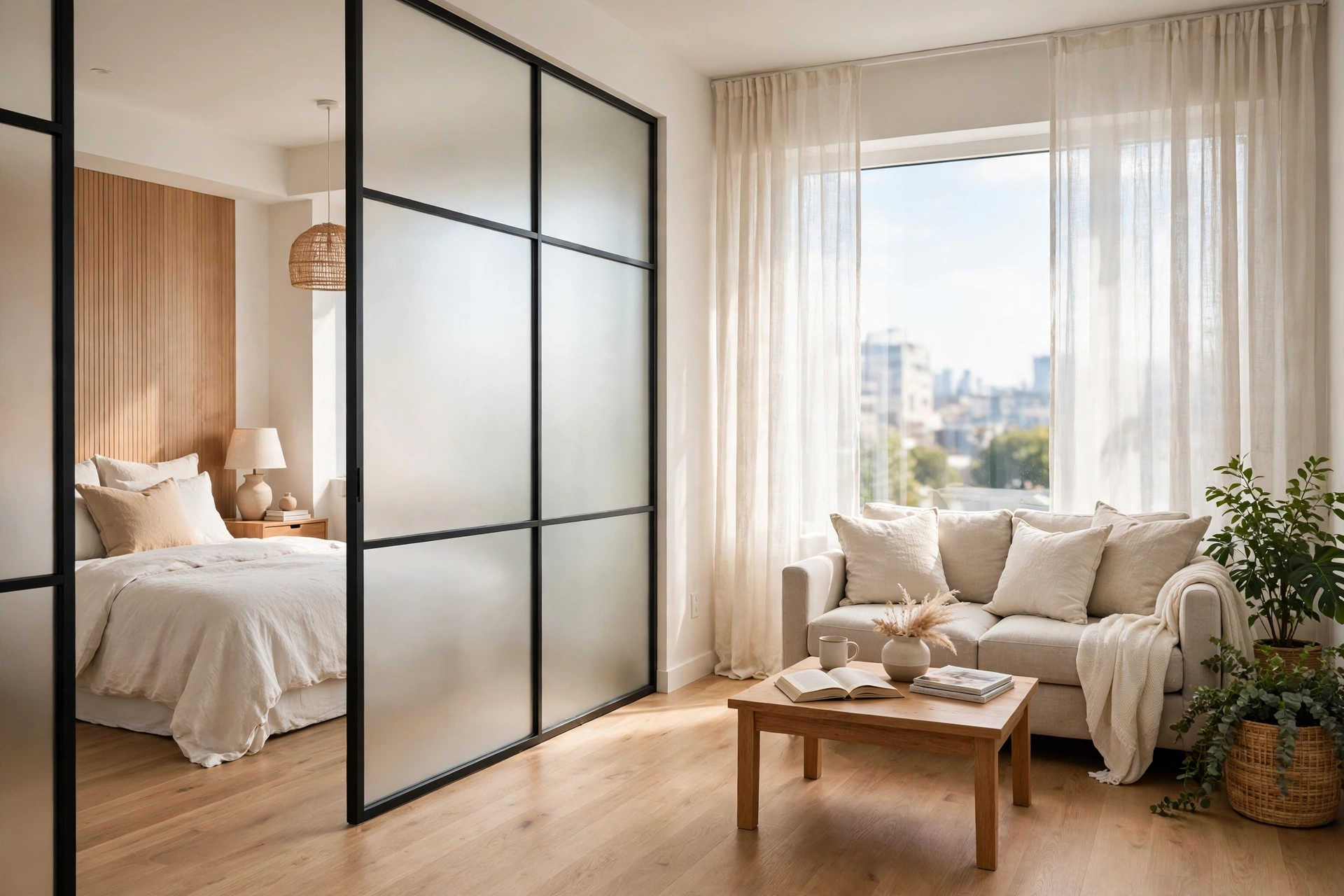
Finding privacy in a small studio can feel tricky, and these 24 studio apartment glass divider ideas show how to do it without losing light. If your bed, desk and sofa all share one room, a glass divider can give each area its own feel while keeping the space bright and open. In this guide, you will find simple styles that fit small homes, rentals and tight budgets, from frosted panels and sliding doors to ribbed glass, barn doors and stained glass. I have tried a few of these in small spaces, and I have noticed that the right divider changes how a room feels in a day. Each idea is easy to picture and easy to adapt to your layout. Read through, pick one that fits your room, and save the ones you love for later.
Frosted Glass Panels

Frosted panels give you privacy without closing off light. They soften the view into your sleeping area while still letting daylight pass through. Place one panel between the bed and the sofa, and the room keeps its open feel. In my experience, this simple screen works well in rentals. Choose a slim metal frame in black, brass, or white to match your furniture. Add a plant or floor lamp beside it so the divider feels like part of the decor. Keep the floor clear in front so you can walk around it easily each day.
Sliding Glass Doors

- Slide the doors shut at night for a quiet sleeping area, then open them in the morning to bring the light back.
- Pick clear glass if you want the room to feel larger, or frosted glass if you need more privacy.
- Use a top track so the floor stays smooth, with no rail to step over.
- Keep the glass clean with a quick wipe once a week so the divider stays bright and clear.
Sliding doors work well because they give you a real wall when you need one and open space when you do not. They suit small studios where a fixed wall would make the room feel boxed in. Measure the opening twice before you order, and leave space for the doors to slide fully open.
Glass Block Wall

Quick Tip: Use glass blocks only for part of a wall, not the full height, so light can pass over the top. A half wall keeps the room bright and gives you a shelf on top for plants or books.
A glass block wall adds texture and privacy while still letting light through the room. It works best between a kitchen and a sleeping area, where you want separation without a solid wall. In my experience, the blocks also help with sound, so late night cooking feels less close to the bed.
Black Frame Partition

Before: Before, the bed sat in full view of the desk, and work never felt separate from rest. The room looked like one open box, and it was hard to switch off at night.
After: After, the black frame partition marks a clear line between sleep and work. The glass still lets light through, so the room feels open, yet the bed is out of sight during the day.
This partition works because the dark frame gives the glass a strong shape, like a window inside the room. It suits studios where you need a clear boundary without building a wall. Keep the frame color close to your other metal finishes so the divider looks planned, not added on.
Glass Pocket Door

- Measure the wall pocket and the opening, then order a door that fits with a small gap on each side.
- Fit the top track first, hang the door, and test the slide several times before you add the trim.
- Add a soft pull handle at a height you can reach easily from both sides.
- Clean the track once a month so dust does not slow the door down.
A pocket door is a smart choice when floor space is tight, because it disappears into the wall instead of swinging open. It gives you privacy for the bedroom and still keeps the studio bright. I have seen this work well in many small homes where every inch counts.
Half Glass Wall

| Feature | Half Glass Wall | Full Glass Wall |
|---|---|---|
| Privacy | Partial, top stays open | More, full height cover |
| Light | More light over the top | Light passes through glass |
| Cost | Lower, less glass used | Higher, more material needed |
| Storage | Base can hold shelves | No base for storage |
A half wall is a good middle step if a full divider feels too much for your studio. It marks the sleeping area clearly while keeping air and light moving above it. Use the low base for books or a lamp, and the divider becomes useful storage as well as a screen.
Curtain Glass Combo
Do:
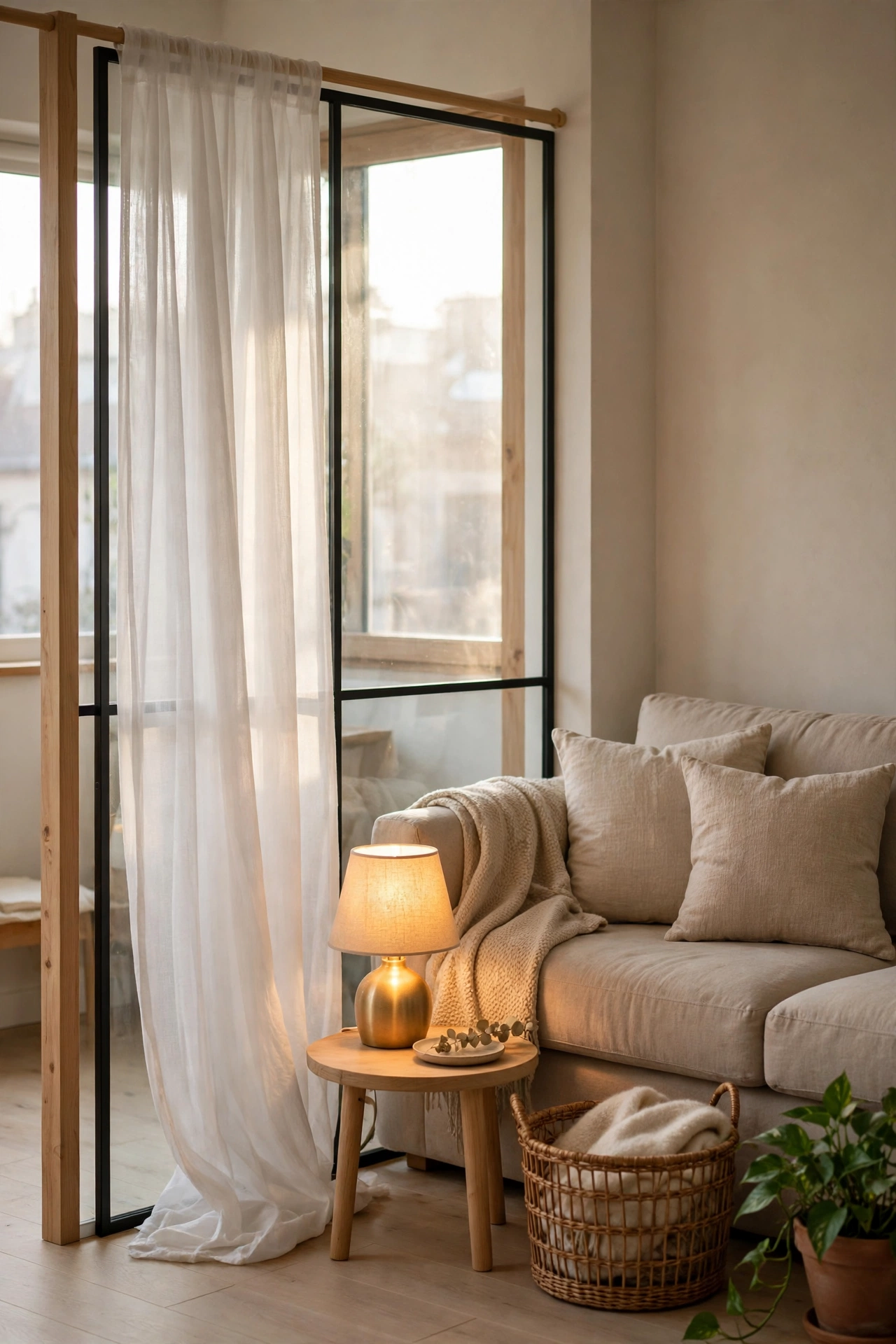
- Hang the curtain on a ceiling track so it moves smoothly beside the glass.
- Choose a light fabric so the curtain softens the glass without blocking light.
- Keep the curtain tied back during the day to open the room up.
Don’t:
- Do not use heavy dark fabric, or the divider will make the room feel small.
- Do not block the glass panel completely, or you lose the light you wanted to keep.
- Do not hang the curtain too low, or it will drag on the floor.
This combo works because the glass gives structure and the curtain gives softness. You can close the curtain for full privacy at night and open it in the morning. It suits renters well, since a ceiling track and a curtain need no major work to fit.
Mirrored Glass Panels

Quick facts: Cost: Medium, Time: One afternoon, Skill Level: Beginner, Best For: Dark studios.
Mirrored panels bounce light around the room and make a small studio feel wider. They give you a clear divider while also acting like a large mirror. Place them where they catch window light, and keep the surface clean so the reflection stays sharp and bright.
Arched Glass Divider

An arched divider adds a soft curve to a room full of straight lines. The glass keeps the space open, while the arch shape makes the divider feel like a design feature. It works well behind a sofa or beside a bed, where the curve can be seen clearly. Choose a frame in black or brass to match your other fixtures. Keep the area in front of the arch clear, so the shape stays visible. A small plant beside the base adds life without hiding the curve. This simple shape can make a plain studio feel more finished.
Glass Bookshelf Divider

- Place heavy books on the lower shelves so the divider stays steady.
- Use plants on the top shelves to soften the glass and add color.
- Leave some shelves partly empty so light can pass through easily.
- Keep the glass shelves clean so the books and plants stay visible.
A bookshelf divider works because it stores things and divides the room at the same time. It suits readers and plant lovers who want their collection on show. In my experience, open shelves keep the room feeling light, while a solid bookcase would close it off.
Plant Glass Screen
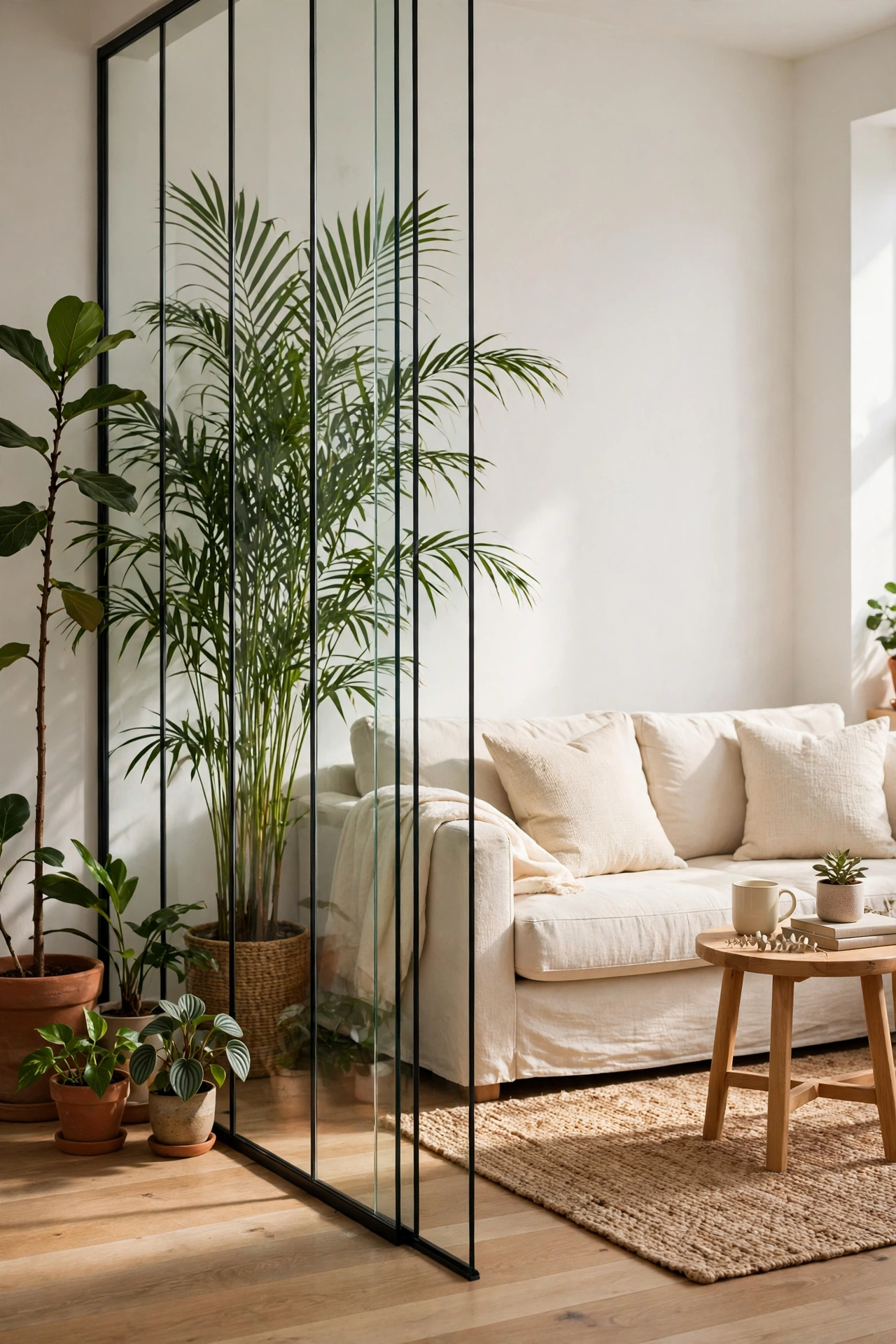
Quick Tip: Water the plants over a tray, so no water drips onto the floor near the glass. Choose plants that like indoor light, like pothos or snake plants, and they will stay healthy with little care.
Plants soften a glass screen and make the divider feel alive. The green leaves add color to a plain room, while the glass keeps the light moving through. Place the tallest plant at one end, so the screen still feels open and easy to walk past.
Tinted Glass Panels

Before: Before, the work desk sat in the open living area, and it was hard to focus with the bed in view. The room felt like one space for everything, and work time blended into rest time.
After: After, tinted panels give the desk area a quieter feel without closing it off. The smoky glass softens the view, so the bed is less distracting, yet light still reaches the desk.
Tinted glass works well when you want more privacy than clear glass gives. The darker tone adds a calm, office-like feel to a corner of the studio. Choose a light tint first, so the room does not become too dark during the day. Test a sample in daylight before you order the full panels.
Folding Glass Screens
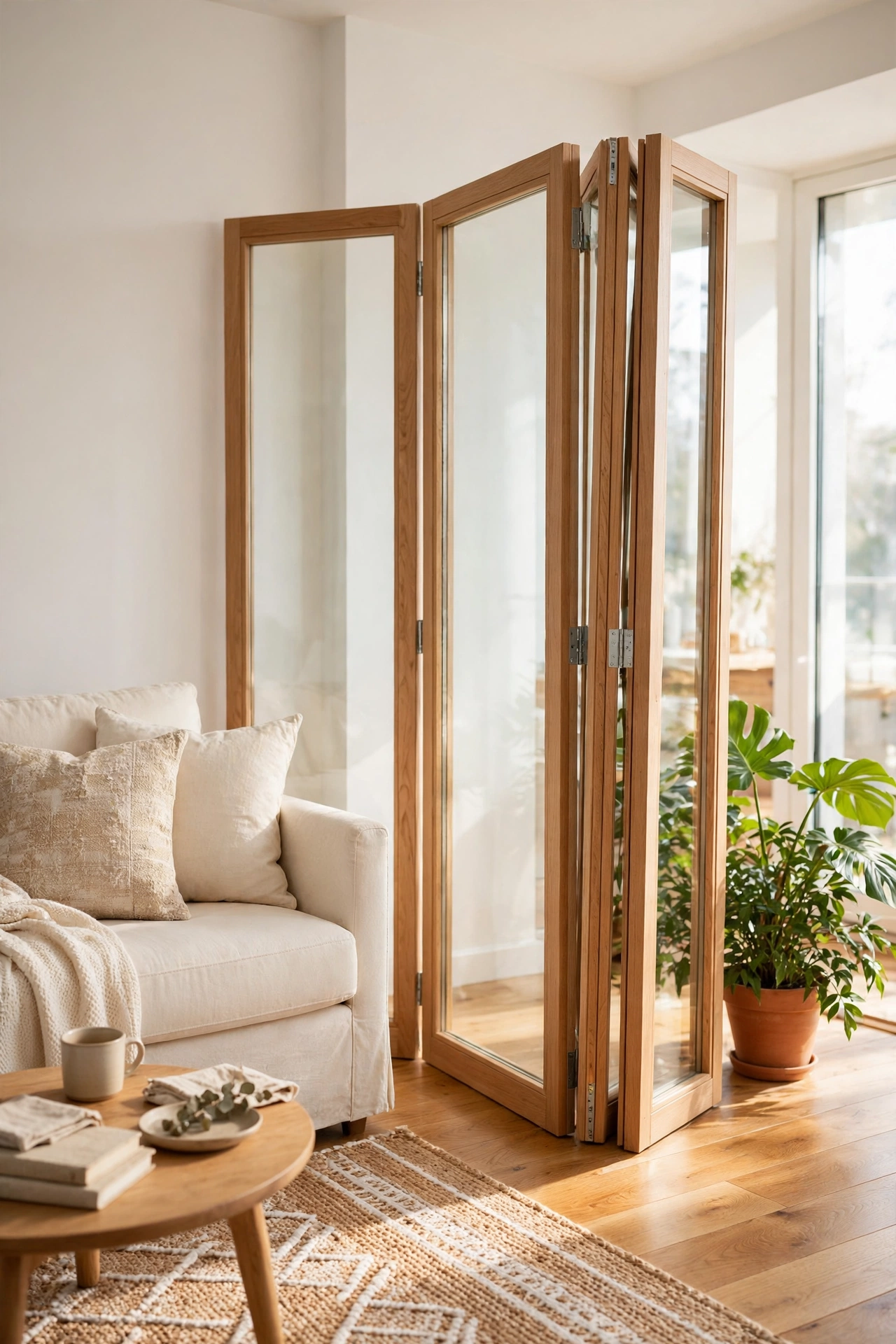
- Open the screen fully to divide the room, or fold it back when you want open space.
- Place the screen on a flat floor, and check that each panel folds without hitting furniture.
- Add small felt pads under the feet so the screen moves quietly and does not scratch the floor.
Folding screens are useful because you can change the layout in seconds. They suit renters who move often, since no fitting is needed. Fold the screen flat against a wall when guests come, and the studio feels large again. Keep the hinges clean so the panels fold smoothly each time you move them.
Glass Wardrobe Wall

| Feature | Glass Wardrobe Wall | Solid Wardrobe Wall |
|---|---|---|
| Light | Lets light pass through | Blocks light completely |
| View | Clothes stay visible | Clothes stay hidden |
| Space | Room feels larger | Room feels smaller |
| Cost | Higher, glass and frames | Lower, simple panels |
A glass wardrobe wall works as a divider and as storage in one step. It keeps clothes tidy and visible, while the glass lets light reach the sleeping area. Choose frosted glass for the lower doors if you want to hide shelves that are less tidy.
Ribbed Glass Panels

- Ribbed glass blurs shapes behind it, so you get privacy while daylight still flows through the room.
- Pick a slim black or brass frame to give the textured panels a clean, finished edge.
- Place the panels beside the bed to hide the sleeping area without closing the space off.
- Wipe the ridges with a soft cloth once a week so dust does not dull the glass.
Ribbed glass has a quiet charm that plain clear glass cannot match, and it turns a simple divider into a design feature. The vertical lines catch daylight and spread soft stripes across the floor, which makes a small studio feel warm and layered. Start by placing one panel between the bed and the sofa, then step back and check the view from the front door. The bed should look blurred, not hidden, while the living area stays bright and open. This balance suits renters who want privacy without a heavy wall.
In my experience, ribbed panels work best when the rest of the room stays simple, so the texture can shine. Pale walls, light wood and a cream sofa already support the look, and a small plant beside the base adds life. Avoid busy patterns nearby, since they can fight with the vertical lines and make the room feel crowded. A slim frame in black or brass keeps the divider tidy and links it to lamps, handles and other metal details. The result is a calm screen that feels both private and bright.
Glass Barn Door

- A barn door slides along a wall rail, so it needs no floor track and no swing space.
- Choose clear glass to keep the room bright, or frosted glass for more privacy at night.
- Fit a soft close rail so the door moves quietly and does not slam shut.
- Keep the wall beside the opening clear so the door can slide fully open each day.
A glass barn door adds farmhouse warmth to a studio without taking up the space a hinged door would need. The top rail becomes a design detail in its own right, and the glass panel keeps light moving between zones. Measure the wall beside the opening first, since the door needs that much clear space to slide open. A wood frame softens the glass, while a black rail gives the whole piece a strong, tidy finish. It suits sleep nooks, work corners and reading spots alike. It is a simple change with a big payoff for small homes.
In my experience, this door works best when you treat the rail as part of the decor, not just hardware. Match its black finish to light fittings, shelf brackets or a bed frame, and the divider will look planned. Add a small pull handle at a comfortable height, and test the slide before you hang curtains or art nearby. Keep the glass clean and the rail free of dust, so the door glides with one light push. The result is a flexible wall that opens in seconds. That care keeps the door quiet and smooth for years.
Frameless Glass Wall

- Frameless glass gives the cleanest look, since there is almost no frame to break the view.
- Use thick tempered glass with slim floor and ceiling channels for a safe, steady fit.
- Add a small frosted band at eye level if you want privacy without losing the open feel.
- Clean both sides weekly with glass spray so the wall stays nearly invisible.
A frameless wall is the closest thing to having no divider at all, yet it still marks where one zone ends and another begins. The clear glass lets daylight travel right across the studio, so the bed area and the living area feel like one bright room. It suits modern homes with pale walls, light wood and simple furniture, where a dark frame would feel too heavy. Measure the opening with care, and leave the floor channel neat and level. The effect is calm, open and surprisingly practical for daily life in a small home.
In my experience, the magic of this wall lies in what you do not see, so keep the edges tidy and the glass spotless. A frosted band at eye level adds privacy for the bed, while the clear top and bottom keep light flowing. Place a plant or a floor lamp near one edge to signal the boundary without adding clutter. Avoid hanging heavy art on the glass, and keep the floor clear at its base. The result is a light, airy divide that feels calm and modern. That simple care keeps the wall looking new.
Stained Glass Divider
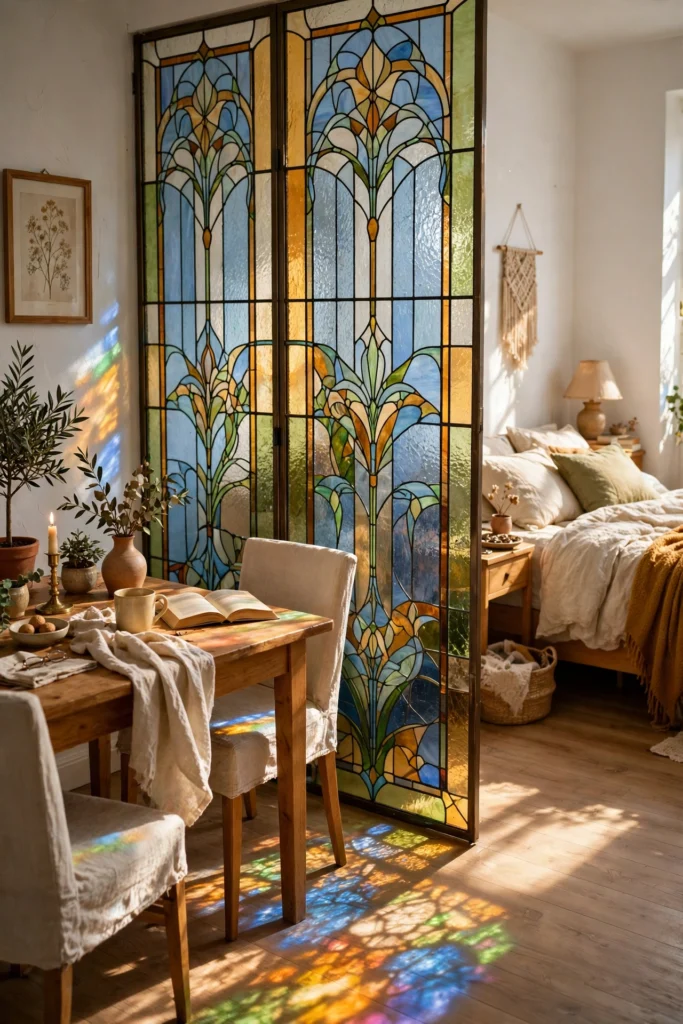
- Stained glass adds colour and art to a divider, so it works as decor as well as a screen.
- Pick soft blue, amber and green tones that repeat colours already in your room.
- Place the divider where sunlight hits it, so coloured light falls across the floor.
- Keep the frame simple in dark wood or black so the coloured glass stays the focus.
A stained glass divider turns a plain studio corner into a warm, artistic focal point in a single step. When sunlight passes through the coloured panes, it paints soft patches of blue, amber and green across the floor and walls. That glow changes through the day, which makes the room feel alive without any extra decor. It suits dining nooks and reading corners best, where you can sit beside the light and enjoy the colour up close. Choose a pattern that feels calm, not busy. The colour shifts gently as the sun moves across the sky.
In my experience, this divider works best when the rest of the room stays pale and plain, so the glass can lead. White walls, light wood and cream chairs already support the warm tones, and a simple rug below ties the colours together. Avoid adding more bright art nearby, since it can compete with the glass and make the space feel crowded. Clean the panes gently with a soft cloth, and check the frame joins once a year. The result is a divider that feels joyful, personal and full of light.
Etched Glass Panels
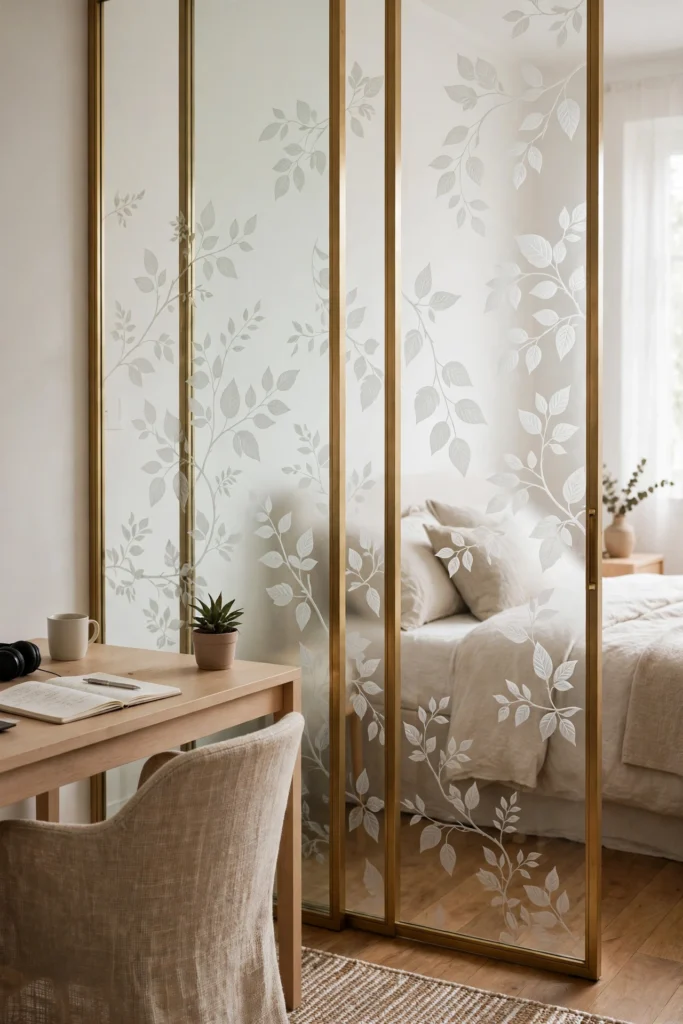
- Etched patterns blur the view just enough for privacy while still letting light through.
- Choose a simple leaf, line or dot pattern that suits the rest of your room.
- Use a slim brass or black frame to give the patterned glass a tidy, finished edge.
- Place the panel beside the desk so work feels separate from rest without a solid wall.
Etched glass offers a softer kind of privacy, since the pattern blurs shapes without blocking daylight at all. A leaf or line design adds a quiet decorative touch, and it looks far more personal than plain frosted glass. It suits a work corner best, where you want focus during the day and calm at night. Start with one panel beside the desk, then check the view from the sofa to see how much it screens. The desk should feel separate, while the room still feels open. That soft blur makes the whole room feel calmer and more private.
In my experience, etched panels shine when the pattern repeats a detail already in the room, like a leaf print, a striped cushion or a woven rug. That small link makes the divider look chosen, not random. Keep the frame slim and match it to a lamp or a shelf bracket nearby. Clean the glass with a soft cloth, since harsh pads can dull the etched surface over time. The result is a gentle screen that feels elegant, private and bright. That small link makes the whole screen feel thoughtful and well chosen for the room.
Glass French Doors
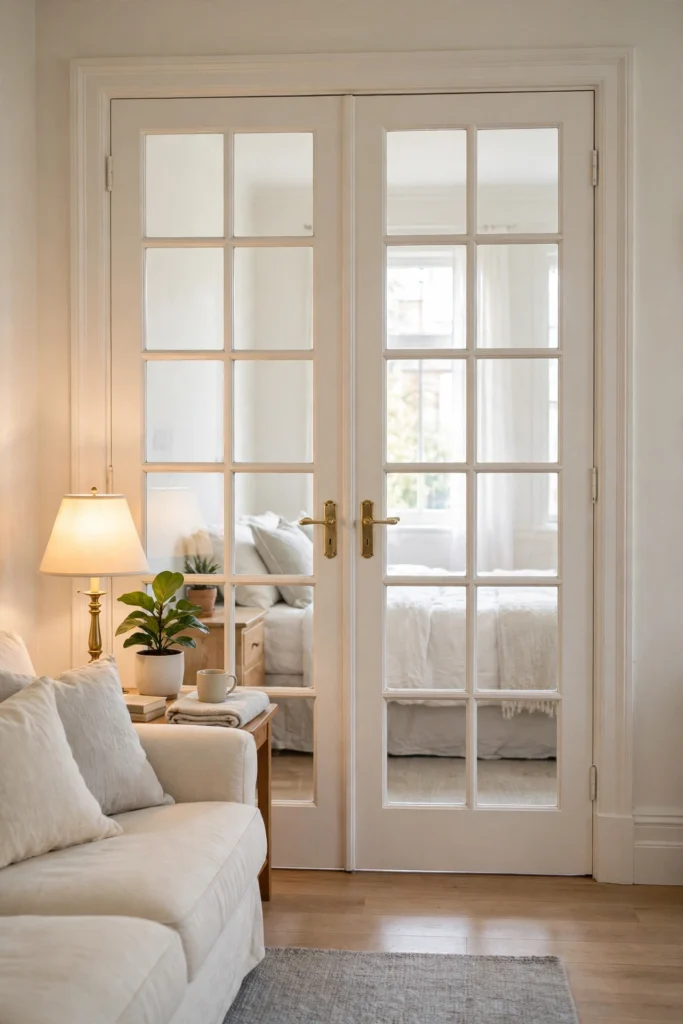
- French doors open wide for full access, then close to give the bedroom real privacy.
- Choose small panes in white frames for a classic look that suits most studios.
- Add sheer curtains on the inner side if you want extra privacy at night.
- Fit slim handles at the centre so both doors open easily with one hand each.
Glass French doors bring a timeless, classic feel to a studio, and they suit homes that already have white trim and pale walls. The paired doors open fully, so the room can feel like one open space during the day. At night, close them for a quiet bedroom that still borrows light from the living area. The small panes break the glass into a neat grid, which adds charm without blocking the view. Measure the opening twice before you order the pair. The paired doors give the studio a finished look that feels warm and welcoming.
In my experience, French doors work best when you keep the floor clear on both sides, so both doors can swing fully open. A cream sofa, a soft rug and a green plant already support the classic look, and a warm lamp nearby softens the glass at night. Add sheer curtains if you need more privacy, and tie them back in the morning to let light through. Keep the hinges oiled and the glass clean, so the doors move smoothly. The result is a divider that feels elegant, flexible and bright.
Crittall Glass Screen

- A Crittall screen uses a black steel grid, so it gives strong structure and an industrial look.
- Place it between the kitchen and the lounge to mark zones without losing light.
- Match the black grid to taps, light fittings or shelf brackets for a planned finish.
- Keep the glass clean so the grid lines stay sharp and the room stays bright.
A Crittall screen brings bold, industrial character to a studio, and it suits homes with brick, concrete or dark metal details. The black grid breaks the glass into neat rectangles, which gives the divider a strong shape even though light passes straight through. It works well between a kitchen and a lounge, where you want a clear boundary but no dark wall. Start by checking the ceiling height, since the grid looks best when it runs full height. The result is a screen that feels both sturdy and open. It suits bold homes that love strong lines.
In my experience, this screen works best when you repeat its black finish in small touches around the room. A black lamp, a dark shelf bracket or a black kettle all link back to the grid and make it feel planned. Keep the furniture near it simple, since busy patterns can fight with the strong lines. A warm wood table softens the steel, while a green plant adds life beside the base. Clean the panes weekly, and the grid will stay crisp. The result is a divider with real presence.
Glass and Wood Slats
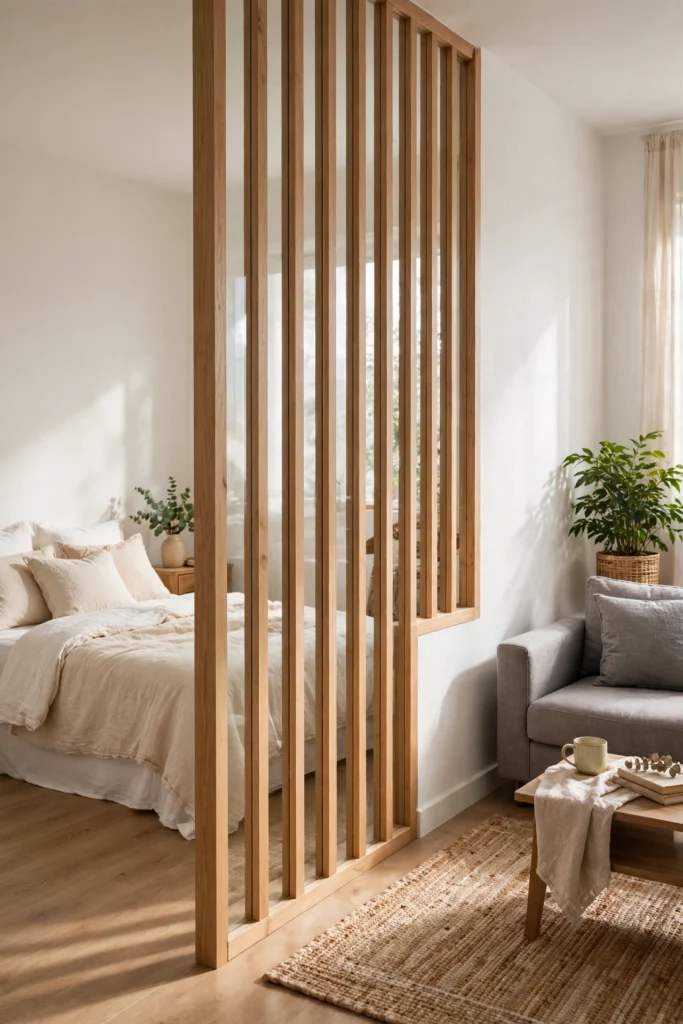
- Wood slats add warmth to glass, so the divider feels natural rather than cold.
- Space the slats evenly and keep the glass clear so light still passes through.
- Use light oak slats to match pale floors, or walnut for a richer, deeper tone.
- Place a plant at one end to soften the straight lines and add green colour.
Glass and wood slats make a divider that feels warm, natural and calm, which suits studios with pale floors and soft textiles. The vertical wood lines give the screen a clear rhythm, while the glass between them keeps daylight flowing from one zone to the next. It works well beside a bed, where the wood softens the sleeping area and the glass keeps it bright. Start with a panel that covers half the opening, then add more if you need extra privacy. The mix feels crafted, not fitted. The result feels warm and well balanced.
In my experience, this divider shines when the wood tone repeats elsewhere in the room, like a light oak table, a walnut shelf or a wooden bed frame. That link makes the screen feel part of the home, not an add on. Keep the slats dust free with a quick wipe, and clean the glass panels weekly so they stay clear. Avoid heavy dark furniture right beside it, since that can hide the warm wood lines. The result is a screen that feels cosy, bright and calm. That care keeps the wood warm and the glass bright.
Bronze Frame Divider

- A bronze frame adds warm, luxe colour to glass without making the divider feel heavy.
- Match the bronze to a lamp, a mirror edge or cabinet handles for a linked look.
- Choose clear glass to keep the room bright, or a light tint for a softer view.
- Keep the metal polished with a soft cloth so the warm glow stays fresh.
A bronze frame divider adds a warm, luxe touch to a studio, and it suits rooms with brass lamps, warm wood and cream textiles. The slim metal edge catches afternoon light and gives the glass a soft glow, which makes the divider feel like jewellery for the room. It works well between a lounge and a bedroom, where you want a clear boundary that still feels gentle. Start with one panel beside the sofa, then check the view at night under lamplight. The frame should glow, not glare. The warm metal suits both day and evening light.
In my experience, bronze works best when you repeat it in just two or three small touches, so the room feels linked without looking matched. A brass lamp, a bronze mirror edge or warm handles all support the frame without competing with it. Keep the glass clean and the frame free of fingerprints, since both show marks in bright light. Avoid cool silver metals nearby, which can clash with the warm tone. The result is a divider that feels calm, warm and quietly luxe. That simple habit keeps the divider looking warm and fresh for a long time.
Glass Corner Screen

- A corner screen fits neatly into an L shape, so it turns a dead corner into a cosy nook.
- Place an armchair, a lamp and a small table behind it to make a reading spot.
- Choose a slim white frame to keep the small corner feeling light and open.
- Keep the floor clear in front so you can step into the nook easily each day.
A glass corner screen is a smart way to claim a quiet nook in a studio without building a wall or losing light. The L shape wraps around an armchair and a lamp, which gives the reading spot a clear edge while the rest of the room stays open. It suits small corners near a window best, where daylight can fall across the chair and the book in your hand. Start by measuring the corner, then choose panels that leave a clear gap to step through. The nook should feel tucked away, not boxed in.
In my experience, a corner screen works best when you keep the nook simple, with just a chair, a lamp and a small table. Too much furniture will crowd the small space and block the light you wanted to keep. Add a soft cushion and a plant at the edge, and the corner will invite you to sit down each evening. Clean the glass weekly, since fingerprints show fast at arm height. The result is a calm, bright nook that feels all your own. That quiet spot soon becomes your favourite place to unwind each evening at home.
These 24 studio apartment glass divider ideas prove that a small home can feel private, stylish and bright at the same time. You do not need a full wall to create a bedroom, a work corner or a calm reading spot. Pick one idea that fits your room and your budget, try it this week, and see how the space feels. Save this post on Pinterest so you can find it again, and share it with a friend who lives in a studio too. I have seen how small changes like these can shift the way a room feels.