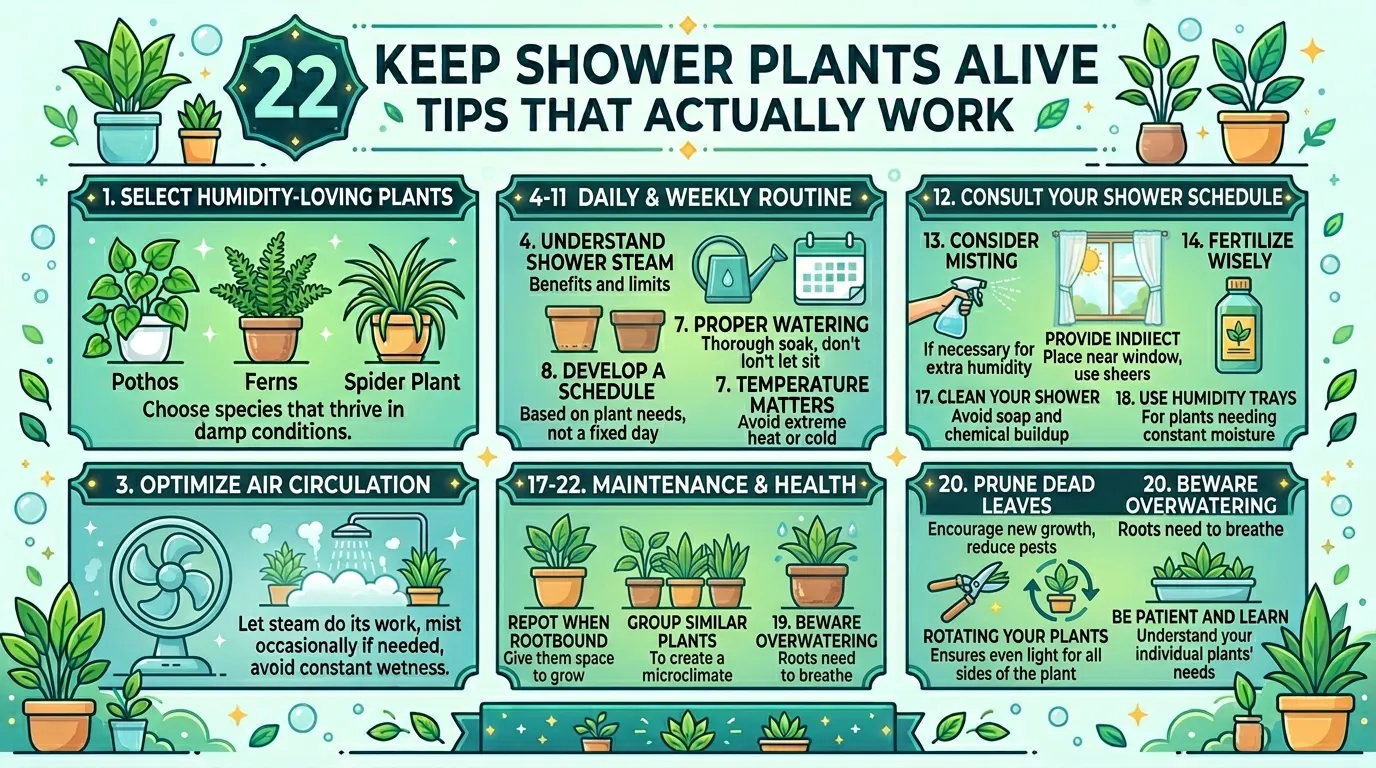
22 Keep Shower Plants Alive Tips That Actually Work
Shower plants thrive when matched to the right humidity, light, and care routine — they are not simply any houseplant placed in a wet room. This article gives you exactly 22 practical, proven tips for keeping shower plants alive, healthy, and genuinely lush long-term.
There is something grounding about stepping into a shower surrounded by living green. The steam rises, the leaves catch the diffused light through frosted glass, and the whole room shifts from functional to restorative. Shower plants done right feel less like decoration and more like a small ecosystem you get to live inside every morning. Here are 22 tips worth saving — and stealing.
Why Keeping Shower Plants Alive Works So Well
Shower plant care is a distinct discipline within houseplant keeping — not because the rules are complicated, but because the environment itself is unlike any other room in the house. The bathroom shower zone combines high intermittent humidity, fluctuating temperatures, low to medium indirect light, and periods of complete darkness when the room is unoccupied. Understanding this specific combination is what separates thriving shower plants from yellowing, rotting ones.
The plants that succeed here draw from a specific ecological origin: tropical understory species that evolved beneath dense forest canopies, where filtered light, high humidity, and warm air are the baseline conditions. Species like pothos (Epipremnum aureum), golden or heartleaf philodendron, air plants (Tillandsia), and staghorn ferns are not tolerating the shower environment — they are genuinely suited to it in ways that succulents, cacti, or Mediterranean herbs never will be.
The resurgence of shower plant culture connects directly to the broader biophilic design movement — the research-backed idea that proximity to living plants reduces cortisol levels and improves perceived wellbeing. Bathrooms, once the last room to receive plant attention, are now among the most-searched spaces on Pinterest for plant styling. People are redesigning their daily rituals around the sensory experience of plants, not just their appearance.
Small showers can absolutely support this practice, but the approach must be deliberate. In a compact shower (under 36×36 inches), a single well-chosen hanging plant — a pothos in a waterproof hook mount, for example — delivers more visual impact than three mismatched pots crowding a shelf. One plant thriving always reads better than five struggling.
Style at a Glance
| Element | Key Trait | Detail |
| Philosophy | Match plant to environment | Tropical species only |
| Key Materials | Waterproof pots, drainage, mounts | Ceramic, terracotta, macramé |
| Key Approach | Humidity + indirect light | Rotation, misting, airflow |
22 Tips to Keep Shower Plants Alive
1. Choose Only Humidity-Loving Tropical Species
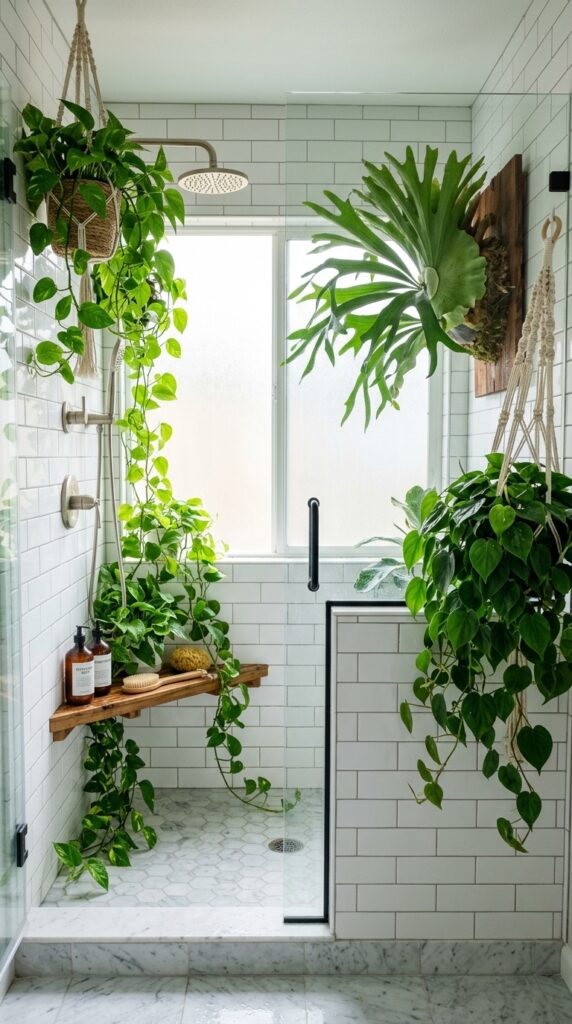
Vibe: Lush — a shower that feels like the edge of a rainforest.
Why it works: Tropical understory plants evolved in conditions that mirror the shower: high ambient humidity, indirect filtered light, and warm consistent temperatures. Species like pothos, heartleaf philodendron, Boston fern, and peace lily have cellular structures adapted to absorb moisture through their leaves — the steam from your shower is actively supplementing their hydration. Placing drought-tolerant or Mediterranean species (succulents, lavender, rosemary) in a shower environment causes root rot within weeks because those plants cannot process the continuous moisture load.
How to get it: Start with a golden pothos (Epipremnum aureum) — it tolerates low light, handles irregular watering, and trails dramatically from a high shelf or hook. A single 4-inch nursery pot costs $4–8 and will fill a shower corner within one growing season.
💡 Quick Win: Check the plant’s native habitat before buying — if it’s labeled “tropical” or “rainforest,” it belongs in your shower. If it says “drought tolerant” or “Mediterranean,” put it somewhere else.
Shop The Look
| Product |
| Golden pothos live plant 4 inch pot |
| Heartleaf philodendron live trailing plant |
| Boston fern live plant hanging basket |
| Teak shower shelf corner caddy natural wood |
| Brushed nickel shower plant hook adhesive |
2. Mount Plants at Eye Level, Not on the Floor
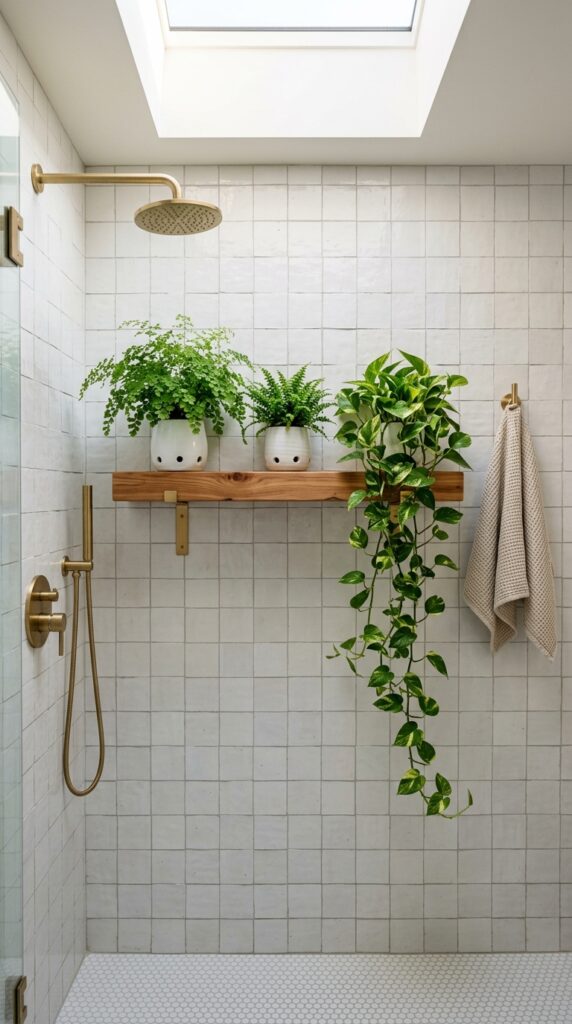
Vibe: Intentional — plants at eye level feel curated, not left there by accident.
Why it works: Floor-placed plants in a shower receive the least airflow (steam pools and stagnates near the base of the shower) and the most direct water splash, which saturates soil and promotes root rot. Mounting plants at eye level or above puts them in the zone of best steam circulation, where humidity is consistent rather than waterlogged. Vertical placement also gives trailing species room to do what they do naturally — cascade downward — which creates a far more dramatic visual effect than a plant sitting flat on a ledge.
How to get it: Install a waterproof floating shelf (solid teak or a powder-coated steel bracket system) at 54–60 inches from the floor — roughly chest height — using adhesive mounting hardware rated for wet environments. Command strips rated for 5+ pounds work in showers with adequate surface prep on glazed tile.
Shop The Look
| Product |
| Teak wall mounted floating shelf bathroom |
| Waterproof adhesive wall hooks shower rated 5lb |
| White ceramic round plant pot small 3 inch |
| Powder coated steel shelf bracket black set of 2 |
| Macramé plant wall hanger boho shower |
3. Use Terracotta Pots Only Outside the Direct Spray Zone
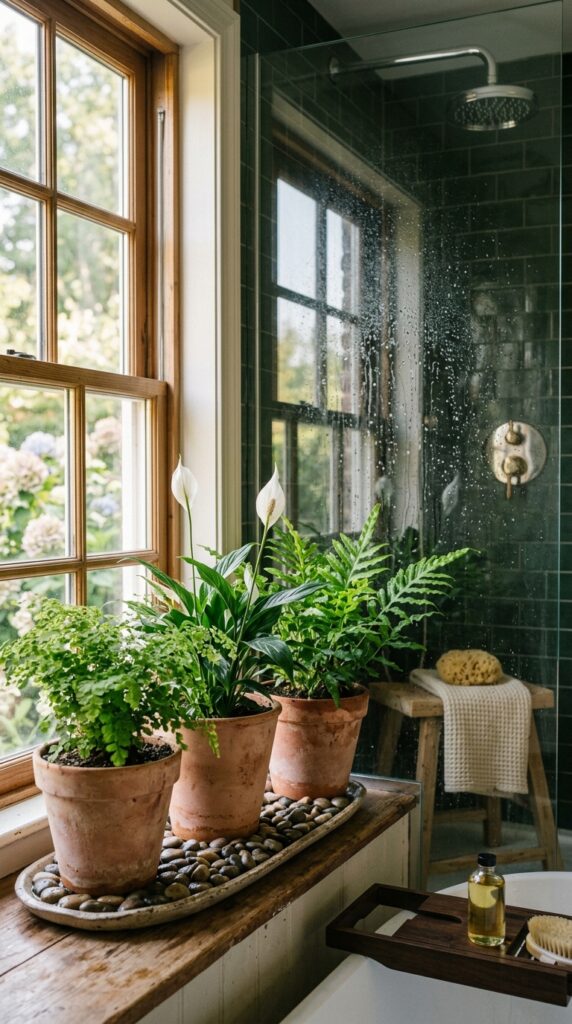
Vibe: Grounded — clay and green together have a mineral warmth that no plastic pot achieves.
Why it works: Terracotta is a breathable, porous material that regulates soil moisture by allowing excess water to evaporate through the pot walls — an excellent property for most indoor plants. However, inside the direct spray zone of a shower, terracotta becomes a liability: constant wetting and drying cycles cause the clay to crack and the pot base to leave mineral stains on tile surfaces. The correct approach is to use terracotta within the humidity zone but outside the direct water stream — on a windowsill adjacent to the shower, or on a shelf behind the shower glass.
How to get it: Place a sealed cork or rubber mat under terracotta pots near any shower surface to prevent mineral ring staining on tile or wood. Cork rounds (sold in craft stores for $2–4 each) are the simplest solution.
💡 Quick Win: If you love the terracotta look inside the shower, use glazed terracotta instead — same warm color, zero porosity, and it won’t crack or leach mineral stains.
Shop The Look
| Product |
| Unglazed terracotta plant pot set of 3 small |
| Glazed terracotta pot warm clay indoor plant |
| Cork pot coaster saucer round set of 6 |
| Peace lily live plant 6 inch pot |
| River stone pebble tray decorative bathroom |
4. Rotate Plants Out Every Two to Three Weeks
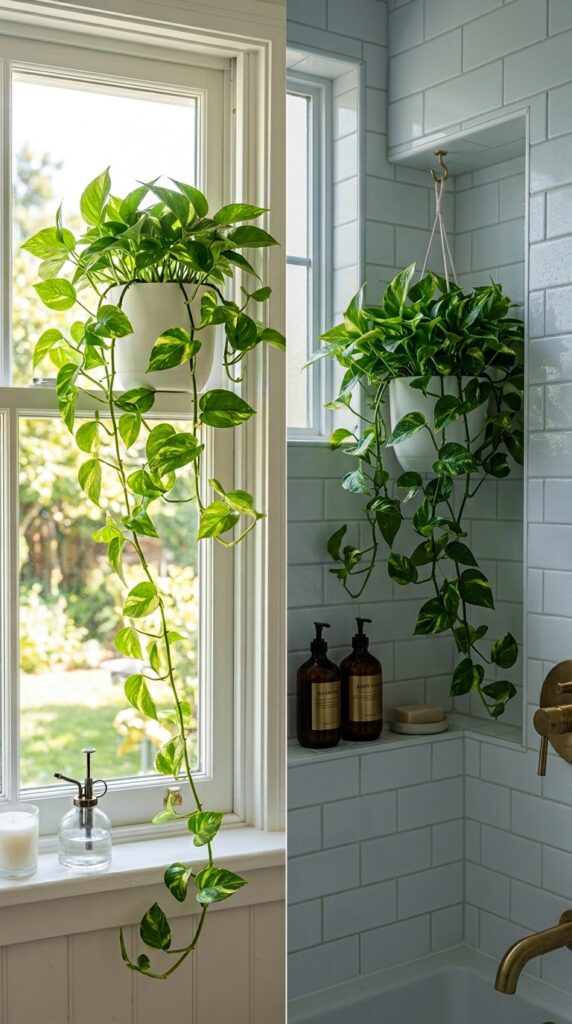
Vibe: Practical — the best shower plant system is one where the plants actually survive.
Why it works: No plant, regardless of species, thrives indefinitely in a low-light shower environment. Even the most shade-tolerant tropical plants need periodic access to brighter indirect light to photosynthesize adequately and maintain leaf color. A two-to-three week rotation cycle — moving the shower plant to a bright windowsill or well-lit room for a week, then returning it — prevents the slow, cumulative decline that turns a lush pothos into a yellowing, leggy specimen within a few months. The rotation system also lets you observe the plant closely in good light, catching any pest or disease issues early.
How to get it: Keep two plants of the same species: one always in the shower, one always on a bright windowsill. Swap them on a calendar reminder every 14–21 days so neither plant suffers extended light deprivation.
Shop The Look
| Product |
| Plant rotation reminder tag set garden markers |
| LED grow light clip desk plant indoor |
| Self-watering planter insert white ceramic |
| Window plant shelf suction cup glass mount |
| Plant journal notebook garden care tracker |
5. Install a Waterproof Teak Shower Bench for Plant Staging

Vibe: Spa-like — the bench transforms a shower into something you’d pay to visit.
Why it works: A teak shower bench provides an elevated, water-safe staging platform that keeps pots off the floor and creates a composed vignette rather than a random collection of plants. Teak is the only widely available wood species that can genuinely withstand continuous shower moisture without warping, rotting, or developing mold — its high natural oil content repels water at the cellular level. Varying pot heights on the bench (tall, medium, low) creates a triangular visual composition that the eye reads as intentional rather than accidental.
How to get it: Choose a teak bench with slatted construction (gaps between slats allow water to drain through) rather than solid-top designs that pool water under the pots. Place pot saucers under each plant to prevent direct soil contact with the wood surface.
💡 Quick Win: A three-pot composition works on any size bench: one tall trailing plant at the back, one medium leafy plant at center, one compact or cascading plant at the front edge. This triangular hierarchy reads well from every angle.
Shop The Look
| Product |
| Teak shower bench slatted wood folding |
| Waterproof pot saucer clear plastic set of 5 |
| Compact peace lily 4 inch pot live |
| White ceramic pot set 3 sizes indoor plant |
| Teak oil wood conditioner bathroom furniture |
6. Choose the Right Pot Material for Inside the Spray Zone
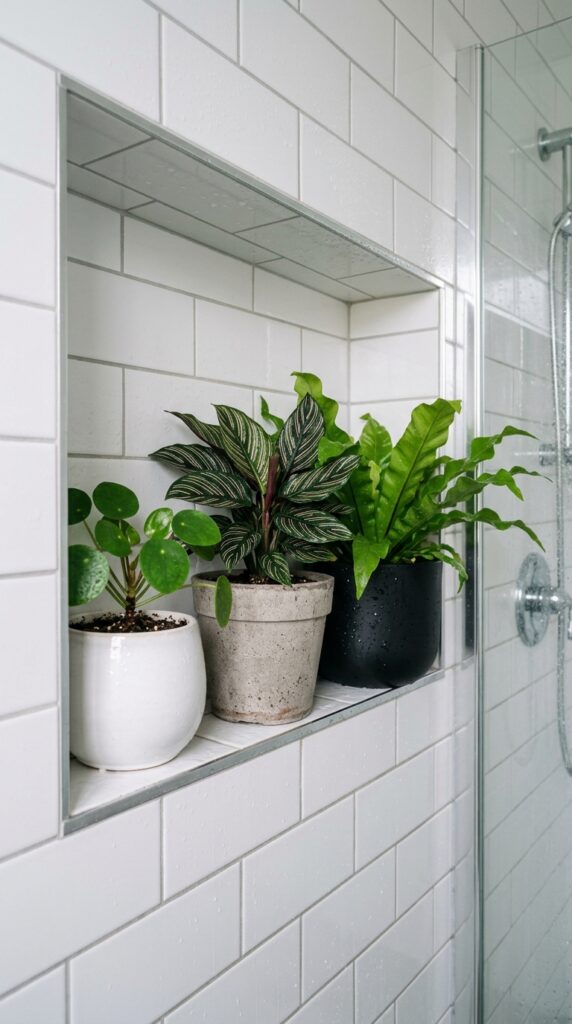
Vibe: Clean — the right pot disappears into the design; the wrong one fights it.
Why it works: Inside the direct spray zone of a shower, the pot material matters as much as the plant species. Glazed ceramic is the most durable and aesthetically refined choice — fully waterproof, stain-resistant, and available in minimal designs that complement modern bathroom tile. Lightweight fiberglass and resin pots in concrete or stone finishes offer the same waterproof performance at a fraction of the weight, which matters when mounting plants overhead. Avoid any pot with an uncoated metal base or bamboo accents — these will rust or mold within weeks in direct spray.
How to get it: For shower niches specifically, measure the niche depth and width before buying any pot — a pot that fits on a shelf often doesn’t fit flush in a recessed niche. Aim for a pot no wider than 60% of the niche width to leave visual breathing room on each side.
Shop The Look
| Product |
| Glazed ceramic plant pot white modern cylinder |
| Concrete look resin plant pot lightweight |
| Fiberglass round plant pot matte grey indoor |
| Shower niche shelf insert waterproof |
| Plant pot drainage hole plug set rubber |
7. Add a Small Clip-On Grow Light for Dark Bathrooms
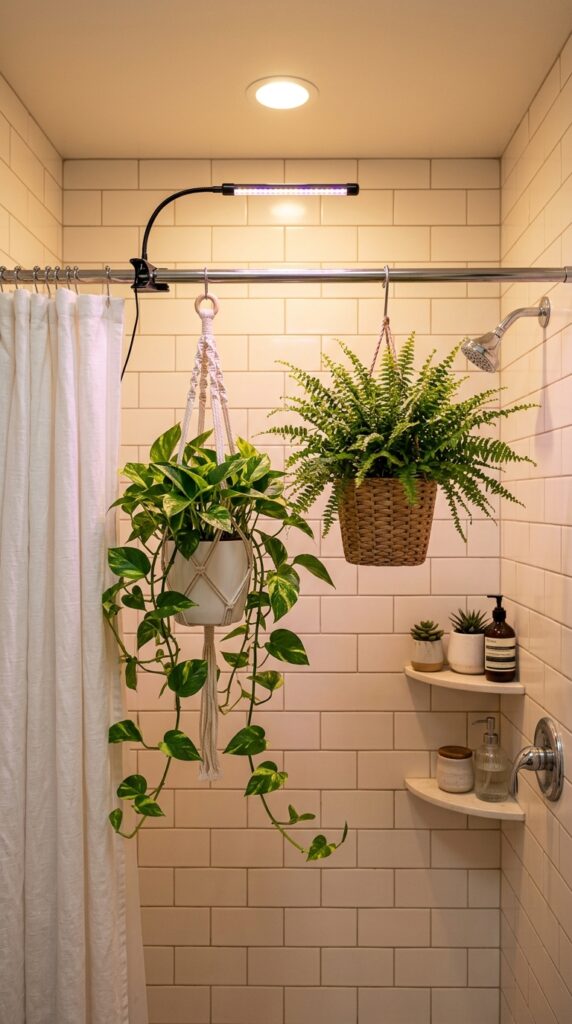
Vibe: Resourceful — plants shouldn’t require a skylight; they require the right solution.
Why it works: A windowless or north-facing bathroom is the most common reason shower plants fail — not overwatering, not humidity, but chronic light deprivation. A full-spectrum LED grow light provides the red and blue wavelengths that plants use for photosynthesis, compensating completely for the absence of natural light. Modern clip-on grow lights draw as little as 10–15 watts, cost $20–45, and can be mounted on shower curtain rods, towel bars, or adhesive ceiling hooks without any permanent installation.
How to get it: Set the grow light on a plug-in timer (available for $8–12) to run for 12–14 hours per day. This mimics natural tropical daylight cycles and prevents the plant from entering a stress response from irregular light exposure. Clip the light 6–12 inches above the plant canopy for optimal coverage.
💡 Quick Win: If a grow light feels clinical, choose a warm-spectrum model (3000K color temperature) rather than the harsh blue-white version — it produces a softer, more ambient glow that reads as intentional bathroom lighting rather than a laboratory setup.
Shop The Look
| Product |
| Clip on LED grow light full spectrum gooseneck |
| Plug in digital outlet timer weekly programming |
| Adhesive ceiling hook shower rated waterproof |
| Full spectrum grow bulb E26 screw in warm |
| Hanging plant pot hook shower curtain rod |
8. Never Let Roots Sit in Standing Water
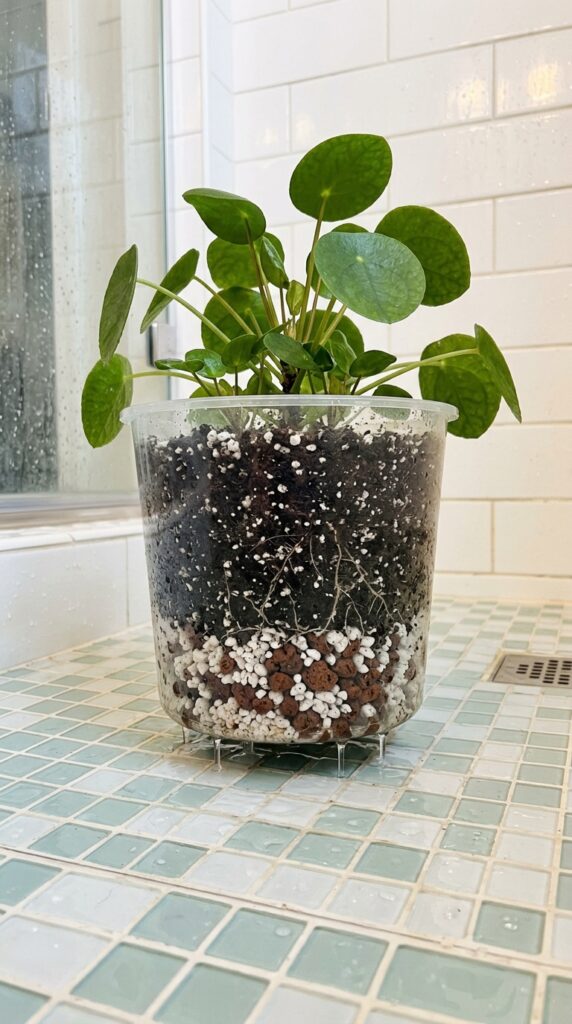
Vibe: Grounded — good drainage is the invisible foundation of every thriving plant.
Why it works: Root rot is the single most common cause of shower plant death — and it is caused almost exclusively by roots sitting in water that cannot drain. In a high-humidity environment like a shower, the soil already retains more moisture than it would in a drier room, so any standing water in a pot saucer compounds the problem rapidly. Tropical plants need moisture in the air, not at the root level — their roots need a wet-dry cycle to function. A well-draining potting mix (one part standard potting soil, one part perlite, one part orchid bark) mimics the fast-draining forest floor conditions these species evolved in.
How to get it: Add a 1-inch layer of lava rock or coarse perlite at the bottom of every shower plant pot before adding soil — this creates a drainage buffer that keeps the root zone above any accumulated water. Empty pot saucers within 30 minutes of watering to prevent the roots from wicking water back up from below.
Shop The Look
| Product |
| Perlite soil amendment horticultural 8qt bag |
| Orchid bark medium grade potting mix |
| Lava rock drainage layer for pots 2qt |
| Transparent plastic plant pot insert with drainage |
| Soil moisture meter plant watering gauge |
9. Style With a Hanging Macramé Plant Holder
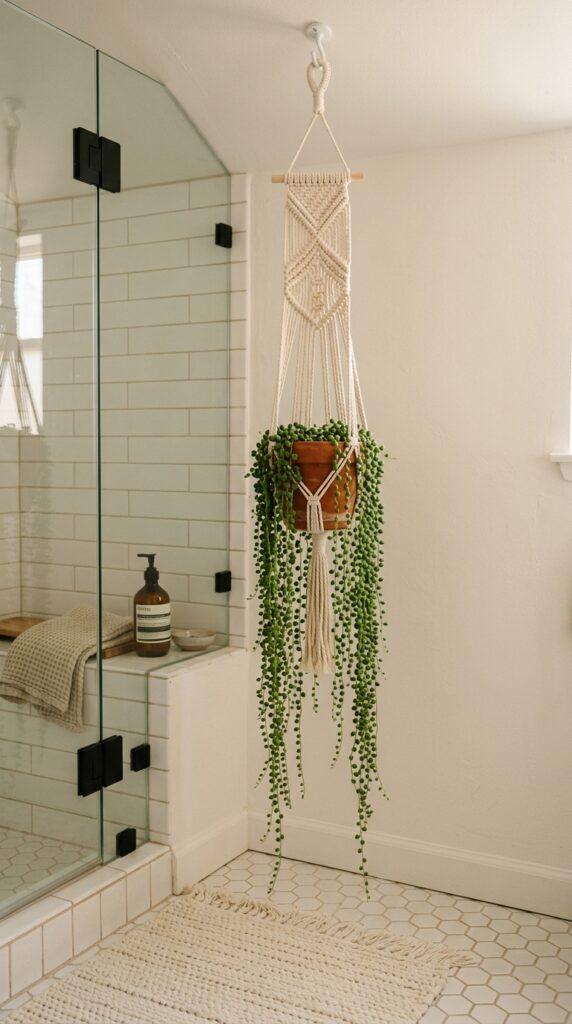
Vibe: Layered — a hanging plant adds a vertical dimension that shelves and ledges simply cannot reach.
Why it works: Ceiling-hung plants operate in the zone of maximum steam circulation in a shower bathroom — the humid air rises and envelops the hanging plant naturally, supplementing its moisture needs without direct spray exposure. A macramé hanger adds a textile element that softens the hard surfaces of tile and glass, introducing warmth through fiber texture. The visual weight of a hanging plant in the upper third of a bathroom also draws the eye upward, making the ceiling feel higher than it is — a genuine optical illusion created by vertical emphasis.
How to get it: Use a swag-hook anchor rated for at least 15 pounds, installed into a ceiling joist or with a toggle bolt rated for drywall. Never hang a plant from a shower curtain rod directly above the spray zone — the condensation and weight will eventually pull the rod from its mounts.
💡 Quick Win: A ready-made macramé plant hanger costs $12–20 and requires no DIY skills — just a hook and a pot. It’s the fastest way to add vertical greenery to any bathroom without mounting a single shelf.
Shop The Look
| Product |
| Handwoven macramé plant hanger natural cotton |
| Ceiling swag hook with toggle bolt heavy duty |
| String of pearls live succulent trailing plant |
| Woven cotton bath mat natural neutral |
| Ceiling plant hook adhesive no drill |
10. Match Your Plant Selection to Your Shower’s Light Level
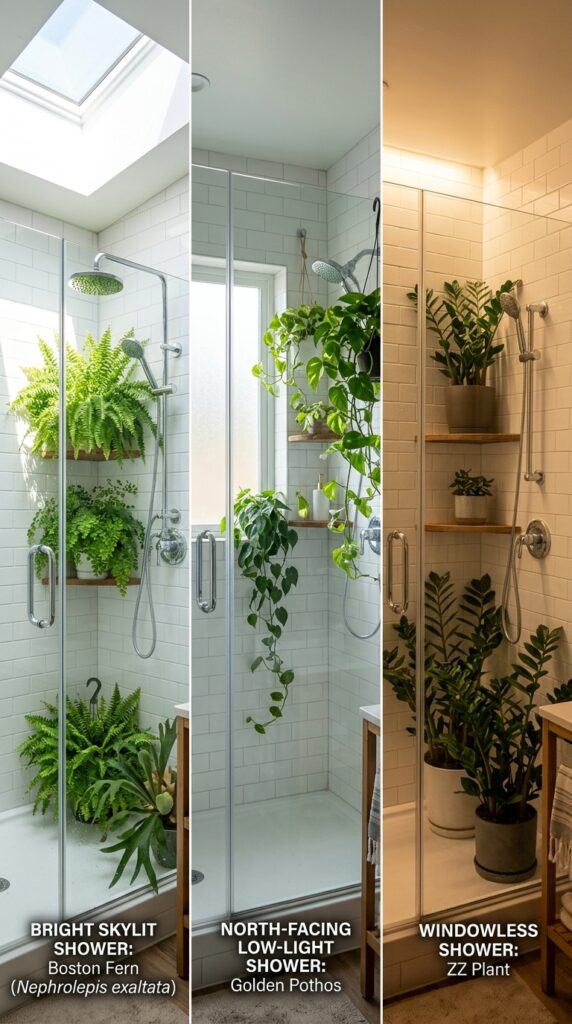
Vibe: Informed — the difference between a thriving shower plant and a dying one is almost always this single decision.
Why it works: Light level is the variable that determines which species can live in your specific shower — humidity and temperature are relatively consistent across most showers, but light varies enormously. A shower with a south-facing skylight can support ferns, orchids, and even some bromeliads. A north-facing window provides enough for pothos, heartleaf philodendron, and peace lily. A windowless shower genuinely supports only the most light-tolerant species: ZZ plant (Zamioculcas zamiifolia), cast iron plant, or Chinese evergreen — and even these will need periodic rotation to brighter spaces.
How to get it: Use the shadow test before choosing your plant: hold your hand 12 inches above a white surface in your shower space. A sharp, well-defined shadow means adequate light for most tropicals. A faint, soft shadow means low-light species only. No shadow at all means grow light required.
Shop The Look
| Product |
| ZZ plant live low light indoor 6 inch pot |
| Chinese evergreen live plant tropical indoor |
| Cast iron plant live aspidistra low light |
| Light meter digital indoor plant lux gauge |
| Orchid live tropical bathroom plant 4 inch |
11. Use a Waterproof Shower Niche as a Plant Display
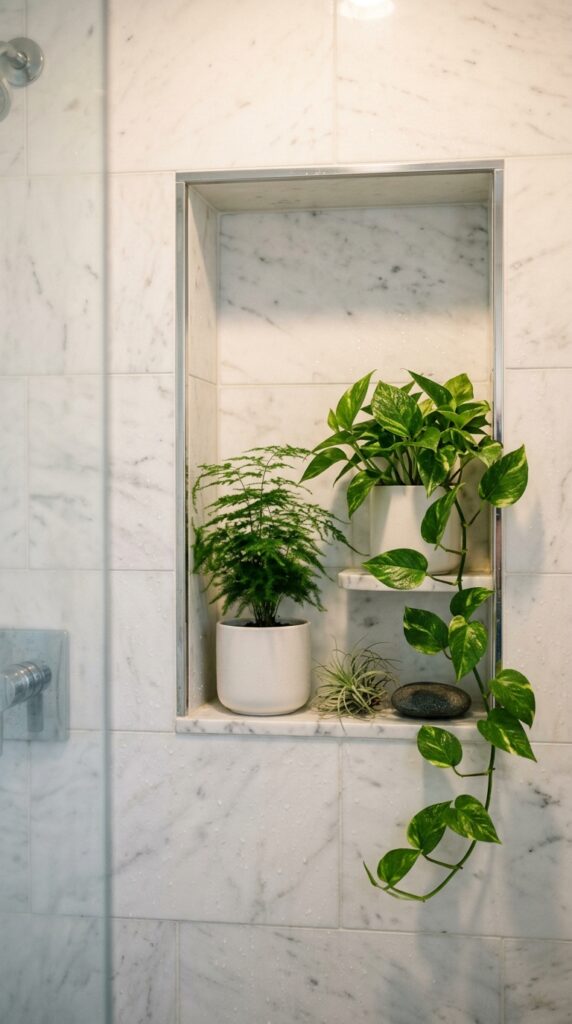
Vibe: Composed — a niche gives plants a frame, and framed plants always look intentional.
Why it works: A recessed shower niche is architecturally designed to hold objects at eye level — it is, in effect, a built-in display shelf that keeps items protected from direct spray while remaining fully within the shower humidity zone. Plants placed in a niche benefit from consistent ambient steam without waterlogging, since the niche is recessed away from the main showerhead trajectory. The niche also provides a defined boundary for the plant display, which prevents the over-collected look that makes many shower plant arrangements feel cluttered rather than curated.
How to get it: Limit the niche to a maximum of three plants — one per shelf position if the niche has multiple shelves. The rule of odd numbers applies: one, three, or five plants in a composition always reads more naturally than two or four, which feel symmetrical in a way the eye registers as deliberate but static.
💡 Quick Win: Add a single air plant (Tillandsia) to an existing shower niche — it requires no pot, no soil, and no drainage. Mist it twice a week and it will thrive indefinitely in shower humidity.
Shop The Look
| Product |
| Air plant tillandsia variety live set of 3 |
| Marble look porcelain tile 12×24 shower wall |
| Minimalist white ceramic planter oblong small |
| River pebble decorative accent bowl small |
| Shower niche shelf insert waterproof acrylic |
12. Water Less Than You Think — The Shower Does the Work
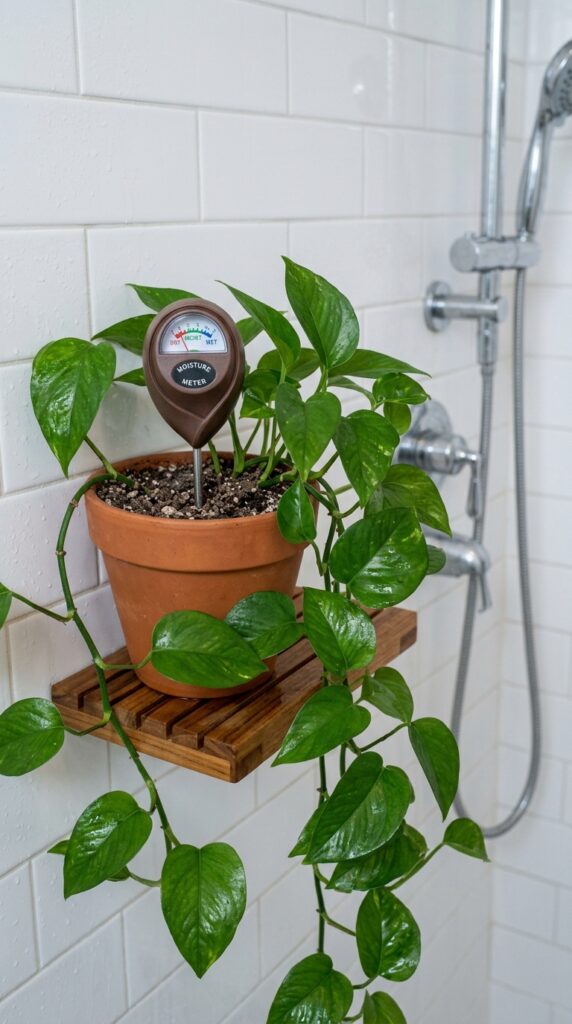
Vibe: Counterintuitive — the most common mistake in shower plant care looks exactly like kindness.
Why it works: Shower plants absorb ambient humidity through their leaves and stomata continuously — the steam from a daily shower delivers a meaningful volume of foliar moisture that reduces the plant’s need for soil watering. Overwatering (adding soil water before the plant has processed what it already has) is the primary cause of root rot in shower plants, even in species chosen correctly for humidity tolerance. The soil should dry out partially between waterings — in a high-humidity shower environment, this often means watering every 10–14 days rather than weekly.
How to get it: Before watering any shower plant, insert your finger 2 inches into the soil. Water only if it feels dry at that depth. For trailing species like pothos and philodendron, a slight wilt in the lower leaves is a more reliable signal to water than any schedule.
Shop The Look
| Product |
| Soil moisture meter 3-in-1 plant care indoor |
| Watering can long spout indoor plants small |
| Plant care app subscription reminder digital |
| Spray bottle fine mist 16oz for plants |
| Plant water dropper bulb self watering slow |
13. Group Plants in Odd Numbers for Visual Balance
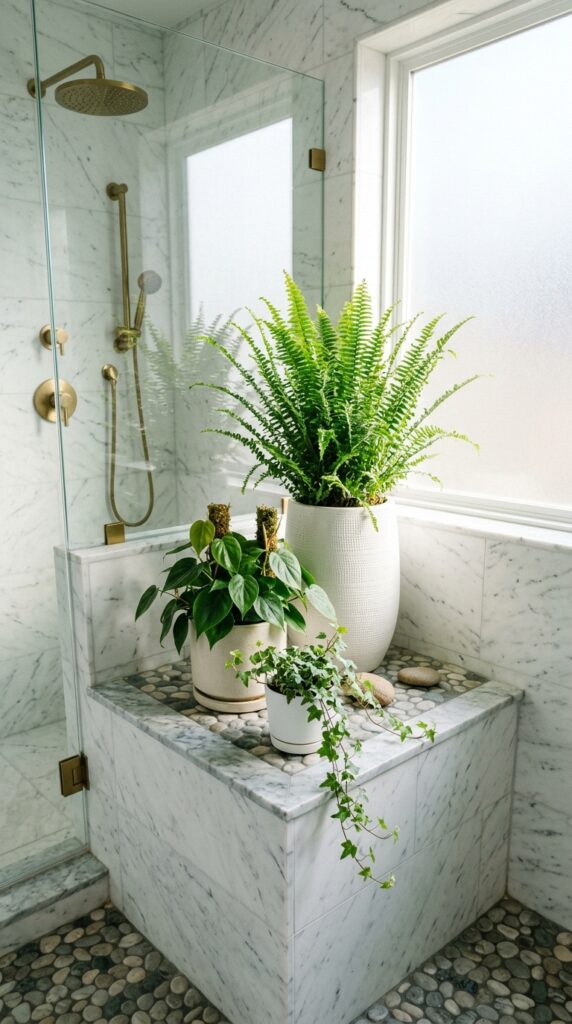
Vibe: Composed — three plants in the right arrangement look like they belong to a design, not a collection.
Why it works: The odd-number rule in visual design (sometimes called the “rule of three”) is based on how the human eye processes groupings: even numbers invite the eye to pair objects and then stop, while odd numbers create visual movement as the eye triangulates between them. In a shower plant arrangement, using one, three, or five plants of varying heights creates a triangular silhouette that the eye reads as a complete composition with a beginning, middle, and end. Equal-height plants in a row read as a lineup; varied heights in an odd grouping read as a scene.
How to get it: When composing a group of three, use this height formula: back plant at 24+ inches, center plant at 12–18 inches, front plant at 6–10 inches. The front plant should cascade or trail forward slightly to anchor the composition and prevent it from feeling flat.
💡 Quick Win: If you only have one shower plant, place it in a pot 2–3 inches taller than it “needs” — the extra height gives the plant visual importance that a short pot undermines.
Shop The Look
| Product |
| Tall cylinder ceramic plant pot 10 inch white |
| Trailing ivy live plant small 4 inch |
| Philodendron heartleaf live 6 inch hanging pot |
| Marble look pot saucer set round 3 sizes |
| Plant riser display stand bamboo tiered |
14. Clean Leaves Monthly to Maximize Light Absorption
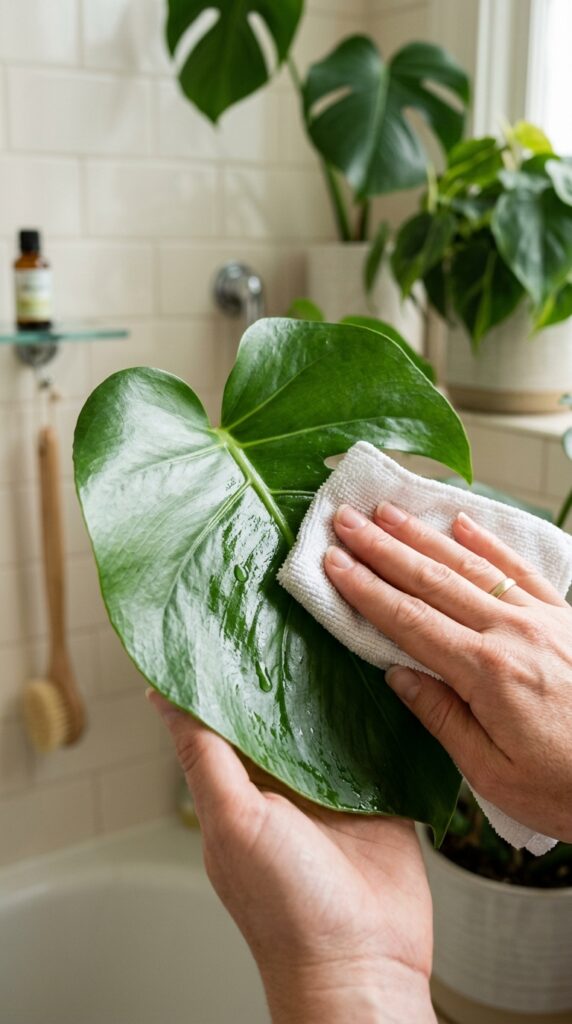
Vibe: Attentive — plants that are tended closely grow like they know someone is watching.
Why it works: In a shower environment, hard water mineral deposits, soap residue, and dust accumulate on leaf surfaces over time — forming a thin film that reduces the leaf’s ability to absorb light through its chloroplasts. A leaf with 20–30% of its surface coated in mineral film is measurably less effective at photosynthesis than a clean leaf. In a low-to-medium light environment like most bathrooms, this efficiency loss is compounded — a plant already operating at reduced light capacity cannot afford any further reduction from dirty leaves.
How to get it: Wipe each leaf top surface with a damp microfiber cloth once a month, working from the base of the leaf toward the tip (the direction of the leaf’s internal vein structure). Do not wipe the undersides of leaves — the stomata are located there and can be damaged by abrasive cleaning.
Shop The Look
| Product |
| Microfiber plant leaf cleaning cloth set |
| Neem oil plant spray natural pest control |
| Leaf shine spray natural plant polish |
| Soft bristle plant dusting brush set |
| Distilled water gallon for sensitive plants |
15. Choose Variegated Varieties for Low-Light Visual Interest

Vibe: Visually rich — variegated leaves do what art does: they hold your attention even in stillness.
Why it works: Variegated plant varieties (those with cream, white, or yellow patterning in their leaves) create visual complexity in a space without requiring additional objects or styling layers. In a shower where the palette is often monochromatic tile and chrome, a variegated pothos or marbled pothos (Epipremnum aureum ‘Marble Queen’) introduces the same tonal variation that a painting would — but it’s alive and growing. Importantly, most variegated varieties of pothos and philodendron tolerate the same low-to-medium light conditions as their all-green counterparts.
How to get it: Source variegated pothos or golden pothos ‘Neon’ from a specialty plant shop or online plant retailer — big-box stores typically carry only solid-green varieties. Expect to pay $8–20 for a 4-inch starter pot, compared to $4–8 for standard green.
💡 Quick Win: Marble Queen pothos is the most widely available variegated shower plant — it’s sold at most garden centers in spring and summer, trails beautifully from any height, and costs under $15 for a 4-inch pot.
Shop The Look
| Product |
| Marble queen pothos live variegated 4 inch |
| Neon pothos live trailing bright green |
| Matte white ceramic pot 5 inch modern |
| Dried botanicals mini bouquet bud vase set |
| Chrome floating bathroom shelf for plants |
16. Ensure Airflow Between Showers to Prevent Mold

Vibe: Fresh — a bathroom that breathes is a bathroom where plants actually live.
Why it works: The biggest risk in shower plant culture is not overwatering or low light — it is stagnant, humid air between shower uses. When the bathroom door stays closed after a shower, residual steam has nowhere to go, and the sustained high humidity (often 90%+) creates ideal conditions for fungal growth on plant leaves and in the soil. Airflow — even minimal — breaks this cycle by reducing humidity to manageable levels between showers. A small USB-powered fan ($15–25) set to run for two hours after each shower extends plant life dramatically.
How to get it: Run the bathroom exhaust fan for a full 30 minutes after every shower (most people run it for 5–10 minutes, which is insufficient). If the bathroom has no window or exhaust fan, a small oscillating desk fan on a timer achieves the same result for under $20.
Shop The Look
| Product |
| Small USB desk fan quiet white mini |
| Outlet timer digital programmable for fans |
| Bamboo bath accessory set soap dish cup |
| Hygrometer digital humidity monitor bathroom |
| Anti-mold spray plant safe bathroom treatment |
17. Add a Staghorn Fern Mounted on a Wood Plank

Vibe: Dramatic — a staghorn fern mounted on wood is the most sculptural thing a bathroom wall can hold.
Why it works: Staghorn ferns (Platycerium bifurcatum) are epiphytic plants — they evolved growing on tree trunks in tropical forests, absorbing moisture and nutrients from the air and rain rather than soil. This makes them uniquely suited to a shower wall: they need no pot, no soil, and minimal maintenance, and they thrive in the high-humidity environment. Mounted on a cedar plank, the staghorn becomes a living piece of wall art with genuine three-dimensional form — the antler-shaped fertile fronds extend outward from the wall, creating depth and shadow that a framed print cannot.
How to get it: Mount the staghorn by placing it against a cedar or redwood board and securing its brown shield fronds (the flat, papery base fronds) to the board with natural jute or cotton twine. Pack sphagnum moss between the plant base and the board for moisture retention. Never staple or pierce through the fronds — the plant attaches itself over time.
💡 Quick Win: Small staghorn ferns (4–6 inch base) can be purchased pre-mounted on wood planks from specialty nurseries and online plant shops for $25–45, ready to hang immediately.
Shop The Look
| Product |
| Staghorn fern live mounted wood plank |
| Cedar plank board for plant mounting natural |
| Sphagnum moss bag natural 4qt live |
| Jute twine natural roll 200ft |
| Brass wall hook bathroom heavy duty single |
18. Use Trailing Plants to Soften Hard Shower Lines
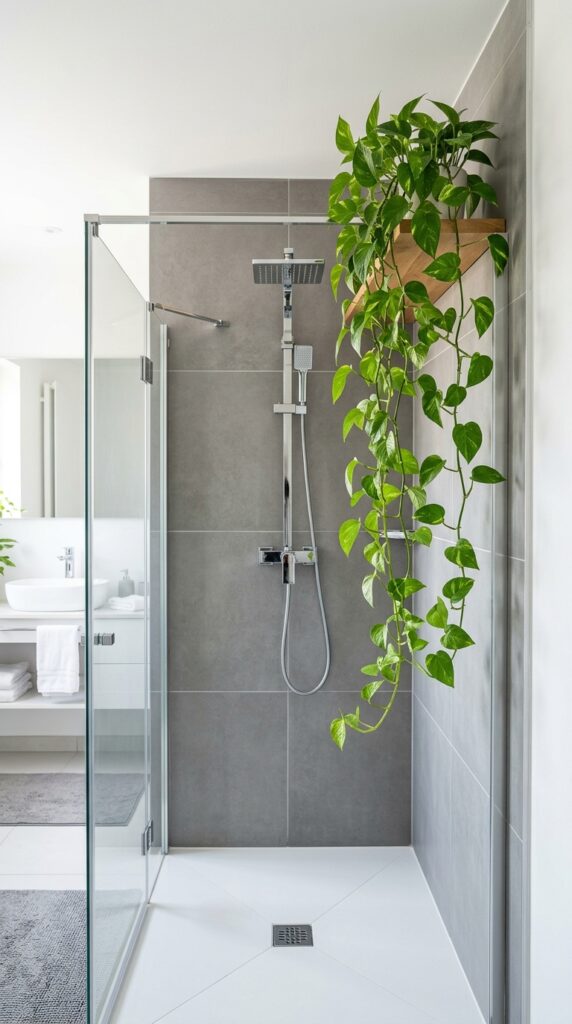
Vibe: Softened — trailing vines are the antidote to a shower that feels too architectural.
Why it works: Modern shower design tends toward hard geometry: large-format tiles, square fixtures, rectilinear niches. Trailing plants introduce organic curved lines that contrast with this geometry through the design principle of biomorphic relief — the brain responds to organic shapes with measurably lower stress signals than it does to hard angular environments. A single trailing pothos allowed to grow 24–36 inches downward from a high shelf softens an entire shower wall without requiring any structural change or additional styling.
How to get it: Place the trailing plant on the highest possible shelf or hook in the shower — at least 5 feet from the floor. Allow the vines to trail naturally downward; do not coil or wrap them around the shelf edge, which creates an unnatural, forced look. Pothos vines will grow toward the light source, so position the plant with its best side facing the primary light direction.
Shop The Look
| Product |
| Golden pothos live plant 6 inch hanging pot |
| High wall plant shelf waterproof bathroom |
| Large format tile grey 24×24 porcelain |
| Chrome shower caddy corner 3 tier |
| Trailing plant fertilizer liquid tropical |
19. Fertilize Lightly, Seasonally — Not Year-Round
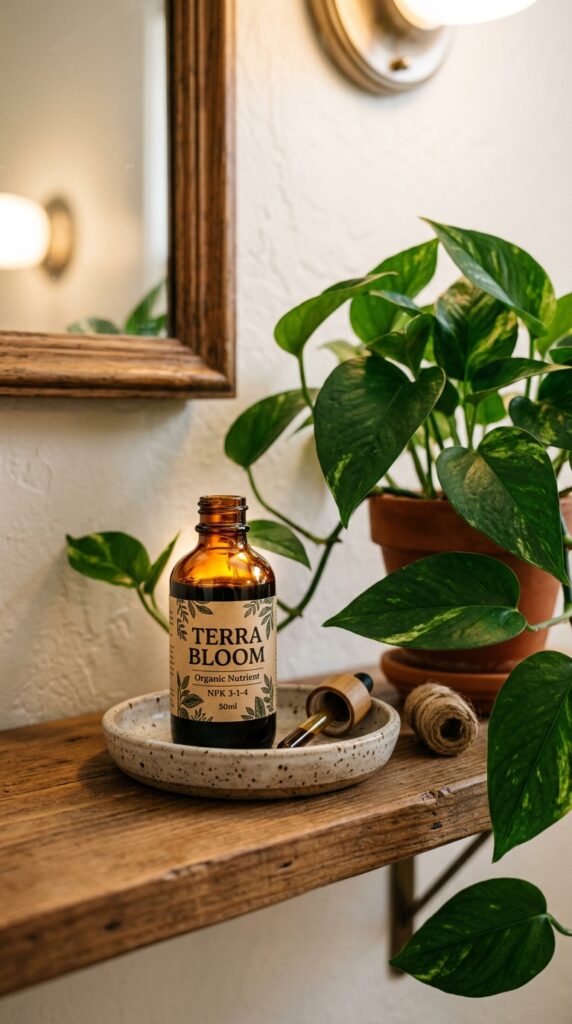
Vibe: Intentional — plant care as ritual, not chore.
Why it works: Shower plants in high-humidity environments grow more slowly than plants in optimal light and airflow — their metabolic rate is reduced because photosynthesis is occurring at lower efficiency. Fertilizing a slow-growing plant on an aggressive year-round schedule causes salt buildup in the soil, which burns root tips and creates the brown leaf edges that most people incorrectly attribute to overwatering. The correct approach is seasonal fertilization: a half-strength liquid fertilizer once a month from March through September, and nothing from October through February when tropical plants enter a natural semi-dormant phase.
How to get it: Use a balanced liquid fertilizer (labeled 10-10-10 or 20-20-20) diluted to half the package-recommended strength. For shower plants specifically, always water the soil lightly before applying fertilizer — never apply to dry soil, which concentrates the mineral salts and increases burn risk.
💡 Quick Win: Slow-release fertilizer pellets (pressed into the top inch of soil once in spring) are a genuinely foolproof approach for shower plants — they release nutrients gradually over 3–6 months and require no measuring or diluting.
Shop The Look
| Product |
| Liquid plant fertilizer balanced 10-10-10 indoor |
| Slow release fertilizer pellets indoor plants 3 month |
| Amber glass dropper bottle plant care 4oz |
| Ceramic tray bathroom shelf organizer small |
| Plant care label set waterproof stake markers |
20. Choose a Bathroom Color Palette That Frames the Plants
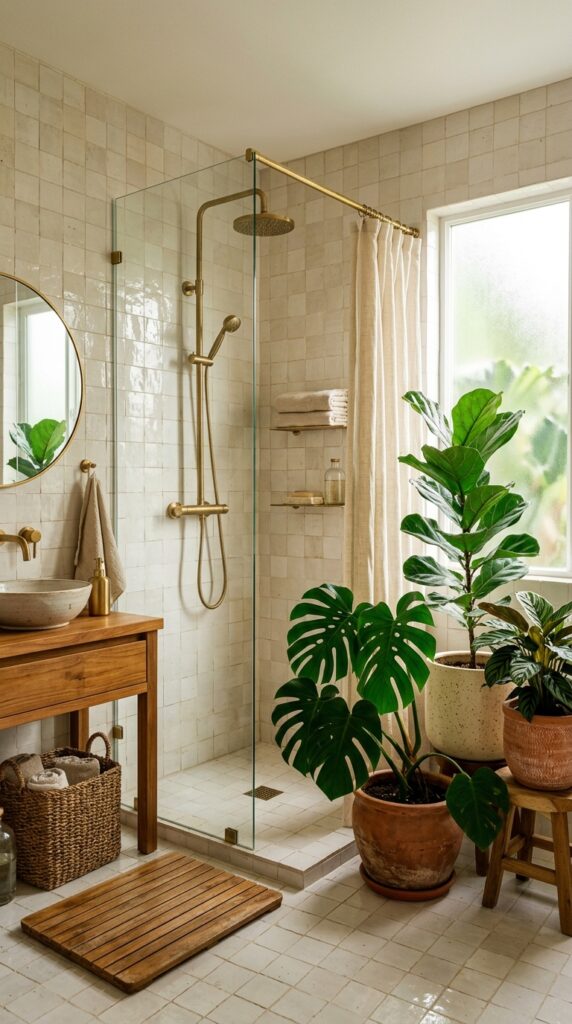
Vibe: Alive — the right background makes plants look like they’re glowing from within.
Why it works: Plant color (green) sits opposite red-orange on the color wheel, which means warm-toned backgrounds (terracotta, warm ivory, brass, honey wood) create natural chromatic contrast that makes green foliage appear more saturated and vivid. A cool grey or stark white tile background mutes plant color by reducing chromatic contrast. If you’re renovating or selecting tile, choosing a warm white (with yellow or red undertones, like Sherwin-Williams “Alabaster”) rather than a cool white (with blue undertones, like “Pure White”) dramatically improves the visual impact of any plants you introduce.
How to get it: If renovation isn’t possible, introduce warm tones through textiles and accessories instead: a linen shower curtain in warm ivory, teak bath mat, or terracotta pot color all shift the perceived warmth of the space and improve the visual framing of existing plants.
Shop The Look
| Product |
| Warm ivory linen shower curtain weighted hem |
| Teak bath mat slatted shower floor |
| Zellige look tile warm white 4×4 handmade |
| Brushed brass shower curtain rings set of 12 |
| Woven seagrass storage basket bathroom medium |
21. Repot Annually to Prevent Root-Bound Stress
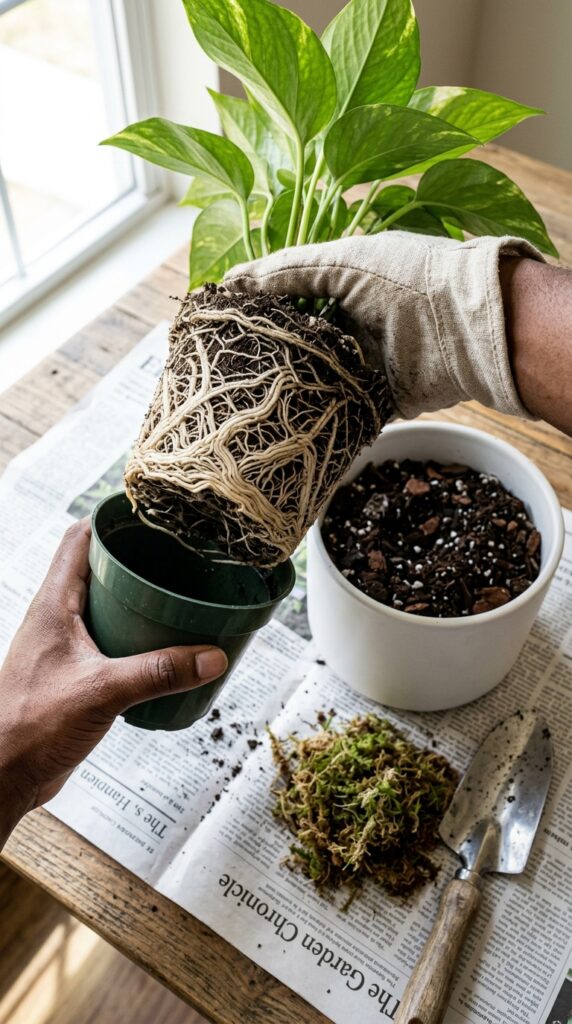
Vibe: Restorative — repotting is the reset button that turns a struggling plant back into a thriving one.
Why it works: A root-bound plant (one where the roots have filled the pot completely and are circling the base) cannot absorb water or nutrients efficiently, because the root mass has displaced nearly all the soil. In a shower environment where watering is already conservative and light is limited, a root-bound plant hits a compounded stress ceiling — it cannot access the nutrients the soil offers, and its reduced photosynthesis rate means it cannot signal distress through normal growth. Annual repotting into a pot one size larger (2 inches wider in diameter) resets this cycle.
How to get it: Repot shower plants in spring (March–April), when tropical plants begin their active growing season. Move to a pot no more than 2 inches larger in diameter — oversizing the pot creates excess soil that retains moisture past the point the roots can absorb it, paradoxically contributing to root rot.
Shop The Look
| Product |
| Tropical potting mix premium indoor blend |
| White ceramic plant pot 6 inch modern |
| Garden hand trowel stainless small indoor |
| Root stimulator liquid transplanting plants |
| Repotting mat waterproof work surface |
22. Style the Space Around the Plants, Not the Other Way Around
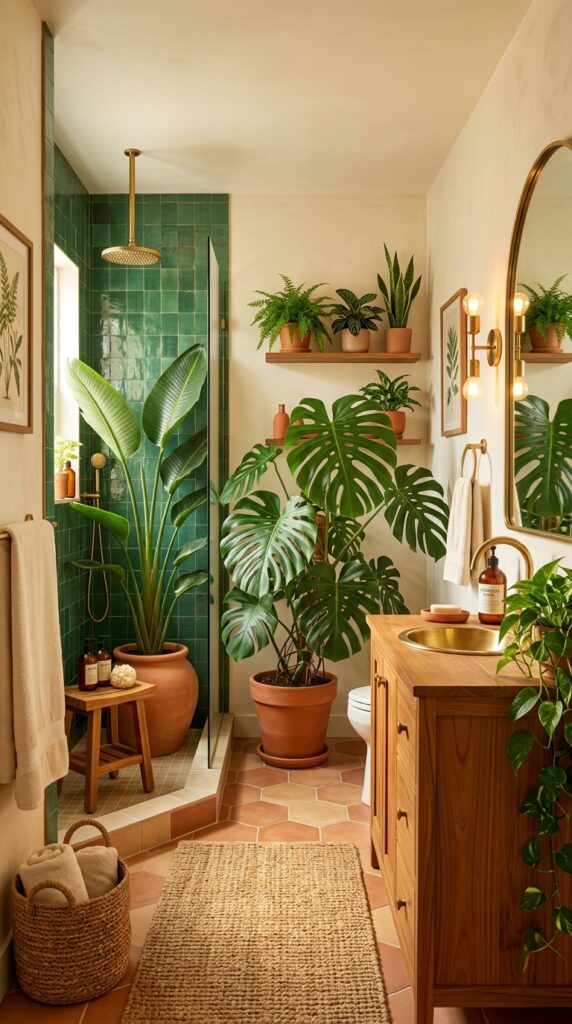
Vibe: Immersive — when the whole room breathes together, it stops feeling like a bathroom and starts feeling like a destination.
Why it works: Most shower plant arrangements fail aesthetically not because the plants are wrong, but because the rest of the bathroom hasn’t been considered in relation to them. Treating the plants as the design anchor — the element that everything else responds to — is the approach used in botanical hotel design and residential projects that get pinned and reshared. Once you select your plants, choose your textile colors, pot finishes, and accessory tones as a deliberate response to the plant palette. Warm green foliage belongs with warm ivory, teak, and brass; dark waxy tropical greens pair with grey tile, chrome, and concrete.
How to get it: Choose your primary plant species first. Then select your shower curtain, bath mat, and pot finishes in the warm or cool family that complements the plant’s specific leaf tone. Treat the plant as the hero of the composition — everything else is the supporting cast.
💡 Quick Win: Replace one accessory today — the soap dispenser or toothbrush holder — with a terracotta or warm brass version, and observe how the plant on your shelf immediately reads as more intentional. Context changes everything.
Shop The Look
| Product |
| Brass soap dispenser pump bathroom countertop |
| Terracotta bathroom accessory set 4 piece |
| Woven cotton bathmat warm ivory chunky weave |
| Botanical print framed art bathroom wall |
| Dried pampas grass stem small vase set |
How to Start Your Shower Plant Transformation
The single best first move is to buy one golden pothos in a 4-inch nursery pot and place it on a high shelf or hook inside your shower for two weeks. Do not water it. Observe it. If it holds its color and shows no yellowing or wilting after 14 days, your shower has adequate humidity and light for tropical plants — and you now have a data point from your actual environment, not a plant care blog’s generalized advice. The pothos is the control plant for your specific shower conditions. Everything else follows from what it tells you.
The most common mistake is choosing plants based on appearance rather than light tolerance — specifically, buying a fern because it looks lush in a shop under artificial grow lights, then placing it in a dark north-facing shower where it declines within three weeks. Ferns require moderate indirect light (at least a soft-shadow level) to sustain themselves. In insufficient light, they drop fronds rapidly and develop brown tips that no amount of misting will reverse. Audit your light level first using the shadow test; select your species second.
Three items under $50 that create immediate shower plant impact: a single staghorn fern in a 4-inch pot ($12–18 at most garden centers) placed on a teak shelf; a handwoven macramé hanger in natural cotton ($14–20 online) for instant vertical height; and a set of three matching white ceramic pots in graduated sizes ($18–28) that immediately unify a mismatched plant collection into a composed display.
A single thriving shower plant can be established in one weekend. A fully designed botanical shower — with three to five plants, coordinated textiles, and a rotation system — takes one growing season (spring to late summer) to build properly, at a total cost of $80–200 depending on plant species and accessory choices.
Frequently Asked Questions About Keeping Shower Plants Alive
What is the best plant to keep in a shower?
Golden pothos (Epipremnum aureum) is the most reliably successful shower plant for most bathroom conditions — it tolerates low to medium indirect light, processes ambient humidity through its leaves, and survives irregular watering better than almost any other tropical species. For slightly brighter bathrooms (soft-shadow light level or better), Boston fern and heartleaf philodendron are equally strong performers. Avoid succulents, cacti, lavender, or herbs — these are drought-adapted plants that will develop root rot within weeks in shower humidity.
What color pot works best for shower plants?
White glazed ceramic and warm terracotta are the two most versatile pot colors for bathroom plant styling — white ceramic works with cool grey and white tile palettes, while terracotta works with warm ivory, wood, and brass finishes. Matte black pots create strong contrast in a minimalist white bathroom but can feel visually heavy in a small space. Avoid translucent plastic pots (they show soil and root discoloration) and any pot with uncoated metal detailing, which will rust in shower humidity within one season.
How much does it cost to set up a shower plant display?
A single-plant starter setup (one pothos in a glazed ceramic pot with a waterproof adhesive hook) costs $15–25 total. A three-plant composed display with a teak bench, matching pots, and a macramé hanger runs $75–150. A full botanical shower setup with grow lighting, five or more plants, coordinated textiles, and seasonal plant rotation costs $200–400 to establish properly — though this includes the plants themselves, which are a one-time cost for species that can live for years when correctly maintained.
Can I keep a monstera in my shower?
A standard monstera (Monstera deliciosa) can live in a shower environment only if the bathroom receives at least moderate indirect light — a frosted or clear window providing soft-shadow-level brightness. Monstera plants are not as shade-tolerant as pothos or philodendron, and in insufficient light they will stop producing fenestrations (the distinctive leaf holes) and eventually decline. A more shower-appropriate alternative in the monstera family is the Rhaphidophora tetrasperma (often called “mini monstera”), which is more tolerant of lower light and grows at a scale better suited to most shower spaces.
Which shower plants work without any windows?
ZZ plant (Zamioculcas zamiifolia), cast iron plant (Aspidistra elatior), and Chinese evergreen (Aglaonema) are the three most light-tolerant tropical plants available — all three can survive in windowless bathrooms when supplemented with a full-spectrum LED grow light running 12–14 hours per day. Air plants (Tillandsia) are another option for windowless spaces if grow lighting is provided. No plant survives indefinitely in true zero-light conditions — even the most shade-tolerant species require some light spectrum input to photosynthesize.
Ready to Create Your Dream Shower Plant Display?
These 22 tips cover the full range of what keeps shower plants truly alive — from species selection and drainage science to styling principles and seasonal care rhythms that prevent the slow decline most plant owners never see coming. Every transformation starts with one plant on one shelf, and that first thriving specimen is more valuable than ten struggling ones crowded together in a space they weren’t chosen for. Today, run the shadow test in your shower — hold your hand 12 inches above the floor and observe the shadow — and use what it tells you to choose your first plant with genuine confidence. When the plants are right, the whole bathroom shifts register: it starts to feel less like a utility room and more like the first room in the house that belongs entirely to you. Pin the tip that unlocked something for you — the rotation system, the odd-number rule, the teak bench — and let that be your starting point.