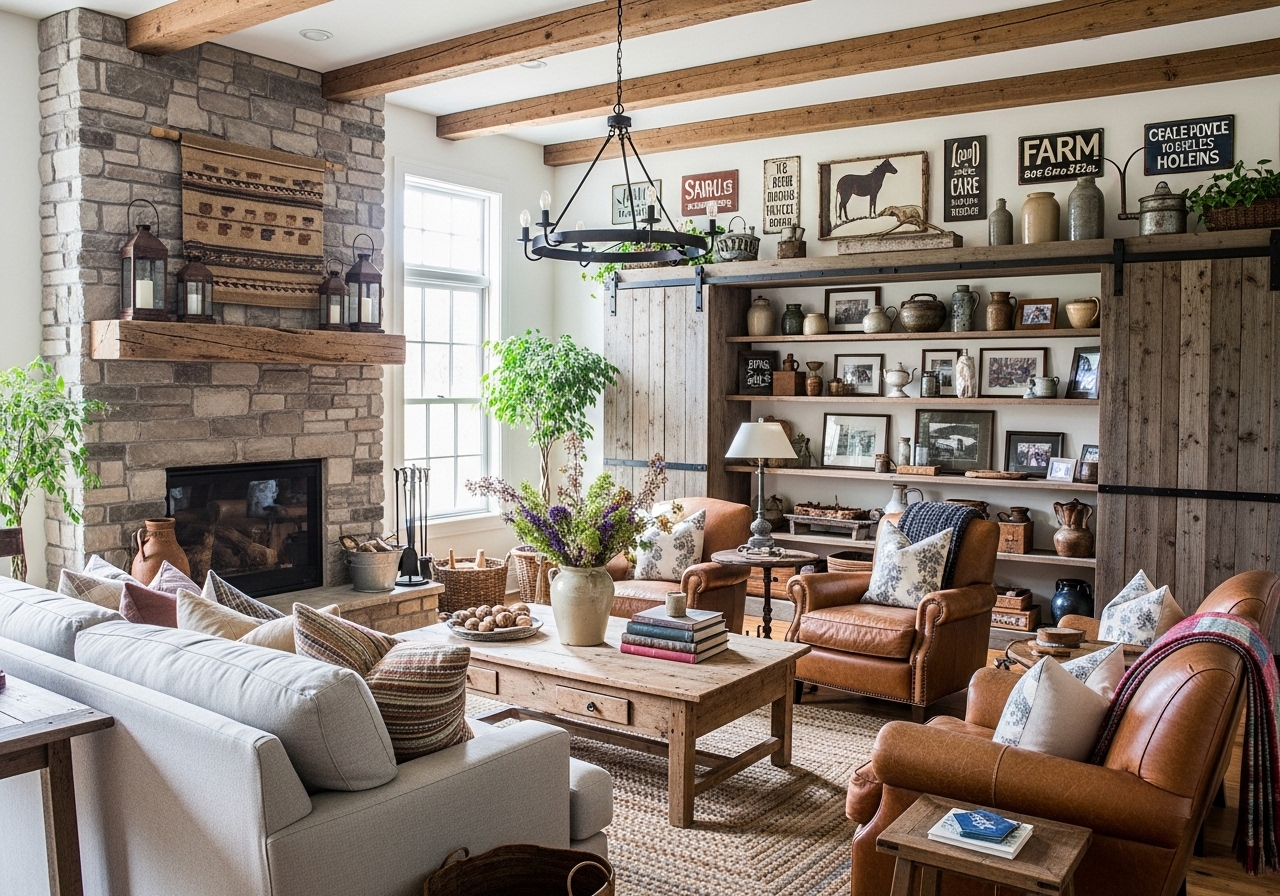
There’s something about a rustic farmhouse living room that feels like exhaling — deeply, slowly, all the way. The worn textures, the weathered wood, the linen-draped sofas that seem to say sit down and stay awhile. It’s a style that doesn’t try too hard, yet somehow pulls off something most interiors never manage: genuine warmth with real character. If you’ve been dreaming of a space that feels lived-in and loved, you’re in exactly the right place. Here are 20 rustic farmhouse living room ideas worth saving.
Why Rustic Farmhouse Works So Well
Rustic farmhouse design endures because it’s rooted in authenticity. Unlike trend-driven styles that date quickly, this aesthetic borrows from working farmhouses, old barns, and generations of practical living — which means every element has a reason for being there. The result is a room that feels earned rather than decorated.
The core palette leans into nature: warm whites, oat, greige, aged wood browns, and soft sage. Materials are tactile and honest — shiplap walls, reclaimed oak beams, linen upholstery, and wrought iron. Nothing is overly polished. Surfaces are allowed to show their history, and that imperfection is precisely the point.
Right now, rustic farmhouse is experiencing a cultural renaissance on Pinterest because it represents an antidote to the cold, sterile minimalism that dominated the 2010s. People want comfort, story, and soul in their homes — and this style delivers all three in spades.
Even small living rooms can fully embrace this look. A single shiplap accent wall, a jute rug, and a vintage wooden coffee table can transform a compact space into something that feels intentional, cozy, and completely Pinterest-worthy.
1. Shiplap Accent Wall With Antique Mirror

Vibe: This wall stops you in your tracks — the layered texture of shiplap behind the weathered gold of an antique mirror creates a depth that a flat painted wall simply cannot touch.
What makes it work: Shiplap adds architectural interest without renovating the whole room, and horizontal lines draw the eye across the space, making it feel wider. The antique mirror bounces light while adding an heirloom quality that anchors the entire wall. The contrast between matte white planks and reflective aged glass is a masterclass in texture play.
How to achieve it: Install pre-primed shiplap boards (available at most home improvement stores) and paint them in Benjamin Moore’s “White Dove” for that signature warm-white farmhouse tone. Source your mirror from estate sales or Facebook Marketplace for genuine patina.
💡 Peel-and-stick shiplap panels exist for renters — no nails, no damage, full effect.
2. Reclaimed Wood Beam Ceiling

Vibe: There’s something almost cinematic about a ceiling crossed with thick, dark reclaimed beams — it feels like you’ve stepped inside a centuries-old French countryside home.
What makes it work: The visual weight of dark wood overhead creates instant architectural drama without touching a single wall or floor. Beams also draw the eye upward, making ceilings feel taller. The contrast between rough-hewn wood and smooth white plaster between them is the key tension that makes this look so compelling.
How to achieve it: Hollow faux wood beam wraps are a completely legitimate option — they install with brackets and are indistinguishable from real reclaimed timber. Look for options in a “dark walnut” or “weathered grey” finish and space them 3–4 feet apart for the most authentic effect.
3. Linen Sofa in Warm Oat With Layered Throws

Vibe: This sofa looks like it came with the house — in the very best way imaginable.
What makes it work: Linen’s natural texture and tendency to wrinkle slightly gives it that lived-in quality that polyester blends never achieve. An oat or undyed linen tone works as a neutral foundation for layering textiles in contrasting colors and weights, creating visual richness without any single piece feeling overdone.
How to achieve it: If a full linen sofa is out of budget, buy a loose linen slipcover for your existing piece — brands like Sure Fit or custom Etsy sellers make these in natural tones. Layer a chunky knit in cream plus a vintage-style textile pillow in dusty indigo or terracotta to hit the full palette.
💡 Stone-washed linen slipcovers hide pet hair and kids’ messes far better than most fabrics — practical and beautiful.
4. Whitewashed Stone Fireplace as the Hero Piece

Vibe: A whitewashed stone fireplace is a living room’s soul — everything else in the room orbits around its warmth.
What makes it work: Whitewashing stone softens its ruggedness while preserving all the texture, which is the perfect metaphor for rustic farmhouse design itself. The raw wood mantel adds warmth and organic contrast, while keeping the surround uncluttered lets the scale of the stonework speak for itself.
How to achieve it: Limewash paint (Portola Paints makes an excellent version) can be applied over existing brick or stone in an afternoon. Thin it with water for a lighter wash effect. Pair with a simple floating oak mantel in natural-finished wood — no stain, just sealed raw grain.
5. Vintage Wooden Coffee Table With Character

Vibe: This is the kind of coffee table that looks like it holds a hundred stories — nicks, rings, and all.
What makes it work: In a room full of soft textiles and painted walls, a genuinely distressed wooden table provides necessary visual grounding. Its irregular surface and organic imperfections prevent the room from feeling too curated or staged. Every scratch adds rather than detracts.
How to achieve it: Hunt estate sales, Craigslist, or antique markets for solid wood tables with existing patina — you want real wear, not manufactured distressing. If you find a sturdy piece in bad shape, lightly sand it and apply one coat of raw linen oil to bring it back without erasing its history.
💡 A reclaimed wood slab on hairpin legs costs under $200 DIY and looks like a $600 boutique find.
6. Woven Jute Rug as the Grounding Layer
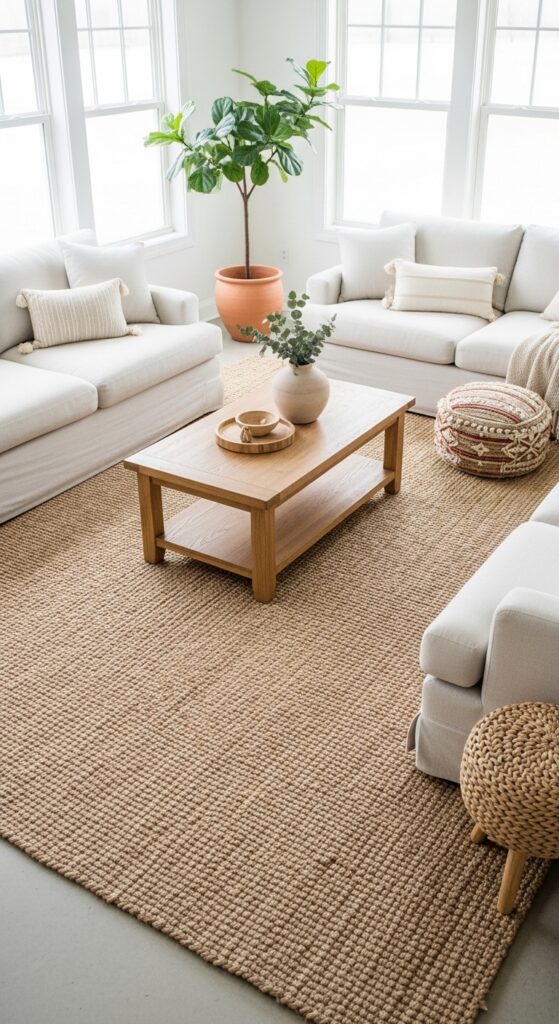
Vibe: The jute rug is the room’s earth — everything grows from it, and without it, the whole composition floats.
What makes it work: Natural fiber rugs add raw, organic texture at the floor level that softens harder furniture and visually connects the room to its farmhouse roots. Jute specifically has a loosely woven quality that catches light differently throughout the day, giving the floor subtle animation.
How to achieve it: Size up — go at least 8×10 for most living rooms, and ideally 9×12. All four sofa legs should sit on the rug, not just the front two. Layer a small sheepskin or Moroccan-style flatweave on top for a collected look. Avoid rugs with too-tight weaves; the open, natural texture is the whole point.
7. Open Shelving With Honest, Imperfect Styling

Vibe: These shelves look like they were built by someone who cared — and filled by someone who collected slowly and intentionally.
What makes it work: Rustic farmhouse shelving succeeds because of deliberate imperfection: slightly unmatched ceramics, a plant trailing over the edge, books with worn spines. The matte black iron brackets provide a modern farmhouse tension against the organic wood. Spacing items generously prevents clutter while maintaining that collected feeling.
How to achieve it: Mount raw-edge floating shelves in reclaimed pine or oak on black iron angle brackets. For styling, use the “rule of odd numbers” — group items in threes and fives, vary heights, and leave breathing room between groupings. One trailing plant instantly softens the whole thing.
💡 Thrift store ceramics spray-painted matte white create a cohesive farmhouse collection for under $15.
8. Sage Green Walls That Change With the Light
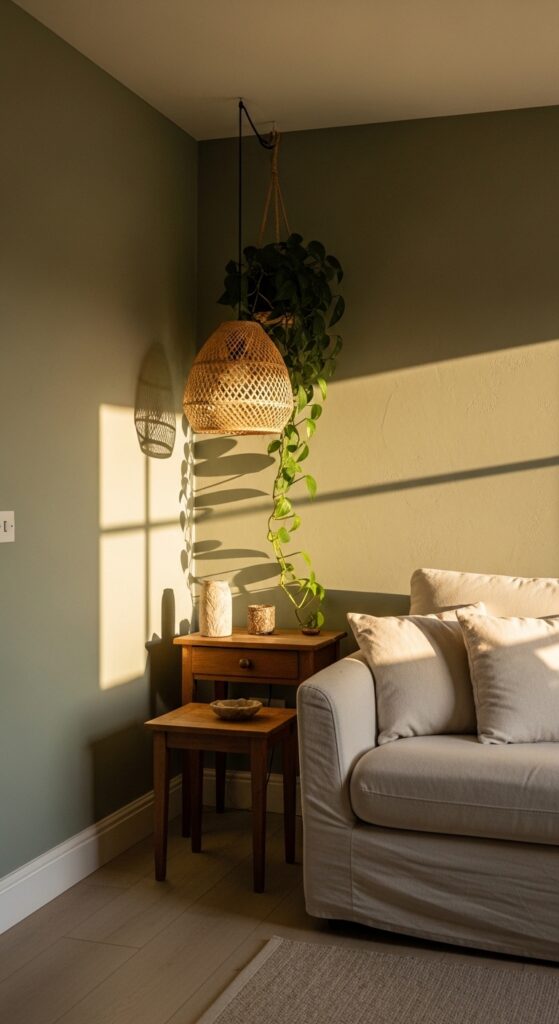
Vibe: Sage green walls feel like the inside of a greenhouse — alive, calm, and quietly beautiful.
What makes it work: Sage sits perfectly between green and grey, which means it works harmoniously with virtually every natural material — wood, linen, rattan, terracotta. Unlike bolder greens, sage doesn’t compete; it collaborates. The color shifts dramatically from morning cool to warm afternoon gold, making the room feel alive throughout the day.
How to achieve it: Try Farrow & Ball’s “Mizzle” or Sherwin-Williams “Retreat” for an authentic sage tone. Apply in a flat or matte finish — even the faintest sheen will make it read as too contemporary for this style. Pair with cream trim rather than bright white to keep the palette warm.
9. Vintage Gallery Wall With Botanical Prints

Vibe: This wall feels like a cabinet of curiosities — gathered over years, each piece carrying its own quiet story.
What makes it work: The key to a farmhouse gallery wall is intentional mismatch — different frame materials, different print styles, different sizes — unified by a consistent subject matter (botanicals, landscapes, or family portraits) and a warm, muted color palette. The eclectic frames read as collected rather than purchased as a set.
How to achieve it: Source frames at thrift stores and paint them in two or three tones: aged gold, matte black, and raw wood. Download free vintage botanical prints from sites like Rawpixel.com and print at home or at a copy shop. Plan your layout on the floor before a single nail goes in.
10. Industrial Farmhouse Pendant Lighting

Vibe: The amber glow from industrial cage pendants turns any living room into an evening sanctuary the moment the sun goes down.
What makes it work: The matte black metal of industrial pendants creates a grounding, graphic element that prevents rustic farmhouse rooms from feeling too soft or saccharine. Edison bulbs cast a warm, directional amber that brings out the gold tones in natural wood and linen — it’s lighting that actively flatters the rest of your decor.
How to achieve it: Hang pendants lower than you think — ideally 5–6 feet from the floor when hung over a seating area. This brings the warmth down into the room rather than losing it at ceiling height. Opt for dimmer-compatible Edison bulbs in 2200K color temperature for the most atmospheric effect.
💡 Plug-in pendant lights exist — no electrician needed, just a hook in the ceiling and a cord to hide along the wall.
11. Wicker and Rattan Accent Chairs

Vibe: Rattan chairs bring the outdoors inside effortlessly — light, organic, and instantly relaxed.
What makes it work: Rattan’s open weave casts the most beautiful shadow patterns in morning sunlight, adding a quality of natural animation that solid-frame chairs simply can’t replicate. As accent seating, two rattan chairs flanking a coffee table create a visual rhythm that softens the heavier, upholstered sofa nearby.
How to achieve it: Look for chairs with a wider seat and lower arm — this profile feels more relaxed and less formal. Cushion them in stone-washed linen in cream or warm white for a classic pairing. If cane is sagging on a vintage find, cane repair kits are inexpensive and the process is deeply satisfying.
12. Cozy Reading Nook With Built-In Window Seat

Vibe: This nook is the room’s quiet reward — a place the rest of the house feels like it leads to.
What makes it work: Beadboard paneling under a window seat adds that signature farmhouse detail — vertical grooves catch shadow and create depth that flat paint walls can’t. The combination of built-in storage underneath and a deeply cushioned seat turns what’s often dead space beneath a window into the most desirable seat in the house.
How to achieve it: Build a simple box frame from MDF, clad it with beadboard panels, and top with a 4-inch foam cushion cut to fit. Install piano hinges on the seat top to access storage inside. Paint in Benjamin Moore “Chantilly Lace” and pair with a natural linen cushion cover.
13. Terracotta and Warm Rust Accents

Vibe: Terracotta accents feel like autumn has come inside and decided to stay permanently.
What makes it work: The warm, clay-red undertones of terracotta act as the perfect counterpoint to the cool whites and beige neutrals that dominate farmhouse rooms. It grounds the palette in something earthy and ancient, adding visual heat without going bold or saturated. Even a single terracotta pot delivers outsized impact.
How to achieve it: Introduce terracotta gradually — start with a hand-thrown planter, a rust-toned cushion, and a few small ceramic pieces. Keep the shapes organic and imperfect. Avoid glazed, factory-smooth terracotta — the uneven, matte, slightly rough surface is what makes it feel genuinely farmhouse rather than trendy.
💡 Air-dry clay is cheap and easy to shape into simple vases and bowls — no kiln required, fully customizable.
14. Dried Floral and Pampas Grass Arrangements

Vibe: Dried pampas in a farmhouse living room has the same effect as candlelight — it softens everything it touches.
What makes it work: Dried botanicals bring scale, movement, and organic texture in a way that fresh flowers can’t sustain. The feathery plumes of pampas grass create a soft, cloud-like silhouette that fills corners beautifully. Unlike rigid architectural plants, their natural drape and curve mirror the relaxed soul of rustic farmhouse design.
How to achieve it: Arrange pampas in a vessel that’s at least two-thirds the height of the arrangement — a dark stoneware floor vase works beautifully. Mix in dried lunaria (silver dollar plant), cotton stems, and dried wheat for variety. Spray lightly with unscented hairspray to prevent shedding once arranged.
15. Dark Walnut Floors With a Layered Rug Strategy
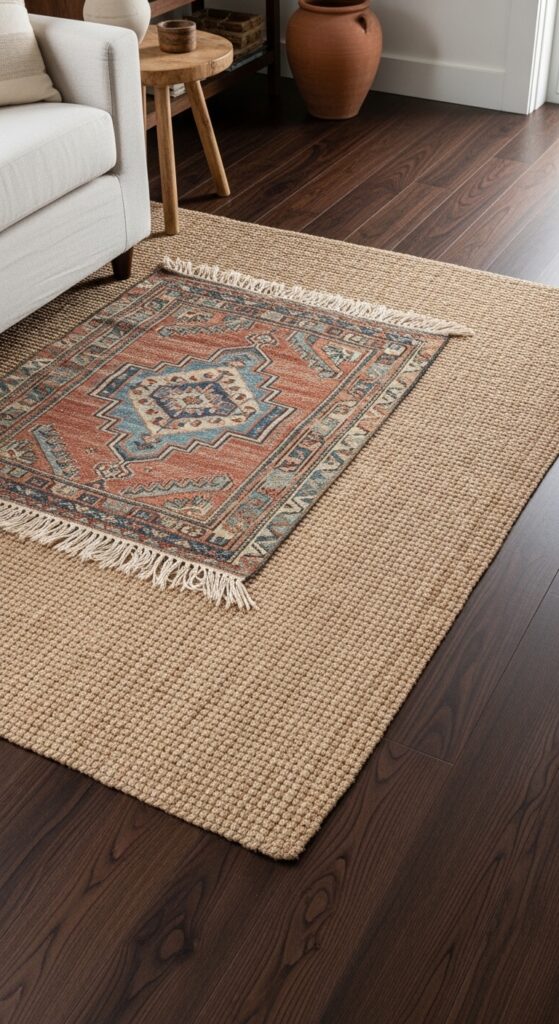
Vibe: Layered rugs on dark walnut floors have the visual richness of a room that’s been lived in and loved for decades.
What makes it work: Dark walnut flooring creates a dramatic backdrop that makes lighter furniture and textiles pop. Layering a vintage-toned kilim over a jute base rug adds color, pattern, and the collected quality that defines the best farmhouse interiors. The interplay between geometric kilim pattern and organic jute texture creates depth at floor level.
How to achieve it: Start with a large natural jute as your base (9×12 minimum). Layer a smaller vintage Turkish or Moroccan-style kilim on top, slightly off-center, with fringe showing at least on one end. Affordable kilim-style rugs are widely available at IKEA, TJ Maxx, and Ruggable for under $150.
16. Wrought Iron Candleholders and Sconces

Vibe: Wrought iron sconces with candles are the farmhouse living room’s answer to jewelry — small, specific, and transformative.
What makes it work: The hammered, matte black texture of wrought iron introduces a hard, graphic element that prevents the room from becoming too soft and cottagecore. Wall-mounted sconces frame artwork or mirrors elegantly and add a vertical design element at eye level that draws the gaze upward. Even unlit, they add character.
How to achieve it: Look for handmade blacksmith-style wrought iron sconces on Etsy, where artisan makers offer genuine hammer-textured pieces from $30–$80. Pair with 3-wick cream or beeswax pillar candles in varying heights. Mount at eye level, approximately 60–66 inches from the floor.
💡 Battery-operated flameless candles with warm amber flicker are a safe, realistic substitute in wall sconces.
17. A Statement Vintage Trunk as Storage Coffee Table

Vibe: A vintage trunk coffee table tells a story before a single word is spoken — it’s functional furniture with a past.
What makes it work: A repurposed trunk brings function, storage, and instant narrative to the living room’s center. The rounded lid and leather hardware introduce curved shapes that soften the angular geometry typical of sofas and shelves. The hidden storage inside solves the farmhouse living room’s only real design challenge: tidiness.
How to achieve it: Search estate sales, antique shops, and eBay for genuine vintage steamer trunks — expect to pay $80–$200 for a good one. Condition the leather with saddle soap. Place a wooden serving tray on top for a stable, flat surface for drinks and books. Line the interior with cedar for storage of linens or throws.
18. Sheer Linen Curtains That Billow in the Breeze

Vibe: Sheer linen curtains don’t just dress a window — they turn sunlight itself into a design element.
What makes it work: Sheer natural linen diffuses harsh direct sunlight into a soft, even glow that makes every surface in the room look its absolute best. The fabric’s loose weave creates a barely-there look that feels luxurious without heaviness. Hanging them from ceiling to floor — regardless of actual window height — adds height and drama to any room.
How to achieve it: Mount your curtain rod as close to the ceiling as possible — this single trick makes 8-foot ceilings read as 10 feet. Choose undyed or “natural” linen in a flat weave. IKEA’s LISEL curtains and similar options offer a convincing look at an accessible price point. Allow slight floor pooling for an intentionally relaxed feel.
19. Neutral Bookshelf Styling With Black Spines and Ceramics

Vibe: A thoughtfully styled bookshelf is the farmhouse living room’s version of a mood board — curated, calm, and deeply personal.
What makes it work: The trick here is restraint and cohesion. Arranging books by spine color — grouping creams and whites together, blacks together — creates visual order without rigidity. Breaking the rows with ceramics and small plants introduces organic irregularity that prevents the shelf from feeling like a showroom. It’s styled enough to be beautiful, relaxed enough to feel real.
How to achieve it: Remove any books with bright, clashing covers — store them elsewhere. Turn remaining books spine-inward for a uniform textured look, or organize by color family. Space ceramics in odd-numbered groupings between book clusters. Vary heights by adding a small wood riser beneath shorter vessels.
💡 IKEA BILLY bookcase + trim molding + white paint = built-in look for under $200.
20. Cozy Corner With a Vintage Floor Lamp and Wool Blanket
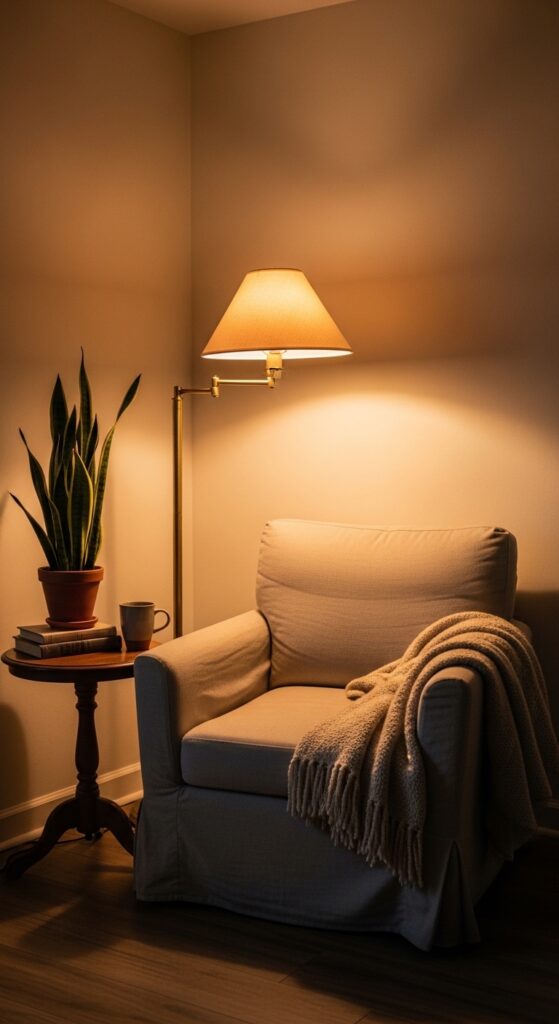
Vibe: This corner is the room’s heartbeat — the place every guest’s eye goes first and every resident retreats to last.
What makes it work: A well-composed corner draws the eye and gives a living room its most human moment of scale — it’s designed at the level of one person, not the whole room. The unlacquered brass floor lamp adds warmth and the slight oxidation of real brass reads as genuinely aged rather than decorative. A folded wool blanket draped over the chair arm transforms it from furniture into an invitation.
How to achieve it: Look for vintage brass floor lamps at estate sales or secondhand shops — avoid chrome or nickel, which read as modern. Recover the shade in cream linen if needed. Position the chair at 45 degrees to the corner to open up the composition and create a natural flow from the rest of the room.
How to Start Your Rustic Farmhouse Transformation
The most common mistake people make is trying to do everything at once — and ending up with a room that feels costumey rather than collected. Start with one hero element. A shiplap accent wall, a jute rug, or a new paint color in sage or warm white will do more to establish the aesthetic than a dozen small accessories.
Once your foundation is in place, layer in texture gradually. Bring in a linen throw, a terracotta planter, a vintage mirror. Each addition should feel like it was there already — not like it arrived in a shopping bag.
Common mistakes to avoid: bright white trim that reads as too contemporary (warm white is your friend), plastic or synthetic materials that undercut the organic quality of the style, and over-matching (perfectly coordinated sets feel retail, not farmhouse).
Budget-friendly entry points include thrift store ceramics, DIY shiplap, and plant styling — you can absolutely nail this look for under $300 if you shop with intention. A full transformation with furniture and built-ins will take months, but a visually convincing room? You can achieve that in a weekend.
Frequently Asked Questions
What paint colors work best for a rustic farmhouse living room?
The best farmhouse paint colors stay in the warm neutral family — warm white, oat, greige, and soft sage are all classic choices. Benjamin Moore’s “White Dove” and “Revere Pewter,” Sherwin-Williams “Accessible Beige” and “Retreat,” and Farrow & Ball’s “String” and “Mizzle” are all widely used in authentic farmhouse interiors. Avoid cool whites with blue or grey undertones — they fight with the warm tones of natural wood and linen.
Is rustic farmhouse style expensive to achieve?
It doesn’t have to be. Unlike contemporary or luxury styles that rely on expensive materials for their effect, rustic farmhouse actively embraces imperfection and age — which means estate sales, thrift stores, and DIY are your best friends. A shiplap accent wall costs under $200 in materials. A large jute rug can be found at IKEA or Target for under $150. The most-loved farmhouse rooms are usually those assembled slowly over time, not in a single shopping spree.
What’s the difference between rustic farmhouse and modern farmhouse?
Rustic farmhouse leans into raw, aged, and imperfect materials — reclaimed wood, distressed finishes, wrought iron, handmade ceramics. Modern farmhouse (popularized by Chip and Joanna Gaines) combines those rustic elements with cleaner lines, more graphic contrast (especially black and white), and slightly more polished finishes. Rustic farmhouse feels older and more organic; modern farmhouse feels styled and editorial. Both use shiplap, natural textiles, and neutral palettes, but rustic farmhouse allows for more wear, patina, and variation.
How do I make a small living room feel farmhouse without it feeling cluttered?
In a small space, edit ruthlessly — choose one or two rustic elements that have high impact (a shiplap wall, a jute rug, a vintage coffee table) and keep everything else simple and light. Use warm white on walls and sheer linen curtains hung ceiling-high to maximize the sense of light and space. Avoid too many accessories — in a small room, three beautifully chosen objects beat ten mediocre ones every time. A large floor plant also does surprisingly heavy lifting in a compact rustic farmhouse room.
What furniture materials work best in a rustic farmhouse living room?
The most authentic farmhouse furniture materials are solid wood (especially reclaimed, painted, or lightly finished), linen and cotton upholstery, rattan and wicker for accent chairs, and wrought iron for hardware and accent pieces. Avoid high-gloss lacquers, chrome, most plastics, and pattern-heavy fabrics — these all undercut the organic, textured quality the style depends on. Leather ages beautifully in this context; a worn vintage leather armchair fits perfectly in a rustic farmhouse room.
Ready to Create Your Dream Rustic Farmhouse Space?
You now have 20 rustic farmhouse living room ideas to inspire every corner, layer, and decision in your transformation. Save the ones that make your heart rate rise a little — those are your starting points. You don’t need all 20 to have a room full of soul; sometimes just three well-chosen ideas, executed with care, are all it takes to change everything. Pin your favorites, start with one wall or one piece of furniture, and let the room grow slowly and intentionally. That’s how the best farmhouse rooms are made — not all at once, but one beautiful layer at a time.