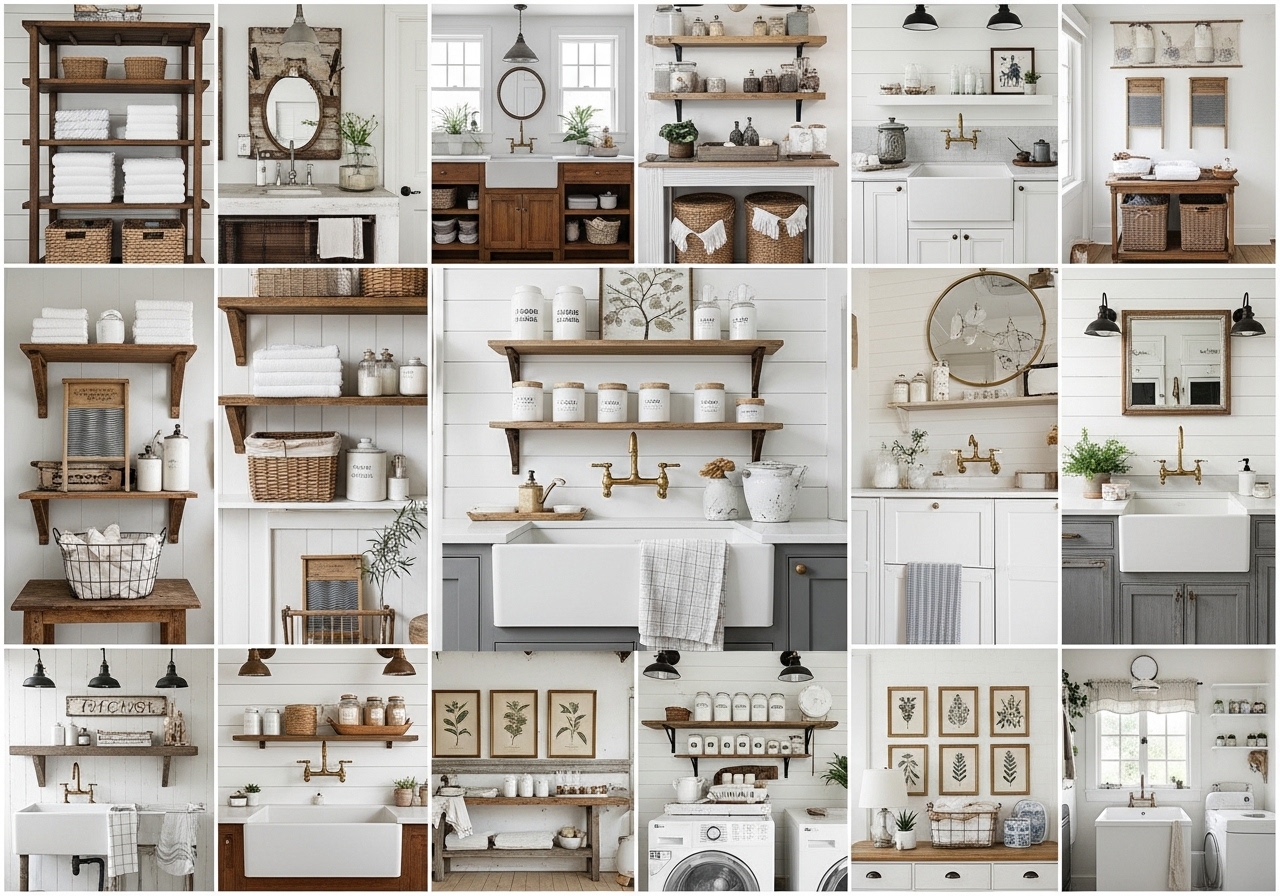
Farmhouse laundry room ideas blend hardworking utility with rustic warmth, mixing practical storage with painted wood, aged metal, and textures that feel lived in rather than slick. These 21 ideas show you exactly how to create a laundry room that looks inviting and works harder every day.
The mood is sun-soft, grounded, and quietly comforting. It’s the kind of space where folded linen, matte crockery, and warm white paint make chores feel less mechanical. Farmhouse style gives even a utility room a sense of calm, order, and home. Here are 21 ideas worth saving — and stealing.
Why Farmhouse Laundry Room Ideas Work So Well
Farmhouse style grew from rural American homes built around utility, durability, and comfort, then evolved through country, craftsman, and now modern farmhouse influences. What separates it from cottage style is its stronger focus on work-ready materials and cleaner lines; what separates it from industrial is its softness, warmth, and domestic ease. Architectural Digest notes that farmhouse design centers on simplicity, comfort, neutral palettes, reclaimed wood, shiplap, and ample cabinetry rather than ornament for ornament’s sake Architectural Digest.
Its core palette is warm white, creamy ivory, greige, dusty blue, muted sage, weathered black, and soft clay. The materials are equally specific: painted shaker cabinetry, beadboard or shiplap, butcher block, soapstone-look counters, galvanized steel, antique brass, matte black iron, jute, cotton ticking, and unfinished oak.
It’s trending because people want hardworking rooms to feel intentional, not purely functional. Utility spaces are now styled like extensions of the kitchen or mudroom, and small laundry rooms are being treated with the same design care as any other space in the home—something both AD and HGTV emphasize through cabinetry, drying rods, and vertical storage ideas Architectural Digest HGTV.
Yes, small spaces can absolutely pull this off. Prioritize one warm paint color, vertical storage, and one tactile material—usually wood—before adding decor. The limit is clutter: too many signs, baskets, and finishes will make a compact laundry room feel cramped fast.
| Element | Core Trait | Supporting Trait |
| Philosophy | hardworking comfort | rustic simplicity |
| Key Materials | painted wood, oak, iron | galvanized metal, linen, ceramic |
| Key Colors | warm white, greige, dusty blue | muted sage, charcoal, soft black |
1. Warm White Farmhouse Laundry Room Ideas That Feel Airy
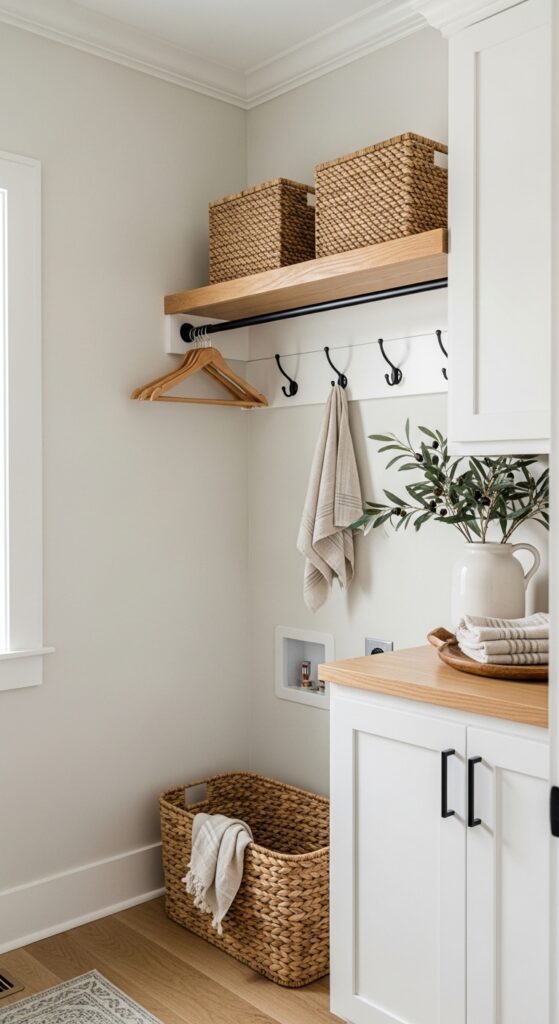
Vibe: The room feels luminous and easy, like morning light catching clean cotton.
Why it works: Warm white walls reduce visual noise and bounce light across bulky appliances, which makes the whole room feel larger. In farmhouse laundry rooms, that softness matters: it lets oak, black hardware, and wicker texture carry the character without the space feeling heavy.
How to get it: Use a creamy white such as Benjamin Moore White Dove or Sherwin-Williams Alabaster instead of a stark refrigerator white. Keep trim in the same color but one sheen higher so the room reads calm and continuous.
💡 Quick Win: Swap one bright-white plastic hamper for a natural seagrass basket with a liner.
2. Butcher Block Over the Machines
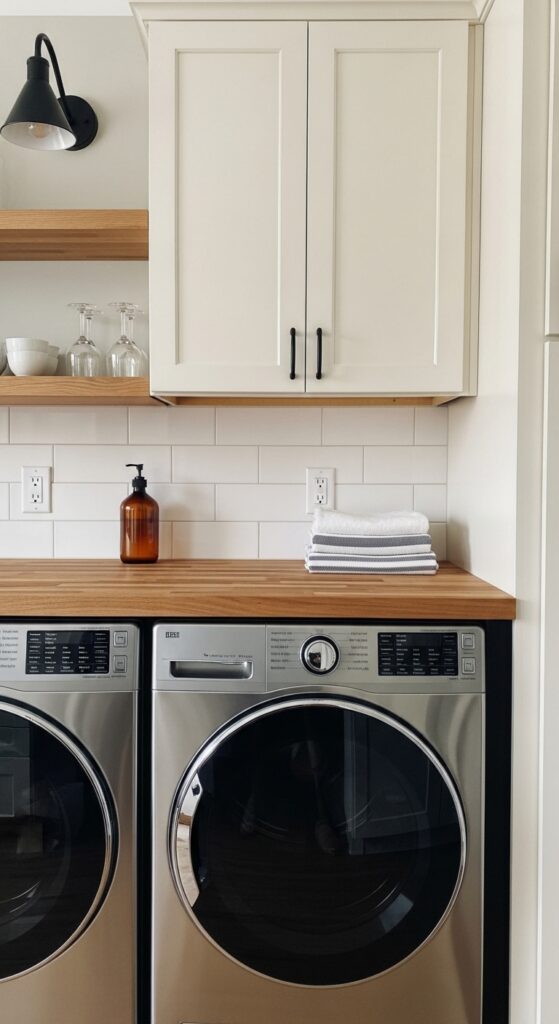
Vibe: It feels grounded, solid, and ready for real work.
Why it works: A continuous wood counter visually unifies two separate appliances and adds the horizontal line farmhouse rooms need. The contrast between painted cabinetry and warm butcher block also creates texture layering without introducing extra clutter.
How to get it: Choose acacia or maple countertop slabs at least 1.5 inches thick and oil them in a low-sheen finish. Let the counter overhang by about an inch so it feels like furniture instead of builder-grade trim.
3. Gooseneck Sconces Above Open Shelves
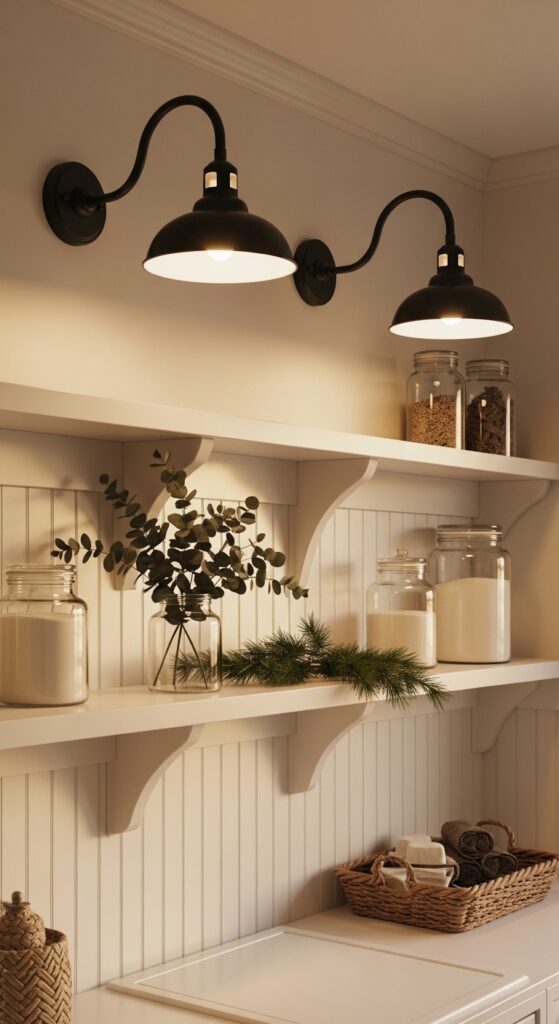
Vibe: The room feels sun-warmed and quietly tailored.
Why it works: Farmhouse lighting works best when it looks slightly utilitarian but still soft. Gooseneck sconces throw directional light onto shelves and counters, adding task lighting while repeating the curved metal profile that feels classic in a utility space.
How to get it: Install a pair with enamel or matte metal shades 18 to 24 inches apart above shelving. Choose bulbs around 2700K so whites stay creamy rather than cold.
💡 Quick Win: Battery puck lights under the bottom shelf can mimic the look before you wire anything.
4. A Freestanding Harvest Table Folding Station
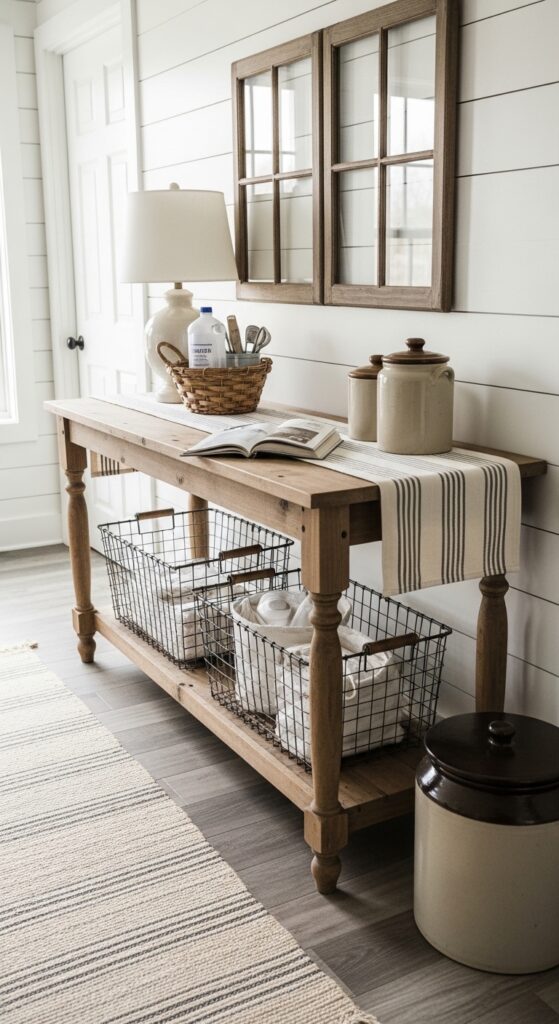
Vibe: It feels raw in the best way—useful, familiar, and steady.
Why it works: A table introduces furniture language, which keeps the room from reading like a row of appliances. Because it has visible legs and air around it, it also feels lighter than a bulky island in medium-size laundry rooms.
How to get it: Look for a 12- to 18-inch-deep console or narrow farmhouse table with turned or tapered legs. Keep at least 36 inches of walking clearance so the room still functions when baskets pile up.
5. Wire Baskets and Stoneware Crocks Instead of Plastic
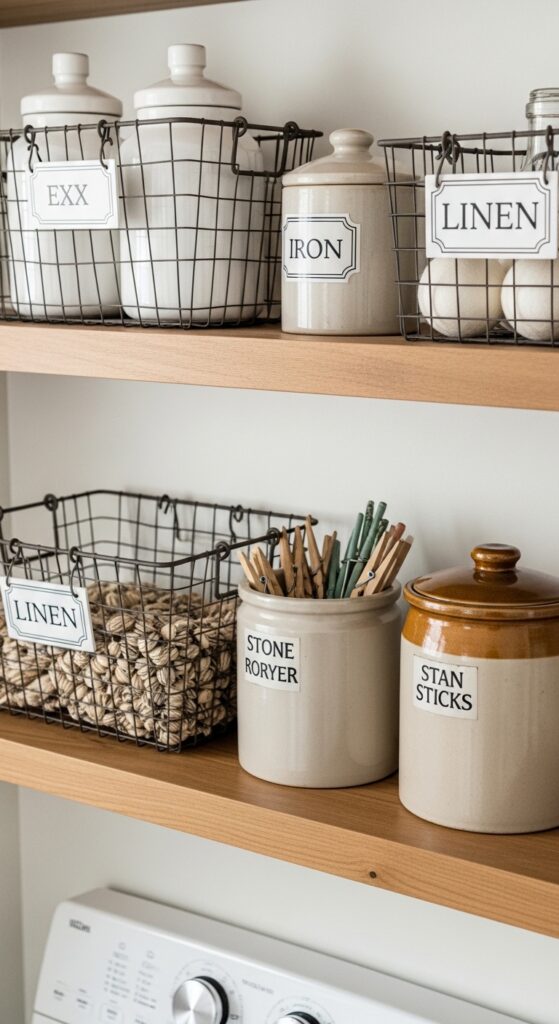
Vibe: The room feels layered and orderly without becoming fussy.
Why it works: Accessories matter most when they solve a storage problem while improving visual rhythm. Wire baskets add breathable texture, and stoneware crocks break up all the boxy cabinetry with rounded, tactile forms.
How to get it: Decant pods, clothespins, and stain sticks into containers that share one finish family—aged wire, matte ceramic, or amber glass. Limit yourself to three visible vessel types so the styling looks edited.
💡 Quick Win: A $12 crock from Target or IKEA instantly upgrades the look of detergent pods on open shelving.
6. One Uninterrupted Work Wall
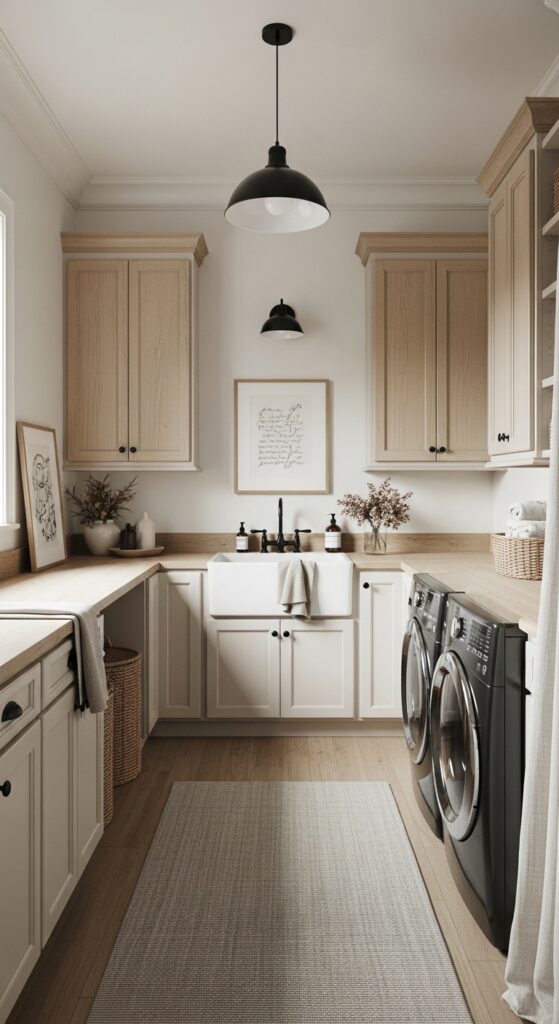
Vibe: It feels still and efficient, with nothing fighting for attention.
Why it works: A single uninterrupted wall lets laundry follow a clean sequence: sort, wash, fold, store. That linear workflow reduces visual breaks and gives even a narrow room a stronger sense of structure.
How to get it: Put the sink, machines, and folding counter on the same wall whenever plumbing allows. Reserve the opposite wall for shallow shelves or hooks only, so traffic flow stays open.
7. A Stacked Setup Hidden by Linen Curtains
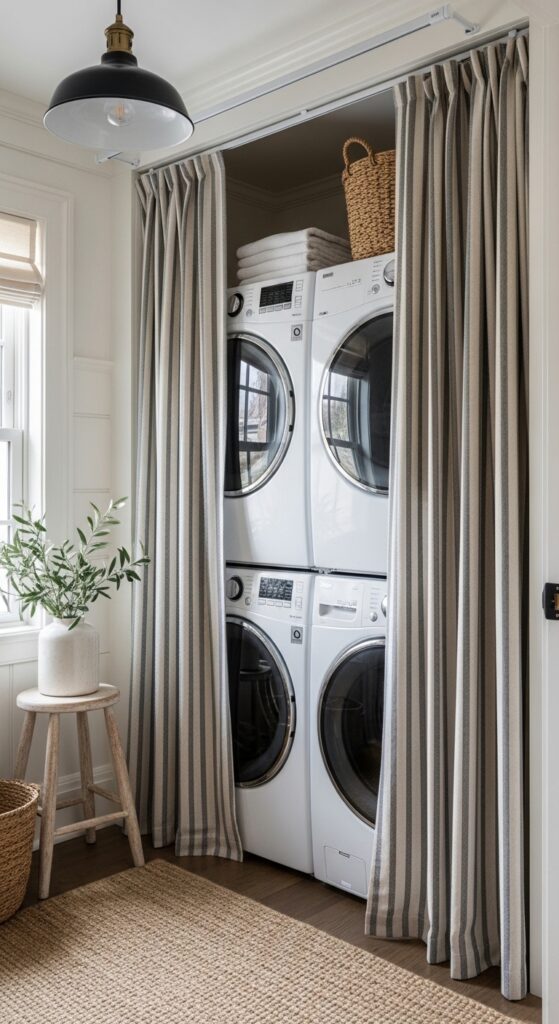
Vibe: The room feels hushed, softer, and less appliance-heavy.
Why it works: In a compact space, concealment is a design tool. A curtain removes the hard visual edge of machines, introduces textile texture, and makes the room feel more like a small pantry or mudroom than a mechanical closet.
How to get it: Use a ceiling-mounted track and heavyweight linen or cotton duck in a ticking stripe. Keep the fabric just skimming the floor so it reads tailored, not puddled.
💡 Quick Win: No custom curtain needed—buy two café panels and clip them to a tension rod for a starter version.
8. Dusty Blue Lower Cabinets for Classic Contrast
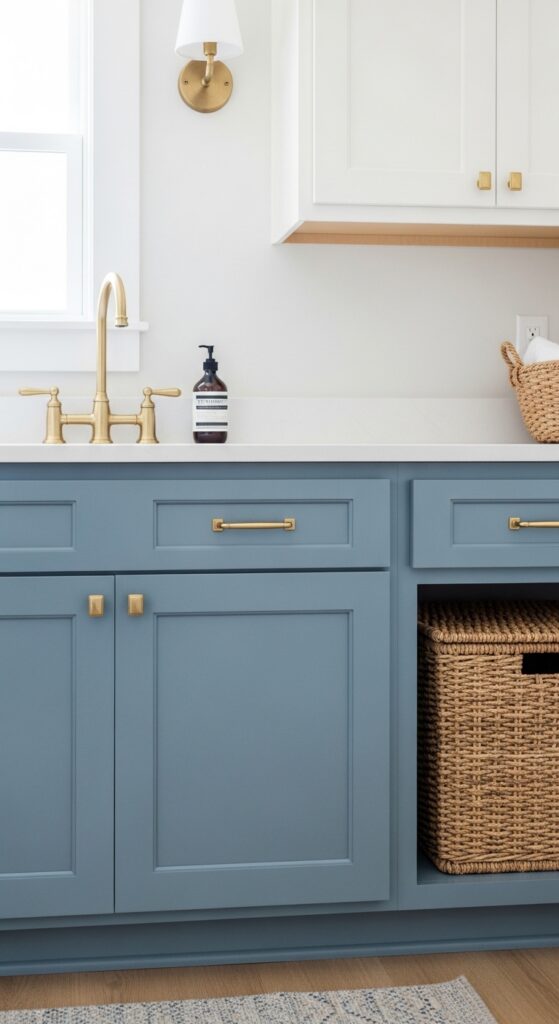
Vibe: It feels calm and slightly tailored, with just enough depth.
Why it works: Blue sits naturally in farmhouse rooms because it cools the warmth of wood without feeling sharp. Keeping the color on lowers only anchors the room visually while upper walls stay light and spacious.
How to get it: Try Farrow & Ball Parma Gray or Sherwin-Williams Smoky Blue on base cabinets, then pair it with unlacquered brass or aged brass pulls. The contrast works especially well in rooms with decent natural light.
9. Vertical Shiplap That Lifts the Ceiling
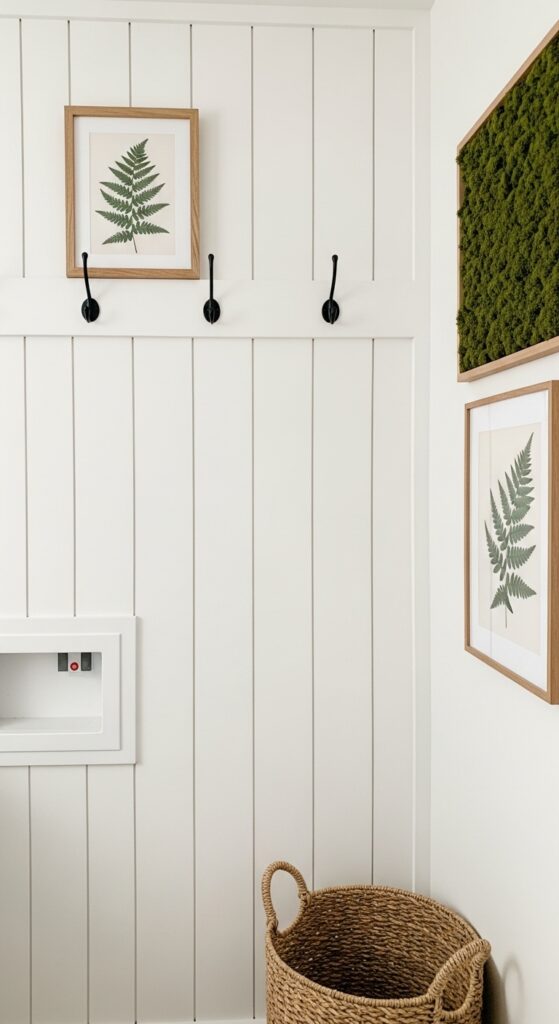
Vibe: It feels crisp, tactile, and lightly architectural.
Why it works: Vertical lines pull the eye upward, which helps low-ceiling laundry rooms feel taller. Shiplap also adds subtle shadow and texture, giving flat drywall the kind of depth farmhouse interiors depend on.
How to get it: Use 5- to 6-inch MDF or pine boards with narrow reveals, and paint them wall color for a quieter look. Vertical orientation feels fresher than the heavily used horizontal version.
💡 Quick Win: Peel-and-stick beadboard wallpaper gives a similar rhythm if full millwork isn’t in the budget.
10. A Schoolhouse Flush Mount With Opal Glass
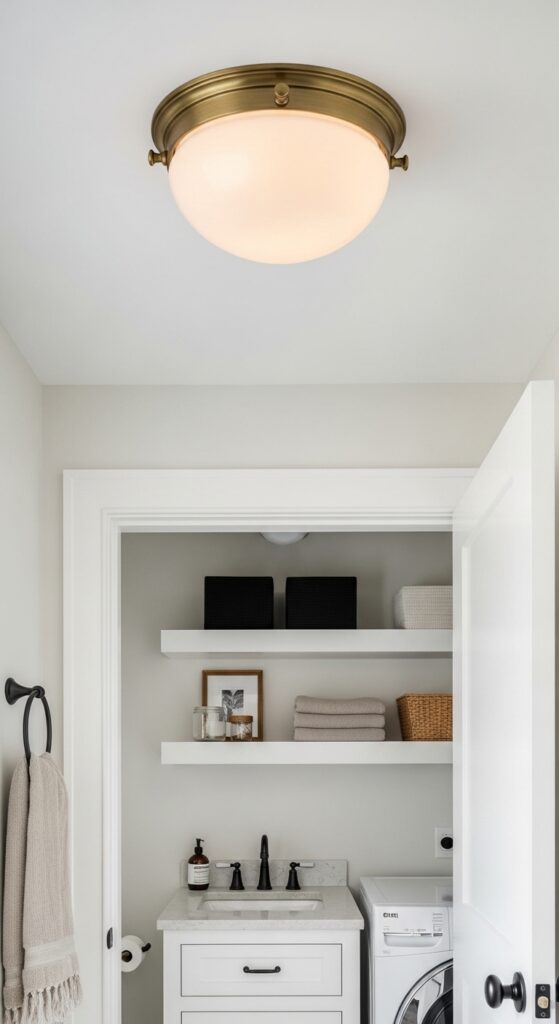
Vibe: The room feels classic and quietly polished.
Why it works: Flush mounts are often the only practical option in lower ceilings, but shape and finish matter. A schoolhouse silhouette softens the ceiling plane and brings vintage utility into the room without hanging too low over circulation space.
How to get it: Choose opal glass with aged brass or matte black hardware from Schoolhouse or Rejuvenation. Stay around 12 inches wide in small rooms so the fixture feels intentional, not oversized.
11. A Sink Skirt Instead of a Vanity Cabinet
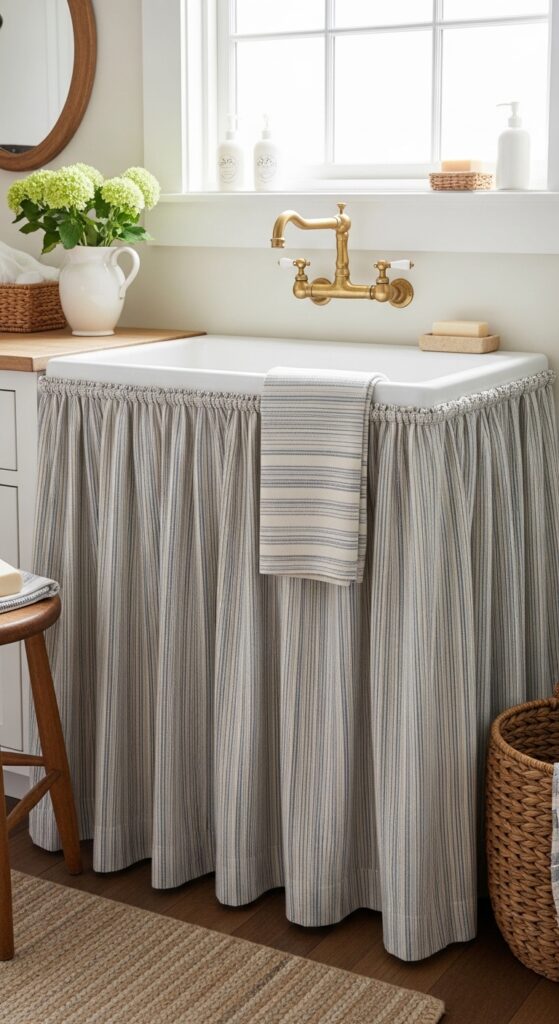
Vibe: It feels softened and a little nostalgic.
Why it works: A sink skirt breaks up the hard geometry of a vanity box and adds movement through fabric. In farmhouse laundry rooms, that textile layer keeps utility sinks from feeling too institutional while still hiding buckets and cleaning supplies.
How to get it: Mount café curtain wire under the sink rim and use washable cotton duck, ticking stripe, or a small plaid. Keep the skirt tailored and close to the floor so it reads collected, not theatrical.
💡 Quick Win: Hem a drop cloth panel and attach it with stick-on Velcro for an easy weekend version.
12. A Vintage Runner That Softens the Floor
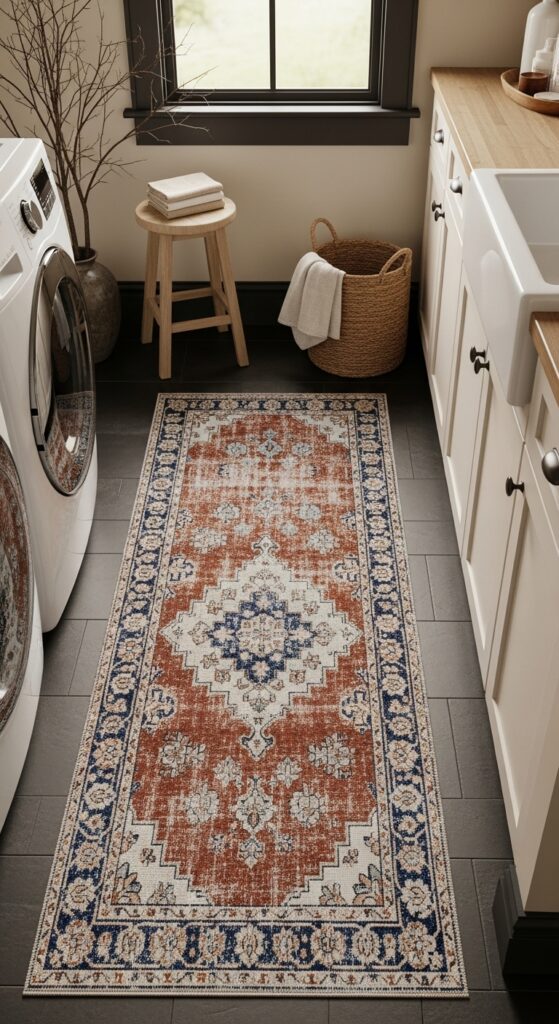
Vibe: It feels layered and slightly timeworn, not sterile.
Why it works: Laundry rooms are full of hard surfaces, so a runner adds needed softness underfoot and visually connects machines to the rest of the home. A faded pattern also disguises lint and minor wear better than a flat solid rug.
How to get it: Choose a washable vintage-look runner in muted rust, indigo, or tobacco tones rather than bright primary colors. Keep it low pile and use a nonslip pad so doors and baskets still clear easily.
13. Two-Tone Farmhouse Laundry Room Ideas With Greige and Black
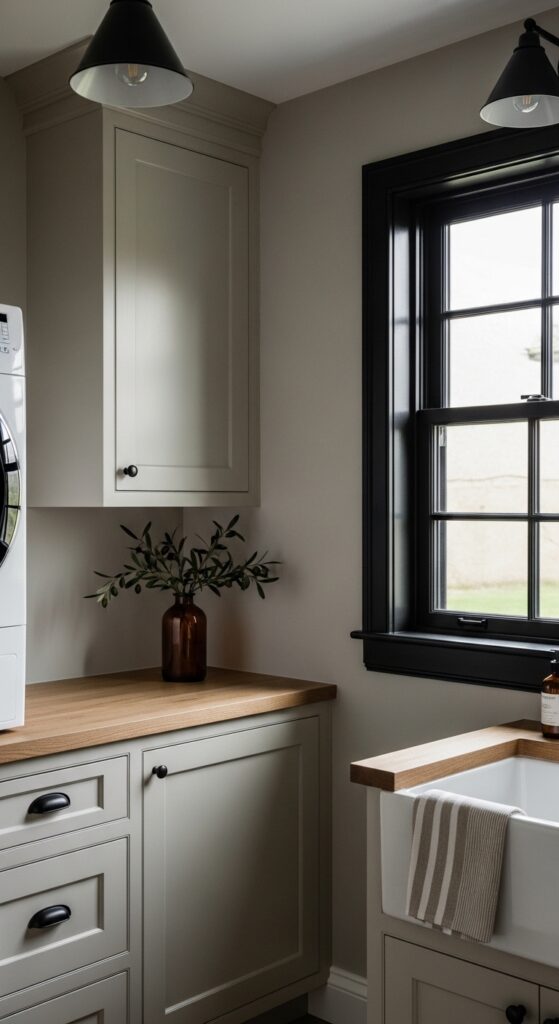
Vibe: It feels moody, edited, and more architectural than sweet.
Why it works: Greige softens the starkness of black while preserving contrast, so the room gains depth without losing warmth. This pairing also gives farmhouse style a more current edge, especially beside oak and linen textures.
How to get it: Use a wall color like Farrow & Ball Skimming Stone or Benjamin Moore Edgecomb Gray, then add black only on hardware, light fixtures, or one window sash. Too much black in a dim room can flatten it.
💡 Quick Win: Replace a white plastic light switch plate with a matte black metal one—it changes the room more than you’d expect.
14. Stone-Look Porcelain Flooring That Can Take Real Wear
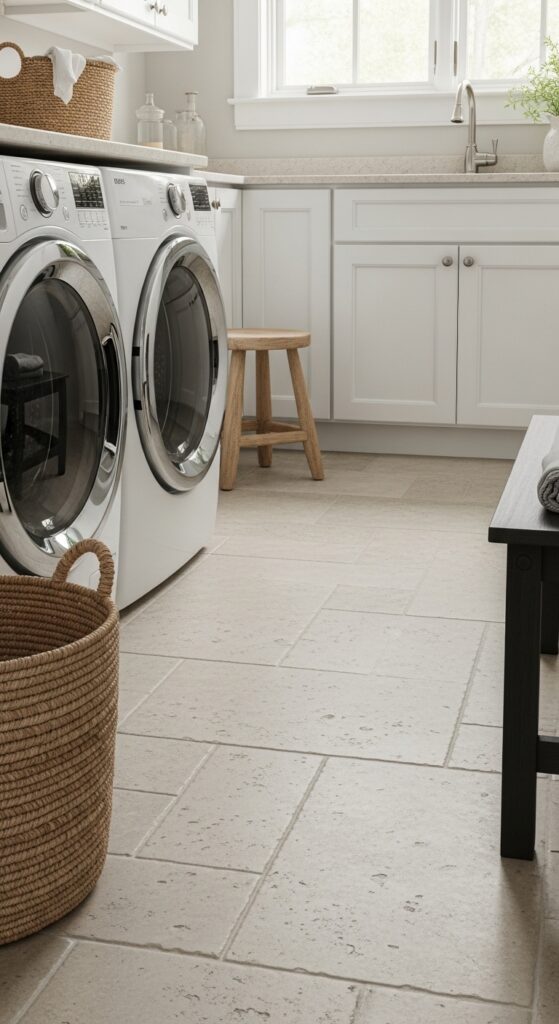
Vibe: It feels sturdy, dry, and built for actual life.
Why it works: Flooring carries huge visual weight in a small room, and stone-look porcelain gives farmhouse texture without the maintenance of real limestone. A matte finish also hides dust and footprints better than glossy tile.
How to get it: Choose a 12×24 or 24×24 porcelain tile in a chalky limestone tone with narrow grout joints. Warm gray or mushroom grout looks softer than bright white and ages better around washer traffic.
15. A Mudroom-Laundry Combo With a Clear Drop Zone
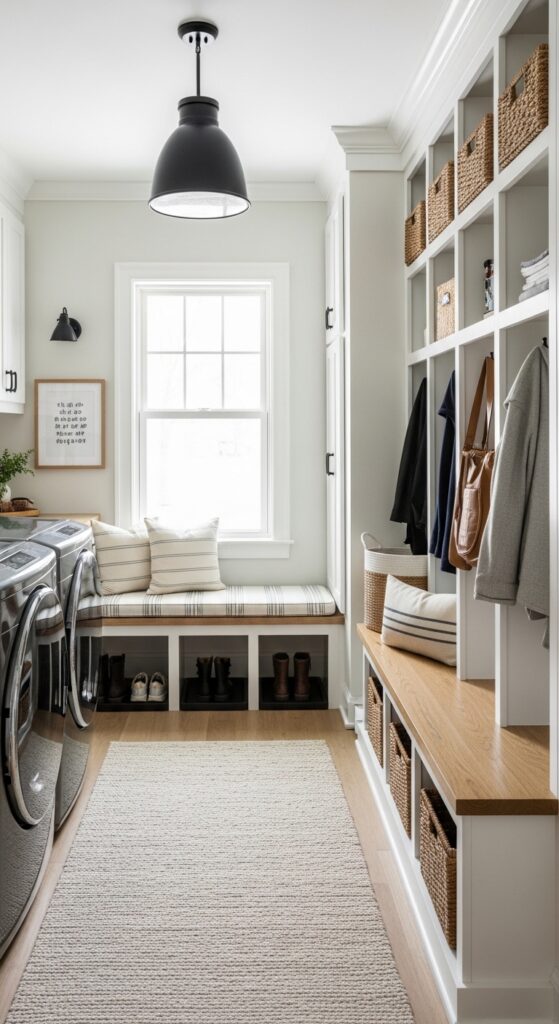
Vibe: It feels organized and grounded, like the room knows exactly what it’s for.
Why it works: Combined utility rooms succeed when each task has a visible zone. A defined drop area for coats, bags, and shoes keeps the laundry wall from absorbing every stray item in the house.
How to get it: Use a simple rule: one wall for washing, one wall for entry functions. Add a boot tray, a 36-inch bench, and hooks set about 60 inches high so the layout reads intentional.
💡 Quick Win: Mount three black iron hooks above a narrow bench and you instantly create a mudroom moment.
16. Ceiling-Height Cabinets in a Tiny Farmhouse Laundry Nook
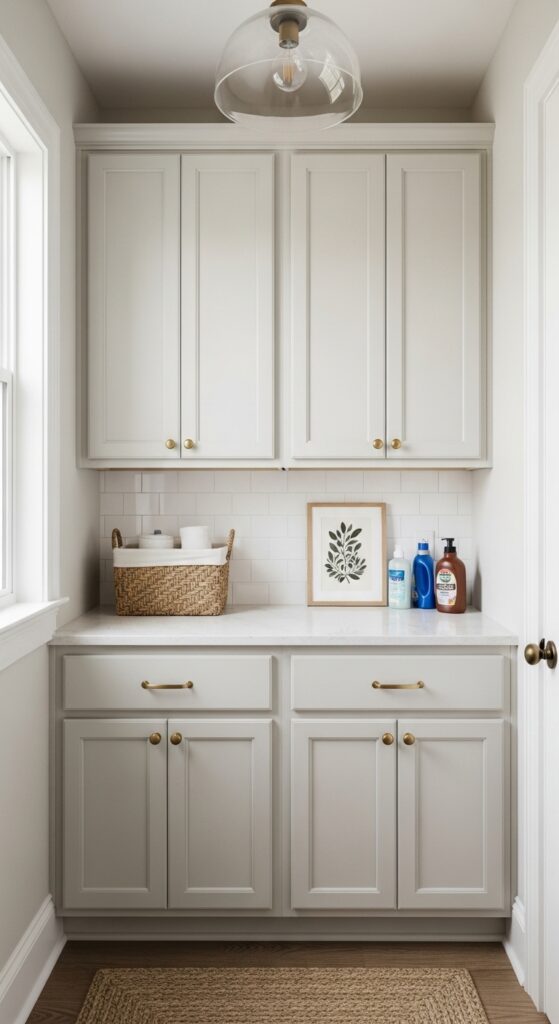
Vibe: It feels compact but composed, not pinched.
Why it works: In the smallest laundry rooms, vertical storage matters more than floor decor. Cabinets to the ceiling pull the eye upward and remove the dusty dead zone where clutter tends to accumulate.
How to get it: Install one extra top row above standard uppers for off-season detergents, paper goods, or backstock. Use the highest section for rarely needed items and keep daily supplies between shoulder and eye level.
17. Under-Cabinet Lighting for a Cleaner Work Surface
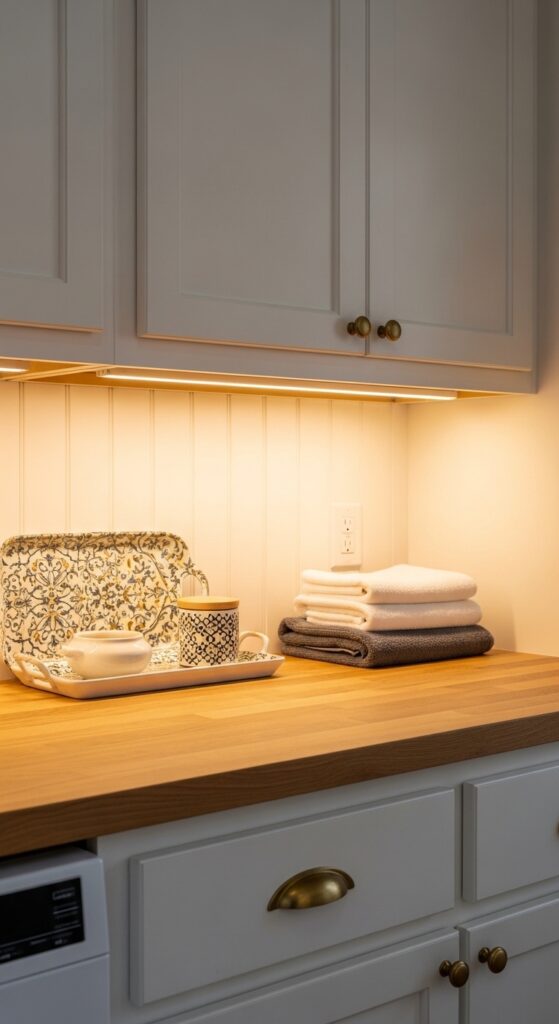
Vibe: It feels crisp and quietly functional.
Why it works: Laundry rooms often develop shadows under uppers, which makes sorting and stain treating more annoying than it needs to be. Warm under-cabinet light brightens the work plane and highlights the texture of wood, tile, or beadboard beneath.
How to get it: Use hardwired or rechargeable LED bars in a 2700K to 3000K range, and hide them behind a small light rail. That keeps the glow soft and prevents the room from feeling overly modern.
💡 Quick Win: Rechargeable motion-sensor bars are inexpensive and take five minutes to install.
18. A Slim Apothecary Cabinet for Odds and Ends
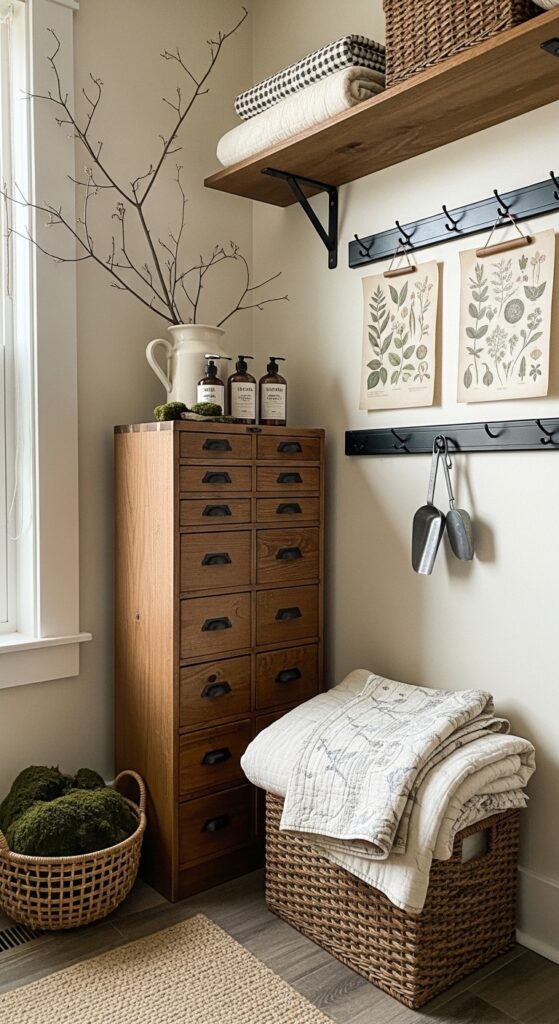
Vibe: It feels collected, slightly storied, and very usable.
Why it works: Small-drawer furniture adds personality while solving the problem of tiny items—stain pens, spare buttons, clothespins, measuring scoops—that never sit neatly on open shelves. It also introduces an antique silhouette that farmhouse rooms wear well.
How to get it: Look for a narrow cabinet or vintage-inspired file chest under 16 inches deep so it doesn’t crowd the walkway. One with mixed drawer sizes is especially useful in a working laundry room.
19. Botanical Prints and a Peg Rail Instead of Word Signs
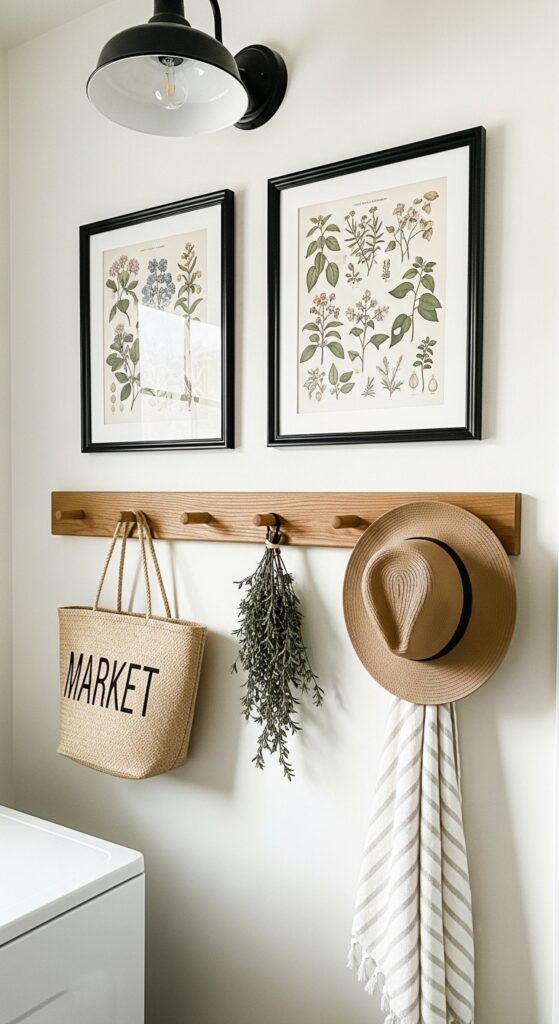
Vibe: It feels calm and a little scholarly, not overly themed.
Why it works: Farmhouse decor lands better when it suggests utility and nature instead of relying on novelty signage. A peg rail gives real function, while botanical art adds softness and color in a way that still feels rooted in the room.
How to get it: Hang a simple oak peg rail at shoulder height and top it with two or three antique-style herb or field-study prints. Stick to black, oak, or aged brass frames for consistency.
💡 Quick Win: Download public-domain botanical art, print it on ivory cardstock, and frame it in thrifted wood frames.
20. Sage Green Farmhouse Laundry Room Ideas for a Softer Accent
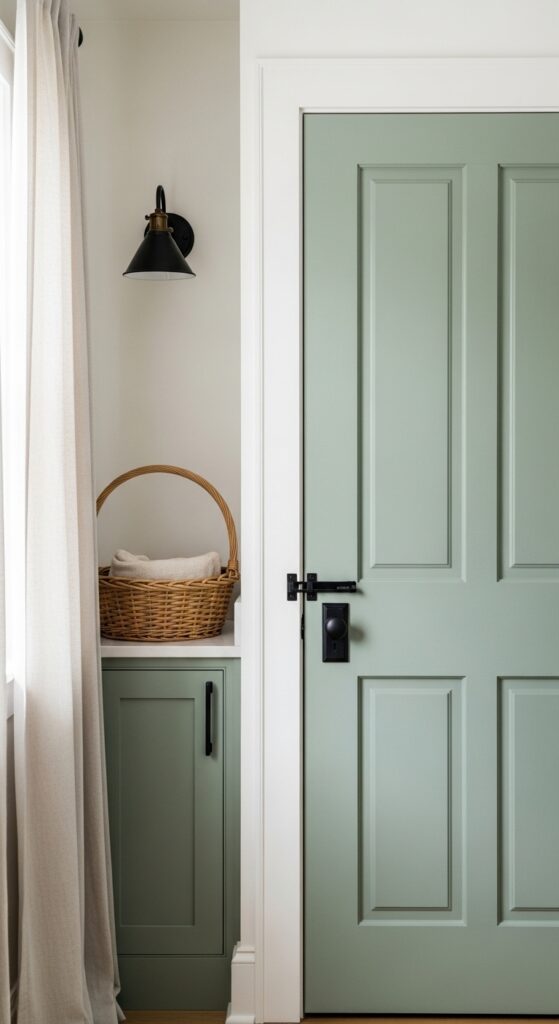
Vibe: It feels serene and slightly garden-connected.
Why it works: Muted green adds color without breaking the quiet mood farmhouse spaces depend on. Used on a door, trim, or one cabinet bank, it brings freshness while still pairing easily with oak, iron, and creamy walls.
How to get it: Try a restrained sage like Sherwin-Williams Evergreen Fog or Farrow & Ball Mizzle on one architectural feature rather than the whole room. In north-facing light, choose the warmer sage so the color doesn’t turn dull.
21. Aged Brass and Black Iron Hardware Mixed Intentionally
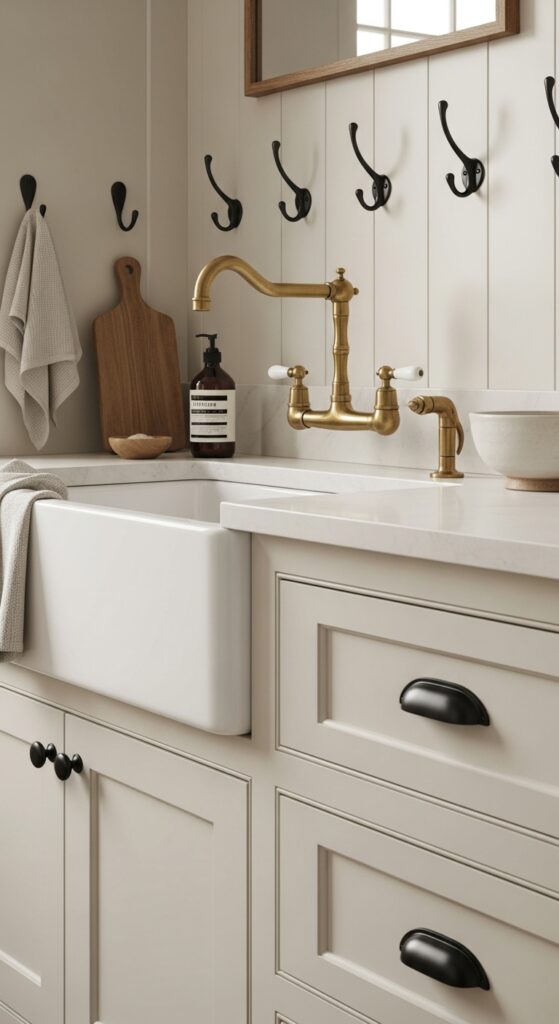
Vibe: It feels tailored and quietly collected instead of too matched.
Why it works: Farmhouse rooms look better with finish contrast than with one flat metal everywhere. Brass adds warmth near the sink, while black iron grounds hooks, sconces, and cabinet pulls with stronger visual weight.
How to get it: Keep one metal dominant and one secondary—about a 70/30 split. Use aged brass near water sources and black iron on utility pieces so the mix feels purposeful, not accidental.
💡 Quick Win: Replace just the faucet and three most visible hooks before changing every pull in the room.
How to Start Your Farmhouse Transformation
Start with paint. Benjamin Moore White Dove is an ideal first move because it gives your walls, trim, and even basic cabinets the warm, soft foundation that farmhouse laundry room ideas need to feel intentional rather than pieced together.
The most common mistake is using the wrong white. Stark, blue-based whites make oak, brass, and beige tile look dingy, which breaks the room’s warmth. Fix it by choosing creamy whites and limiting yourself to two wood tones max.
For budget impact, buy three things first: a striped cotton runner under $40, an amber glass soap dispenser around $12, and a matte ceramic crock or handled basket under $25. Those three pieces shift the room out of utility-only mode fast.
A starter refresh can happen in a weekend for roughly $150 to $500 if you’re painting, swapping hardware, and adding storage pieces. A fuller transformation with cabinetry, counters, lighting, and flooring usually lands around $2,000 to $8,000 depending on size and labor. The fast wins are paint, hooks, baskets, and lighting; custom cabinetry and tile take longer.
Frequently Asked Questions About Farmhouse Laundry Room Ideas
What is the difference between farmhouse and modern farmhouse in a laundry room?
Traditional farmhouse leans more rustic, with deeper tones, vintage accents, plaid or ticking textiles, and more visibly timeworn finishes. Modern farmhouse keeps the utility but pares it back with cleaner lines, fewer accessories, and a more neutral palette. In a laundry room, that usually means traditional farmhouse might use a sink skirt and antique hooks, while modern farmhouse might use flat-front storage with matte black lighting.
What colors work best in a farmhouse laundry room?
Warm white is still the anchor, especially shades like White Dove, Alabaster, or Swiss Coffee. From there, dusty blue, muted sage, greige, charcoal, and soft mushroom all work well as accents on cabinets, doors, or floors. The key is avoiding icy undertones, because farmhouse style needs warmth to make wood, wicker, and metal feel cohesive.
Is farmhouse design expensive to achieve in a laundry room?
Not necessarily. Paint, hooks, a runner, labeled baskets, and one upgraded light fixture can shift the room for under $300 if the layout already works. Costs rise when you add custom cabinetry, new tile, stone counters, or plumbing changes. Farmhouse style actually adapts well to budget decorating because secondhand wood stools, vintage crocks, and simple shaker hardware often look better than glossy new pieces.
Can I mix farmhouse with other styles?
Yes—farmhouse mixes especially well with industrial, cottage, Scandinavian, and even a little English-country influence. The trick is keeping the foundation consistent: one warm wall color, two main wood or metal finishes, and restrained decor. A black iron sconce can lean industrial, while a pale oak shelf can lean Scandinavian, but both can still live inside one cohesive farmhouse laundry room.
What lighting works best in a farmhouse laundry room?
Schoolhouse flush mounts, gooseneck sconces, and simple glass-shade pendants work best because they balance utility with softness. For task lighting, aim for 2700K to 3000K bulbs so the room feels warm rather than clinical. If you have upper cabinets, add under-cabinet lighting too—it’s one of the most functional upgrades you can make for stain treatment and folding.
Ready to Create Your Dream Farmhouse Laundry Room?
These 21 farmhouse laundry room ideas covered the pieces that matter most: color, texture, lighting, layout, furniture, and the small storage moves that make a room actually function. You do not need to do all of it at once; in fact, starting with one strong layer is usually how the best rooms come together. This week, paint one wall a warm white and bring in one natural wood element—a stool, shelf, or counter—to set the tone. Once the room is finished, it won’t just look warmer; it will feel calmer, steadier, and much easier to use. Save the ideas with the sink skirts, shiplap, dusty blue cabinetry, and butcher block tops so your farmhouse laundry room keeps taking shape one smart move at a time.