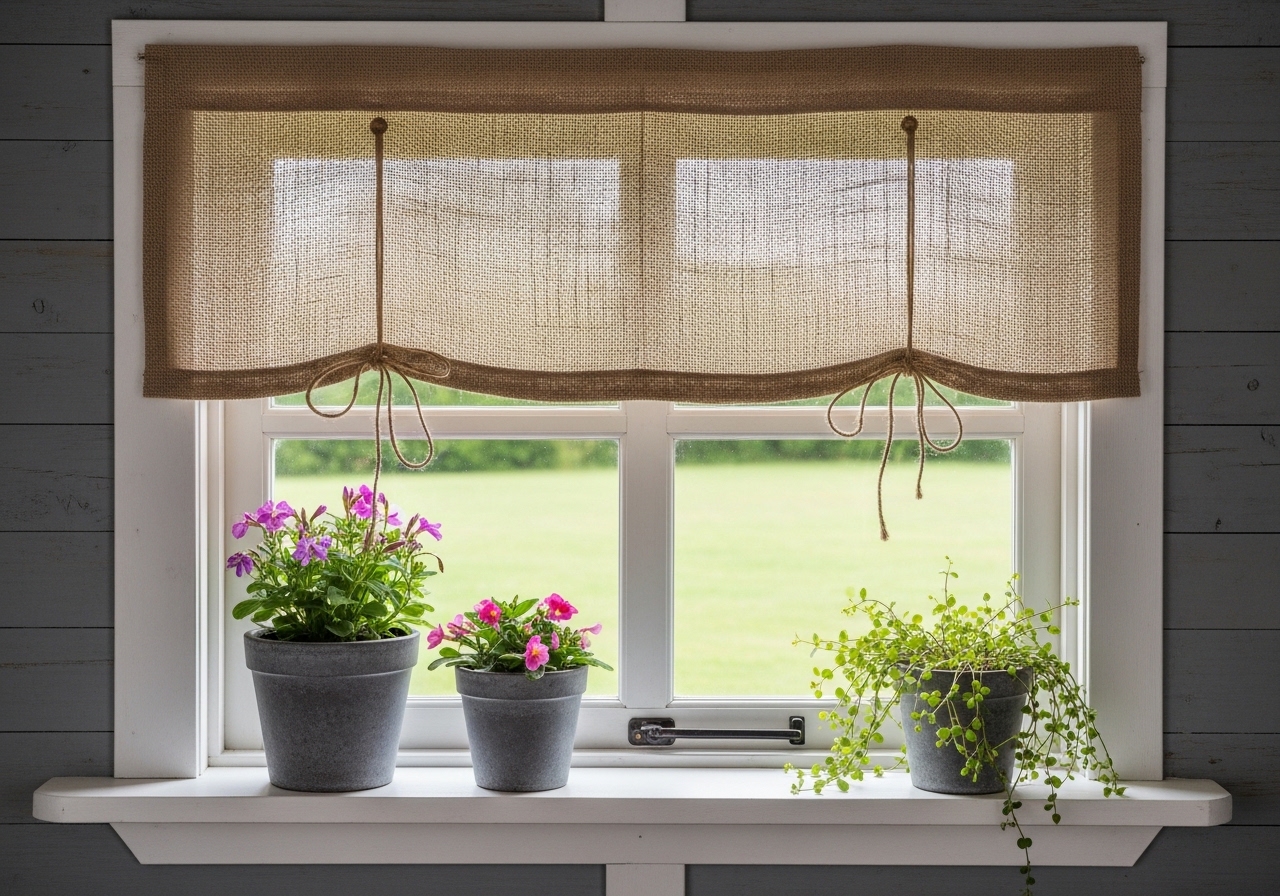
Farmhouse curtains ideas are all about using soft, practical window treatments to bring warmth, texture, and quiet country character into a home. These 24 ideas will show you exactly how to style curtains in living rooms, bedrooms, kitchens, baths, dining spaces, and small corners without losing light or ease.
This look feels sun-washed, tactile, and settled. It softens hard edges, calms bright windows, and adds just enough fabric to make a room feel finished rather than stark. The best farmhouse curtains never feel fussy—they feel useful, airy, and lived in. Here are 24 ideas worth saving — and stealing.
Why Farmhouse Curtains Ideas Work So Well
Farmhouse style comes from practical rural interiors where materials had to be hardworking, comfortable, and easy to live with. Traditional farmhouse leans more rustic, with vintage references and familiar patterns, while modern farmhouse cleans up the lines and pares back the palette. What stays consistent is the mix of utility, softness, and honest materials like wood, linen, brass, and painted paneling. Architectural Digest
The curtain side of this style is surprisingly specific. Homes & Gardens and Better Homes & Gardens both point to linen, cotton, gauzy sheers, ticking stripes, gingham, burlap-inspired textures, bamboo shades, vintage-style iron hardware, and reclaimed-wood details as the core language. The palette works best in warm white, flax, greige, dusty blue, muted sage, charcoal, and weathered brown. Homes & Gardens Better Homes & Gardens
This style is resonating now because people want softness without excess. Curtains are one of the fastest ways to make a room feel warmer, more private, and more finished, and farmhouse curtains do that while still aligning with the broader move toward natural materials, slower decorating, and layered comfort. The Spruce
Yes, small rooms can absolutely wear this look. Prioritize rod height, a light-filtering fabric, and a low-contrast palette first; if you pile on dark prints, heavy puddling, and thick trim in a tight room, the windows start to feel bulky instead of airy. Homes & Gardens
| Element | Farmhouse Core |
| Philosophy | Utility, softness, and collected charm |
| Key Materials | Linen, cotton, bamboo, iron, brass, reclaimed wood |
| Key Colors | Warm white, flax, greige, dusty blue, muted sage, charcoal |
1. Farmhouse Curtains Ideas With Warm White Linen Panels in the Living Room
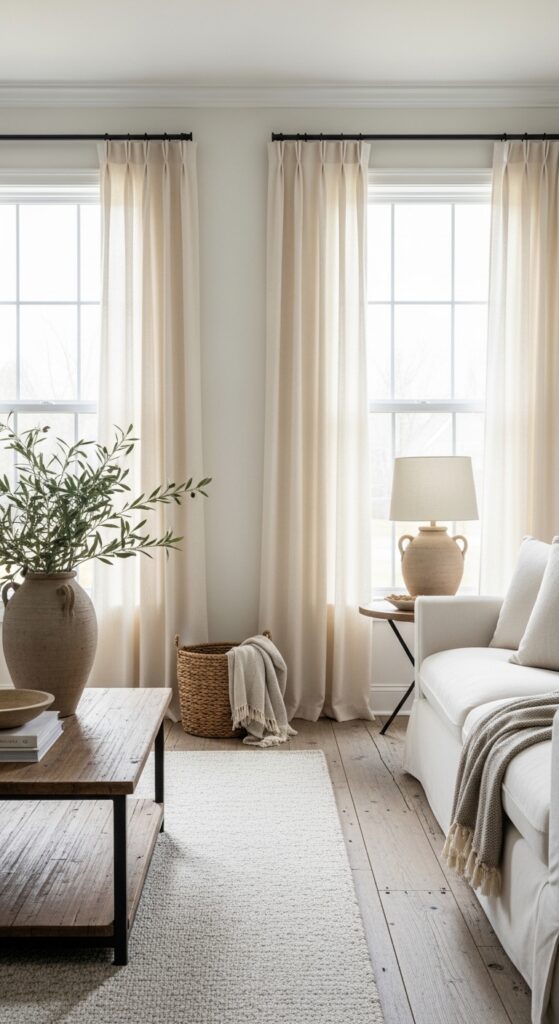
Vibe: The room feels luminous and settled.
Why it works: Warm white linen adds movement without visual noise, which is exactly what a farmhouse living room needs when wood, upholstery, and rugs are already doing a lot of textural work. The soft folds lighten the vertical plane of the wall and keep the windows from reading stark.
How to get it: Choose linen or a linen-cotton blend in ivory rather than bright white, then hang the rod 6 to 8 inches above the trim. Let the panels just kiss the floor so the look stays soft but not messy.
💡 Quick Win: IKEA’s light linen-look panels can get you close to this mood for under the cost of custom drapery.
2. Washed Flax Panels for a Quiet Primary Bedroom
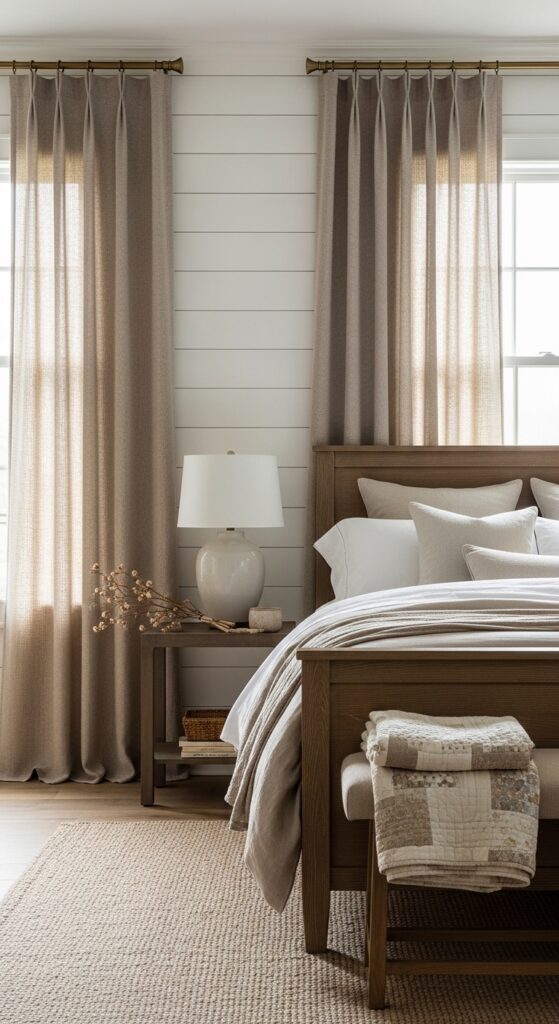
Vibe: The space feels grounded and quietly cocooning.
Why it works: Flax tones bring warmth into a bedroom without the heaviness of darker fabric. Because the weave has slight variation, the curtains add texture layering at the perimeter of the room, which helps the bed feel softer and the walls less flat.
How to get it: Use washed flax or a slubby linen blend with a separate blackout liner instead of buying shiny all-in-one blackout curtains. The layered approach gives you better drape and a more natural finish.
3. Gauzy Sheers That Make a Sunroom Glow
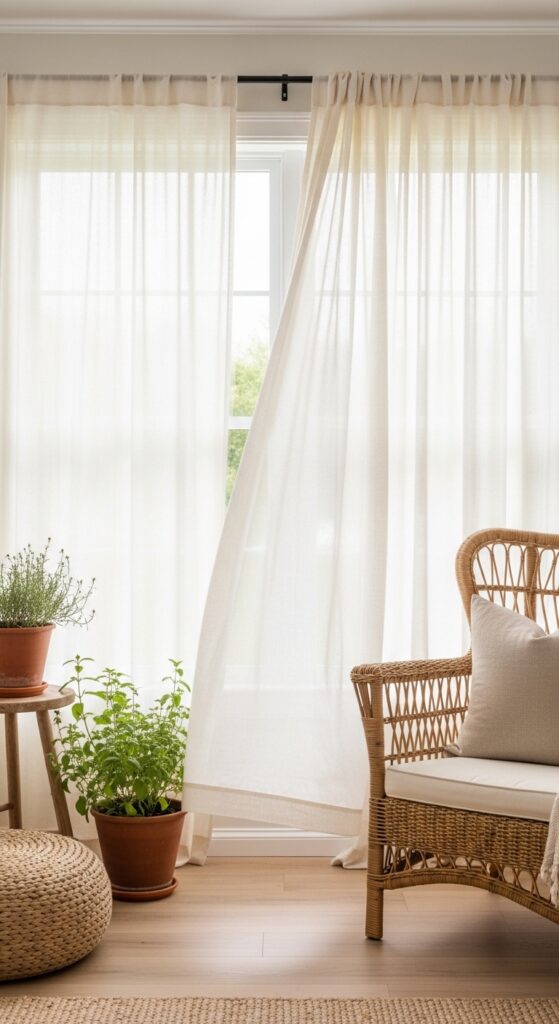
Vibe: The room feels airy and lightly breezy.
Why it works: Sheers diffuse sunlight instead of blocking it, so the room keeps its glow while losing glare. That light behavior matters in farmhouse spaces, where softness is often created through filtered daylight rather than through dark finishes.
How to get it: Pick gauzy ivory sheers and mount them wide enough that they stack mostly off the glass. Leave them unlined and keep the hem just above the floor so the fabric moves easily in warmer months.
💡 Quick Win: One pair of sheer panels can make a hard, over-bright sunroom feel more expensive in minutes.
4. Hang Panels Wider Than the Window in a Living Room Seating Zone
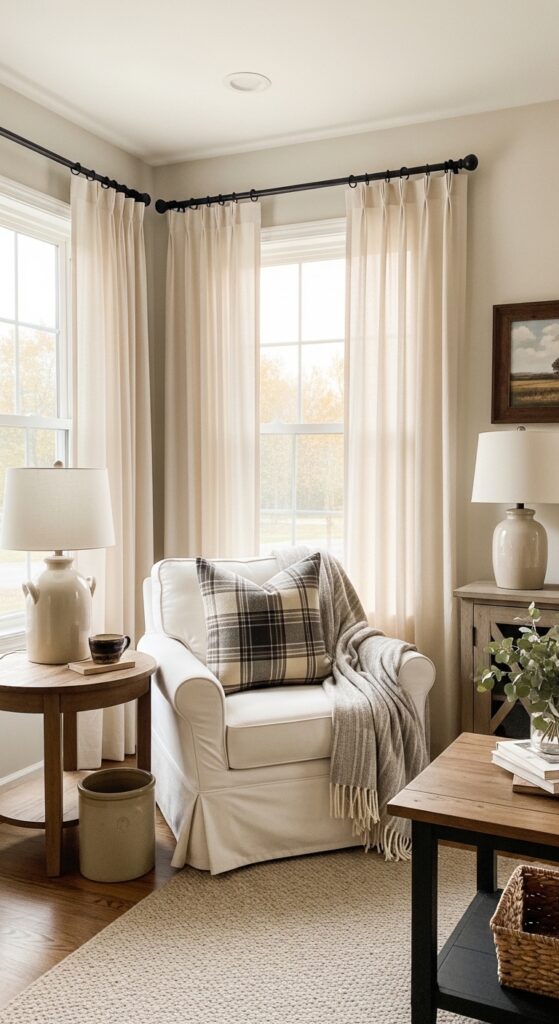
Vibe: The corner feels sun-warmed and better balanced.
Why it works: Extending the rod beyond the trim increases the visible glass area when the curtains are open, which improves negative space and makes the room feel broader. It also gives the window more visual weight so it can hold its own beside larger furniture.
How to get it: Run the rod 8 to 12 inches past each side of the window whenever wall space allows. This is one of the best fixes for living rooms where the sofa or chairs feel larger than the window itself.
5. Add Tassel Trim to Plain Off-White Guest Bath Curtains
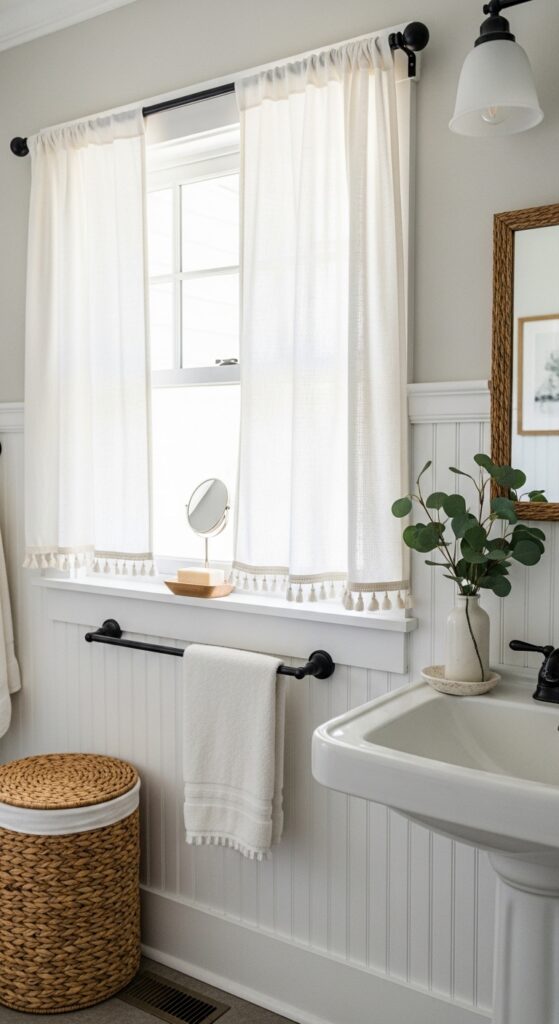
Vibe: The bath feels layered and quietly charming.
Why it works: In a guest bath, a little trim goes a long way because the room is small and mostly hard-surfaced. Tassels soften the window edge and add detail without demanding a strong print, which keeps the space calm.
How to get it: Start with plain cotton café curtains and add tassel braid only to the lower hem or leading edge. Keep the rest of the room simple so the trim reads intentional instead of overly decorative.
💡 Quick Win: Trim tape from Etsy or craft stores can transform budget curtains for less than a new set.
6. Match Curtain Heights Across an Open Kitchen and Dining Room
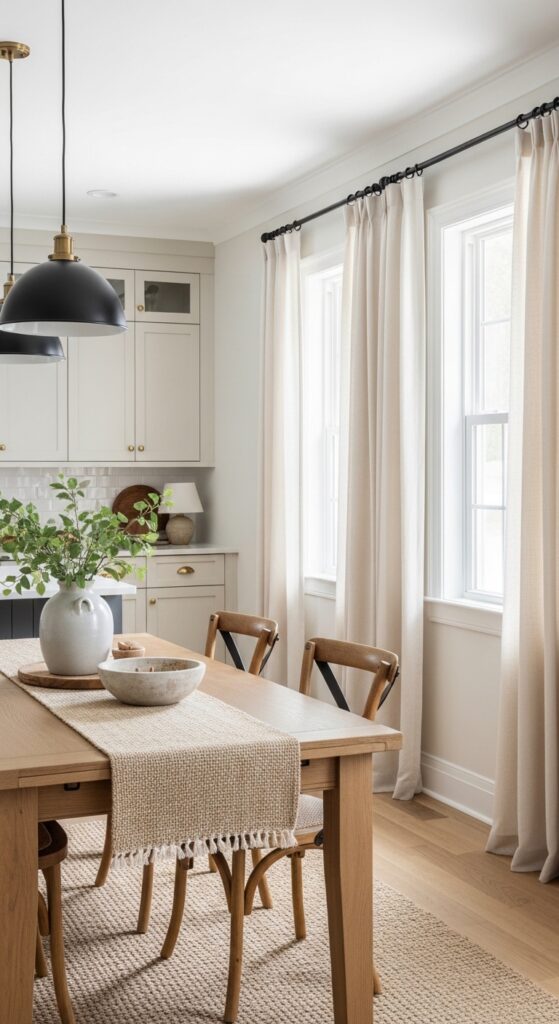
Vibe: The whole space feels still and cohesive.
Why it works: Different window heights can make open-plan rooms feel choppy fast. Keeping rods aligned creates one clean horizontal reference line, which calms the architecture and helps separate rooms feel like part of the same visual story.
How to get it: Use the tallest window as your reference and mount every rod to match that height. Then keep fabric tone and hardware finish consistent even if panel lengths vary slightly from room to room.
7. Tiny Kitchen Café Curtains on a Slim Tension Rod
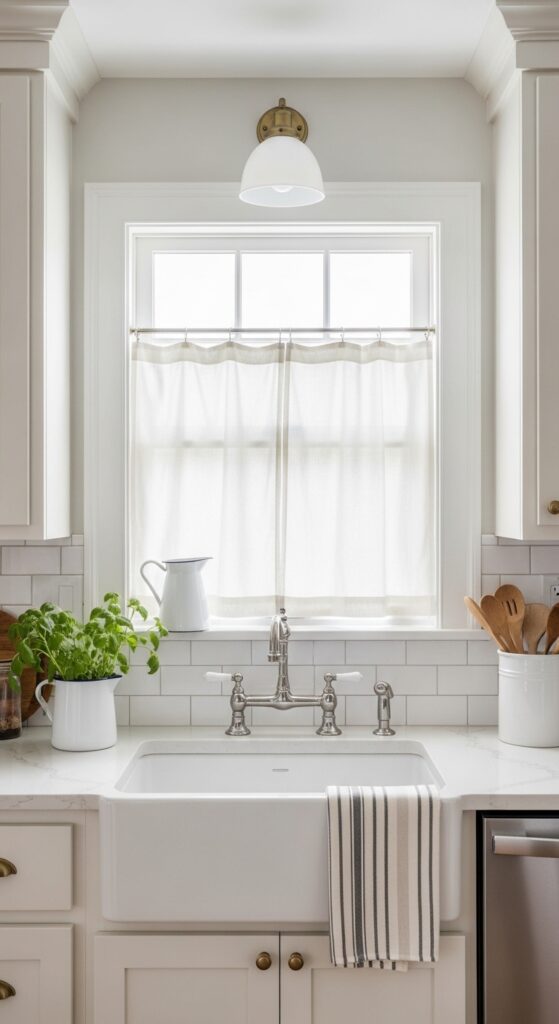
Vibe: The kitchen feels airy and lightly dressed.
Why it works: Café curtains solve the privacy issue without stealing daylight, which is crucial in a small kitchen where every bit of brightness counts. Because they cover only the lower half of the glass, they keep the room feeling open while still adding softness.
How to get it: Use a slim inside-mount tension rod and lightweight cotton or linen blend fabric. Keep the gathers soft rather than dense so the curtain looks relaxed instead of bulky.
💡 Quick Win: A pair of hemmed tea towels can become instant café curtains with simple clip rings.
8. Farmhouse Curtains Ideas in Muted Sage for the Dining Room
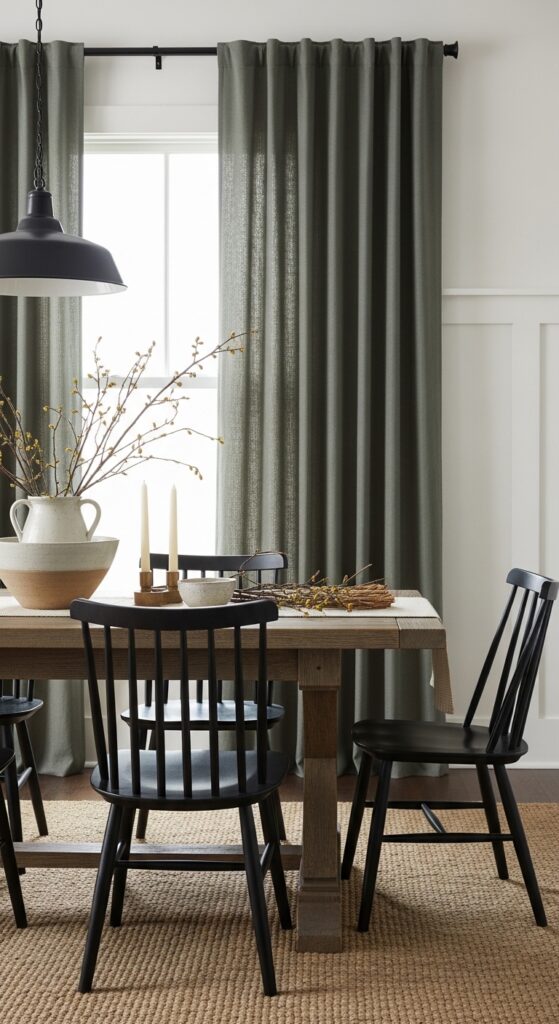
Vibe: The room feels grounded and quietly fresh.
Why it works: Muted sage adds color without tipping the dining room into theme territory. Against reclaimed wood and black chairs, it creates gentle contrast that feels botanical and calm rather than loud.
How to get it: Choose a gray-green fabric close to shades like Farrow & Ball’s softer sage family, not bright leaf green. Repeat the color once in a centerpiece or artwork and let the curtains carry the main hue.
9. Grain Sack Stripe Cotton in the Laundry Room
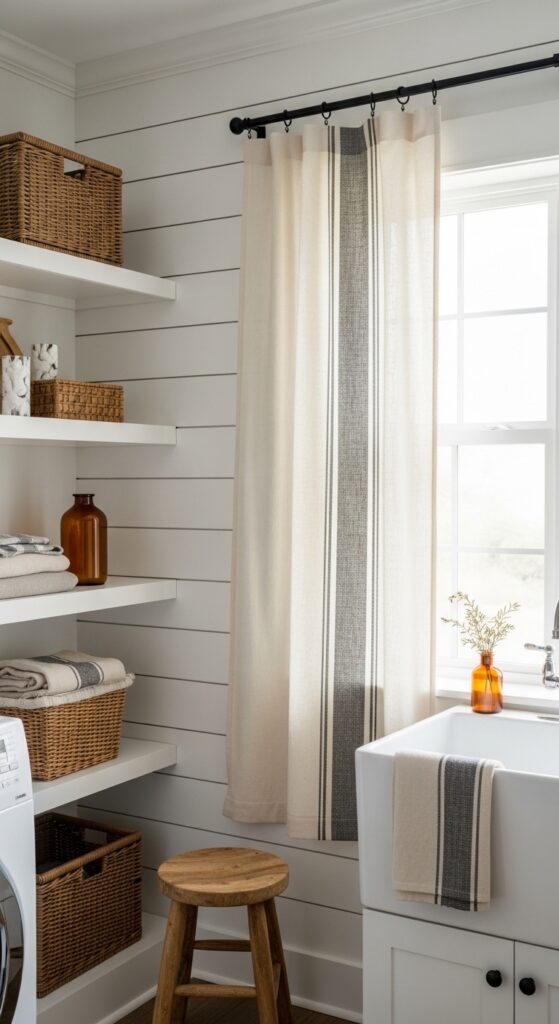
Vibe: The room feels rustic and more purposeful.
Why it works: Grain sack stripes bring one controlled line of contrast into a work-heavy room. In a laundry area, that structure is useful because it helps the fabric feel crisp against shelves, appliances, and all the small objects that can quickly create visual clutter.
How to get it: Look for cotton duck or medium-weight cotton with a single stripe placement. In utility spaces, sturdier fabric often hangs better than very soft linen and stands up more confidently to frequent washing.
💡 Quick Win: Even one striped valance can make a basic laundry nook feel less like an afterthought.
10. Barely-There White Curtains in the Bathroom
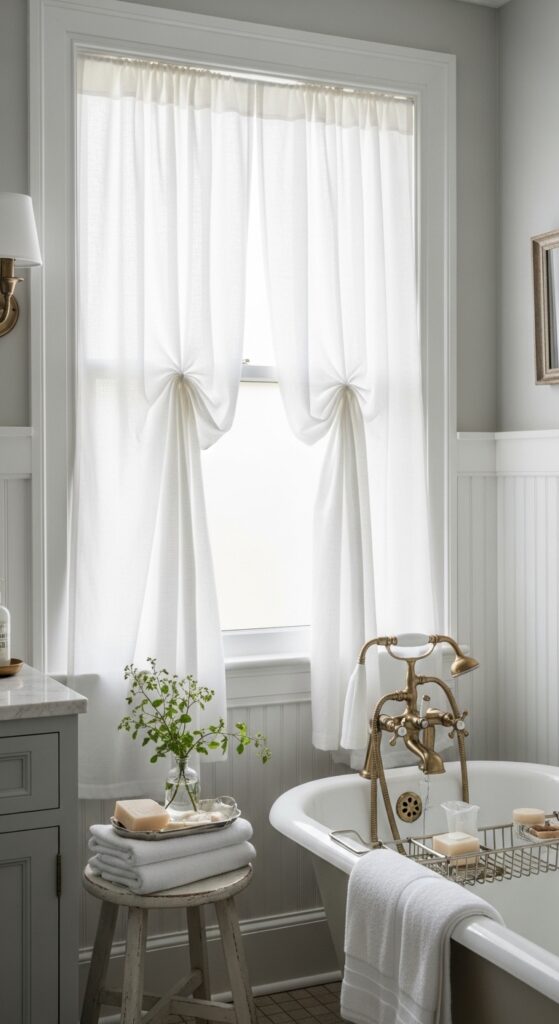
Vibe: The bath feels luminous and lightly private.
Why it works: White curtains in a bathroom preserve brightness while still softening tile and painted paneling. That matters in farmhouse baths, where the goal is warmth and ease, not heavy window dressing.
How to get it: Use quick-drying, mold-resistant linen or linen-look fabric and keep the panel simple. If privacy is still an issue, pair the curtain with frosted glass film rather than switching to a heavier textile.
11. Floor-Kiss Curtains Framing a Bedroom Window Seat
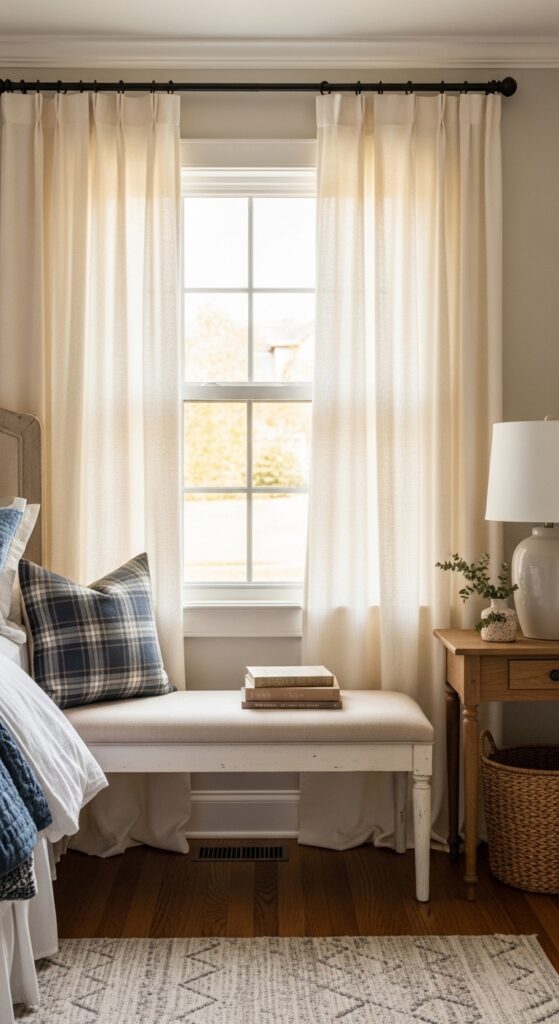
Vibe: The nook feels warm and gently framed.
Why it works: Curtains around a window seat create a sense of enclosure, which makes the seat feel more intentional and less like leftover architecture. The slight break at the floor adds softness while still maintaining clean proportion around the built-in.
How to get it: Hem the curtains so they just touch the floor with no more than a slight bend. If the seat is deep, mount the rod wider so the stack-back does not block precious daylight.
💡 Quick Win: The simplest upgrade for a plain window seat is a better curtain length, not more pillows.
12. Patterned Tape Trim on Plain Off-White Panels
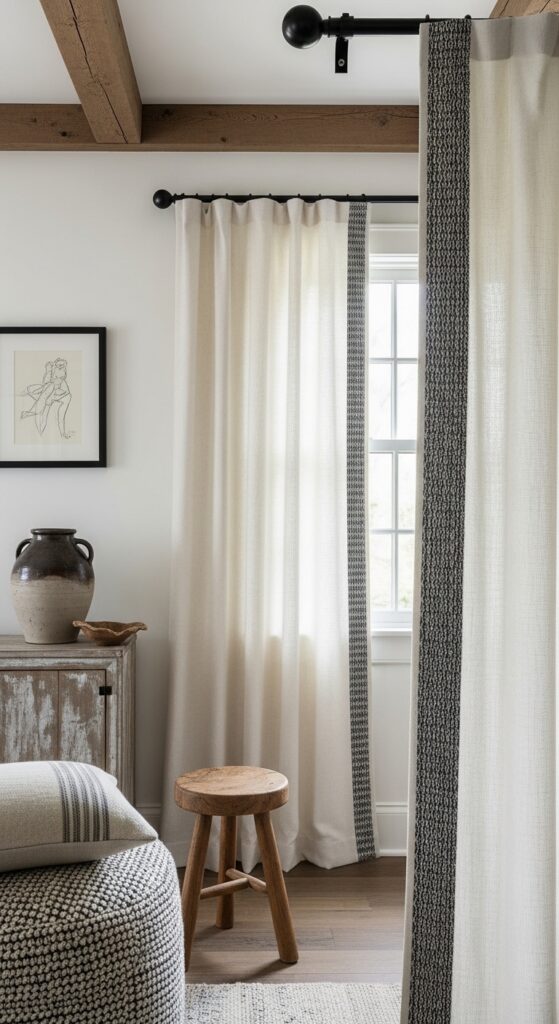
Vibe: The room feels layered without looking busy.
Why it works: Trim introduces pattern in a narrow, controlled band, which is often more effective than using a fully patterned curtain. It gives the eye a crisp edge and frames the window while preserving the calm drape of a neutral panel.
How to get it: Start with plain off-white curtains and sew or iron on a simple tape trim in charcoal, flax, or muted blue. This is one of the best ways to customize inexpensive panels without committing to a bold print.
13. Farmhouse Curtains Ideas With Charcoal Ticking Stripe in the Home Office
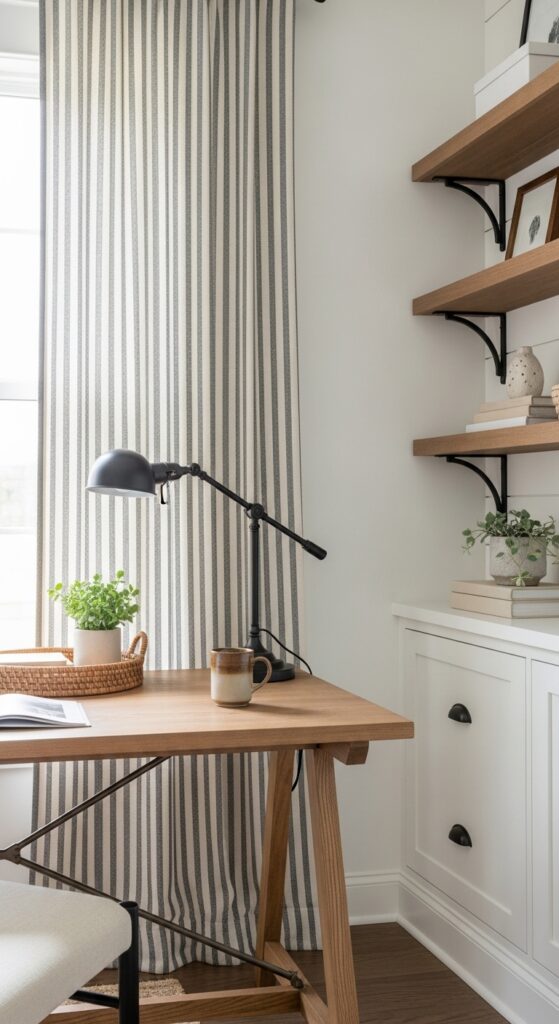
Vibe: The office feels crisp and quietly focused.
Why it works: Ticking stripe gives rhythm without distraction, which is ideal in a workspace. The fine vertical movement adds interest, but the restrained palette keeps the room feeling orderly and lets the desk and shelving remain visually clear.
How to get it: Stick with narrow stripes rather than bold cabana widths, and pair them with one other dark accent like a black lamp or iron shelf bracket. That repetition makes the curtain feel integrated, not isolated.
💡 Quick Win: If your office feels flat, a narrow ticking stripe is safer than a large floral or check.
14. Bamboo Shades Layered Under Soft Drapes in the Family Room
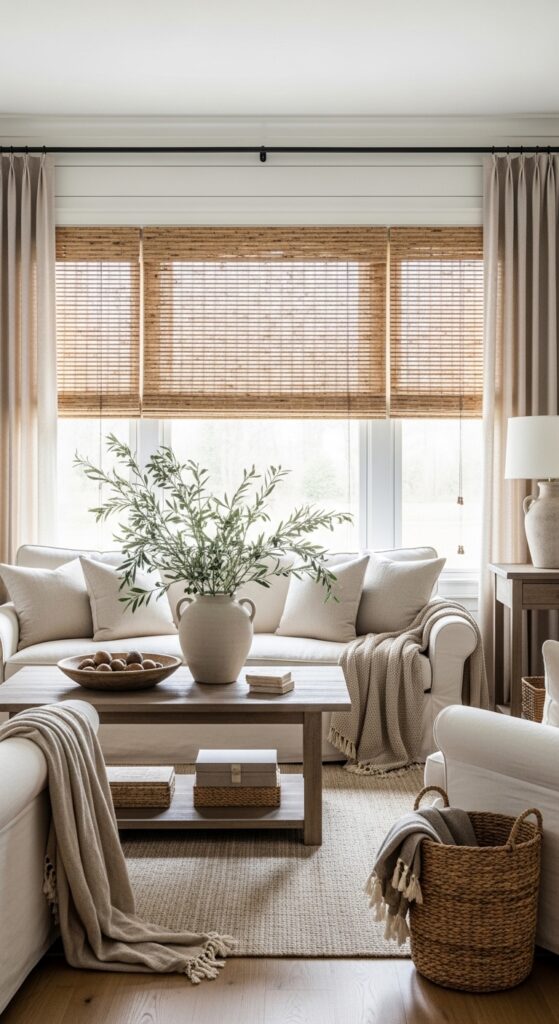
Vibe: The room feels grounded and quietly textural.
Why it works: Layering woven shades with drapes creates depth through material contrast—harder fiber inside, softer fabric outside. It also gives you better control of privacy and light, which is especially useful in high-traffic family rooms.
How to get it: Install the woven shade inside the frame, then mount full drapery outside and above the window. Keep the drapes neutral so the bamboo texture stays the point of interest.
15. Heavily Interlined Linen for a Restful Bedroom
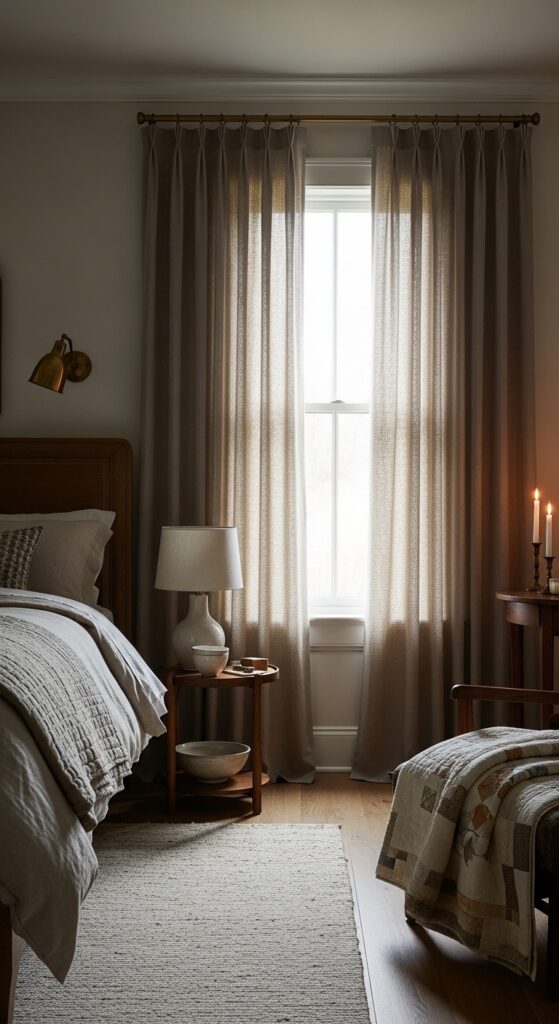
Vibe: The bedroom feels hushed and deeply restful.
Why it works: Interlining adds body, insulation, and fuller folds, which makes the curtain feel richer without needing a louder pattern. In a bedroom, that extra weight also improves darkness and quiet, both of which matter more than they do in most other rooms.
How to get it: Choose linen with a separate interlining or quality blackout backing rather than thin decorative panels alone. This works especially well in older homes where drafty windows can make a room feel less settled.
💡 Quick Win: Better lining changes the feel of curtains more than changing the fabric color does.
16. Curtains That Stop Cleanly Above a Mudroom Bench
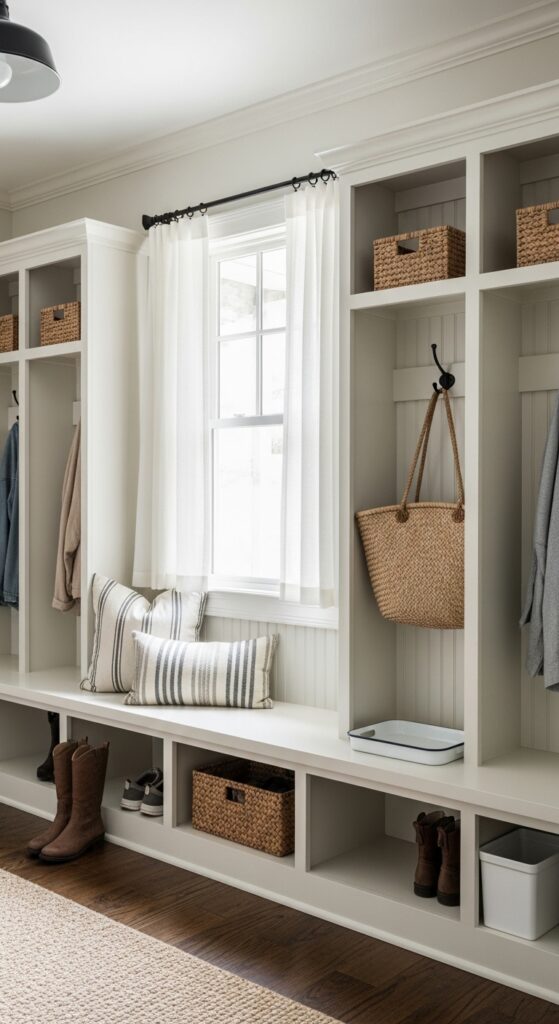
Vibe: The room feels practical and properly edited.
Why it works: In hardworking spaces, overlong curtains can fight the built-ins and create unnecessary visual drag. A clean stop above the bench preserves function, keeps the window soft, and respects the horizontal line of the cabinetry.
How to get it: Hem the panels to clear the bench by an inch or two rather than trying to force floor-length drapes into a utility zone. Tailored lengths often look more intentional in mudrooms than dramatic ones.
17. Café Curtains With Wood Rings in a Breakfast Nook
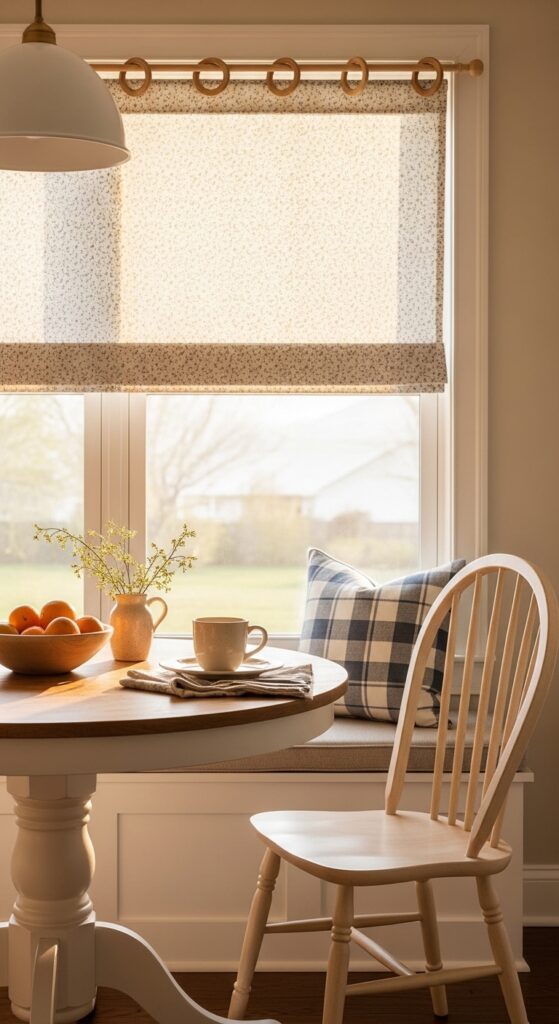
Vibe: The nook feels warm and lightly nostalgic.
Why it works: Wood rings add one small natural detail that instantly pushes a café curtain toward farmhouse rather than generic. Their rounded form also softens the tighter geometry of table legs, chair spindles, and window trim.
How to get it: Use simple wood rings on a slim rod and keep the curtain fabric lightweight. A breakfast nook wants softness, not bulk, especially if chairs and table already take up most of the visual space.
💡 Quick Win: Swapping standard metal clips for wood rings can change the whole mood without changing the curtain.
18. Tone-on-Tone Greige Roman Shade in a Tiny Powder Room
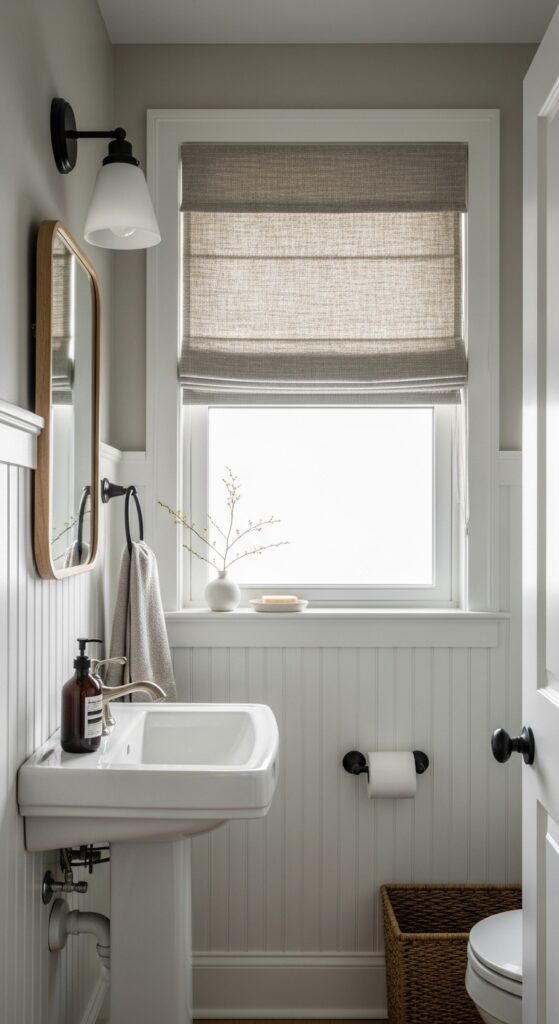
Vibe: The room feels still and visually larger.
Why it works: Small powder rooms benefit from reduced contrast. A Roman shade close to the wall color lets the window recede slightly, which cuts down visual interruption and keeps the space feeling cleaner than full side panels often do.
How to get it: Choose a textured greige fabric and mount it inside the frame for the leanest silhouette. In truly tiny rooms, this is often a better farmhouse move than trying to squeeze in drapery.
19. Farmhouse Curtains Ideas in Dusty Blue Check for a Kid’s Room
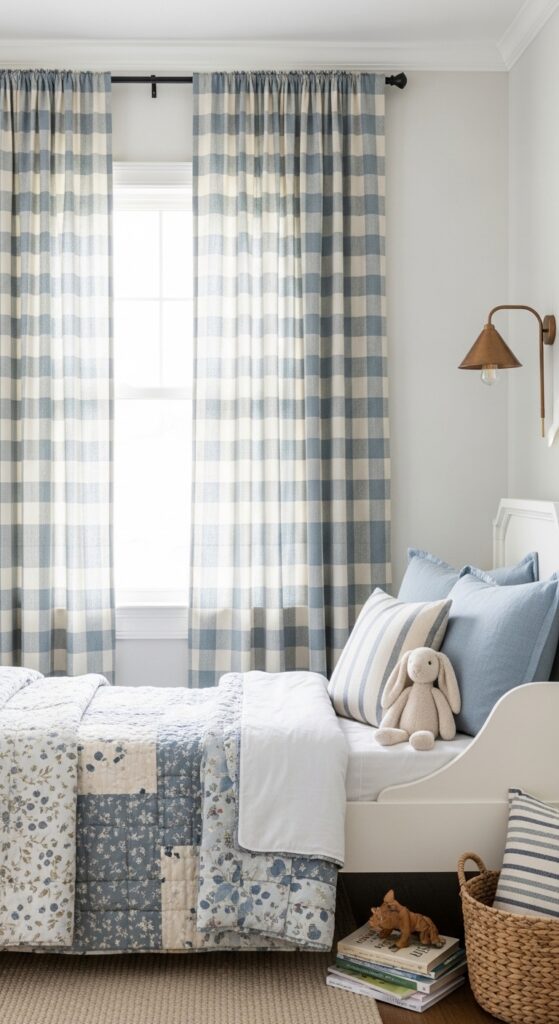
Vibe: The room feels fresh and lightly playful.
Why it works: A soft check pattern adds personality without tipping into theme decor, which matters in children’s rooms that need to age well. Dusty blue stays calm, and the repeated square rhythm adds energy while still feeling organized.
How to get it: Choose a faded blue check on cream rather than a highly saturated print. Pair it with solid bedding so the curtains bring the pattern and the rest of the room can stay flexible as the child grows.
💡 Quick Win: A muted check reads more timeless than novelty prints and is easier to decorate around later.
20. Lace Panels Layered With Shutters in the Bath
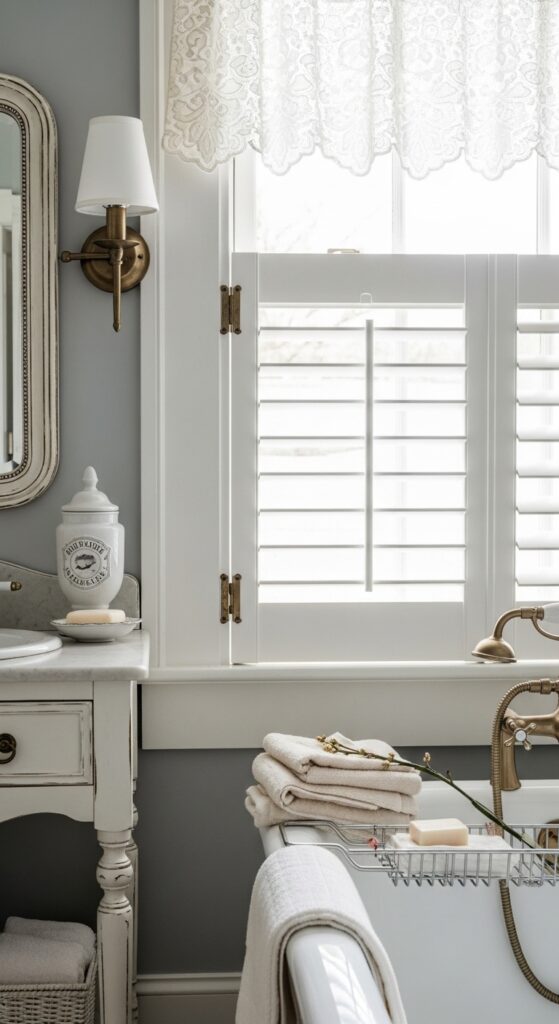
Vibe: The bath feels romantic and softly private.
Why it works: Lace alone can skew delicate, but shutters give it structure and privacy, which makes the pairing feel more grounded. The contrast between solid slats and openwork fabric creates depth while still keeping the window light.
How to get it: Use lace as the outer softness and let shutters handle most of the privacy control. This works best in older-style baths where vintage detail already exists in the vanity, mirror, or tub.
21. Scalloped Valance for a Sunny Breakfast Corner
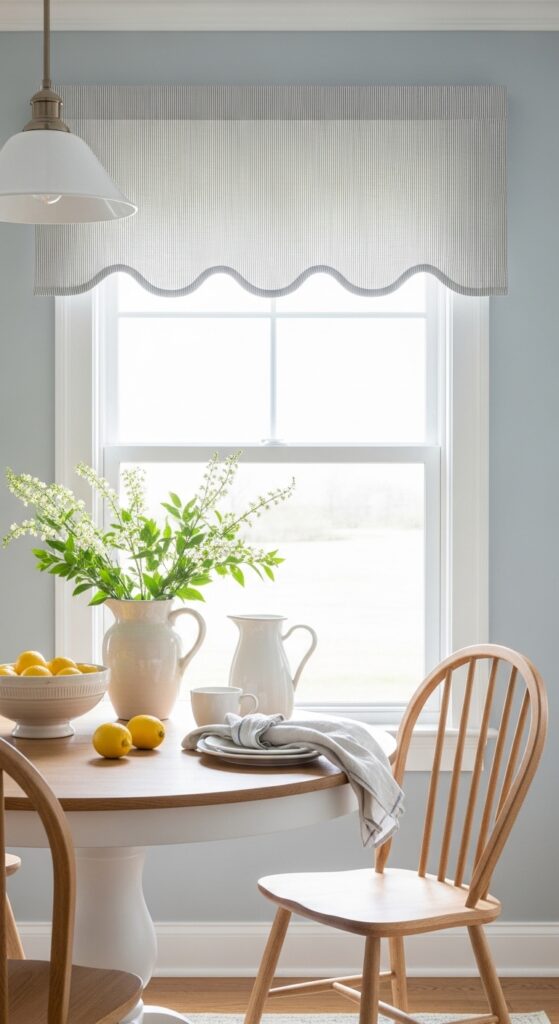
Vibe: The corner feels sun-warmed and easygoing.
Why it works: A valance is useful where you want softness but do not have the wall space for full panels. The scalloped edge adds character, and the short drop keeps the breakfast area bright and uncluttered.
How to get it: Use a restrained stripe or small check and mount the valance slightly higher than the trim to gain a little visual height. Keep the shape gentle, not overly frilled, so the look stays farmhouse instead of cottage-sweet.
💡 Quick Win: A valance is one of the easiest ways to give a small eating area personality without crowding it.
22. Sill-Length Tie-Up Curtains Over a Farmhouse Desk
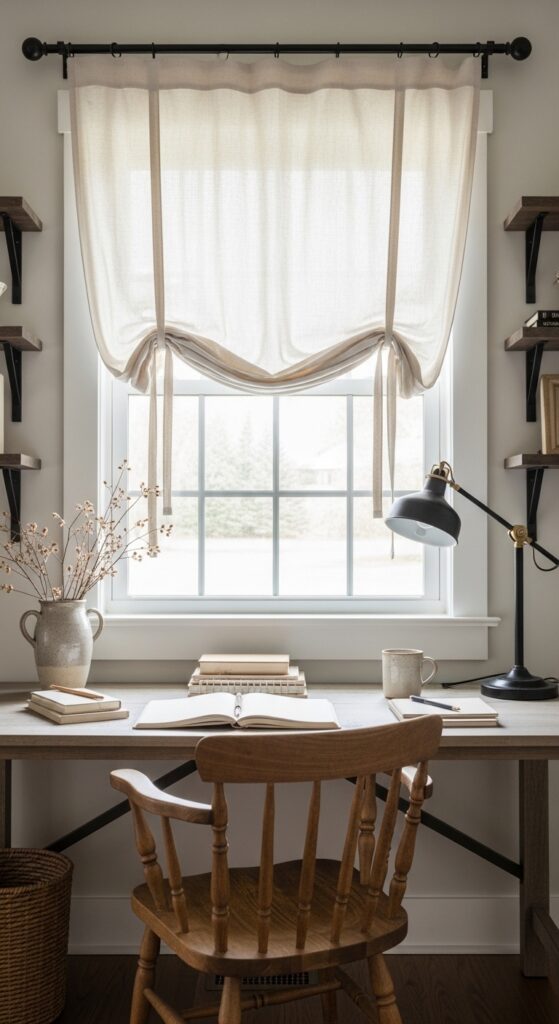
Vibe: The workspace feels practical and gently softened.
Why it works: A desk under a window needs a treatment that does not interfere with the tabletop or chair movement. Tie-up curtains keep the window dressed while preserving negative space around the work surface, which helps the room feel less cramped.
How to get it: Use this only where the sill sits directly above furniture and full drapes would bunch awkwardly. Soft cotton or lightweight linen works better than stiff fabric because the folds need to fall cleanly when tied.
23. Faded Floral Panels for a Calm Guest Bedroom
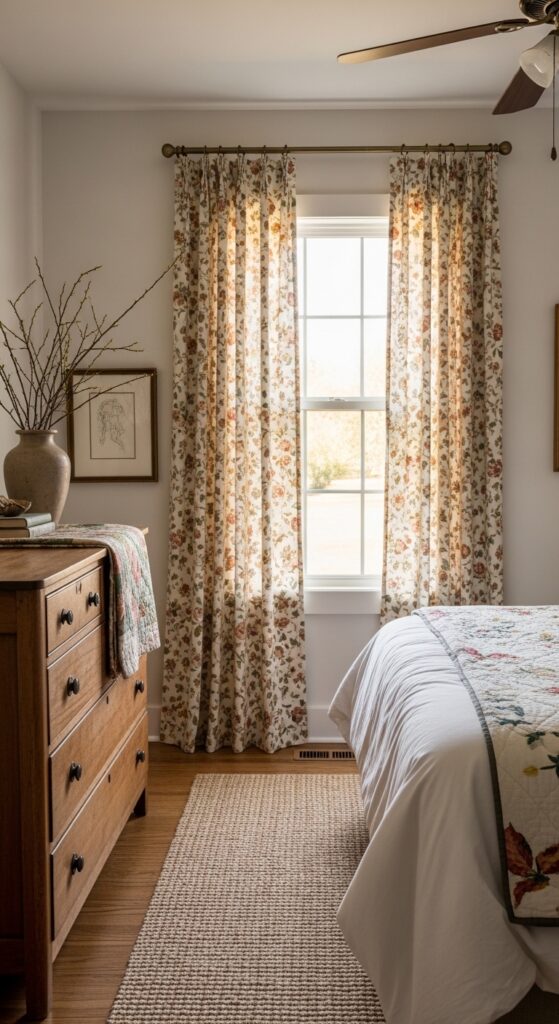
Vibe: The bedroom feels layered and gently storied.
Why it works: A faded floral can bring depth to a guest room because it introduces pattern, color, and softness in one move. The key is scale and palette: muted motifs feel collected and restful, while bright florals can crowd the room fast.
How to get it: Look for prints with washed sage, dusty rose, or tobacco on an ivory ground. Keep the bedding mostly solid so the floral reads as the room’s one expressive textile layer.
💡 Quick Win: Guest rooms are the safest place to try a floral curtain before using one in a main living space.
24. Repeat One Curtain Family Throughout the House
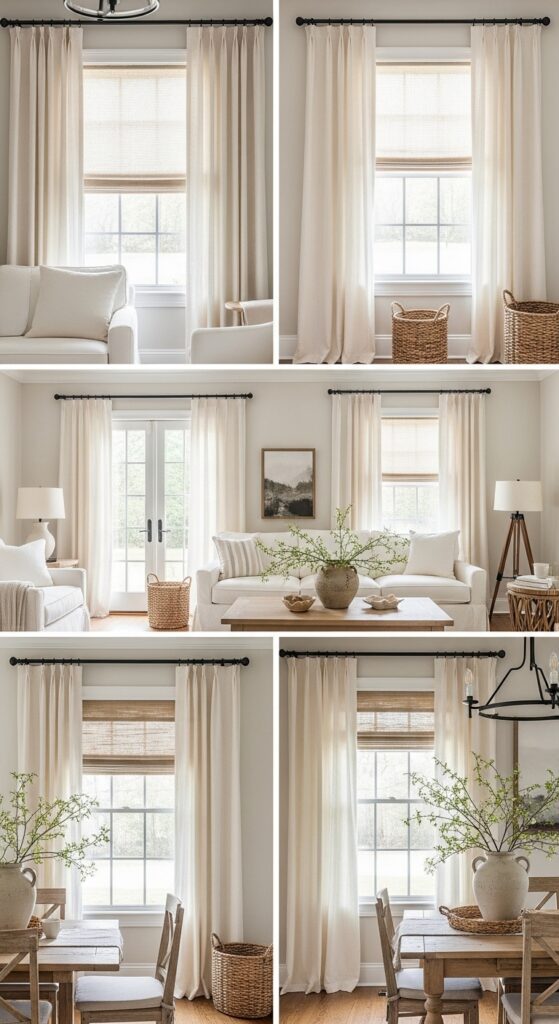
Vibe: The whole home feels serene and quietly connected.
Why it works: Repetition is what makes farmhouse curtain choices feel intentional rather than random room by room. When the color family, hardware finish, or fabric texture echoes throughout the house, the eye reads continuity even if one room uses panels and another uses café curtains or shades.
How to get it: Pick one fabric direction—flax, warm white linen, ticking stripe, or greige cotton—and repeat that family in different forms. This is the easiest way to make every single room feel related without making them look identical.
How to Start Your Farmhouse Transformation
Start with the rod height. Mounting a simple matte black or antique brass curtain rod closer to the ceiling than the trim instantly gives farmhouse curtains more presence and makes almost any window look taller, calmer, and more intentional.
The most common mistake is picking curtains that are too bright white for the rest of the room. That one wrong undertone can make creamy walls, weathered wood, and flax upholstery look dirty by comparison, so always compare fabric against your wall paint and trim in daylight first.
For budget entry points, buy one pair of warm ivory linen-look panels, a matte black adjustable rod, and a woven seagrass basket to place nearby under the window. All three can be found for under $50 each, and together they shift the window from bare to layered fast.
A starter version can happen in a weekend for roughly $100 to $300 per room if you focus on curtains, rods, and a few nearby accents. A fuller whole-home approach with custom hems, Roman shades, lining upgrades, and coordinated hardware usually builds over months and can range from $1,000 to several thousand depending on fabric quality and window count.
Frequently Asked Questions About Farmhouse Curtains Ideas
What is the difference between farmhouse curtains and modern farmhouse curtains?
Traditional farmhouse curtains usually lean more rustic, with checks, grain sack stripes, florals, lace, and visibly vintage details. Modern farmhouse curtains keep the same softness but simplify the pattern, sharpen the hardware, and move toward neutrals and cleaner lines. Architectural Digest describes modern farmhouse as more restrained and often more neutral overall, which is why plain linen panels and fine ticking stripes feel more modern than ruffles or plaid. Architectural Digest
What colors work best for farmhouse curtains?
Warm white, ivory, flax, greige, muted sage, dusty blue, and charcoal accents work especially well. Homes & Gardens and The Spruce both point toward natural neutrals first, then nature-led shades and faded patterns as the next layer. If you want the safest option, start with warm white or flax and let hardware, wood tones, and nearby textiles carry the contrast. Homes & Gardens The Spruce
Is it expensive to achieve farmhouse curtains ideas at home?
Not necessarily. Curtains are one of the easier farmhouse updates because even budget-friendly panels can look elevated if the rod height, hem length, and hardware finish are right. You can often get a convincing first layer with ready-made linen-look panels in the $30 to $80 range per pair, then spend a little more later on lining, trim, or woven shades.
Can I mix farmhouse curtains with other decorating styles?
Yes, and that usually makes the room feel more personal. Farmhouse curtains mix especially well with cottage, traditional, modern rustic, and even Scandinavian-leaning interiors, as long as the materials stay honest and the palette stays soft. The easiest bridge pieces are plain linen panels, bamboo shades, and subtle stripe patterns because they adapt without feeling style-locked. Architectural Digest Better Homes & Gardens
What fabric works best for farmhouse curtains?
Linen is the standout, with cotton and linen-cotton blends close behind. Homes & Gardens specifically highlights linen for its drape and practicality, including in kitchens and bathrooms, while Better Homes & Gardens points to cotton, burlap-inspired textures, lace, and natural-fiber shades as strong farmhouse options. If you want the most flexible choice, go with slubby linen-look fabric in ivory or flax. Homes & Gardens Better Homes & Gardens
Ready to Try These Farmhouse Curtains Ideas at Home?
These 24 farmhouse curtains ideas covered the full range—quiet colors, natural fabrics, layered light control, room-by-room placement, and the small finishing details that make windows feel intentional. You do not need to redo every room at once; starting with one window is not only fine, it is often how the best farmhouse homes come together. Pick one room today and raise the curtain rod closer to the ceiling, then swap in a warm ivory or flax panel and watch the whole wall soften. Once the look is in place, the emotional payoff is real: the room feels calmer, warmer, and more lived in without feeling crowded. Save the ideas with ticking stripes, café curtains, bamboo shades, and warm white linen first—they are often the ones that give a farmhouse home its quiet pull.
Visual inspiration and source galleries: Homes & Gardens farmhouse curtain ideas, The Spruce farmhouse curtain ideas, Better Homes & Gardens rustic window treatment ideas, MyDomaine farmhouse-style window treatment ideas, Homedit farmhouse curtains style for every room.