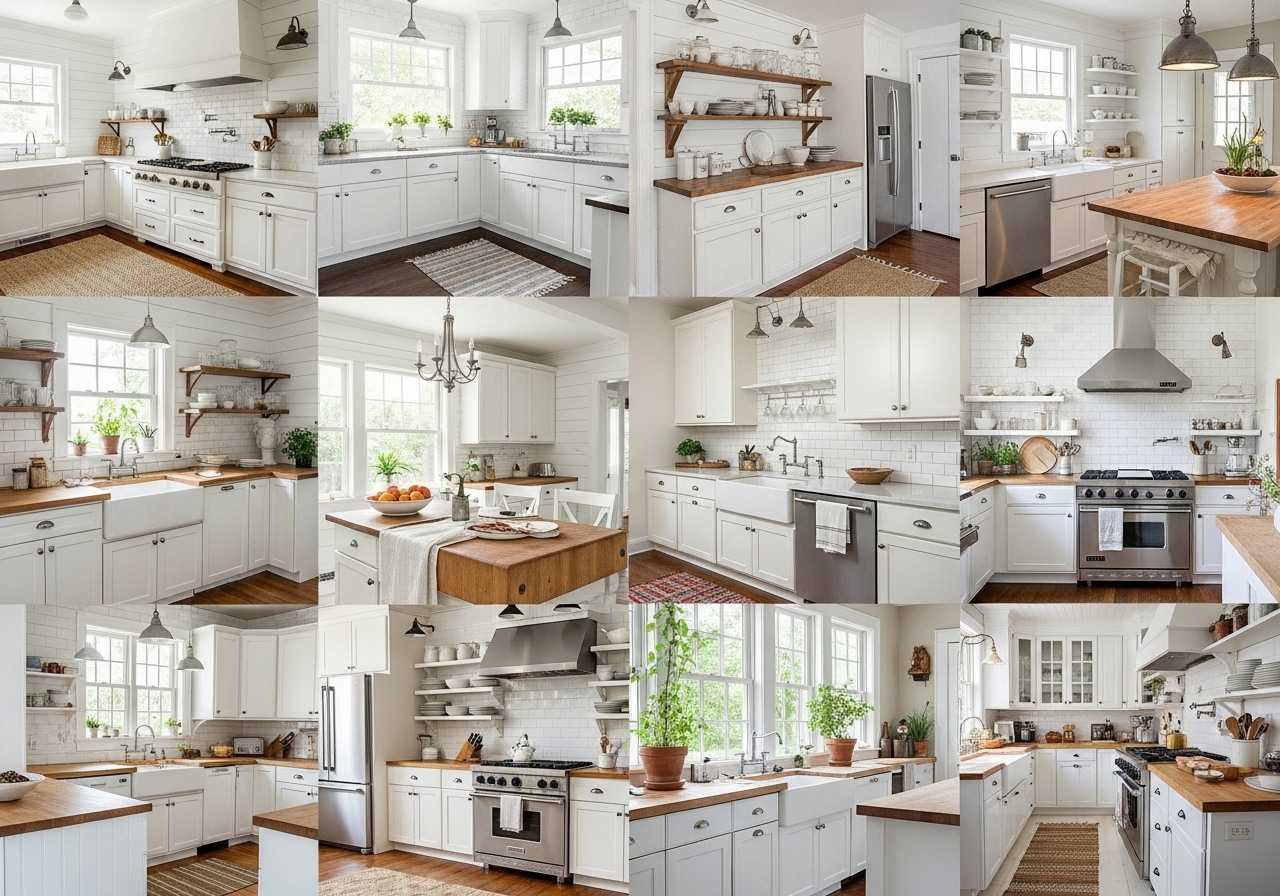
White farmhouse kitchens pair rural practicality with a light, enduring palette, blending hardworking materials with soft whites, warm wood, and unfussy detail. These 24 white farmhouse kitchen ideas will give you specific ways to shape that look through color, materials, lighting, layout, and styling.
The feeling is bright but never cold. Light moves easily, wood grain adds quiet warmth, and every finish feels touched by daily life instead of staged for show. A white farmhouse kitchen should feel calm at breakfast, generous at dinner, and grounded all day in between. Here are 24 ideas worth saving — and stealing.
Why White Farmhouse Kitchen Ideas Work So Well
White farmhouse style comes from traditional American farm kitchens where utility led the design: durable cabinetry, apron-front sinks, open work surfaces, and natural materials that could age well. What makes it distinct from plain country style is its cleaner structure, and what sets it apart from modern minimalist kitchens is its warmth—painted shaker fronts, reclaimed wood, and lived-in texture instead of slick uniformity. Architectural Digest
Its core palette is creamy white, ivory, greige, dusty blue, muted sage, mushroom, and soft black. The materials are equally specific: painted shaker cabinetry, fireclay sinks, beadboard or shiplap, rift-sawn white oak, honed marble, soapstone, unlacquered brass, matte black iron, and undyed linen. Better Homes & Gardens notes that farmhouse kitchens still rely on white, but today’s versions work best when stark tones are softened with earthy undertones and wood warmth. Better Homes & Gardens
It’s trending because kitchens are doing more than cooking now—they’re hosting, working, storing, and grounding the entire home. White cabinets remain popular because they let other elements evolve over time, and softer whites feel fresher right now than icy, high-contrast schemes. Architectural Digest
Small kitchens can absolutely carry this style. Prioritize one warm white, ceiling-height storage, and one authentic material—usually wood or tile—before adding decor. The limit is clutter: too many signs, open shelves, and mixed finishes will make a compact kitchen feel busy fast. HGTV
| Element | Core Trait | Supporting Trait |
| Philosophy | practical warmth | quiet simplicity |
| Key Materials | painted wood, fireclay, white oak | soapstone, brass, linen |
| Key Colors | creamy white, greige, soft black | dusty blue, muted sage, mushroom |
1. White Farmhouse Kitchen Ideas With Creamy Cabinet Paint
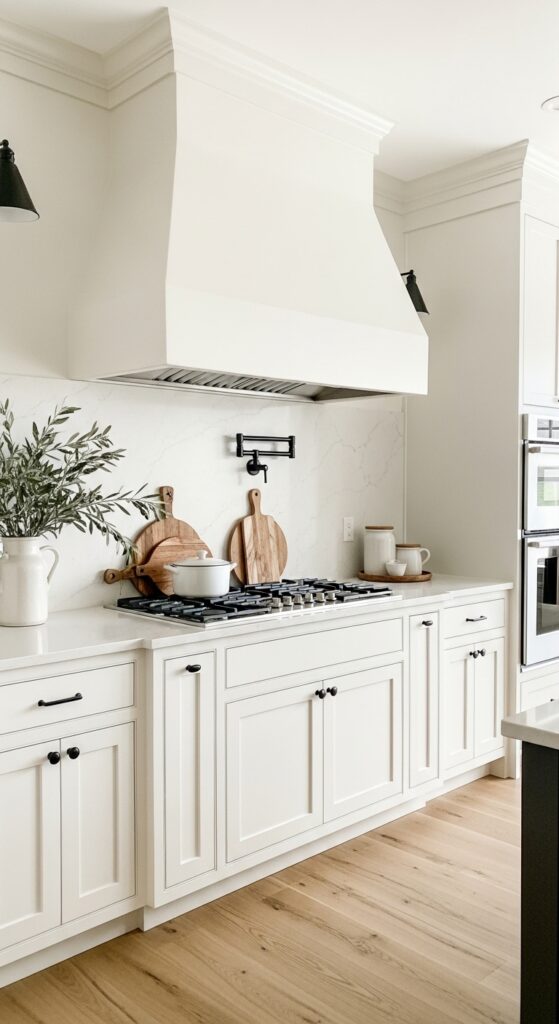
Vibe: The room feels luminous and gently settled.
Why it works: A creamy white keeps cabinetry bright without the sharp glare that can make farmhouse kitchens feel clinical. The slight warmth in the paint softens black hardware, oak floors, and stone counters, creating tonal layering instead of flat contrast.
How to get it: Test Benjamin Moore Swiss Coffee, White Dove, and Sherwin-Williams Alabaster on three different walls before committing. In south-facing kitchens, go a touch quieter; in north-facing rooms, choose the warmest sample so the white doesn’t turn blue.
💡 Quick Win: Replace one cool-white bulb with a 2700K bulb and you’ll see your cabinet color read warmer instantly.
2. A White Oak Island That Breaks Up All the Paint
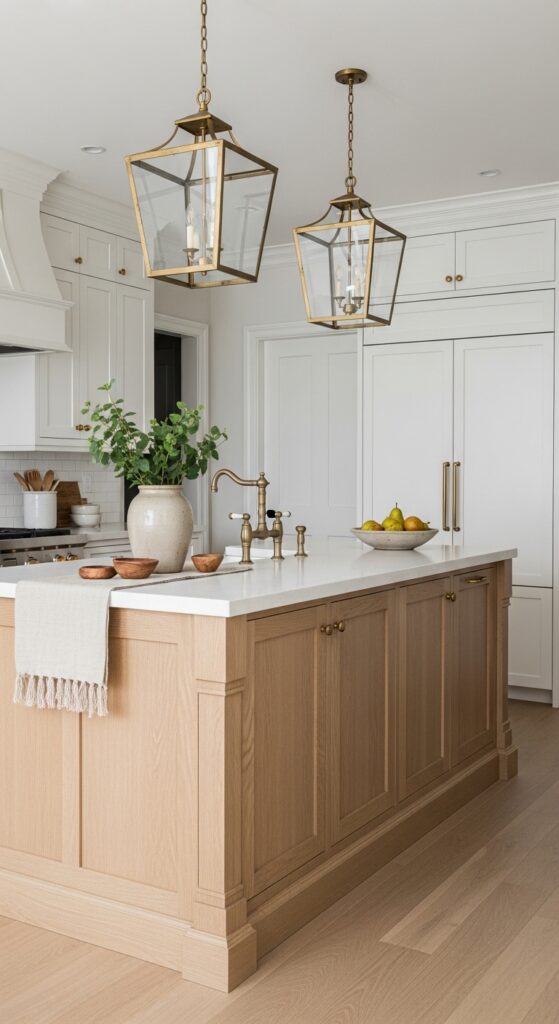
Vibe: It feels grounded, warm, and quietly substantial.
Why it works: Kitchens with too much painted surface can lose depth. A white oak island adds visual weight at the center of the room and brings in the natural grain that white farmhouse kitchens need to feel rooted rather than decorative.
How to get it: Use rift-sawn or quarter-sawn white oak with a matte water-based finish so the color stays pale instead of orange. Keep the island slightly darker than the floor so the two wood tones feel related, not identical.
3. Aged Brass Lantern Pendants Over the Island
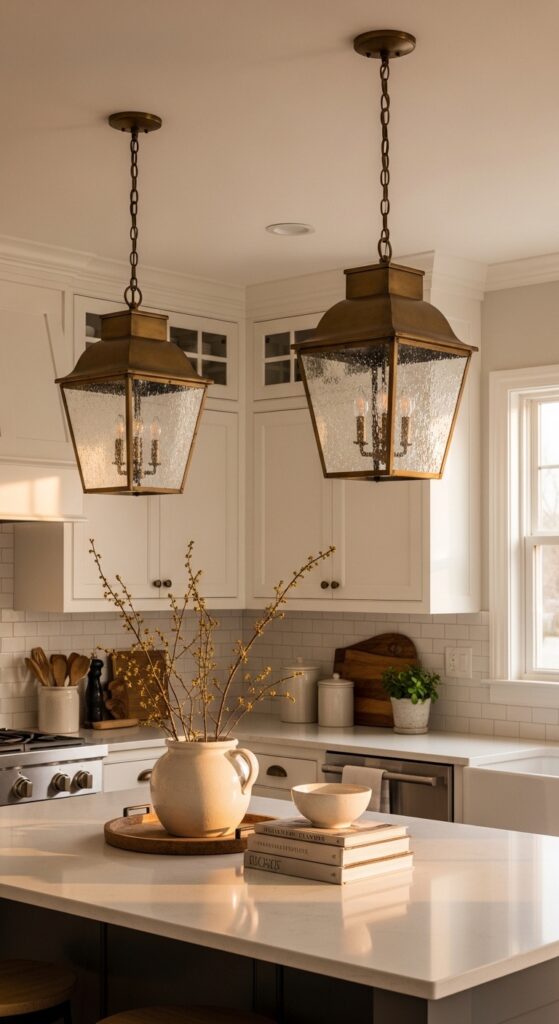
Vibe: The room feels sun-warmed and quietly tailored.
Why it works: Pendant lighting sets the kitchen’s rhythm from above. Lantern shapes suit farmhouse architecture because they carry old-house character, while aged brass adds reflective warmth that keeps white cabinetry from feeling too one-note.
How to get it: Hang two pendants 30 to 36 inches above the island countertop and choose warm metal, not polished chrome. Rejuvenation and Visual Comfort both make lantern styles that read classic without going themed.
💡 Quick Win: Even swapping clear bulbs for warm frosted LED bulbs can soften a too-bright island zone.
4. A Furniture-Style Island With Turned Legs
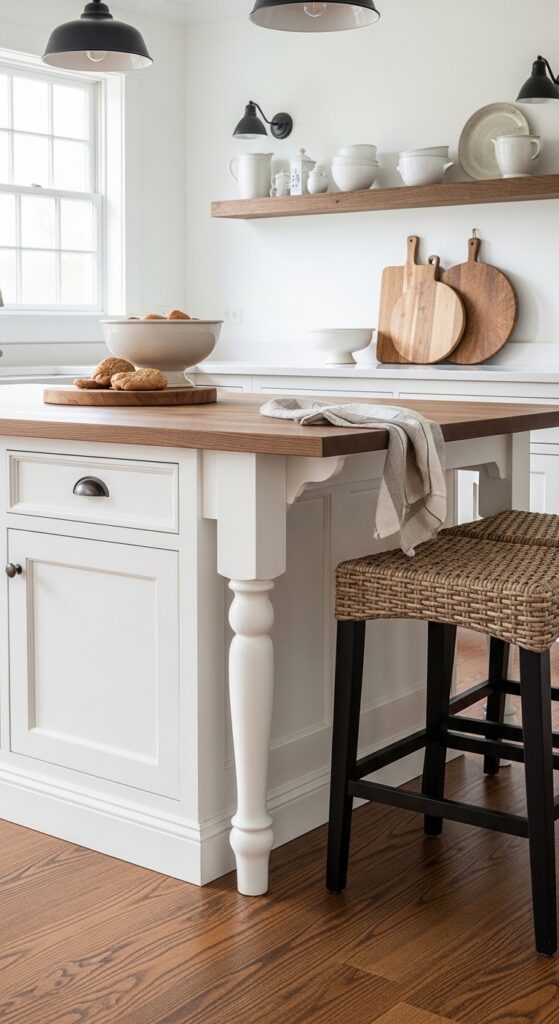
Vibe: It feels collected rather than built all at once.
Why it works: Furniture details lighten the visual bulk of a big island. Turned legs, recessed toe kicks, and beadboard ends make the piece feel like it evolved over time, which is exactly the kind of visual softness farmhouse kitchens wear well.
How to get it: Add turned posts only on the seating side and keep at least 12 inches of overhang for comfortable stools. A painted island base with a wood top gives the room contrast without adding a second large color block.
5. A Shelf Styled With Ironstone and Antique Boards
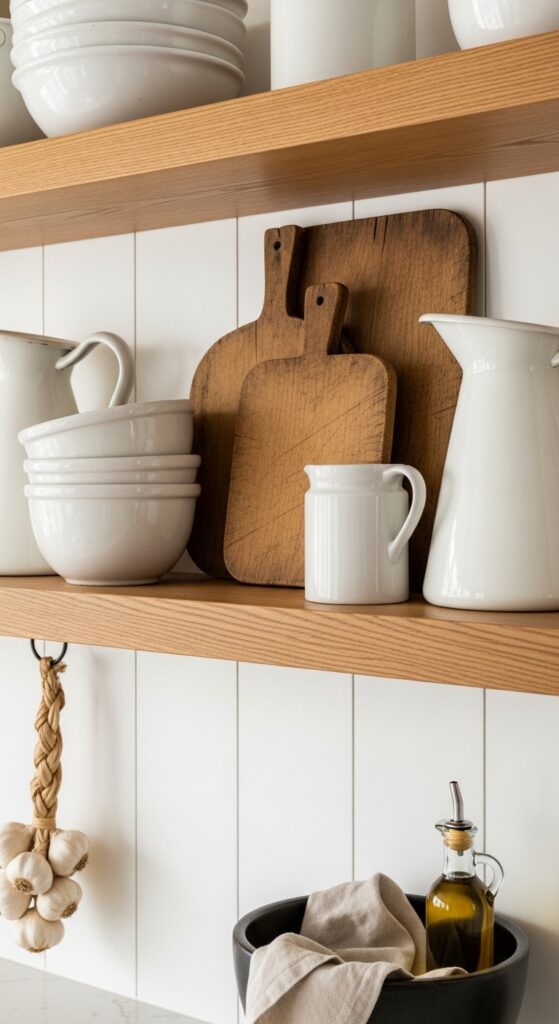
Vibe: It feels layered and quietly storied.
Why it works: Accessories work best here when they double as texture. White ironstone echoes the cabinetry, while worn boards bring in brown undertones and irregular shape, which keeps the shelf from disappearing into an all-white backdrop.
How to get it: Style one shelf with a simple rule: one stack, one tall vessel, one leaning object. Three antique boards plus a crock or pitcher usually gives enough variation without looking busy.
💡 Quick Win: Thrifted cutting boards with knife marks look more convincing than brand-new decorative signs.
6. A Sink-Window-Range Layout That Feels Balanced
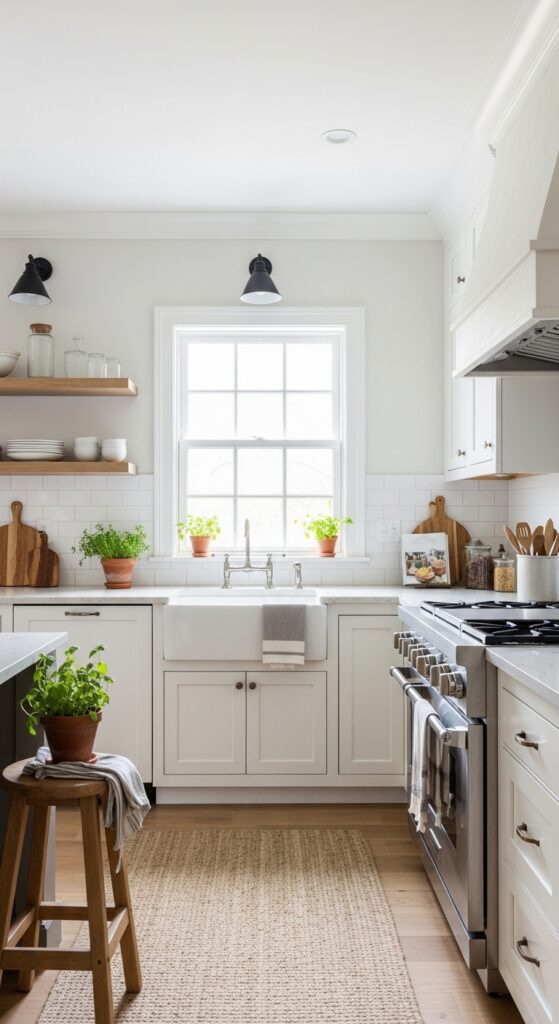
Vibe: It feels still, usable, and easy to move through.
Why it works: Farmhouse kitchens shine when the layout is intuitive, not just decorative. Centering the sink on a window and giving the range its own visual wall creates symmetry, while clear landing space on both sides improves workflow and keeps clutter from collecting.
How to get it: Start with the sink placement first, then build the work triangle around it. Aim for uninterrupted prep space between sink and range, even if that means reducing decorative open shelving elsewhere.
7. Ceiling-Height Shaker Cabinets in a Narrow Kitchen
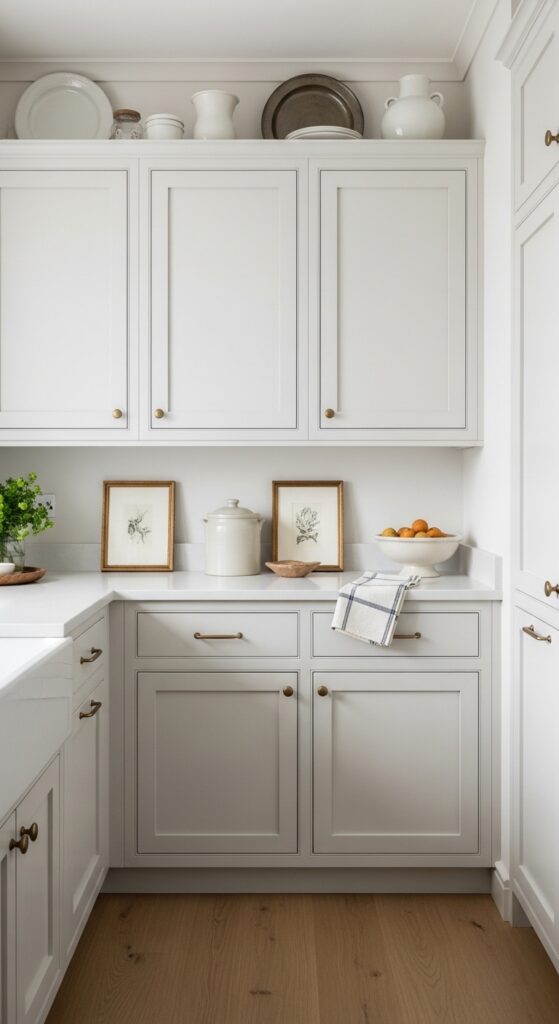
Vibe: It feels compact but composed.
Why it works: In a small kitchen, unused space above cabinets turns into dust and visual dead weight. Cabinets to the ceiling pull the eye upward, add needed storage, and make the room feel more architectural than pieced together.
How to get it: Use a second, shallower top row for platters, vases, and seasonal pieces rather than daily items. Keep hardware slim and consistent so the extra cabinetry doesn’t make the walls feel heavy.
💡 Quick Win: Even adding a painted filler panel above existing cabinets creates a more built-in look.
8. White Farmhouse Kitchen Ideas With Greige Walls
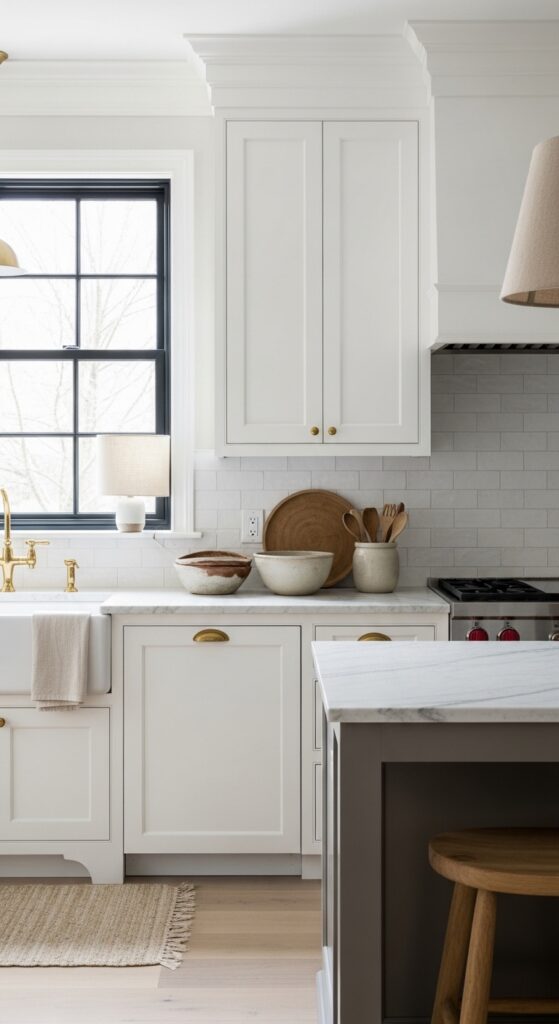
Vibe: It feels hushed and slightly old-world.
Why it works: White-on-white can flatten if every surface carries the same undertone. Greige walls behind white cabinetry create gentle contrast, allowing cabinet lines, brass, and wood tones to stand out without pushing the room into high drama.
How to get it: Try Farrow & Ball Skimming Stone or Benjamin Moore Seapearl on walls with creamier white cabinets. Keep the undertones aligned—warm wall, warm cabinet—so the palette feels layered instead of mismatched.
9. Handmade-Look Zellige for a Soft White Backsplash
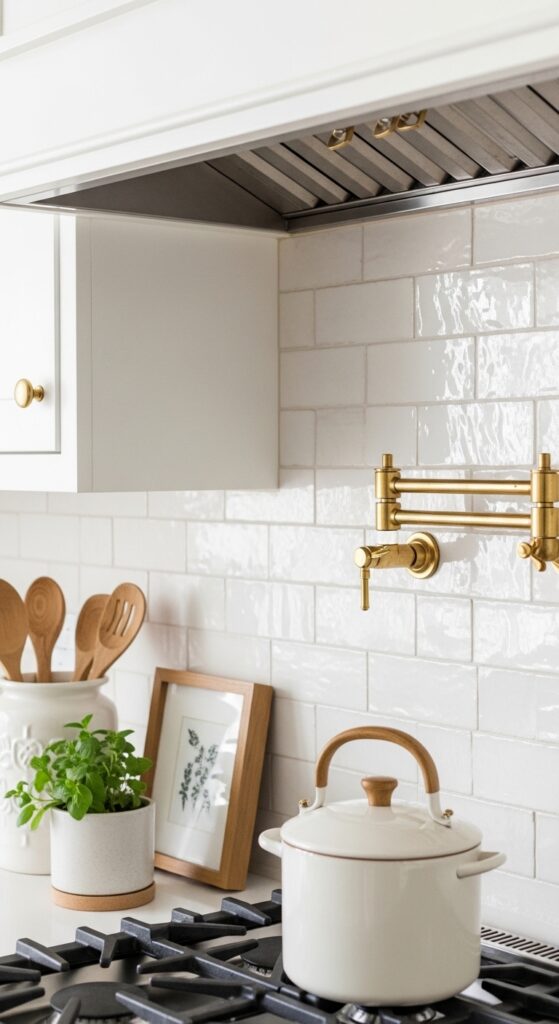
Vibe: It feels luminous and lightly textured.
Why it works: White kitchens need texture more than color. Zellige or other handmade-look tile introduces gentle surface variation, so the backsplash catches light differently across the day and prevents the wall from reading as one blank plane.
How to get it: Choose 2×6 or 4×4 tiles in a warm white and grout them in soft ivory, not bright white. If true zellige is outside the budget, handmade-look ceramic from Fireclay or Bedrosians gives a similar movement.
💡 Quick Win: Change only the range wall backsplash first; that single shift adds depth faster than repainting the whole room.
10. Schoolhouse Sconces Framing the Range
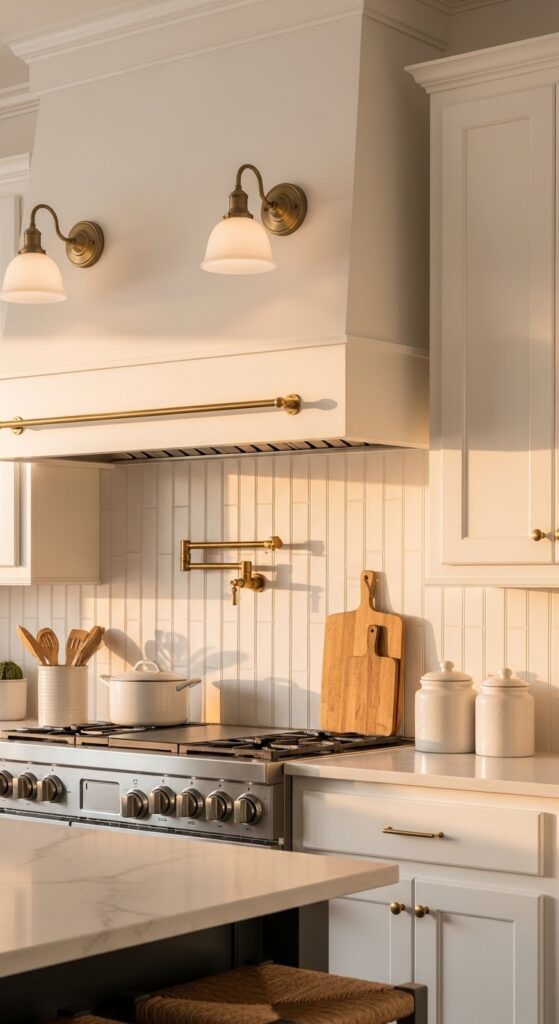
Vibe: It feels classic and quietly lit from the edges.
Why it works: Sconces add side lighting, which gives the range wall more depth than overhead cans alone. The milk-glass schoolhouse form nods to utility history while softening the harder edges of hood, tile, and cabinetry.
How to get it: Install sconces roughly 28 to 34 inches apart, depending on hood width, and use 2700K bulbs for a mellow glow. This works best when the hood wall has enough breathing room and isn’t crowded by too many uppers.
11. Ladder-Back Stools With Rush Seats
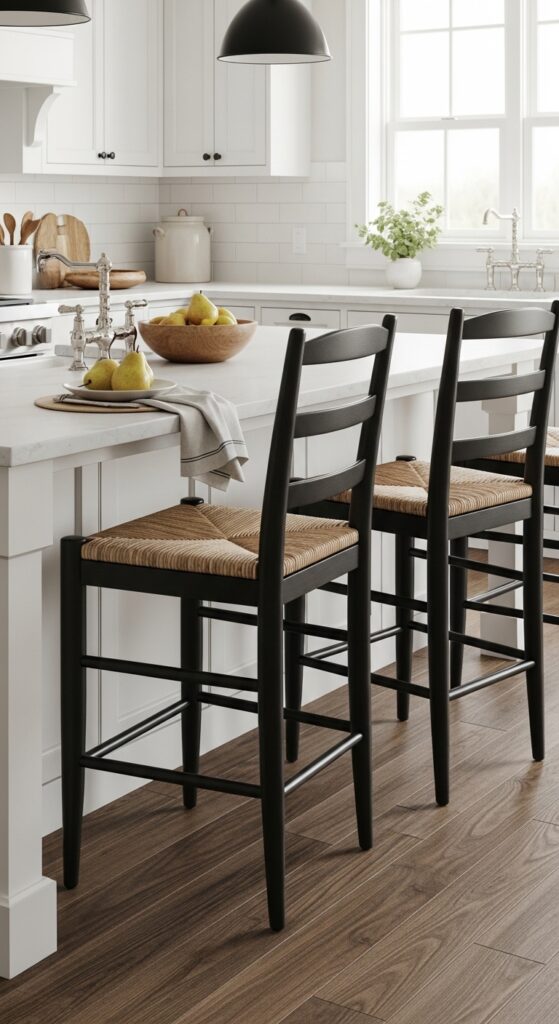
Vibe: It feels grounded and easy to settle into.
Why it works: Rush seating brings a rougher, natural texture that balances polished counters and painted cabinetry. Ladder-back silhouettes also echo traditional farmhouse furniture without making the seating look too bulky or formal.
How to get it: Pick stools with 24- to 26-inch seat heights and a footrail that sits comfortably for long breakfasts or homework sessions. Black frames sharpen the look; natural oak frames make it softer and more country-leaning.
💡 Quick Win: One pair of rush-seat counter stools can shift the tone of a kitchen even before you touch the cabinets.
12. White Farmhouse Kitchen Ideas With a Linen Roman Shade
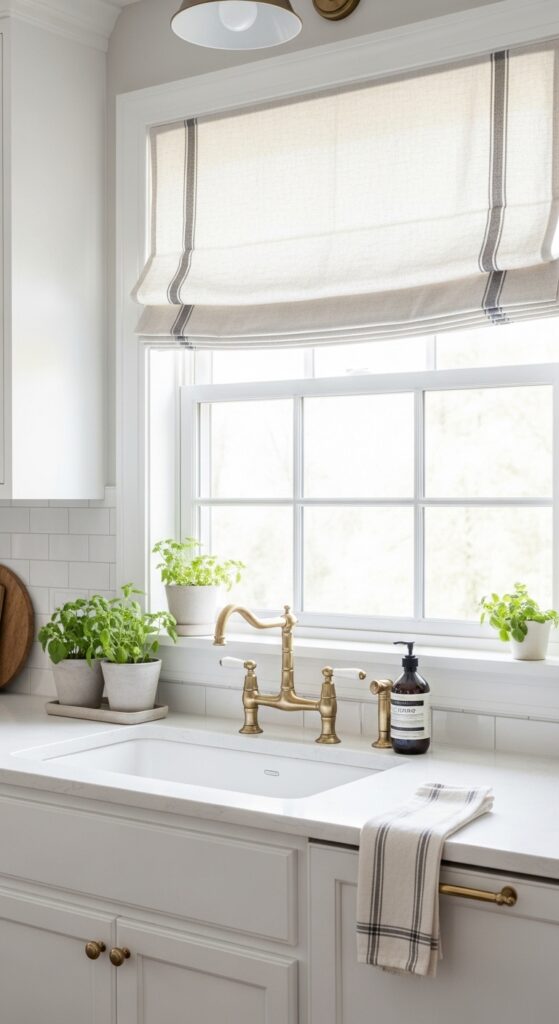
Vibe: It feels soft and lightly tailored.
Why it works: Kitchens are filled with hard planes, so one fabric layer matters. A linen Roman shade introduces movement and reduces the stark line between glass, trim, and backsplash without interrupting the clean architecture of a white farmhouse kitchen.
How to get it: Use a relaxed Roman shade in undyed Belgian linen or a small ticking stripe. Mount it just above the trim and keep the fold shallow so it filters light instead of blocking it.
13. A Mushroom-Painted Island Against White Cabinetry
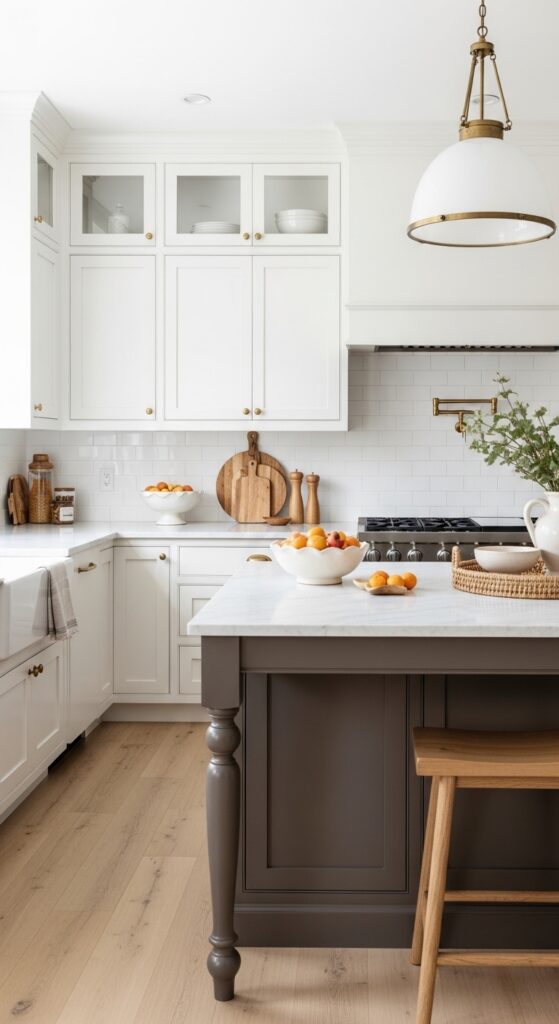
Vibe: It feels serene and a little more layered than an all-white room.
Why it works: A soft mushroom island adds depth without breaking the timelessness that makes white farmhouse kitchens so durable. Because the color is muted and earthy, it anchors the center of the room while keeping the palette calm.
How to get it: Try shades like Farrow & Ball Drop Cloth or Benjamin Moore Pashmina for the island only. Keep the countertops light so the darker base reads intentional, not heavy.
💡 Quick Win: Paint just the back panel or stool side of the island first if you want a low-risk test.
14. A Fireclay Apron Sink With a Slightly Rounded Front
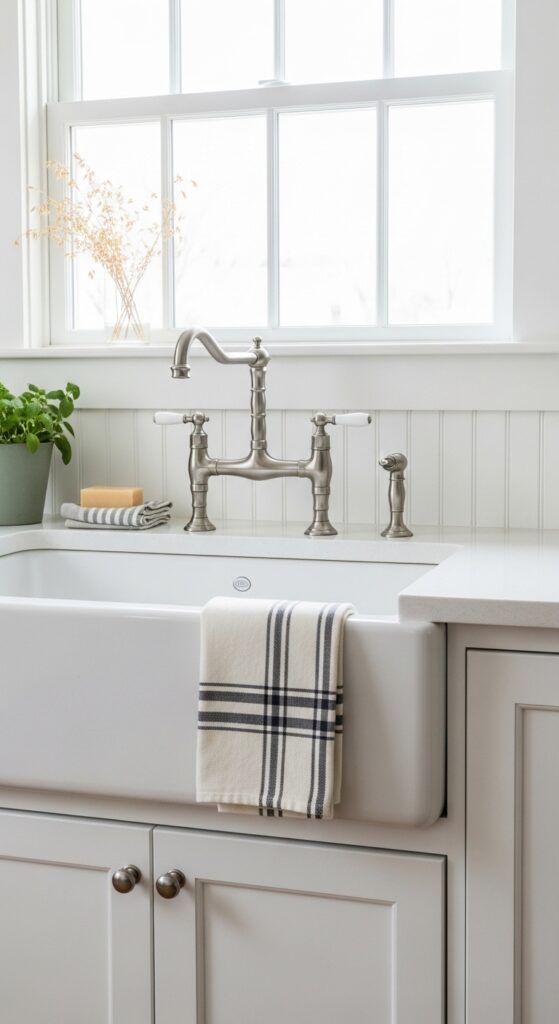
Vibe: It feels clean, sturdy, and deeply useful.
Why it works: The apron sink is one of the clearest farmhouse signals because it combines function with sculptural presence. Its deep basin and exposed front add shape at the sink wall, breaking up flat cabinet runs and making the room feel more rooted in tradition.
How to get it: Choose a 30- or 33-inch fireclay model with a gentle curve rather than a sharp boxy front if you want a softer look. Pair it with a bridge faucet or simple pull-down in unlacquered brass or polished nickel.
15. Warm Under-Cabinet Lighting That Makes White Feel Richer
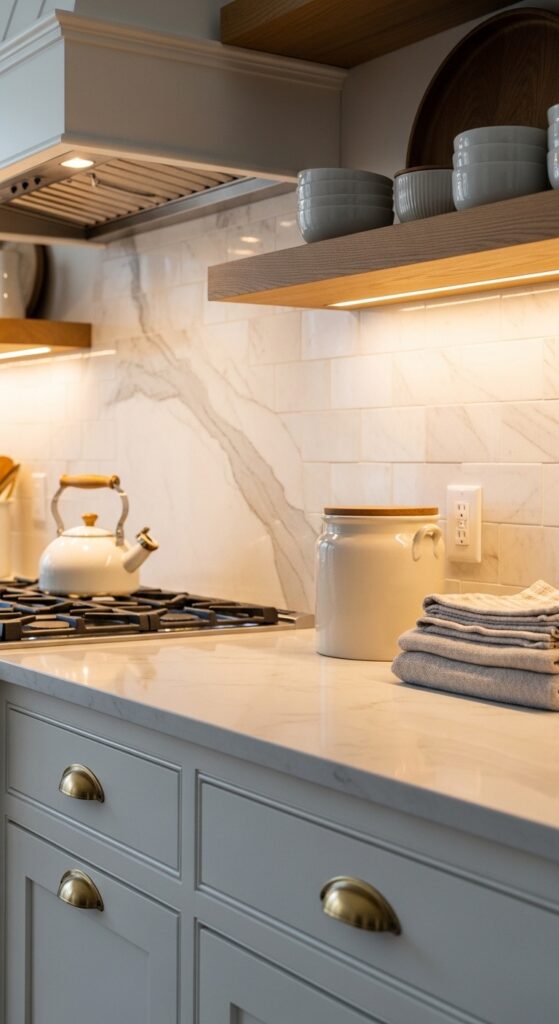
Vibe: It feels warm and gently evening-ready.
Why it works: White kitchens change dramatically with light temperature. Warm under-cabinet lighting deepens the undertones in paint, tile, and wood, while giving countertops useful task light without the glare that overhead fixtures often create.
How to get it: Use LED tape in a frosted aluminum channel and keep it between 2700K and 3000K. Hide the strip behind a slim light rail so the glow washes the backsplash instead of exposing the fixture itself.
💡 Quick Win: Rechargeable under-cabinet bars are enough to test the effect before wiring anything permanent.
16. A Freestanding Pine Hutch for Pantry Storage
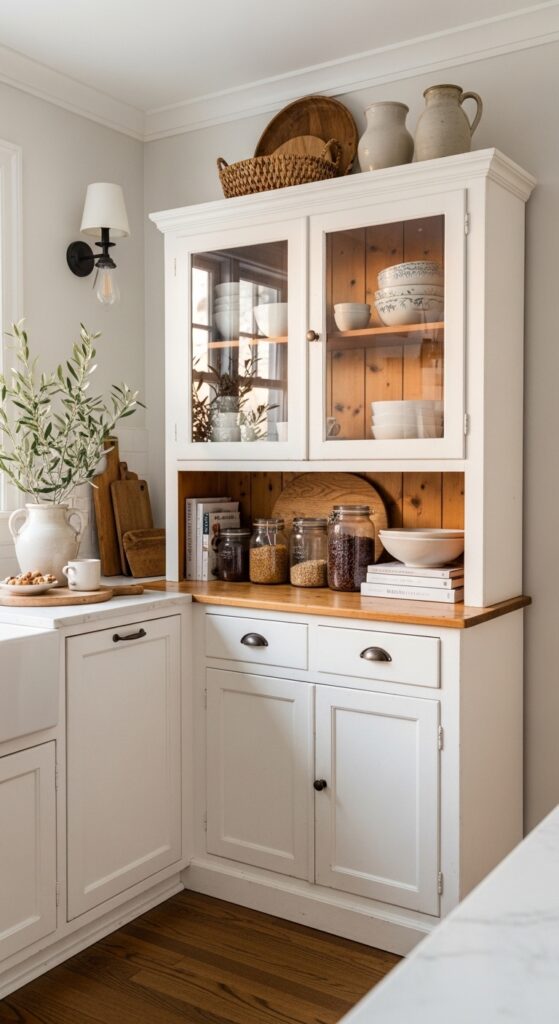
Vibe: It feels collected and gently inherited.
Why it works: Freestanding furniture prevents a white kitchen from feeling overbuilt. A pantry hutch introduces variation in depth, finish, and silhouette, which gives the room the kind of layered imperfection that farmhouse spaces need.
How to get it: Look for a hutch no deeper than 18 to 20 inches if walkway space is tight. Keep the cabinet interior edited—pantry jars below, prettiest bowls and boards above—so the piece feels useful, not crowded.
17. A Single Olive Branch and Pottery Cluster on the Island
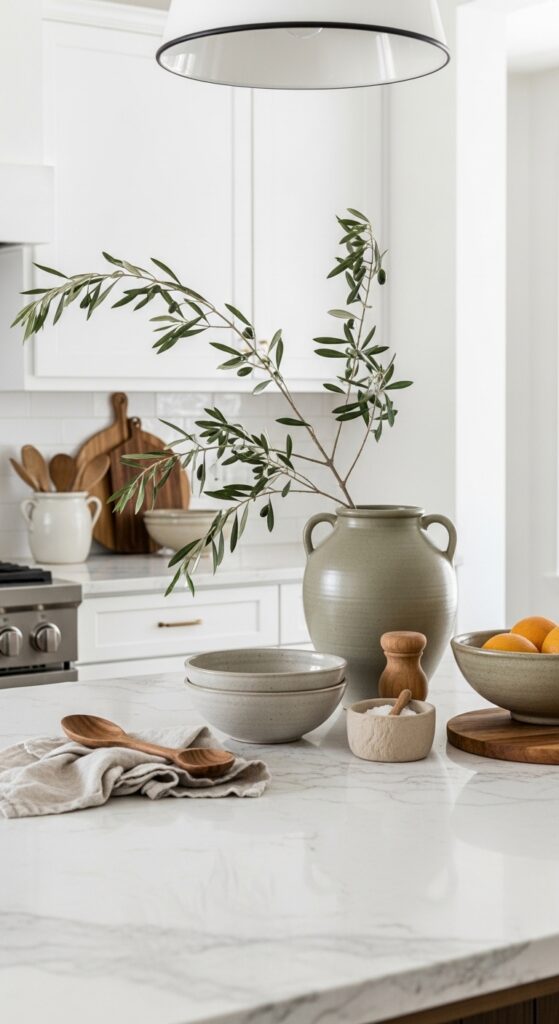
Vibe: It feels still and intentionally spare.
Why it works: Farmhouse styling lands best when it avoids overfilling surfaces. One branch and two or three vessels create height, softness, and natural asymmetry without stealing prep space or turning the island into a display table.
How to get it: Use one tall matte urn, one low bowl, and one practical piece like a salt cellar or wooden board. Keep the arrangement off-center so the island still reads as a workspace first.
💡 Quick Win: Clip a branch from the yard into a neutral pitcher before buying any new decor.
18. Open Shelves Flanking a Plaster Hood
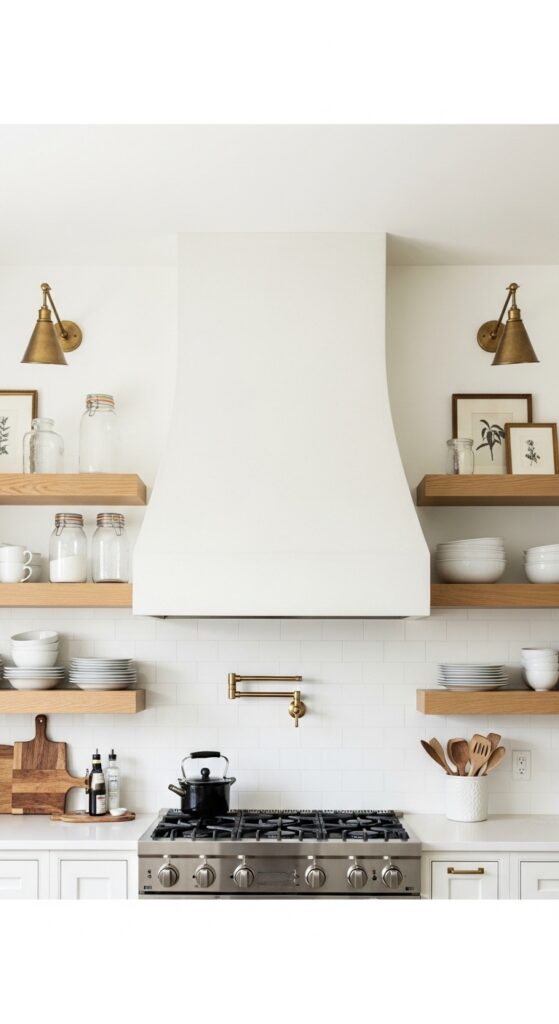
Vibe: It feels airy but not empty.
Why it works: Open shelves can work in farmhouse kitchens when they are used as framing devices rather than storage for everything. Flanking a hood keeps the wall visually balanced and gives everyday dishes a place to soften the heaviness of a large focal-point range.
How to get it: Limit shelf depth to about 10 to 12 inches and install them high enough to clear counter clutter comfortably. This layout works best if your main pantry storage lives elsewhere, not on the shelves themselves.
19. A Cabinet-Depth Fridge and Slim Cart for Small Kitchens
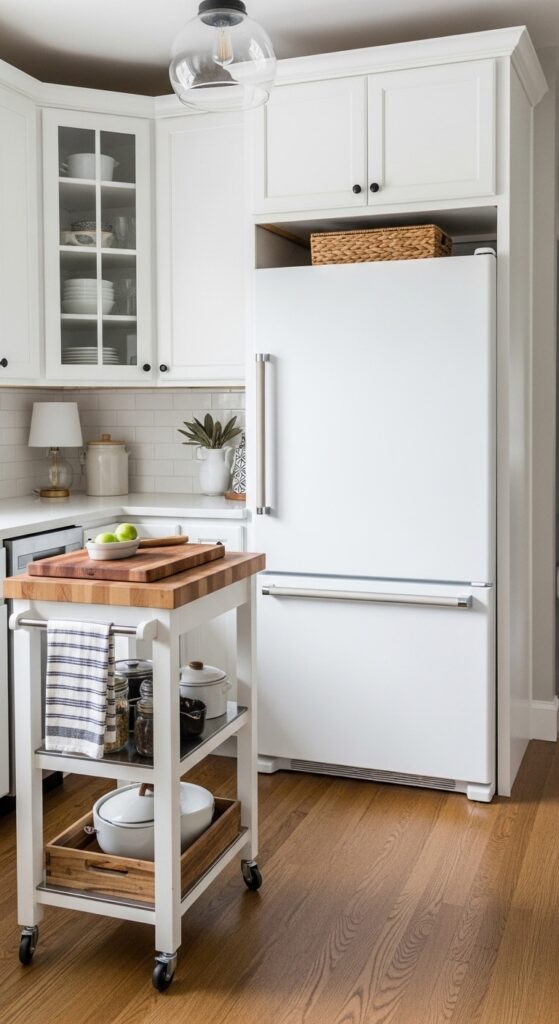
Vibe: It feels efficient and surprisingly breathable.
Why it works: Small kitchens benefit from anything that reduces protruding bulk. A cabinet-depth refrigerator keeps the wall line cleaner, and a slim movable cart adds prep space without committing the room to a fixed island that might choke circulation.
How to get it: Choose a 24- to 30-inch-deep counter-depth fridge and pair it with a cart around 18 by 36 inches on locking casters. Keep the cart top in wood so it adds warmth while doubling as a chopping station.
💡 Quick Win: A simple IKEA or Target butcher-block cart can act as your island before a renovation ever happens.
20. White Farmhouse Kitchen Ideas With a Dusty Blue Island
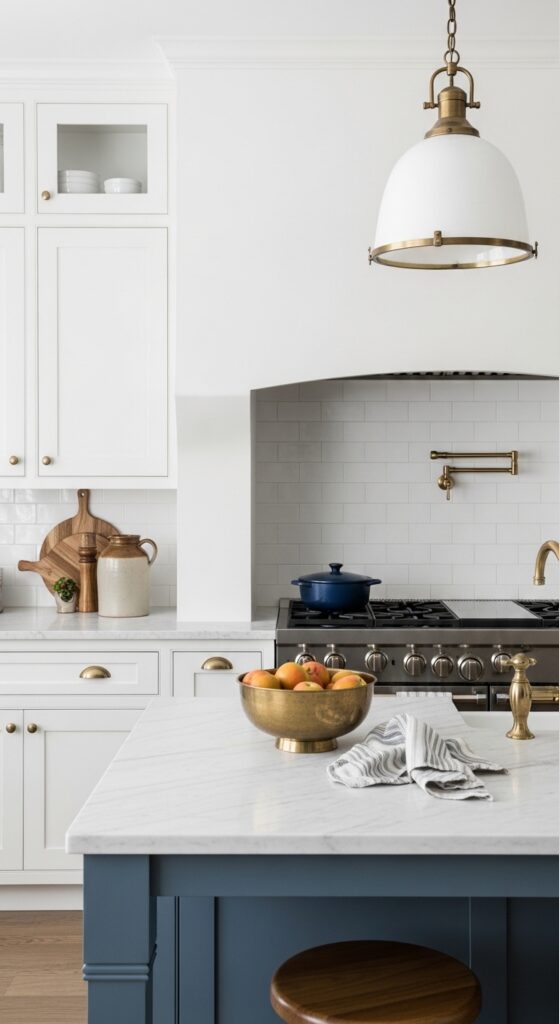
Vibe: It feels calm, cool, and softly tailored.
Why it works: Dusty blue is one of the easiest color notes to weave into farmhouse kitchens because it reads traditional without becoming heavy. Against white cabinetry, it adds depth and a gentle focal point while still keeping the room bright.
How to get it: Try Sherwin-Williams Smoky Blue or Farrow & Ball Parma Gray on the island base only. This works especially well if your backsplash and perimeter counters stay quiet and mostly tonal.
21. Thin Brick Behind the Range for Old-House Warmth
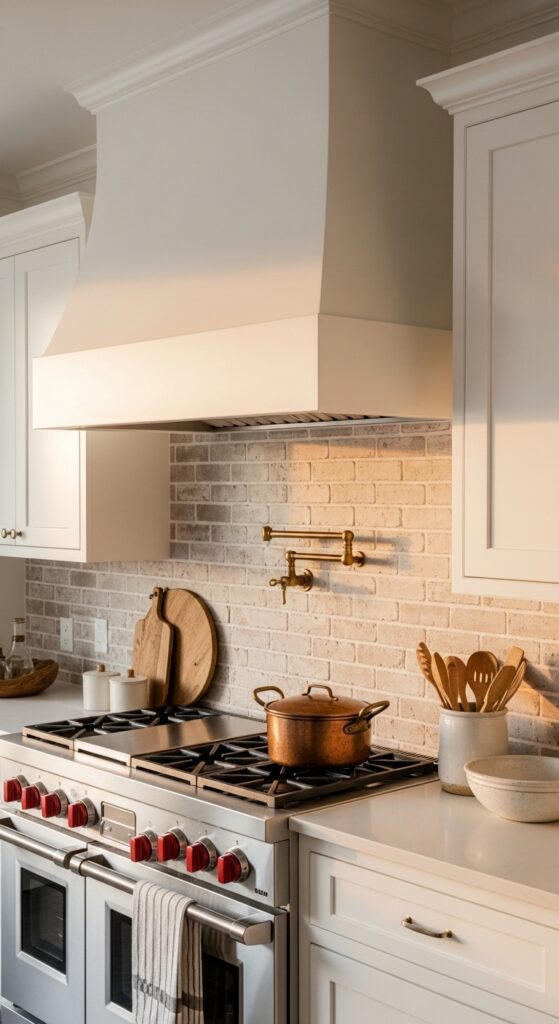
Vibe: It feels rustic, warm, and a little timeworn.
Why it works: Brick introduces rough texture and warm undertones that white cabinetry can bounce off beautifully. It also gives the range wall a stronger sense of permanence, which helps new kitchens feel less new.
How to get it: Use thin brick veneer in a soft clay or chalky terracotta tone and keep the mortar joint slightly irregular. One feature wall is enough; too much brick can darken a kitchen quickly, especially without strong natural light.
💡 Quick Win: Try a brick-look tile only behind the range niche before committing to a full wall.
22. One Oversized Schoolhouse Pendant Above the Table
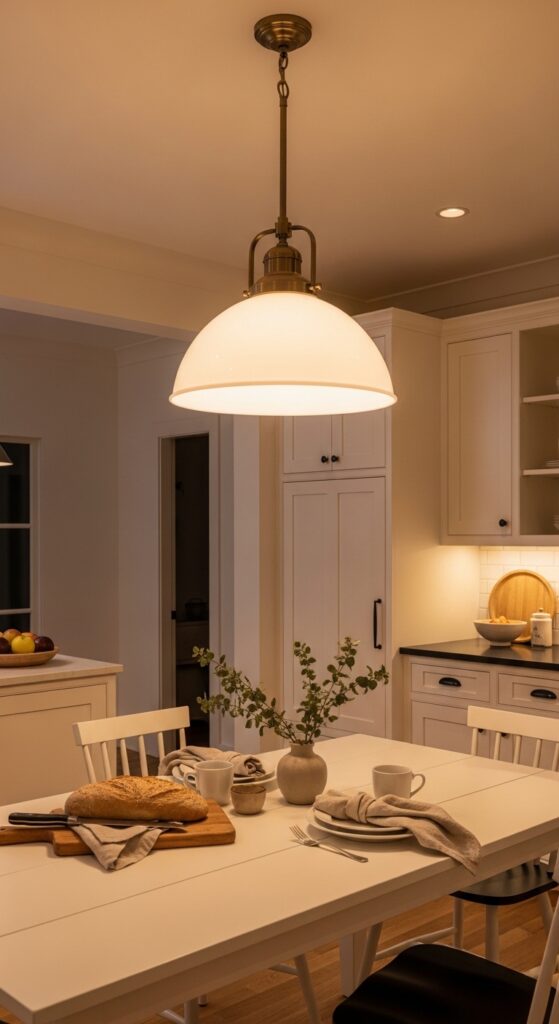
Vibe: It feels intimate and lightly nostalgic.
Why it works: A single oversized pendant creates a clear dining zone inside the kitchen, which is useful in open or eat-in layouts. The opal glass diffuses light gently, making the white palette feel richer and less reflective at night.
How to get it: Center the pendant 30 to 36 inches above the tabletop and choose a shade wide enough to visually anchor the table. Schoolhouse and factory-inspired forms work especially well with shaker cabinetry and wood floors.
23. A Farmhouse Table Island Instead of a Standard Built-In
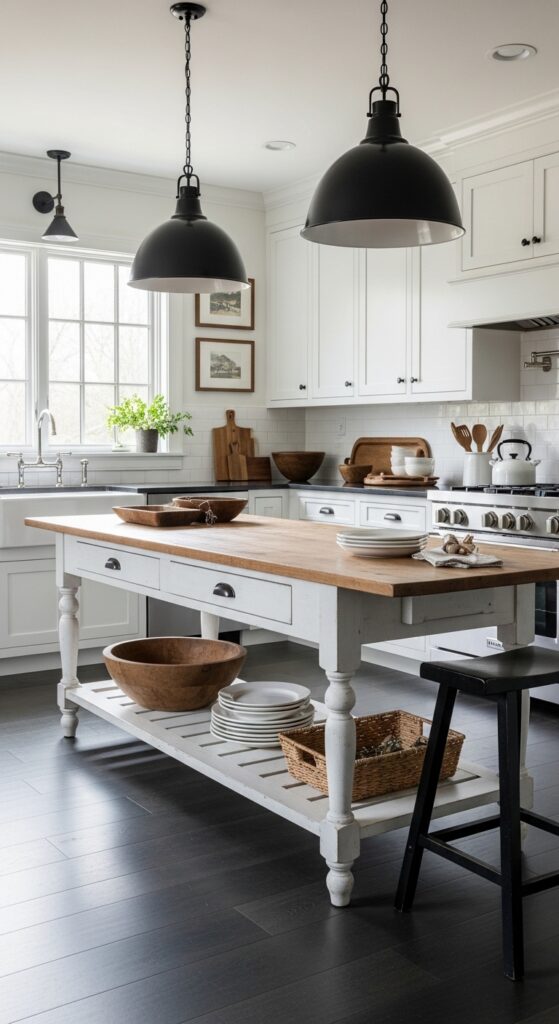
Vibe: It feels relaxed and truly lived in.
Why it works: A table-island keeps the center of the kitchen visually open because you can see underneath it. That negative space makes the room feel lighter, while the furniture form reinforces the farmhouse idea of a kitchen built around gathering and work.
How to get it: Look for a table 30 to 36 inches high with drawers or a lower stretcher for baskets. If you need more prep durability, top it with a removable stone or wood slab rather than replacing it with a bulky cabinet island.
💡 Quick Win: Try a vintage worktable on one wall first to see whether furniture-style pieces suit your flow.
24. White Farmhouse Kitchen Ideas With Black Iron Hardware and a Striped Runner
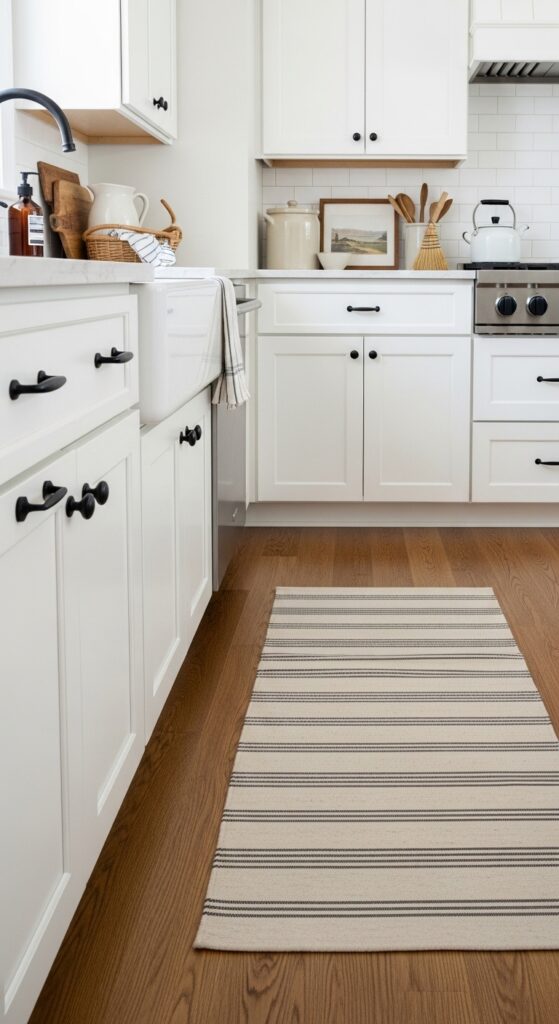
Vibe: It feels grounded and crisply finished.
Why it works: Hardware and textiles are the smallest moves with some of the biggest visual payoff. Black iron sharpens creamy cabinetry, and a muted striped runner adds softness, pattern, and a gentle sense of direction through the room.
How to get it: Use simple bin pulls or cup pulls on drawers, straight pulls on doors, and keep the finish consistent across the room. Choose a low-pile cotton or wool runner in flax, charcoal, or ticking stripe so it feels integrated rather than decorative-for-decoration’s sake.
How to Start Your White Farmhouse Transformation
Start with paint. Benjamin Moore White Dove is the first move worth making because it gives walls or cabinets the soft, creamy base that lets oak, brass, marble, and black iron all feel intentional instead of disconnected.
The most common mistake is choosing a stark blue-white for the cabinetry while keeping warm floors or creamy counters. That undertone clash makes the room feel off before you can even name why. Fix it by matching the cabinet white to the warmest permanent element already in the kitchen.
For budget impact, buy three things first: a striped cotton runner under $40, an amber glass soap dispenser around $15, and one stoneware crock or white ironstone pitcher for about $20 to $35. Those pieces add texture fast without forcing a full remodel.
A starter refresh can happen over one weekend for roughly $200 to $700 if you’re painting, swapping hardware, and adding lighting or textiles. A fuller transformation with cabinetry, counters, tile, and appliances usually lands between $8,000 and $35,000 depending on labor and materials. Styling and paint are quick; custom millwork, stone, and electrical changes are the parts that take months.
Frequently Asked Questions About White Farmhouse Kitchen Ideas
What is the difference between white farmhouse and modern farmhouse kitchens?
White farmhouse kitchens lean more traditional, with warmer whites, apron-front sinks, furniture-style islands, and textures like beadboard, brick, or ironstone. Modern farmhouse kitchens keep some of those bones but streamline them with cleaner silhouettes, fewer accessories, and often more black metal. If you want the room to feel softer and older, lean white farmhouse; if you want it sharper and more edited, lean modern farmhouse. Architectural Digest
What colors work best in a white farmhouse kitchen?
The best supporting colors are greige, muted sage, dusty blue, mushroom, warm black, and pale oak. Better Homes & Gardens notes that softer, earthier whites work better than icy ones in farmhouse kitchens, especially when paired with wood and brushed or aged metal. A cabinet color like White Dove with an island in Smoky Blue or Pashmina is a reliable combination. Better Homes & Gardens
Is white farmhouse kitchen design expensive to achieve?
It can be done at several budget levels. According to Architectural Digest, stock white cabinets can start around $100 to $200 per linear foot, while fully custom white cabinetry can exceed $1,000 per linear foot. Paint, hardware, open shelving, and a new light fixture can still move the kitchen toward the look without touching the full cabinet run. Architectural Digest
Can I mix white farmhouse style with other kitchen styles?
Yes—white farmhouse blends especially well with English country, cottage, industrial, and even Scandinavian influences. The key is keeping the foundation steady: one warm white, one main wood tone, and no more than two metal finishes. A plaster hood can lean rustic, while clean-lined stools can lean Scandinavian, and the room will still feel cohesive if the palette stays quiet.
Which lighting works best in a white farmhouse kitchen?
Schoolhouse pendants, lantern pendants, simple sconces, and warm under-cabinet lighting all work especially well. White kitchens depend on light temperature, so stay in the 2700K to 3000K range instead of harsh cool LEDs. Rejuvenation and Schoolhouse are good reference points if you want fixtures with classic shapes that don’t feel overly themed.
Ready to Create Your Dream White Farmhouse Kitchen?
These 24 white farmhouse kitchen ideas covered the layers that matter most—paint tone, wood warmth, tile texture, lighting shape, furniture profile, and layout flow. Starting small is not settling; it’s usually how the most enduring kitchens come together with more confidence and less waste. Pull one natural wood piece into your kitchen this week—a board, stool, island cart, or shelf—and watch how quickly the room feels less flat. Once the balance is right, the whole space starts to feel calmer, warmer, and easier to live in every single day. Save the ideas with the creamy cabinets, oak islands, apron sinks, and schoolhouse lights so your white farmhouse kitchen can take shape one smart move at a time.