Farmhouse living room curtains ideas are all about relaxed natural fabrics, simple tailoring, and rustic hardware that soften a room without making it feel formal. These 26 ideas show you exactly how to use color, fabric, light, length, and styling details to make your windows feel warm and intentional.
The mood is sun-washed, textural, and easy to live with. Farmhouse style in a living room should feel a little weathered, a little layered, and never stiff. Think filtered afternoon light, linen that moves when the windows are open, and rods that feel sturdy rather than shiny. Here are 26 ideas worth saving — and stealing.
Why Farmhouse Living Room Curtains Ideas Work So Well
Farmhouse curtain style comes from a mix of rural American practicality, English cottage softness, and later country-house decorating that favored usefulness over formality. What makes it distinct is its restraint: less ornament than traditional curtains, more texture than modern ones, and a stronger connection to natural materials than coastal or boho window treatments. In a farmhouse living room, curtains are meant to warm the room, frame the light, and feel easy rather than precious.
The core palette leans warm white, oatmeal, greige, flax, dusty blue, muted sage, and softened charcoal. The fabrics that work best are Belgian linen, cotton duck, linen-cotton blends, ticking stripe, slub weave panels, and occasionally burlap-look textures used with care. Hardware tends to be matte black, aged brass, or weathered wood.
This style is trending because people want homes to feel calmer, more tactile, and less overdesigned. Post-pandemic nesting shifted attention toward comfort, sustainability, and materials that age well, and Pinterest searches keep favoring cozy, layered rooms with real texture over glossy showroom looks.
Yes, small spaces can absolutely pull this off. Prioritize rod height first, then choose light-filtering fabrics in warm neutrals. Heavy drapery in dark tones can overwhelm a compact room, but soft linen panels hung high and wide make even modest windows feel more generous.
| Element | Farmhouse Curtain Take | Effect |
| Philosophy | relaxed utility | warmth without fuss |
| Key Materials | Belgian linen, cotton duck, matte black rods | texture with structure |
| Key Colors | warm white, flax, dusty blue | soft contrast and calm |
1. Farmhouse Living Room Curtains Ideas in Relaxed Belgian Linen
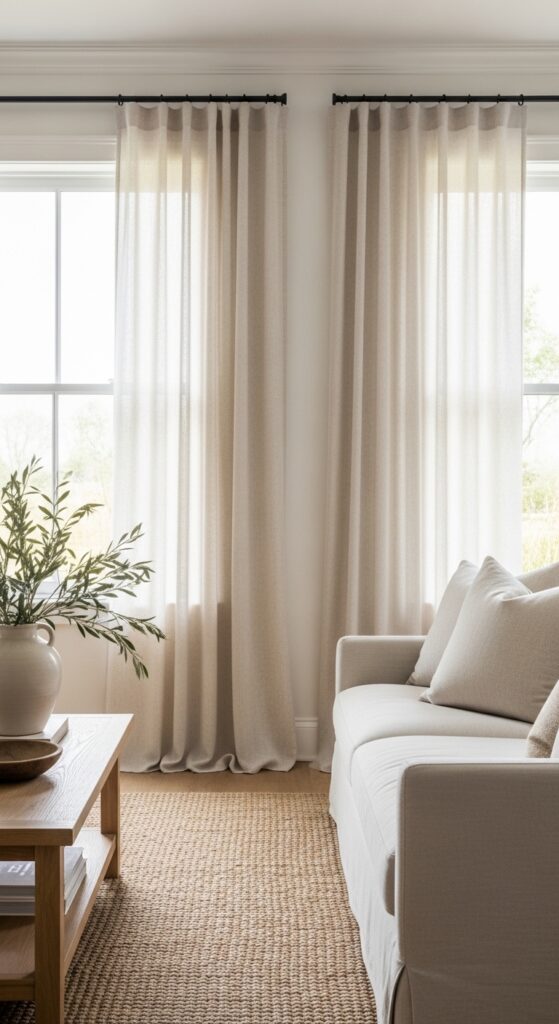
Vibe: The room feels sun-warmed and settled, with fabric that softens the light instead of blocking it.
Why it works: Belgian linen has natural slub and irregularity, which gives farmhouse windows texture without visual heaviness. The slightly rumpled finish also keeps the room from tipping into formal country style.
How to get it: Choose unlined or lightly lined Belgian linen panels in flax or warm white, and mount them high on a matte black rod. Let them just kiss the floor for a relaxed but still tailored hem.
💡 Quick Win: IKEA RITVA panels dyed a soft flax tone can mimic pricier linen for a fraction of the cost.
2. Greige Curtain Panels Against Warm White Walls
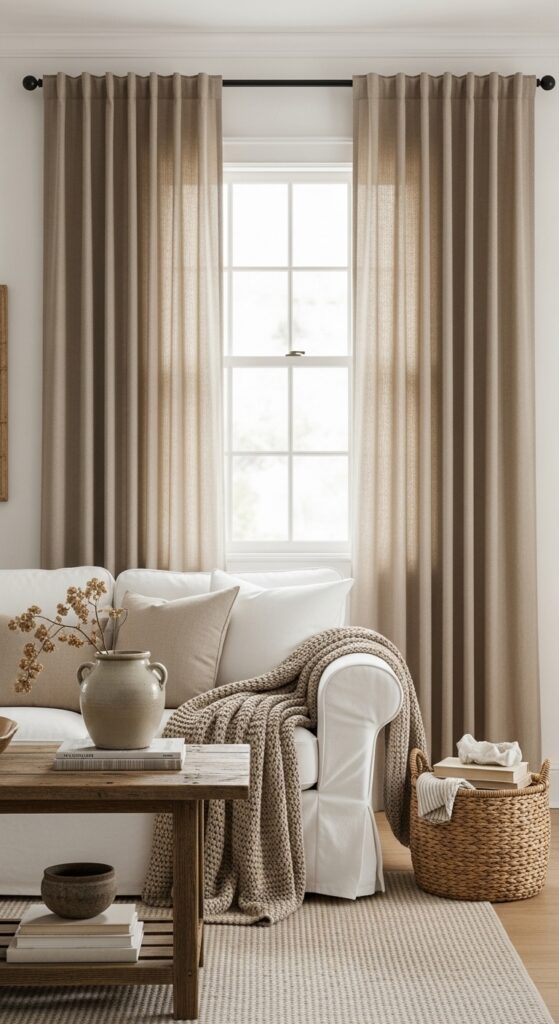
Vibe: The space feels hushed and layered, with color that calms rather than competes.
Why it works: Greige introduces low contrast, which gives the wall depth without breaking the room into hard color blocks. That subtle tonal shift is ideal in farmhouse living rooms that already rely on wood grain and woven texture for interest.
How to get it: Pair warm white walls with panels in mushroom, greige, or pale taupe rather than crisp white-on-white. Benjamin Moore Pale Oak and linen curtains in a mushroom tone work especially well together.
3. Sheer Cotton Panels for Morning Light
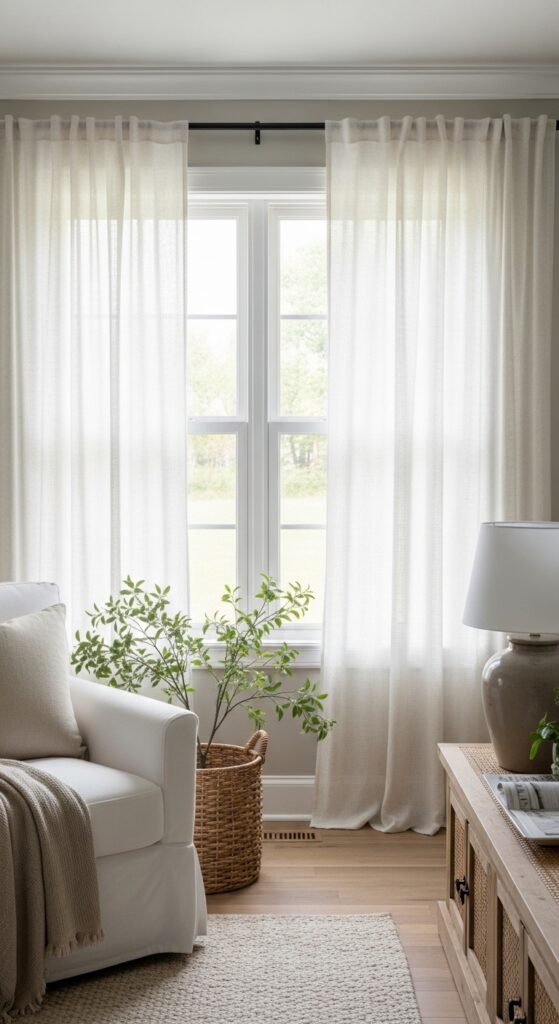
Vibe: The room feels luminous and quiet, with daylight turned soft at the edges.
Why it works: Sheer cotton changes the behavior of light, diffusing glare while keeping the window visually open. That matters in farmhouse spaces, where brightness should feel natural and easy, not harsh.
How to get it: Use semi-sheer cotton panels on south-facing windows where heavy linen can read dense by midday. Keep the rod simple and the panels full enough to gather lightly when closed.
💡 Quick Win: If your room already gets good privacy, skip blackout lining and let sheer cotton do the mood work.
4. Floor-Skimming Drapes That Frame a Slipcovered Sofa
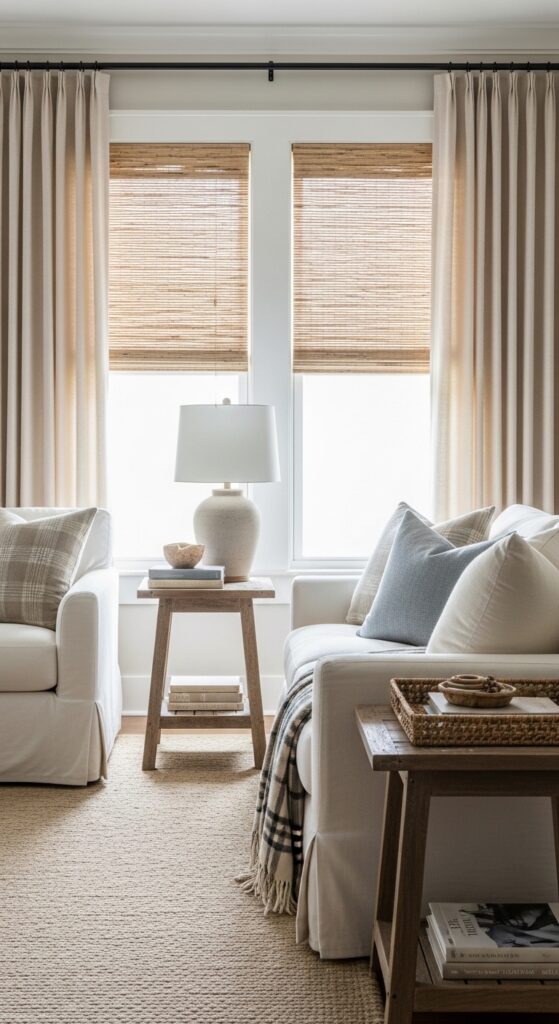
Vibe: It feels grounded and composed, with the windows acting like quiet architectural columns.
Why it works: Curtains that skim the floor create vertical emphasis, which makes the whole living room feel taller and more settled. Framing a slipcovered sofa this way also visually anchors the furniture grouping.
How to get it: Hang panels 8 to 10 inches above the trim and extend the rod past the window width so the fabric frames rather than crowds the glass. Keep the hem grazing, not puddling, if your room sees a lot of daily traffic.
5. Woven Wood Shades Layered With Soft Panels
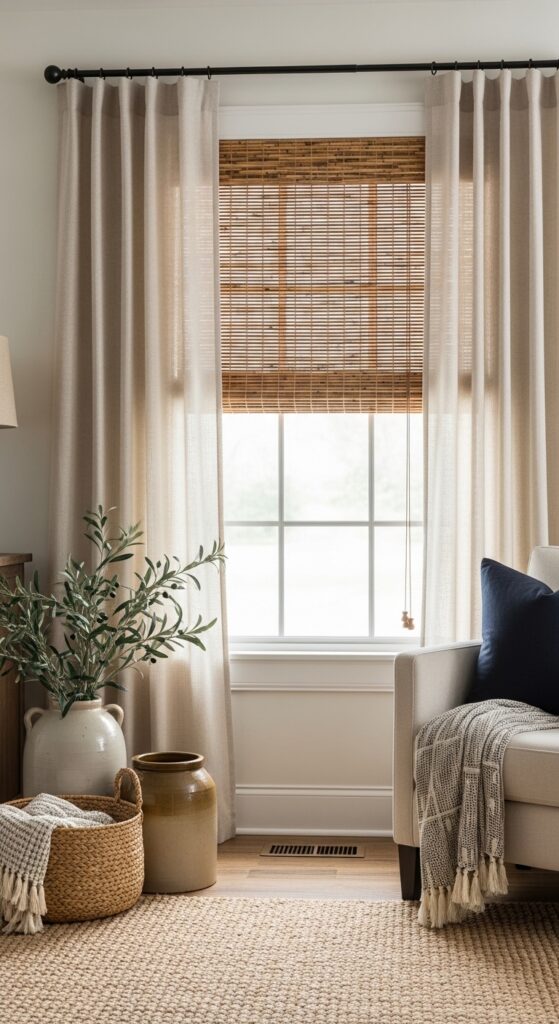
Vibe: The room feels layered and tactile, with windows that look intentionally dressed rather than simply covered.
Why it works: Layering shades with drapes adds texture contrast and gives farmhouse windows more depth. The woven shade handles privacy and glare, while the linen side panels soften the hard frame of the opening.
How to get it: Choose bamboo or seagrass shades in a warm wheat tone and flank them with linen panels in cream or flax. Keep both treatments fairly plain so the material mix remains the focus.
💡 Quick Win: An inexpensive woven shade underneath existing neutral curtains can change the whole room’s texture story in one afternoon.
6. Extra-Wide Rod Placement to Make Windows Look Bigger
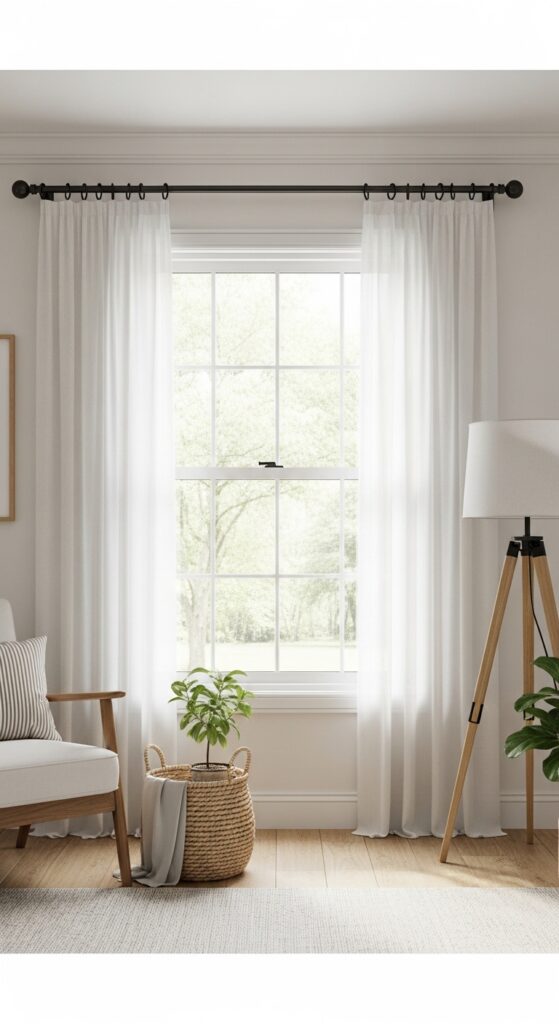
Vibe: The window feels more open and generous, even before you notice why.
Why it works: Mounting the rod wider shifts the curtain stack off the glass, which increases visible light and makes the opening read larger. It is a layout move, not a decor trick, and it works especially well in modest farmhouse living rooms.
How to get it: Extend the rod 8 to 12 inches past each side of the trim whenever wall space allows. Use panels wide enough to still look full when closed, not stretched thin.
7. Cotton Duck Panels for More Structure
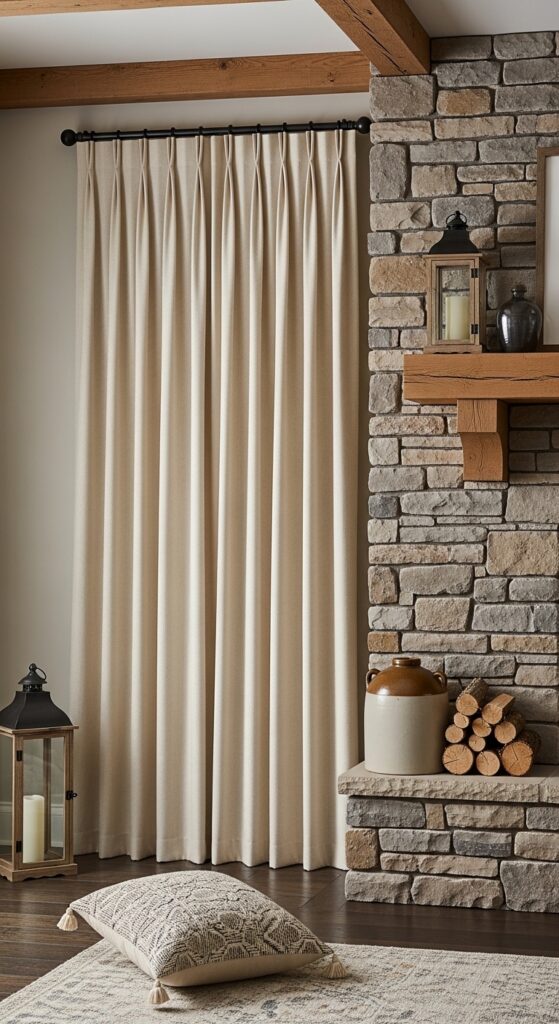
Vibe: The room feels steady and substantial, with curtains that hold their shape in a quiet, workhorse way.
Why it works: Cotton duck has more body than airy linen, so it creates cleaner folds and stronger vertical lines. That structure pairs especially well with stone fireplaces, chunky wood beams, and other heavier farmhouse elements.
How to get it: Choose cotton duck in cream, canvas, or soft putty and use ring clips or pinch pleats for a neater fall. This fabric works best when you want the curtains to look a little more tailored than rumpled.
💡 Quick Win: Canvas drop cloth panels can mimic cotton duck if you hem them cleanly and wash them once to soften the finish.
8. Farmhouse Living Room Curtains Ideas in Dusty Blue
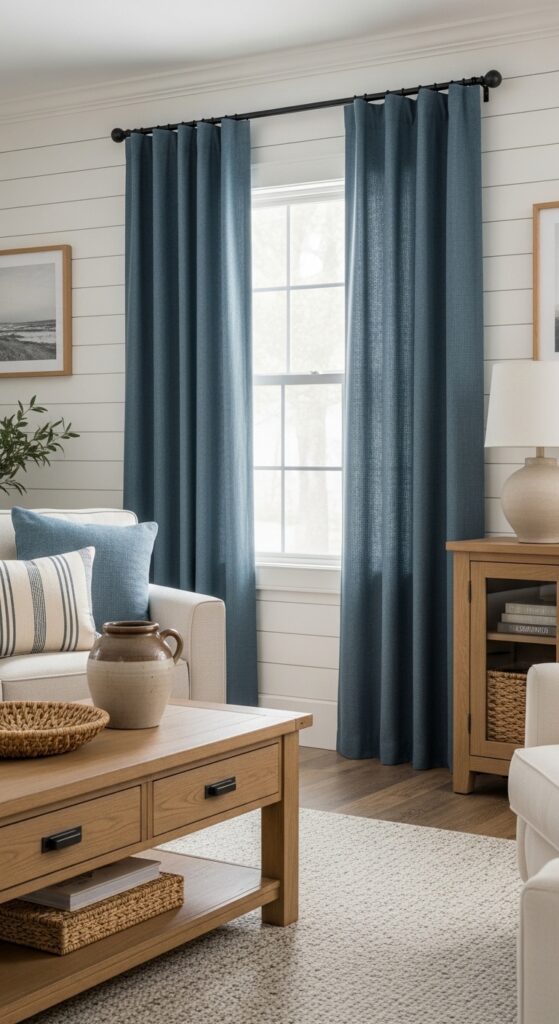
Vibe: The room feels breezy and collected, with color that nods to farmhouse style without turning coastal.
Why it works: Dusty blue brings cool relief to all the warm wood and cream tones common in farmhouse rooms. Because the color is muted, it adds personality without overpowering the natural textures around it.
How to get it: Look for washed denim, slate blue, or muted cornflower panels rather than bright navy. Pair them with white shiplap, oak furniture, and a neutral rug so the color stays soft and grounded.
9. Flat Roman Shades for a Small Cottage Living Room
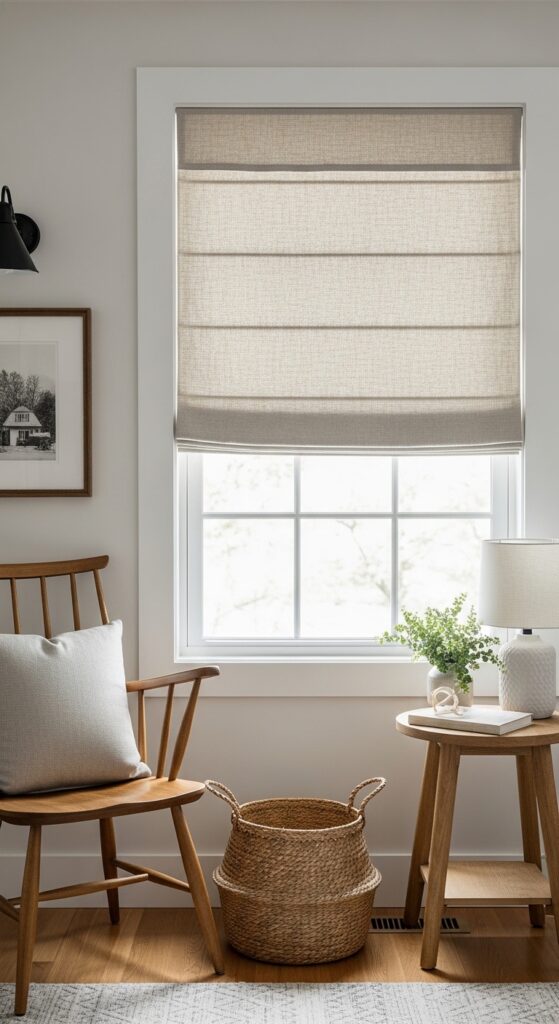
Vibe: The room feels tidy and calm, with windows dressed just enough for softness without stealing space.
Why it works: In small farmhouse living rooms, bulky drapery can eat wall width and make the room feel tighter. Flat Roman shades preserve clean edges while still adding fabric texture and a softer line than bare blinds.
How to get it: Choose flat or relaxed Roman shades in linen or linen-blend fabric and skip heavy trim. If you want extra softness, add narrow stationary side panels that do not intrude into the glass.
💡 Quick Win: Roman shades are often the smartest move when your sofa sits close to the window and full drapes would crowd it.
10. Light-Filtering Flax Curtains for South-Facing Rooms
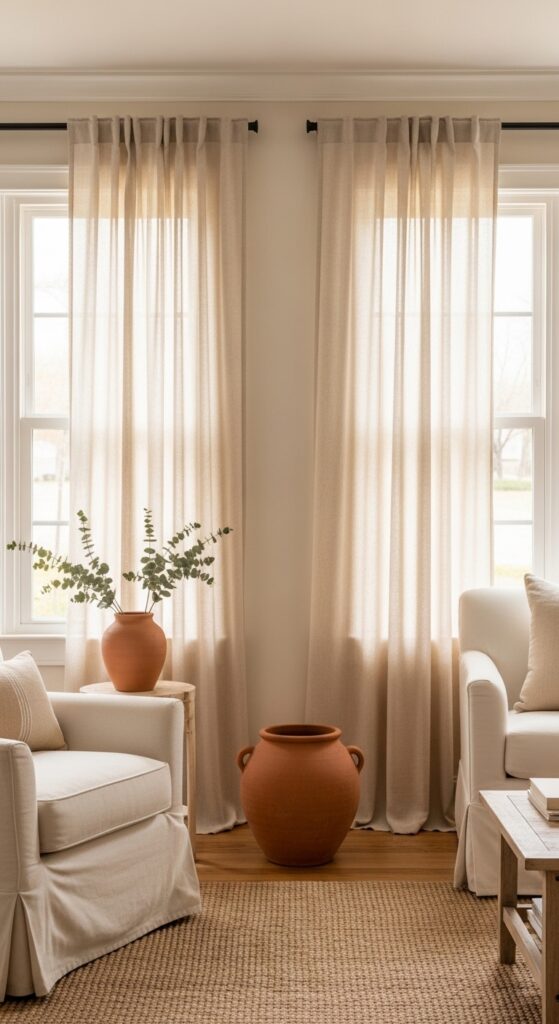
Vibe: The room feels mellow and breathable, with bright light softened into something more comfortable.
Why it works: South-facing rooms can make stark white curtains read cold or glaring. Flax tones warm that light slightly, which helps the whole space feel more balanced and less washed out.
How to get it: Use semi-lined flax or oatmeal panels instead of bright white if your living room gets strong daytime sun. This is one of those changes that looks subtle but shifts the whole mood of the room.
11. Bay Window Curtains That Wrap a Reading Nook
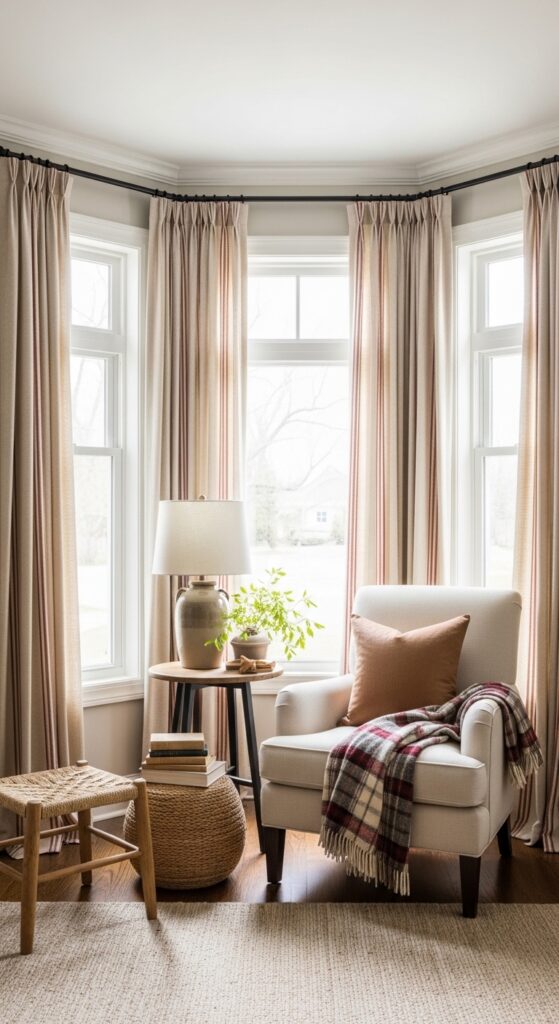
Vibe: The corner feels tucked in and gentle, like the window itself became part of the seating.
Why it works: Bay windows need curtains that follow the architecture rather than flatten it. Treating the whole nook as one furniture moment helps the room feel more integrated and less like three unrelated windows.
How to get it: Use a bendable rod or individual rods that visually connect, then keep the fabric consistent across all panels. Let the curtains sit mostly open so the bay shape remains readable.
12. Grain-Sack Stripe Curtains for Heritage Character
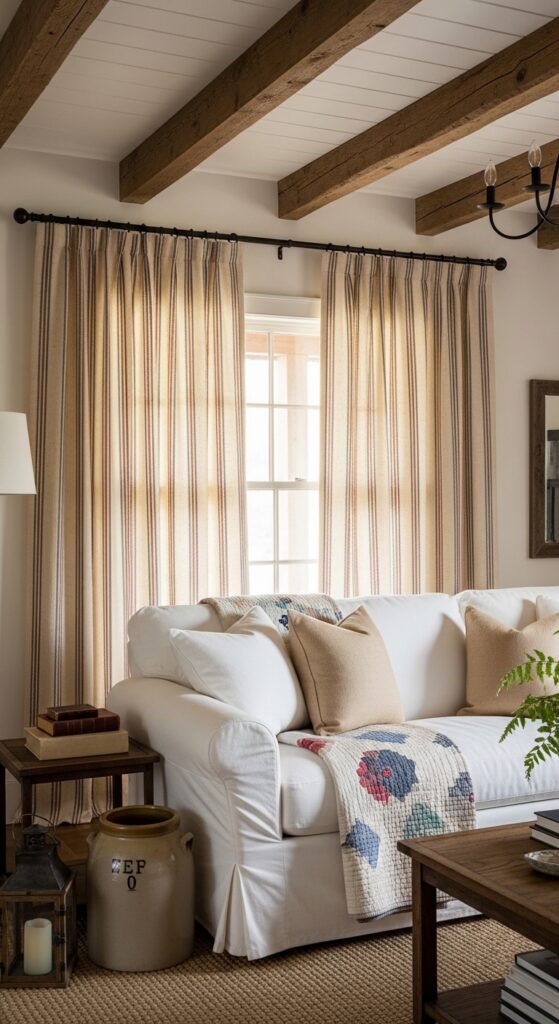
Vibe: The room feels storied and grounded, with pattern that reads old-house rather than trendy.
Why it works: Grain-sack stripes introduce rhythm without the busyness of florals or dense checks. The narrow vertical lines also reinforce height, which is useful in farmhouse living rooms with lots of horizontal furniture shapes.
How to get it: Choose a subtle stripe in faded navy, charcoal, or soft red on a creamy base and use it on full-length panels only if the rest of the room is fairly quiet. Too many competing patterns will dilute the heritage effect.
💡 Quick Win: One grain-sack stripe panel at each side of a neutral window can give the room instant farmhouse identity.
13. Unlined Linen-Cotton Blends for Gentle Movement
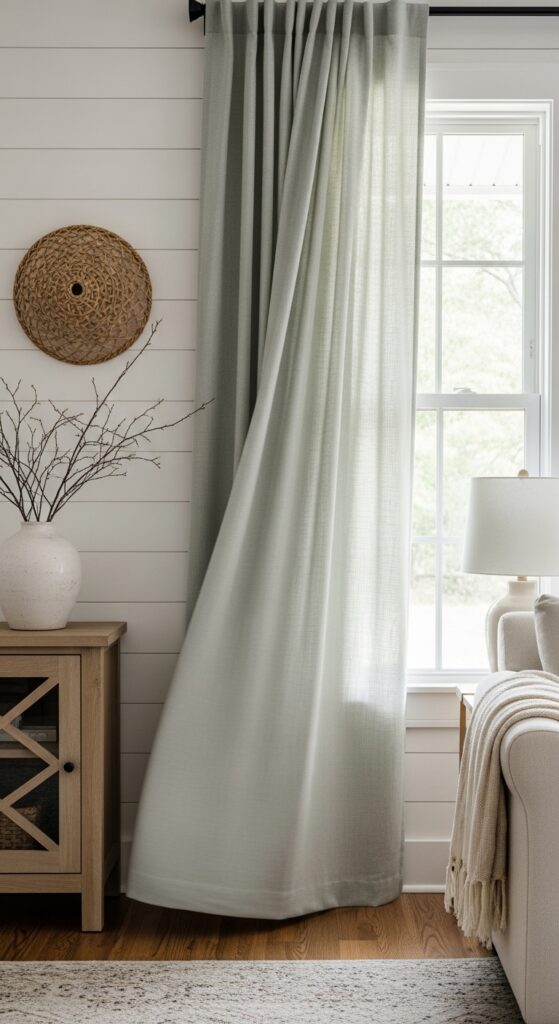
Vibe: The room feels lightly breezy, with curtains that seem to belong to the air as much as the wall.
Why it works: A linen-cotton blend gives you the softness of linen with a little more durability and easier care. Unlined panels move more freely, which makes the whole living room feel less static and more lived in.
How to get it: Use unlined blends on windows where privacy is not a major issue and where you want visible movement. This approach works especially well with openable windows, ceiling fans, and softer summer styling.
14. Soft Sage Curtains Beside White Shiplap
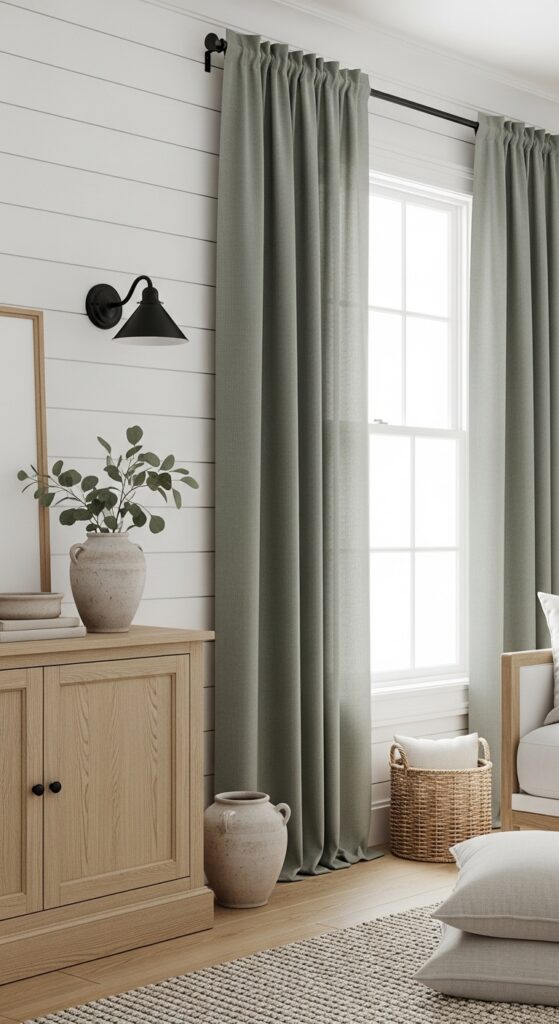
Vibe: The room feels fresh and grounded, with color that quietly echoes the garden outside.
Why it works: Soft sage gives farmhouse interiors a natural note without becoming sweet or overly rustic. Against white shiplap, the green reads crisp and calm, especially when supported by oak and woven textures.
How to get it: Choose a gray-green or dusty sage rather than bright botanical green. This palette works best when the rest of the room stays warm and neutral, not cool or high contrast.
💡 Quick Win: Muted sage panels are one of the easiest ways to add color if your farmhouse living room feels too beige.
15. Blackout Lining Hidden Behind Casual Front Panels
Vibe: The room feels cocooned and quiet, ready for movie night without losing its daytime softness.
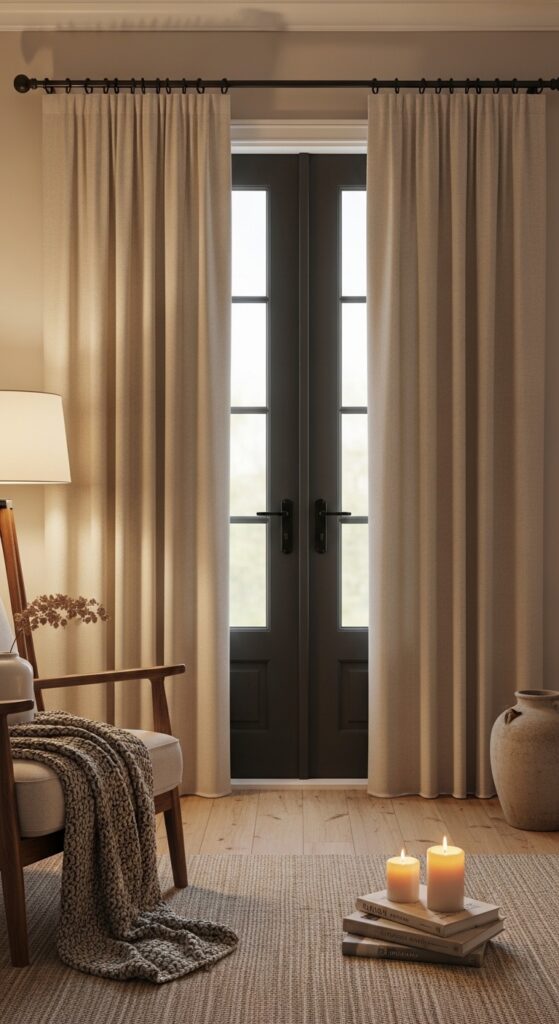
Why it works: Blackout functionality is useful, but visible blackout fabric often looks flat and utilitarian. Hiding it behind casual front panels gives you light control while preserving farmhouse texture and softness.
How to get it: Use separate blackout liners or lined pinch-pleat backs concealed behind linen-look outer panels. This is especially smart if your living room doubles as a TV room or catches harsh western sun.
16. Curtain Panels Framing French Doors
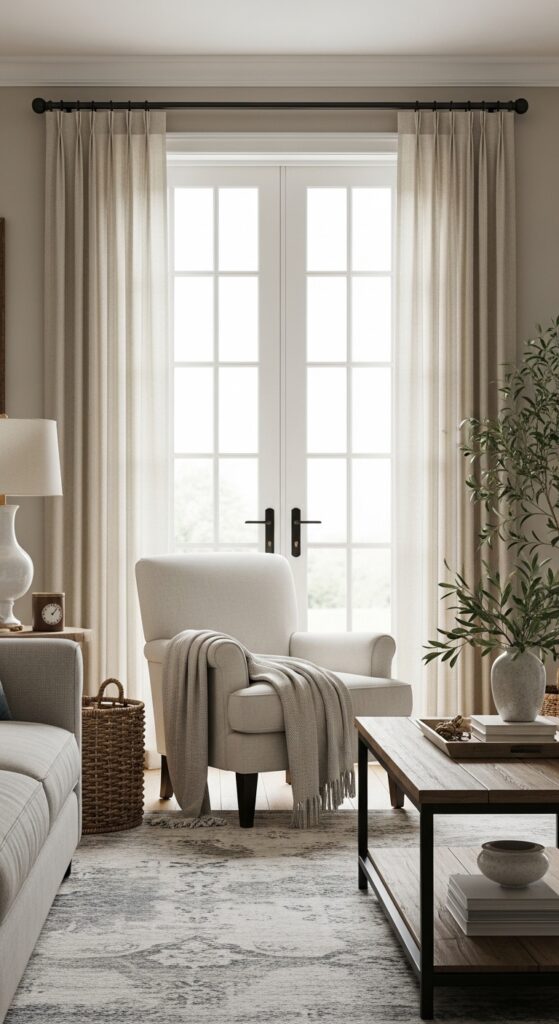
Vibe: The room feels finished and balanced, with the doors reading like a designed feature instead of an awkward utility opening.
Why it works: French doors can look visually thin compared with bulky living room furniture. Curtain panels give them more weight and help them belong to the same composition as sofas, rugs, and side tables.
How to get it: Mount the rod high and wide, and keep the panels narrow enough to clear the door swing. If space is tight, use slim stacks or tiebacks so the doors remain functional every day.
17. Antique Brass Rings With Soft Ivory Drapes
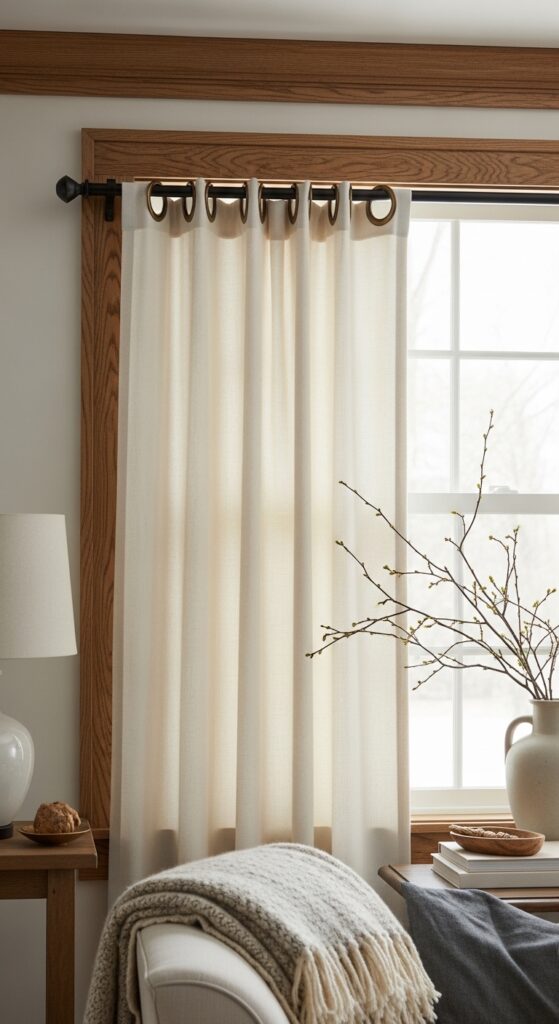
Vibe: The room feels quietly refined, with a hint of warmth in the hardware that makes everything around it look softer.
Why it works: Antique brass adds a mellow glow that matte black cannot, which makes it especially effective in farmhouse spaces that lean a little classic. Rings also create clean, even folds, giving relaxed fabric a more considered rhythm.
How to get it: Pair antique brass rings with ivory or oat panels and repeat the brass tone in a lamp, mirror, or side table accent. Avoid polished gold, which can feel too bright against rustic materials.
💡 Quick Win: Swapping only the rings or rod finish can refresh existing curtains without replacing the fabric.
18. One Continuous Curtain Wall Across Multiple Windows
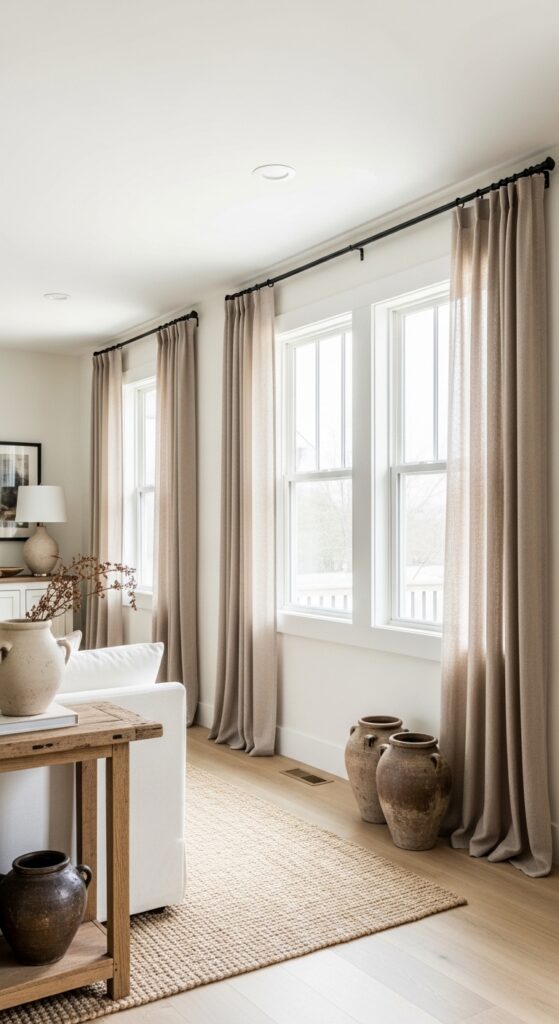
Vibe: The room feels broader and calmer, with the whole wall reading as one architectural gesture.
Why it works: Treating multiple windows as one unit reduces visual fragmentation and makes the living room feel larger. It also gives the curtains more presence, which helps farmhouse spaces feel layered without adding more objects.
How to get it: Use one long rod whenever possible and keep the panel color and fullness consistent across the full span. This layout trick is especially effective in open-plan rooms with several evenly spaced windows.
19. Nubby Natural Flax Curtains for Rustic Texture
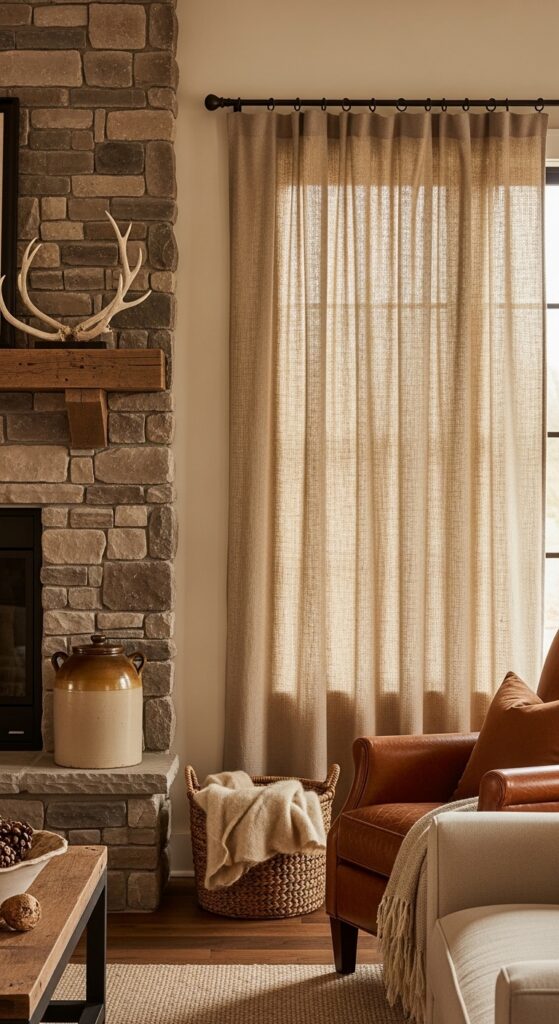
Vibe: The room feels raw and tactile, with fabric that adds substance rather than polish.
Why it works: Nubby flax gives you more visible texture than smoother linen, which is useful in rustic farmhouse living rooms with stone, leather, and rougher woods. The irregular weave also catches light in a softer, more organic way.
How to get it: Choose loosely textured flax or slub-woven panels and let them hang from a simple iron rod. This look works best when the rest of the room already has some rugged materials to echo the curtain texture.
💡 Quick Win: Textured flax panels can rescue a farmhouse room that feels too flat even when the color palette is right.
20. Farmhouse Living Room Curtains Ideas With Charcoal Ticking Stripe
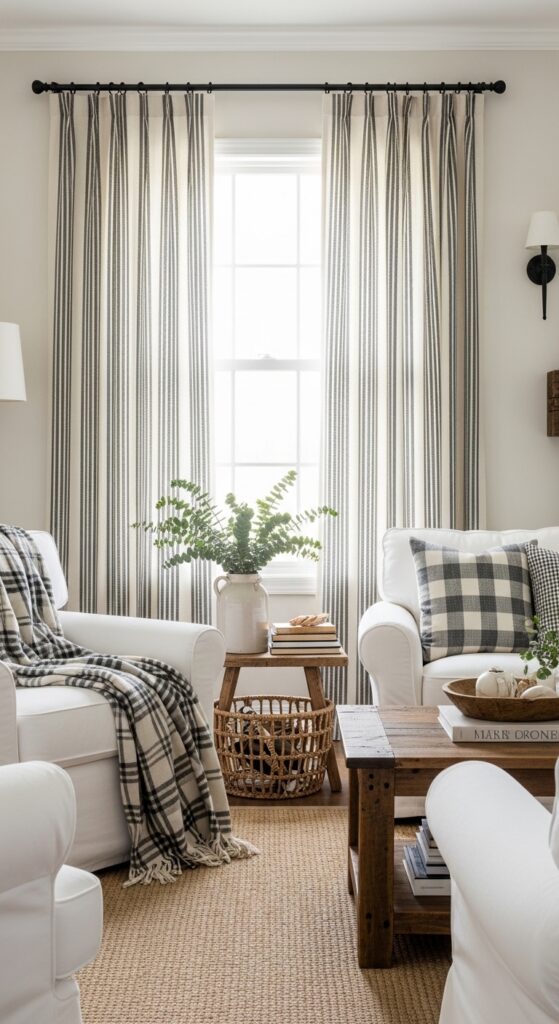
Vibe: The room feels crisp and settled, with pattern that sharpens the softness around it.
Why it works: Ticking stripe adds a little contrast and repetition without the visual weight of plaid or heavy print. Charcoal is especially useful because it ties into black iron rods, fireplace tools, or darker wood tones elsewhere in the room.
How to get it: Keep the stripe narrow and the background creamy rather than stark white. This works best when you want a farmhouse look with a slightly cleaner, more tailored edge.
21. Narrow Stationary Panels for a Tight Living Room
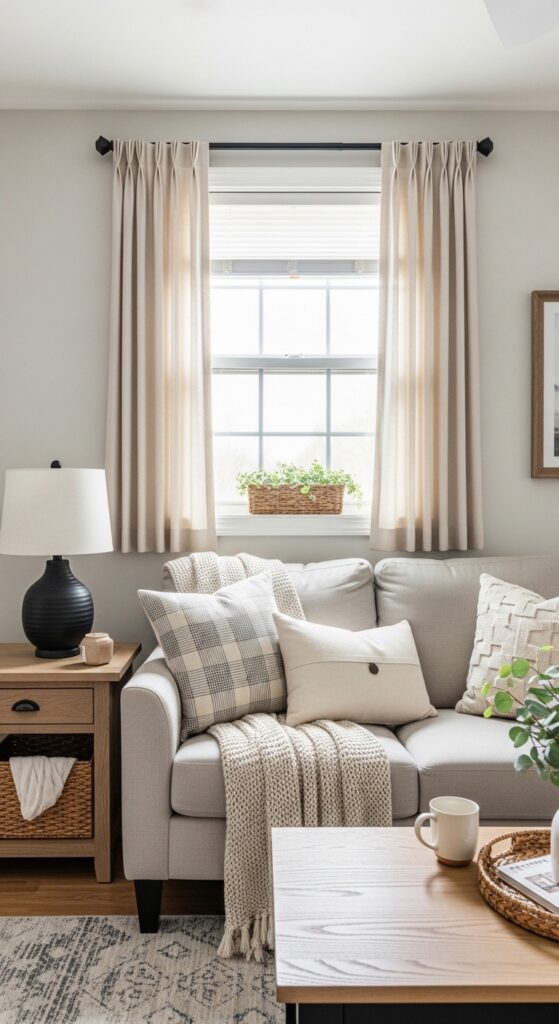
Vibe: The room feels neat and softened, with just enough fabric to warm the window without crowding it.
Why it works: In small or awkward living rooms, full operable drapery can eat wall space and interfere with furniture placement. Stationary panels keep the farmhouse softness while preserving square footage and visual clarity.
How to get it: Use narrow side panels with a separate shade or blind for privacy and mount them slightly wider than the trim. This is especially helpful when a sofa or loveseat sits directly beneath the window.
💡 Quick Win: Stationary panels are often the smartest solution when full curtains would fight the furniture.
22. Warm Lamplight Through Semi-Opaque Ivory Fabric
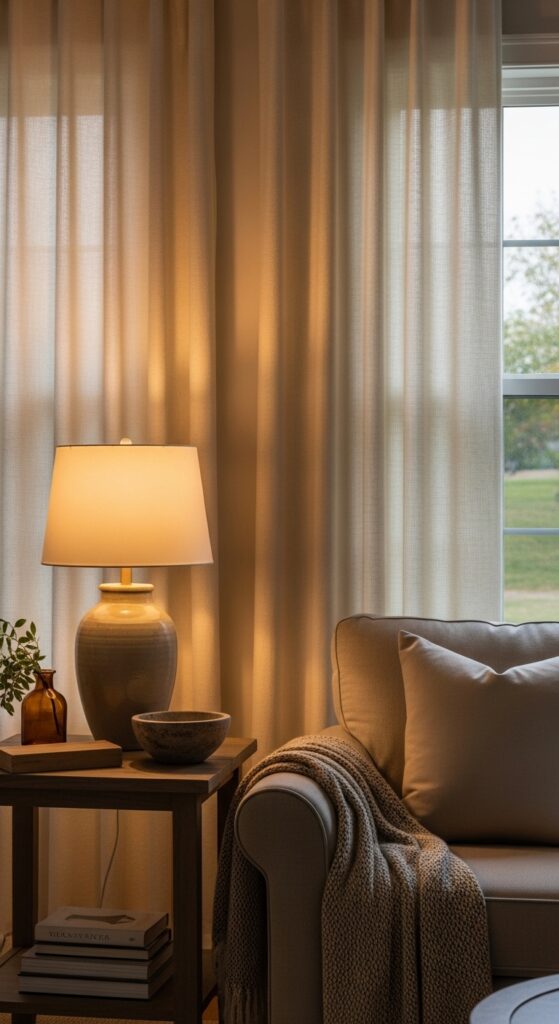
Vibe: The room feels hushed and intimate, with fabric that seems to hold the evening light.
Why it works: Semi-opaque panels glow differently than heavy blackout drapes, which makes them ideal for living rooms used most after dark. They soften lamplight and create that warm farmhouse atmosphere people often chase with extra decor.
How to get it: Use ivory or cream panels with enough density to catch light but not block it entirely. Pair them with warm bulbs in linen-shaded lamps so the whole perimeter of the room feels softly lit.
23. Curtains That Sit Just Outside Built-In Bookcases
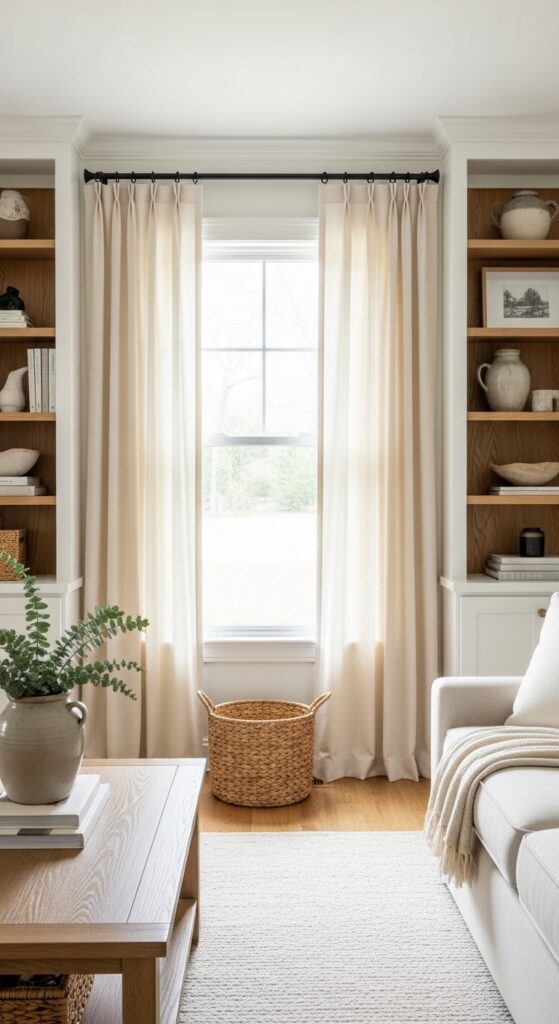
Vibe: The wall feels ordered and complete, with the curtains acting like a soft outer frame.
Why it works: When bookcases flank a window, poor curtain placement can make the entire wall feel cramped. Hanging the panels just outside the shelving keeps the architecture readable and gives the living room stronger balance.
How to get it: Mount the rod wider than the built-ins if you have the wall space, and keep the panels fairly slim. This technique works best when the shelves are already visually busy and the curtains need to stay calm.
24. Simple Wooden Tiebacks for a Handmade Finish
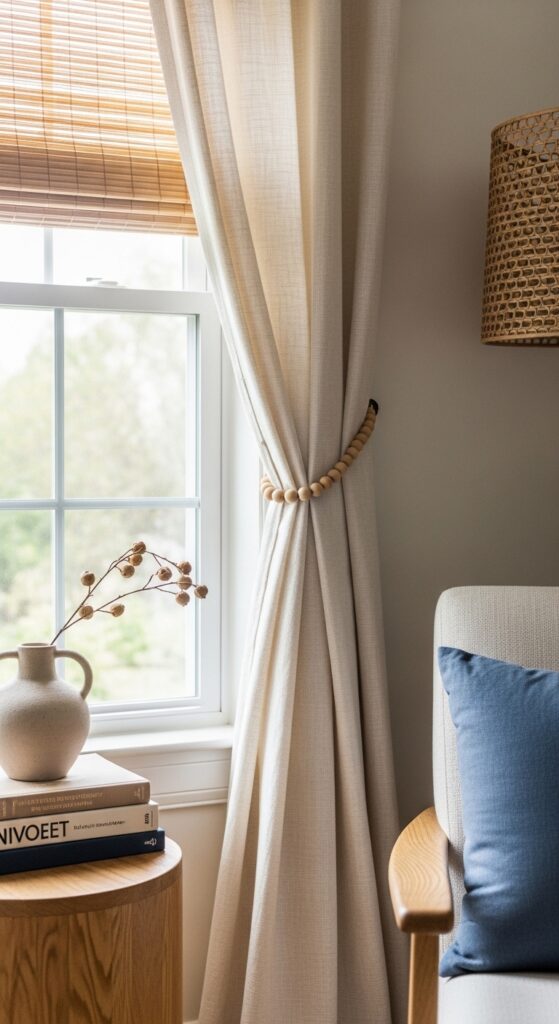
Vibe: The window feels thoughtful and lightly handcrafted, with just enough detail to make it personal.
Why it works: Tiebacks change the silhouette of curtains and let more daylight into the room, but wooden versions feel especially right in farmhouse spaces. They echo other natural materials without adding shine or fuss.
How to get it: Use simple wooden pegs, bead-loop tiebacks, or leather-and-wood combinations in a tone close to your furniture. Place them slightly below midpoint so the curtain drape stays relaxed instead of overly formal.
💡 Quick Win: Wood bead tiebacks are an easy under-$20 upgrade that makes basic panels feel far more intentional.
25. Burlap-Look Slub Panels Used Sparingly
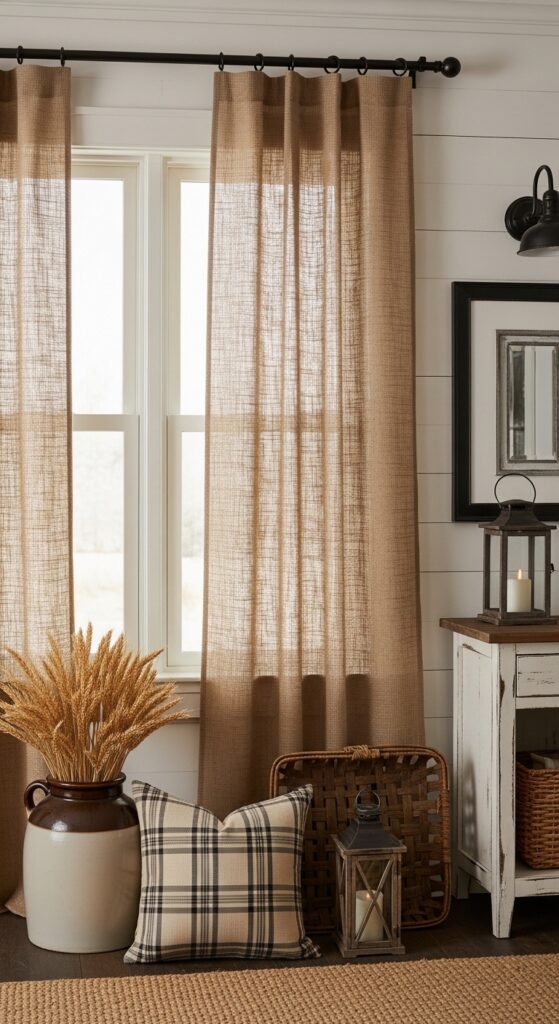
Vibe: The room feels textured and earthy, with a slightly rough edge that keeps the softness honest.
Why it works: Burlap-look slub fabric brings rustic texture, but it works only when the rest of the room is simple and warm. Used carefully, it adds farmhouse grit; overused, it can feel heavy and scratchy.
How to get it: Choose a softened slub weave or linen-jute blend instead of literal stiff burlap, and use it on one or two windows only. This idea works best in rooms with stone, reclaimed wood, or darker floors to balance the texture.
26. Red Ticking Stripe Curtains for a Heritage Farmhouse Accent
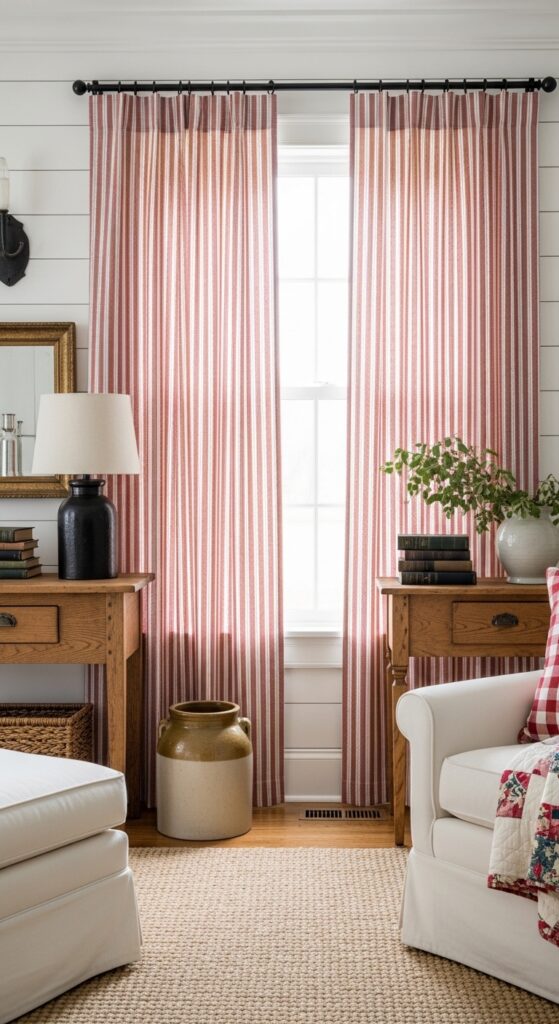
Vibe: The room feels cheerful and rooted, with pattern that hints at old farm textiles without feeling costume-like.
Why it works: Faded red brings warmth and a little history, especially in farmhouse rooms that already lean heavily white and wood-toned. Ticking stripe keeps the pattern disciplined, so the color reads heritage rather than playful.
How to get it: Use this only if the rest of the room is quite restrained—cream slipcovers, oak tables, neutral rugs. Look for washed brick red or muted cranberry, not bright cherry, if you want the result to feel timeless.
💡 Quick Win: Red ticking stripe works best as one focused accent, not on every window in the room.
How to Start Your Farmhouse Transformation
Start with the rod placement. Mount a matte black or antique brass rod 8 to 10 inches above the window trim and 8 to 12 inches wider than the frame, because that one move instantly makes farmhouse living room curtains ideas look intentional instead of off-the-shelf. It changes height, light, and proportion before you even choose fabric.
The most common mistake is hanging curtains too low and too narrow. It makes the window feel pinched, shortens the wall, and turns even good fabric into something that looks temporary. Fix it by rehanging the rod first, then reassessing whether you even need new panels.
Three strong under-$50 upgrades: one pair of IKEA RITVA white curtain panels, a matte black 1-inch curtain rod with simple finials, and a set of wooden bead or leather tiebacks. Each adds visible texture or structure without locking you into a full redesign.
A starter version can happen in a weekend for roughly $150 to $350. A more tailored setup with better fabric, woven shades, and upgraded hardware usually lands closer to $500 to $1,200. Full custom drapery with lining and professional installation can take a few months and run well beyond that.
Frequently Asked Questions About Farmhouse Living Room Curtains Ideas
What is the difference between farmhouse curtains and modern farmhouse curtains?
Traditional farmhouse curtains usually feel softer, more rustic, and a little more heritage-driven—think ticking stripe, grain-sack texture, cotton duck, and warm wood or black iron rods. Modern farmhouse curtains strip that back further with cleaner solids, simpler pleats, and more restrained color. If you want the room to feel classic, lean into flax, cream, and subtle pattern. If you want a cleaner look, use solid linen panels in greige or warm white with minimal hardware.
What colors work best for farmhouse living room curtains?
Warm white, oatmeal, flax, greige, mushroom, dusty blue, muted sage, and soft charcoal are the most reliable choices. These shades pair well with white shiplap, reclaimed oak, jute rugs, and matte black hardware. In south-facing rooms, flax and greige usually feel warmer than stark white. In darker rooms, warm white or pale oatmeal helps reflect more light.
Is farmhouse curtain style expensive to achieve?
Not necessarily. A starter setup with ready-made panels, a simple rod, and tiebacks can cost under $150 if you shop smart at IKEA, Target, or Amazon. Mid-range linen-blend panels and better hardware typically land around $300 to $700 for a living room. Real Belgian linen, woven shades, and custom lengths push the price much higher, but the look itself is very achievable on a modest budget.
Can I mix farmhouse living room curtains with modern or traditional decor?
Yes—and that is often where farmhouse looks strongest. Linen or cotton duck panels pair especially well with modern furniture if the palette stays warm and the hardware stays simple. They also sit nicely in traditional rooms, where grain-sack stripes or antique brass rings can bridge older architectural details. The key is matching undertones and avoiding overly themed accessories.
What curtain fabrics work best in a farmhouse living room?
Belgian linen, linen-cotton blends, cotton duck, slub weave panels, and subtle ticking stripe fabrics are the safest choices. Linen works best if you want softness and movement, while cotton duck is better if you want structure and cleaner folds. In busy family rooms, linen-cotton blends often give the best balance of texture, durability, and ease. If you want a stronger rustic note, use jute-blend or burlap-look textures sparingly.
Ready to Create Your Dream Farmhouse Living Room?
These 26 farmhouse living room curtains ideas covered everything from warm neutrals and dusty color accents to hardware, layout tricks, layering, and small-room solutions. Starting small is not settling—it is usually the smartest way to build a room that feels collected instead of rushed. Today, raise one curtain rod higher than it is now, even if you do nothing else, and watch how much more intentional the whole wall looks. Once the windows feel softer and better proportioned, the entire living room starts to feel warmer, calmer, and more lived in. Save the ideas with the linen folds, ticking stripes, and weathered hardware that made you pause—and use them when your farmhouse living room is ready for its next quiet upgrade.