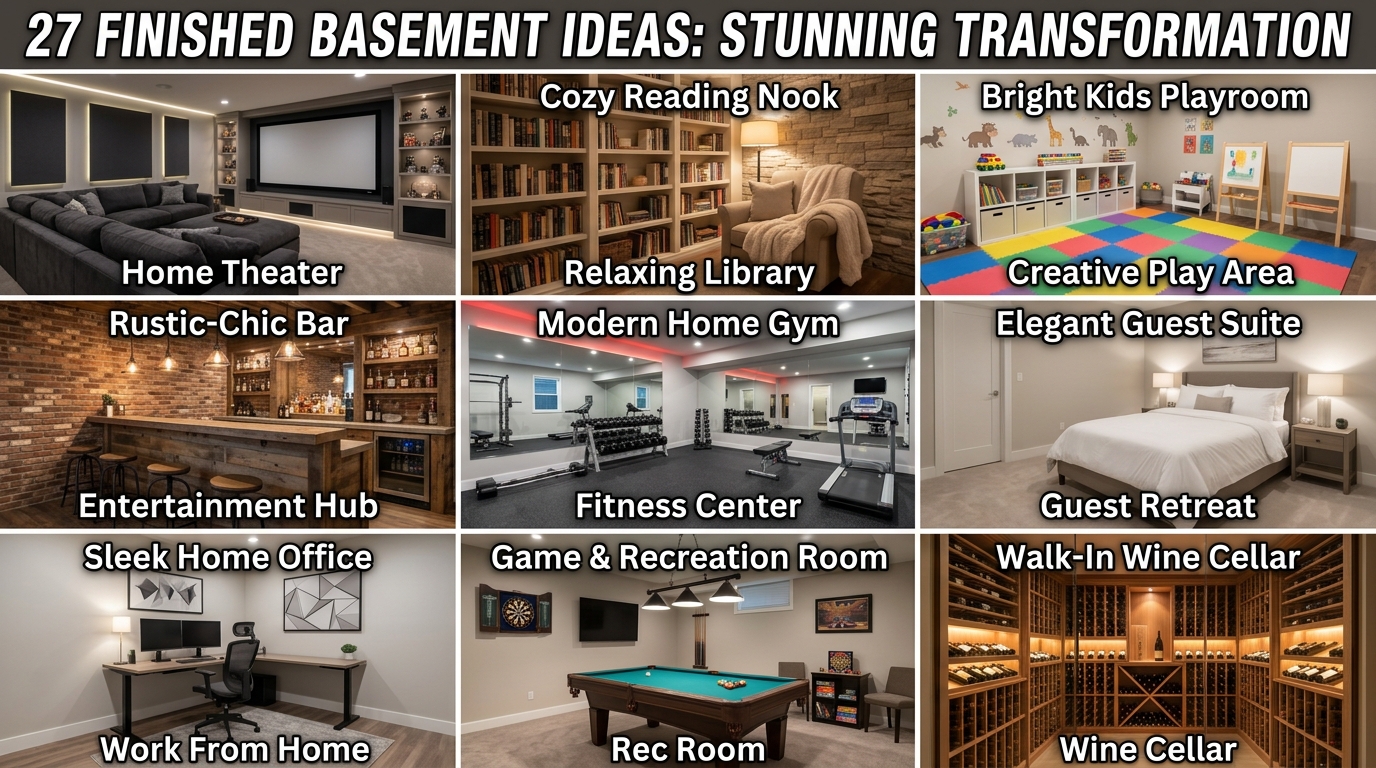
There’s something so satisfying about a finished basement that finally feels like part of the home instead of an afterthought. The best finished basement ideas turn a lower level into a warm, polished space where movie nights, guests, workdays, and weekend lounging all feel effortless. If you’ve been dreaming about a basement that looks elevated but still practical, these 27 finished basement ideas offer real inspiration you can actually use. Some lean cozy, some feel sleek, and some are brilliantly multifunctional. Here are 27 ideas worth saving.
Why Finished Basement Ideas Work So Well
A beautifully finished basement has a special kind of appeal because it solves two problems at once: it adds livable square footage and creates a mood that the main floor often can’t. Basements naturally feel more sheltered and cocooning, which makes them perfect for cozy family rooms, media spaces, guest suites, and quiet work zones. When designed well, that tucked-away quality becomes an asset rather than a limitation.
The most successful finished basement ideas rely on thoughtful light reflection, layered textures, and materials that feel grounded. Warm whites, greige, soft taupe, muted sage, charcoal, and pale oak all work especially well downstairs because they brighten without feeling harsh. Texture matters too—think performance upholstery, wool rugs, matte paint, wood slats, brushed brass, limewash, and fluted millwork.
Finished basement design is having a real moment because homeowners want flexible rooms that do more than one job. Pinterest trends continue to favor multifunctional interiors, cozy basement decor, and basement remodel ideas that look custom instead of purely utilitarian. People want lower levels that feel styled, not like leftover space with a sofa pushed against the wall.
Even a small basement can achieve this look. The trick is using fewer, better elements: one strong lighting plan, one consistent flooring choice, and a clear function for each zone. With the right basement lighting ideas and smart layout decisions, even a compact lower level can feel intentional and inviting.
Finished Basement Ideas for a Plush Sectional Lounge
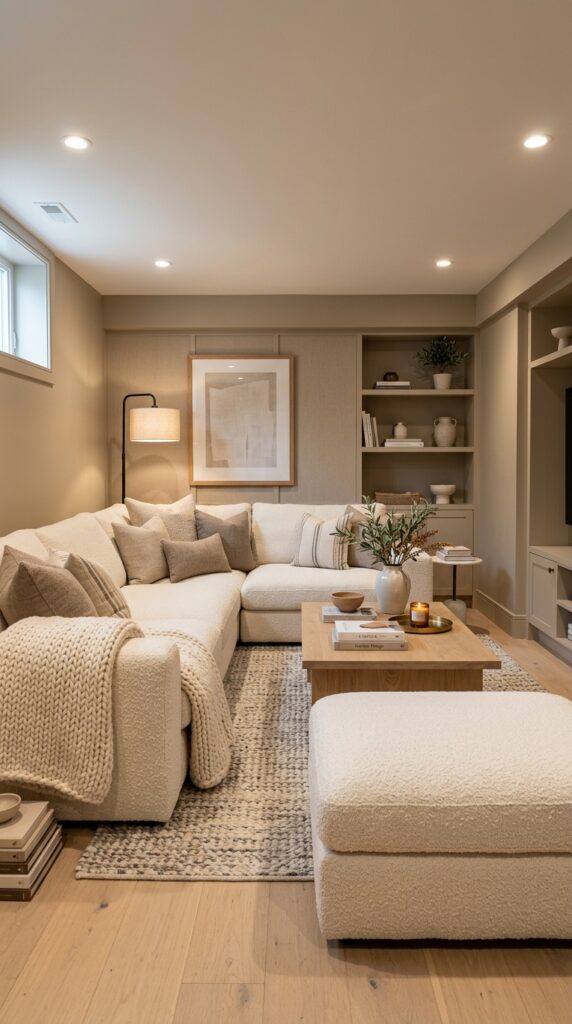
Vibe sentence: This kind of lounge feels quiet, cushioned, and instantly inviting—the sort of room that makes a rainy evening feel luxurious.
What makes it work: A large sectional visually anchors the basement and softens the lower ceiling line with one generous shape instead of several scattered seats. Keeping the palette tonal makes the room feel bigger, while a large rug adds warmth and helps the seating zone feel custom rather than improvised.
How to achieve it: Choose a low-profile sectional in a performance fabric like chenille or boucle so the room feels grounded but easy to maintain. Use one oversized ottoman instead of a hard coffee table if you want a more relaxed family room design.
💡 Start with a washable 8×10 neutral rug before buying decor—it instantly makes an unfinished-feeling basement look styled.
Built-In Media Wall With Hidden Storage
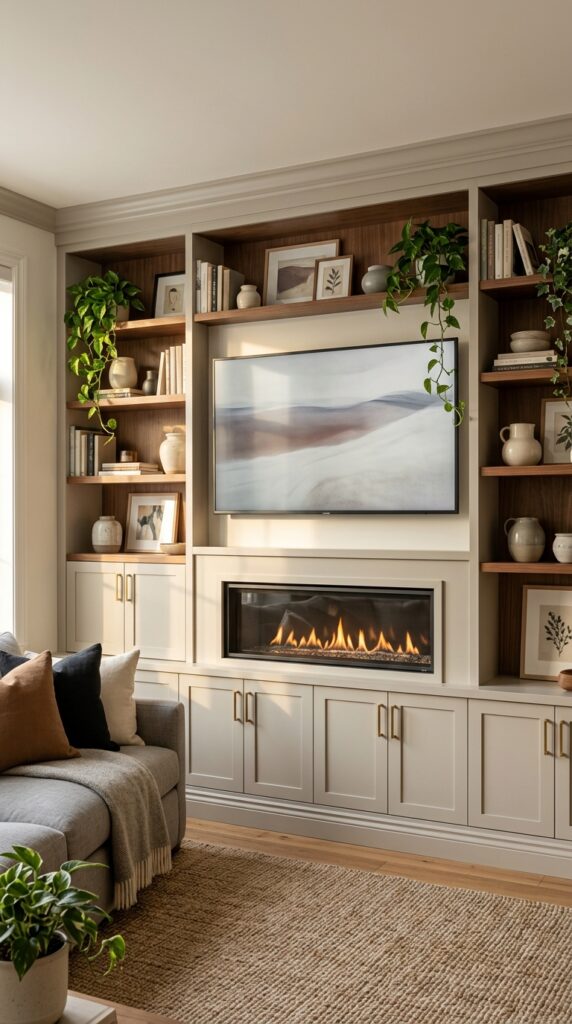
Vibe sentence: It feels polished and tailored, like the basement was designed with intention from the first stud to the last styling layer.
What makes it work: A full media wall gives the eye one strong focal point, which makes the whole room feel more architectural. Closed storage keeps wires, toys, game controllers, and seasonal clutter out of sight, while a few open shelves add relief and personality.
How to achieve it: Paint the built-ins the same color as the walls for a seamless look, especially in smaller basements. Use shaker or slab fronts, integrated cord management, and brushed brass or matte black hardware depending on whether you want warmth or contrast.
💡 IKEA cabinet bases with a custom paint color and trim can mimic expensive millwork for a fraction of the cost.
A Moody Home Theater Corner
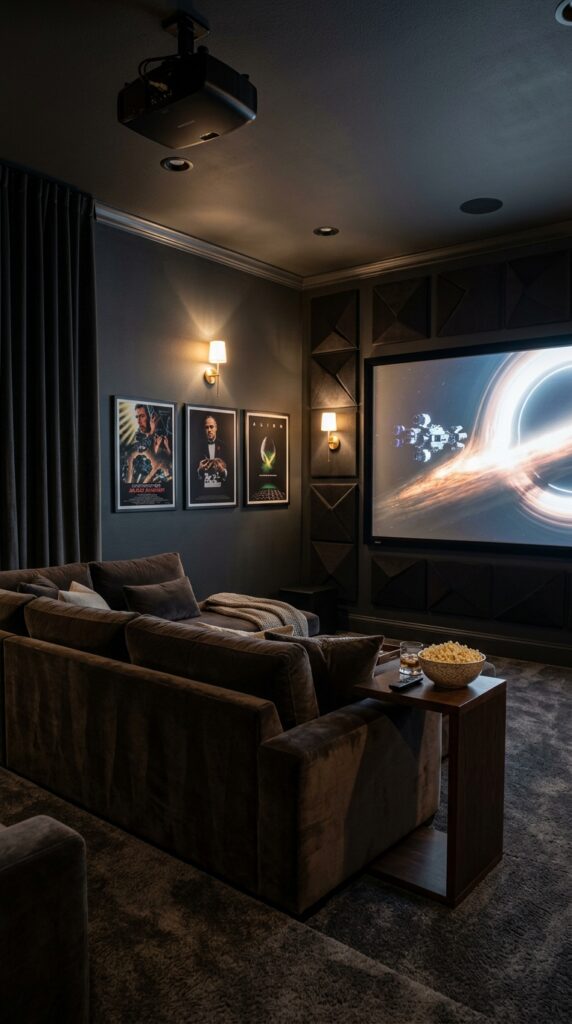
Vibe sentence: This setup feels cocooning and cinematic, with just enough drama to make movie night feel like an event.
What makes it work: Dark colors actually help in a theater zone because they reduce glare and create visual depth. Velvet, carpet, and acoustic panels soften sound and absorb echo, which matters in basements where hard surfaces can otherwise make audio feel sharp.
How to achieve it: Use flat or matte paint in a color like iron ore, deep charcoal, or espresso brown on the theater wall. Add dimmable sconces and a thick low-pile carpet tile or wool-blend rug to improve acoustics without sacrificing style.
Glass-Enclosed Home Gym
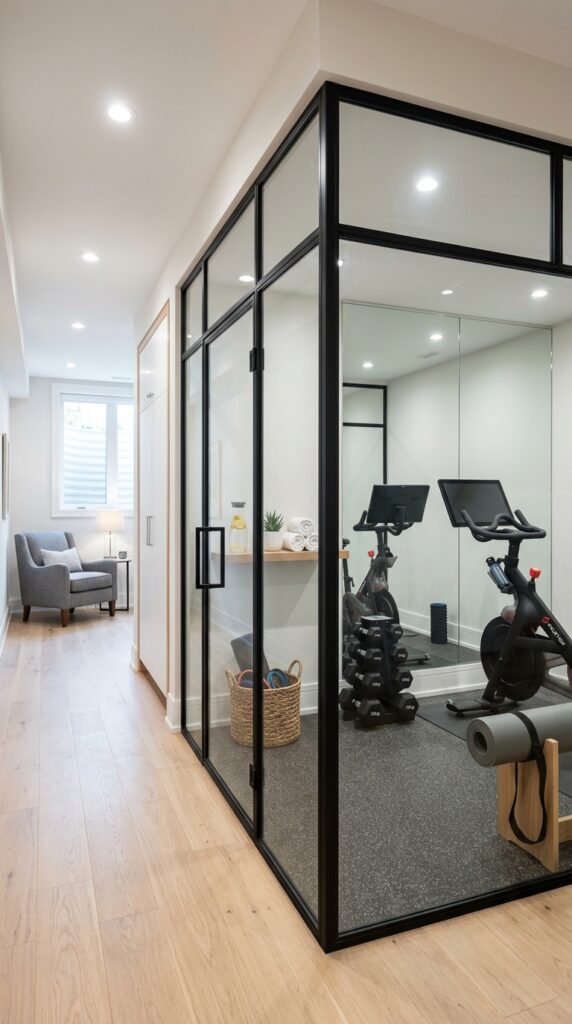
Vibe sentence: It feels clean, motivated, and bright—more boutique fitness studio than basement workout zone.
What makes it work: Glass partitions let light travel through the basement so the gym feels connected rather than closed off. The black framing adds crisp definition, while mirrors make the room feel taller and visually double the brightness.
How to achieve it: Use large-format mirrors on one wall and choose interlocking rubber or cork-backed athletic flooring in charcoal or speckled gray. Keep equipment minimal and store bands, mats, and weights in closed cabinets so the room still reads as designed.
💡 A single black-framed glass wall can separate zones without the cost of building a fully enclosed room.
Bright Basement Office Nook
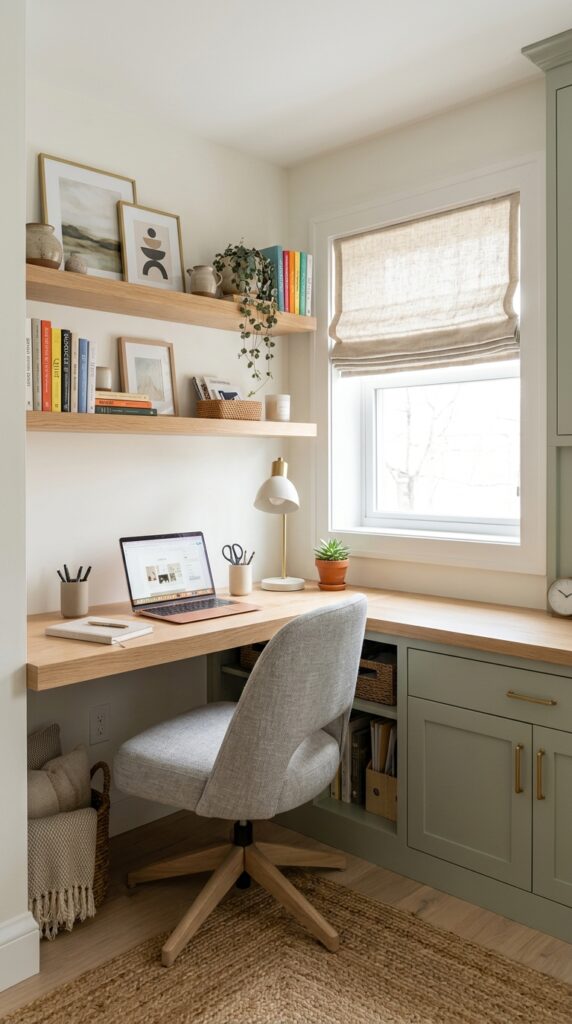
Vibe sentence: This corner feels calm and productive, with the kind of softness that makes desk time easier to settle into.
What makes it work: Basements often have fewer distractions, which already makes them great for focused work. A built-in desk uses awkward wall space efficiently, while pale finishes and reflective surfaces keep the nook from feeling boxed in.
How to achieve it: Paint the area in a high-LRV warm white and use one continuous oak or laminate desktop to make the space look custom. Add layered lighting with a sconce or task lamp so the office still feels bright on darker afternoons.
💡 If you only have one small basement window, hang a mirror opposite it to bounce daylight through the whole nook.
Cozy Bunk Room for Guests and Sleepovers
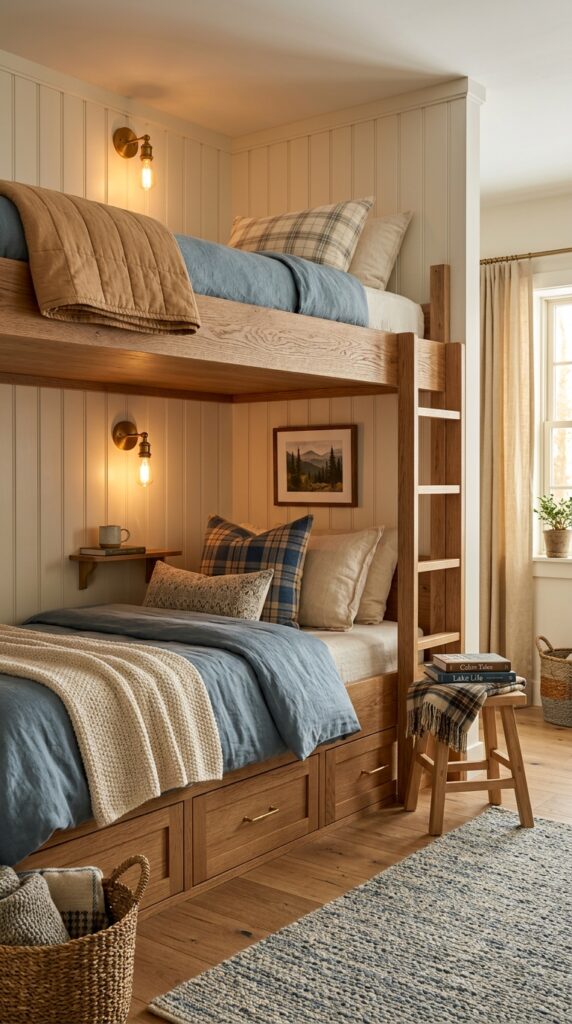
Vibe sentence: It feels tucked in and charming, like a little retreat that makes guests feel instantly considered.
What makes it work: Built-in bunks maximize floor space and give the room a deliberate, cabin-like character. Repeating materials—wood, beadboard, and matching sconces—create rhythm, which makes even a compact guest area feel cohesive instead of crowded.
How to achieve it: Use washable coverlets, under-bunk drawers, and individual reading lights so the room is both pretty and practical. Soft blue, warm white, or muted olive work especially well here because they feel restful without making a basement bedroom too dark.
Finished Basement Ideas With a Fluted Wet Bar
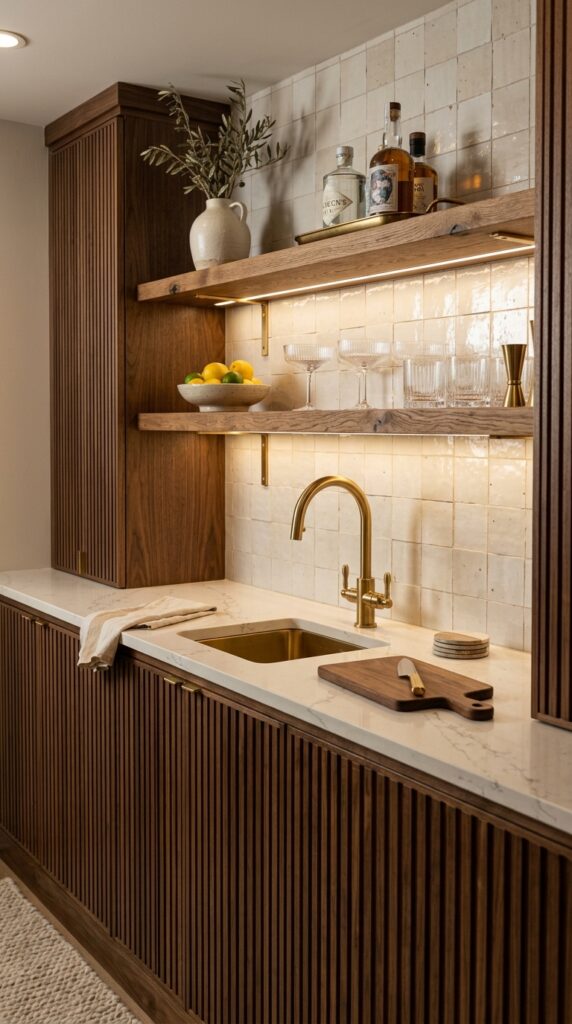
Vibe sentence: This bar area feels sophisticated but relaxed, the kind of detail that quietly upgrades the whole basement.
What makes it work: Fluted millwork introduces vertical texture, which is especially useful in a lower-level room where flat walls can feel visually heavy. A slim quartz or marble-look counter reflects light, while open shelving keeps the bar from feeling like a bulky cabinet block.
How to achieve it: Use rift-cut oak or fluted MDF panels on the cabinet face and pair them with a compact undercounter beverage fridge. A handmade-look tile backsplash in ivory or sand adds texture without overwhelming the area.
💡 Even a 5-foot wall can become a mini wet bar with a floating shelf, a narrow base cabinet, and a tray for glassware.
Game Zone With a Banquette Bench
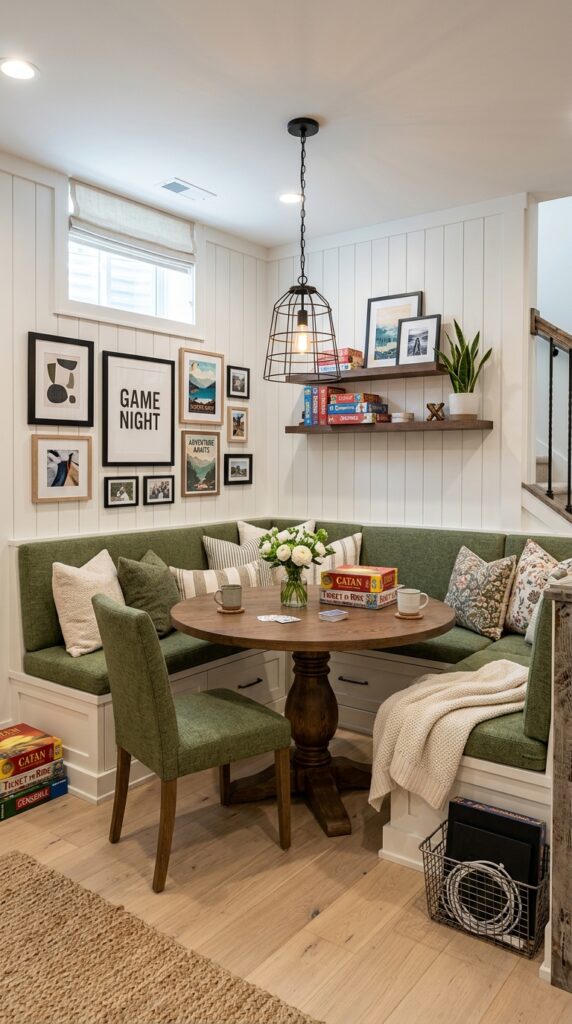
Vibe sentence: It feels social and easy, like the sort of corner where people naturally linger long after the game is over.
What makes it work: A banquette uses wall space efficiently and makes a basement layout feel tailored. The round table keeps traffic moving, while an upholstered bench softens the harder lines often found in lower-level spaces.
How to achieve it: Choose wipeable performance fabric in olive, camel, or heather gray for the seat cushions and include hidden storage below if possible. Add one centered pendant to visually define the zone, even if it’s part of a larger open basement family room.
💡 A freestanding storage bench with custom cushions gives you a banquette look without full carpentry.
Fireplace Wall That Adds Instant Warmth
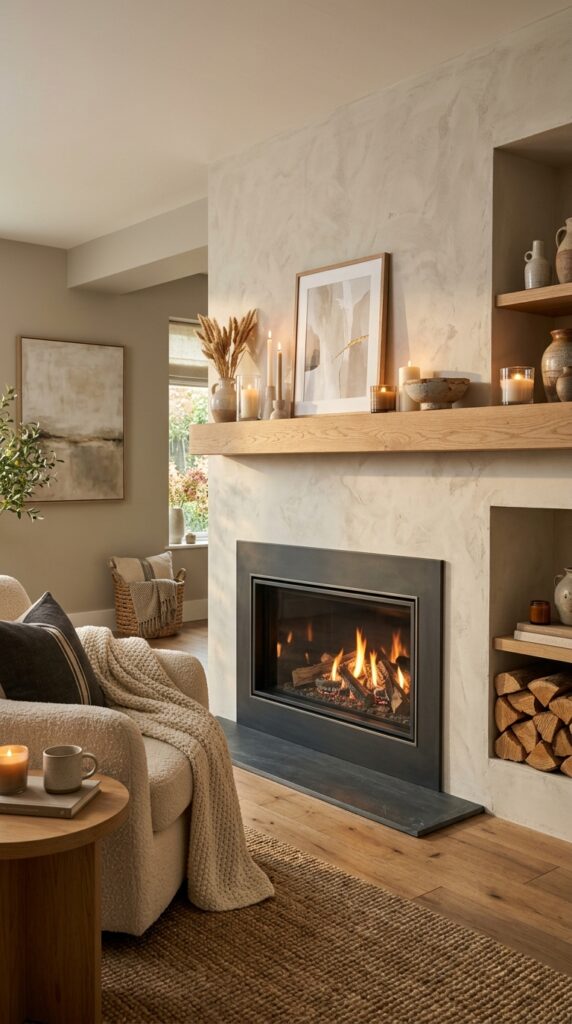
Vibe sentence: A fireplace makes the basement feel grounded and intentional, adding a gentle glow that changes the mood instantly.
What makes it work: Fire is a natural focal point, which helps organize furniture placement in a space that can otherwise feel wide and undefined. A textured surround such as limewash, microcement, or stacked stone adds depth without needing bold color.
How to achieve it: If you don’t want a full gas install, use a slim electric insert with a warm flame setting and build a simple surround around it. Keep the mantel narrow and the styling restrained so the feature feels architectural rather than busy.
Warm Wood Slat Ceiling Detail
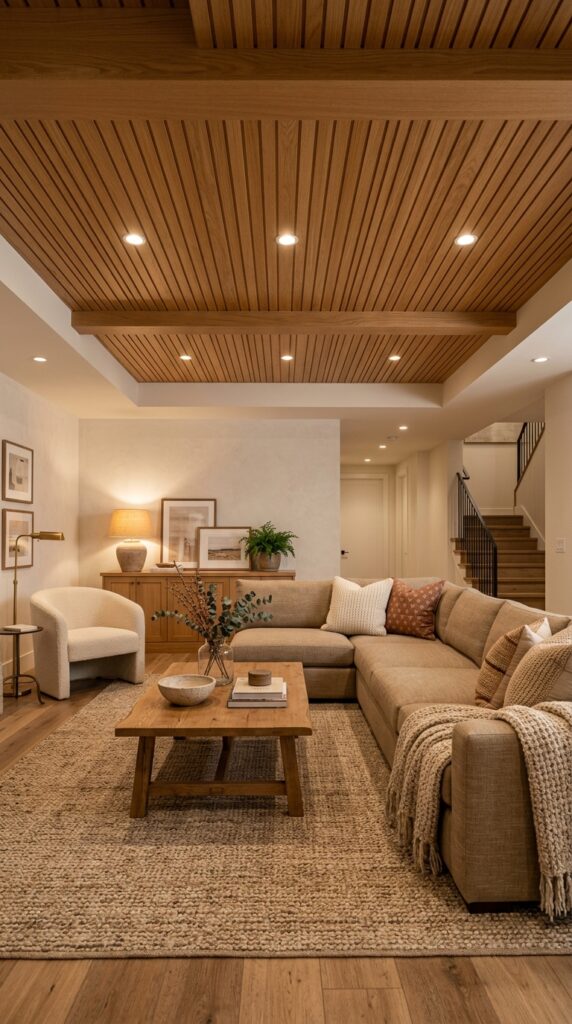
Vibe sentence: This look feels custom and cocooning, with warmth overhead that makes the entire basement feel more finished.
What makes it work: Basements often lack architectural character, so adding texture to the ceiling draws the eye upward and creates dimension. Wood slats also visually distract from standard drywall expanses and help the room feel more like a designed main-floor living space.
How to achieve it: Use prefabricated acoustic wood slat panels or thin oak battens over a painted ceiling section to define a specific zone. Pair them with recessed can lights or slim black track heads so the ceiling still feels clean and modern.
💡 Try slatting just one ceiling bay above the sofa instead of the whole room to keep the budget under control.
Soft Greige Walls With Crisp White Trim
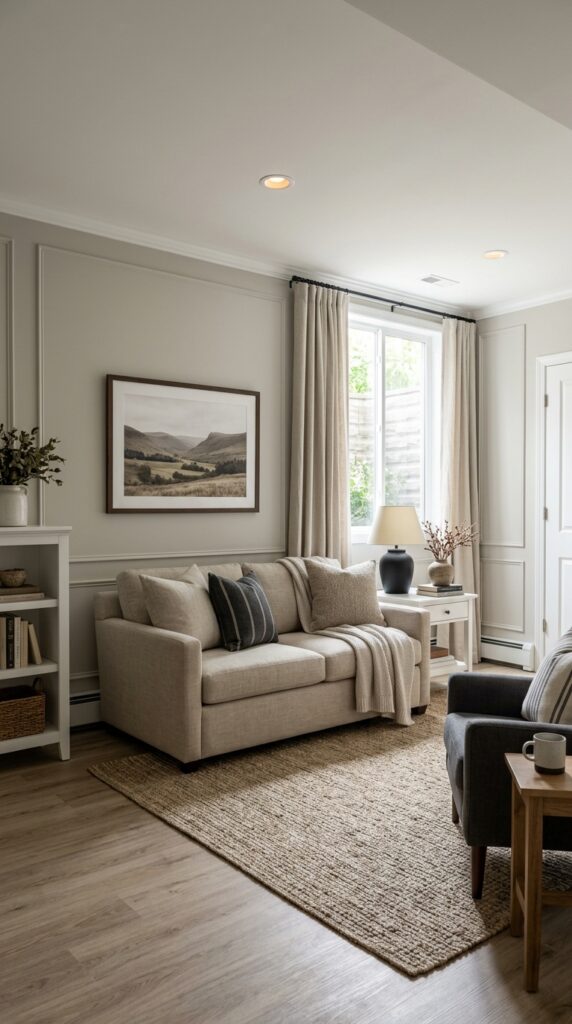
Vibe sentence: It feels bright, serene, and quietly expensive without relying on a lot of decoration.
What makes it work: Greige is one of the best basement color ideas because it softens the room while still reflecting light. Crisp trim creates contrast and definition, which keeps pale walls from looking flat in rooms with limited natural light.
How to achieve it: Choose a warm greige with enough depth to hide minor imperfections but not so much that the room darkens. Colors in the family of Pale Oak, Edgecomb Gray, or Slipper Satin pair beautifully with bright white trim and light oak flooring.
A Laundry Zone That Actually Looks Beautiful
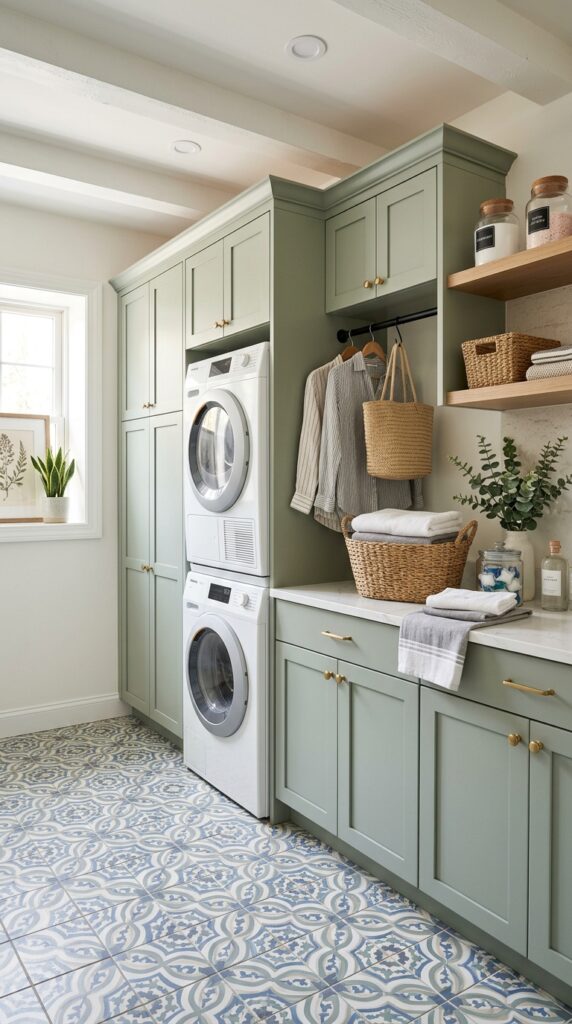
Vibe sentence: This setup feels orderly and fresh, turning a task-driven corner into something calm and highly usable.
What makes it work: When the laundry zone is visually integrated, the basement feels like true living space instead of a catchall utility floor. Vertical storage, good task lighting, and one durable surface for folding make the area far more efficient.
How to achieve it: Use stacked machines if square footage is tight, then add a quartz-look counter and upper cabinets in a soft green or warm white. Porcelain tile is smart here because it handles moisture better than wood-based materials.
💡 A simple tension rod beneath one shelf creates an easy hanging station for shirts and delicates.
Hidden Stair Storage That Clears the Clutter
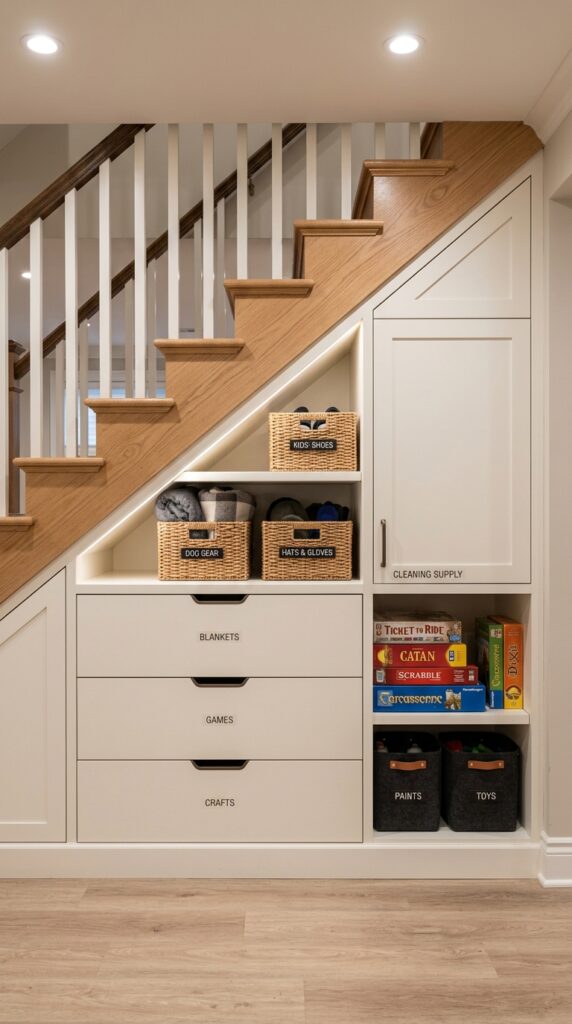
Vibe sentence: It feels neat and quietly clever, the kind of detail that makes the whole basement function better every day.
What makes it work: Basements need excellent storage because they often absorb overflow from the rest of the house. Under-stair cabinetry uses dead space efficiently and keeps the room looking calm, especially in open-plan basement remodel ideas.
How to achieve it: Add pullout drawers for games, holiday items, or extra throws, and use flush panels painted to match the wall so the storage fades visually. Touch-latch hardware or slim finger pulls keep the look clean and built-in.
💡 Even basic under-stair shelving hidden by a curtain panel is better than leaving that awkward angle unused.
Reading Nook With a Library Feel
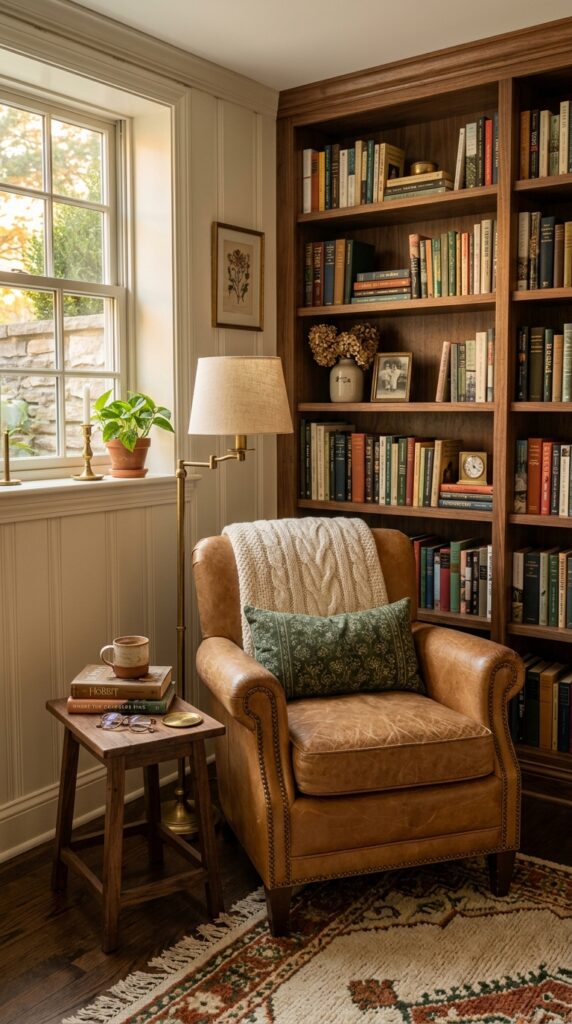
Vibe sentence: This corner feels hushed and cocooned, perfect for slow mornings, paperbacks, and a lamp left on after sunset.
What makes it work: A single generous chair paired with shelving makes the basement feel purposeful without needing a whole room dedicated to reading. Rich textures like leather, wool, and stained wood add warmth and prevent the space from feeling visually cold.
How to achieve it: Choose a floor lamp with a soft linen shade and anchor the nook with a small wool or wool-blend rug. If built-ins aren’t possible, use tall bookcases in the same color as the walls for a more custom, library-like effect.
💡 One vintage-style sconce and a secondhand leather chair can create this mood faster than buying lots of new decor.
Finished Basement Ideas for a Craft Room With Closed Cabinets
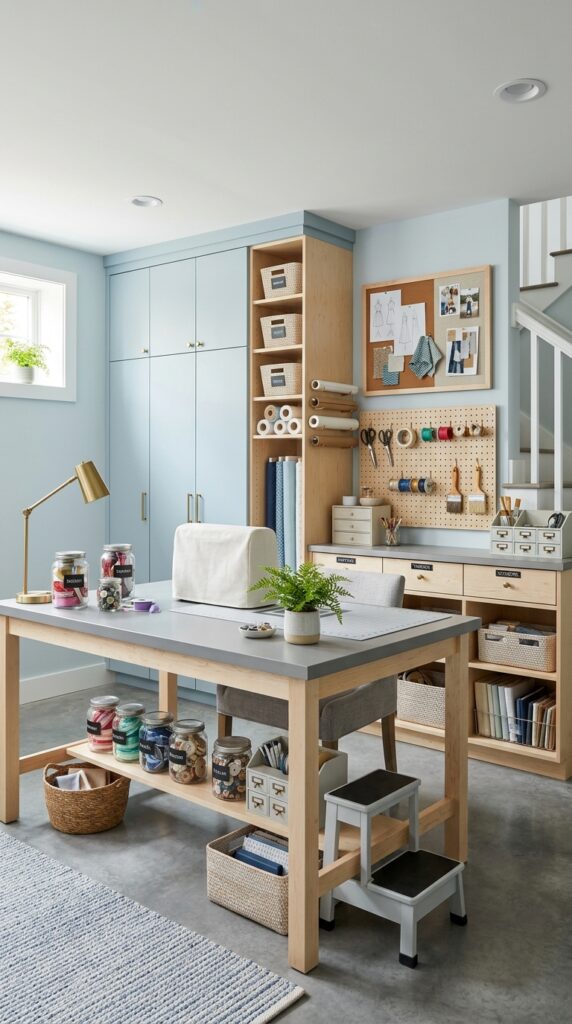
Vibe sentence: It feels creative and cheerful without tipping into visual chaos.
What makes it work: A craft room only stays beautiful when supplies have a place to disappear into, which is why closed cabinets matter so much here. A central worktable improves flow and keeps the room functional for wrapping, sewing, or school projects.
How to achieve it: Use melamine or laminate cabinet interiors for durability and choose one wipe-clean tabletop in quartz-look or butcher-block style. Soft blue or pale sage can keep the room feeling light while still hiding scuffs better than plain white.
Listening Lounge With a Vintage Edge
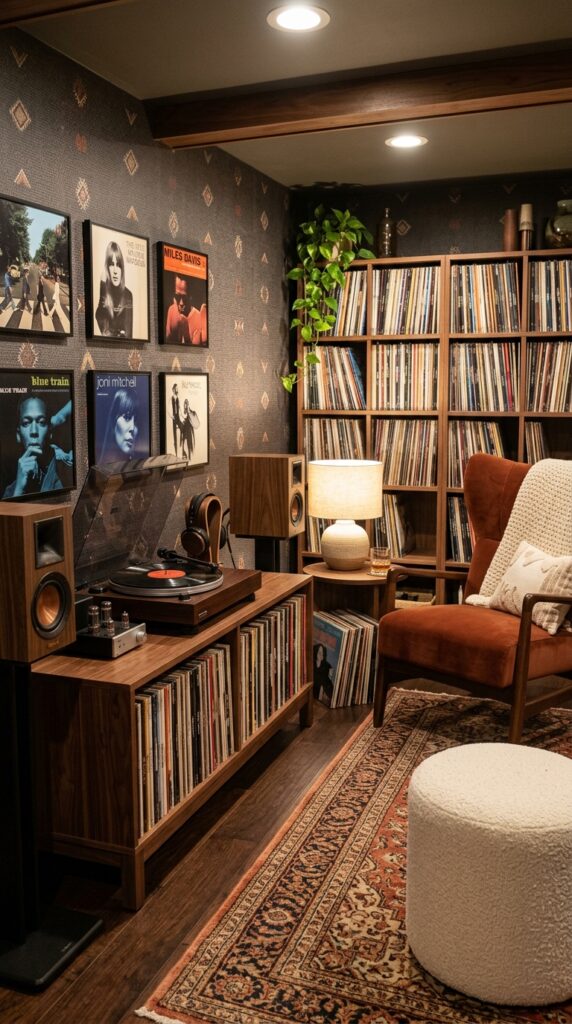
Vibe sentence: This room feels intimate and soulful, the kind of space that invites you to sit down and stay awhile.
What makes it work: Low furniture suits basements because it preserves visual openness under shorter ceilings. A warm wood console, soft lamp light, and tactile fabrics create the layered atmosphere that makes a listening room feel collected rather than staged.
How to achieve it: Start with one walnut or blackened-oak media console and flank it with lamps instead of relying only on overhead light. Add acoustic-friendly materials like a rug, curtains, and upholstered seating to improve sound while softening the room.
💡 Frame favorite album covers in matching black frames for art that feels personal and budget-friendly.
Statement Wine Wall Behind Glass
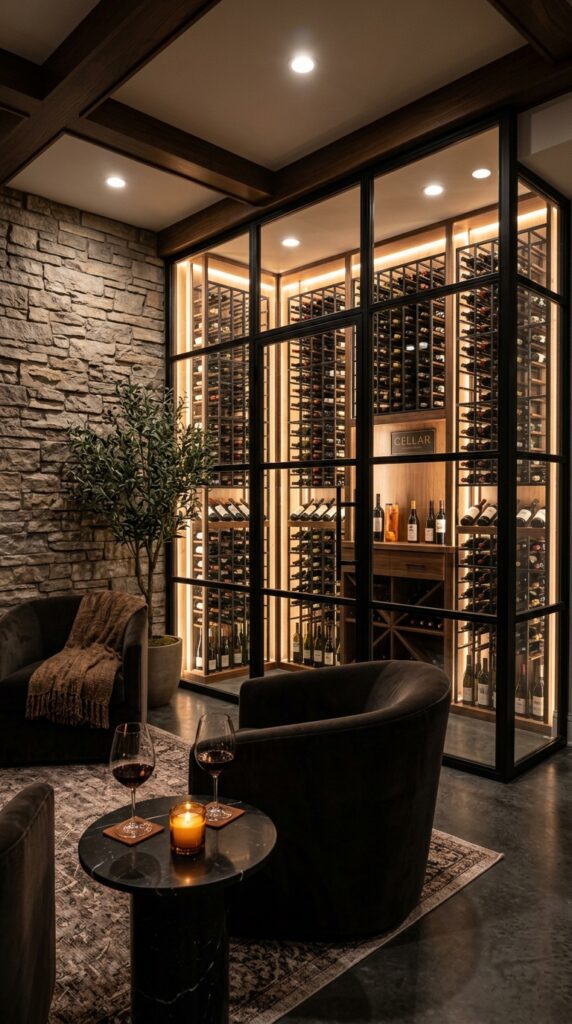
Vibe sentence: It feels sleek and memorable, adding a little boutique-hotel glamour to the basement.
What makes it work: A wine wall turns storage into display, which gives the lower level a strong visual moment. The glass front keeps it from looking heavy, while integrated lighting highlights the bottles and adds depth in a room that may not get much daylight.
How to achieve it: Use black-framed glass or dark shelving with warm LED strips, not blue-toned light. This idea works best when the display is edited and symmetrical, so avoid overfilling every slot if you want the result to feel elevated.
Compact Kitchenette for Easy Entertaining
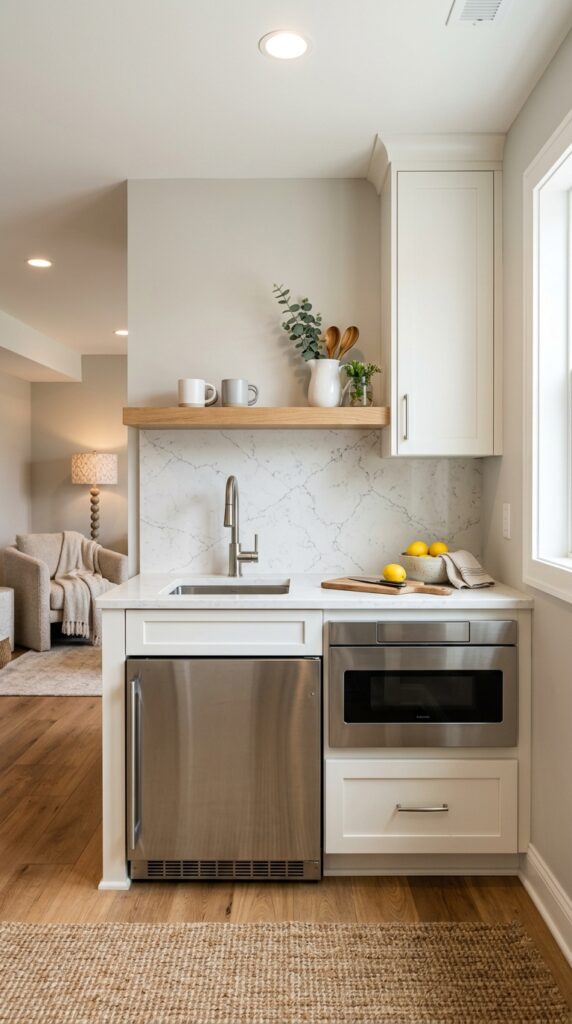
Vibe sentence: This layout feels easy and hospitable, making the basement far more useful for guests and long evenings downstairs.
What makes it work: A compact kitchenette reduces trips upstairs and immediately increases how often the basement gets used. Keeping the finishes simple and scaled-down prevents it from competing with the main kitchen while still feeling polished.
How to achieve it: Stick to 24-inch appliances, slim shaker cabinetry, and a light quartz or quartz-look slab for a bright, durable finish. If you have limited depth, a beverage fridge and microwave drawer deliver most of the convenience without overwhelming the room.
💡 A sink, mini fridge, and one upper shelf can be enough to make a basement feel guest-ready.
Black-Framed Glass Divider for Open Zoning
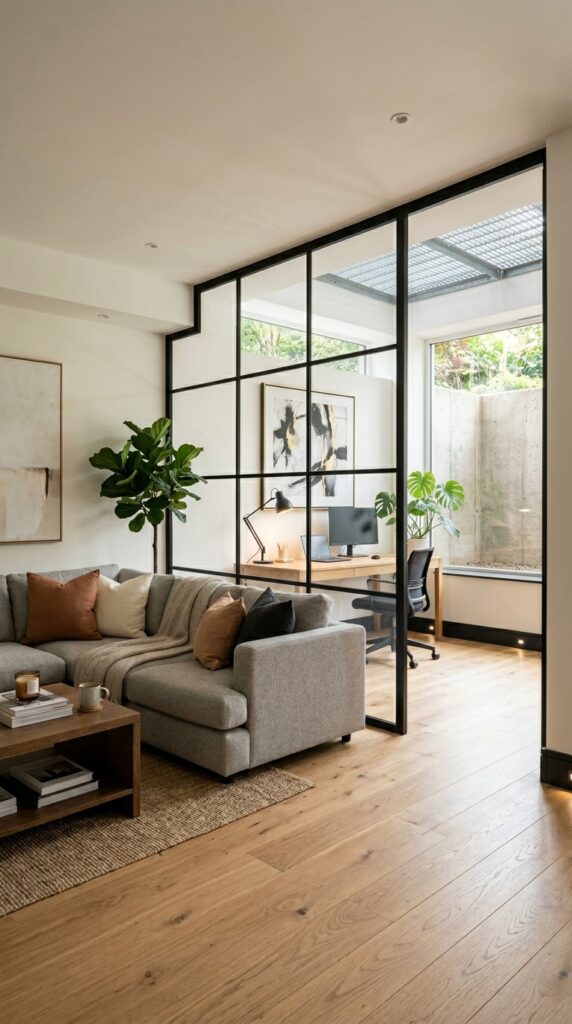
Vibe sentence: It feels airy and architectural, separating functions without sacrificing the openness that makes a basement feel larger.
What makes it work: One of the smartest basement layout ideas is defining zones while letting light move freely. A glass divider gives structure and privacy, but because you can still see through it, the space remains expansive rather than chopped up.
How to achieve it: Use one continuous flooring material across both zones to keep the design calm and cohesive. Pair the black grid lines with a few other black accents—like a floor lamp or hardware—so the partition feels intentional, not random.
Kids’ Playroom With Washable Finishes
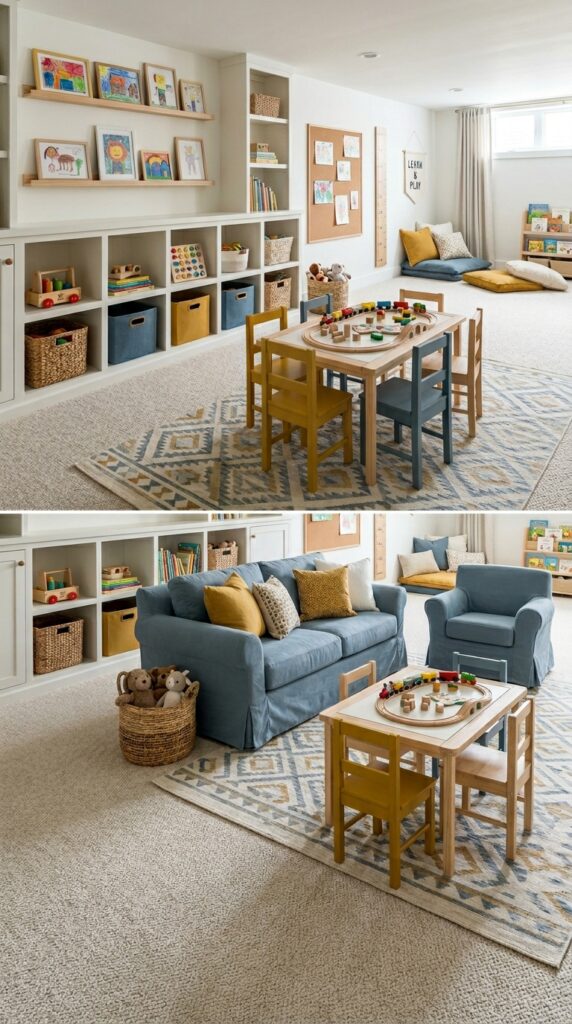
Vibe sentence: This room feels lively and happy without looking visually loud or chaotic.
What makes it work: A beautiful playroom works best when it balances soft color with real durability. Built-in storage, washable slipcovers, and a restrained palette let the toys provide the color so the basement still feels connected to the rest of the home.
How to achieve it: Choose performance rugs, satin-finish paint, and labeled bins that children can use independently. Wall-mounted art ledges are a smart way to rotate books and drawings without creating clutter on every surface.
💡 Use identical baskets in a single tone to make toy storage look styled instead of messy.
Spa-Inspired Basement Guest Bath
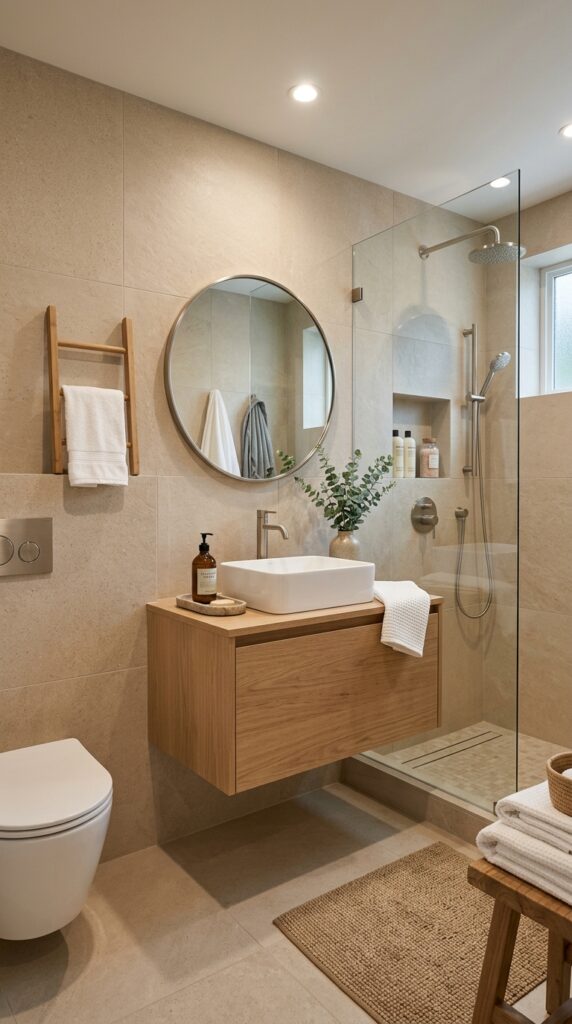
Vibe sentence: It feels clean, hushed, and far more luxurious than most lower-level bathrooms.
What makes it work: Large-format tile reduces grout lines, which makes a small basement bath feel bigger and calmer. A floating vanity creates a little visual breathing room, and warm metal finishes keep the room from feeling clinical.
How to achieve it: Choose porcelain tile in limestone or concrete-look finishes for durability and easy maintenance. Add one warm wood element, like an oak vanity or stool, so the room feels spa-like instead of sterile.
Finished Basement Ideas That Hide a Murphy Bed
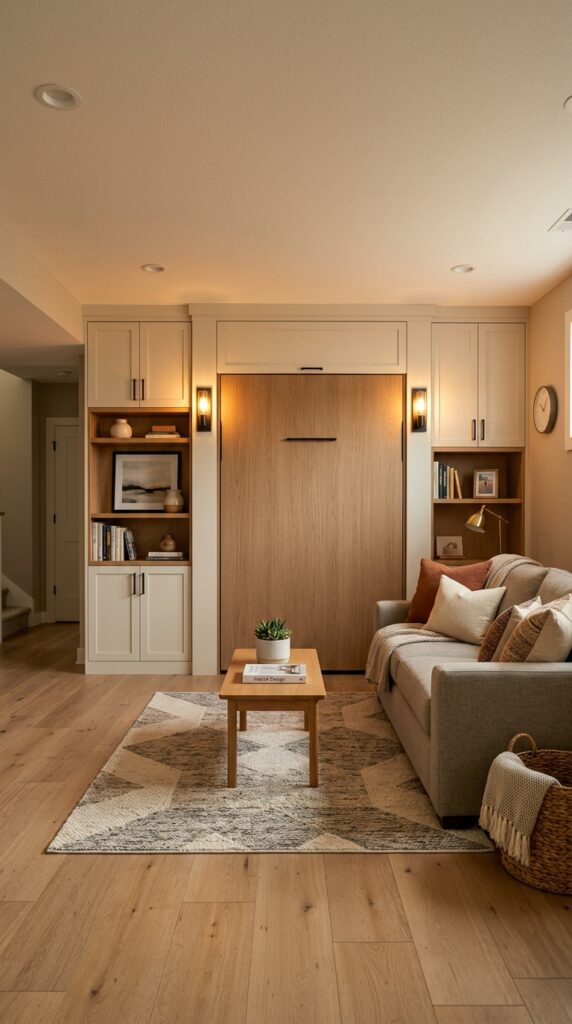
Vibe sentence: It feels relaxed by day and guest-ready by night, which is exactly the kind of flexibility a basement does best.
What makes it work: A Murphy bed lets one room serve multiple purposes without the space looking like a permanent bedroom. When the bed is concealed within cabinetry, the whole wall reads as built-in millwork rather than a bulky fold-down feature.
How to achieve it: Surround the bed unit with shelves or storage towers so the installation feels integrated. Choose bedding in quiet neutrals and add sconces on either side so the room transitions easily from office, lounge, or hobby room to guest suite.
💡 A horizontal Murphy bed often works better in basements with lower ceilings.
Layered Lighting Instead of One Ceiling Fixture
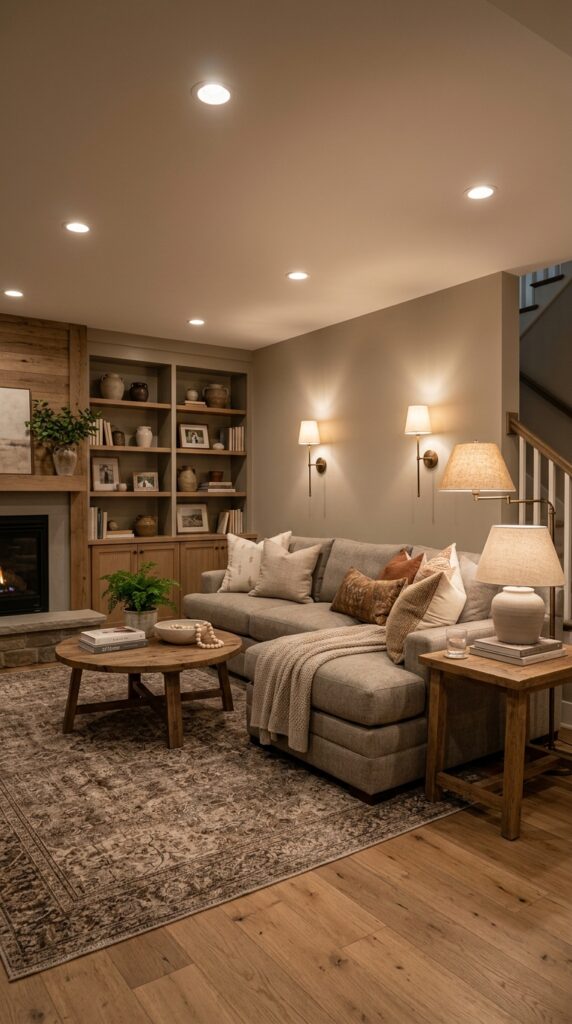
Vibe sentence: The room feels softer and more inviting, with light that flatters every corner instead of flattening it.
What makes it work: Basements often fail because all the lighting comes from one harsh overhead source. Layering light at different heights adds dimension, reduces shadows, and makes the room feel closer to a well-designed living room than a rec room.
How to achieve it: Combine dimmable recessed cans for overall brightness with sconces, floor lamps, and table lamps for atmosphere. Stick with warm bulbs around 2700K to 3000K so the basement feels cozy instead of sterile.
Acoustic Wall Panels That Look Designer
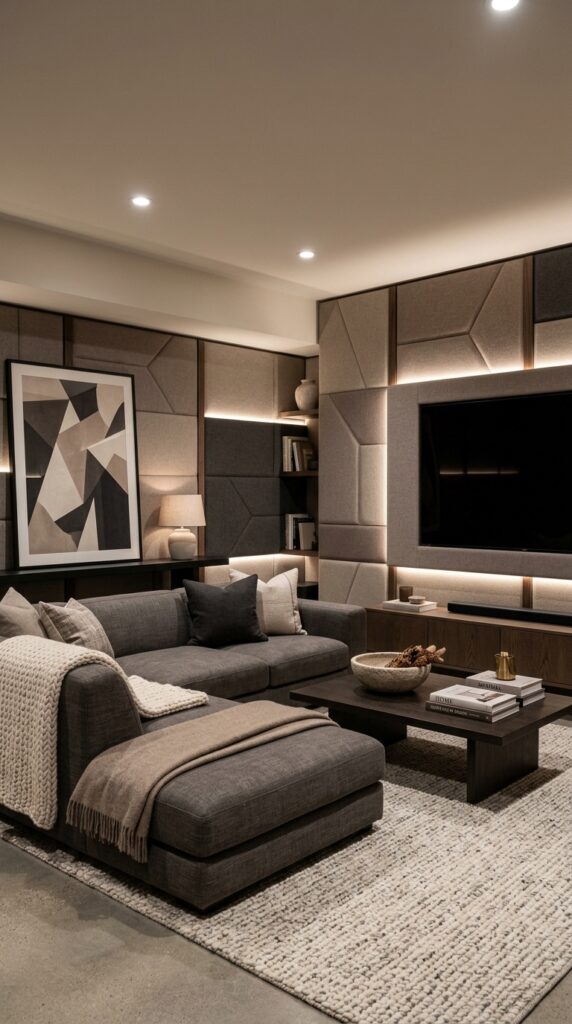
Vibe sentence: This space feels quiet in every sense—visually refined and literally more comfortable to spend time in.
What makes it work: Sound bounces easily in basements, especially in media rooms or open spaces with hard flooring. Acoustic panels solve that problem while adding depth, rhythm, and a custom-detail effect that plain drywall often lacks.
How to achieve it: Choose felt-backed wood slat panels or upholstered fabric panels in a tonal color close to the wall paint. Install them behind the sofa, TV, or music area where sound reflection is strongest and visual impact matters most.
💡 Acoustic art panels can reduce echo while doubling as wall decor in one small upgrade.
Continuous Light Oak Flooring Throughout
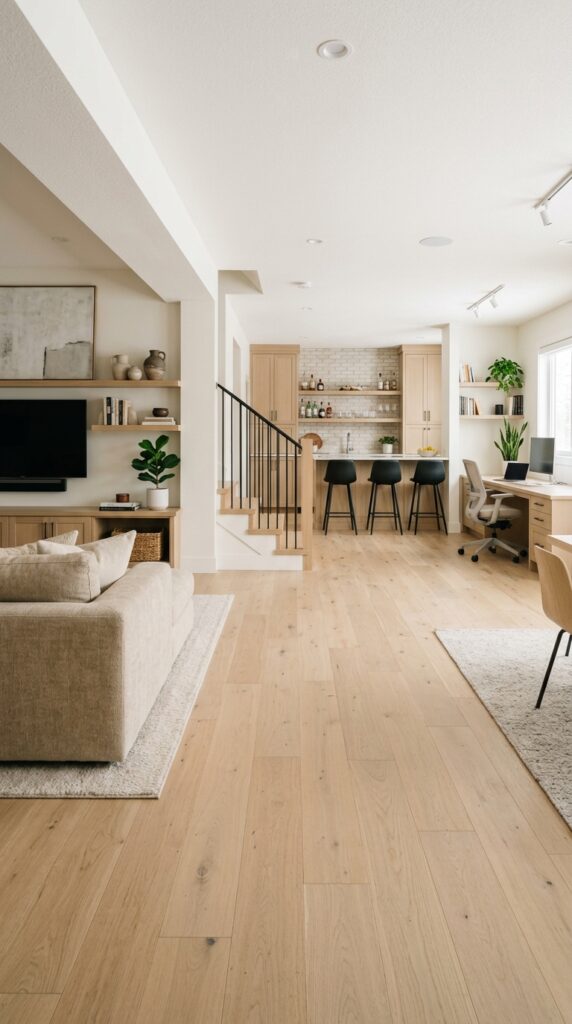
Vibe sentence: The whole basement feels larger, calmer, and far more expensive when the flooring flows uninterrupted.
What makes it work: Using one flooring material across the basement creates visual continuity, which is especially important in open layouts. Light oak tones brighten the room and pair well with almost every cozy basement decor style, from modern organic to classic transitional.
How to achieve it: Look for rigid-core luxury vinyl plank or engineered wood rated for below-grade use if moisture is controlled. Choose a matte finish and wide plank profile for the most current, natural look.
An Arched Nook for Coffee or Mocktails
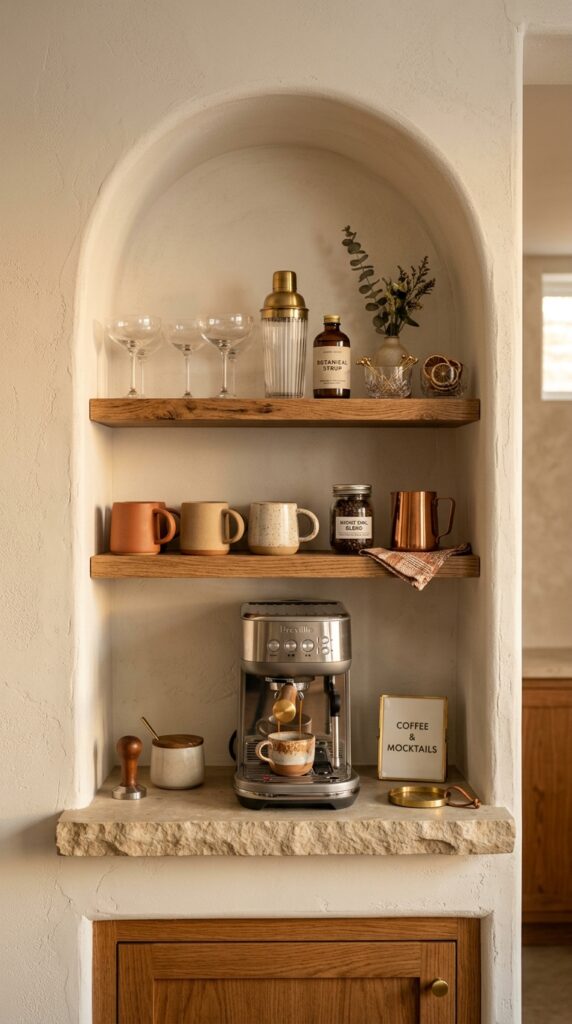
Vibe sentence: This little feature feels charming and elevated, like a boutique touch tucked into the basement.
What makes it work: Arches soften the many straight lines found in most finished basements and instantly add personality. Turning a niche into a beverage station gives it purpose, so it becomes more than a decorative shape.
How to achieve it: Frame a shallow niche or use an existing recess, then finish it with plaster paint or limewash for texture. Add one stone or quartz shelf and keep the styling edited so the curve remains the star.
Oversized Art and a Large Rug for Instant Polish
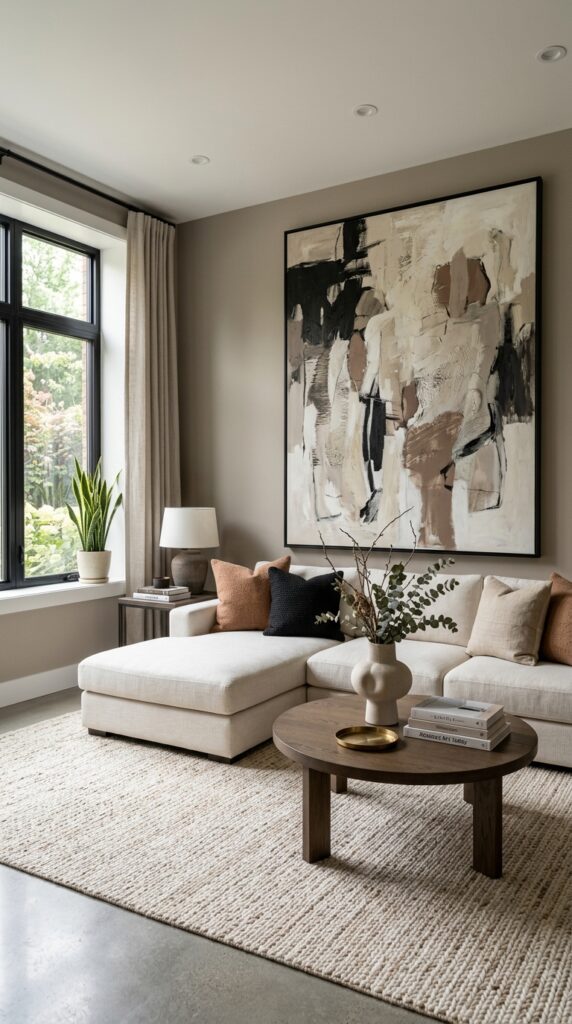
Vibe sentence: The room feels finished in the best sense—edited, confident, and pulled together without needing dozens of accessories.
What makes it work: Many basements feel incomplete because the scale is off: tiny art, undersized rugs, and furniture floating awkwardly. One large rug and one substantial piece of art create proportion, which makes the whole room read as intentional.
How to achieve it: Choose a rug large enough for at least the front legs of all major seating pieces to sit on it. Pair that with a single oversized canvas or framed print rather than a busy gallery wall if you want a cleaner, more elevated effect.
How to Start Your Finished Basement Transformation
The easiest place to begin is with the foundation, not the accessories. Choose your flooring, wall color, and lighting plan first because those three decisions shape everything else. If you want a basement that feels brighter, start with a warm white or soft greige paint, then layer in light-reflective materials like pale oak, brushed nickel, quartz, and linen-textured fabrics.
One of the most common mistakes is trying to make the basement do everything at once without assigning zones. Decide what the room needs to be first—family lounge, guest suite, office, gym, or a combination of two. When each area has a purpose, the layout becomes easier and the room feels calmer.
If you’re working with a tighter budget, invest in one hero move: upgraded flooring, custom-feeling built-ins, or layered lighting. Even simple swaps like satin brass hardware, large washable rugs, and better sconces can dramatically improve cozy basement decor without a full renovation.
Most finished basement ideas come together in stages, and that’s perfectly realistic. Start with function, fix the lighting, solve storage, then add the softer layers that make it feel beautiful. A basement transformation rarely happens in one weekend, but one smart improvement can change the entire mood immediately.
Frequently Asked Questions About Finished Basement Ideas
How much does it cost to create a finished basement?
Costs vary widely based on plumbing, electrical work, and whether you’re adding rooms like a bath or kitchenette. A basic cosmetic basement finish might start around $30 to $60 per square foot, while a more custom remodel with millwork, a bathroom, and higher-end finishes can run $75 to $150+ per square foot. Flooring, drywall, insulation, lighting, and egress upgrades all affect the total. If you want the biggest visual payoff on a modest budget, spend first on lighting, flooring, and paint.
What colors make a finished basement look bigger and brighter?
Warm whites, soft greige, pale taupe, muted sage, and light mushroom tones are some of the best choices for basement walls. These shades reflect light better than stark white while still adding softness, which matters in rooms with limited windows. Colors like Benjamin Moore Pale Oak, Swiss Coffee, or a gentle greige often work beautifully. Pair them with light oak, warm brass, or brushed nickel for a balanced basement family room design.
How do you make a basement feel less like a basement?
The fastest way is to treat it like the rest of your home instead of a leftover space. Use full-size rugs, real lamps, framed art, tailored window treatments, and a consistent flooring material rather than mixing too many surfaces. Avoid relying on one central ceiling light, because harsh overhead lighting is one reason basements feel unfinished. Adding texture—like wood slats, performance upholstery, wallpaper, or millwork—also helps the room feel layered and intentional.
Is carpet or vinyl plank better for finished basement flooring?
For many homes, rigid-core luxury vinyl plank is the more practical choice because it handles moisture better and gives you a cleaner, more updated look. Carpet can still work well in theater areas or guest bedrooms where softness and sound absorption matter most. A smart compromise is LVP throughout the main basement with a large wool-blend or performance rug in seating areas. If you choose carpet, look for low-pile styles with moisture-resistant padding.
Do finished basement ideas really add value to a home?
A well-designed finished basement can absolutely improve buyer appeal, especially when it adds functional space like a guest suite, office, playroom, or media room. The strongest value usually comes from layouts that feel flexible and finishes that match the quality of the main level. Features like egress windows, a full bath, durable flooring, and good built-in storage tend to matter more than overly niche design choices. In everyday life, the added value is also personal—you simply get more usable space out of the home you already own.
Ready to Create Your Dream Finished Basement Space?
The beauty of these 27 finished basement ideas is that you don’t need to tackle every one to create a meaningful transformation. Save the looks that match your home, pin your favorite layouts, and start with the one upgrade that solves your biggest frustration first. Maybe that’s better lighting, smarter storage, a warmer color palette, or one inviting sectional that finally gives the room a purpose. A finished basement doesn’t become beautiful through perfection—it becomes beautiful through thoughtful choices layered over time. Start small, stay consistent, and let your basement become one of the most loved spaces in the house.