
There’s something about a cottagecore kitchen that feels like a warm loaf cooling on the counter—soft light, weathered wood, and little details that make everyday routines feel gentler. This is a style built on comfort, nostalgia, and the kind of beauty that looks collected rather than staged. If you’ve been craving a kitchen with more soul, these 29 cottagecore kitchen ideas will give you real, actionable ways to create it. Some are simple weekend updates, while others can guide a bigger refresh over time. Here are 29 ideas worth saving.
Why Cottagecore Works So Well
Cottagecore feels timeless because it isn’t built around perfection. Instead, it celebrates warmth, usefulness, and a slightly storied look—think handmade ceramics, vintage-inspired fixtures, painted wood, and natural textures that feel better with age. Architectural Digest describes cottagecore as a romantic, nostalgic style rooted in nature, sustainability, and the comforts of home, which is exactly why it translates so beautifully to kitchens. Architectural Digest
The palette is usually soft and grounding: warm white, cream, sage green, dusty blue, butter yellow, and muted floral tones. Materials matter just as much as color. Bead board, marble, butcher block, fireclay, brass, linen, wicker, and aged wood all add the kind of texture layering that gives cottage kitchen decor its lived-in charm. Better Homes & Gardens also points to details like apron-front sinks, schoolhouse lights, pastel cabinetry, open shelving, and furniture-style pieces as core ingredients of the look. Better Homes & Gardens
The reason cottagecore kitchen ideas are having such a moment is cultural as much as visual. Pinterest’s 2025 summer trend report highlighted a surge in farmhouse cottage interiors, thrifted home decor, and rustic, nature-led spaces—evidence that people are craving homes that feel restorative rather than overly polished. Pinterest Newsroom
And the best part is that even a small cottage kitchen can pull this off. Because the style thrives on layered details instead of square footage, a single painted cabinet, vintage rail, or gathered cafe curtain can shift the whole mood of the room.
Cottagecore Kitchen Ideas Start with Warm White Cabinets
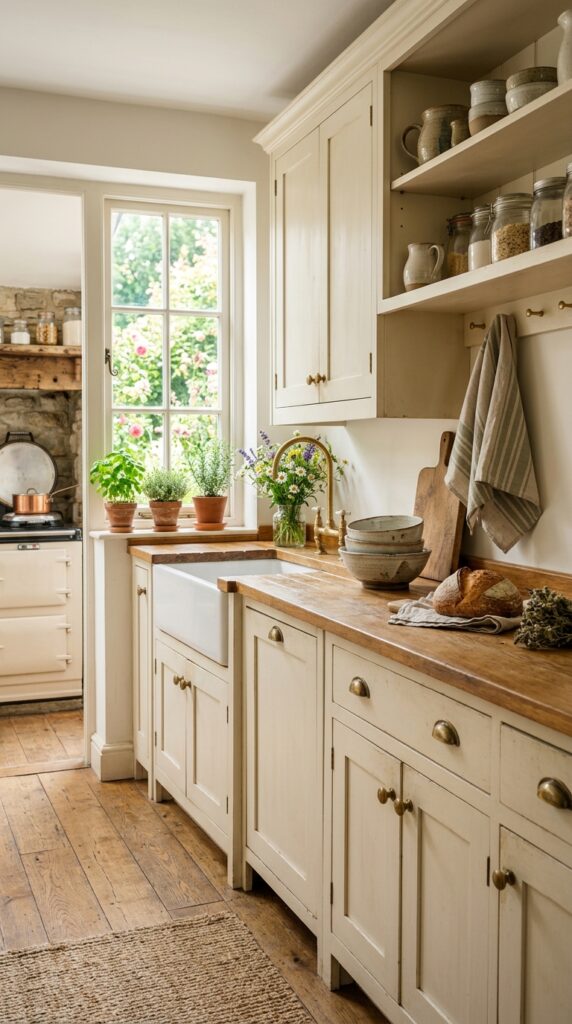
Vibe sentence: Warm white cabinets make the whole kitchen feel softer, brighter, and instantly more welcoming.
What makes it work: Unlike stark builder-grade white, a creamy tone adds depth and keeps cottagecore kitchen ideas from feeling sterile. It reflects light beautifully, which is especially helpful in smaller kitchens, and it creates a calm backdrop for wood, brass, and floral accents.
How to achieve it: Choose a paint color with a yellow or beige undertone, like warm ivory or soft cream, rather than bright blue-white. Pair simple shaker fronts with antique brass or bin pulls to give basic cabinetry a gentler, timeworn finish.
💡 Swap shiny chrome hardware for unlacquered brass to warm up plain cabinets in one afternoon.
Sage Green Lower Cabinets for Storybook Contrast
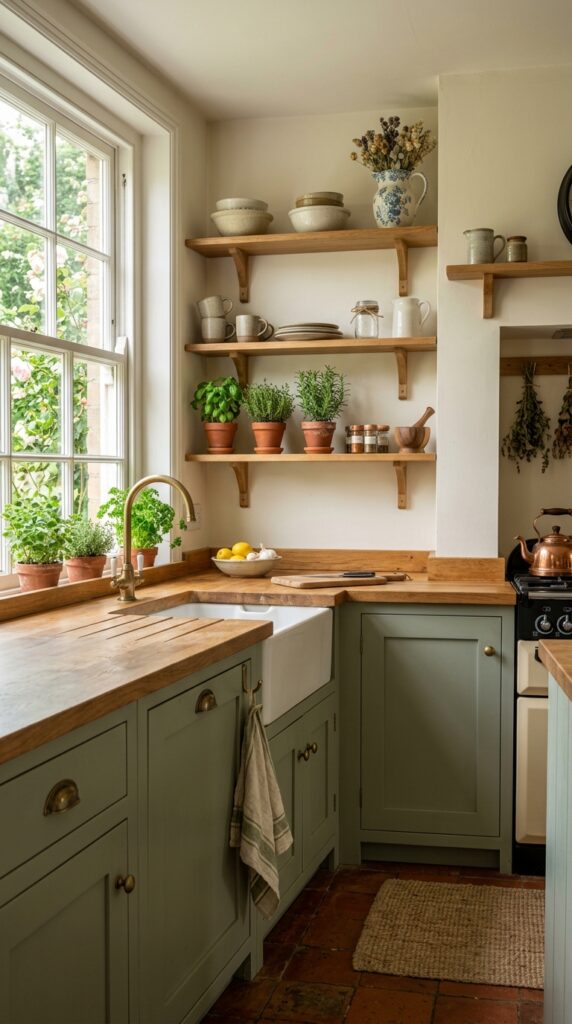
Vibe sentence: Sage green base cabinets feel earthy and quiet, like the kitchen version of a garden after rain.
What makes it work: Color placed low in the room grounds the space without making it heavy, while lighter walls keep the overall effect airy. Sage also pairs especially well with oak, butcher block, linen, and terracotta, which makes styling feel effortless.
How to achieve it: Paint only the lower cabinets if you want color without overwhelming the room. Look for muted greens with gray undertones instead of bright mint, then repeat the shade in a tea towel, planter, or seat cushion so it feels intentional.
Beadboard Backsplash for Instant Cottage Texture
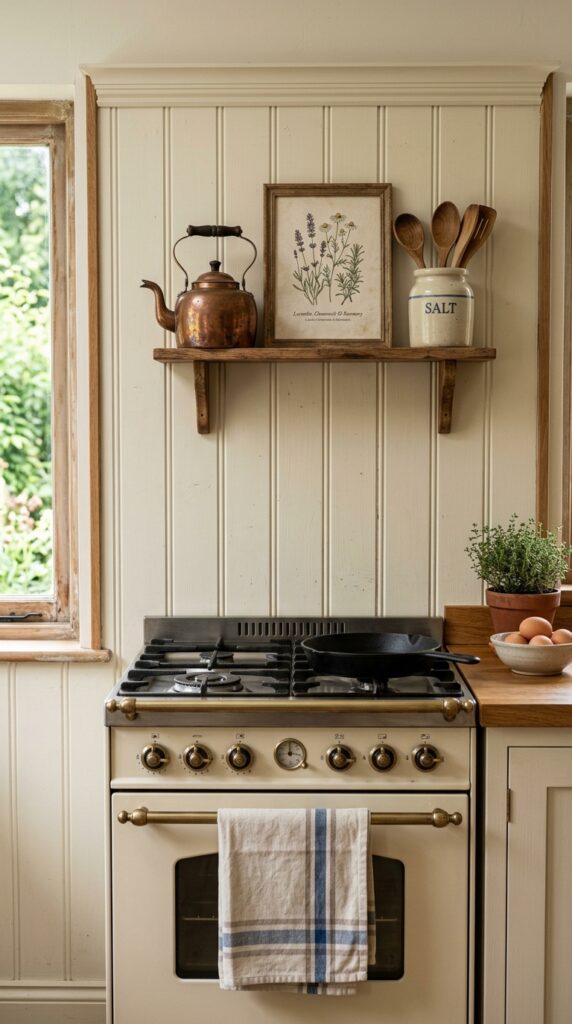
Vibe sentence: Beadboard gives walls that tucked-away cottage feeling that tile alone can’t always create.
What makes it work: The narrow grooves add rhythm and shadow, so even a simple painted wall looks richer and more finished. It also softens the hard surfaces common in kitchens, which is why it works so well in cozy kitchen aesthetic schemes.
How to achieve it: Use moisture-resistant beadboard panels in lower-splash areas or in a breakfast corner rather than directly behind a high-splatter cooktop. Paint it in warm white, pale mushroom, or soft blue-gray for that classic English cottage kitchen mood.
Open Wood Shelves with Everyday Ironstone
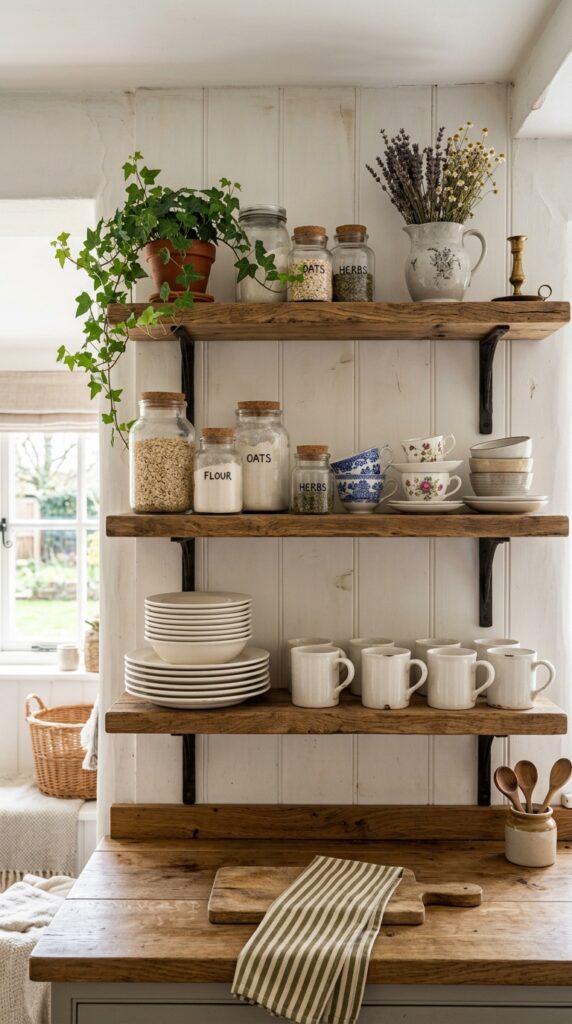
Vibe sentence: Open shelving makes a kitchen feel personal, like the room has evolved slowly over time.
What makes it work: The contrast between sturdy wood shelves and pale dishes creates a beautiful balance of weight and lightness. In small cottage kitchen layouts, it also opens up the upper half of the room so the space breathes.
How to achieve it: Keep the edit tight by displaying only pieces you actually use—stacked plates, everyday mugs, a few jars, and one trailing plant. Choose shelves in oak or pine with visible grain so the wood adds warmth even when the styling is minimal.
💡 Remove doors from one upper cabinet section first to test the open-shelf look before committing fully.
A Fireclay Apron-Front Sink That Feels Heirloom
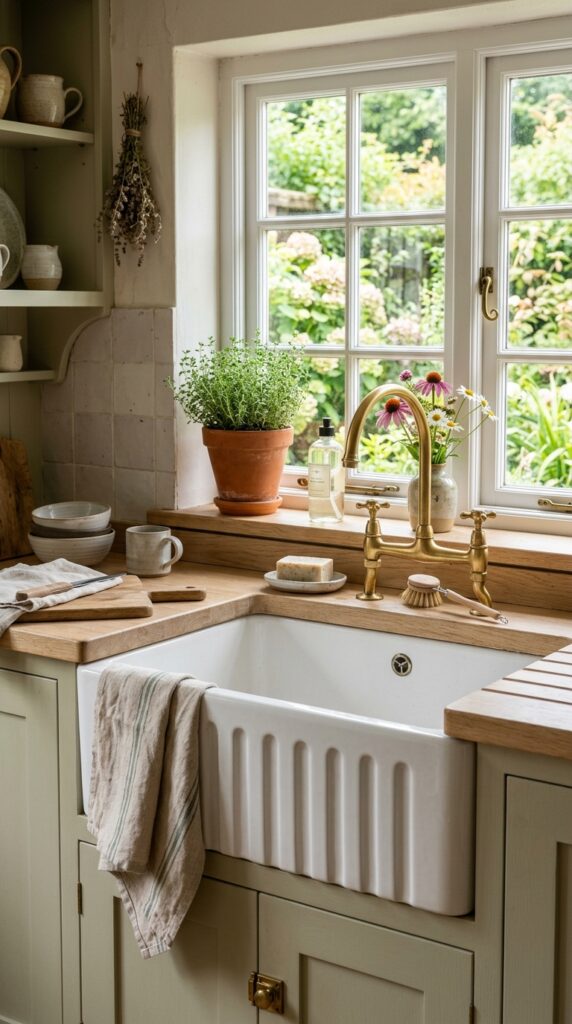
Vibe sentence: An apron-front sink brings that old-house practicality that makes cottagecore feel authentic instead of themed.
What makes it work: The exposed front adds architectural character, while the deep basin feels generous and useful. It’s one of those elements that instantly shifts a kitchen toward country kitchen style because it looks rooted in real daily life.
How to achieve it: Choose fireclay if you want a crisp, classic finish that pairs beautifully with both brass and brushed nickel. If a full renovation isn’t possible, mimic the look with a farmhouse-style sink skirt and a vintage-inspired faucet nearby.
A Skirted Sink Base for Softness and Hidden Storage
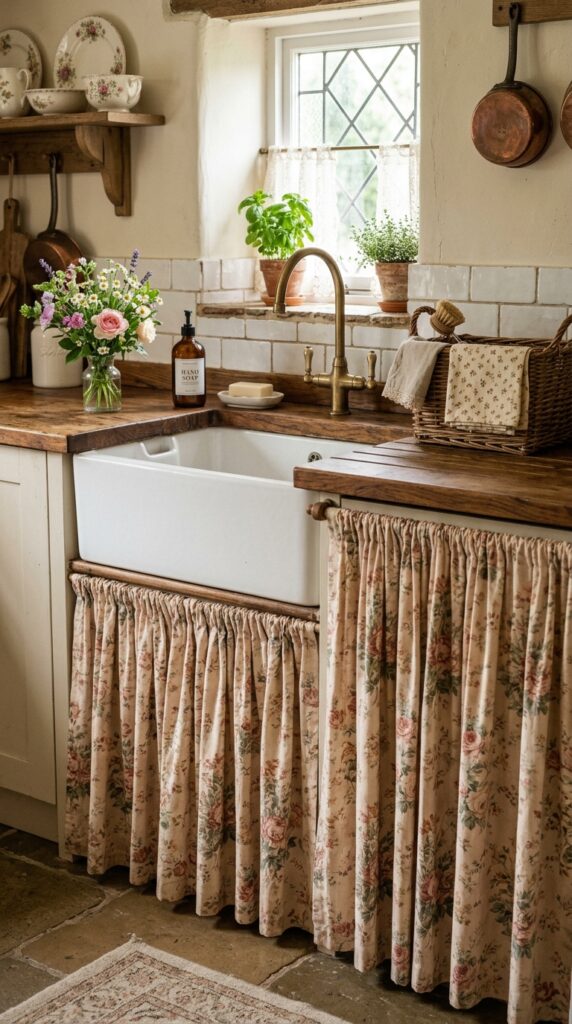
Vibe sentence: A sink skirt adds instant softness, like the kitchen borrowed one charming detail from an old country cottage.
What makes it work: Fabric breaks up the boxiness of lower cabinetry and introduces movement, pattern, and texture all at once. It’s also practical in vintage kitchen inspiration because it hides cleaning supplies while keeping the room from feeling too fitted.
How to achieve it: Use washable linen or cotton in a small floral, ticking stripe, or muted check. Mount it on a simple tension rod or hook-and-loop tape so you can remove it easily for cleaning or seasonal swaps.
Antique Brass Hardware with a Gentle Patina
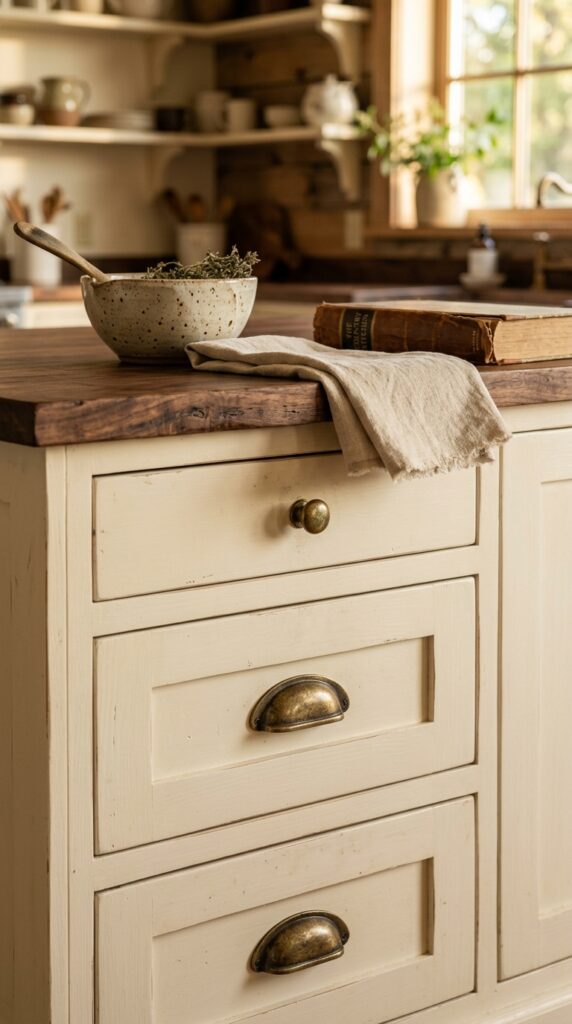
Vibe sentence: Aged brass is the jewelry that makes a humble cottage kitchen feel thoughtfully finished.
What makes it work: Because brass has warmth, it flatters creamy paint, dusty colors, and wood tones instead of fighting them. A softer patina also feels more believable in rustic kitchen design than highly polished metal.
How to achieve it: Mix knobs and cup pulls for a collected look, using pulls on drawers and knobs on doors. Choose unlacquered or antique-finish brass rather than bright gold, especially if your cabinets are painted in cream, sage, or dusty blue.
💡 Hardware is one of the cheapest high-impact upgrades—many beautiful brass sets cost less than a single light fixture.
Floral Cafe Curtains for Filtered Light
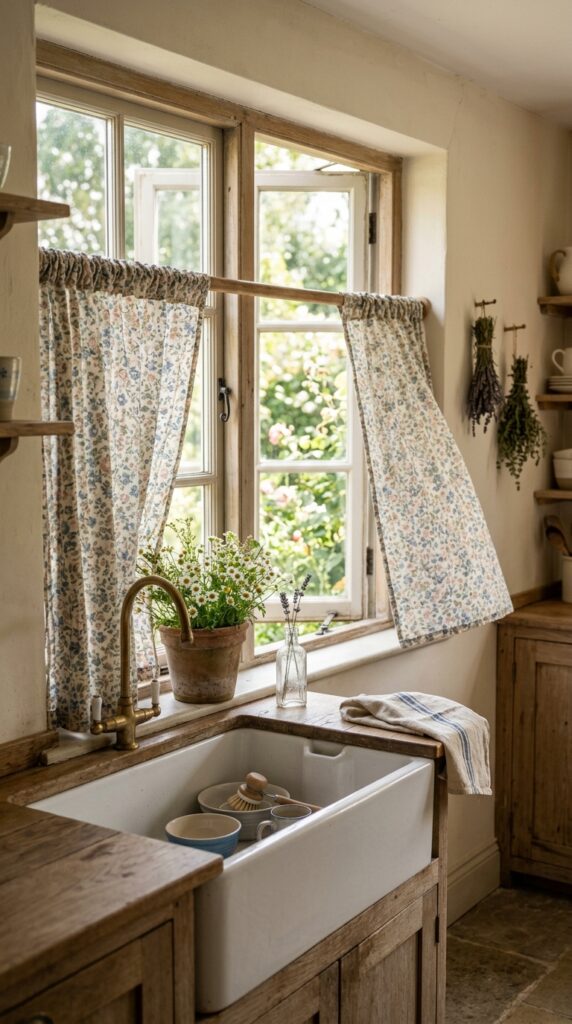
Vibe sentence: Cafe curtains make the light feel softer and the whole room feel more intimate.
What makes it work: The half-height treatment keeps privacy without blocking daylight, which is important in cottagecore kitchen ideas that rely on a bright, lived-in glow. A tiny floral or stripe also adds pattern without taking over the room.
How to achieve it: Use lightweight cotton or linen blends so the fabric hangs casually rather than stiffly. Mount the rod lower on the window and choose colors that echo your cabinetry or wall tone for a more integrated, less fussy look.
A Wooden Plate Rack That Doubles as Decor
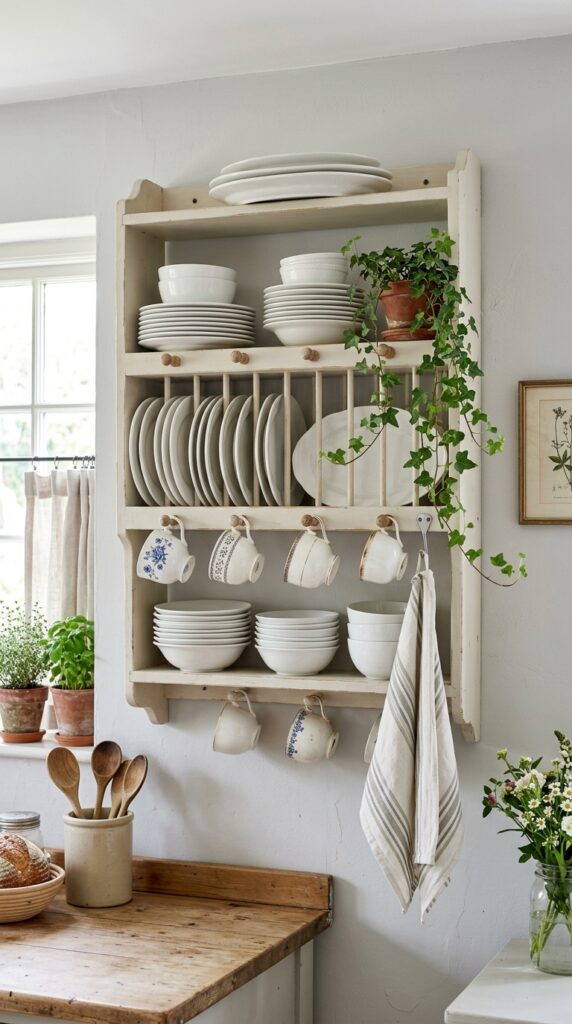
Vibe sentence: A plate rack gives the kitchen that “everything has a place” charm that feels both tidy and nostalgic.
What makes it work: Vertical storage draws the eye upward and turns practical dishes into part of the decor. Because plates repeat shape and color, the display feels calm rather than cluttered when the palette stays simple.
How to achieve it: Install a painted wood rack near the sink or dining area and fill it with matching white or cream plates for visual consistency. Avoid mixing too many patterns here—the beauty comes from repetition and clean spacing.
Cottagecore Kitchen Ideas Love a Freestanding Hutch
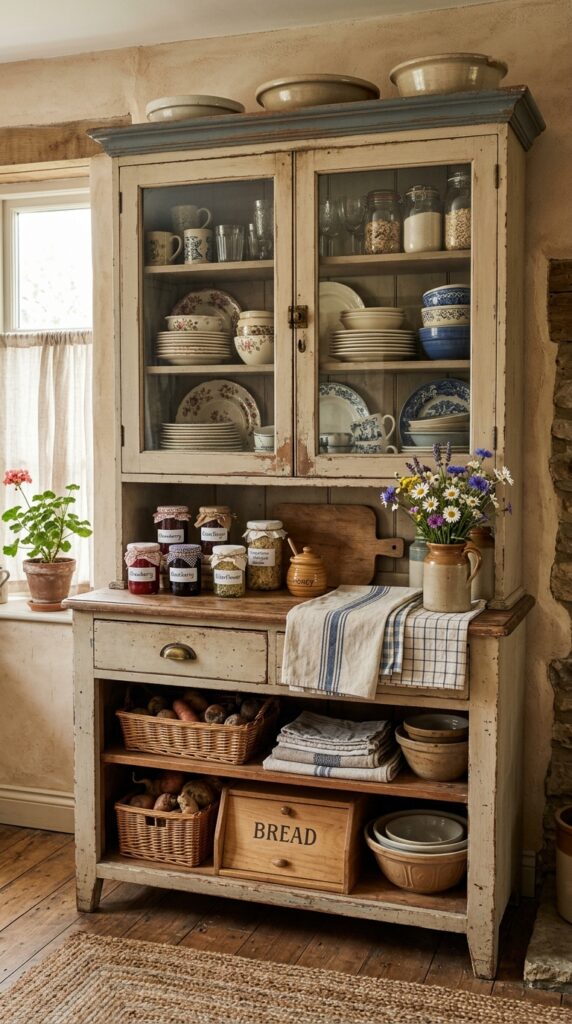
Vibe sentence: A freestanding hutch makes a kitchen feel less built-in and more beautifully gathered over years.
What makes it work: Furniture-style storage is a hallmark of cottagecore kitchen ideas because it introduces variation in shape and scale. It keeps the room from feeling too uniform and adds that evolved, slightly imperfect character that cottage kitchen decor needs.
How to achieve it: Hunt for a secondhand hutch or old bookcase and paint it in cream, duck-egg blue, or sage. Style the top shelves with dishes and crocks, then use baskets below to hide less attractive pantry items.
Checkerboard Floors with Old-World Personality
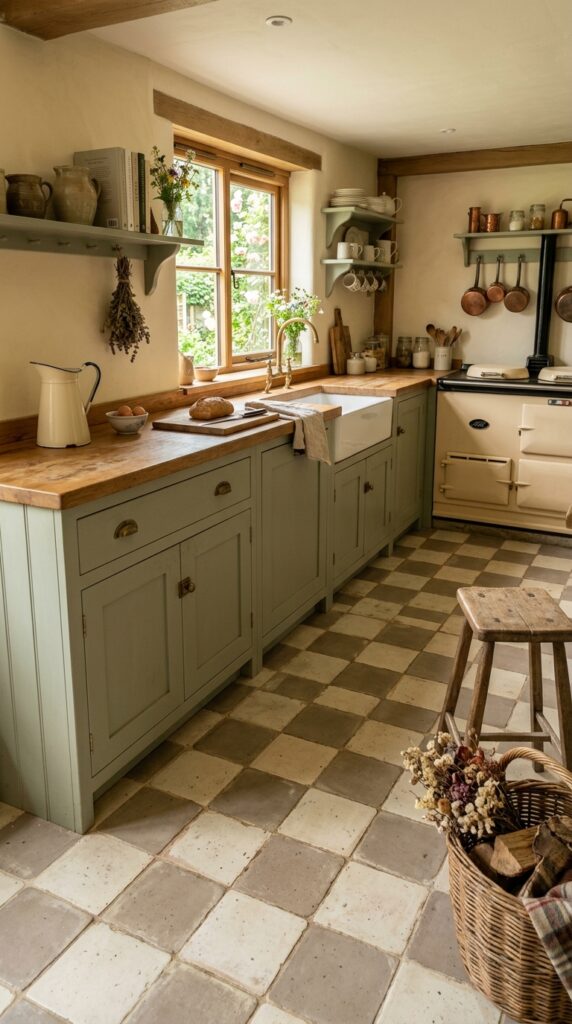
Vibe sentence: Checkerboard floors bring a hint of vintage playfulness without losing the room’s calm, grounded mood.
What makes it work: The pattern gives movement to the lowest plane in the room, which helps simple cabinetry feel more intentional. When the colors are muted instead of stark black and white, the effect reads soft and timeless rather than graphic.
How to achieve it: Choose vinyl tile, painted wood, or matte porcelain in cream and taupe, stone, or faded olive. Keep the rest of the room fairly restrained so the floor feels charming instead of busy.
💡 Peel-and-stick checkerboard tiles can create the look in a rental or quick weekend refresh.
A Butcher Block Island for Natural Warmth
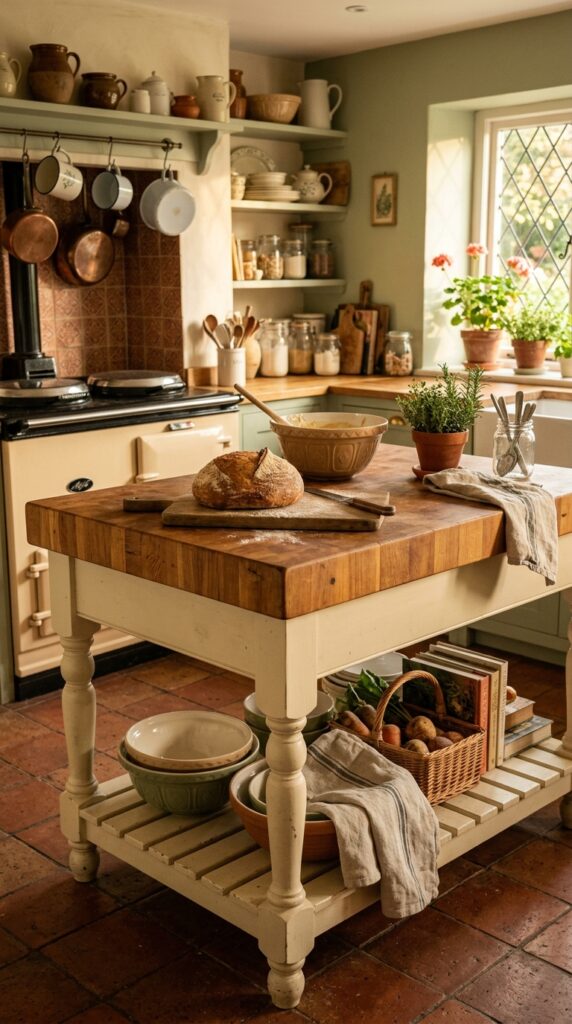
Vibe sentence: A butcher block island adds the kind of warmth that makes the kitchen feel ready for baking, chopping, and lingering.
What makes it work: Wood breaks up painted cabinetry and adds a natural surface with visible grain, which is essential in cozy kitchen aesthetic rooms. The contrast between a painted base and timber top also gives the island a furniture-like presence.
How to achieve it: Choose maple, oak, or walnut for a real wood top, then seal it properly for kitchen use. If a full island isn’t possible, try a narrow prep cart with a butcher block top and open shelf beneath.
Mismatched Vintage Chairs Around a Simple Table
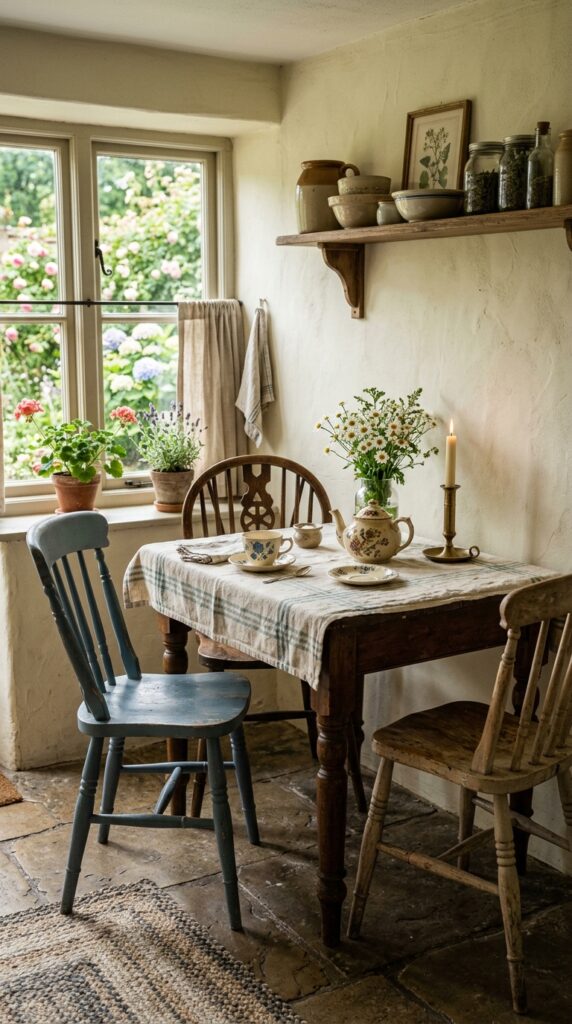
Vibe sentence: A table with mismatched chairs feels casual in the best possible way—collected, useful, and full of personality.
What makes it work: Matching dining sets can feel overly formal, while varied chair shapes create a softer, more layered look. Repetition still matters, so keeping the wood tones in the same warm family helps everything feel cohesive.
How to achieve it: Source spindle-back, ladder-back, or bentwood chairs secondhand and paint only one or two if you need a visual bridge. Add a washable linen tablecloth or seat cushions in faded florals to tie the mix together.
A Faded Vintage Runner Softens Hard Surfaces
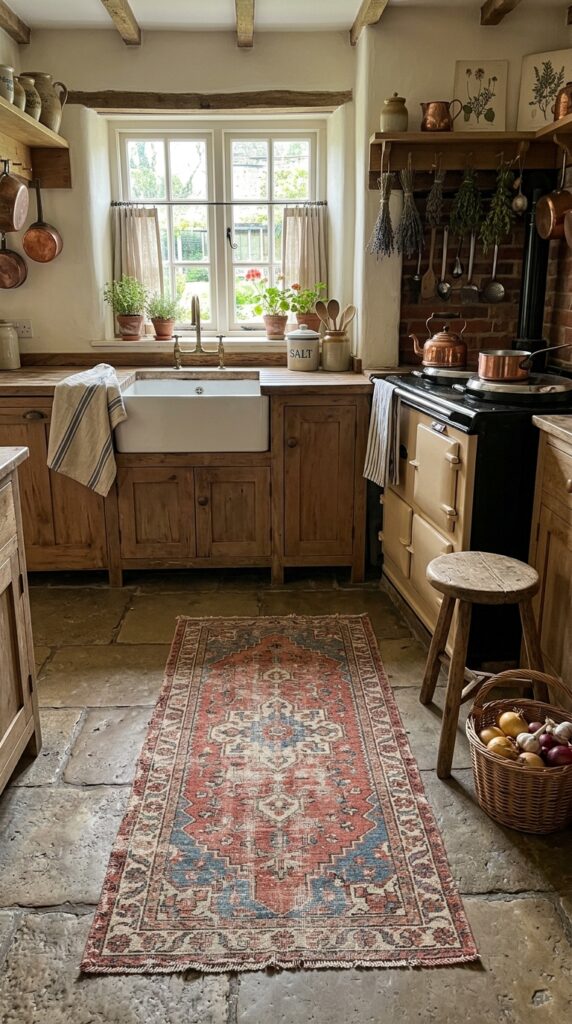
Vibe sentence: A vintage-style runner makes the kitchen feel instantly softer, quieter, and more finished.
What makes it work: Rugs absorb some of the visual hardness of tile, appliances, and cabinet lines. In cottagecore kitchen ideas, that softness matters because it makes the room feel like part workhorse kitchen, part cozy living space.
How to achieve it: Choose a low-pile washable runner in muted tones rather than bright saturated colors. Let the rug introduce a little faded red, dusty blue, or olive—then repeat one of those shades elsewhere so it feels integrated.
A Wall Rail for Copper Utensils and Everyday Tools
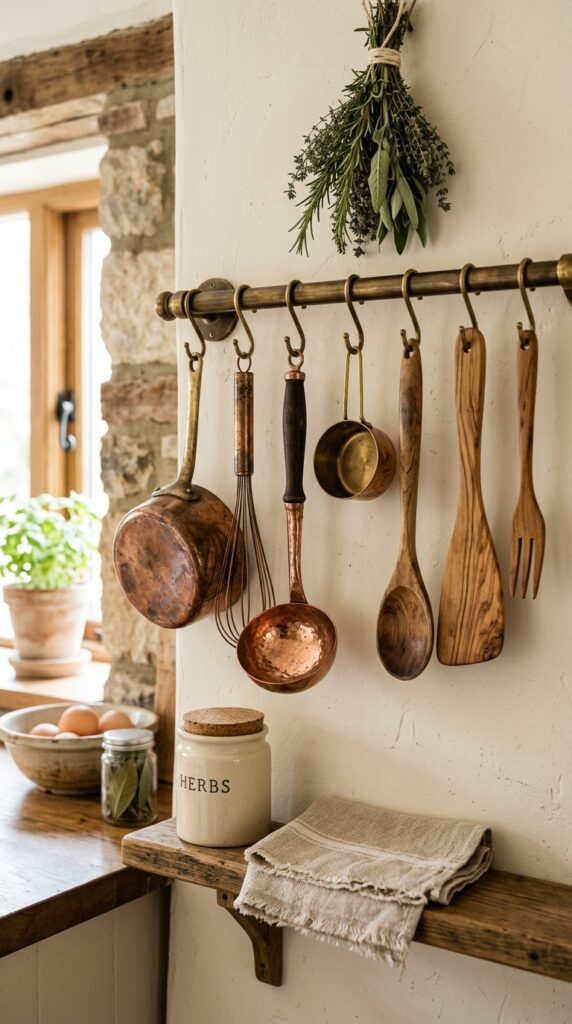
Vibe sentence: Hanging the tools you use most gives the kitchen a hardworking beauty that feels deeply cottagecore.
What makes it work: Functional display is central to country kitchen style because it adds life without extra clutter. The metallic warmth of copper or brass against painted walls also creates a lovely bit of low-key contrast.
How to achieve it: Install a simple rail near the stove or prep area and hang only your prettiest essentials—wood spoons, a ladle, kitchen scissors, and one or two copper pans. Keep the edit tight so it reads curated, not chaotic.
💡 Even a basic rail from the hardware store looks elevated once you add vintage-style S-hooks and a few wood-handled tools.
Creamy Subway or Zellige Tile with Handmade Character

Vibe sentence: Handmade-look tile adds that slightly imperfect surface quality that keeps a cottage kitchen from feeling flat.
What makes it work: Uniform tile can read a little too modern, while softly irregular edges and glaze variations create movement and light play. That handcrafted texture is especially beautiful in vintage kitchen inspiration spaces with simple cabinetry.
How to achieve it: Choose warm white subway tile with uneven edges or creamy zellige in a matte-to-soft-gloss finish. Use light grout close to the tile color so the surface feels gentle and seamless instead of sharply outlined.
A Kitchen Windowsill Turned Herb Garden
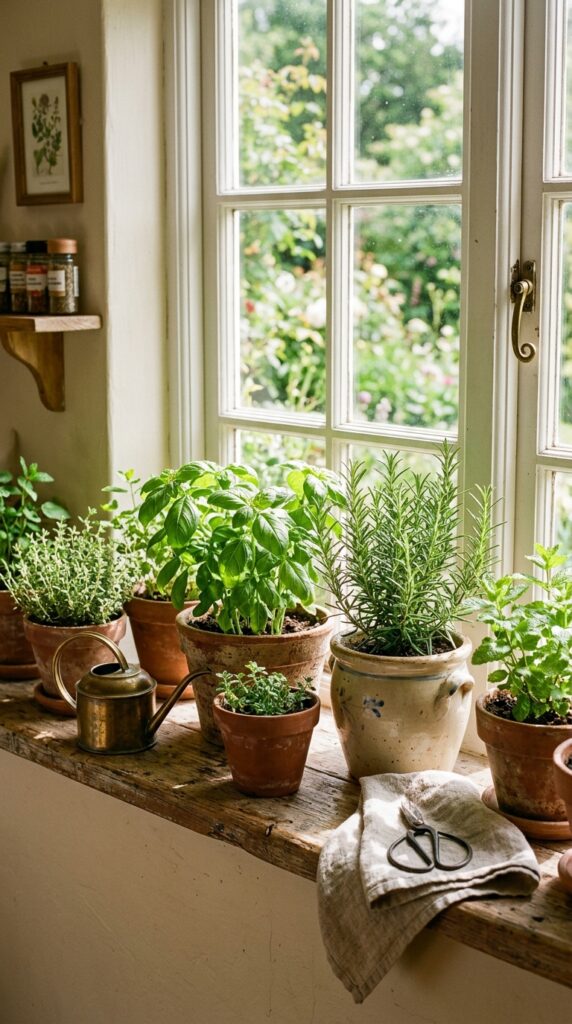
Vibe sentence: Few things make a kitchen feel more alive than herbs catching the morning light by the window.
What makes it work: Greenery is part of what gives cottagecore its connection to nature, and edible plants feel even more authentic than purely decorative ones. The mix of leaf shapes and earthy pots adds color and texture without visual heaviness.
How to achieve it: Use terracotta, aged zinc, or small ceramic pots and keep to just three or four herbs you’ll actually cook with. Basil, thyme, parsley, and rosemary are practical picks if the window gets enough natural light.
Woven Baskets and Crocks for Beautiful Storage
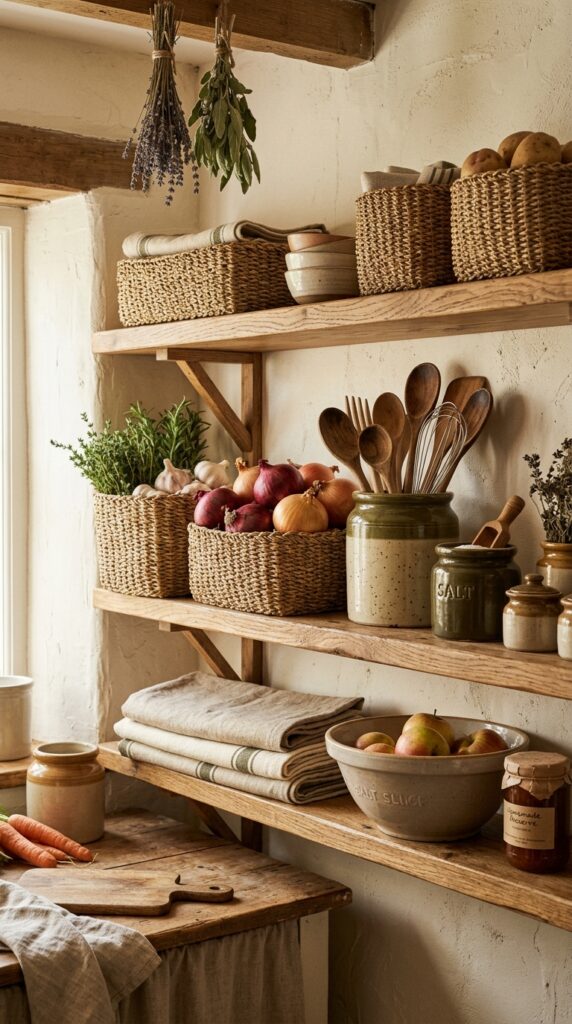
Vibe sentence: Baskets and crocks make storage feel softer, more tactile, and much less utilitarian.
What makes it work: They introduce rounded shapes and natural texture, which helps counter the hard edges of cabinets and appliances. In rustic kitchen design, these storage pieces also support the “used and loved” feeling that plastic bins rarely deliver.
How to achieve it: Use shallow baskets for fruit or linens and stoneware crocks for utensils near the stove. Stick to a restrained palette—natural wicker, cream pottery, brown glaze—so the styling adds warmth without looking busy.
Cottagecore Kitchen Ideas Shine with Schoolhouse Lighting
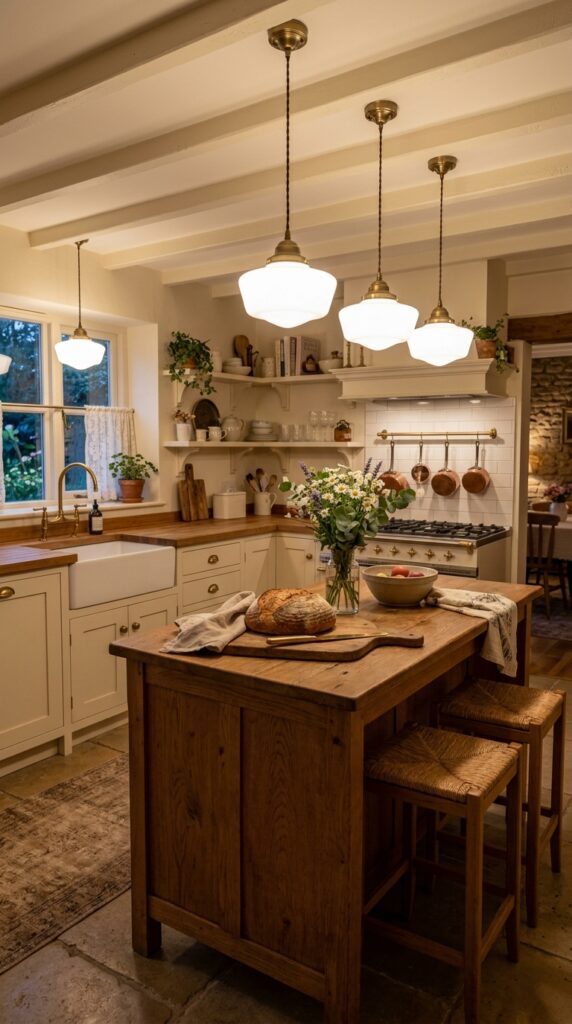
Vibe sentence: The right light fixture makes a cottagecore kitchen feel quietly magical once the sun goes down.
What makes it work: Schoolhouse pendants and milk-glass fixtures have historical charm, but their simple shapes still feel clean enough for modern homes. They cast a soft, diffused light that flatters painted cabinets, wood grain, and stone counters.
How to achieve it: Look for milk glass, aged brass, or ceramic fixtures rather than exposed industrial bulbs. Hang pendants low enough to create intimacy over an island or table, but keep sightlines open if your kitchen is small.
Exposed Wood Beams for Old-Cottage Depth
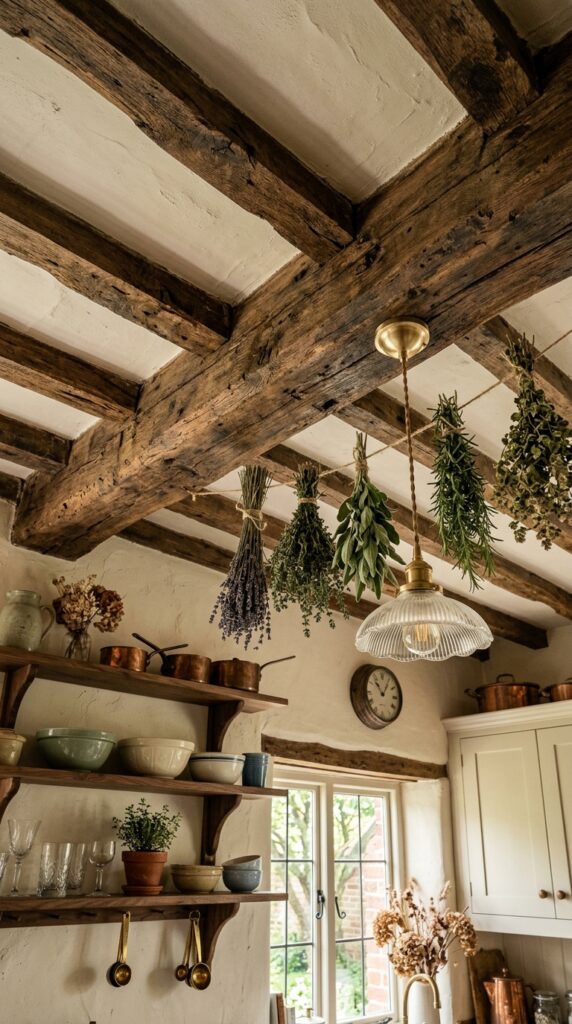
Vibe sentence: Ceiling beams make the whole kitchen feel rooted, as if the house has stories to tell.
What makes it work: They draw the eye upward and give even a basic room more architectural substance. Because beams bring in strong organic texture, they pair especially well with lighter cabinets and softer textiles that balance their visual weight.
How to achieve it: If your home doesn’t have original beams, use high-quality faux beams in oak, chestnut, or weathered pine tones. Keep the finish matte and slightly imperfect so they feel believable within an English cottage kitchen scheme.
💡 One pair of faux beams over an island can create the mood without the cost of a full-ceiling treatment.
A Painted Furniture-Style Island with Turned Legs
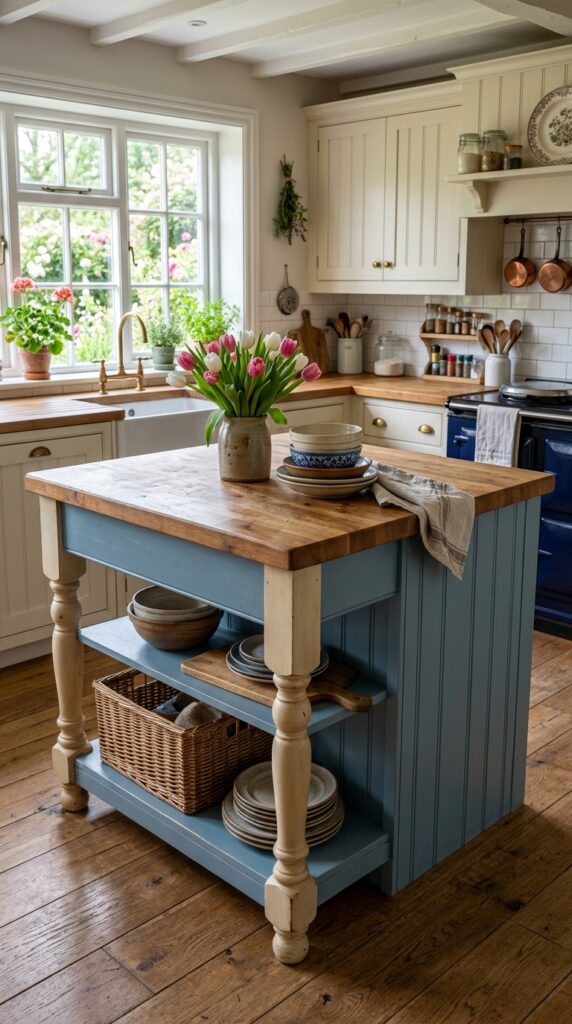
Vibe sentence: A furniture-style island feels less like built cabinetry and more like a beloved worktable at the heart of the home.
What makes it work: Turned legs, open shelves, and a contrasting paint color keep the island from feeling blocky. That furniture quality is key in cottage kitchen decor because it introduces charm through silhouette, not just accessories.
How to achieve it: Choose a muted island color like dusty blue, olive, or soft gray-green and top it with butcher block or honed stone. Add baskets or folded linens on the open shelf so the practical storage still looks soft and intentional.
Glass-Front Cabinets to Break Up Solid Doors
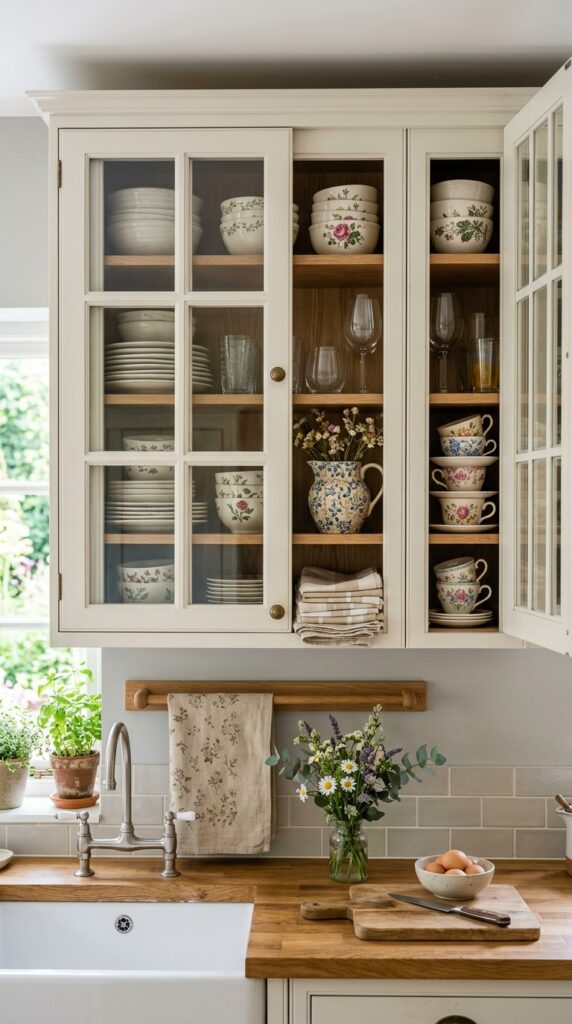
Vibe sentence: Glass-front cabinets add openness while still giving you the polished feel of full upper storage.
What makes it work: They visually lighten a wall of cabinetry and let your prettiest everyday dishes become part of the design. Because the contents are partially visible, they create depth and texture without the exposure of fully open shelves.
How to achieve it: Retrofit one or two cabinet fronts with divided glass inserts instead of changing everything. Display white dishes, clear glasses, and a few floral cups only—too many colors inside will make the look feel cluttered.
Layered Linen Tea Towels and Textiles
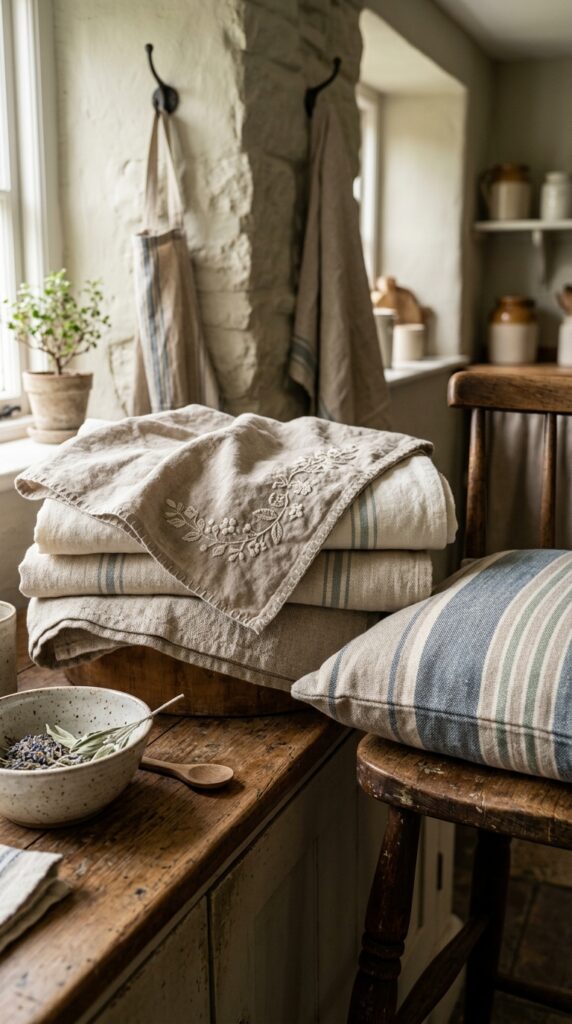
Vibe sentence: Textiles are what make a kitchen feel less like a workspace and more like a room you want to linger in.
What makes it work: Linen and cotton add softness, absorb sound visually, and make hard finishes feel more approachable. In a cozy kitchen aesthetic, even a striped towel or ruffled seat cushion can shift the mood because texture layering matters as much as color.
How to achieve it: Choose washed linen towels in flax, cream, faded blue, or muted stripe patterns. Repeat the same family of fabric in a stool cushion, cafe curtain, or sink skirt so the room feels quietly connected.
A Bridge Faucet with Vintage Utility
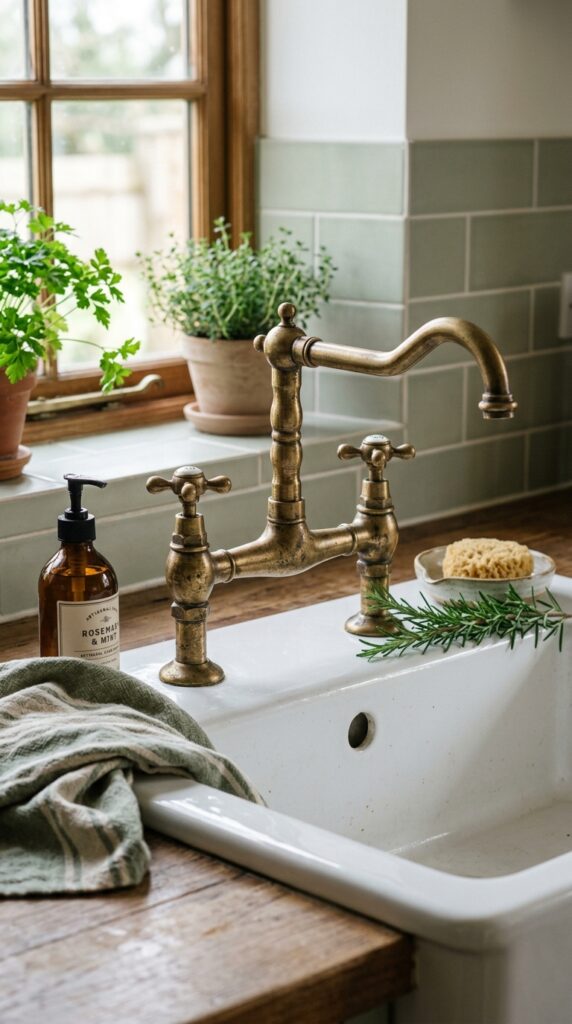
Vibe sentence: A bridge faucet gives the sink area that subtle old-world detail that makes the whole room feel more thoughtfully designed.
What makes it work: The wider shape and visible connection between handles feel more traditional than a standard single-hole faucet. It introduces just enough vintage structure to elevate the sink wall without needing a full renovation.
How to achieve it: Choose an aged brass, pewter, or brushed nickel bridge faucet with simple cross handles if you want true cottage appeal. This works especially well with apron-front sinks, beadboard, and handmade-look tile.
💡 If a faucet swap is all you can do right now, this is one of the fastest ways to change the character of the room.
Botanical Wallpaper in a Breakfast Nook
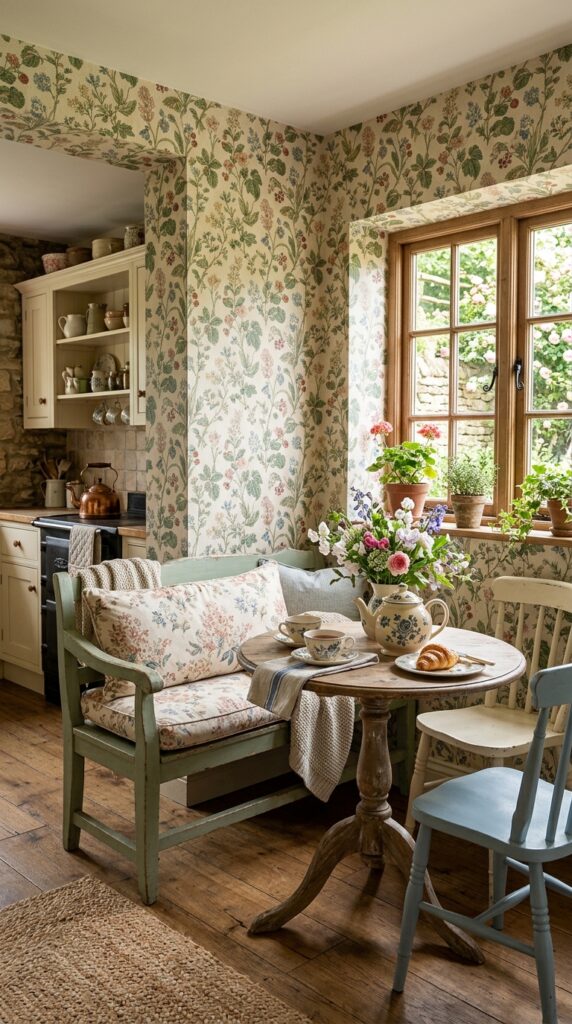
Vibe sentence: A little wallpaper goes a long way in making the kitchen feel intimate, layered, and wonderfully personal.
What makes it work: Pattern creates visual depth and gives the eye a place to rest, especially in corners that might otherwise feel plain. Botanical prints suit cottagecore kitchen ideas because they echo the style’s love of gardens, foraging, and natural beauty.
How to achieve it: Use wallpaper in a breakfast nook, pantry wall, or the inside of a glass-front cabinet rather than coating the entire kitchen. Choose small-scale florals or trailing botanical prints in muted colors so the look stays soft.
Displayed Pottery and Ironstone for Collected Charm

Vibe sentence: Pottery on display makes the kitchen feel grounded and quietly artistic without trying too hard.
What makes it work: Handmade or vintage ceramics bring irregular shapes, soft glazes, and subtle imperfections that add soul to a room. Those qualities are especially important in vintage kitchen inspiration, where beauty comes from character rather than high shine.
How to achieve it: Group pieces by color family—cream, stone, brown glaze, muted green—so the display feels calm. Mix stacked bowls, pitchers, and crocks in odd numbers, leaving some empty space around them for a lighter, more curated result.
Rustic Bread Boards Leaned Against the Backsplash
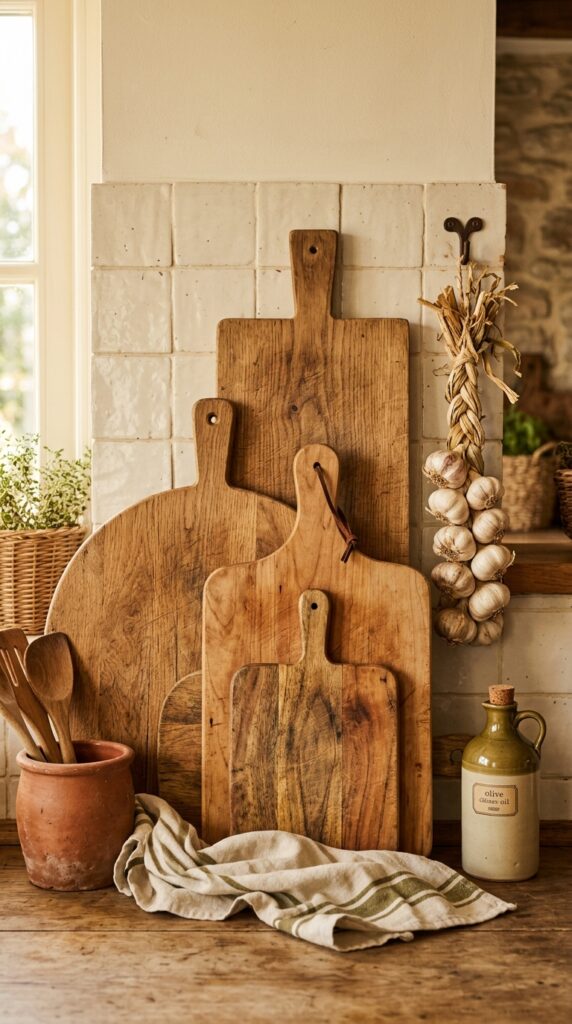
Vibe sentence: Leaned cutting boards add that casual “always in use” warmth that makes a cottage kitchen feel alive.
What makes it work: The varied tones and silhouettes create an easy layered look without taking up much visual space. They also bring in a practical material—wood—that softens tile, stone, and painted finishes beautifully.
How to achieve it: Use two or three boards in different shapes and heights, preferably in oak, walnut, or olive wood. Keep them near the prep area and mix functional everyday boards with one older, more decorative breadboard for character.
A Cozy Corner Banquette with Cushions and Storage
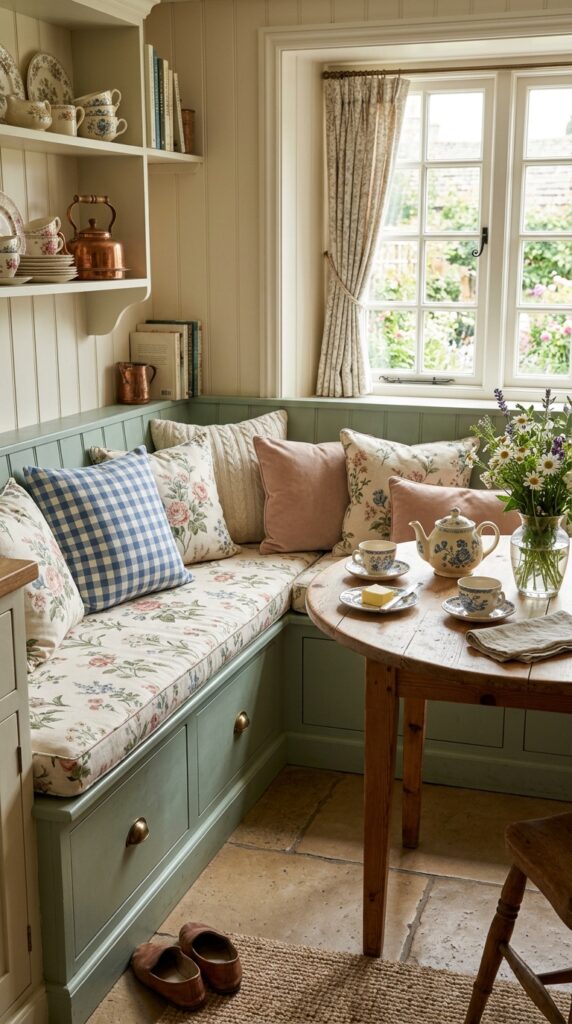
Vibe sentence: A banquette turns even a small kitchen corner into a place for slow breakfasts and long conversations.
What makes it work: Built-in seating uses awkward corners efficiently while adding softness through cushions and textiles. It’s especially good in small cottage kitchen layouts because it creates a cozy destination without needing a full dining room.
How to achieve it: Paint the bench in the same color as your trim or cabinets, then add washable cushions in ticking stripe, floral, or muted checks. If possible, build drawers below for hidden storage so the nook stays as practical as it is charming.
A Moody Dark Cottagecore Palette for Modern Depth
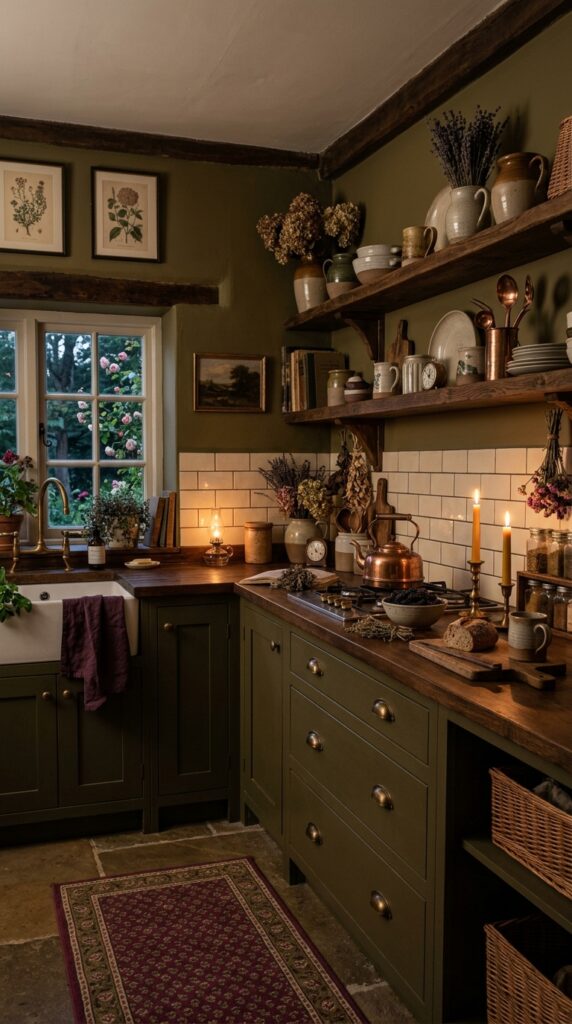
Vibe sentence: Dark cottagecore feels like the evening version of the style—richer, moodier, and incredibly cocooning.
What makes it work: Deep olive, blackberry, or soot-toned cabinetry creates depth, while brass and wood keep the look from feeling cold. This variation works best when balanced with lighter counters, open shelves, or creamy walls so the room still feels layered rather than heavy.
How to achieve it: Try dark lower cabinets first if you’re nervous about a full moody palette. Pair them with warm marble, aged brass, and candlelit styling to keep the overall look romantic instead of austere.
💡 Test a dark paint on just the island or pantry cabinet before committing to the entire kitchen.
How to Start Your Cottagecore Transformation
The easiest place to begin is with one hero change that sets the tone for everything else. In most kitchens, that means paint, hardware, or lighting. Warm white cabinets, sage lower cupboards, antique brass pulls, or a schoolhouse pendant can immediately shift the room toward cottagecore without tearing everything out.
The biggest mistake is trying to add every “cute” element at once. Cottagecore kitchen ideas work best when the room still feels useful and breathable, so avoid overfilling shelves, mixing too many florals, or layering in too many colors with equal intensity. A calm base always makes the collected details look better.
If you’re working on a budget, start with textiles, secondhand furniture, and visible styling. A washable vintage-look runner, open wood shelf, basket storage, or thrifted hutch can give you major cottage kitchen decor impact for far less than new cabinetry. Hardware swaps and cafe curtains are also high-return updates.
Most importantly, let the room evolve. The most convincing English cottage kitchen spaces rarely look finished in a weekend. They feel gathered over time, which means your transformation can be gradual, practical, and still incredibly beautiful.
Frequently Asked Questions
What colors work best in cottagecore kitchen ideas?
The best colors are usually soft, muted, and a little warm rather than icy or high-contrast. Warm white, cream, sage green, dusty blue, butter yellow, mushroom, and muted blush all work beautifully in cottage kitchen decor. If your kitchen gets limited natural light, lean into creamy whites and soft greens instead of dark grays. For a moodier look, try olive or blackberry on one cabinet section and balance it with lighter counters and wood.
How do I make a small kitchen look cottagecore without clutter?
In a small cottage kitchen, focus on texture and tone more than quantity. Start with one or two open shelves, a soft runner, a cafe curtain, and a few useful display pieces like ironstone dishes or a crock of wooden utensils. Keep your palette tight—maybe cream, oak, and sage—so the room feels layered but not busy. Closed storage below and curated display above is usually the sweet spot.
What’s the difference between cottagecore and farmhouse kitchen style?
Farmhouse kitchen style is usually simpler, more utilitarian, and often a bit cleaner-lined, while cottagecore feels softer, more romantic, and more layered with florals, textiles, and vintage details. Both styles love natural materials, apron-front sinks, and old-fashioned charm, but cottagecore tends to lean more whimsical and garden-inspired. Better Homes & Gardens highlights cottage kitchens through details like pastel cabinets, beaded board, and furniture-style pieces, while Architectural Digest frames cottagecore more broadly as nostalgic, nature-led, and comfort-focused. Better Homes & Gardens Architectural Digest
Is it expensive to create a cottagecore kitchen?
It doesn’t have to be. Some of the best cottagecore kitchen ideas are budget-friendly because the style actually welcomes thrifted furniture, vintage finds, open shelving, and layered textiles. You can spend under $150 on updates like hardware, curtains, a runner, and a rail for utensils, then save larger investments—like a fireclay sink or new counters—for later. The style looks better when it feels collected, not overly new.
What materials make a kitchen feel more cottagecore?
Look for materials with softness, grain, and a little imperfection. Beadboard, butcher block, marble, honed granite, fireclay, linen, wicker, unlacquered brass, and handmade-look tile all add that tactile warmth associated with cottagecore kitchen ideas. Better Homes & Gardens specifically points to elements like beaded board, marble, open shelving, apron-front sinks, and painted wood as classic cottage kitchen ingredients. Better Homes & Gardens
Ready to Create Your Dream Cottagecore Space?
These 29 cottagecore kitchen ideas prove that charm doesn’t come from one perfect renovation—it comes from layered choices that make a kitchen feel warm, useful, and deeply personal. Save or pin the ideas that speak to you most, then start with one change you can actually make this week. Maybe it’s a sage cabinet color, a vintage runner, or a simple brass hardware swap. Small updates add up fast when the mood is this strong. Your dream cottagecore kitchen can begin with something as simple as a curtain, a shelf, or a bowl of herbs in the window.