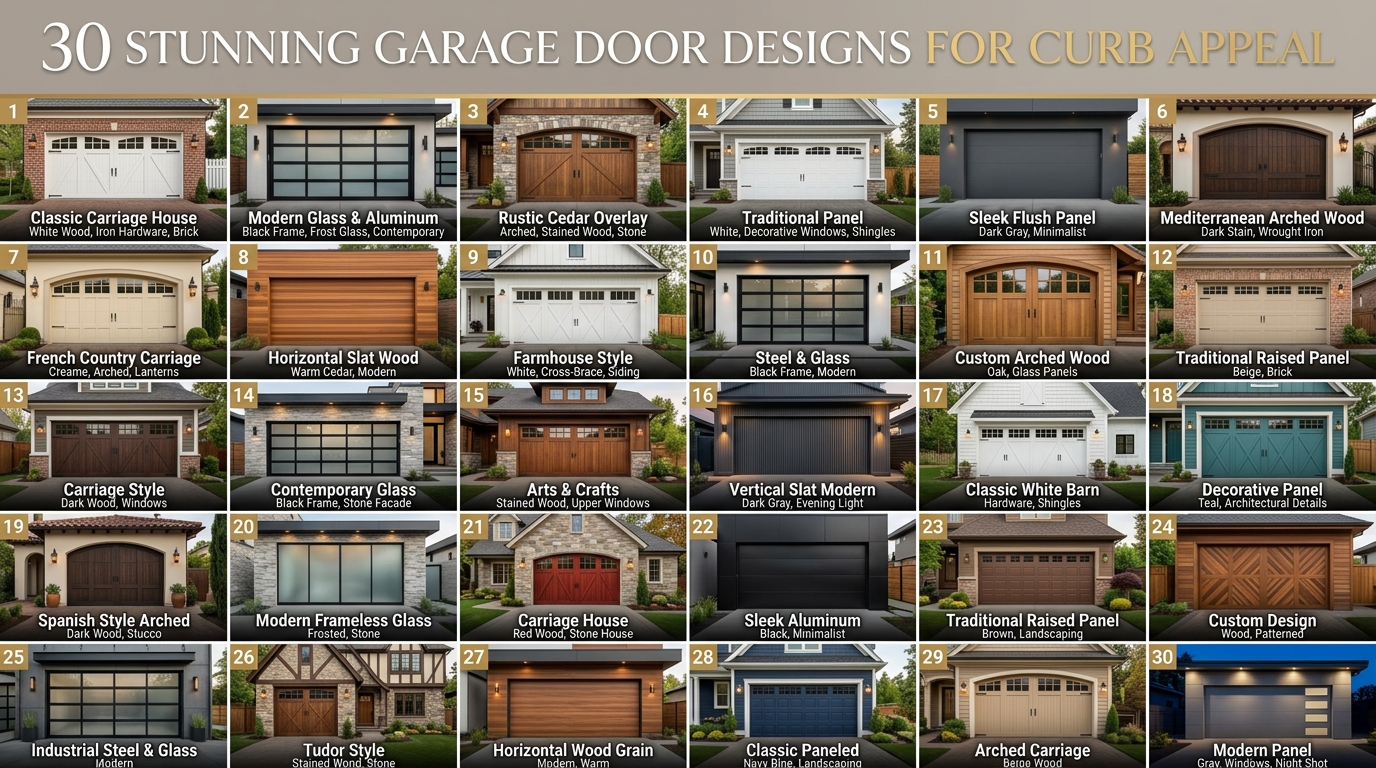
There’s something about a beautiful garage door that can make an entire house feel more finished, more custom, and far more expensive than it actually is. Because it often takes up a huge portion of the front elevation, the right design has real power to shape curb appeal from the street. The best garage door designs are not just pretty—they balance proportion, material, color, and architectural style in a way that instantly elevates the exterior. Below, you’ll find 30 real, actionable ideas to help you create a home that feels polished the moment you pull into the driveway. Here are 30 ideas worth saving.
Why Curb Appeal Works So Well
Curb appeal works so well because it is really about visual harmony. A garage door is often one of the largest surfaces on the front of a home, so when its color, panel pattern, and material relate to the siding, trim, and lighting, the whole exterior feels intentional. Even simple homes look more refined when those proportions are handled well.
The most timeless garage door designs use classic materials and restrained contrast. Think cedar-look planks, painted steel in warm white or charcoal, slim black-framed glass, matte black hardware, and carriage-style detailing. Texture matters too. Wood grain, recessed panels, frosted glass, and iron strap hinges all add dimension that flat builder-grade doors usually lack.
This look is having a moment because homeowners want practical upgrades that make a visible difference. Pinterest is full of modern garage doors, carriage house garage doors, and exterior makeover ideas because these changes photograph beautifully and deliver instant value. A garage door update can shift the entire front elevation without a full renovation.
And you do not need a sprawling home to get the effect. Even a small driveway or compact facade can look more elevated with a better paint color, smarter window placement, or upgraded decorative hardware. The trick is choosing a design that suits the architecture already there.
Modern Glass Garage Door Designs with Black Frames
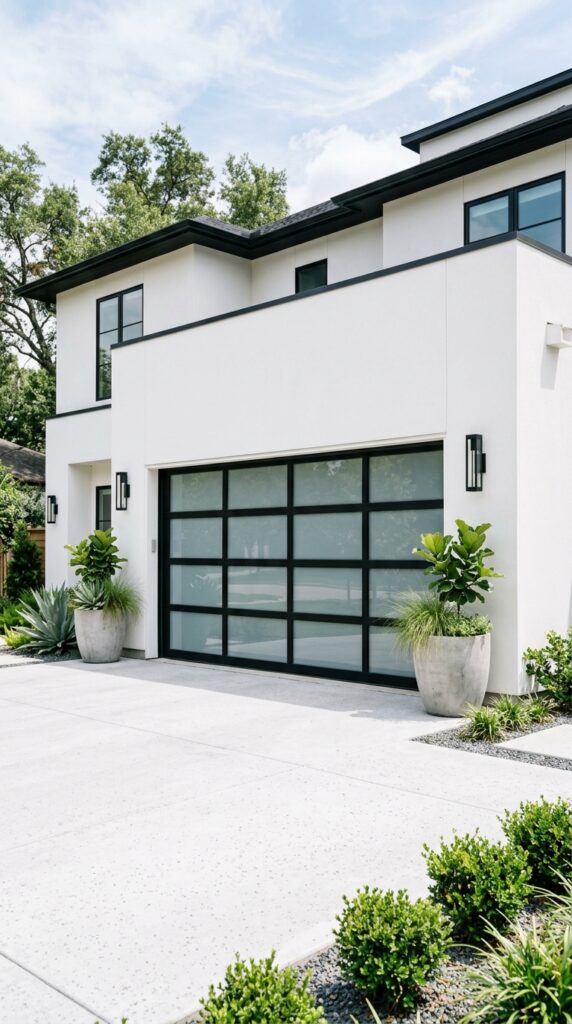
Vibe: This look feels crisp, architectural, and quietly high-end.
What makes it work: The black grid adds strong definition, while glass breaks up what could otherwise feel like a heavy wall. The contrast looks especially sharp on white stucco, painted brick, or warm wood exteriors.
How to achieve it: Choose insulated glass panels if the garage faces strong sun or street traffic. Pair the frame finish with black exterior sconces and window trim so the whole facade feels connected.
💡 Even one row of black-framed windows can echo this look on a tighter budget.
Warm Cedar Slat Garage Door
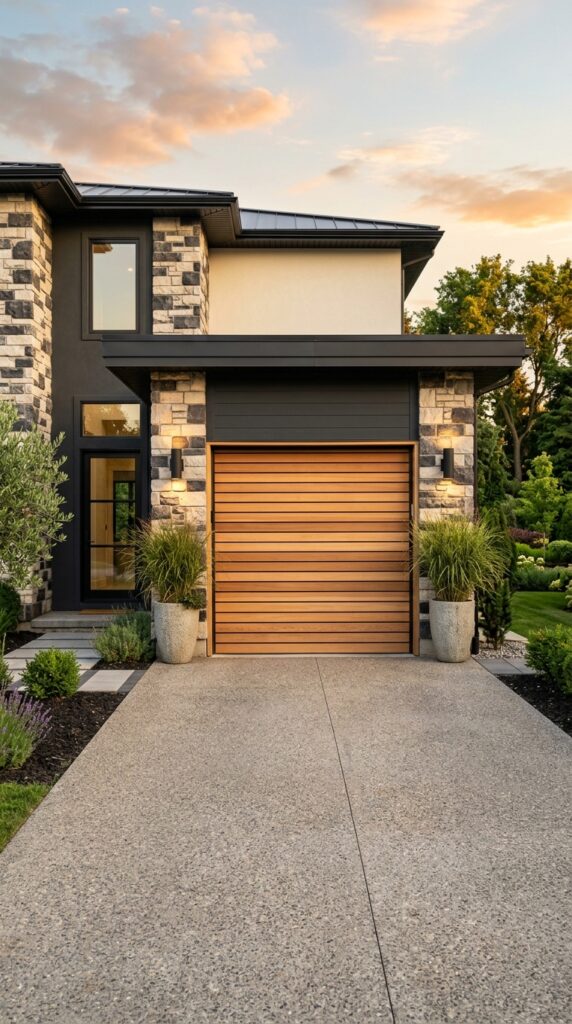
Vibe: It feels warm and tailored, with that modern-organic balance so many homes need.
What makes it work: Horizontal slats visually widen the facade and add beautiful natural texture. Cedar also softens modern lines, especially when paired with charcoal trim, black windows, or limestone.
How to achieve it: Use a medium brown stain rather than an orange-toned finish for a more current look. If real wood maintenance is a concern, choose a faux-cedar composite door with visible grain.
Carriage House Garage Door Designs with X-Trim
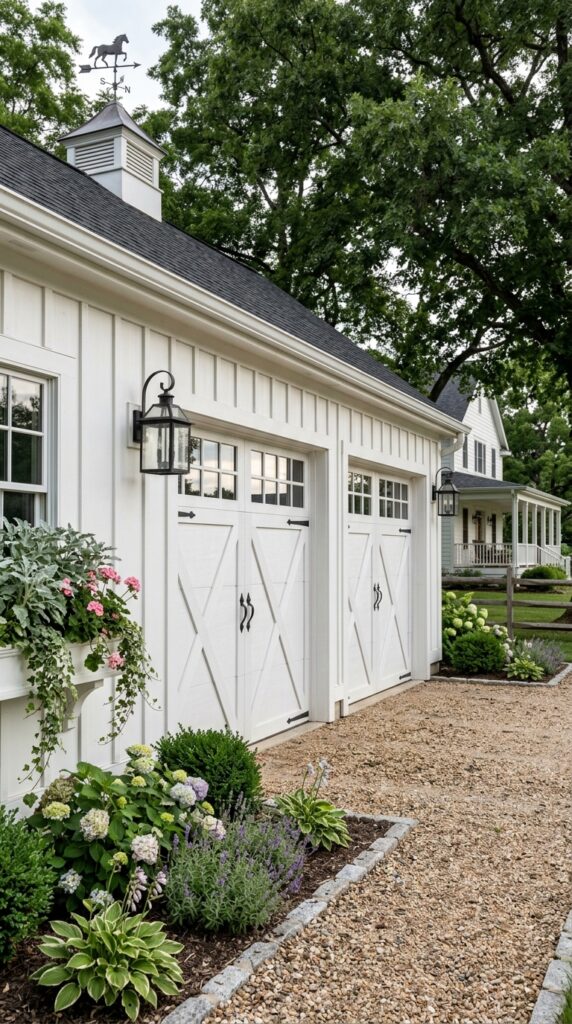
Vibe: This style feels friendly, classic, and instantly welcoming.
What makes it work: The X-trim adds rhythm and shadow, which gives a flat door more character. Black iron-style hinges create contrast and help the design feel rooted in farmhouse and cottage architecture.
How to achieve it: Keep the trim scale proportional to the door size so it reads custom, not busy. Warm white works better than stark bright white on most siding and painted brick homes.
Soft Greige Shaker Panel Door
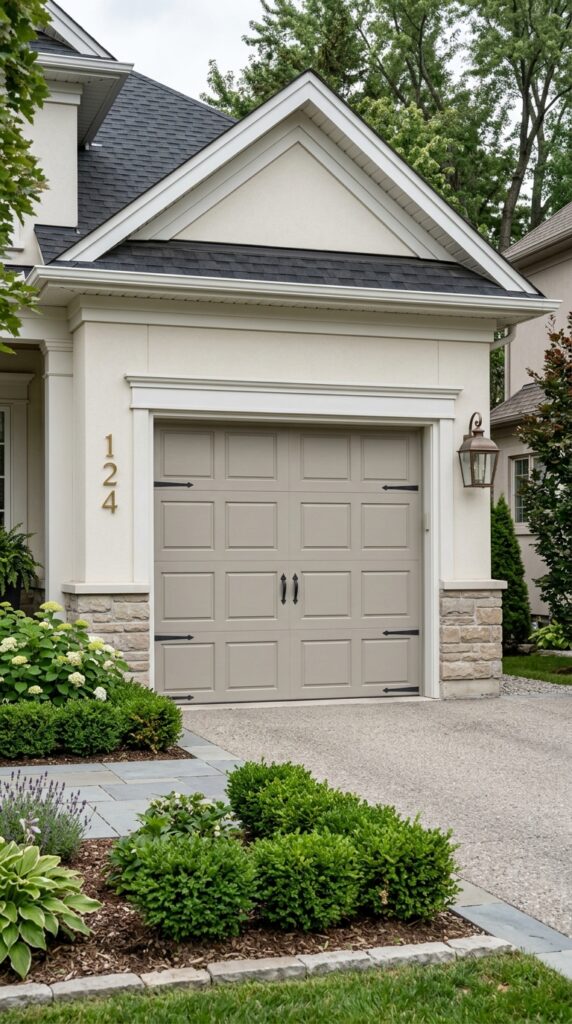
Vibe: It feels polished and understated, like the kind of detail-rich exterior that ages well.
What makes it work: Greige softens the door so it blends with the facade instead of dominating it. Shaker-style recessed panels add depth through shadow lines without pushing the home too traditional.
How to achieve it: Try a warm greige with beige undertones rather than cool gray. This works especially well with stone, taupe siding, or creamy trim.
Arched Top Window Inserts
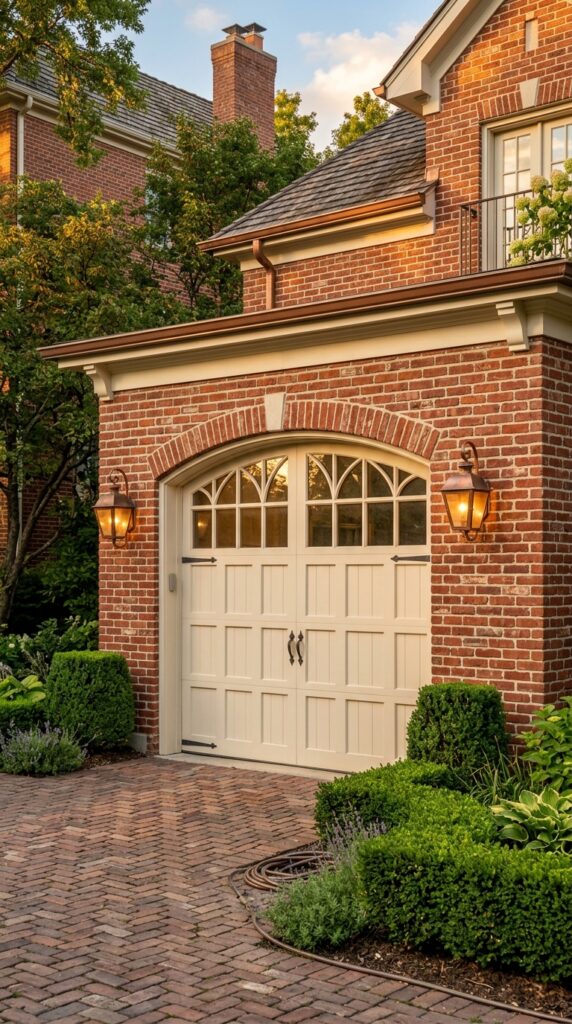
Vibe: This look feels graceful and slightly old-world in the best way.
What makes it work: Arched windows echo traditional rooflines and entry details, making the whole exterior feel more cohesive. They also add light without losing the classic paneled-door structure.
How to achieve it: Use this style only if your home already has curved architectural elements like arched windows or a rounded entry. Matching those lines is what keeps the design feeling intentional.
💡 Window overlays can mimic an arched look without replacing the entire door.
Minimal Garage Door Designs with Vertical Planks
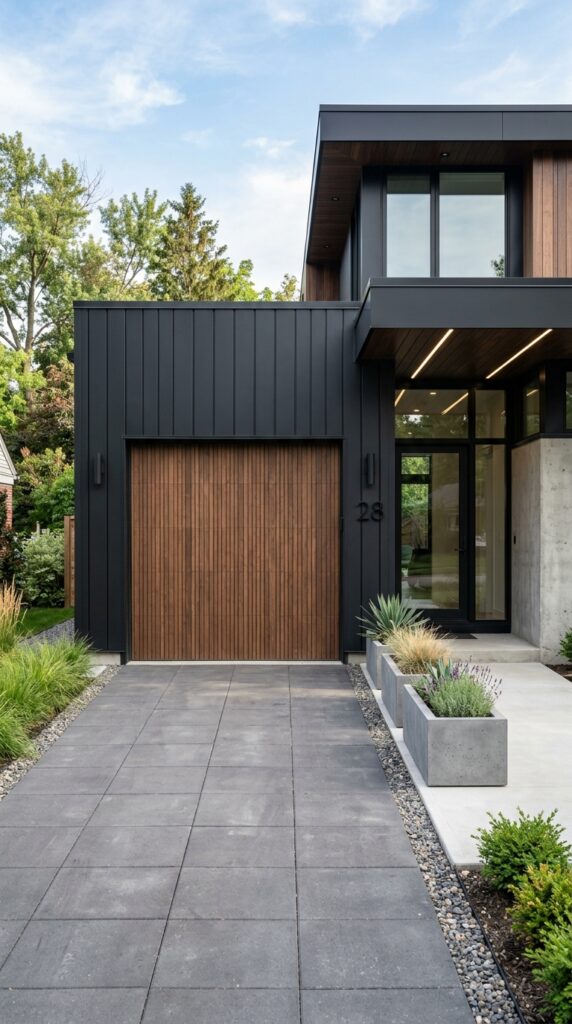
Vibe: It feels sleek and architectural, with just enough texture to stay warm.
What makes it work: Vertical planks draw the eye upward, which can make a lower garage elevation feel taller. The flush profile also suits contemporary homes better than raised panels or heavy trim.
How to achieve it: Choose narrow reveals for a cleaner look and keep surrounding trim simple. This style pairs especially well with modern siding, stucco, or board-formed concrete.
White Garage Door with Matte Black Hardware
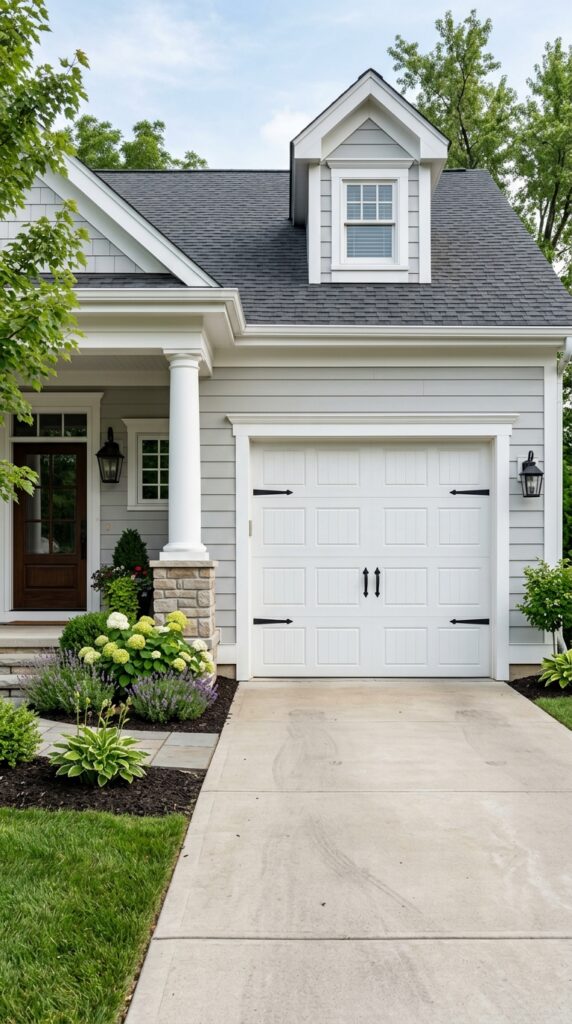
Vibe: This feels clean, familiar, and much more custom than builder-basic white.
What makes it work: Black hardware creates crisp contrast and adds visual weight at eye level. That small layer of detail helps a plain white door relate to black windows, lanterns, or shutters elsewhere on the facade.
How to achieve it: Use decorative magnetic hardware only if your budget is tight, but choose a matte finish instead of glossy black. Keep the panel style simple so the hardware stays the star.
💡 This is one of the fastest weekend upgrades for instant curb appeal.
Two-Tone Wood and Charcoal Combo
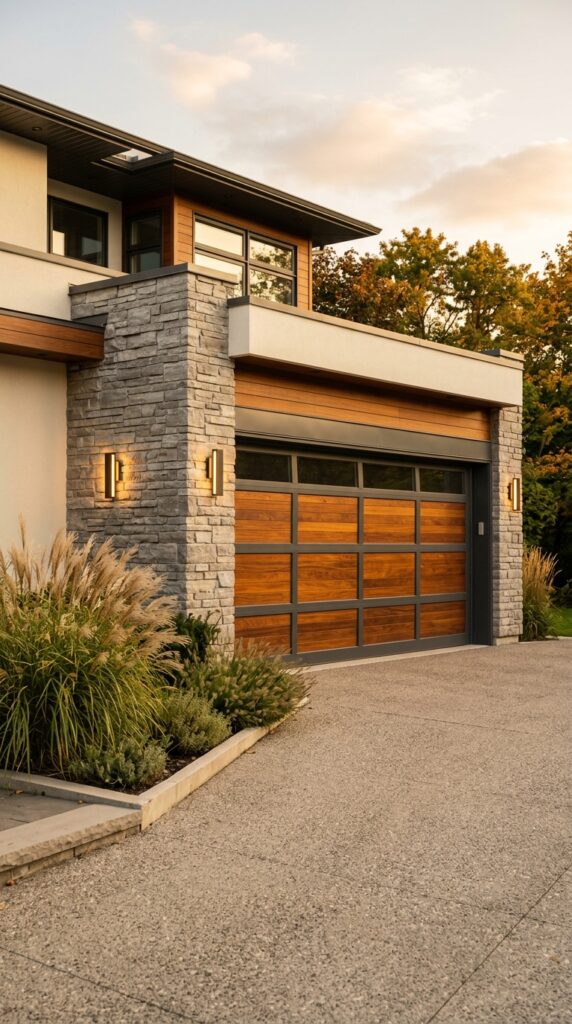
Vibe: It feels bold and custom, like a designer exterior without unnecessary fuss.
What makes it work: The darker frame outlines the door and makes the wood center panels stand out. That contrast adds depth, which is especially useful on wide garage fronts that can otherwise read flat.
How to achieve it: Repeat the charcoal tone in your front door, trim, or roof accents. A medium walnut stain usually looks more balanced than very dark espresso on sunlit facades.
Frosted Glass for Privacy and Light
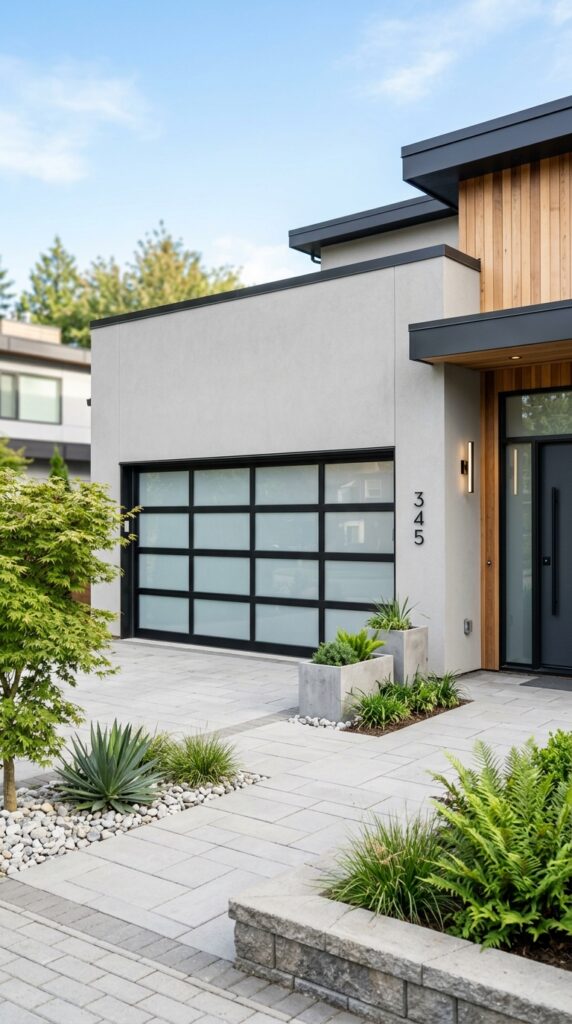
Vibe: This style feels bright and modern without exposing the garage interior.
What makes it work: Frosted glass lets daylight in while hiding clutter, shelving, and stored items. That balance of function and softness is why it works so well on urban and contemporary homes.
How to achieve it: Choose insulated frosted panels with aluminum framing in black, bronze, or silver depending on your exterior palette. This design looks best when the rest of the facade is simple and uncluttered.
Flush Steel Door with Hidden Handle
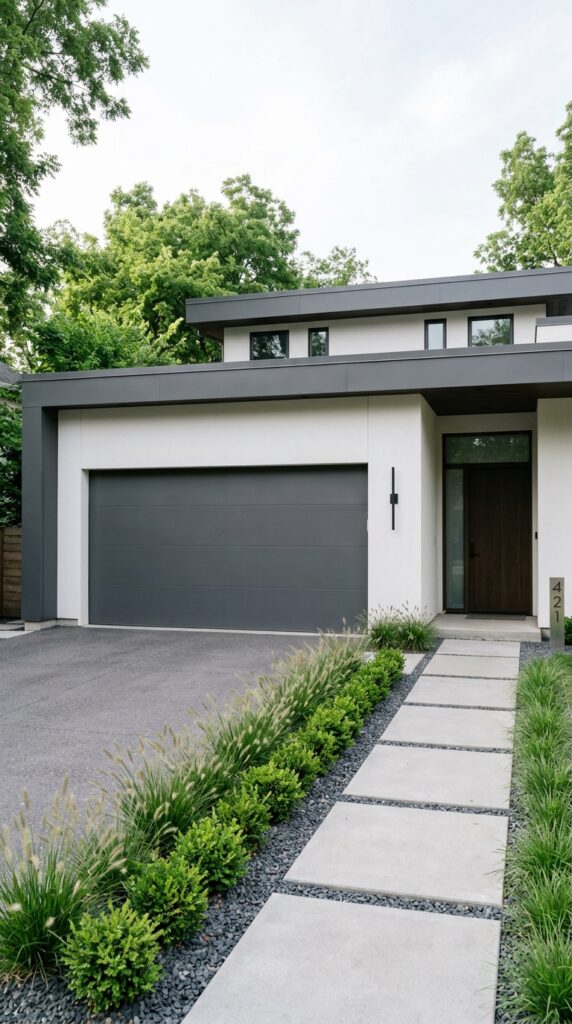
Vibe: It feels calm, precise, and almost gallery-like from the street.
What makes it work: A flush door removes visual noise, which is exactly what minimalist architecture needs. Without handles or decorative straps, the eye notices scale, shadow lines, and material quality instead.
How to achieve it: Go with a satin charcoal or soft black finish to highlight the clean surface. Add strong landscape lighting nearby so the door does not disappear completely at night.
Reclaimed Wood Look Composite Door
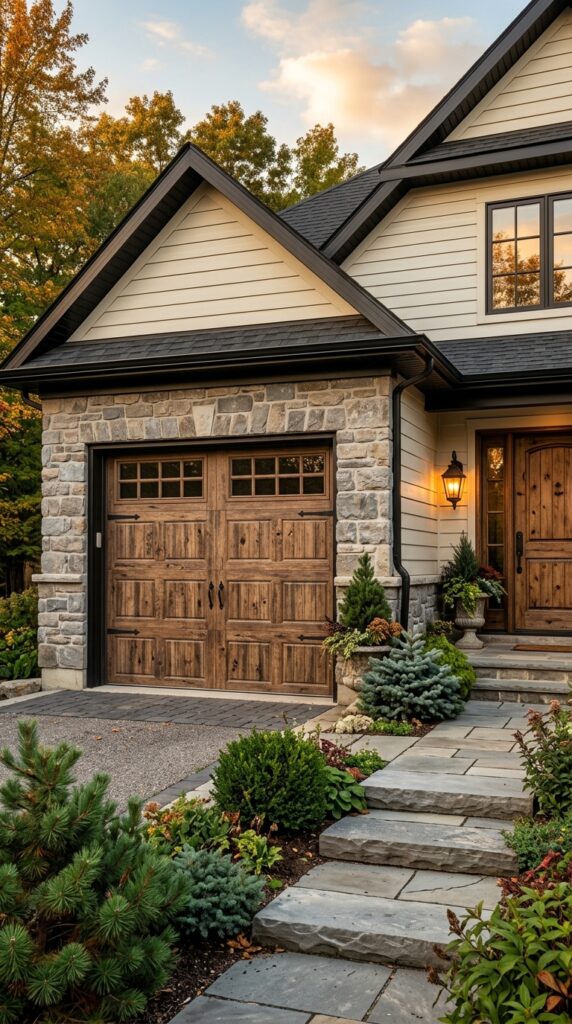
Vibe: This look feels grounded and textured, with all the warmth of wood and less maintenance stress.
What makes it work: Reclaimed wood tones bring variation and depth that painted steel often lacks. Composite material also holds up better in harsh weather, which makes it practical for true everyday curb appeal.
How to achieve it: Look for doors with uneven grain and knot detail rather than a flat printed finish. Pair them with stone veneer, black hardware, or warm outdoor lighting for a more believable result.
💡 Composite faux wood is often the sweet spot between beauty, insulation, and upkeep.
Sage Green Cottage Garage Door

Vibe: It feels soft, charming, and much more personal than standard white.
What makes it work: Sage green adds color without overwhelming the facade, and it sits beautifully with white trim, brick, or natural stone. The muted tone feels current while still reading classic.
How to achieve it: Choose a gray-green rather than a bright botanical green. This works especially well on cottage, Cape Cod, and light farmhouse exteriors.
Bronze Window Grid for Traditional Homes
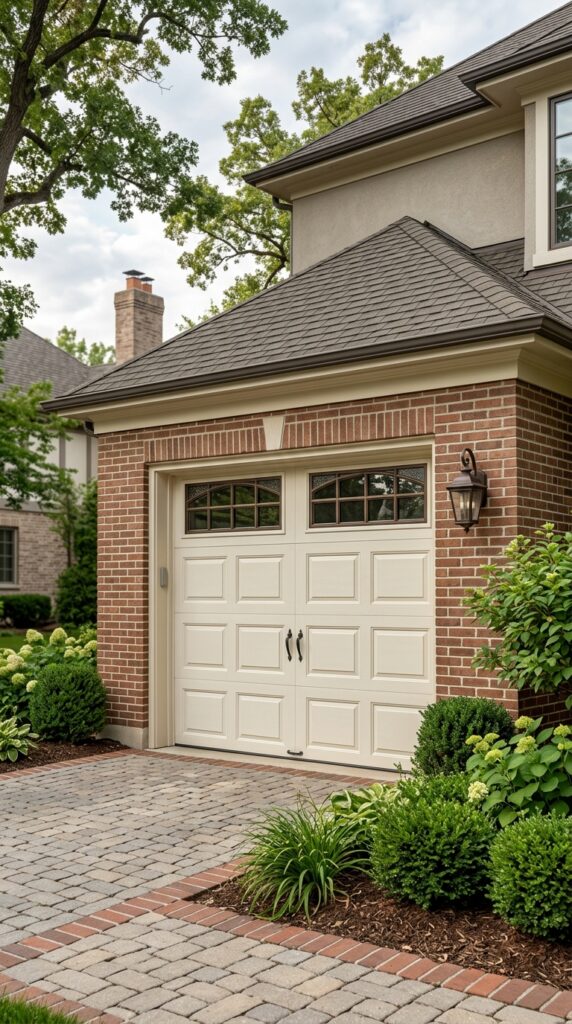
Vibe: This style feels balanced and refined without trying too hard.
What makes it work: Bronze grids are softer than black, which makes them easier to integrate on traditional exteriors. The divided-light pattern also echoes classic window mullions across the rest of the house.
How to achieve it: Match the window grid finish to your lanterns or front door hardware. Keep the rest of the door color quiet—cream, taupe, or warm gray works best.
Oversized Single Door for a Cleaner Facade
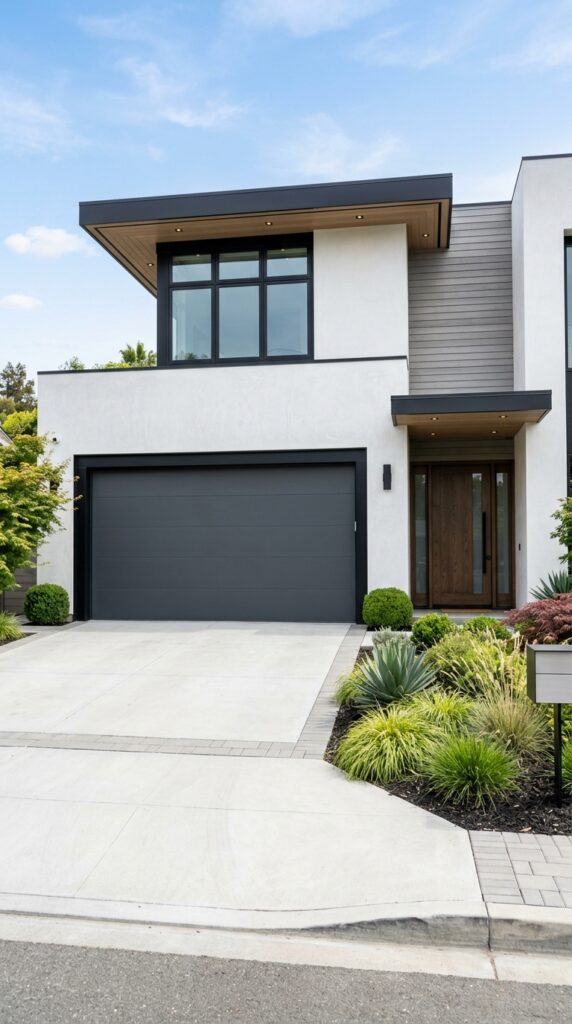
Vibe: It feels cleaner and more spacious, even if the garage footprint stays the same.
What makes it work: One large door reduces vertical breaks, making the front elevation look calmer. That uninterrupted surface often suits modern, transitional, and minimalist homes better than paired smaller doors.
How to achieve it: This works best during new construction or major replacement, since opening size matters. Choose a simple panel or flush design so the wider scale feels elegant rather than bulky.
💡 If a full change is not possible, matching paired doors can still mimic the same visual calm.
Side-Hinged Faux Barn Style Door
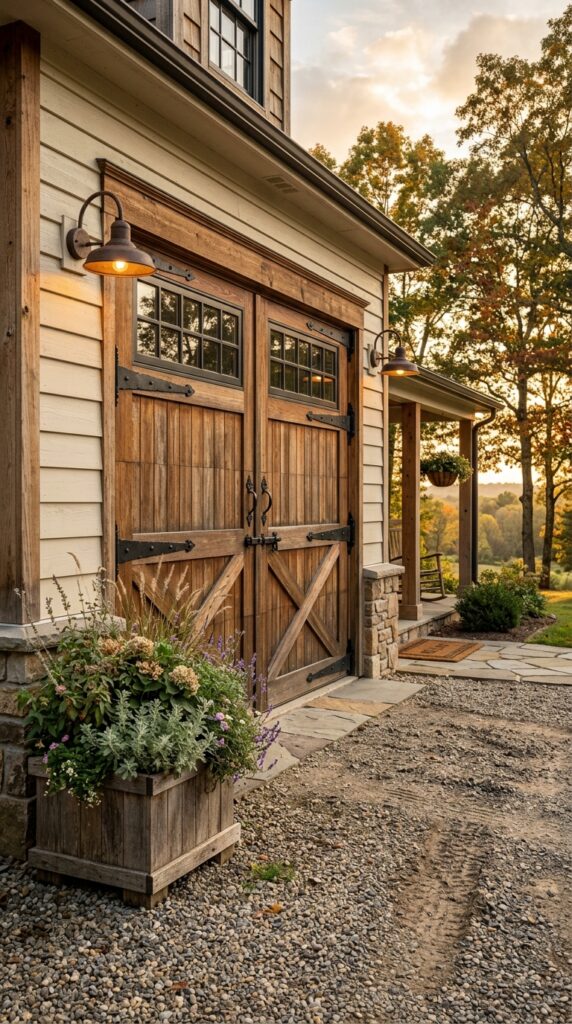
Vibe: This feels sturdy, relaxed, and full of farmhouse character.
What makes it work: Vertical planks and hinge detailing create the illusion of old barn doors, which adds charm and texture. The style pairs especially well with metal roofs, board-and-batten siding, and natural wood accents.
How to achieve it: Use decorative hardware with simple lines, not overly ornate scrollwork. A weathered stain or warm brown paint keeps the look authentic.
Natural Oak Door with Stone Facade
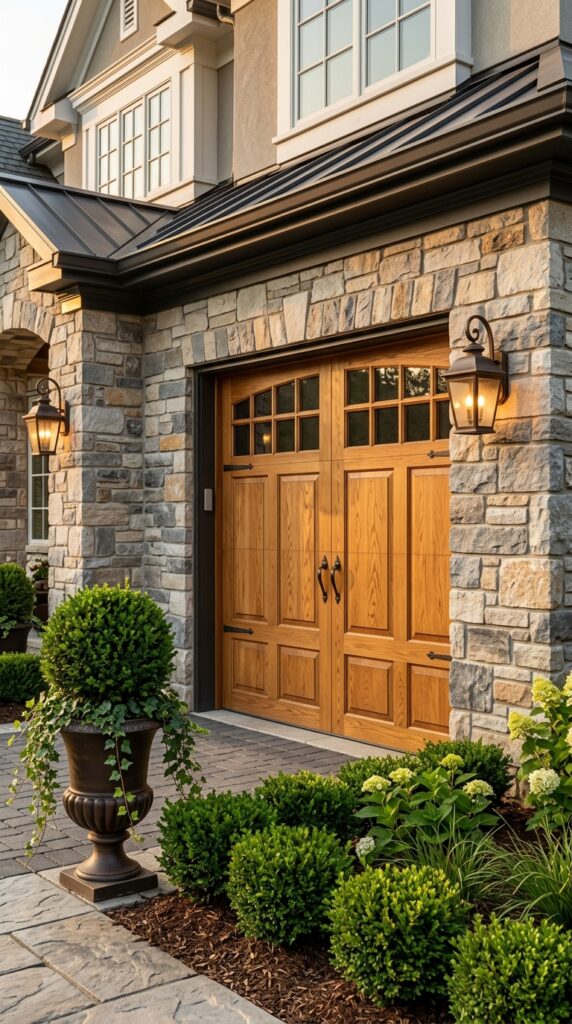
Vibe: It feels grounded and expensive in a very natural, unfussy way.
What makes it work: Oak and stone share an earthy warmth, so the pairing feels organic rather than forced. The variation in both materials adds depth, which makes the whole garage elevation feel more layered.
How to achieve it: Use a clear or matte finish that lets the oak read honest and natural. Skip overly orange stains—they fight with stone almost every time.
High-Contrast Black Door on a White Exterior
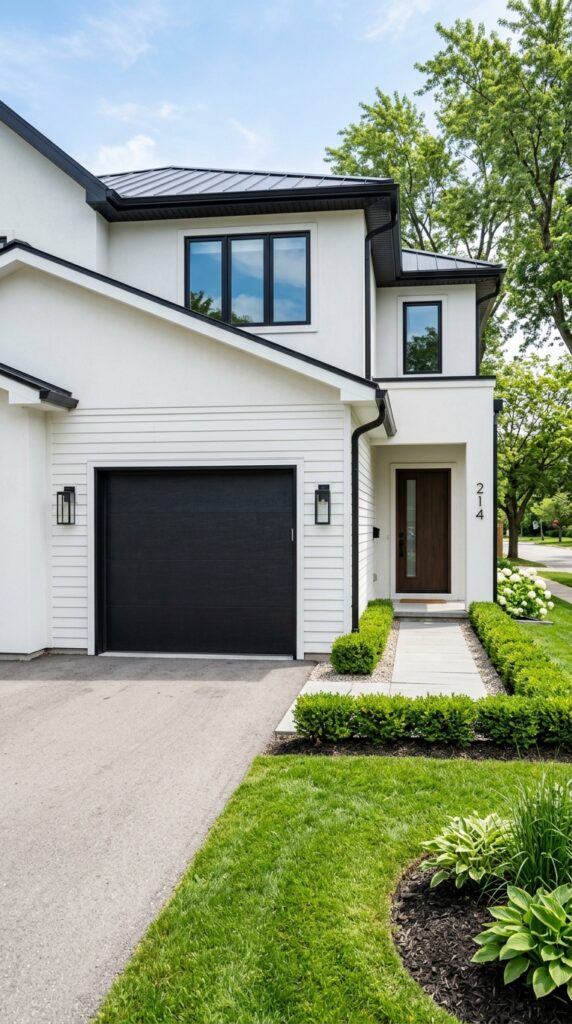
Vibe: It feels bold, crisp, and instantly more architectural.
What makes it work: Black creates strong contrast, which helps define the garage opening instead of letting it fade into the facade. On white exteriors, that contrast can make even a basic panel door feel far more modern.
How to achieve it: Use a soft matte or satin black so dust and sun fade are less obvious. Repeat black in sconces, the front door, or window trim for balance.
💡 This look works best when the rest of the front elevation stays simple and uncluttered.
Sand-Toned Door for Coastal Homes
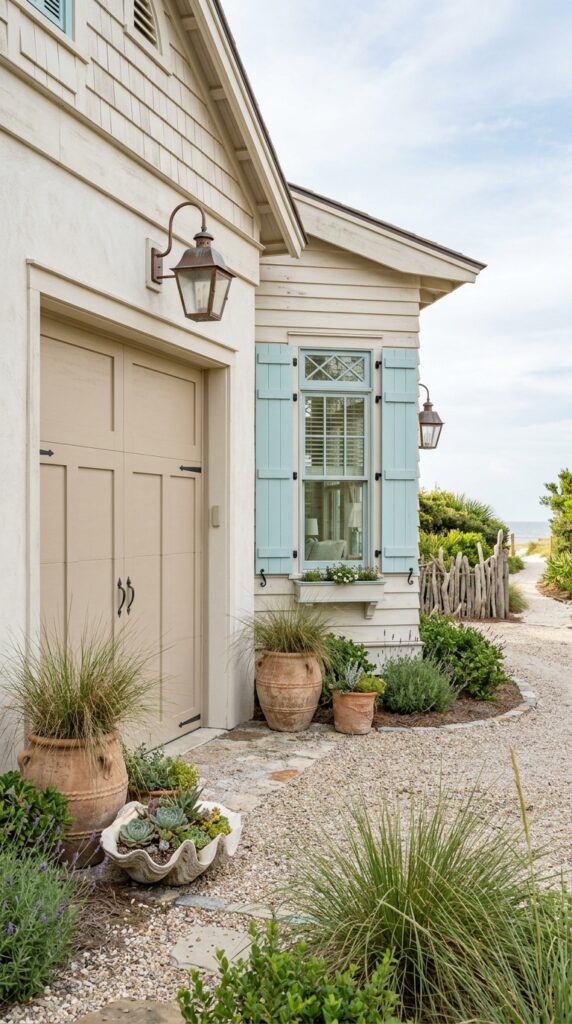
Vibe: This style feels breezy and calm, never heavy or fussy.
What makes it work: Sand tones blend gently into coastal palettes and soften the scale of the garage. That subtlety matters on beachy exteriors, where harsh contrast can feel out of place.
How to achieve it: Choose a beige with gray undertones rather than yellow. Pair it with white trim, light blue shutters, or weathered wood accents for a relaxed coastal look.
Slim Horizontal Window Band
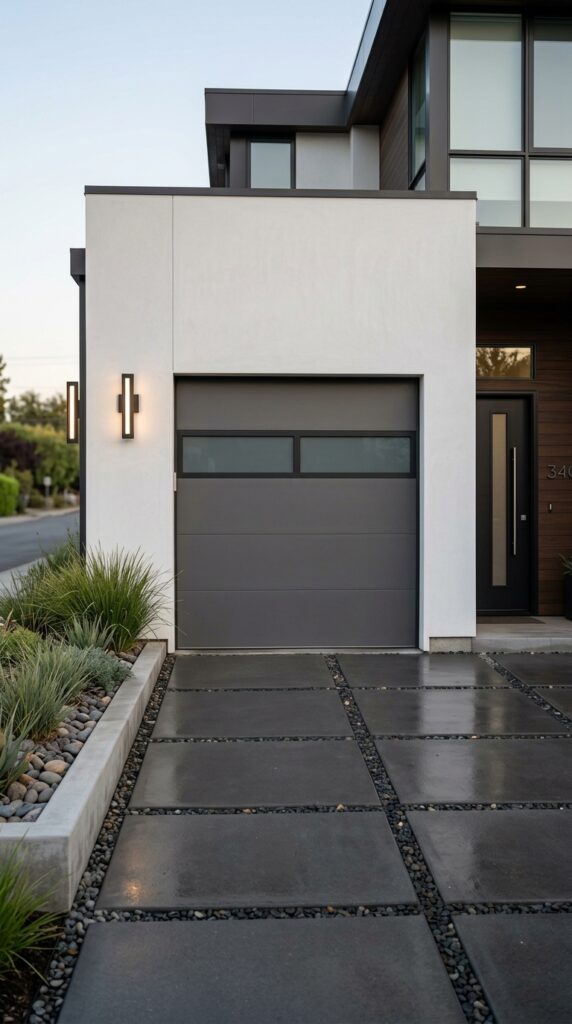
Vibe: It feels streamlined and intentional, with just enough detail to catch the eye.
What makes it work: A narrow glass band adds rhythm and light without breaking the door into too many sections. It suits modern and transitional homes where clean lines matter more than decorative paneling.
How to achieve it: Align the window band with nearby transoms or horizontal trim lines if possible. Frosted or tinted glass usually looks more expensive than standard clear inserts.
Paneled Door with Copper Lanterns
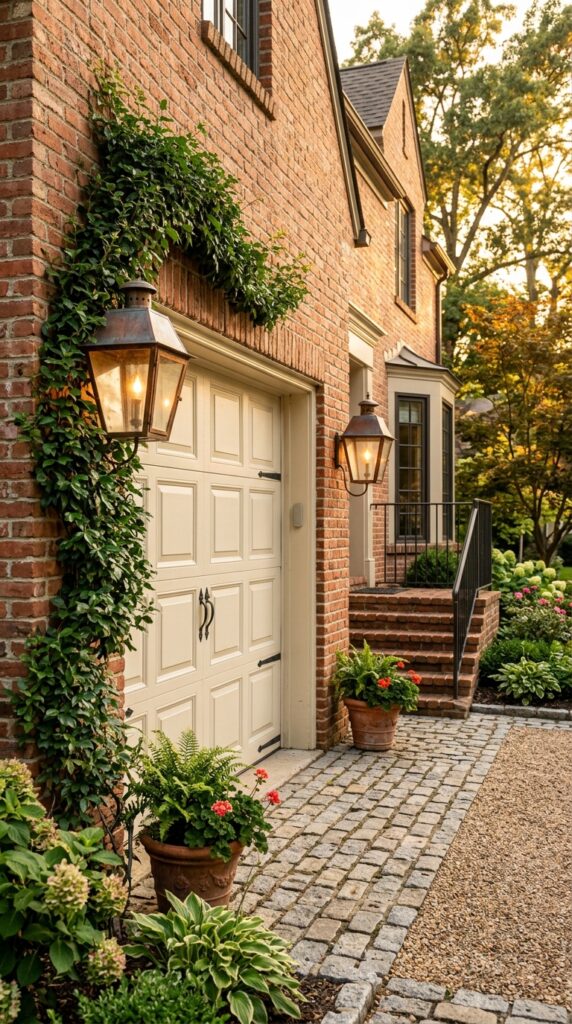
Vibe: This look feels warm, established, and beautifully traditional.
What makes it work: Good lighting can elevate even a simple door, and copper lanterns bring warmth that black fixtures cannot. Against brick, that subtle metallic glow adds richness at dusk.
How to achieve it: Choose lanterns scaled to the width of the garage and hang them high enough to frame rather than crowd the opening. Cream or soft taupe doors usually pair best with copper.
💡 If real copper is too costly, aged-bronze fixtures give a similar warmth.
Dark Walnut Vertical Grain Door
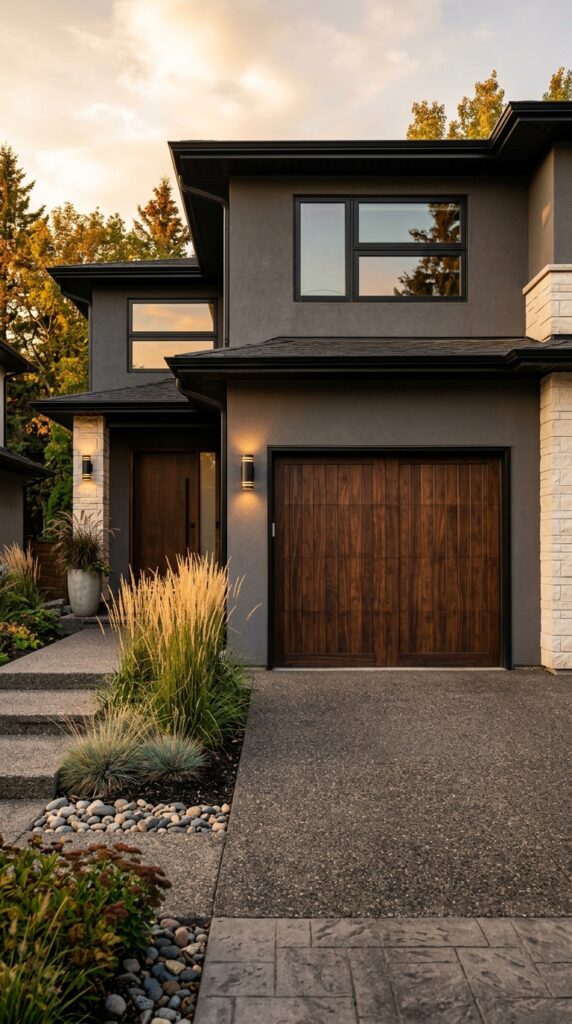
Vibe: It feels rich and dramatic, with more depth than a flat painted finish.
What makes it work: The darker stain gives strong visual weight, while the vertical grain keeps the door from feeling too heavy. It is especially effective on homes with black windows, dark roofs, or crisp modern landscaping.
How to achieve it: Use this look where there is enough natural light to show the grain detail. Too dark a door on a shaded facade can flatten out from the street.
Cream Garage Door for Brick Homes
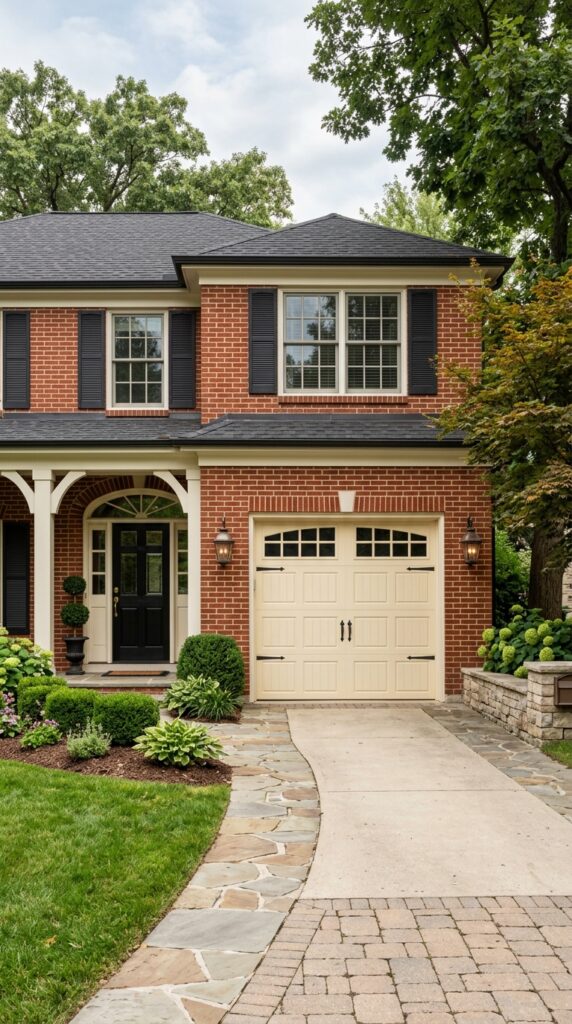
Vibe: This feels softer and more elevated than plain builder white.
What makes it work: Cream picks up the warmth in brick, while bright white can sometimes feel too stark. That softer contrast lets the garage settle into the facade instead of jumping forward visually.
How to achieve it: Test warm whites with a hint of beige in daylight before committing. This is one of the safest and most timeless garage door color ideas for brick exteriors.
Aluminum and Wood Mixed-Material Door
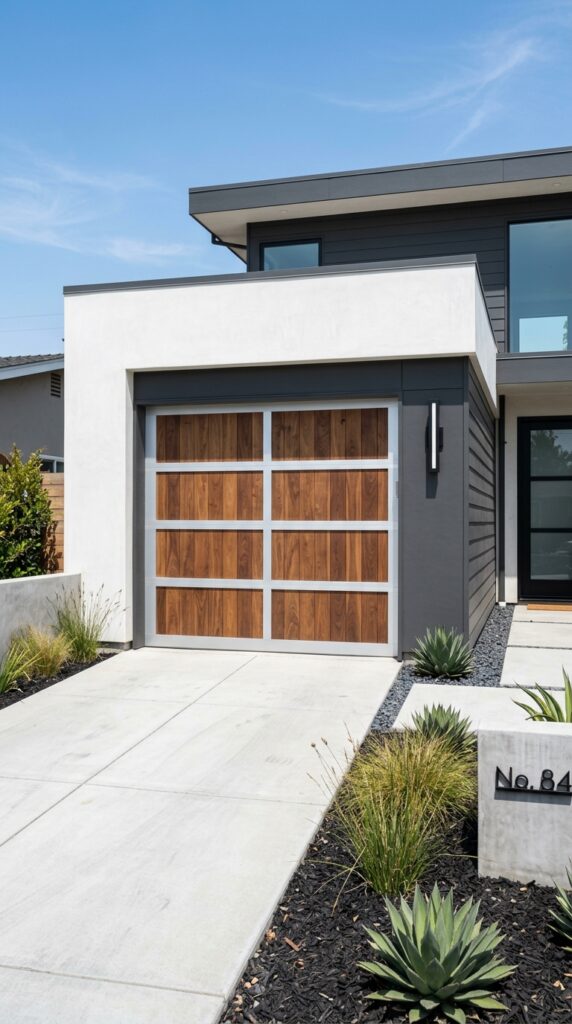
Vibe: It feels polished and custom, with a nice balance of warmth and edge.
What makes it work: Aluminum keeps the structure slim and modern, while wood prevents the door from feeling cold. The mix also creates natural contrast without relying only on paint color.
How to achieve it: Repeat both materials somewhere else on the facade, like a wood soffit with metal lighting or railings. That repetition is what makes mixed materials feel deliberate.
Chevron Plank Statement Door
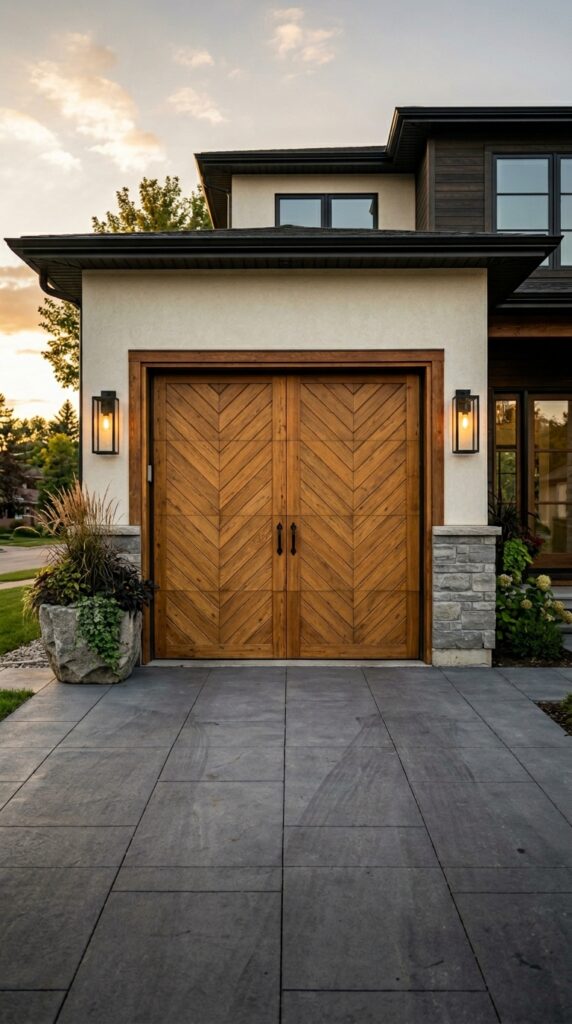
Vibe: This style feels bold and bespoke, like a custom feature rather than a standard door.
What makes it work: The chevron pattern introduces movement and craftsmanship, which makes a broad garage surface far more interesting. Because the geometry is already strong, the rest of the exterior can stay very simple.
How to achieve it: Use this on cleaner, more modern facades where the pattern can breathe. Keep the stain medium and the trim minimal so the texture stays readable.
💡 A subtle herringbone embossing can give a similar feel without full custom woodwork.
Garage Door Designs with a Top Row of Windows
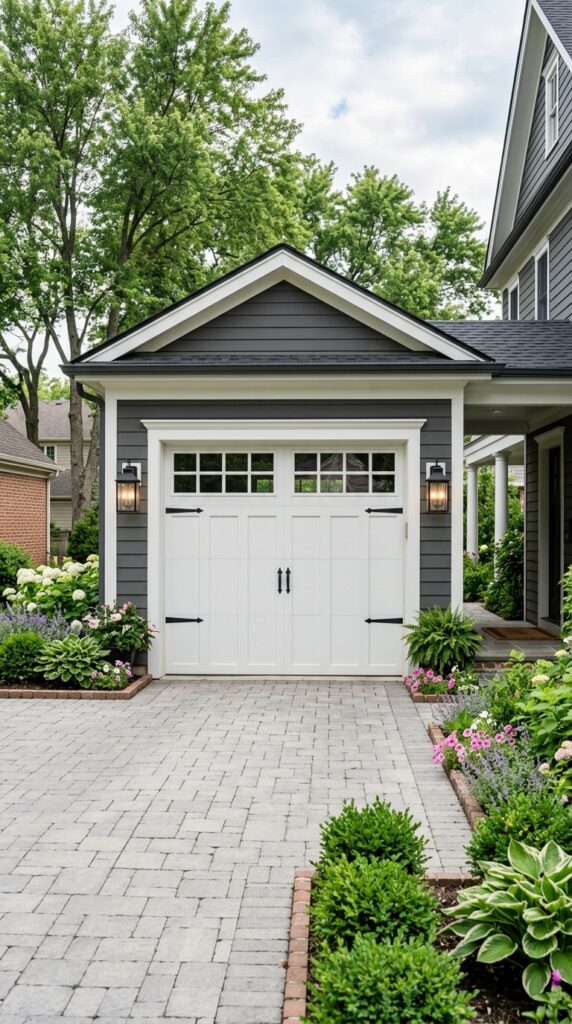
Vibe: It feels familiar but upgraded, with just enough detail to lighten the whole elevation.
What makes it work: A top row of windows breaks up solid mass and brings daylight into the garage. It is one of the easiest ways to improve basic garage door designs without changing the overall house style.
How to achieve it: Match the window shape to the home’s existing windows—rectangular, square, or arched. Dark muntins can add contrast, while plain glass keeps things cleaner.
Color-Matched Door and Trim
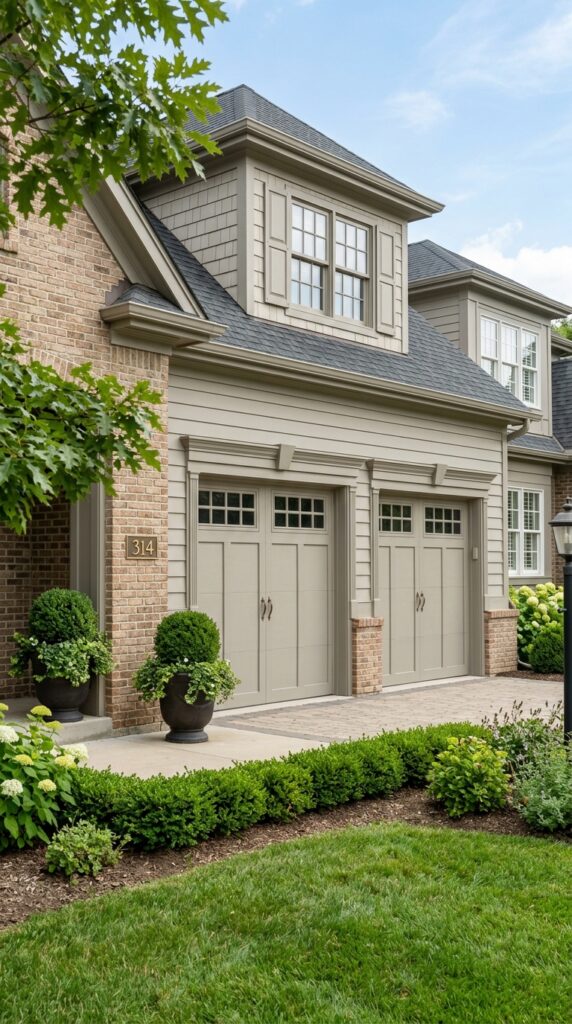
Vibe: This look feels quiet and elegant, especially on facades where you do not want the garage to dominate.
What makes it work: Painting the door to match the trim or main body helps it visually recede. That move is especially smart when the garage sits front and center and you want the porch or entry to remain the focal point.
How to achieve it: Use the same sheen family across trim and door so the match feels intentional. This strategy works well on colonial, traditional, and cottage-style homes.
Charcoal Door with Warm Brass Accents Nearby
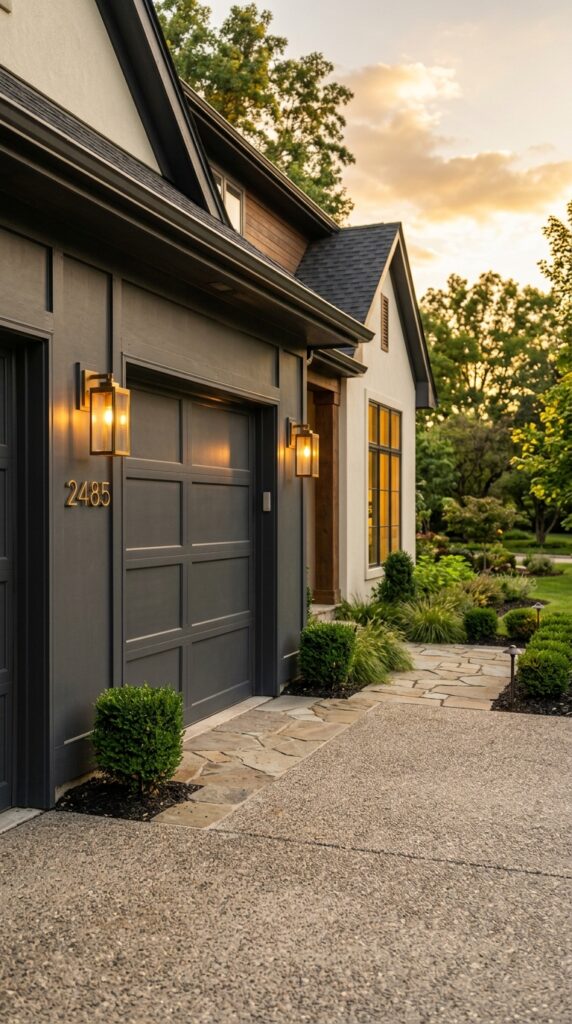
Vibe: It feels moody but welcoming, which is not always easy to pull off outdoors.
What makes it work: Charcoal brings depth without the harshness of black, and brass warms it up beautifully. That warm-cool balance makes the facade feel more layered and intentional.
How to achieve it: Choose a charcoal with brown undertones rather than a blue-gray. Use brass sparingly in lighting or house numbers so it reads refined, not flashy.
Insulated Faux Wood Door with Deep Grain
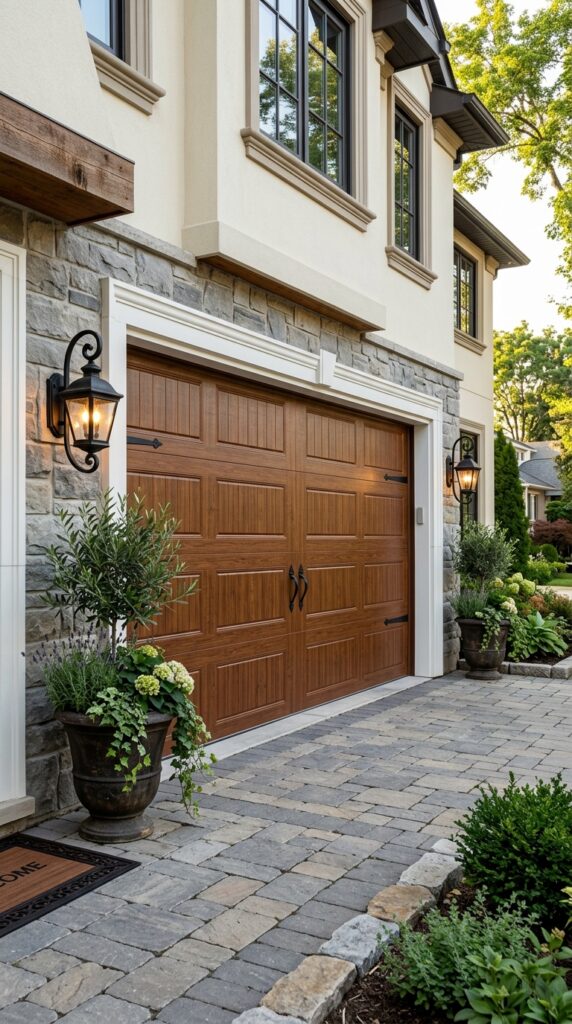
Vibe: It feels warm and substantial while still being easy to live with.
What makes it work: Deep grain adds believable texture, and insulation improves everyday performance, especially in attached garages. That combination of beauty and function is why this style keeps showing up in exterior design inspiration.
How to achieve it: Ask for insulated steel with a high-definition wood-grain skin rather than a flat printed finish. Medium walnut and cedar tones tend to look the most realistic from the curb.
💡 This is a smart upgrade if you want wood warmth without annual staining.
Gridless Contemporary Glass Door
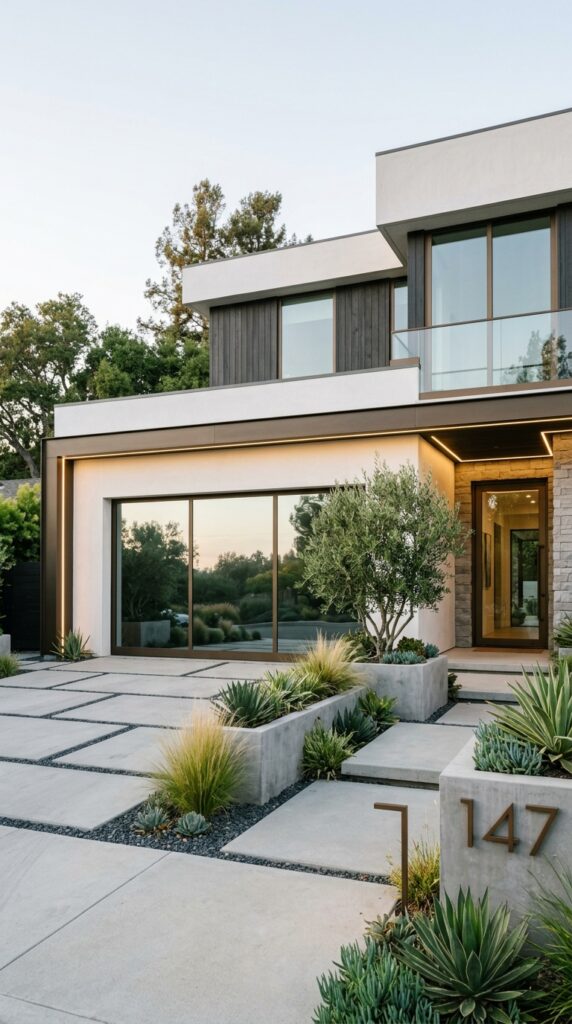
Vibe: This style feels airy and expensive, almost like a luxury showroom at home.
What makes it work: Without grids, the glass reads as large clean planes, which keeps the door visually calm. Bronze framing softens the modern look more than bright silver or stark black.
How to achieve it: Use this on genuinely modern homes where large expanses of glass already exist. Tinted or frosted panels are the better choice if privacy is a concern.
Symmetrical Double Doors with Matching Lighting
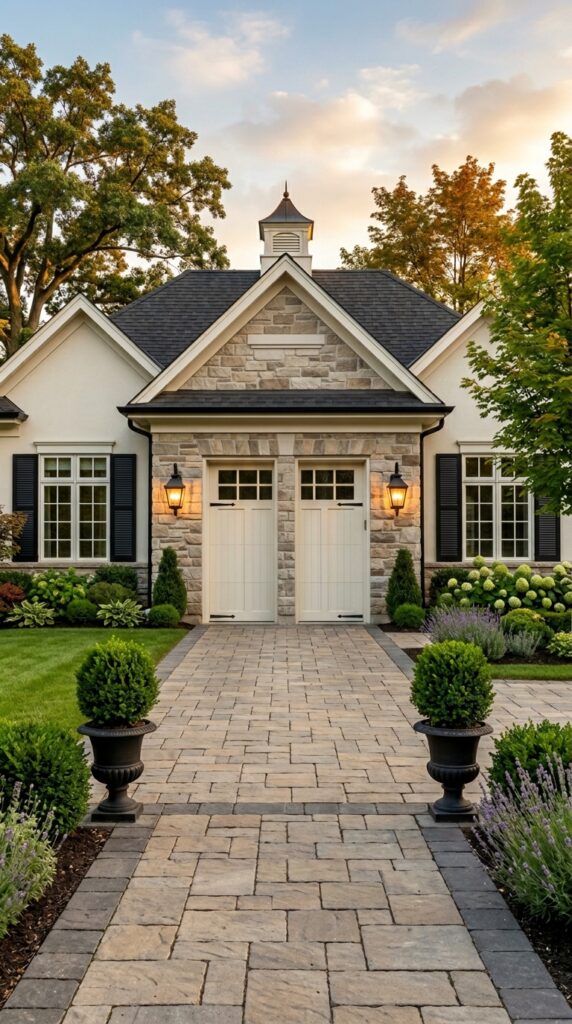
Vibe: It feels orderly, polished, and instantly more expensive from the street.
What makes it work: Symmetry creates calm, and matched lighting reinforces that sense of structure. When both doors, lanterns, and trim align properly, the garage reads as a designed feature instead of a practical necessity.
How to achieve it: Make sure both fixtures are mounted at the same height and scaled correctly to the door width. A pair of identical planters nearby can strengthen the symmetry even more.
How to Start Your Curb Appeal Transformation
Start with the biggest visual decision first: color, material look, or window style. If your current garage door is structurally sound, paint and hardware may be enough to shift the entire front elevation. If the door is dated, poorly insulated, or out of step with the house architecture, replacement becomes the smarter long-term move.
One of the most common mistakes is choosing a door because it looks trendy on its own, not because it suits the home. A sleek glass door on a traditional brick colonial can feel disconnected, just as heavy carriage hardware can look forced on a minimalist facade. Always let the house architecture lead.
For a budget-friendly update, start with paint, magnetic hardware, better lighting, and landscaping around the driveway edge. Those four changes can dramatically improve garage door designs without major construction. Warm white, greige, charcoal, and soft black are usually the safest color starting points.
Be realistic about timeline and maintenance too. Real wood is beautiful but needs regular care. Composite, insulated steel, and faux wood options often give you the look with less upkeep, which matters if you want curb appeal that still feels easy a year from now.
Frequently Asked Questions
What are the best garage door designs for stunning curb appeal?
The best garage door designs usually match the home’s architecture first. Modern homes look strongest with flush panels, glass, or horizontal planks, while farmhouse and traditional homes often suit carriage house details, recessed panels, and window inserts. Material tone matters too—cedar, charcoal, warm white, and greige are some of the easiest finishes to work with. Good lighting around the garage makes a bigger difference than many homeowners expect.
What color garage door adds the most curb appeal?
That depends on the facade, but warm white, soft greige, charcoal, black, and medium walnut are some of the most reliable choices. Brick homes often look best with cream or greige, while modern exteriors can handle deeper charcoal or black. If you want the garage to visually recede, color-match it to the trim or siding. If you want it to stand out, use contrast carefully and repeat that tone elsewhere on the exterior.
Are wood garage doors worth it?
Real wood garage doors are beautiful, especially in cedar, oak, or mahogany, and they bring texture no paint can fully replicate. But they do require more maintenance, especially in wet, hot, or high-sun climates. Many homeowners find faux wood composite or insulated steel a better balance of looks and upkeep. If you love the warmth of wood but not the work, that is often the smartest choice.
What is the difference between carriage house and modern garage door styles?
Carriage house garage doors typically use crossbuck trim, decorative hinges, handles, and more traditional paneling. Modern garage doors usually rely on flush surfaces, glass, metal framing, or clean horizontal and vertical plank layouts. One is more decorative and historic in feeling, while the other emphasizes simplicity and geometry. The right choice depends on the architecture already present on the home.
How much does it cost to upgrade garage door curb appeal?
Smaller upgrades like paint, magnetic hardware, and new sconces can often be done for a few hundred dollars. A full garage door replacement can range from around $1,500 to well over $6,000 depending on size, insulation, material, and custom detailing. Real wood and full-view glass usually sit at the higher end. If budget matters, start with lighting and color before replacing the entire door.
Ready to Create Your Dream Curb Appeal Space?
These 30 garage door designs prove that a practical part of the house can also be one of its best-looking features. You do not need to tackle every exterior detail at once—sometimes one new color, one row of windows, or one better material finish is enough to shift the whole facade. Save and pin your favorites so you can compare what works best with your home’s architecture, light, and exterior palette. The most beautiful curb appeal usually starts with one thoughtful upgrade that makes the entire front elevation feel more intentional. Choose the garage door design that fits your home, and let it do the quiet heavy lifting every single day.