
Does your living room feel smaller than it should? These small living room color ideas can change that, with 22 palettes that make tight spaces feel brighter, calmer, and full of shine. Colour is one of the easiest tools you have, because paint and soft furnishings cost less than new furniture and take less time to change. In this guide, you will find soft whites, pale blues, warm greige, sage green, taupe, peach, navy, olive, and more, each with simple ways to use it at home. I have tried several of these palettes in small rooms, and I have noticed that the right shade can lift the whole space in a single weekend. Read through, pick the palette that fits your light and your furniture, and save your favourites for later.
Soft White Walls

- Paint all walls the same soft white so corners blend and the room reads as one open space.
- Pick a warm white with a hint of cream so the room feels soft, not stark or cold.
- Keep trim and ceiling the same shade to remove hard lines that chop up a small room.
- Add texture with linen, wool, and light wood so the white palette still feels warm and lived in.
Soft white walls can make a small living room feel open the moment you walk in. Light bounces from wall to wall, and the edges of the room seem to fade away. A warm white works better than a bright stark white, because it keeps the room soft while still reflecting daylight. It also gives you a clean base for furniture in any style, from modern to classic. You can change cushions, art, and throws with the seasons without repainting. In my experience, this is the easiest starting point when a room feels dark or boxed in.
The result is a room that feels calm, tidy, and larger than its floor plan suggests. Soft white pairs well with pale wood, cream fabric, and a few green plants for life and contrast. Keep large furniture in light tones too, so nothing heavy breaks the flow of light. A light rug helps the floor blend with the walls, and sheer curtains let daylight reach every corner. If you add one darker accent, like a walnut side table, the room gains depth without losing its airy feel. A dark wood frame adds depth without breaking the light flow.
Pale Blue Accents

- Add pale blue through cushions, a throw, and one vase so the colour stays light and easy to change.
- Keep walls white or very pale so the blue accents stand out without making the room feel busy.
- Mix blue with white, pale wood, and linen for a fresh coastal feel that suits small rooms.
- Repeat the same blue in two or three spots so the look feels planned and balanced.
Pale blue accents can cool a small living room and make it feel fresh on a warm day. The colour reminds many people of sky and water, so it brings a calm mood into a tight space. You do not need to paint a wall to get the effect, because soft furnishings do the work for you. A pale blue throw over the arm of a sofa adds colour without weight. It also works well with white walls, since the contrast stays gentle and the room keeps its bright feel.
The result is a living room that feels light, calm, and a little larger than before. Pale blue pairs well with pale wood, white linen, and silver or light metal details. Try a blue cushion on each end of the sofa, then echo the shade in a small vase or a piece of art. Keep the rest of the room pale so the blue reads as a clear accent, not a clash. This approach suits renters too, because you can swap the accents in minutes and take them with you when you move.
Warm Greige Tones

- Paint walls in a warm greige that sits between grey and beige for a soft, balanced base.
- Layer taupe, cream, and warm brown through cushions, throws, and a rug for depth.
- Choose pale wood and brass details to warm the grey tones and keep the room inviting.
- Keep window dressings light so daylight softens the greige and the room stays bright.
Warm greige tones can make a small living room feel calm and grounded without looking dull. The shade sits between grey and beige, so it suits both cool and warm furniture. It hides small marks better than pure white, which helps in a room used every day. Daylight softens the colour in the morning, and lamplight warms it in the evening. You can pair it with cream linen, pale wood, and a few darker brown accents for a layered look that feels thoughtful. Test a sample on the wall first, because greige can shift with daylight through the day.
The result is a room that feels settled, warm, and easy to live in. Greige works well behind a light sofa, because the wall gives gentle contrast without closing the room in. Add a cream rug to lift the floor, and use cushions in two close tones so the seating feels soft and full. A brass lamp or a wood side table adds warmth that stops the grey side from feeling cold. This palette suits small rooms well, because it adds depth while keeping the overall feel light and calm.
Light Sage Green

- Paint walls light sage green for a soft natural colour that feels calm and fresh.
- Pair sage with cream, pale wood, and white so the room stays bright and open.
- Add real plants to echo the green and bring life into a small seating area.
- Use linen cushions in cream and sage to layer the colour without making it heavy.
Light sage green can bring the calm of a garden into a small living room. The soft green feels restful, and it works well in rooms that get good daylight. It pairs easily with cream sofas, pale wood floors, and white curtains. You can keep the look simple, with just the wall colour and a few plants doing the work. The shade is gentle enough for all four walls, and it does not fight with other soft colours in the room. A sage accent wall behind the sofa can work too, if you want colour on one wall only.
The result is a living room that feels fresh, peaceful, and a little more open. Sage green suits small spaces because it adds colour without darkening the walls. Try a cream rug to keep the floor light, and add cushions in sage, cream, and a soft stone tone. A woven basket and a wood coffee table add warmth and texture. If you want more contrast, add one deeper green cushion, but keep the rest pale so the room holds its airy feel. Keep the window clear of heavy drapes so daylight reaches the sage walls all day long.
Cream and Wood
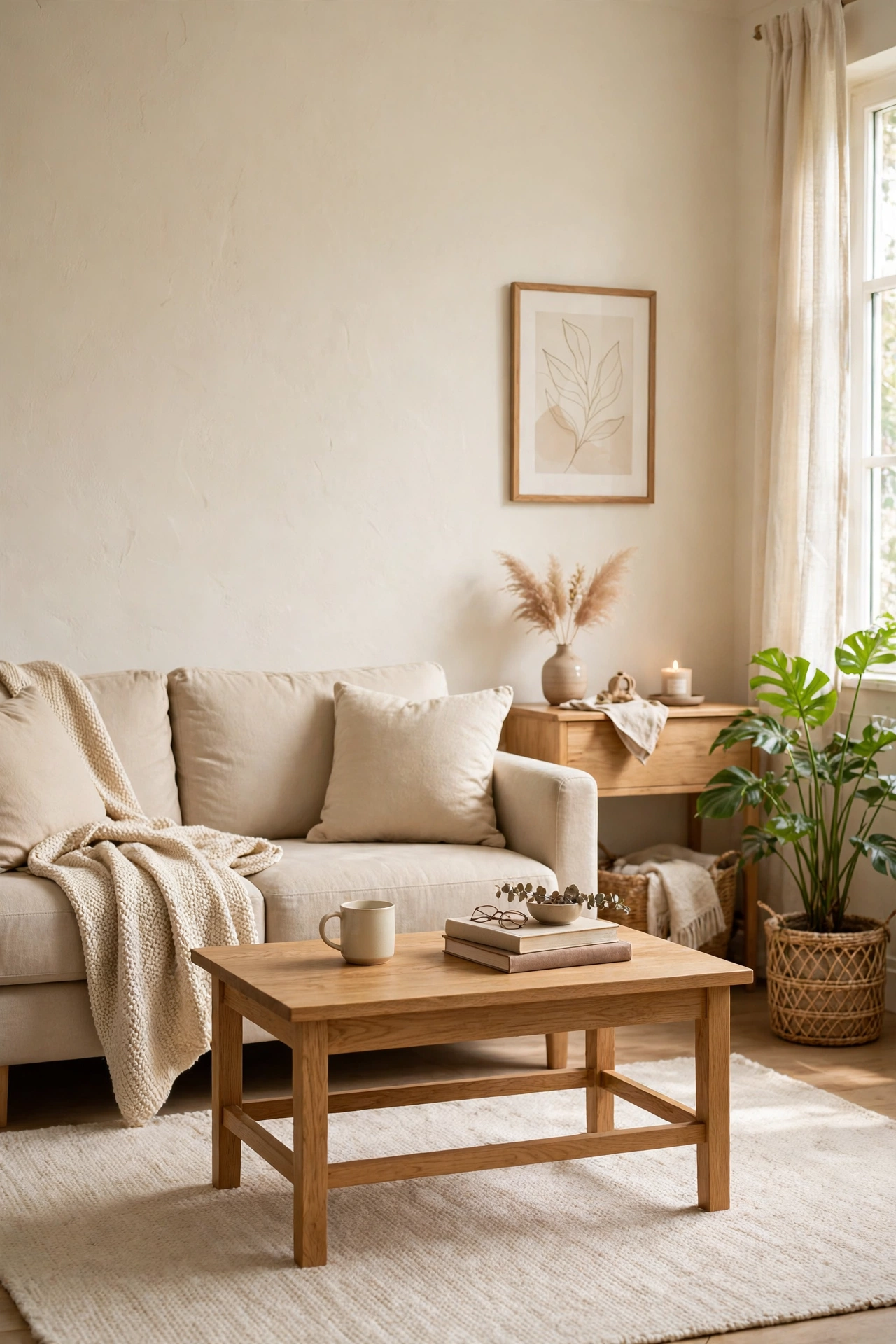
- Keep walls and sofa in cream so the room reads as one soft, open space.
- Add light wood through the coffee table, shelving, and frames for warmth and texture.
- Mix cream linen, cotton, and wool so the pale palette feels rich, not flat.
- Add one green plant or a warm brown accent to stop the cream from looking washed out.
Cream and wood can make a small living room feel warm, soft, and welcoming. The cream walls reflect light, while the wood adds a natural warmth that white alone can lack. This pair suits many styles, from modern to farmhouse, and it is easy to live with day to day. Pale oak, ash, and beech all work well, because they keep the room light. You can add cushions in beige and soft white to build depth without adding strong colour. This palette also suits small rentals, because cream paint and wood pieces move easily between homes.
The result is a room that feels calm, tidy, and full of quiet warmth. Cream and wood work well in small spaces because nothing in the palette fights for attention. Try a cream sofa with wood legs, then add a woven rug to soften the floor. Keep shelves light and uncluttered so the wood details stand out. A small plant or a ceramic vase adds life without breaking the calm. This look also ages well, because you can refresh it with new cushions instead of repainting. A light throw over the sofa arm adds softness without adding strong colour.
Blush Pink Touches

- Add blush pink through cushions, a throw, and a small vase for a soft, rosy lift.
- Keep walls white or pale grey so the pink stays gentle and the room stays bright.
- Pair blush with pale wood, cream linen, and light metal for a soft, modern feel.
- Use the same blush shade in two or three spots so the colour feels balanced.
Blush pink touches can soften a small living room and make it feel warm and kind. The pale pink adds colour without shouting, so the room keeps its light and open feel. It works well on a light grey or cream sofa, where the contrast stays soft. You do not need much pink to change the mood, because a few cushions and a throw are enough. The shade also pairs well with pale wood and white, which keeps the look fresh rather than sweet. Blush also works with white bedding nearby, if your living room sits close to a bedroom.
The result is a living room that feels gentle, bright, and welcoming. Blush pink suits small rooms because it adds warmth while still reflecting light. Try a blush cushion at each end of the sofa, then add a small vase or a piece of art in the same tone. Keep the rest of the room pale so the pink reads as a clear accent. If you want a little more depth, add a dusty rose cushion, but keep the base light so the room never feels closed in. Keep the pink soft, and the room will stay bright and calm.
Cool Grey Layers

- Layer light grey, mid grey, and white so the room gains depth without feeling dark.
- Keep the palest grey on the walls and the deeper grey on cushions and a rug.
- Add white linen and pale wood to lift the grey and keep the room bright.
- Use a silver lamp or light metal frames to echo the cool tones in small details.
Cool grey layers can give a small living room a clean, modern feel. The layered tones add depth, so the room looks designed rather than flat. Light grey walls reflect more light than dark grey, which matters in a small space. You can build the look with a pale grey sofa, white cushions, and a mid grey rug. The cool tones suit rooms with good daylight, because the light keeps the grey from feeling cold. Start with the palest grey on the walls, then build up through cushions, a rug, and a throw in deeper tones.
The result is a room that feels tidy, calm, and modern. Grey layers work well when you vary texture as well as tone, so try linen, wool, and smooth wood together. A white throw over the sofa arm adds a bright break, and pale wood warms the cool palette. Keep art simple, with white frames and soft grey prints. If the room feels too cool in the evening, add a warm lamp glow, and the grey will soften at once. A pale wood floor also helps, because it warms the grey and stops the room feeling cold.
Butter Yellow Glow

- Paint one wall butter yellow or add yellow through cushions and a throw for a sunny lift.
- Keep the rest of the room white and cream so the yellow feels bright, not heavy.
- Pair butter yellow with pale wood and white linen for a soft, cheerful look.
- Use the same yellow in two small spots, like a cushion and a vase, for balance.
Butter yellow can bring sunshine into a small living room, even on a dull day. The soft yellow feels warm and cheerful, but it stays pale enough to reflect light. It works well as one accent wall behind the sofa, or as cushions on a white sofa. The colour lifts the mood of the room and makes white walls feel warmer. You can pair it with cream, pale wood, and white for a look that feels fresh and happy. Try a butter yellow cushion first, so you can see how the shade looks in your light before painting.
The result is a living room that feels sunny, warm, and full of life. Butter yellow suits small rooms because it adds energy without darkening the space. Try a yellow cushion and a small vase, then keep the rug cream so the floor stays light. Sheer curtains let daylight mix with the yellow and spread the glow across the room. If you want a calmer feel, use less yellow and more cream, and let the yellow act as a gentle highlight. A white lampshade will spread the warm glow softly across the room in the evening.
Seafoam Green Walls
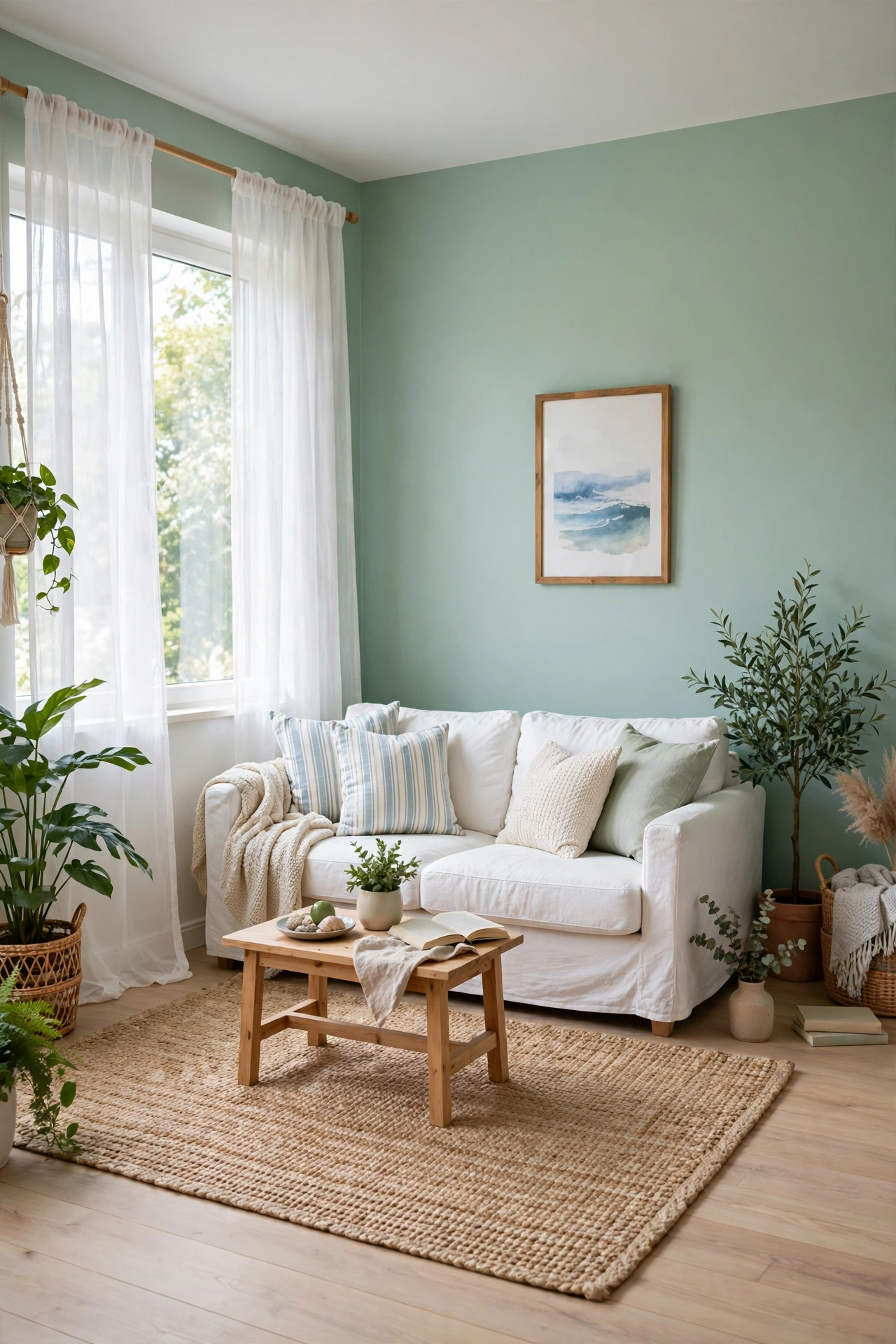
- Paint walls seafoam green for a soft blue green colour that feels fresh and calm.
- Pair seafoam with white, cream, and pale wood so the room stays light and airy.
- Add white linen cushions and a cream rug to lift the green and keep it soft.
- Use plants and light rattan details to echo the fresh, coastal feel of the colour.
Seafoam green walls can make a small living room feel fresh, like a breeze from the coast. The soft blue green shade is pale enough to reflect light, so the room stays bright. It pairs well with white sofas, cream rugs, and pale wood floors. The colour feels calm, which helps a small room feel less crowded. You can keep the rest of the palette simple, and let the wall colour carry the look. You can also use seafoam on one wall only, with white on the rest, if a full green room feels too bold.
The result is a room that feels airy, calm, and quietly fresh. Seafoam green suits small spaces because it adds colour without weight. Try white cushions on the sofa, then add a green plant in the corner to echo the walls. A cream rug keeps the floor light, and sheer curtains let daylight soften the green. If you want more contrast, add a deeper teal cushion, but keep most of the room pale so the seafoam stays the star. Light rattan and white linen suit this coastal look and keep the green feeling fresh.
Light Terracotta Accents

- Add light terracotta through cushions, a throw, and a clay vase for warm, earthy colour.
- Keep walls white or warm cream so the terracotta stands out without darkening the room.
- Pair terracotta with pale wood, cream linen, and woven textures for a natural feel.
- Repeat the shade in two or three small spots so the look feels planned.
Light terracotta accents can warm a small living room and give it an earthy, grounded feel. The soft clay tone adds warmth without the weight of a deep red or brown. It works well on a cream sofa, where the contrast is clear but gentle. You can add the colour through cushions, a throw, or a simple vase. The shade pairs well with pale wood and woven textures, which keep the look natural and relaxed. Test the shade on a cushion first, because terracotta can look stronger in bright light than on a paint chart.
The result is a living room that feels warm, welcoming, and full of quiet character. Terracotta suits small rooms because a little of it goes a long way. Try one terracotta cushion with a cream one, then echo the tone in a small pot or a piece of art. Keep the rug light so the floor does not compete with the accents. In my experience, this warm tone works best in rooms that get soft daylight, because the light keeps the clay colour soft and bright. A woven rug under the coffee table adds texture and warmth.
Powder Blue Sofa

- Choose a powder blue sofa as the main colour piece and keep the rest of the room pale.
- Pair the blue sofa with white walls, a cream rug, and pale wood for a light look.
- Add white and cream cushions so the sofa feels soft and the blue stays fresh.
- Keep art and shelving light so the sofa remains the clear focal point of the room.
A powder blue sofa can set the whole mood of a small living room. The soft blue acts as a gentle focal point, so the room feels styled without extra clutter. It pairs well with white walls and a cream rug, which keep the space bright around it. The pale blue also reflects light better than a deep blue, so the sofa does not weigh the room down. You can change the look with cushions in white, cream, or a soft grey. Washable slipcovers in pale blue are a smart pick if you have children or pets at home.
The result is a room that feels fresh, calm, and thoughtfully put together. A powder blue sofa suits small spaces because it adds colour in one large piece, which is simpler than many small accents. Keep the coffee table light, and use pale wood or white so the sofa stands out. Add a plant nearby for a touch of green that suits the blue. If the blue ever feels too cool, add a warm cream throw, and the whole seat will feel softer at once. A cream throw over one arm softens the blue and makes the seat feel warmer.
White and Gold

- Keep walls and sofa white so gold details stand out as bright, elegant highlights.
- Add gold through a lamp, picture frames, and a small side table for a warm shine.
- Use cream and pale wood with the gold so the look stays soft, not flashy.
- Keep gold details small and few so the room feels bright and calm, not busy.
White and gold can make a small living room feel bright and a little more special. The white base reflects light, while the gold adds warmth and a soft shine. You do not need much gold, because a lamp base, a frame, and a small tray are enough. The mix suits rooms that get good daylight, since the light picks up the gold and spreads a warm glow. It also works with cream rugs and pale wood, which keep the look soft. A small gold tray on the coffee table can echo the lamp without adding more shine.
The result is a room that feels clean, bright, and quietly elegant. White and gold suit small spaces because the white keeps the room open and the gold adds interest without bulk. Try a gold floor lamp beside the sofa, then echo the metal in a frame or a mirror. Keep the rest of the details white or cream so the gold reads as a highlight. I have seen this work well in small flats, where a few warm metal touches lift the whole room. Keep mirrors simple, with a thin gold frame that reflects light without dominating the wall.
Mint Green Details

- Add mint green through cushions, a throw, and small plant pots for a fresh lift.
- Keep walls white and the sofa light grey so the mint stays crisp and bright.
- Pair mint with cream, pale wood, and white for a clean, modern feel.
- Repeat the mint shade in two or three spots so the colour feels balanced.
Mint green details can freshen a small living room in a light, playful way. The pale green feels cool and clean, so it suits rooms that get warm afternoon light. It works well on a light grey sofa, where the contrast stays soft and fresh. You do not need to paint to use mint, because cushions and small pots do the job. The colour also pairs well with cream and pale wood, which keep the room warm enough. Mint also pairs well with white shelving, which keeps the room bright and the green feeling crisp.
The result is a living room that feels clean, bright, and full of fresh energy. Mint suits small rooms because it adds colour without weight or darkness. Try a mint cushion at each end of the sofa, then add a small mint pot with a green plant. Keep the rug cream so the floor stays light, and let white curtains soften the daylight. If you want a calmer look, use less mint and more cream, and let the green act as a light highlight. A white vase with fresh green stems echoes the mint without adding another strong colour.
Pale Lavender Hues

- Add pale lavender through cushions, a throw, and a small vase for a soft, gentle colour.
- Keep walls white or very pale grey so the lavender stays light and the room stays bright.
- Pair lavender with cream, pale wood, and white linen for a calm, soft feel.
- Use the same lavender shade in two or three spots so the look feels planned.
Pale lavender hues can make a small living room feel soft, calm, and a little dreamy. The light purple adds colour without darkening the walls, so the room keeps its bright feel. It works well on a light grey or cream sofa, where the contrast stays gentle. You can add the colour through cushions and a throw, which are easy to swap. The shade also pairs well with white and pale wood, which keep the look fresh. Lavender also suits a small reading corner, where a soft chair and a lamp make the colour feel calm.
The result is a room that feels gentle, peaceful, and quietly pretty. Lavender suits small spaces because it adds interest while still reflecting light. Try a lavender cushion with a cream one, then echo the tone in a small vase or a piece of art. Keep the rug light so the floor does not compete with the soft colour. If the room feels too cool, add a warm cream throw, and the lavender will feel softer and more welcoming at once. A pale grey rug can ground the lavender without making the floor feel dark or heavy.
Sand Beige Palette

- Paint walls sand beige for a warm, neutral base that suits many styles.
- Layer beige, tan, and cream through the sofa, cushions, and rug for soft depth.
- Add pale wood and woven textures to warm the beige and add natural interest.
- Keep curtains light so daylight softens the beige and the room stays bright.
A sand beige palette can make a small living room feel warm, calm, and easy to live in. The soft beige reflects light well, so the room feels larger than a room in a darker tone. It also hides dust and small marks better than white, which helps in a busy home. You can layer the look with a beige sofa, cream cushions, and a tan throw. The palette suits pale wood floors and woven textures, which add warmth without strong colour. Beige also works well with black metal details, if you want a little contrast in the room.
The result is a room that feels settled, warm, and quietly polished. Sand beige works well in small spaces because the tones blend, so the eye moves across the room without stopping at hard edges. Try a cream rug to lift the floor, and add cushions in two close beige tones for depth. A wood coffee table and a simple lamp add warmth. I have tried this palette in a small rental, and it made the room feel calm and put together with very little effort. A soft lamp in the corner makes the beige tones glow in the evening.
Sky Blue Ceiling

- Paint the ceiling sky blue while keeping walls white so the room feels taller and brighter.
- Pair the blue ceiling with a light grey sofa, cream rug, and pale wood for balance.
- Keep curtains white and light so daylight reflects off the ceiling and spreads across the room.
- Add white cushions and a small plant so the blue ceiling feels fresh, not heavy.
A sky blue ceiling can lift a small living room and make it feel taller at once. The eye moves up to the soft blue, so the ceiling seems higher than a white one. White walls keep the look bright, while the blue adds a gentle sense of sky above the room. It works well in rooms with good daylight, because the light reflects off the blue and spreads a soft glow. You can keep the rest of the room pale so the ceiling stays the clear feature. Keep the ceiling paint matte, so the blue looks soft in daylight.
The result is a living room that feels open, bright, and full of fresh air. A sky blue ceiling suits small rooms because it adds colour overhead, where it does not crowd the furniture. Try a light grey sofa and a cream rug below, so the lower half of the room stays calm. Add white cushions to echo the walls, and keep art simple. I have seen this work in a small flat, and guests looked up first, because the ceiling made the whole room feel larger. A white light fitting frames the blue and keeps the look tidy.
Warm Taupe Walls
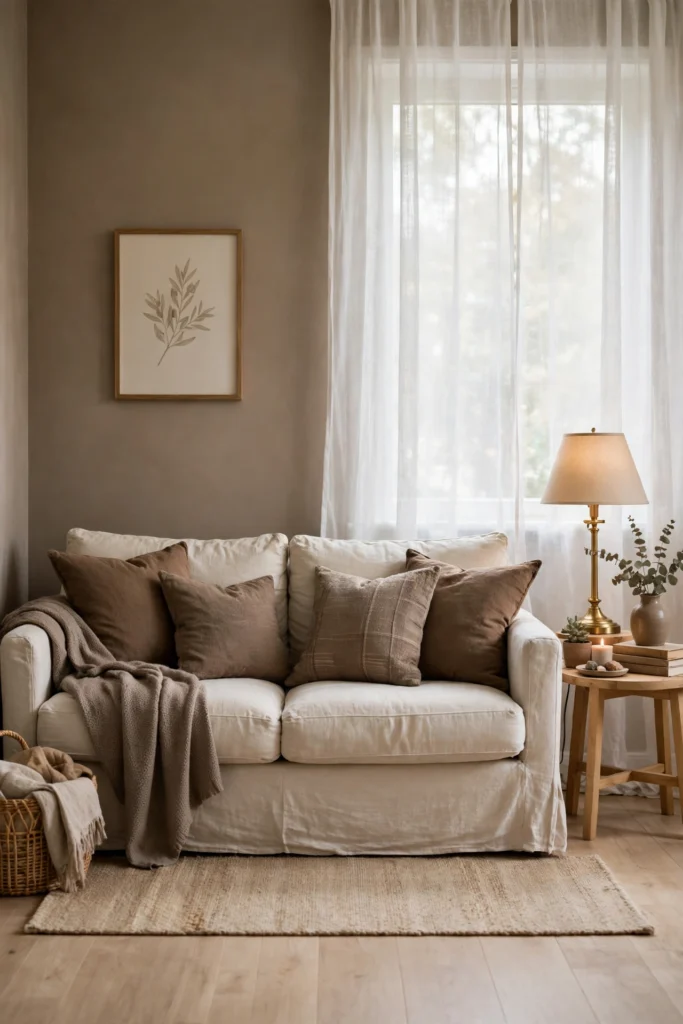
- Paint walls warm taupe for a soft brown grey base that feels calm and rich.
- Pair taupe with cream, beige, and pale wood so the room stays light and warm.
- Add brass details and a wood coffee table to warm the taupe and add shine.
- Use cream cushions and a light rug to lift the walls and keep the room bright.
Want a wall colour that feels rich but never dark? Warm taupe walls can give a small living room a calm, grounded feel while still reflecting plenty of light. The shade sits between brown and grey, so it suits both warm and cool furniture with ease. It hides small marks better than white, which helps in a room used every day by family and friends. Daylight softens the colour in the morning, and lamplight warms it in the evening for a cozy glow. You can pair it with cream linen, pale wood, and a few darker brown accents for depth.
The result is a room that feels settled, warm, and easy to live in day after day. Taupe works well behind a light sofa, because the wall gives gentle contrast without closing the room in at all. Add a cream rug to lift the floor, and use cushions in two close tones so the seating feels soft and full. A brass lamp or a wood side table adds warmth that stops the taupe from feeling flat or dull. This palette suits small rooms well, because it adds depth while keeping the overall feel light and calm.
Soft Peach Accents

- Add soft peach through cushions, a throw, and a small vase for a warm rosy lift.
- Keep walls white or pale cream so the peach stays gentle and the room stays bright.
- Pair peach with pale wood, cream linen, and light metal for a soft modern feel.
- Use the same peach shade in two or three spots so the colour feels balanced.
Looking for a colour that warms a room without taking over? Soft peach accents can lift a small living room with a gentle glow that feels fresh and kind. The pale peach adds warmth without shouting, so the room keeps its light and open feel all day. It works well on a cream or light grey sofa, where the contrast stays soft and pretty. You do not need much peach to change the mood, because cushions and a throw are enough. The shade also pairs well with pale wood and white, which keeps the look fresh rather than sweet.
The result is a living room that feels gentle, bright, and welcoming to everyone. Peach suits small rooms because it adds warmth while still reflecting light from windows and lamps. Try a peach cushion at each end of the sofa, then add a small vase or a piece of art in the same tone. Keep the rest of the room pale so the peach reads as an accent and not a clash. If you want a little more depth, add a warm tan cushion, but keep the base light so the room never feels closed in or busy.
Dusty Rose Details

- Add dusty rose through cushions, a throw, and a small vase for soft muted colour.
- Keep walls white or pale grey so the rose stays gentle and the room stays bright.
- Pair dusty rose with cream, pale wood, and white linen for a calm soft feel.
- Use the same rose shade in two or three spots so the look feels planned.
Craving a touch of romance that still feels grown up? Dusty rose details can soften a small living room and give it a warm, muted glow. The pale rose adds colour without darkening the walls, so the room keeps its bright and open feel. It works well on a light grey or cream sofa, where the contrast stays gentle and calm. You can add the colour through cushions and a throw, which are easy to swap when you want a change. The shade also pairs well with white and pale wood, which keep the look fresh and modern.
The result is a room that feels gentle, peaceful, and pretty. Dusty rose suits small spaces because it adds interest while still reflecting light from the windows. Try a rose cushion with a cream one, then echo the tone in a small vase or a piece of art. Keep the rug light so the floor does not compete with the soft colour in the room. If the room feels too cool, add a warm cream throw, and the rose will feel softer and more welcoming at once. A pale wood frame adds warmth without breaking the calm mood.
Navy Blue Highlights

- Add navy blue through cushions, a throw, and a small vase for bold calm colour.
- Keep walls white and the sofa light grey so the navy stays crisp and bright.
- Pair navy with cream, pale wood, and white for a clean classic feel.
- Repeat the navy shade in two or three spots so the colour feels balanced.
Ready to add a bold accent that still feels calm? Navy blue highlights can give a small living room depth and style without making it feel dark. The deep blue acts as a strong accent, so the room feels designed rather than plain or flat. It pairs well with white walls and a light grey sofa, which keep the space bright around it. The navy also reflects less light than pale colours, so use it in small doses for the best effect. You can change the look with cushions in white, cream, or a soft grey for a fresh feel.
The result is a room that feels fresh, calm, and thoughtfully put together. Navy suits small spaces because it adds colour in a few spots, which is simpler than many small accents. Keep the coffee table light, and use pale wood or white so the navy stands out. Add a plant for a touch of green that suits the blue and softens the look. If the navy feels too strong, add a warm cream throw, and the seat will feel softer at once. A cream throw over one arm softens the blue and makes the seat feel warmer.
Olive Green Touches

- Add olive green through cushions, a throw, and a small plant for warm earthy colour.
- Keep walls white or warm cream so the olive stands out without darkening the room.
- Pair olive with pale wood, cream linen, and woven textures for a natural feel.
- Repeat the shade in two or three small spots so the look feels planned.
Want an earthy colour that feels both calm and full of life? Olive green touches can warm a small living room and give it a natural, grounded feel. The soft green tone adds warmth without the weight of a deep forest green or brown. It works well on a cream sofa, where the contrast is clear but gentle and relaxed. You can add the colour through cushions, a throw, or a simple plant pot in the corner. The shade pairs well with pale wood and woven textures, which keep the look natural and warm.
The result is a living room that feels warm, welcoming, and full of quiet character. Olive suits small rooms because a little of it goes a long way toward a styled look. Try one olive cushion with a cream one, then echo the tone in a small pot or a piece of art. Keep the rug light so the floor does not compete with the accents. This warm tone works best in rooms that get soft daylight, because the light keeps the green colour soft and bright. A woven rug under the coffee table adds texture and warmth.
Coral Pink Pops

- Add coral pink through cushions, a throw, and a small vase for a cheerful lift.
- Keep walls white and the sofa light grey so the coral stays crisp and bright.
- Pair coral with cream, pale wood, and white for a clean modern feel.
- Repeat the coral shade in two or three spots so the colour feels balanced.
Need a happy pop of colour that wakes up a pale room? Coral pink pops can freshen a small living room in a bright, playful way. The warm pink feels lively and clean, so it suits rooms that get warm afternoon light and need energy. It works well on a light grey sofa, where the contrast stays soft and fresh rather than loud. You do not need to paint to use coral, because cushions and small vases do the job well. The colour also pairs well with cream and pale wood, which keep the room warm enough.
The result is a living room that feels clean, bright, and full of fresh energy. Coral suits small rooms because it adds colour without weight or darkness when used. Try a coral cushion at each end of the sofa, then add a small coral vase with flowers. Keep the rug cream so the floor stays light, and let white curtains soften the daylight. If you want a calmer look, use less coral and more cream, and let the pink act as a light highlight. A white vase with green stems echoes the coral without adding strong colour.
Your living room does not need more space to feel brighter, it needs the right colour. Pick one of these 22 small living room color ideas, start with the wall or the sofa, and see how the light changes in a day. Save your favourites on Pinterest so you can find them when you are ready to paint or shop. Try one idea first, live with it for a week, then add the next touch if you love it. I still smile when a small room feels open after a simple paint change. Share this guide with a friend who needs a brighter room too.