Introduction
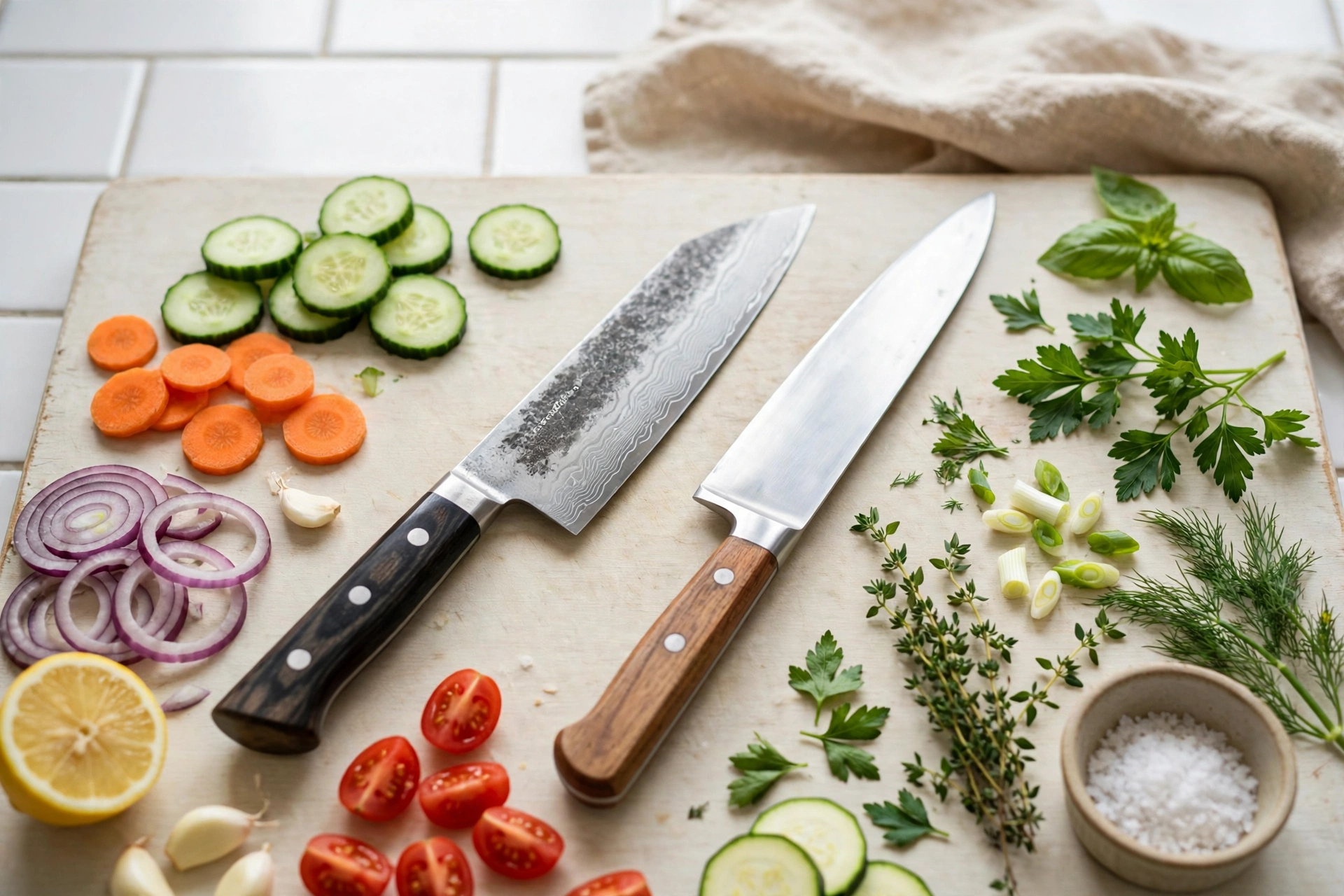
Choosing between two brilliant blades can feel harder than the cooking itself, and the santoku vs chef knife question pops up in almost every kitchen I visit. Both knives slice, dice and chop beautifully, yet each one shines in different moments, and picking the wrong one can slow you down. In this guide, I compare the Japanese Santoku and the classic Western chef’s knife across seventeen practical ideas, from blade shape and weight to rocking, chopping and everyday comfort. You will see exactly where each blade wins, which tasks suit it best, and how to choose the one that fits your hand, your cooking style and your budget. Save this guide on Pinterest, and your next knife decision will feel easy, confident and completely right for your kitchen.
Sheepfoot Blade Profile
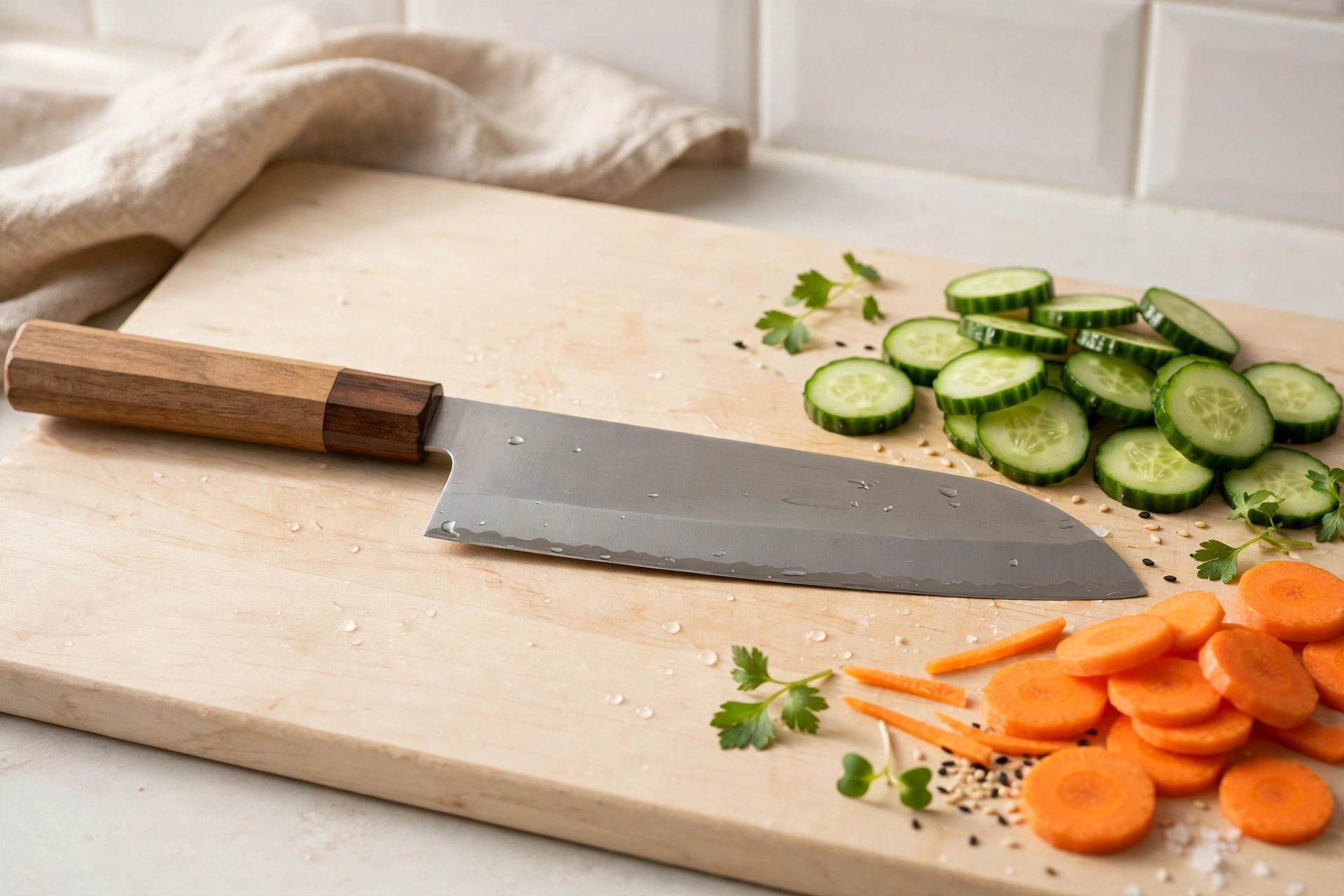
- The straight edge meets the board along its full length.
- A sheepfoot tip curves down gently, with no sharp point.
- Great for neat, straight cuts through vegetables.
- Feels safe and controlled for everyday chopping.
The sheepfoot profile is the first thing you notice on a Santoku, and it changes the way the blade meets your food completely. Instead of a pointed tip that sweeps upward, the edge runs almost straight from handle to tip, then curves down softly at the end. That shape lets the whole edge touch the board at once, so every slice comes out even and clean. Vegetables stay put, nothing rolls away, and your cuts look tidy with far less effort. If neat, straight chopping matters to you, this profile is a quiet revelation.
In my experience, the sheepfoot shape also makes the Santoku feel calmer in the hand, especially when you are learning or cooking in a hurry. There is no sharp point to catch on the board or nick a fingertip, so you can focus on the food instead of the blade. The straight edge loves a simple up-and-down chop, and it handles cucumbers, courgettes and potatoes with lovely precision. Once you get used to it, you may find yourself reaching for this shape whenever neat slices matter most in your kitchen.
Pointed Tip Precision

- The sharp point pierces skins and starts cuts easily.
- Ideal for trimming fat, scoring meat and detail work.
- The curved belly supports a smooth rocking motion.
- A true all-rounder for big and small jobs.
A pointed tip might look like a small detail, but it opens up a whole world of jobs the Santoku simply cannot do as easily. The sharp point slips under tomato skins, starts a cut in tough squash, and trims silver skin from meat with lovely control. It also lets you score, pierce and make fine detail cuts without switching knives. That versatility is why the chef’s knife has ruled Western kitchens for generations, and once you use the tip properly, you will wonder how you managed without it in your kitchen.
I have noticed that cooks who love detail work always reach for the pointed tip first, and it rewards them every single time. Use the very point to hull strawberries, remove eyes from potatoes, or cut a neat slit in a roast before stuffing it with garlic. The trick is to let the tip do the work with small, gentle movements, never force. Keep the rest of the blade for bigger slicing, and your chef’s knife becomes two tools in one, saving time and drawer space every day in your kitchen.
Granton Edge Dimples

- Tiny dimples create air pockets that stop food sticking.
- Thin slices fall away instead of clinging to the blade.
- Especially handy for potatoes, cheese and cucumber.
- Look for dimples that run close to the edge.
Those little dimples along a Santoku blade are not decoration, and they solve one of the most annoying kitchen problems you will ever meet. Wet slices of potato, cucumber or cheese love to cling to a flat blade, forcing you to peel them off one by one. Granton dimples trap tiny pockets of air between food and steel, so each slice drops away cleanly as you cut. Your chopping rhythm stays smooth, your board stays tidy, and thin slicing suddenly feels fast, easy and almost effortless every single time in your kitchen.
In my experience, Granton edges make the biggest difference when you slice a lot of starchy vegetables or soft cheese in one session. A plain blade needs a wipe every few cuts, but dimples keep the food moving and your hands free. They do not make the knife sharper, so do not expect magic, yet the convenience is real and noticeable. If sticky slices slow you down, choose a Santoku with dimples and enjoy the smooth, clean rhythm it brings to your daily prep work, saving time and patience in every busy kitchen.
Rocking Motion Mastery

- The curved belly lets the tip stay planted while the heel lifts.
- Rocking minces herbs and garlic in seconds.
- Keep the tip down and let the curve guide you.
- A Santoku prefers straight chopping instead.
Rocking is the chef’s knife signature move, and once you learn it, mincing herbs feels like a small kitchen dance. The curved belly lets the tip stay on the board while the heel rises and falls, slicing through parsley, garlic and shallots in smooth, rolling strokes. Your food gathers under the blade instead of scattering, and the pile turns fine and even in seconds. It is fast, rhythmic and deeply satisfying, and it is the main reason many cooks never give up their classic chef’s knife for anything else in the kitchen.
I have seen this work well in many homes, where a quick rocking motion turns a pile of herbs into a fragrant green cloud before dinner is even started. Start slowly, keep your guiding hand curled in a claw, and let the blade’s curve set the pace. Speed comes naturally with practice, so do not rush the first few tries. The Santoku can chop herbs too, but it cannot rock, and that missing motion is exactly why the chef’s knife still earns its place on so many counters in kitchens everywhere.
Straight Chop Control

- A straight edge gives clean, even cubes every time.
- Lift and drop the blade in a steady rhythm.
- Perfect for soups, stews and stir-fry prep.
- Less wrist strain than rocking for long sessions.
Straight chopping is where the Santoku quietly outshines its rival, and the difference shows in every neat little cube on your board. The flat edge drops straight down and lifts again, cutting cleanly through carrots, celery and potatoes without any sideways slide. Your pieces come out even, which means they cook evenly too, and that matters more than most cooks realise. The rhythm is simple, calm and easy to learn, making this the friendliest cutting style for beginners and busy weeknights alike. Once the rhythm clicks, prep feels almost meditative and wonderfully quick.
In my experience, straight chopping also keeps your wrist happier during long prep sessions, because the motion is small and natural. You lift the blade just enough to clear the food, then let gravity do the rest, with no twisting or rolling involved. It works beautifully for dicing onions, cubing sweet potatoes and slicing courgettes for a stir fry. If your weeknights involve a lot of vegetable prep, this calm, controlled motion will save you time, energy and a surprising amount of patience in every busy kitchen you cook in.
Lightweight Daily Handling
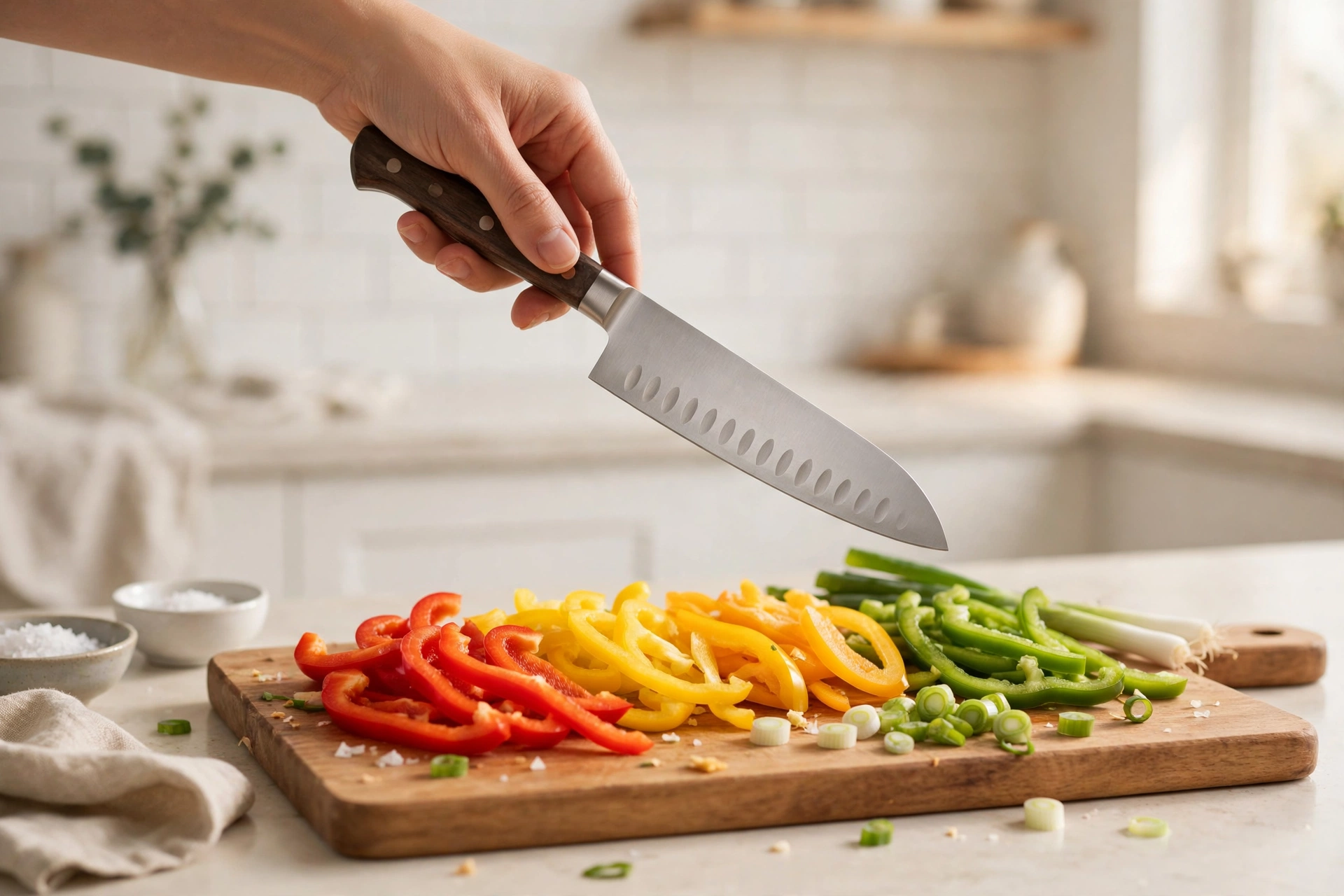
- A lighter blade means less fatigue in long prep sessions.
- Easier to control for smaller hands and new cooks.
- Quick to lift, move and rinse between tasks.
- Feels nimble rather than heavy and tiring.
Weight is something you feel within seconds of picking up a knife, and the Santoku’s lighter build is a gift for everyday cooking. It lifts easily, moves quickly between board and bowl, and never drags your wrist down during a long chopping session. Smaller hands especially love it, because the balance sits close to the handle and the blade feels like an extension of your arm. If you cook daily and prep a lot of vegetables, that lightness adds up to real comfort by the end of the week in your kitchen.
I have noticed that new cooks reach for the lighter knife again and again, simply because it feels friendly and forgiving in the hand. A heavy blade can feel impressive, but it also tires you faster and makes small mistakes more likely. The Santoku’s slim profile keeps control easy, so your cuts stay accurate even when you are tired or in a rush. Choose the lighter option if comfort matters to you, and your hands will thank you after every single meal you prepare at home in your own kitchen.
Heavier Blade Momentum
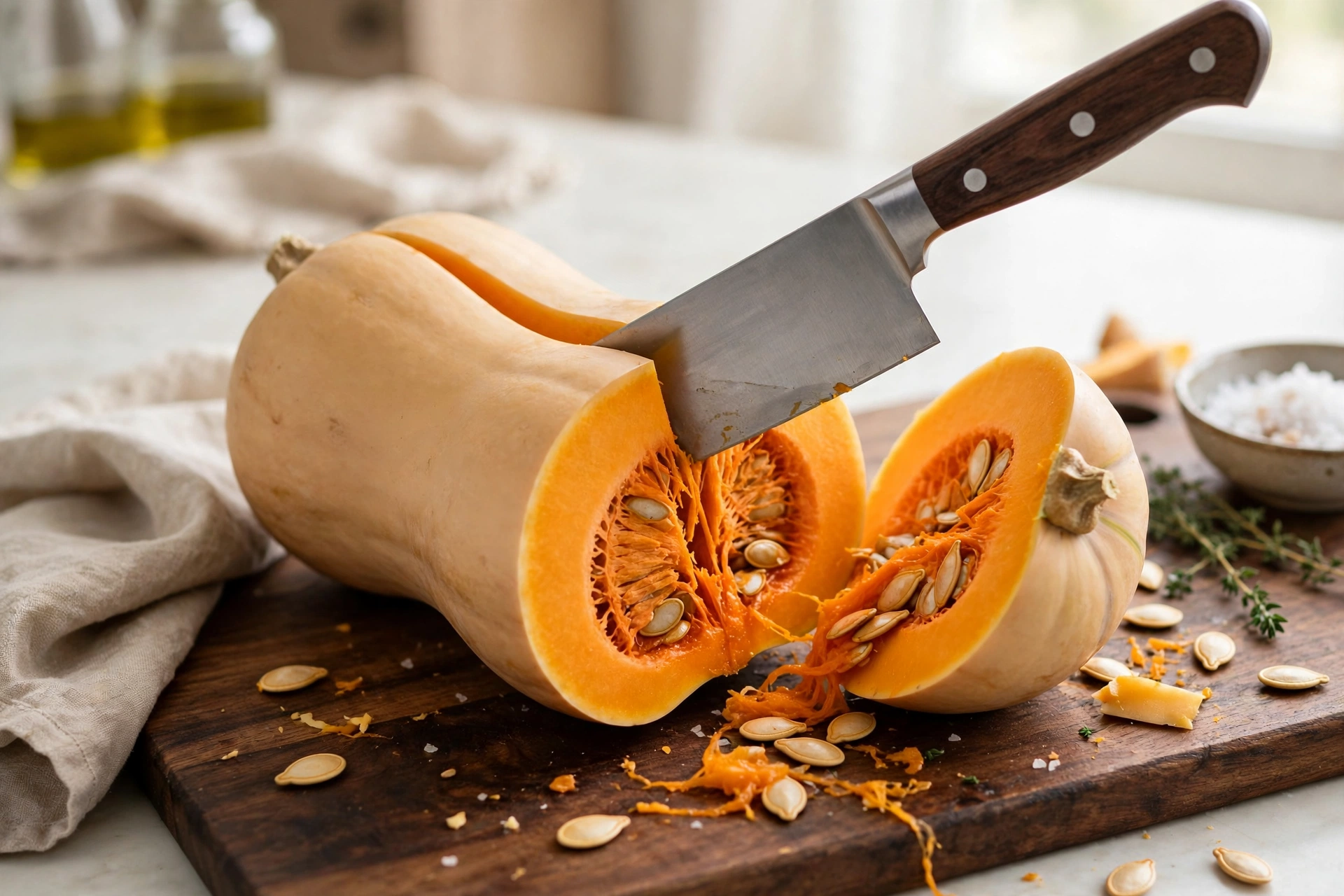
- Extra weight powers through dense foods with ease.
- The blade’s momentum does the hard work for you.
- Great for squash, root vegetables and thick cuts of meat.
- A solid, confident feel in the hand.
There are moments when a little extra weight is exactly what your cooking needs, and the chef’s knife delivers it beautifully. Its heavier blade carries momentum through dense butternut squash, thick sweet potatoes and sturdy root vegetables that would stop a lighter knife in its tracks. You press less, push less and fight less, because the blade’s own weight does much of the work. That confident, solid feeling is why so many cooks trust the chef’s knife for the toughest jobs in the kitchen every single day of the year.
In my experience, the heavier blade also feels reassuring when you carve a roast or split a large melon, because it never feels flimsy or out of control. Let the weight guide the cut, keep your guiding hand well clear, and use long, steady strokes rather than short, forceful hacks. The knife rewards patience with clean, even slices and far less effort than you expect. If your cooking includes big, dense ingredients, that satisfying heft will quickly become something you rely on every time you cook something hearty at home.
Vegetable Prep Speed
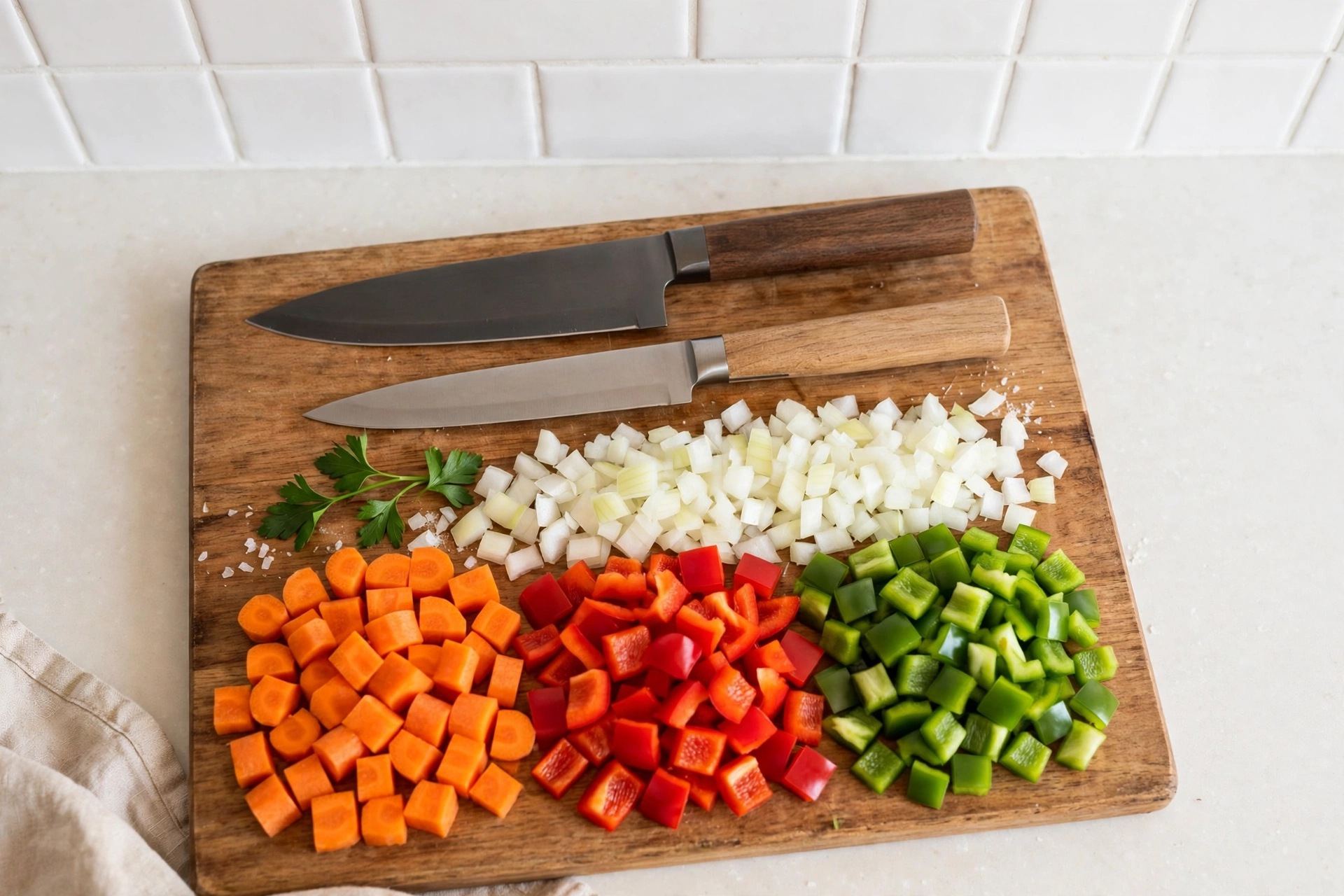
- The Santoku’s straight edge powers through vegetable piles fast.
- Thin, even slices stack neatly for salads and stir-fries.
- Less sticking means fewer stops to clear the blade.
- A chef’s knife keeps up on bigger, tougher vegetables.
When dinner needs a mountain of chopped vegetables in a hurry, the right blade turns a chore into a quick, satisfying rhythm. The Santoku’s straight edge and light weight let you fly through onions, peppers and courgettes, dropping neat pieces into the pan in minutes. Its dimples keep slices from sticking, so you rarely stop to clear the blade. For everyday vegetable prep, that speed and smoothness are hard to beat, and your weeknight dinners will come together noticeably faster, and your evenings will feel calmer, easier and far more enjoyable.
I have seen this work well in many homes, where a Santoku turns a big bag of vegetables into dinner prep in under ten minutes. Keep your knife sharp, work in a steady rhythm, and let the blade do the slicing while your guiding hand feeds the food forward. A chef’s knife can match the pace on larger vegetables, yet the Santoku feels quicker on the small, everyday pile. Whichever you choose, sharpness and practice matter more than brand, and speed will follow naturally with every meal you make at home.
Slicing Fish Cleanly

- A thin, sharp edge glides through delicate fish without tearing.
- Long, smooth strokes keep fillets neat and beautiful.
- Perfect for salmon, tuna and sashimi-style slices.
- Wipe the blade between cuts for the cleanest finish.
Delicate fish deserves a blade that respects it, and the Santoku’s thin edge is made for exactly this job. It glides through salmon and tuna in one long, smooth stroke, leaving slices that are glossy, even and beautiful on the plate. A thicker blade would drag and tear the soft flesh, but the slim Santoku parts it cleanly with barely any pressure. If you love cooking fish at home, this knife will make your fillets look like they came from a proper restaurant kitchen every single time you serve it.
In my experience, the trick with fish is to let the blade’s length and sharpness do all the work, never pushing or sawing. Draw the knife back in one calm motion, wipe it clean, and repeat for the next slice. The Santoku’s Granton dimples help here too, stopping thin slices from clinging to the steel. A chef’s knife can slice fish as well, yet the Santoku’s lighter, thinner profile gives it a gentle edge for the most delicate fillets you will ever cook in your own lovely kitchen at home.
Mincing Herbs Finely

- Rocking minces herbs finer than straight chopping can.
- The curved belly keeps the pile together as you work.
- Perfect for parsley, basil, mint and coriander.
- Gather and re-chop for an extra-fine finish.
Fresh herbs can lift a whole dish, but only if they are cut finely enough to melt into the food, and this is where the chef’s knife truly earns its keep. Its curved belly rocks over parsley, basil and mint, turning a loose pile into a fragrant green snow in seconds. The tip stays planted while the heel rises and falls, so nothing scatters across the board. That fine, even mince spreads flavour through every bite, making even a simple pasta or salad taste brighter and more alive in your kitchen.
I have noticed that home cooks who mince herbs with a rocking motion rarely go back to straight chopping for this job. Start with a sharp blade, gather the herbs into a neat pile, and rock gently until the pieces are as fine as you like. Add garlic at the end for a quick gremolata or pesto base, and your kitchen will smell wonderful. The Santoku can chop herbs too, but for the finest mince, the rocking chef’s knife is simply the happier tool for the task in your kitchen every day.
Dicing Onions Evenly

- A sharp, straight edge cuts onions without crushing them.
- Even dice means onions cook at the same speed.
- The flat blade keeps layers from sliding apart.
- Chill the onion first to keep your eyes comfortable.
Onions appear in almost every savoury dish, so dicing them well is a skill that pays you back at every single meal. The Santoku’s straight edge slices cleanly through the layers without crushing them, giving you neat, even cubes that cook at the same speed. No more half-burnt bits mixed with raw chunks, and no more tears from a dull blade squeezing the onion. With a sharp edge and a steady rhythm, dicing becomes quick, calm and almost enjoyable, even on the busiest weeknights in your own kitchen at home.
In my experience, the secret to tear-free dicing is a truly sharp knife and a chilled onion, because a dull edge crushes cells and releases more sting. Cut the onion in half through the root, make even horizontal and vertical cuts, then slice across for perfect cubes. The Santoku’s straight profile keeps each cut true, and the root holds everything together until the last slice. A chef’s knife dices onions beautifully too, so choose the blade that feels steadiest and most comfortable in your own hand every time you cook.
Comfortable Handle Grip

- A good handle fills your palm without slipping.
- Try a pinch grip for control and comfort.
- Lighter knives suit smaller hands and longer sessions.
- The handle should feel balanced, never top-heavy.
A knife is only as good as its grip, and comfort matters far more than most shoppers realise when they choose a blade. The Santoku’s lighter body and slimmer handle suit smaller hands beautifully, letting you hold it for a whole prep session without aching. A chef’s knife often has a fuller, heavier handle that fills a larger palm and feels solid during big jobs. Neither is better in general, because the right grip is simply the one that feels like it belongs in your hand every time you pick it up.
I have noticed that cooks who test a knife in the shop before buying it end up far happier than those who order blindly online. Hold the blade with a pinch grip, thumb and forefinger on the steel just ahead of the handle, and feel how the weight sits. It should balance near the bolster, not tip forward or backward, and your wrist should stay relaxed. Take your time choosing, because a comfortable grip turns daily chopping from a chore into a pleasure you actually look forward to every day.
Balanced Weight Feel

- Balance near the bolster means the knife feels steady.
- A well-balanced blade needs less effort to control.
- Santoku knives balance close to the handle.
- Chef’s knives often balance slightly forward for power.
Balance is the quiet secret behind every great knife, and you can test it in a single second. Rest the blade on one fingertip at the bolster, and a well-made knife will sit almost level, neither tipping toward the tip nor falling back toward the handle. That balance means your wrist does less work, your cuts stay accurate, and long prep sessions feel far easier. Both blades can balance beautifully, so hold each one and notice which feels steadier, calmer and more natural in your own hand every time you cook.
In my experience, a knife that balances well feels almost weightless, even when it is actually quite heavy. The chef’s knife often balances slightly forward, giving it power for big cuts, while the Santoku balances closer to the handle for nimble control. Neither balance is wrong, because each suits a different style of cooking and a different hand. Trust the fingertip test, trust your wrist, and choose the balance that makes chopping feel easy, smooth and completely natural to you every single time you pick it up to cook at home.
Thin Blade Slicing

- A thin blade wedges less, so slices stay clean.
- Perfect for tomatoes, citrus and delicate produce.
- Less crushing means juicier, prettier slices.
- Keep the edge sharp to enjoy the full benefit.
A thin blade is a quiet joy in the kitchen, because it slips through food instead of wedging it apart. The Santoku’s slim profile parts a ripe tomato with barely a whisper, leaving slices that are clean, juicy and beautiful. A thicker blade pushes the flesh aside as it cuts, crushing cells and spilling juice across the board. When your cooking depends on delicate, precise slices, that thin edge makes a visible difference on every single plate you serve. It is the kind of small detail guests notice without knowing why.
I have seen this work well in many homes, where a thin blade turns ordinary tomatoes into elegant, restaurant-style slices for salads and sandwiches. Use long, gentle strokes and let the sharpness do the work, never pressing down hard. The chef’s knife can slice tomatoes too, yet its thicker spine needs a truly sharp edge to match the Santoku’s glide. If paper-thin slices and juicy, uncrushed produce matter to you, the thinner blade will quickly earn a permanent place in your kitchen and in your cooking routine every day at home.
Everyday Kitchen Versatility

- Both knives handle most everyday tasks well.
- The Santoku shines on vegetables and fish.
- The chef’s knife shines on meat and big jobs.
- One good knife beats five mediocre ones.
If you could only own one knife, versatility would matter more than anything else, and both of these blades make a strong case. The Santoku handles vegetables, fish and everyday slicing with grace, while the chef’s knife adds meat, herbs and heavy-duty work to the list. Either one can carry a whole week of cooking on its own, from Monday salads to Sunday roasts. The real question is not which knife does more, but which kind of cooking fills your week and makes you happiest in the kitchen every day.
In my experience, most home cooks do best with one excellent knife they truly love, rather than a drawer full of blades they never touch. Learn its strengths, keep it sharp, and let it become the tool your hand reaches for without thinking. If your cooking leans toward vegetables and fish, start with the Santoku, and if it leans toward roasts and herbs, start with the chef’s knife. Either way, a single versatile blade will transform your cooking far more than a crowded knife block ever will in your kitchen.
Picking Your First

- Hold both knives before you decide anything.
- Match the blade to the food you cook most.
- Start with one quality knife, not a cheap set.
- A good knife is an investment that lasts years.
Buying your first good knife feels like a big decision, and the shops full of shining blades do not make it any easier. Start by thinking about what you actually cook most nights, because the right knife follows your food, not the other way around. If vegetables and fish fill your table, the Santoku will feel natural, and if roasts and herbs dominate, the chef’s knife will win. Hold both, feel the weight, and trust your hand, because comfort tells you more than any review ever could in your own kitchen.
I have noticed that cooks who buy one quality knife and learn it properly end up far happier than those who buy a cheap set of many. A single good blade, kept sharp and stored safely, can serve you beautifully for years and years. Spend what you can afford, choose a trusted maker, and ignore fancy extras you will never use. Your first good knife should feel like a friend in your hand, and once you find it, cooking will never feel quite the same again in your kitchen at home.
Keeping Edges Sharp
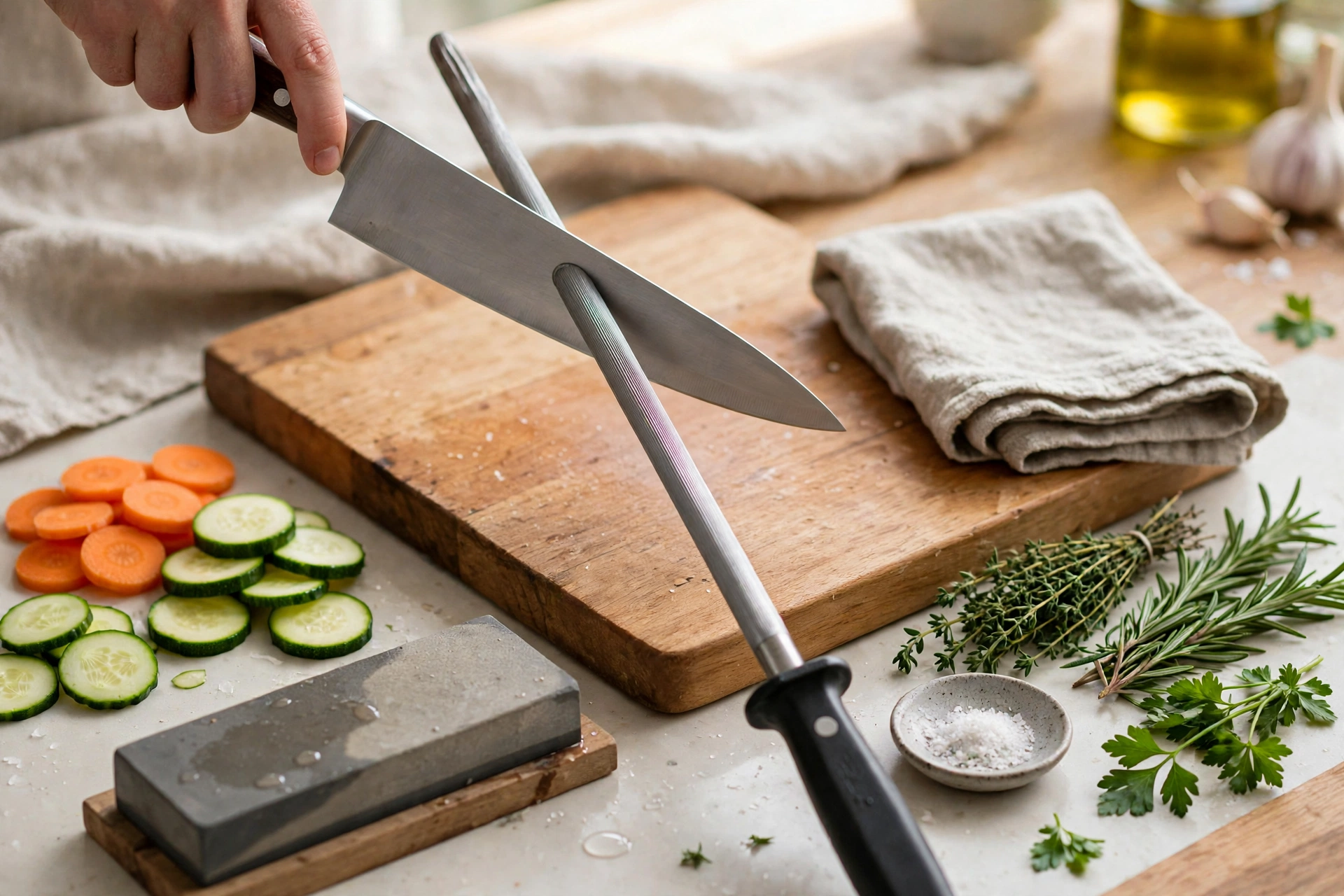
- Hone your blade regularly to keep the edge aligned.
- Sharpen on a whetstone a few times a year.
- Store knives in a block or on a magnetic strip.
- Never put good knives in the dishwasher.
Even the finest knife turns dull without care, and a dull blade is both frustrating and dangerous in any kitchen. Honing with a steel rod takes only a minute before cooking, and it straightens the tiny edge so the knife cuts cleanly again. Sharpening on a whetstone a few times a year restores the real edge, while safe storage in a block or on a magnetic strip protects it between uses. A little regular care keeps your knife feeling new, and your cooking will stay fast, safe and enjoyable for years.
In my experience, the cooks who enjoy their knives most are the ones who look after them with small, regular habits. Wipe the blade clean after use, dry it straight away, and never toss it loose into a drawer where the edge can chip. Hand washing takes seconds and protects the steel far better than a dishwasher ever will. Treat your knife kindly, keep its edge keen, and it will reward you with clean cuts, safe handling and beautiful cooking every single day you use it in your kitchen at home.
Conclusion
At the end of the day, the santoku vs chef knife choice comes down to how you love to cook, not which blade wins a contest. If you chop vegetables in straight, neat strokes and prefer a lighter knife, the Santoku will feel like home. If you rock through herbs and tackle big roasts, the chef’s knife is your friend. Many cooks happily keep both, reaching for each when it shines. Try the ideas here, hold both blades if you can, and trust your hand. Then save this guide on Pinterest, share it with a friend, and enjoy cooking with a knife that truly fits you.